A Daily History of Holes, Dots, Lines, Science, History, Math, Physics, Art, the Unintentional Absurd, Architecture, Maps, Data Visualization, Blank and Missing Things, and so on. |1.6 million words, 7500 images, 4.9 million hits| Press & appearances in The Times, Le Figaro, Mensa, The Economist, The Guardian, Discovery News, Slate, Le Monde, Sci American Blogs, Le Pont, and many other places… 5000+ total posts since 2008.

  • An Early Publication on “Color Hearing”

    JF Ptak Science Books   Quick Post

    In an earlier issue of Nature, back on January 15, 1880, there appeared a wonderful article by Francis Galton that turned out to be one of the earliest treatments of synesthesia. “Visualized Numerals” 1 concerned (in one aspect)  the mental visualization of the act of doing mathematics. That is to say, what images people formed in their brains as they performed mathematical functions. It was also an illustrated article making it perhaps the first attempt at visualizing a thought process.  

    Browsing another issue of Nature for May 6, 1890, there appeared another unusual and related piece, this by  George N. Newton, “Visualized Images Produced by Music” (reproduced below). 


     This was probably nothing new  to a lot of people, least of whom included tone poem composers and others who heard music and experienced color sensations–but this too, like the Galton, was a very early publication on the subject.  Or at least in a reachable, non-trivial, not-obscure publication–there were instances of articles written earlier in the 19th century, though they did not find an audience like that of Nature. Folks have been thinking about color hearing for thousands of years, though not necessarily writing much about it or (later) publishing on it–to these people this article was preaching to the choir, in color.  

    Notes:

    1. See “A New Class of Scientific Image? Synesthesia, Francis Galton and Picturing Thought”, here.  

    See RhythmicLight.com for a reproduction of Bainbridge Bishop’s A Souvenir of the Color Organ (1893).

    Also for a good site with many links, see the Center for Visual Music, here.

    ·Posted by :

    ·in:

  • Digital “Computers” 1450-1750: Memory and Calculating on the Fingers and Hands

    JF Ptak Science Books      Post #81(from 2008, expanded)

    Bloghands_memory072_2
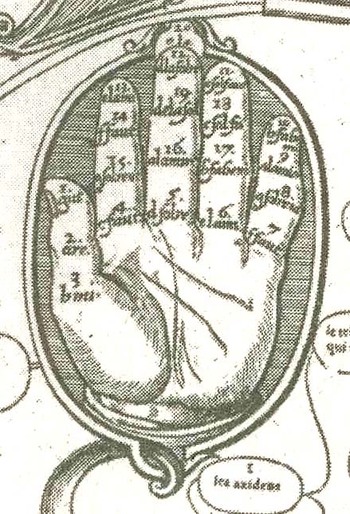
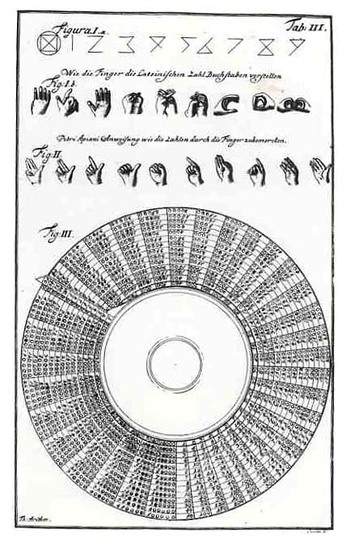
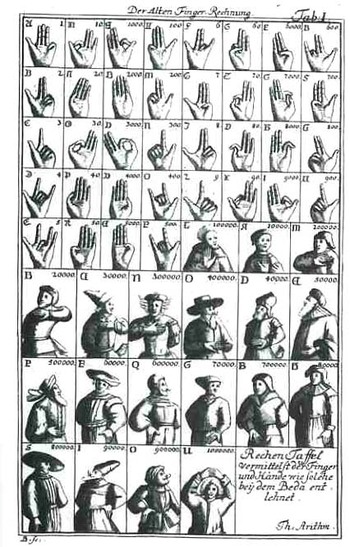
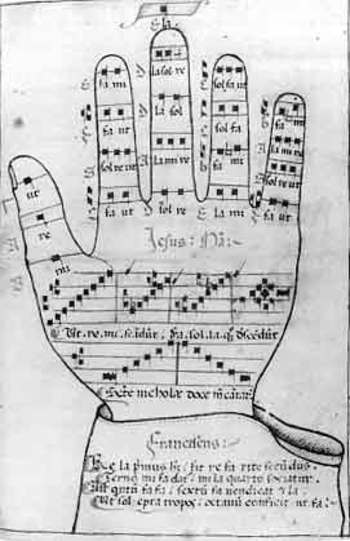
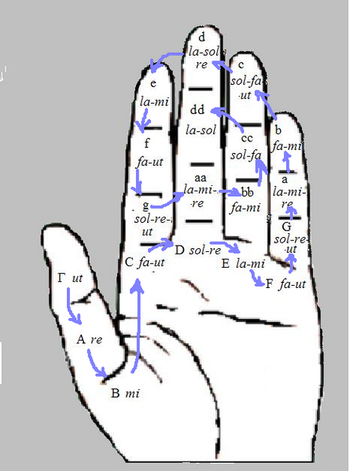
    These lovely images weren’t intended to show people living in the Renaissance and Baroque eras how to actually record data on their hands—they were intended rather as templates to show how they could use their fingers and hands for calculating and as memory devices.  Much like Frances Yates has shown us so beautifully in The Art of Memory and how info and data was stored in imagined and compartmental palaces in the mind (relying upon images), the hands were also used as a theatre of memory in addition to extended calculation. 

    These mnemonic devices were necessary—especially during the Renaissance—because of the general lack of and access to affordable vellums or paper and writing instruments.  Having notebooks filled with memoir or history of calculation was generally not something that was happening for even the not-wealthy but not struggling class.  These mental images were used widely in the areas of religion, palmistry, astrology mathematics, astronomy, astrology, alchemy, music, and other such fields. 
    Bloghands_big074_3

    The first image (from a German manuscript) of the hand-theatre was found and deciphered by Claire Richter Sherman (Folger Shakespeare Theatre) and is religious in nature, an intentional piece of memory for the devoted and for devotions.  The needs of religion were splayed out as the hand was opened and fingers flexed, and working from thumb to pinkie, from finger tip and joint—“do God’s will, examine  your conscience, repent, confess”, and so on, and above all be content with your lowly penitente stature.  If there were 28 of these admonitions or reminders at different points of the hand and you memorized them all, it would be a much simpler time to recall and keep them in order if you merely had to touch a part of your hand where that memory should be to invoke what it was you were supposed to do.  Therefore you could theoretically cast about with your creator with your hands in your pockets—if you had pockets. 

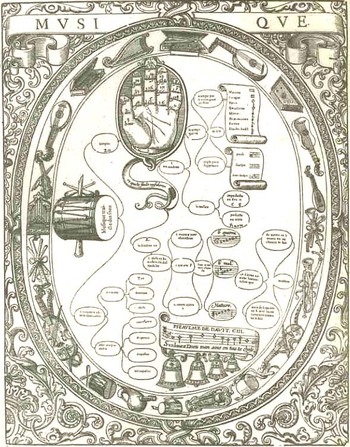
    The next two images (including the enlargement of the hand section) are from a work from 1587 entitled Musique and are attributed to John Cousin the Younger (1522-1597).
    The basic premise for this device—it seems to me—was to be able to order the different chords of 20 different instruments. 
    Bloghands070_2

    Another musical hand mnemonic was the Guidonian hand, a survivor of Medieval times, and possibly named after Guido of Arezzo (a musical theorist), and was an aid to singers learning to sight sing.   

    The entry for the Guidonian hand in Wiki explains it use rather well:  “The idea of the Guidonian hand is that each portion of the hand represents a specific note within the hexachord system, which spans nearly three octaves from “Γ ut” (that is, “Gamma ut”) (the contraction of which is “gamut”, which can refer to the entire span) to “E la” (in other words, from the G at the bottom of the modern bass clef to the E at the top of the treble clef). In teaching, an instructor would indicate a series of notes by pointing to them on their hand, and the students would sing them. This is similar to the system of hand signals sometimes used in conjunction with solfege…”
    Bloghands_bodies071

    The final two examples come from Jakob Leupold’s  (1674-1727) Theatrum Machinarum (1724)—this was a complex work involving nine sections and addressed the theoretical  aspirations of engineering (load, flexure, that sort) and its applications to its daily practitioners.  In one section of the book he sought to explain the connections (and correlations) of hand motion and symbolism to the origins of the number systems, carrying it out further still into body language, so that two people conversant in these symbols could talk and bargain between themselves in economic/body terms.  Barbara Maria Stafford, in her Artful Science, Enlightenment,

    Bloghand_guido

    Entertainment and the Eclipse of Visual Education (1994) points out the long history of this tradition, and that it reached far back into misty time:  Leupold knew that Appian, the Venerable Bede, and Aventinus had been fascinated by manuloquio, or natural language with the hands.  He thus linked counting to a global….medium of prearranged gestures…”

    Bloghandguido_2_2


    ·Posted by :

    ·in:

  • Postcards Then-and-Now

    JF Ptak  Quick Post

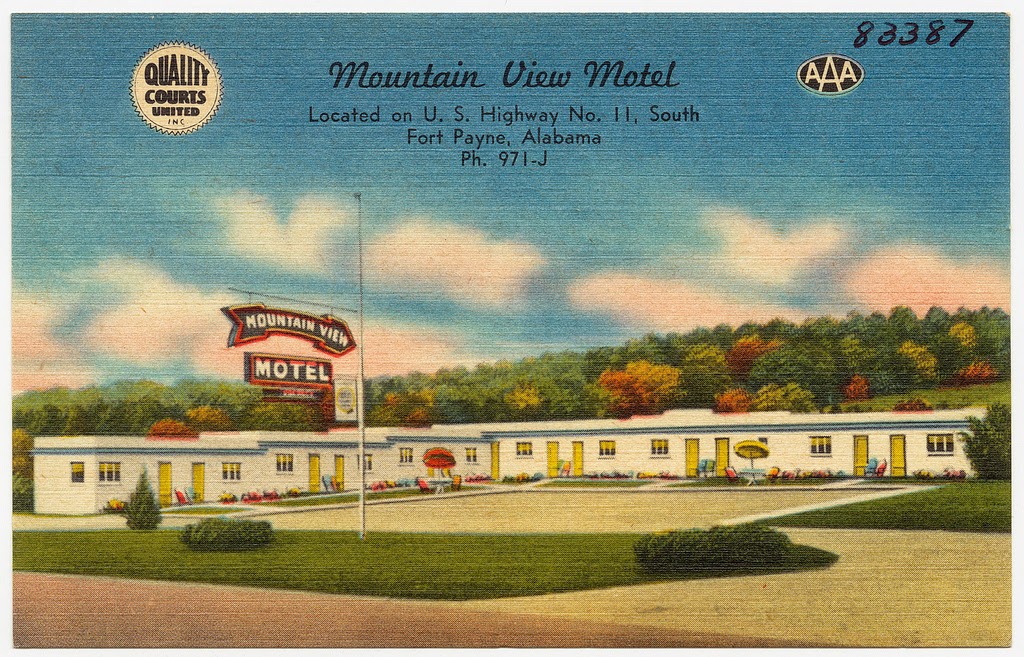
    Before-and-after–I’d like to see more of these, even the contemporary postcard image versus documentary photograph would do, as I suspect virtually no postcard of a motel ever made would look of a lesser quality than a true representational photographic image of the place. Sixty years certainly makes the difference, especially with the bypassing of what used to be important thoroughfares and what happens nest.  There is still a mountain view,though I can’t tell which mountain it is, though for Alabama it does get hilly in Fort Payne.  

    I’d love to stay in a motel like this.  Then.  

    Post cards--Mountain View AL original

    And today:

    Post Cards--Mountain View, ALabama

    ·Posted by :

    ·in:

  • A Mosaic of Panels of Railroad Freight Cars

    JF Ptak Science Books   Quick Post

    There’s something about the design of the kettering on the sides of railway cars that is very attractive–for the most part, the lettering just looks “correct”.  I’ve collected a few examples, used librarlly from the University of Pennsylvania library, and tiled them below, and are from a series of photographs made in the 1880’s of the Harrisburg Car Co (established 1853).


    ·Posted by :

    ·in:

  • Picturing a New “Normal” of the Emancipated Slave, 1863

    JF Ptak Science Books   Post 2267 
    Nast emancipaatin

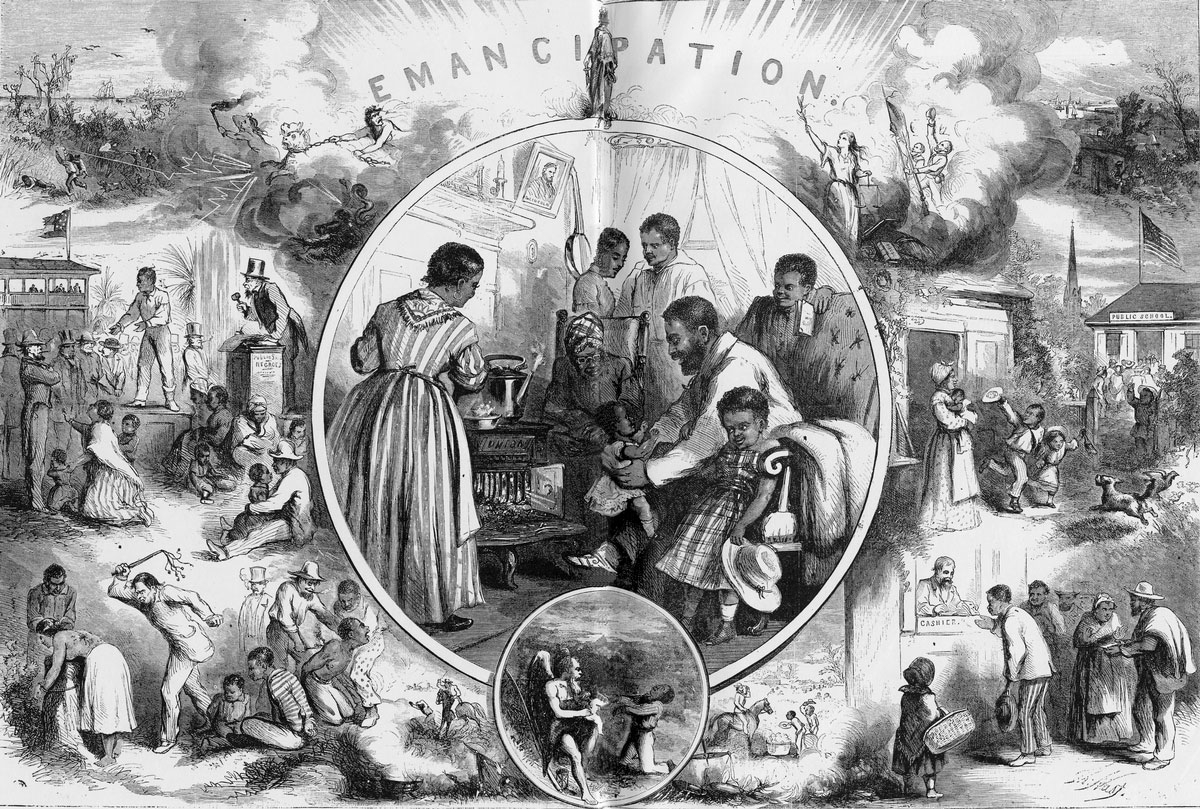
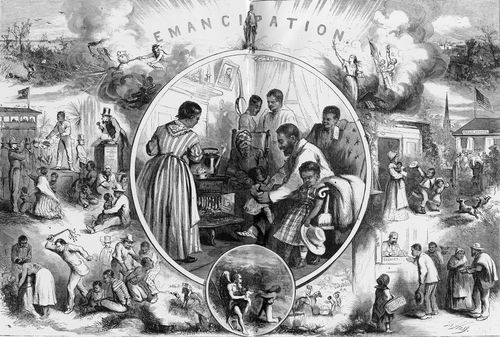
    Thomas Nast, the great social commentator and cartoonist for Harper’s Weekly magazine through the course of the Civil War and into the 1880’s, ddrew this fantastic allegorical image called “The Emancipation of the Negroes, January, 1863—The Past and the Future,”which was published just weeks after the Proclamation was issued in January 1863. Nast (1840-1902) was an extraordinary talent who created the politically/socially influential political cartoon.  He worked tirelessly for Harper’s Weekly, joining the weekly illustrated newspaper in 1858 at the age of 19, contributing at least one large (usually front cover) political statement and two smaller cartoons every week, for 26 years. He wielded an enormous social influence, electing a president (Hayes) and toppling Boss Tweed.  He was a staunch Republican who endlessly fought for balanced budgets, free education, and equal rights for Indians and Blacks, fair economic play to the working classes, and was viciously anti Klan.  He also created the popular images of Santa Claus, Uncle Sam, the Republican elephant Democrat donkey, and the Tammany tiger.
    Nast emancipation detail

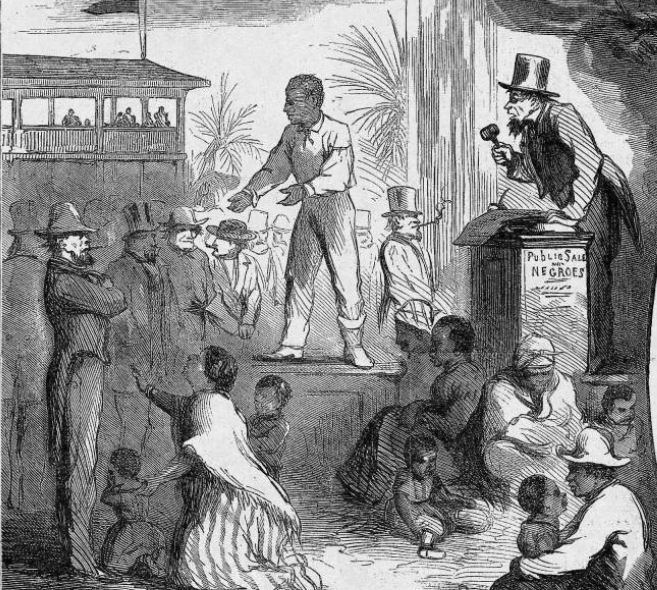
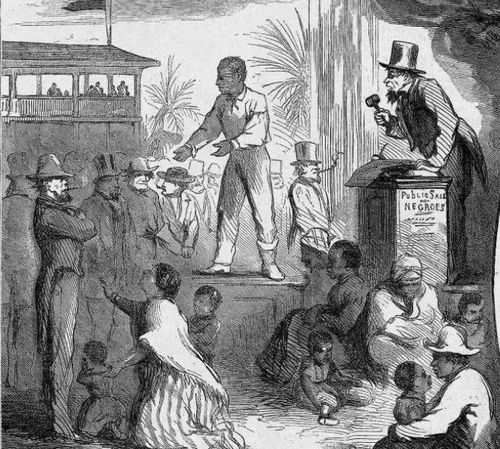
    The Emancipation image was perhaps one of his greatest early efforts–it is a strong image, holding nothing back.  On either side of the main/central figure is the Good/Evil of the African American’experience, showing whipping, branding,the very dogs of war let loose on runaway slaves. In the middle-left we see a truly heartbreaking scene (enlarged below) depicting a “Public Sale/Negroes”, with families being torn apart, broken in front of themselves, the husband/father pleading while the wife/mother with children beg for the atrocity to end. Nast was not afraid to use children in his images to makes his point, and it seems to me to be a rare practice. (This would continue throughout his career, especially in his depicting of the Hamburg S.C. massacre in which he shows a murdered Black baby–very tough stuff now but ever more so for 1876. He used children to make political points, showing them terrified and in fear of some monstrous public act,m and rightfully so, because children are always effected, and Nast was determined not to shield his viewers/readers from the baseline truth.)

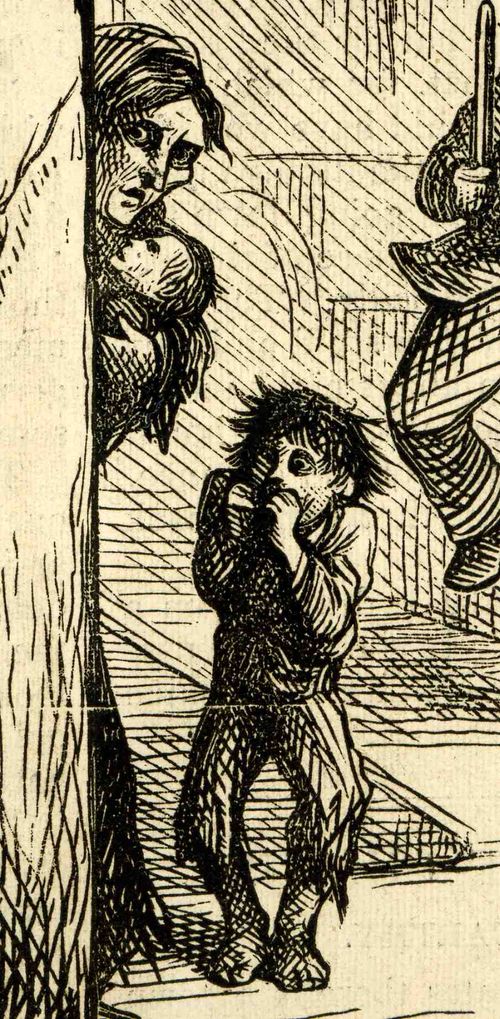
    Here’s a very shocking example of this work, showing a terrified child reacting to his father being arrested for stealing bread for his starving family.  It is from his work “Wholesale and Retial”, a piece on Corporate Pig Thievery, and contrasts Tweed-like figures in the panel below stealing from a bank with teh approval of saluting cops.  (I’ve written about this image here.)
    0--blog---Nov 28 wholesale147


    [Image source: http://thomasnastcartoons.com/2012/06/02/irish-as-sub-human/the-emancipation-of-the-negrosnjan-24-1863/#main]

    On the right side of the image are scenes of tranquility, with people lined up to receive pay for work done, and children dashing off to school. 

    The central image is significant, because it is simple and shows a scene of domesticity and happiness, and applies it to the African American. It establishes a new sense of “normalcy” or a common standard, at least in theory.  To me it is a radical image. It shows a father in slippers bouncing one of his four children on his knee in front of a lighted stove, seated in a good chair.  Grandma looks in on the scene, the mother looks on; a younger son pauses from reading to watch, while in the background the older son seems very interested in a courtship with a young lady.  On the wall in the background is a portrait of Lincoln, with a banjo hanging up next to it. 

    Above the image is a somewhat squishy Columbia–the symbol of America–dividing the hellish scene left and grateful and hopeful scene to the right, with Justice and cheering soldiers just to Columbia’s left hand.  At the bottom of the central image we see Father Time holding the infant New Year, freeing a slave, the baby doing something on the first day of 1863 that the old man could not accomplish in the year(s) previous.

    The image is complex and textured, a standard of Nast’s work–and this one, unlike most of his efforts, is one of celebration and hope. 
    ·Posted by :

    ·in:

  • The Elevated Walker and the Super-Elevated Flyer, 1800-1813

    JF Ptak Science Books   Post 2268

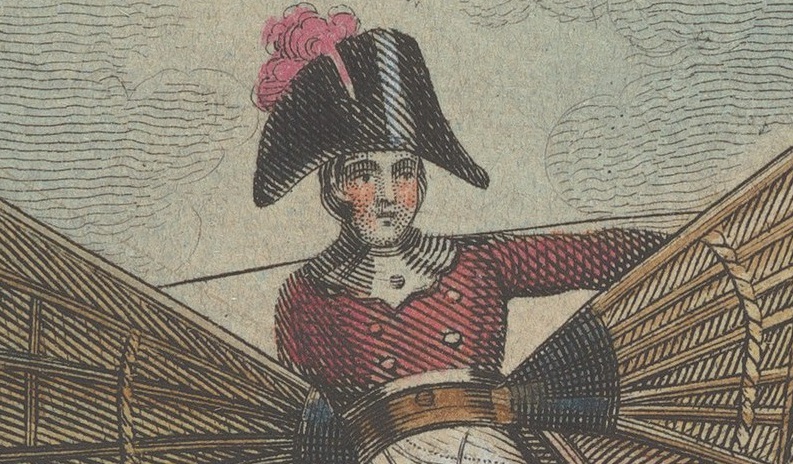
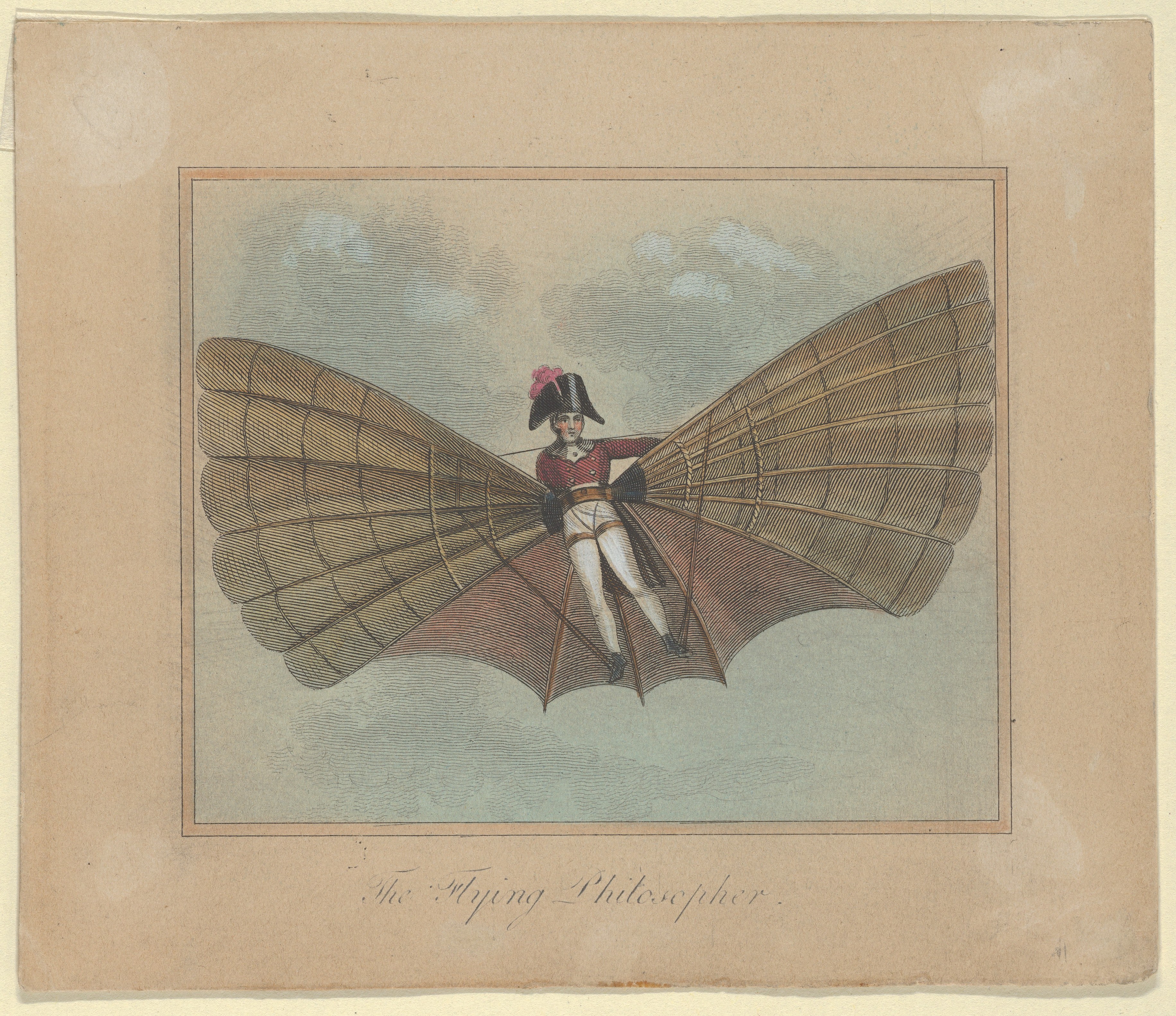
    Is this the philosophical face of concern, or interest, or curiosity?  It is a philosopher’s face, a Flying Philosopher’s face at that, pictured in 1800 or so, but the philosopher is being rather gentlemanly and philosophical about the whole adventure, and he is not letting any subterranean enthusiasms escape his studied countenance.  

    Philosopher flying 4 detail[Source: Memtropolitan Museum of Art, “The Flying Philosopher”, ca. 1800, here, a detail of the image below.]

    Philosopher flying 4

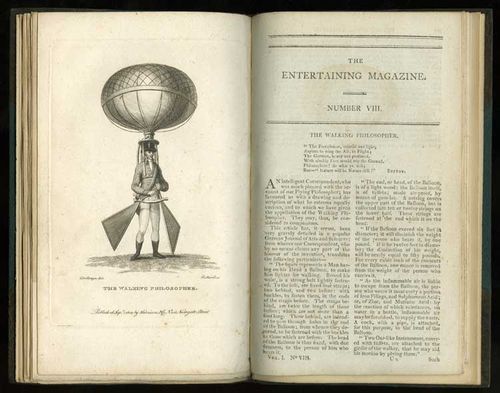
    A variation of the studied philosopher–walking–is found below, both featured in  The entertaining magazine, or, Polite repository of elegant amusement containing pleasing extracts from modern authors : with many original pieces, and new translations, in prose and verse : embellished with beautiful engravings, and published in London in 1813. In this instance the same detachment is seen in the face of the subject even though he has his own personal balloon. a portable aerostation device, which seems to make little impact on his demeanor.  I think they’re talking more about philosophes than philosophers in these two images, though either way it also referred in large part to a different social class of people, many of whom had their lives arranged for them at birth and whose manner and charms were studied and rehearsed, propriety being an assumed trait of privilege.  

    Walking philosopher[Source: Lily Library, Indiana University, here.]
     
    The Walking Philosopher was actually a response to the flying version–this contraption was not meant to send anyone aloft, but to elevate them just enough to facilitate walking, lessening the weight of the walker, so that they could walk faster/longer. I guess that would make some sense, but if you were going to go through the hassles of a balloon and rudders as well as the expense, why not just take a carriage?  I guess the idea of bounding 15 or 25 feet or whatever would be interesting, except that I think you’d also need some ballast; and there’s the danger of the Darwin Award stuff, of taking “too big” a bound, and not coming down (until it was too late?)  In any event, I’m sure that this is the stuff of which some dreams were made…
  • On the “Hampering” Effect of a Soviet Nuclear Strike

    JF Ptak Science Books   Quick Post  

    From the Department of Vast Understatement:

    CIA USSR Nukes 2Source: the National Archives.

    CIA USSR NUKES 3

    CIA USSR Nukes 1


    ·Posted by :

    ·in:

  • Affairs of the Heart: Blood & Clouds, 1664

    JF Ptak Science Books  Post 2270

    0 blog feb 6 circle541

    [Image sources: National Library of Medicine.]

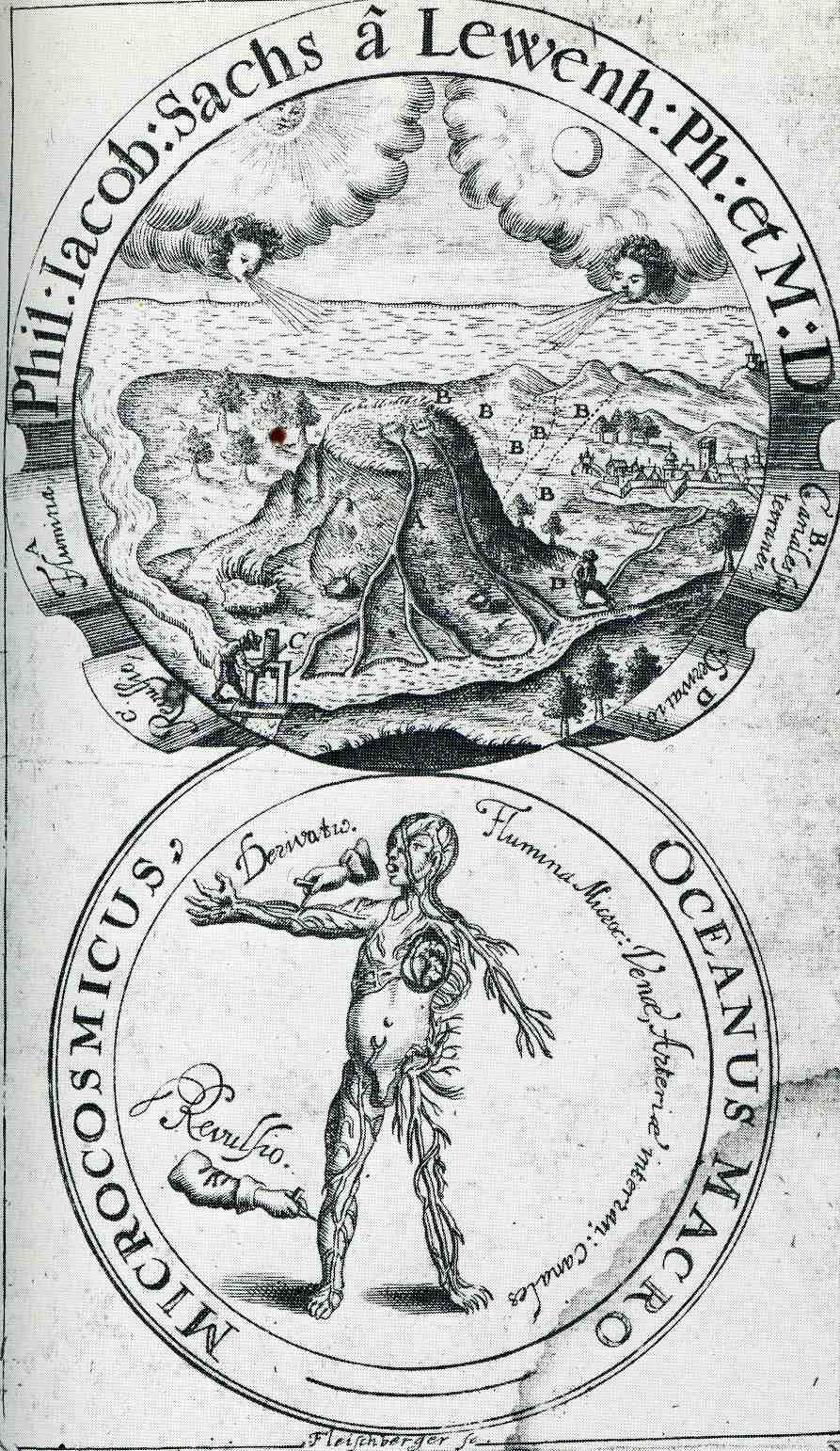
    In 1664 Philipp Jakob Sachs (Sache de Lewenbheimb) wrote an influential book on the circulation of the blood.  It was the advanced work of a learned man, a naturalist and physician who was also the editor of the Ephemerides Academiae naturae curiosorum, which was the first journal in the field of natural history and medicine and one of the founders of the Academia Naturae Curiosorum (Leopoldina).  His work came 40 years after the great work by William Harvey, who published Exercitatio Anatomica de Motu Cordis et Sanguinis in Animalibus in 1628, a work in which he essentially brought the idea of circulation of the blood into the modern age, building on earlier ideas of Michael Servetus, whose 1561 work on circulation (and his religious ideas) brought him to be executed by flames. 

    For centuries the pulse was a vaguely understood thing reaching back into the murky medical past as far back as Galen.  The association of course was with the heart, and the association of the heart was as the great controlling center of all function and control of the human body—a theory that reached far forward into the 16th century.

    Servetus (physician, cartographer, theologian, writer and general all-adept Humanist of a high order) was in trouble with the church for many reasons, not the least of which was trying to dislodge the theory of the heart as sacred and the seat of wisdom.  But he did establish that the heart was an organ, which didn’t sit well with very many people, least of all the Calvinist court in Vienna which found him guilty on many anti-Humanist grounds, including his anti-Trinitarian Christology, which made him a reviled figure to Catholics and Protestants.  He was tried and found to be dangerously heretical, and sent to the flames.

    Harvey withstood blistering attacks on his correct statements on the circulation of the blood (costing him nearly all the patients in his practice), though he at least lived to see a brighter day:  Servetus, on the other hand, didn’t, and was burned at the stake for his heresies, one of which his attack on the spiritual heart.

    In any event, the frontispiece to Sachs’ work is an interesting allegorical composition showing a connection between the place of the very prominently featured heart in the circulation of the blood, and the water cycle, and the cosmos of creation (the breath of life coming from the winds of the Sun and the Moon).   

    0 blog feb 6 circle542


    Notes:  (Sachse de Lewenheimb, Philipp Jakob Sachs, 1627-1672 , Oceanus macro-microcosmicus, seu Dissertatio epistolica analogo motu aquarum ex et ad Oceanum, sanguinis ex et ad cor… 1664, with full text via Google books here).

  • World War I Photography (cont): Mail Call

    JF Ptak Science Books    

    Follow Me on Pinterest

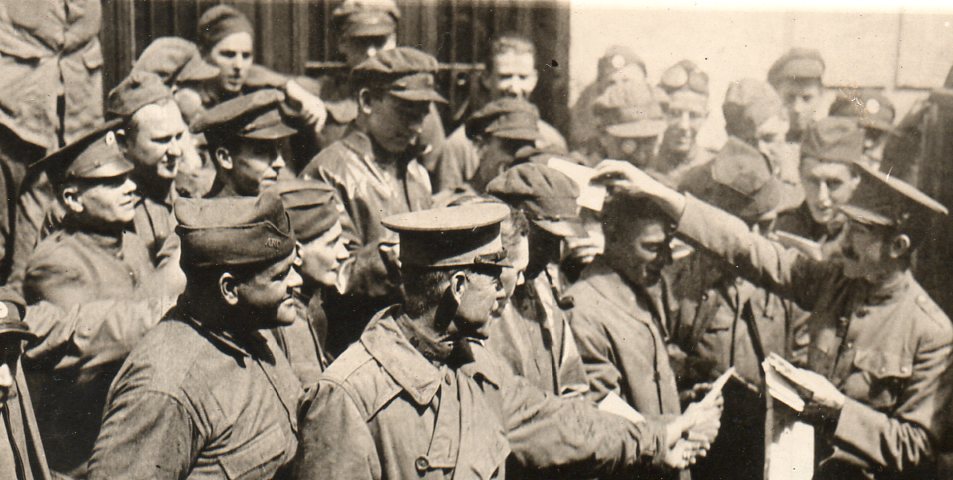
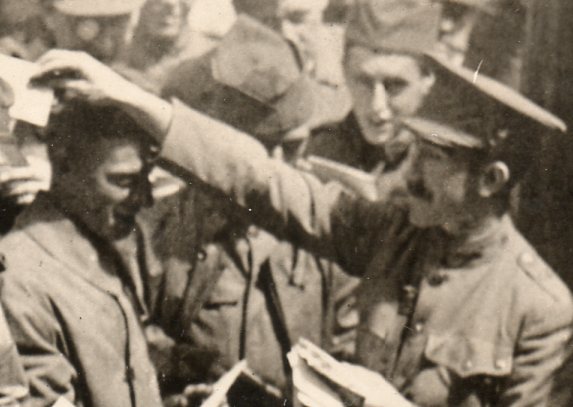
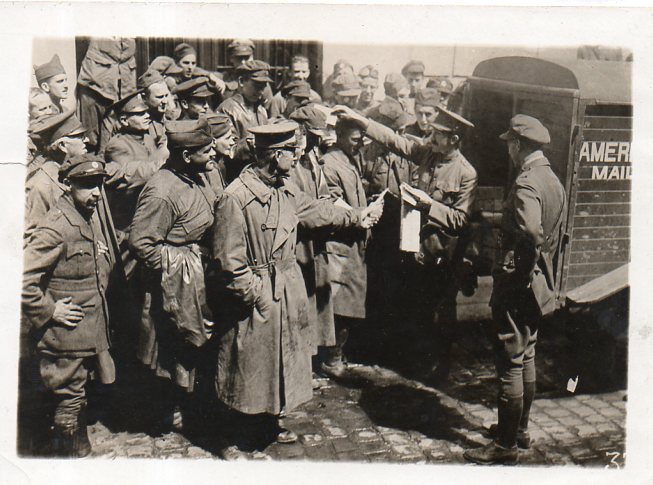
    This is one of approximately 250 photographs in a small collection of World War I News Photo Service photographic images, all made in 1918.  Photography during WWI was extremely controlled, and many of the images that came to appear in newspapers and magazines were selection from an approved photographic pool of images.

    Mail Call, end of 1918.  (The original photo can be urchased via the WWI Photography store on this blog, here.)

    Text on verso: “What a letter from home means in France.  Group of American Red Cross chauffeurs in Paris at mail distribution at their garage.”  The back is also stamped “Bureau Publicity Lake Div. American Red Cross, for release October 2”.

    WWI Photo Mail168 With teh following detail:

    WWI Photo Mail169

    Both of which are details from the following:

    WWI Photo Mail167

    ·Posted by :

    ·in:

  • WWI Photos (cont.): Female Charity Workers, 1918

    JF Ptak Science Books

    Follow Me on Pinterest

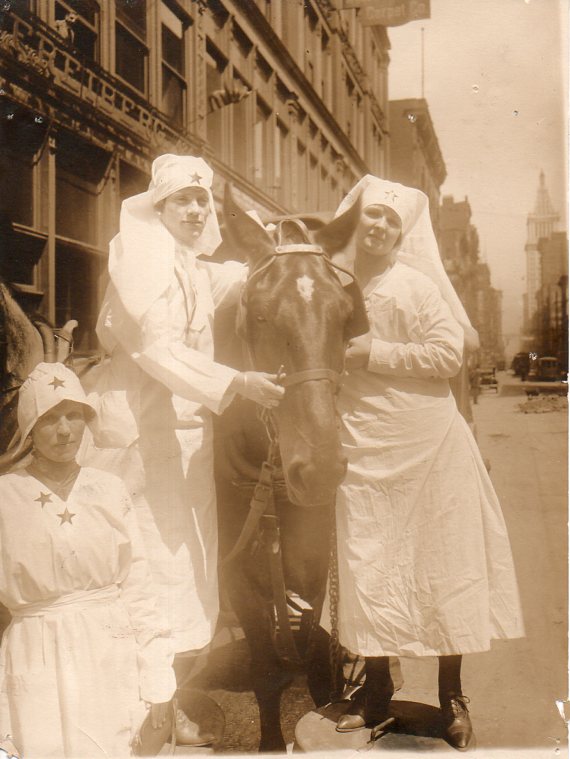
    This is one of approximately 250 photographs in a small collection of World War I News Photo Service photographic images, all made in 1918.  Photography during WWI was extremely controlled, and many of the images that came to appear in newspapers and magazines were selection from an approved photographic pool of images.

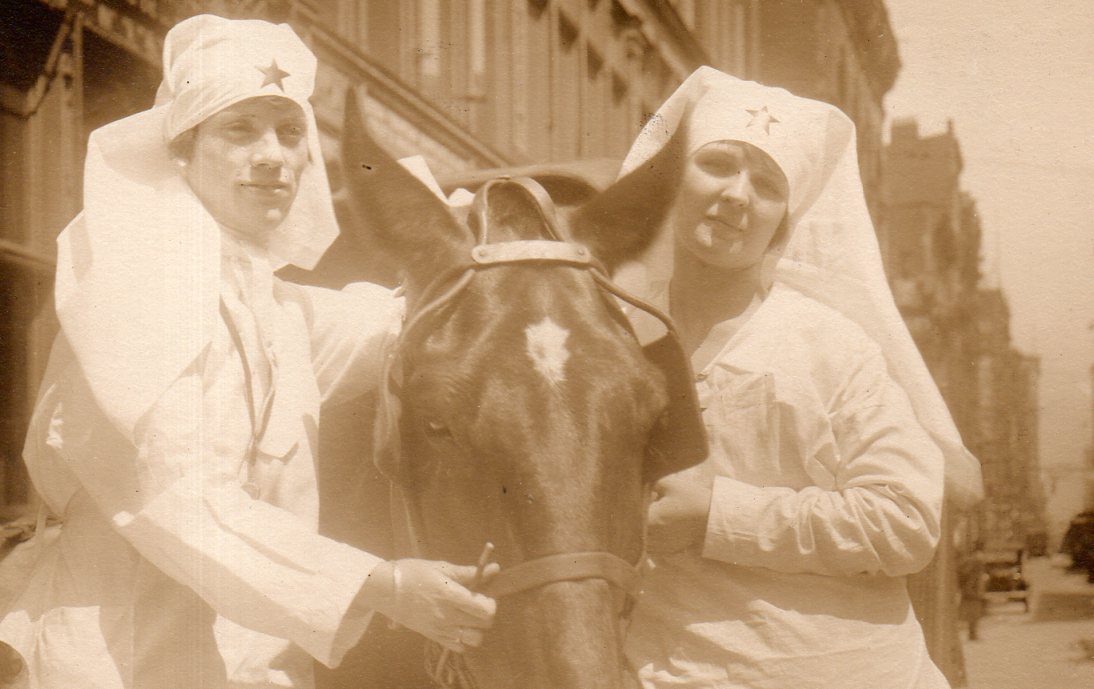
    Image of three women as volunteers–the woman in the foreground is actually standing even though it looks as though she is kneeling; the other two women are standing on trash cans to get the upper hand on the horse.  This is a simple and lovely image that can be purchased this blog’s WWI photo store, here. 

    WWI Photo  three nurses and horse170

    Detail:

    WWI Photo  three nurses and horse172

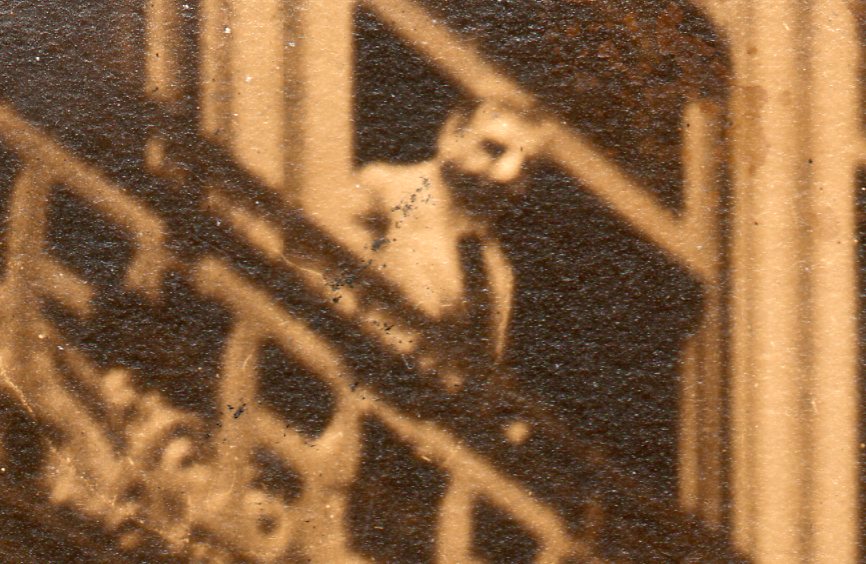
    And–in the upper left corner, a man leans from a window for a better look:

    WWI Photo  three nurses and horse171

    ·Posted by :

    ·in:

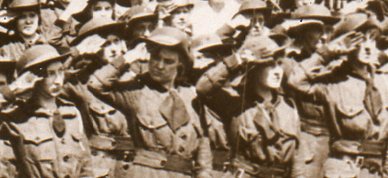
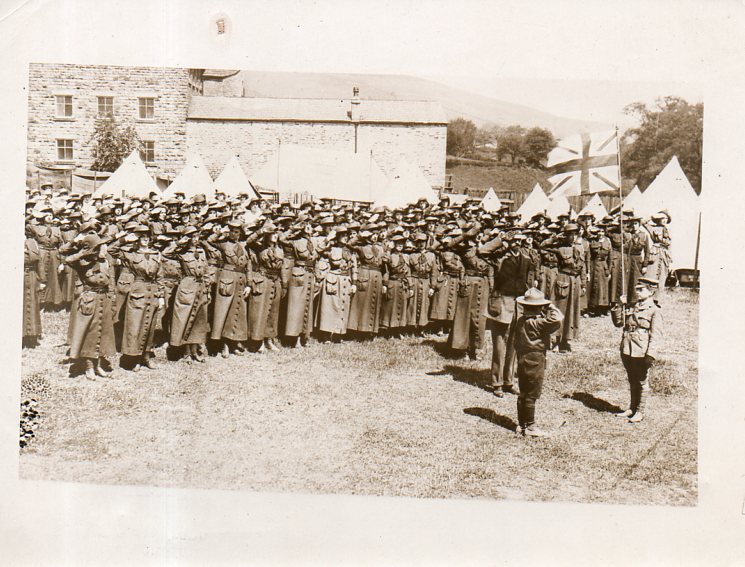
  • WWI Photos (cont.): a Contained Sea of Women’s Salutes Ca. 1918

    JF Ptak Science Books

    Follow Me on Pinterest

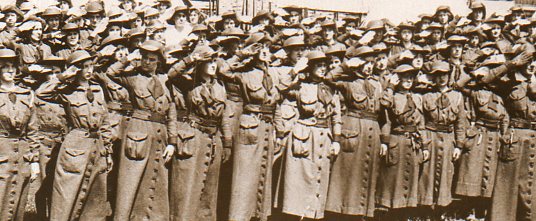
    This is one of approximately 250 photographs in a small collection of World War I News Photo Service photographic images, all made in 1918.  Photography during WWI was extremely controlled, and many of the images that came to appear in newspapers and magazines were selection from an approved photographic pool of images.

    The original of this photograph can be puchased via our blog store, here.  

    WWI Photo WOmen saluting174

    And a greater detail:

    WWI Photo WOmen saluting175

    Both of which are paper dissections of the full image:

    WWI Photo WOmen saluting173


    ·Posted by :

    ·in:

Recent Posts

Archives

Categories