JF Ptak Science Books Post 2268
Is this the philosophical face of concern, or interest, or curiosity? It is a philosopher’s face, a Flying Philosopher’s face at that, pictured in 1800 or so, but the philosopher is being rather gentlemanly and philosophical about the whole adventure, and he is not letting any subterranean enthusiasms escape his studied countenance.
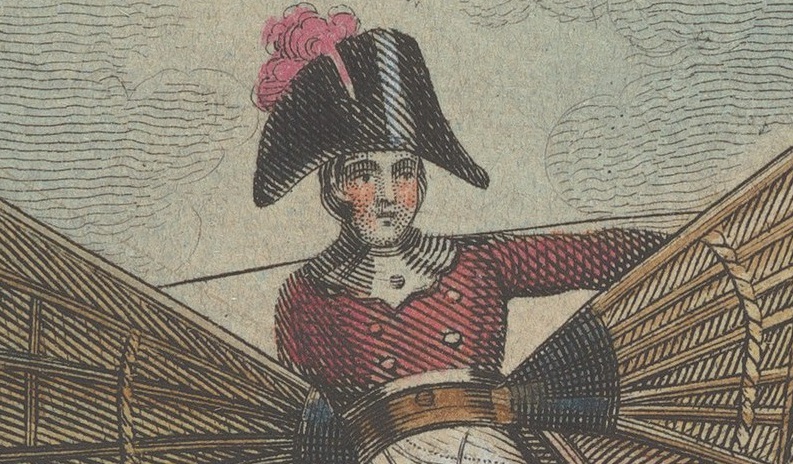 [Source: Memtropolitan Museum of Art, “The Flying Philosopher”, ca. 1800, here, a detail of the image below.]
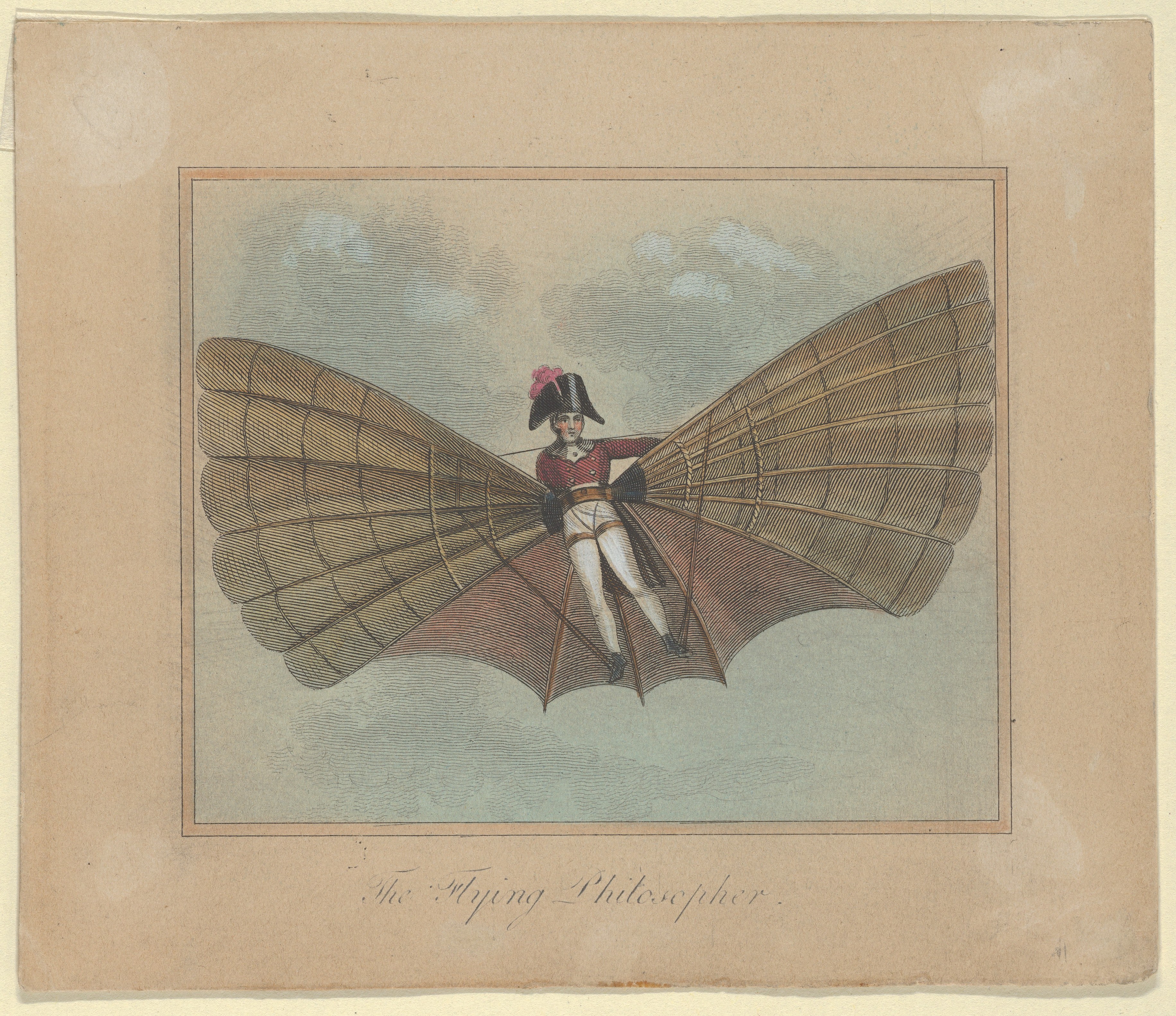
A variation of the studied philosopher–walking–is found below, both featured in The entertaining magazine, or, Polite repository of elegant amusement containing pleasing extracts from modern authors : with many original pieces, and new translations, in prose and verse : embellished with beautiful engravings, and published in London in 1813. In this instance the same detachment is seen in the face of the subject even though he has his own personal balloon. a portable aerostation device, which seems to make little impact on his demeanor. I think they’re talking more about philosophes than philosophers in these two images, though either way it also referred in large part to a different social class of people, many of whom had their lives arranged for them at birth and whose manner and charms were studied and rehearsed, propriety being an assumed trait of privilege.
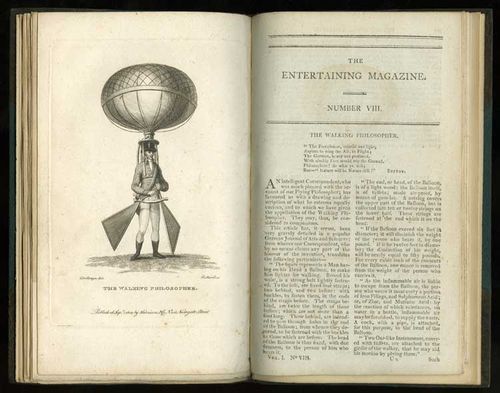 [Source: Lily Library, Indiana University, here.]