A Daily History of Holes, Dots, Lines, Science, History, Math, Physics, Art, the Unintentional Absurd, Architecture, Maps, Data Visualization, Blank and Missing Things, and so on. |1.6 million words, 7500 images, 4.9 million hits| Press & appearances in The Times, Le Figaro, Mensa, The Economist, The Guardian, Discovery News, Slate, Le Monde, Sci American Blogs, Le Pont, and many other places… 5000+ total posts since 2008.

  • Industrial Steampunk and the Menace of Corporate Reach

    JF Ptak Science Books   Quick Post–Poster Series #2

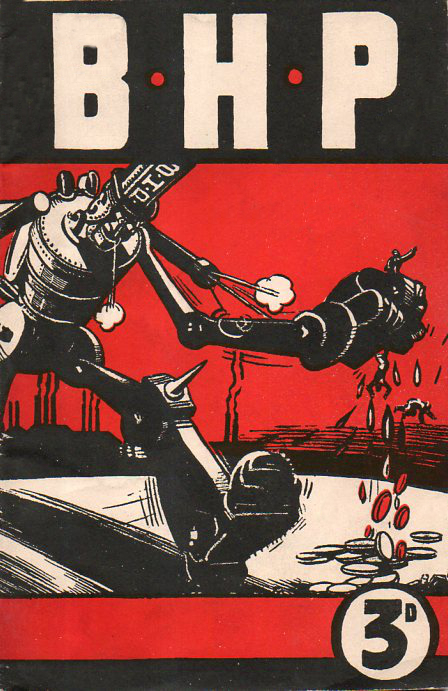
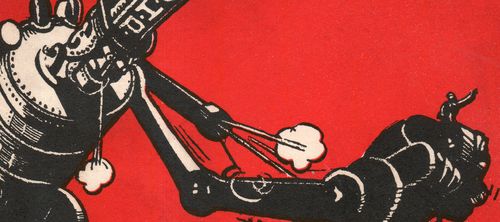
    This striking image is the cover of a pro-union pamphlet leveled at the Australian iron-producer, B.H.P. (Broken Hill Proprietary, a 150-year-old firm), and published in 1943 by the Federated Ironworkers’ Association of Australia. The great social observer and artist Thomas Nast was very aware that much of his “readership” couldn’t read, and so he made his work (which was usually text-heavy) completely understandable as a purely visual message.  So too for artists like the anonymous person who contributed this great cover–there is no question about what might be in the pages of the pamphlet.

    Poster Reprint BHP 96 dpi356

    It is also interesting to think about the “menacing” part of the title of this quick post–I would consider this still to be an early depiction of a robot (the term then still about a dozen years old) acting in a threatening manner towards humans–and in this case squeezing them until blood money is drawn.  

    This is a detail from the 600 dpi scan–click for an even larger image of this sample:

    Poster Reprint BHP 600 FINAL detail dpi357


    There is a very nice 13×19 inch 600 dpi poster being offered of this cover at the our POSTER Blog, here.  

  • A Deep and Happy Red–the Young Communist League, 1937

    JF Ptak Science Books   Quick Post–Poster Series

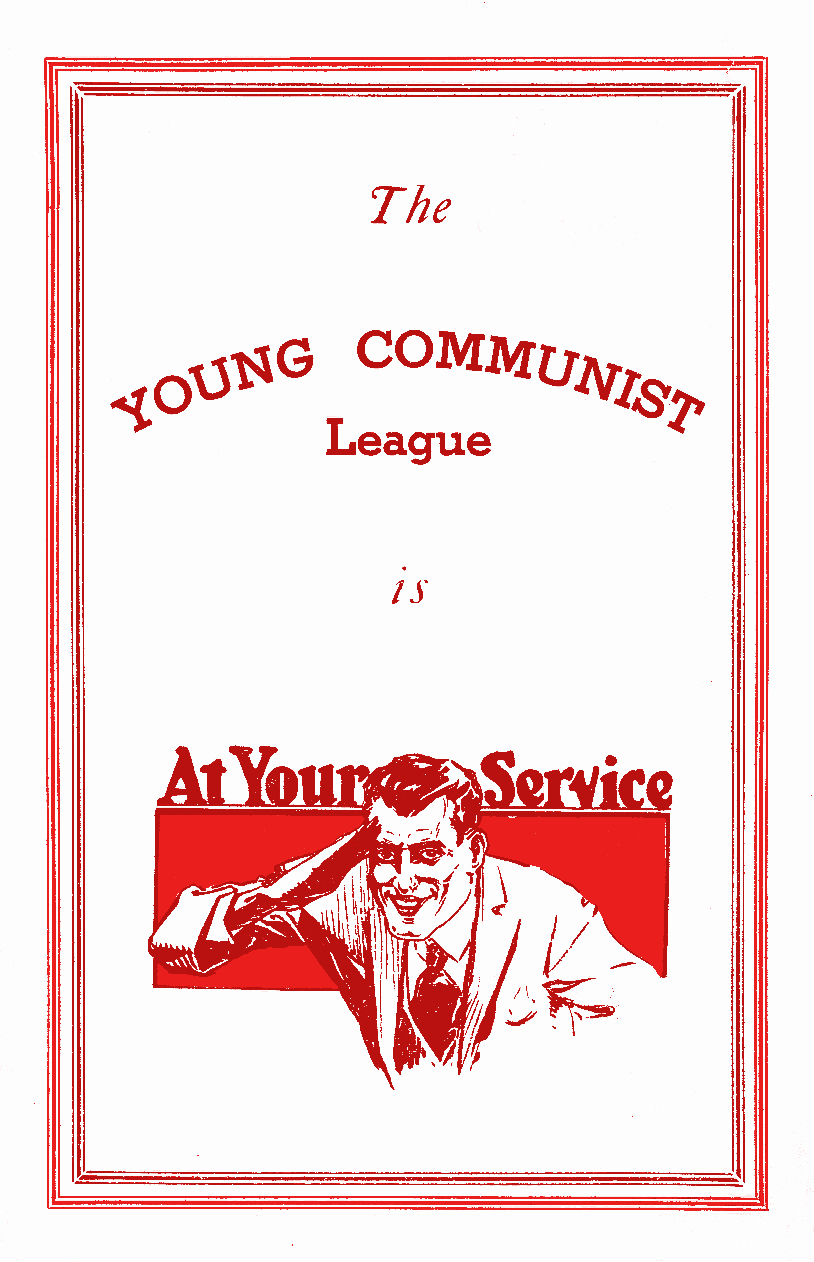
    In the wide and deep collection of social history pamphlets and ephemera that exists here cheek-and-jowl with the history of science material I have found one of the truly great pieces of cover art/design–it stands easily in the top percentile for overall design, and it does get its message across very quickly.  It is also evidently rare, as I can find no other copies of the thing.  It certainly seem to be the first time it has appeared on the intertubes.

    Poster Reprint Young Commie 150 dpi white 359

    [A fine 13×19 inch reproduction is available for purchase here.]

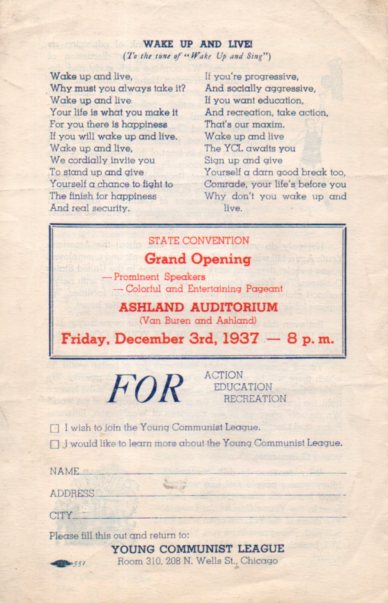
    The pamphlet was aimed at the “under 30” crowd, as we are warned right up front, in the first paragraph of the pamphlet, that if you are over 30, “we suggest you pass it along to someone under 30”–which is where the “Young” must come into play. 

    The essence of the Young Communist League is “ACTION  EDUCATION  RECREATION” and of course to teach their “Comrades” to “help understand the world we live in”.

    The bait was set for the young and restless–and probably unemployed–youth in the midst of the Great Depression of 1937.  War in Spain, a big war that not that many people were hearing about in China, a failing economy, falling prospects, and the rise of Fascism in Italy and National Socialism in Germany may have contributed to the growth in interest in this movement among the under-30 set in the great state of Illinois to attend the YCL state convention in Chicago.  There were a number of odd businesses located at “208 N. Wells St” in Chicago (the Loop), though fewer were less unusual than the Young Communist League in Room 310.  I’m sorry to say that I cannot determine how long they lasted there, though my guess is that Room 310 was occupied by someone else in 1942. 

    Young communist league little248


    ·Posted by :

    ·in:

  • Pig Iron vs. the Eiffel Tower

    JF Ptak Science Books   Quick Post  

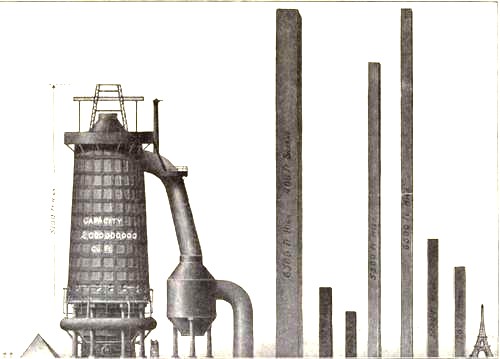
    Several years ago I wrote about some triumphantly unusual images (plus one on the 1891 10-ton Eiffel Tower bullet) of the Eiffel Tower–today I’d like to add another, a queer image which manages to loose the Eiffel Tower (and the Great Pyramid) in representations of pig iron production.

    Diagram steel eiffel 

    I love comparison like this, representing big, hard-to-associate  numbers of something against another quantity that can be instantly understood–the relationship between the two might be tenuous and complex, but at least it can give you some sort of handle on what would normally be an inaccessible, stand-alone number. Plus, any time that you can show what an ungraspable concept might “look like” and be explainable to a 10-year-old, well, you’ve got something. 

    ·Posted by :

    ·in:

  • A Room with a View: Hornor’s Panorama of London (1821) and its Cache of Irony

    JF Ptak Science Books  

    0 blog dec 30 room at the top328

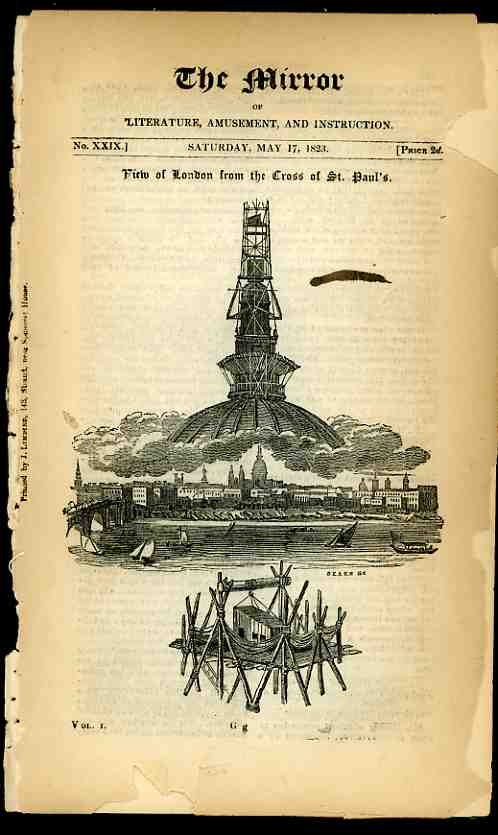
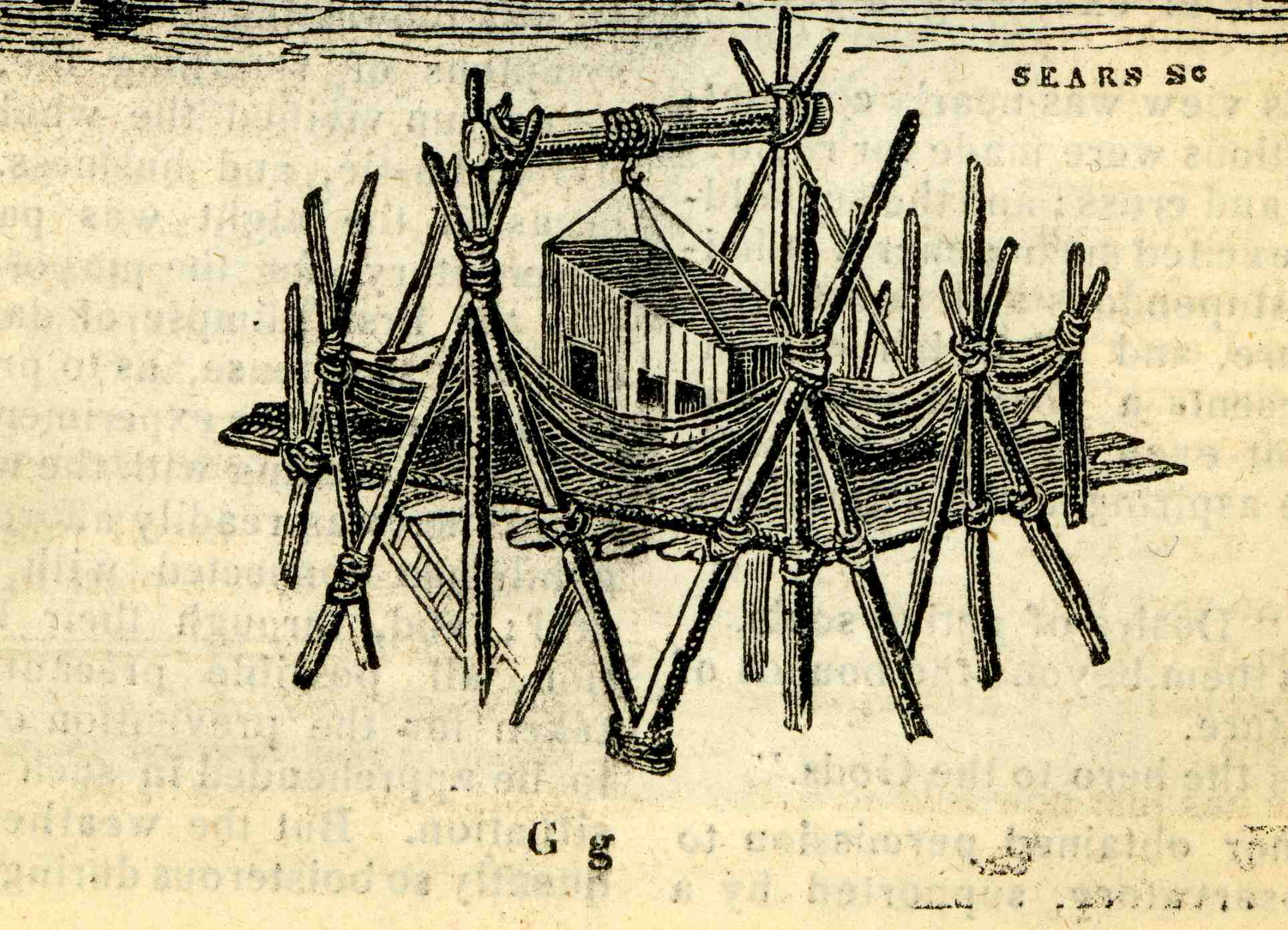
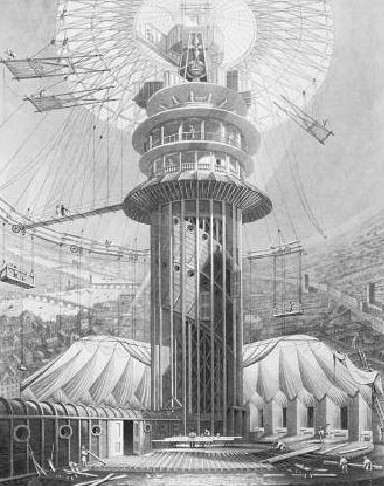
    Before satellite imagery, before airplanes, before balloons, and before photography, the only way of obtaining large-scale and factual panoramic views was to get to a good observation point and draw away.  Thomas Hornor (a surveyor and panoramist, 1785-1844) did just such a thing in 1821:  taking advantage of the cross being removed for cleaning from the top of St. Paul’s (London), he somehow convinced the powers-that-be to allow him to construct an observation post for himself in its place for  a long term, uninterrupted and altogether fabulous view of the city of London.  He set up shop up there, about 400 feet above the ground, and stayed, making minutely detailed drawings of the cityscape, working with a telescope and a great deal of reserve.  And some amount of courage–we can see from this detail of his story published in The Mirrour in 1823 that his shack was, well, not the safest-looking shack that has ever been built atop a cathedral. 

    The end result was an enormous, fantastically detailed acre-sized painting which was installed and displayed in Decimus Burton’s Colosseum. The installation was as much an artwork as the painting–it was affixed to the walls and people would view it from a multi-story observation deck in the middle of the building.  For those who didn’t want to climb the stairs to get to the viewing room,  an “ascending car” was fabricated, making the structure one of the earliest buildings to have an elevator.  There is some sort of irony in that:  people would pay to see a painting using London’s (perhaps)


    0 blog dec 30 room at the top329

    first elevator to get to the top of a small structure inside another structure to see a painting made from the top of a large structure of a scene that could be viewed for free by walking outside.  Nonetheless, the fantabulous painting was viewed by more than a million  people before moving on.

    I have a feeling that this may be an interesting category to develop (a “room with a View” that is), pursuing other rooms in other tall places.  
    For example the last little triangular window is the hole in the sky for something at the Chrysler Building in NYC.  I had heard that it was initially a bathroom that was built for the avuncular Mr. Chrysler, so that he could do his 

    Hornor2

    business higher than anyone else in the world, which seems to have fitted his personality.  After all, he did his fair share of this behavior, having dumped on people of all shapes and sizes, not the least of whom included thearchitect for his spectacular building, William Van Alen.  He was stiffed by Chrysler because of mysterious and misbegotten ideas arising from old Walter’s temperamental and stingy belly–that dear readers takes a lot of ____, not paying the architect who designed the world’s tallest building and then to put his name on it.  

    I should mention that this little room in the Chrysler building pops up every now and then, perhaps most famously in Kurt Vonnegut’s Jailbird, where beautiful Kurt stuffs the head offices of the American Harp Company.

    Check out Stephen Oetterman’s The Panorama, a History of a Mass Medium (1997) and Bernard Comment’s The Panorama (1995).


    ·Posted by :

    ·in:

  • The Future: Floating, Shining Soot and a SteampunkGod (1834)

     JF Ptak Science Books   Post 2340

    [This is a version of an article recently published in the Mensa Bulletin.]

    The world of possibility is limitless when there are no limits and almost no impossibilities. The history of seeing possibilities in the future, the history of looking into the future, is vast (with exponential growth in publication for each of the last three generations), and organizing it for a limited discussion difficult—there is a general temptation to simply classify all of it according to an alphabet of “ramas” of all possible Futuramas.

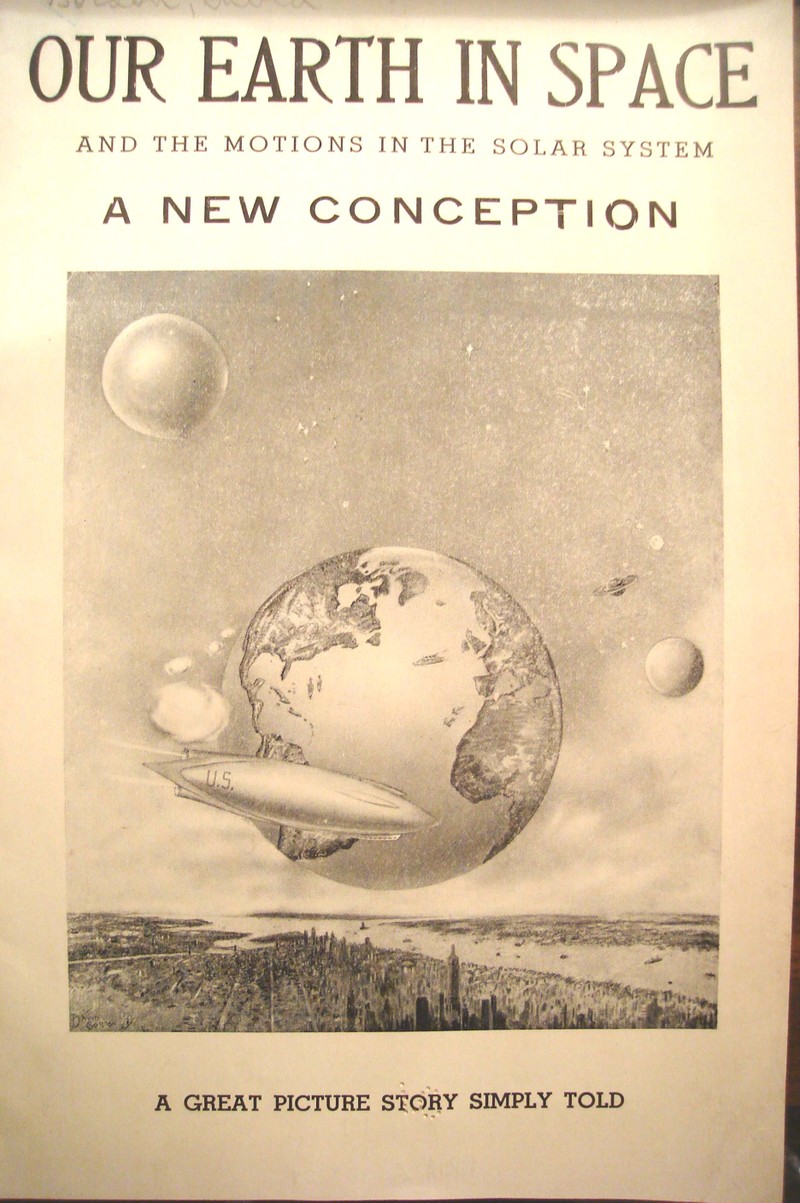
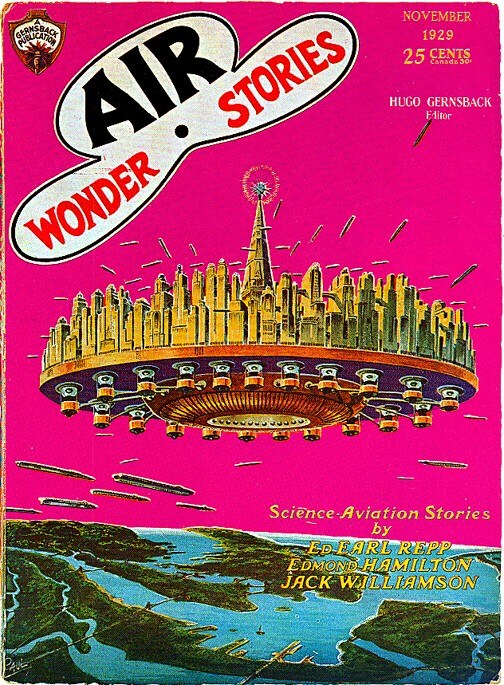
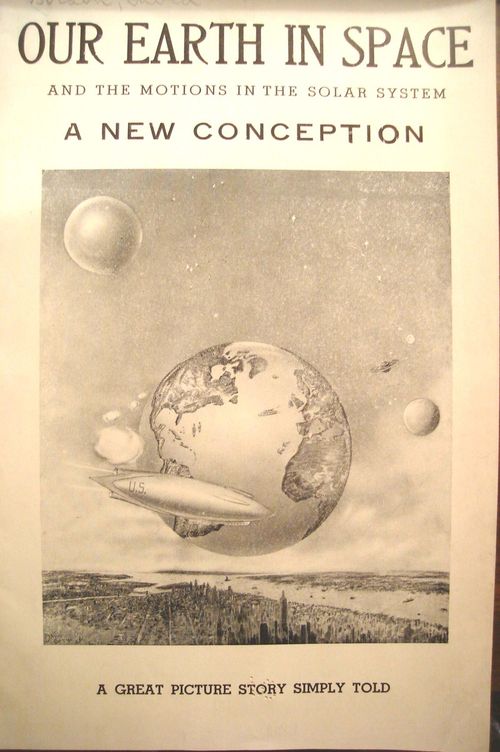
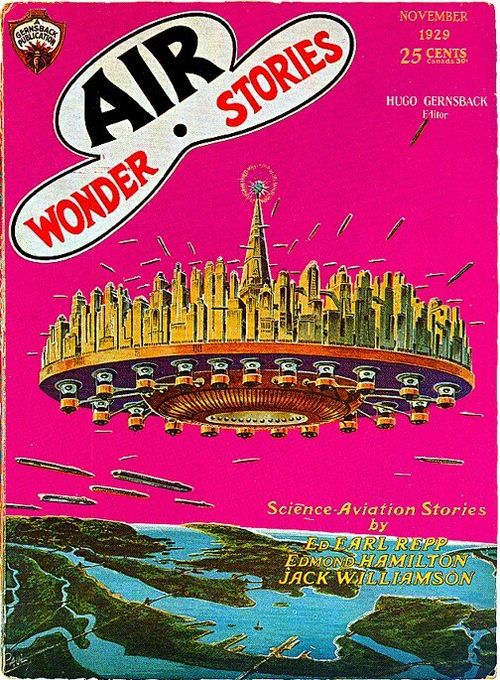
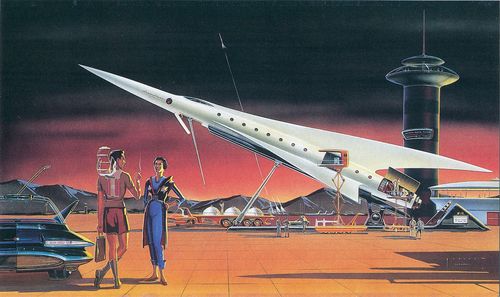
    How do we sort thousands of people writing about hundreds of thousands of future sightings in human development? Flying cars and people and cities and retrievable/liveable subconscious bits and dream, atomic blast guns, two-way wrist tv/radios, perfect places of nothing but intellect and floating intelligence, horseless cities, Soylent Green, personal computers small enough to fit into the trunk of your car, Edison’s anti-grav underwear, buffalo herding from nuclear-powered sports cars, Maginot Line-sized mobile tank-ships, rockets to the Moon, rockets to the Sun, and rockets to tomorrow and to yesterday. We have futures where Manhattan is completely covered by thirty-story skyscrapers by the social warrior Thomas Nast; where George Holmes kills off cities with airplane-filled suburbs in 1912; where electric titan tank monsters with canons instead of cigarettes crushed hopeless opponents in 1918; where atomic-powered dirigible airports free up land in 1946; where a floating NYC is moored above the hole-in-the-ground where it once stood. Where spacecraft of mega-sharp ultra-fins await their cigarette-smoking pilots in 1953 and out-Eiffeled mile-high vertical airport towers, and where an identical duplicate Earth floats serenely in place above a bird’s-eye view of Manhattan.
      Mensa extra earth

    Much of the early technical thinking on the future seems neither utopian (in the traditions of Thomas More, Francis Bacon, Plato, Robert Owen, and such) nor what we would consider today to be dystopian (as with visions of Capek, Bradbury, Orwell, Burgess)–it seems to tend more towards a neutropia. And this does not include the earlier attempts at predicting the near future by looking at frothy bits of entrails or the shades of urine, or the oracles of thrown dice bones or draw of playing cards, or following the implications of human mole maps or seeking guidance in the alignment of stars in the sky.

    And at the top and bottom of it all are the religious futures of endless pain and comfort and nothingness and repetitive existences—but that doesn’t feed into this topic, though the way time ticks through the reckoning of Brahma is very nicely suited to calculating versions of pieces of infinity.
      Mensa floating NYC

    This effort of looking at the history of the future is easier when there are bookends, and there’s no more a convenient end to the future as when it has a date. And in the past that date has often been the year 2000.

    Let’s look at two very unusual examples of future thought experiments—one of which visualizes life in the year 2000—and both of which entertain what may be one of the ultimate considerations for the evolution of humans.

    One aspect of thinking about the future is the opposite of trying to include a sense of the future in the present—instead, it can be about removal. Removal of the present, distancing it from the present and the past. Removal of practices, though not necessarily principles.

    And perhaps one of the greatest of these removals is that of the human aspect of humanity: people replaced by created entities. In a way, a sort of 19th century singularity.
    Mensa cigarette space jock

    A curious example of this can be found in the third edition of Jonathan Swift’s tales of Lemuel Gulliver, where we see a Jorge Borgesian library-producing machine, a 20′ square instrument made of cranks and cubes and turned by scribes producing an endless stream of knowledge. A wooden miracle replacing the human mind, an intelligent primum mobile with splinters.

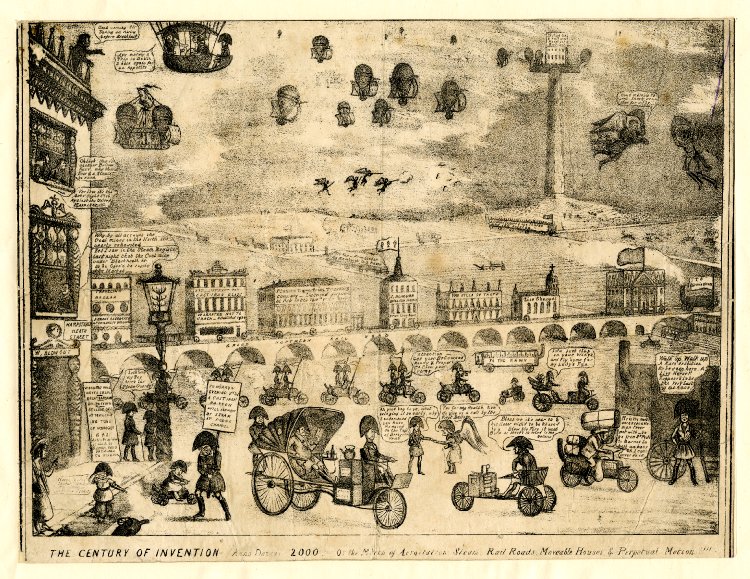
    A great example of this high removal is found in “The century of invention Anno Domini 2000 or the march of aerostation, steam, rail roads, movable houses & perpetual motion,” a terrific lithograph, made ca. 1834, the handiwork and imagination of Charles Jameson Grant, a satirist and observer of high order. He tried looking into the future 165 years hence, and in some practicable ways he got a lot of it right–the imagery wasn’t there, but the iconic sense of what may come to be was.
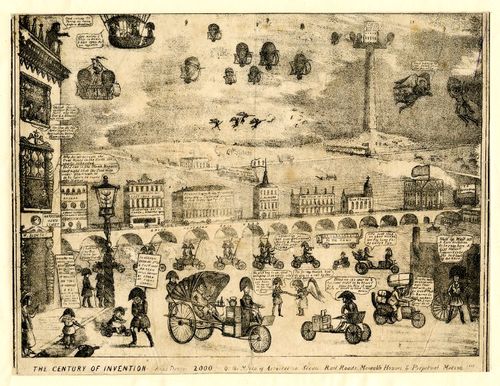
    Mensa Steam-powered pastor[British Museum, here.]


    We see small and large individual steam-powered four-wheeled vehicles, as well as plenty of balloons (in the spirit of aviation, at this point in its fourth decade and entering a great heyday) passing each other in every which way, off on adventures, or work, or in a race (as with the “out of Sight Club”). There are also numerous people flapping around in the sky (“winging it so early”) with their (something)-powered wings, some of whom are ironically hunting birds.

    The main sensation here is speed, though I would not say it was democratic–the means to go to Dublin in your balloon “for an appetite” and return later in the day would have been fantastic to the 1834 reader trying to imagine doing such a thing on such a whim, with a newspaper in your lap, but certainly it would be available to the leisurely class.

    There was also an idea for balloonic communication, as one man in a balloon shouts to another to “give me a call by the first balloon,” meaning perhaps a communication device, or a balloon-delivered letter.  

    The dialog certainly portrays an attitude of unremarkable observation, conveying how commonplace flight and mobile towns and steam cars would be in the year 2000. That’s where one of Grant’s the great insights comes into play–at lower left there is a person excitedly remarking about a race, and particularly on the great rarity of the exhibition of a live horse. That Grant would make this an issue is interesting, as it would certainly rub the 1830s consciousness the opposite way of what the brain expected to see in the street, and that was horses. Horses powered almost all transportation at this time—save for the invention of the railroad, some of which were horse-powered—and to imagine a world in which the horse would be gone would’ve been, well, unimaginable.

    Also, too, the great and extensive coal mines fueling the Industrial Revolution going dry, the coal consumed.
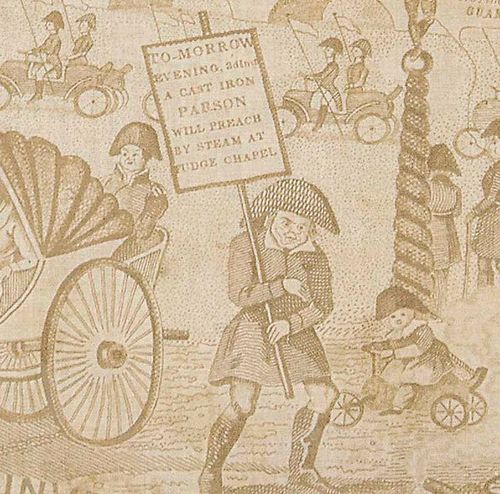
    MEnsa cast iron preacher[From Christie’s auction site, here.]

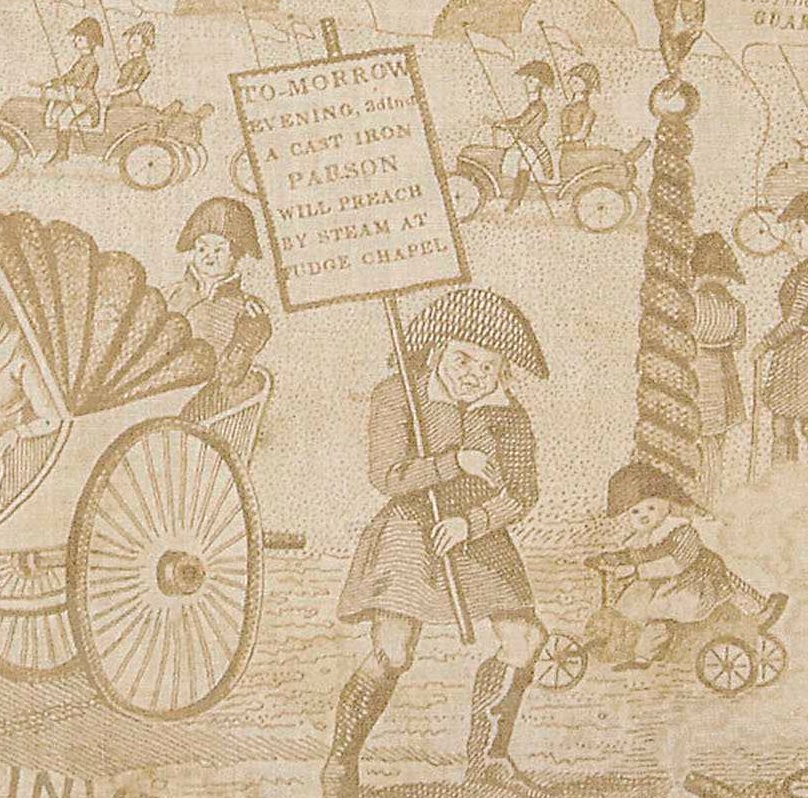
    At the bottom of the print is the prize, a very unusual placard concerning robotics: “a cast iron Parson will preach by steam at Fudge Church.” This is doubly intriguing because it not only invokes a steam-powered person—still fairly rare in the literature in the first third of the 19th century—but also a thinking one, a parson, a mechanical object trusted with the preaching and interpretation of a basic human belief system. This seems a bit on the primitive side in its display, but the intellectual imagery is pretty powerful stuff. I assume that the power of this would’ve been less so at the time of publication, guessing that Grant was making more of a not-so-subtle satire on the steam-driven puffery of some preachers with the creativity of kettles, and that in the future this would be magnified to the point of steam and smoke. But still the idea of placing the deeply emotional stuff of belief systems in the control of a machine is extraordinary for the time.
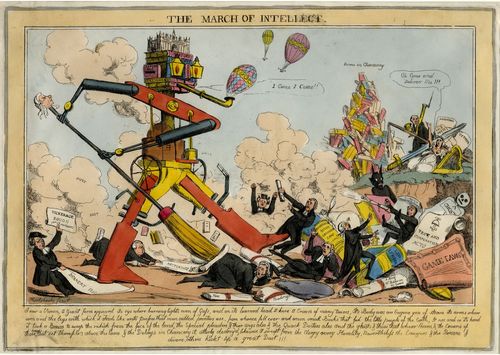
    Mensa article Heath March Intellect Robot (1)

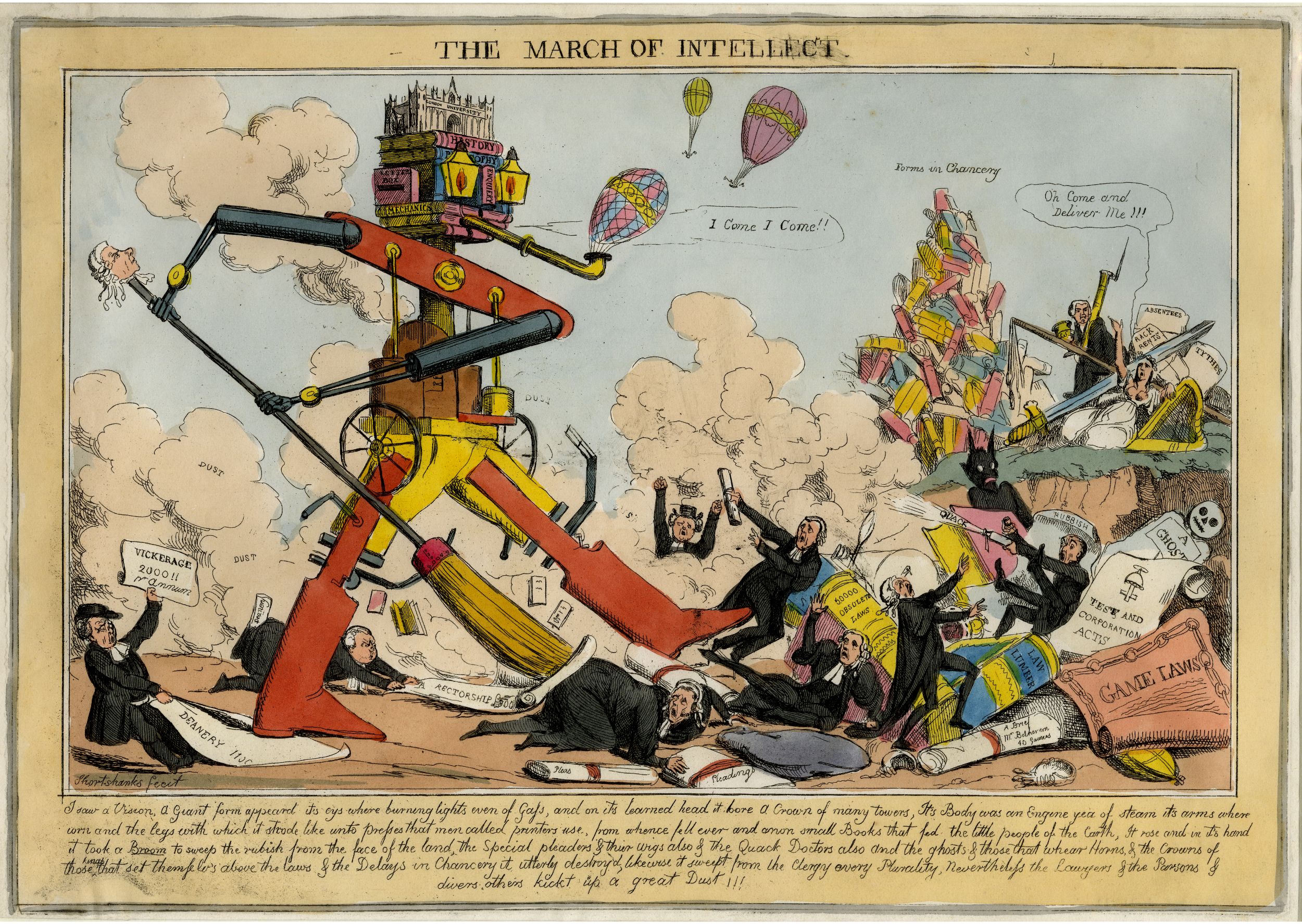
    A few years earlier William Heath’s March of the Intellect series (1825-1829) displayed another robotic entity witha book-driven intellect in its “crown of many towers” (London University) that swept up the great “rubbish” and “dust” of society. The robot was thinking in its way, distilling the promise of data and intelligence in its book-laden head, firing its set of gas-light eyes, iron arms, and legs made of printer’s tools, sweeping away useless and insulting lawyers and jurists and their legal wigs and obsolete and repetitive rules, medical quacks, and the dust of other official abuses, “sweeping rubbish from the land.” It was making decisions and acting on them, trumping the humans in its path.

    It is a remarkable leap, the consequences of which are difficult to put into perspective. I can think of an example from the novel Flatland, by Edwin Abbott, when its two dimensional characters first encounter a three dimensional figure—superbly incomprehensible at first, understanding following with some difficulty.

    Visualizing the assumption of a created intelligence developed enough to supplant or supervise human thought and activity was probably beyond the 19th century sensibility—just as its technical aspects are to us now.
  • What Victory Looks Like When You Really Can’t Tell (1917)

    expanded Post 317 (2009)

    00blogoct_14somme850_2

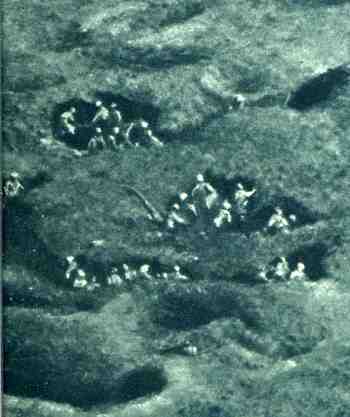
    In a play on the concept of the Powers of Ten, I had a look at a photograph depicting the French victory at the Somme; or was it a British victory?  Or German, via the lure of the others to a semi-victory?  Its hard to say who won, or if there really was a winner.  The Battle, which looks to me to be a sub-war within the war, occurred over the period of July through November 1916.  When the smoke settled, there were some 1.5 million casualties on both sides.It has long been held that the battle really was won by someone, the British, the French; but there was so little that was accomplished by the action that there probably wasn’t a winner, just losers. 

    And big losers, at that: Great Britain, Canada, Australia, New Zealand, Ireland, South Africa and Newfoundland lost 419,654 casualties, with 95,000 killed; the French lost 204,000 casualties and 50,000 killed.  That made a total of 623,000 casualties and 146,000 killed for the allies; Germany lost 465,000 casualties and 164,000 dead.  The advances made along the battle front went a few miles one way and then the other along a 12-mile stretch of battlefield, which four lives were traded for every inch gained along that porous front.

    The first image here (above)  is a very sharp detail from the overall picture published in The Illustrated London News for 6 January 1917, representing about 1% of the entire photo

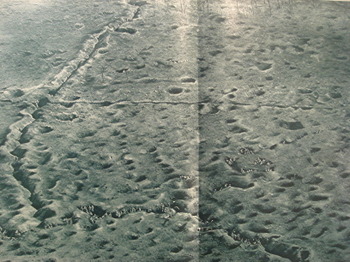
    The next image places the micro-detail in more context; this detail is itself about 5% of the main image, which is found just below this one.

    00blogoct_14somme849_2

    The overall image from which these two details are removed is below. In turn, this large image is but a small detail of the greater overview of the battlefield, making up perhaps a few percent of the field of operations. 

    I’m trying to get a feel for the enormity of the battle, but I really can’t, not even via powers of ten, manipulating the idea of orders of magnitude.

    In one last try, I hypothesize that the 1.5 million casualties could not be displayed in 10 of these large images.  .

    That wouldn’t look like victory at all. 


    Ballistics_123

    (An “oh, shit” picture if there ever was one.)

    ·Posted by :

    ·in:

    — —
  • Out-of-Context Department: the Flat Iron Building Infographic, 1910

    JF Ptak Science Books   Quick Post      

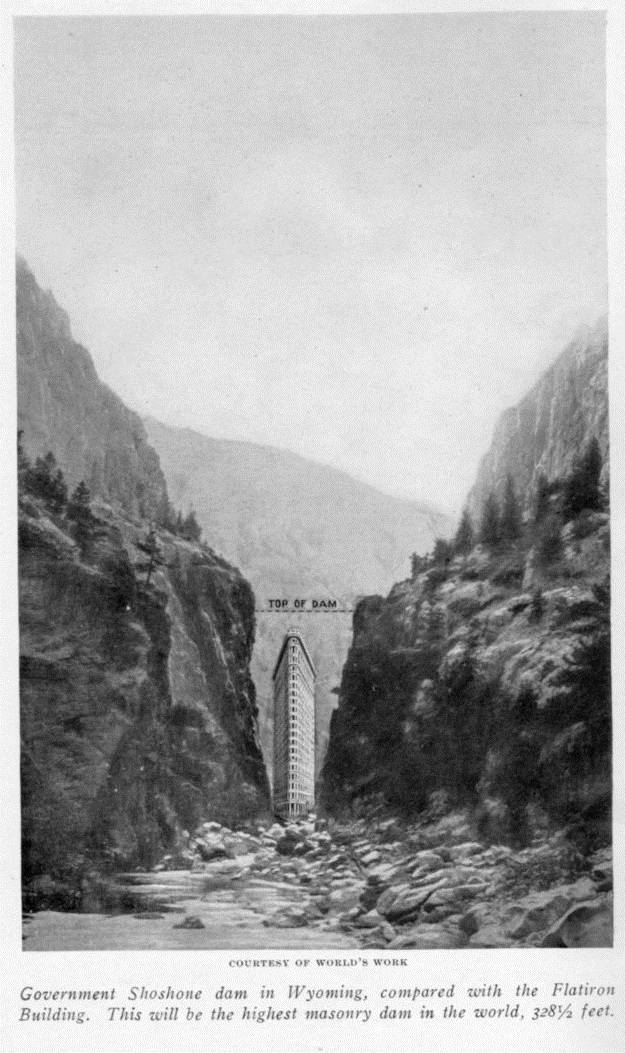
    I do enjoy infographic presentation that employ well-known and/or iconic bits from the environment as measuring implements.  Like using the Eiffel Tower for gauging heights, as shown earlier in this blog (see The Eiffel Tower as a Unit of Measurement, here) and St. Peter’s  cathedral for showing the depths of oceans (here). This surprising images appears in a simple pamphlet called The Conquest of the Desert (and which starts with a quote from Herodotus), published in 1910, and written on the subject of the Shoshone Dam (the Buffalo Bill Dam), which was opened in that same year.  It was a monster at 328′ high, and one of the best ways for the author to show what 328′ tall mean was to compare it to something very well known–and at thee time one of the most famous skyscrapers in the world was the Flat Iron Building in NYC, which stands three feet shorter.  And I’m pretty sure I’ve not seen too many images of famous buildings out-of-context and out-of-place as this.  

    Flatiorn222

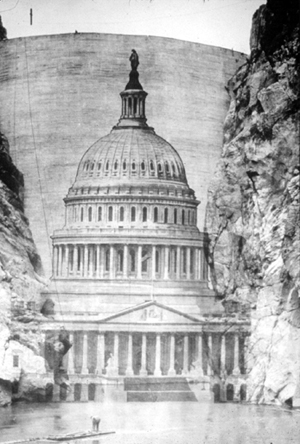
    In 1910, in the heady just-getting-started days of skyscrapers coming into full view, and with structures like the Singer building topping out at over 600′, it ws legislated in Washington D.C. that no building in the city would be taller than the Washington Monument, for fear of the thing strapped with teh shadow of something larger.  That’s about the only thing that came to mind seeing this alternative measurement of the Shoshone Project dam:

    [Source: http://www.nps.gov/nr/travel/ReclamationDamsAndWaterProjects/Buffalo_Billl_Dam.html]

    Shoshone Project  capiotl

    ·Posted by :

    ·in:

  • When Catalog Cards Were Card Catalogs

    JF Ptak Science Books   Post 2287

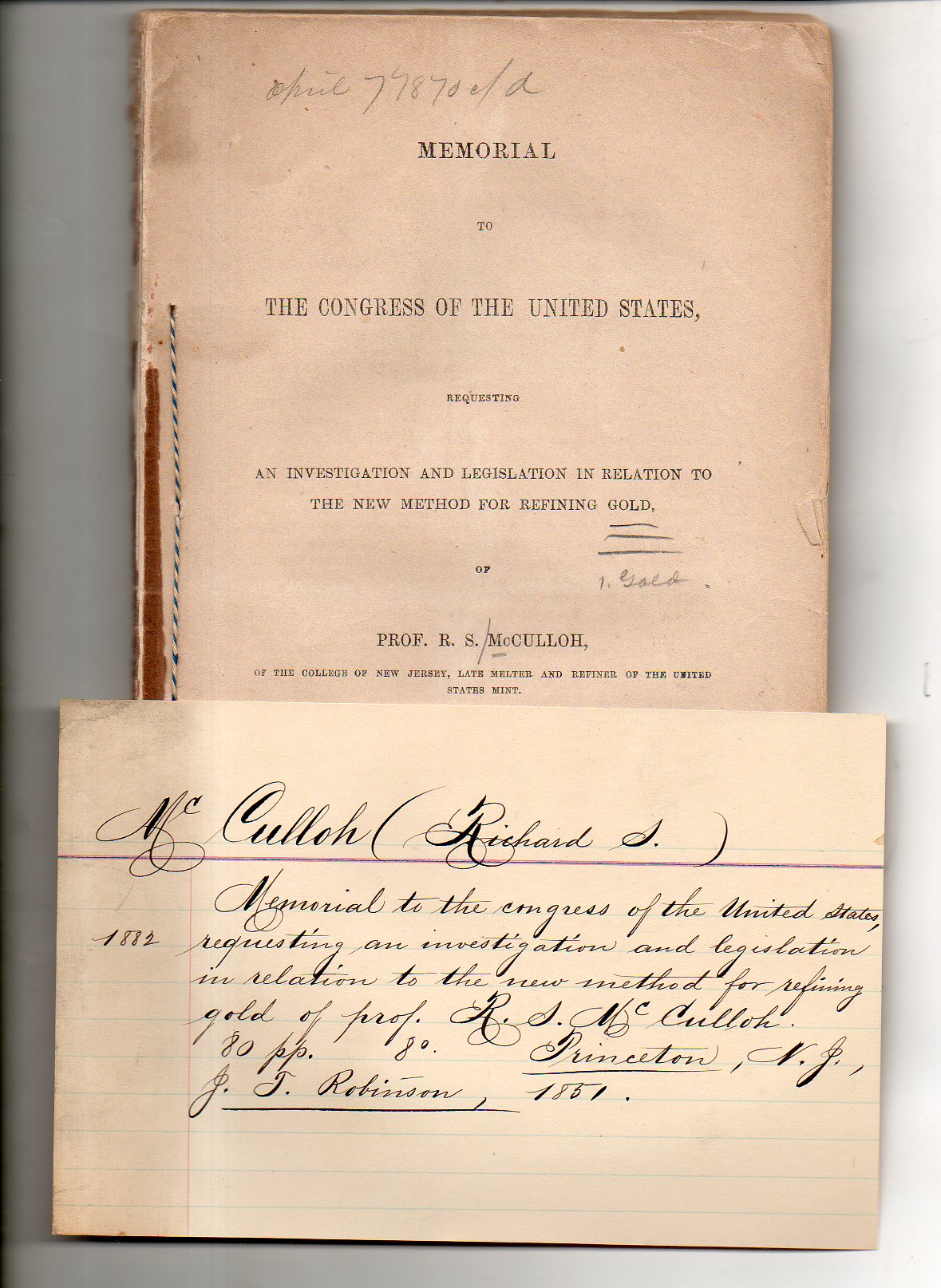
    This is a short and stubby flare sent up 200 feet into the dark, a little missile celebrating the card catalog.  I remember being so heartbroken seeing the individual drawers of the Library of Congress card file up int he stacks, way back in the day when they’d still give you orange stacks passes if you could present an admirable-enough case for needing access all on your own–I imagine that the file drawers were stored away near the Qs which is what I usually wanted to see.  Anyway there they were, hundreds of them no doubt, hundreds and hundreds.  They were there because the cards had been photocopied, or something, and the entire rig on the reading room floor replaced, opened for more space.  I don’t recall the disposition of them for certain but I do believe they didn’t last very long, sent to the great card catalog in the sky where the manuscript entries on the backs of the cards, notes made by librarians and scholars over the years, are housed in a secret tower of lost information, because as we know it was only the fronts of those cards that were copied.  

    Here is what the “flare” is about, a lonely hand-written catalog card for a surplus(ed)/duplicate pamphlet from the Library of Congress.  The work is by Richard S.  McCulloch, and called Memorial to the Congress of the United States Requesting an Investigation and Legislation in Relation to the New Method for Refining Gold (printed by John T. Robinson in Princeton, N.J., in 1851). 

    McCulloch221

    There is another slip of old paper in the pamphlet with a tiny annotation, “McCulloch/not in L.C.” It was, for 100+ years, but not any more.  

    I purchased this along with dozens of thousands of other pamphlets (in a collection called, yes, The Pamphlet Collection) years ago when the library determined that the material was not needed.  I was very happy to need them, and I’m still going through the process of finding other needy recruits for them.  

    But it is that card that makes me like a border person of some sort, of having used the old-time systems and then benefited greatly from the new and replacement systems.  For example doing searches in what is a very useful tool for me–the WorldCat database–for finding holdings of libraries for a particular title is now an instantaneous thing, whereas in the not-so-misty past (in terms of human years) this search would have involved going through several iterations of the multi-hundred-volume National Union Catalog.  The time I’ve saved looking up bibliographic references and using online reference tools probably has given me several lifetimes of look-up compared to the 1979 me.  

    Still and all, I think I’d like to see the card catalog.  

    Notes on the McCulloch book: 

  • Women’s Land Army of England, 1918

    JF Ptak Science Books   Quick Post

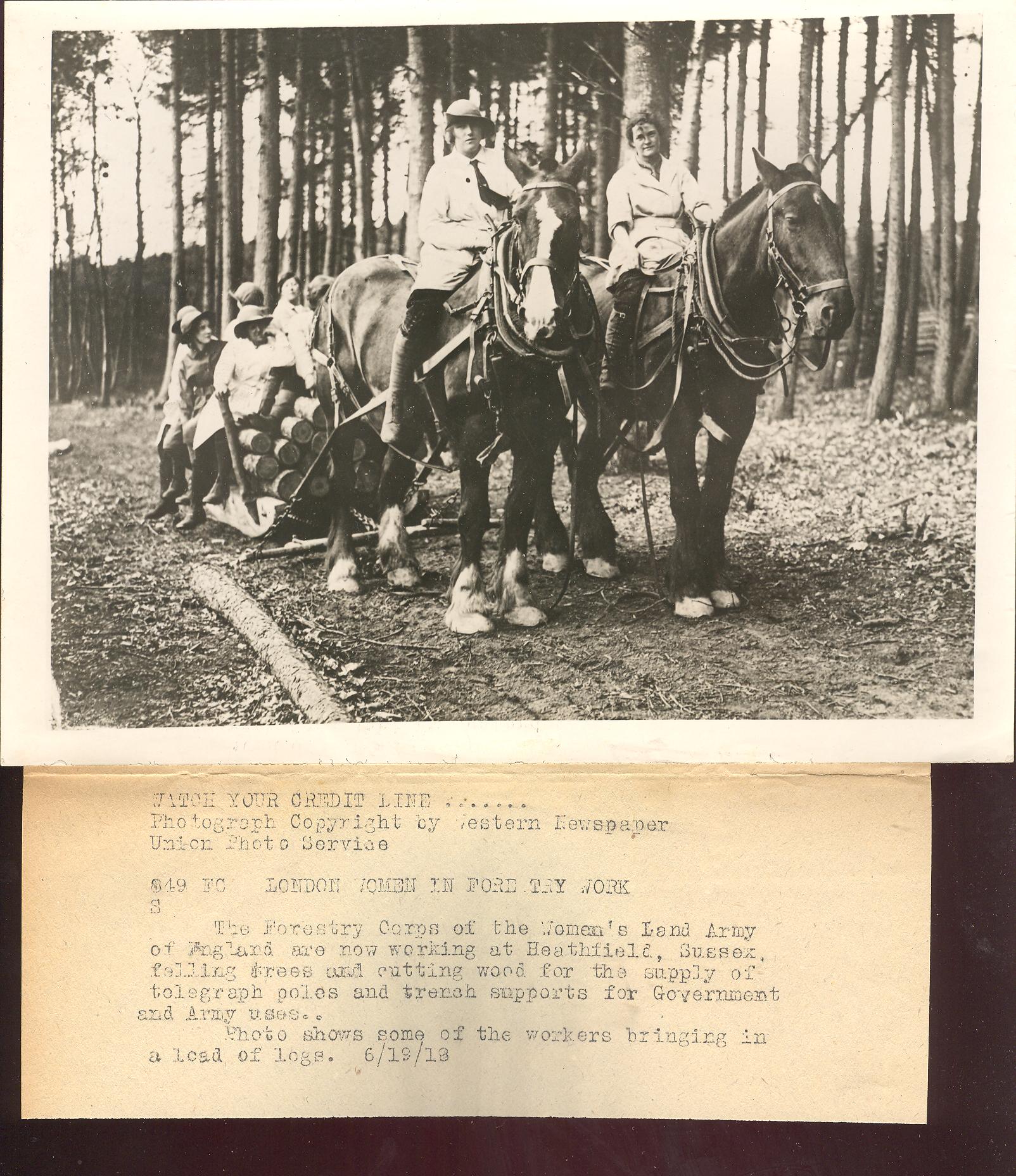
    What a great name–the Women’s Land Army of England.  This was a voluntary service that recruited women to work in jobs (generally in agriculture and forestry and such) that were left unfilled by men going into military service.  The “Land Girls” performed a huge variety of work and were a very necessary part of the economic and social structure of the U.K., a Florence the Farmer response to Rosie the Riveter.

    The image below is of  a continent of the Forestry Corps of the Women’s Land Army of England, working at cutting telegraph poles, and commanding some great-looking draft horses.  (The horse on the right–ears back–looks big and perhaps a little sensitive.)  The horses are pulling a land sled filled with at least five other women and a load of telegraph poles that don’t look particularly long…

    I love that the women are wearing ties.

    [The original photograph can be purchased via this blog’s store, here.]

     
    1 april 27 women horses

    1 april 27 women horses det

    ·Posted by :

    ·in:

    —
  • Warsaw Ghetto Uprising–Full Text of a Rare 1944 Pamphlet

    JF Ptak Science Books  

    “There will be a dawn.”–Dorothy Thompson, 1943

    “The former Jewish quarter in Warsaw is no longer in existence”–Jurgen Stroop, liquidator of the Warsaw Ghetto.

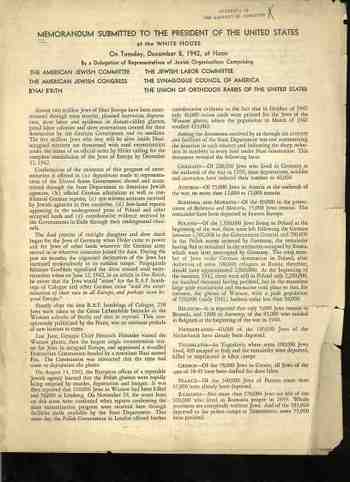
    Dorothy Thompson got that one wrong–or so at least got the “dawn” wrong when it comes to the Jewish uprising in theWarsaw Ghetto in 1943.  There wouldn’t be a dawn, there, mainly because there would be hardly any Jews, or Warsaw.  [This battle took place about three years after the Nazis established it as a means of control for the city’s 400,000 or so Jews. In the intermediary years hundreds of thousands of Jews had been “deported” (that is, sent to the concentration camps to be exterminated or worked to death), so that by the time of the Uprising only 60,000 people remained in the Ghetto.  And by this time there was no doubt in anyone’s mind who lived there (and perhaps too in Warsaw as a whole) what the euphemism of “deportation” actually meant.  The battle started off well for the home defence (the ZOB) but, ultimately, with little access to resource and with nowhere to actually retreat or regroup in the few acres that remained of the original Ghetto, whoever was left in the Ghetto were either killed or captured by 16 May.  The German commander, SS Brigadefuhrer Jurgen Stroop reported on that day that “the former Jewish quarter in Warsaw is no longer in existence”.]

    This small pamphlet was written by Reca stone in 1944 on the Jewish counter-attack against the Nazis in the ghetto of Warsaw. It is one of not-many that documented not only the resistance in Warsaw, but also of the wholesale liquidation going on in that city and in the concentration camps. in general.  (Again, this was written in 1944. )

    There weren’t many accounts like this, but there were enough, certainly enough to have made a difference, I think, in how the leaders of the war effort approached whether concentration camps existed or not.  Franklin Roosevelt had exactly one meeting on this topic (which I wrote about here), while many others decided that the idea of exterminating all of European Jewry was so enormously bad and so gigantic that it could not possibly be true.  

    Felix Frankfurter famously replied to a first-hand report on the extermination from the great Jan Karski that he just couldn’t “beieve” Karski’s story–not because the Supreme Court Justice (and Jew)  thought Karski wasn’t telling the truth, just that the story itself was unbelievable.  And whether people thought that the stories were the truth but unbelievable (like Frankfurter) , or whether they thought they to be exaggerations, or whether they thought it was impossible, the responses and the subsequent actions mostly seem to have come to the same end of nothingness. Even after years of reports of extermination and brutalities and millions of people missing (as FDR was warned of in that1942 meeting), the actual eyewitness accounts of the concentration camps were still received as being unbelievable.

    Blogsept5_memorandum_1494_2

    This is one of the reasons why General Eisenhower–when viewing the  concentration camp at Ohrduf in April 1945 with Generals Patton and Bradley–suggested that world leaders and other high-rankers come to the camps to bear witness so that future generations would know that such a thing actually existed.  And so we come to the Reca Stone pamphlet.  There are many other accounts of course of the uprising, and many of those are available on-line–but the Stone account, which is a rare thing in itself (only seven libraries worldwide having a copy of the work) is not on-line, but it is now.  I think that it is a significant report, and it should have a wide audience–things like this should reach as large a readership as is possible. 

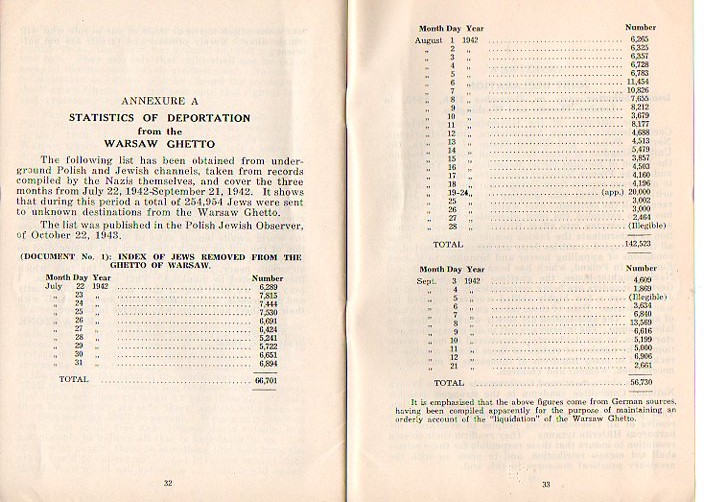
    An example of Stone’s reporting, coming from Underground sources and the Polish Jewish Reporter, on the number of Jews “removed” from the Ghetto of Warsaw between July 22 1942 and September 21, 1942–254,954 over a period of about three months:

    A--warsaw ghetto213

    But Stone gives no sentiment to the idea of Jews “perishing”.  On page 20 she describes the death camp Treblinka, and how thousands and thousands of Jews met their death in the gas chambers, or by suffocation and scalding, or by execution, or by live burial.  

    She writes boldly: In this manner 250,000 Jews were transported from the Warsaw Ghetto…and in this manner tjhey met their death”.  Period.  No euphemism here.

    She also quotes Washington sources that “two million” Jews had “perished” (the Federal term, not Stone’s), and that “five millions were imminently threatened with death”.  She pretty much got everything correct, as unbelievable as it sounded, then.  Or now.  

    A--warsaw ghetto196


    ·Posted by :

    ·in:

  • The Crime of Being a Negro

    JF Ptak Science Books   Quick Post

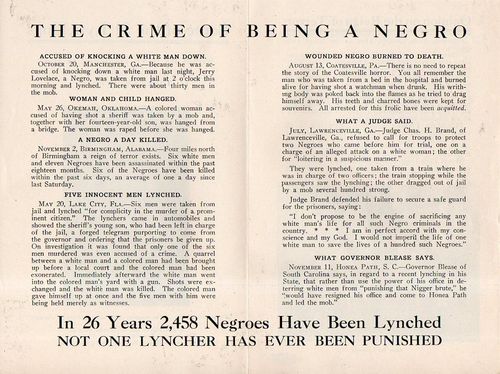
     This extraordinary handout–a small broadside, printed on both sides–in very short order gets to the heart of a compelling epidemic, a gruesome single-sheet epic.

    Lynching4

    [No real title on title page] “Some of the 51 Lynchings [dropped title] which have occurred during the last Six Months—and there are others”, printed by the NAACP, NYC (20 Vesey Street) ca. 1912.


    ·Posted by :

    ·in:

Recent Posts

Archives

Categories