A Daily History of Holes, Dots, Lines, Science, History, Math, Physics, Art, the Unintentional Absurd, Architecture, Maps, Data Visualization, Blank and Missing Things, and so on. |1.6 million words, 7500 images, 4.9 million hits| Press & appearances in The Times, Le Figaro, Mensa, The Economist, The Guardian, Discovery News, Slate, Le Monde, Sci American Blogs, Le Pont, and many other places… 5000+ total posts since 2008.

  • Feeding the London Zoo in Terms of 1944 Telephone Operators

    JF Ptak Science Books    (3,000+ total posts, including Quick Posts)

    I’ve put together a relatively large collection of images from 1850-1940 which are graphic comparisons of data and graphical displays of quantitative information..  In general they display the basic concepts of one idea in terms of something else, or they simply exhibit the idea or concept in cold hard one-to-one images.  The two images below are good interesting, standard representations of these categories.
    Zoo_story149_2

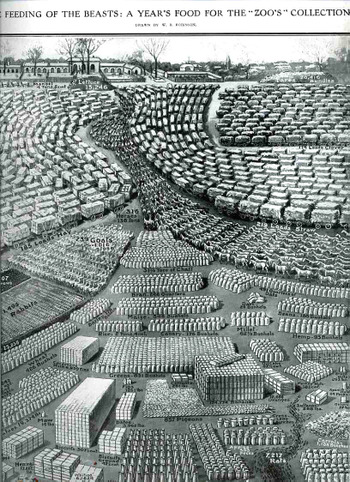
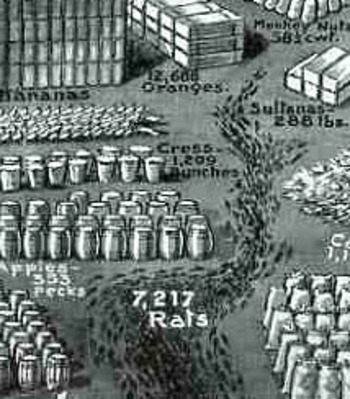
    The first is a very neat and complex display of the food eaten by animals in the London Zoo and was published in the Illustrated London News on May 17, 1913.   The data, found in the report of the Zoological Society of London (for the year 1912) is entitled “The Feeding of the Beasts:  a Year’s Food fore the “Zoo’s” Collection.  The real story though is in the subtitle:  “from shrimps to rats; from onions to oil cakes and mice, the food consumed by the animals at the “zoo” during 1912.    (I’m assuming that the word “zoo” is in quotations as it is a diminutive of “Zoological”, ad was seen as slangish.)  As you can see the language of the undoubtedly stiff report is beautifully brought to life (but not for long) in this work by W.B. Robinson.
    Zoo_story_rats_2
       
    We see 15,000 pounds of lettuce in a lump and a pile of 4,220 bunches of carrots, along with a serpentine 185 wagons of hay and a snaking 219 wagons of straw; there are giant cubes of biscuits and milk tins, and an even larger cube of 183,000 bananas in boxes; there are orderly armies of goats and rabbits, and a very neat ordering of 19,000 pounds of potatoes in stiff white sacks.  At bottom we see comparatively lonely contingent of 28 ducks (undoubtedly hoping that something else besides what was happening was happening); and of course an ant-like column of 7,217 rats. There were also masses of clover, boxes of sparrows, 857 pigeons, 123 pounds of figs, 2 tons of dates, 93 bushels of hemp, 4500 pounds of grapes, 500 pounds of sugar (?), 34,000 eggs, and a slithering line of 25,000 mice.  Most disturbing though is the central figure of a long, quiet column of 318 horses.  I can’t help but feel sorry for them.  It is a remarkable and successful effort to put the data into a form that was somewhat more understandable, if less digestible, and a little more heinous.
    Telephone_ops150

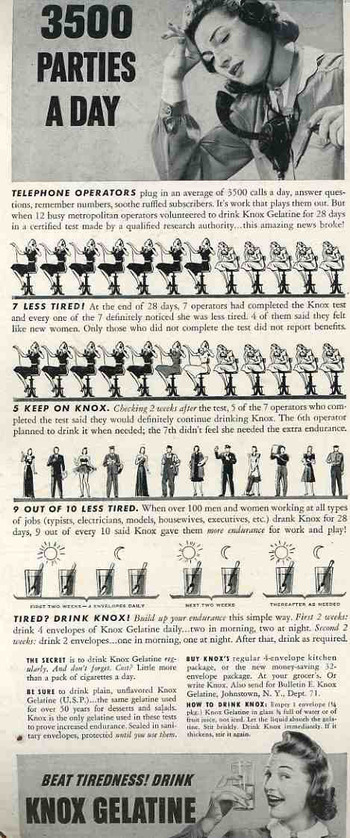
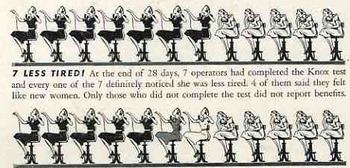
    The second image is a simple but somewhat bizarre rendering, changing counting units of numerals and replacing them with telephone operators—I can honestly say that I haven’t seen this before.  It is quietly bizarre, but still quite effective in making the sales pitch for the noxious element.
    Telephone_ops150_detail


  • Fighting Fire with Fire, 1837

    JF Ptak Science Books   Quick Post

     [Image source:  Google Books, The Mechanics’ Magazine, Museum, Register, Journal, and Gazette, Volume 26, 1837.]

     This remarkable fire-fighting suit was present in an article in the prestigious Mechanics’ Magazine, and published in London in 1837.  It does seem impossible in its way to the modern reader, particularly for the eye-popping hood and lighted-candle-belt apparatus.  But it is very sobering to think that this would have been a vast step-up from what was available at the time–especially for the leader house of air into the jacket/hood.  Here’s the full text of the description of the apparel:

  • How and Where Unwanted Fires Started in London,1836

    JF Ptak Science Books  Post 2334

     I’m pretty sure that I’ve not seen statistics on the origins and causes of fires in William IV’s London of 1836…probably the need for the numbers has never come up, nor has their serendipitous discovery.  I have been interested distantly in firefighting techniques in earlier times, especially in places like London and Amsterdam, (and especially in reaching upper floors of narrow tall buildings), but the occurrence and frequency part never came up out of the technical interest in the firefighting tools.  

    But in this article on firefighting gear (depicted in the previous post, referencing The Mechanics’ Magazine, Museum, Register, Journal, and Gazette, Volume 26, 1837) several pages in were these captivating numbers–they all seem to make sense, though overall seeing them together led to an overall feeling of surprise.

    For example, of the 564 recorded and responded-to fires the two top causes were chimney fires (72 cases of the 564) and “bed-curtains set on fire” with 71.  It is not clear to me what this means, but I’m guessing it had to do with having a bed too close to a fire, or perhaps coals were dropped somehow from a bedwarmer.  A related cause was incautiopusly hung linens in front of fires (31), gas (38), candles (51), stoves (28), and so on. 


    The list of the places that caught fire is fascinating in itself.  Most of the businesses no longer exist as sole entities, or if they do (for a business like ‘coach making”) they exist in very small numbers for a very specific and tiny niche market.  That said most of the fires were in private houses (211 of the 564 reported incidents) followed by victuallers (36, and I suppose in this case the word relates to anyone selling food, as in a pub or inn), lodging houses (35), carpenter shops (26), “shops, office &c.” (23), bakeries (20), bookshops and stationers (12), and so on down the list. 

    Then there are the other low-occasion fires in fascinating-sounding places, like straw-bonnet shops, feather merchants, cheesemongers, silk-weavers, oil-and-colourmen”, and others, not the least of which were the Lucifer-match-makers.  

    All fascinating, really. 


     And somehow there was only one case of fire caused by tobacco smoking–I mean cigarettes basically didn’t exist yet and especially so ion mass-produced form so there were no rolls of tobacco product enclosed with paper impregnated with chemicals to ensure that the ciggie will burn whether someone puffs or not–which is odd because it was still a fairly wide-spread habit in pipe-smoked form…still with the caveats it is a funny statistic. And I guess there was one case because so many others couldn’t be confirmed to point of origin because everything got burned up.  Or something along those lines.  

  • History of Mattresses: the Suspended Sleep of the Atomic Bomb, 1945

    JF Ptak Science Books    Post 2336

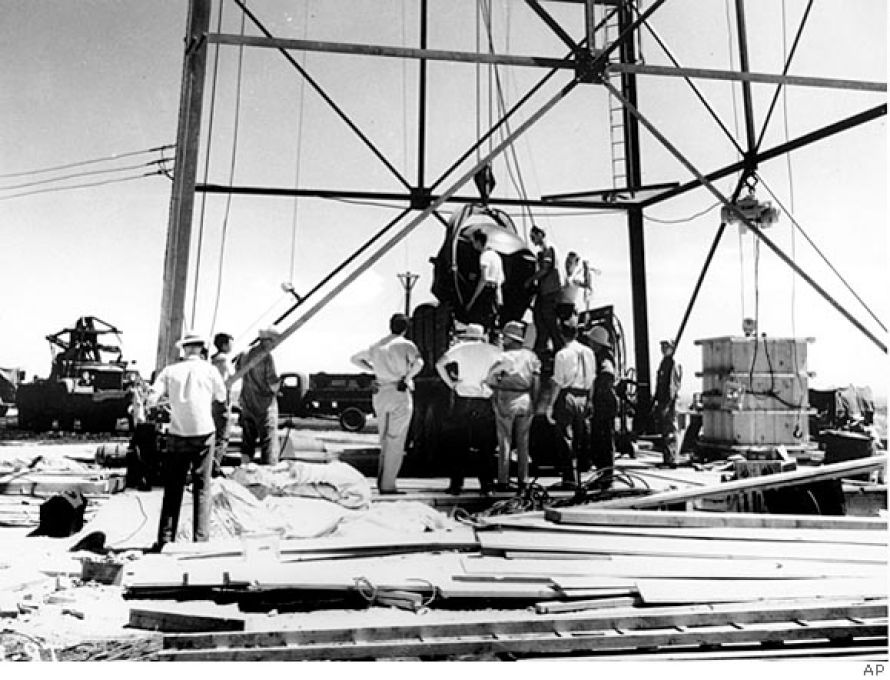
    Atomic bomb trinity tower[The preparation of the bomb, at center, before being quite armed and hoisted–(AP Photo/File)]

    The “Princess and the Pea” comes to mind with this story, except that the pea was located above the mattresses, suspended from cable above them. It was the ultimate pea.

    That “pea” was an atomic bomb. It was suspended in inside a 100-foot tall metal tower in the desert of Alamagordo, in the Jornado del Muerto, the test shot to see if the bomb worked, the near-culmination of the work of 100,000 people and billions of dollars, and the great potential decision-maker on the outcome of WWII

    This was the Trinity Test–July 16, 1945. 

    The bomb was hauled up to its position in the tower, dangling there, not much protected from the elements which that night of the test threatened lightning and wind.  What of the cables failed? And the bomb fell?  

    The last-minute fail safe was a large pile of mattresses.  They would cushion the fall.  The bomb would not explode, but it could be heavily damaged. And in this makeshift way the enormous investment was protected.

    The bomb was detonated at 5:29 that morning, creating at 1100′-wide crater, causing the atmosphere around the explosion to turn blue from heavy radiation, and raising a 40,000′-tall mountain of smoke, a result of its 15kt yield.

    The tower of course was vaporized.

    I assumed too so were the mattresses–even if they were Army-issue.  

    It is a secret irony of some sort that while pre-detonation betting was going on by the scientists about the yield of the device with a side wager on whether or not the atmosphere would be set on fire, that the stop gap measure preotecting the bomb if it fell was a pile of mattresses.  

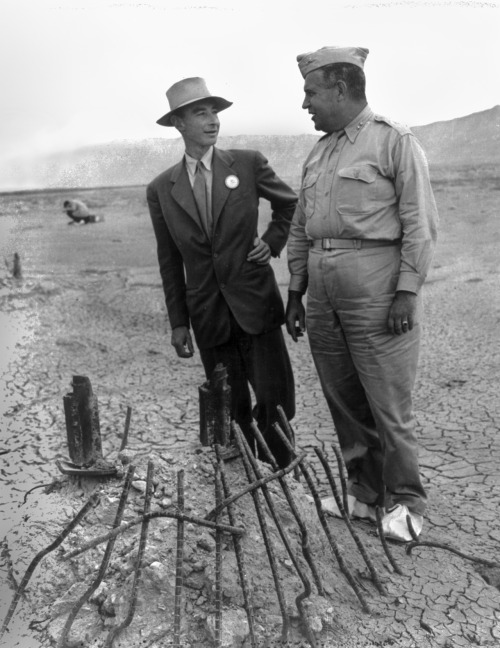
    Atomic bomb trinity oppenheimer groves

    [Oppenheimer and General Groves–standing too close for comfort–at the footings of the dissolved tower, afterwards, their whie footies in place for radiation protection.]

    But it all worked out.  

    ·Posted by :

    ·in:

  • Verticals, War, Reims

    JF Ptak Science Books  

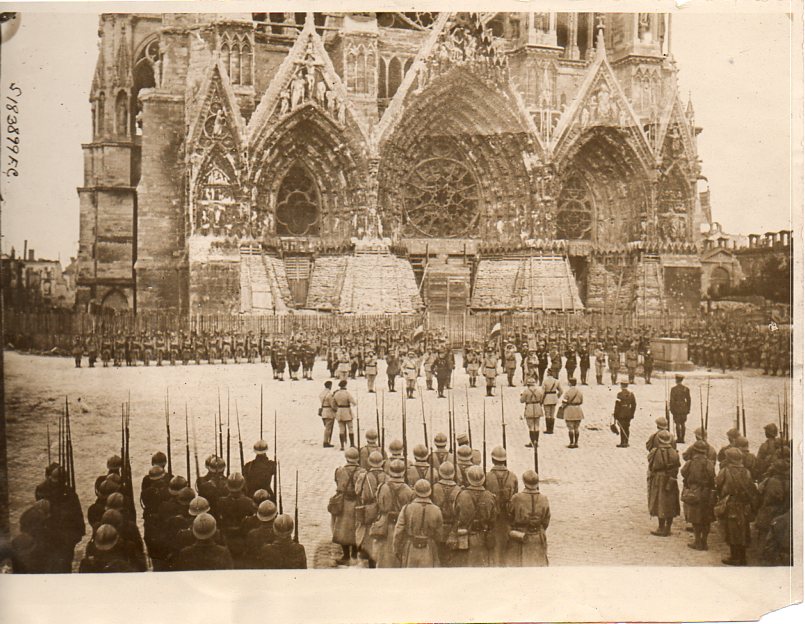
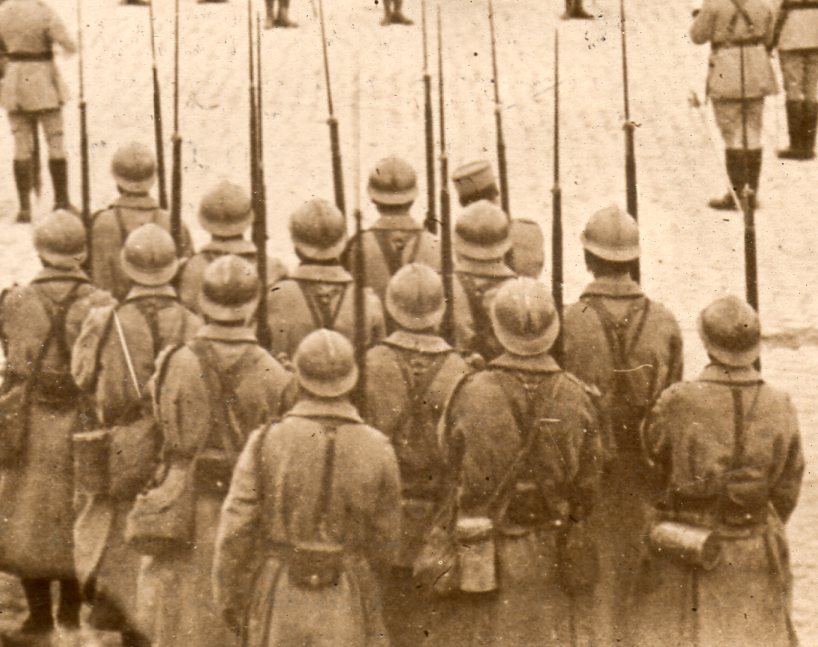
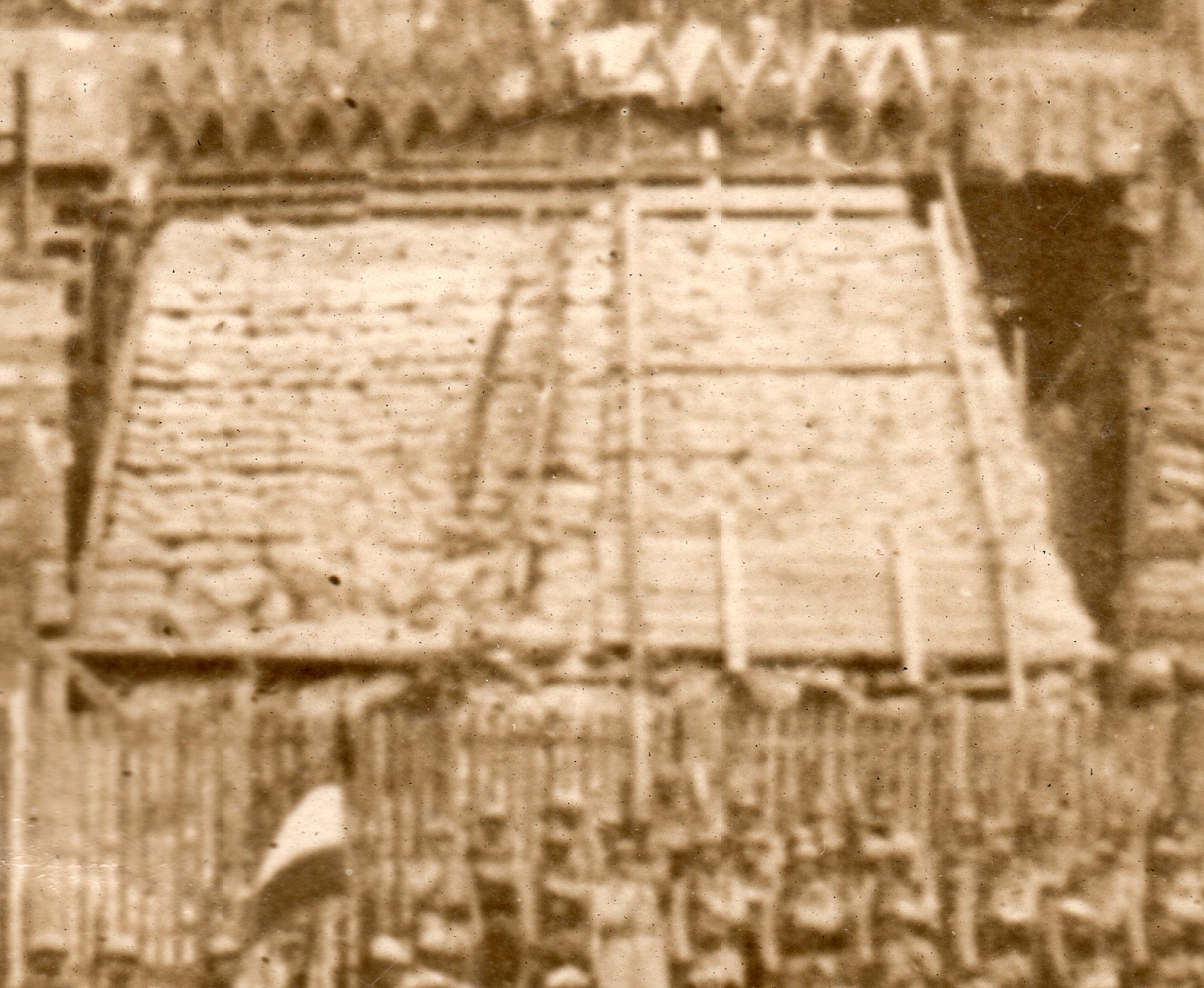
    In developing a history of vertical lines I thought that I would look at single vertical lines, but having just stumbled across this in our WWI News Photo Service archive, I just could not resist.  There is of course plenty of vertical arrangement here–just orders of magnitude more than what I was setting out to find.  So it goes.

    WWI photograph--spires071

    (The image is available from our blog bookstore, here.) And the detail:

    WWI photograph--spires det072
     And another:

    WWI photograph--spires det073

    I find this a soaring image, in its own odd way–this is a celebration scene, after,all, a decoration exercise, a military display of French forces that liberated the town of Reims, all taking place in front of the battered cathedral. Notre-Dame de Reims was the place of the coronation of French kings, and was a spectacular 13th century structure built on top of other buildings stretching back the site’s inhabitation to at least the 5th century.  

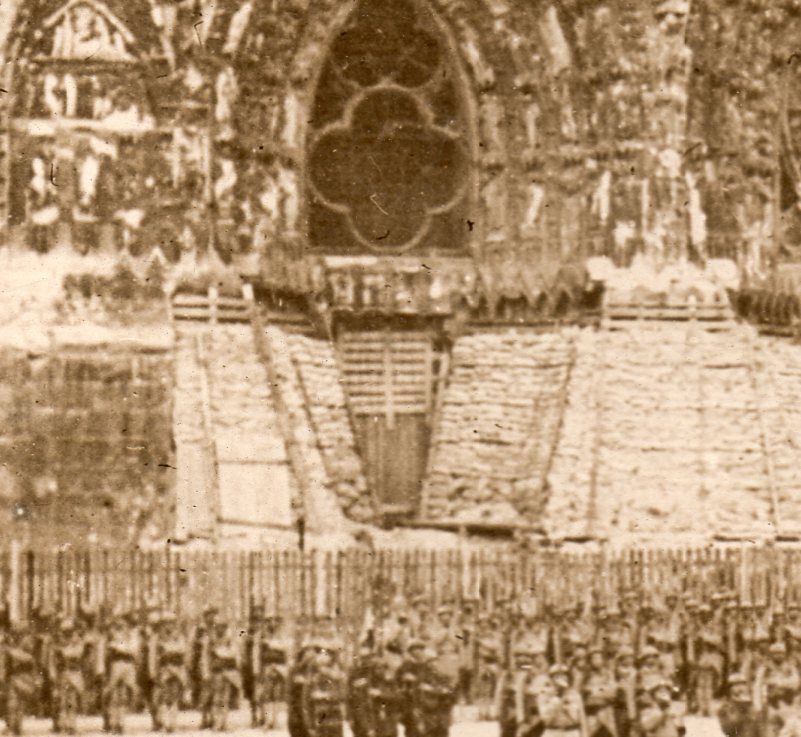
    But German artillery shelling caught the cathedral right at the beginning of the war and very nearly wrecked it.  The building was badly damaged by fire, a fire caused by the Germans, which spread along the scaffolding on the building which fed the wooden supports and superstructures, the flames finding its way throughout the building.  The fire was hot enough to melt the lead in the roof, which poured down as molten rain and out of the mouth-spouts of the building’s gargoyles. 

    As I brought out the further figures against the base of the cathedral one can clearly see the enormous stands of sandbags, the piles stacked up twenty feet or so behind the makeshift wooden fence.  IT was some sort of protection for the building, but not muc. 

    WWI photograph--spires det074

    This was yet another battle for the city, this one taking place 1550 years or so after the first, the Alemanni defending against the Romans; and then 104 years after the next major encounter, this between Napoleon and a Russian/Prussian force.  The liberating battle (the Battle of Reims, or the Second Battle of the Marne) took place 15 July 1918 to 6 August 1918, and it was a major failure for the German army, and spelled the collapse of the Spring Offensive, opening the door to the end of the war.  There were more than 135,000 Allies killed or wounded in this campaign (including 95,000 french troops), plus another 130,000 German troops.

    The process of victory in front of the wounded church seems exhausting and exhilarating, but not without a good sense of anticipation.

    ·Posted by :

    ·in:

    —
  • A Few Polymathic Interesting Bits by Jevons

    JF Ptak Science Books  Post 2337

    Can We See More or Less than We Used To Be Able To See?

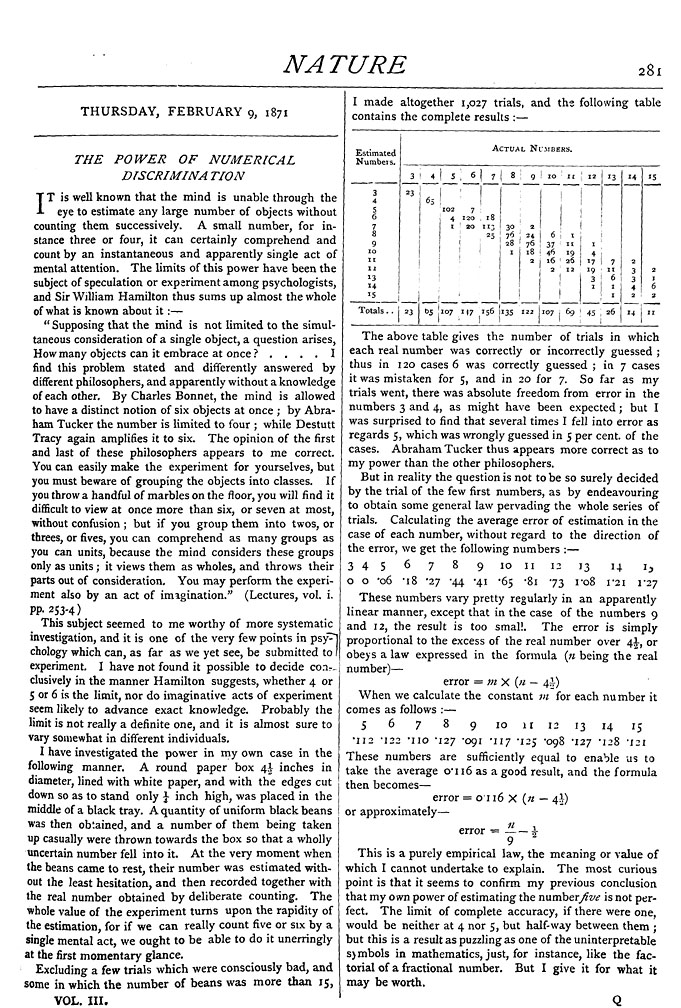
    An early study of attention and perception (or “How Many Items Can it Embrace at Once?”) popped out at me while muscling my way through another year of Nature magazine for 1871.  The article was by the polymatic W. Stanley Jevons (“The Power of Numerical Discrimination,” in Nature volume III, 1871)  who contributes an interesting and very early experimental bit on the success of the brain to correctly formulate an accurate memory when in a flash shown a number of items. (That is to say, when shown a certain group of X-number of items instantaneously and then removed, how often will the mind be able to remember the correct number upon recall–and without committing them to memory per se or counting them?) In this fascinating study Jevons records not only right/wrong answers but how “close” the remembered fit is to the original number, and in effect is a pioneering scientific effort towards understanding our abilities and limits in information processing. And as it turns out the ability to precisely recognize and remember groups of objects with success and without counting stops at about four items for the vast number of people texted. (It is another display of a famous four, including the four faces of Brahma, directions, Gospels, minute mile, playing card suits, seasons, corners of a square, virtues, color problem and of course four- letter words, to name a few.)

    Jevons numerical 1


    ·Posted by :

    ·in:

  • Propaganda and the American West, 1884

    JF Ptak Science Books    Post 2338

    Public Domain Map

    [Image source: Boston Public Library, here.]

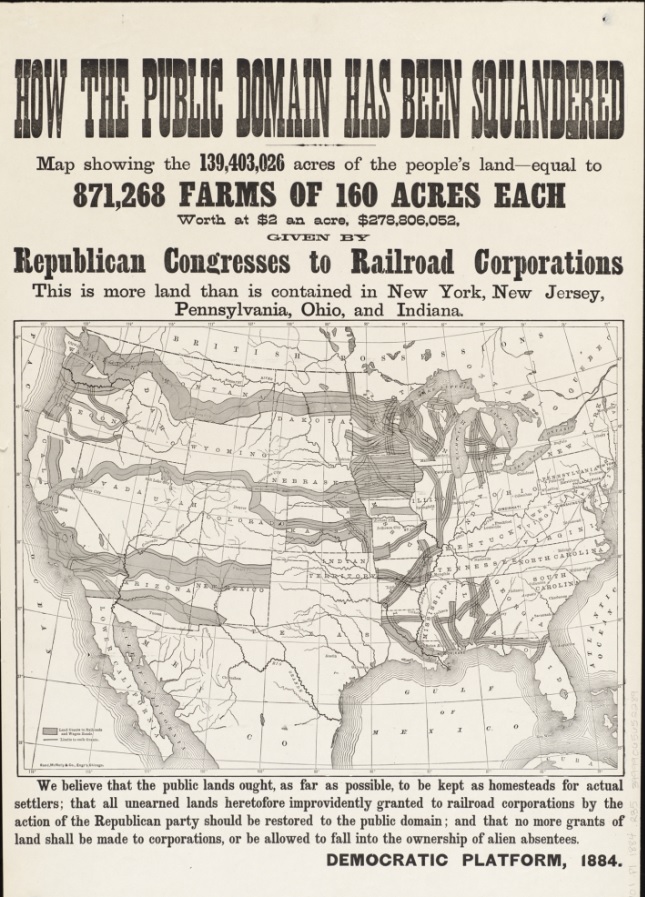
     This propagandistic political broadside and map had an influence in the thinking of voters in the 1884 presidential election–and in fact it was mostly wrong.  That “wrongness” was perpetrated for the Democratic Party at the expense of the Republicans, and held influence for dozens of years in helping to form the idea that the Republicans gave away huge chunks of American land to railroad companies in corrupt deals.  

    The map: How the public domain has been squandered, map showing the 139,403,026 acres of the people’s land – equal to 871,268 farms of 160 acres each, worth at $2 an acre, $278,806,052, given by Republican Congresses to railroad corporations , published by the Rand, McNally & Company, Chicago, 1884, is the culprit.

    Well, some healthy percentage of those land deals were rigged/crooked–but not nearly all; and in fact there were huge sums of money raised by the government in granting enormous land offerings to the railroad companies, who were also monetarily encouraged to continue making their ways west.   There were definitely multiple aspect in all of this.

  • Fascist Anti-New Deal Propaganda, 1935

    JF Ptak Science Books  Post 2339

    Just a reminder that even blattant and bad propaganda has its sub rosa content…

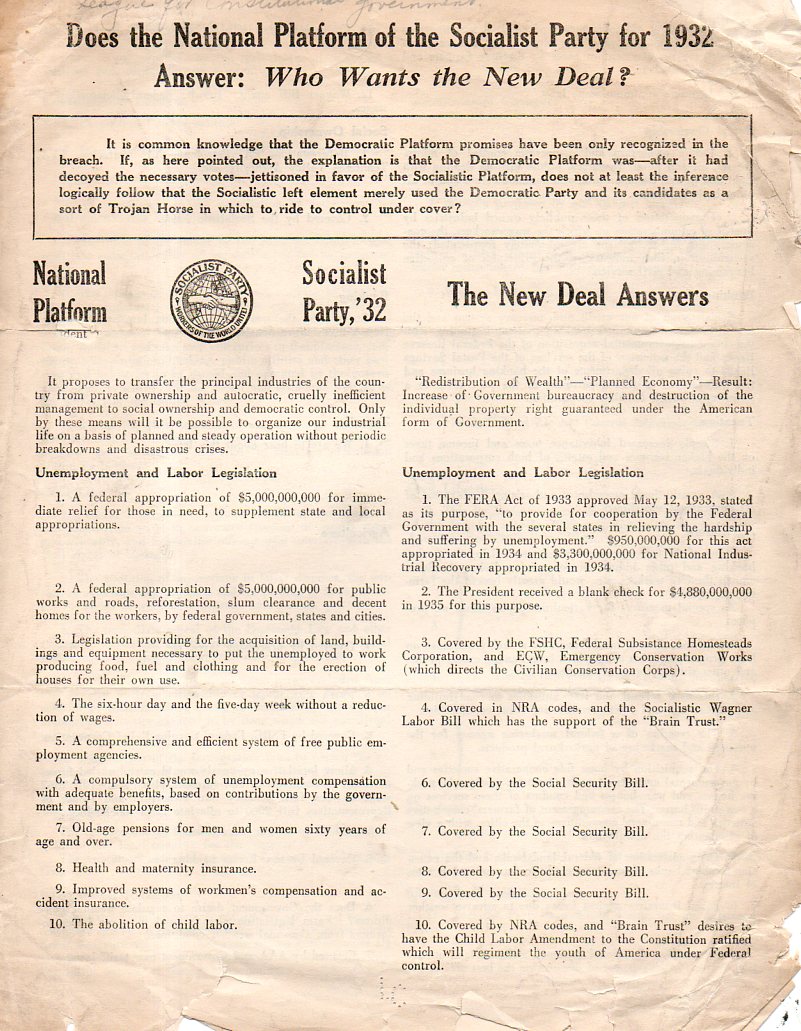
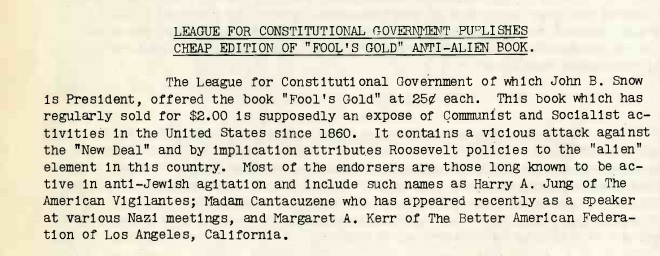
    This is a nasty (pronounced nazty) piece of work by the loftily-named League for Constitutional Government, comparing Roosevelt’s New Deal legislation and program to an overall regime for world domination under Socialist and Communist dictums/control. Everything is Communist, and whatever wasn’t Communist was Socialist, and there really wasn’t to much of a distinction in anything, except that under everything else were the Jews. It is rough and bumpy work, not well written, not well thought-out, though there was a lot of action that was taking place between the badly-formed lines, and if you looked a little hard at it everything starts turning up Fascist. 

    New Deal (anti)350

    It turns out that the League for Constitutional Government is a tough bit to research from home, with not that much written on the organization itself, though there is a fair amount of what can be learned about it by the company it keeps int eh histories of Right-Wing-Lugnut political movements from that period, and all of that association thus far is Fascist. It appears in lists along with the National American (“America’s National-Socialist Party”); “The American Guard, “The White Man’s Party”;  the German American Bund; America First; local bad boy Charles Pelley of Silver Shirts infamy; and in publications including The Revealer, a Christian News Journal, Social Justice, ( a Reverend T,. Coughlin organ), just to name a few.  It is in comfortable splendor with far Christian right organizations like the Christian Patriots (see Mark J, Mozzell, God at the Crossroads,  p.209), and evidently worked to gain control of the east coast section of the America First party (found via Ruth Sarlesp’s The Story of America First, page 28).  There’s also quite a spread on Fascist organizations in America that appeared in Life magazine (March 6, 1939, “Fascism in America: Like Communism It Masquerades as Americanism”). 

    And then there is this from the “Anti-Jewish Propaganda Front” issued by the American Jewish Committee in 1937 (here):

    League for Constitutional

    I had never heard of this  League for Constitutional Government before last night, and had a difficult time making my way through its somehow dense and loosely packed four-page contents–until it dawned on me that what I was really reading was Fascist propaganda–and that was surprising, mainly because it was so early on it the history of Fascist stuff going on in America.

    My copy of this document was once owned by H.L. Mencken, who gave the thing to the Library of Congress, which in turn decided it wasn’t worth having around (at least in duplicate). I don’t need to own it either, though as a piece of quiet-ish political junk it should be somewhere to remind people that even in flaming propagandistic rhetoric there’s more reading to be done between the lines.  

    ·Posted by :

    ·in:

    —
  • A Note on Hitler and Women, 1933

    JF Ptak Science Books   Quick Post

    I was reading in The Nation, 19331, and stumbled upon the article “German Culture in Exile”, which was poking through the brittle blocks of Hitler’s newly National Socialistically crumbling society.  What caught my eye in particular was this note about the role of women, which although I knew about this still put it all in a different light: 

    Nazi women351

    This was all quite different from the experience  of women in the Weimar society (1919-1933) where the new democratic experience resulted in numerous advances not the least of which was the right to vote.  Nazis in–women, out.  Except, really, for the home and hearth and reproductive part, substantially different from women comprising 35% of the workforce in 1925.   And just for the serendipitous aspect of it I checked out Mein Kampf on the Internet Archive: I did a text search and found only 22 mentions of “women” and eight for “woman”; on the other hand “men” occurs 2839 times, and “man” 2773.  Does this mean something?–well, yes.  But the question about what it means is quite something else, the answer to which I am not privy. But it does seem to support something obvious in and of itself.  

  • Blood Poison and its Non-Existent Mystery Cure, 1903

    JF Ptak Science Books   Quick Post

    See also the related post from 2012 “A Bloated Alphabet of Fat Cures: Strychnine Pills, Vibrators and Hope”, here.

    Blood poison352

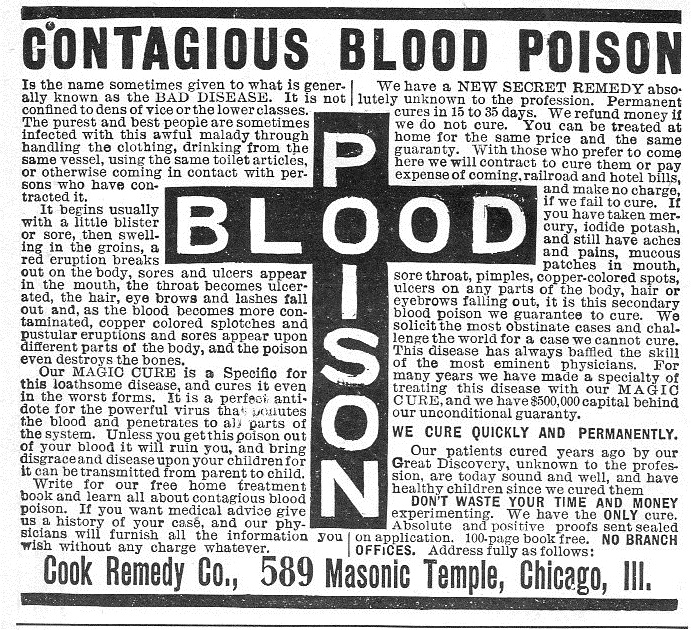
    Pushing its way past other adds in the back of the May 1903 issue of The Confederate Veteran is this contagiously interesting advertisement for a very loud quack cure for “blood poisoning”.  It was manufactured by the Cook Remedy Company of Chicago, Illinois, and offered their cure (“unknown to the profession”) to sufferers of “the Bad Disease”, which they say can affect anyone, not just confined to “dens of vice or the lower classes”.  “Our magic cure” they say, can help all sufferers, curing “quickly and permanently”–otherwise the bad stuff happens, not the least of which was bringing “disease to you and disgrace upon your children”, which is tough hardball stuff, especially coming from con-artist quick-thieves who would say anything and offer any hope to desperate people for a buck, trading on frailty, ill-health, and fear.  

    By Cook Remedy was identified as a quack organization by the federal government, having a not-so-pretty appearance in the 1912 Hearings on the Pure Food and Drug Act.  

    I suppose that the cross in “Blood Poison” was designed to resemble a cemetery/graveyard marker…

    ·Posted by :

    ·in:

    —
  • Poster Series #1–Big Red Wobblies

    JF Ptak Science Books      Quick Post–Poster Series 1

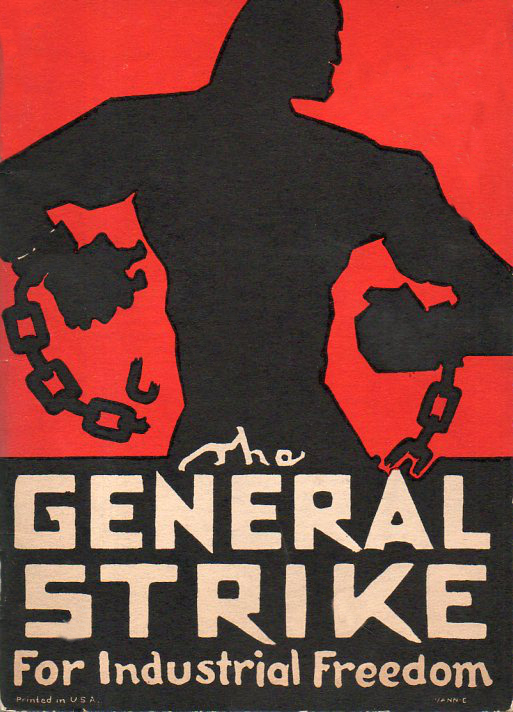
    Poster Reprint  General Strike Public[This is a 1 meg version of the 16 meg finished version of this cover art.]

    • This is the first of the newly-reinstated Poster Production part of this blog.  I did many of these some years ago, though they were mostly technical drawings of the B-17 (G!) and such.  
    • The new service offers 5-25 meg reproductions on 13×19″ professional matte photographic paper using pigment inks, which will last a long time without fading.  

    This is the fantastic artwork for the cover of the pamphlet The General Strike for Industrial Freedom which was printed in Chicago in January 1933 by the Industrial Workers of the World (the Wobblies).  The IWW was pretty far left–okay, very far–and was founded in 1905 by Eugene V. Debs, Mary Harris “Mother” Jones, William D. (“Big Bill”) Haywood, Daniel De Leon,  Thomas Hagerty, Lucy Parsons,  and others.  By the ’30’s membership in the organization was off probably an order of magnitude, its heydey more “dey” than “hey”, its flash gone. 

    This is available on the new Poster Blog, here.  

Recent Posts

Archives

Categories