A Daily History of Holes, Dots, Lines, Science, History, Math, Physics, Art, the Unintentional Absurd, Architecture, Maps, Data Visualization, Blank and Missing Things, and so on. |1.6 million words, 7500 images, 4.9 million hits| Press & appearances in The Times, Le Figaro, Mensa, The Economist, The Guardian, Discovery News, Slate, Le Monde, Sci American Blogs, Le Pont, and many other places… 5000+ total posts since 2008.

  • The “Jap Crow” Experiment: Against Japanese Internment, 1943

    JF Ptak Science Books   Post 2325

    Jap crow335

    Here’s an unpopular opinion for 1943: close the Japanese internment camps.  

    The Roosevelt administration’s Executive Order 9066 was the legal bombshell that gave the War Department the authority to authorize the removal of the Japanese (19 February 1942) and theoretically prevent those people from engaging in sub rosa and fifth column activities as wartime terrorists fighting for Imperial Japan,  and which basically authorized a 60-mile swath of the Pacific Coast as a military zone subject to national defense requirements. 100,000 men, women and children were removed to ten different relocation centers, barrack-enclosures located in remote areas, where the great majority of the “dislocated” waited out the war, some two-thirds of them American citizens. 

    Mostly desolate and occasionally beautiful, with light policing, they were still prisons.  

    The great majority of the American population saw this as a military and unfortunate necessity, a byproduct of war.  Citizenship did not come into play.  

    So it was a popular unpopular move; the policy occasionally met with resistance in print, like this example from the April 16, 1943 issue of The Nation, which I reprint in full below.  “Jap Crow” was a response to the treatment of the Japanese in America, a version of Jim Crow, which was the de facto regulatory discriminatory and racist behavior towards African Americans and other people of color in the U.S. 

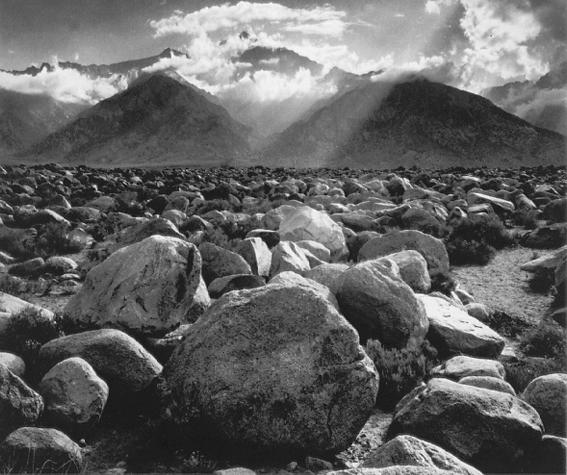
    The life and location of these camps was well documented, sometimes by some of the greatest photographers of the American 20th century. Dorothea Lange and Ansel Adams, in particular, made a long series of images at Manzanar.  One of the great, iconic images made by Adams comes from this period, and as it turns out, its one of those odd sorts of photos that turns in the opposite direction of what the photographer was there “for”.  Mount Williamson is just a drop-dead shot to be sure–it is also an image of what the Japanese in the  camp were looking out at.  Adams turns his camera around, around from the disgrace, and makes one of his greatest images.

    The pretty image:  
    Adams manzanar

    [Source, Ansel Adams, from here.]

    Which was basically the 180-degree view of this:
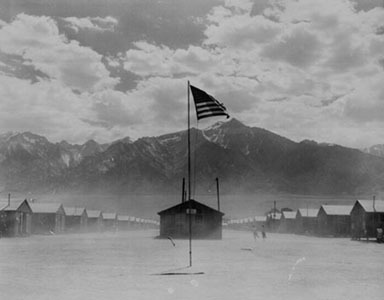
    Manzanr gate[Image source:  here.]

    The Japanese at the Manzanar relocation center were from the West Coast who were bused away from their homes and lives and businesses with extremely limited notice, and who were forced to sell nearly all possessions (including lands and businesses) at what were less than fire sale prices.  They were made to board buses and trains and were shipped to locations (mainly in California) where they were processed and sent further and deeper into the trying hinterlands of the west for their final destinations until the war was won.  (One of the processing centers was the Santa Anita racetrack, where thousands of Japanese were sent to live for periods in converted, just-painted horse stalls.)  Manzanar itself is well enough out there—removed, trying, desolate, difficult.  Beautiful, too , if you weren’t in prison there.  It was a high desert plateau with the snow-capped sierras, ringing the place; no grass, barely a tree, with extreme temperatures and a tough wind that was freezing in the winter and blew hot in the summer…tough enough to make it hard to keep the tar paper on the roof and sides of the thinly constructed barracks that held these people.  While every other relocation camp had barbed wire and guard towers, Manzanar had none—its location was so remote and difficult that it made the construction of these inferior barriers unnecessary. 

    As difficult was life was at Manzanar, and having being completely torn off of the American map and their way of life, the Japanese at the camp established irrigation systems and gardens, made their own furniture from bits and scraps, established a newspaper, created a government,  schools, police, and so on, making their life as orderly and hospitable as possible.  


    A government film, insisting that these people are “dislocated”, “evacuees”, casualties of war, and not “internees”:

    And the article:
    ·Posted by :

    ·in:

  • A Small Tale of Bibliographic Discovery–Figuring out a Medical Manuscript, 1895

    JF Ptak Science Books   Post 2326

    Most of the time my work in the book world is figuring stuff out, finding out where one paper influences another, what is important, or significant, and why, and where everything fits and makes sense.  These works are almost always published–today’s effort was not, and hardly identified, so before any of the research could be started the origin had to be figured out.  

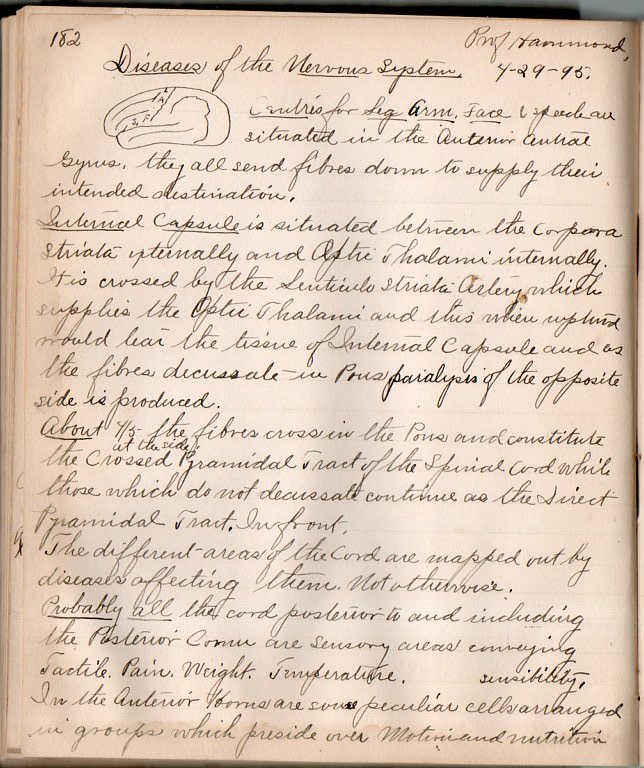
    First of all the work in question is a medical manuscript–the clues were a former bookseller’s date guesstimate (“1875?”) and a name, “Harold A. Fiske”. Now the name is a big deal, but it is not an uncommon name.  Then there was a third clue: after paging through the book’s 221 pages I found the only date (“4/29/95”) and a name, “Prof Hammond”.  Those were major clues, because now the book was definitely dated (1895) and that it was a medical notebook, and that there was a section on nervous diseases for a lecture given by a Prof Hammond in April 1895.  

    The work after this became a little easy–a google search found many “Harold A. Fiskes”, fewer physicians, and then fewer still in the 19th c.  Then a hit in the L.A. Herald for a marriage announcement in 1907, and an obituary in the L.A. Times for 1922, for a man by this name, a doctor, dying at age 49 (giving him a birth date for 1873, in line for being in school in 1895), and a note that he was born in Vermont.  Next to the University of Vermont, where a very helpful librarian suggested their Medical School catalog for 1895, and then, boom–finds for Hammond and for Fiske.  

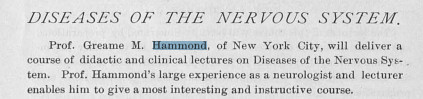
    There was a Dr. Hammond teaching there in 1895, and that Dr. Hammond was Greame Hammond, M.D., of New York City, and who was at one time president of the Neurological Section of the New York Academy of Medicine (and succeeded by the great Hillary Putnam Jacobi, reference the Chicago Medical Recorder, volume 4, January-June 1893). Dr. Hammond is listed as a “Professor of Special Subjects”, that being “disease and nervous system”.  

    Hammond

    Harold A. Fiske is listed as in the section on attendees of the school.

    Fiske

    [See the University of Vermont Medical School Catalog for 1895 online here:http://scholarworks.uvm.edu/cgi/viewcontent.cgi?article=1048&context=dmlcatalog [From the UVM Medical School catalog]

    And also lastly, in the text of the catalog occcurs a notice for Dr. Hammond, “A Clinic for Diseases of the Nervous System will be held during the course of lectures by Prof. Hammond, between April 29th and May 3d” (page 14) and on page 182 of Fiske’s notebook is the entry for the notes “Prof Hammond, 4-29-95, Diseases of the Nervous System”. So there really is no doubt about where the notes were made and by whom and when.  

    Medical ms pg 1339

    There are many times when I research things like this and come up with nothing about who the author was, or when (positively) it was written, or where. So it is a fine feeling when the little clues liek the ones above fall so nicely into place.  

    So: the medical notebook was written by Harold A. Fiske (1873-19221), the middle section of the work dated April 1895.  It is a concise and extensive work containing about 25,000 words, running 223pp, generally about 22 lines per page and eight words per line (conservatively).  The entries are generally made with the following guidelines: description, cause, symptoms, inspection, prognosis, treatment.  

    The work contains notes and observations with the following headings:  jaundice, coma, cetalepsy/hysteria, apoplexy, croup, stomatitis, chancrum oris, ptyalism, quinsy, diphtheria, goiter, capilary bronchitis (pp 40-43), asthma (44-46), pneumonia (the disease which would kill Dr. Fiske in 1922, pp 46-51, emphysema (52-3), whooping cough (54-5), tuberculosis (60-3), empyema (64), pneumo-hydro-thorax (65), acute gastritis (66-7), dyspepsia (68-9), cancer of stomach (70-72), inflammation of instestine  (74-5), acute anticular rheumatism (78-9), gout (80), arthritis (81), muscular rheumatism (83), typhilitis (86), perityphlitis (88-9), dysentary/blood flux (90-2), cholera morbus (93-95), Cholera (96-9), Perionitis (103), intestinal worms (104-107), trichinae spiralis (108-9), lead poisoning (110-111), Cirrhosis of the liver (112-115), jaundice and hepatic colic (116-117), diabetes (118-121), eczema (122-4), fever (122-7), grip (128-131), typhoid fever (134-139), Bright’s disease (140-5), [various/sundry, 146-9], variola/small pox (150-3), epilepsy (154-5), [156-161 blank], diphtheria (162-5), diarrhoae (166-176), chronic constipation (176-7), adenoids (178), acute shingles (179-180), diseases of the nervous system (181-186), locomotor ataxy (187-191), polio (192-195), sciatica 196-7), athetosis (198), traumatic epilepsy (199), hysteria, neurasthemia (203-205), sexual neurasthemic (205), epilepsy (206-209), coebral Haemorrage (210-212), St. Vitus Dance (216-216), facial paralysis (215-216), neuralgia (217-218), paralysis (219), hypnosis (221). 

    ·Posted by :

    ·in:

  • On Not Touring the Killing Fields: 1933

    JF Ptak Science Books  Post 2327

    As good as The Nation was/is, I see now there was some complicated business regarding the Soviet Union.  There was no lack of support for the Soviet Union in what I’ve read in the magazine (in my limited exposure thus far from the early 1930’s) and no lack of interest in what the Soviet experiments in social engineering were coming to.  

    Soviet tour342

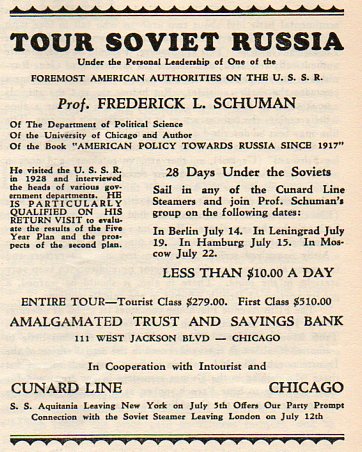
    This ad, prominently sponsored in the May 17, 1933 issue of The Nation, proclaims the Soviet expert Frederick L. Schuman leading a tour to all-comers of the Soviet Union.  “28 Days Under the Soviets” says the ad, all for $10 per day, tourist class.  Of course you could go first class at double that rate to tour the new and wondrous classless society.  

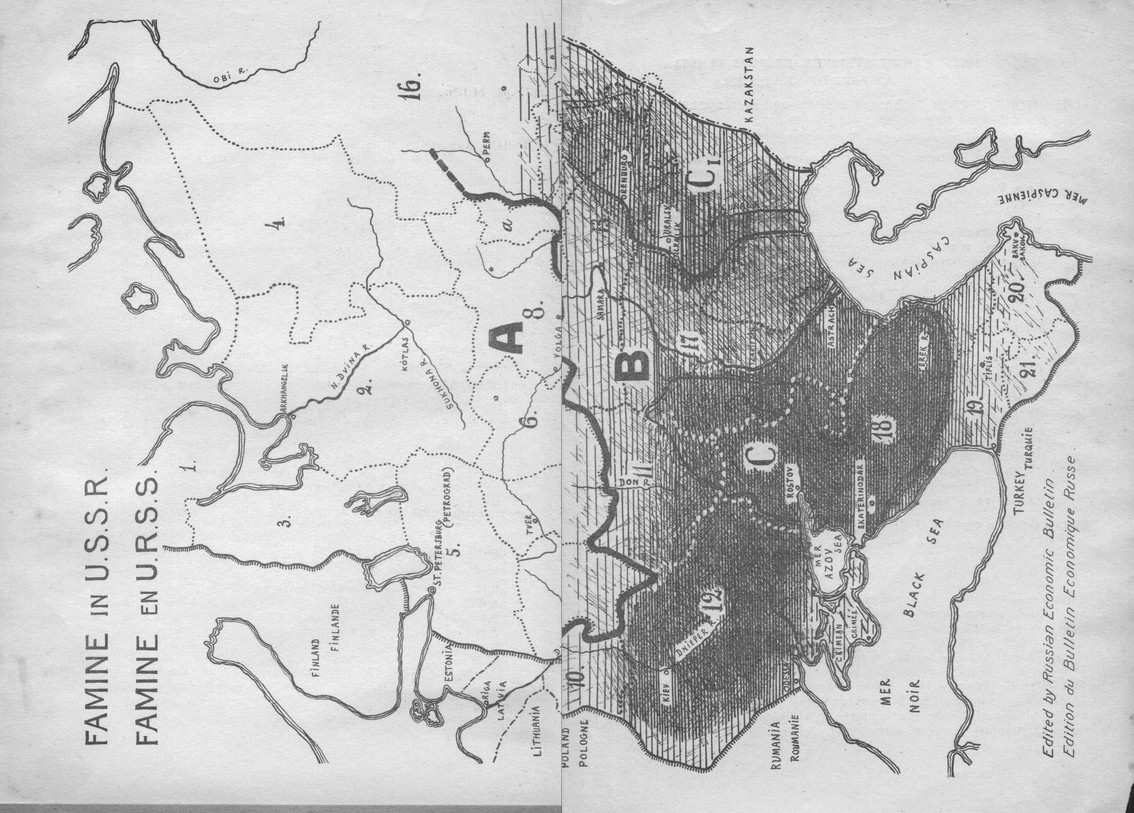
    What these tourists would not tour would be the starving millions in Stalin’s manufactured famine of 1932/3.  The areas of trouble and death were staggering, as we can see in this map published by  the Paris-based Russian Economic Bulletin in 1933 in a bulletin written by Markoff, Famine in the USSR:

    Map famine

    [Source, Internet Archive, Markoff, Famine in the USSR;    Fulltext: https://archive.org/details/FamineInUssr]

    The Famine cover a wide, huge area, and it was filled with millions of people whom Stalin did not quite trust. Far apart from the Bolshie sentimentality of these tourists, Comrade Stalin indulged political control in a very un-Bolshie fashion, him not trusting farming peasants (and Ukrainians) and all, and decided that the easiest thing to do to maintain power with this possible threat to his base would be to kill as many of those people as possible. He got quite far, killing (as some day) some 9 million people.  

    This you would not see in tourist or first class with Prof. Scuhman.  

    It seems as though Schuman’s career was a bit up and down, some of his books being very badly received and accused of pragmatic pandering to the Soviets.  

    So it goes. Sometimes what is seen is what is needed to be seen. Or not.  

     The famine was disputed for a long time and the Soviets tried to keep it as quiet as possible, but it is hard to do, with so many dead.  One can only say “nyet” so many times in the face of staggering death.  But that is what it was with Stalin, an enormous culture of death and “nyet”. And fear. 

    Of course there was the entire culture of fear, with Stalin replacing the icons of the church with himself and death, of terror, leaning heavily on the NKVDand the general distribution of human betrayal. 

    The Great Purges would follow for the rest of the ‘thirtiesStalin consolidating his power by imprisonment and extermination, winding up with some 20 million in camps and removed places by the time of the war, with half of that number dying.  

    So there was an issue of Soviet-love with The Nation. Again, this is based solely on my own reading experience in the magazine thus far, with just my nose under the tent. But this is what I have seen thus far…

    I wasn’t sure about where to classify this post–perhaps with the History of Memory, because there was such a demonstrable war waged on the forgetting aspect of these actions.  It could also go into the History of Nothing, because in Stalin’s mind there wasn’t anything there in the Purges or in the Famine, nothing at all.  And Nothing is also was what he wanted to achieve, making the people whom he thought might possibly oppose him into Nothing.  And perhaps it could be listed in the History of Goodbye, because that is what Stalin said to so many millions of people. Except he didn’t say it–he just killed.  

  • Der Phantastischer Pfeiffenmacher, ca. 1700

    JF Ptak Science Books  Quick Post

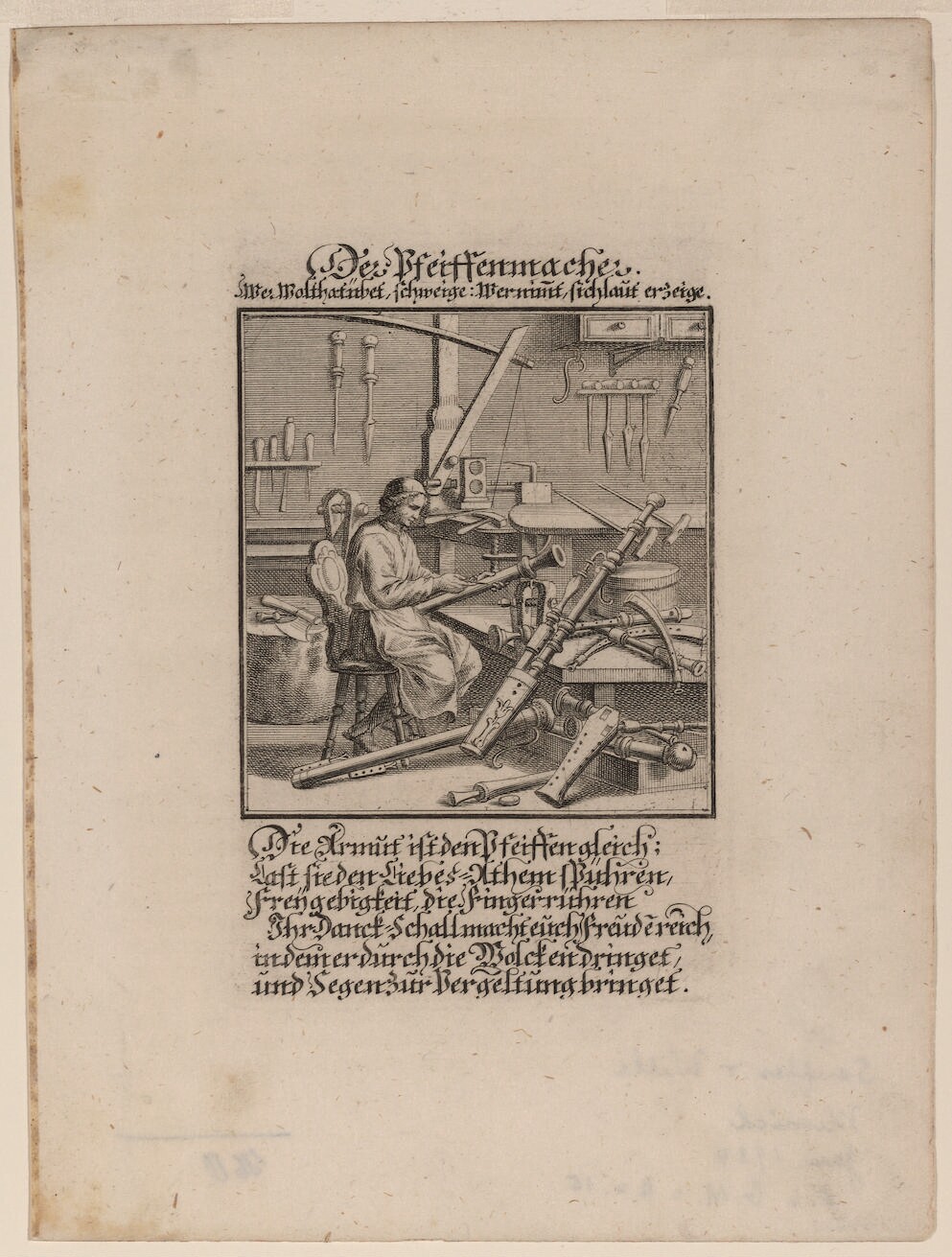
    I was very excited when I bumped into this notation for Christoph Weigel’s (1654-1725) “der Pfeiffenmacher” (the Wind Instrument Maker)! I hurriedly thought as I went to click on the link for the image what sort of instruments or tools were being made to make use of the wind in 1700? Better yet maybe–what was being built for wind protection? And then as quickly as it started the speculation stopped–it was for a wind instrument maker, a maker of wind instruments, musical instruments.  Of course it is a beautiful engraving (after a design by Caspar Luyken, 1672-1708) but it was just a little disappointing not to see a collection of scientific instruments or engineering/architectural bits rather than an assortment of musical ones. (This is from the Library of Congress and the notes in the description identifies the instruments so: Bassoon, Shawm, Curtal, Cornett, Recorder, Oboe.)  

    Weigel--wind instrument[Image source: Library of Congress, here]

    ·Posted by :

    ·in:

  • A Good Example of a Bad Map, 1867

    JF Ptak Science Books  Post 2327

    When I had an open shop I almost always maintained an antique map/print part in the front,airy, high-ceiling space and had my hardcore science stock in the back. (People who were after that sort of book/info had tunnel vision, generally, so location hardly mattered, so long as the books were there, a trait and characteristic I highly admired.) Generally speaking this was not true with the map/print buyers, or at least the occasional purchaser, so they had “pretty” dedicated to their comfort.  

    Over the years I heard many thing from people trying to noodle out the reasons for old maps, and all of that was fine, and even the not-self-flattery comments flowed by like a lazy stream with a snapping turtle in it.  The one comment I did not like and which I always corrected had to do with how “bad” a map of North America (or wherever) was when it was drawn in say 1783.  Long story short, the maps were spectacular given the era and the technical capability and the amount of information on hand. (Also if people were told they needed to go out right now and make a map with standard 19th c mapmaking/surveying instruments, most had absolutely no idea how to procede.)  There aren’t all that many “bad” maps floating around, except for those determined to be misleading that have been issued by various intelligence and mapping agencies around the world.

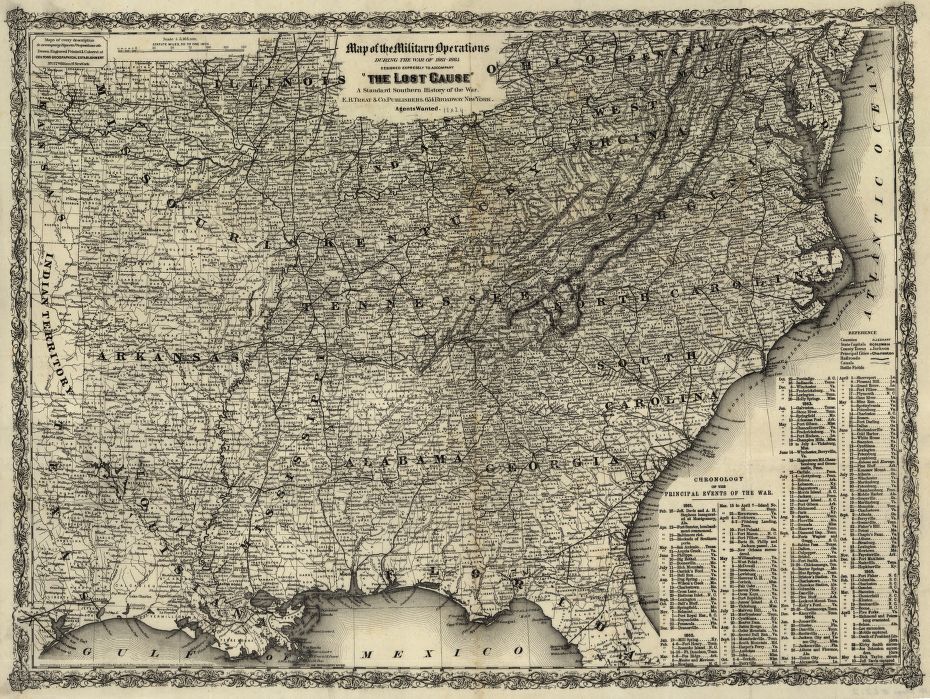
    That said, there are some badly designed maps, and when you have a map with a badly constructed premise for presentation that makes the thing difficult to use, you have created a “bad map”.

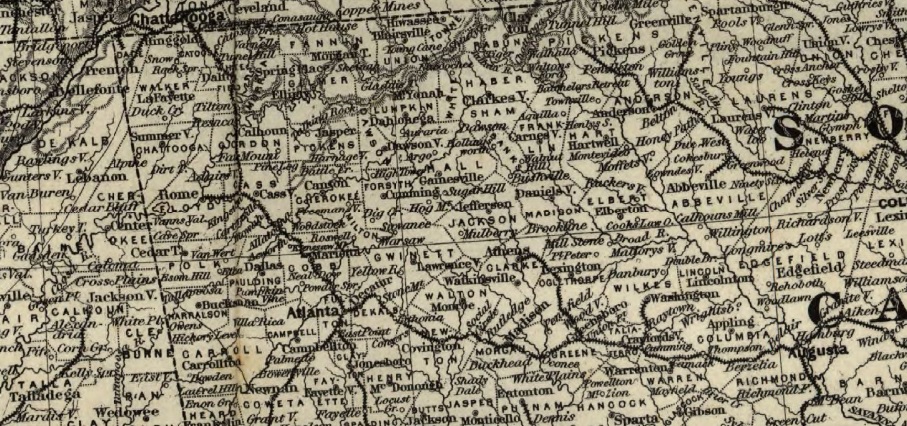
    I say this because I just bumped into one, and here’s a detail of what I’m talking about:

    BaD MAP

    Just because you pack data onto a map doesn’t make it good, and this one is about as gritty as a half-cooked cornmeal pancake.

    So, when you have the time and the capacity and the data and you produce a map that is unyelding and impenetrable in spite of all the good it has going for it (not the least of which is interest), then you have created a bad map.  

    Source: Library of Congress

    “Map of the military operations during the war of 1861-1865 designed expressly to accompany The lost cause,” a standard southern history of the war.  George Woolworth Colton, 1827-1901, and published in New York by  E. B. Treat & Co., ca. 1867.

    Bad map 2

  • Electric Lights and Fish Scales

    JF Ptak Science Books  Quick Post 
    Follow Me on Pinterest

    Firstexhibition

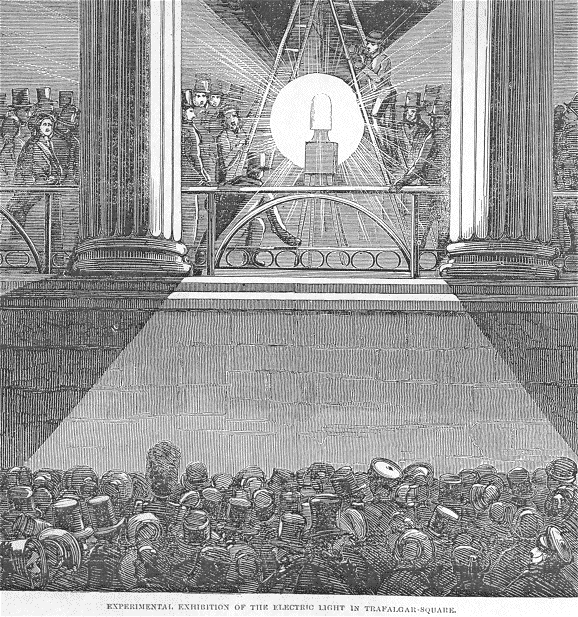
    The satirical sturgeon, the London Punch magazine, took many shots at innivation and invention over the years, mostly within the months and first year or two of the creation of whatever it was they were taking to the humor shed.  Electricity was one such area, and there were many poems and cartoons and satirical slings thrown in its path.  The “light bulb” as we know it didn’t quite exist in 1879 (the year of our cartoon) though the history of electric lighting was already quite long by that point–just not very effective, and certainly not in even limited distribution. (The next big step would be in 1880 with Edison’s vast improvement on the lightbulb.) Here’s a good example of Punch’s take on the electric light’s future –and the pallor of fish and fish sellers in the new era of artificial light:

    ·Posted by :

    ·in:

  • A Fine Microscopical Innovation, 1873

    JF Ptak Science Books   Quick Post

    Microscpe binocular321

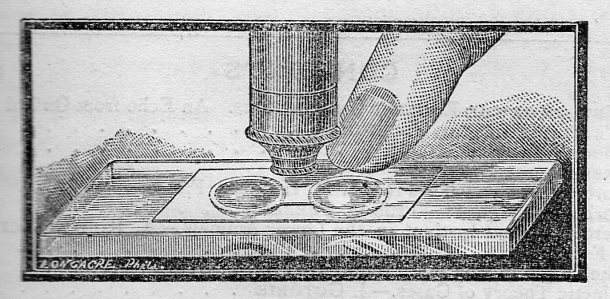
    This intereting and half-Surreal woodcut appeared as a small 3/4″x1 1/2″ illustration for an article in Nature for May 22, 1873.  I like it quite a bit.  It is tiny, spare, odd, and contains all of the necessary technical details.  And it was an innovation–just a fine piece of work.  

    ·Posted by :

    ·in:

  • The Arms in the Rings of Saturn

    JF Ptak Science Books    Quick Post

    Huyghens Saturn 4 finished

    [Image Source Smithsonian Institution, Dibner Library, here: http://www.sil.si.edu/DigitalCollections/HST/Huygens/huygens-ill32.htm]

    Christian Huygens (1629-1695) worked across many fields, including astronomy, biology, math and physics, and was extraordinarily productive, making numerous contributions in the physical and theoretical areas, as well as being a prolific author and correspondent. 

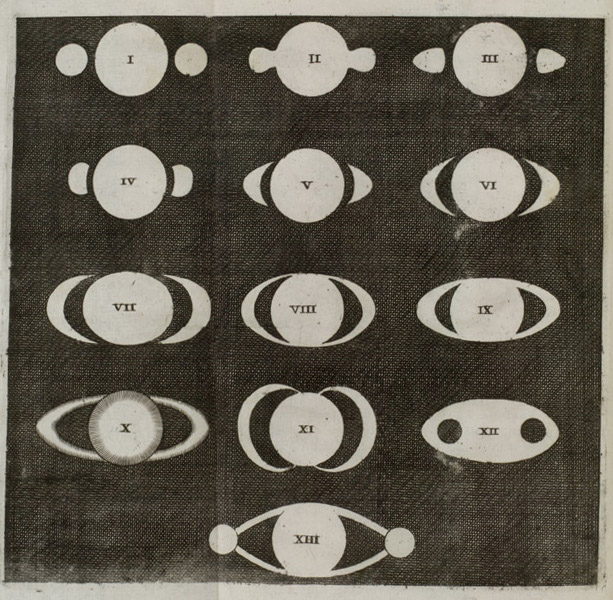
    These images were published in his Systema Saturium…, published in the Hague in 16591, which was his fundamental work on the planet and in which he announces the discovery of its rings–this was a very considerable element, because the “arms” encompassing the planet had been a mystery to a generation of astronomers, from Galileo onward. The roman numerals relate the belief in the structure of the rings according to observer, so I was made by Galileo in 1610,  II by Scheiner, 1614; III by Riccioli,1641-1643. IV-VII by Hevelius; VIII and IX by Riccioli, 1648-1650; X by Divini, 1646-1648. XI  by Fontana in 1636;  XII  by Gassendi in 1646, and  XIII by Fontana and others from 1644-1645. (This list identifying the rings of Saturn over time come from notes I had taken and misplaced, though the original I am sure comes from published work by Ronald Brashear, head of Special Collections at the Smithsonian.)

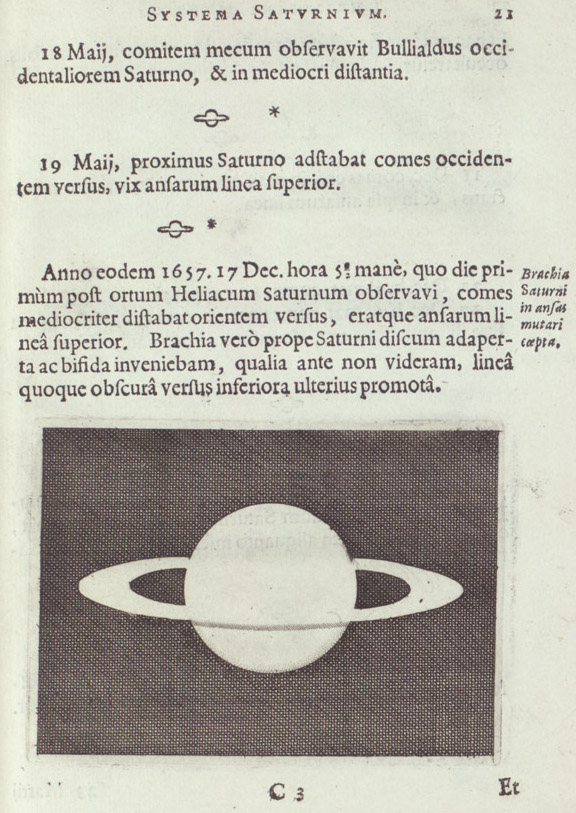
     Here’s Huygen’s own beautiful and modern image of the planet, from his page 21 of his work above:

    Huyghens Saturn 3

    [Source Smithsonian Institution, Dibner Library, here: http://www.sil.si.edu/DigitalCollections/HST/Huygens/huygens-ill32.htm]

    And then, here, a more modern image courtesy of the Cassini-Huygens spacecraft;

    Saturn cassini[Source: Jet Propulsion Laboratory, here.]

    Notes:

    1. From the title page:  Christiani Hvgenii … Systema Satvrnivm; sive, De causis mirandorum Satvrni phænomenôn, et comite ejus planeta nova. Hagæ-Comitis, ex typographia A. Vlacq, (1659).

  • 12 Trillion Slices of Pi

    JF Ptak Science Books   Quick Post

    The mathematician Hermann Schubert wrote in his 1889 text on the uselessness of calculating pi past 500 digits–I haven’t located a copy of the original 1889 publication though the story is often repeated: I’ve seen in in Petr Beckmann’s A History of Pi (1993 edition) on page 101 and also in Cliff Pickover’s Keys to Infinity (John Wiley, 1995).  

    “Conceive a sphere constructed with the earth at its center, and imagine its surface to pass through Sirius, whis is 8.8 light years distant from the earth [that is, light, traveling at a velocity of 186,000 miles per second, takes 8.8 years to cover this distance]. Then imagine this enormous sphere to be so packed with microbes that in every cubic millimeter millions of millions of these diminuitive animalcula are present. Now conceive these microbes to be unpacked and so distributed singly along a straight line that every two microbes are as far distant from each other as Sirius from us, 8.8 light years. Conceive the long line thus fixed by all the microbes as the diameter of a circle, and imagine its circumference to be calculated by multiplying its diameter by to 100 decimal places. Then, in the case of a circle of this enormous magnitude even, the circumference so calculated would not vary from the real circumference by a millionth part of a millimeter.”

    “This example will suffice to show that the calculation of to 100 or 500 decimal places is wholly useless.”

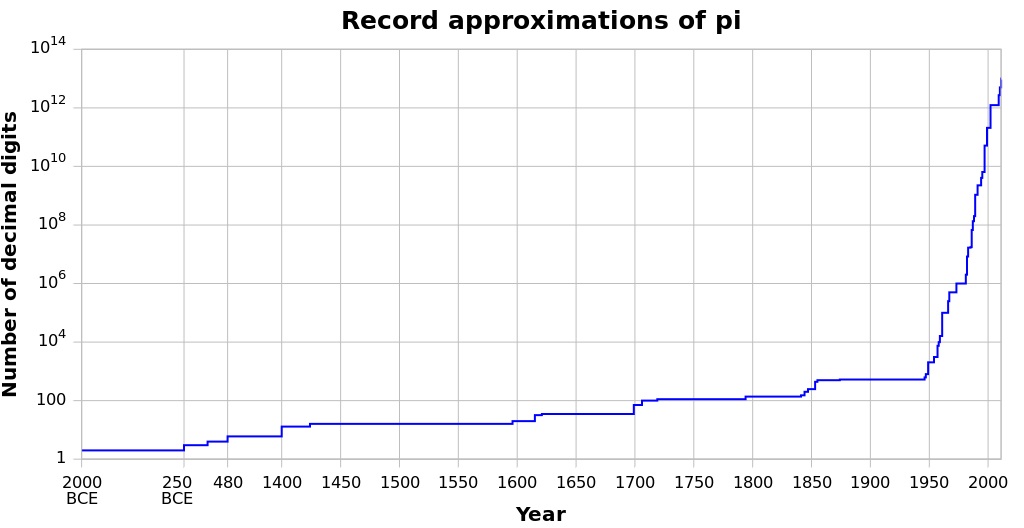
    Long before Schbert pi was being calculated to quite a degree: it was computed to 9 places  by Francoise Viete in 1579; 15 places by Adriaan van Roonan, 1593; 32 by Ludolph van Ceulen in 1596; 35 by Willebrord Snell in 1621; 38 by Christoph Grienberger; 75 by Abraham Sharp in 1699; 100 by John Machin in 1706; 137 by Jurj Vega in 1794; and 152 by Legendre in 1794, which is nearly 100 years before Schubert. William Rutherford came in with 248 in 1847, and then William Shanks with 527 places in 1874.  D.F. Fergusson would break 1000 places in 1949, followed by F. Genuys (using the IBM 704) breaking 10,000 i 1958.  Daniel Shanks reached 100,000 in 1961, Jean Guillyud finding 1 million in 1967, and then many others, right up to the 12 trillion mark by Shigeru Kondo in 2013.  

    All of which leave Dr. Schubert without very much crust.  


    Pi graph


    ·Posted by :

    ·in:

  • The Small Story of Animal Glue, and other Small Stories

    JF Ptak Science Books   Quick Post

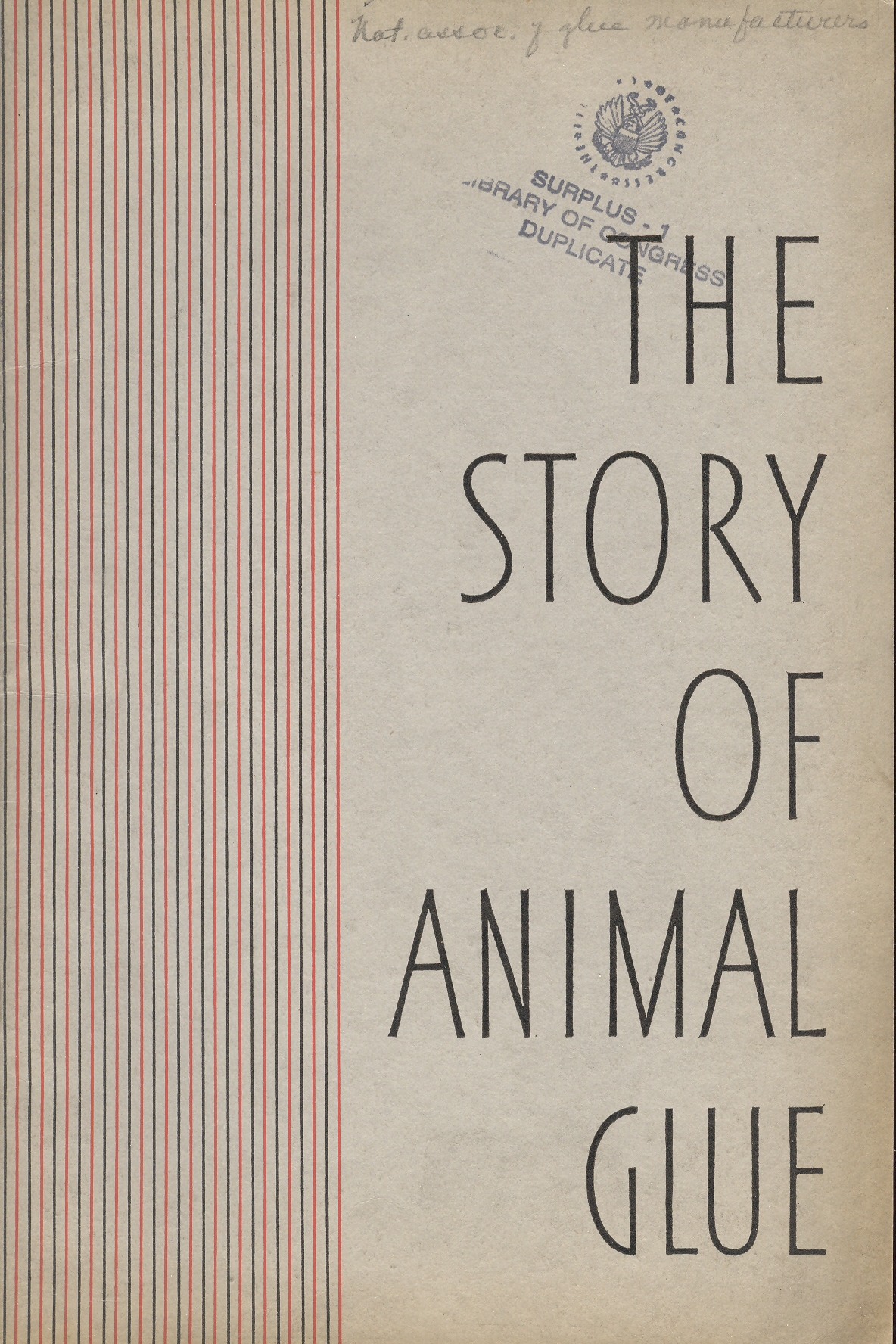
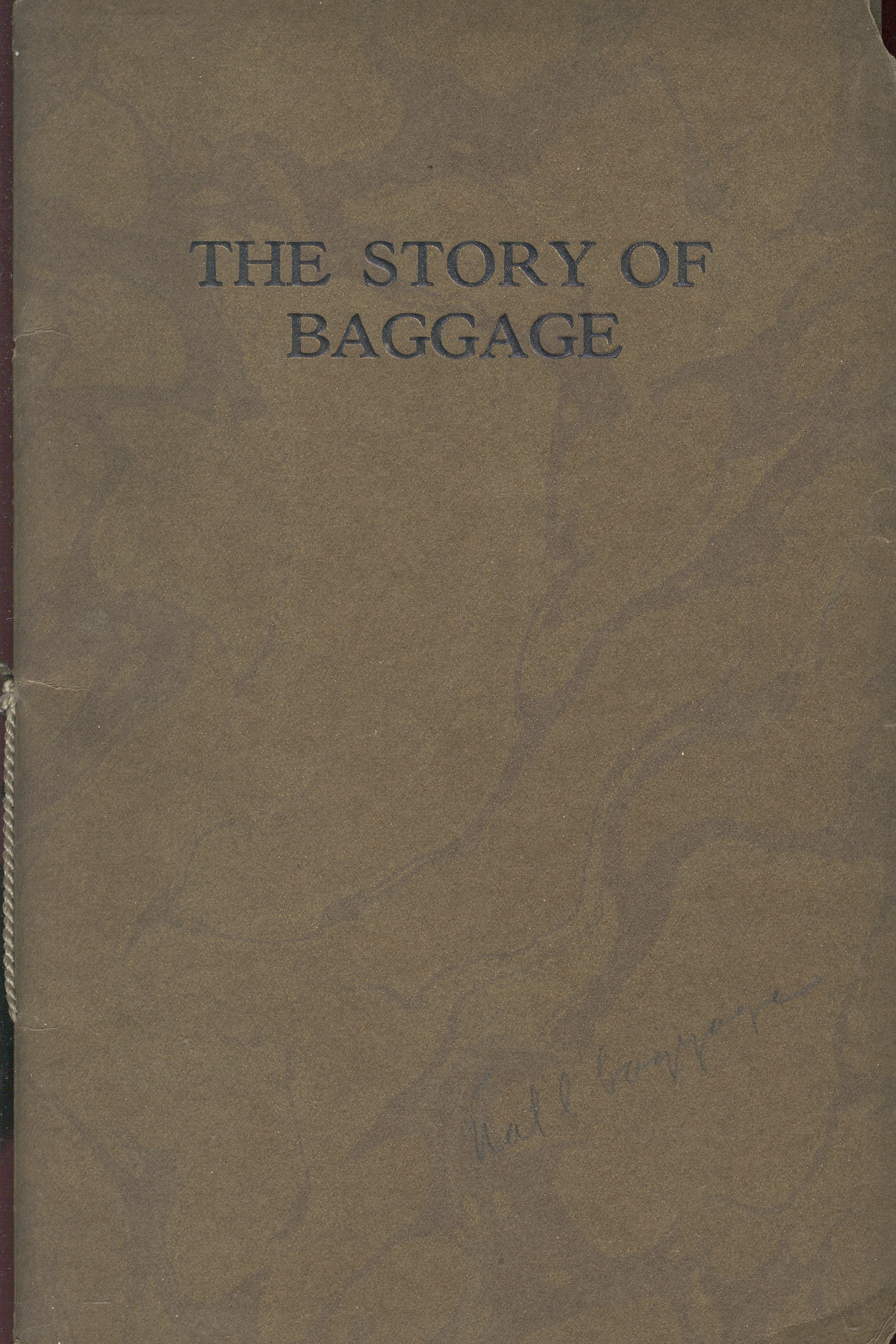
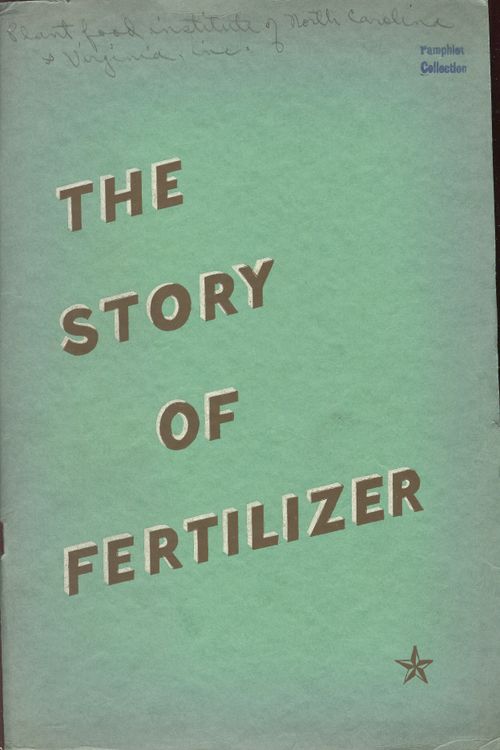
    In my collections of small collections I have a collection of small unusual pamphlets that tell the story of something uncommon. Everything in this sub-collection must have “The Story of …” on the cover; after that, anything goes.  

    This is a small selection, though enough for now…

    + story anim glu + story baggage+ story fertiliz


  • Elements for a Whiskey Alphabet Drawn from an Early Bible of Booze Names

    JF Ptak Science Books  Post 2329

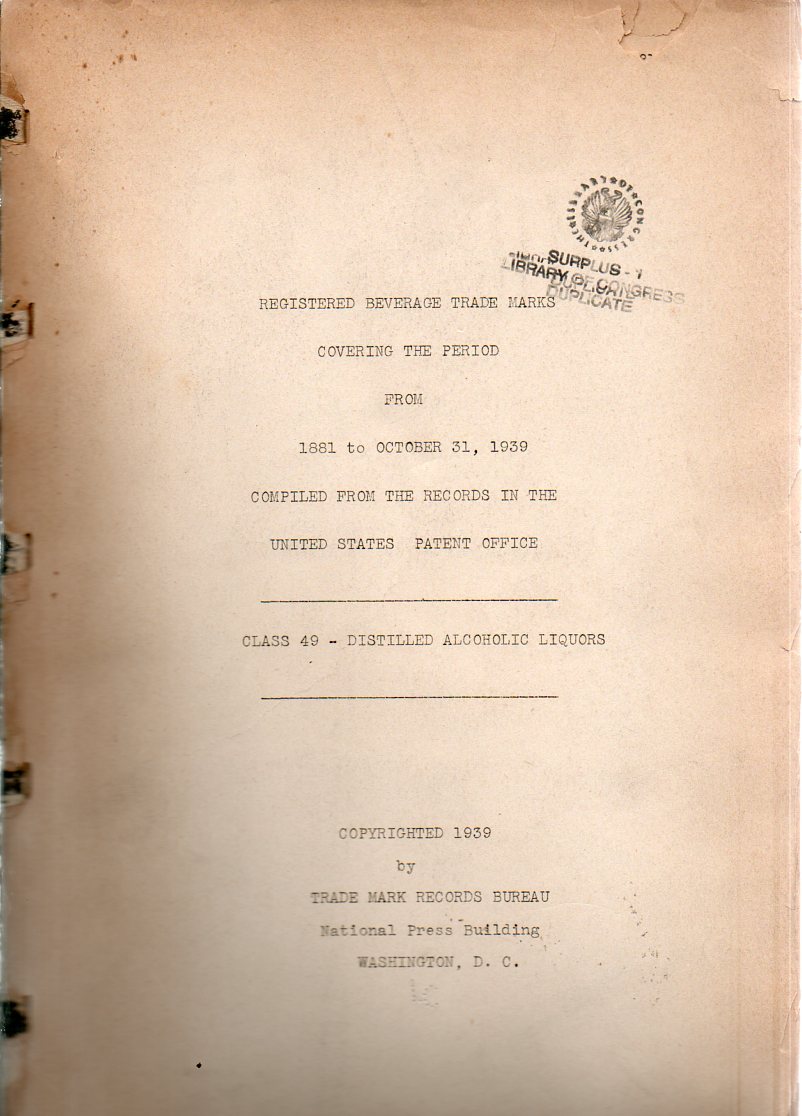
    It may or may no be the case, but this large, flaking book that is balanced on top of a petulant pile of paper, Registered Beverage Trade Marks Covering the Period from 1881 to 1939 Compiled from the records in the United States Patent Office (Distilled Alcoholic Liquors) may be the keys to the kingdom of names of booze(s) trademarked in this country.  15″ tall, and inch thick, and 296 sheets big, this work (copyrighted y the Trade Mark records Bureau (in the National Press Club Building in DC, the one with the problematic parking garage) lists some 7,500 names of whiskey, cordials, gin, rye, bourbon and who knows what else.  I cannot find the book in any online database, big or small, and I’m not sure where this info might be housed and housed in one spot.  I have no doubt that people somewhere need this data, unwieldy and unusable as it might be–you see, it is organized only according to a six/seven digit number which I guess is the trademark filing number, or something; there is nothing else useful about the thing, the data floating around without regard to year or place or liquor type.

    Booze alphabet532

    So I sat down with the book for an hour pulling out interesting, odd, out-of-place, from-another time and bizarre names, inlcuding all manner of expected animal names like bull and elk, and then unicorn; and lots of sunny this-and-that, sloping/sunny/grassy hills, mountains, clubs; and of course the Old _____  category seem fairly filled up. [If you’d like to own this just visit the blog’s bookstore, here, and have a look.]

    If I spent a little more time on this entire alphabets could be produced relating to nothing but names from the animal kingdom, flora, the sciences, professions, religion, states of mind, altered states,  literature, and the labels that suggest a possible medical benefit.  One of my favorite categories is the “conversational liquor label”, the label that speaks to you, invites you, tells you what to do with the bottle of booze:  Hava Cocktail and Uneeda Whiskey are good examples of that, as are You’re Lookin Good, Uvanta and Yugeta whiskeys. Another is the liquor name ending in “o”, like the beautiful Famo, from St. Jo, MO, which unfortunately wasn’t trademarked in ’00.  The label of suggested promise and outcome is another good one:  Kentucky Courage, Pleasant Dreams, Invincible Rye, Solace Whiskey and Ready Moneyare all good examples of the implied end-of-bottle pillow-fluffer…maybe, espcially, The Old Solution whiskey.

    And then of course, there are those where the (creative) spirit has just flown away, like the lumpily-named Standard Spirits Whiskey, its hometown of New Orleans embarrassed by the lack of effort–especially in the light of some many hundreds of imaginative creations, like the fabulous Bone Factor Whiskey (1903), which like som many other great names  (Yellow Hammer Whiskey) comes from Louisville, Kentucky.

    Antediluvium Whiskey, NYC, 1898; Anti-Grippine Whiskey, Philadelphia, 1906; Ash Cake Whiskey, Lynchburg, VA. 1899, Auto Crat Whiskey (St. Louis, MO), 1905

    Bank Check Whiskey, Boston, 1900; Bone Factor, 1903;

    ·Posted by :

    ·in:

    —

Recent Posts

Archives

Categories