A Daily History of Holes, Dots, Lines, Science, History, Math, Physics, Art, the Unintentional Absurd, Architecture, Maps, Data Visualization, Blank and Missing Things, and so on. |1.6 million words, 7500 images, 4.9 million hits| Press & appearances in The Times, Le Figaro, Mensa, The Economist, The Guardian, Discovery News, Slate, Le Monde, Sci American Blogs, Le Pont, and many other places… 5000+ total posts since 2008.

  • Steampunk Air Travel, 1843

    JF Ptak Science Books   Quick Post

    “Let no man seek / Henceforth to be foretold what shall befall / Him or his children.Milton,” Paradise Lost XI, 770-72

    George Cruikshank–the gifted English cartoonist/satirist/caricaturist and social commentator–was readying his viewers to some hyperspeculative dreams on the possibilities of near-in-time powered flight.  Steampunk air travel is so commonplace in the near future that there are departure stations on building-tops   

    The etching in question, illustrating “Air-um Scare-um Travelling” appeared in the Comic Almanack (1843), and outlines a clear and hopeful image of future travel.  The ads show that there are frequent flights to far-away places, including Mont Blanc and Beijing.  

    It is interesting that the future is tempered somewhat by including an exploding airship at bottom left–so the future may be wondrous and exciting, though not without its dangers.  


  • Popular Atomic- and Nuclear-Named Stuff, Mostly Bomb-Related

    JF Ptak Science Books   Quick Post

    Below are 66 examples of Cold War era stuff and consumer bits relating to atomic/nuclear weapons.  All are found in my pinterest page, here.  

    Canadian Cold War Poster: "Bea Alerte Says, 'Disaster May Never Occur Here...'"


    "ATO McBOMB" ATOMIC BOMB-INSPIRED MYSTERY CHARACTER BUTTON. ~1940s


    ·Posted by :

    ·in:

  • On the Power of Numerical Discrimination, 1871

    JF Ptak Science Books   Quick Post

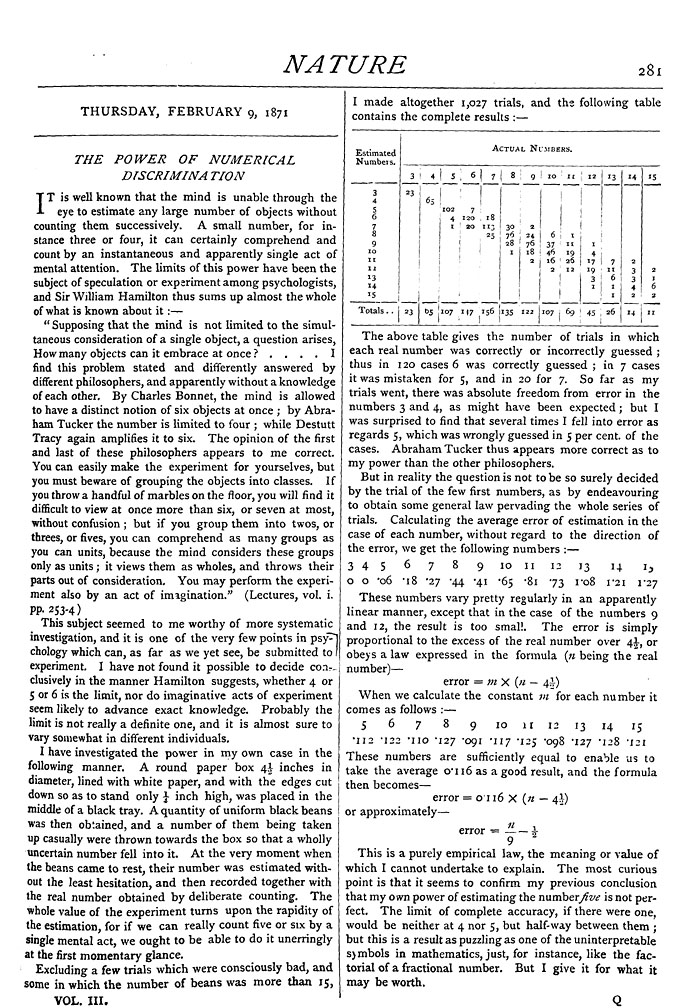
    I’ve written a number of posts on this site about W. Stanley Jevons, a very talent all-around smart-guy who worked in many different fields and at very high levels.  Today’s installment on the Jevons’ from is his paper “The Power of Numerical Discrimination”, published in the third year of Nature, and published in London in 1871. Jevons contributes a rather odd bit here on the success of the brain to correctly formulate an accurate memory when shown a number of items. That is to say, when shown a certain group of X-number of items instantaneously and then removed, how often will the mind be able to remember the correct number upon recall (and without committing them to memory per se or counting them?) In this odd and fascinating study Jevons records not only right/wrong answers but how ‘close” the remembered fit is to the original number. Pretty cool, and an early effort towards understanding our abilities and limits in information processing.  

    Jevons Numerical discriminationSee the rest of the article here.  

  • Addition to the Psych Warfare/Surrender Leaflet Colelction

    JF Ptak Science Books  Quick Post

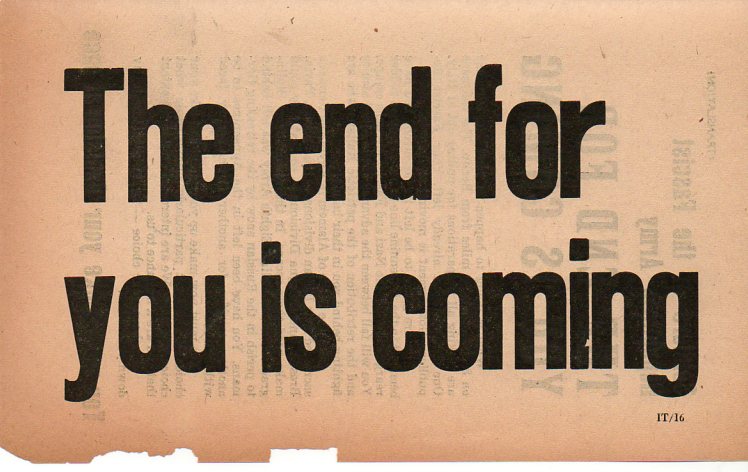
    This is a small addition to one of two larger entries on propaganda leaflets, here.  


    Propag--25753

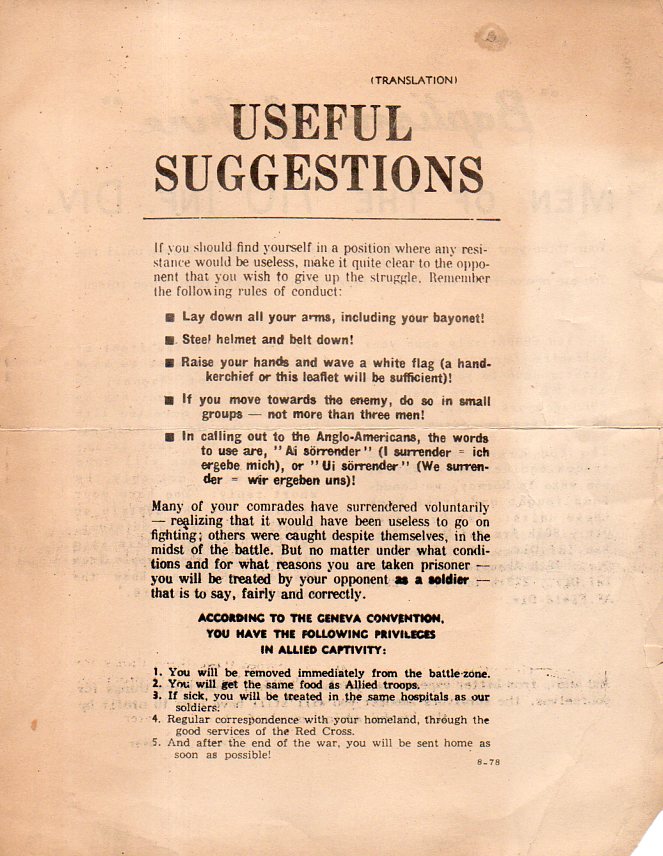
    “Baptism of Fire”, Men of the 710 Inf Div” and on the reverse, “Useful Suggestions”, (“Feuertaufe Männer der 710. I. D.! / Wertvolle Ratschlaege”).  This is a single-sheet (printed on both sides) English transaltion of a leaflet dropped on German soldiers in Norway in 1944/5, made P.W.B/A.F.H.Q. 8th Army. 


    SURRENDER320

    “The 710th Infantry Division (German: 710. Infanteriedivision) was a German Army infantry division in World War II. Formed in May 1941, it served spent the majority of the war in occupation duties in Scandinaviabefore being transferred to the Italian Front in late 1944. It participated in fighting against the Russians in Hungary before it withdrew into Austria and surrendered to the Americans in May 1945.”–Wiki

    ·Posted by :

    ·in:

  • In the Enigma Machine Family: the Hagelin Cryptographic Machine, 1942

    JF Ptak Science Books   Post 2320

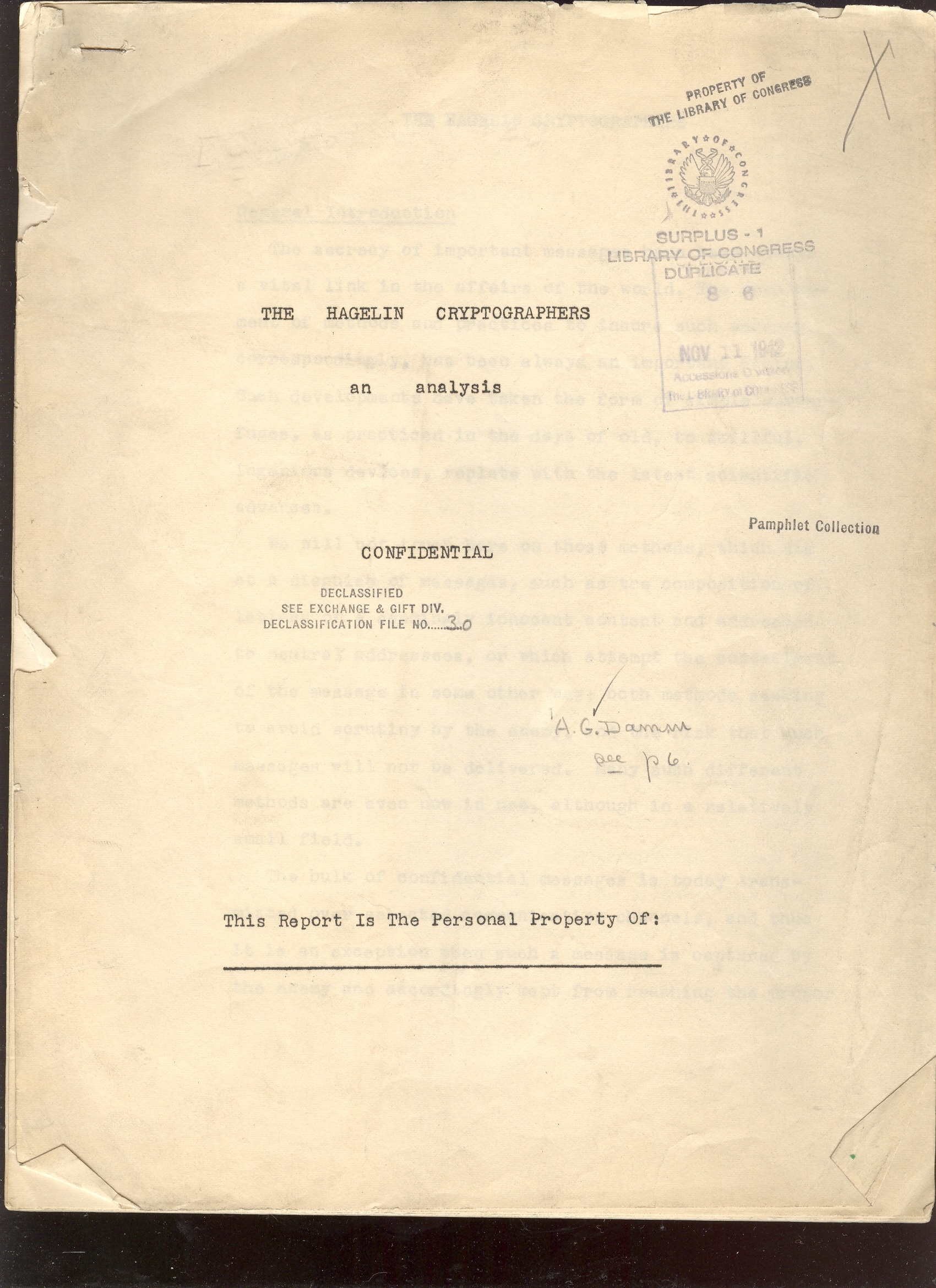
    This is a general report on the origin, development and status of the Hagelin “cryptographers”–a word used here to describe the physical machines (rather than the people working on codes). After his father invested in Aktiebolget Cryptograph, Boris C.W. Hagelin (1892-1983) took over ht leadership of the company in 1925, producing several fine models of encoding crypto machines, using Arthur Scherbius’ (as in the “Scherbius  Principle”, 1878-1929) rotor designs, some of which were marketed under the name “Enigma” (models of which were purchaed by the Wehrmacht in 1926 and modified for heavy use in the ’30’s and through WWII).  The company produced 140,000 units during WWII (while headquartered in the U.S) and is still in business today as Crypto AG, in Zug, Switzerland.

    Books--hagelin

    (The Hagelin Cryptographers, an Analysis. Stamped  CONFIDENTIAL, mimeographed in New York, by Ericsson Telephone,  1942.)    

    Sections in the document include “Models Built at Express Demand of the French Authorities”, “Evolution of Hand Cryptographer Type C-362”, “Hagelin Cryptographer Models” (BC-38 and C-362), “Methods of Operation”, “Superiority of Hagelin Cryptographers over Competing Makes”, and others, including a final section “How to Sell Cryptographers”. There is a mention of the “Enigma” machine on page 14, which is limited to mentioning that it is not sold outside of Germany. Although the Swiss firm founded by Boris Hagelin has manufactured, and continues to manufacture, many kinds of cipher machines, the words “Hagelin machine” will normally inspire thoughts of their unique lug and pin based machines.

  • Cover Art for Munitions=Conspiracy=Death; 1944 Pamphlet

    JF Ptak Science Books   Quick Post

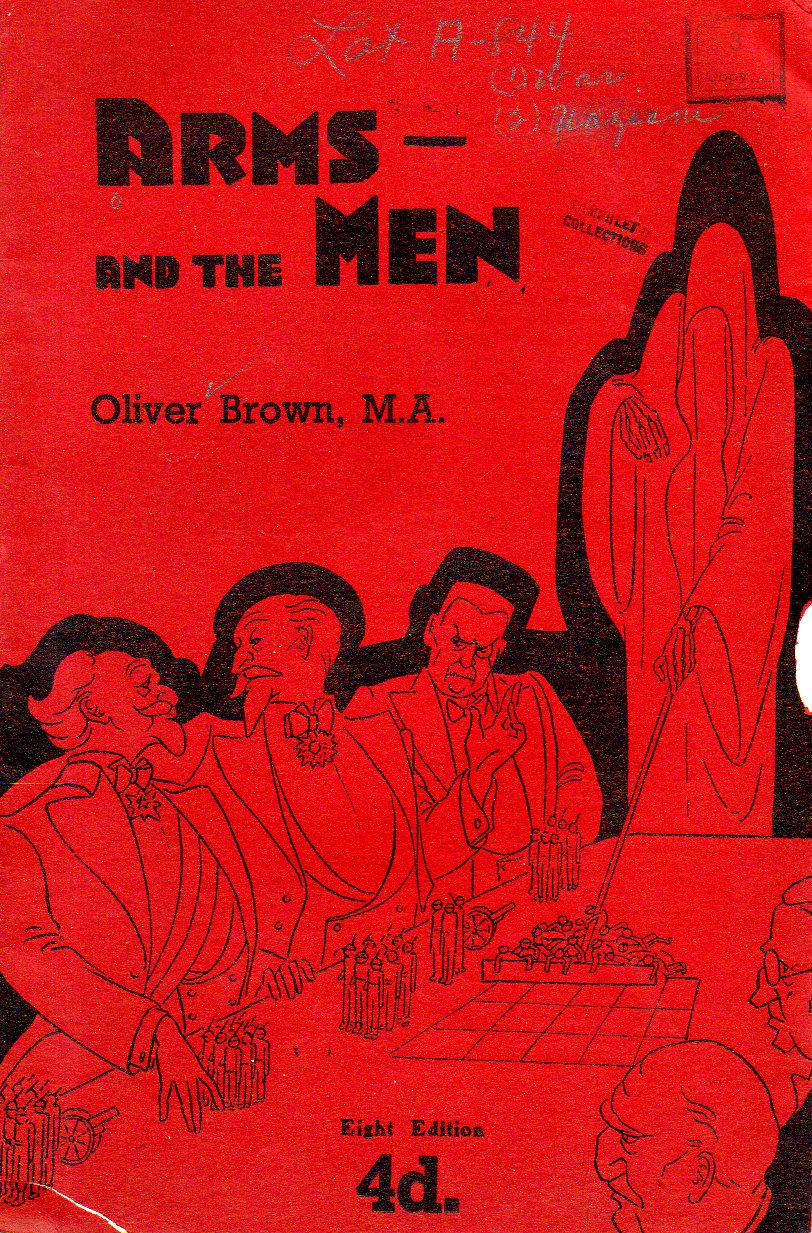
    Arms and the men318

    The cover art of this semi-pacifist pamphlet may well be the most interesting part of the work, so far as I can tell. Mr. Brown didn’t so much write a manifesto about arms merchants and war as collect some bits of news on index cards and then type them up (in no particular order) and publish them, adding bold to more than a third of the text and CAPS for the important stuff. It seems as though this 8th (actually, “Eight Edition” as it says on the cover in a variety of naming editions that I have never seen before) edition was published during the war (a 10th coming in 1946), and I’d say a small fraction of the writing centers on WWII. In any event a lot of it reads like Outsider History, and I can’t spend much time on it–particularly when he drives a stake into Brits for praying for Spitfires, which would not have been a terribly popular insight in 1944.

    So, I’m posting this as an example of striking and effective cover art, and that’s it.  

    Other works by Brown have the same flavor–they also indicate a very busy writer, perhaps, except that these are all short pamphlets of a few dozen pages. Of course decades of work could go into them, but I think not. In any event, here is a sample; Hitlerism in the Highlands, 1948; Stepmother Britain, 1948; Scotland-Nation Or Desert? Second Edition 1948; War for Freedom Or Finance? 1941; Scotland, this Wealthy-and Poor-Country , 1948. Many went into numerous editions with about the same pagination–my guess is that there were small press runs, with bits and pieces added every now and then.  

    Oliver Brown shares the same name as the Brown v Board of Education Oliver Brown, but they are not the same person.  

    ·Posted by :

    ·in:

    —
  • Human Computer Art, 1949

    JF Ptak Science Books   Post 2321  A Post called “Computer Art, 1949”, revisited and much expanded

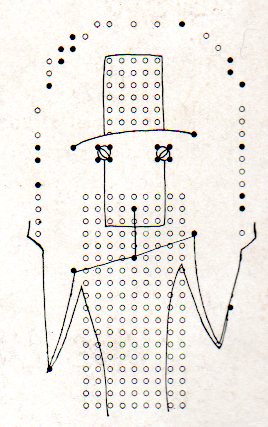
    This is a great example of an exactly-what-is-this object, something that seems to be one thing, then the other, but then neither.  
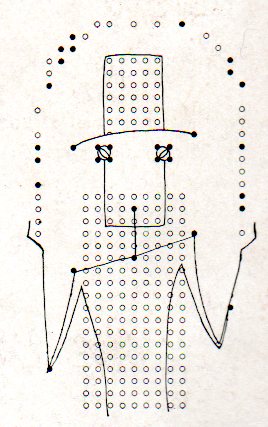
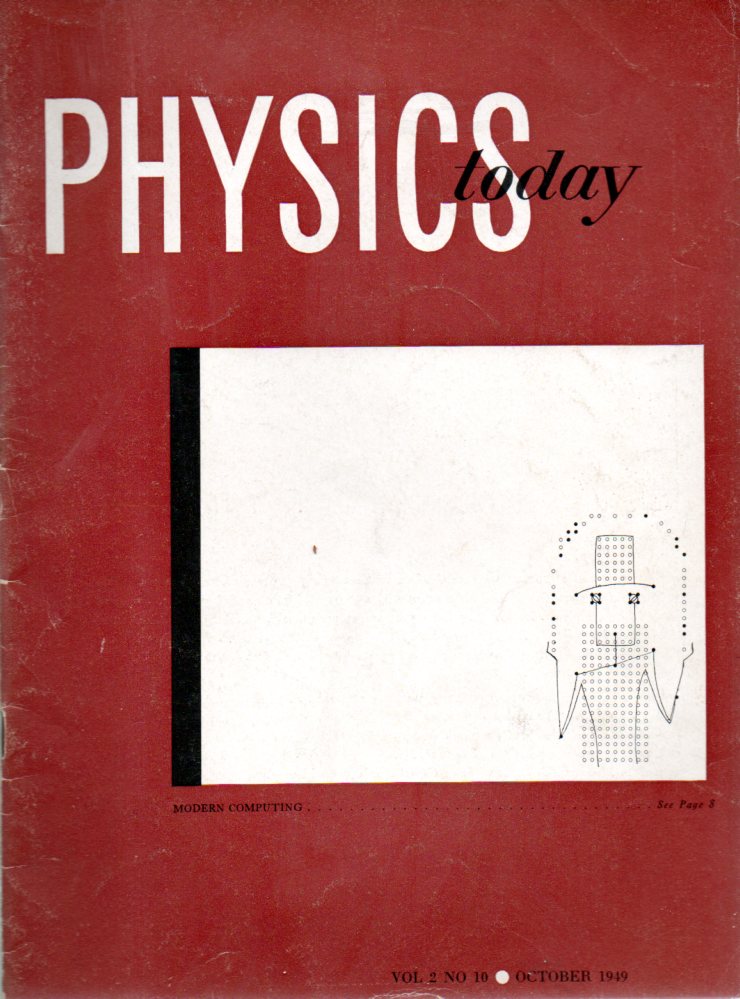
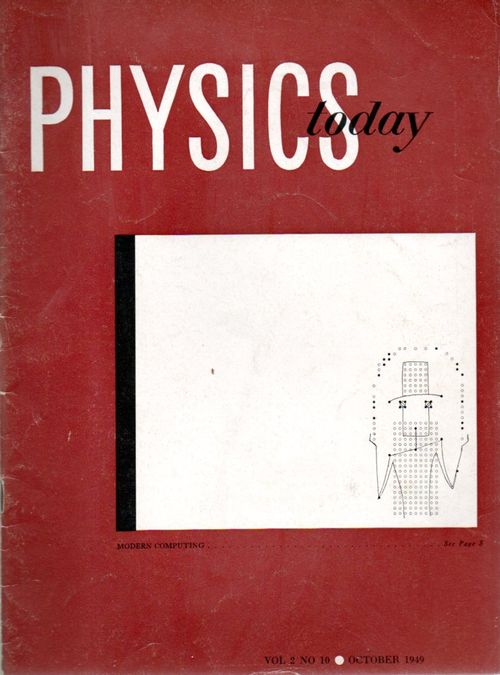
    Computer art154I’m not sure how to investigate this right off-hand, but I think that there is a special category in the history of art, subcat history of art and technology, subcat history of computer art, subcat using the technical aspects of the computer in art.  The image above comes from the front cover of one of the early issues of the “new” Physics Today magazine (volume 2, number 10), in October 1949–it is the artwork of Paul Bond, who created this portrait of a juggler “on a matrix sheet used for plotting computor [sic] plug board diagrams”, and is one of 11 such images.  So, while not computer art–artwork generated by the computer–it is artwork using items designed to operate the computer, a sort of very early computer-material montage.  (It would be in the first-time-ish category, but I can’t say this with any surety–it is however very very early for what it is.)

    It reminds me in a way of a magazine article using the illustration of a photograph–it was in the curious category of the first time an image of a photograph was published, that is to say it was a woodcut of a photograph though not the photograph itself.  This appeared in Golding Bird’s series of articles, “A Treatise on Photogenic Drawing”, which was five papers found and bound in the London-published journal, The Mirror.  and were extremely works on the new science of photography, appearing in issues from April 20-May 25, 1839. The image appears on page 241 (issue no. 945, Saturday April 20) and displays this first image of a photogenic drawing, which was the first publication of an image produced by any sort of photographic process.  (The process here is the ‘sun picture” , a photographic process, making this the first published “photographic” image, but really it is more like the first publication of a photographic image that was produced via woodcut.  It predates the first mass-published photograph by four years and the first (entirely) photographically illustrated book (The Pencil of Nature ) by six years.)

    Our computer artwork illustrates an interesting article (“Modern Computing”) by pioneers R.D. Richtmyer and N.C. Metropolis . Richtmyer/Metropolis have a very sober approach to the computer–and mostly speaking about the ENIAC–and address its romance, possibilities, and seemingly (to me) most of all “a need for defining the limits of computing machine operation, as well as its promise”. In effect, the authors really only address the known quantities of computing capacity in 1949, and even though tempted by looking into the future, they really do not. Their vision of the future is very pragmatic, and so far as speaking to future applications of the machine they choose the very Bartlebian philosophy and chose not to: they conclude “by their very nature, these applications are not easy to foresee, and perhaps, therefore, this is the point at which this discussion should close”, preferring to watch the beautiful and complex whirlwind in a thicket from the outside.  

    There have been much earlier images of automated steam-driven robots with some sort of calculating brain, and images of imaginative computer-like objects, and stretching back into the 18th century, so the idea of creativity and thinking and human-like qualities made by things constructed of metal and wood with a power source of steam or electricity and so on was well-established, though lurking in deep-background. Art made with the computer seems to come a fair bit later than this issue, later still than what might be considered the first art generated via the computer (which were images made from manipulating an oscilloscope) in 1952. This was the work of Ben F. Laposky (1914-2000) an Iowan and mathematician/draftsman and former sign-painter who took long time exposure photographs of waves motions on a cathode ray oscilloscope with sine wave generators and found beauty in them. His work was first exhibited at the Sanford Museum in Cherokee, Iowa, in 1952, as “Oscillons or Electronic Abstractions”1 –hundreds of other shows would follow.2 One of the earliest appearances in print of the oscillons is in Scripta Mathematica, Sept-Dec, 1952, pp 305 (and then somewhat later in Design, May 1953).

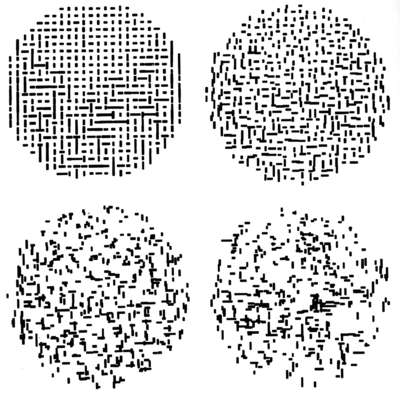
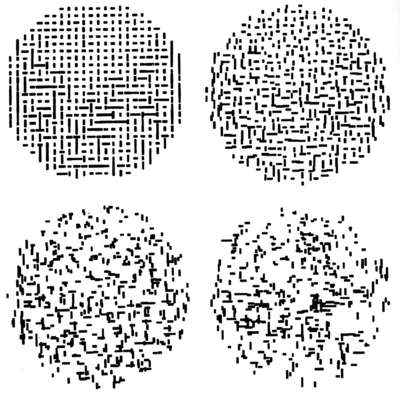
    Among the earliest computer-generated art–that is, art made via an automatic process input by humans by created by the machine–was created and noted by A. Michael Noll (b. 1939) with an IBM 7094 and described as “computer art” in “an August 1962 technical memorandum”3. Noll has written extensively (and interestingly! and early) on human/computer interfaces including computers and dance, fourth dimensional imaging, and much else4, including a fabulous comparative study of an original Mondrian and a computer-generated alternative5. (Noll is today widely recognized as one of the first in the field of digital art and 3-D animation.) 
    Noll

    [Image source: Compart, Cener for Excellence in Digital Art, here.]

    In any event, I think at the very least that the Bond artwork is very curious, interesting, and probably very early for what it is.
    Computer art153Notes.

    1. This reference was first found in Arthur I. Miller’s Colliding Worlds, (Norton, 2014) on page 66.  Miller is perhaps the most upper tier in upper tier historians of science with the specialty of art/science interface–over the years I have enjoyed his work enormously.

    –See here for a full text of Electronic Abstractions.

    2.  “Electronic Abstractions are a new kind of abstract art. They are beautiful design compositions formed by the combination of electrical wave forms as displayed on a cathode-ray oscilloscope. The exhibit consists of 50 photographs of these patterns . A wide variety of shapes and textures is included. The patterns all have an abstract quality, yet retain a geometrical precision . They are related to various mathematical curves, the intricate tracings of the geometric lathes and pendulum patterns, but show possibilities far beyond these sources of design.”—Sanford Museum, Gallery notes for Electronic Abstractions, 1952 (Wiki)  For a good appreciation of Laposky, see Alison Drain, “Laposky’s Lights Make Visual Music” in Symmetry 4/3, pp 32-33.

    3.  Miller, page 68.

    4. See the following: 

    Noll, A. Michael, “Short-Time Spectrum and Cepstrum Techniques for Vocal-Pitch Detection,” Journal of the Acoustical Society of America, Vol. 36, No. 2, (February 1964), pp. 296–302

    Noll, A. Michael, “Computers and the Visual Arts,” Design and Planning 2: Computers in Design and Communication (Edited by Martin Krampen and Peter Seitz), Hastings House, Publishers, Inc.: New York (1967), pp. 65–79.

    Noll, A. Michael, “The Digital Computer as a Creative Medium,” IEEE Spectrum, Vol. 4, No. 10, (October 1967), pp. 89–95

     Noll, A. Michael, “Choreography and Computers,” Dance Magazine, Vol. XXXXI, No. 1, (January 1967), pp. 43–45

     Noll, A. Michael, “The Effects of Artistic Training on Aesthetic Preferences for Pseudo-Random Computer-Generated Patterns,” The Psychological Record, Vol. 22, No. 4, (Fall 1972), pp 449–462.

     Noll, A. Michael, “Computer-Generated Three-Dimensional Movies,” Computers and Automation, Vol. 14, No. 11, (November 1965), pp. 20-23.

    Noll, A. Michael, “Computer Animation and the Fourth Dimension,” AFIPS Conference Proceedings, Vol. 33, 1968 Fall Joint Computer Conference, Thompson Book Company: Washington, D.C. (1968), pp. 1279-1283

     Noll, A. Michael, “Art Ex Machina,” IEEE Student Journal, Vol. 8, No. 4, (September 1970), pp. 10-14.

    5.  Noll, A. Michael, “Human or Machine: A Subjective Comparison of Piet Mondrian’s ‘Composition with Lines’ and a Computer-Generated Picture,” The Psychological Record, Vol. 16. No. 1, (January 1966), pp. 1–10.

  • “The Negro Soldier” U.S. Army Recruitment Film, 1943

    JF Ptak Science Books   Post 2322

    Negro soldier

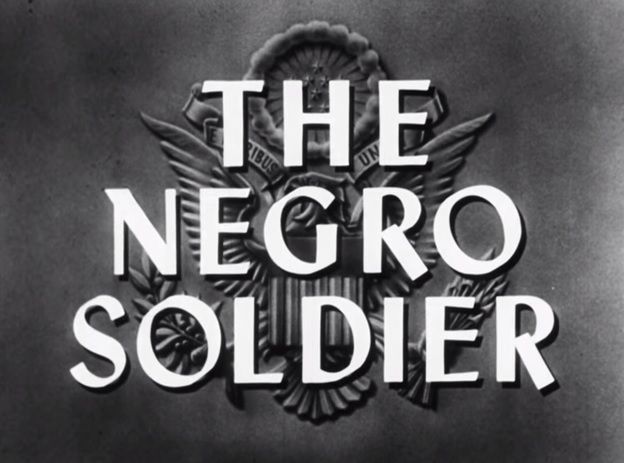
    The Negro Soldier  was a film produced by Frank Capra1 for the U.S. Army as part of a recruitment effort for African American soldiers–in addition to the being a small appeasement to the nearly 880,000 who were already serving in 1943. It was also used as an orientation film, and was required viewing by all servicemen.  It was a tricky business for the time, given the racist policies in place, the de facto segregation2, and the unfortunately high incidence of racist feeling among U.S. servicemen.  

    The armed services needed men.  The Army had a similar problem in 1918, though there seems to have been little effort to learn its lessons with segregation and appeasement. In World War I  there were over 400,000 Black soldiers, half of them in France, but fewer than 40,000 of them actually saw combat duty, the rest being left to construction/upkeep and menial tasks, an army of 760,000 trained men being kept from participation because of racial practices. The Negro Soldier was certainly a partial response to this issue and an appeal to social tolerance and an incorporation of the Black soldier into a unified fighting force.

    It was a difficult time for African Americans in films–not to mention in real life– where the vast majority of portrayals of Black people in cinema was a caricature, indecent. This film has none of the trappings of a contemporary movie about Black people, and was received with high acclaim by Langston Hughes among many others. Although the film portrayed Black people in honorable professions and with respect and dignity, it was also a propaganda film for domestic consumption, and showed a fractured history of African American contributions in quick run-throughs of U.S. history, while also failing to mention things like slavery, breezing through the Civil War in about 20 seconds. Again, that’s not what the film was intended to address–it really was supposed to be a “leveler” of sorts, evening the mountainous arena of race relations, attempting to portray the sameness of the races in the fight against Germany.  On the other hand I can help but think about the difference between what was shown in the film and what was happening in real life, and expect men to go and fight for a principle that for them mostly existed in theory.

    Negro soldier preacher

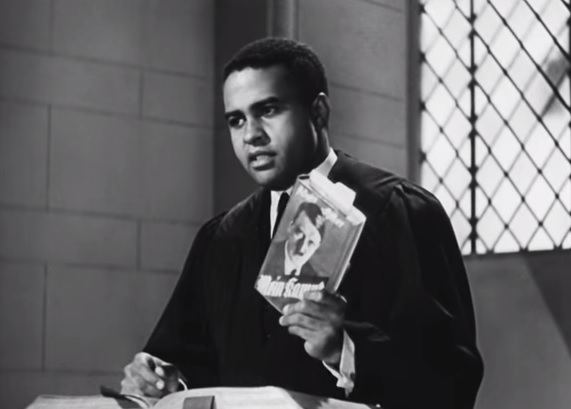
    It is interesting to see this movie still of a minister (the screenwriter Moss)  preaching by using quotes from Mein Kampf; he spells out exactly what is there by Hitler concerning Black people, and it is very bad stuff, calling them half-apes and criminal that they should be allowed to have any position of responsibility….and that the Nazi goal was world domination.

    So although a flawed product it was much better than the average fare, not that there was anything to compare it to for the recruitment of Black troops, because (I believe) there weren’t any others.  In spite of the obvious lack of historical context top place the African American in some sort of context in the history of the U.S., this was probably a very good film, and evidently fulfilled its mission.

    Here’s another interesting propaganda film, the story of a Black farmer in Georgia.  Henry Browne, Farmer was made on what seems to be a pretty low budget in 1942, and presents the ideas of the soldier, the soldier of production, and the soldier of the soil, of which Mr. Browne was the later. The film is sympathetic, though Browne and his family are living pretty close-to-the-cuff, plowing with mule teams, taking their mule-driven wagon into a town (Macon?) highly populated with cars. Of high dignity, the Brownes are fairly poor, in spite of having a fine-looking 40 acres. On their wagon trip to town they visit their son, who is a pilot with the 99th Pursuit Squadron, and we watch them as they watch their son climb into a T6 and take off.  I liked that part quite a bit.  


    Notes:

    1. The screenplay was written by Carlton Moss–who also plays the Black preacher–and directed by Stuart Hiesler.

    2.  The U.S. Navy would officially end segregation in February 1946; the Army followed with Executive Order 9981 in July 1948. 

    ·Posted by :

    ·in:

    —
  • A Wireless Telephone, 1880

    JF Ptak Science Books  Post 2323

    Photophone

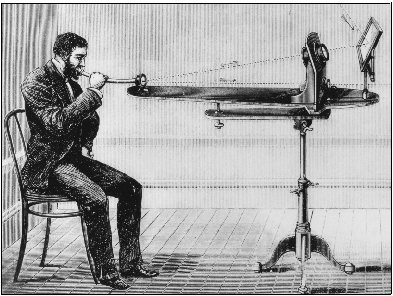
    Alexander Graham Bell was already mega-famous by the time he unveiled what he considered to be one of his greatest inventions.  Working at his L Street lab as well as from his home (which was just a few blocks away from my store in Georgetown, which was at the 34th & Volta Place, also just a few doors away from Alger Hiss’ old place, and a few doors the other way from Warren Christopher’s house where he slipped and fell on his last day in DC on the snowy steps and sidewalk that he never shoveled, and so on) he developed the photophone.  In the day, in 1880, when it was completed he considered the work so substantial and filled with so much potential that he left his plans on deposit in a sealed something-or-other until he announced the results for real, which came at a public lecture on August 27, 1880.  (This perhaps for the big taste of legal trouble he got into with his telephone–troubles and contentiousness that would continue for years. Also there was something in the air about this, so to speak, with an article in Nature attesting to rivals of the ingenious invention coming in the 23 May issue of the same year.) In any event, he found this invention to surpass his telephone and phonograph–except that few people today recall the instrument, much less what it did1.  

    It was a fantastic thing, an elegant device utilizing his discovery of the photoacoustic effect–basically, transmitting wireless telephone conversations, transmitting speech on light rays, a feat that would not be utilized until the last two decades of the 20th century, a precursor to fibre-optic communication–it was just decades away from practical application.  

    In his article in Nature of September 23, 1880, electrical pioneer Sylvanus Thompson writes (opening that weekly issue) that “sounds can be transmitted from one station to another wherever a beam of light can be flashed; …we may expect the slow spelling out of words in flashing signals of the heliograph to be superceded by the more expeditious whispers of the photophone” (page 481). Actually it seems that this paper beat the sponsor organization of Bell’s August address into general print, though The Electrician seems to have bested them both with an article on September 18.

    Bell was happy.  According to Ben Richmond at Motherboard, Bell wrote a lovely note to his father on his success: 

    “I have heard articulate speech by sunlight! I have heard a ray of the sun laugh and cough and sing! …I have been able to hear a shadow and I have even perceived by ear the passage of a cloud across the sun’s disk.”

    Notes:

    1.  Wiki quotes Donald J.C.  Phillipson and Neilson, Laura, entry on Bell in the  Canadian Encyclopedia online. “Of the 18 patents granted in Bell’s name alone, and the 12 he shared with his collaborators, four were for the photophone, which Bell referred to as his ‘greatest achievement’, telling a reporter shortly before his death that the photophone was “the greatest invention [I have] ever made, greater than the telephone.” Wiki and Philipson/Neilson.  


  • Graphic: Strength of Nazi Army, The Nation, 1943

    JF Ptak Science Books    Quick Post

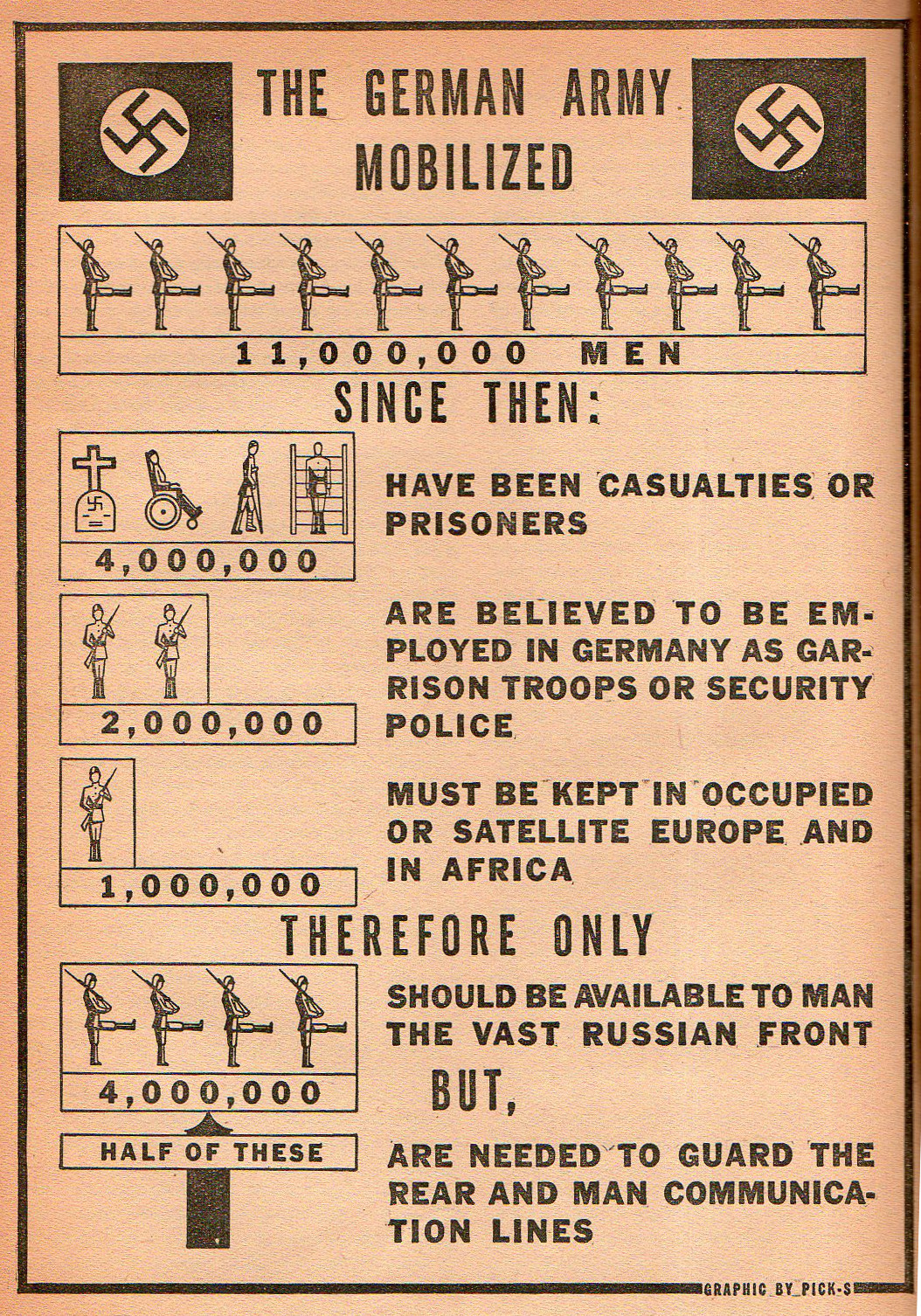
    The U.S. was just beyond its first year in the combat part of WWII when this infographic was made and published in The Nation on January 2, 1943, and no doubt that it was of some considerable interest to portray the Nazi war machine with a little more alacrity. 1942 was a tough year in the history of the war, and the Nazi army was looking large and gray and tough-to-beat. The editors of The Nation sought to put a little more perspective in the viewing of the Wehrmacht in an attempt to show the actual fighting force size. It is an interesting result, though the display itself is actually somewhat intimidating, with the message a little lost in the shadow of the strong banner:

    NATION graph gernman army314

  • Addressing the Kinematics and Dynamics of One-Dimensional Motion: Jumping

    JF Ptak Science Books   Post 2324

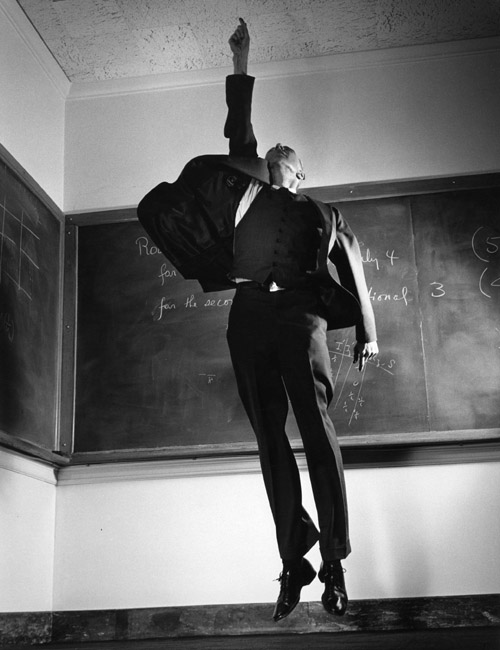
    Jump oppenheimer

    [Image source: http://rebelsintradition.com/wp-content/uploads/2014/05/tpp-13-halsman_Oppenheimer.jpg]

    The American Journal of Physics, published for the American Association of Physics Teachers by the American Institute of Physics (how many times did I use the word “physics”?) is a superb periodical, and for most of the time that I have been familiar with the journal it has published a very wide variety of physicsiana, including the history of physics, and (perhaps with the highest walk-by entertainment value) practical/applicable physics. I am working on a considerable stack of them right now, and the first one pulled at random began with an article by Leon Lederman on the history of the neutrino–this is an 8-page I-was-there deep-overview with 103 bibliographic references, and looks very useful.  (There’s much else of interest: Eastwood “Robert Grosseteste on Refraction Phenomena”, Bess’ “Supplementary Note on Brownian Motion”, and 20 others. Really fantastic. (This would be in volume 38/2, February 1970–but it lives behind a paywall…)

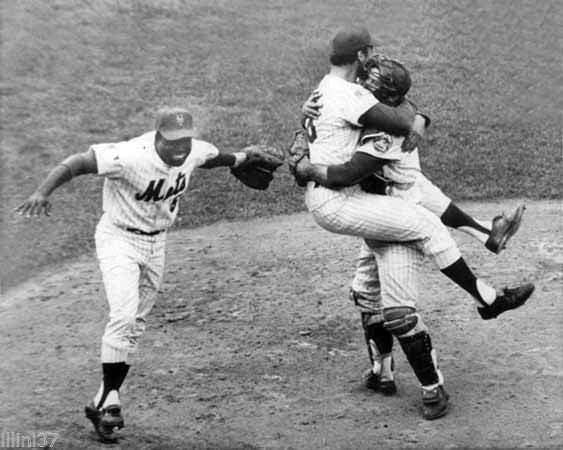
    Jump Mets

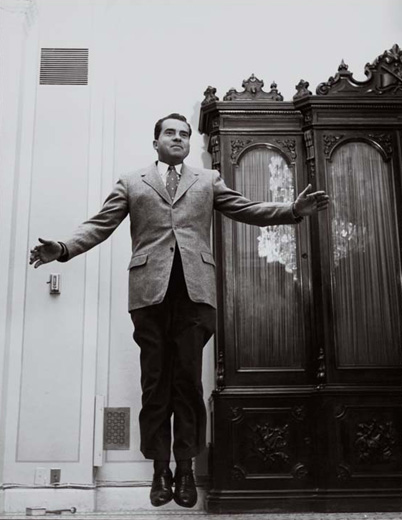
    The Lederman of course is serious stuff, but in the very next issue that I held in my hand was one of those in-my-mind-famous entries on applied physics, and serious, and fun:  Elmer Offenbacher’s Physics and the Vertical Jump” (July 1970).  Offenbacher relates a famous photo of Robert Oppenheimer jumping for Philippe Halsman’s Jump Book (1952) which was a book by the great photographer of images of people jumping.  And jump Oppenheimer did–one of the best jumps in the book, a jump reaching for something with an outstretched finger, coat open and flying, a big effort, jumping for something.  (Much different from the stunted and under-control “jump” by Richard Nixon, who tried to deceptive-jump without jumping and failed, unlike Tallulah Bankhead, who “jumped” without jumping and succeeded.) Anyway, the notion of jumping and relating it to physics with a picture of Oppie got students to think about the kinematics and dynamics of one-dimensional motion. Offenbacher also opened the article with a story of the celebration of the New York Mets winning their “impossible” World Series in 1969, referring to the jubilant players leaping  into each other’s arms. (The author doesn’t mention names but he must have been referring to two Jerrys–Jerry Koosman,m the winning pitcher, and Jerry Grote, the catcher, along with Ed Charles who was on the mound but not leaping, yet.) 

      Jump nixon[Image source: http://rebelsintradition.com/wp-content/uploads/2014/05/tpp-13-halsman_Nixon.jpg]

    This approach was perhaps a little more shiney and interesting than Galileo’s brass balls–the Oppenheimer pic certainly captured my attention. In any event, this was a brilliant idea, and a wonderful way of approach the mechnaics of different sorts of jumping.  

    ·Posted by :

    ·in:

Recent Posts

Archives

Categories