A Daily History of Holes, Dots, Lines, Science, History, Math, Physics, Art, the Unintentional Absurd, Architecture, Maps, Data Visualization, Blank and Missing Things, and so on. |1.6 million words, 7500 images, 4.9 million hits| Press & appearances in The Times, Le Figaro, Mensa, The Economist, The Guardian, Discovery News, Slate, Le Monde, Sci American Blogs, Le Pont, and many other places… 5000+ total posts since 2008.

  • A Peek Behind the Curtain: Luis Alvarez, Cosmic Rays, and the Pyramids

    JF Ptak Science Books   Quick Post

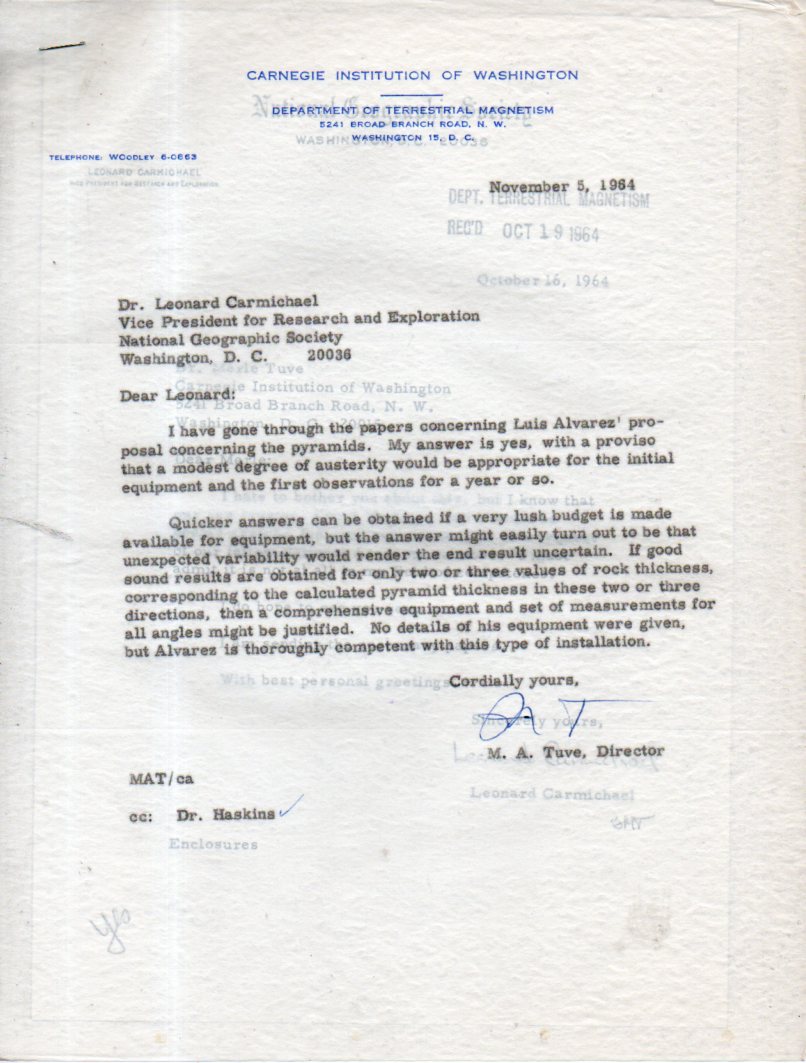
    This is a little peek behind the curtain, a tiny view into the process of funding an experiment using cosmic rays to look for hidden chambers in the pyramids by a Nobel Prize recipient. The letter is from Merle Tuve (a very major player in the development of RADAR and much else) when he was the director of the Department of Terrestrial Magnetism (part of the Carnegie Institution), writing from its beautiful campus in a leafy section of NW DC.  The letter was written in 1964–its actually a carbon of the letter that Tuve sent to Leonard Carmichael (VP at National Geographic who must’ve gone fishing for the money for the research), the copy being sent to Caryl Haskins, who was president of the Carnegie. 

    The Nobelist (’68) in question was Luis Alvarez, who charged ahead everywhere and was right about tons of stuff, in all sorts of different areas, not the least of which was with looking for hidden chambers in the Chephren pyramid by using cosmic rays.  His plan was to use a detector and search for discrepancies in the way cosmic rays might pass through the pyramid, that there would rate differences if the particles passed through empty areas in the other-wise solid limestone structure. Anyway, it was much more involved than that, but for our purposes here it is enough.  Tuve likes the idea, and says “yes”.  

    This document is available for purchase at the blog’s bookstore, here.  
    Alvarez Tuve617

    ·Posted by :

    ·in:

  • SECRET (When Filled In)

    JF Ptak Science Books   Quick Post

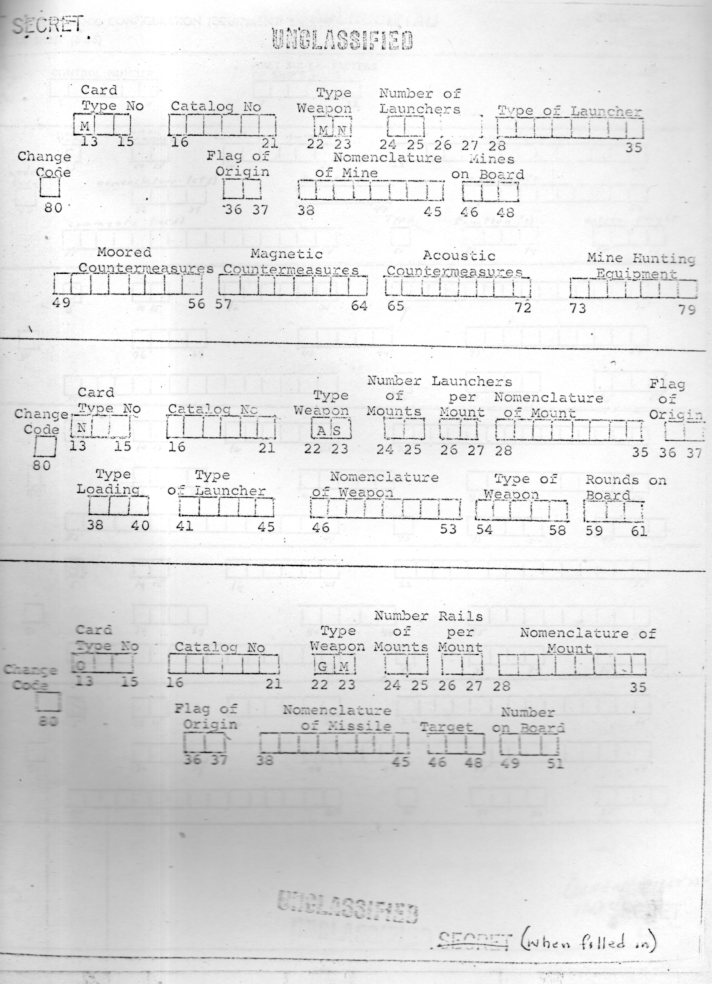
    Naval secret doc616

    I came upon the following document (ca. 1968-72) in a collection of ASW material–it seems to be a coding form for military ships, both for the United States and for the Soviet Union, and runs about 20 pages, the section titled “Structuring and Colelction of Ship Characteristics Files SCF). It must be a preliminary study for something, because even though there are hundreds of data points, it doesn’t seem like, well, enough.  The doc is titled “ADP FORMAT, Scientific and Technical Intelligence Center, Naval Intelligence Command” which is the Navy Scientific and Technical Intelligence Center (NAVSTIC), which was “established in 1968 and merged with the Navy Reconnaissance and Technical Support Center (NRTSC) in 1972” (Office of Naval Intelligence).  

    The document is unclassified now, and I know I’m missing what it must really be, but what struck me was the “Secret (When Filled In)” on one of the pages…

    Naval secret doc615

  • A Classic in the History of Jet Propulsion (1946)

    JF Ptak Science Books  Quick Post

    Keenan Jet Engine577

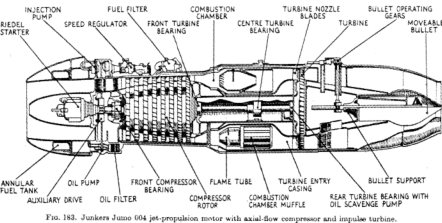
    This drawing comes from the great engineering classic that presented the prototype jet engine for all that would follow it–J.G. Keenan’s Elementary Theory of Gas Turbines and Jet Propulsion. It was published in the glorious Oxford blue cloth by the university and issued with the classically-design beige dust wrapper–it just has the feel of something solid and astute. Keenan’s work is a classic–it is a general survey of developments in the jet propulsion field and was among the very first books published on the subject.

    Keenan was not the first though to the jet engine party–Hans von Ohain and Sir Frank Whittle were. It was a classic idea-in-the-air example of two people working on a very similar idea at the same time without any knowledge of the other.  von Ohain was the first to produce an operational jet engine (1939) while Whittle was the first to patent (while getting his engine to be operational in 1941). Jet engines have been around for a long time (Romans having legislation on the use of variable jet sprays in water distribution) in different forms–fountains, fire hoses, marine jet propulsion (reaching back to 1871), and so on. But John Gregory Keenan’s book–that was a big and influential review, a major contribution to the field. 

  • A Lively Evolutionary Tree of Coal

    JF Ptak Science Books

    I am happy to introduce a sub-category in the diagrams-employing -tree-structures category:  the Tree of Coal. It is an unusual diversion in the general quantitative display of data:

    Coal tree519

    This was found in the German Life magazine of its day, the Illustrirte Zeitung, in 1921, and is a very strong pictorial display of the evolution of coal products. It is strongly related to the “Verkaufsvereinigung fuer Teererzeugnisse” (of Essen) image which used this idea in 1922, also publishing in the  Illusrtriete Zeitung.. The great tree spring from a bed of coal (“kohle”) exhibiting the “stammbaum der nebenerzeugnisse” (roughly the “pedigree of our product”), with the trunk being gas, branching out into tar, coke and cyan and so on. It is interesting to see that in the Coal Tree above that the roots are firmly entwined over and through a coal pile, while below the roots are in soil.

    Even though it’s the lifeblood of the continuing industrial revolution, and even though we’re hundreds of years into a deep need with the products, the use of the tree just seems antithetical to it all on all levels of recognition.Tree coal


  • Ferris Wheel Tank, 1915

    JF Ptak Science Books   Quick Post

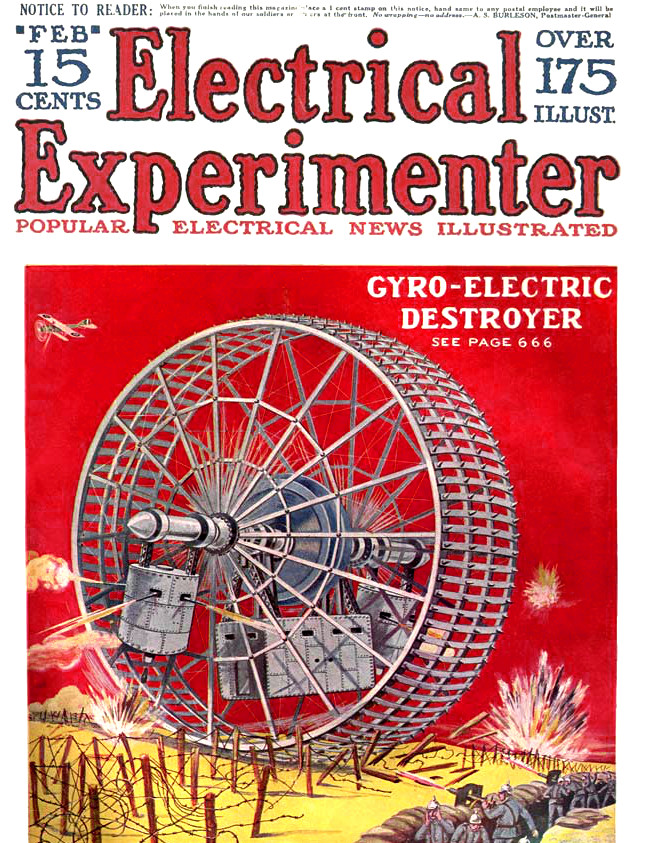
    A few days ago I was having a look at a Large & Impossible Tank, and today I came across this fabulous beauty from the Electrical Experimenter for February, 1915.   

    This 45′ monster would be somehow powered by electricity though there is no discernible power source or power train, and it would be steered by a gyroscope. (The use of the gyroscope is interesting–the idea of it acting as a control mechanism had been successfully introduced in the Whitehead torpedo in 1905, and used as stabilizing agents in airplanes and ships by 1910, and found in the first gyroscopic repeater compass by 1911, so the magazine and writer pretty much had their finger on the national gyroscopic pulse of the time.) Being hit by defensive cannon fire was said to have been not too much of a problem because the shells would mostly pass through the lattice work of the structure.  The armament in the suspended armored buckets would be “the same as British tanks”–the buckets also came equipped with a bomb chute (if you look closely you’ll see one in action here, the destroyer dropping a bomb on itself) for, well, bombing.  

    Tank--giant wheel

    ·Posted by :

    ·in:

    — —
  • Radio Signals from Mars, 1924

    JF Ptak Science Books    Quick Post

    Mars 1924[New York Times, September 18, 1921, here]

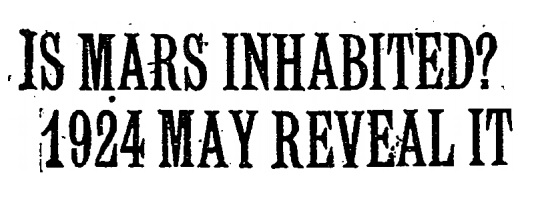
    And so there came a time in 1923 and 1924 when it was determined that when the Earth next came into closest proximity with Mars (closest in opposition for a century) that efforts would be made to determine whether or not there was anyone around on that planet.  The idea of the radio being a powerful-enough instrument to be used in such a way was initiated in 1896 by Tesla, and soon followed at the turn of the century with support for the idea by Marconi  and Kelvin. (This interest was perhaps ignited after both Tesla and Marconi detected unexpected and steady signals that they thought were extraterrestrial but which were in fact ionospheric radiation–and of course there was Percival Lowell and his self-derived belief in Martian intelligence as described by the thought that there were canals on the surface of Mars.  

    This was a massive-idea  effort:  a U.S. government initiative demanded five minutes of radio silence per hour over a 36-hour period in the vast hope that transmitters closed down that if there were any radio signals being directed towards the Earth from Mars that they could be more easily detectable.  

    This was the magnificent “National Radio Silence Day”.  And it was extraordinary that i twas supposed to affect every radio in the country.

    William F. Friedman, the Chief of the Code Section in the office of the Chief Signal Officer of the Army, was on the job and ready to decipher any messages that might need deciphering, which was some very hopeful thinking–not only was it hypothesized that there might be life but that it was also sufficiently advanced from some semi-primordial goo  as to have a technology capable of interplanetary communication, and that a code expert might be able to read anything that came in.  
     
    Additionally that  New York Times article from 1921 described the proposals for the construction of a 60′ (720″) reflecting telescope–an absolutely enormous thing for the time, and for now, considering that the largest reflecting telescope yet built is 420″ (Gran Telescopio Canarias (GTC)), and that is a segmented scope, whereas this 720″ mirror-monster would have been one big piece of glass.  
     
    But the country as a whole deserves a bit of credit for being so interested in the possibly of communicating with extraterrestrials that it was willing to let a main source of information and entertainment be interrupted for science, and that so many people had a hand in this. It was possibly one of the largest public experiments in the history of experimentation in the United States, and was also one of the earliest SETI attempts to search for intelligent extraterrestrial life.  

    ·Posted by :

    ·in:

    —
  • Tubes, Pipes, & Sheets. And Some Nazi History.

    JF Ptak Science Books   Quick Post

    My experience with technical and industrial product catalogs (1900-1950) is that they have the potential for superlative or at least challenging design. Such is the case for the following catalogs issued by Mannesmann Export of Dusseldorf.  The designs are unexpected, sharp, colorful, heavy, and anything but the spareness of its product. The catalogs below were all issued in the 1950’s. 

    Tubes pipes636

    ·Posted by :

    ·in:

  • Making News–a Working Newsroom, 1922

    JF Ptak Science Books  Quick Post

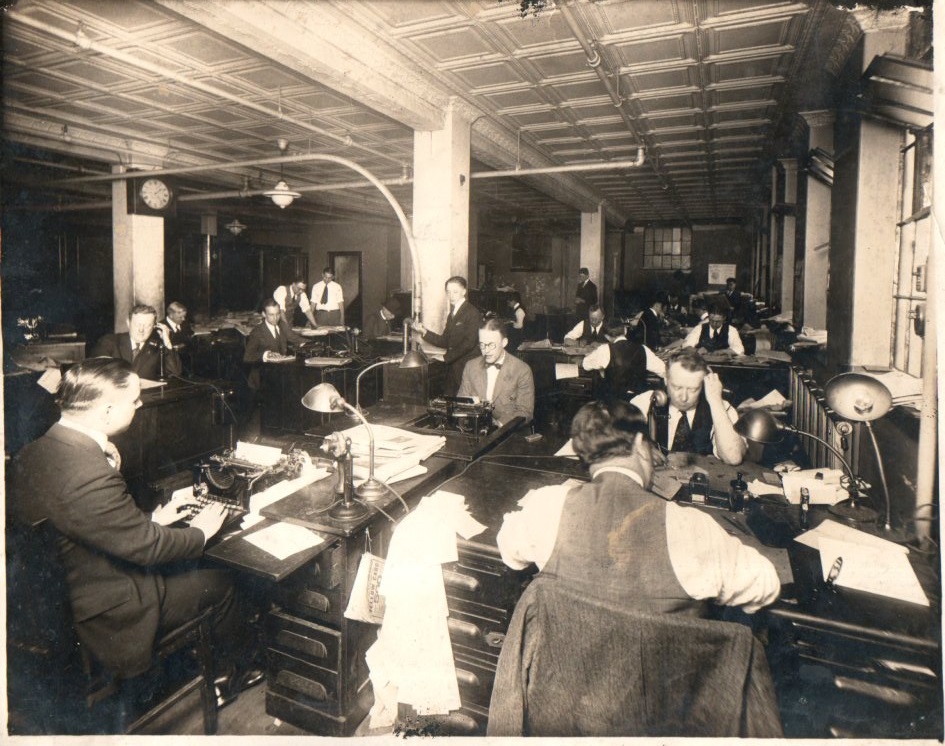
    Uhl photo640

    This is a photo from a small archive that we have here that once belonged to Alexander Uhl, a New Yorker (CCNY and Columbia School of Journalism) and a Major League Old-School reporter of a high order. This photograph is not identified except for Uhl’s name and date (May 1922) on the back, but my references for Uhl start only in 1935 when he began covering Spain for the Associated Press, where he remained to cover the war until 1938. Uhl went from there to Europe where he covered the war and post-war from 1940 to 1948–this for the famous Leftie newspaper PM, which vowed never to take advertising money and to survive on subscription and daily sales.  They packed a lot of news into relatively small tabloid formats. In any event, I do not have the info of where the photograph was made, though it is Uhl in the middle with H.L. Mencken eyeglasses and cigar.  It is a great scene, and shows the folks in the newsroom at work–if they weren’t on the phone, they were writing; if not writing, then typing. At middle-left is an office boy either sending or retrieving a morsel from a pneumatic delivery system.  

    Amidst the ties and suits, there is remarkably little clutter, and very little paper. There is a fair amount of grime, though.  

    It is also worth noting that Uhl’s wife, Gladys (Beauchamp) Uhl was Jackie Kennedy’s press liason in 1960.  

    This seems like a privately-held photograph, and probably has not been published before. 

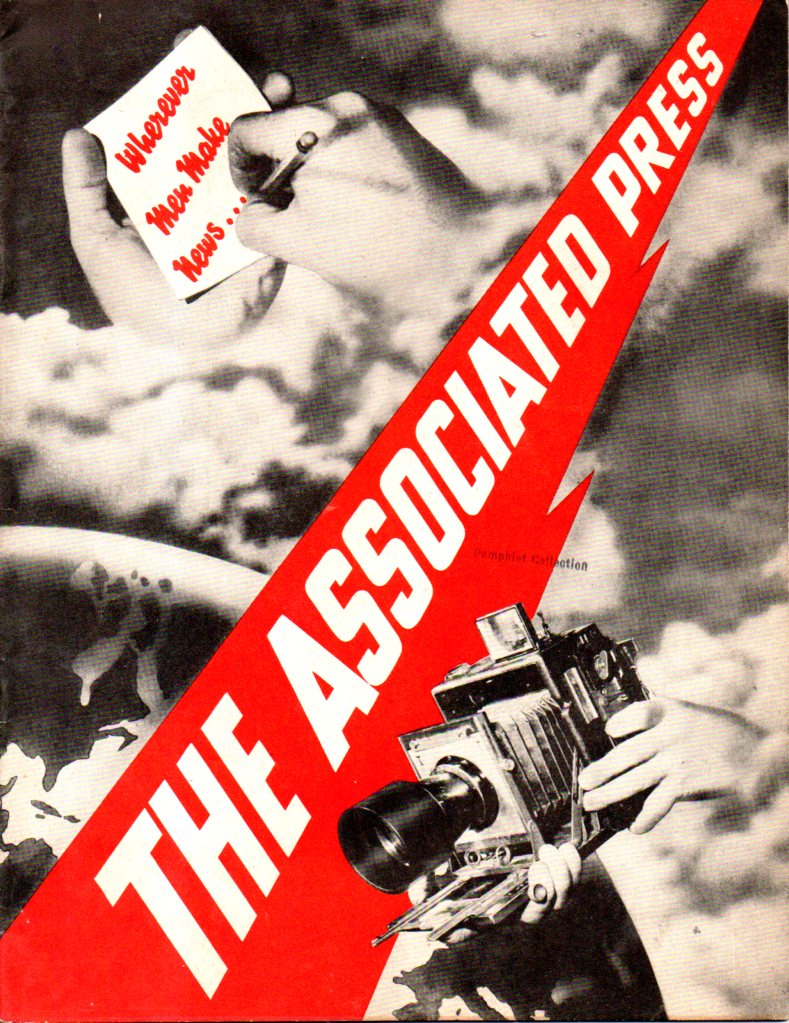
    Also, here’s another Old-School bit:  a pamphlet for the Associated Press:

    AP 641

    ·Posted by :

    ·in:

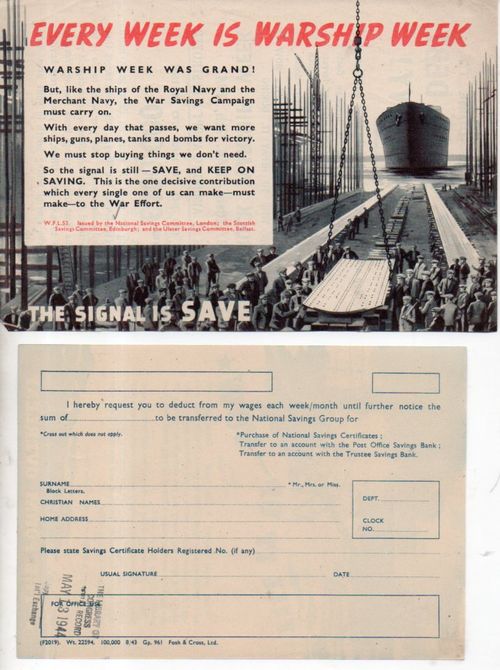
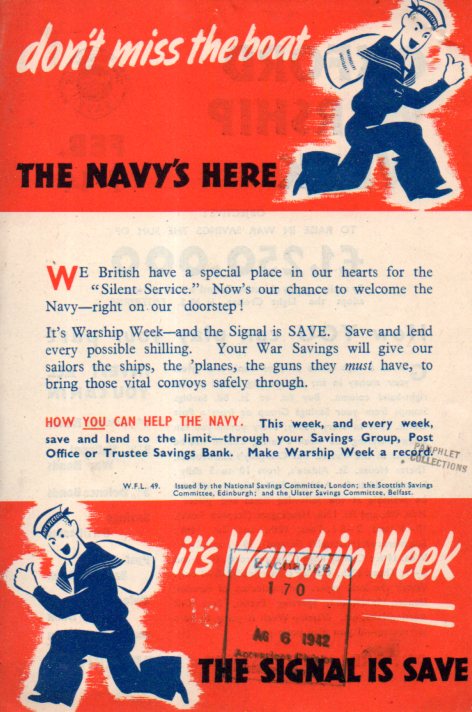
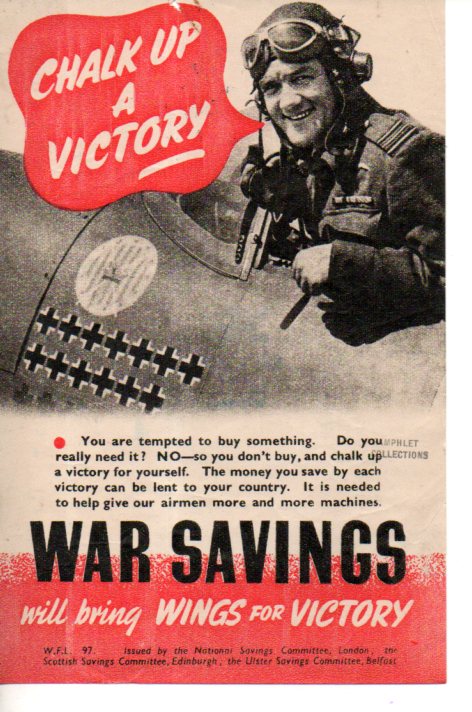
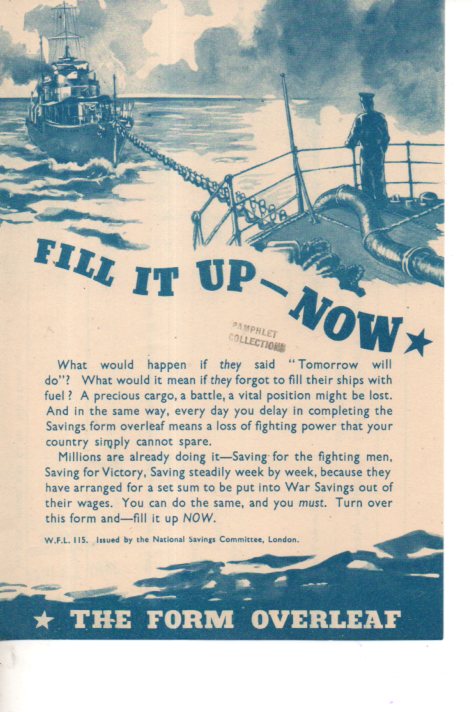
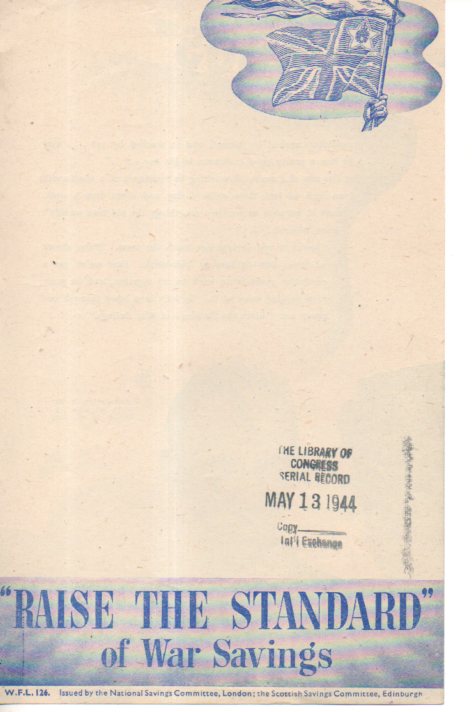
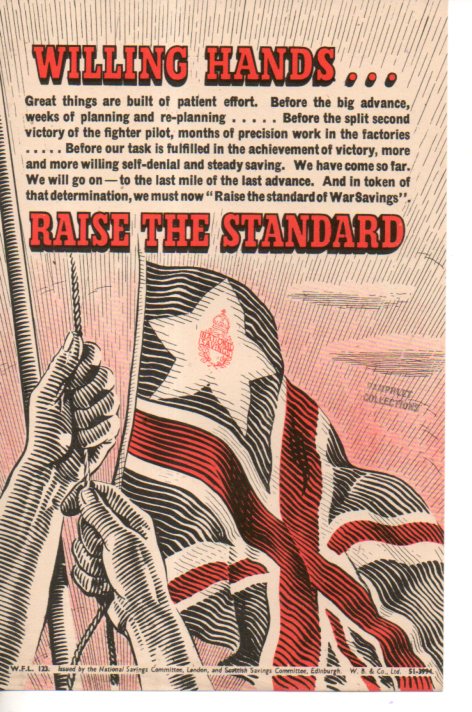
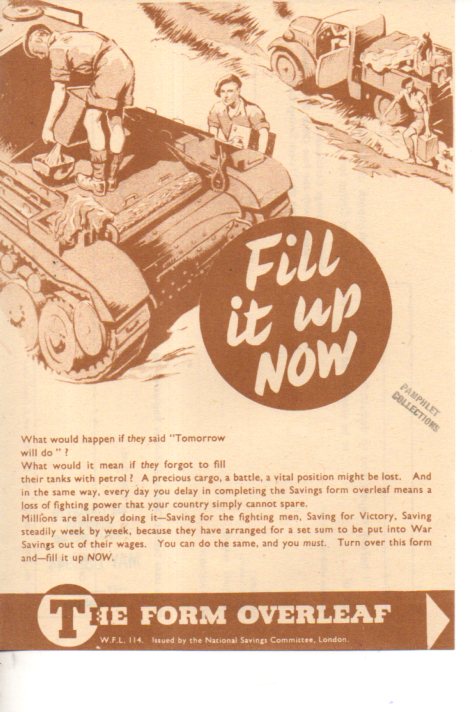
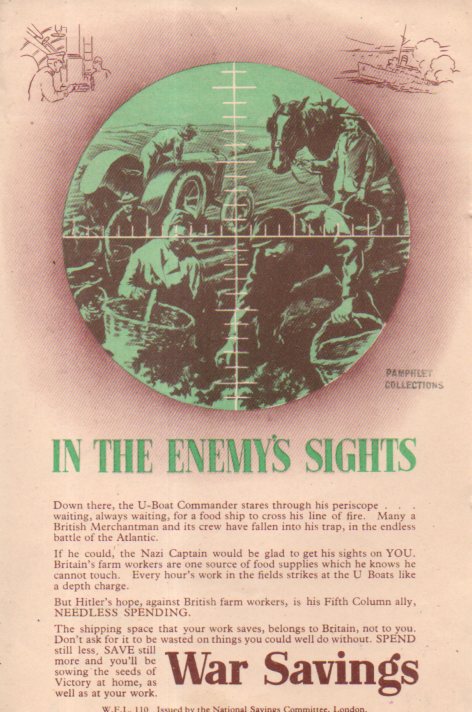
  • War Bonds and Doing the Right Thing: Great Britain, 1943

    JF Ptak Science Books

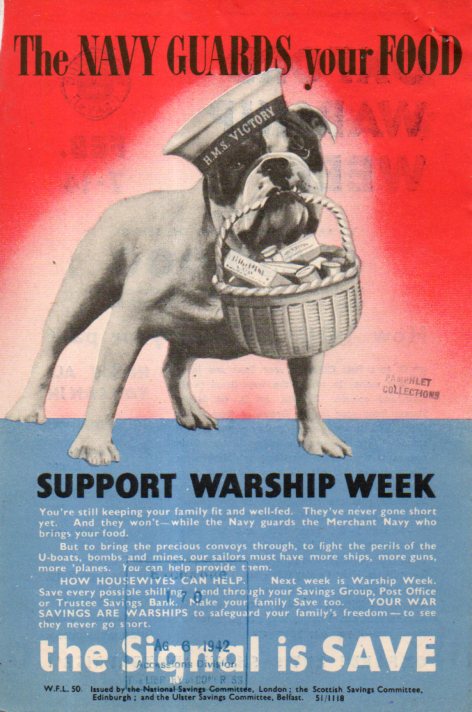
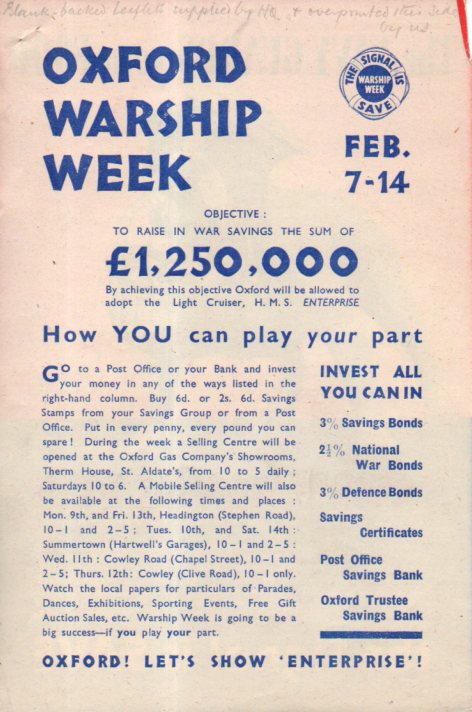
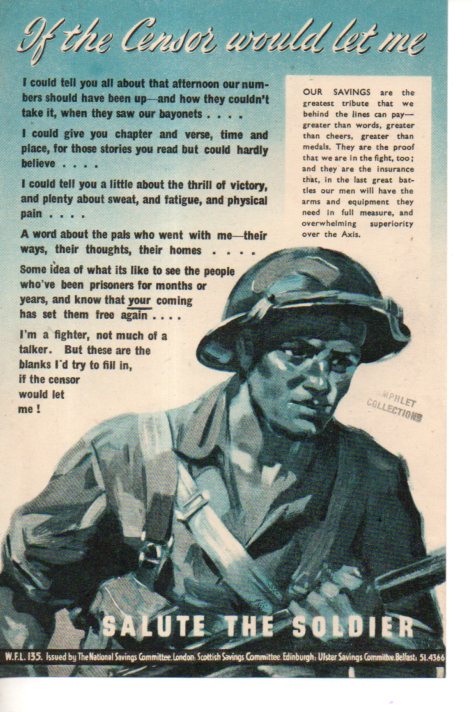
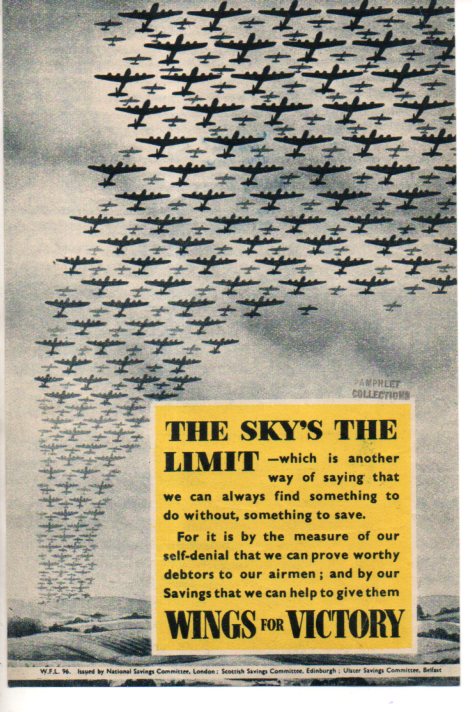
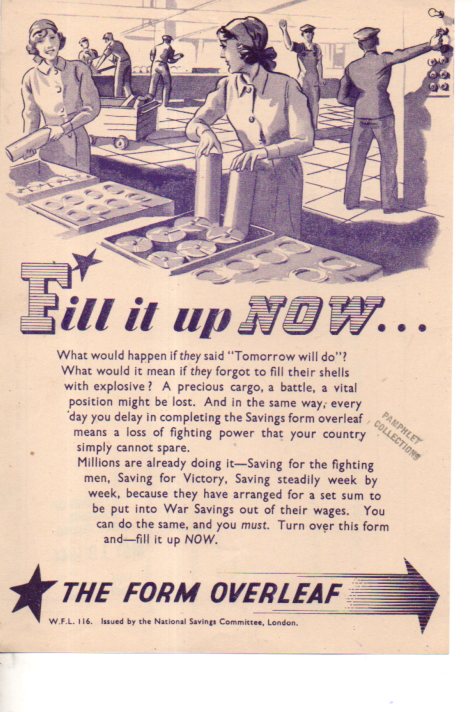
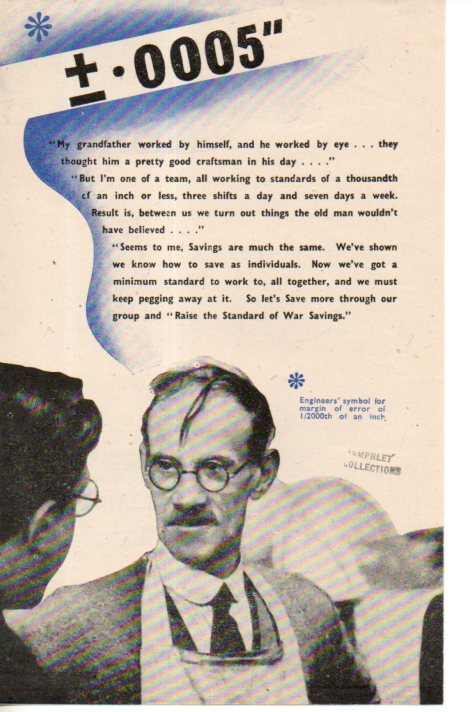
    I’ve got a small collection of bond promotionals published by the British government during WWII, mostly though for 1942/4, and they have a great feel and sense of spirit, and right, and duty. All extolled the necessary and great need for money to fight the war.  The appeals were sensible, and direct, and asked people to loan the government money.

    If you scroll down you can see a blank form for docking your paycheck to have some of it go to national defense.  

    Bonds handouts635

    Bonds handouts620

    Bonds handouts621

    Bonds handouts634


    Bonds handouts622


    Bonds handouts623


    Bonds handouts624


    Bonds handouts625

    Bonds handouts626

    Bonds handouts627

    Bonds handouts628

    Bonds handouts629

    Bonds handouts630

    Bonds handouts631

    Bonds handouts632

    Bonds handouts633


    ·Posted by :

    ·in:

  • Rules of Civility, 1931: “Applause Should Never Continue to the Point Where if is Insulting”

    JF Ptak Science Books    Quick Post

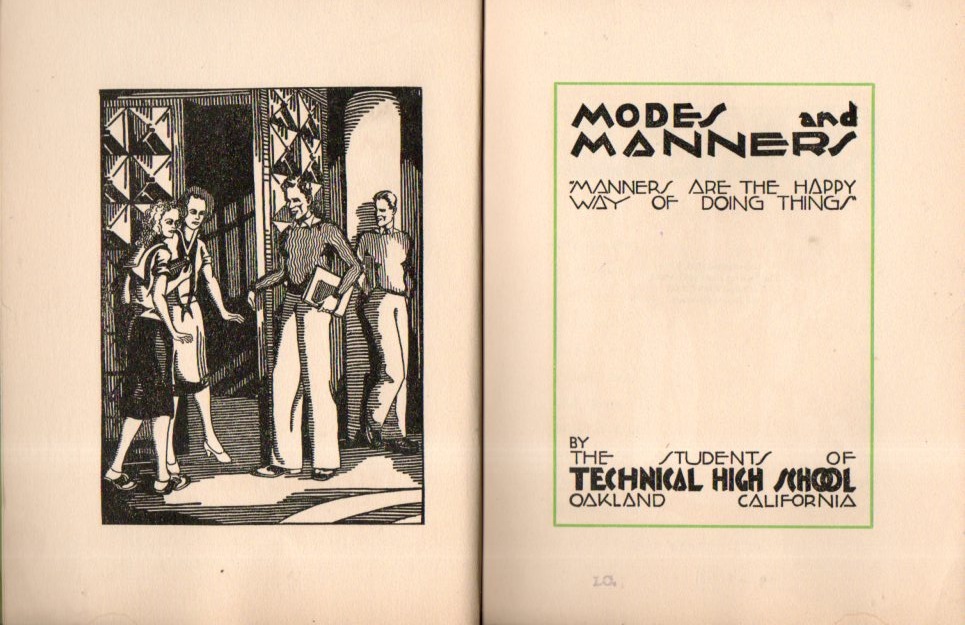
    This is a guidance book for possible social behavior for high school students, published by the students of the Technical High School, Oakland, California, 1931.  There are many suggestions that place ladies in cellophane and are pretty restrictive, but there’s a lot of good stuff, too–for one thing I’ve never understood males wearing hats indoors, which in this manual is of course strictly verbotten. This is a very well design booklet (pocket-sized, on good paper, a good production)  especially since it was designed and printed by high school kids.  

    Modes and MAnners642finished

    Here are some manners for sporting events, most of which would be nice to see practiced today, which I think makes me seem decrepit and creaking–still, these are good rules for kids (and more so for adults making $150,000 or whatever for each of their professional sports appearances) to if not abide then at least have in their minds:

     “Applause Should Never Continue to the Point Where if is Insulting”

    “If the poor player plays his best, he should make no excuses”

    “Take victory calmly, with a pleased but not superior air, and avoid boasting. This, more than anything, will mark one as a good winner.’

    “Always give the opponent the benefit of the doubt.”

    “Decisions of officials should never be questioned by the bleachers”

    “Endeavor to ‘save his face’ if your opponent plays poorly”

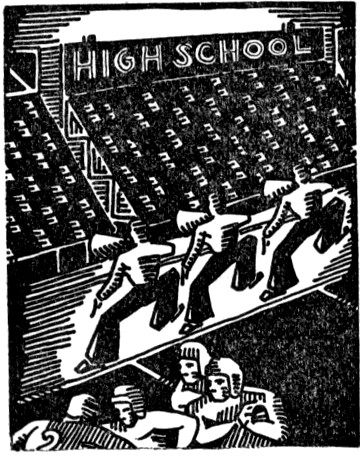
     Also the illustrations (which in the book are only 3/4″ high) are quite good:

    Modes and MAnners643 finished


    ·Posted by :

    ·in:

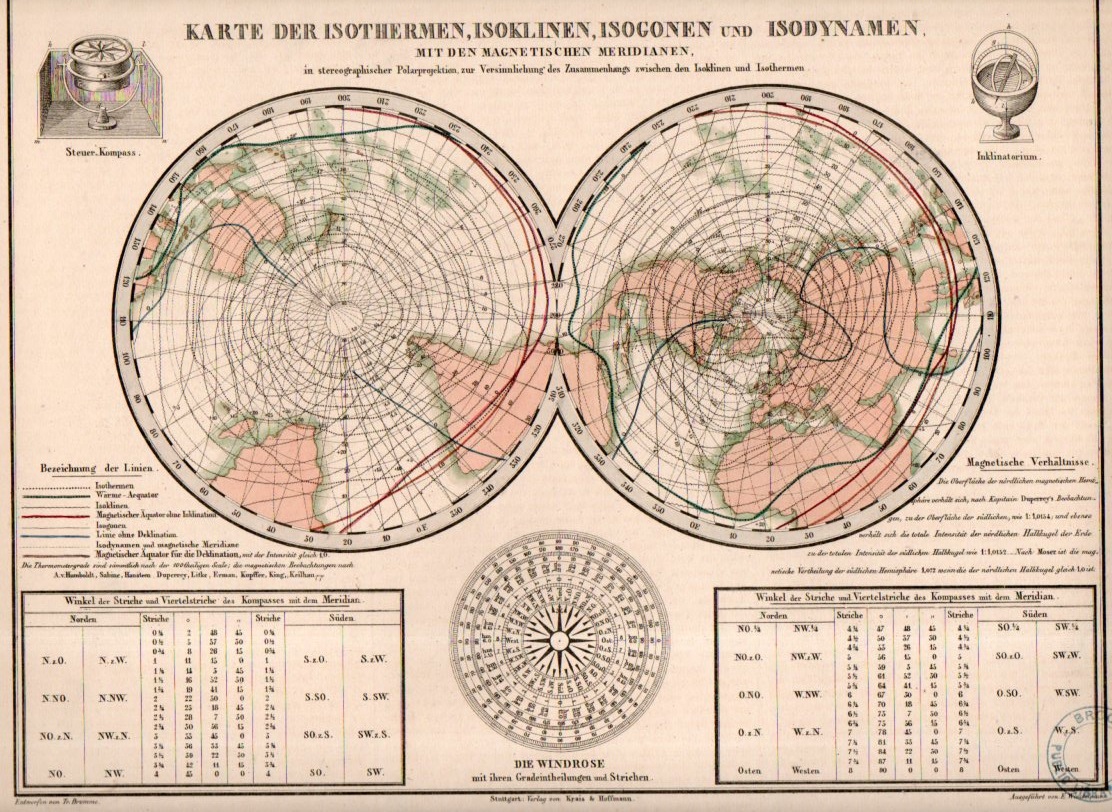
  • Beautiful Lines: Depicting the Climate, 1851

    JF Ptak Science Books  Quick Post

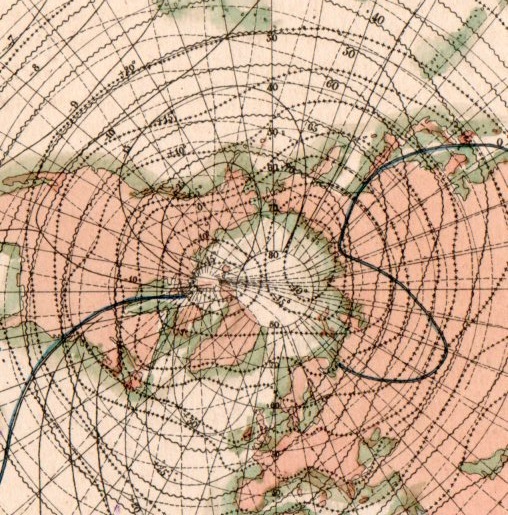
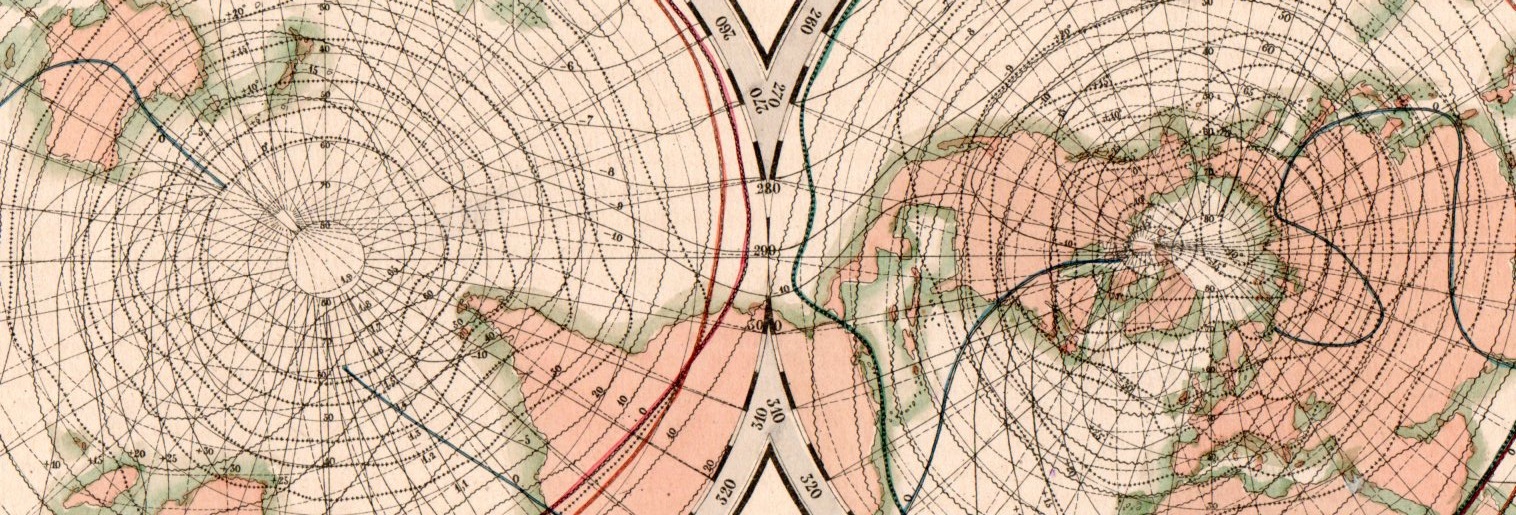
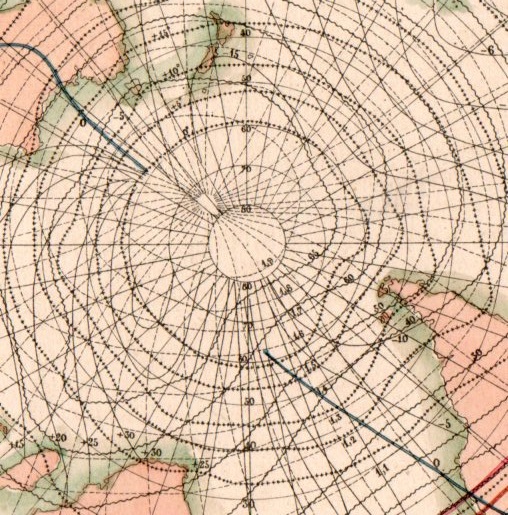
    This beautiful network of lines tells the early story of weather in cartographic form. They appear on Karte der Isothermen, Isoklinen, Isogonen und Isodynamen mit der Magnetischen Meridianen, and was published in the atlas volume1 to accompany the best-selling encyclopedic presentation of the natural history knowledge of the world to that time, Baron Alexander von Humboldt’s Kosmos, which was published over a period of several from 1845-1862. The map demonstrates and visualizes climatic information showing isothermes, isoclines, isogones and isodynamics, with the magnetic meridian.

    Map visualization isotherm653

    [This is a detail of the Northern Hemisphere section of the double-hemisphere map, which is reproduced below.]

    Map visualization isotherm654

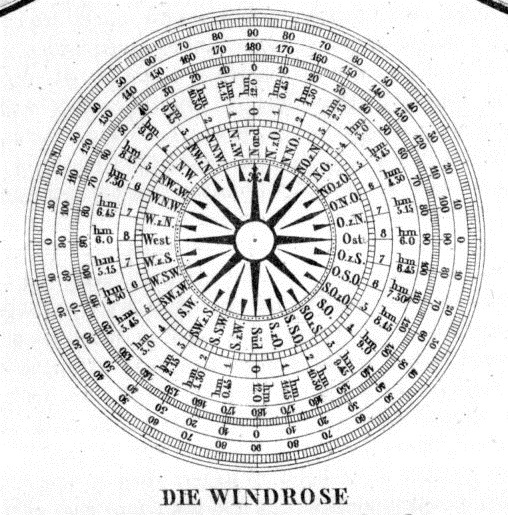
    At bottom there is also a beautiful 32-point wind rose:

    Map visualization isotherm651

    And this, the full version of the map:

    Map visualization isotherm650

    And the detail of the Southern Hemisphere:

    Map visualization isotherm652

    Notes:

    1.  The atlas was by T. Bromme, Atlas zu Alex. V. Humboldt’s Kosmos in zweiundvierzig Tafeln mit erlauterndem Texte. Herausgegeben von Traugott Bromme. Stuttgart. Verlag von Krais & Hoffman. (with second title page) Atlas zur Physik der Welt in … Bromme, 1851. 

Recent Posts

Archives

Categories