A Daily History of Holes, Dots, Lines, Science, History, Math, Physics, Art, the Unintentional Absurd, Architecture, Maps, Data Visualization, Blank and Missing Things, and so on. |1.6 million words, 7500 images, 4.9 million hits| Press & appearances in The Times, Le Figaro, Mensa, The Economist, The Guardian, Discovery News, Slate, Le Monde, Sci American Blogs, Le Pont, and many other places… 5000+ total posts since 2008.
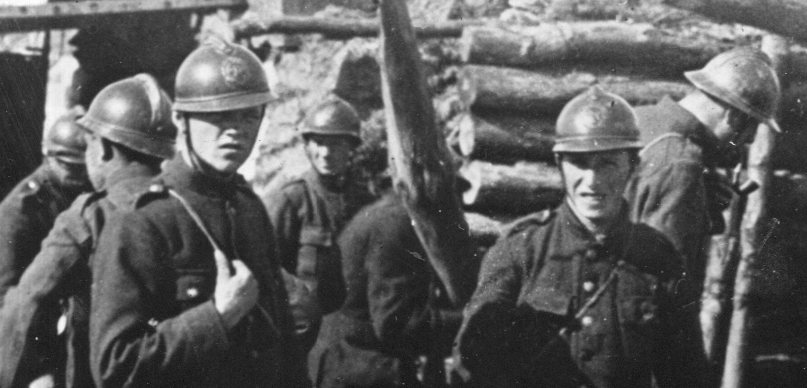
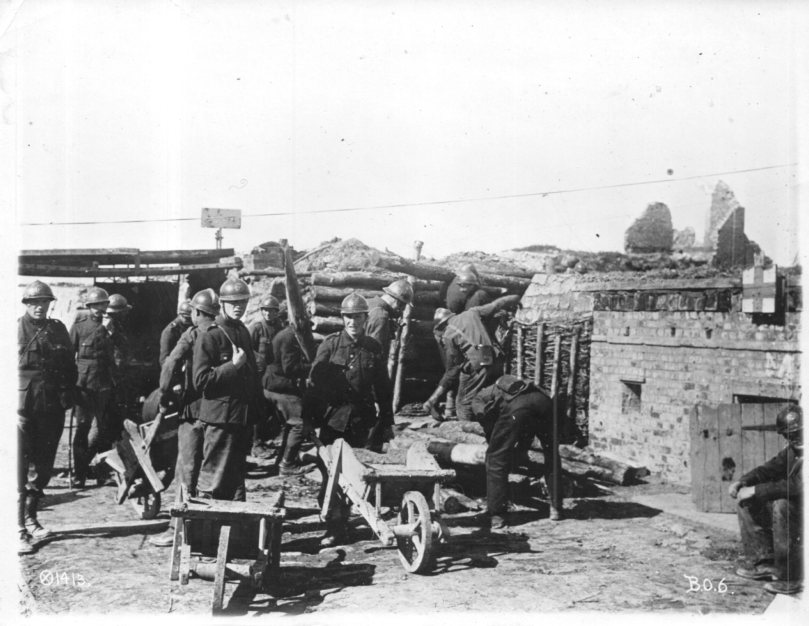
Here’s another in a long line of images from my WWI news photo service photographs. So far as I can determine what we see here is a group of French soldiers engaged in redoubt or perhaps trenchwork construction. To the right we see a crudely-marked Red Cross, perahps for a not-front-line position. The photo is stamped “Committee on Public Information, Washington, Copyright 1917” and has a dated stamp for “Dec 21 1917”. Fo rmore information on this series see the long threads on World War I and particularly World War I Photography (which is our sales site).
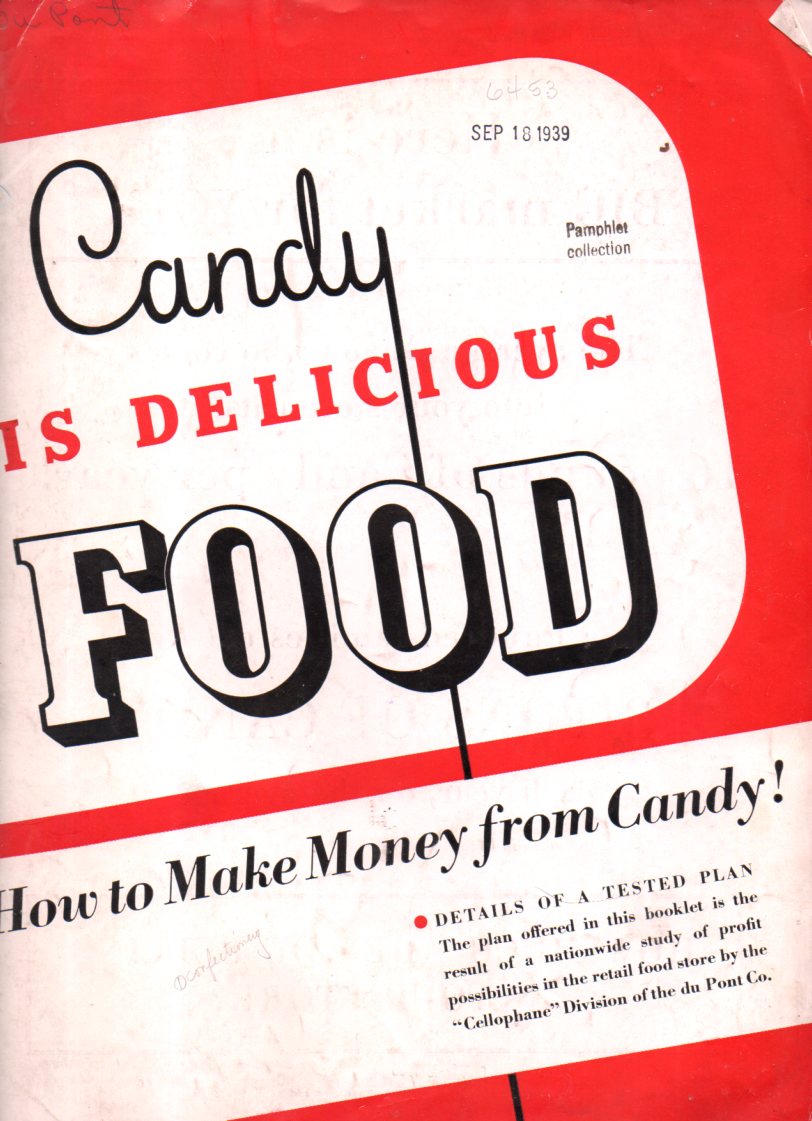
This hand-out pamphlet seems to be a case where the sale of an edible product is made for the sale of its packaging.
The pamphlet shouts that CANDY IS DELICIOUS FOOD, which is certainly a correct statement if food=digestible. It tells/sells the story of candy as a profit-maker to the grocery seller, saying that “32% average gross profit on home consumption units“, those delicious-sounding unit-things being the candy.
There are bits and pieces about candy display and placement, all on the advice of the maker of the stuff that in which the candy was wrapped–cellophane. The publisher and distributor of the pamphlet, the “Cellophane” Division of the E.I. du Pont de Nemours & Co. Inc., had a huge vested interest in candy sales: candy was mostly wrapped in Cellophane (starting with Whitman in 1912) and by the time du Pont achieved its water- and moisture-proof Cellophane in Delaware the product accounted (in 1938) for 25% of the company’s profits. That’s pretty big, and so candy as a major muncher of Cellophane would be promoted by du Pont as pretty big, too. And as food, for added Bigness.
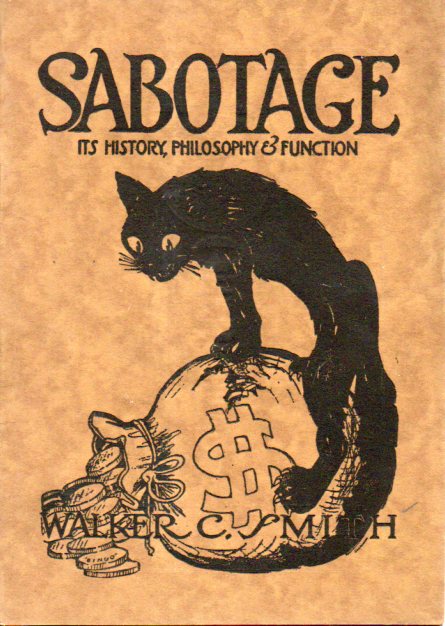
“The object of this work is to awaken the producers to a consciousness of their industrial power. It is dedicated, not to those who advocate but to those who use sabotage.”–Walker C. Smith, in the second of his miniature two-paragraph foreword in Sabotage (1917 edition)
[The original pamphlet is available from this blog’s bookstore, here.]
Walker Conger Smith (born 1885 on the same day that Babe Ruth and Elvis Pressley died in later years) was a hard line political seer, a magical agitator and writer for the Wobblies, officially known as the Industrial Workers of the World (and the I.W.W.) He lived a busy 41 years, and in his time raised a lot of attention to the IWW’s Socialist vehemently pro-Union organizing, during a time (1910-1927 or so) when big business would respond with their won police/strikebreakers/armies to disrupt and dispel (and trounce) strikers and strikes.
One of Walker’s best known works was Sabotage, its History, Philosophy & Function. First published in 1913 and then widely reprinted, it made the case for poor pay for poor work, and that in the long run the wealth produced by the workers belonged to them, and so work slowdowns and then destruction of the means of production was well within the rights of the wronger worker.
The pamphlet certainly found a readers–on both sides of the issue. It was regularly used in legal actions against Unions as proof of their criminal syndicationism and of organized destruction of business/factory property.
The pamphlet ends with these very strong statements:
“Its [Sabotage’s] advocacy and use help to destroy the property illusion”…
“Is the machine more than its makers? Sabotage says “No!”
“Is the product greater than the producers? Sabotage says “No!”
“Sabotage places human life–and especially the life of the only useful class–higher than all else in the universe.”
….”For Sabotage or for slavery? Which?”
The pamphlet ends with a salutation from Jack London:
“Dear Comrade Smith:
Just a line to tell you that I have finished reading your pamphlet SABOTAGE. I do not find a point in it on which I disagree with you. It strikes me as a straight-from-the-shoulder, clear, convincing, revolutionary statement of the meaning and significance of sabotage.
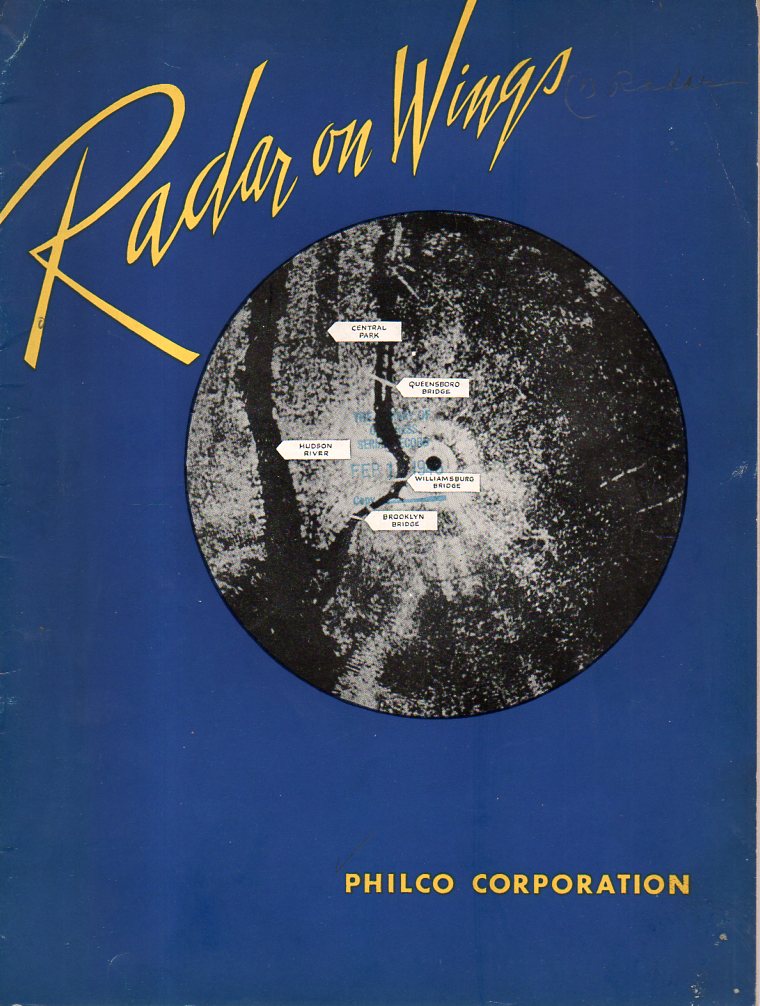
The history of RADAR (RAdio Deection And Ranging, and something I’ve always written in caps, for whatever that is worth) is absolutely not what I’m thinking about now–that is a long story with lots of twists and turns, complicated, complex–and it ranges depending upon location as for the most part RADAR (from the 1930’s anyway) was developed in secret, kept as a military secret. And that’s because it was a very important development, with the victor of the Battle of the Beams being the possible victor, period.
All I want to do presently is note the significance of this particular pamphlet in the history of RADAR. This work was printed by PHILCO Corporation, (and dated January 4, 1946), and has an inserted leaflet stating that this “makes public for the first time the salient facts about the Corporation’s development and production of airborne radar equipment for the United States Army and Navy”. PHILCO and other companies made significant contributions to the war capacity of the Allied forces, and–for this company in particular–much of that went unknown for quite some time afterwards, and of course there are some stories that just won’t get told. But for PHILCO the story gets told here.
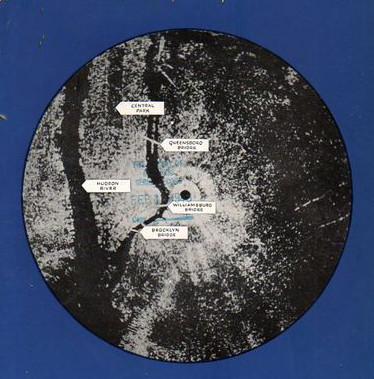
This is also a fabulous nighttime map of NYC–produced by RADAR.
[RADAR on Wings, Philco, 1946. 10×8″, 30pp (unpaginated) with lots of photographs and an occasional schematic. Available from this blog’s bookstore.]
I’ve nibbled away at a set of the Science Abstracts (Physics) and pulled away several reviews of Albert Einstein’s great papers of 1905, 1907, and 1916.
=>Einstein’s three monumental papers of 1905, as they appeared in Science Abstracts, Section A.–Physics, 1905, volume VIII, 1906, printed in London, E. & F.N. Spon,
“It is concluded that the sun’s gravitational field gives the deflection predicted by Einstein’s general theory of relativity.”
I’ve bumped into a famous piece of phsyics history, a semi-popular report on the verification of the Einstein theory of general relativity. The article is “Eclipse Photographs Verify Einstein’s Prediction” adn is found in Popular Astronomy (published in Northfield Minnesota, volume 28, 1920, the issue for January, #1, 1920, with the notice appearing on pp 69-70.) At about the same time there appears the famous and deciding report by F. W. Dyson, A. S. Eddington, and C. Davidson, “A Determination of the Deflection of Light by the Sun’s Gravitational Field, from Observations Made at the Total Eclipse of May 29, 1919” which appeared in the Philosophical Transactions of the Royal Society of London. Series A, Containing Papers of a Mathematical or Physical Character for 1920 (pp 291-332). This is the integral report on which Popular Astronomy reports on for a more general astronomy readership.
This report repeats the famous finding: “It is concluded that the sun’s gravitational field gives the deflection predicted by Einstein’s general theory of relativity.”
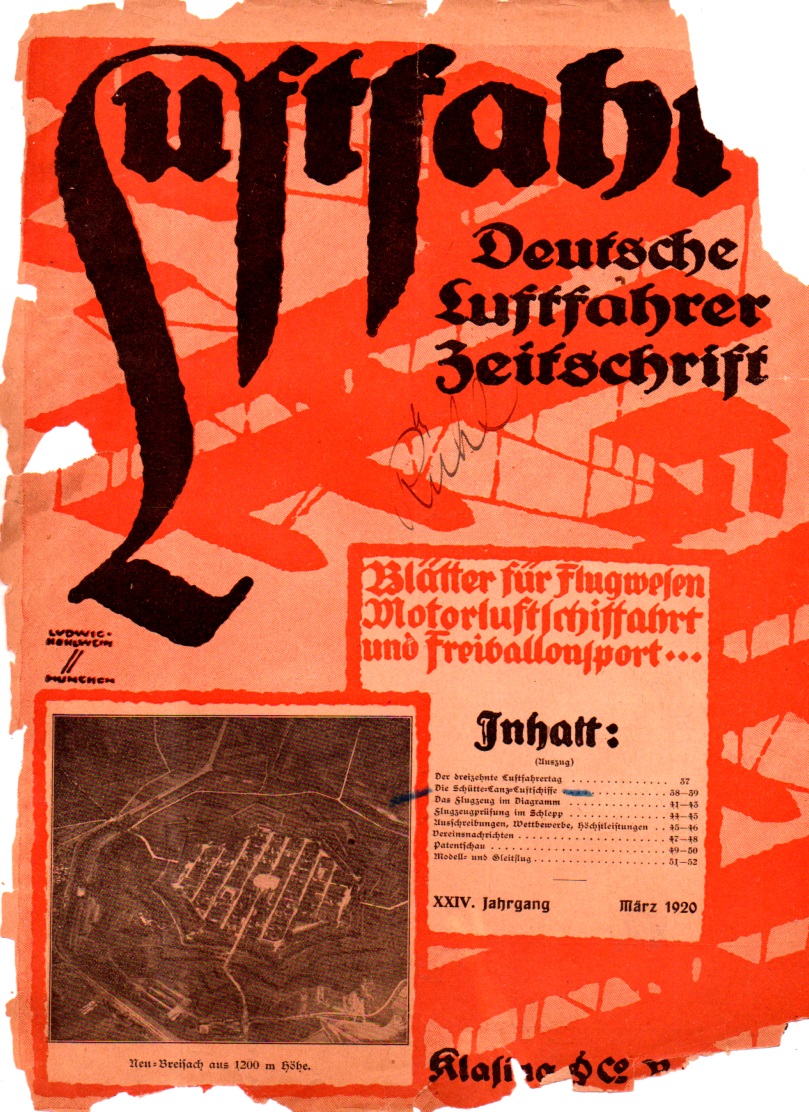
This is a survivor of some sort, found at the bottom of a box of German aviation pamphlets–I’m sorry that it is in this condition, but at least there is some of it that remains, because the design is quite striking. It comes in the 24th year of the publication Luftfahr(t), Deutsche Luftfahrer Zeitschrift, and published in 1920. It is just the cover of one issue, and I expected to see a fuller image of the thing online thinking it not to be so uncommon, but I couldn’t find any, which I thought unusual. And so I share this rag-tag copy.
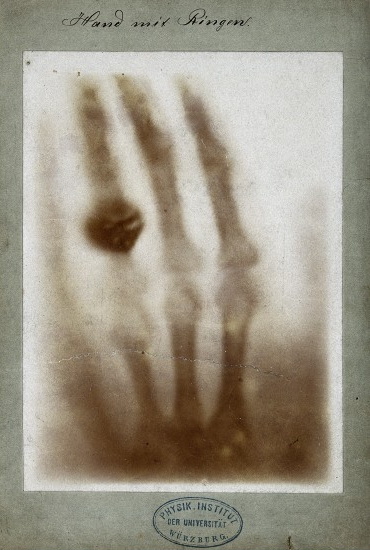
Looking through a (massive, 20-pound!) volume of Electrical World1 I found that it contains some of the earliest work published in the United States on Wilhelm Roentgen’s seminal discovery of the X-Ray, which he published on November 8, 1895. And there were a lot of papers–more than 100. One reason why the work was done by so many and so quickly is that Roentgen did not seek to patent his invention (much like the Curies would do so afterwards) and so there was a land-grab by hundreds of physicists and experimenters to do work in this astonishing new field.
The photograph (“Hand with Ring”) below is Roentgen’s own, an x-ray of his wife Bertha’s hand–it is one of the iconic images in the history of modern science:
Electrical World is the third place that the Roentgen paper was reprinted, this time for the first time in an American journal, one day before the appearance of the The Electrician article, which was one day after the publication of the paper’s first appearance in English, in the journal Nature, on 23 January 1896. (The Electrician would also publish Roentgen’s second article later in that same year, in March.) The Roentgen article does not seem to be reprinted in full anywhere else in 1896/1897. (See Charles Phillips, Bibliography of X-Ray Literature and Research, (1896-1897), published by The Electrician, 1898.)
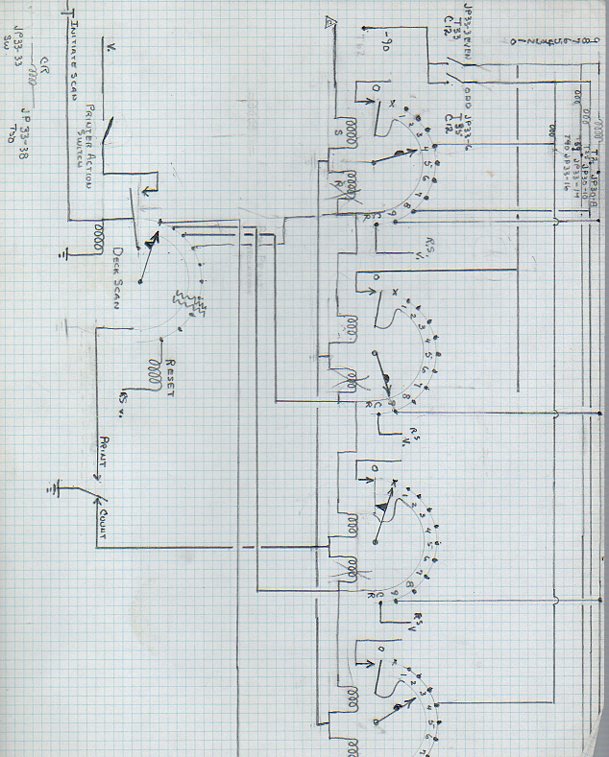
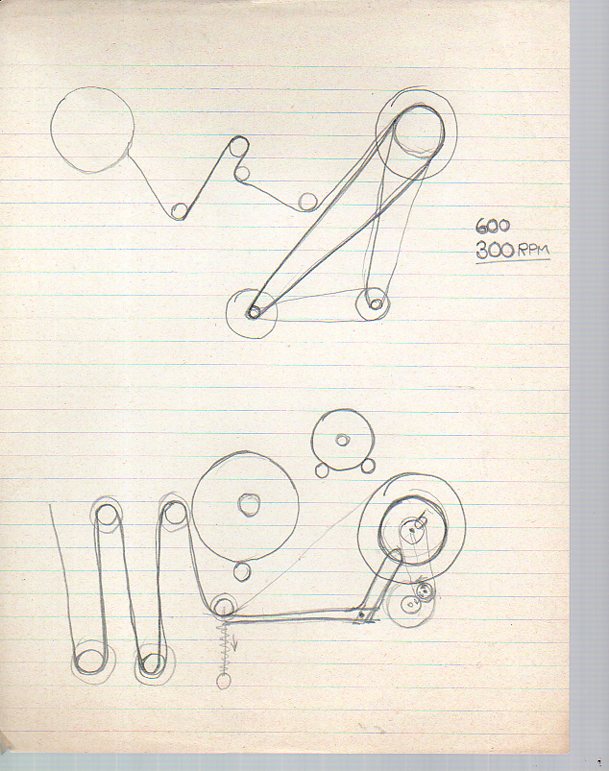
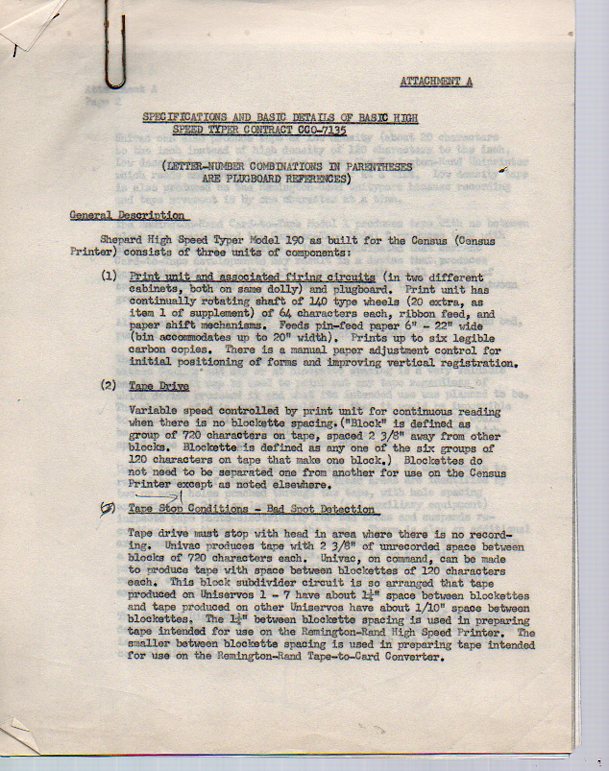
This is a group of materials from the estate of Ralph Mullendore (see below), an early and integral team member of the electronic computation section of the U.S. Bureau of the Census, who was responsible for the installation and maintenance of the UNIVAC there, at Census. The papers are on their way to a history of computer science section at the library at North Carolina State University where they will hopefully be enjoyed by any and all who have an interest in the early stages of the maintenance and tinkerings on America’s first commercial computer. It should be remembered that the hands of the man who wrote all of these notes were the same hands that worked on this monumentally important machine, the first of its kind in existence.
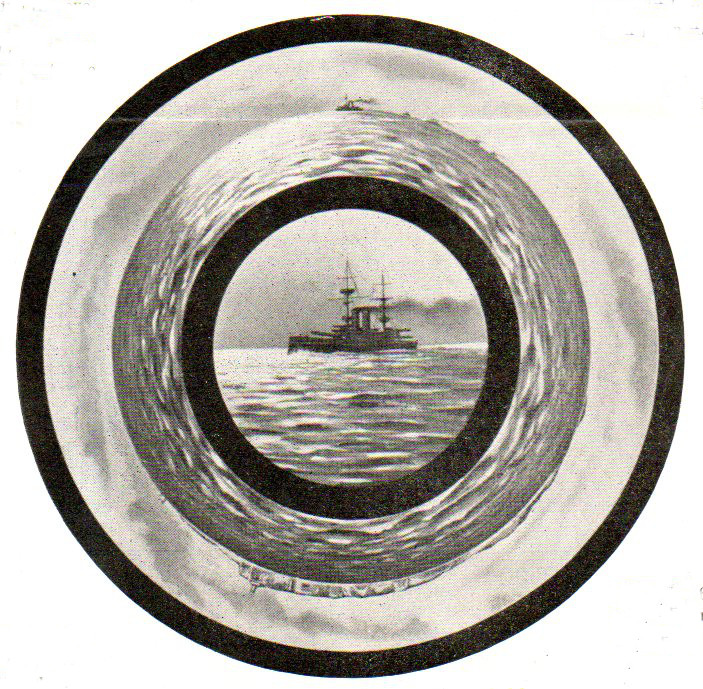
This interesting and arresting images appears in Scientific American Supplement, October 23, 1915 (page 269). It is an excellent view of topside from 30′ or so below. The article describes simple, compound, tele-objective, direct-reflected, panoramic, and periscopes with annular fields–sort of simple, but not really. In any event the panoramic periscope gave a view of a directed point-of-view as well as a slender (but versatile) 360o.
This item is offered for sale at our blog bookstore, in “recent additions”.
Leonardo Torres y Quevedo1 (1852-1936) was a superior engineer, pioneer of remote control, a “prolific and successful inventor”2, and creator of the what is believed to be the first chess automaton3–in effect, the first human-machine game where the machine answered back. (There are earlier examples of chess machines, perhaps the most famous/infamous of which is the celebrated “Turk”, a faux chess automaton created in the 1770’s by Wolfgang von Kempelen, a supposedly mechanical device taking on all comers performing at a very high level, except that it was a fraud, a model of a machine with a human inside of it making the decisions, a sort of reverse robot.)
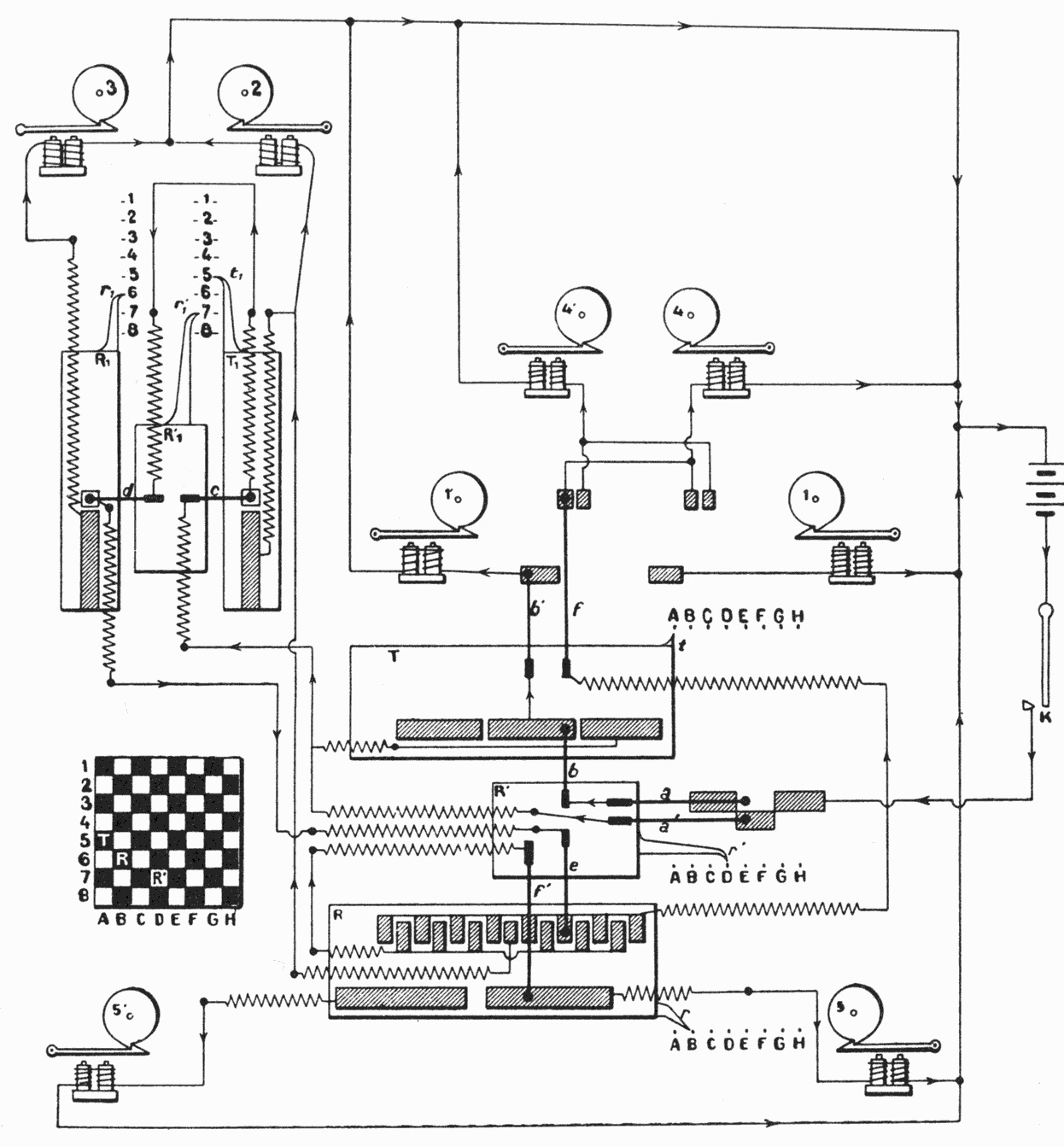
[Image of Torres’ chess playing machine from Scientific American Supplement, November 6, 1915, pg 297 (bottom)]
Torres wrote very little, mainly because he didn’t like to,4so mostly what is known of his work in print (outside of patent reports) is primarily a secondary source reporting on his efforts. There are three earlier appearances in print on the automaton–in Revista de la Real Academia de ciencias… de Madrid in 1913, La Nature5in 1914, and Asociación Española para el Progreso de las Ciencias, Congreso de Valladolid6, in 1915.
“In 1912 Torres built a robot capable of playing the chess endgame of king and rook against king and defeating a human adversary. This device, perfected in 1920, and the Telekino must be recognized as conceptually related to the calculating machine of Charles Babbage, as Torres Quevedo acknowledged in “Ensayos sobre automática. Su definición. Extensión teórica de sus definiciones” (Revista de la Real Academia de ciencias… de Madrid, 12 [1913], 391–419). His work in this field culminated in an electromechanical calculating machine introduced 26 June 1920, the prototype of which demonstrated that calculations of any kind can be effected by purely mechanical processes. In 1913 Torres Quevedo had established that a machine could proceed by trial and error, in contrast with current belief–“at least when the rules that have to be followed in trial and error are precisely known…”–Dictionary of Scientific Biography, vol 13, pp 431-2.
The first appearance of the chess playing machine to appear in English seems to have been in the Scientific American Supplement, November 6, 1915, pp 296-298 (appearing with seven photographs of inventions three of which are for the chess machine, and four schemtics all of which pertain to the chess machine): “Torres and His Remarkable Automatic Devices, He Would Substitute Machinery for the Human Mind”.
His superb creation, which he called “El Ajedrecista”7 (“the Chess Player”) was an electromechanical device which pitted an endgame between a King/King-rook, and was fully and completely hand’s-free functional. A later version attempted an improvement on this magnificent machine using magnets.
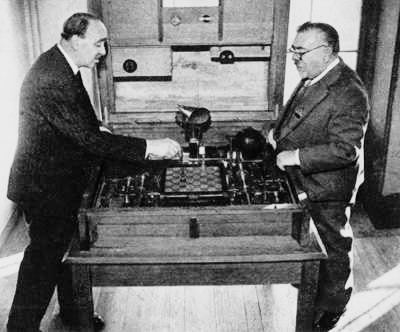
The machine was exhibited and demonstrated in 1951 by Torres’ son, Gonzala, showing how the machine worked to the inventor of cybnertics, the big-brained Norbert Wiener. A photograph of the meeting appears in the Eames’ great book, The Computer Perspective, though I downloaded this image (below) from Cybnertic Zoo:
ALSO: this fantastic video from youtube of the machine at work:
NOTES:
1. Nice piece on Torres y Quevedo in Wikipedia, here. And another, “Cyber Heroes of the Past”, http://wvegter.hivemind.net/abacus/CyberHeroes/Quevedo.htm
2. Brian Randell, Annals of the History of Computing, 4/4, October 1982, on the contributions of Ludgate, Torres, and Bush, with full text here: http://www.cs.ncl.ac.uk/publications/articles/papers/398.pdf
3. _____. “This chess automaton, believed to have been the world’s first…” ibid.
4. Torres Quevedo disliked writing–“for me a form of martyrdom,” he called it–and thus his scientific contributions must be traced from the few reports he did write and, especially, from the patents he obtained and the machines he built.” —Dictionary of Scientific Biography, volume 13, p 431.
5. Henri Vigneron “Les Automate” La Nature, 1914, found here: http://cyberneticzoo.com/wp-content/uploads/2011/01/Automates-La-Nature-Torres-1914.pdf]
6. “El autómata ajedrecista”, from Asociación Española para el Progreso de las Ciencias, Congreso de Valladolid, Vol. 2 (1915). 549-556pp. The scientific bookseller Jeremy Norman has a copy of this rare work offered at his bookshop, here.