A Daily History of Holes, Dots, Lines, Science, History, Math, Physics, Art, the Unintentional Absurd, Architecture, Maps, Data Visualization, Blank and Missing Things, and so on. |1.6 million words, 7500 images, 4.9 million hits| Press & appearances in The Times, Le Figaro, Mensa, The Economist, The Guardian, Discovery News, Slate, Le Monde, Sci American Blogs, Le Pont, and many other places… 5000+ total posts since 2008.

  • Louisiana Sellathon, 1888

    JF Ptak Science Books   Quick Post

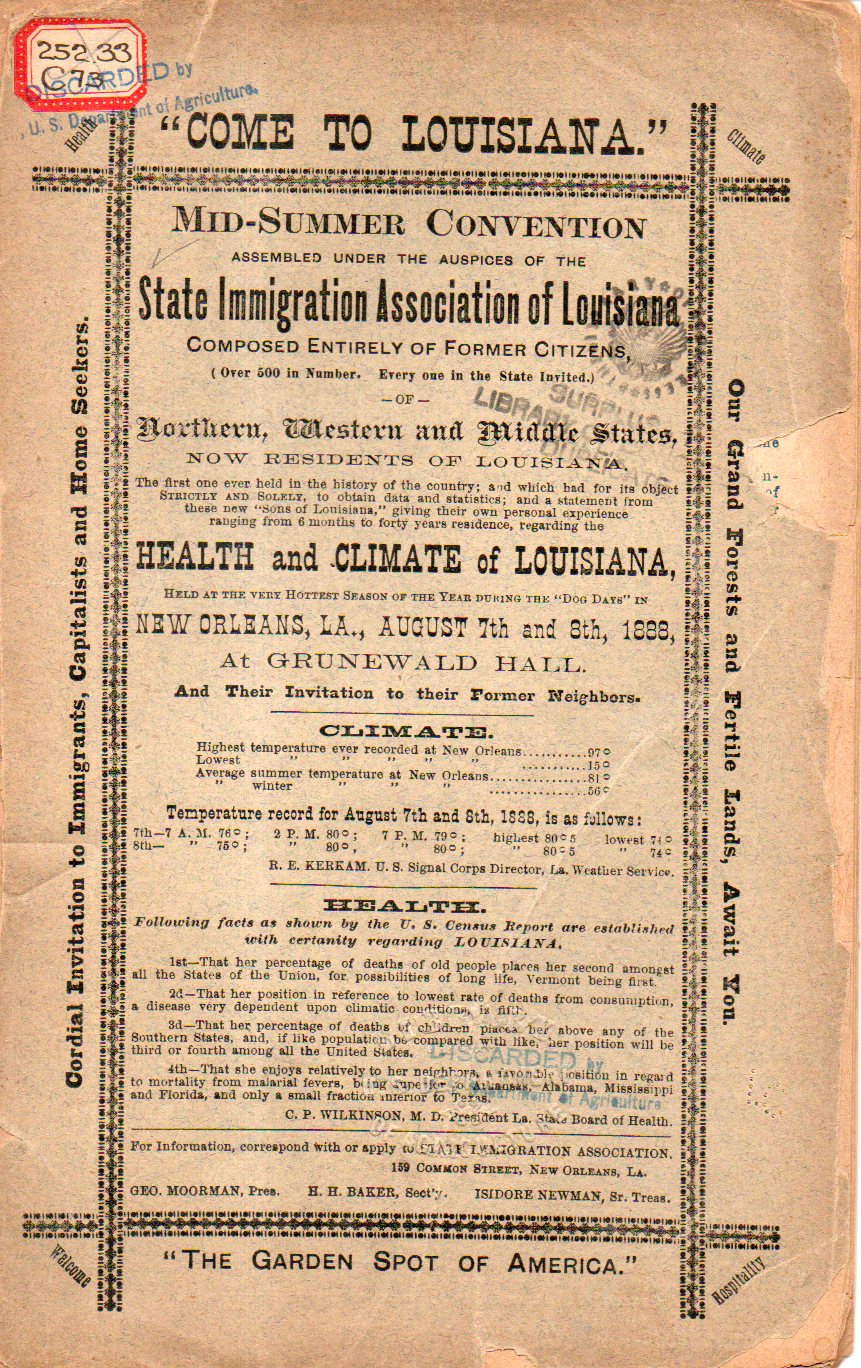
    This is an extraordinary title page, what with so much information and narrative and data and salesmanship and so on, right there on the cover,conveying twists and turns and temperature and a challenge from the Dogs Days of New Orleans, all challenging the reader to open the pamphlet for a look inside. There are legions of examples of Title Pages of Enormous Complexity and Content that drive from the Renaissance on into the 19th century, but in my experience for the vast majority of them you actually have to open the book to get there.  Here the hear of the pamphlet is worn right on the sleeve–and once the pamphlet is opened it gets right down to business, dispensing with the title page entirely.  

    Louisiana immigration435

    The work is dedicated to propagandizing the highest qualities of the state of Louisiana–and New Orleans itself–in order to attract new people to come to the state, and doing so in a convention/conference. As stated on the cover, it is “The first one ever held in the history of the country; and which had for its object strictly and solely, to obtain data and statistics; and a statement from these new “Sons of Louisiana” giving their own personal experience ranging from 6 months to forty years of residence, regarding the health and climate of Louisiana, held at the very hottest season of the year during the “Dog Days” in New Orleans, La., August 7th and 8th, 1888, at Grunewald Hall and their invitation to their former neighbors.”  

    It seems a not-so-calculating throw-of-the-dice to hold the meeting in New Orleans in August. True it doesn’t get Phoenix-hot, but then again there’s the 75-point difference in humidity that does make all the difference in the world.  After having suffered through two massive blizzards that year (in January and March, 1888), perhaps the prospect of 92/72 temp/humidity didn’t seem nearly as painful as frigid and 50 inches of snow.  

    Full text here from Internet Archive. 

    ·Posted by :

    ·in:

  • There are No Van Goghs in Arles (?)

    JF Ptak Science Books   Post 2354
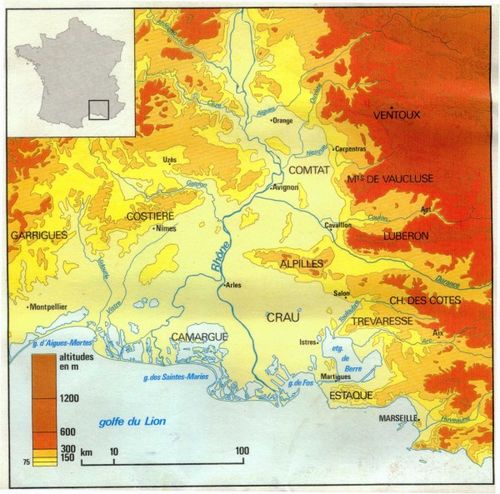
    Van Gog the crau

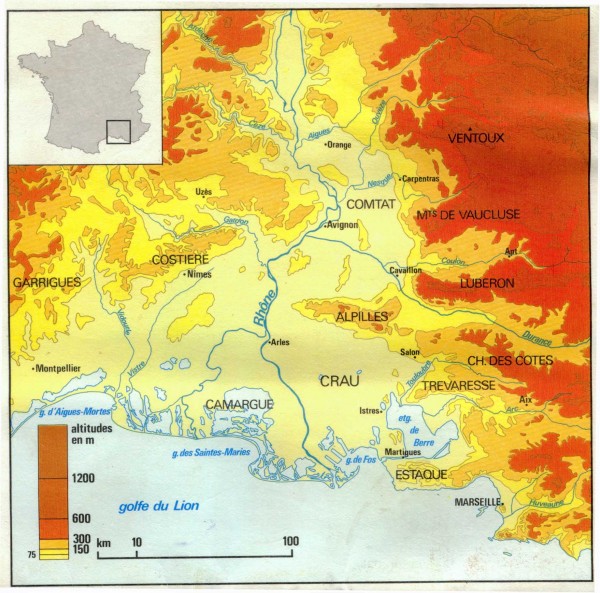
    “Average soil depth is 40cm overlying a 5 to 25 meter thick layer of impermeable conglomerate making the alluvial water table inaccessible to the roots of plants. Topography is extremely flat with rounded silicaceous stones covering 50% of the soil and protecting it from big temperature variations.”

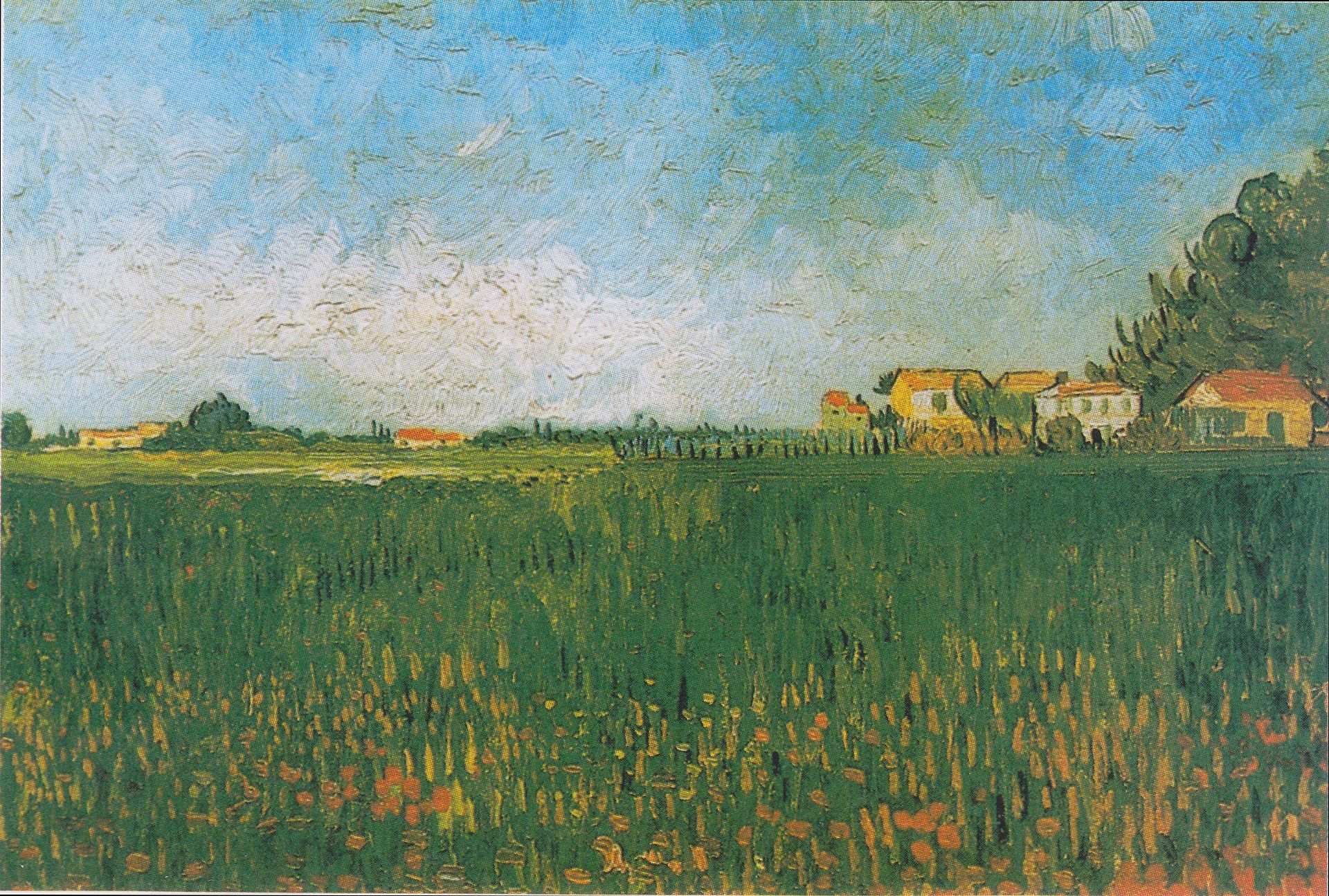
    And so goes the description of the soils in the Crau, the Plaine de la Crau, a massive flats/alluvial basin that is the home to fine hay and shepherds going back to Roman times, and a plains filled with flat earth and big sky, and light.  In the middle of it all was Arles and in Arles from 1888-1890 was Vincent van Gogh, who found the place extraordinary, and who there at the end of his life was at his most productive, imaginative, creative, visionary self.  The other side of that soil map above–as it pretty as it is and conveying as much information as it does–stands the solitary magic that van Gogh created there.
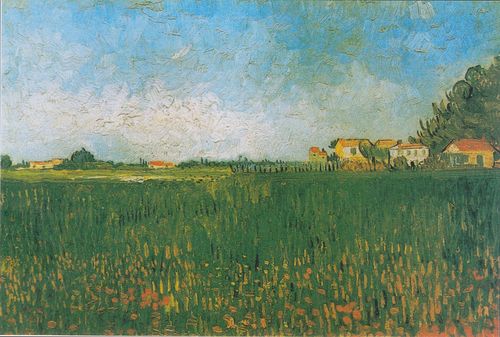
    Van_Gogh_-_Bauernhäuser_in_einem_Weizenfeld_bei_Arles.jpeg[Image source: Wikipedia]

    Here is van Gogh writing to Emile Bernard from Arles, Sunday, 15 July, 1888 on la Crau:

    Have made large pen drawings — 2 — an immense flat expanse of country — seen in bird’s-eye view from the top of a hill — vineyards, harvested fields of wheat, all of it multiplied endlessly, streaming away like the surface of a sea towards the horizon bounded by the hillocks of La Crau.
    It does not look Japanese, and it’s actually the most Japanese thing that I’ve done. 
    A microscopic figure of a ploughman, a little train passing through the wheatfields; that’s the only life there is in it. Listen, I passed – a few days after my arrival — that place with a painter friend.
    There’s something that would be boring to do, he said. I said nothing myself, but I found that so astonishing that I didn’t even have the strength to give that idiot a piece of my mind. I go back there, go back, go back again — well, I’ve done two drawings of it — of that flat landscape in which there was nothing but………. the infinite… eternity.
    Well — while I’m drawing along comes a chap who isn’t a painter but a soldier. I say, ‘Does it astonish you that I find that as beautiful as the sea?’ Now he knew the sea — that one. ‘No — it doesn’t astonish me’ — he says – ‘that you find that as beautiful as the sea — but I find it  even more beautiful than the ocean because it’s inhabited.’ —Source: van Gogh Museum, the Letter of Vincent van Gogh, here.

    It seems a little odd that of the 300 of the artworks that he completed during that time that none remain in Arles. Nor does the Yellow House and other pieces immortalized by van Gogh during this time.  The other side of that is much else has remained pretty much the same–including the asylum where he stayed for a year being treated for his not-to-be-discovered illness with the hopeful but shallow psychological methods of the day, and of course the Crau.  

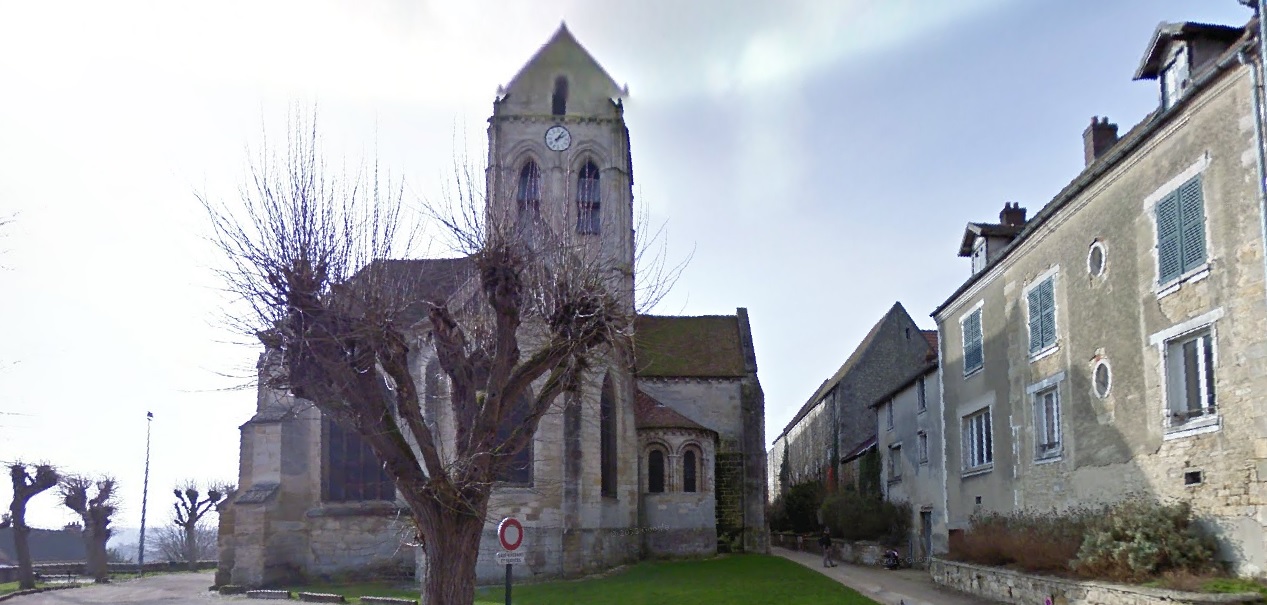
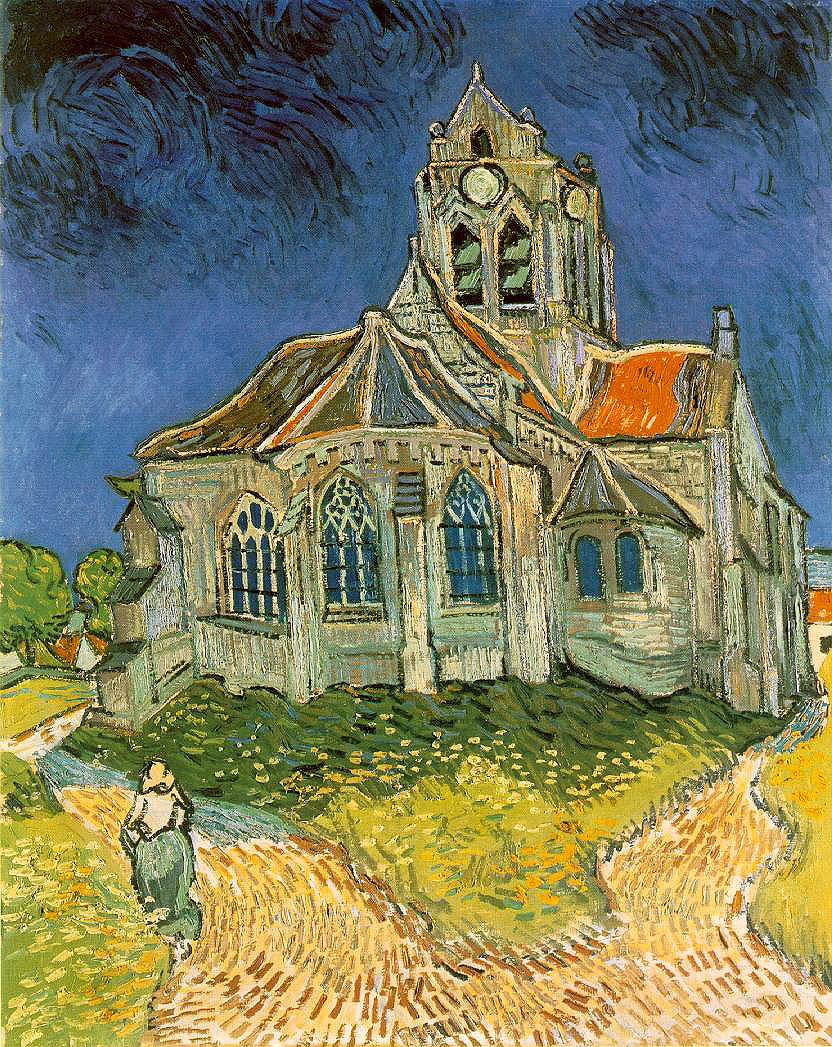
    In some ways it is a bit of science fiction for me to be able to walk via Google through so much of van Gogh’s life–for example, right up to the spot where he painted his “Church in Auvers-sur-Oise, View from the Chevet” just a month before he died in July, 1890:
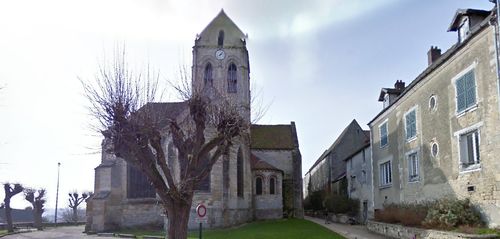
    Van Gogh Auvers

     And be able to compare it to the original:
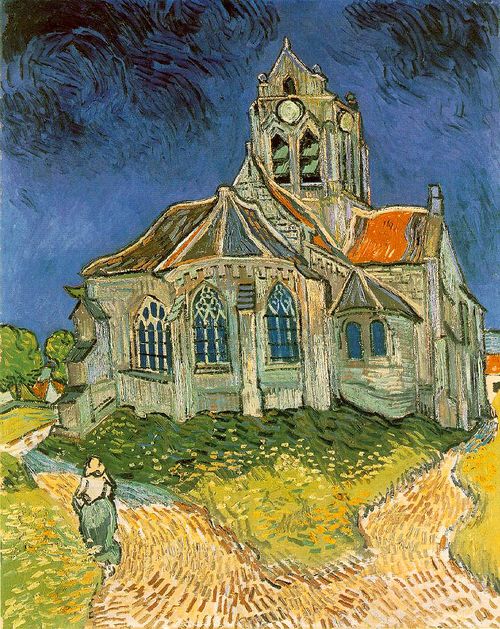
    Van gogh church[Image source, here, Vincent van Gogh and Auvers-sur-Oise]

    Van Gogh left Arles for Auvers in May of 1890, looking so much better and healthier that even Dr. Gachet thought that he might be cured.  However, that was not the case, and the sight of his brother in his own (lengthy) illness (Theo would die just months of Vincent) plus whatever else you might want to throw into the pot would lead to the path of his suicide. 

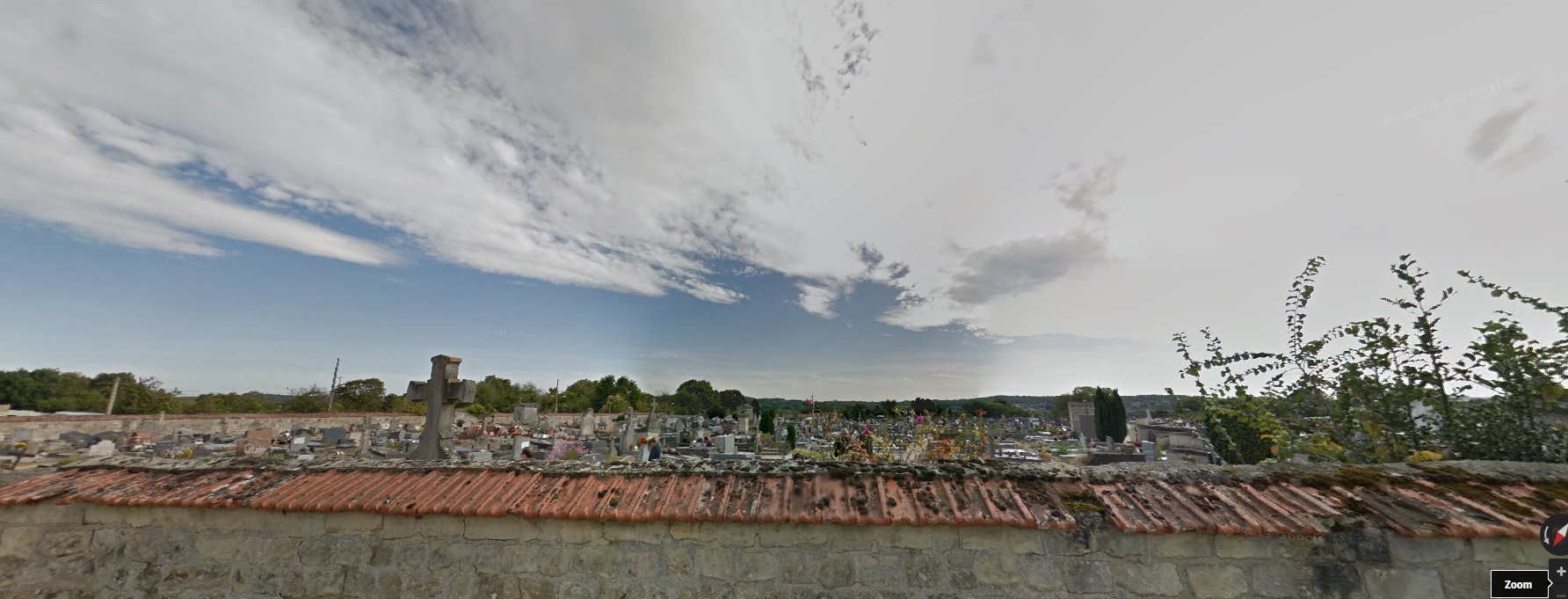
    Van Gogh was buried in Auvers, north-east of Paris, and Google will take you there, too. I went, mainly just to see what was on the other side of the wall that you see in the endless series of photos of the Vincent and Theo headstones.  You can ride the Google car from the church, up a small hill, and certainly less than a kilometer away is the cemetery, reachable along a roughish road.  The other side of the wall is featured in the fist screen capture, with Theo’s headstone to the right of the large cross, and Vincent next to him, there against the other side of the wall, which has clay shingles on the street side:
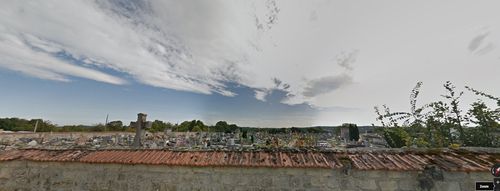
    Van Gogh grave

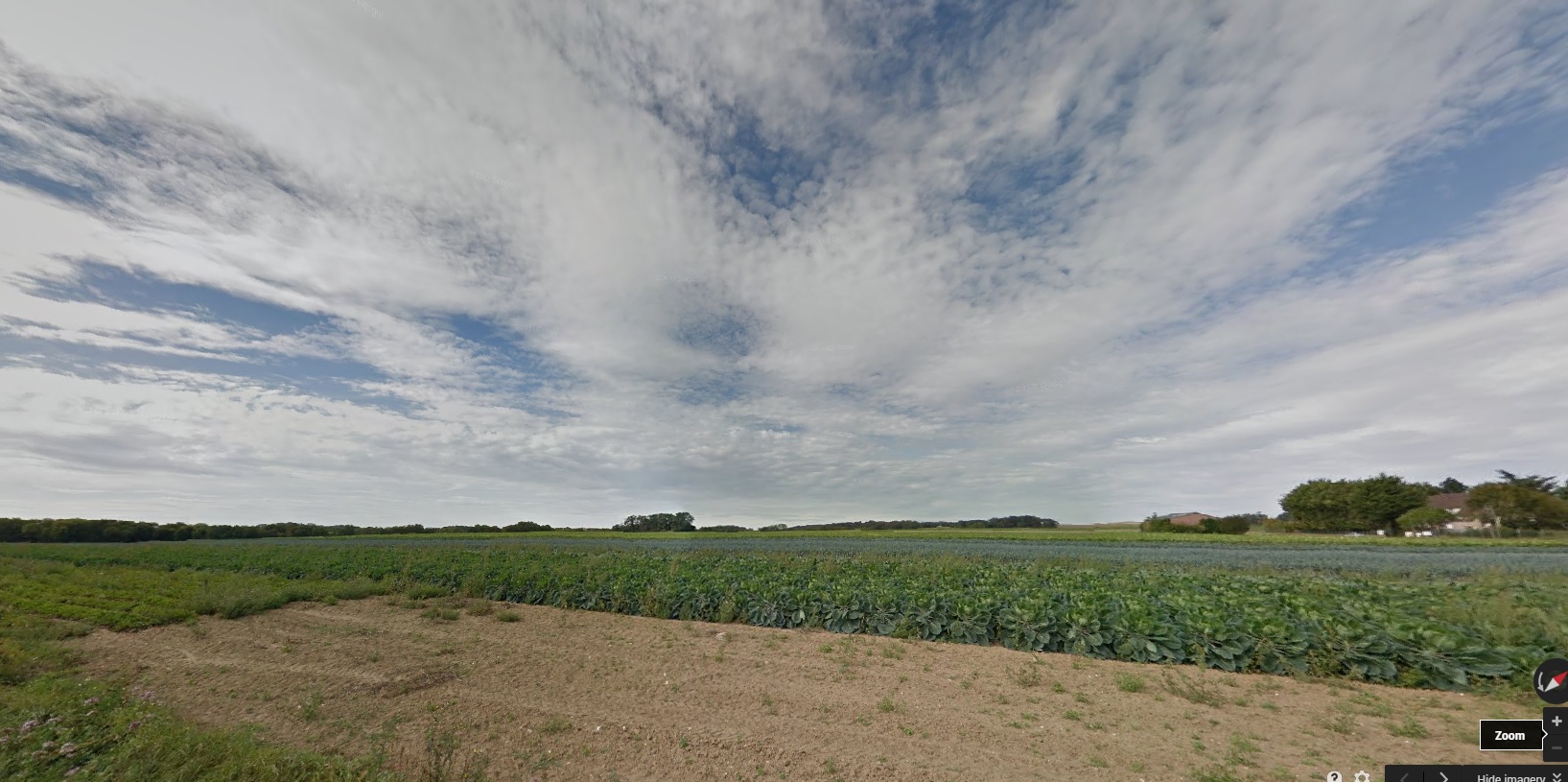
    And what you would see if you could see over the wall from the cemetery, looking over and past the van Goghs:
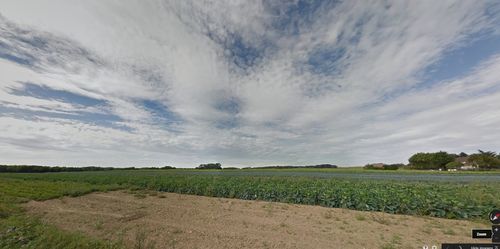
    Van Gogh grave opposite

    I like this view better.
     

    ·Posted by :

    ·in:

  • A Bit of Book Sleuthing on a Cyclotron Manuscript (1938-1941)

    JF Ptak Science Books   Post 2356

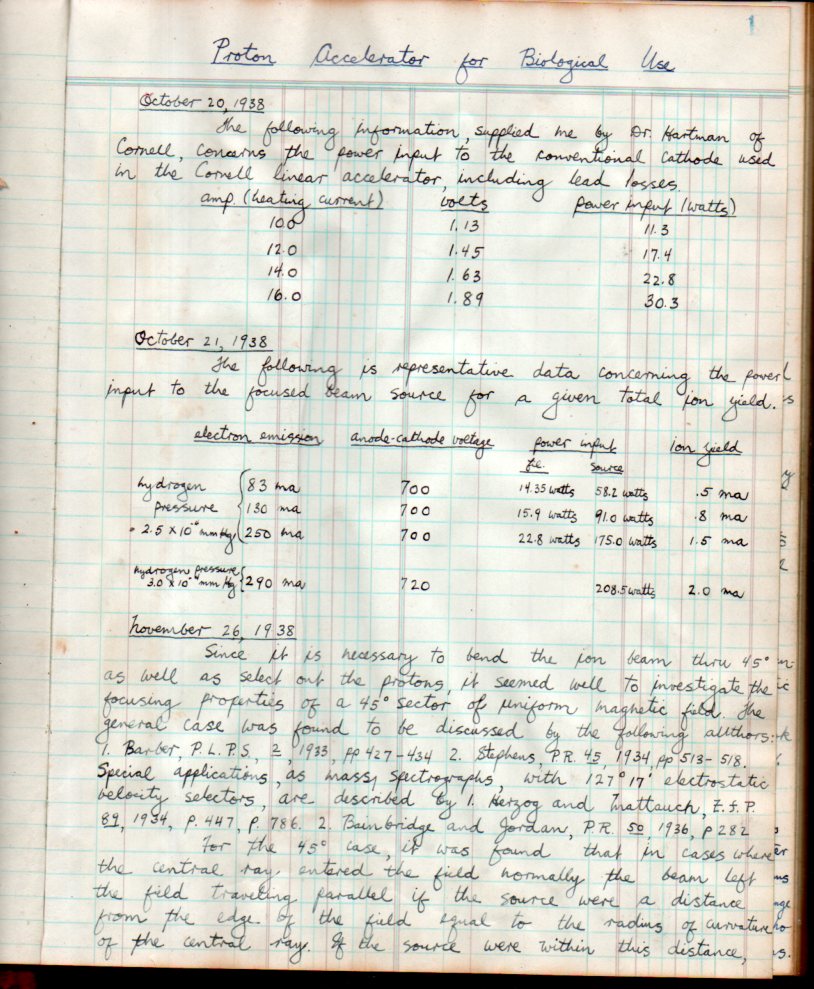
    Here’s an example of some book detective work that I get to do, a lot.  The book is actually a manuscript notebook, titled “Proton Accelerator for Biological Use” and kept by George W. Scott, jr., and written in a ledger book stamped “Haskins Laboratory”; the entries are from October 1938-April 14, 1941, and there’s 65 pages of entries of about 21,000 words.  It’s concise and analytical, first-hand experiences and observations, notes kept by an experimenter to himself on constructing this machine.  And the notebook came from the estate of Caryl Haskins, part of which I purchased years ago.  

    It turns out that the manuscript was fairly easy to figure out–tying everything up nicely in the end though wasn’t so easy. 

    The “proton accelerator” notes was on the construction of the M.I.T. cyclotron, which was the world’s first accelerator dedicated solely for meidical/biological use and a crucial instrument in the beginning of nuclear medicine.  

    Accelerator439

    ·Posted by :

    ·in:

  • On Building a Vertical City in the Grand Canyon and Covering It Up

    JF Ptak Science Books   Expanding an earlier post from 2009…


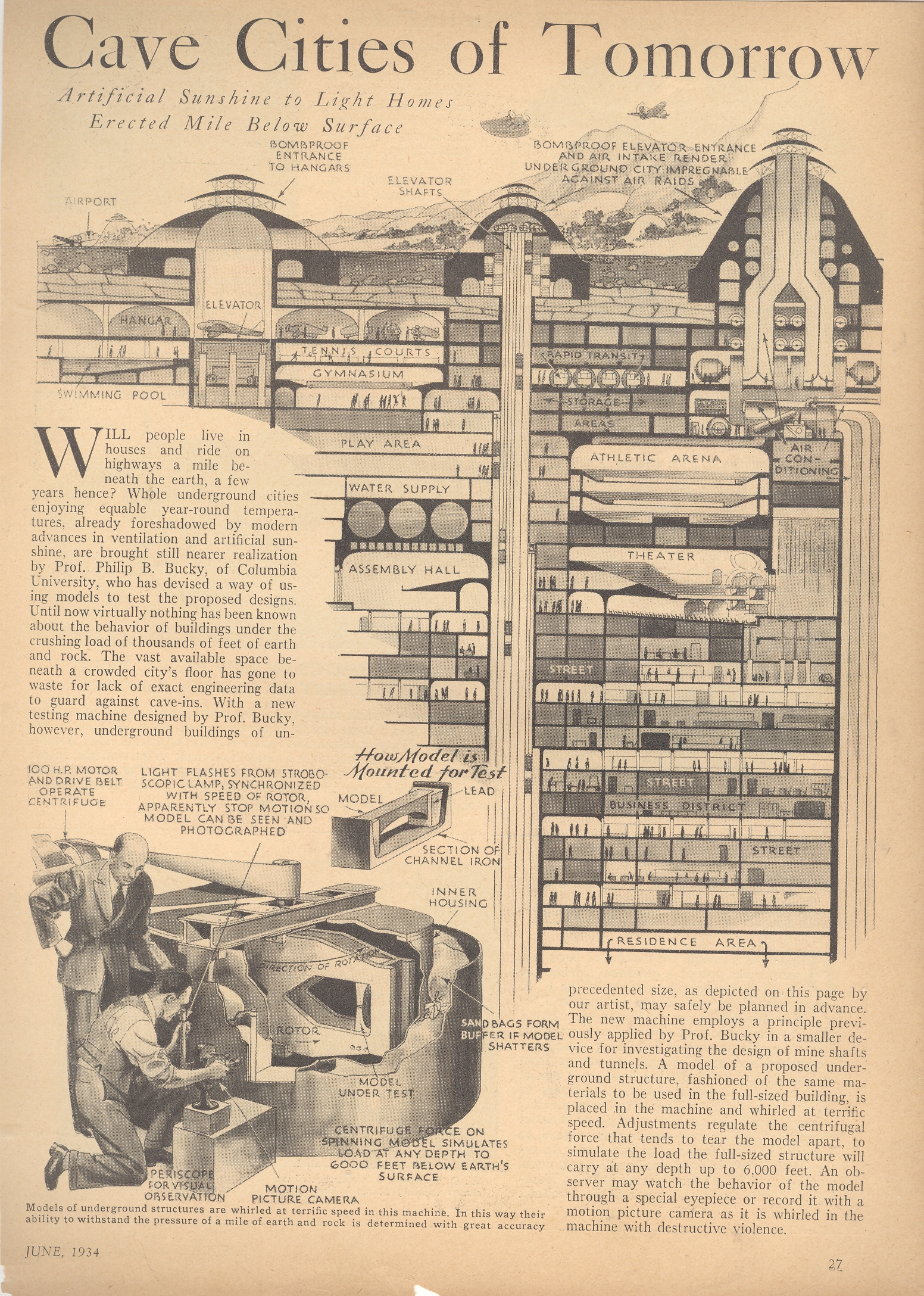
    Blog Dec 17 underground city

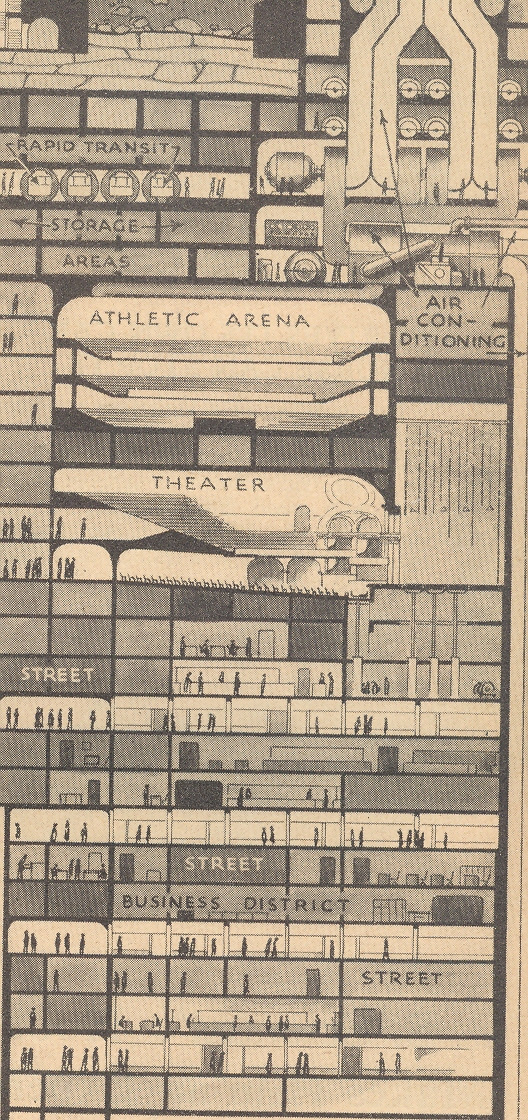
    I’m a sucker for cross sections, and this one has it all—nicely drawn, a glimpse into the possibilities of the future, and technoid removed from the realm of possibility.  This article appears in Popular Science Monthly for June, 1934, and presents the possibility of extending downward into the earth for future city development. (as a matter of fact, the fabulous  Modern Mechanix site has a similar story on display, asking the question “Are Skyscrapers Doomed?” for the same year, with the same engineers.) Well. It seems as though in this cross section that residences for people begin below the thirtieth floor, making living quarters starting at about 350’ down.  The story goes that it would be possible to dig these cities up to about 6,000 feet into the earth, which of course is a long way down.  Its difficult enough to drill an oil well hole to this depth; its difficult to imagine digging/outfitting/removing the earth from something—I’m not even sure what to call it—that was, potentially, thousands of feet deep and miles wide and long.   That’s playing with figures hundreds of billions of cubic feet. Of construction. Underground.  Well, I guess it wouldn’t be necessarily underground–it could be an excavated hole that is a mile or two wide and across and down, which would make the hole itself several times larger than the largest whole ever dug by humans, which is the Bingham Canyon Mine, a pit slope mine that is about .5miles x 2.5 miles. And then construction would begin after which the remaineder would be covered by earth.  

    Anyway, it is a big hole and a lot of construction, the volume of it at the beginner phases of say a cubic mile would be equal to the volume of 25,000 Great Pyramids or 5,400 Empire State Buildings.  It would be easier probably to build a vertical city in part of the Grand Canyon (or of course a “more modest canyon” and then cover it up–that’s an idea you won’t see in print too often. (I should poitn out that I’ve bumped into canyon-filling ideas every now eand then, one of my favorite truly-floated ideas being the one that would fill up Washington D.C.’s Rock Creek Park, which snakes its way north-south in the central part of the city.  Around 1890 the Federal government was trying to figure out how to best multi-task the area for parkland and roadway.  One incredible plan called for the creek, which in many places is bounded by some pretty steep embankments (25-75 feet or so) and extends about 8 miles north of downtown, to be filled in, leveled off, and paved over.  Now that  would’ve been a lot of dirt.  The final plan was perfectly fine and had a series of small roads snaking their way through the park, making it one of the nicest rides (Central Park-like) of any major metropolitan cities in North America.)

    Blog Dec 17 underground city det


  • “Hitler’s New Slavery”: Poland, 1941

    JF Ptak Science Books    Post 2357

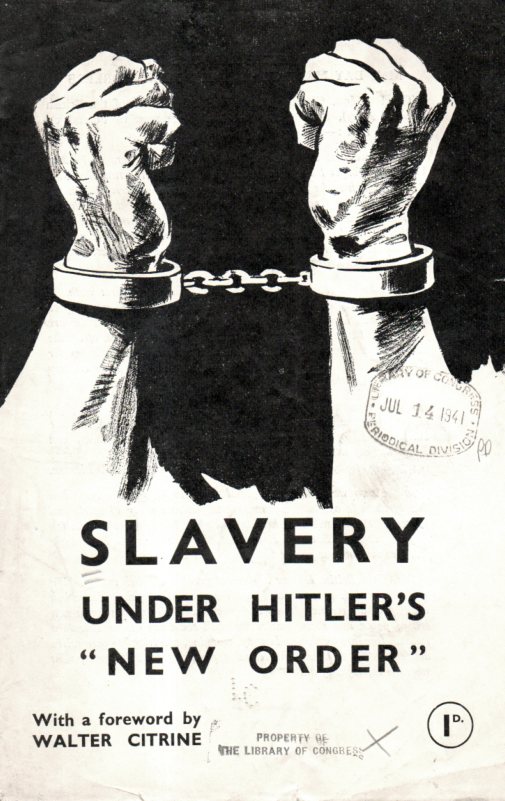
    Poster--Slavery Hitler447

    I segregated this pamphlet long ago for its spectacular cover graphics and never read the thing–I did tonight, and as it turns out there’s a lot of info in the slim document.  First of all it was written in early 1941 by (Sir) Walter Citrine, a very long-time British trade unionist, and he took a pretty close look on the national level with the “ruthless” economic exploitation of Poland (done to “the absolute limit”) as well as what was going on in the working Polish nation in regards to the laborers and their families, writing an overview on the Polenerlasse or Polish decrees that woul dregulate the life of the nation

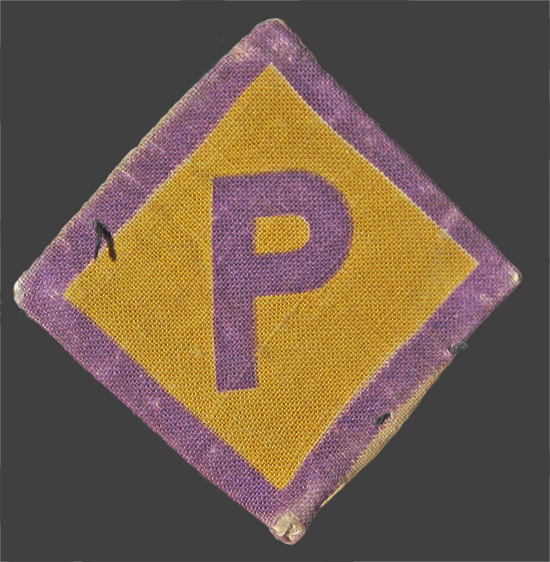
    Citrine writes about the agrarianization of Poland, the appropriation of all of Poland’s natural resources, as well as the deportation of “a million” men and women to work as slaves in Germany, where they were referred to disingenuously as Zivilarbeiter and forced to wear a  fabric patch “P” on a bright field of purple bounded in yellow on the front of their jacket/shirt.

    Polish worker[Image source: Wiki, here.]

    The lives of the workers were totally regulated, which I think is information that wasn’t yet available to Citrine. There was also a flow of propaganda aimed at separating Germans from Poles in social and especially sexual relations, the later termed a defilement of the German race (Rassenschande)  and a highly punishable offense.

    There is no mention here or anywhere else in the pamphlet how those numbers break down, and no mention whatsoever of Jewish persecution.  

    Citrine writes on the destruction of social legislation, of the complete dismemberment of unions, of the workers being forced to provide for their own highly-restricted rations of food, and the adoption of a servant/slave relationship of the country to Germany.  Bottom line for Citrine: Poland would be the model of a Nebenland, a stylus for the other European countries that would be conquered, and “used to convert all Europe onto a colony of the Great German Reich”. 


    ·Posted by :

    ·in:

  • Picking Up the Sagging Mississippi on a 2600′ Canvas

    JF Ptak Science Books   Post 2358

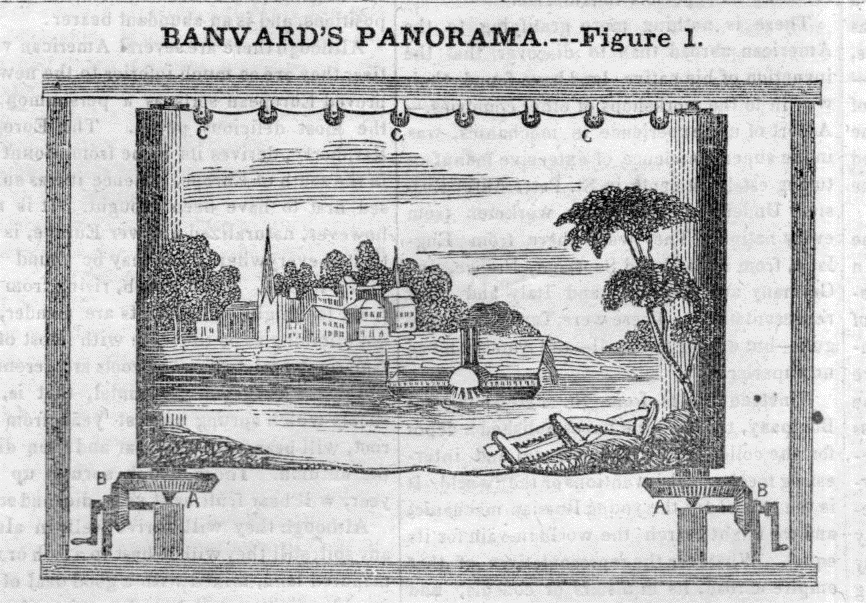
    Well, what was really being picked up was the canvas on which an enormous panorama of the Mississippi River was painted.  The work was that of New Yorker John  Banverd (1815-1891), a portrait painter who awoke with the notion of displaying the shoreline of the Mississippi River for its entire length. To that end he raised money (based on his painting income and investments) and set out with his $3000 in a skiff to paint the river, back in 1840.  According to a pamphlet that describes his effort (the full text of which is available at the Internet Archive, here), the effort took over 400 days–when his sketches were complete Banverd repaired to St. Louis where he built a wooden house specifically designed for him to transfer his sketches to an immense canvas.  The work was completed in 1846, at which point his work was 12′ high and 1500′ long–by 1848 the length of the work expanded to 2600′. (Banverd advertised his work as being “3 miles” long–that wasn’t the case, and that’s okay, because he had produced one of the largest paintings ever produced by a human.

    Panorama Bravasrd450

    The panorama (and diorama, and cyclorama, and other iterations of ‘raams) were a very  popular entertainment form, as popular as plays and other similar exhibits and spectacles, lasting deeply into the 19th century.  The Branverd panorama was on a large canvas that was advanced like a mechanism on a 35mm camera film advance–there were other sorts of displays, one of which kept the canvas static with the audience walking past it; others took place in a rotunda where the pano was on the walls of the structure and observers would be on a platform in the middle, where they would achieve a motion picture-like effect by turning slowly to see the entire image.  

    There were many panorama subjects, including subjects like Jerusalem, London, Rome, Lima, a journey down the Rhine, and so on.  The medium would take a fatal hit with the invention of flexible roll film and the accessibility of photography to the masses, the invention of the half-tone making it possible to reprint photographic images in newspapers and magazines, and other bits that could generate images from everywhere and cheaply.  

    The panorama was taken by Banverd on a tour of major cities where people would pay a fee to see the gigantic artwork displayed before them, shown segment by segment on a large frame with cranks that would roll/unroll/collect the painting before the audience, almost like a very primitive movie.  

    The image above is from The Scientific American for December 10, 1848, and shows how Mr. Branverd figured out a knotty problem with the display of his super-massive work. Unfortunately, at the end of the life of the canvas it was cut into smalkl fragments and sold–evidently none of it survives. 

  • Striking Cover Illustration–Christ on a Swastika Cross, 1943

     JF Ptak Science Books   Quick Post

    Poster--100 million catholics dead449

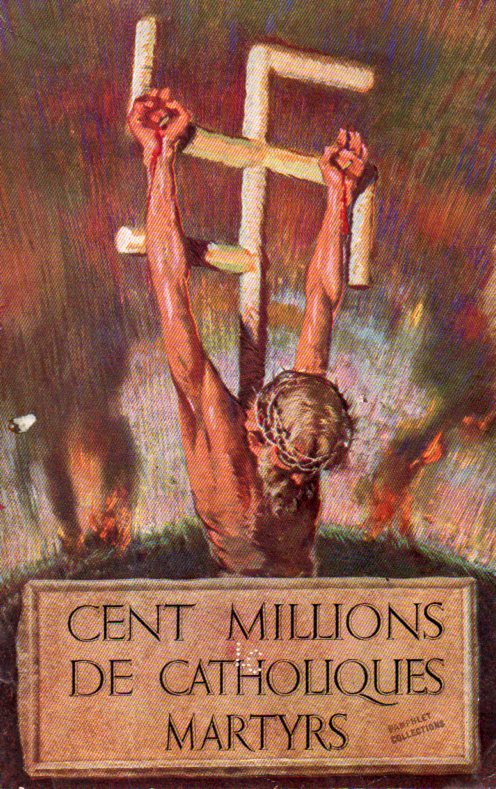
     Needless to say, the cover design for Cent Millions de Catholiques Martyrs   (published 1943) is very striking, and very unusual.  I’ve noticed the swastika/crucifix motif before, but not this bloody. Only six copies are located in WorldCat (and all quite good libraries, too, including the LC, Newberry, NYPL, Harvard, Stanford/Hoover, and WVU), so the pamphlet doesn’t seem to be very common at all.  

    ·Posted by :

    ·in:

  • Newton, Tyson’s “Cosmos”, & Space Travel (1728)

    JF Ptak Science Books   Quick Post

    Newton canon

    [Image source for the above and below: Google Books, here.]

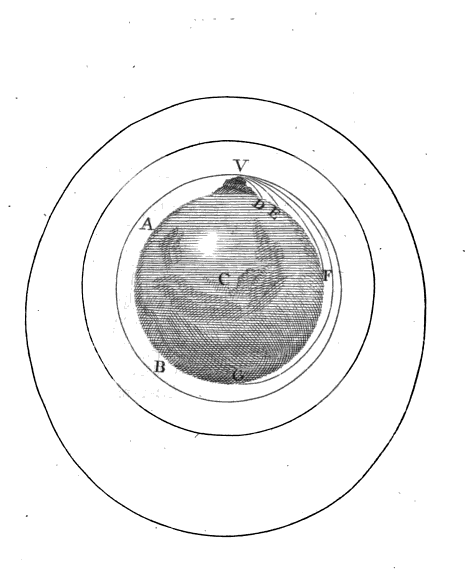
    We’ve been enjoying the Neil deGrasse Tyson Cosmos and are just now finishing the episode dealing with Newton, and the Principia, Edmund Halley, and poor Robert Hooke. One thing I wanted to footnote to this production was to share the original–not shown in the series though something very close to it does appear–of an image for Newton’s “cannon”. Though he actually doesn’t use the word “cannon” he does write on the motion of projectiles and the forces at which they are projected and the possibility of such a thing reaching a velocity great enough to send the thing into orbit.  The idea/gedankenexperiment and image appears early on in Newton’s A Treatise of the System of the World, which is the English translation (with corrections and some changes) of what was to be book three (De mundi systemate) of the Principia, and which was published in 1728, a year after Newton’s death. (On the title page the book is announced as “translated into English” but does not mention a translator/s, unknown as a certainty to this day but is supposed to be Andrew Motte.) 

    ·Posted by :

    ·in:

  • Some Good Thinking, 1945

    JF Ptak Science Books   Post 2360

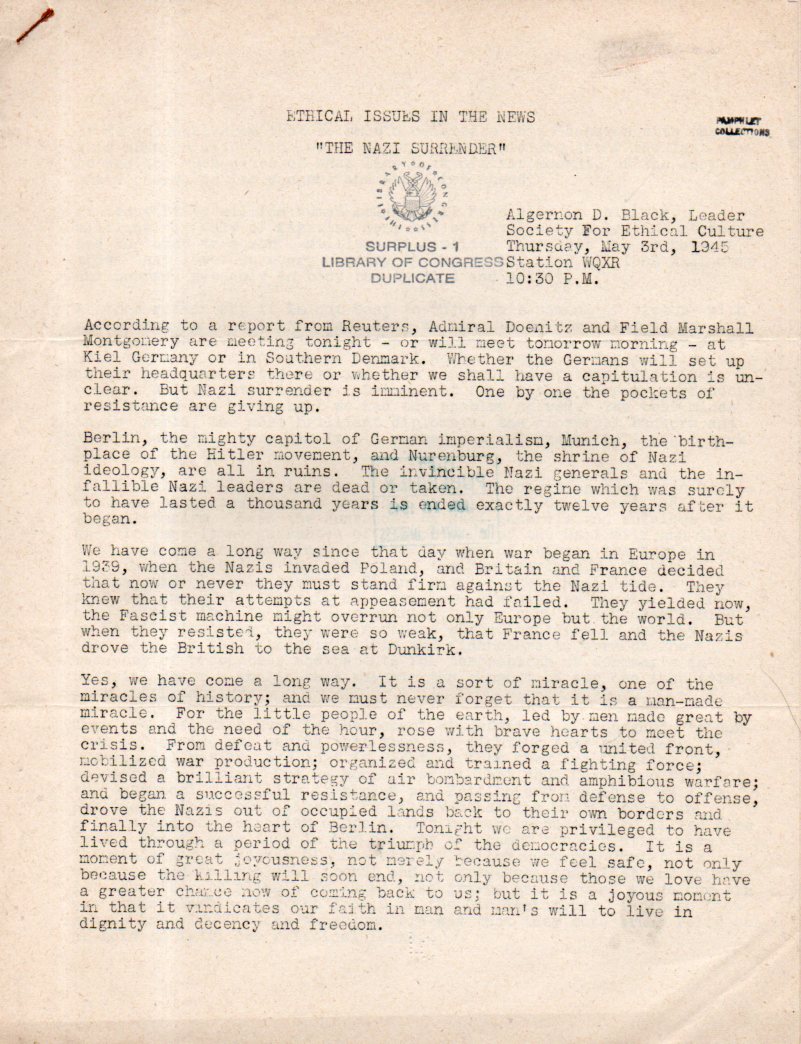
    Algernon D. Black, the leader of the Society for Ethical Culture, wrote a pretty good appeal to America in his radio broadcast of May 3, 1945 on WQXR (NYC). His topic on his “Ethical Issues in the News” series was The Nazi Surrender.  WWII in Europe was nearly over, Hitler had been dead for four days, nearly every major German city was in ruins, and surrender was in the air– and on the ground, and in the rivers, German troops surrendering in the tens of thousands in the west, and more so in the east, with many also being killed at the hands of the Soviets. Surrender was everywhere but on paper.

    May 7 would be the official day, four days in Mr. Black’s future. 

    Black, Algernon459And what Mr. Black warned against in the coming of surrender was this–that even though Germany was defeated, we must make sure that Nazism is defeated too.  He warned that the Nazis claimed to be fighting a common enemy in the Soviets, and at the end tried to align themselves with the West against the rising East. “Even the surrender of Nazi generals and suicides by Nazi leaders in no guarantee if a surrender of the Nazi will and the defeat of the Nazi ideology.

    He went on:  “In the moment of defeat, the Nazis have done things to assure the rebirth of the Nazi movement” pointing out hidden money, transfer of major funds to neutral countries, setting the stage for retrieving patents and industries, and so on. 

    Black points out that the Nazis started a war that killed at least 50 million people, and who in their quest to defeat “Russian bolseheviks” killed hundreds of thousands of British, French, and American soldiers, and civilians, caused the deaths of millions more, imprisoned millions and ran concentration camps. 

    “When we have accepted the Nazi surrender, our real difficulties will begin” Black writes, telling his audience that the Nazis must be separated from the non-Nazis, and that Germans who were “victim of false indoctrination will have to be subjected to intensive re-education”, and that “those who are anti-Nazis must be encouraged to take leadership and to aid in the rebuilding of German life and of German democracy…”

    Black was advocating a sensible, thoughtful approach to a longer-termed peace in discussing the termination not of the German state, but of the Nazi ideology.  

    ·Posted by :

    ·in:

  • Very Deep Racism–on the Vocabularies of “children, negroes [sic], parrots and schizophrenics” (1942)

    JF Ptak Science Books   Post 2361

    I am constantly surprised-and-then-unsurprised, having the “surprise” part ripped away like a bandage to leave a vacuum of missing surprise, when I bump into deep, inherent, part-of-the-language and part-of-the-social-landscape racism.  I’ve mentioned before in this blog that some years ago I bought a very large collection of pamphlets from the Library of Congress–it was a collection in name only (even though almost every item was stamped “the Pamphlet Collection”) though their storage and relationship was basically unassociated and uncategorized even though they were supposed to be so, housed in 3,000 document boxes that supposedly put everything into order, though the classifications were extremely loose and could refer to author/title/subject/publisher and so indexed almost nothing. The great majority of the time The Finding of Things was almost random, and there was really no telling what might slip out of each box.  

    Racist found455I looked at quite a few of these documents, and one thing that I found over and over, in varied subject areas and content, in obvious and odd places, was periodic deep-seated racist remarks. The vast majority was directed at African Americans, though there has been a showing for the Japanese and Chinese, as well as Mexicans, and Eastern Europeans, and of course Jews. The surprising thing to me has been how this racism emerges from the pamphlets–usually it seems so, well, “out of context”, even if you were racist, the way that suddenly something bizarre and racist would appear, as though dropping unexpectedly from the sky.  For example, in the middle of an introduction to carnival barking, the caller was supposed to occasionally “slap his hands like a n-word” when accepting money. I mean, right there in the middle of a nothing sentence, this awful stuff would just appear.  After many exposures to this I took it to represent very deeply rooted systemic racism, where light banter and semi-meaningless explanations would be peppered seemingly from nowhere with racist statements.  I remember feeling so outraged opening a pamphlet on Purina sheep feed and catching a phrase where the farmer is supposed to feel some part of a sheep’s wool and that it should feel something like “n-word hair but softer”.  It is an incredible disgrace to read it in 2014 and to think that in 1940 (when the Purina sales catalog was written) that it would be so much part of the verbal landscape that it would seem like nothing at all.

    And this happened many times, and all by chance, a weird turgidity of racist serendipity.

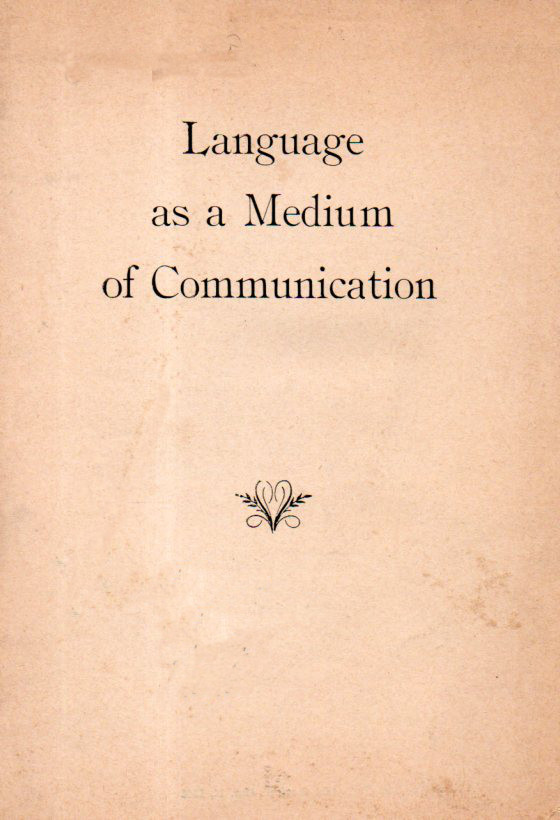
    Which brings me to tonight.  I selected the pamphlet (above) called Language as a Medium of Communication to be part of my book cover Found-Surreal collection–I mean, what else is language for, and what would Wittgenstein say in his quietest moments about this? I opened the pamphlet, and there it was, the found-offending bit, on page 9.

    The question the author asked in text was “Does the increase in vocabulary facilitate ease in thought?” Which is kind of an interesting question if it wasn’t so filled with the demand for explanation and definition.

    The rejoinder was this:

    “Do remarkable vocabularies of many hotel porters, couriers, precocious children, negroes, parrots, and schizophrenics “facilitate” their “ease in thought”?

    Now, the irony here of course is that this problematic and overwritten pamphlet was on language and communication, and what happens here is that (a) the author does not capitalize “Negro” even though it had been a long-fought battle that was basically decided in favor of the capital “N” a few decades earlier, which communicates something in a corruption of language, and (b) that the inclusion of “Negro” speech alongside that of parrots, children, and schizophrenics communicates a racist view of African American speech. None of this makes a dent in the consciousness of the author because these completely unexpected racist bombs that seem so incredibly pernicious and disgusting to us now were really evidently nothing when this pamphlet was written in 1942. That they appear without any real call for them is a damnable thing, that the racist aspect was so deep that one could include a racist reference even in an innocuous statement–that made bitter and repugnant with the expression of stupidity, fear, and loathsomeness. And this is only 72 years ago. 

    ·Posted by :

    ·in:

  • A Picture of Light: Finite & Infinite in All Directions

    JF Ptak Science Books

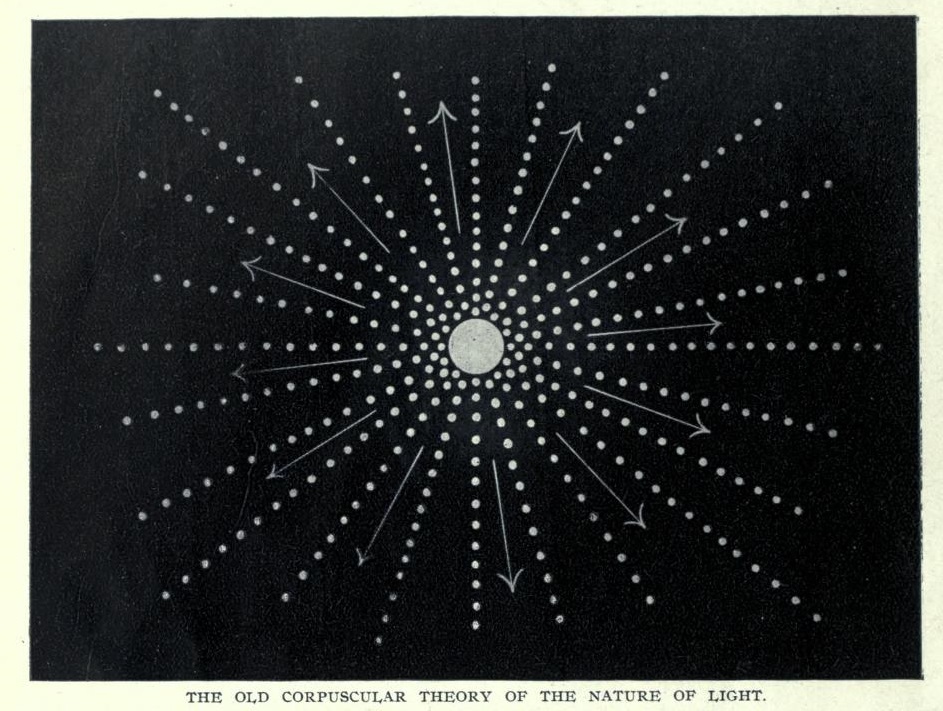
    I found this very interesting image in the early pages of T.E.R. Phillip’s astronomical review and history, Hutchinson’s Splendour of the Heavens, issued by the publishing house whose name is in the title, and printed in London in 1923.  What we see here is a representation of light, or at least the corpuscular theory of light and the movement of the corpuscles. The theory is partially the work of the Christian atomist Pierre Gassendi (1592-1655) and Thomas Hobbes (1588-1679), who argued that light was composed of infinitesimally small particles traveling at finite speeds and in a straight line in all directions.

    Corpuscular theory b

    The corpuscular theory preceded the wave theory which preceded the EM theory which preceded the quantum theory of light, and it is interesting to note that even though this work was published 18 years after the Einstein paper of 1905 and four years following the Eddington/Dyson et al eclipse confirmation of relativity  after which Einstein became a mega-star, that there is scant mention of this paper in this book in spite of his 14 other mentions.’

    Still, this is a pretty cool rendering of the “shape” and constituents of light. 

    ·Posted by :

    ·in:

Recent Posts

Archives

Categories