A Daily History of Holes, Dots, Lines, Science, History, Math, Physics, Art, the Unintentional Absurd, Architecture, Maps, Data Visualization, Blank and Missing Things, and so on. |1.6 million words, 7500 images, 4.9 million hits| Press & appearances in The Times, Le Figaro, Mensa, The Economist, The Guardian, Discovery News, Slate, Le Monde, Sci American Blogs, Le Pont, and many other places… 5000+ total posts since 2008.

  • FDR and the Three Stooges: Presidents in Movies and Movies as Presidents.

    JF Ptak Science Books  (The First Entry in the Department of Two Eric/Eriks)

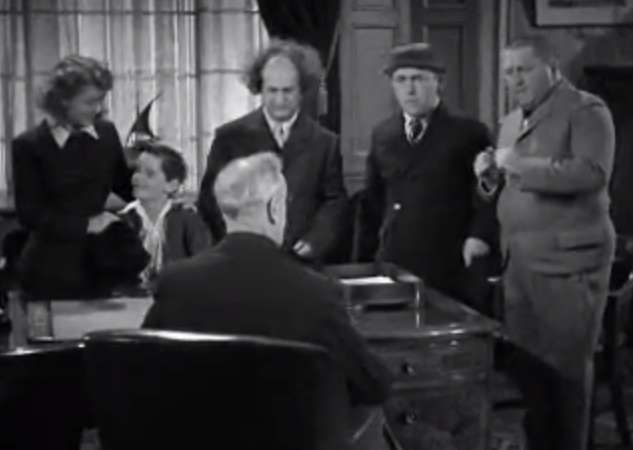
    My polymathic friend Eric Sacharaow clued me into a wonderful image in the history of motion pictures: an encounter between The Three Stooges and Franklin Roosevelt. It occurs at the end of a movie short The Boys made in 1937 (which was evidently shot in four days) called Cash and Carry, in which (after hijinx [is this a Scrabble word?]) they pursue a hidden treasure to fund a crippled boy’s operation and wind up tunneling into a federal gold vault. They are caught, other stuff happens, and then they are in the Oval Office (for some reason located in the U.S. Capitol building), where they wind up being heroes of some sort. They appear with an actor playing the role of FDR with the president sitting with his back to the camera, the other actors facing towards the camera, speaking to the seated president. The Stooges are absolve because their pursuit was pure, with FDR announcing “executive clemency”, to which Curly responds, “Oh no, not that!”.
    FDR three stooges

    Anyway, the first interesting tidbit is that FDR appears seated but still holding a cane—this is highly unusual because even though he had been left with paralyzed legs from infantile paralysis (polio) in 1921 most US Americans did not know that he was living his daily life in a wheelchair. (FDR virtually never mentioned his legs in public, except at the very end, after Yalta—and then it was self-deprecating.)

    The big deal here, though, was that this was the first depiction of FDR in a movie, and he does so with none other than the Three Stooges. Odd but true. (And for some reason, another very odd first appearance occurs for LBJ, who winds up depicted for the first time in a movie in the magnificently bad Batman, the Movie in 1966.)

    I know this because I found a fascinating list compiled by the writer Erik Lundegaard https://eriklundegaard.com/item/why-is-fdr-hanging-with-the-three-stooges-everything-you-didn-t-want-to-know-about-screen-portrayals-of-us-presidents-and-didn-t-ask listing all of the depictions of U.S. Presidents in films, showing their first appearance (with year and film and the actor portraying the president), as well as a numerical census of the numbers of movies the presidents appeared in. My hat is off to Mr. Lundegaard, because this must’ve been a challenging research project.

    I’ve reproduced the bare essentials from his list (below). Again, this is not my work, all credit to Erik Lundegaard:

    The list (president/total number of appearances in films/year of first appearance):

    Washington, 154, (1909); Adams , 5 (1911); Jefferson, 125, (1911); Madison, 27, (1937); Monroe  (1918); John Quincy Adams,  8, (1911); Jackson, 47, (1918); Van Buren,  4, (1936); Harrison, 7, (1942); Polk , 8, (1939); Taylor, 8, (1912); Fillmore, 4, (1939); Pierce, 2, (1944); Buchanan, 1, (2000); Lincoln, 327, (1911); Andrew Johnson, 6, (1922); Grant, 94, (1913); Hayes, 7, (1940); Garfield, 7, (1939); Arthur, 3, (1932) ; Cleveland, 4 (1939); B. Harrison, 2 (1952); McKinley, 11, (1936); T. Roosevelt,  86, (1917); Taft, 5, (1978); Wilson, 31, (1913); Harding, 5, (1975); Coolidge, 5, (1955); Hoover, 8, (1979); Franklin D. Roosevelt, 97, (1937); Truman, 34, (1947); Eisenhower, 37 (1955); Kennedy, 86, (1957); Lyndon B. Johnson, 32, [Batman: The Movie!] (1966); Nixon, 81, (1968); Ford, 15, (1975); Carter, 23, (1976); Reagan, 46, (1976); G.H.W. Bush, 27, (1986); Clinton, 74, (1992); George W. Bush, 112, (2000); Obama, 80, (2007).

    Some presidents don’t break into film for a long time after their final year in office. This is understandable of course for the earliest period of the presidency, as the very first depiction of a president occurs in 1909—and that was GW, 112 years after his final year in office. So the function of appearance or not in films of the first flux or so presidents was a function of technology rather than anything else. Once you get into the meatier part of the presidency, the psych and popular factors come into play, which explains why it took 120 years after his final year for James Madison to be depicted in a film. He is followed by W.H. Harrison (101 years), van Buren (100), Pierce at 97 years, Fillmore (72), and B. Harrison (63). On the other end of the continuum, JFK is depicted in a film before he was president (1957); Wilson appears in the first year of his presidency (1913) and FDR in his fourth (1937). Once we reach Ike all of the presidents make appearances in film during their administration (many for the first time on Saturday Night Live).

    In 2016 we did the opposite, electing a tv show of nothing but commercials to the presidency.

    And that, as they say, is Show Biz.
    ·Posted by :

    ·in:

  • Blindfolded Chess Players, Dropped Cats, and Channels that aren’t Canals (1894)

    JF Ptak Science Books   Quick Post

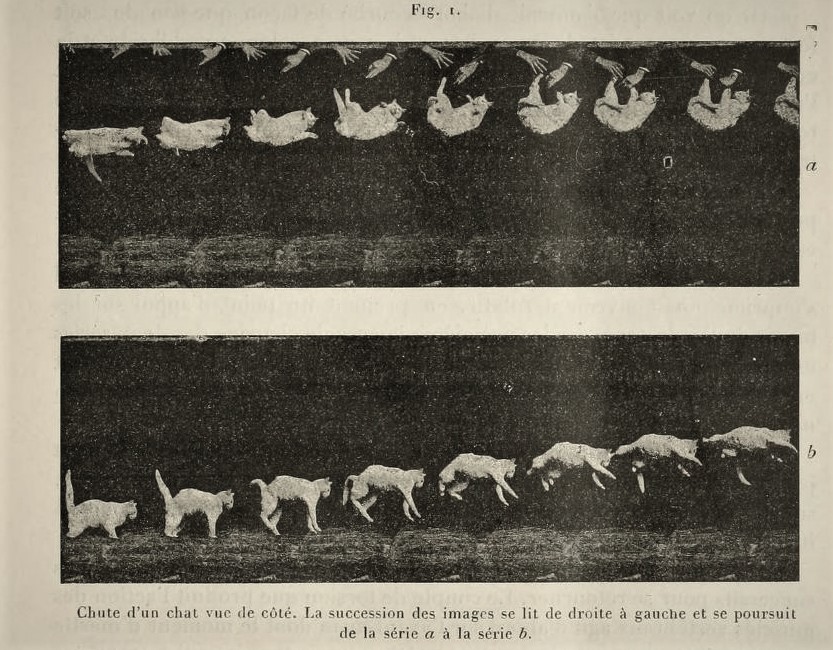
    Okay, here’s another entry in an occasional series on antiquarian sci journal issues with multiple interesting bits in them. The example today is a slender (23pp) but crammed (1500 words per page) weekly issue of the venerable journal Nature (volume 51,  22 November 1894)–it initially raised my interest for a two-pager Francis Galton paper on synesthesia and super-abilities entitled  “Psychology of Mental Arithmeticians and Blindfold Chessplayers”.  This irresistible paper shared space with a famous paper by another great 19th c polymath, Etienne Marey,  “Photographs of a Tumbling Cat”, being a full page (four strips) of “chronophotography” of a cat being dropped upside-down showing the progress of how the cat rights itself in a short distance to landing on its feet. Marey (along with Edweard Muybridge) helped create and establish the motion picture–this paper came a dozen years or so after his groundbreaking work appeared in the 1880 and 1882 volumes of the Comptes Rendus…de l’Academie des Sciences (Paris). 

    Marey cat 1894

    • [Source: this image is from an already-scanned version from an issue of the Comptes rendus but is identical to the top half of the Nature image.]

    This Nature issue isn’t done yet! There’s also the article “Schiaparelli on Mars” (pp 87-90) including a full page of about 2000 words on “The Canals or Channels”,  though the editor  points out in a footnote that “canale” in the original Italian version should be translated as “channel” or “strait”, and not canal, a sentiment that didn’t have enough impact in preventing the avalanche of the Martians-on-the-loose syndrome that was building steam. This was also right about the time that astronomers as a whole began to doubt the existence of Martian seas (first brought into the conversation by Secchi in 1858). 

    Anyway, there it is, a wonderful Victorian super-issue of beautiful Nature. (Oh yes, there’s also two book reviews of works on (Hamilton and Taits) quaternions.  

    The full text is available at Hathi Trust:  https://babel.hathitrust.org/cgi/pt?id=uc1.c2754927&view=2up&seq=112

  • Huxley and the Inelegance of Mathematics (?)

    JF Ptak Science Books  Quick Post

     This is the lovely response by the great mathematician J.J. Sylvester to Thomas Huxley’s muckety comment on the lack of imagination in the mathematical sciences.  Huxley’s remarks were made at a meeting of the British Association for the Advancement of Science, stating that (mathematics) “is that study which knows nothing of observation, nothing of induction, nothing of experiment, nothing of causation”. This quote is taken from Sylvester’s quick and elegant responses in two articles in Nature, December 30, 1869 (pp 231-3) and January 6, 1870 (pp 261-3), as “A Plea for the Mathematician” and “A Plea for the Mathematician II”, part of which is reproduced below. “For Sylvester, the ability to be able to imagine  what the experience of space would be like in dimensions other than three is sufficient to establish the empirical basis of geometry–the three-dimensional Euclidean is not the science of space in general, but the science of the space of our experience.”–Fact and Feeling: Baconian Science and the Nineteenth-Century Literary ...by Jonathan Smith, pp 181-182.

    I don’t know what the story was re maths with Darwin’s Bulldog. 


    ·Posted by :

    ·in:

  • Nazi Propaganda Against the B-17 (1943)

    JF Ptak Science Books  Post 2824

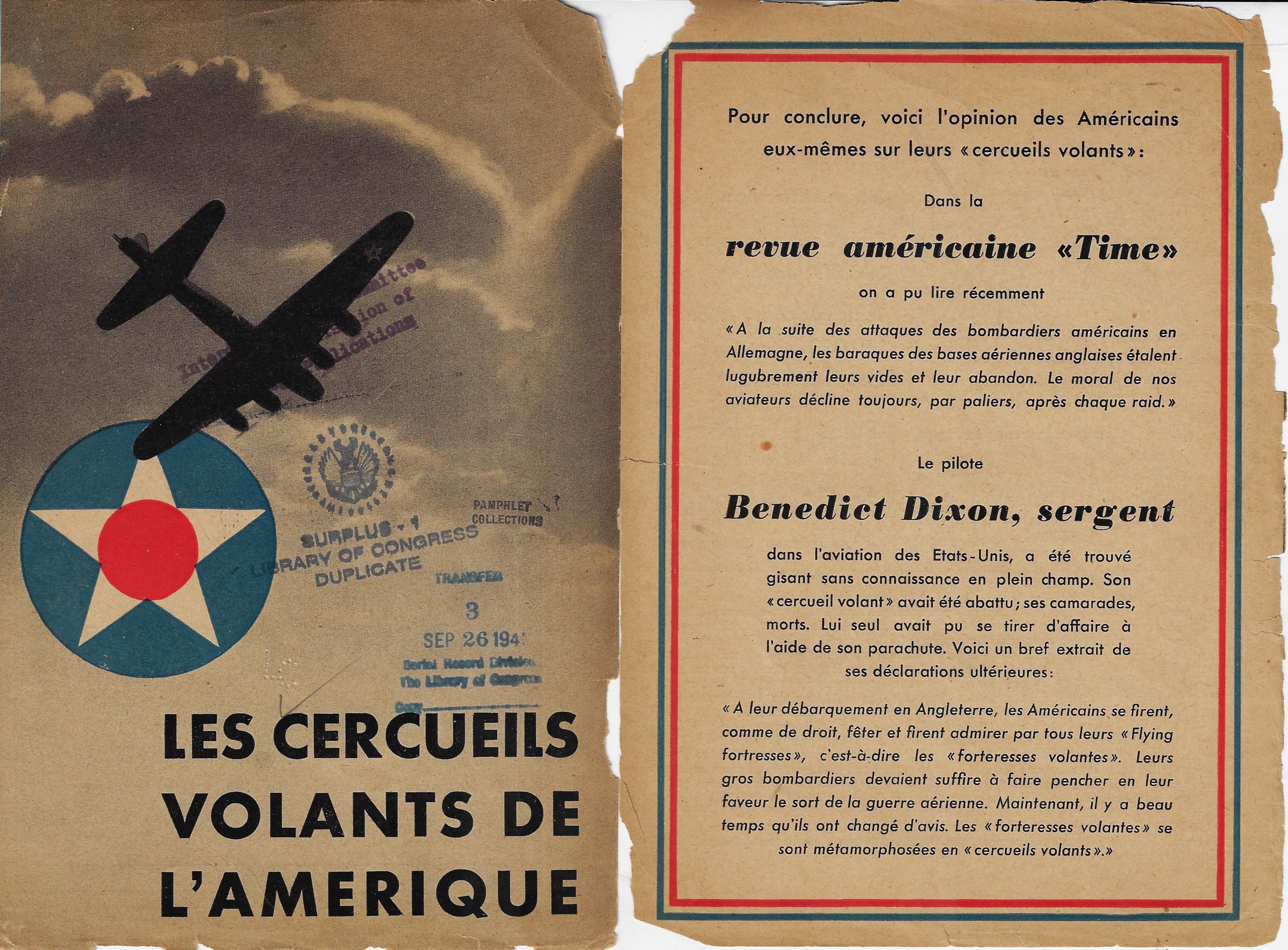
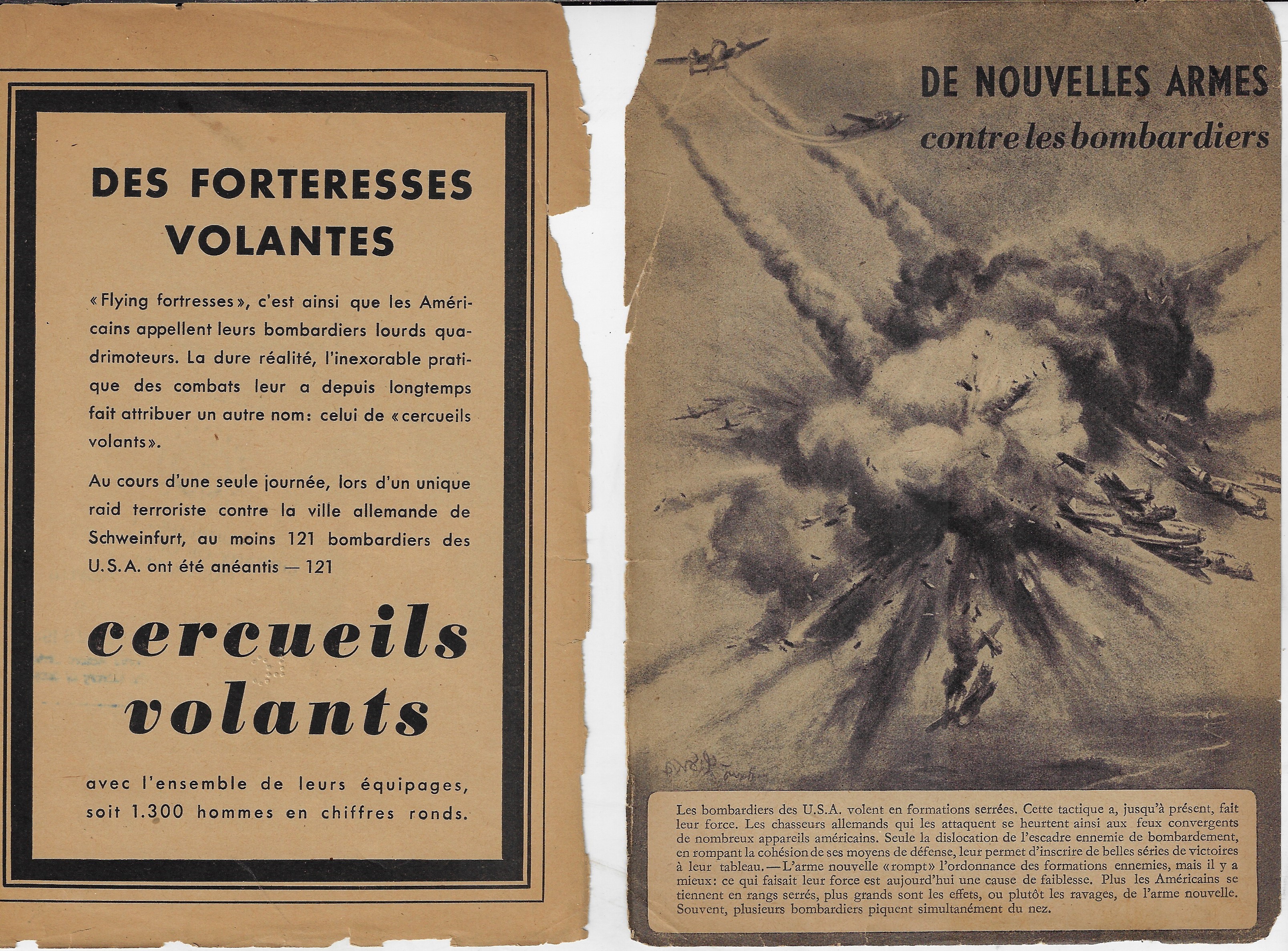
    This is quite the piece of anti-U.S. Propaganda, printed in 1943 and targeted so to speak against the B-17 Flying Fortress. (I’m not sure why this is in French, though no doubt it was focused on occupied territories in France and Belgium and other areas reached by Lingua Franca.) This was a difficult piece to work through given my tender spot for this aircraft–I’ve long admired it, and was even a passenger on one many years ago (it was much louder than I expected). As a piece of propaganda I would have expected to see more copies of this here and there, but as it turns out there is only one copy (at Nanterres) located by WorldCat–this in mind I’ve reproduced the whole of the very short work.

    B 17 propaganda _1_[Front and rear covers.]

    The little pamphlet got to business straightaway, claiming on the back of the title page that the “Flying Fortress” suffered terribly at (“terrorist raid”) Schweinfurt—true enough for the 8th Air Force, though the numbers aren’t quite right. The author tells us that the “Flying Fortress” was actually “the Flying Coffin”. “This is how the Americans call their heavy four-engine lighters [the “Flying Fortress”]. The harsh reality, the inexorable practice of fighting has long since given them another name: that of flying coffins. C’est ainsi aue les americains appelent leurs bombrdiers lourds quadrimoteurs. la dure realite, l’inexorable practique des combats leur a depuis longtemps fqit attribuer un autre nom: celui de cercueils volantes.”)

    In the explosive scene on the page there’s a picture of mass destruction of B-17’s being blown out of the sky—this a result of the (“tight”) formation flying that the writer says used to be a strength, but now with new (German) weapons would prove to be the 17’s weakness. (“The greater the function, the bigger their devastation.”)

    B 17 propaganda _2_The next scene, a two-pager, is heartbreaking and brutal. “Voila ce qui les attend” it shouts–”this is what awaits them”! And then, boldly beneath the scene, the pamphlet repeats the Flying Fortress is the Flying Coffin claim.

    ·Posted by :

    ·in:

    — —
  • Massive Art Deco-ness (1932)

    JF Ptak Science Books  Quick Post

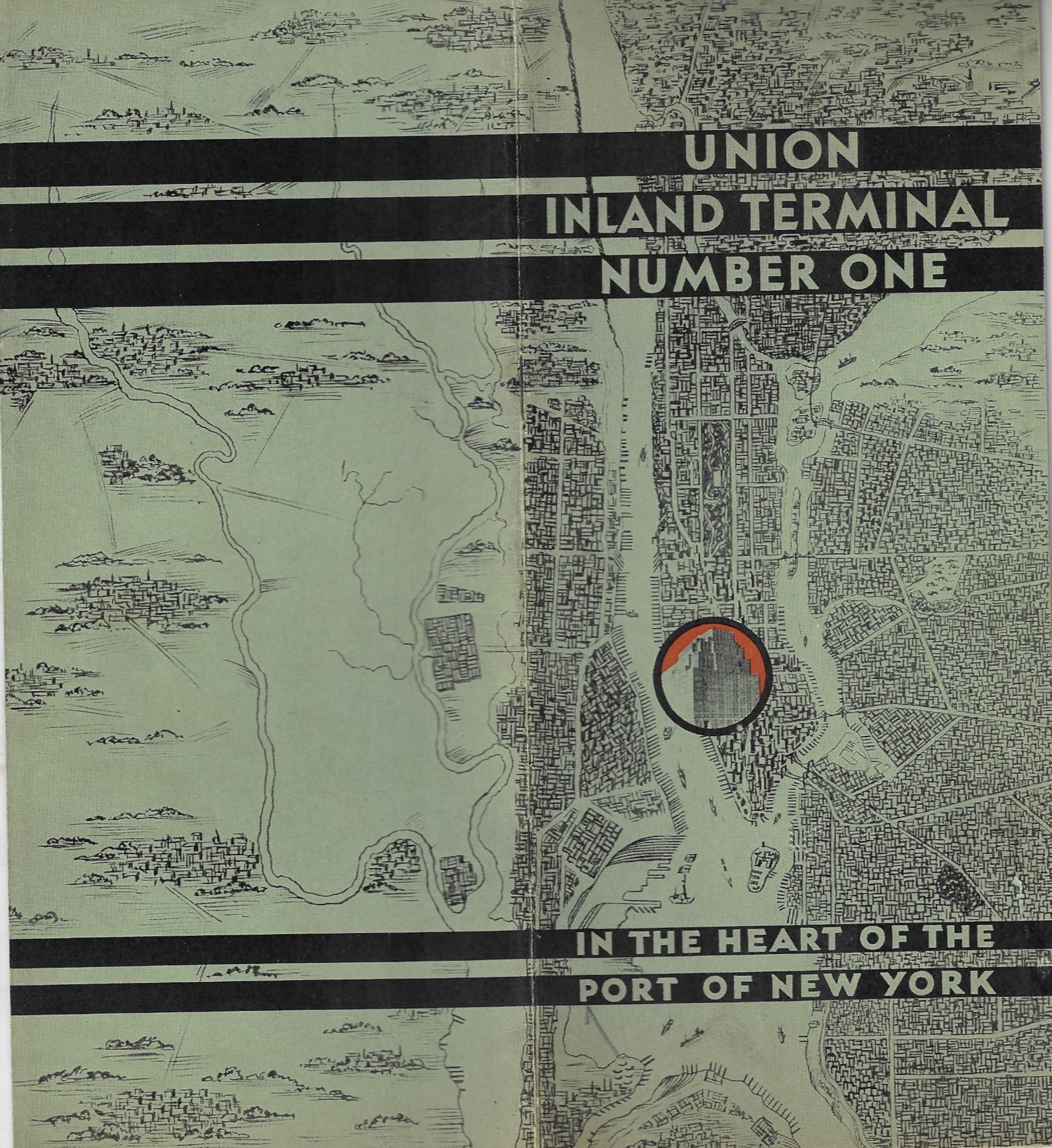
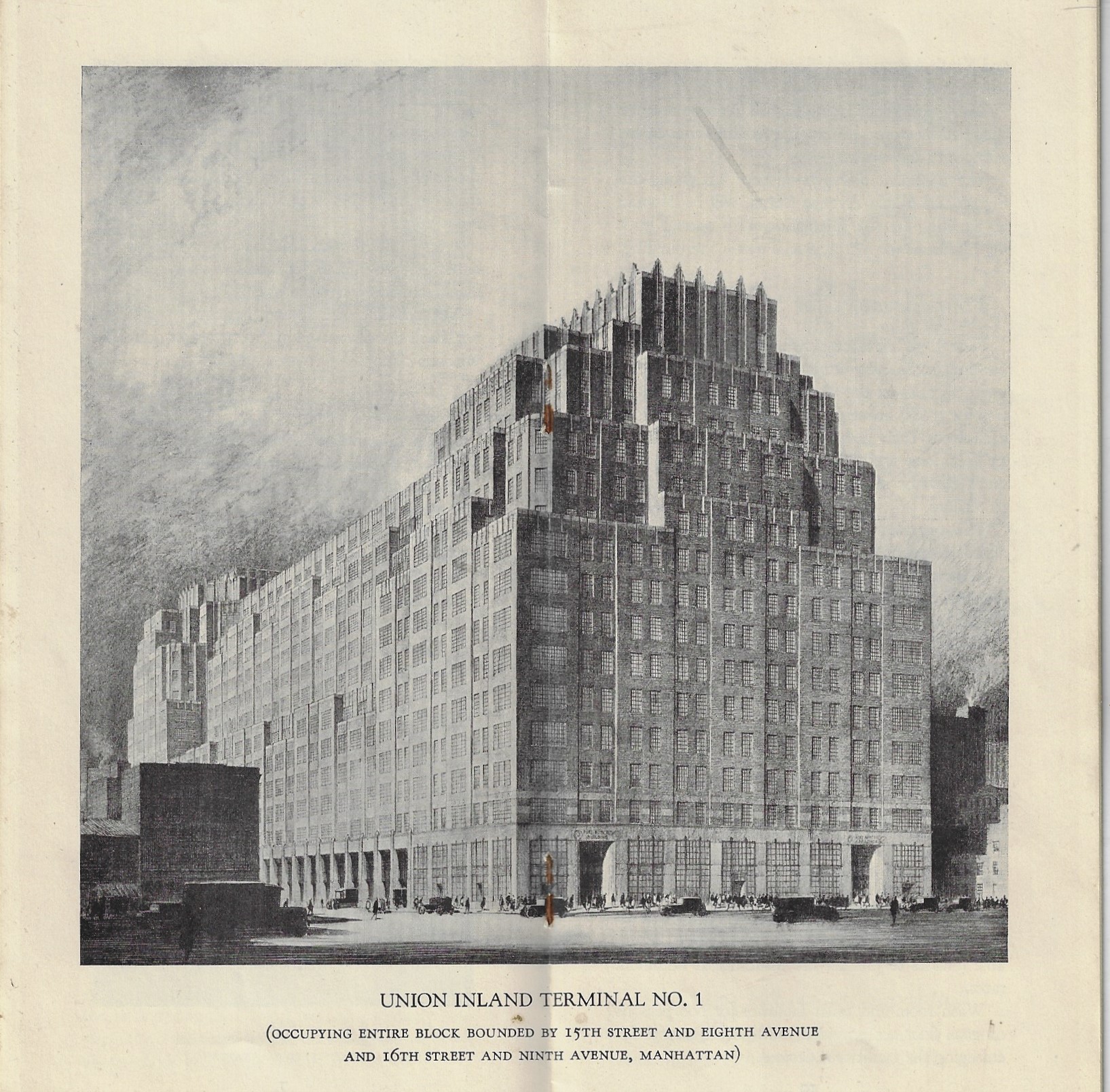
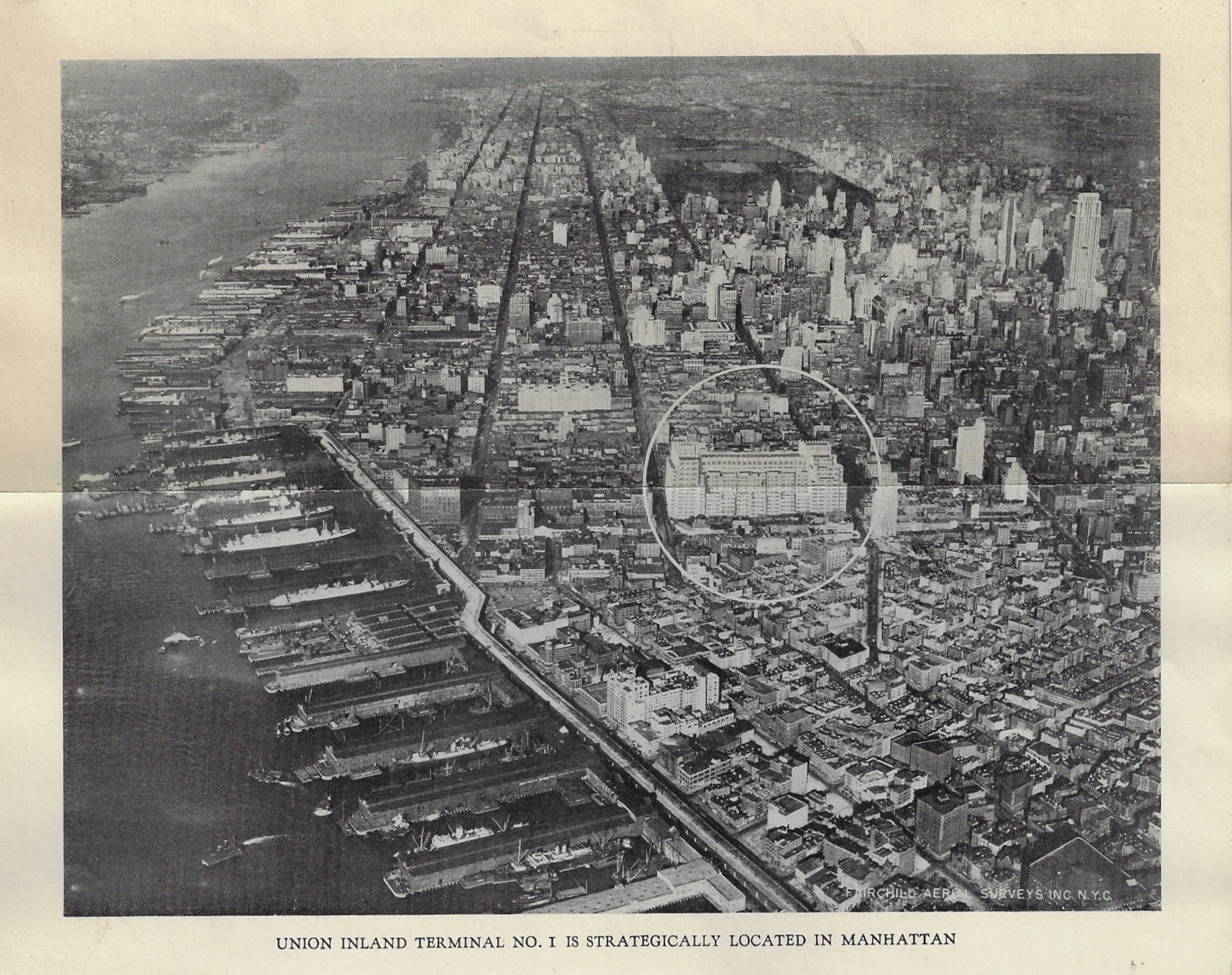
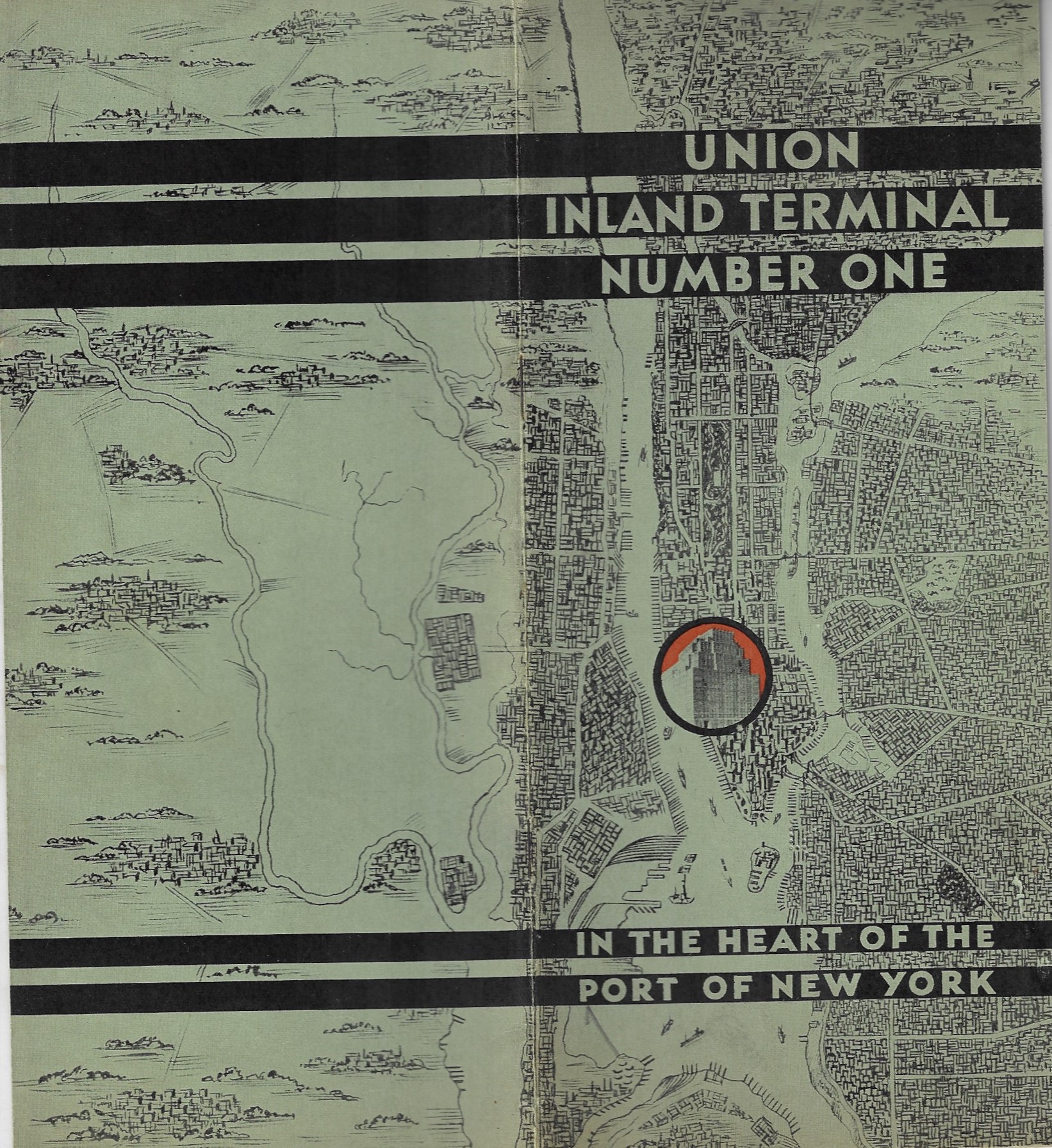
    This is the Union Inland Terminal, a massive Art Deco structure built in 1932, occupying the entire city block on 111 8th-9th Avenue between 15th and 16th. It was the city’s biggest building (by square footage) from its construction to 1968, when it was overtaken by the WTC, 3.5 million sq ft to 2.9 million.  The building was explained to people in this 1932 pamphlet, which oddly enough is a tall and skinny affair, which is everything that 111 is not.  In any event, I wanted to share this scarce pamphlet for this gigantic structure. 
    Books covers union inland terminal _1_Books covers union inland _3_
    Books covers union inland _3_

    ·Posted by :

    ·in:

  • Life in Stone–Some Interesting Work by the Great Fr. Kircher (1678)

    JF Ptak Science Books   Post 2825

    The great semi-mystifying polymath Athanasius Kircher (1602-1680) lived for a long time and filled his life with ideas and words,  producing dozens of books during his time on Earth, some of which were never published even though written, some manuscripts lost forever. His was a massive output of extraordinary breadth.  He wasted little time what I can see, writing on a spectacular range of subjects, enlightening people, confusing people, generating great theories and some bad ideas. 

    The images below comes from his Mundus Subterraenus (“Athanasii Kircheri Mundus subterraneus in XII libros digestus… “), an edition published in 1678, and which was concerned mainly with geology and the theory of the Earth.  Kircher a product of the great Jesuit institution, the Collegio Romano, postulated the structure of the interior of the Earth, the origin of heat, the source of the tides, the composition of light, mechanics, the structure of music, linguistics, astronomy, and of course the existence of the Virgin Mary in amber.  There was also a fair amount of work on one of his side interests that populated a number of his works, alchemy and the search for the organization of materials.

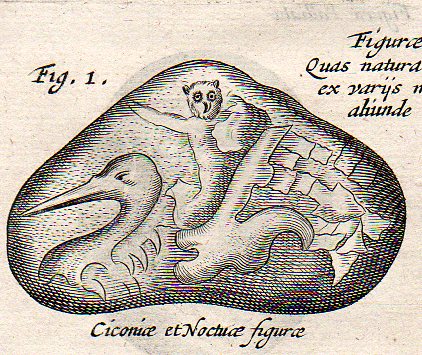
    But what I am looking at today with Kircher is the Mary-in-Amber part, his investigations (and theorizing, and documentation) on naturally-appearing, organic objects found in inorganic material–rocks and minerals–like these birds:

    Kircher  lapidibus birds451

    Which is a detail from  

    Kircher  lapidibus birds449

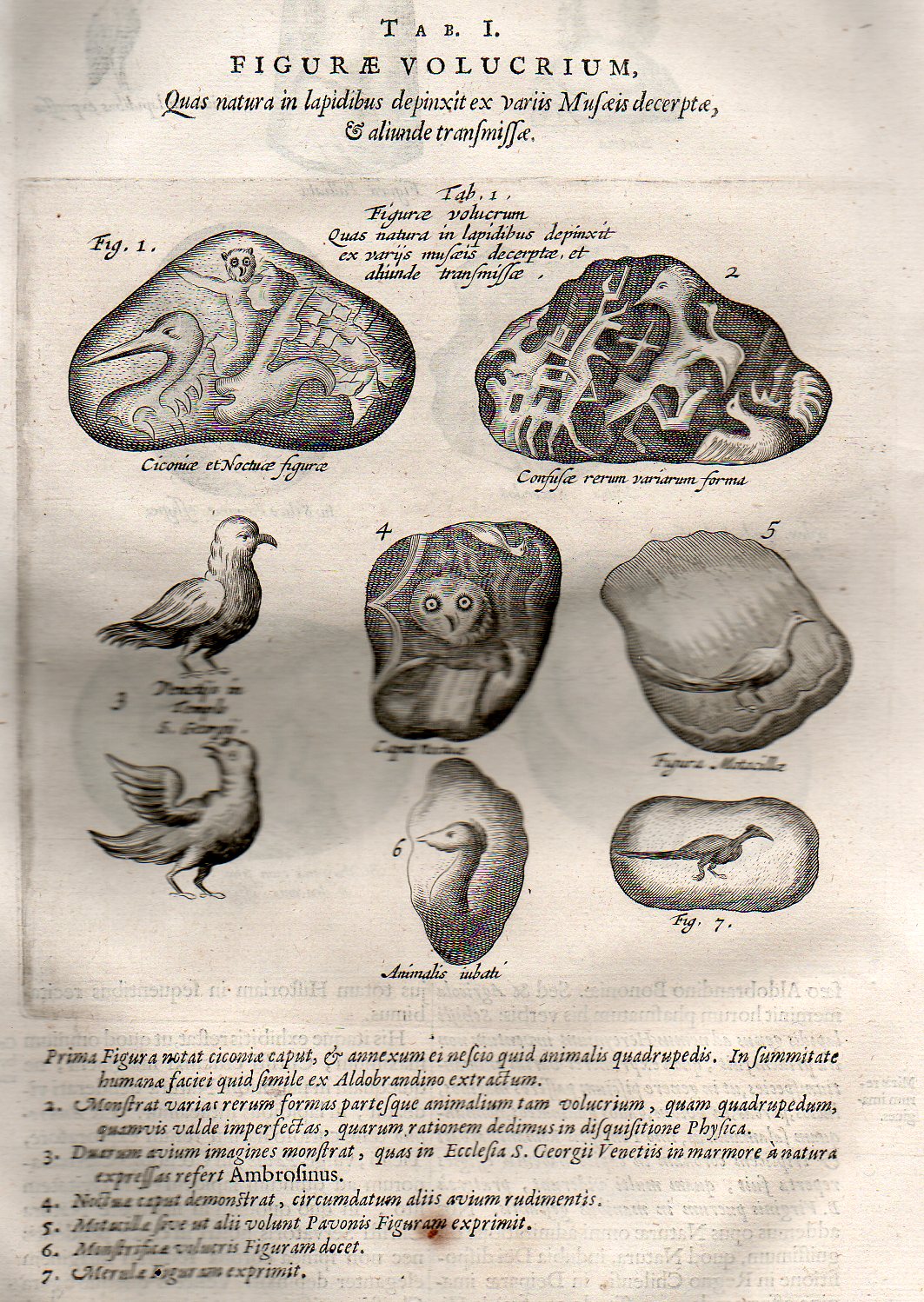
    The engraving, entitled Figure Volucrum, quas Natura in lapidibus depinxit, ex variis Museia decerpt et aliunde transmissa (or “Figures of winged creatures, painted by nature on stones, taken from various museums, and otherwise transmitted.”) shows Kircher’s collection of anthropomorphically based inorganic items.  It is a remarkable exercise to try and place yourself within the context of the scientific world of Kircher’s time, 350 years ago, and try to explain these naturally-occurring phenomena, without even the benefits of the conception of long geologic time, or of expanded time in general.  

    The descriptive text (at the bottom of the engraving) from Kircher on these objects is translated, as follows:

    1.  The first figure represents a head of a Stork, together with some, but I do not know what, quadruped. At the top is something like a human face. Extracted from Aldobrandinot (see PI. XXIII. Fig. 1). 
    2.  Shows various forms and parts of animals, winged creatures as well as quadrupeds, although very imperfect, the cause of which we give in the physical examinations (see PI. XXIII. Fig. 2). 
    3.  Represents the figures of two birds expressed by nature on marble in the church of St. George’s, at Venice, referred to by Ambrosinua (see Vol. VII. PI. II. Figs. 3, 4). 
    4.  Shows the head of an Owl, surrounded by rudiments of other birds (see PI. XXIV. Fig. 2). 
    5.  Represents the figure of a Wagtail, or as others prefer, of a Peacock (PI. XXIV. Fig. 3). 
    6.  Shows the figure of a monstrous bird (Vol. VII. PI. II. Fig. 4). 
    7.  The figure of a Merle (Vol. VII. PI. II. Fig. 5).

    ·Posted by :

    ·in:

    —
  • Advertising in the Newspaper of the Manzanar Japanese Relocation Camp (1944)

    JF Ptak Science Books  Post 2829

    The Manzanar Free Press is a remarkable publication, issued by the “internees” of the Japanese Relocation Center/Concentration Camp, Manzanar, near Lone Pine, California. It was located in a beautiful and desolate-mountainous AnselAdams-scape made of the Inyo and Sierra Nevada mountains, and was one of 10 camps (plus another two dozen other facilities including isolation centers, temporary camps, and other smaller areas managed by the Department of Justice and U.S. Army) that held nearly 120,000 people of Japanese descent (62% of them U.S. citizens) who were forcibly removed and imprisoned via the U.S. Executive Order 9066, issued by President Franklin Roosevelt on 19 February 1942. The area covered by the evacuation decree was quite large: half or so of Washington and Oregon states, all of California, and the bottom third or so of Arizona.

    Manzanar was a semi-dead town 220 miles NE of Los Angeles, located in high desert with huge swings of temperature and unrelenting and challenging weather—semi-killed by the city of Los Angeles, which purchased the water rights to the region in 1929, forcing out the remaining inhabitants.  Manzanar had a peak population of about 11,000 before the Japanese were returned to what remained of their previous lives. And it was here that thousands of the unfortunate people of Japanese decent lived for several years.

    What struck me on this go-round with the camp newspaper were the advertisements, which for reasons unknown didn’t register with me in the other times I went browsing. (There are many of them available online via the Library of Congress https://www.loc.gov/resource/sn84025948/1944-01-29/ed-1/?sp=3&st=text.) It has the feel of a small town daily, with all of the trimmings—except this was a concentration camp (U.S. Style), so it was hardly an “average” publication, though it was filled with basic/domestic/social/small-town “average” news from camp baseball to the newest shipment of non-rationed goods. And again, like any small town newspaper, there they were, the ads, usually a dozen or two in the newspaper’s twelve pages (the first half in English, the second in Japanese).

    Manzanar ad Blossom girl

    Who advertised what?  It just seemed extraordinary, and contrary, to see the ads in there, all of which combined gave the enterprise a feeling of everyday normalcy to a decidedly not-normal situation, with people gathered up,completely uprooted, losing businesses and property and of course freedom.  For the issue of January 29, 1944, we have the following advertisements:

    • The Los Angeles Fish & Oyster Company was there (“supplying fresh fish to the canteen”);
    • The Utah Nippo (which is one of only four Japanese newspapers published in the Continental U.S. through the course of WWII. http://encyclopedia.densho.org/Utah_Nippo_(newspaper)/ Does that mean that people received copies of the newspaper in the mail, or was it just posting its name because it made monetary contributions to the Manzanar paper?)
    • LB Woolens and Trimming (from L.A.);
    • Showa Shogu Brewing Co. (Glendale, Arizona);
    • Dorfman Hat & Cap Co. (Oakland);
    • Lone Pine Lumber and Supply (an ad for ready-pasted wallpaper), Lone Pine, CA.;
    • Sears (for delivery of canned goods and such);
    • Josephs Lone Pine (a general store “orders taken for non-rationed items”);
    • Freeman, Los Angeles Barber & Beauty Co. offering “Southern California’s Leading Pomade”):
    • Hotel Montezuma (Santa Fe, NM–I have no idea what this one was all about);
    • Western Trunk Line, Lone Pine Depot;
    • Hand-Knit Yarns (Peter Pan Yarns, NYC)’;
    • and interestingly, Audiofilms Co., advertising their next film, Boy Slaves (starring. Anne Shirley, Alan Baxter Roger Daniel. According to IMDb “A runaway follows the leader of a gang of boys, and they all wind up working in a turpentine camp”. Oddly enough, the tagline for the “b” film was “SOLD – Human Beings, In This Modern Age, Actually Sold Into Slavery!”)

    And there was Blossom Girl, of Hollywood (pictured at left).

    There was one ad placed by one of the internees: Mastercraft Cleaning and Laundry, located at “Ironing Room 10”.

    And then there was this small placement, simple, but powerful in it innocence:

    Manzanar ad for newspaper
    The Japanese people at Manzanar and the other camps made extraordinary efforts to create a society and civility and reasonableness in the depths of an unreasonable situation in which much of their society had been ripped apart. Superb effort. As Charlie Goodnight inscirbed on Bose Ikard’s tombstone; “splendid behavior”.  

    “Manzanar” means “apple orchard” in Spanish; there were no apples here in 1944. 

    ·Posted by :

    ·in:

  • Newspaper Report on the Largest Slave Auction in U.S. History (1859–“the Weeping Time”)

    JF Ptak Science Books  Post 2830

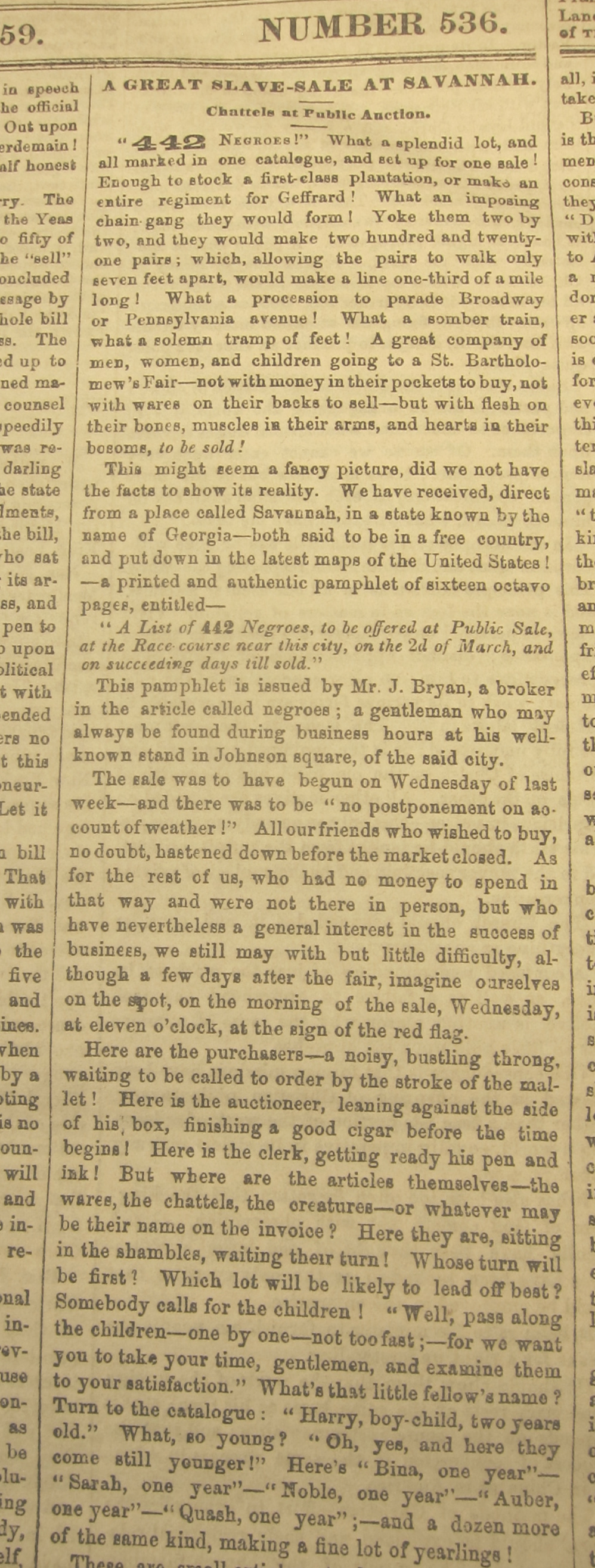
    One of the most striking news items I found while browsing a volume of  the newspaper The Independent1 was on the front page of the very first issue of this volume–a very strong, emotional, reaching-for-irony anti-slavery article reporting on the largest single slave sale in the history of the U.S

    The publisher, Joseph H. Richards, was one of three people (including Pettengill and Tubbs) who in mid-1859 conceived and implemented the idea of bringing Abraham Lincoln to NYC to deliver a paid lecture. After much correspondence and delay Lincoln would lecture at what would be known as his famous and campaign-heightening Cooper Union speech in late February 1859. The newspaper was an eight-page weekly and was very strongly anti-slavery, its pages filled with Abolitionist writing. Henry Ward Beecher was given space for a sermon/lecture in nearly every issue for the volume that I have—Harriet Beecher Stowe and John Greenleaf Whittier were listed as special correspondents in the masthead.

    The article, “The Great Slave Sale at Savannah2”(the sale itself also referred to as “the Weeping Time”) appeared on 10 March 1859, about a week after the two-day event was held in a driving rain at the Ten Broeck Race Course, about two miles west of downtown Savannah. The slaves were the “property” of Pierce Mease3 (1810-1867), a profligate Georgia aristocrat who led himself to ruin, the slave sale intended to restore his economic condition. The sale was held at a race track 

    I imagine that The Independent sent an undercover correspondent (much like for Horace Greeley did for the New York Tribune) to cover the event—or perhaps not; I can’t tell for sure….there is enough detail to make you think that this was information not taken from some other newspaper source; I just can’t tell. In any event these reporters would not have been welcomed at the auction, and could have been dealt with as spies or infiltrators, or worse.

    The pseudonymous reporter (the article signed “T.T”) notices the details of those in charge of the proceedings, some of the aspects of the crowd, though mostly the descriptions are focused on the poor people waiting to be sold…and then, mostly that on the children, and the infirmed.

    I’ve reproduced the article below–so far as I can tell this has not been reproduced anywhere else.

    “The event was reported extensively in the Northern Press and reaction to the sale deepened the nation’s growing sectional divide”, states a respectful if not understated and mundane historical marker (placed 149 years later) at the sale’s location, the text attributed to the Georgia Historical Society. At least the state of Georgia chose to officially recognize the place and donated a small remembrance park to it, which is still steps ahead of, say, Washington D.C. where at least two of the “slave pens” that were very nearly on the National Mall are still not officially recognized by a marker.  

    Notes:

    1. The Independent1, March 10, 1859. “The Independent was founded by the Broadway Tabernacle Church as an anti-slavery newspaper. The original Broadway Tabernacle, now known as Broadway United Church of Christ, was founded as the Second Free Presbyterian Church, organized in 1832 by Lewis Tappan for Charles Grandison Finney, a famous evangelist / revivalist from western New York.”–Wikipedia
    2. “The Great Slave Auction (also called The Weeping Time) was a March 2 and 3, 1859 sale of enslaved Africans held at Ten Broeck Race Course, near Savannah, Georgia. Slaveholder and absentee plantation owner Pierce Mease Butler authorized the sale of approximately 436 men, women, children, and infants to be sold over the course of two days. The sale’s proceeds went to satisfy Butler’s significant debts, much of it from gambling. The auction is regarded as the largest single sale of enslaved people in U.S. history.”-Wikipedia
    3. . “… inherited two plantations in the Sea Islands of Georgia from his wealthy Southern family; one on Butler Island, and another on St. Simon Island. Both lands were worked by slaves.” https://digitalcommons.lasalle.edu/slaveowners_civil_war/1/

    There’s a fine article by Kristopher Monroe in The Atlantic about the event: https://www.theatlantic.com/business/archive/2014/07/the-weeping-time/374159/

    Full article, follows:


    Great Slave Sale _1_

    ·Posted by :

    ·in:

  • The Gulf Stream in 1678

    JF Ptak Science Books   Post 2831

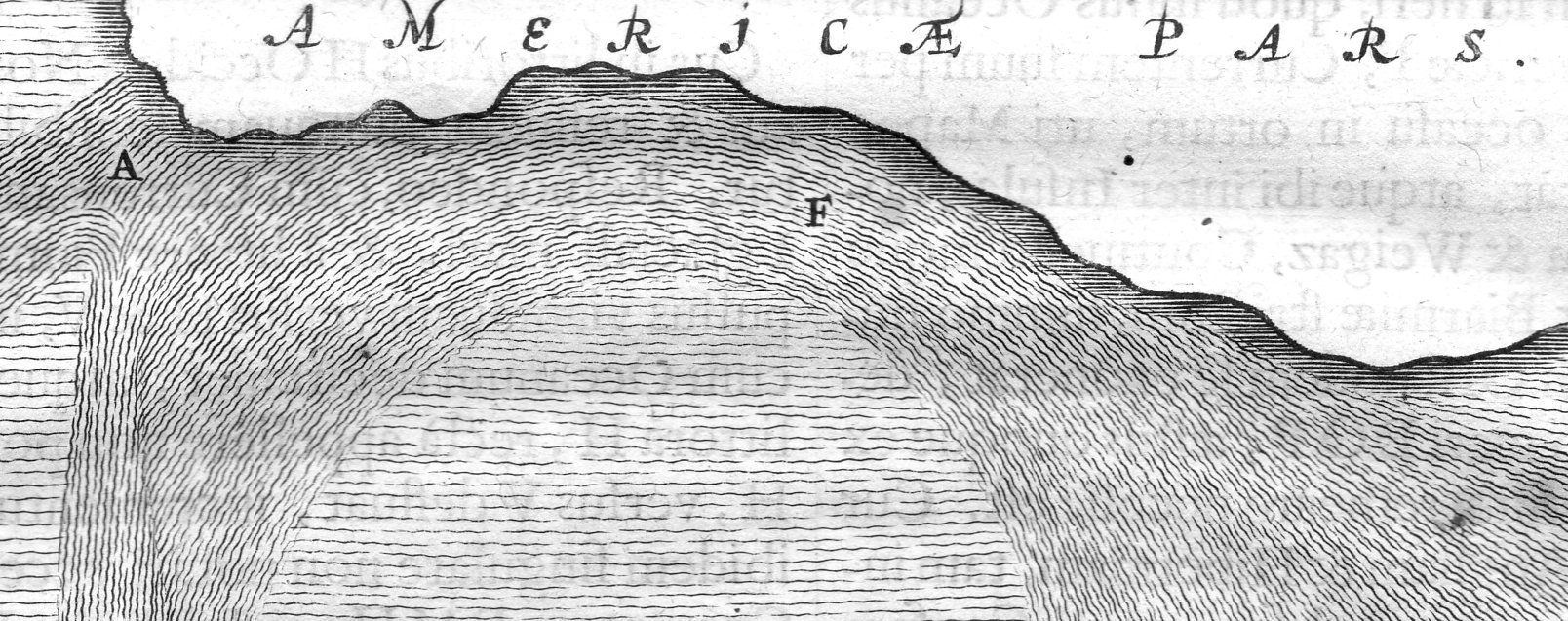
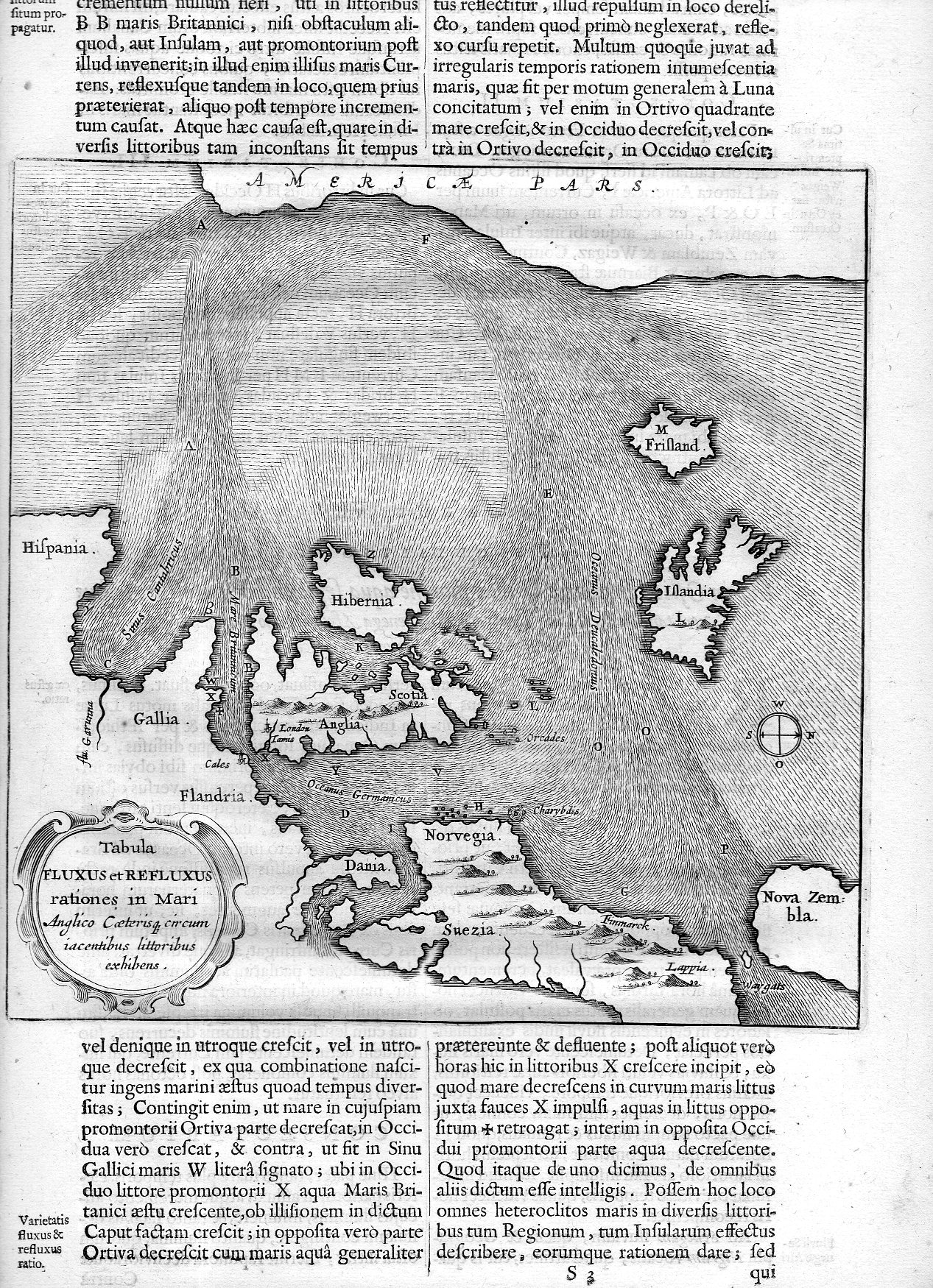
    Kircher gulf stream074

    This is one of the earliest depictions of what we know today as the Gulf Stream, and it appears one among many wonders in Fr. Athanasius Kircher’s Mundus Subterraneus (1678). The map appears about a century before the first map to truly distinguish the Gulf Stream (the B. Franklin/Folger map of 1768-1785) and shows the remarkable activity that must have come with the acquisition of the data necessary to show on even this popular map.  Given that the data was necessarily spotty at this early period the Kircher effort was largely theoretical (and for what it was worth he likened the currents to something similar to blood moving though the body, which at least put to use the work of William Harvey).   (Eberhard Happel is on a similar wavelength as Kircher with the currents map, and published his map a few years later, though he was mainly a science popularizer who “relied” heavily upon the Kircher map and was nowhere near to being Kircher’s intellectual rival–his map is still interesting given its very heavy lining and beauty.)

    • Tabula Fluxus et Refluxus rationes in Mari Anglico…
    • The map measures 7 3/4 x 7 3/4″ on a 14 3/4 x 9″ sheet, being folio 141/142. 

    This is a detail of the larger map (below) with a East-West orientation for bottom-to-top, making  the northern North American coastline along the top of the map, with the European coast from Spain to Denmark, and then hopping over to the Nordic countries, and of course with England and Ireland, and lonely Iceland. 

    Kircher gulf stream073

  • Wondrous and Weighty Pen Names Used by Ambrose Bierce

    JF Ptak Science Books  Quick Post

    I used fifteen minutes of my life to collect some of the most outrageous/anti-subtle subtle, non sequitur , and just plain odd pseudonyms used by the great Ambrose Bierce in his long and wide writing career, ending with him disappearing into a Mexican sunset in 1914 (or so). Many of them are taken from various iterations of The Devil’s Dictionary.  There are many others. 

    The partial list: Agb, Anita M. Bobe, Conmore Aple Brun, Bnashi Basouk, Oogum Bem, Hamin Benjarrison, Joel Ffrad Bink, A. Brute, Salder Bupp, Choggins, Clementina, Clericus, Purzil Crofe, Ambat Delaso, Arion Spurl Doke, Etcetera, Almira Faircheek, Booley Fito, Aramis Loto Frope, Bissel Gip, Boot Gish, Dod Grile, Hestiba, Jamrach Holobom, Gat Huckle, Ignotus, Infallible, An Insulted Giant, Jebel Jocordy, Little Johnny, Opoline Jones, A Mandarin of the Order of the Golden Teapot, Atla Mipo, Jupiter Muke, N.P. Nopput, Naramy Oof, Orm, Pludge, Phela Orm, Pylades Nupkins, Phrytz, Bogul S. Purvy, Jobo Rem, Doddington Pry, Samboles, Dr. John Satan, Dudley Spink, Statanella, J. Milton Sloluck, Theophilus Smallbeer, Venable Strigg, Sukker Uffro, Barlow Vode, and many others. Oh: and John Smith.

    ·Posted by :

    ·in:

  • The First Meteorological Map (Created by Edmund Halley) 1686/7

    JF Ptak Science Books   Post 2831  History of Lines series

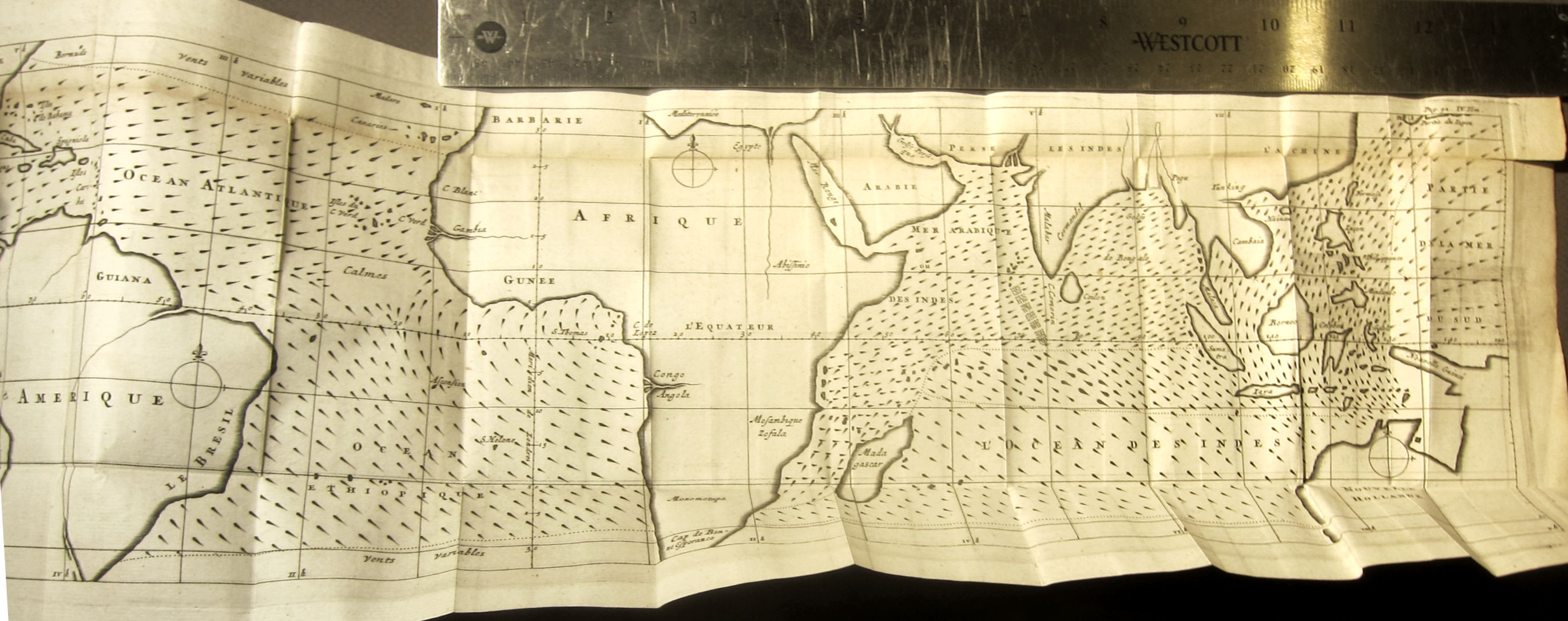
    Fresh on the heals of a post a few days ago on Athanasius Kircher’s great map on ocean currents is this famous 1687 map by Edmund Halley1–it is recognized as the first meteorological map ever printed, and depicts the trade winds:

    Halley _4_

    This is the French translation of Halley’s “An Historical Account of the Trade Winds, and Monsoons, Observable in the Seas between and near the Tropicks, with an Attempt to Assign the Phisical Cause of the Said Wind,” that appeared several months earlier in the Philosophical Transactions of the Royal Society (1686, in issue no. 183).

    Here is a summary of the map from the Princeton University site dedicated to thematic maps:

Recent Posts

Archives

Categories