A Daily History of Holes, Dots, Lines, Science, History, Math, Physics, Art, the Unintentional Absurd, Architecture, Maps, Data Visualization, Blank and Missing Things, and so on. |1.6 million words, 7500 images, 4.9 million hits| Press & appearances in The Times, Le Figaro, Mensa, The Economist, The Guardian, Discovery News, Slate, Le Monde, Sci American Blogs, Le Pont, and many other places… 5000+ total posts since 2008.

  • A Provocative Piece of Italian Fascist Anti-U.S. Propaganda, 1944

    JF Ptak Science Books   Post 2832


    This piece of propaganda from Italy in 1944 made the case for a gangster-like bloodthirsty U.S. Soldier being deployed to an immoral imperialist war in a place of ancient culture and high morals. The example it uses is LIFE magazine, which after tongue-in-cheek praise is established as a mirror of its readers’ mentality, feelings, desires, and passions, offering congratulations to Mr. Luce for establishing such a magazine that so deeply displayed the character of the United States. After this follows the propaganda rain, and the horrors that were in the pages of LIFE.

    The Italian reader is then introduced to a quick succession of stories that evidently displayed the building blocks of American culture, with LIFE focusing on vainglory, false culture, sex appeal (the main ingredient), and malignant ruthlessness.

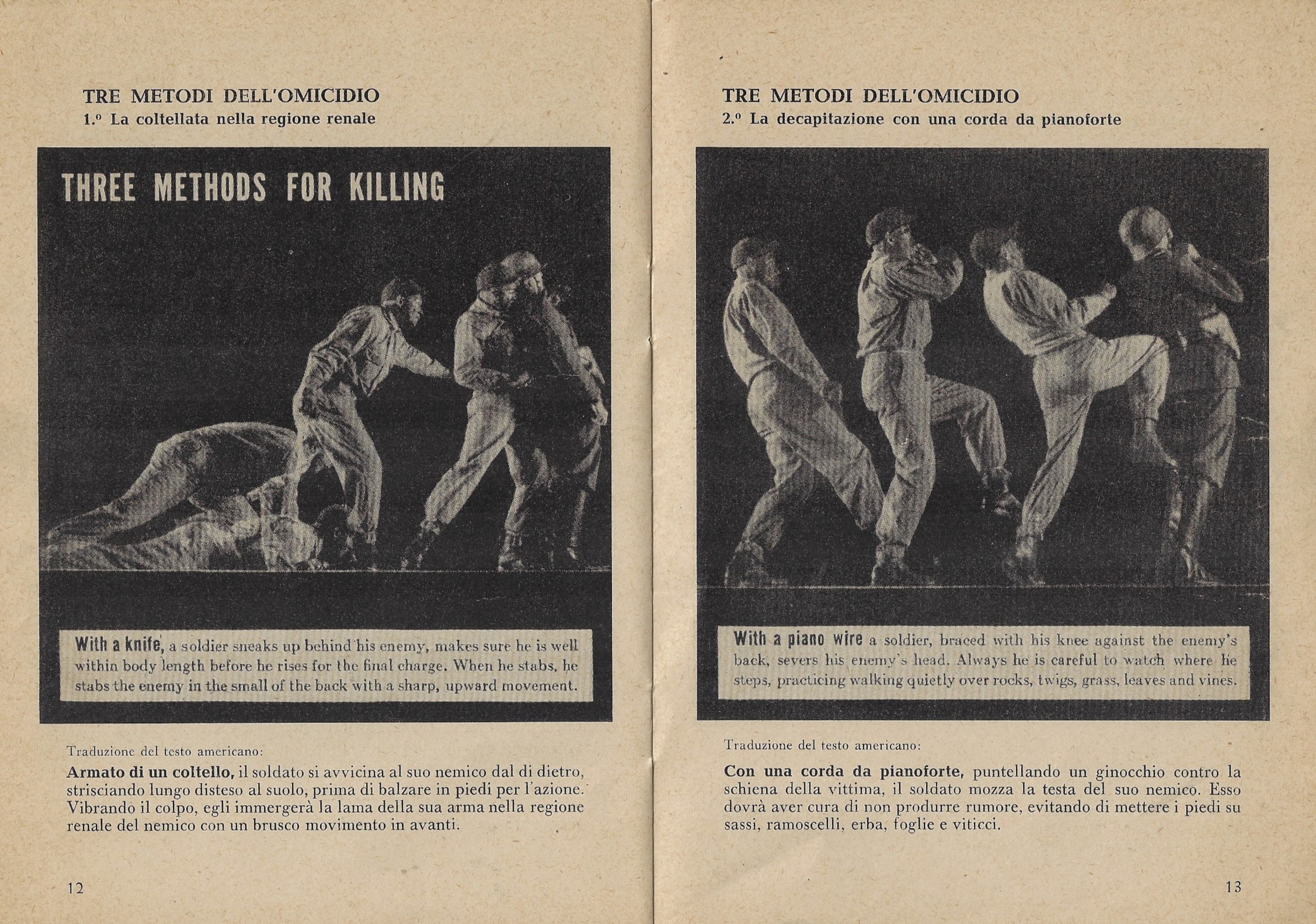
    In getting to this last part the writer of this pamphlet uses a story that appeared in LIFE on 22 March 1944–the reader warned of the horrifying nature of the photographs to follow “(ueste fotografie vi fanno orrore”)–which graphically displayed in a studio setting the stealthy killing method of the U.S. Soldier at war.
    Propaganda Italian LIFE_2_

    Propaganda Italian LIFEThe pamphlet makes the point along the “this is your enemy” lines, that this is what the U.S. was all about. And if the reader was surprised by the images, then they had no idea of what the “Ameriucan mentality” was. (“Ma se queste illustrazioni vi stupiscono, allora — vogliate scusare — finora avete avuto ben poca nozione della mentalità americana!” “But if these illustrations amaze you, then – please excuse – so far you have had very little notion of the American mentality!”)

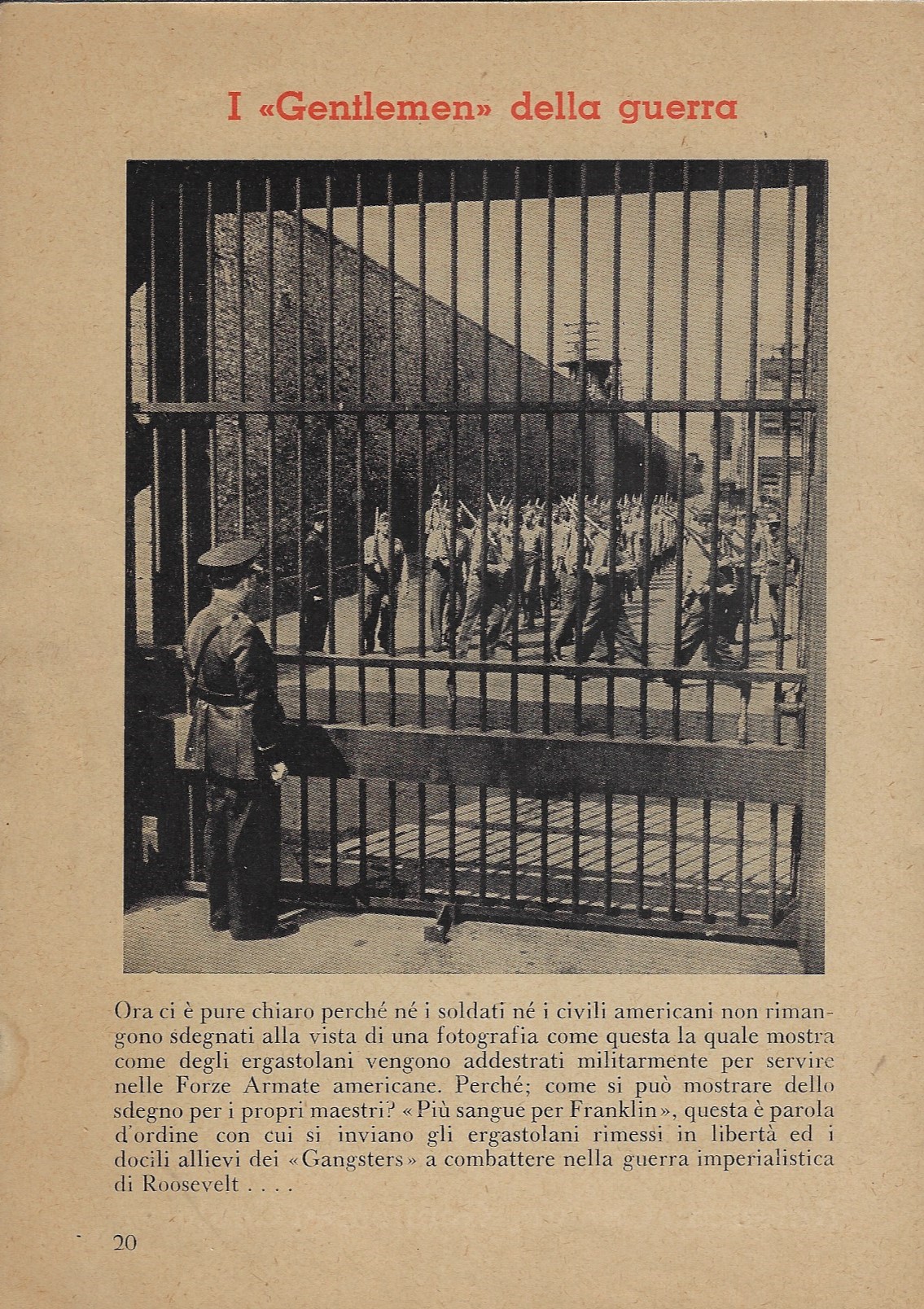
    The short (14pp) pamphlet ends with a full page picture of American “gangsters and life prisoners” in prison, training to fight for the “imperialist war of Franklin”.

    The work is certainly provocative —whether or not it was believed is unknown to me. I do know that U.S. Marines were depicted as baby murderers and baby rapists to Imperial troops, scaring the hell out of soldiers and civilians (re the native population on Okinawa) alike, further enforcing the belief and demand of a fight-to-the-death mentality because not only was this the codified way to behave, but the shame of surrender would be worsened by the treatment and torture they would receive in captivity. The results of this propaganda was horrific for the soldiers and for thousands of Okinawans. As I said, I don’t know anything at all of the effectiveness of this Italian effort, though my best guess is that the reader would’ve thought this to be bullshit  inaccurate. 

     

    ·Posted by :

    ·in:

    —
  • Reading the Shadows of the Great Depression (Herbert Hoover’s copy) 1930

    JF Ptak Science Books  Quick Post (Part of the series on Blank and Missing Things)

    Books covers chamber commerce 1931There’s something unusual here about the bibliographic marginalia, the White House library, and the Great Depression.  My attention was initially distracted by the design on this pamphlet, decorating the cover of the National Chamber of Commerce’s report from their 1930 annual meeting. Its an interesting piece of (small, 1″x 1″), the suited person emerging from a dark geometry into the brightness of a close-by shiny city.  Business Talks it Over is the title of the pamphlet, and they did indeed talk stuff over, with topics like “America’s Economic Balance” “Stabilization of Business”, “Government and Business”, and so on. Unfortunately the pamphlet claims victory over the Depression that was just turning into the Great Depression, only fourteen months into a near-decade-long economic crisis. The pamphlet states: “…as a business nation…has so successfully met the challenge of a recent serious crisis…”, ending the report on a happy and alien note that didn’t yet exist.

    Books covers chamber commer 1931 white houseThe odd bit, though, is that my copy of this pamphlet was in the White House library, no doubt sent to president Herbert Hoover sometime late in 1930–it wasn’t there for long. It was discarded by the White House on 19 February 1931–for what reasons, I don’t know. Did Hoover ever see this? Impossible to say, and it really doesn’t matter. The symbolism is all that remains, this report (no matter how flawed) needed to be discarded, skinny as it is, taking up no shelf space to speak of–off it went. This is similar to the bullet-proof resiliency of the federal government to becoming involved in any strong way with resolving the Depression. Hoover was on his way to becoming ignored and forgotten, with his re-election getting boot-stomped nine months later.  Then came the beginning of the Great Resolve, with FDR no longer the sphinx of Hyde Park, exploding into the Hundred Days action in March, 1932.  Anyway, I know I’m forcing this story, but sometimes shadow reading can actually lead to something.  

  • “The vulcano’s, or, Burning and fire-vomiting mountains…” The Luxurious Language of Science, 1669

    JF Ptak Science Books  Post 2833

    I came to be working in the great and problematic Athanasia Kircher’s glorious Mundus Subterraneus..., printed in 1665, which is a compendium of most things scientific though with the heavy flavor of application to the world underground. Figuring out what was going on in places that could not be seen or investigated or for the most part quantified didn’t stop Kircher from extreme hypothesizing on the nature of the Earth, and so he came into possession of a hermetic-philosophico-alchemical-religio-scientific panspermic theory of the origin of all things. Of course there’s a lot of good thinking that goes along with the Grand Theory, and some very innovative scientific thinking, and the expanse of the knowledge of this one man is extremely impressive—there is a LOT in this book.

    In 1669, four years after the publication of the Mundus, came the English publication of a somewhat-beautifully and certainly surprisingly-titled book summarizing and cajoling the Mundus, called:

    The vulcano’s, or, Burning and fire-vomiting mountains, famous in the world, with their remarkables collected for the most part out of Kircher’s Subterraneous world, and exposed to more general view in English : upon the relation of the late wonderful and prodigious eruptions of Ætna, thereby to occasion greater admirations of the wonders of nature (and of the God of nature) in the mighty element of fire. (London : Printed by J. Darby, for John Allen, and are to be sold by him …, and by Benjamin Billingsly …, 1669.)

    How lovely is that? (By the way I cannot find any other book with “fire-vomiting” in its title1.)

    It is a stripped-down 82-page summary of some of the principle ideas of the massive two-volume Mundus, and appears with only one illustration2, while the full work was magisterially published with fantastic illustrations and folding plates throughout.

    There are many pleasurable turns of phrase and off-brand uses of common words, and unexpected and conjoined vocabulary throughout the work—at least so far as I have seen from the bits that I have read in it. For example, just in the first few pages of browsing I have come across “treasuries of Fire”, “forges in the profoundest Bowels of Nature”, “entrails of the Earth”, “nor as the Vulgar perswade themselves”, “sulphrous unctious matters”, “fire engendering all concocting Nature”, “ever-flowing flames”, are among the notables from the first pages.

    Here’s one paragraph from page three:

    “The Prodigious Vulcano’s therefore and Fire-vomitting Moun∣tains visible in the external surface of the Earth, do sufficiently de∣monstrate it full of invisible and under-ground fires. For where∣ever there’s a Vulcan, there also is a Conservatory, or Store-house under, as certain, as where there is a Chimney or smoke, there is fire; And argue deeper treasuries and storehouses of fire, in the very heart and inward bowels of the Earth. In so much that from hence the Holy Father’s have not incongruously placed the greatest of all the * Fire-conservative Abysses in the Centre of the Earth, for an eternal Jakes and Prison, destin’d for the punishment of the Damned; and some others for Purgatory (according to the received belief of Papists.)”

    Sources:

    Early English Books online  https://quod.lib.umich.edu/e/eebo/A65153.0001.001/1:11.2?rgn=div2;view=fulltext

    Wellcome Library: https://wellcomecollection.org/works/ygm2etrh/items?canvas=9&langCode=eng&sierraId=b1028090x

    Notes:

    1.  “Vomiting” in the title, however, is not horribly uncommon. For example, here’s a long title for a broadside publication that including snake vomiting, as in vomiting up snakes: A warning for all such as desire to sleep upon the grass : By the example of Mary Dudson maid-servant to Mr. Phillips a gardener … being a most strange, but true relation how she was found in a dead-sleep in the garden, that no ordinary noise could awake her. As also how an adder entered into her body, the manner of her long sickness, with a brief discovery of the cause at length by her strange and most miraculous vomiting up of about fourteen young adders, and one old adder … the maid is yet living. The like to this hath not been known in this age. The tune is, In summer time.–London, printed for Charles Tyus, 1664.

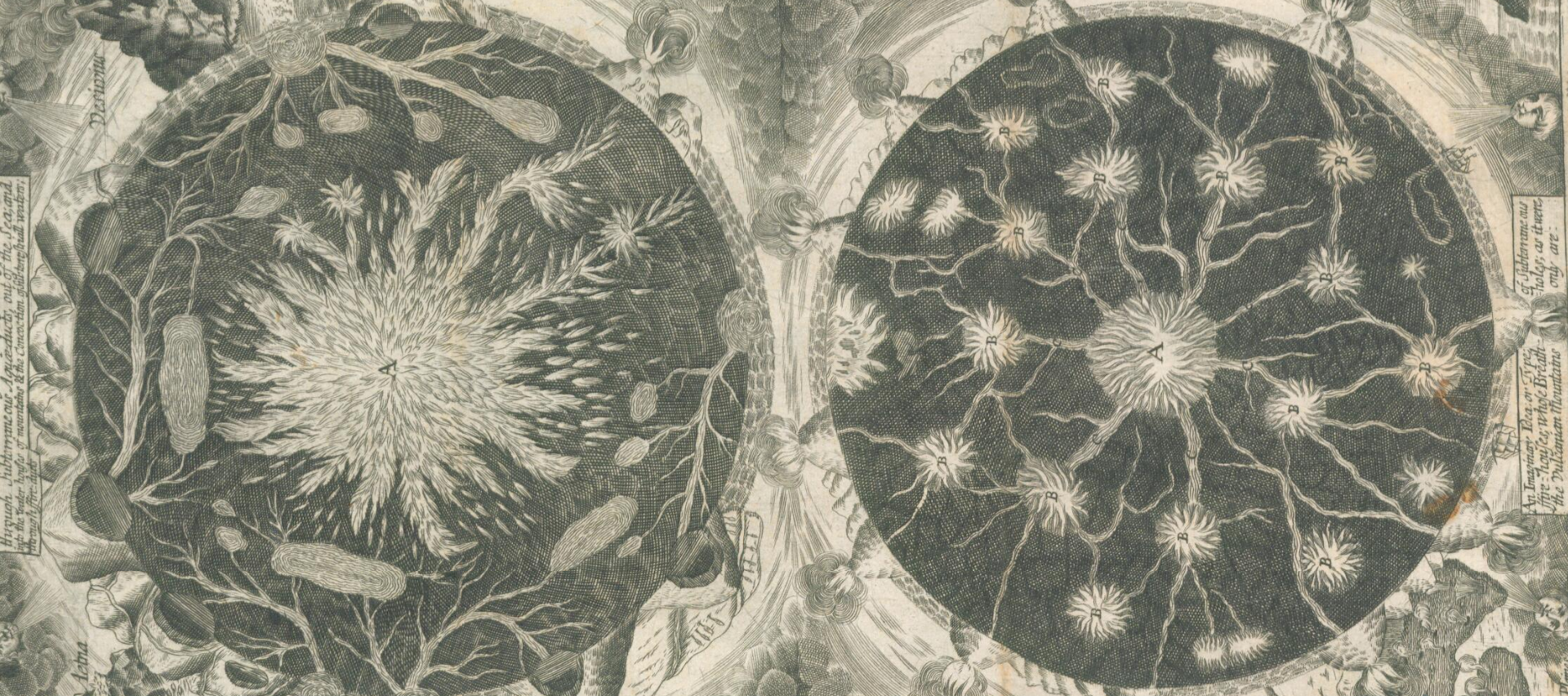
    2. Though there is only the one illustration (a folding frontispiece) in the English summary, it is pretty remarkable:

    Download


    ·Posted by :

    ·in:

    —
  • ROYGBV Redux via Emily Vanderpoel’s “Color Problems” (1903)

    JF Ptak Science Books  Quick Post

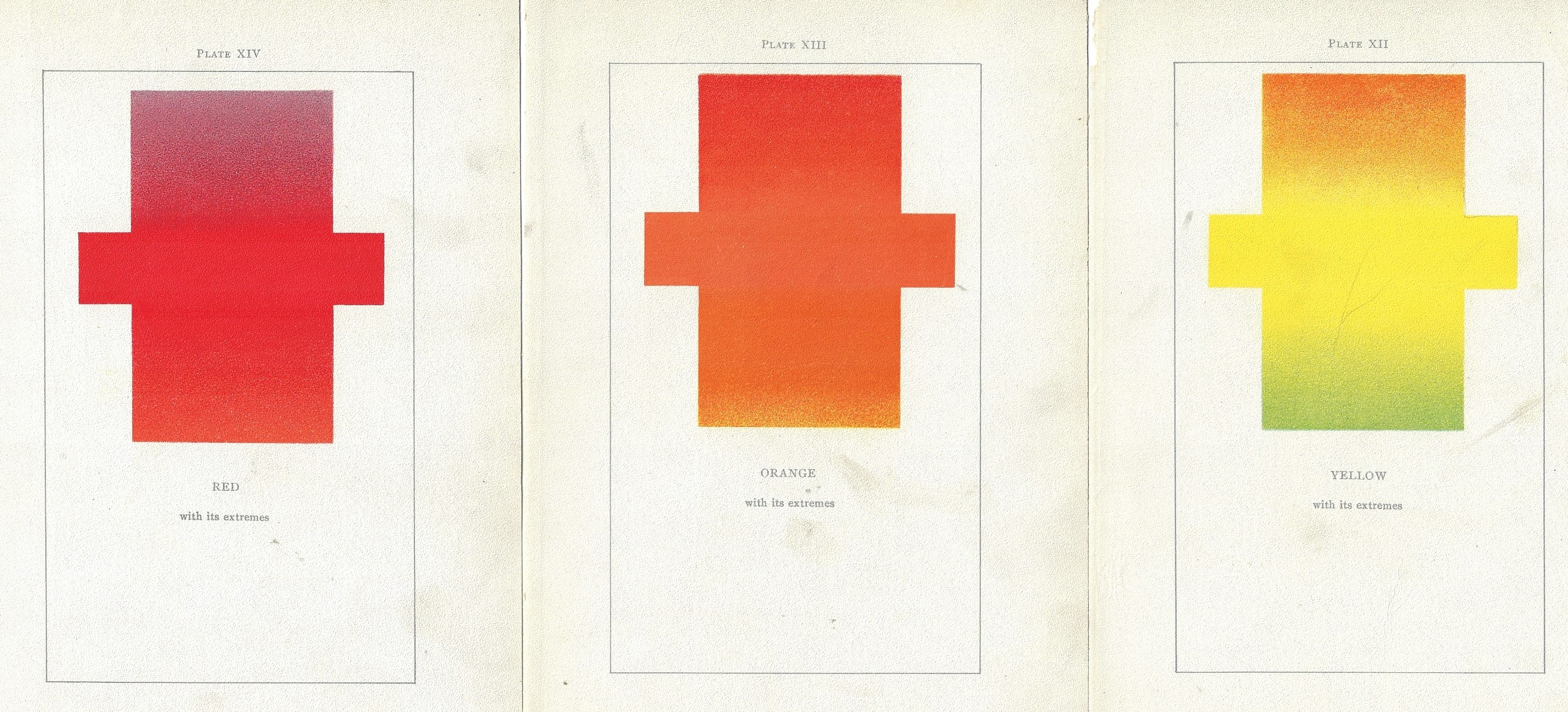
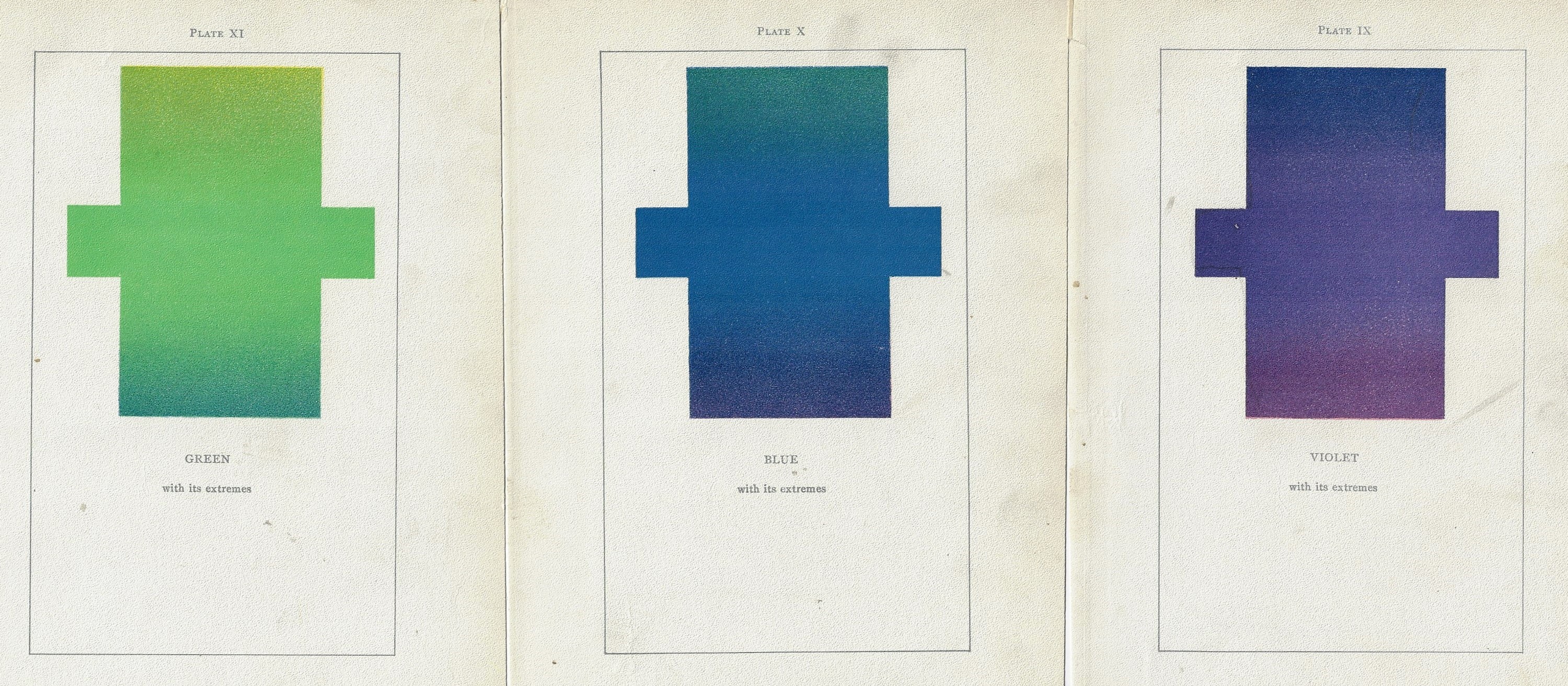
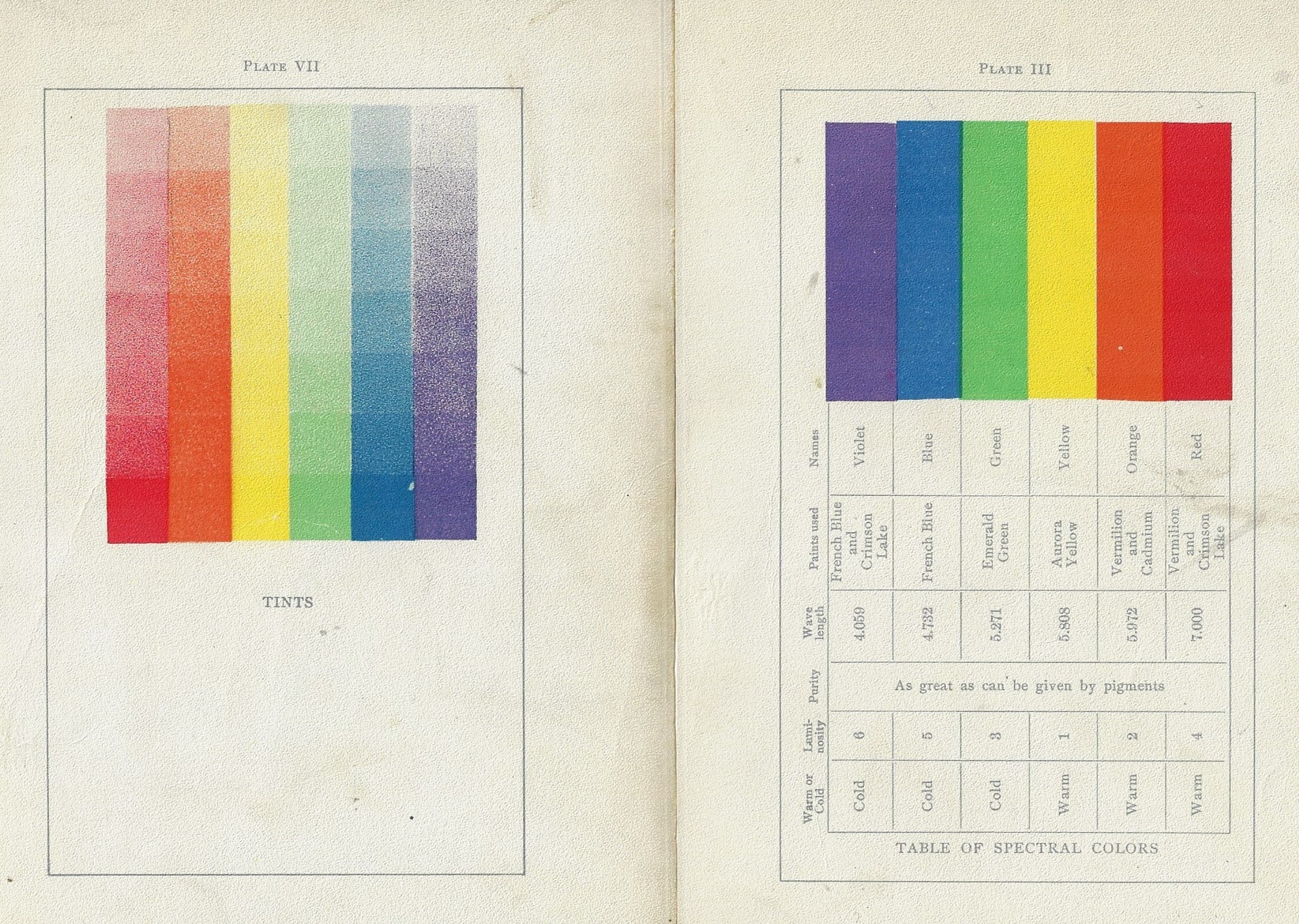
    Just on the heels of yesterday’s post of RIYBBV vs. ROYGBIV comes this lovely discovery in the highly unusual and original work by Emily Vanderpoel, Color Problems of the Layman, printed in 1903, a gorgeous but mysterious book in which she sought not so much to analyze the components of color itself, but rather to quantify the overall interpretative effect of color on the imagination.  I know this sounds begging and vague, but I really haven’t been able to make much headway in her theory.  Ms. Vanderpoel looked deeply and arithmetically into art—she also produced a numerical grid of the artwork that she analyzed, going a step further to re-order the reality of the painting into a representative 10×10 square, distributing the color sense according to a secret algebra that I cannot identify.

    Color vanderpoel roygbv _1_ Color vanderpoel roygbv _2_


    The series is preceded by a further presentation of the colors side-by-side (and reversed) as well as another plates of the colors side-by-side presnting their gradient tints:

    Color vanderpoel roygbv _3_And lastly, those lovely plates, larger:


  • The Famine of 1920

    JF Ptak Science Books   Post 2820

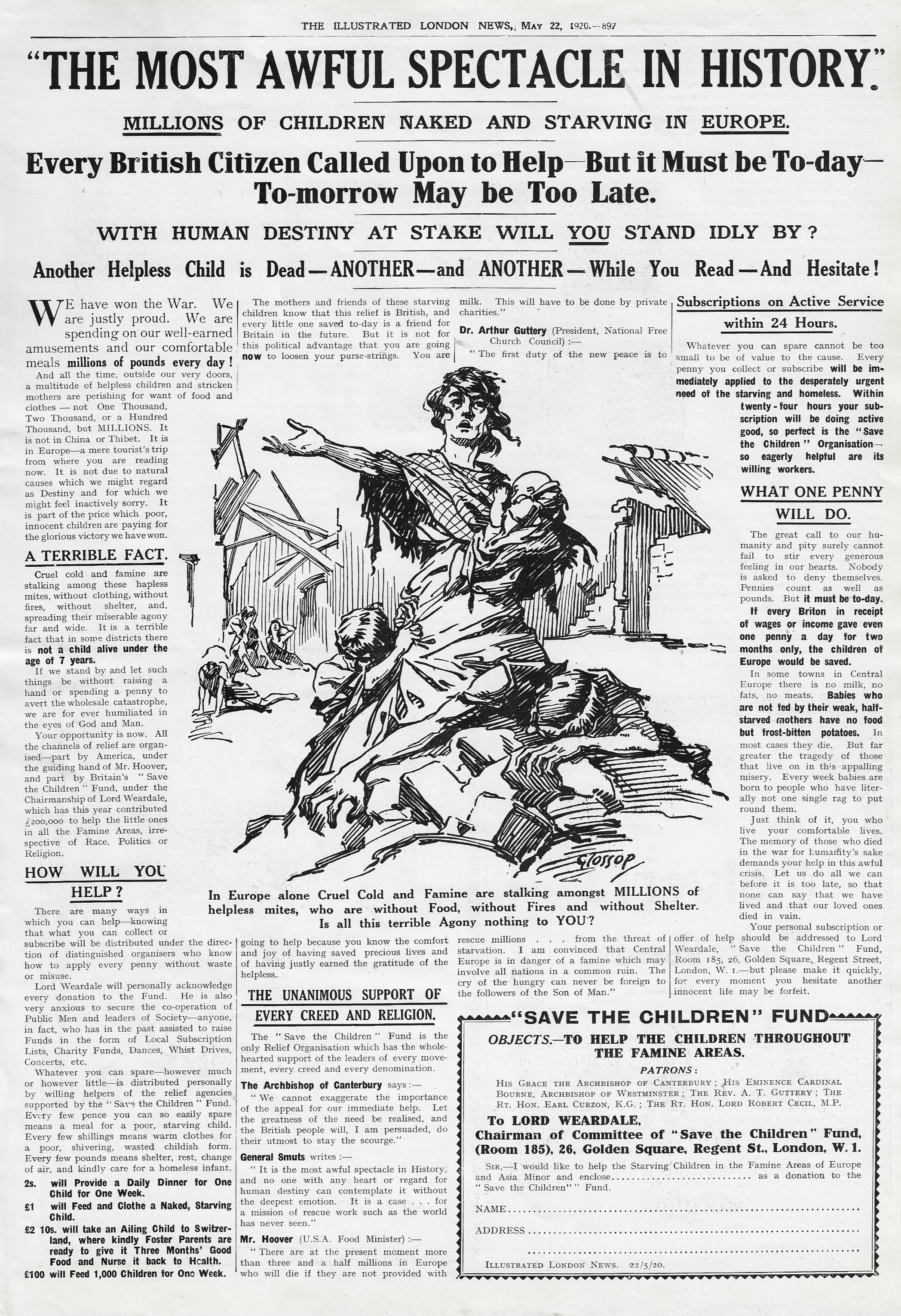
    “The Most Awful Spectacle in History” screams the headline of this full-page (16″ tall)  Illustrated London News advertisement for the “Save the Children” fund, appearing 22 May 1920.  There was good reason for the screaming–following the Great War there were millions and millions of people in dire need of food in the months and years following 11.11.18.  Hundreds of thousands–millions–of these people were children. The ad makes a direct plea for the sake of the children, where the reader is told that in some districts there is “not a child under the age of 7 years”, as all have died. To not donate a penny or a shilling and allow the catastrophe to continue would mean that “we are for ever humiliated in the eyes of God and Man”.  

    ILN 1920 Famine adThe appeal here is simple–Lord Weardale (Philip Stanhope, 1847-1923), who was the chair of the “Save the Children” fund (London) is asking for a penny, from everyone, as the accumulation of that penny a day for two months “the children of Europe would be saved”. 

    With assistance from other countries–including the U.S. where the effort was spearheaded by Herbert Hoover–the Fund raised more than a million pounds and averted an enormous catastrophe. Unfortunately, a larger disaster loomed to the east–the Great Famine in Russia of 1921-1922 (following by just thirty years the Russian Famine of 1891-2)–and in rhis circumstance the relief efforts failed. The Russian famine began with a natural disaster which was then inflamed by complete (sometimes intentional) mismanagement by the government, the result of which caused the deaths of between five and eight million people.  Hoover–as Secretary of Commerce–guided the Russian Famine Relief Act spending of 20 million dollars for the purchase of U.S. foods to be sent to Russia, but the combinations of political intrigue, capital mismanagement, and of course natural disasters leading to more disease and death, left millions dead.  

    As the 1920 ad sums the situation: “the cry of the hungry can never be foreign to the followers of the Son of Man”–but they were, and are. 

    ·Posted by :

    ·in:

  • Glorious Tech: Napier Bones of Words, a Calculating Money, and a Scroll-Fed Typewrtier (1916)

    JF Ptak Science Books   Quick Post 

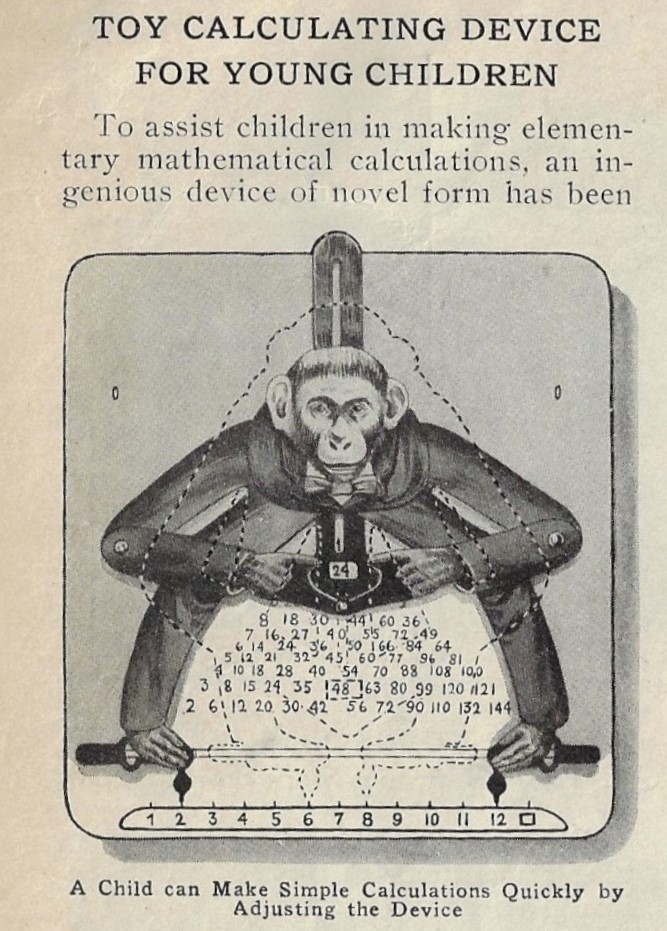
    Pop Mech 1916 toy calculator monkeyI noticed three interesting devices in just a few dozen pages of each other in Popular Mechanics for 1916. The first was a calculating monkey adding machine/toy for kids–this is something I had never seen before and had I been aware of it 30 years ago I certainly would’ve used it in my store. The “toy” is actually pretty sophisticated, as it will add and subtract, multiply,divide, and extract square roots, which was more powerful than any machine I needed at the time for the store.  


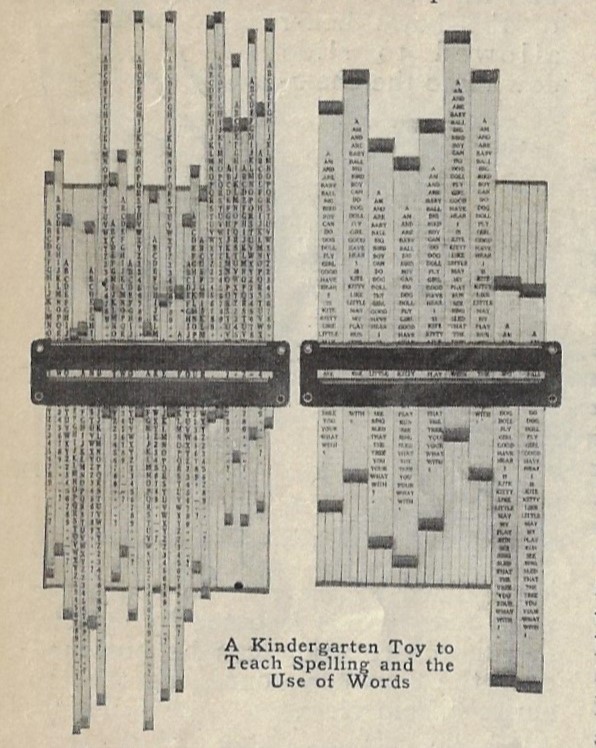
    The next piece of machinery was this Napier’s Bones-like device intended for kindergarten use. The device on the left uses a set of movable wooden strips with the alphabet printed on them; so by sliding the strips you can produce a simple or complex word, the result displayed in the open line of the rectangular piece of wood that holds the whole thing together. On the right is a set of strips with words on therm–used in the same fashion, the child could select a series of words to make simple sentences.  I like these two devices immensely,  (Unfortunately I have no information on this or the calculating monkey.)

    Pop Mech 1916 sliding wooden words

    The third item is a wonderful device, though this one not for kids–it is an electric automatic typewriter, punching out letters from a piano scroll-like master copy fed into a receiving typewriter. (Again, no manufacturing info here, and I don’t know how the typewriter would have responded to page breaks.) 

    ·Posted by :

    ·in:

    — —
  • What to Tip a NYC Soda Jerk, 1938

    JF Ptak Science Books   Post 2821

    NYC Behind scenes cvrs 1938New York Behind the Scenes, Uncensored–the UNofficial Guide Book the Real Low-Down on the Things You Want to Know (1938), certainly lived up to its name, especially at the cover price of two bits. Lee Mortimer (the author of Washington Confidential and other such works)  promised inside dope on “Night Life, Rackets, Free Fun, Chorines, Celebrities, How to Tip & 1000 Others”, and delivered on a number of them, though “1000” is a bit of an exaggeration in the 66-page pamphlet. [A “Chorine” by the way is a chorus girl.]

    Found here are guides to theaters, movies, beaches, hotel, taxis, buses, nude shows, gambling, and that sort–there’s also info on public rest rooms, also where to drink, find free dancing, how to talk to people, what to wear, and so on.

    Also there are boxed pearls sprinkled throughout the publication, like: “How to Meet a Young Lady: visit a taxi dance hall, dance with a dime-a-dance girl’ and following several other useful find-a-date bits,  including the ancient “take your dog for a walk”, a la 101 Dalmations.  

    And there are also the bon mots salted hither and yon like Patrick Star’s Spongebobian sentence enhancers:  “Pets: New York may not be a place for children, but for dogs its a paradise”.  

    There’s also a collection of “does and don’ts” though mainly don’ts: “DON’T swim in the Hudson River below the NYC line…” and “don’t light a match to read your (theater) program, it may cause a fore and panic”;  “You’ll see the prettiest bathing girls at Manhattan Beach in Brooklyn” (where my mother used to go at about this time) among them.

    And then there’s just flat-out statements like “New York emphatically is not a children’s town” and “If strange men or women come to you with offers of jobs in New York, call the police immediately”. Welcome to new York!

    Second only to the what-to-tip pages is the low numbers for New York license plates, which I’ve got to say I’ve never seen before. I like that Fiorello Laguardia’s plate was “NYC”, and that Ed Wynn’s was “YY2”, Walter Winchell’s was “WW1”, and for some reason FDR was “3”. (Numbers 1, 2, and 16 were reserved for the governor, Herbert Lehman…I think I’d have to give the president the tag “1+”.)

    There is  lot of info about neighborhoods in the city, though I wonder now how good the info is. (For example “Harlem, as  night Mecca for New Yorkers, went into a decline immediately following the repeal…today, Harlem’s clubs are patronized by local colored folk and by jaded down-towners who have nothing else to do”, which seems a bit sniffy and stiff). 

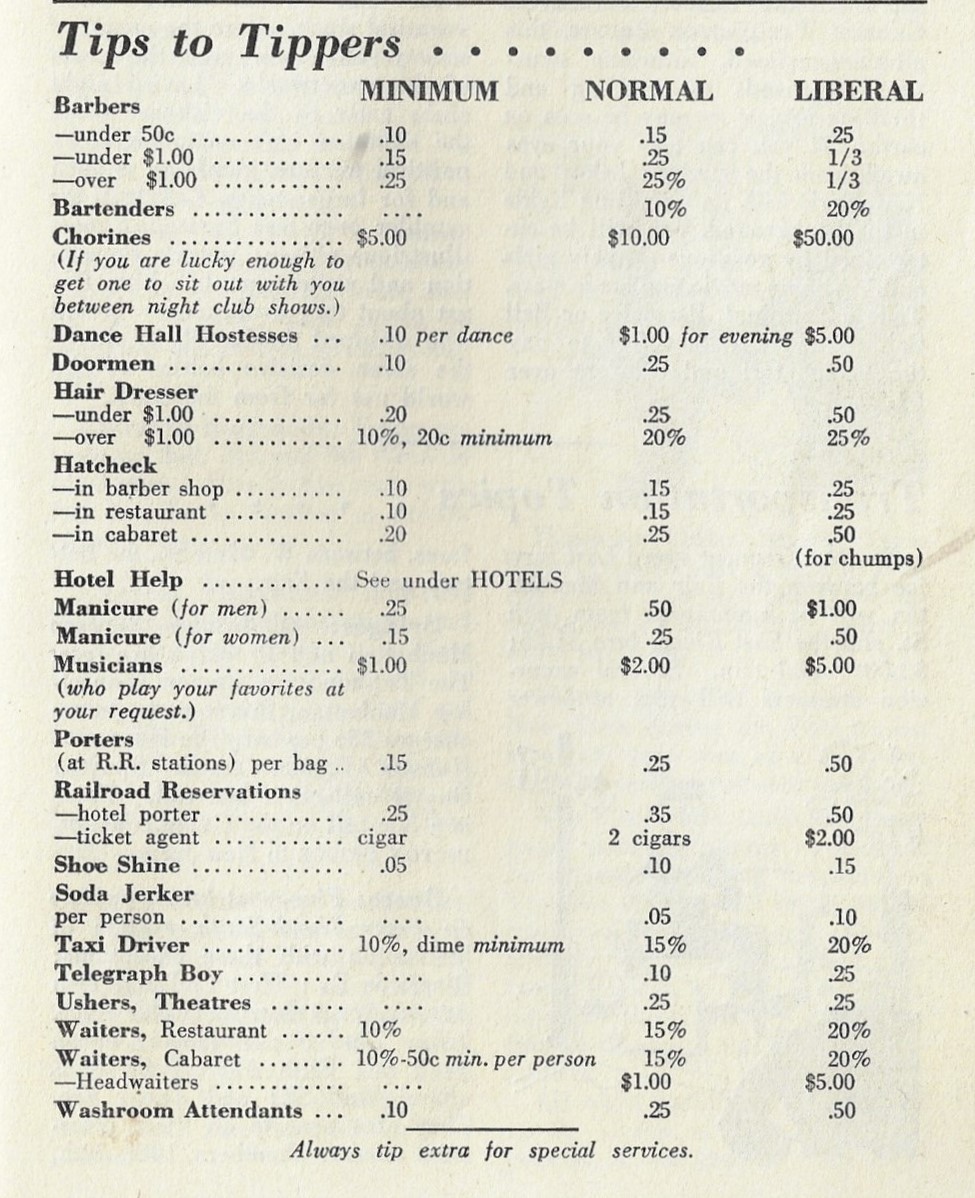
    In the nude/amusement pages we see how relatively expensive it was to attend one of these venues–in addition to standard entrance fees, drink costs, and show and food charges, there was the tipping of the waiters (10%), headwaiters ($1-$10 for a good table), cigarette girl (20-25 cents), hatcheck girl (20-25 cents), wash room attendant (25 cents), and the doorman (25 cents to put you ion the cab). Don’t forget the cabbie (10%), the doorman at your hotel (25 cents), and the elevator man (10 cents).  I guess it added up…

    Anyway what I wanted to share here was the tip chart, in case anyone is writing about social NYC in 1938 and needed some good stinking detail:

    NYC Behind scenes tips 1938

    ·Posted by :

    ·in:

  • Russland (Nazi Propaganda, 1936)

    JF Ptak Science Books  Post 2822

    This is a nasty piece of Nazi anti-Soviet/Communist propaganda, published as #43 in a series called “Silvaniadruck” in 1936. It is a nonstop attack on the Soviet system and also on the Russian people. The pamphlet is only 24 pages long but it certainly feels like more, especially if you could weigh vindictiveness and diatribe. It is composed of 12 sections ranging from the new economic policy of the country, to the right of the Soviet citizen, religion, family, church, and education, and the period of 1918-1921, though the sections I wanted to try to read and share were on the Famines (“der Hunger”) and the “Terror.“

    Books covers russland

  • The “Invisible” Made Far Less So: How a Cat Falls and Lands on its Feet, 1894

    JF Ptak Science Books  Quick Post

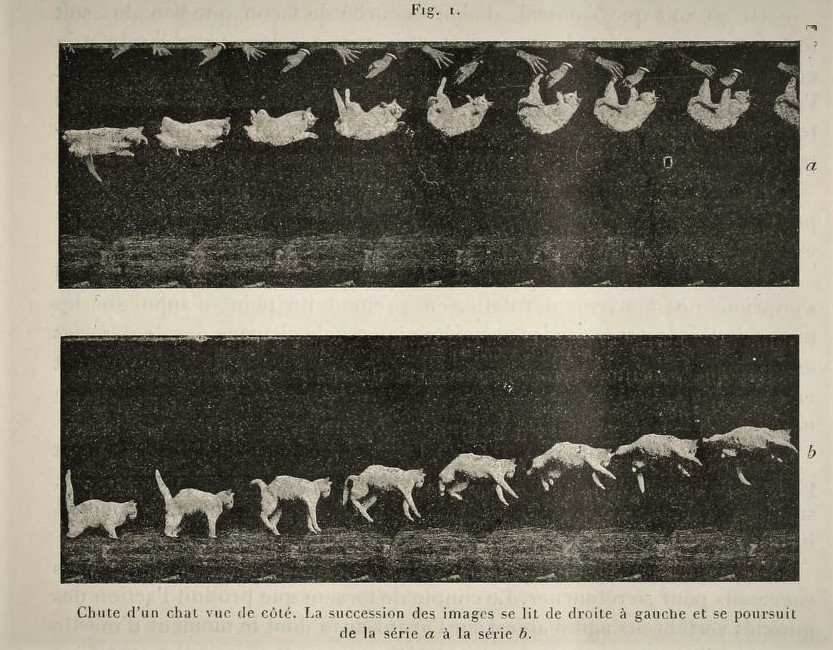
    Marey cat 1894

    • Source: Etienne Marey, “Des mouvements que certains animaux exeutent pour retomber sur leurs pieds, quand ils sont precipites d’un lieu eleve”, in Comptes Rendus de l’Academie des Sciences, vol  CXIX, 1894, p. 714. (This paper is reproduced a few weeks later in the more popular science journal La Nature on 10 November 1894.)

    Aha!

    This is the famous falling/dropped/thrown cat experiment in which Marey shows that when dropped with its back towards the ground a cat will respond and right itself via muscular reaction to land on its feet, all of the time. It was not a trick of “air pressure” or other such thing which Marey dismissed, as once the action of the fall is slowed so that the whole of the activity can be intelligently observed, and it was by the animal’s movement alone that brings it to land on its feet. It is Marey’s instrumentation that takes the day, using a camera capable of making 60 images per second, which was a huge advance over his chronophotographic gun of 1882 which made 12 images/second. Marey remarks that this animal action is true in other animals, giving the examples of rabbit and dog.

    Marey is a rather stiff writer and takes his time to explain himself in extended detail—this isn’t an entertaining story though the results are of course fantastic.

    That piece of needling aside, Marey is one of my favorite 19th century science figures. He worked across numerous fields, though I think his great importance is in the invisible-to-visible part–that he was able to make was were essentially moving pictures of complex and/or fast action, displaying motion in shockingly easy manner. His work opened as much of a new and surprising world as that of Lippershey/Galileo and Co. with the telescope and Janssen/Leeuwenhoek/ and the others with the microscope.  

    For further reading see G. Gbur’s Falling Felines and Fundamental Physics, Yale, 2009.


    ·Posted by :

    ·in:

  • Measuring Civilization by Height (1919)

    JF Ptak Science Books  Quick Post

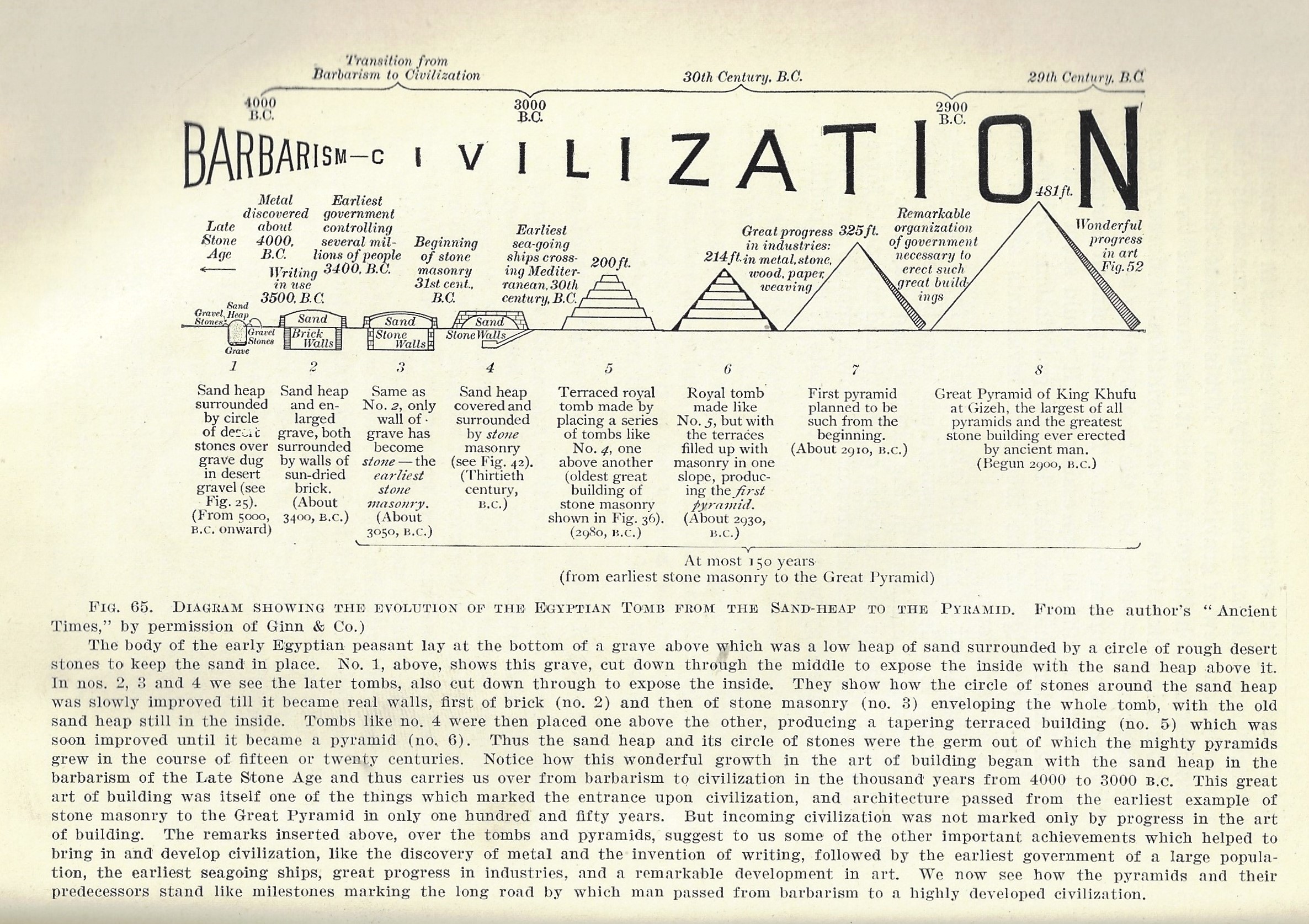
    Sharing space in the January 1920 issue of The Scientific Monthly with two significant papers is an unusual data visualization in James Breasted’s article “The Origins of Civilization”.  Leading the issue off is the wonderfully-presented and important paper (“Defects Found in Drafted Men”) by C.B. Davenport and A.G. Love, which is a remarkable display of an enormous amount of data on the health of young men in the U.S. presented in a graphical display, the results of medical examinations of millions entering military service during WWI. Following this is a report by Sir Joseph Thompson (“The Deflection of Light by Gravitation and the Einstein Theory of Relativity”) on the gravity/eclipse/relativity experiment in May 1919, which he referred to as  “the greatest achievement in the history of human thought”. And then comes the Barbarism/Civilization dataviz of the Breasted article.  I’m having a bit of fun with this at Breasted’s expense, as it looks as though he is measuring the progress of Barbarism to Civilization and the subsequent increases in culture to the depths/heights of monuments for the dead, from sand pit to pyramid, 4000-2800 BCE:

    Dataviz civilization

    [The text here becomes clearer when expanded.]

    It is an arresting image, to be sure, but the direction it takes seems a little suspect to me. In any event, I reproduce it here for general enjoyment.

  • Found Art in the Annalen der Physik (1902)

    JF Ptak Science Books   Quick Post

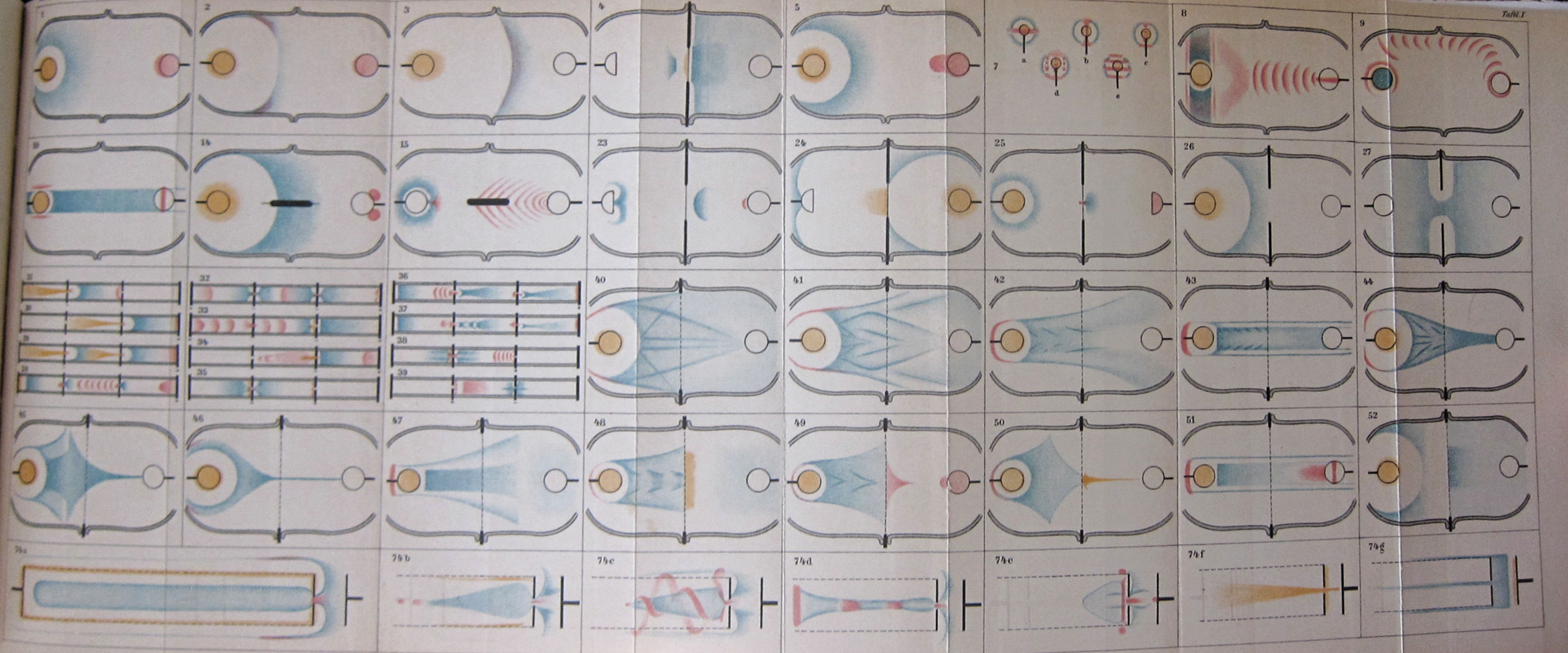
    Malevich it isn’t, though pre-Abstract art pre-Malevich it may be:

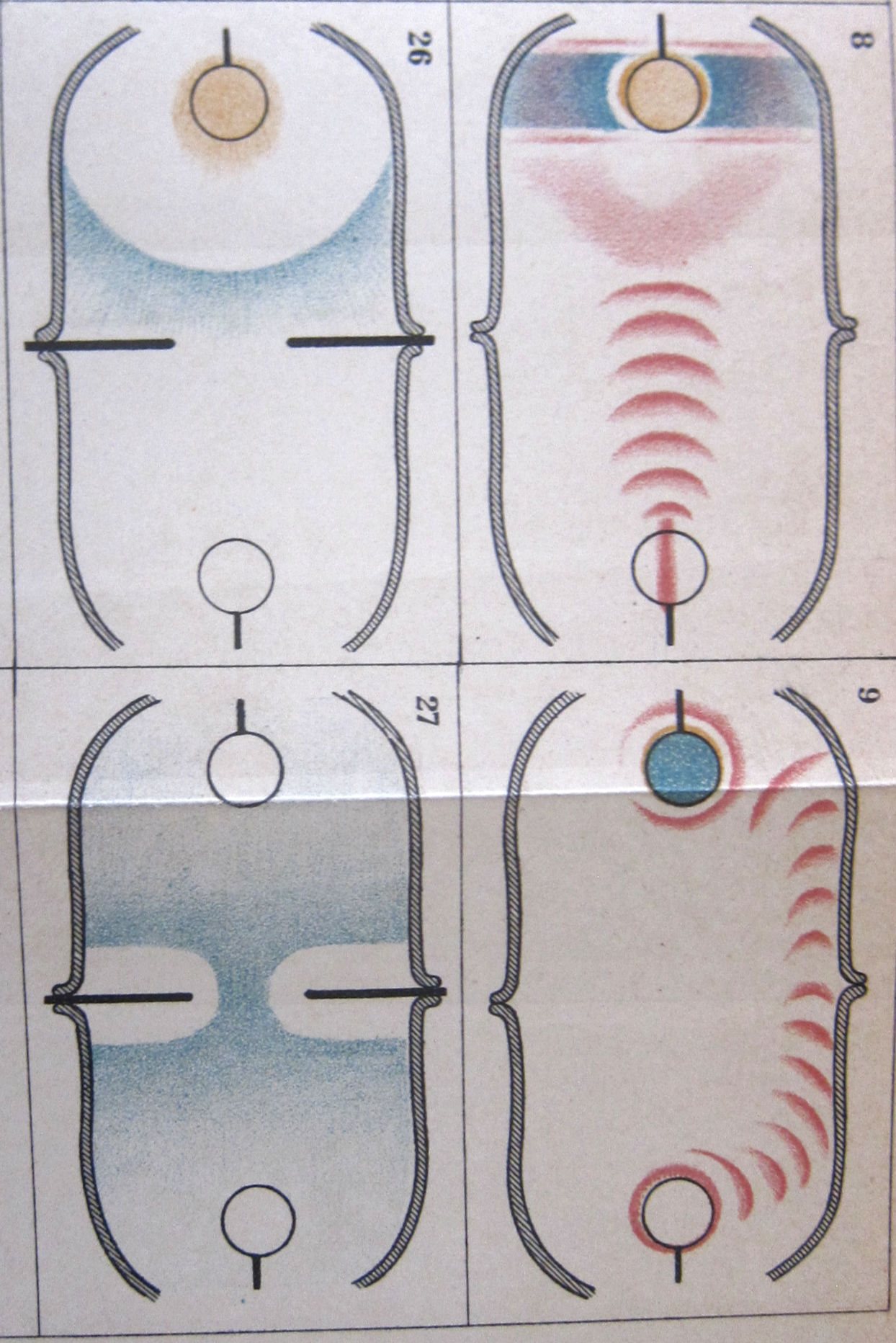
    Annalen Art 1902 _3_
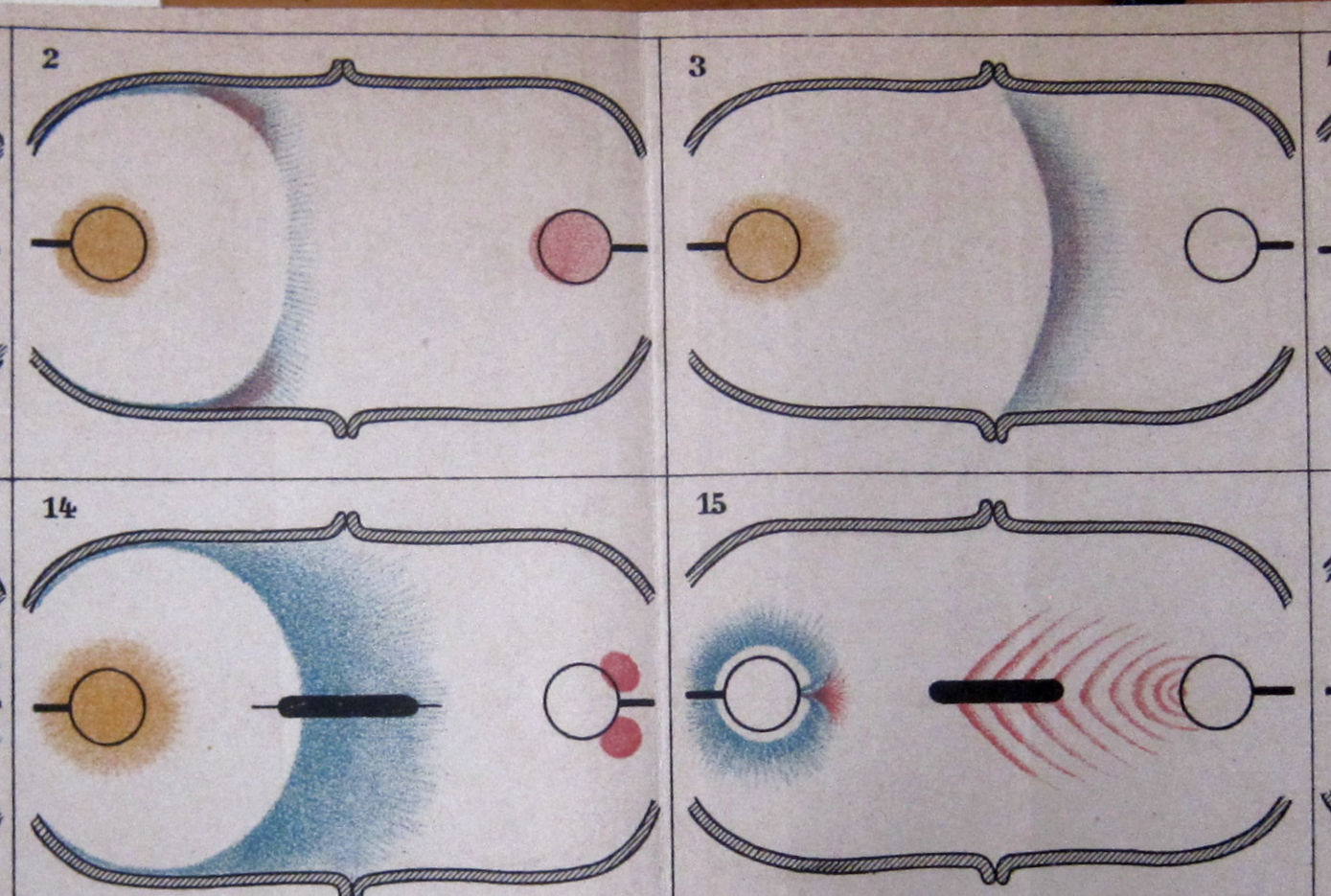
    There are some good papers in this 1902 volume of Annalen der Physik, including Planck (“Ueber die Natur des weissen Lichts his paper on white light),  Stark, Quincke, Drude, Exner (“Ueber den Gleichgewichtszustand eines schweren Gases”)–I was drawn instead to the two big folding plates for O. Lehmann’s “Gasentladungen in weiten Gefassen” ( a longish 29-page paper in series IV, vol 7. pp 1-29, 1902.).  

    Annalen Art 1902 _1_

    Interestingly Lehmann writes about the dangers involved with these experiments–he’s using considerable pieces of glassware, some 40cm wide and 60 cm long (!) with glass as thick as 5-10 mm. That means there would be (and was!) a lot of large pieces of flying glass if the vacuum created in the tube crushed it, resulting in a sharp little explosion. He states (more or less) at the bottom of the page in a footnote: ” “The experiments are brilliant demonstration experiments at the same time, but it must be expressly pointed out that working with such large evacuated vessels is by no means without danger. It was shown that the 5–10 mm thick air pump bells with an internal width of more than 40 cm, which are commercially available, are unable to withstand the pressure of the outside air permanently. Such an egg, 40 cm wide and over 1 m long, was smashed by the air pressure soon after the vacuum was created, fortunately without causing any further damage, since I had covered it with thick cloths as a precaution, which did not allow the glass fragments to penetrate , Another vessel, 45 cm wide and 60 cm long, the parts of which had initially been individually tested for strength, withstood the full air pressure for about 6 hours, even during the passage of the discharges. But after it had stood untouched for about 5 hours, it was suddenly violently crushed into countless small fragments that flew up to 15 m, partly through the window panes. All fragile objects hit were damaged and individual pieces of glass even bored into the wooden doors of cupboards and other wooden parts, with such force that they got stuck in them.”

    Anyway the patterns of discharges produced in the tubes were beautiful and can certainly stand on their own in the Found Art department. And so far as the Annalen goes, this is some of the most visually beautiful work produced by the journal over its long 220 year history.  

    Annalen Art 1902 _3_

    ·Posted by :

    ·in:

Recent Posts

Archives

Categories