A Daily History of Holes, Dots, Lines, Science, History, Math, Physics, Art, the Unintentional Absurd, Architecture, Maps, Data Visualization, Blank and Missing Things, and so on. |1.6 million words, 7500 images, 4.9 million hits| Press & appearances in The Times, Le Figaro, Mensa, The Economist, The Guardian, Discovery News, Slate, Le Monde, Sci American Blogs, Le Pont, and many other places… 5000+ total posts since 2008.

  • A Massive POW Scene, 1918

    JF Ptak Science Books   Quick Post

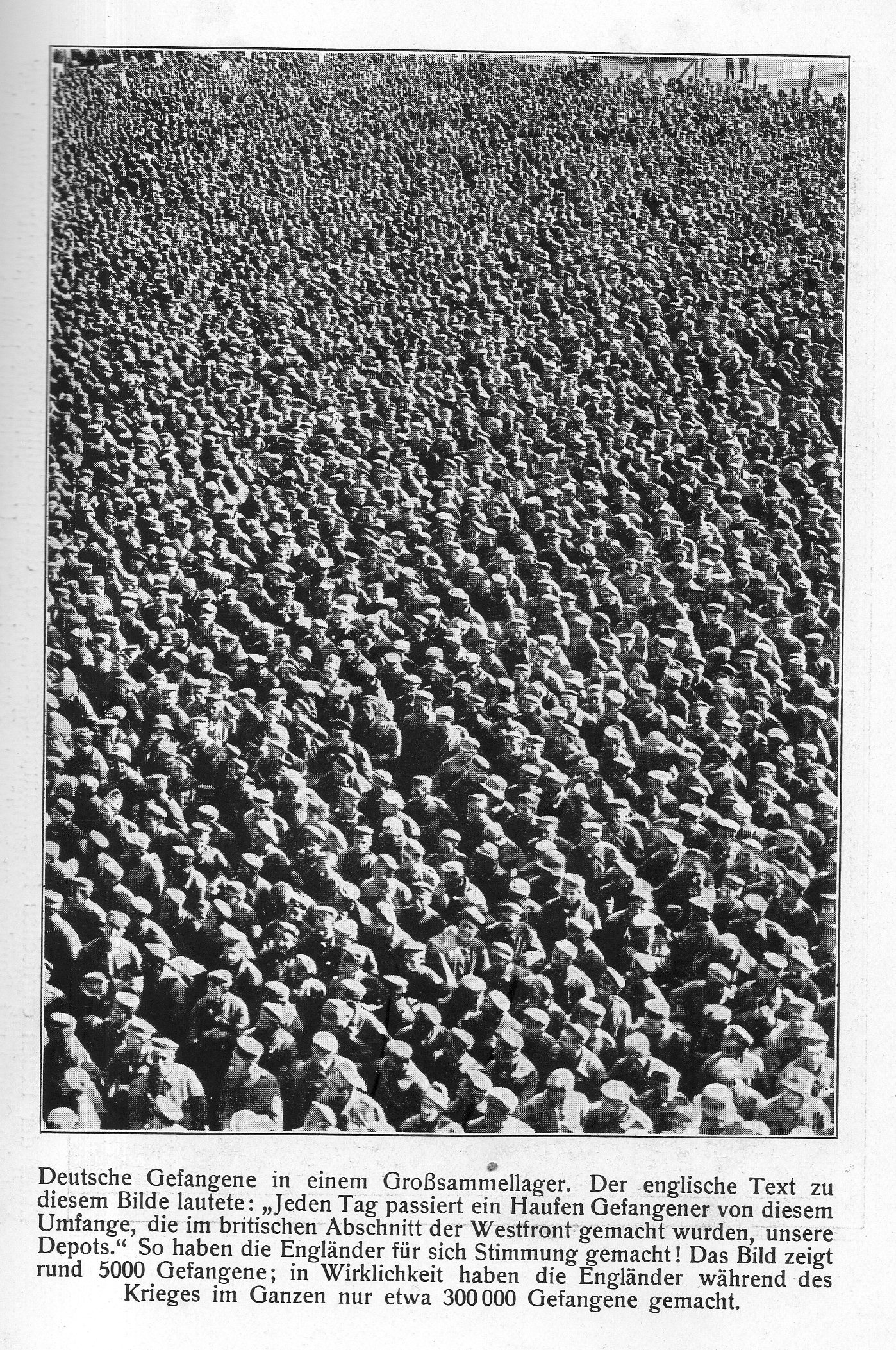
    This image comes from an uncommon and somewhat surprising work, Der Weltkrieg in Seiner Rauhen Wirklichkeit1, by Hermann Rex (“Kriegsphotographen”), which was published in Oberammergau in 1926, eight years after the end of the war.  Mr. Rex really put the “krieg” in “kreigsphotographen”–unlike the more commonly seen very tightly controlled photographs made by the news photo service participants on the Allied side, the images in this book can be very gritty, bloody, damaging, and were hardly the stuff made for contemporary publishing–they represent a “more real” “Wirklichkeit”/(reality) than that most usually seen.  

    I am not sure how Mr. Rex came to make the photograph below of German POWs in a British “collection” station as it would have worked out very nicely for Allied propaganda purposes, displaying all of these thousands of German prisoners:

    WWI project _ hermann rex  massive prisoners134There were more than 8 million POWs during the course of the war, making about 5,550 POWs every day for four years.  

    Notes:

    1. There are more than 600 photographs in this book, a massive effort.  Rex was “Operateur des Kriegs-Bild- und Filmamtes im Dienste der Obersten  Heeresleitung von 1914-1918”. 

    ·Posted by :

    ·in:

  • A Very Early Use of the Nazi Swastika in the U.S., 1924.

    JF Ptak Science Books   Post 2519

    Swastika135This Outsider-y political pamphlet attracted my attention for the swastika and the date (1924) more so than anything else, including an absolutely luxurious use of quotation marks, capitalizations, and bolds that the text would reveal. Ernst Goener’s work looked like trouble in that mysterious way that some writers will use an now-unknown word or phrase upon which everything is balanced–in this case, “the Prize”. That, and who “our People” might have been1. 

    The swastika is of course an ancient symbol mostly happy in its antiquity–its existence as a symbol didn’t really become polluted and disgraced until the 20th century when it seemed to have made an impact on nationalist groups in Germany following some relatively popular (and innocnet?) exposure by  archaeologist Heinrich Schliemann. And of course the existence of the symbol in modern usage is basically terminated by the NSDAP/Nazi Party and Adolf Hitler.  

    With this pamphlet I was thinking that use of the swastika may have been an innocent/antiquarian thing, except that I stumbled over  the “Jew” in bold a number of time in the pamphlet’s short little life (as in “the all-powerful Jew of Versailles” and so on–you get the picture). Goerner as it turns out was a vivid pro-German figure here in the U.S. during WWI, and was a Nazi sympathizer from the earliest days of that political movement at least through 1941, where I lose track of him. To finalize the connection I read that Hitler had designed the Nazi standard as far back as 19202, and that the use of the swastika in the Nazi flag began soon afterwards, well before 1924–so there was plenty of room for this pamphlet to employ the use of the Nazi swastika for its symbolic commentary on the cover.  

    In the end Goerner winds up being a German propagandist through WWI, and was an American  supporter of the Nazis from the very earliest state of the party all the way into WWII.  He was indeed using the Nazi swastika as his calling card, in the U.S., in 1924.  Goerner was not an “Outsider” at all–he was a greased-rocket German/Nazi sympathizer and pamphleteer, with a lust for the NSDAP and a hate for Jewish people. 

    ·Posted by :

    ·in:

  • Art+Chemistry+Decomposition=Art

    JF Ptak Science Books  Quick Post

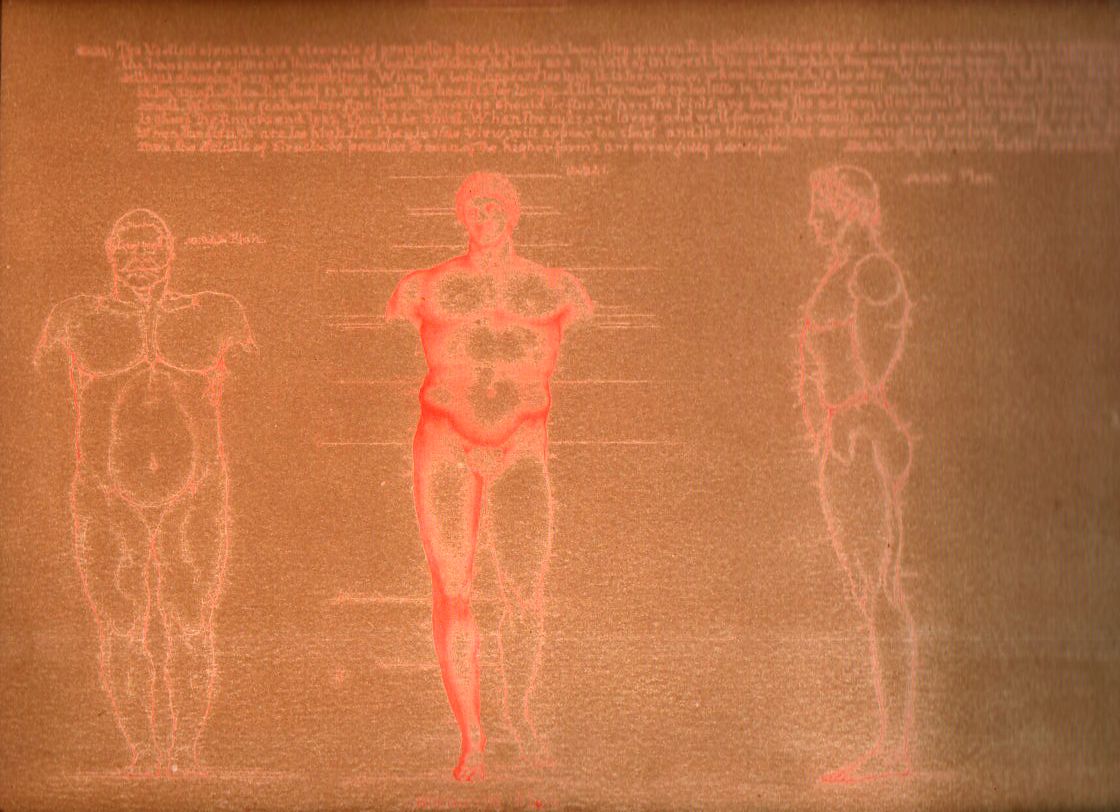
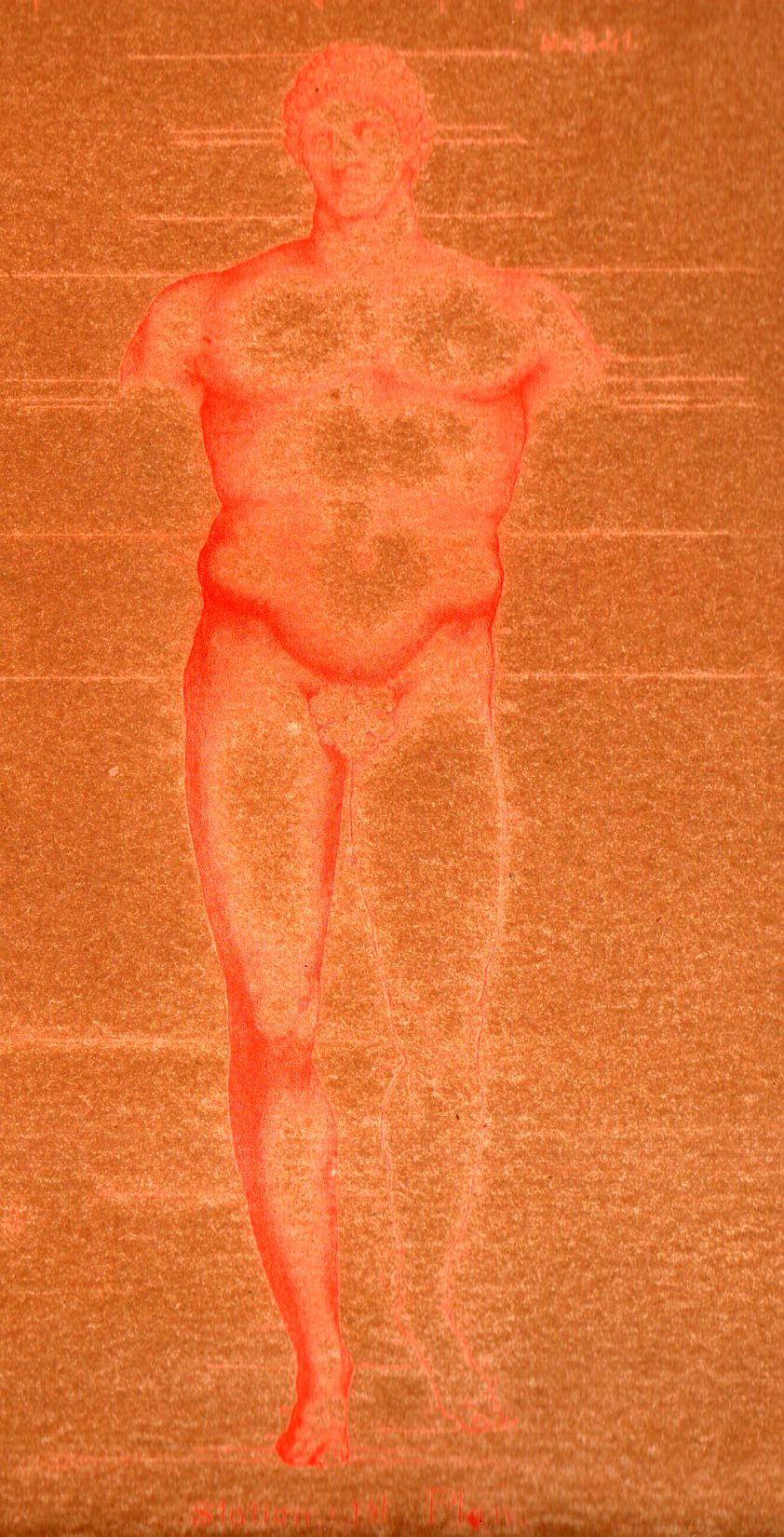
    I wrote earlier this month about the fantastic Leonardo-esque anatomy work by the prodigious William Rimmer (here)–I’m drawn back to him tonight after having stumbled upon a very unusual and interesting plate from his 1884 work.  There was an earlier edition of this work1, quite rare, that was printed in a limited edition of 50 for 50 dollars–which was a lot of money back at Centennial, a little less than what a carpenter might make in a month. (See another earlier post here “How Much is 50 Cents in 1876 Worth Today?”)

    Rimmer Odd137

    Again, I am called back to Rimmer for this interesting decomposition.  There is some sort of deterioration of the printing process, some minor mystery of the ink/paper/time/conditions battle that is going on here, and it looks as though art is losing.  On the other hand, the deterioration is creating its own artwork, probably unexpected by the original artist and printer.  

    Rimmer Odd138

    Notes:

     1. 

    [Source: Literary World, volumes 7-9, 1876-7, pg 200. Google Books: https://books.google.com/books?id=x0kDAAAAYAAJ]


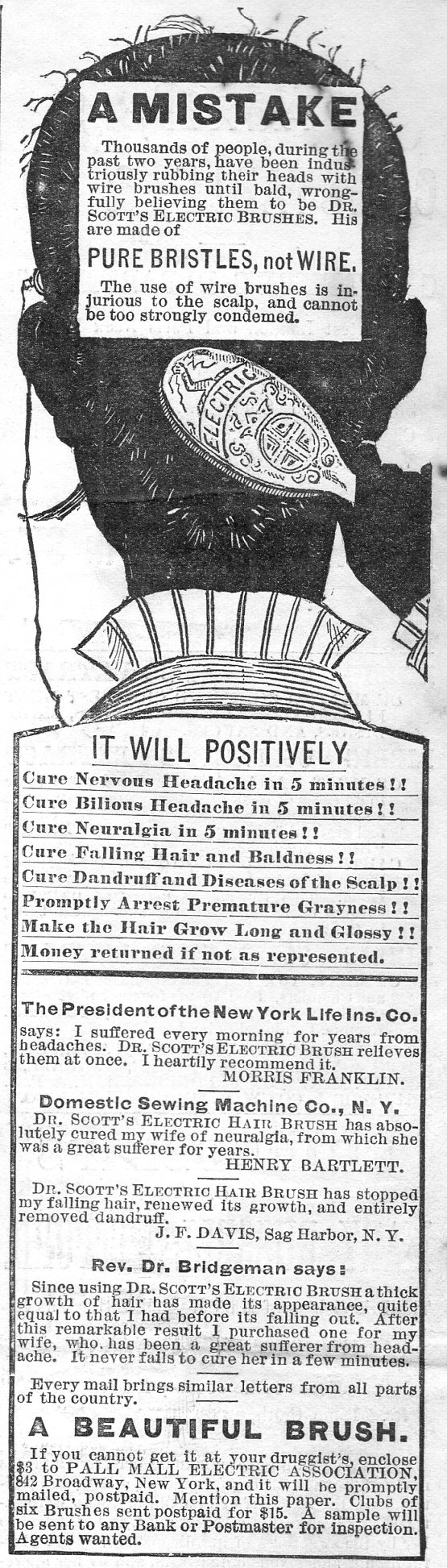
  • Electropathic Pathology: the Invisible Quackhood of the Electric Brush (1884)

    JF Ptak Science Books

    Harpers A  Mistake139

    [Source: Harpers Weekly, November 4, 1882, pg 704.]

    This ad doesn’t say so, but the makers of this new electric miracle brush was competing with itself, or at least with products within it own production family.  The makers, Pall Mall Electric Association (close to “pell-mell” which would have been a more accurate description of this quack medicine outfit’s rush into the field of medical victories), claimed that their product would cure nervous and bilious headache, neuralgia, hair loss, dandruff, scalp diseases, as well as create a glowing head of long hair. There is no description of how electricity plays into this scheme–except that they are adamently saying that it does so through bristles, whereas a competitor stealing their idea for a non-existent cure-all for the head was using an electric brush with wire. 

    It turns out that the Pall Mall Electric Association also produced something called Dr. Scott’s Electric Hairbrush, which may or may not have been the same product as above, and which may or may not have competed with itself for a real clientelle buying not-real medical remedies.  “Dr. Scott” also produced an “Electric Flesh Brush”, an electric corset, an electropathic belt “for ladies”, and (among other things) an “electricpatent” sock.  

    As with other technological breakthroughs, the use of electricity in the 1880s-onward took advantage of the introduction of a new and probably not-understood technology (as with the electric lamp, phonograph, telephone, etc) in which quack businesses set up their tents in the shadows of the possibilities produced by the aura of the new tech. 


  • Striking Graphic: 1879

    JF Ptak Science Books   Quick Post

    Black Hand149[Source: Harpers Weekly, February 9, 1879]

    B.K. Bliss and sons came up with this idea to distinguish their ad, the one among many, on a full 16″x11.5″ page of Harper’s Weekly. The original is 1.75×2.25″, so it is rather small, but it swims sort of free and clear on the page of 30+ advertisements because of its high contrast. 

  • Design in U.S.A-Themed Pamphlets, 1895-1945

    JF Ptak Science Books   Quick Post 

    USA Naive_3_

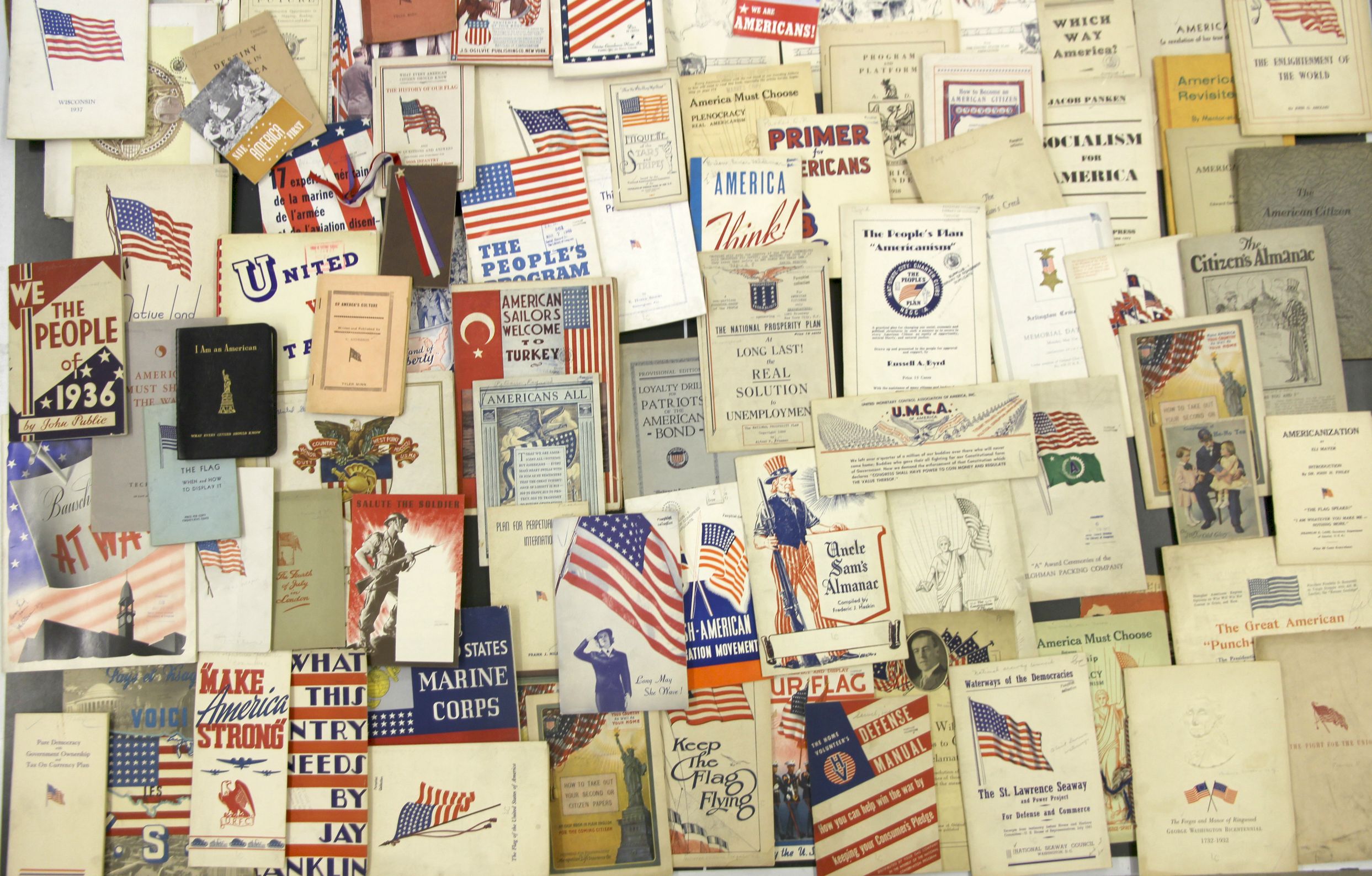
    I’ve written a number of times on this blog on the now-unusual covers and titles and contents (sometimes all three combined) culled from a 90,000-item pamphlet collection. This afternoon I came across a small collection of U.S.A. patriotic (and otherwise) covers, published 1895-1945, most of which have a flag or other patriotic emblems on them.  Some of the 125+ so works are simply patriotic works, some are flag-emblazoned works on economics, some are anti-Commie, some are isolationist, and some are, well, a little meshuga–what they all have  in common is that they either have a flag or the (declarative!) words American/American on the cover.  There’s more to this collection, but this will do for now–I think these would be very interesting, and attractive, displayed properly, and they’d have more than a design-related story to tell. 

    And details:

  • An Automatic Page Turner, 1887

    JF Ptak Science Books  Quick Post

    Automatic page turner153

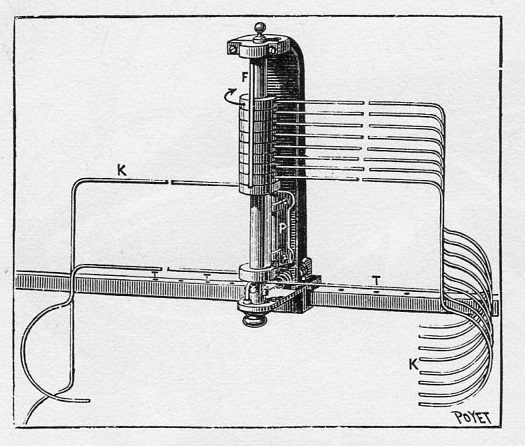
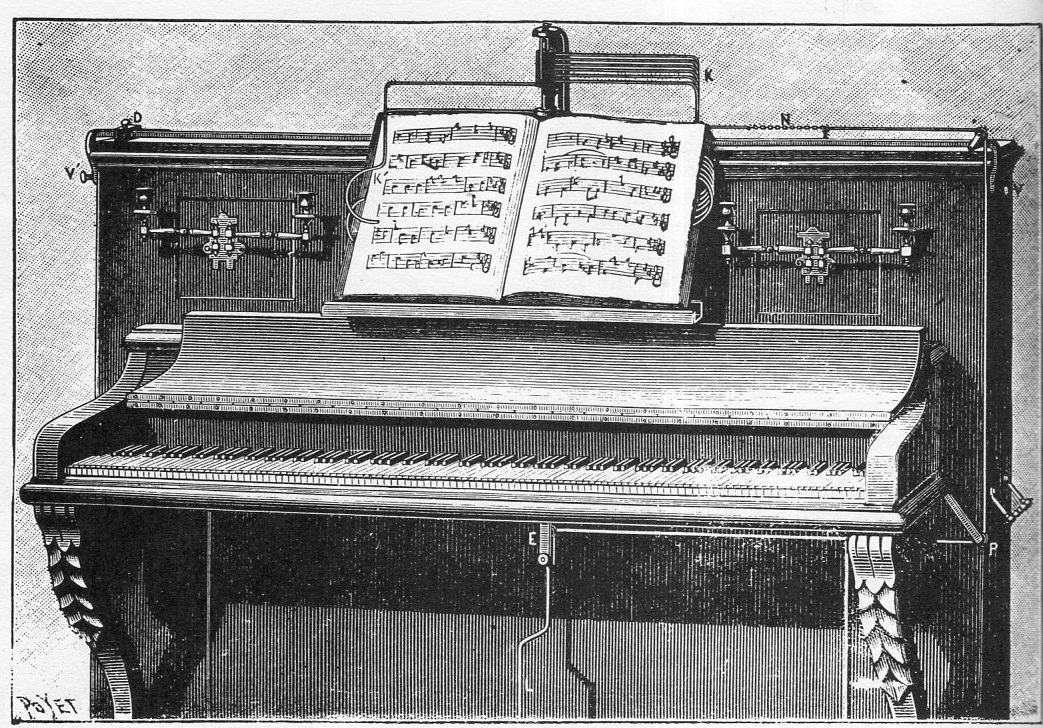
    Augustin Lajarrige (“un mecanicien de Marseille”) devised this ingenious mechanism, an automatic page turner (“tourne-page automatique”), in 1887.  It was made for someone playing the piano–the pianist would advance the pages back or forward by simply moving the bar with the leg left or right.  It is a simple but ingenious and elegant idea.  

    Automatic page turner152

    La Nature: Revue des sciences et de leurs applications aux arts …, Volume 15, page 157, 1887.

    [See: La Nature, here: ]http://tinyurl.com/px4zl2b]

    ·Posted by :

    ·in:

  • On Sharpening a Millstone, 1869

    JF Ptak Science Books  Quick Post

    Sci Am Millstone sharpener

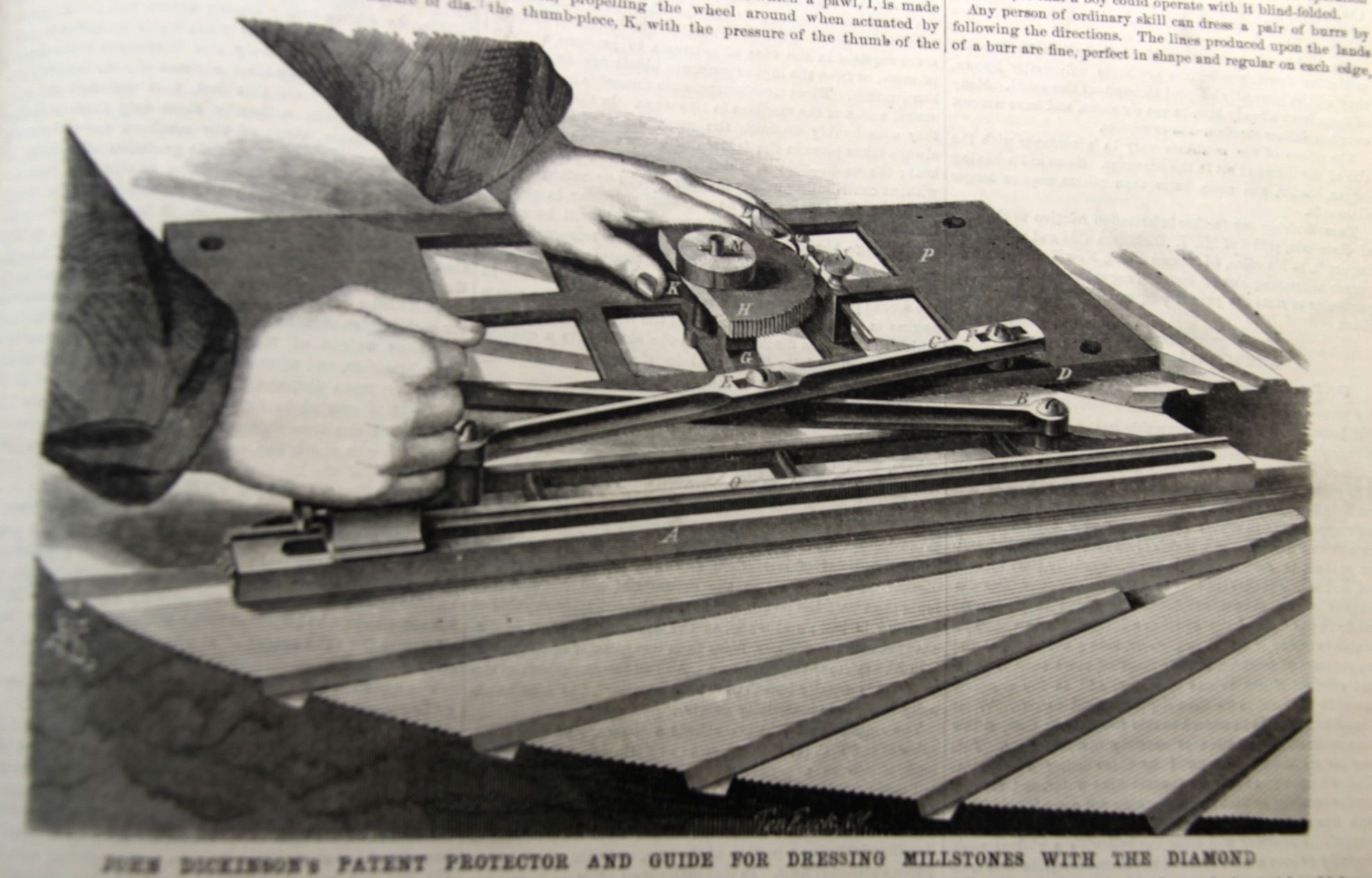
    I came upon this interesting image in a wrist-bending/breaking volume of Scientific American, the 27 November 1869 issue (page 337), featuring something I never gave any thought to–a millstone sharpener. Once seen it makes perfect sense to me to keep the channels of the stone in good repair, and John Dickinson created this lovely apparatus to do just that, using industrial-grade diamonds on the grinding surface. The device won a medal in its presentation at the 1862 world’s fair in London, and appeared in ads from that year in the agricultural-world’s equivalent of the Scientific American, the American Agriculturalist.  The exact illustration was used a few years later in an article on Dickinson’s tool in The Manufacturer and Builder (volume 3, 1871, page 59), though this seems to have been a common practice, as I’ve noticed many times that SA reproduced foreign images without attribution.  In any event, it was a smart invention, though the clientelle for it sounded as though they needed a bit of a “sell” for the sale:

    “Millers who may be unacquainted with the nature of diamonds or their durability, it is reasonable to suppose, will be somewhat skeptical and incredulous as to the practicability of using them successfully as an economical application in dressing the lands of millstones.”

    ·Posted by :

    ·in:

  • Extraterrestrial Skies and Landscapes Depicting the Earth, 1877

    JF Ptak Science Books  Post 2520
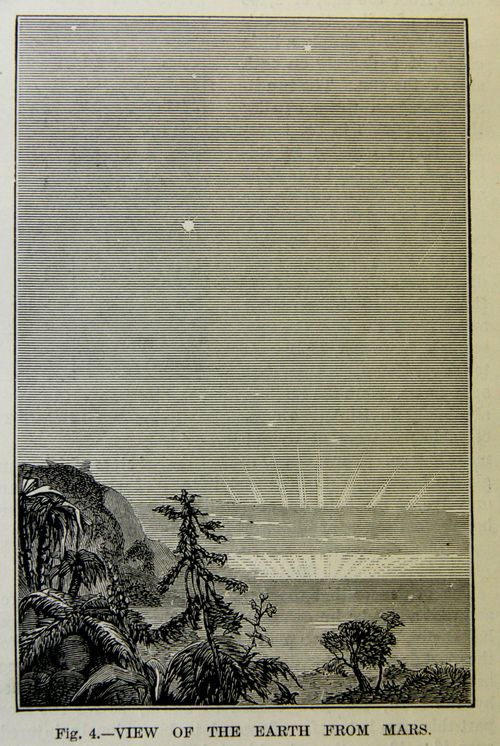
    Earth from other Planets MArs

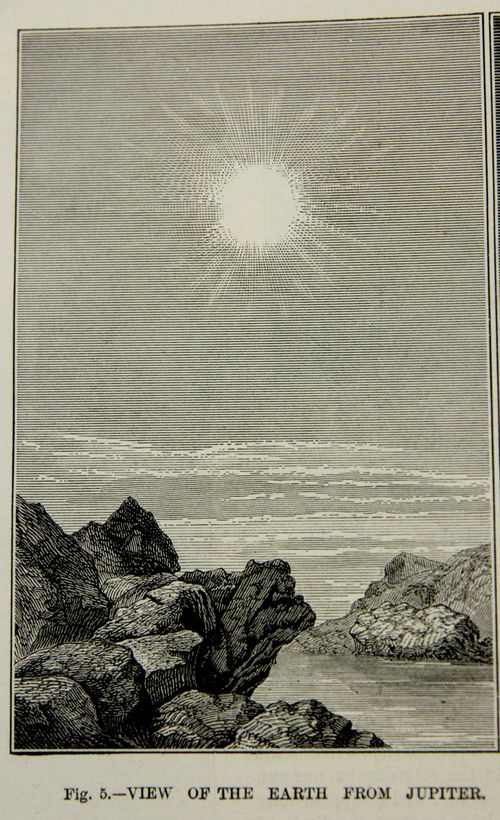
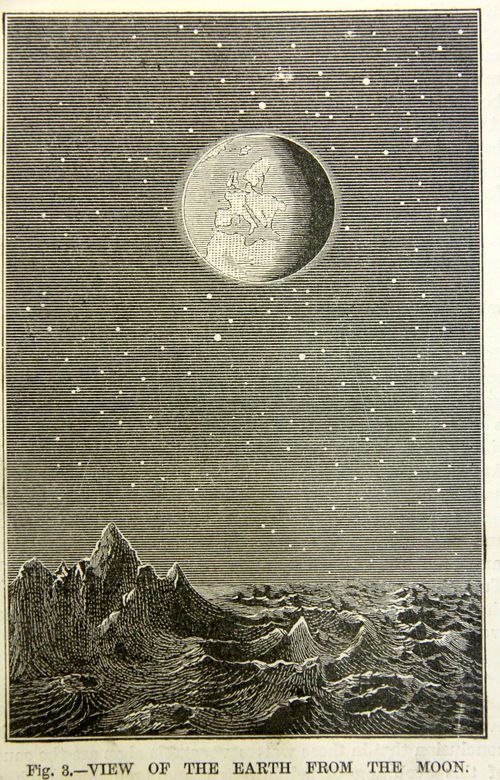
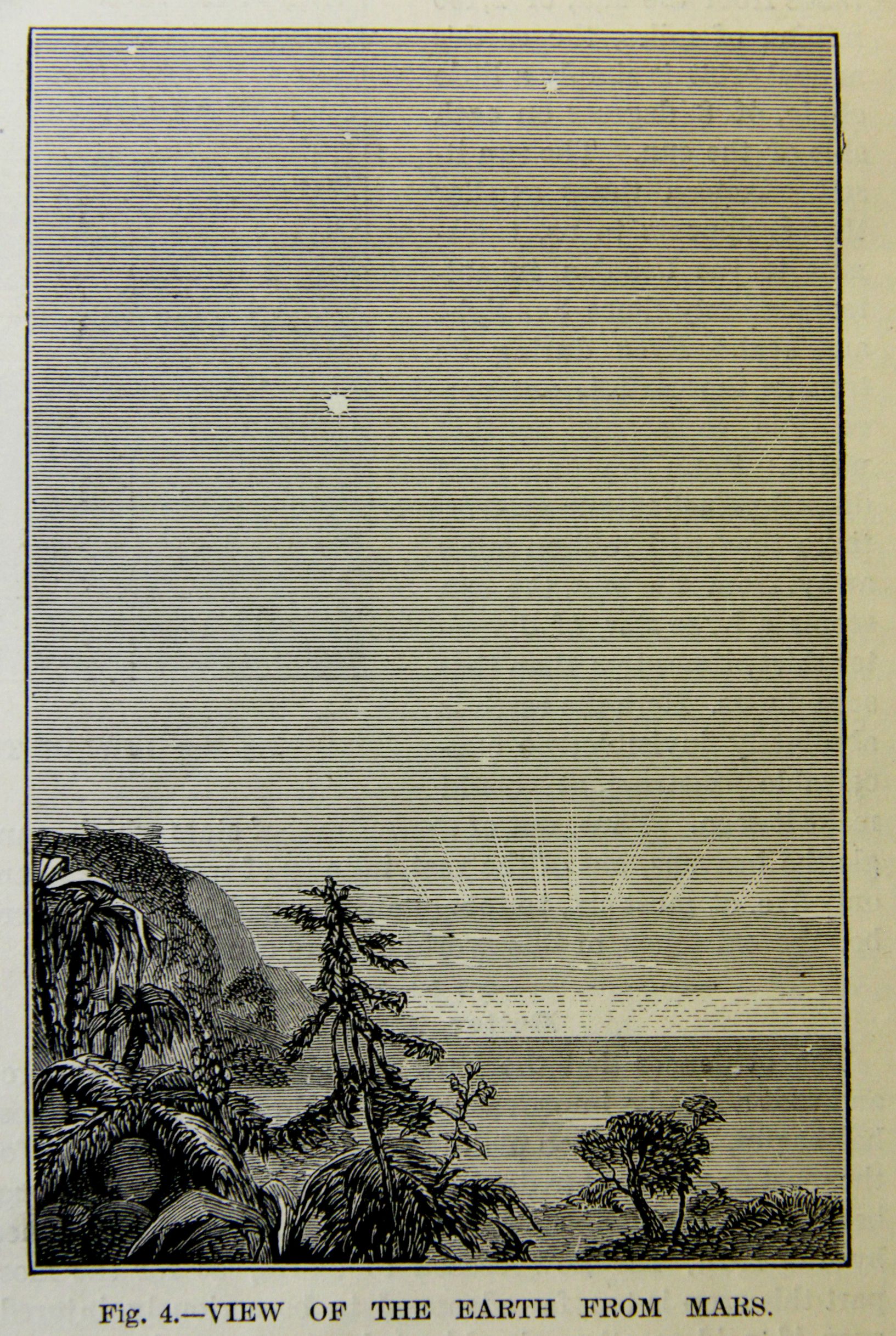
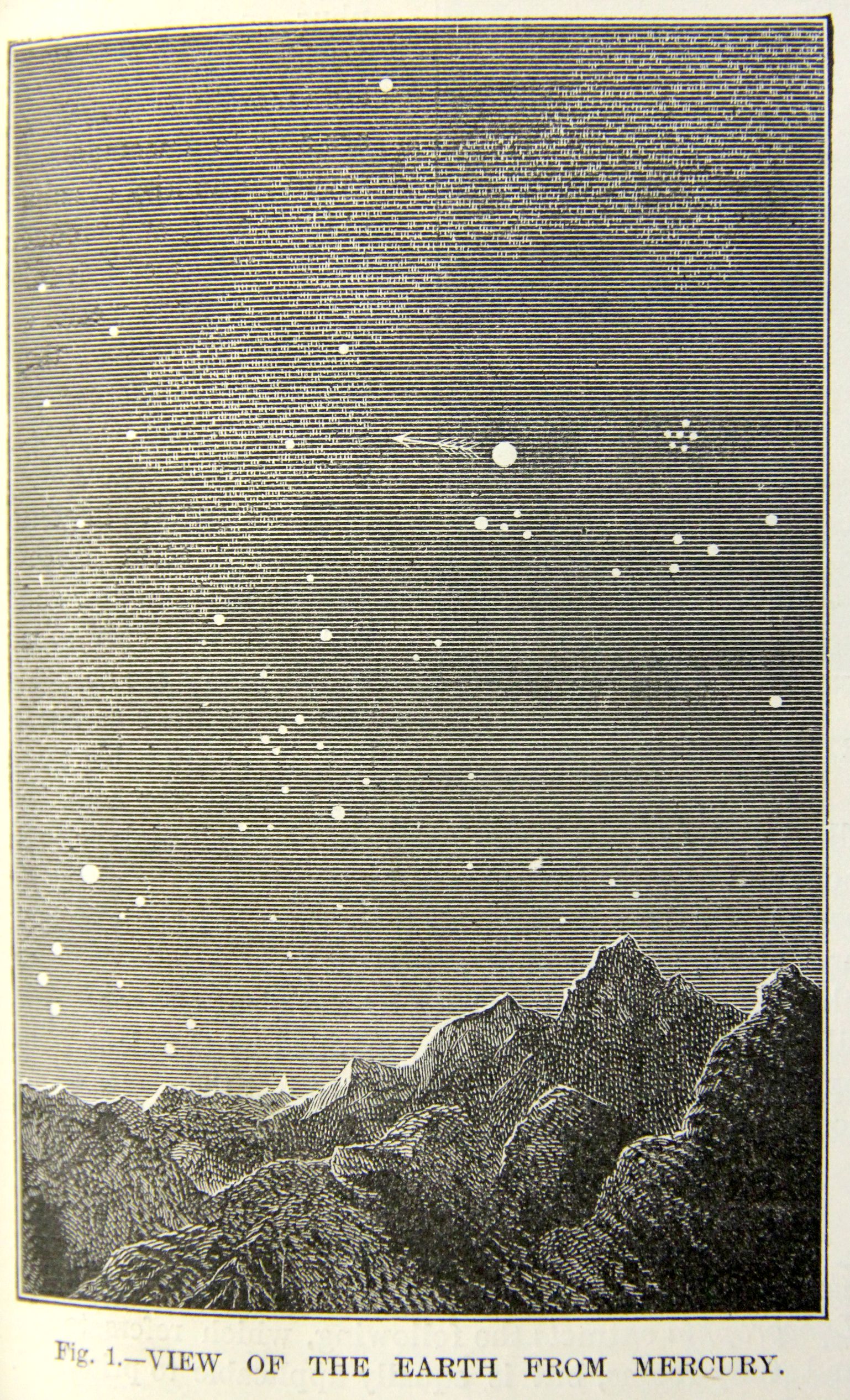
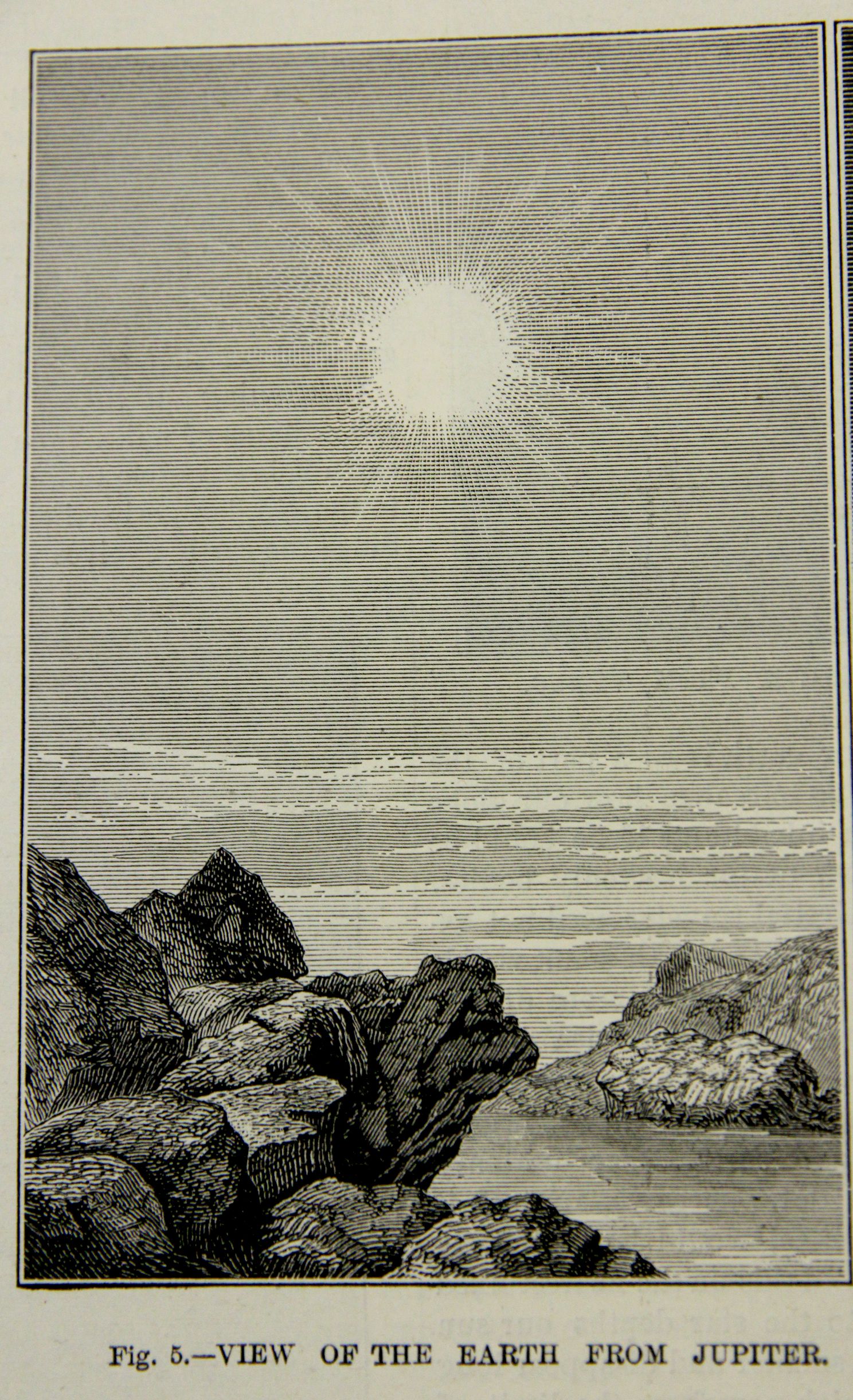
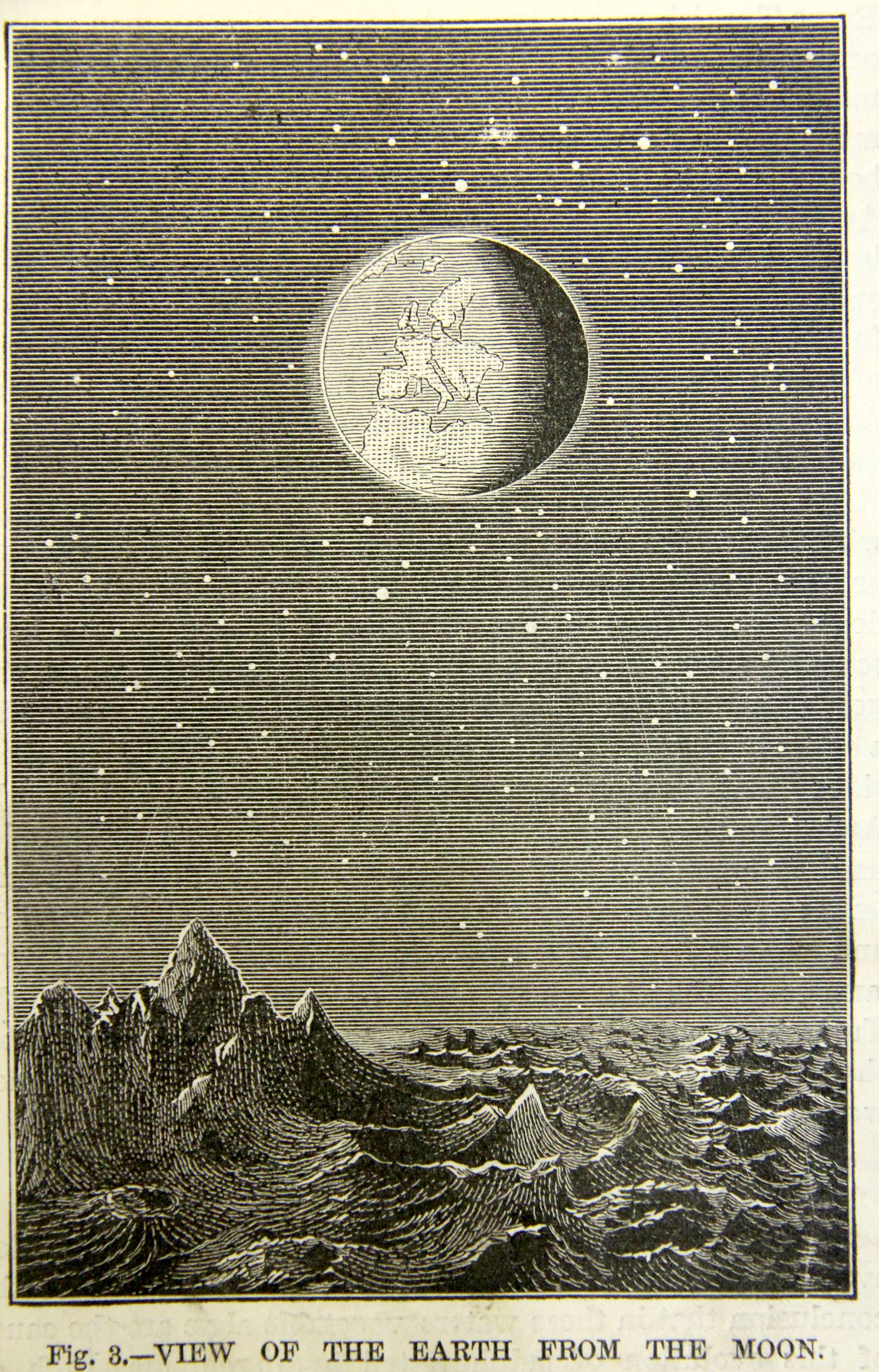
    I was struck by these images of the Earth as seen from other planets (and the Moon) in our solar system, mainly because I had associated at least one of them to Camille Flammarion (1842-1925), who I thought originated the view.  But that is not the case, evidently, as this Scientific American article appears November 23, 1877, and the Flammarion book in which it appears (Astronomie Populaire) was not published until 1880.  This is interesting in general because views of the Earth from other exact locations in the solar system are not common at this point in the late 19th century, and as can be seen in the illustrations there were some enormous (?) leaps of faith, though I am not sure how long a jump it would take to show a vegetative Mars in 1877.  

    Certainly the depiction of the Earth from an unspecified distance and location was very highly practiced in the history of astronomy, stretching back many centuries, but there is very little found for depicting an extraterrestrial prior to 1900–seeing the Earth in the sky with boots-on-the-extraterrestrial-ground is very uncommon. 

    This is really just a somewhat-related smidgen of a larger discussion on the history of the plurality of worlds and life elsewhere in the universe, an idea that is ancient, reaching back to the Greeks, and comes into play here with the Earth-like environment of Mars pictured above.  These views are sympathetic to an idea of another set of observational eyes looking up at the Earth as Earthlings might do in looking at Mars, a very individualistic view of the night sky, making it personal by setting the event very close to the ground of the planet/Moon rather than a view that was set nearby in space.  This is also conducive to the imagination of 1877 for visualizing not only the existence of life elsewhere, but also of interplanetary travel.  

    The somewhat-odd thing here is that it seems as though the Scientific American article was published independent of the famous reports of Giovanni Schiaparelli1 (“direttore del R. Osservatorio astronomico di Brera in Milano” ) which appeared in 1877/8 following his historic observations of Mars at the 1877 opposition  and in which he used the word “canali” which would later be mis-interpreted/-used as “canals” (when it was intended as “channels”).   Schiaparelli adopted new terminology for his great adventures on the surface of Mars including “ocean”(“the names I adopted will in no way harm the cold and rigorous observations of facts”2) though he did not intend for them to be used literally.  (He had in fact used the word “canali” as early as 1859, a yer after Angelo Secchi had employed the term.) Also the great William Whewell had hypothesized the existence of oceans and mountains and the possibility of life on Mars earlier than that, in 1854; and Anthony Proctor contributed greatly to the life issue with his work and map (featuring continents and oceans) in 1867, so I think that the presentation of the Earth-friendly vision of the Martian surface in the Scientific American could well have been accomplished independently of the Schiaparelli observations of 1877.  The idea of organized and technological life took off shortly after this in a sort of Martian-life-mania3, quickly reaching great new heights in H.G. Wells’ War of the Worlds in 1897, when Martians needed to have their own very destructive look-see of their own extraterrestrial sky.  It wasn’t unti the 20th century, really, when it became more a more common/popular thing to see the Earth imagined from a viewpoint on another world.  

    All this said, I do not know when the first illustration like this–a view of the Earth in an extraterrestrial sky with surrounding landscape–appears in print.  

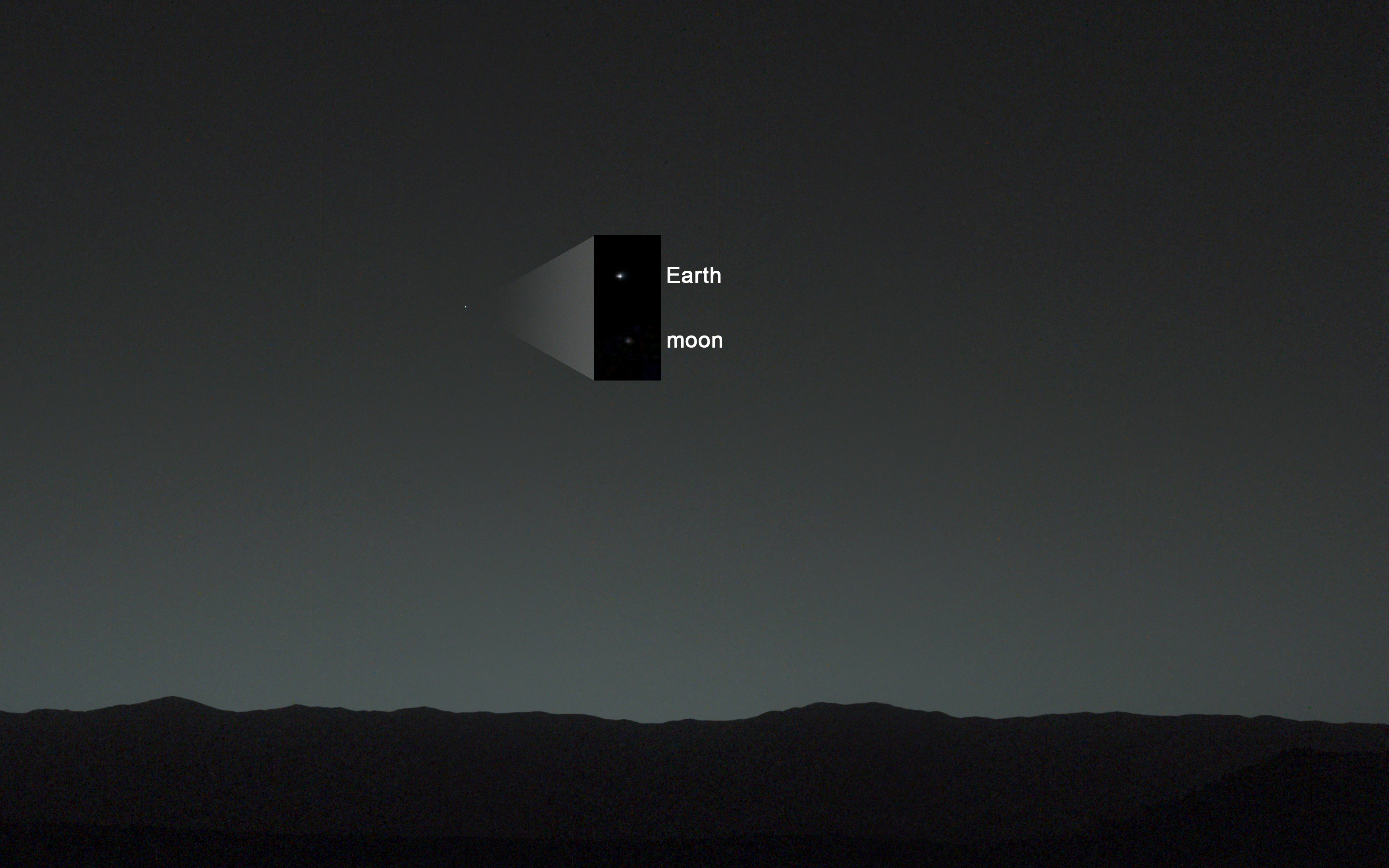
     A modern view, from NASA, Curiosity‍‍ , “first view of the Earth and the Moon from the surface of Mars(January 31, 2014)”:Earth from other planets  modern MArs
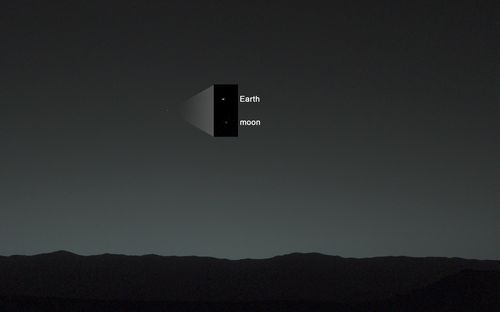
    [Source: http://photojournal.jpl.nasa.gov/figures/PIA17936_fig2.jpg]
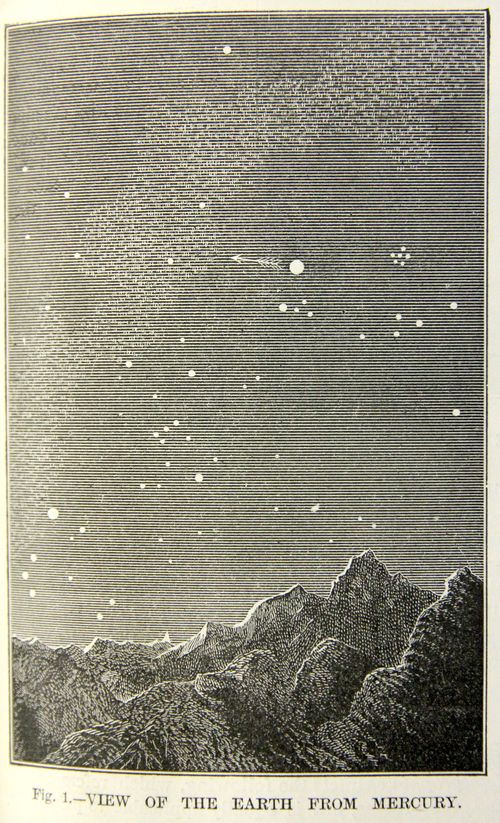
    Earth from other planets Mercury

    And a very hospitable Jupiter:

    Earth from other planets Jupiter

    Earth from other planets Moon


    Notes:

    1.  G. V. Schiaparelli’, Atti della Reale Accademia dei Lincei: Memorie della Classe di sdenze fisiche, matematiche e naturali 3:2 (1877-1878): 3-13  The famous map by Nathaniel Green was published soon afterwards, Nathaniel E. Green, ‘Observations of Mars, at Madeira, in August and September 1877’, Memoirs of the Royal Astronomical Society 44 (1879): 123-40.

    2. Dictionary of Scientific Biography, volume 12, pg 161).

    3.  Not my term and a good one–found in K. Maria D. Lane, “Mapping the Mars Canals Mania….”, in Imago Mundi, Vol. 58, No. 2 (2006), pp. 198-211.
  • Artistic Optics: Beautiful Shadows

    JF Ptak Science Books   Post 2521

    “Let us leave our old friend in one of those moments of unmixed happiness, of which, if we seek them, there are ever some, to cheer our transitory existence here. There are dark shadows on the earth, but its lights are stronger in the contrast. Some men, like bats or owls, have better eyes for the darkness than for the light. We, who have no such optical powers, are better pleased to take our last parting look at the visionary companions of many solitary hours, when the brief sunshine of the world is blazing full upon them.”–Charles Dickens, Pickwick Papers, page 518.

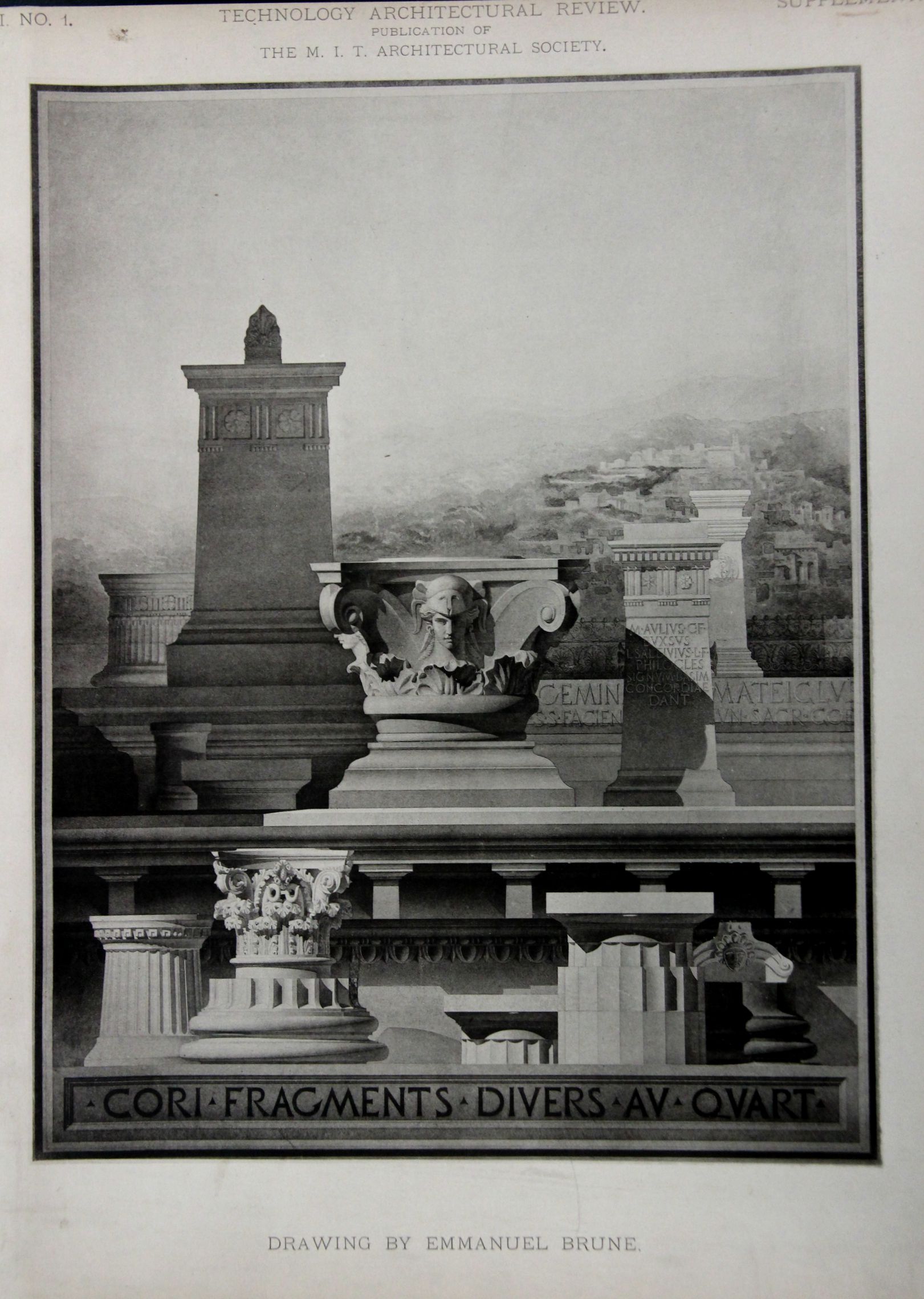
    Architecture frammenti shadows MIT

    If I were on the Moon I think I would miss the obscurity of shadows–while being partially obscuring, they also enable highlight and brilliance in the place not in shadow. This is the controlled darkness of Goethe, who also found the production of color in the intersection of light and shadow. In the sciences ennumerating the optical art of shadow there is probably no one as poetic as Goethe on this subject, at least before 1900. The great master of optics, Isaac Newton, wrote on shadows (that is a pretty good title for an essay!) with seering insight but of course with no visual-literary poetry of any kind whatsoever, as a matter of fact his “‘Enumeratio linearum tertii ordinis” (“Enumeration of lines of the third order, generation of curves by shadows, organic description of curves, and construction of equations by curves) which was originally printed as an appendix to  Optics (and then published in Opuscula) was like a black hole of poetry, anti-poetic–except of course for the staggering genius that went into it all.  

    And so these dreamy thoughts were brought out by this not-so-simple study of frammenti, found in the volume 1/1 of MIT’s first architectural journal, Technology Architectural Review, published in 1887.  These shadows are excellent–there’s a lot going on in these layers of differentiated light.  

    • Check of other bits on this blog on shadows by entering that word int eh Google search tool.  
  • 1/580,000th of the Shells Fired in WWI

    JF Ptak Science Books    Quick Post

    This striking photo shows the shell casings for one day’s worth of bombardment by the U.K., at a position somewhere in France, 1916.  I reckon that there are 3,000 105mm shell casings in this photo, which for one day’s work is a lot.  Throughout the course of the war it has been estimated that there were about 1.75 billion artillery shells fired, which makes this pile about .0000001% of the total; another way of looking at this number is that it would take about 580,000 of these piles to equal the 1.75 billion figure.  It is a vast number, and vast numbers are hard to understand in a daily language.  

    WWI Project !05 mm shells single day

    [Image source: RarehistoricalPhotos.com http://rarehistoricalphotos.com/shells-creeping-bombardment-on-german-lines-1916/]

Recent Posts

Archives

Categories