A Daily History of Holes, Dots, Lines, Science, History, Math, Physics, Art, the Unintentional Absurd, Architecture, Maps, Data Visualization, Blank and Missing Things, and so on. |1.6 million words, 7500 images, 4.9 million hits| Press & appearances in The Times, Le Figaro, Mensa, The Economist, The Guardian, Discovery News, Slate, Le Monde, Sci American Blogs, Le Pont, and many other places… 5000+ total posts since 2008.

  • The Straight Series: Looking Straight Through a Vickers Gun Sight, 1916

    JF Ptak Science Books   Quick Post
    WWI Project MAchine gun sighting detail


    WWI Project Machine gun sighting


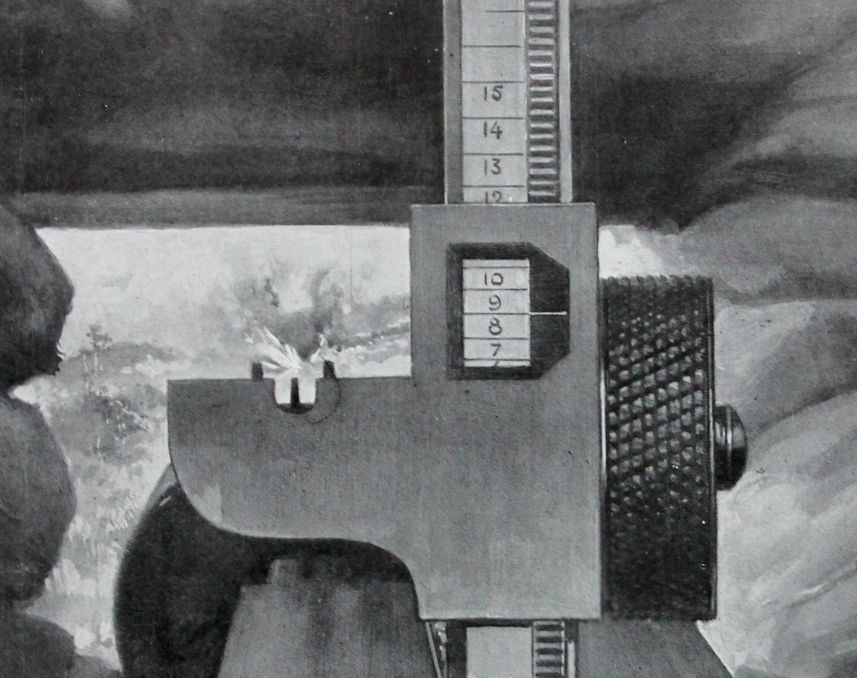
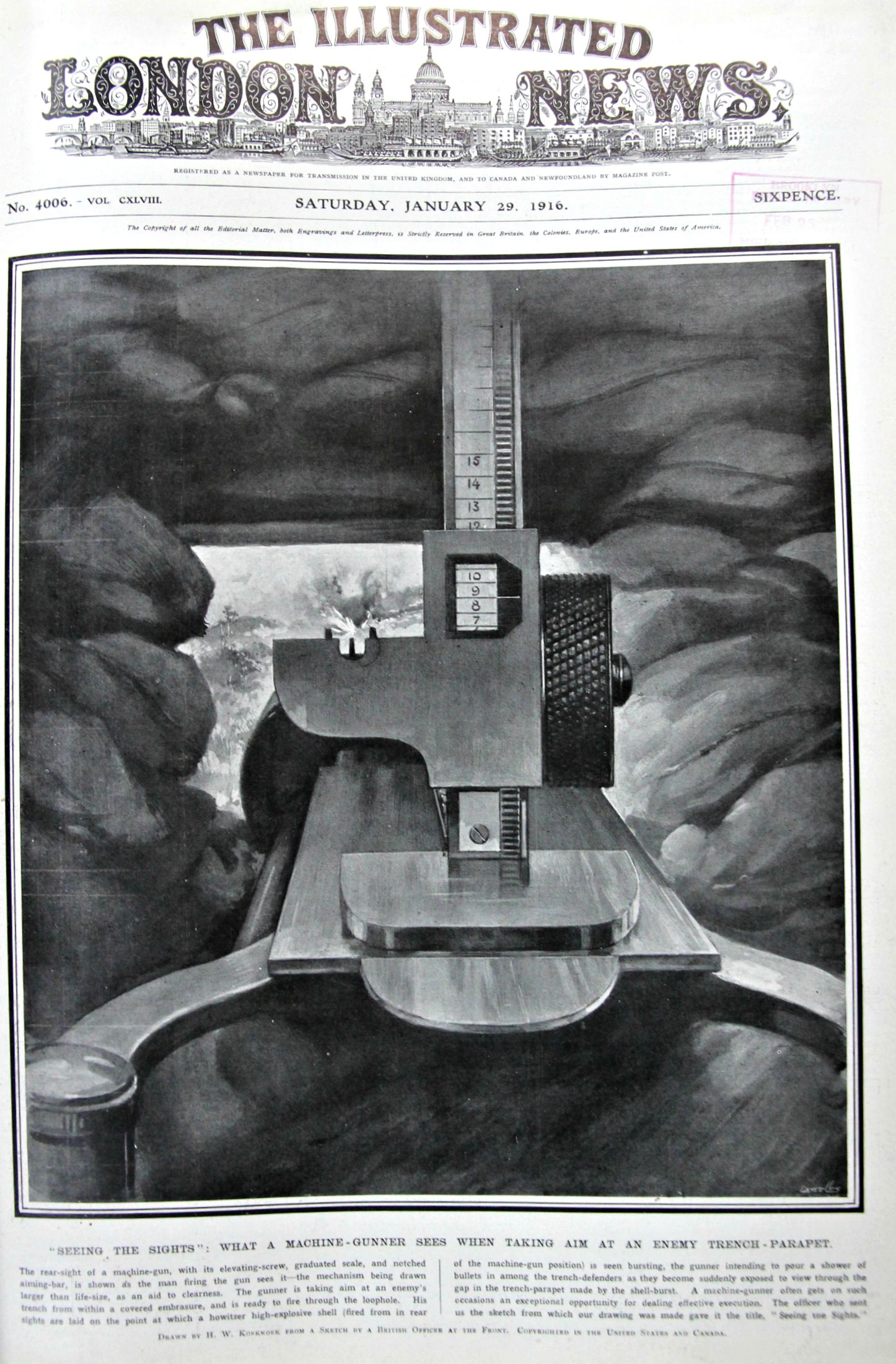
     There are a number of posts on this blog that have no real category, though they are joined by one simple principle–they look “straight” onto something, like straight up,  straight down, and straight through.  It isn’t necessarily obvious, but these points of view are really pretty scarce in the history of antique prints. (Since there is no category you can search “straight” int he Google search box at left for other poss.)  In this case, above, we have the gunner’s eye view of the working of a machine gun, a great image published by The Illustrated London News in 1916.  

    The machine gun type isn’t stated but I figured that it must be a water-cooled Vickers .303–from this vantage point your face wouldn’t be more than a foot from the sight; the curved bits at front are hand grips, and the “trigger” (an oval button that you press in to activate the gun) would be between those two curved elements and just below–I think that you could’ve seen the trigger if it was drawn in, though for whatever reason it is not there. In any event those hand grips are less than 9 inches apart, so you can tell now that the view of the machine gun is from very close proximity. 

    Here’s an unexpected find: a video of shooting a Vickers (without sighting mechanism) at nearly this exact perspective,  found on youtube:

    ·Posted by :

    ·in:

    —
  • Displays of Info You Probably Don’t Need: Advertising Methods (1892)

    JF Ptak Science Books,  Quick Post

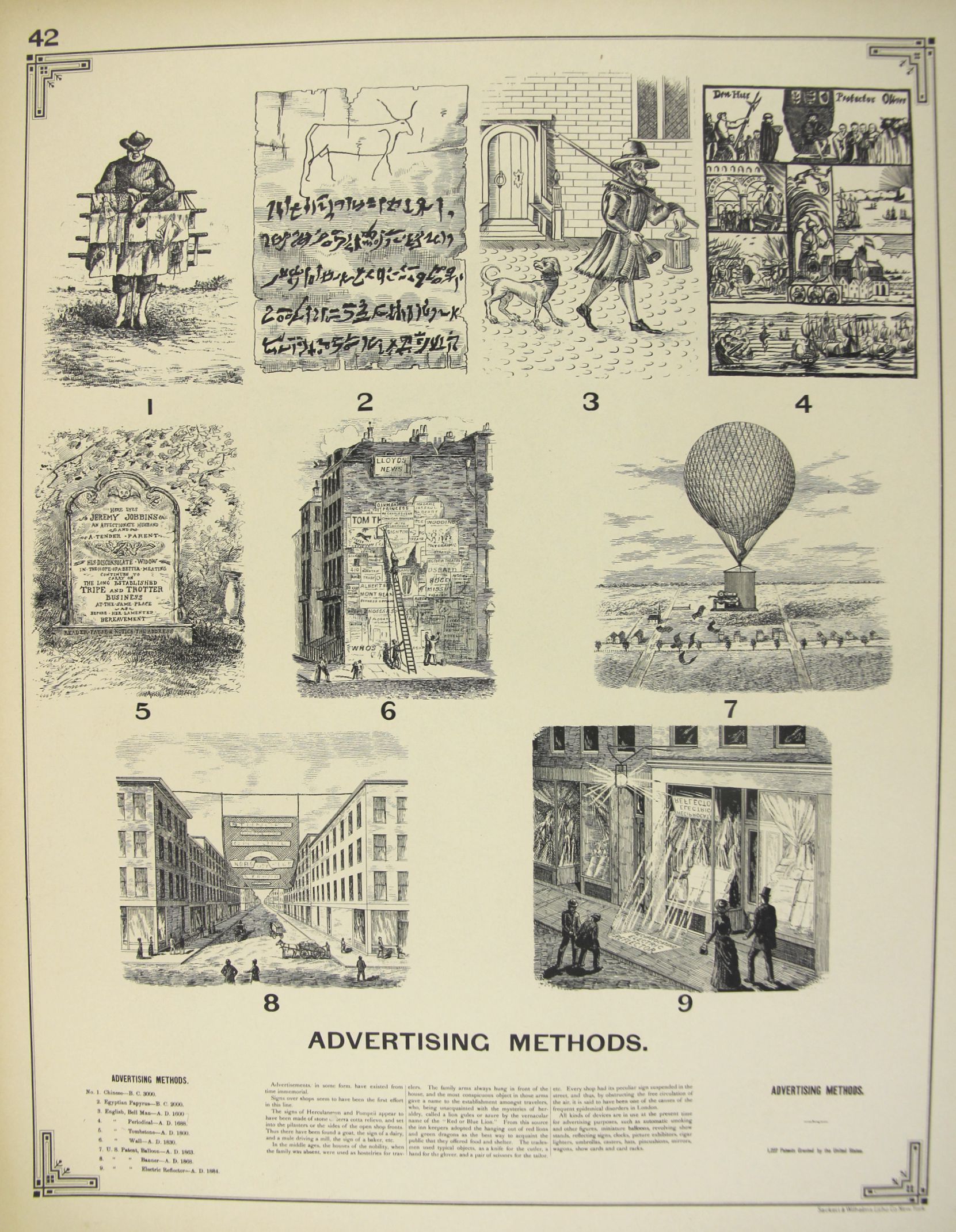
    Benjamin Butterworth, the Commission of Patents, produced in 1892 a superb work on the history of state of technical achievement in the U.S., The Growth of Industrial Art. The “art” part of the title actually referred to the creation-as-art of industry/technology more so than the design aspect of it, though the two are pretty closely related.  There were 200 plates of illustrations for inventions for windmills, mails, screws, cork, bicycles, harvesters, threshers, glass makers,, ice harvesters, cigar manufacturing, sweeping, telephones, telegraphy, and so on, in more than 150 categories.   Among these images some of my favorites are for advertising apparatus and means.  For example, in the historical timeline below we find in #7 an automated flying leaflet distributor, and according to the text it was (unlikely) patented in 1862:

    Advertising MEthods

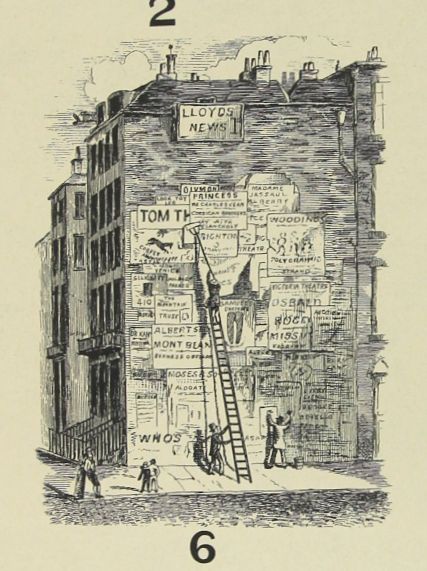
    #6 is cringeworthy, showing the very common practice of covering optimally-placed buildings with billboards–I’ve seen numerous early-ish images (19th c) showing large swaths of buildings on busy streets nearly entirely covered by ads.  

    Advertising Methods detail

    From Internet Archive, the full text with illustrations can be found here:  https://archive.org/stream/growthindustria00Unit#page/n9/mode/2up

    Text from the illustrations:

  • The Big Push-Button of the Future: a Vision from 1945

    JF Ptak Science Books  Quick Post
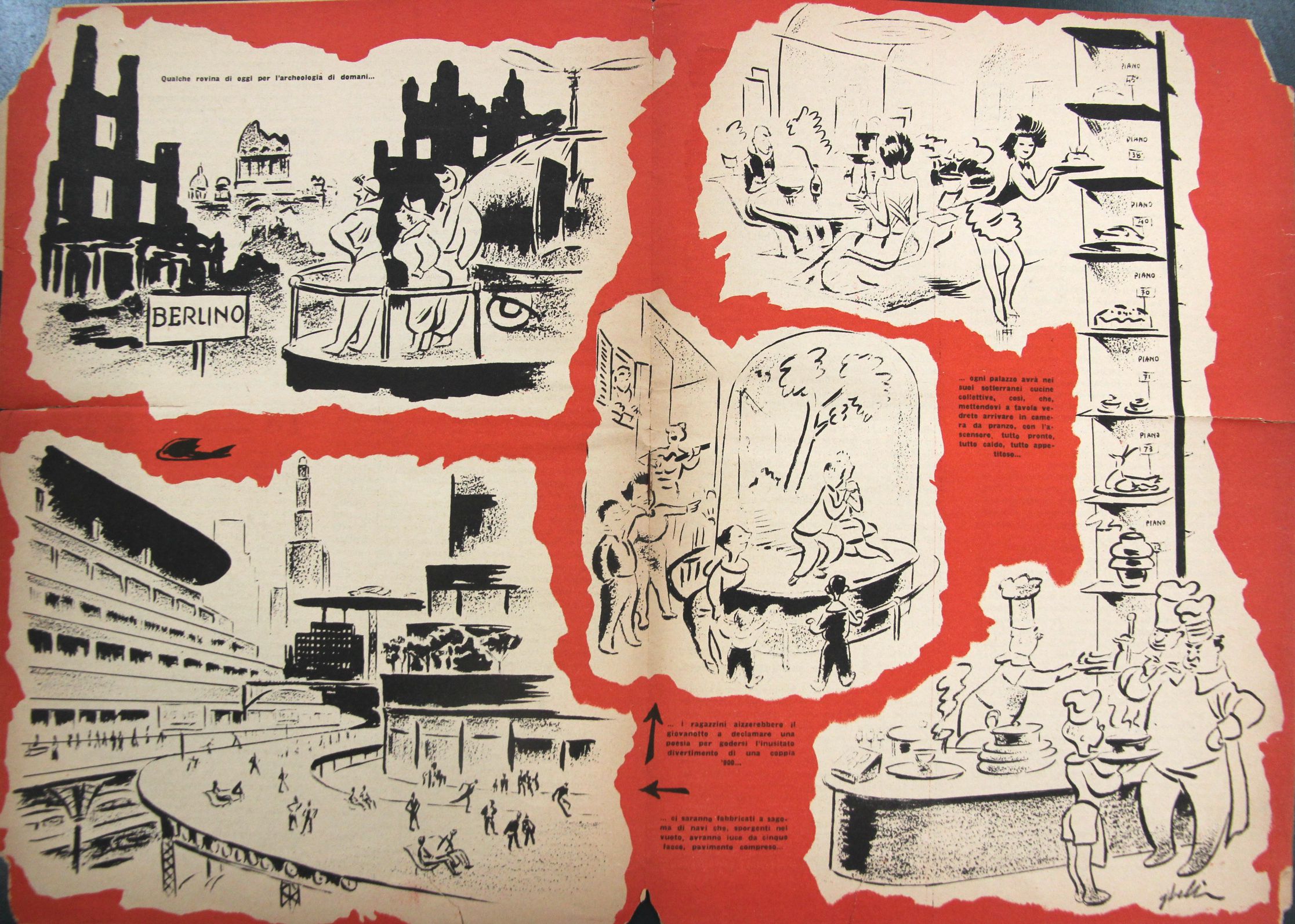
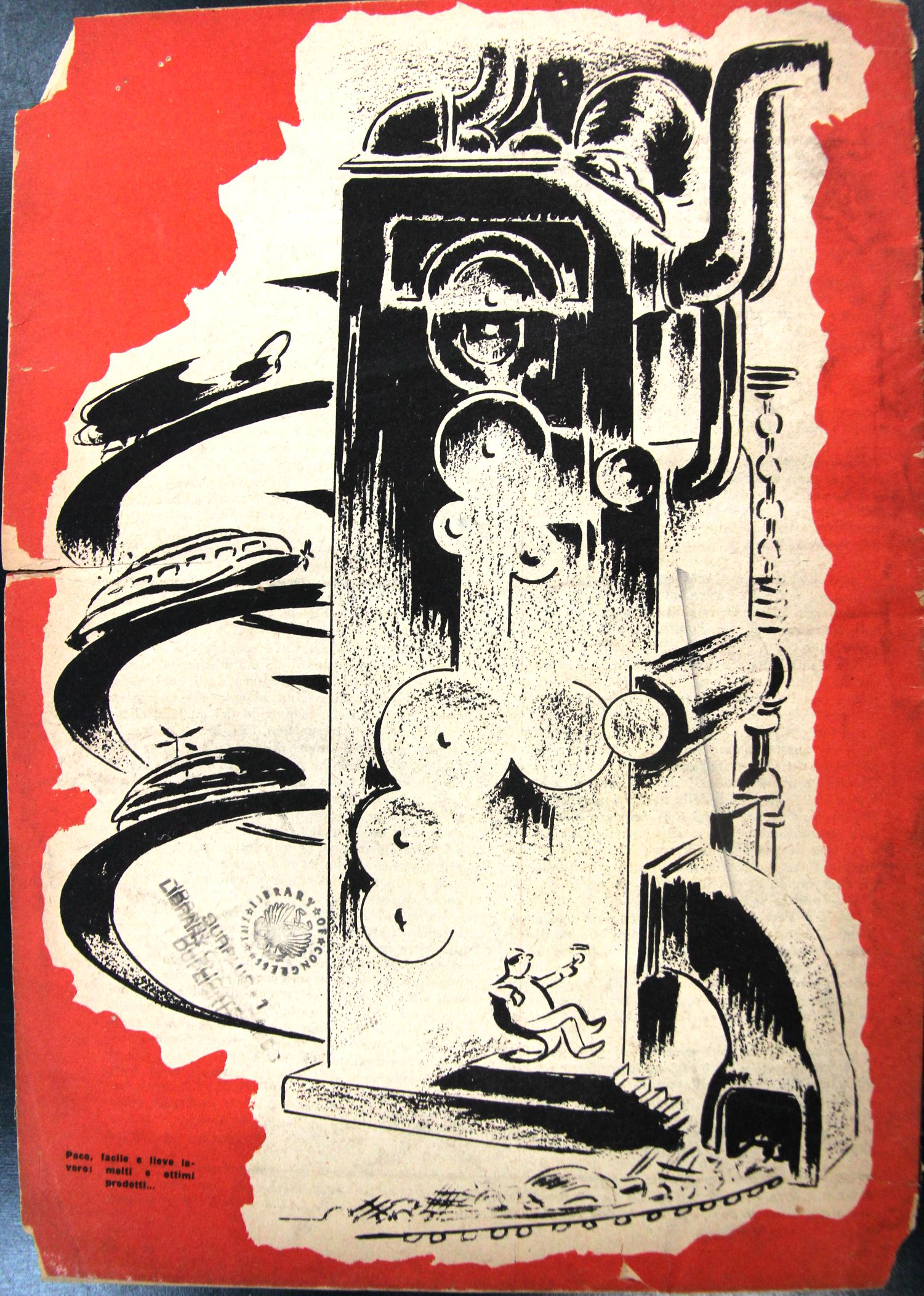
    I found this curious publication the other day, one that takes a look at the near future at the end of WWII. It is by Mario la Stella (“And Now that the War is Finished? What Will the Future Be?”), and unfortunately there is no date in the pamphlet, and I cannot find a listing of the work in WorldCat/First Search, and there are no clues for me about dating it, though I suspect it could have been published as early as 1944 (as Italy was finished with the war by 1943 but the Germans were not finished with them) but probably it the real date was 1945.  That said, the most interesting part of this work is the design in the illustrations, which in their breezy and suggestive way remind me of a style in the 1950’s rather than the 40’s–with the exception of the cover, that is, because there is nothing light and airy about that.  

    Future Italian b

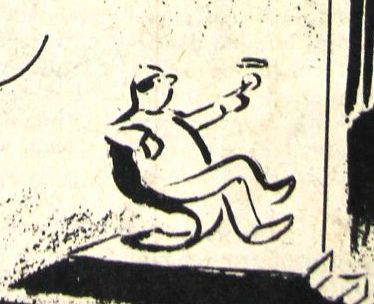
     The future vision of la Stella is not very penetrating, though the final panel does display a huge machine regulating traffic or something that is controlled by a lounging operator with just one button.  

    I think it would be an interesting thing to have a look at “The One-Button1 Solution to Everything” following the development of the ultimate state of the push-button world, where most things/everything is automated.

    Future Italian C detail

    And just a note here: la Stella was the author of several books, including a history of Rome, and a textbook or two in the sciences. There was also a work on Marconi (published in the year of the inventor’s death in 1937) that contains a very early public reference to Marconi’s possible work on the “death ray”, which sounds like it was some sort of directed energy weapon/EMP device that would disable powered vehicles

    Future italian

    Future Italian c

    Notes:

    The OED definitions of “push button” follows: 

  • A Map of Fordlandia: the “Drama of Transportation”, 1932

    JF Ptak Science Books    Quick Post

    FORD_2_155

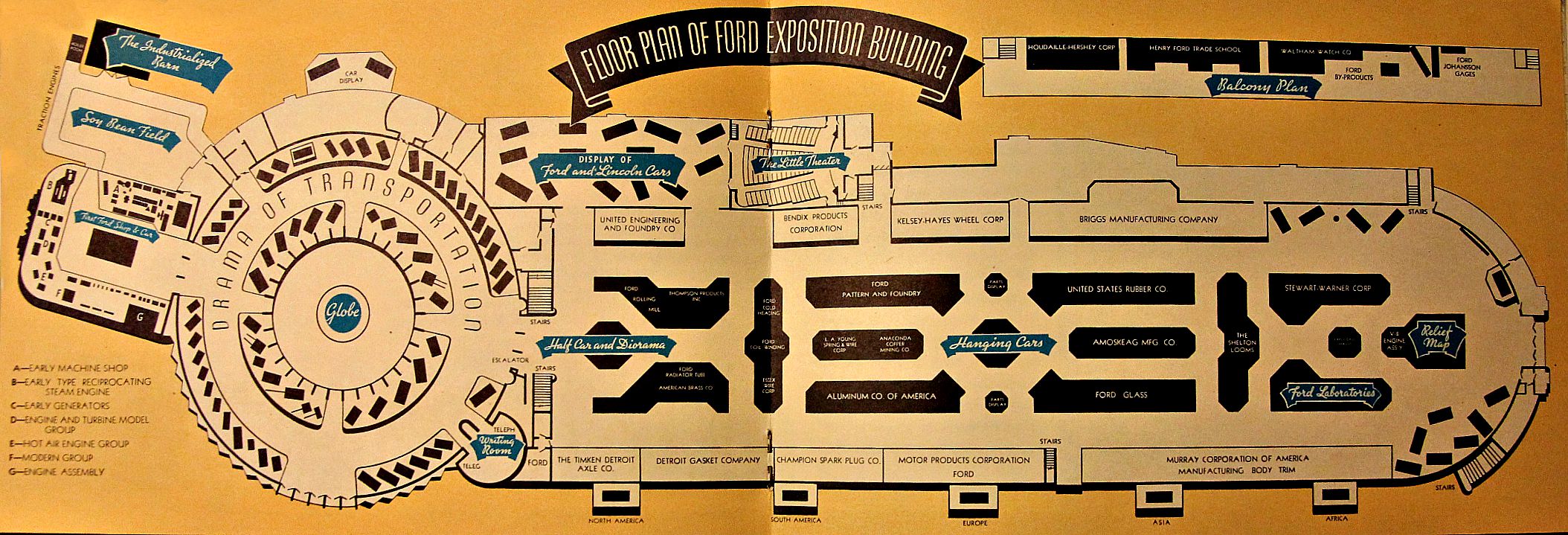
    The “fair” in this pamphlet, Ford at the Fair, was the Chicago World’s Fair of 1932, and it was a souvenir for the visitor to the Ford Motor Company pavilion.  Well, the building–pretty in profile, but odd/weird in plan–held other exhibitors whose business was related in support of Ford (Alcoa, Anaconda Copper, Bendix, etc.), and displayed in a singular turnaround the Cars as Consumable Products. (Remember that world’s fairs such as this were still mostly displays of technology and industry and business, so you were more likely to see a Meat Pavilion or Heinz Products then than to see curious rides and historical whatnots in present incarnations.) 

    This unusual Bavarian trophy/hunt display of a couple of Fords in the middle of the floor plan–which says simply “hanging cars” on the map looked impressive and a little alien-esque:

    FORD154


    And the map of the pavilion, which once you get over the possible Renaissance-like plan, and you pull back a little bit, it takes on a bit of a profile of a tank-like dragster:

    Ford _3_

    In any event, this was a glorification process wrapped around a celebration of old-timey industrial celebration, presented in gleaming metallic greens and blues, and rubber, and gasoline, and oil, and hope. 

    Here’s an interesting video showing the Ford pavilion at the fair, found at youtube.com:  

  • The Somerset Coal Strike, 1922/3

    JF Ptak Science Books   Quick Post     History of Lines series: Strike Lines

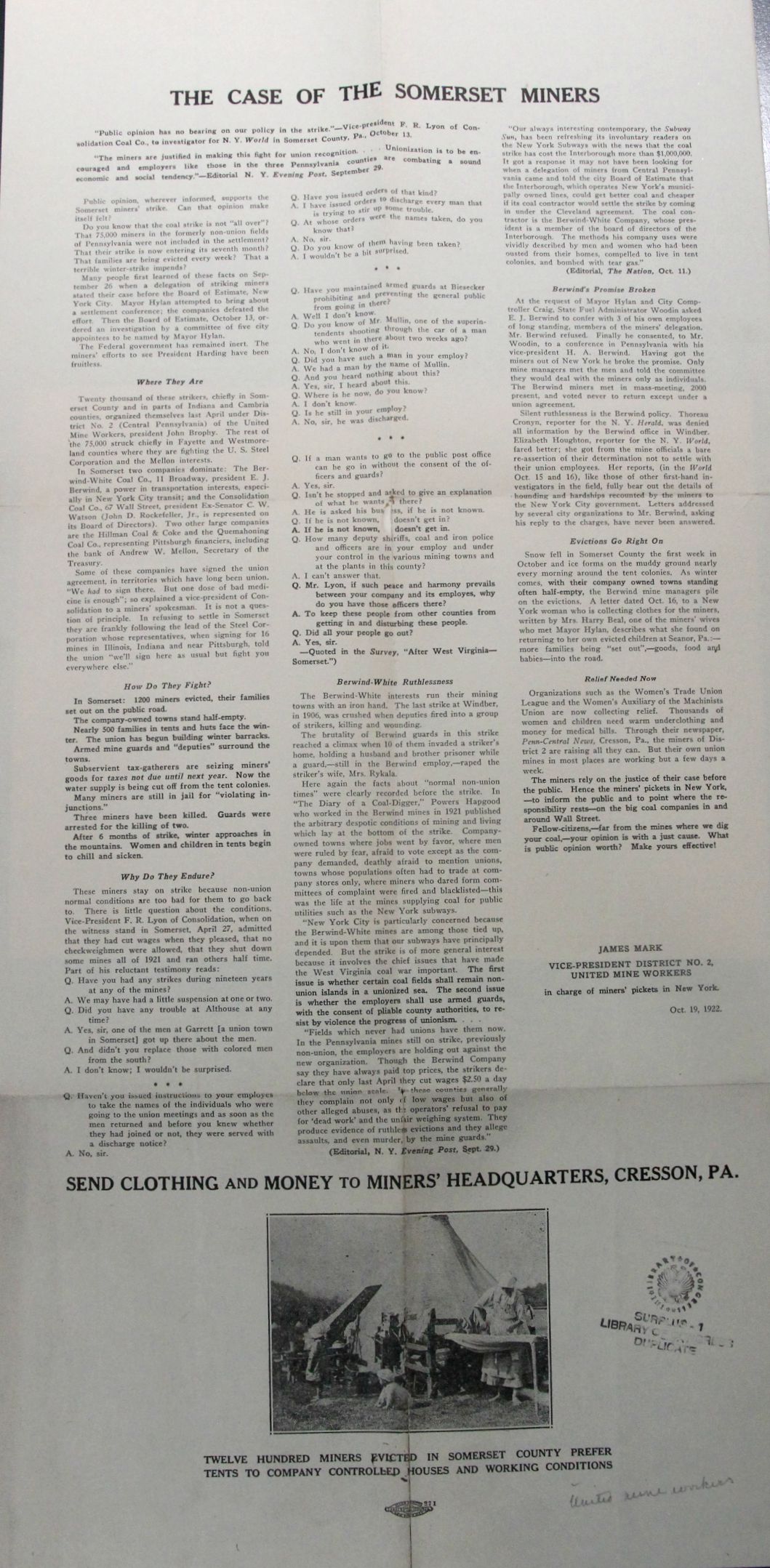
    This is a rare broadside (about 24″ tall) seeking household items and money for the relief of the striking workers of the hard/tough/brutal Somerset Mine strike of 1922-3.  The miners struck for union representation from the United Mine Workers against the Berwind-White Company, which ran a very tight ship, evidently. The miners for Somerset lived in a classical company-town existence, with their pay being mostly entirely absorbed by the company via rent for company-owned houses, stores, food, water, and so on, all aspects of life controlled by the employer who/which retrieved the salary of its underpaid workers by controlling all aspects of the workers’ lives. So the miners struck for representation from the union for more money and management resisted, especially since it would cost them profit during a year that saw coal production falling by a third.  So the strike began and lasted from 1922 to 1923, during which Berwind-White employed scabs and security and thugs to intimidate and control their workers, evicting 1200, sending hundreds of families into a Pennsylvania tent life for the winter, stopping the flow of water, and general thuggery.  The strike ended unsuccessfully in 1923, though the union came in by 1933. 

    Reading this summation and plea is a heartbreaker, and will no doubt make a person appreciate the idea of unions, especially in the U.S.A. of the 1920’s/1930’s.  


    Coal strike somerset

    ·Posted by :

    ·in:

    —
  • Uncommon Trench Sport, 1916

    JF Ptak Science Books   Quick Post

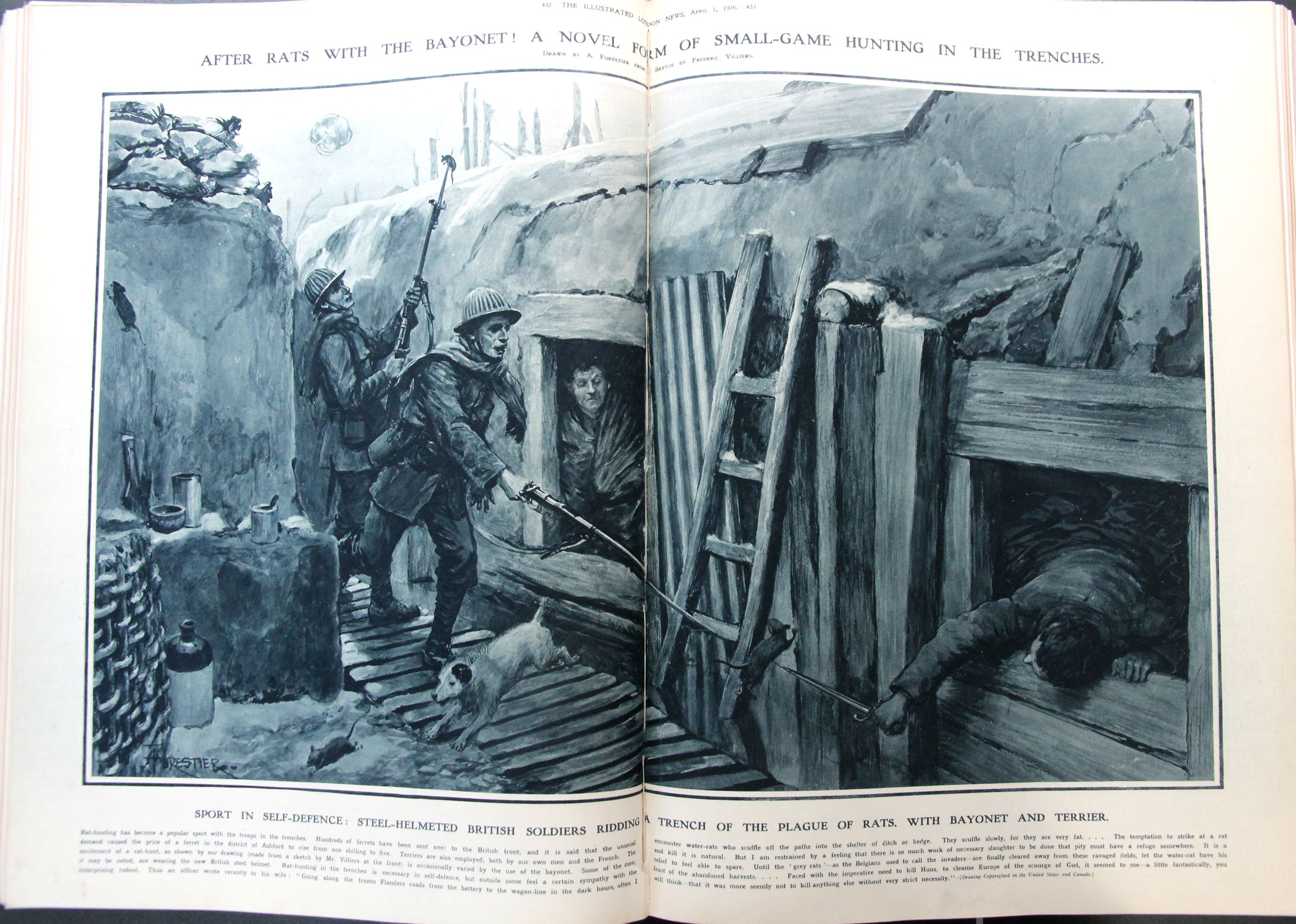
    People were of two minds when it came to rat hunting at the Front in 1916, or so it would seem: rats seem to have been fair game in the trenches, given the tough conditions and close quarters; on the other hand, rats in the open, along the roads, were let to live by many who thought that killing in battle was enough, and that a respect for other life–even rats– was an acknowledged necessity.  In the scene below we see British soldiers going about the business of eradicating rats from the trenches–with bayonets.  A terrier is let loose on one, while the soldier in the background displays his trophy above the fire line for the Germans across the killing fields to see, as no doubt the enemy had the same problem, and there was at least in this brief moment a common human contact.  

    WWI Project Rat Hunting

    [Source: the Illustrated London News, April 1, 1916.]

    ·Posted by :

    ·in:

  • Ultraviolet Medical Treatment, 1922

    JF Ptak Science Books  Quick Post

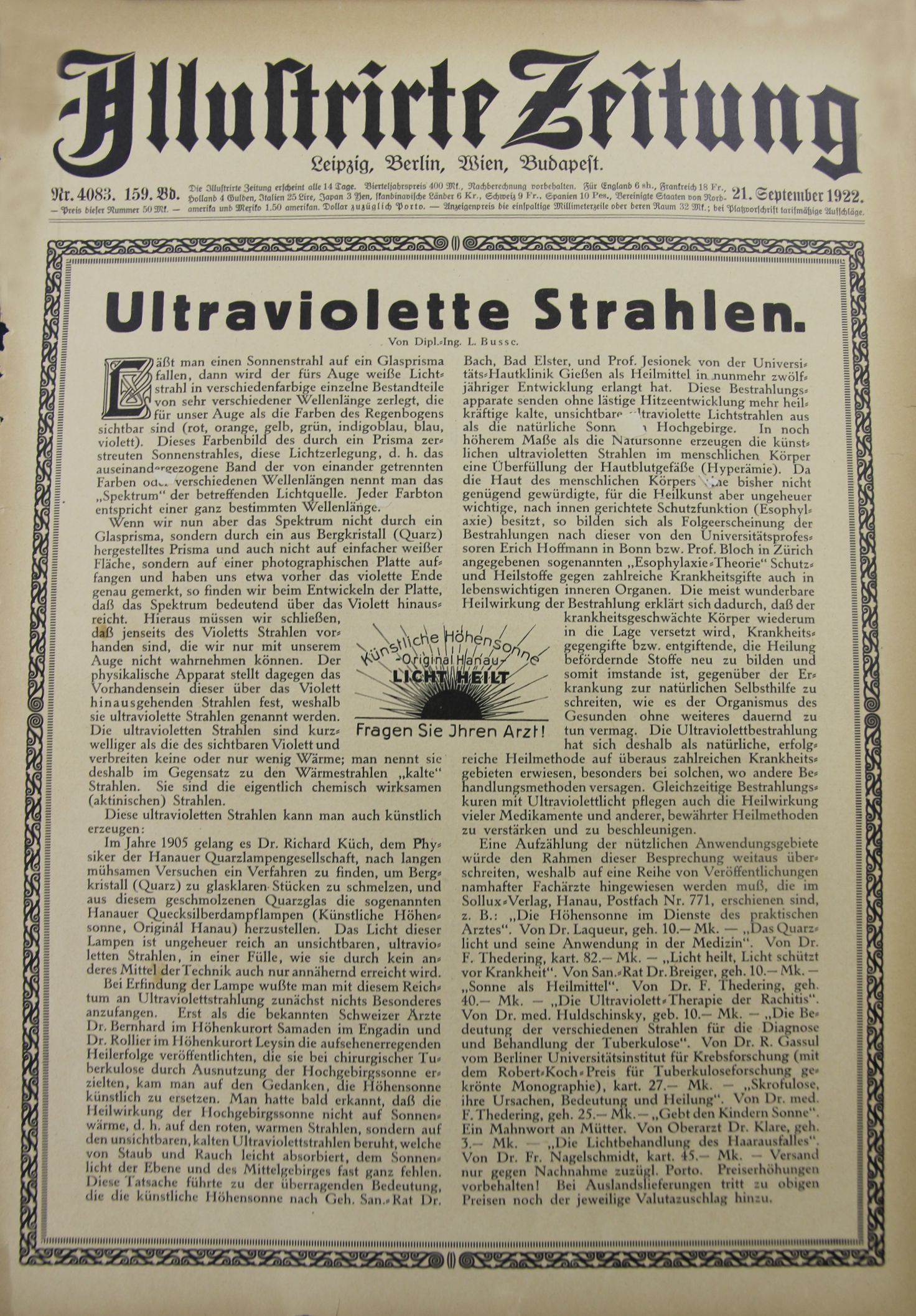
    This is a large, full front page advertisement for ultraviolet therapy, and appears in the Illustrirte Zeitung (Leipzig) for September 21, 1922.  Therapy using UV lamps of various origins was of relatively recent origin (ultraviolet radiation being discovered by Johann Ritter in 1801) as stated in the text here, which gives a pretty lengthy appreciation of the history of the use of crystal lamps, and noting (in paragraph four) that the principle in the invention of such material was Richard Kuch. (Kuch was a physicist and chemist who created the first mercury vapor quartz glass lamp in 1905 and the first mercury vapor high pressure lamp in 1906.)  UV treatment does have its proper place in the history of medicine, but it certainly came to occupy a lofty perch in quack medical treatments for home use in curing everything from cancer to gout to dandruff via the “purple light rays”.  I really don’t know all that much about this subject and was reporting on the design aspect of the ad–the treatment of the subject though certainly seems academic, complete with a priced guide to related literature.  

    Ultraviolet

    ·Posted by :

    ·in:

  • A Smart Visual Representation of Terrestrial Land Mass, 1852

    JF Ptak Science Books    Post 2522

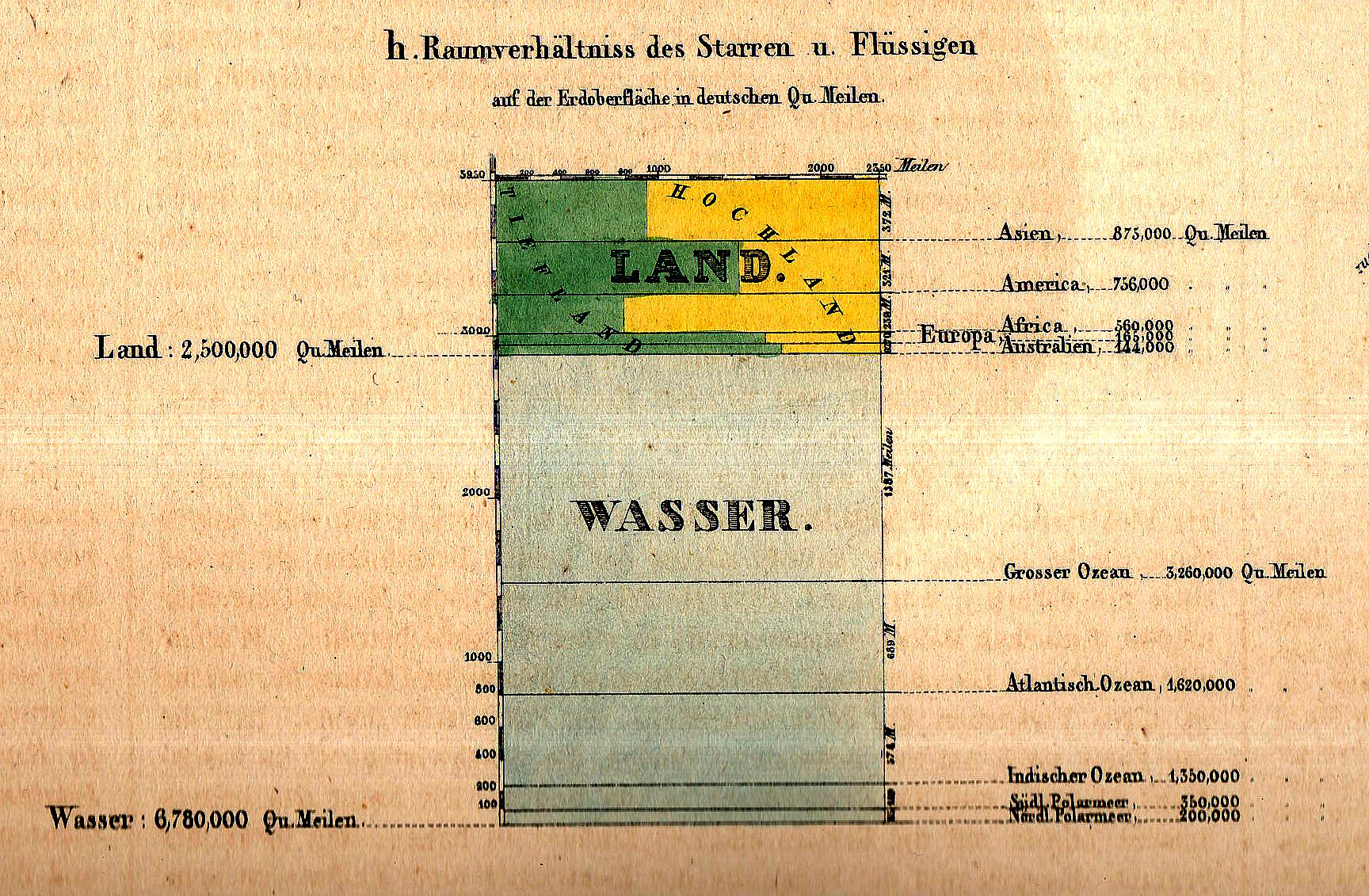
    Maps dataviz land wasser detail


    Before the Neil deGrasse Tyson version and update of Carl Sagan’s landmark television series, Cosmos, there was Alexander von Humboldt, and his enormously influential book of the same title, printed in 1845-1862.  Well, von Humboldt’s (1769-1859) book was actually Kosmos when published in German, which is where it started its life (and which von Humboldt suffered mightily for in it English translation).  Von Humboldt was enormously studied and educated and of a high scientific mind over many subjects, one of those 19th century figures who seemed as though they could know everything, a polymath of high order (along the lines of Goethe and von Helmholtz and Thomas Young and others).  He was a meteorologist and biogeographer before those sciences existed; a naturalist, geographer, archaeologist, and explorer, a natural philosopher of magnitudes.

    • The original of this map is available for purchase from the blog’s bookstore, here. 

    Kosmos reflected his lifelong interest in order, and what he did was astonishing–he attempted to unifying the complexities of nature in one book (of five volumes), binding the various branches of science together in a cohesive whole, attempting to show how the laws of the universe acted here on Earth.  It was a very influential work, very progressive, a masterwork of scientific method.  

    Sagan (and Tyson, soon) tried to explain what the universe was all about; 160+ years ago, so did von Humboldt, and for his time he came damned close to doing so, or as close as anyone could possibly come. 

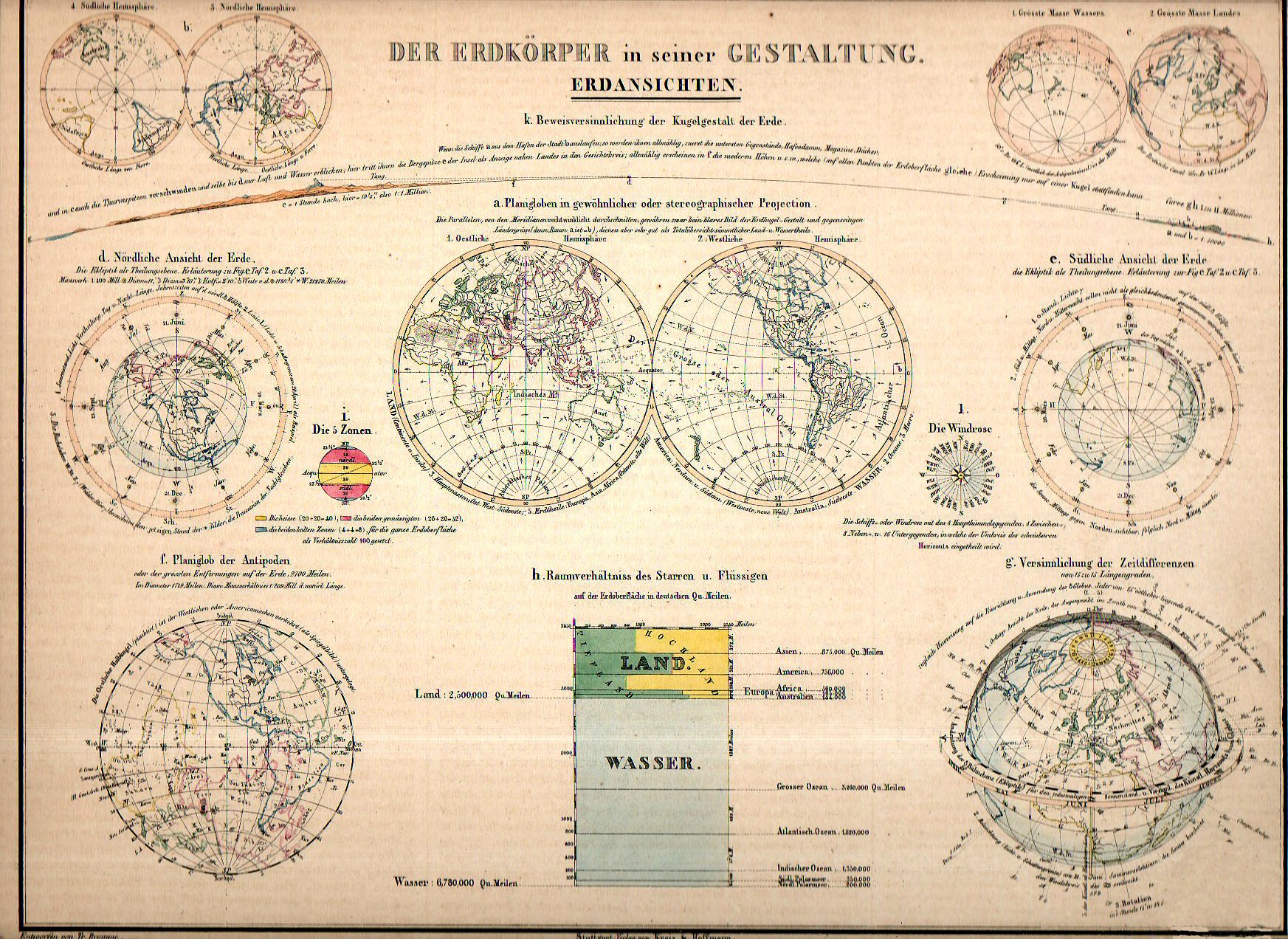
    The fine little inset1 above (1×1.5 inches in real life) is an excellent display of water/land mass of the Earth, and is but one of eleven such images on this beautiful image (which appears in full, below): 

    Maps dataviz land wasser156


    Notes:

    “Der Erdkorper in seiner Gestaltung. Erdansichten. Entworfen von Tr. Bromme. Ausgefuhrt v. E. Winckelmann”, published in Stuttgart, by Verlag von Krais & Hoffman.  This map appeared in  the atlas of Alexander von Humboldt’s Kosmos, 1851.

  • The Preliminary Tower at Trinity, 1945

    JF Ptak Science Books   Quick Post     Part of the series on Atomic and Nuclear Weapons

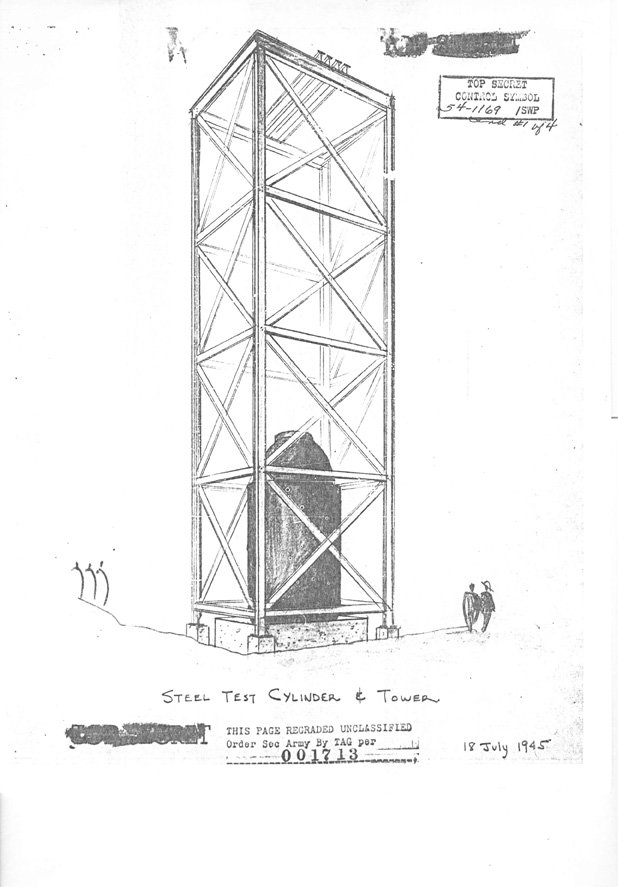
    Here’s an interesting formerly Top Secret document from the Lee Groves collection of the George C. Marshall Foundation:

    Atomic bomb tower Groves archive

    The document is dated two days after the Trinity test of 16 July–I presently do not know why this is so.  

    “The sketch is of a test cylinder procured and installed at a time when we were uncertain as to the explosive power of the bomb. If, at the time of the test, we anticipated that the force might be relatively small or even that there might be no nuclear explosion, we were going to place the bomb in the cylinder so that it would be possible to recover the plutonium.”–Marshall Foundation, below. 

    The cylinder/container for the bomb was called “Jumbo”, and was 25’x10′ and 214 tons–a big thing.  It was decided at some near point that “Jumbo” would not be necessary as it became evident to many that the bomb would indeed “work”.  “Jumbo” and the tower were constructed and ready but abandoned for their intended purpose–it was left to stand, about 800 yards from the point of explosion; afterwards, “Jumbo” remained intact but its steel tower was completely destroyed. 

    Source: the George C. Marshall Foundation: http://marshallfoundation.org/library/documents/steel-test-cylinder-tower-july-18-1945/#sthash.ccG8PSRb.dpuf

    Thanks to Gene Dannen at www.dannen.com for the lead on this.  

    ·Posted by :

    ·in:

  • A Plate Full of Eyes (1851)

    JF Ptak Science Books  Quick Post

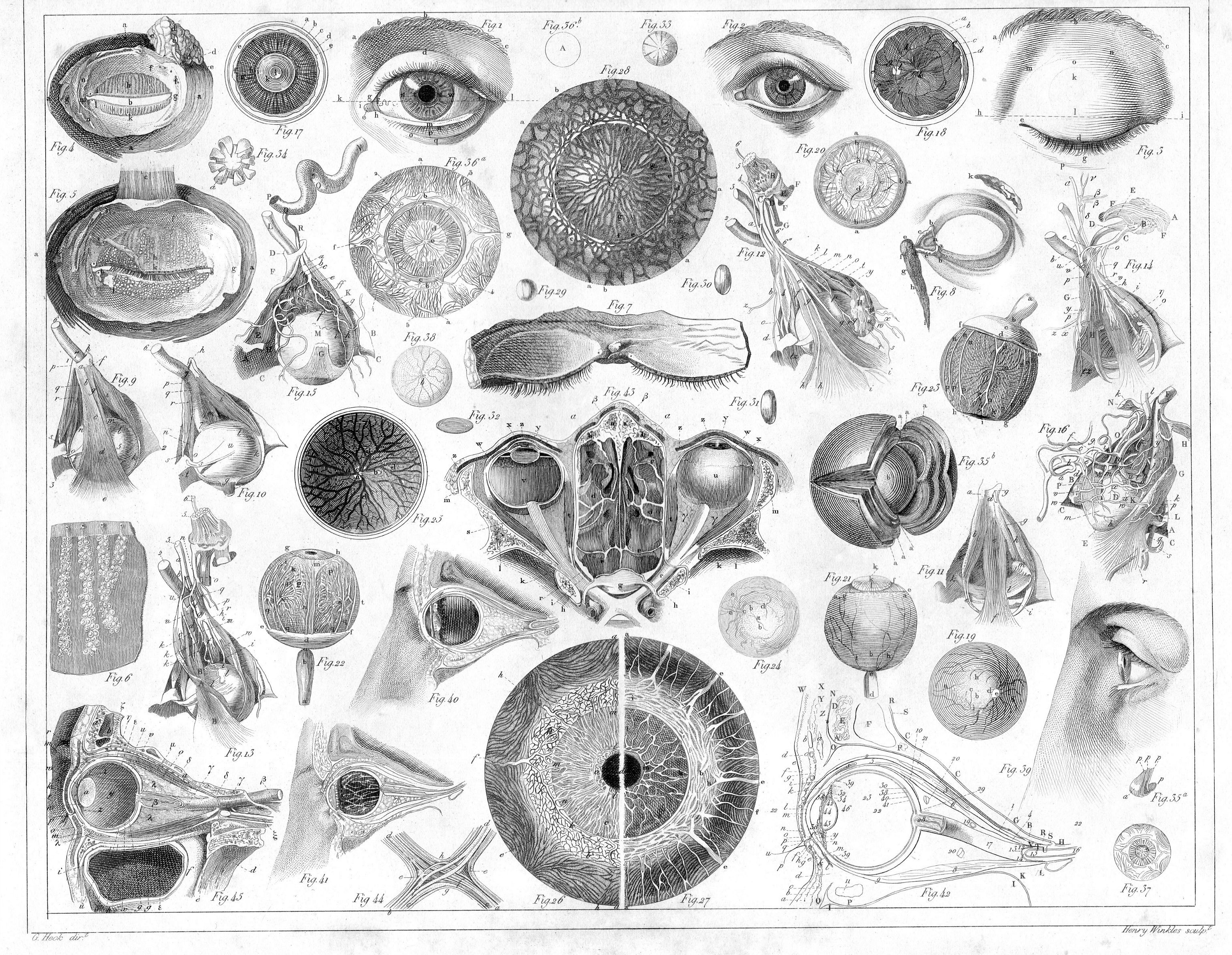
    J.G. Heck wrote and compiled a fascinating and complex work entitled The Iconographic Encyclopedia of Science, Literature and Art, and was published in America for the first time in 1851 following Spencer Baird’s translation from its original German.

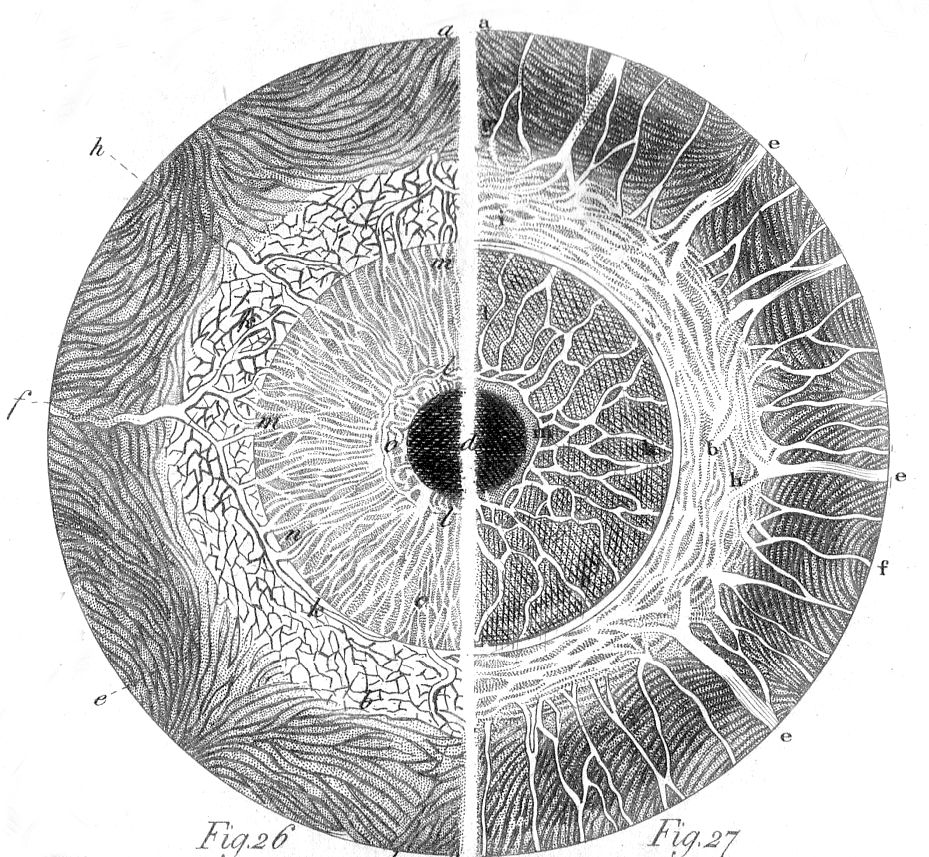
    Eyeballs160

    The key to his work is the amount of data displayed on each of the 500 engraved plates illustrating this work and the way in which it is arranged.  The design and layout of the 30,000 items on these 500 plates was a work of genius, and for my money it is easily the best-presented complex means of the display of data and objects that was published in the 19th century.  

    The image above is from one engraved plate featuring 43 aspects of the human eye–beautifully arranged, and somehow fitting perfectly on the 9×11″ sheet of paper.  It is a work of real design engineering.  

    The image above is a detail from:

    Eyeballs159

  • Beautiful Engineering Ad, 1876

    JF Ptak Science Books  Quick Post

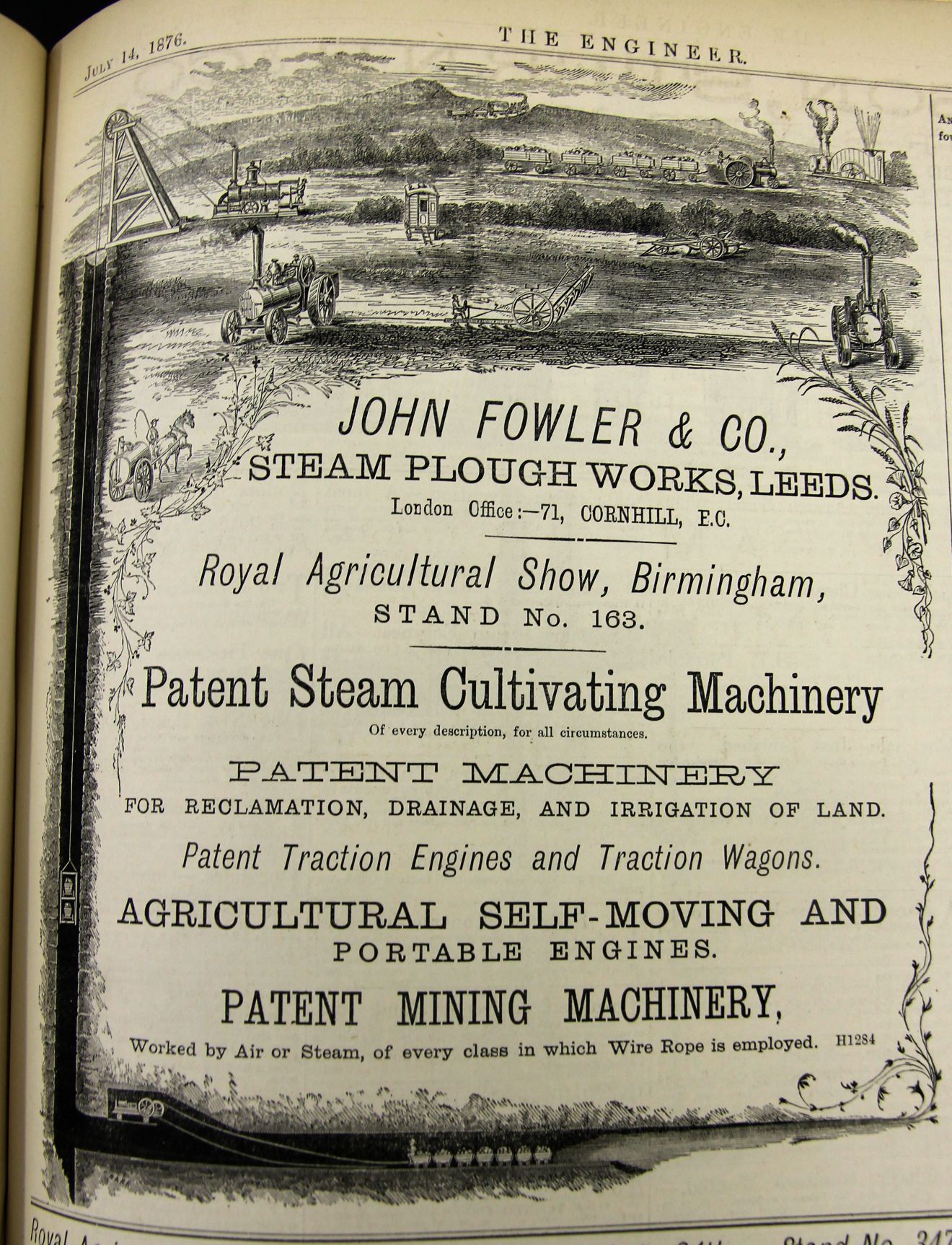
    This beautiful ad appeared in the middle of The Engineer, published in London on 14 July 1876. John Fowler & Co. sold all manner of steam machinery for agricultural and mining purposes, as we can see in the little drawings that illustrate the ad–and particularly the mining scene, which shows the Fowler machinery above and below ground. The original ad is about 5″x7″–the little mine shaft at bottom is only a few millimeters.

    ENgineer Ad 1876

    ·Posted by :

    ·in:

Recent Posts

Archives

Categories