A Daily History of Holes, Dots, Lines, Science, History, Math, Physics, Art, the Unintentional Absurd, Architecture, Maps, Data Visualization, Blank and Missing Things, and so on. |1.6 million words, 7500 images, 4.9 million hits| Press & appearances in The Times, Le Figaro, Mensa, The Economist, The Guardian, Discovery News, Slate, Le Monde, Sci American Blogs, Le Pont, and many other places… 5000+ total posts since 2008.

  • Another Underground Airport (1935)

    JF Ptak Science Books   Quick Posts

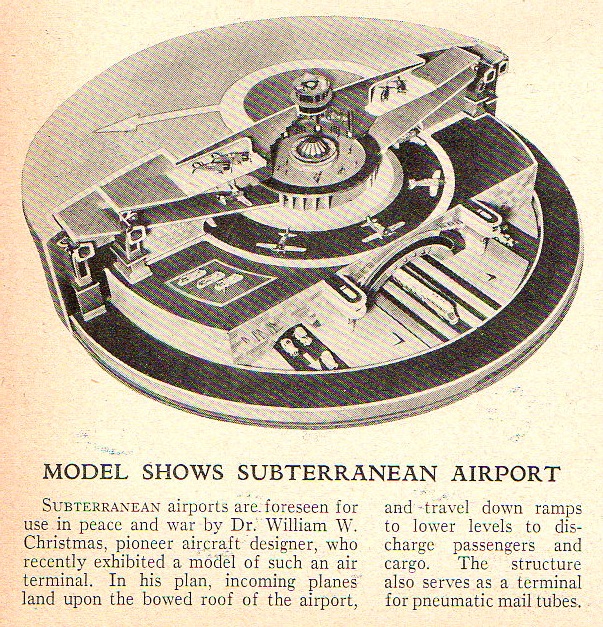
    Dr. William W. Christmas (1865-1960) a long-lived deep pioneer in the history of early aviation, proposed this interesting, streamlined, and odd underground airport, the image appearing in Popular Science Monthly in April 1935 (volume 126 for January-June 1935).  The numerous levels seem to establish a subway line, four lanes of vehicular traffic, a mall-type concourse, then perhaps something else, topped by a rotating platform of aircraft, above which was a pedestrian/passenger concourse above which was an access area for the aircraft.  I’m not sure why this was designed, but it is certainly engaging–and compact.  

    Airport underground210

    Here’s a photo from Smithsonian of Dr. Christmas and a cross section of the model of the airport:

  • FDR’s Crazy Commie Eyes of 1944(!)

    JF Ptak Science Books   Quick Post
    Fdr crazy eyes212

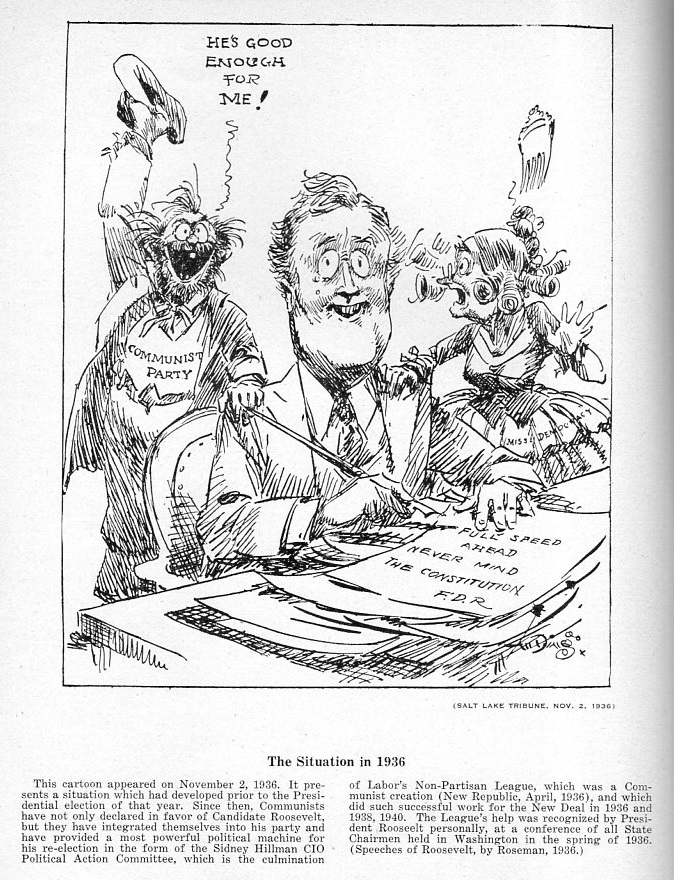
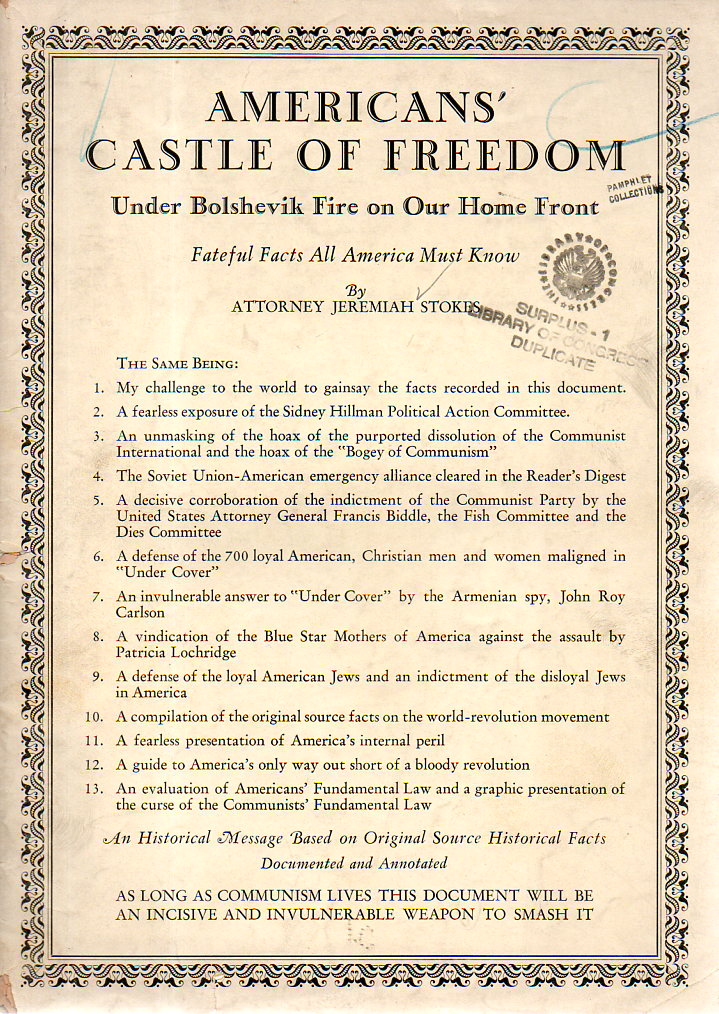
    Nothing quite says crazy like crazy eyes, and the best sort of crazy eyes are Commie.  At least that is what we are led to believe in (“Attorney”) Jeremiah Stokes’ identity-romp through Democratic politics in his enormously-titled  America’s Castle of Freedom under Bolshevik Fire on Our Home Front Fateful Facts All Americans Must Know…

    Fdr crazy eyes211

    In what may be the first time I have seen someone identify themselves as an attorney in nearly 40 years of hard reading by putting the word in front of their name on the title page, Mr. Stokes fills up the title on the front of his pamphlet with 13 additional points. There are points in this slippery-mortared wall of protection that are salient; on the other hand there’s a lot of Commies-in-the-pink-sheets stuff too–particularly his indictment of President Roosevelt as a Communist agent.  

    There are other pamphlets here that also make this claim–of Roosevelt’s constitution-crushing pagan Communism–but none I think are accompanied by the ad hominem assault giving him those crazy Commie eyes.  

    Fdr crazy eyes213

    Here’s the surprise: I thought that this publication would have been published in 1936/7 or thereabouts, but it actually came out in 1944, deep into Mr. Roosevelt’s superior presidency and nearly at the end of a war in which he played a broad part in winning. Mr. Stokes had some old scores to settle with the Democrats, and he used a very broad brush on a very small canvas.  People were very concerned about the Soviet Union in 1944, even as it had just emerged a year before from the meat-grinder assault by Germany.  Mr. Stokes was getting his readers ready for what was ahead, and for the Communist infiltrators that were already at home. While Stokes (from Salt Lake City, 1877-1954) could be considered far-right politically,  he late in life married Elizabeth Dilling, a propagandist of means who was far-right to his far-rightism.  

    ·Posted by :

    ·in:

  • One of the Many Mona Lisas of Early Flying Machines

    JF Ptak Science Books  Quick Post

    Flying macine 1885214

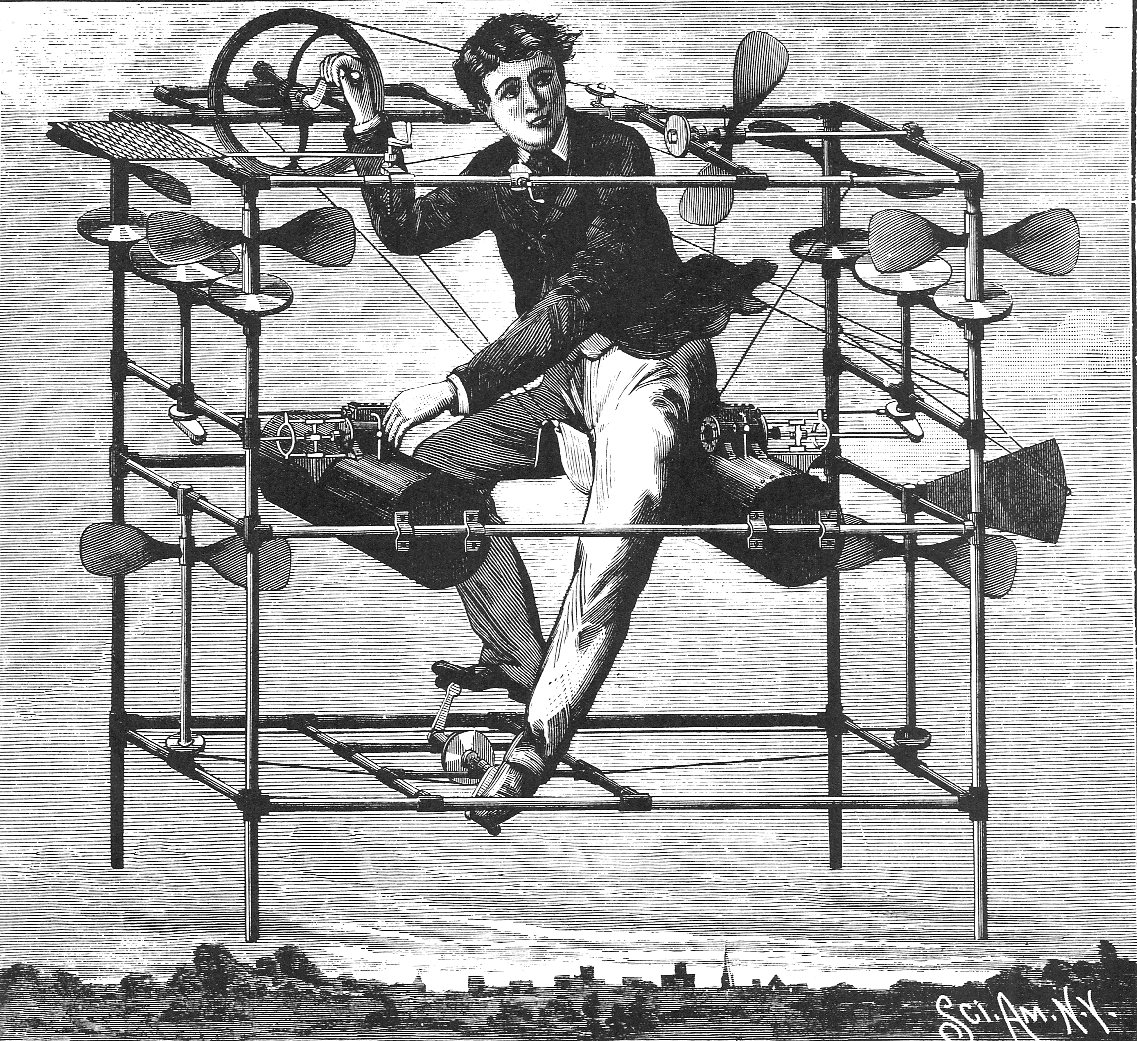
    I’m pretty sure that I’ve only written a plural of “Mona Lisa” a few times before in my history of writing–and that in reference to the real one, when it was stolen by Vincenzo Perugia (and company?) in 1911. (My guess is that it was stolen on demand for a collector and then offered for sale to a number of other underworld-y collectors who were sold fakes–at that point, what could they do (?) given that they couldn’t exactly report the swindle to the police.) For me there are some iconic image of flying machines that made the news in the pre-Wright Brothers era, and I would consider the one here to be one of them.

    It was designed by W. Ayres and happily and nattily appeared in the pages of the Scientific America (1885). It seems to have been a kind of helicopter/ornithopter, partially human powered and partially powered by compressed air that would run a generator that would run the little propellers situated around the aircraft.  The frame of the craft was made of 1/4″ steel tubes, though there is no indication of their thickness. Given that there’s something like 40 feet of this pipe superstructure, I’m going to guess that the pipe was a pound/foot; then given the weight of the pilot, and the other bits and pieces, this antique drone would have to work very hard to lift its 200′ payload.  The (May 9th) article states that there is enough power generated to lift that 200 pounds, but…

    In any event, I really like the image.  

  • Measuring Things in Terms of Aircraft Carriers–Tokyo, 1925

    JF Ptak Science Books   Quick Post

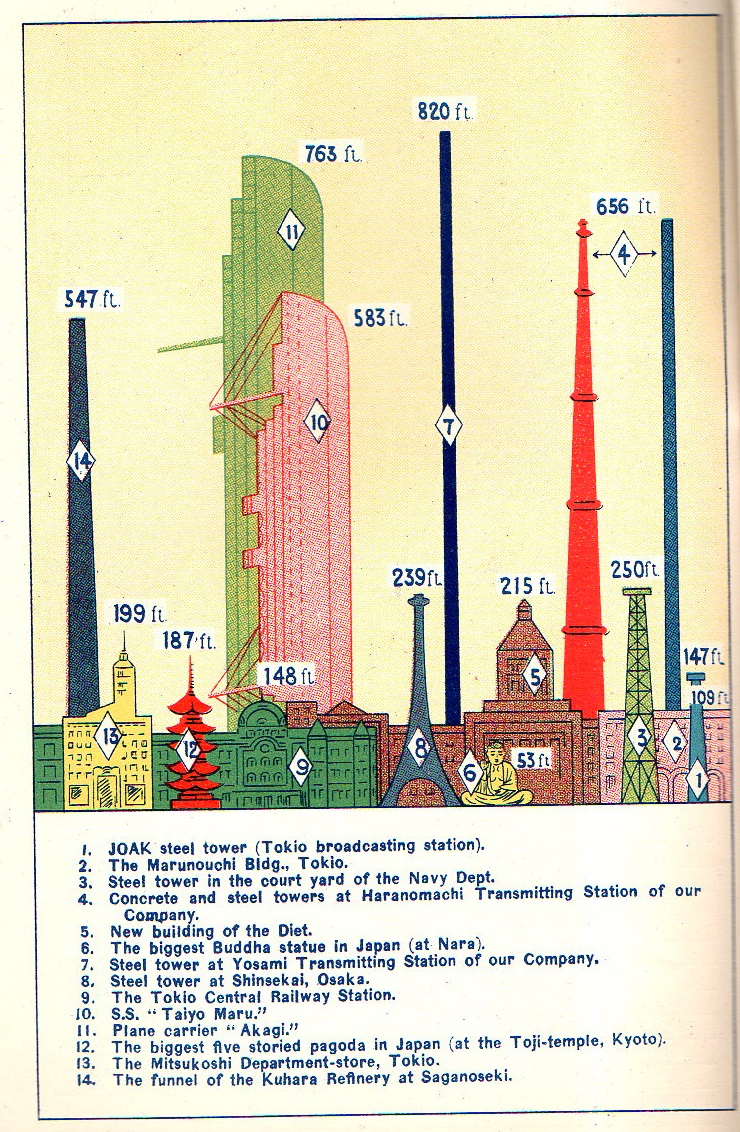
    Here’s an unexpected bit of data visualization:  at the tail end of an obscure pamphlet —A Sketchbook of the Activities of the Japan Wireless Telegraph Co., Ltd.–a 26-page work published in Tokyo in 1925 was this fine and unusual-looking chart of comparative heights of Japanese structures. This also includes two of my favorite comparative unit comparables–upended ships (#s 10 & 11), including the aircraft carrier Akagi (#11).  

    Japanese data viz216


  • Every Civilian a Fighter! Civilian Defense, U.S.A., 1943

    JF Ptak Science Books   Quick Post

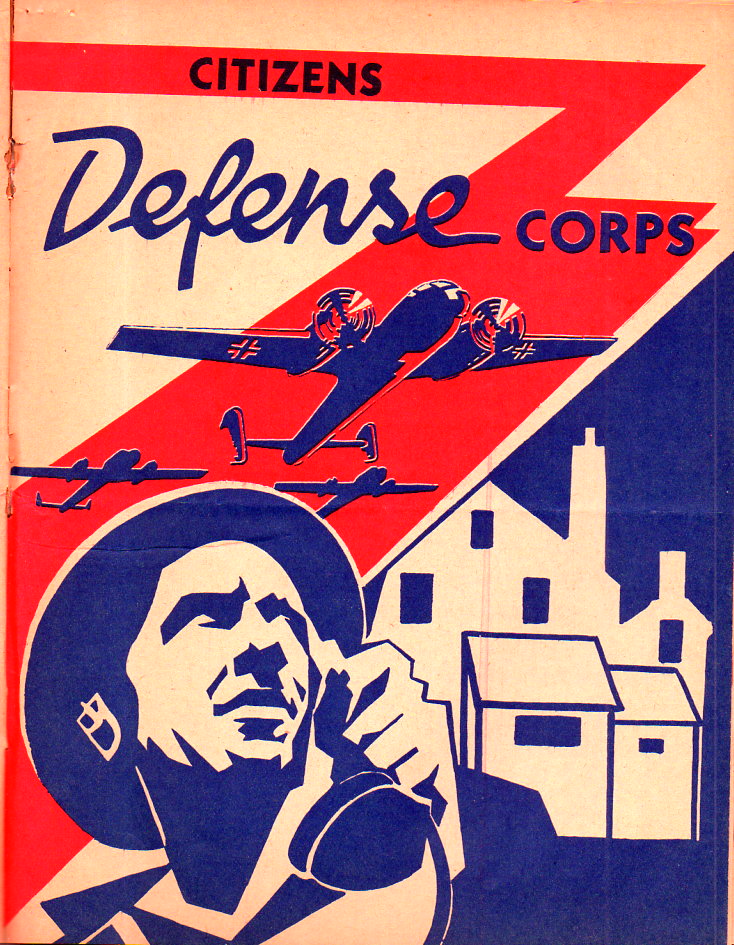
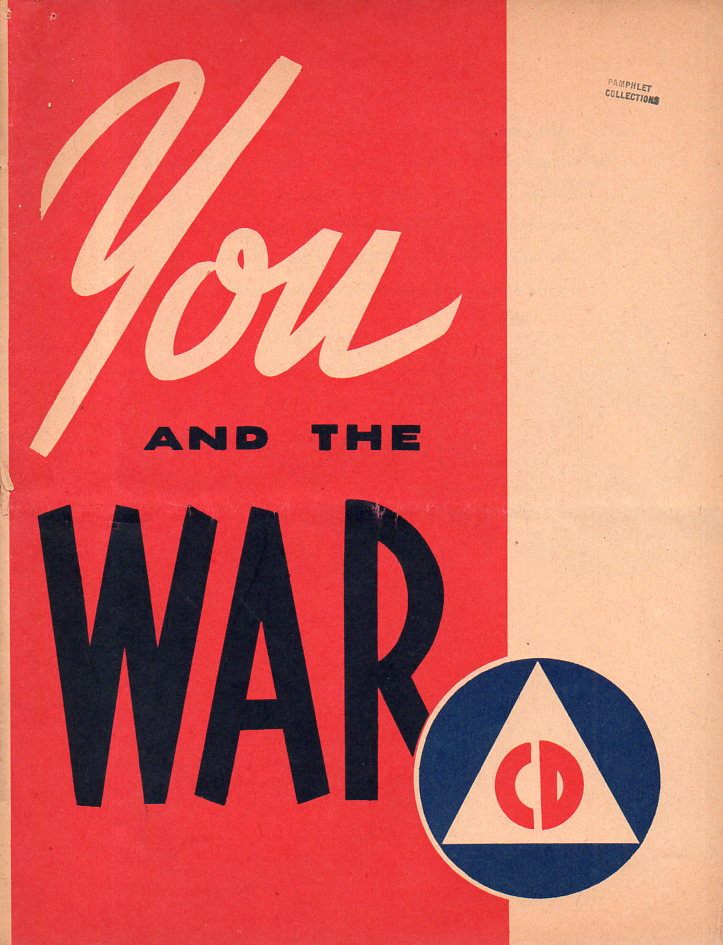
    There’s some very strong stuff in this U.S. Civilian Defense (CD) pamphlet–the graphics are as razor-sharp as the suggestions that the pamphlet was making.  This was issued in the hurtlocker year of 1943, and it called for all manner of civilian volunteers to train for keep-society-together stuff should there be an attack on the United States.  

    CD defense 218

     [Image depicts an air warden calling in his observation of a German air attack. The aircraft looks to me like a Dornier Do 17 “The Flying Pencil”.]

    The “Civilian Protection Jobs” on notice and advised in this pamphlet included calls to citizens for: command section (3 per 1,000 population, 20 hours training); Drivers Corps (5 per 1,000, 38 hours of training); Messengers, (8 per 1,000, 20 hours of training); rescue squad (2 per 1000, 40 hours of training); auxiliary police (4 per 1000, 23 hours of training); auxiliary firemen (4 per 1000, 27 hours of training); fire watchers (15 per 1000, 10 hours training); demolition and clearance units (2 per 1000, 10 hours of training); decontamination units (1 per 1000, 20 hours of training); emergency welfare units (1 per 1000, 7 hours of training).  There is also an index for another hundred or so jobs that needed to be filled in time of national emergency.  

    The cover:

    CD defense 219


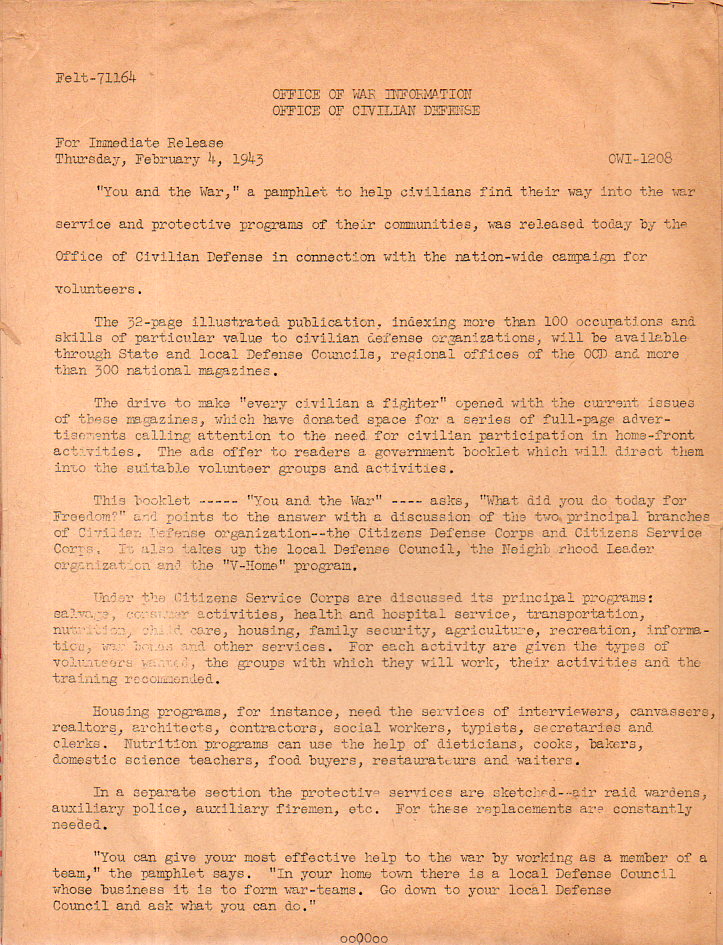
    As it happens my copy was one of two sent to the Library of Congress for copyright purposes and it includes this press release, which explains the pamphlet:

    CD defense 220

  • The Giant Zeppelin Biplane

    JF Ptak Science Books   Quick Post

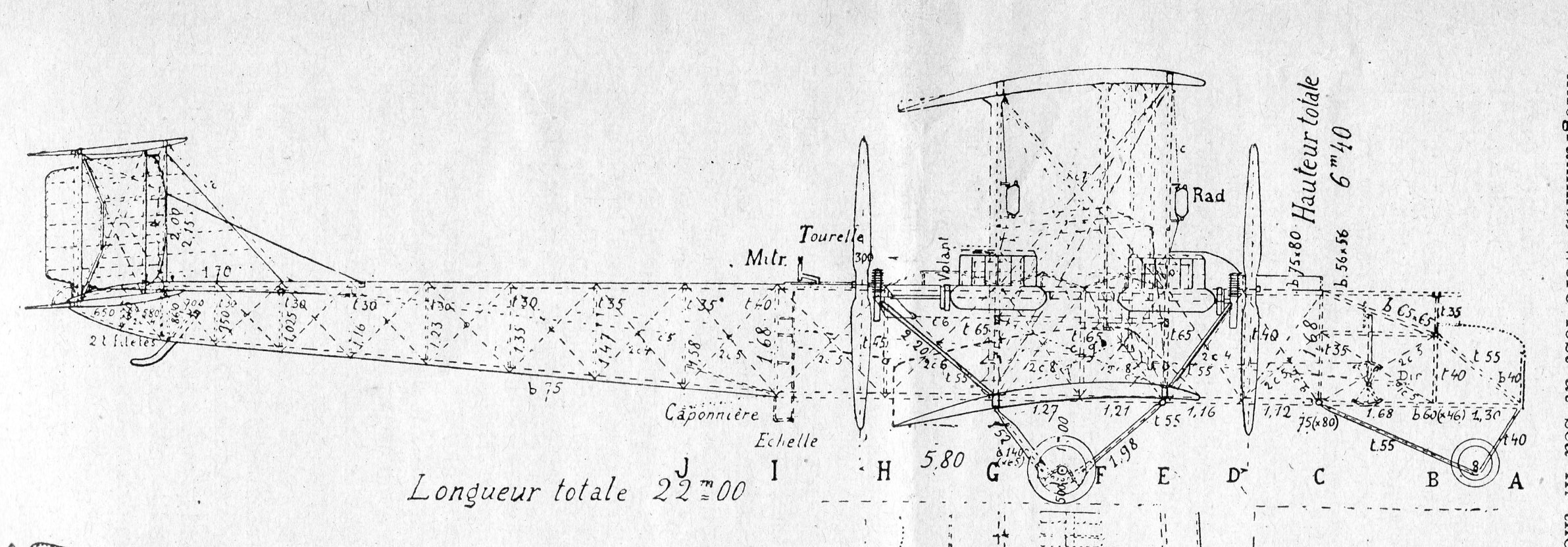
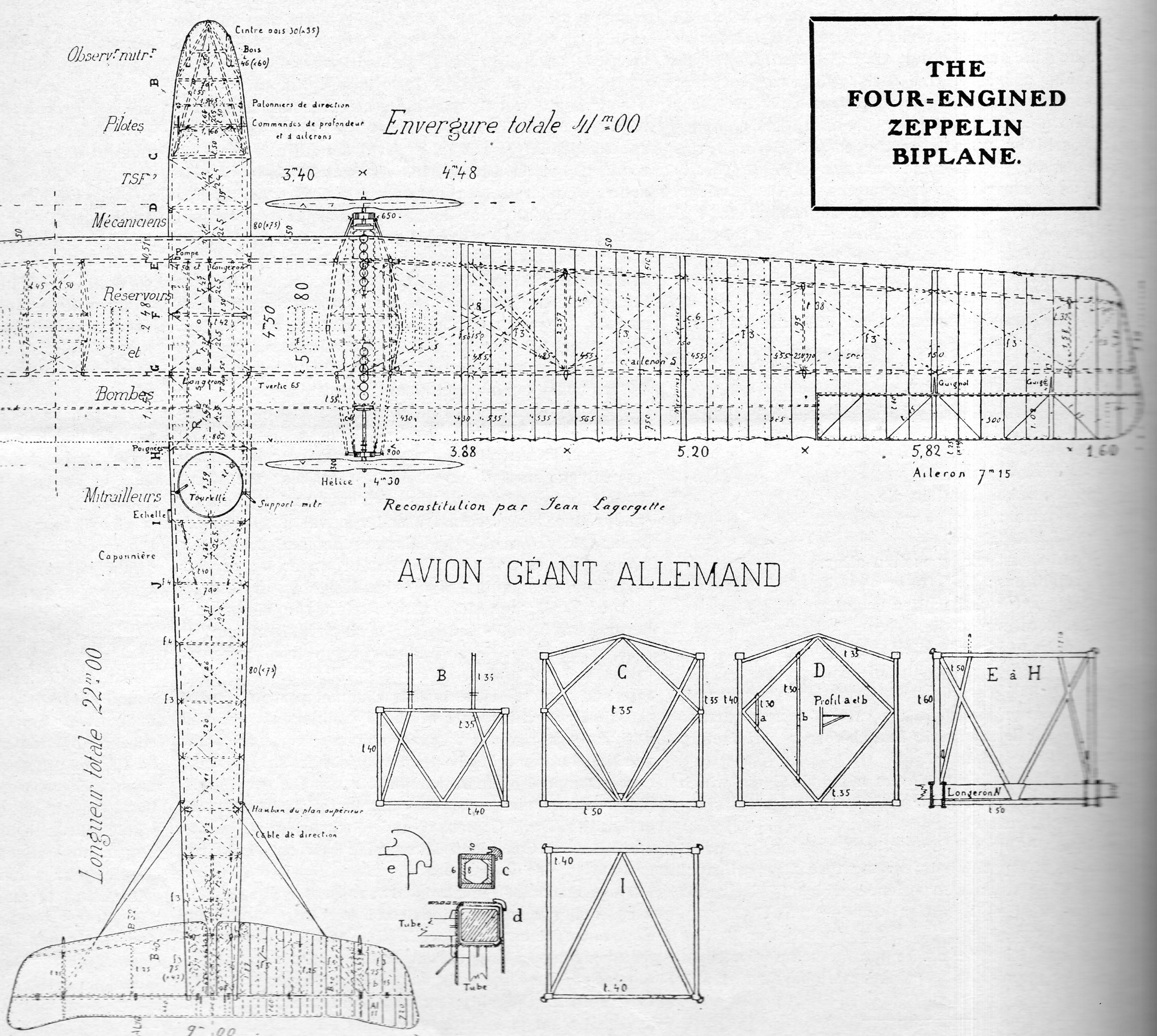
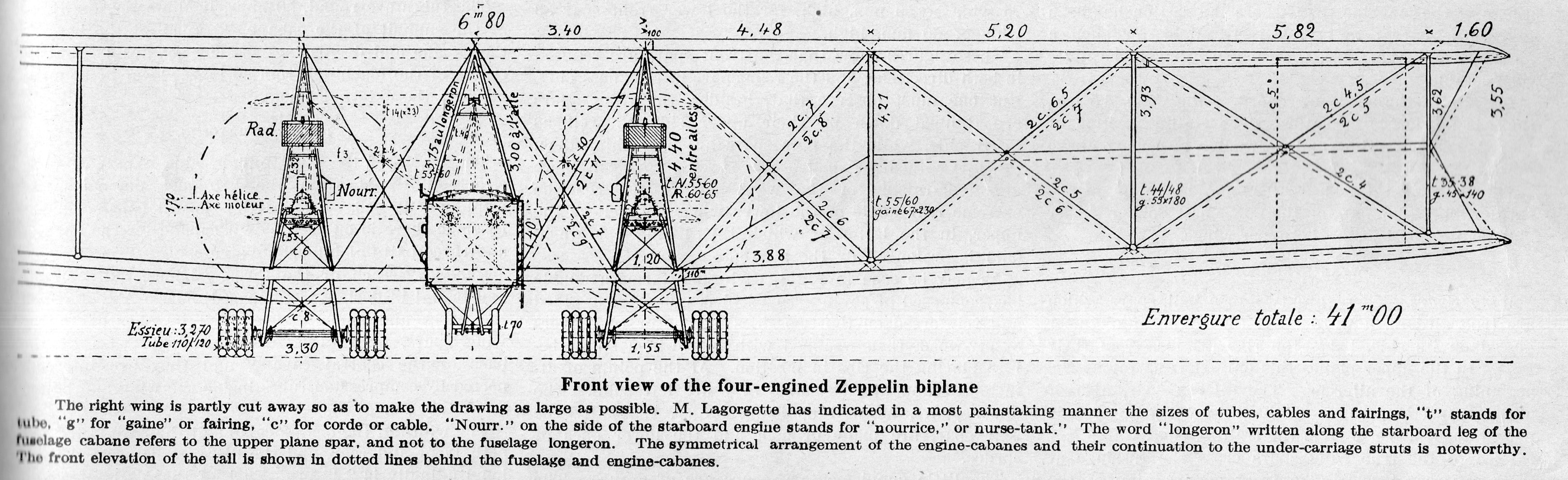
    I found these schematics in the November 16, 1918 issue of Engineering, published just a few days after the eleventh hour of the eleventh day of the eleventh month. No doubt the plans were made from a downed aircraft, and I suspect it was probably not published during the war.  This was about the largest plane produced during WWI, and it was a beast.  In any event, I’ve reproduced the plans below.

    Zeppelin biplane192

    and

    Zeppelin biplane193


    and

    Zeppelin biplane194

    And a larger version of the above, just because it looks so cool:

    ·Posted by :

    ·in:

    — —
  • A Mechanical Night Nurse, 1869

    JF Ptak Science Books   Quick Post

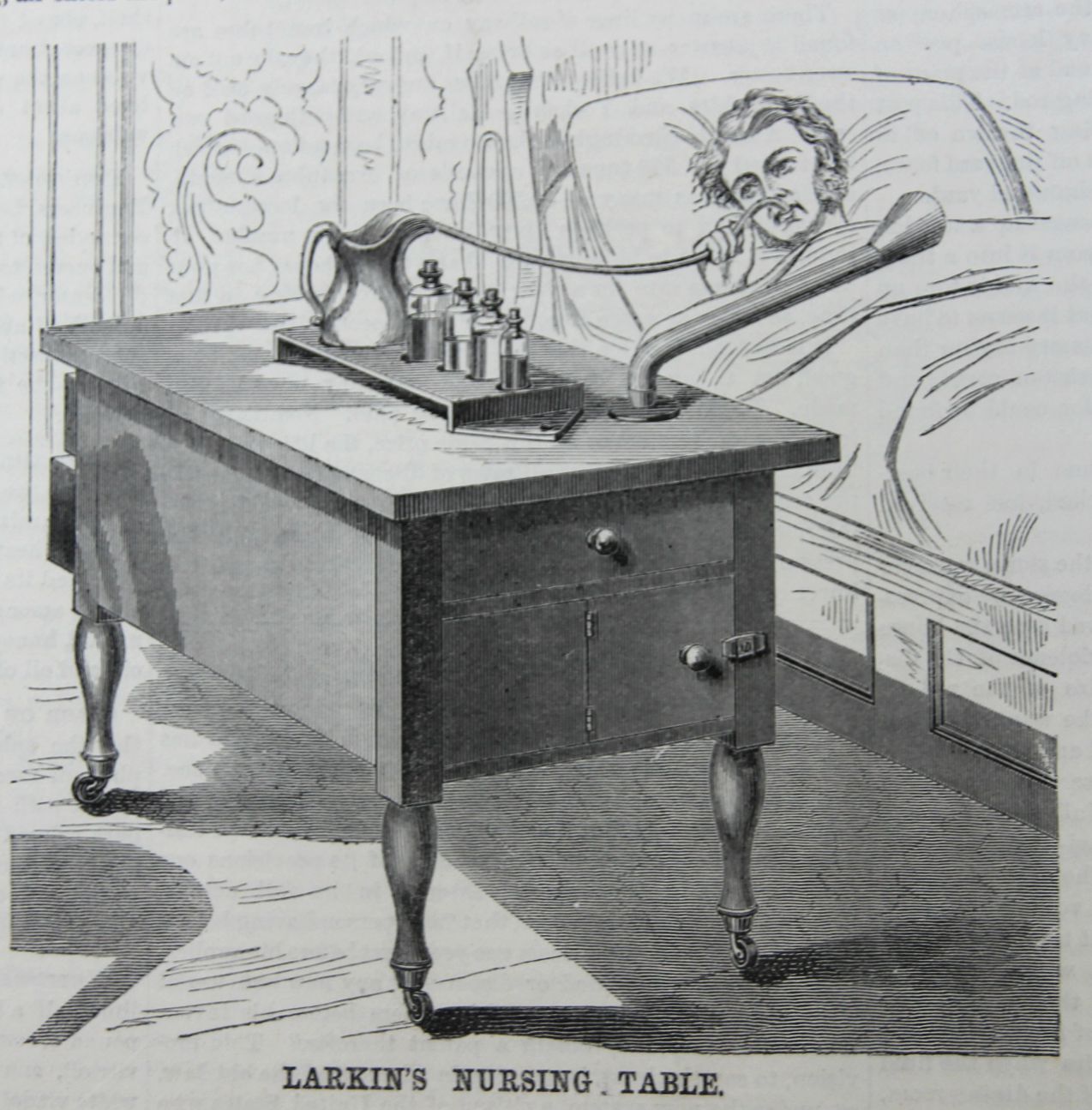
    [This bedside nurse’s aid appeared in the July 17, 1869 issue of the Scientific American.]

    According to the article, “The inventor of this nursing table has endeavored to afford greater comfort to the sick by providing them with the means of supplying in a measure their own wants during the absence of an attendant. In large hospitals the want of something of this kind has been long felt and in many cases its use in private houses would be a great convenience…” Mostly it was a drinking-and-spit-bucket apparatus–still it would no doubt come in handy and loosen the duties of the nurse somewhat.   

    Nursing Table 1869

  • Streamlined Mini-Monorail, 1935

    JF Ptak Science Books   Quick Post

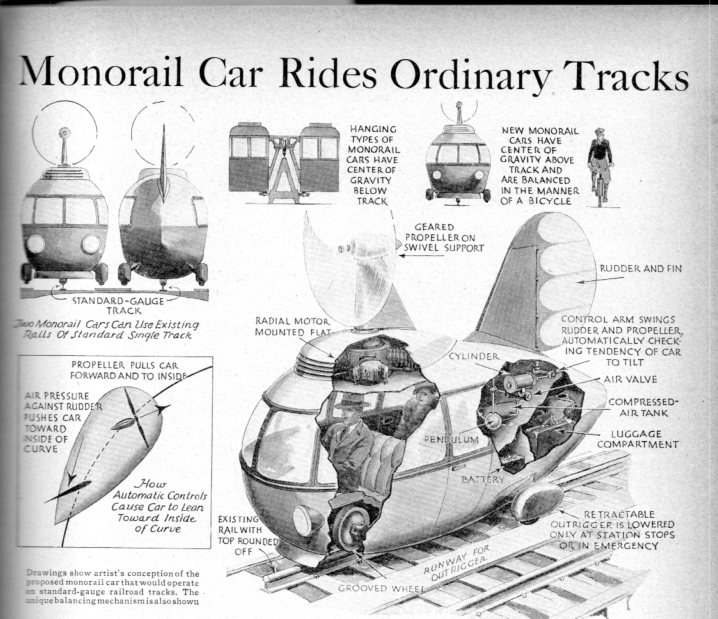
    This terrific proposal for a miniature, semi-individual monorail appeared in Popular Science Monthly for April 1935:  

    Monorail226

    And the text, which makes you wonder why something like this would be necessary, at least for the version of the vehicle in the interior pages.  The cover version at least accommodates eight passengers, perhaps, though there’s an awful lot of metal around them.  The interior version packs four in its bubbly self, and given the amount of effort that would go into powering and building the vehicle to move around a restricted number of people–though perhaps you can say the same about cars, and then some.  

    Monorail227

  • Dachau, 1915

    JF Ptak Science Books   Quick Post 

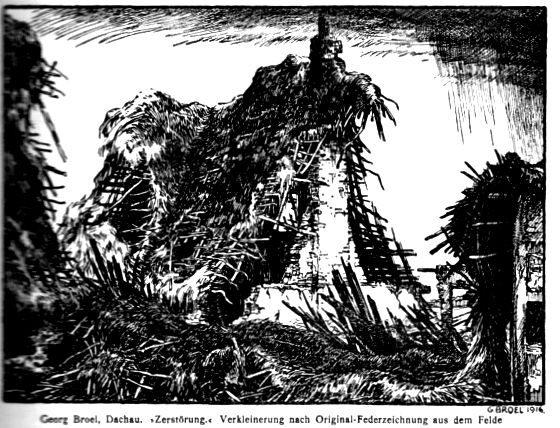
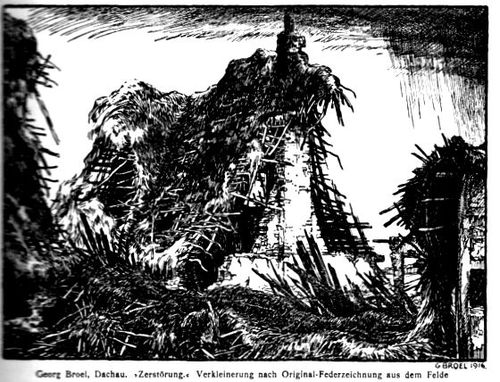
    Dachau228
    [Source:  Ex Libris Buchkunst und Angewandte Graphik, volume 25, 1915.]

    “On the water tower of the former gunpowder factory, visible from far away, the black, white, and red flag flutter int eh wind…a sign that new life has moved into the once desolate compound…”Dachauer Zeitung, March 1933, —

    “On Wednesday 22 March 1933 the first concentration camp will be opened in the vicinity of Dachau.  It can accommodate 5,000 people.  Here will be gathered together the entire Communist and, as much as necessary, the [left wing] Reichsbanner and Social Democratic Party functionaries who threaten the security of the state, since in the long term it is impossible and draining for the state to house them in government prisons.  It has become clear that it is not viable to leave these people free, as they continue to make trouble and disturb the peace.  We have adopted this measure, undeterred by paltry scruples, in the conviction that our action will help to restore calm to our country and is in the best interests of our people.”–Heinrich Himmler, via Music and the Holocaust, http://holocaustmusic.ort.org/places/camps/music-early-camps/dachau/

    At first glance this image looked to me to be be an image of destruction at Dachau in 1916. At this point Dachau had enjoyed some generations’-worth of beign a cultural/artistic community 18 miles or so away from Munich in Bavaria. At the beginning of the war a gunpowder/munitions factory was built there, which survived until the end of the war when the plant was closed. It seems to have been sitting vacant until the Nazis became interested in it and used the complex for a concentration camp, starting out housing political prisoners in 1933, which was the beginning of an horrific legacy. It became the longest-utilized of the KZ-Lager in the vast operation of Nazi concentration camps. 

    The image sparked these thoughts–but as it turns out, the “Dachau” part of the image identification related to the artist, Georg Broel (1886-1940), who lived in the city.  It is called “Zerstorung”, and no matter the association, once “Dachau” makes an appearance it is nothing but “destruction”. 

    • For a map of the munitions factory, 1916: http://www.hdbg.de/dachau/pdfs/07/07_26/07_26_04.PDF
    ·Posted by :

    ·in:

  • WWI Endgame Dataviz, 1918

    JF Ptak Science Books  Quick Post

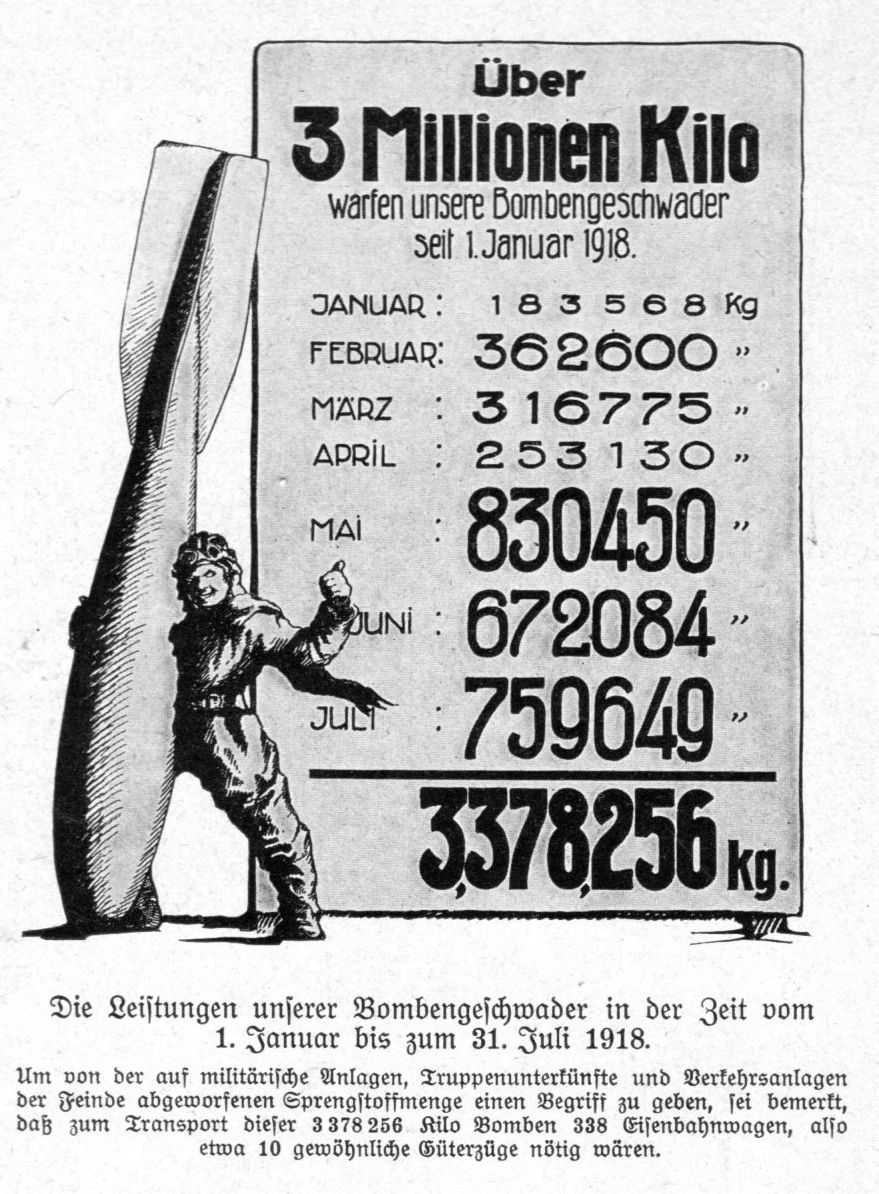
    DATAVIZ Bombs230

     I found this interesting graphic in the Illustrirte Zeitung (Leipzig) showing the production of bombs in Germany for last half-year of WWI. The aviator seems happy enough, at least for the readers of the magazine, reassuring that something was goign on in the defense of the country, even though the writing was pretty much on the wall when this image appeared in late August, 1918, six weeks away from the end.  It is a small graphical display–about 2.5×4 inches or so–and it is a congratulatory message on the massive amount of munitions that were produced from January-July 1918.  This was one among many that just wasn’t enough.  

    DATAVIZ Bombs229

  • WWI Aviator Pigeons, 1918

    JF Ptak Science Books   Quick Post

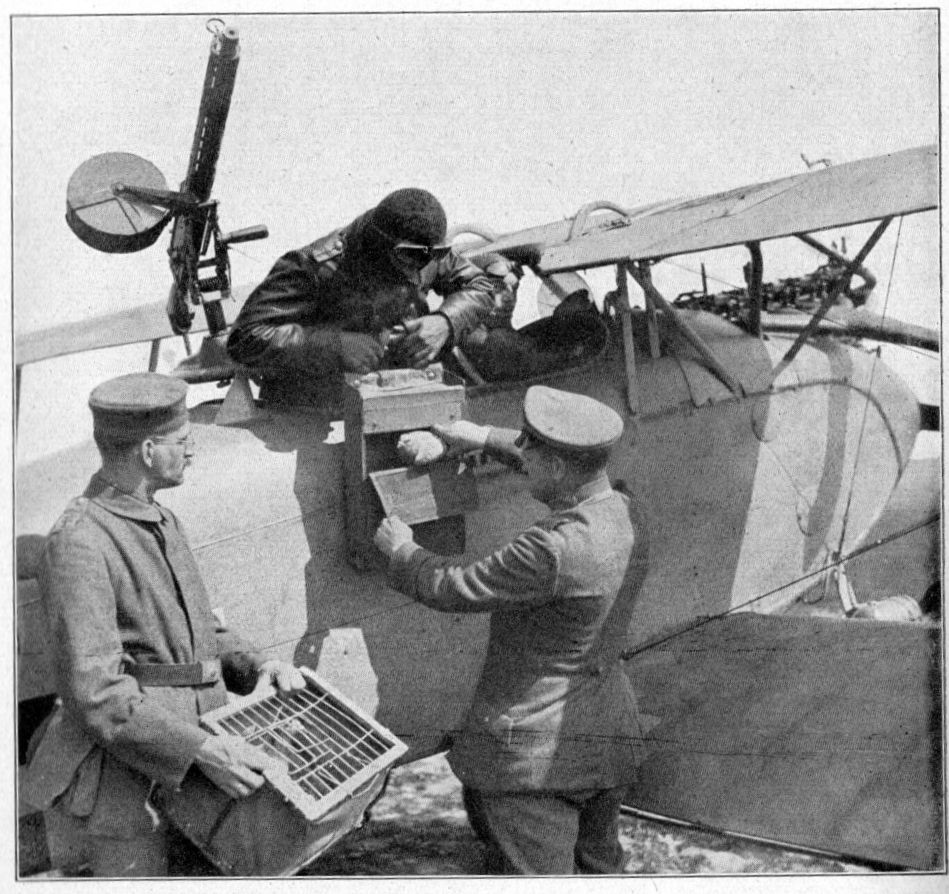
    I found this interesting image in Illustrirte Zeitung, 18 July 1918, though I very nearly passed it by. I saw its neighbor photo of a machine gunner and his ammo and a quick pass over this photo made it look very similar, my mind filling in cartridges before my brain recognized that the ammunition was actually a pigeon.  

    • [For other posts on WWI pigeons, enter that term in the google box at left]

    WWI pigeon231

     This is an image of German aviator pigeons, I know, but I included this U.S.-based explanation of the general practice of using pigeons in aircraft as a means of communicating with the ground in pre-airborne radio communication days:

    “U.S. Navy aviators maintained 12 pigeon stations in France with a total inventory of 1,508 pigeons when the war ended. Pigeons were carried in airplanes to rapidly return messages to these stations; and 829 birds flew in 10,995 wartime aircraft patrols. Airmen of the 230 patrols with messages entrusted to pigeons threw the message-carrying pigeon either up or down, depending on the type of aircraft, to keep the pigeon out of the propeller and away from airflow toward the aircraft wings and struts. Eleven of the thrown pigeons went missing in action, but the remaining 219 messages were delivered successfully.”–Wiki quoting Adrian Van Wyen,  Naval Aviation in World War I.  1969. Washington, D.C.: Chief of Naval Operations. p. 30.

    Here’s the contiguous photograph, the gunner looking as though he was reading for some abusive weather: 

    ·Posted by :

    ·in:

    —

Recent Posts

Archives

Categories