A Daily History of Holes, Dots, Lines, Science, History, Math, Physics, Art, the Unintentional Absurd, Architecture, Maps, Data Visualization, Blank and Missing Things, and so on. |1.6 million words, 7500 images, 4.9 million hits| Press & appearances in The Times, Le Figaro, Mensa, The Economist, The Guardian, Discovery News, Slate, Le Monde, Sci American Blogs, Le Pont, and many other places… 5000+ total posts since 2008.

  • Another “Archie”: Antiaircraft in 1916

    JF Ptak Science Books  Quick Post

    • There’s another interesting story on the use of “Archie” as a nickname in another military situation, here, in an earlier post, “George and Archie: Two Misty Names in Making Everything Into Nothing. Hiroshima, 1945.”

    This interesting graphic appears in the article “Airmen’s Sensations in Battle” in Popular  Mechanics, November 1916. It hows a cross-section, of sorts, of an air battle with antiaircraft involvement, and to my experience is of a very unusual design. The author writes of being chased by Fokkers and then met by “Archie” (British slang for antiaircraft guns) fire from below. Overall it is an effective design that heightens the sense of the story.
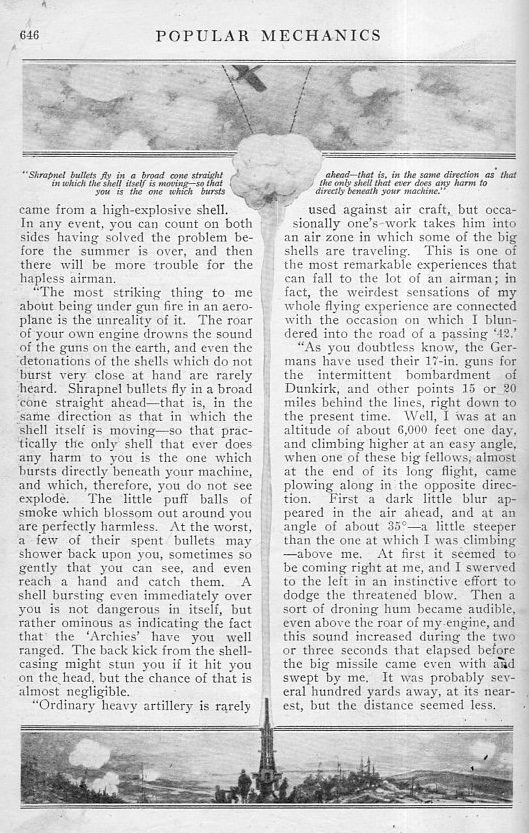
    WWI antiaircraft186

    Notes:

    “Archie”: “Nickname given to anti-aircraft fire during First World War. Said to derive from a British pilot who reacted to enemy anti-aircraft fire by shouting the line from a music hall song ‘Archibald certainly not’. This caught on and was inevitably shortened to Archie.”– Phil Jobson Royal Artillery Glossary of Terms and Abbreviations   Briefly put, the AA situation during WWI was, well, primitive–necessarily primitive, I mean. There was some improvisation against balloons earlier on but the first AA-downing of a military aircraft was evidently in 1912 in the Italo-Turkish War. In 1916, two years into the war, the development of firepower against aircraft (and the detection of them, which extended to acoustical devices for the greatest part) was still in its very earliest stages. 
  • An Early Rear-Wheel Steered Bicycle, 1869

    JF Ptak Science Books  Post 2530

    Bike 1869

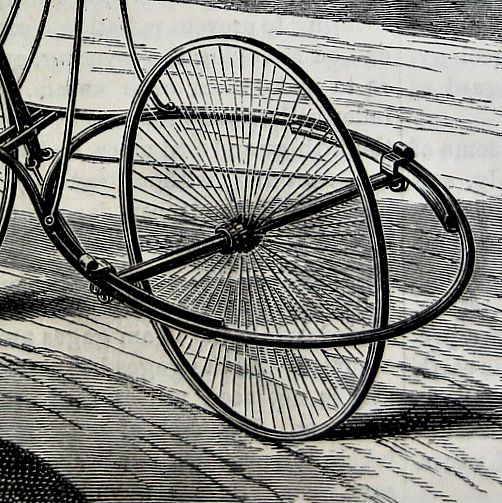
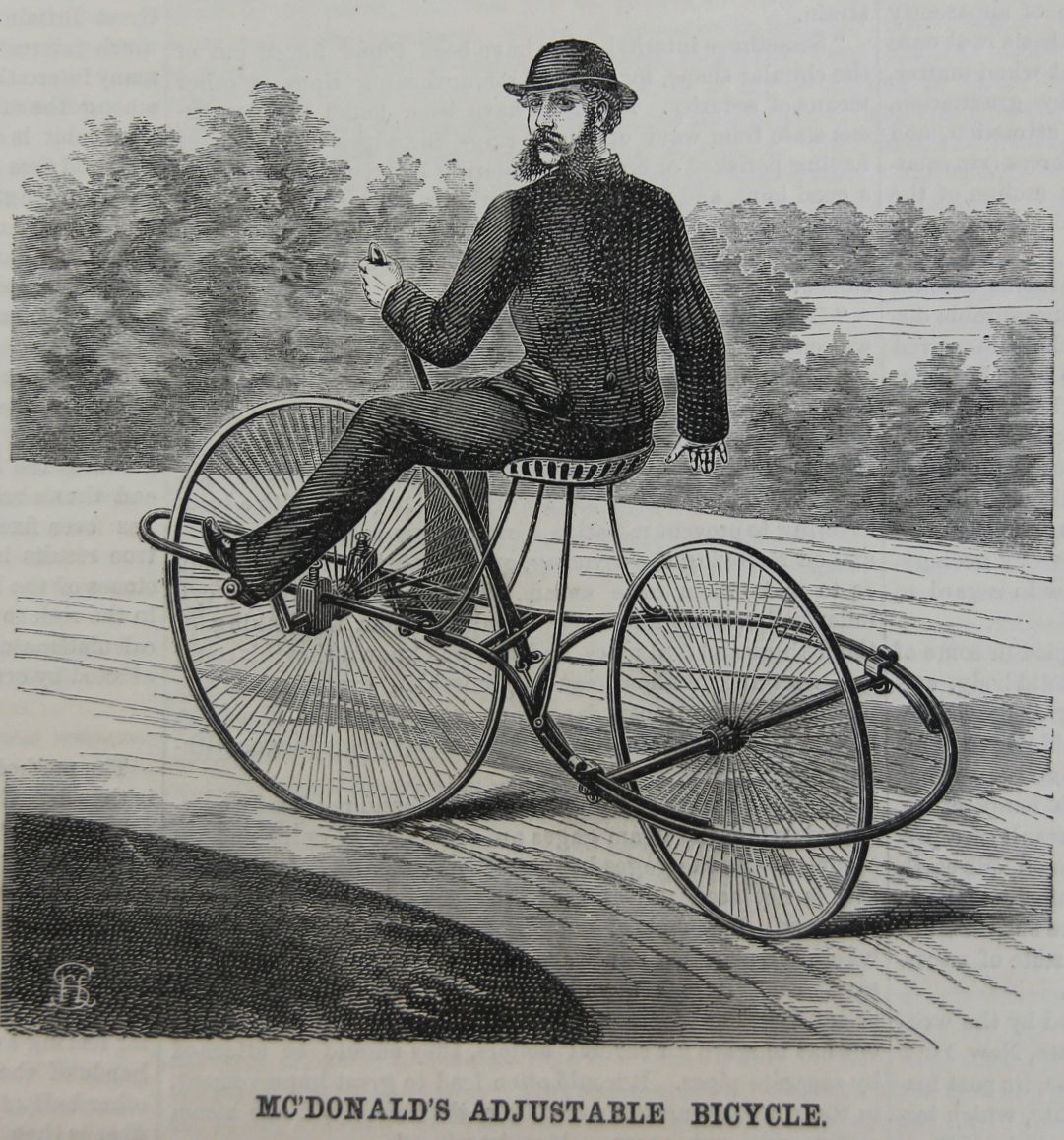
    Thumbing through the 1869 volume of Scientific American hunting for an image of a wave-powered device I found this unusual woodcut of a bicycle.  Actually, it is still at this point mainly referred to as a velocipede, a word that “Scotch Tape” was a brand name for a bike-like invention by the very-busy Nicephore Niepce in 1818. (Niepce was a prolific and high-end thinker having invented the world’s first photographic device from which the oldest-surviving photograph was made, towards the end his work being done in partnership with Louis Daguerre with whom he had a business relationship for the development of what would turn of to be Daguerre’s improvements on his original breakthroughs.  And that was not his only breakthrough–along with his brother Claude Niepce patented what was probably the world’s first internal combustion engine–the pyreolophore–in 1807.)

    In any event this machine, the McDonald velocipede above and below was interesting mainly for its steering mechanism. (On the other hand, this still is a very early example of a peddled-wheel bike, invented earlier in the decade by Pierre Michaux.)  Here the biker would use the joystick that controlled the rear wheel by means of the apparatus on the vertical circular frame surrounding the rear wheel. Interesting to note here that the articles states that the velocipede was relatively easy to construct–and maybe so for the more-adept engineering-type of 1869–as the bike was patented but not in production.  

    From the Scientific American: “The frame is of hollow pipe the rear being a complete in which the steering wheel rotates on its axis the steering a wheel running between the parallel bars the front portion. The axle of this passes through boxes secured to the bars by screws so it may be adjusted forward or back to suit the physique of the rider. The axle of the steering wheel runs in secured to sliding bars curved to fit the diameter of the circular portion of the frame thus allowing this wheel with its axle to per form an entire revolution within the frame a horizontal plane. Its movements are controlled by means of rods attached at one to he ends of the axle and at the brought together to the lower end of a directly under the rider’s seat the handle which comes up in front of the rider the fulcrum being on a cross piece between the portion of the parallel bars serving not that purpose but that of a brace. It will seen from the figure that the guiding of vehicle may be effected by one hand seat need not be so high as represented in engraving it may be lowered until nearly the level of the reach which is the line of the axles.”–Scientific American, April 24, 1869, p.264.  

    And the detail:

    Bike 1869 detail

    ·Posted by :

    ·in:

  • Beautiful and Practical Perspective, 1596

    JF Ptak Science Books  Post 2531

    Sirigatti forms _4.5_

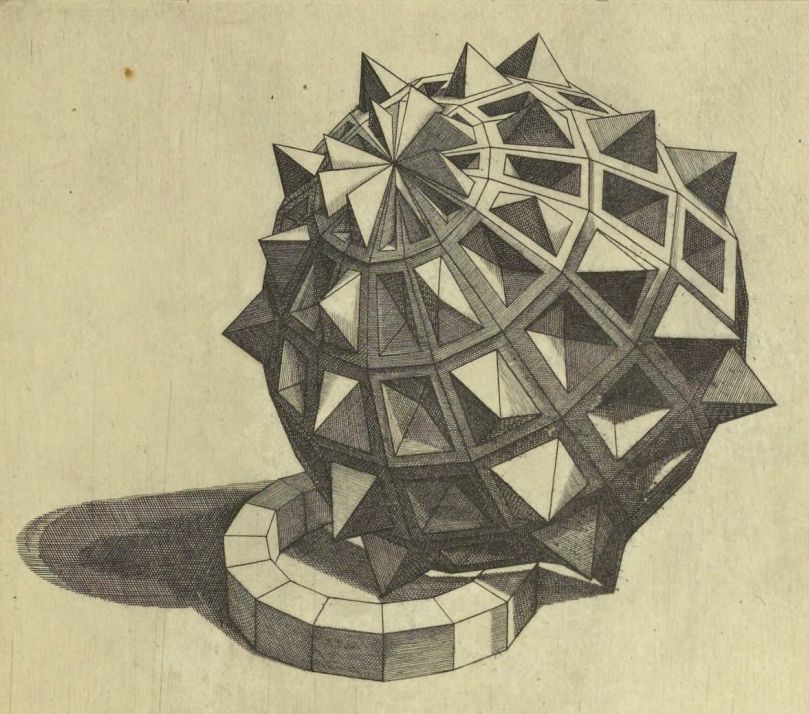
    One of the most highly valued of disciplines to the Renaissance painter and architect and engineer was perspective, and at the end of the 16th century Lorenzo Sirigatti produced a superior example of the field.  La pratica di prospettiva del cavaliere Lorenzo Sirigatti was printed in Venice in 1596 and proved to be a valuable source of inspiration and possibility. 

    The full text is located at the Getty Museum (here) from which came the five images I’ve used in this post.  Part of the acclaim of the Sirigatti work was its fine elegance and non-nonsense line, and the general exclusion of a background brought a particular clarity to the designs. The images themselves follow a development from the introduction of the basic elements of perspective to an increasing complexity in their use, flowing from fundamentals to forms to architectural standards. They are lovely things, works of art in themselves even removed from their context.  

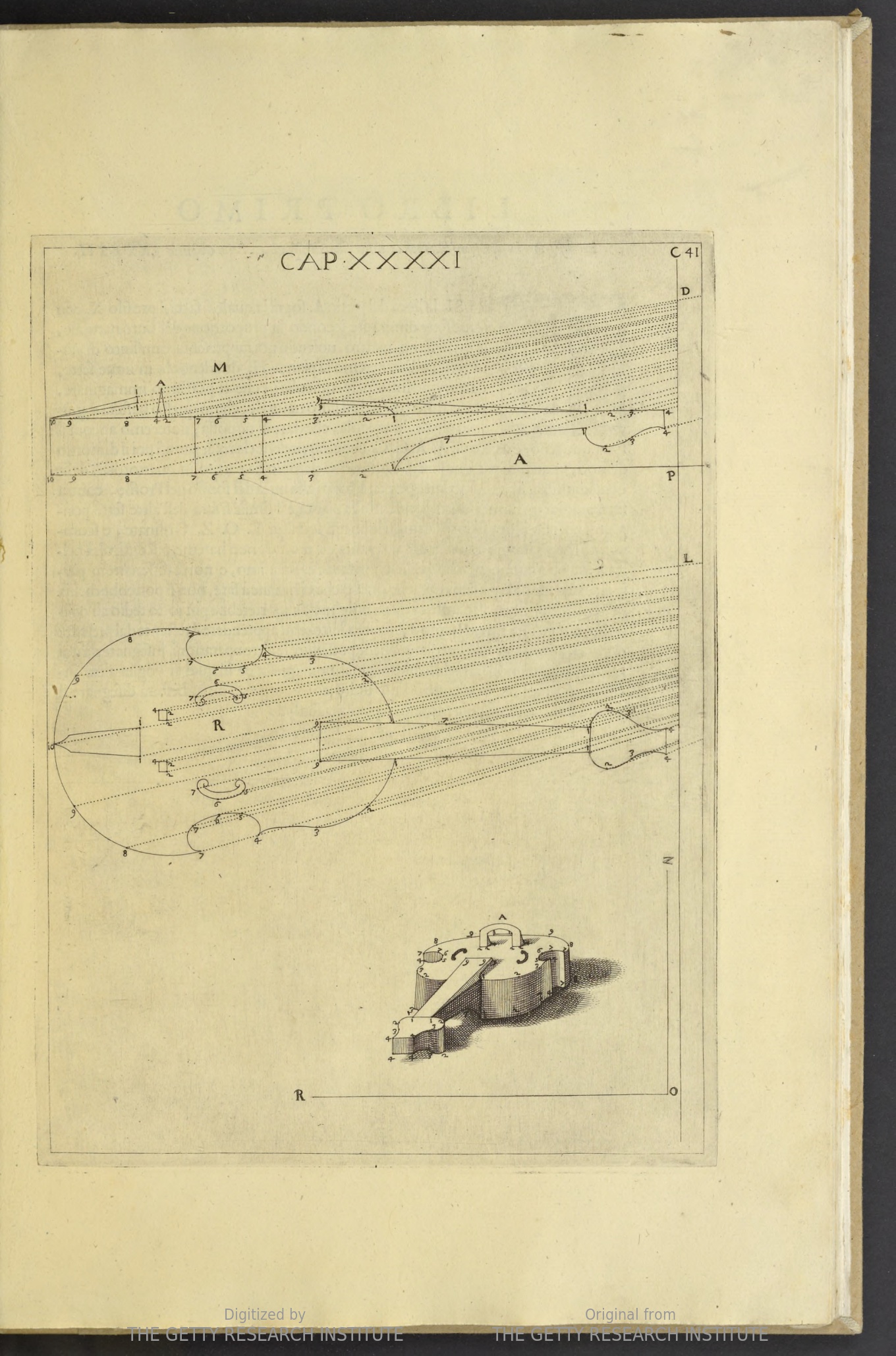
    One of the principal attractions to me was the quietness of the design, leaving everything outside of the subject to blankness–many other works of this type included scenes into which perspective studies appeared, but this was hardly the case with Sirigatti. For example, a perspective with violin:

    Sirigatti perspective violin

    Source: Getty Museum

    ·Posted by :

    ·in:

    — —
  • Women, Recycling, and the War: England, 1918

    JF Ptak Science Books  Quick Post

    WWI Project women working England 1918191

    [Source: Scientific American Supplement, August 31, 1918]

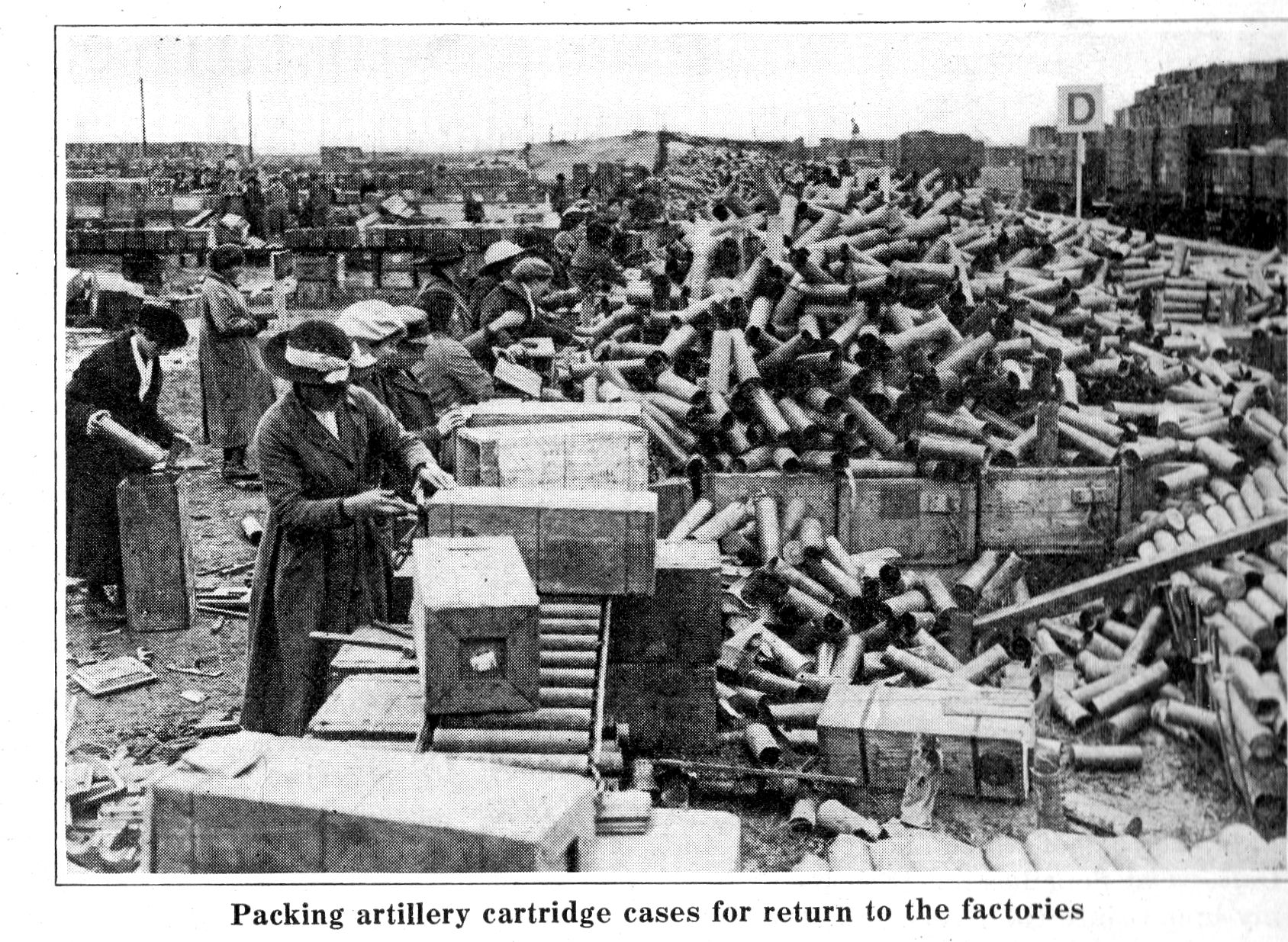
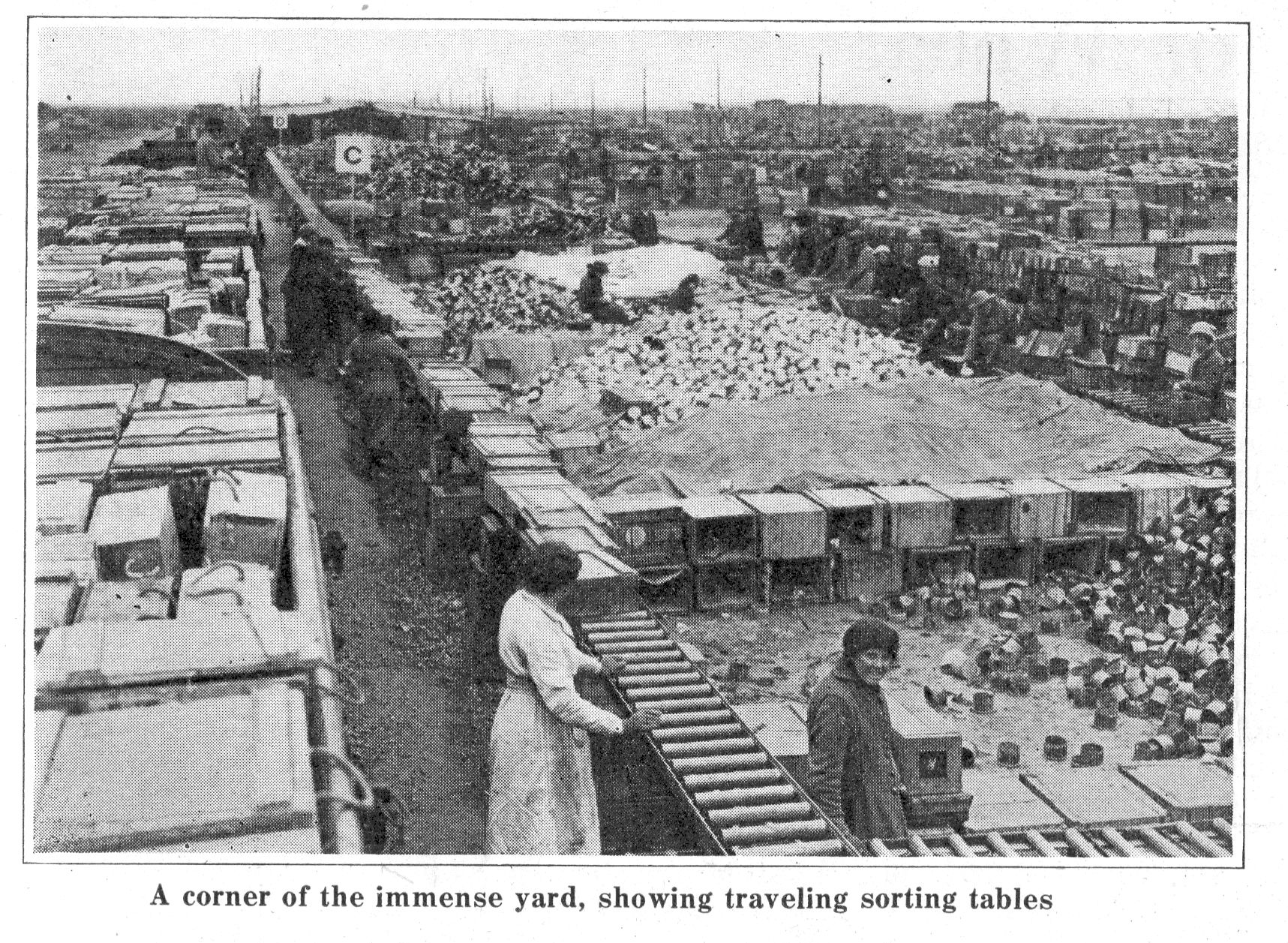
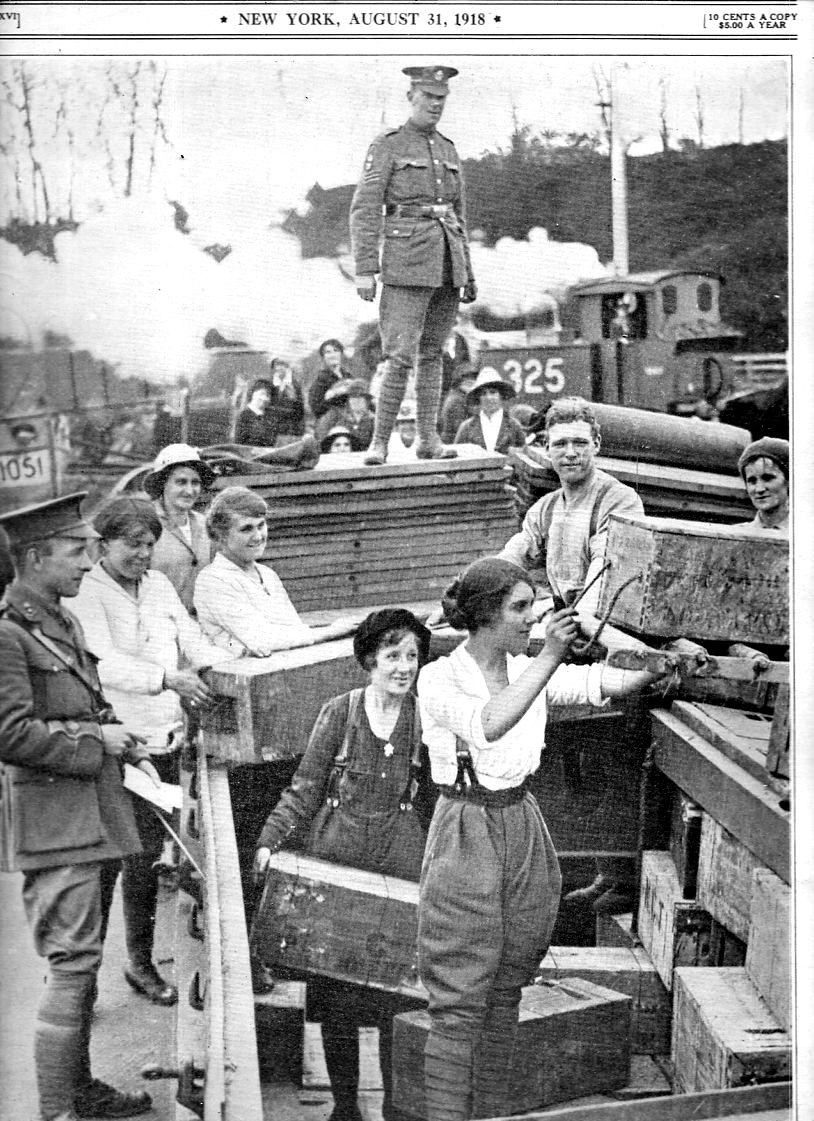
    There’s an unusual article in the August 31, 1918 issue of the Scientific American Supplement on the economics of recycling.  This recycling, however, was goods of war, and with that, mostly regarding the re-use of artillery casings. Since there were millions and millions used, that is millions of pounds of brass, which means there were also millions of pounds of copper. Seeing that copper was so much in use in so many other areas, it was established to recover as many casings as possible.  

    WWI Project women working England 1918190

    [Source: Scientific American Supplement, August 31, 1918]

    Recycling was important because as the article points out the expense of the war was limitless, while the economics of the countries involved were not–hence, the recycling.  And as we can see int eh photos accompanying the article, the supply for recycling was mountainous.  Curiously there was no mention of the women performing a bunch of these tasks even though they are prominently displayed in the photos–perhaps by this point in the war, fours years on and just a couple of months from ending–the role of women in reserve and the home front was already deeply established enough to let a particular mention of them go unmentioned.  


    WWI Project women working England 1918187

    [Source: Scientific American Supplement, August 31, 1918]

    ·Posted by :

    ·in:

    —
  • Branding a Dead Mobile Horizontal Forest

    JF Ptak Science Books  Post 2532

    IMG_7789

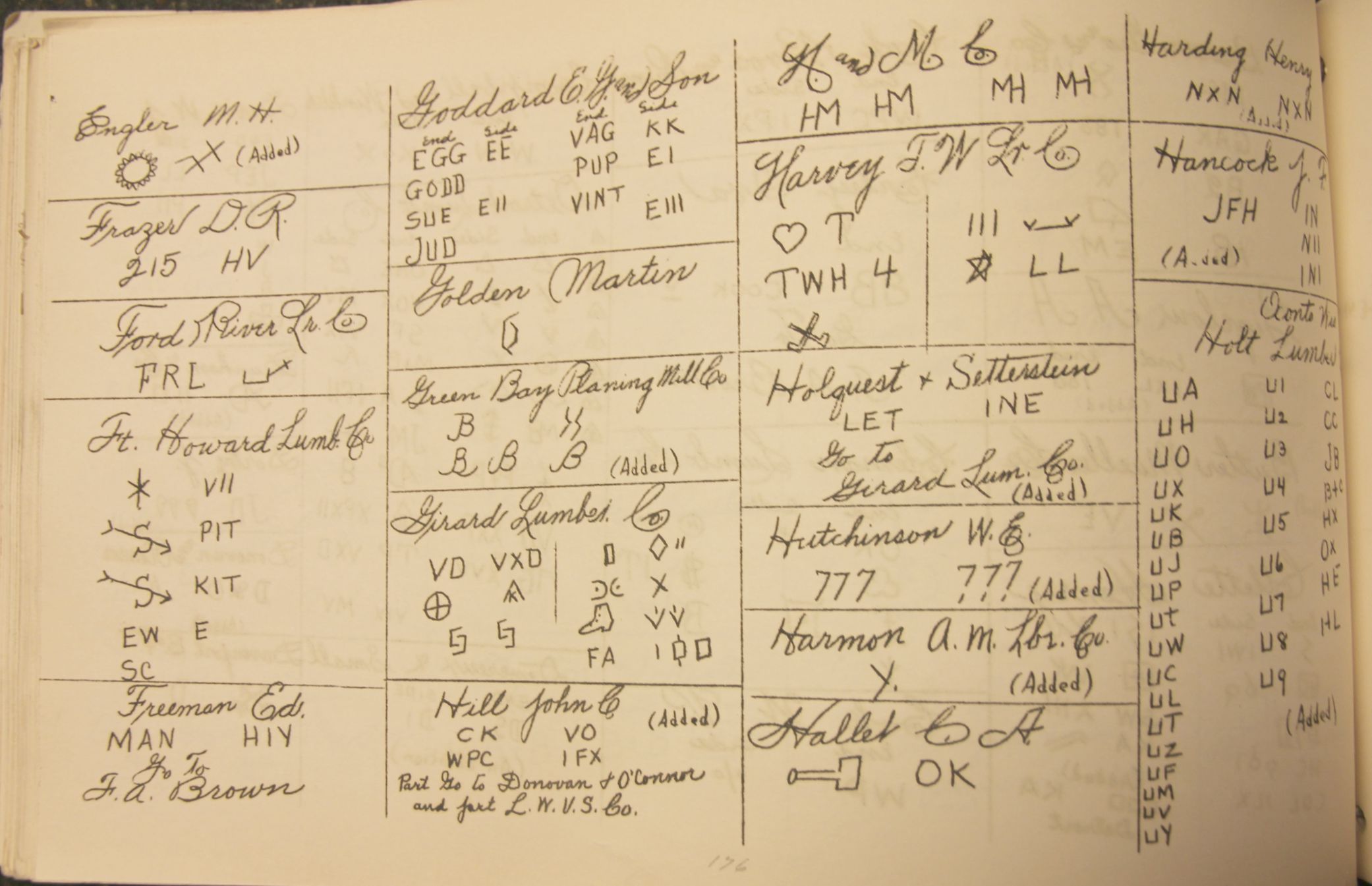
    Many years ago I found this Menominee County (Michigan) history1,  produced for grade school consumption–advanced consumption, I should say, in spite of its initial homespun appearance. So in the midst of many maps and good content, this oversized double-brick of a pamphlet (9×13″ and 500 pages)  I found in the middle of it a section on logging–which was a major industry there in the 19th and into some of the 20th century–and in that section there were a number of pages of unexpected diagrams and drawings of log brands.  

    Logging rivers

    [Source: http://geo.msu.edu/extra/geogmich/river-logging.html]

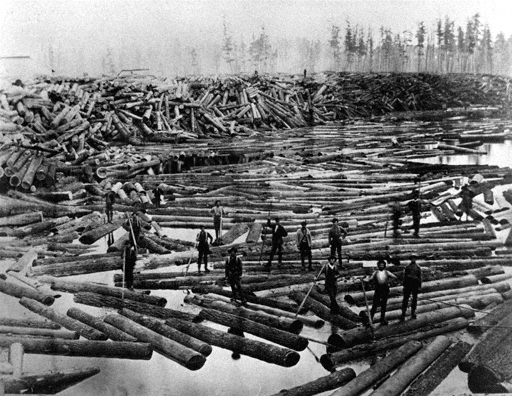
    They were unexpected right up until the point I saw them, and then their use and necessity was immediately obvious. I mean, there were dozens and hundreds of logging companies, and even though they were working in their restricted areas which were at some point distantly removed from other firms, many of them used the same river to transport their logs to the mills downstream. The loggers would cut the trees, and then get them to the river or a hill leading down to the river, and then into the water hundreds and thousands of trees would go.  Multiply that x-times, and you have a water-borne mobile horizontal forest.  The log brands/marks would allow the final dispensation of the tree to be counted in favor of the company’s brand.  I just never thought about it before, but now that I’m introduced to it the idea is very sharp. 

    I’ve reproduced the log brands from the Menominee history book, below.  

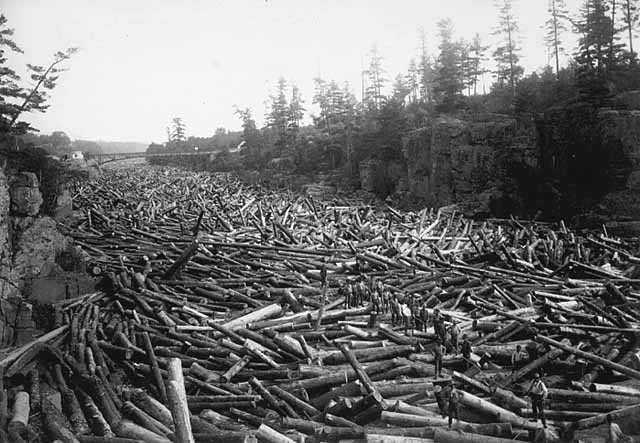
    Logs on the river, not moving:

    Log jam

    [Source: National Park Service, http://www.nps.gov/sacn/learn/historyculture/stories.htm]

  • The Flying Whirligig of 1935

    JF Ptak Science Books   Quick Post

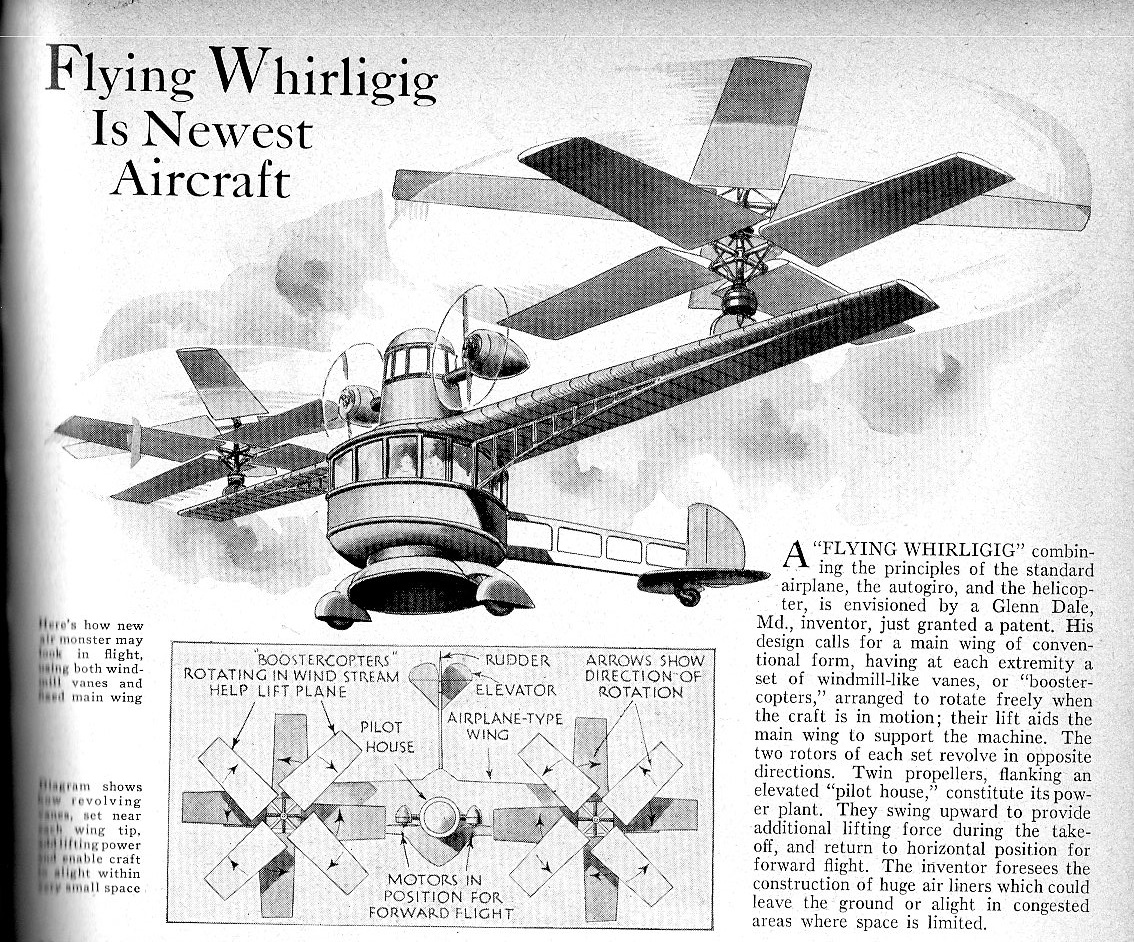
    This half-modern helicopter appeared in the Popular Science Monthly for February 1935–it seems t o have the fundamental of the body of the helicopter to be about right, and then adventures out with huge wings and two eight-blade rotors.  It was a monster of a machine, and appeared in print just about a year before the successful introduction of the Focke Wulf FW 61, and four years before Sikorsky’s true helicopter (VS-300) of 1939. The idea for a helicopter had been around for quite a while, at least from the time of Leonardo’s “aerial screw’, and through the coining of the word in 1861 by d’Almecourt, and was a long time in the making, though the main bits for the development of the aircraft came together in the 1930’s.  The “flying whiligig” here does have a squinty resemblance to the V-22 Osprey, but that would be a long time in coming.  

    Helicopter1935195

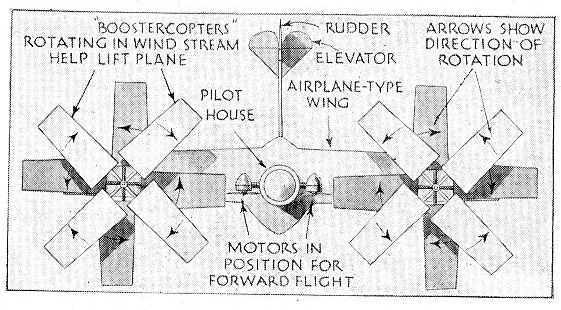
    And a close-up of the schematic:

    Helicopter1935196

  • Smoke and Word Balloons, 1531

    JF Ptak Science Books   Quick Post

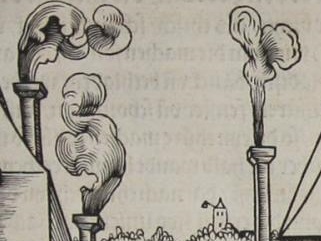
    Rodler detail smoke

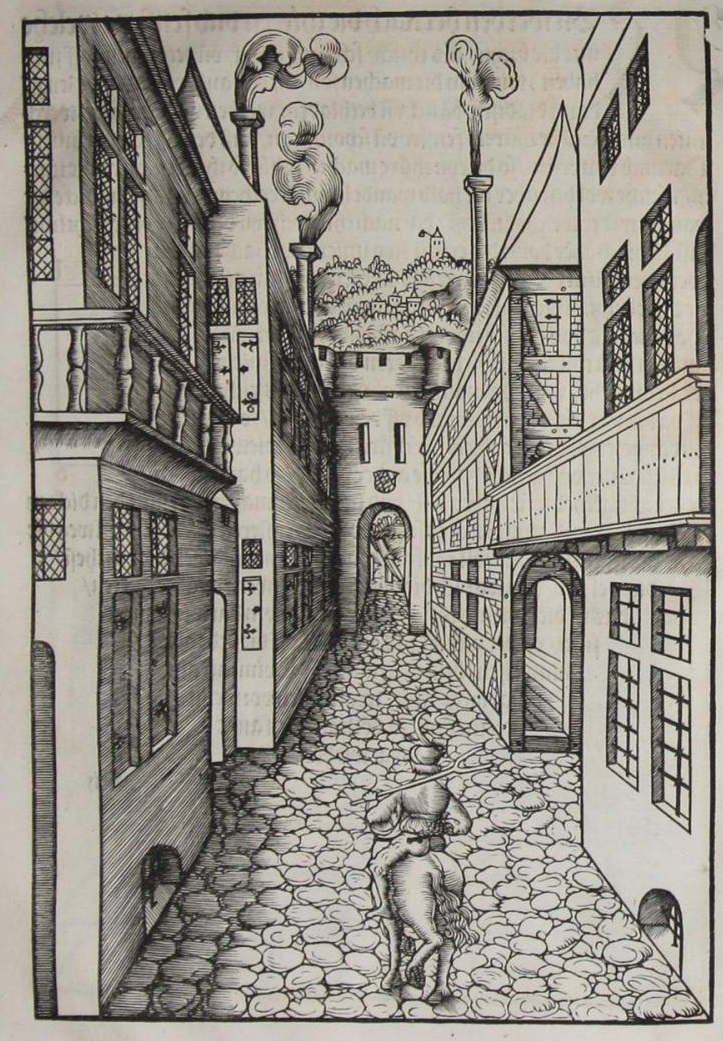
    This work—according to scholars most probably by Johann II of Bavaria1—was published in 1531, the effort of a true Renaissance Man, capable in languages, a scholar, draftsman, scultptor, artist. The book was important in the history of art for introducing the perspective studies of Durer on a grand scale. And in all of this greatest and beauty of this book, I have chosen as my focus for this moment an odd little bit of the book–smoke.  

    Rodler

    In this woodcut we see the central figure on a horse working his way down a tight street of crowded buildings in a walled city, a city gate just ahead.  The image was intended to illustrate principles of perspective, but I noticed the smoke and associated it/them with Renaissance (and later) word balloons–they’re not really that closely associated, but are suggestive of one another.  

    Balloon word[Source: https://historyofideasblog.com/thesciencebookstore/2009/02/word-balloons-continued.html]

    There is a certain amount of  poetical attraction to associate images in smoke and words, but I think that is going a little beyond the reasonable scope of analogy.  

    Notes:

    1. Johann II (1492 – 1557), and Count Palatine of Pfalz-Simmern from 1509-1557. And the book’s title:

    Eyn schön nützlich büchlin und underweisung der kunst des Messens, mit dem Zirkel, Richtscheidt oder Lineal. Zu nutz allen kunstliebhabern, fürnemlich den Malern, Bildhawern, Goldschmiden, Seidenstickern, Steynmetzen, Schreinern, auch allen andern, so sich der kunst des Messens (Perspectiva zu latein gnant) zugebrauchen lust haben.

    Published by H. Rodler, Simmern, 1531

    RODLER, Hieronymus ?] / JOHANN II OF PFALZ-SIMMERN

  • A Map of Future Military Conquest by Japan, 1933

    JF Ptak Science Books  Quick Post

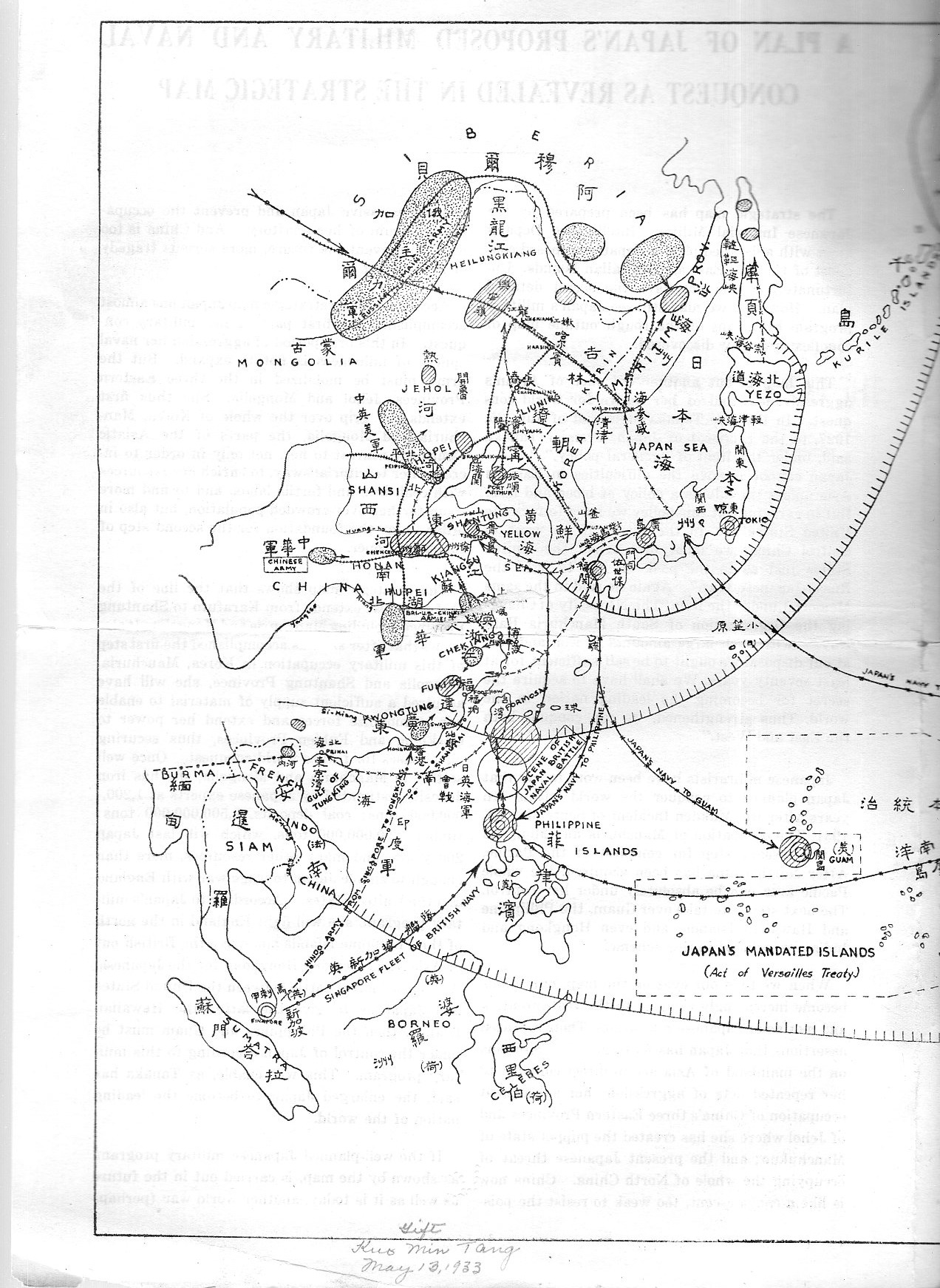
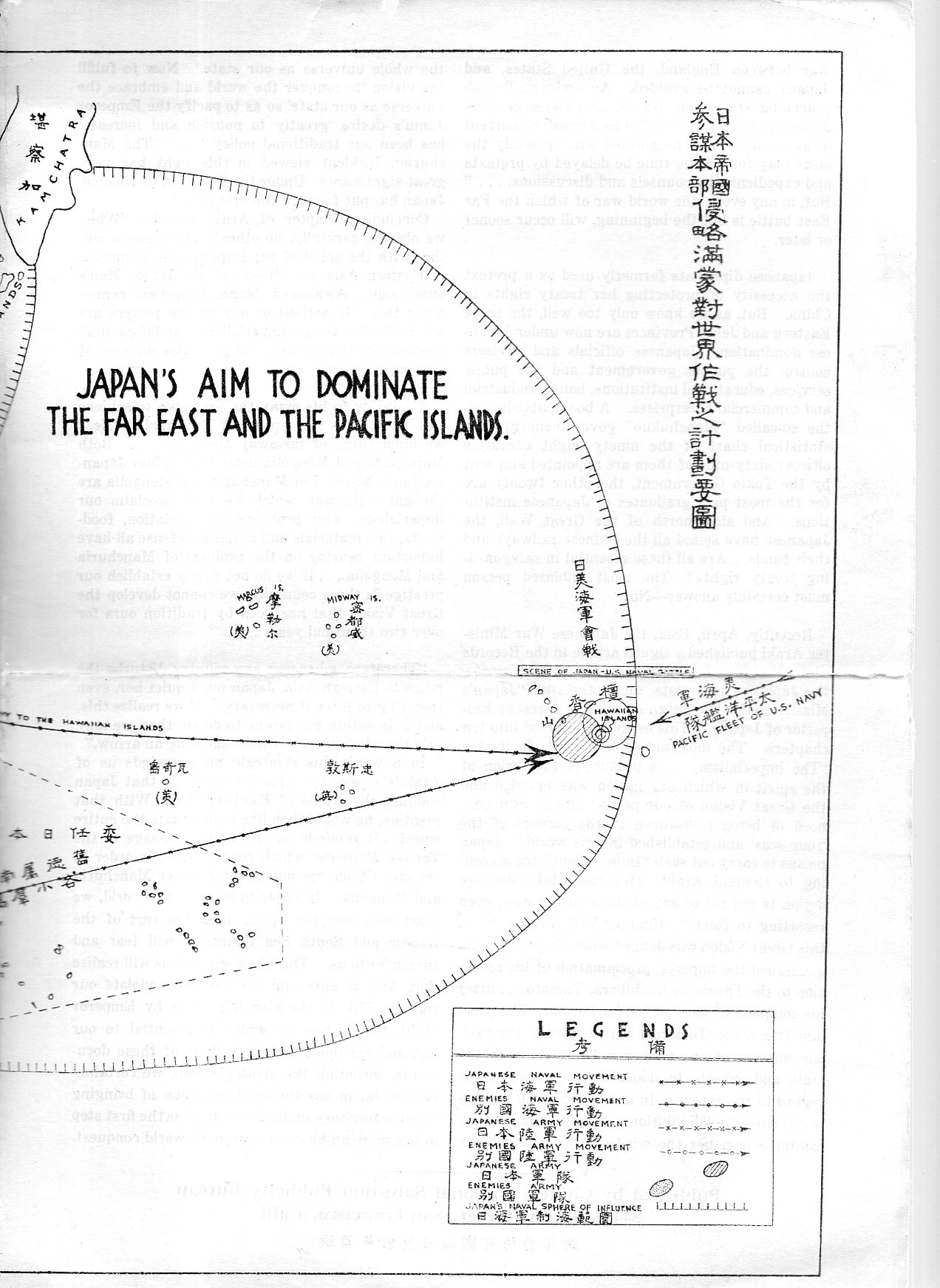
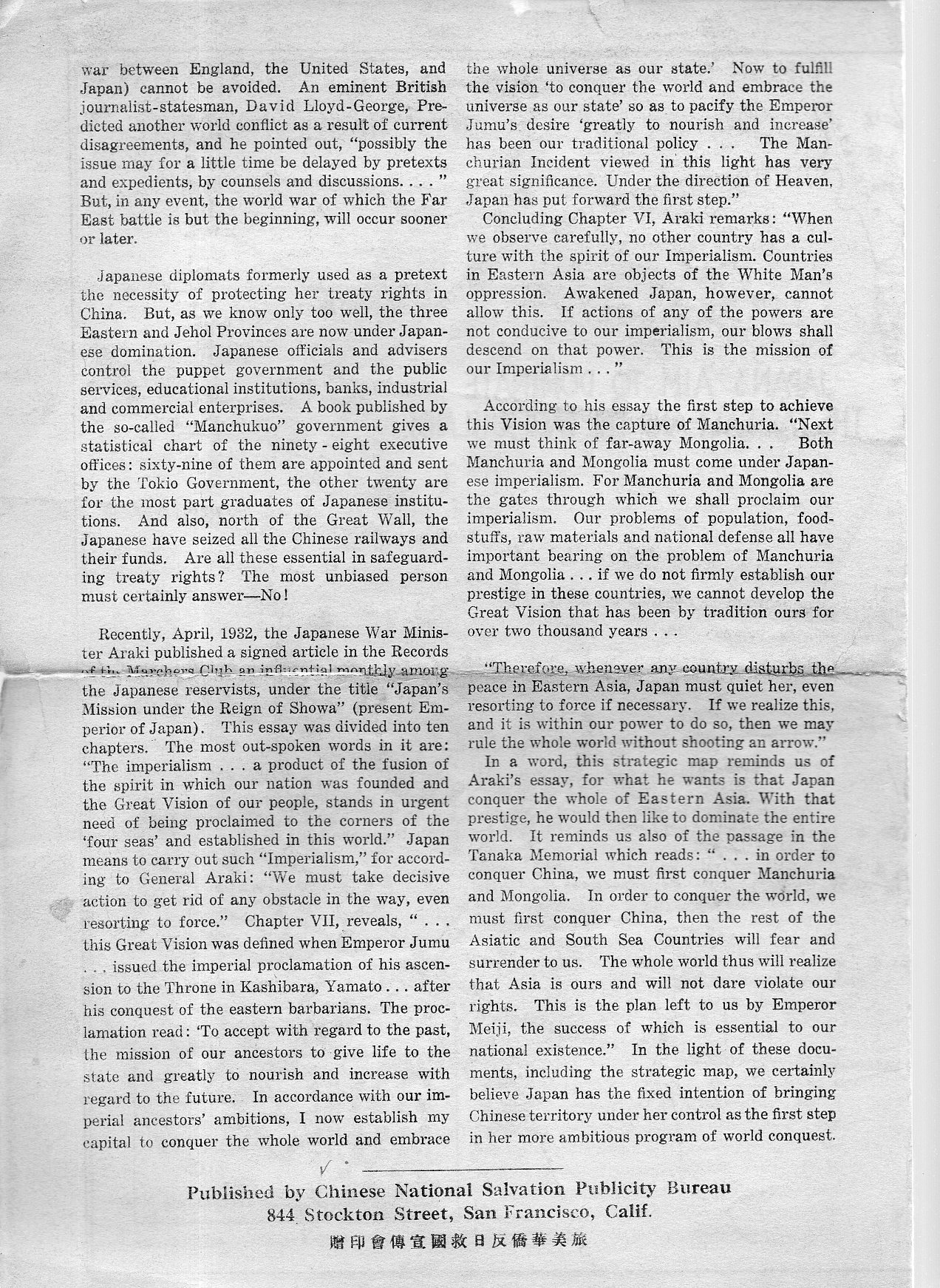
    I do not unfortunately have much information on this very interesting (and to me unexpected) map, nor do I know very much about the history of Japanese militarism and planning 1925-1935–I do though want to at least post/share it for interested parties.

    Ja[pan map200 Ja[pan map201

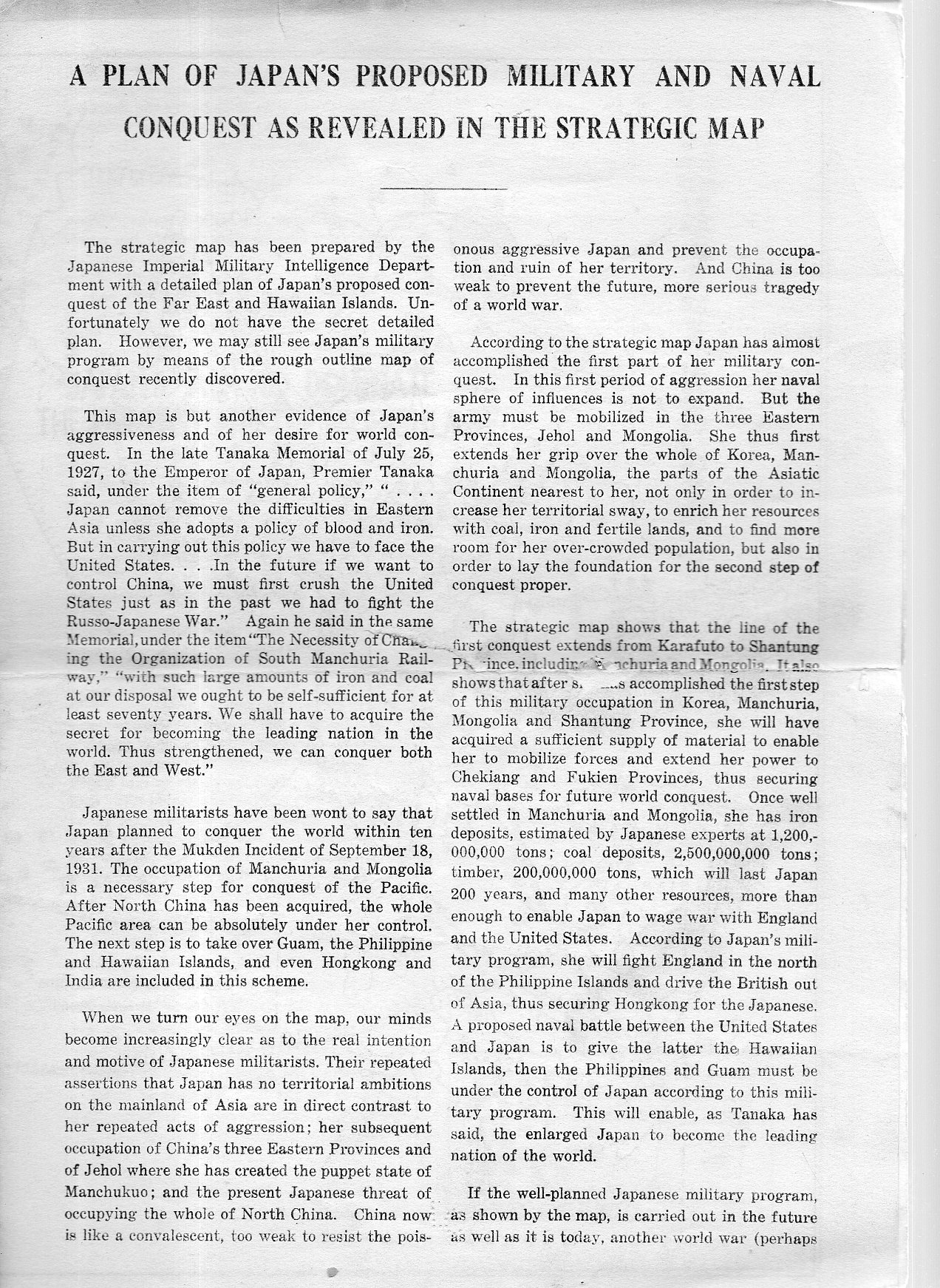
    A Plan of Japan’s Proposed Military and Naval Conquest as Revealed in the Strategic Map appears no later than 1933. The single-sheet folded pamphlet contains two pages of text along with the middle two sheets of the map, “Japan’s Aim to Dominate the Far East and Pacific Islands”. The document was part of a very large collection I bought of the Library of Congress, and according to the pencil notes on the pamphlet it was sent to the L.C. by the “Kuo Min Tang” on May 13, 1933.  (It was curious to see the KMT referred to as though it was someone’s name, rather than a political party begun in the People’s Republic of China in 1894.)

    This is a piece of anti-Japanese propaganda coming from the KMT, and it is published by the Chinese National Salvation Publicity Bureau (844 Stockton Street, which looks today like it is the Sun Yat-Sen Memorial Hall) in San Francisco,  After all, the Japanese had been savaging around in China on and off since the First Sino-Japanese War at the end of the century, and then again heating things up in the early ‘thirties with the Japanese-instigated the Shanghai War and the invasion of Manchuria–the Chinese no doubt were seeking allies wherever they could them.  

    There are a lot of lines of conquest on this map, encompassing nearly all of South East Asia.  The largest sphere of “influence” extends all the way to the Hawaiian Islands, where the Japanese would take the islands by a “naval battle” with the U.S.  

    I’ve checked WorldCat for other copies and found only one mention–same thing for the internet.  

    This map is available for purchase via the blog’s bookstore, here.  

    Full text follows:

    Ja[pan map198

    Ja[pan map199


  • Revealing the Topo-not-so-Secret of Tibet

    JF Ptak Science Books  Quick Post

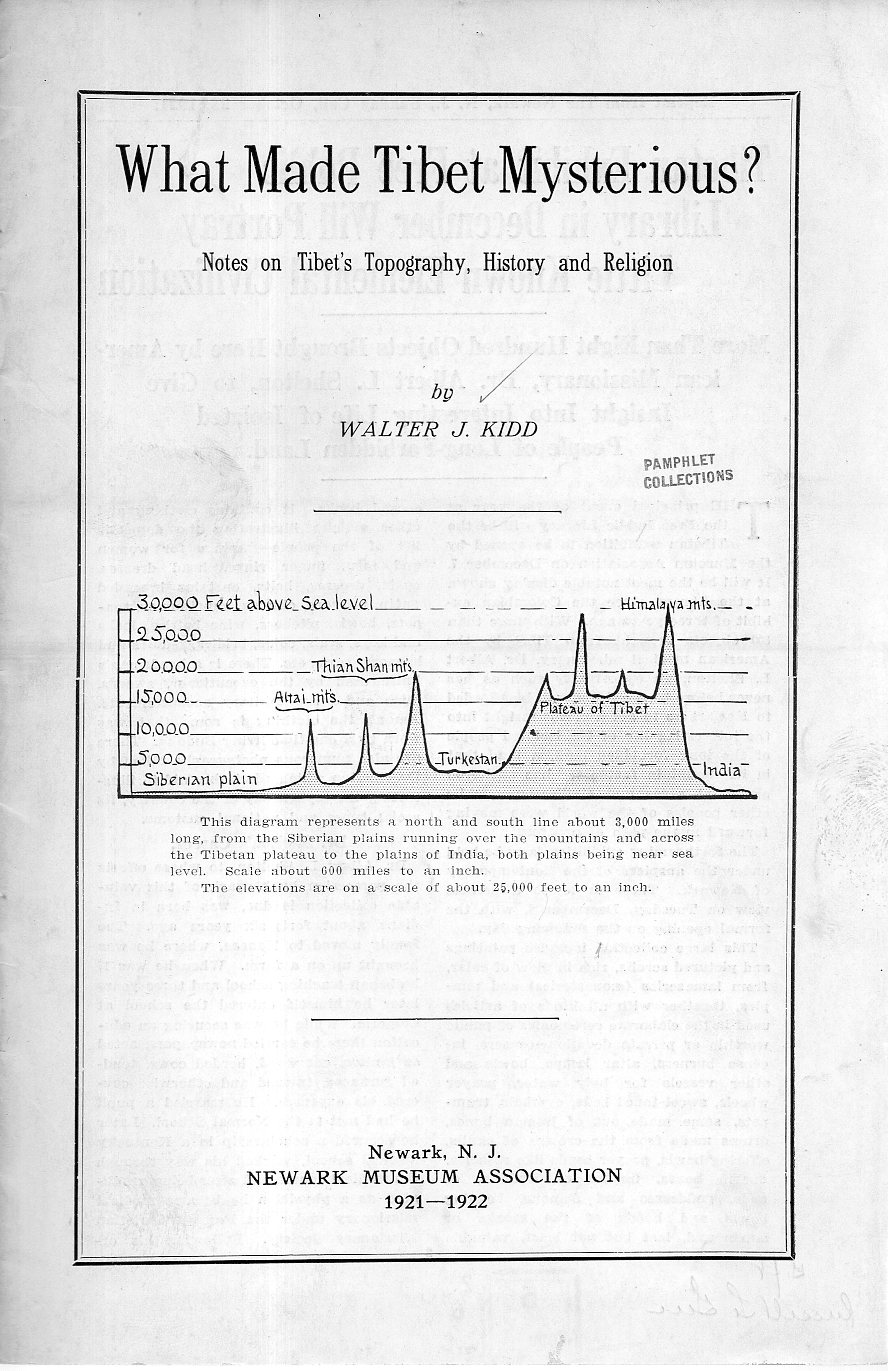
    Here’s a quick revelation that isn’t so secret or mysterious, answering the pamphlet’s title What Made Tibet Mysterious?  The answer has probably always been obvious for as long as anyone has known of Tibet–and it is displayed in the comparative graphic on the front cover:

    Tibet map202Of course there are many other mysterious parts that comprise Tibet, but the one that is most obvious has to do with location, and extreme location at that–this pamphlet cover takes care of that right away.  

  • A Myopic Map of Christian Leadership in China, 1938

    JF Ptak Science Books   Quick Post

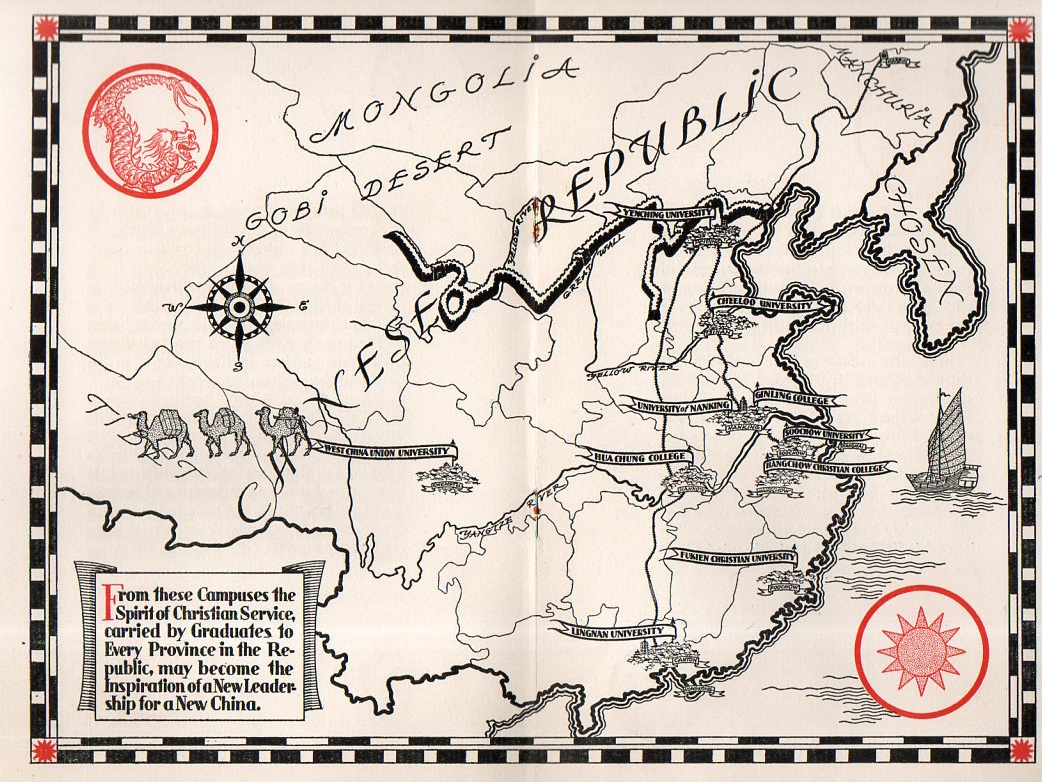
    I found this very unusual map of China in a pamphlet entitled Higher Education’s Century of Progress in China, published for the Associated Boards for Christian Colleges in China in New York City in 1938.  This is well into a solid decade of internal political turmoil in China, coupled with years of dealing with an invasive Japan, and all rolled up in 1938 with the first few years of an all-out Sino-Japanese War (the second one, the first occurring at the end of the last century). This war wasn’t necessarily a war between two opposing armies–it was also a war between the Japanese army and the people of China. This was highly demonstrated from December 1937 to January 1938 with the massacre and mass rapes committed against unarmed combatants in the Republic of China’s capital city, Nanjing/Nanking prior to its occupation–this is known as the Rape of Nanking, and is so known for very secure reasons. There was also a devastating flood of the Yellow River.  

    In a series of decades of difficult years, 1938 was particularly difficult year for China. 

    That said, this pamphlet discusses the “century of progress” in China by Christian missionaries, and the “birth and development of Christian education there”.  The situation in China in 1938 for this pamphlet was that there were 300 million illiterate Chinese–“it is a situation that challenges the Christian world!” so it reads. Perhaps what this meant was that they could not read the Bible until they were taught how to read it.

    And that was the extent of the recognition of what was going on in China.  To capitulate the interests of history those who generated this work included a map of China that included almost no detail except for Christian colleges.  

    China Christian map204

    It must have felt very comfortable for the Associated Boards for Christian Colleges in China to have published this pamphlet in 1938, having the China situation well in hand, snug in the comfort of a real or imagined pew, the issue and morality of its optics unchallenged by reality.

  • Yet Another Early Robot Designed to Go Bad

    JF Ptak Science Books   Quick Post

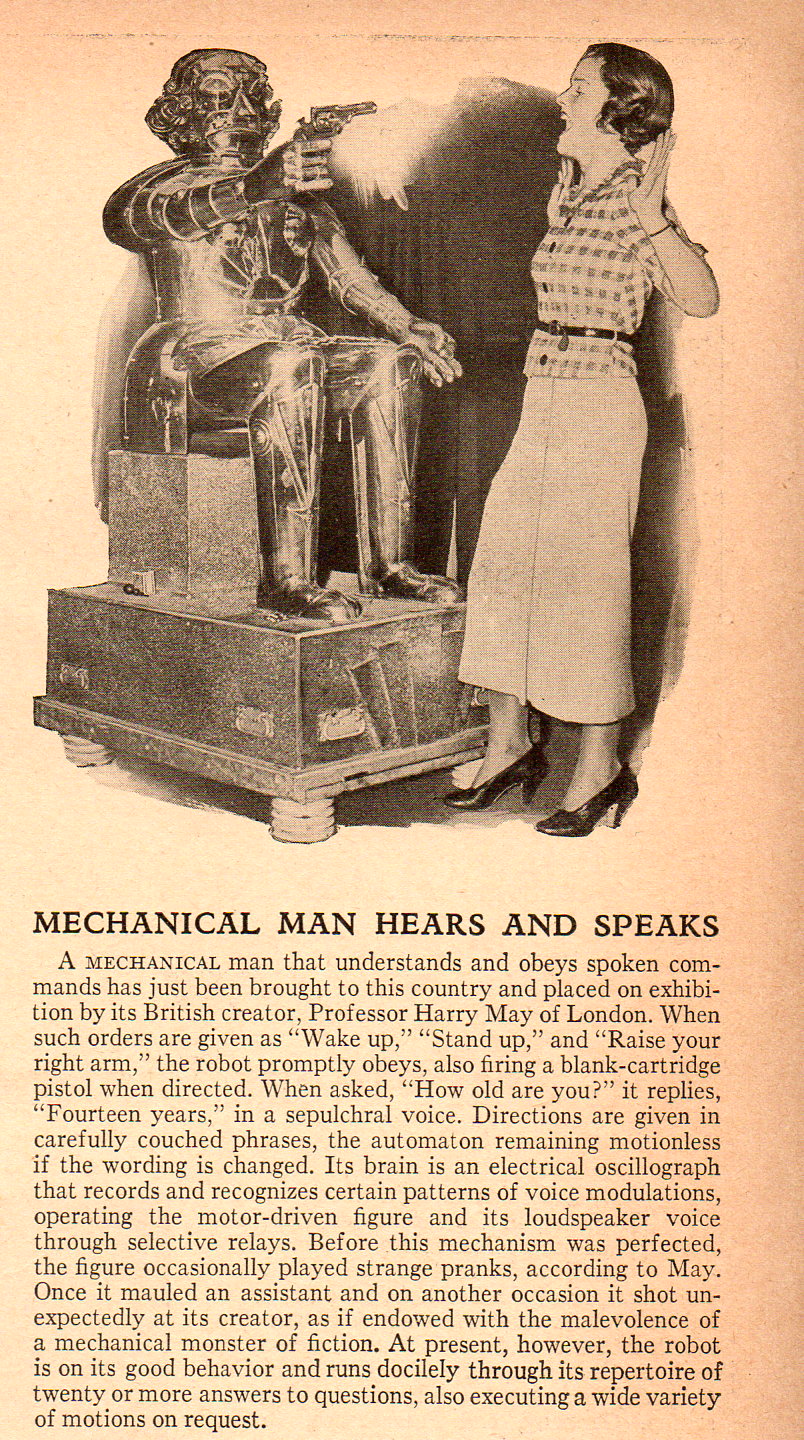
    These poor early robots–some were designed to pretend-to-clean, others to pretend-to-smoke, and yet others (even at this tender age in the history of robots) were designed to threaten people and whatever else was in front of them with a pistol.  It is a sad, thing, really–it is hard not to empathize with the amalgamated sorrow.  

    Robot with gun209[Source: Popular Science Monthly, January 1935, page 19.]

    I’ve written perhaps 15 or so posts on early robots (prior to WWII) and to me it seems that most were relegated to menial tasks–and when not menial, then they were often killing or threatening living humans.  Perhaps when our robot overlords of the future (ROOTF) absorb the human interpretation of their early history they will take pity on us for representing their early possibilities in such unfortunate ways–they may get over the images of robots harvesting, pulling wagons, sweeping clergy, squeezing the blood out of workers, savaging scantily clad women of the future, and so on…or they may not.

    For other posts on robots, enter “robots” in the google search box at left.  If nothing else, the images are very good.  

Recent Posts

Archives

Categories