A Daily History of Holes, Dots, Lines, Science, History, Math, Physics, Art, the Unintentional Absurd, Architecture, Maps, Data Visualization, Blank and Missing Things, and so on. |1.6 million words, 7500 images, 4.9 million hits| Press & appearances in The Times, Le Figaro, Mensa, The Economist, The Guardian, Discovery News, Slate, Le Monde, Sci American Blogs, Le Pont, and many other places… 5000+ total posts since 2008.
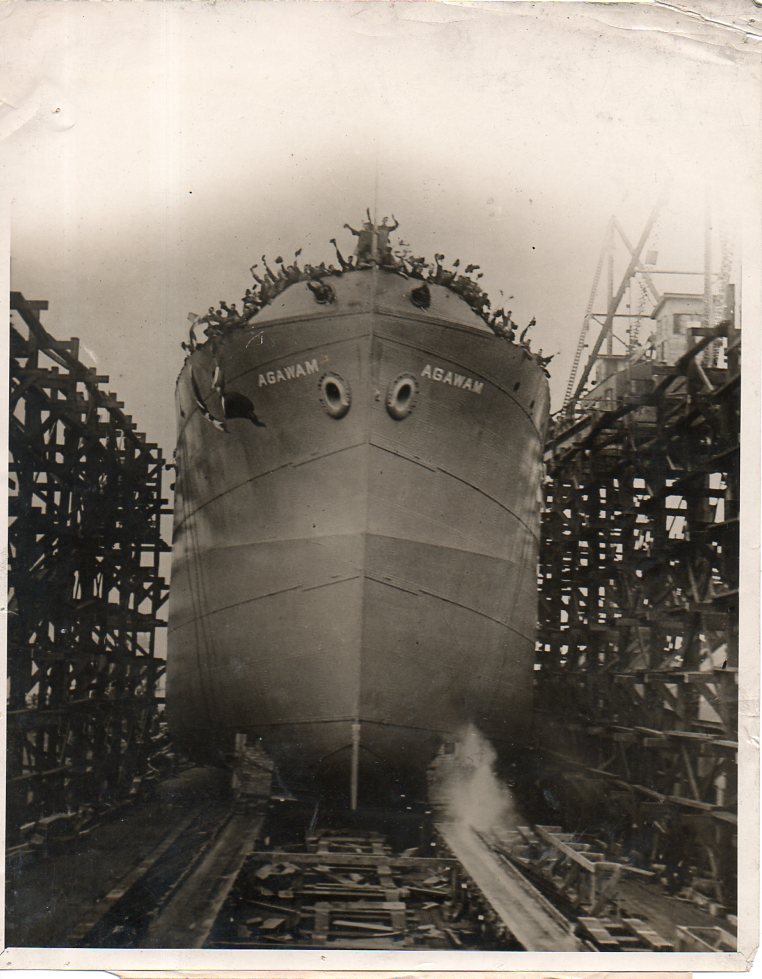
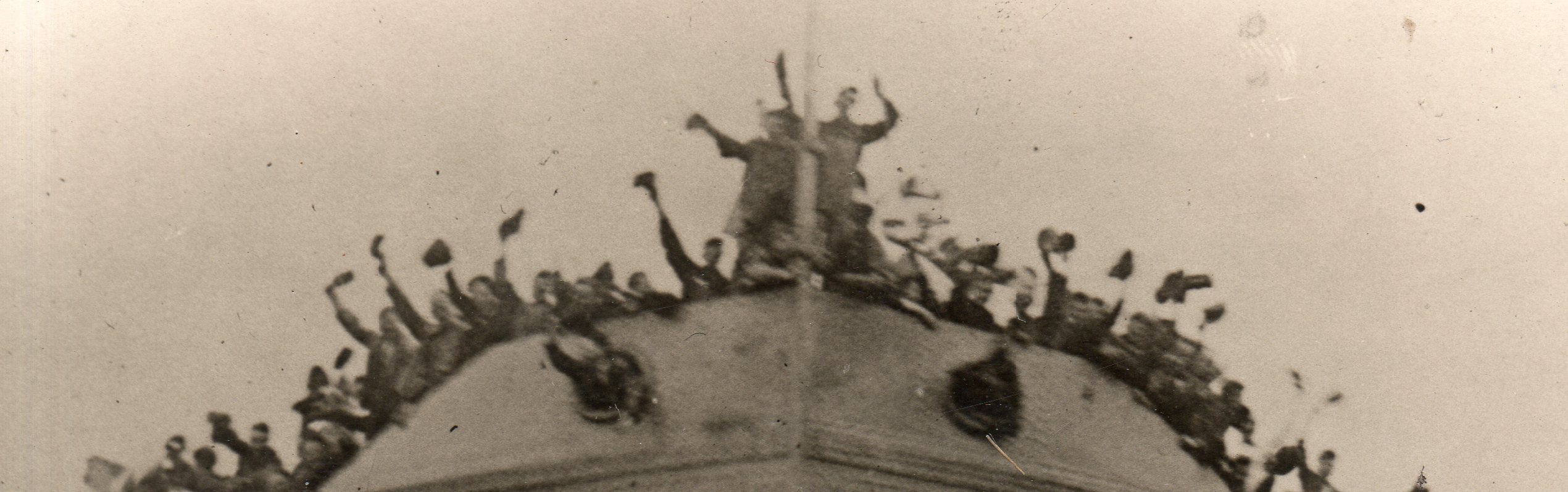
This great photograph was made in 1918 and stamped on the reverse “Photo by Central News Photo Service” of NYC. It shows the launching of the U.S.S. Agawam, the first standardized ship launched by the U.S. Navy (according to a New York Times article for May 3, 1918, (“FIRST FABRICATED SHIP; The Agawam, Forerunner of Standardized Fleet, to be Launched Today”).
The image reminds me in a way of the launching of the Dreadnought, which in some ways was another beginning of WWI, or at least of the naval race right before the war and of the competition for naval superiority between the Germany and England. And I remember how King Edward VII, rickety with illness, climbed the stairs to deliver his speech, and to break open the bottle of Australian wine against the Dreadnought‘s bow. Except that the bottle didn’t break on the first attempt–a somewhat forbidding element, except that it was her bow that Dreadnought used to sink a German sub. The ship revolutionized naval technology and Germany played catch-up to it (and in effect an entire new class of battleship) right to the beginning of the war. Less than 15 years later, the Dreadnought was sold for scrap.
I’d like to make a quick addition to an earlier post on a form of Pearson’s planetarium. This is from the same source, though from a few years later, and involves Pearson’s Satellitian, which was a differently-abled device. All of the images appeared in the magisterial if not occasionally problematic Cyclopedia of Abraham Rees (1743-1825).
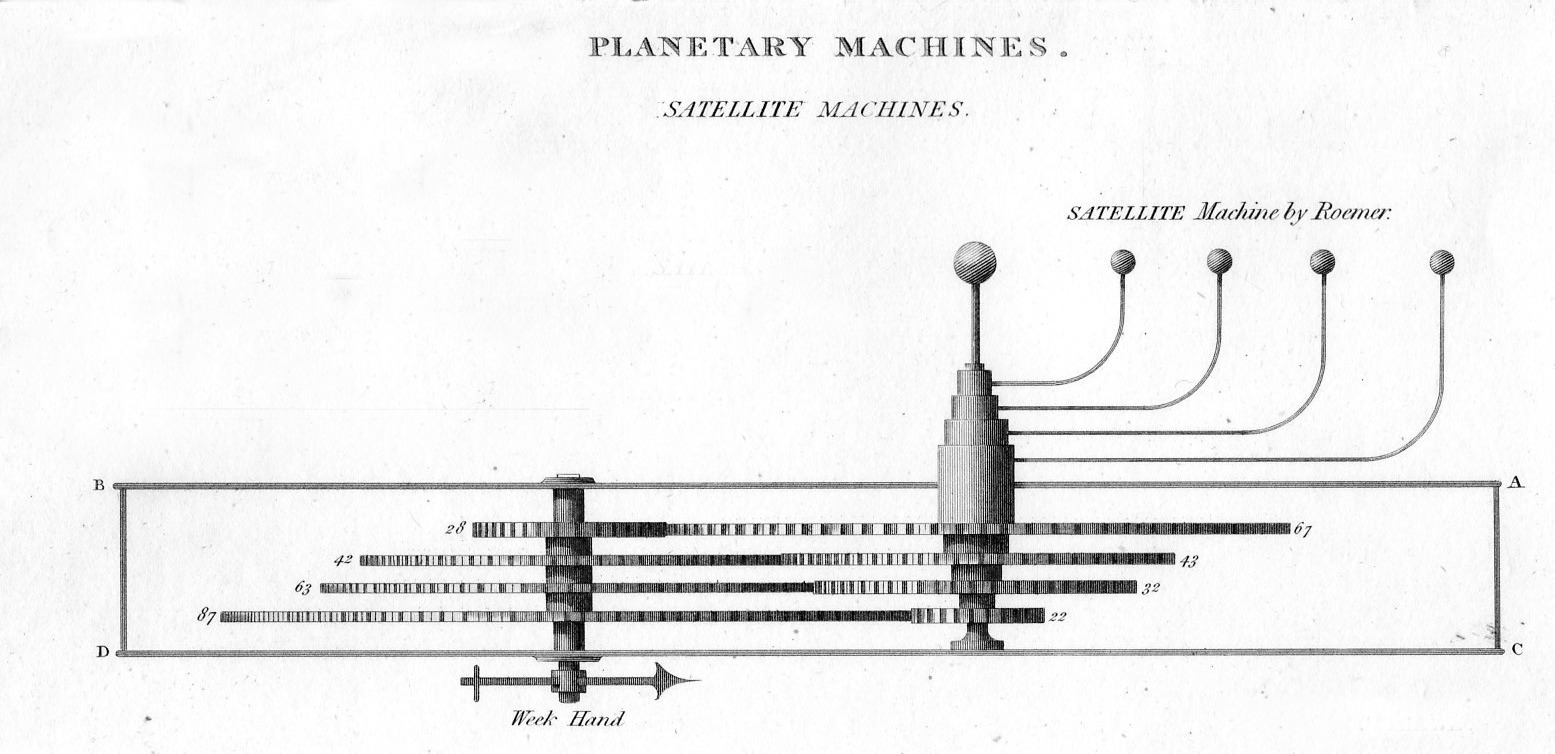
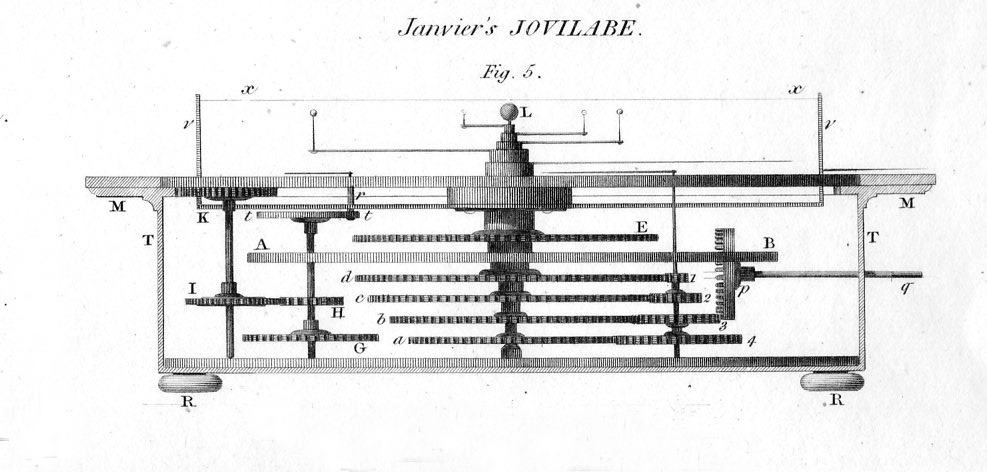
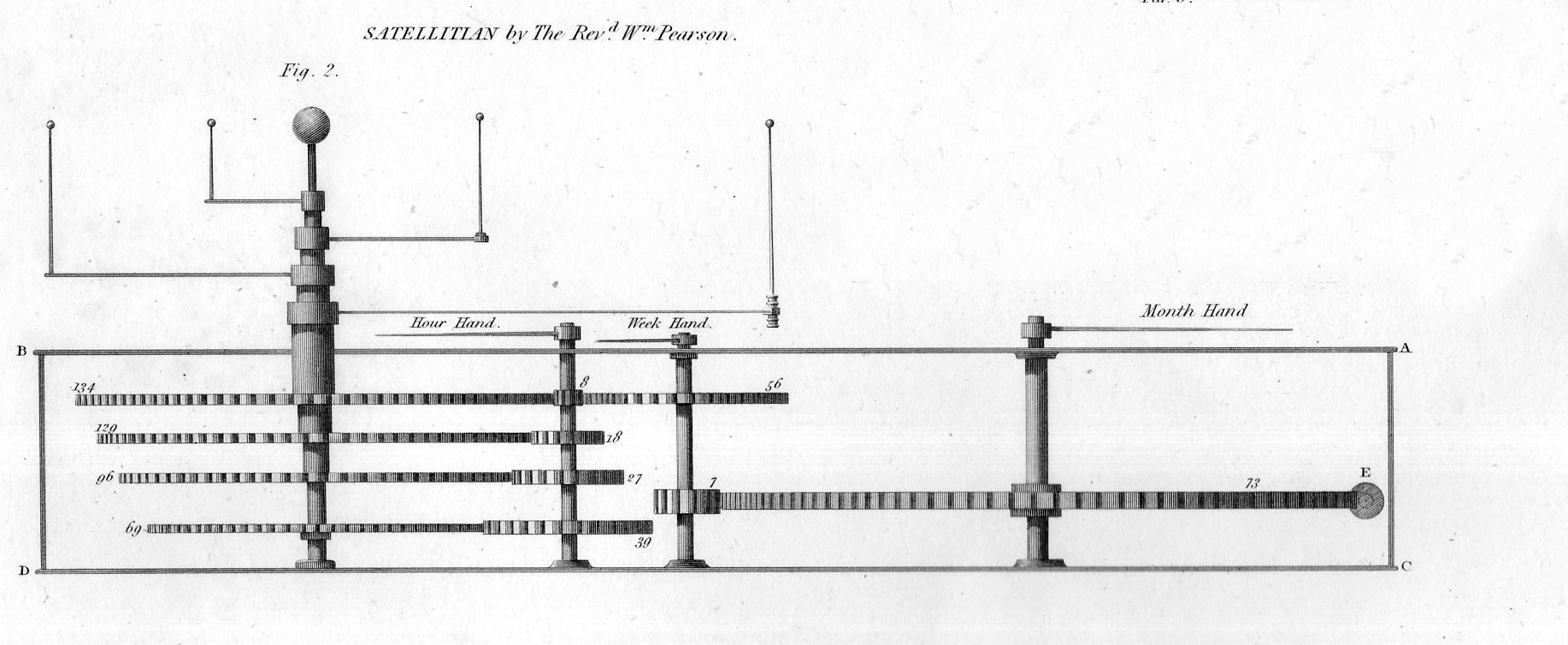
The first image is a cross section for he “Satellite Machine by Roemer”, followed by “Janvier’s Jovilabe, and the with Willliam Pearson’s “Satellitian”, all appearing on the same 11×8″ sheet and printed in 1820.
First, the Roemer:
Here’s a description from Rees on the Roemer instrument (this courtesy of Google Books; the images are my own):
A good article on the Roemer and the Pearson machines appears in the Edinburgh Magazine, volume 15, 1832, http://tinyurl.com/ogo36n9
And the Janvier:
And the Pearson machine:
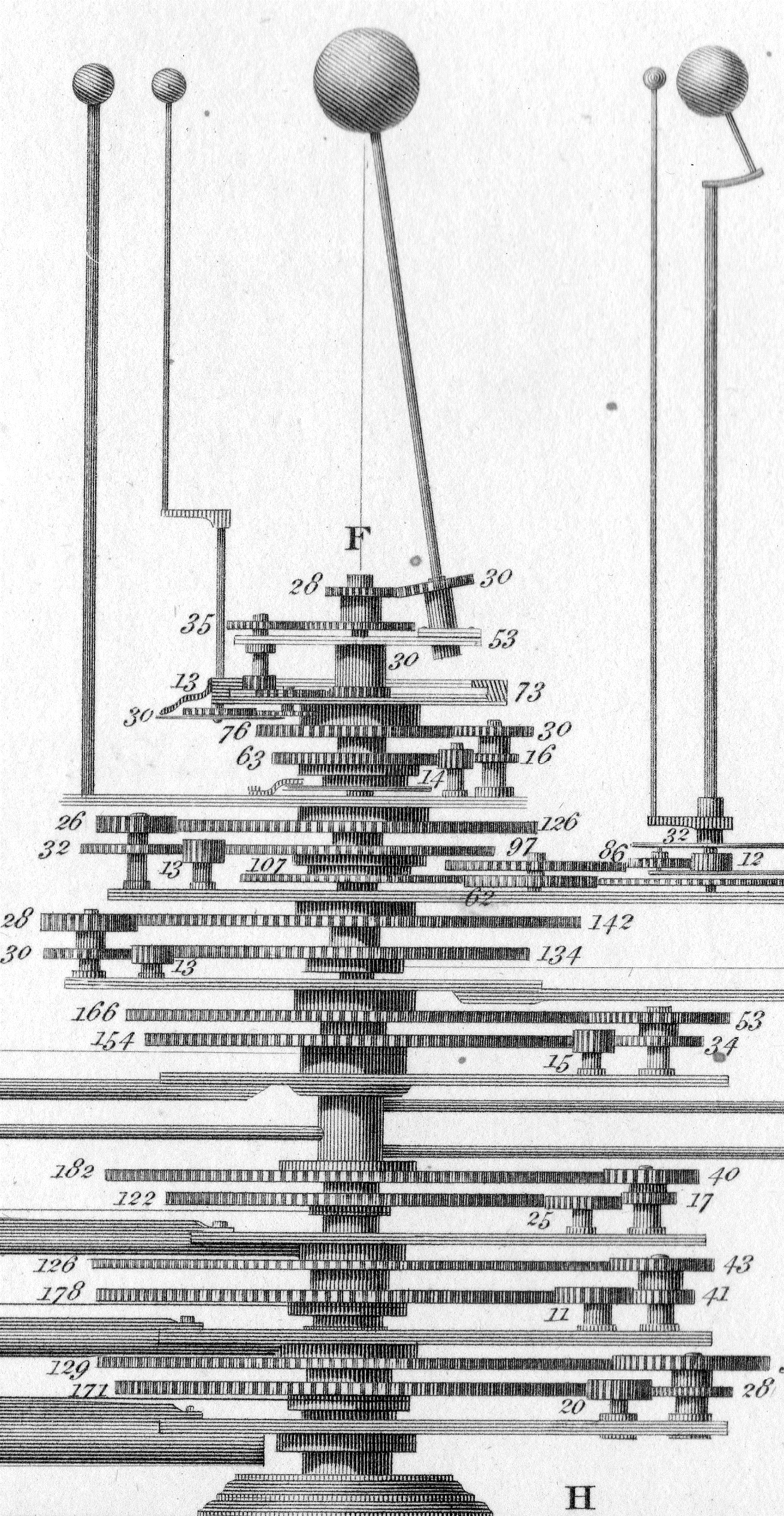
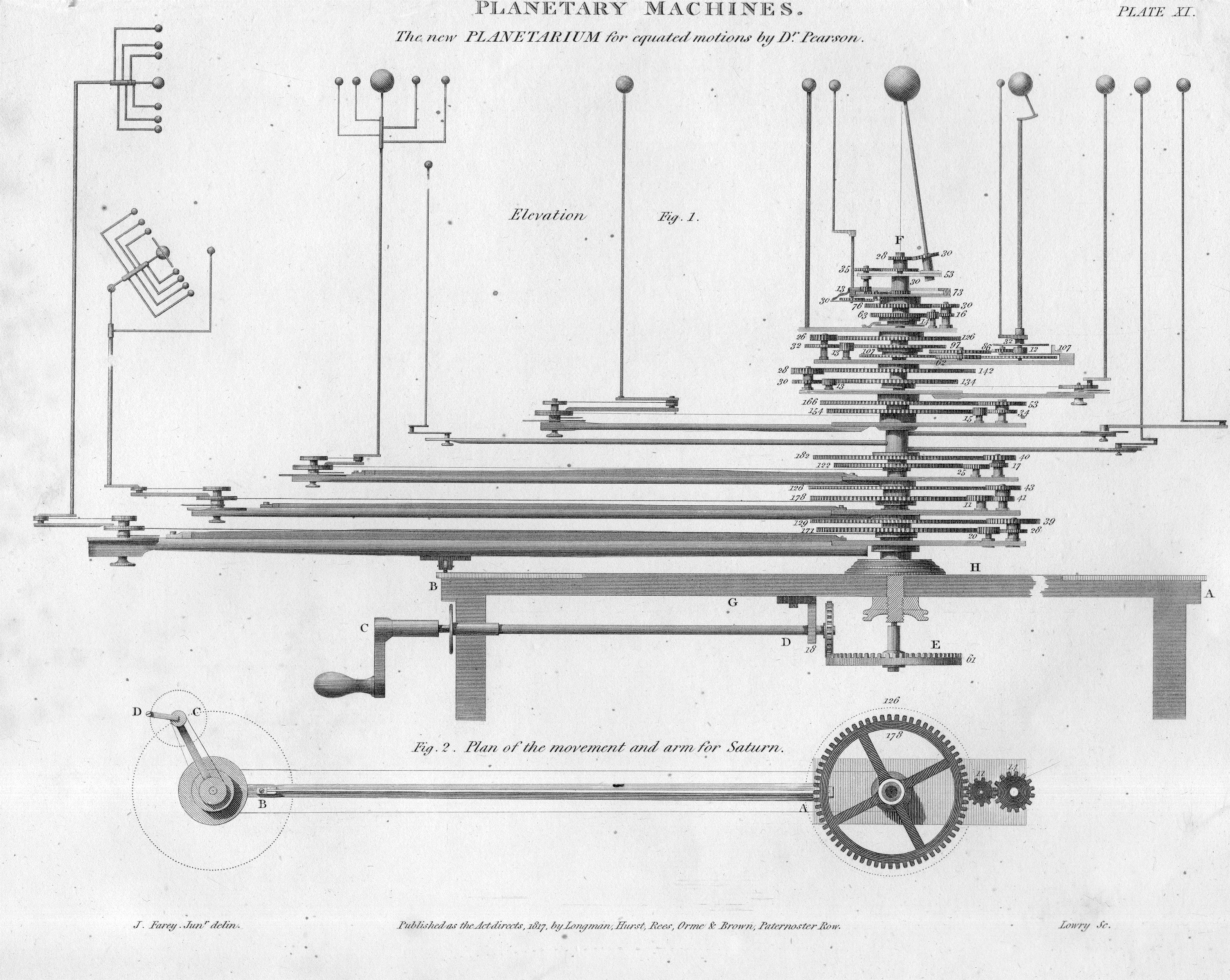
This is the second Pearson instrument, the heart of a beautiful orrey created by William Pearson (1767-1847, and one of the founders of the Royal Astronomical Society) as found in the 1817 volume of Rees, and features the main gearing for a mechanical display of the functioning of the Solar System:
This is the detail from the following, full-length version, which is 8″x10″–so there’s a fair amount of detail in a limited field:
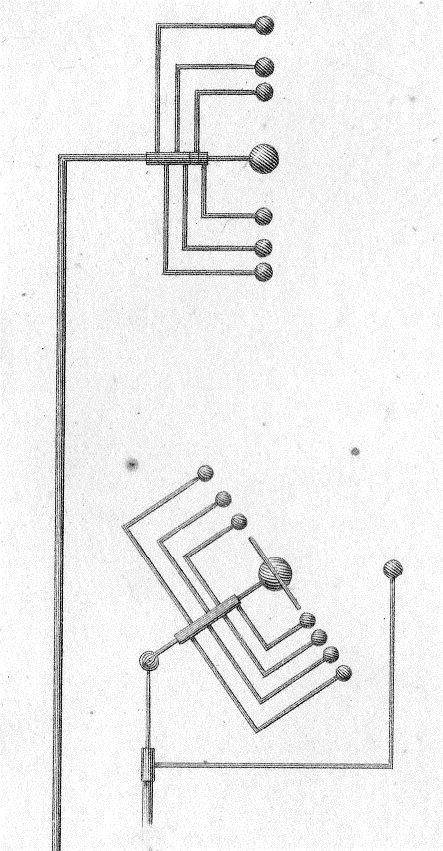
And the beautiful Dadaist detail of Jupiter and Saturn:
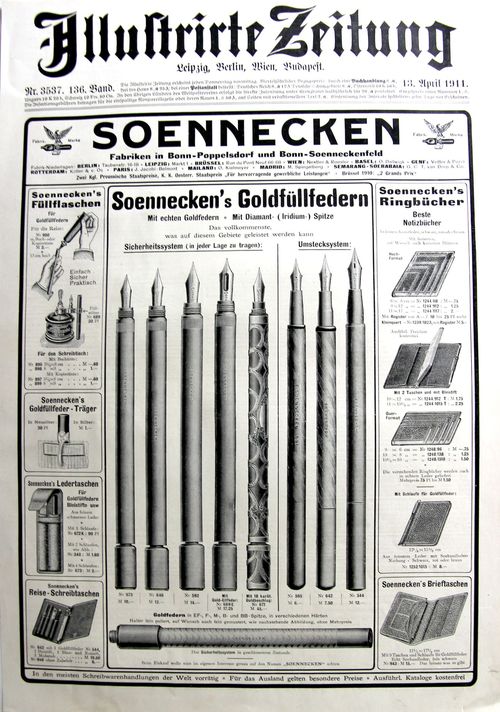
I really don’t have much to say about this image except that it is a very nicely designed thing, an advertisement for fountain pens produced by Germany’s leading pen manufacturer (Soennecken, established 1875), This full-page/front-page illustration appeared in Illustrirte Zeitung for 13 April 1911.
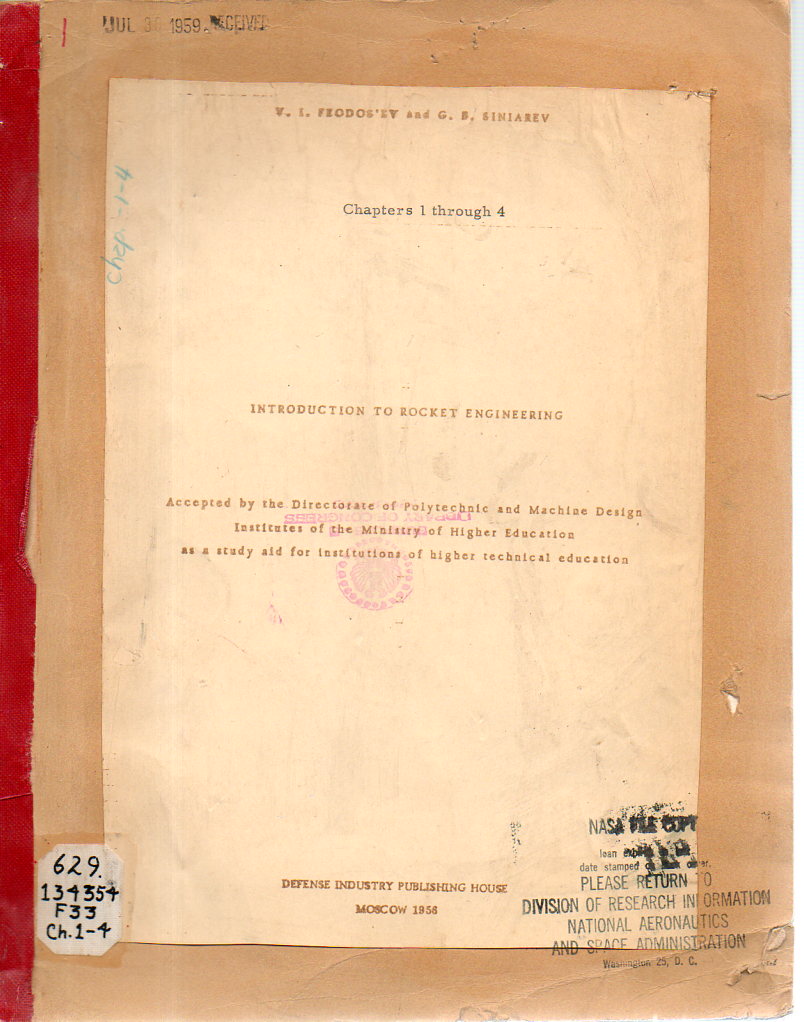
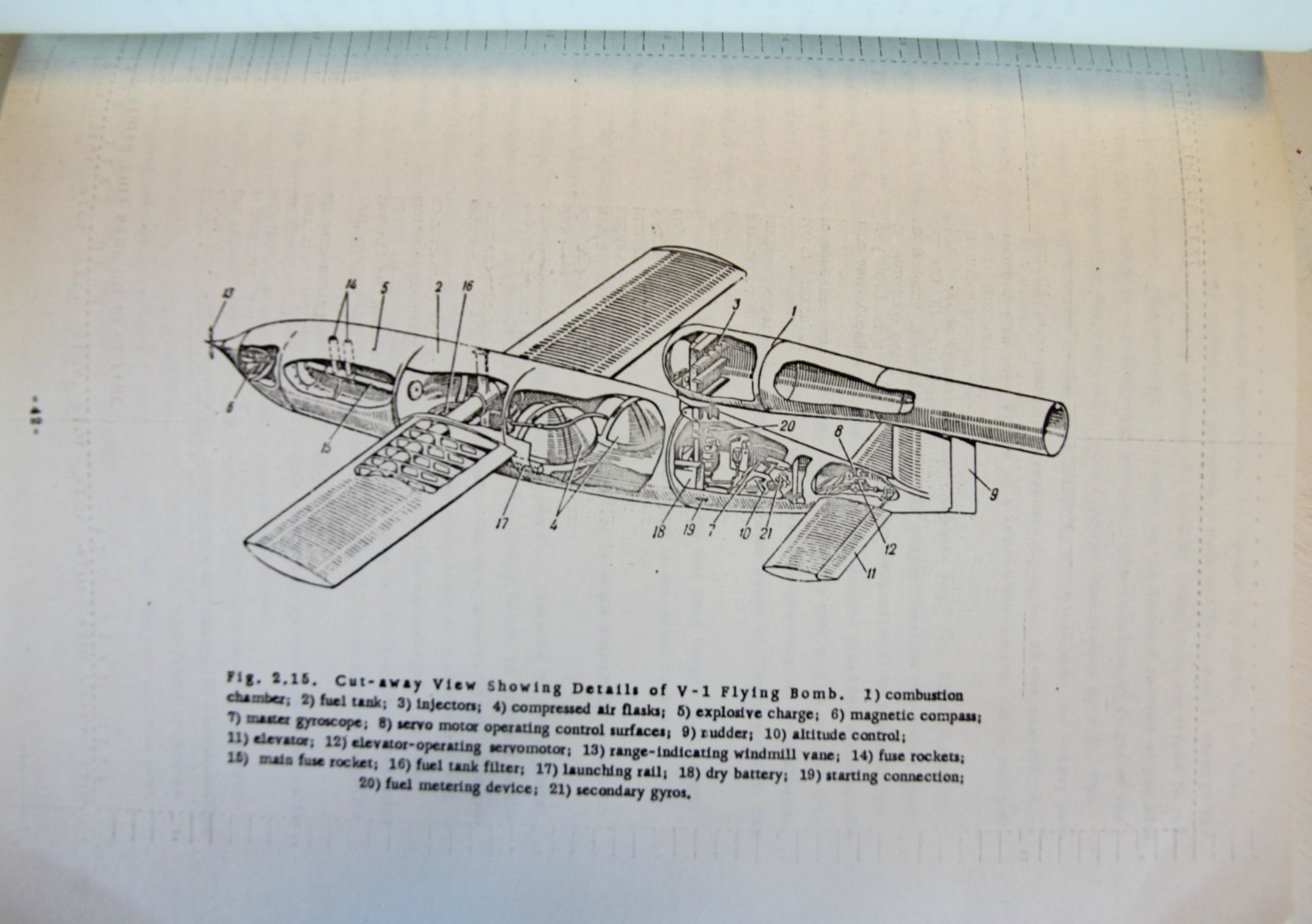
V.I. Feodosiev (with his two initials looking ironically similar to the V1 that he wrote about) and G.B. Simiarev wrote a classic textbook1 in rocket technology which was published in Moscow in 1958. Even though it was translated and published in English the following year by Academic Press, the version here seems to have been translated in the same year as its Russian edition. I’ve had some translations-on-demand in the store that were fast-tracked for the particular agency that needed the work, translations that sometimes didn’t appear in English for years afterwards. In this case the Feodosiev was translated (anonymously) for an undisclosed agency, though this copy wound up in the library of the NASA Division of Research Information2. It could well be that the work was produced for NASA but frankly there are many other candidates for the point of origin of interest. This copy is definitely different from the Academic Press translation, so at least two different translations were made of the text.
I really don’t have that much to offer here on this edition, except to note its differences from the Academic Press version, though this may be of some use to someone working in this area.
The original is available via the blog’s bookstore, here.
Here’s an abstract/summary of the work (which has a slightly different title) by the Academic Press 1959 version of this publication:
“Introduction to Rocket Technology focuses on the dynamics, technologies, aerodynamics, ballistics, theory of servomechanisms, principles of navigation instruments, and electronics involved in rocket technology.”
“The publication first takes a look at the basic relationships in the theory of reactive motion; types of jet propelled aircraft and their basic construction; and types of reaction motors and their construction. Discussions focus on air breathing motors, anti-aircraft rockets, long range bombardment rockets, surface to surface, short range bombardment missiles, thrust of a rocket motor, and operating efficiency of a rocket motor. The text then examines rocket motor fuels and processes in the combustion chamber of a rocket motor.”
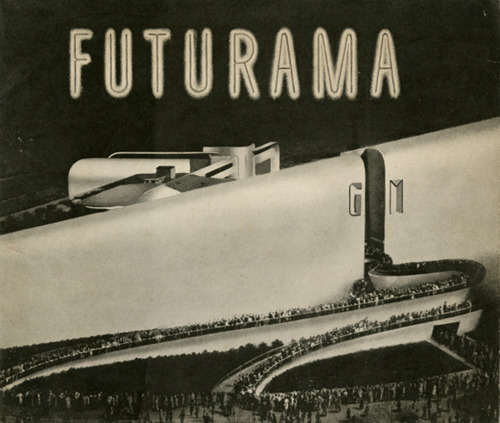
[Image source: FUTURAMA.Published by General Motors, 1940. 24pp. Original wrappers. Provenance: the Pamphlet Collection, Library of Congress. ]
The 1939 World’s Fair in NYC famously exhibited a spherical attraction that exhibited a semi-robotic display of what the future would be like–a future that was only 21 years away, in 1960. There would be an enormous amount of weight on the shoulders of 1960, given what the World’s Fair had to say about it in 1939. Few things were very right, and many of course were necessarily wrong–but that must be the case when looking into the short-ended future with a monstrous amount of anticipation. That–and since this was a feel-good celebration–nobody was talking about the world war that had already started.
One thing is for sure–the pavilion’s creator, General Motors, did foresee that highways and automobiles will be in high demand up there in the tomorrowland of 1960. The display was designed by the fantastic Norman bel Geddes, who actually expanded on his superhighway theme in the next year with his book Magic Motorways (which can be read here). Anyway people were very excited by the whole affair–waiting in line for a few hours, winding their way through the pavilion to take their seats in a circular gallery overlooking a vast and complex assemblage of miniature societal models, the seating arena rotated to give the viewers views of the entire display. More than 26 million people saw the display over a six month period.
26 million is a big number. Futurama drew as many people in six months as the three New York City baseball teams (the Yankees, Giants and Dodgers) brought in for almost the entire decade. It is also equal to all of the deaths suffered by the Soviet Union during WWII.
I guess this was as good a vision as any–or at least it didn’t seem to involve very much planning outside the new automatic automobile nervous system that would leech into the life-blood of the country. Other planned visions of the future do not look quite so good. For example, Le Corbuser’s demolition of central Paris to make way for his Soviet apartment block reconstruction in his Voisin Plan (1925):
Again, this is not a wholesale look into the future, just the resurfacing of one of the world’s greatest cities.
A man with a little bigger vision, Frank Lloyd Wright, saw a heavier future in his Broadacre CIty:
I’m not sure how these domed cities worked. B. Fuller had an idea like this for central Manhattan that I wrote about earlier in this blog, but his idea escaped me too.
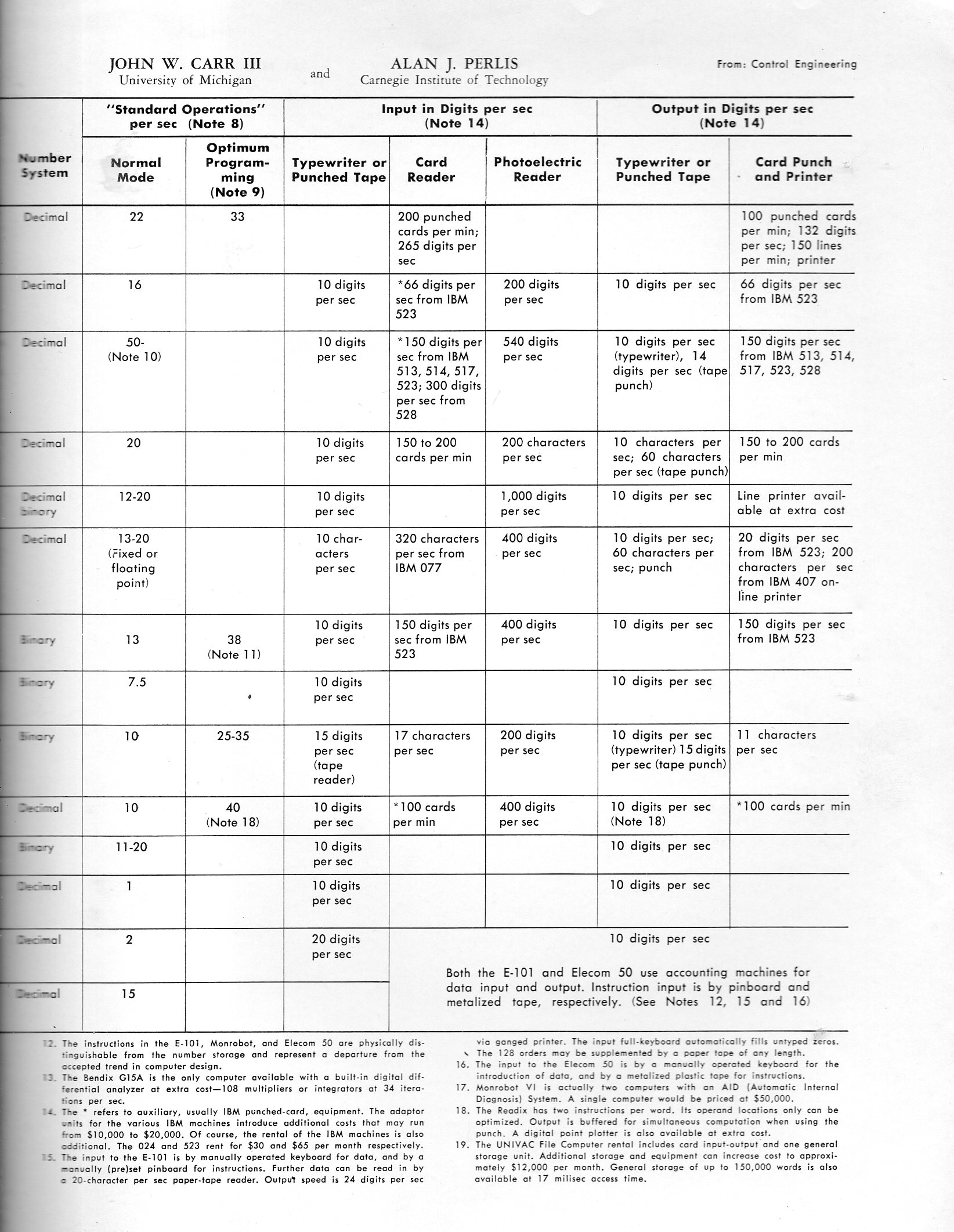
A.J. Perlis’ and John Carrs’ “Characteristics of the Small-Scale Computers” looked innocent enough, 12″ tall and one folded piece of paper, and published in 1956, but there was a lot more to the simple publication than you’d expect from something so modest. The authors–John W. Carr III and Alan J. Perlis–were heavy hitters, and so I really wasn’t very surprised to see what they had done “inside”, though I was impressed and happy to see the data. Displayed on the 12×16″ sheet of paper are 15 data points on 14 computers, many of them classic/famous: the 650 IBM, UNIVAC, Elecom, Alawac. (Remember that when you’re looking at purchase price and monthly rental amounts that the 1956 dollar is equal to about $8.70 in 2015 dollars, so that $3275/month for the 650 would be about $30k. The $136k for the Datatron is about a million today.)
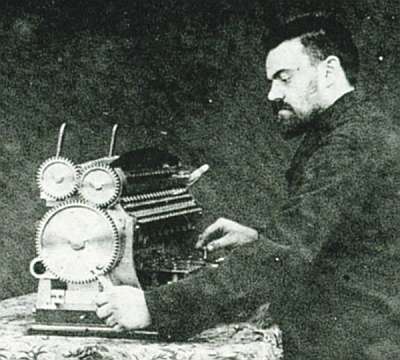
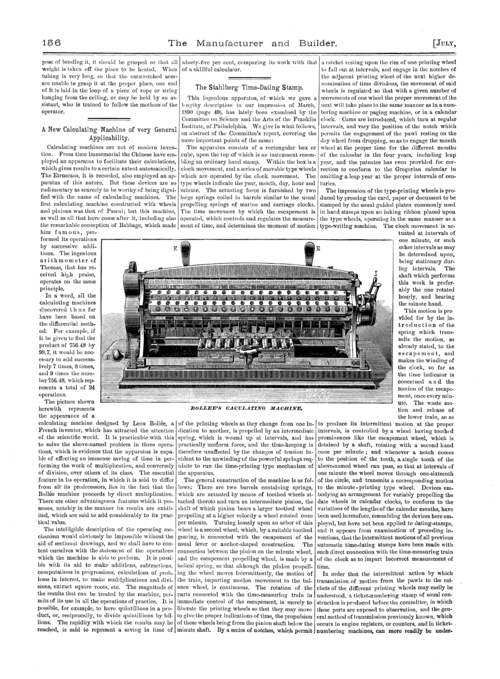
It was a surprise, finding M. Bollee’s article (“Sur une nouvelle machine a calculer”) in this 1889 Comptes Rendus, peeking around in that big 10-pound volume looking for something else. It was very easy to miss if you weren’t looking for it, just a few pages long in a 1000-page book. But there it was, nestled comfortably in pp 737-739. It these few pages Bollee describes his machine and with particular reference to his innovative approach to direct multipilication–a fine addition (ha!) to the long line of contributions by Babbage and Clement, Scheutz, Wiberg and Grant and Hamann.
The article in the Comptes Rendus is not illustrated, though I did find an image of the machine in The Manufacturer and Builder:
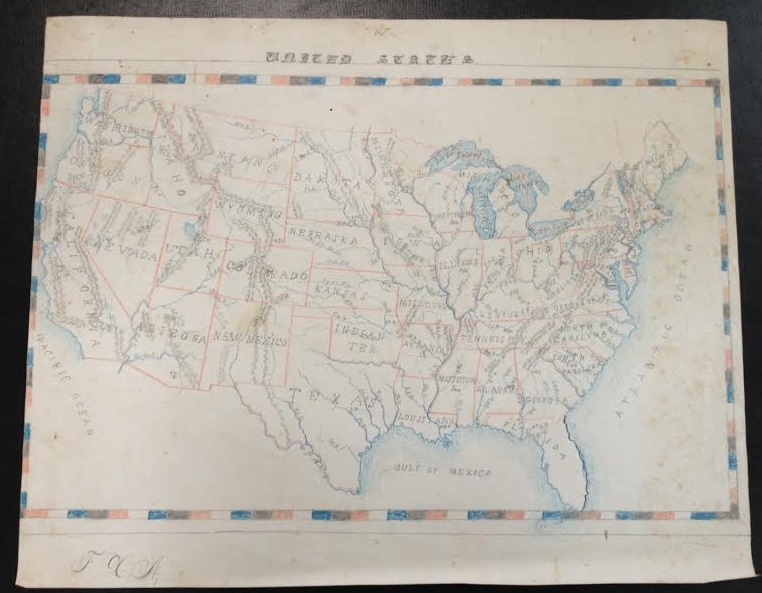
It is difficult to find children’s art from the 19th century–original work, printed work, published work. Very difficult–perhaps even more so for the published work than the manuscript. It is easy to understand why: first, the children would need access to paper and pencil or pen and ink–items that had some cost, that were not inexpensive, not available to the vast majority of children. Their work was ephemeral, produced on slate, or in horn books, or in charcoal on a wall, or in dust. Then, if the children did manage to record their creativity, then it would have to survive a generation of possessionship within their own lifetimes–to survive from the first part of the 19th century, the paperwork would have to survive five generations or more, 150+ years of house cleanings. Tough odds.
That is why it is also a little special when I come across larger manuscript works that have survived against these odds.
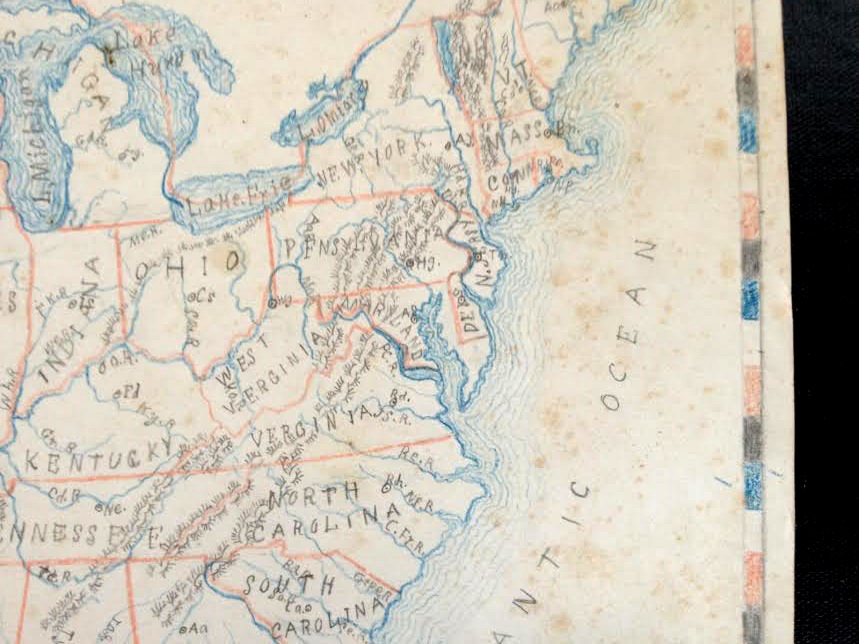
This map of the United States isn’t so simple as it seems–although there are no major cities located in any states, many rivers are, as well as mountain ranges. The coastlines get a very nice treatment with recessive blue lines, giving the map a certain dimensionality, and the lettering of the states is also distinctive, with the terminals of the letters in the state names ending with dots or lines.
I’d guess that the map was done around Centennial time, 1876 to the mid-1880’s, the biggest clues being the inclusive of Wyoming (which sets a date after 1868) and the large Dakota Territory, which would become North and South Dakota in 1889.
As maps by kids go, this one is fairly large at 12×15″–it is about the largest single sheet artwork that I have in a 150-odd pieces of antiquarian children’s art collection…also I wonder about how the kid in 1880-whatever got her/himself such a large piece of paper to work with, as it seems to me to be not a simple task.
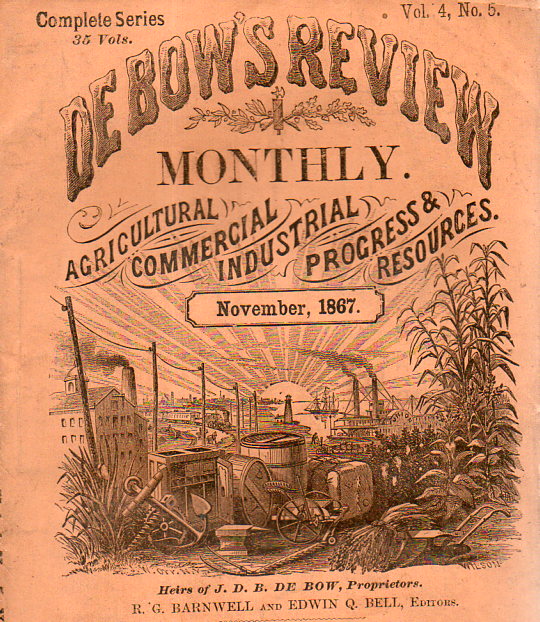
De Bow’s Review in 1867, in the dire straights of the antebellum South, in the doom and despair of the just-finished war, lashed out like a wicked Alex Jones conspiratorial wingnut against the Northern states and anyone who comforted them. Published in Nashville, all I have of the magazine presently is this loose issue for November 1867, and in spite of the energetically positive view depicted on the cover of the magazine had little to do with what you found in the writing inside.
The leading article is an odd one, yelling about Great Britain manufacturing the cause of anti-slavery in the United States, which pretty much is made abundantly clear in the title, “Black Republicanism, the Dupe and Agent of British Policy in Respect to American Interests”. The “scheme of so-called Negro Emancipation…is a British Invention” crushing the U.S. which “suffered immeasurably” under the Abolition Program, “the fatal deadfall of the abolition trap“, all of which in the end will “crush the innards out of the “Black Republican Yankee”. It was the Brits according to the writer of this article who FORCED THE UNITED STATES TO ABOLISH SLAVERY” [caps in the original].
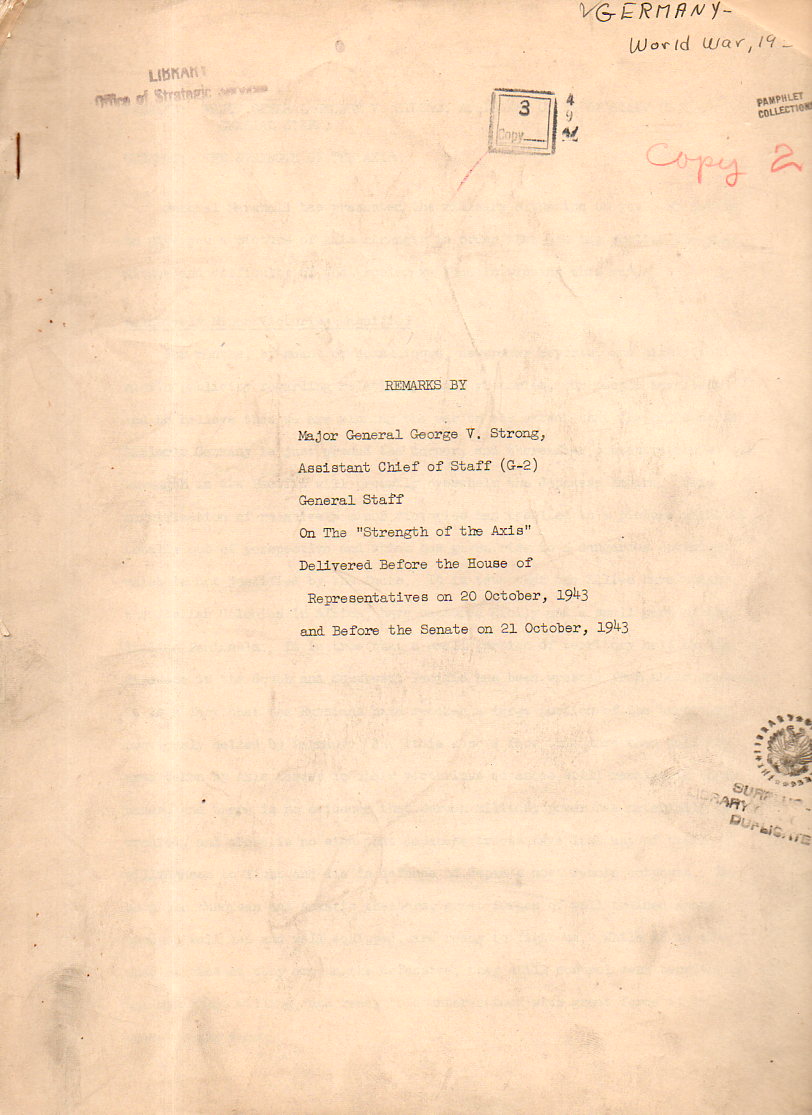
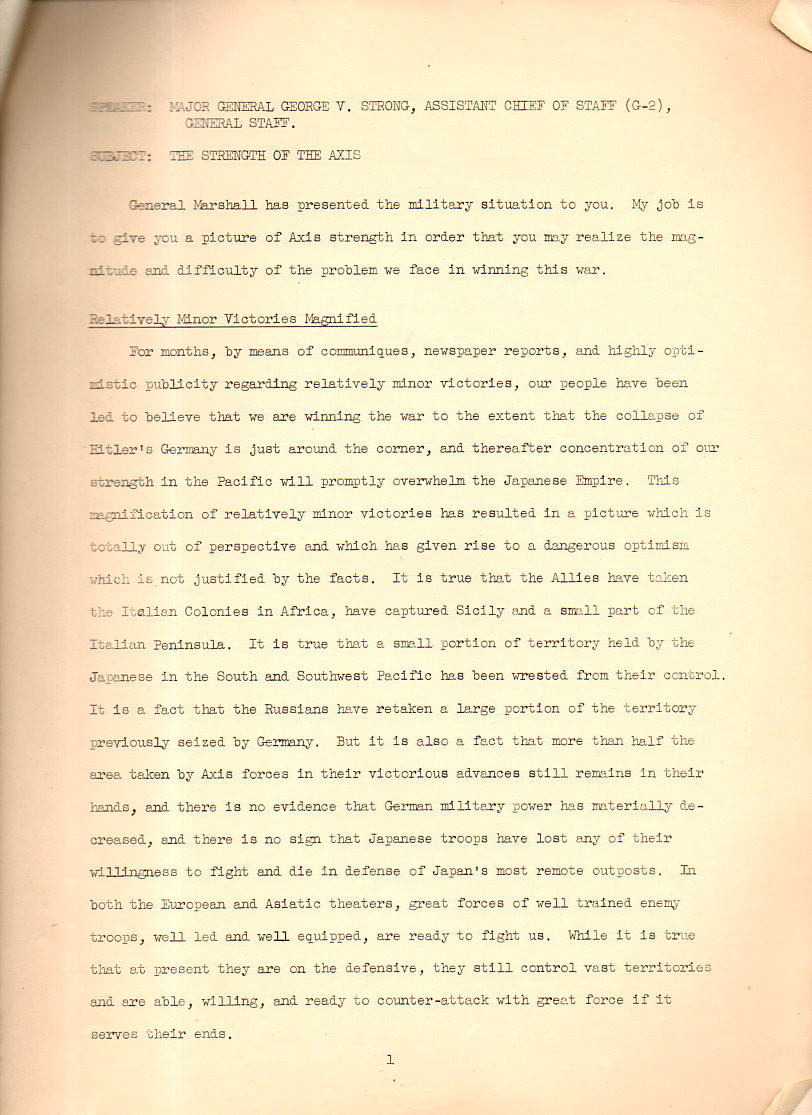
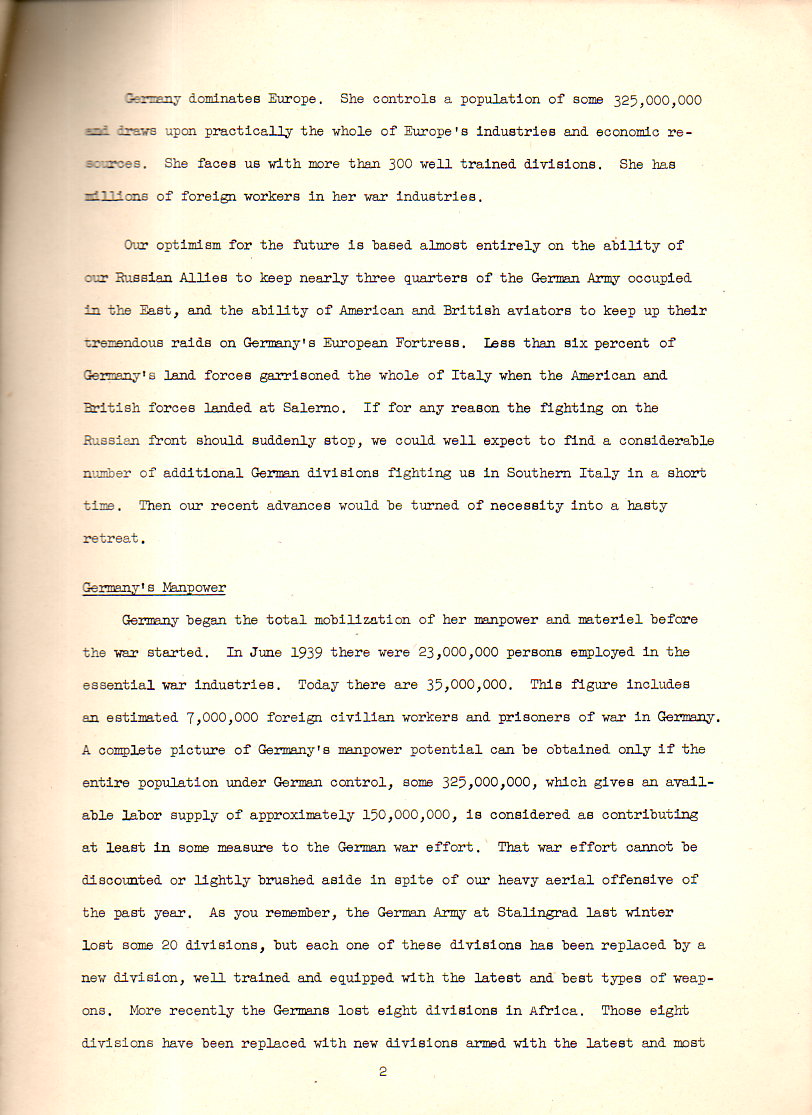
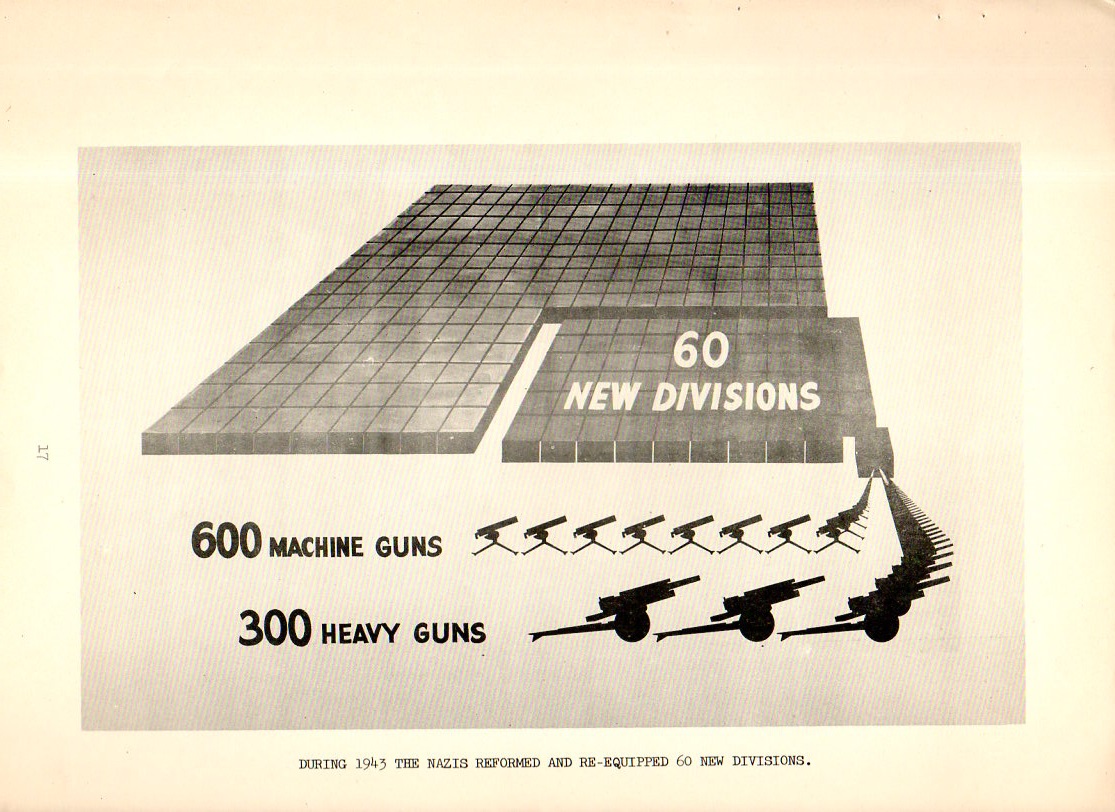
Major General George Veazy Strong (USMA ’04), in 1943 as the Assistant Chief of Staff of the Army Intelligence Unit (G-2)–a position of enormous importance–delivered his very sober and reasonable summation on the strength of the Axis forces before the U.S. Congress (on October 20 and 21, 1943). which was printed in this report. (It is of historical and bibliographical interested to note that this document was in the library of the Office of Strategic Services (the O.S.S., the precursor to the C.I.A.) before it was sent to the Library of Congress and deaccessioned.)
The document is somewhat over-sized (at 12×9″) and is 13 pages of text, followed by 17 leaves of diagrams, some of which are very strong images of superior design. Strong was very highly accomplished, of very wide experience, and was an excellent thinker. His report was concise and thorough, and must have made a mark on his listeners in the House and Senate.
The report seems to be rare–I cannot find mention of it popularly in the social media, and there seems also to be no trace of it in the WorldCat outside of an LP recording (at the Library of Congress), meaning that there seems to be no copies of the printed version in libraries worldwide.
This is an interesting read, and since it appears to be nowhere I believe I should reprint it, here, shortly.
The original is available via the blog’s bookstore, here.
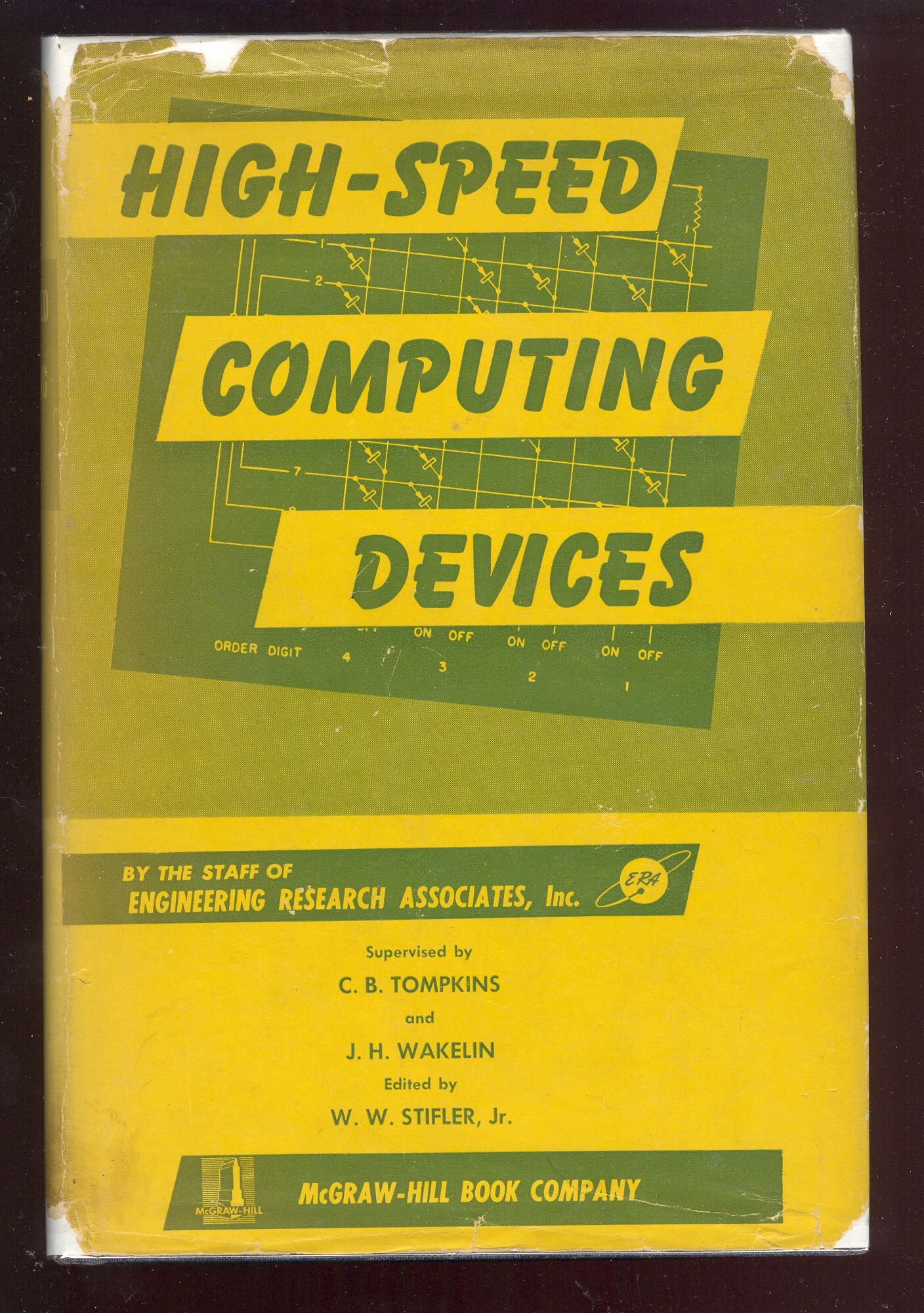
C.B. Tompkins’ High-Speed Computing Devices (New York, McGraw Hill, 1950) is probably the best of the pre-1960 textbooks on the computer, complete with stout bibliographies and lots of bits to trail from the golden age of computers. This classic work is enhanced by a (very) unusually complete series of chapter-ending references and bibliographies. Among much else of interest we find a treatment of the Harvard Mark I and II on pp 183-187 in the chapter on “Large-Scale Digital Computing Systems” on pp 182-222 with bibliography occupying pp 218-222. Also, the “Punched-Card Computing Systems” chapter pp 146-181 has a very nice bibliography on pp 166-181.
Even though I’ve used this book quite a bit I’ve never collected the chapter-ending references in one document until today. Tompkins now appears in the glorious Internet Archive, and I’ve taken the 16 pieces of bibliography and gathered them all below in a document that is about 40 pages long. Have a look, and enjoy–thanks to the Internet Archive!
This is considered to be the first textbook on digital computers, the first compendium in English on digital computer technology, and a pioneering work that influenced many computer designers during the 1950s. It provides an unsurpassed picture of the state of the art during the late 1940s, and is further enhanced by the inclusion of several excellent bibliographies. — Sarrazin F2.
“The book is a careful analysis of the electronic field as of 1950 and was in very large measure written by the late Professor C. B. Tompkins..” – Goldstine 315.
(This book) was written to satisfy “a perceived need, following the end of WW II, for compendium of technologies applicable to the emerging field of electronic digital computers…Because published technical information was scarce in the U.S., there can be little question that the book was an important contribution to computer literature…with its state of the art picture of the period 1947 through 1949, establishes a well-documented baseline fro tracking and evaluating subsequent technological progress.”– Arnold Cohen, from the Introduction to the 1983 Charles Babbage Institute Reprint Series Edition of the ERA Report, published by Tomash Publshing. ERA
High-Speed Computing Devices, by C.B. Tompkins: bibliographies
Chapter 1. Introduction
Chapter 2. Preliminary Considerations
Chapter 3. Counters as Elementary Components
Chapter 4. Switches and Gates
Chapter 5. A Functional Approach to Machine Design
Chapter 6. Arithmetic Systems
Chapter 7. Numerical Analysis
Chapter 8. Desk Calculators
Chapter 9. Punched-card Computing Systems
Chapter 10. Large-scale Digital Computing Systems
Chapter 11. Analog Computing Systems
Chapter 12. The Form of a Digital Computer
Chapter 13. Arithmetic Elements
Chapter 14. Transfer Mediums
Chapter 15. Data-conversion Equipment
Chapter 16. Special Techniques and Equipment
 [A detail from:]