A Daily History of Holes, Dots, Lines, Science, History, Math, Physics, Art, the Unintentional Absurd, Architecture, Maps, Data Visualization, Blank and Missing Things, and so on. |1.6 million words, 7500 images, 4.9 million hits| Press & appearances in The Times, Le Figaro, Mensa, The Economist, The Guardian, Discovery News, Slate, Le Monde, Sci American Blogs, Le Pont, and many other places… 5000+ total posts since 2008.

  • The Cabinet of Curiosity at Eddystone

    JF Ptak Science Books  Post 2599

    Henry Wenstanley was an artisan and an engineer with a long interest in architecture who rose to sufficiently high rank to be considered and selected to build a lighthouse at Eddystone (14 miles from Plymouth, built on the Eddystone reef, south of Rame Head). He started in 1696 and was done by 1698, and had successfully constructed the world’s greatest lighthouse. He modified and reinforced it substantially in the next few years, winding up with a stout-looking if cabinet-of-curiosity appearance.  
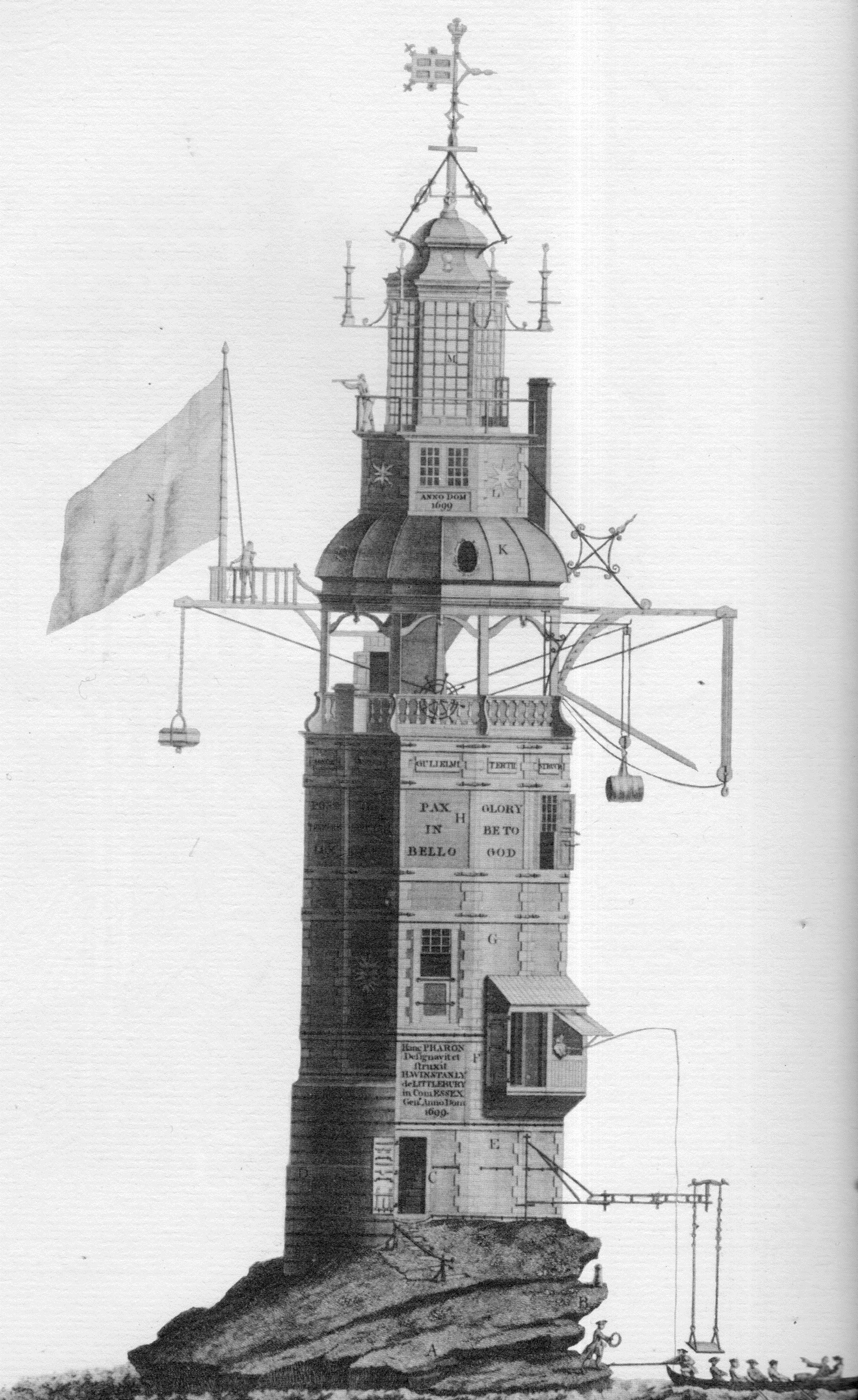
    Eddystone034

    [Image source: Derek Birdsall, Carlo Cipolla, The Technologies of Man, Pinehurst Press (UK), 1979, page 150.]

    The lighthouse was extraordinary, though it did not last for long, and neither did Wenstanley.

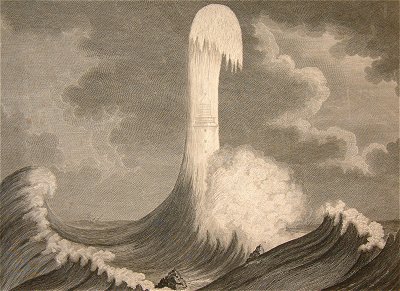
    In November 1703 Wenstanley was in the structure when it suffered a complete loss in a storm, the building swept away, along with everyone in it.  

    A depiction of the impossible wave–an image no doubt that launched a thousand nightmares–fighting the lighthouse is seen here:
    Eddystone wave

    [Source: Dark Roasted Blend blog; original source unknown http://www.darkroastedblend.com/2006/10/amazing-lighthouse-of-henry-winstanley.html]

    It is another instance of an inventor/engineer being killed by his/her creation–there’s probably an easy effort to be made in constructing an alphabet of this unfortunate and unhappy crew. This was the first of five Eddystone lighthouses, all difficult building sbuilt ina very difficult location. The first two were built by Winstanley–the first he built in 1696 was damaged so substantially in a winter storm that it was rebuilt almost entirely, bringing to us the second lighthouse in 1698. As we have seen, that one last until the unfortunate 1703 storm, and was replaced by the third lighthouse built by John Rudyerd, constructed from 1708-9 and opened in that second year.  The third lighthouse was constructed by John Smeaton from 1756-9 and lasted for 127 years until it was replaced by James Douglass’ structure in 1882.  Actually, the Smeaton structure (pictured below) was dismantled and rebuilt further inland on the Plymouth Hoe, where it can be found today.  
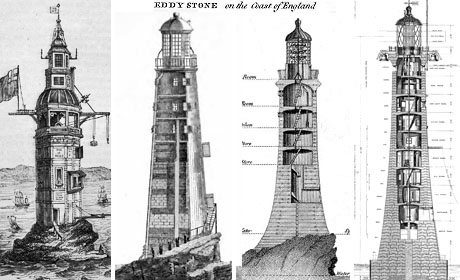
    Eddystone light houses[Image source: Geological Society (UK) via https://www.geolsoc.org.uk/GeositesEddystone]

    The following cross section seems to be the third of the lighthouses:
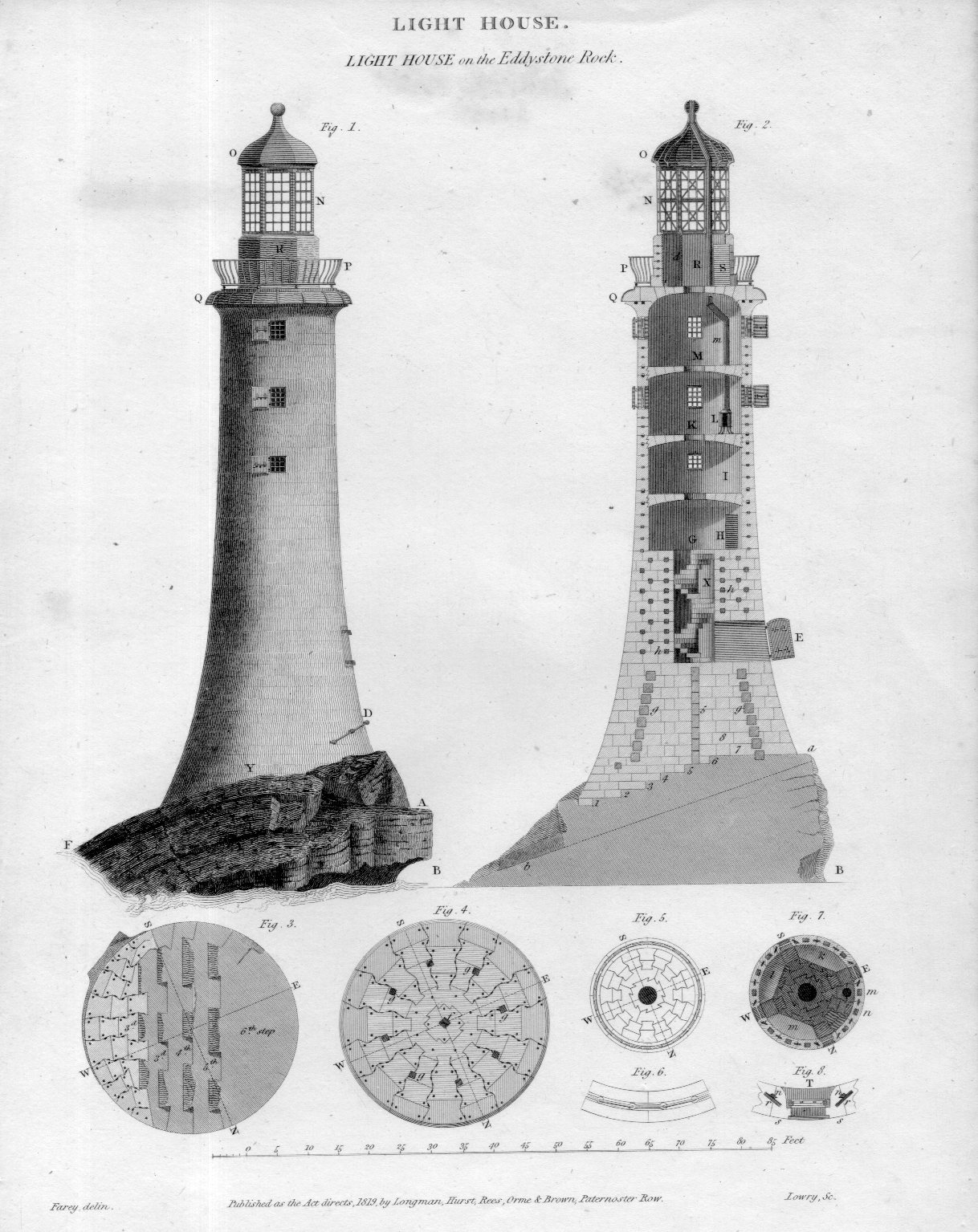
    Eddystone lighthouse050[Source: Abraham Rees Encyclopedia, printed in London in 1819]

    Notes:

    Here’s a charming re-enactment of the failure of the structure by the Parish of Littlebury Millennium Society/History (Junior) Group:  http://www.recordinguttlesfordhistory.org.uk/littlebury/eddystone.html
    ·Posted by :

    ·in:

  • Out-of-Context Imagery Department: Floating & Upside Down Trees at Mother Ludlam’s Hole

    JF Ptak Science Books  Quick Post    Series on the Unintentionally Absurd

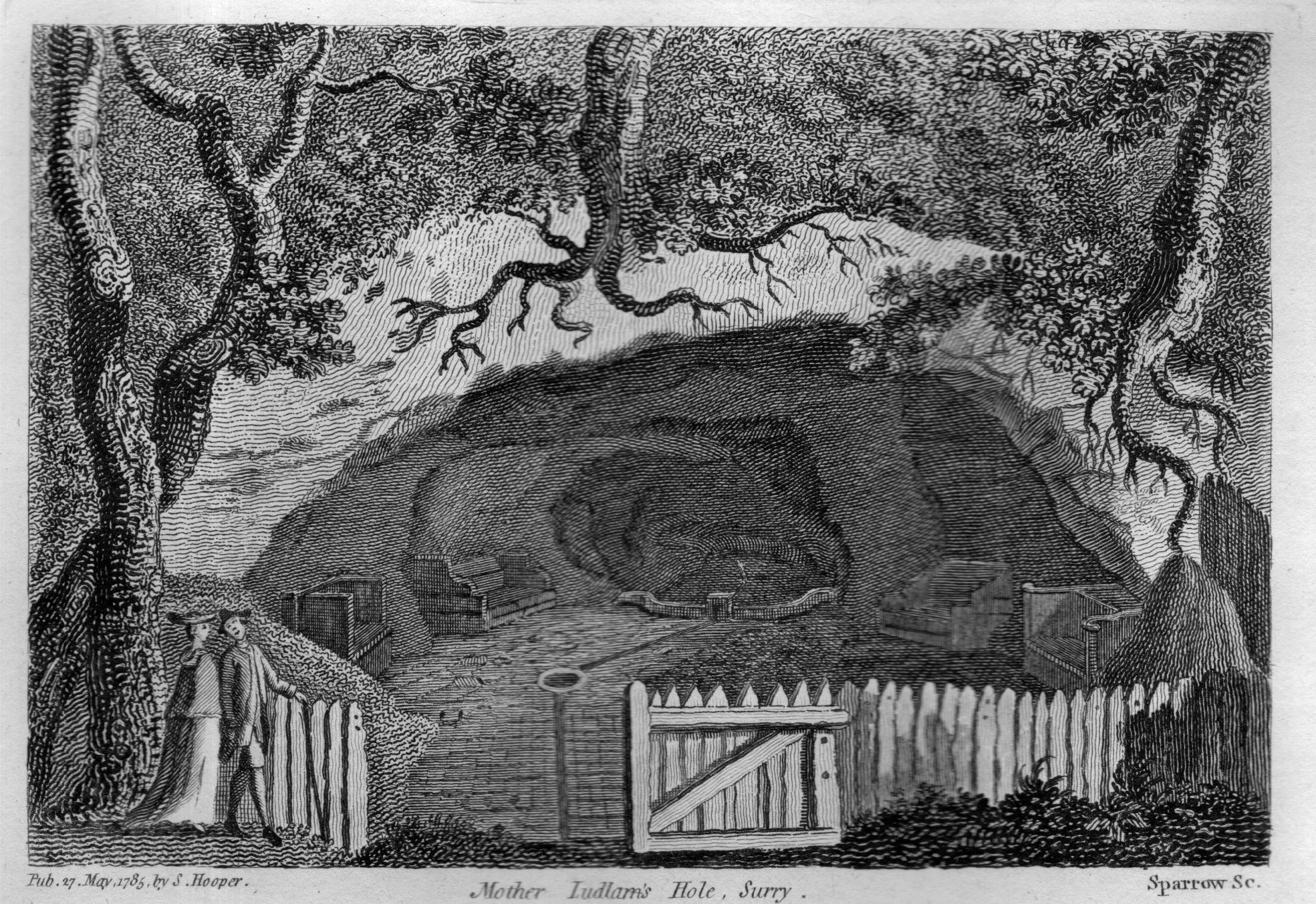
    Mother Ludlam066

    This unusual image, published in Francis Grose’s The Antiquities of England and Wales in 1785, depicts a cave–and a witch’s cave at that–but taken slightly out of context and with it looks for all the world that there is a tree with roots floating in the air with an upside-down tree floating to its left.  They’re not floating, of course–they’re just trees with roots growing across sandstone with the cave beneath.  Without the story of the cave the floating trees make more interesting thinking–with the story, and the title, the story rules.

    “Mother Ludlam’s Hole” is the cave of a  friendly “White Witch”. It is set into a sandstone cliff in the Wey Valley, Moor Park, near “Farnham” (Frensham), in Surrey. A brief introduction to the story is that Mother Ludlam would grant loans of things to people so long as they returned them in two days. To one person she loaned her cauldron; unfortunately the person never returned it and hid it in a church. That church is said to be St. Mary’s, and there is a cauldron there to this day that has evidently been there for centuries, a product of the action of the witch’s borrower, or fairies. It is said that the cauldron was used to brew ale.  In any event, there is a cauldron in the 13th century St. Mary’s. 

    I think I like the Floating Trees possibilities a little more.  

    According to English Fairy and Other Folk Tales (1890) by Edwin Sidney Hartland,‘IN the vestry of Frensham Church, in Surrey, on the north side of the chancel, is an extraordinary great kettle or caldron, which the inhabitants say, by tradition, was brought hither by the fairies, time out of mind, from Borough-hill about a mile hence. To this place, if any one went to borrow a yoke of oxen, money, etc., he might have it for a year or longer, so be kept his word to return it. There is a cave where some have fancied to hear music. In this Borough-hill is a great stone lying along of the length of about six feet. They went to this stone and knocked at it, and declared what they would borrow, and when they would repay, and a voice would answer when they should come, and that they should find what they desired to borrow at that stone. This caldron, with the trivet, was borrowed here after the manner aforesaid, and not returned according to promise; and though the caldron was afterwards carried to the stone, it could not be received, and ever since that time no borrowing there.’ [Quote source:  Mysterious Britain, http://www.mysteriousbritain.co.uk/england/surrey/folklore/church-of-saint-mary-the-virgin-frensham.html]

    ·Posted by :

    ·in:

  • A Bicycle-Wheel-Framed Gyroscopic Experimental Aircraft, 1911

    JF Ptak Science Books  Quick Post

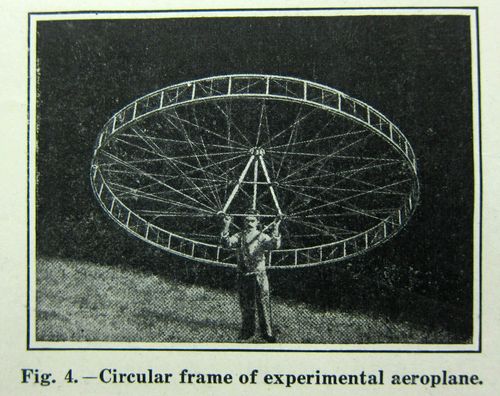
    Capt. Paul-Nicholas Lucas-Girardville of the Military Aviation Park, Vincennes, an interesting inventor and early aviator  (and author of a  Étude sur la navigation aérienne in 1899)  came up with this idea for a “gyroscopic” aeroplane, or flying machine. Initially I thought that there was no gyroscopic action and that the idea was being used for static stability, as a different body for the aircraft. But as it turns out there was some sort of gyroscope being employed here, though I do not understand how it functioned–I have to say though that it seems like an interesting experiment, especially given how early this came in the history of airplanes.  In any event, I bumped into this evocative photo in the pages of the June 22, 1911 issue of Scientific American Supplement and thought to share them.  

    Aviation gyroscope 3

    [Source for the two images, above and below: Scientific American Supplement, July 22, 1911   For the full text of the article in a raw-ish OCR format, see: http://www.scientificamerican.com/article/abstracts-from-current-periodicals-1911-07-22/]

  • History of Ideas Blog Twitter Hits for February, 2016

    JF Ptak Science Books  

    This is the month in review for this blog’s twitter feed, featuring tweets for pieces that I have written for this blog and that have brought in at least a few thousand engagements. (Most of the tweets from here–on average there are 150 so a month–do not reach a thousand. Sometimes the attraction and reach makes sense; sometimes not.  I have no idea what it is that attracts people to a story. That said, here are some of the most popular tweets:


     A Ghost Print of a Buried Manhattan:   


    What the Sound of the End of War Looked Like, 11/11/1918    


    The history of the future of massiveness.  


    ·Posted by :

    ·in:

  • Floating Transoceanic Airport Network, 1930’s

    JF Ptak Science Books  

    [My apologies for the formatting issues on this–Typepad wouldn’t allow me to get rid of the italics and bold]

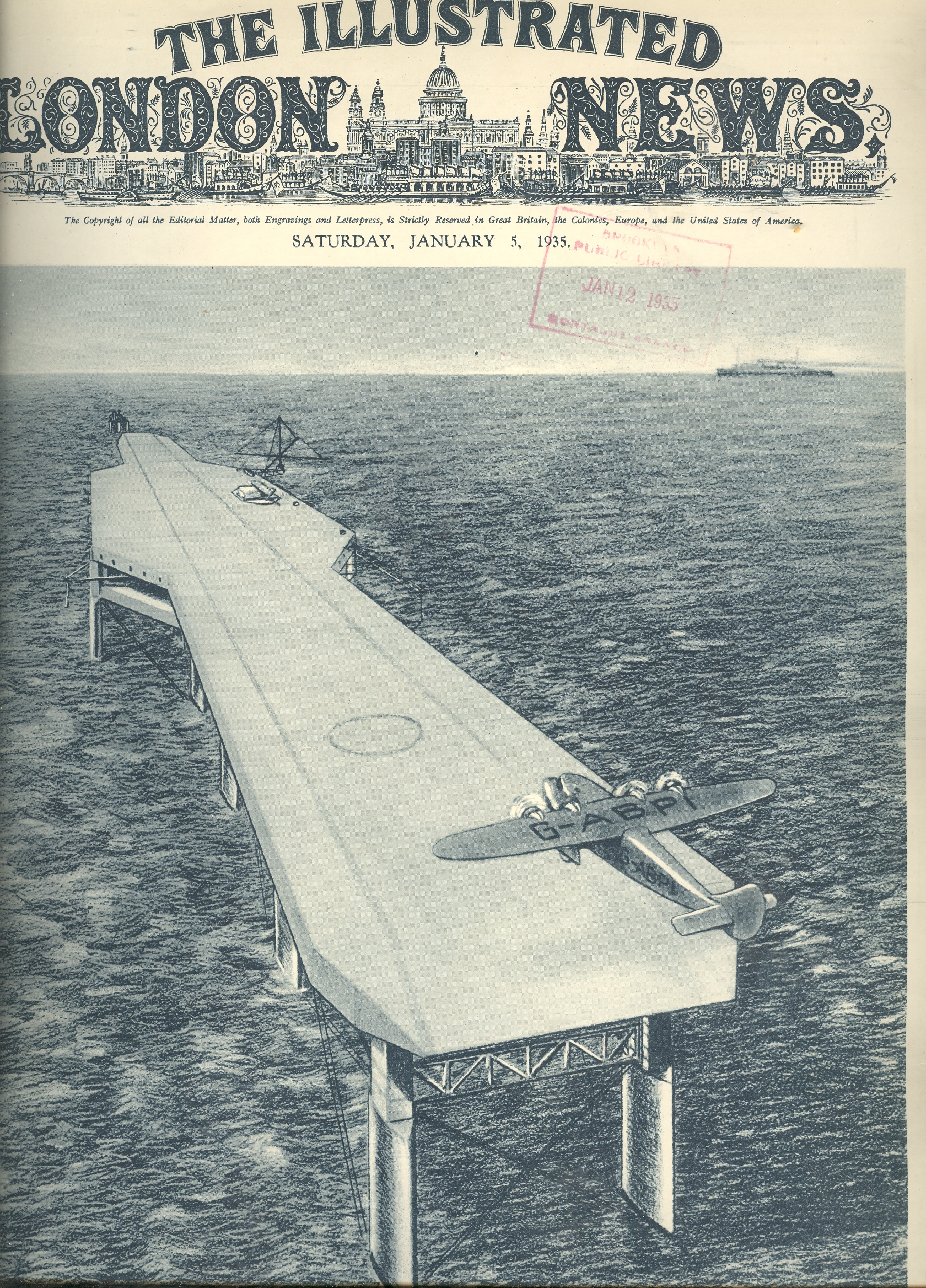
    This short shelf-lived idea was that of Edward R. Armstrong (1880-1955), who in 1927  first published his plan for a series of ocean-moored 1200’x200’ floating platforms standing 100′ above the waves for refueling and whatnot for transcontinental flights.  These five-acre stations—named the “Langley” in honor of Samuel Pierpont Langley1— would be placed every 375 miles across the ocean.  Or perhaps there would be just five of these floating emplacements–the data changes. It doesn’t look like a very practical (or good) idea, but Armstrong received a $750,000 piece of development change from du Pont and GM, which was major dollars in 1929. 


    Blog jan 9 sea airport
  • A History of Obviousness, Part 2: Pointless Pointing

    JF Ptak Science Books   Part of the Uninentional Absurd/Found-Surreal Department

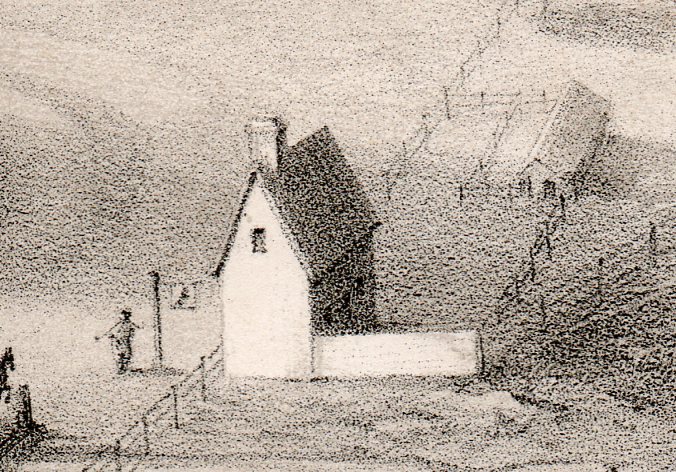
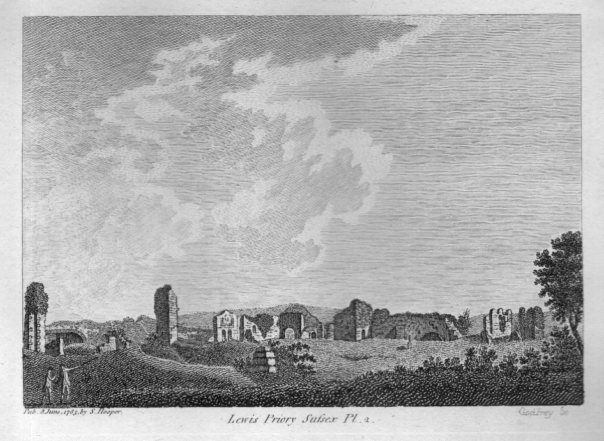
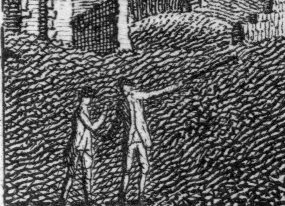
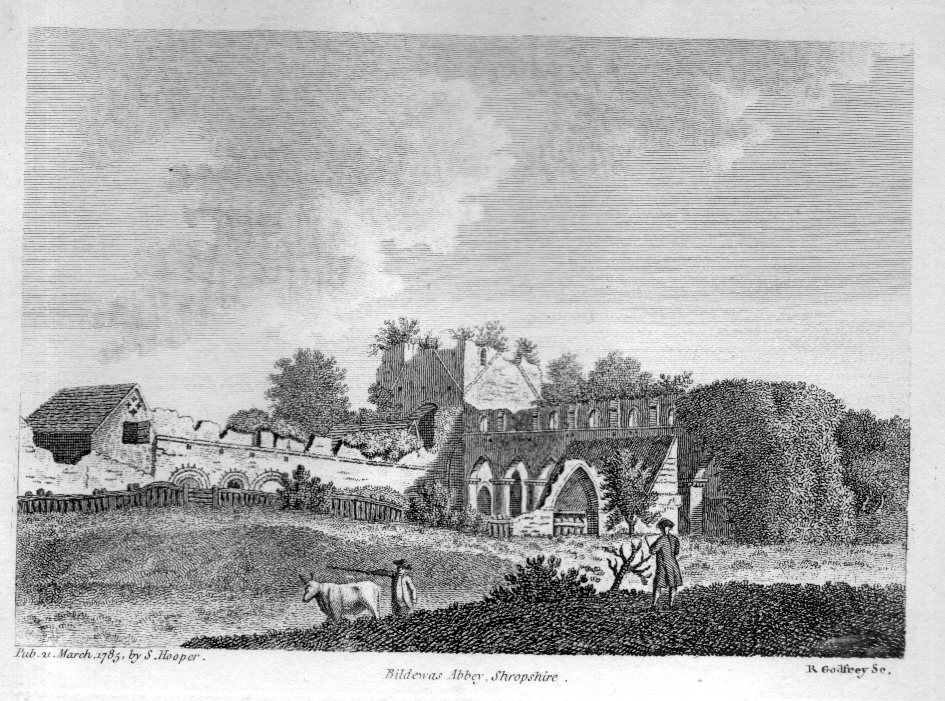
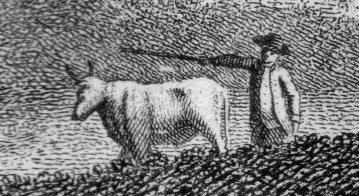
    These images become curious only when you begin looking for the curious aspect in them–then, some sort of optical/neuro magic happens, and all one can see in the image is that unexpected curiousness.  The following five examples come from a lovely work by Francis Grose, The Antiquities of England and Wales, which was published in the not-so-good-year-for-the-British-Empire, 1785. Grose was recording old structures and ruins, or semi-ruins–in general he gave each one of his views a lot of sky, which to my eye gave many of the scenes a very detached, remote quality–cold, even.  The “obvious” part of their nature comes in the filler/perspectival inclusion of human figures in the foregrounds of the subject.  For the most part, the figures came in pairs, and accounted for perhaps one percent of the image surface area, or less. They were–or were intended to be–inconsequential; however, given their placement and posture, they become very visible, and entertaining.  In this selection below, what most of them were doing was sharing, pointing at things with walking sticks, things that really didn’t need to be pointed-out, especially with a big stick. But there they are, standing there in their quiet but great obviousness, pointing at stuff.  

    Obvious pointing from the corner:

    Pointing a051


    Pointing a052


    Obvious pointing to a cow:

    Obviousness cow078

    Obviousness cow079


    ·Posted by :

    ·in:

  • When a Little Bit of the Future Got To WWI

    JF Ptak Science Books  Post 2600

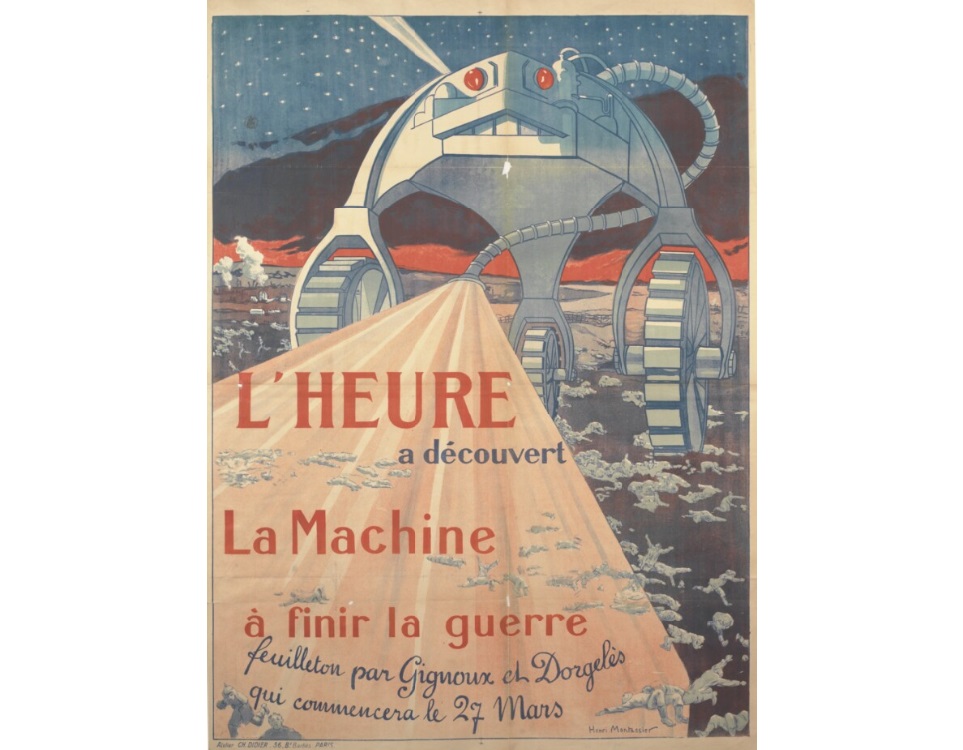
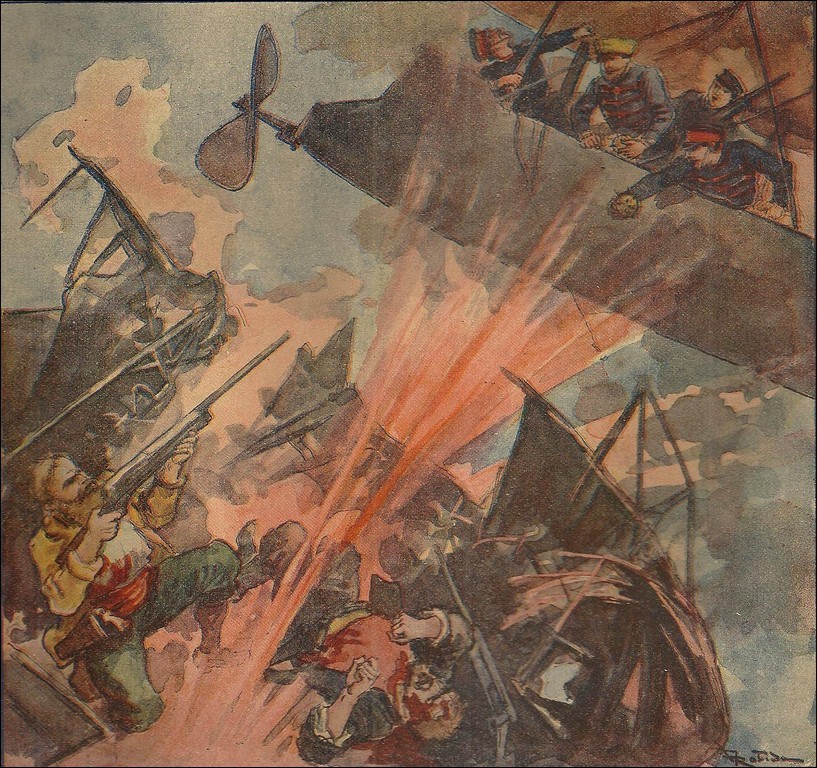
    The hope for technological advancement to hasten the end of the war were much discussed during WWI–the dreams and aspirations sometimes winding up in a serialized fashion in magazines such as l’Heure, seen below.  The promise of the magazine “The Hour” was to reveal the nature of a machine discovered that would bring an end to the war.  It was highly fanciful, this machine, and highly effective, as we can see by the large field littered with German soldiers, done in by a death ray/spray of some sort. The whole of it looks more like a Wells’ Martian creation than anything else. 

    WWI IWM future war

    [Image source: Imperial War Museum, http://www.iwm.org.uk/collections/item/object/19414]

    And long as I am here and the reference is at hand, I  would like to point out this terrific link to the very interesting La Guerre Infernale by Pierre Giffard, and with illustrations by the iconic A. Robida:

    Rhobida guerre infernal

    [Source, with a set of all of the illustrations is found here:  http://www.merveilleuxscientifique.fr/auteurs/robida-alfred-la-guerre-infernale/]

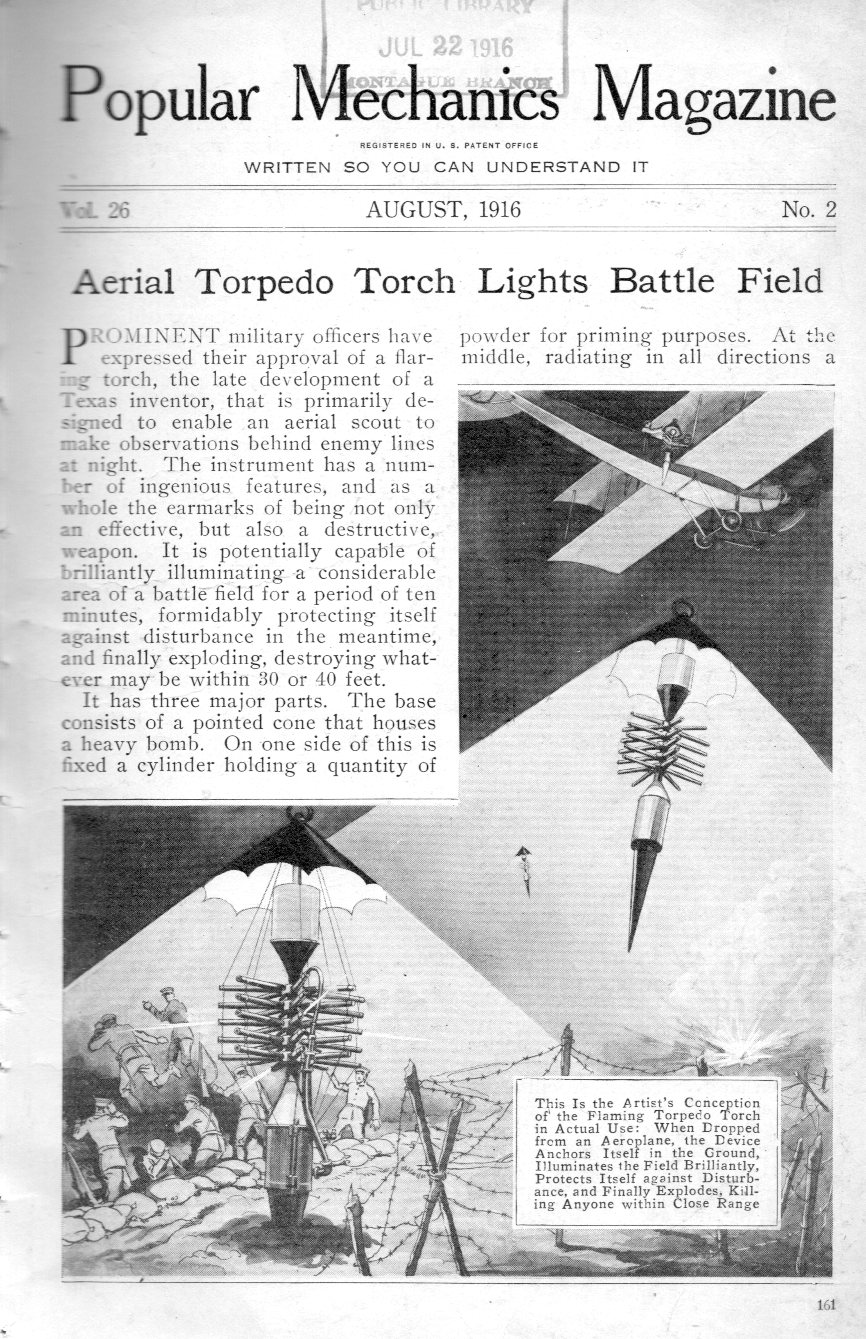
    But what I really wanted to talk about was on the much smaller and real level, particularly this exploration of battlefield lighting, found in the August 1916 issue of Popular Mechanics Magazine.  It was one of the technological advances in this war that brought something that worked better and much more simple than that displayed in the magazine–the “simple” flare gun, also known in England as the Very pistol. It was new to war (along with such things as the tank, military applications of barbed wire, depth charges, flamethrowers, and such) and it was of course very effective. And deadly. And protective. It illuminated a field of battle, particularly Dead Man’s Land, that stretch of land between the two offensive lines that was a meeting place of death, cluttered with bodies, spoiled earth, water-filled craters, barbed wire, waste, and so on–and it was sometimes into this sort of field that an attack would be made under cover of darkness, and it was the Very pistol that would be fired to illuminate the attackers, who would suffer greatly from it.  In any event, it was a far better response to a need than the aerial torpedo torch.  


    Aerial torpedo torch067


  • The History of Obviousness: Book Titles Needing No Books

    JF Ptak Science Books   Quick Post               An Exciting Entry in the History of Nothing series

      blog mar 10 obvious sublime saturn679
    Sometimes publications have absolutely no pretense, stating exactly what it is that sleeps between their covers. And sometimes these titles seem more like declarative broadsides or posters and not books at all, the “book part”, or any writing furthering the cover’s statement,  being unnecessary, their contents being obvious. The first example here (and one which begs the response “Yup!”), Saturn Has Rings, written in 1944 by Donald Lee Cyr (of El Centro), should’ve stopped at the end of the title of chapter one, “A Rose has Petals”, and probably could have ended on the title page.  But no, it didn’t, and stretched itself over another fifty thin pages. 

    Frederick Blaine Humphrey’s Know Your Groceries (1931) takes an unexpected twist, spiraling into something called “biochesspathy”, “natural dianetics”, and somehow “applying the natural science of the Bible…to the philosophy of youth and health”. 

      blog mar 10 obvious sublime groceries677

    The Book of Envelope Facts…yes.  This is actually a lovely book, in its very special way, with 55 pages of non-stop facts and semi-useless information on envelopes, and fits into a category of Deep and Repetitive Obviousness.  Chapter Two’s “Arousing Interest with Envelopes” competes wildly with Chapter Three “Attracting Attention with Envelopes” and Chapter Four’s “Creating Desire with Envelopes”.  It is completed with eight pages of a glossary of envelope terms.


      blog mar 10 obvious sublime envelope680

    This last example, Alice Mills’ Notes on Reading Aloud, really doesn’t belong, because it is mainly on acting; but the title is so lovely I just couldn’t resist. 

    There are many hundreds of pamphlets similar to these that are sleeping their sound oblivious sleep here in the studio–in a way they’d make a beautiful if somewhat perplexing exhibition, though at the end of it all one might think that absolutely nothing at all had happened.  The greatest thing about such an exhibition is that most of the stuff that would be included in it are so minor/odd/trivial/proto-uninteresting that few people would ever think of searching for them without already knowing that they existed–that might make an exhibition of value in and of itself.  

  • Early Approach to Anti-Aircraft, 1917

    JF Ptak Science Books   Quick Post

    WWI SAlonica AA rifles

    [Source: Illustrirte Zeitung, March 17, 1917.]

    This is an odd image–or at least at first glance it looks odd–showing Turkish soldiers at “Salonikifront’/Salonica, Thessalonia practicing at anti-aircraft fire and enemy plane control.  The thing is that in order to have an sort of effectiveness in bombing or strafing the aircraft would have to be relatively low and slow, even for those times. It is possible that they could be shooting at aircraft traveling at 80mph and low enough to be reachable by rifle fire.  With this many rifles, the idea may have been workable.  

    ·Posted by :

    ·in:

  • Giant Planes of the Hopeful Future, 1928

    JF Ptak Science Books    Quick Post

    AIRPLANE GIANT964

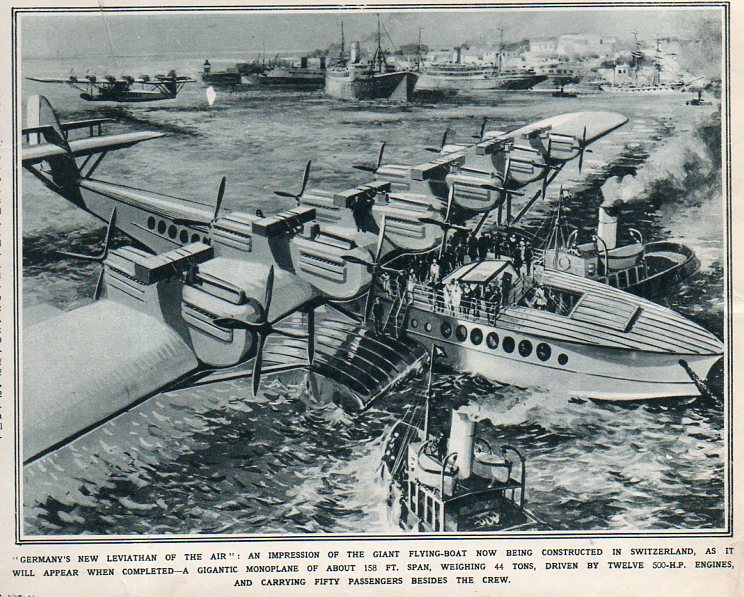
    This mammoth German aircraft appeared in the pages of the Illustrated London News on 31 March 1928,a sneak-peak into the future. It may have been a shock to British aviation sensibilities–it was supposed to dwarf the largest such plane that the Brits had (the Calcutta) : 158′ to 93′ wingspan; 44 tons to 9 fully loaded wright; engine power, 6000hp to 1500hp, with  twelve very impressive 500 hp fore-and-aft engines.  

    The plane made an appearance in real-life in the air in July 1929 as the Dornier Do X,  the largest and heaviest flying boat in history, with pretty much the stats that appeared on it a year earlier. (Stuff happens) and the Dornier is broken up for scrap by 1937.  

    • Specs (via Wiki):  “Crew, 10-14; capacity, 66-100 passengers; length, 40 m[13] (131 ft 4 in); wingspan, 48 m[13] (157 ft 5 in); height, 10.25 m (33 ft 7 in); wing area, 450 m2 (4,844 ft2); empty weight,  28,250 kg[13] (62,280 lb); max takeoff weight, 56,000 kg (123,460 lb); powerplant, 12 × Curtiss Conqueror water-cooled V12, 455 kW (610 hp) each; maximum speed, 211 km/h (131 mph; cruise speed, 175 km/h (109 mph); range, 1,700 km (1,056 mi); service ceiling, 3200 m (10498 ft); wing loading, 94 kg/m2 (19.3 lb/sq ft) (at 46 tons weight).”


  • Summertime Victory: Soldiers Bathing in the Marne, 1918

    JF Ptak Science Books  Quick Post

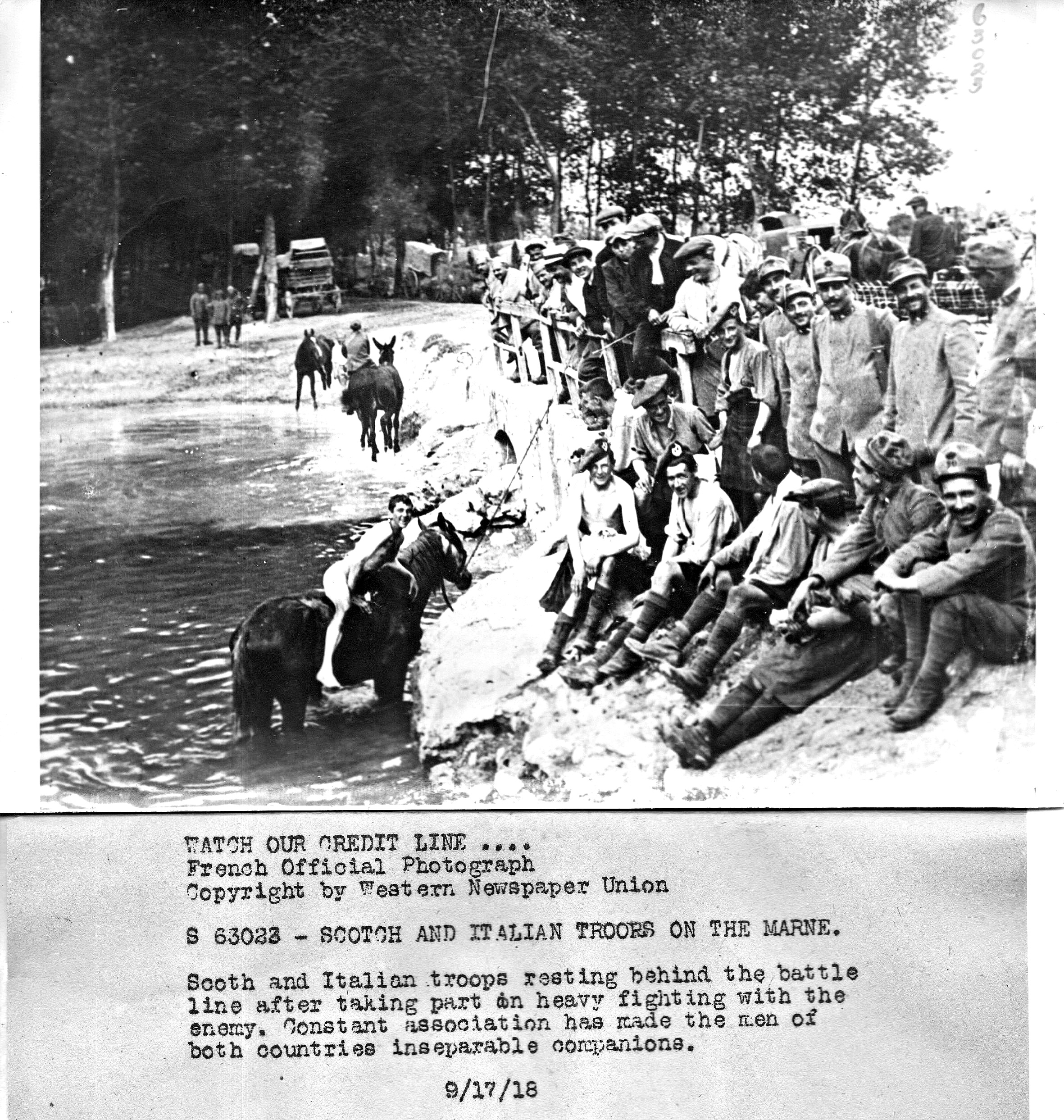
    Here’s an interesting and terribly human image of WWI, made deep inside the war, nearly at the war’s end, and which was distributed beginning 17 September 1918 by the Western Newspaper Union, and a French Official war photograph.  It is a celebration of sorts–a short one–following the Second Battle of the Marne, which was the last German offensive on the Western Front, and which ended on August 6, five weeks before this photo was released and 100 or so days before the end of the war. The battle spelled the end for Germany in the war (costing a total of more than 270,000 killed or wounded) and began the steady march to Versailles.  After three weeks of terrible fighting, the relief to the soldiers in the photo must have been extraordinary–it is certainly palpable in the image.

    WWI   Bathing Marne086

    [Source: The History of Ideas Blog WWI Photo Collection, details:  https://historyofideasblog.com/world_war_i_photography/]

    ·Posted by :

    ·in:

Recent Posts

Archives

Categories