JF Ptak Science Books Quick Post
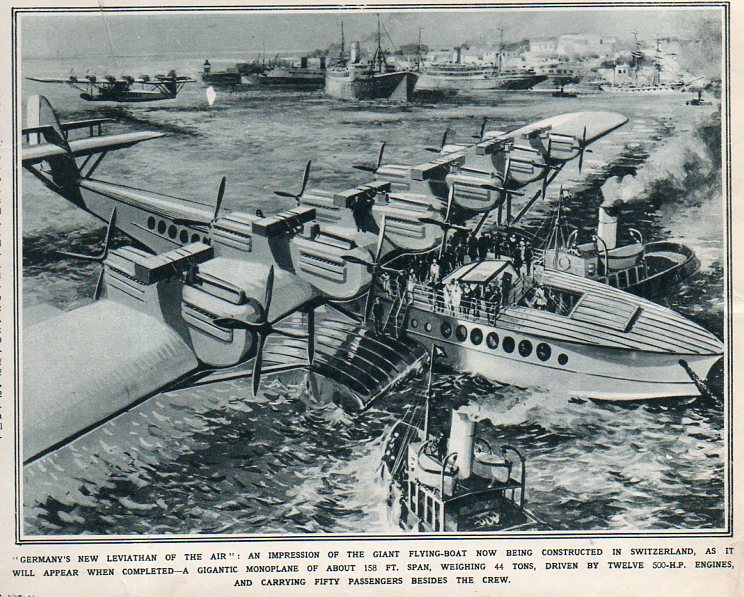
This mammoth German aircraft appeared in the pages of the Illustrated London News on 31 March 1928,a sneak-peak into the future. It may have been a shock to British aviation sensibilities–it was supposed to dwarf the largest such plane that the Brits had (the Calcutta) : 158′ to 93′ wingspan; 44 tons to 9 fully loaded wright; engine power, 6000hp to 1500hp, with twelve very impressive 500 hp fore-and-aft engines.
The plane made an appearance in real-life in the air in July 1929 as the Dornier Do X, the largest and heaviest flying boat in history, with pretty much the stats that appeared on it a year earlier. (Stuff happens) and the Dornier is broken up for scrap by 1937.
- Specs (via Wiki): “Crew, 10-14; capacity, 66-100 passengers; length, 40 m[13] (131 ft 4 in); wingspan, 48 m[13] (157 ft 5 in); height, 10.25 m (33 ft 7 in); wing area, 450 m2 (4,844 ft2); empty weight, 28,250 kg[13] (62,280 lb); max takeoff weight, 56,000 kg (123,460 lb); powerplant, 12 × Curtiss Conqueror water-cooled V12, 455 kW (610 hp) each; maximum speed, 211 km/h (131 mph; cruise speed, 175 km/h (109 mph); range, 1,700 km (1,056 mi); service ceiling, 3200 m (10498 ft); wing loading, 94 kg/m2 (19.3 lb/sq ft) (at 46 tons weight).”