JF Ptak Science Books Post 2600
The hope for technological advancement to hasten the end of the war were much discussed during WWI–the dreams and aspirations sometimes winding up in a serialized fashion in magazines such as l’Heure, seen below. The promise of the magazine “The Hour” was to reveal the nature of a machine discovered that would bring an end to the war. It was highly fanciful, this machine, and highly effective, as we can see by the large field littered with German soldiers, done in by a death ray/spray of some sort. The whole of it looks more like a Wells’ Martian creation than anything else.
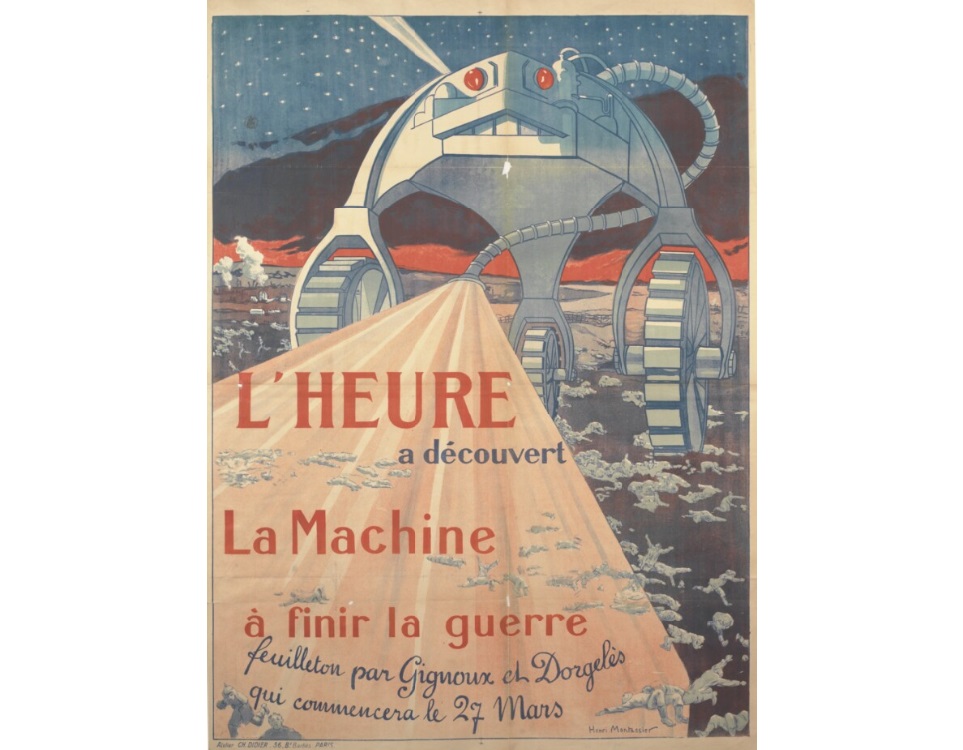
[Image source: Imperial War Museum, http://www.iwm.org.uk/collections/item/object/19414]
And long as I am here and the reference is at hand, I would like to point out this terrific link to the very interesting La Guerre Infernale by Pierre Giffard, and with illustrations by the iconic A. Robida:
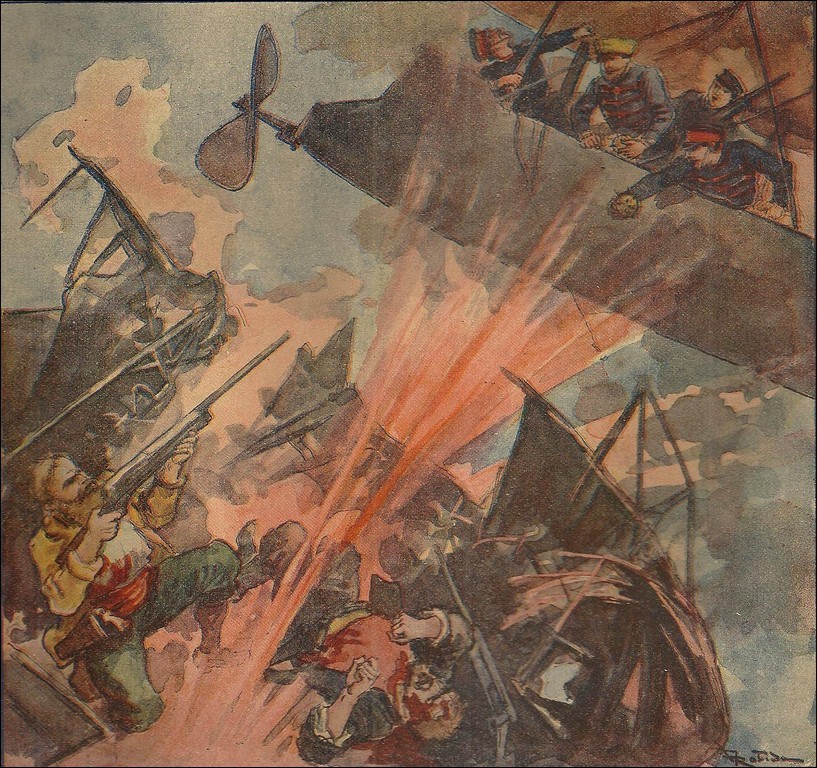
[Source, with a set of all of the illustrations is found here: http://www.merveilleuxscientifique.fr/auteurs/robida-alfred-la-guerre-infernale/]
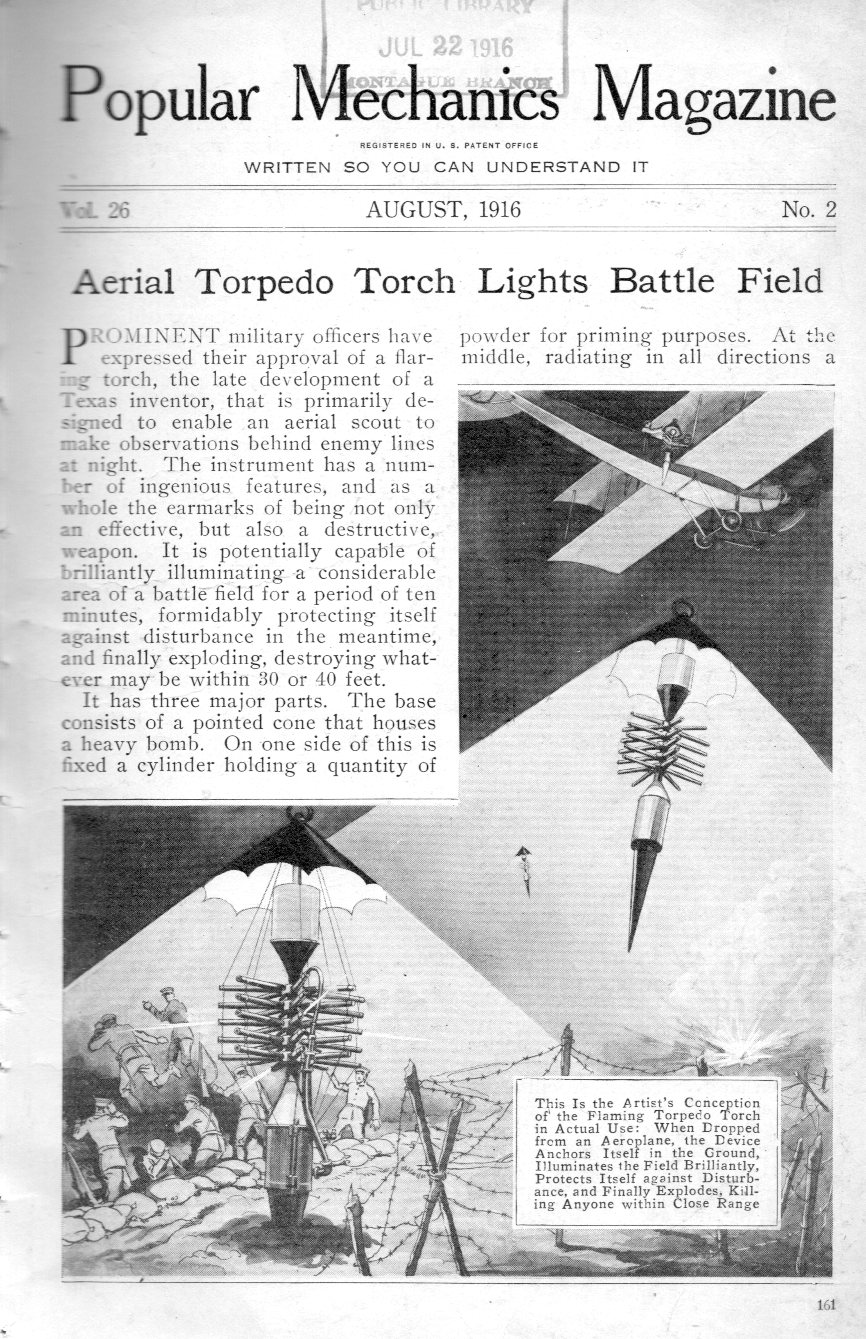
But what I really wanted to talk about was on the much smaller and real level, particularly this exploration of battlefield lighting, found in the August 1916 issue of Popular Mechanics Magazine. It was one of the technological advances in this war that brought something that worked better and much more simple than that displayed in the magazine–the “simple” flare gun, also known in England as the Very pistol. It was new to war (along with such things as the tank, military applications of barbed wire, depth charges, flamethrowers, and such) and it was of course very effective. And deadly. And protective. It illuminated a field of battle, particularly Dead Man’s Land, that stretch of land between the two offensive lines that was a meeting place of death, cluttered with bodies, spoiled earth, water-filled craters, barbed wire, waste, and so on–and it was sometimes into this sort of field that an attack would be made under cover of darkness, and it was the Very pistol that would be fired to illuminate the attackers, who would suffer greatly from it. In any event, it was a far better response to a need than the aerial torpedo torch.