A Daily History of Holes, Dots, Lines, Science, History, Math, Physics, Art, the Unintentional Absurd, Architecture, Maps, Data Visualization, Blank and Missing Things, and so on. |1.6 million words, 7500 images, 4.9 million hits| Press & appearances in The Times, Le Figaro, Mensa, The Economist, The Guardian, Discovery News, Slate, Le Monde, Sci American Blogs, Le Pont, and many other places… 5000+ total posts since 2008.

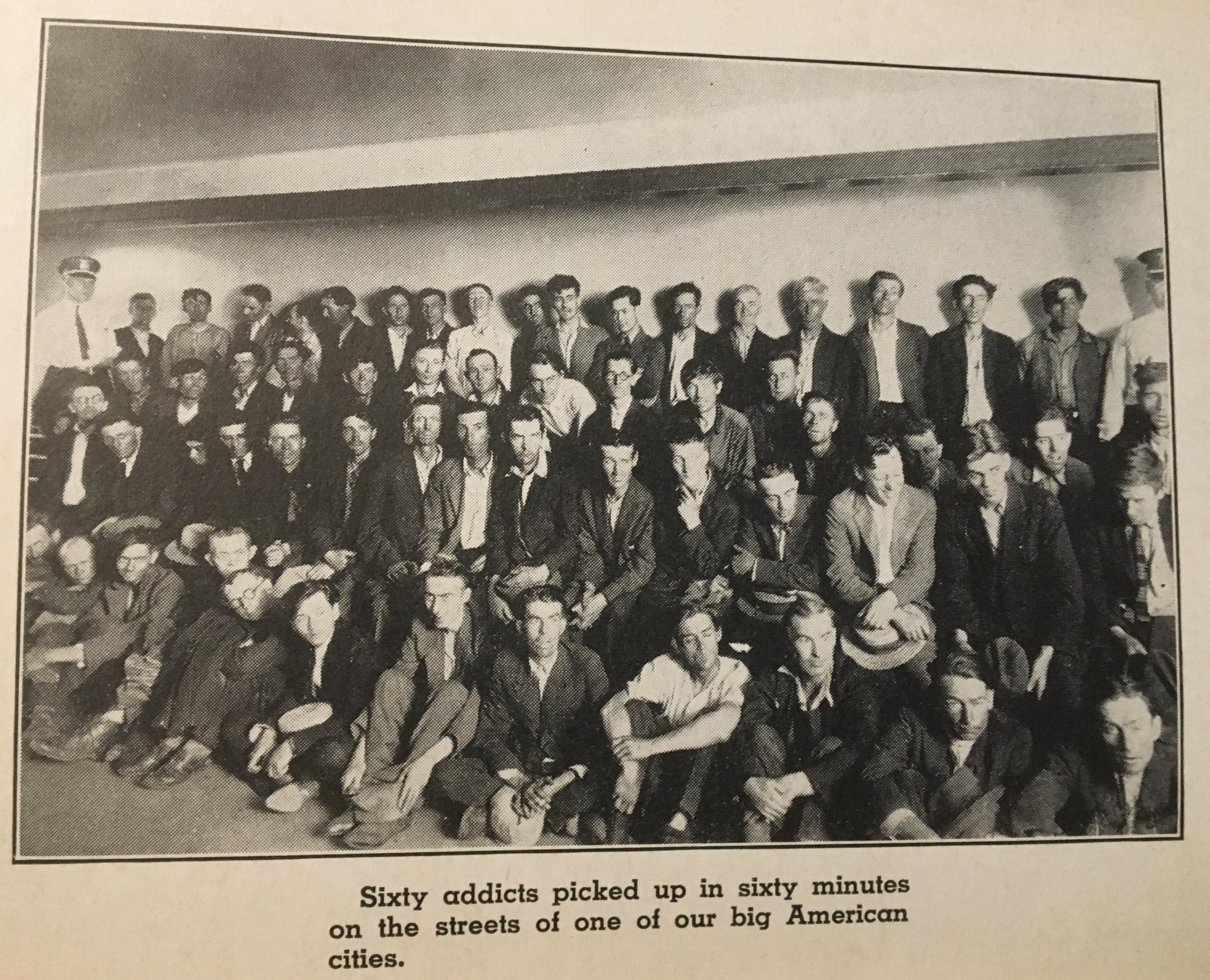
  • A Group Photo of “Dope Fiends”, 1939.

    JF Ptak Science Books   Post 2892

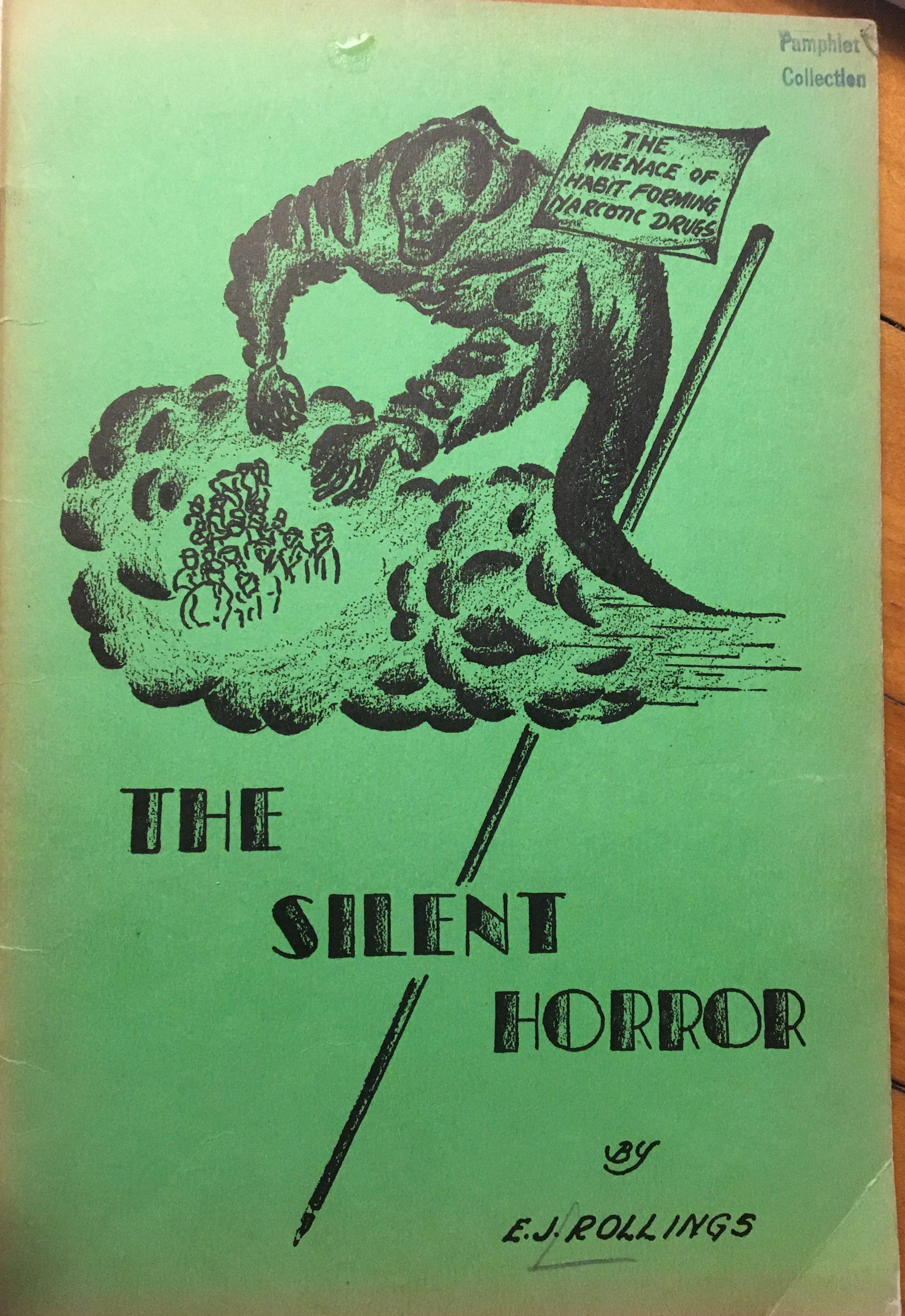
    This Ken-Burns-Moment is brought to you by an interesting and unusual photo of Big City drug addicts. “60 addicts picked up in 60 minutes” bloats the caption in Elmer James Rolling screechy pamphlet called  The Silent Horror.1 There’s a wide variety of emotion going on here in this group of 60 men, and not much of that seems to sense trouble or jail. Some of the folks look to be downright jovial, making the best of a difficult situation (assuming they knew what was going on):

    IMG_2036

    IMG_2038It turns out that as loud and unreferenced and populist this work was, or is, there are very few copies of it that made it into its future from 1939. (As a matter of record I couldn’t find another copy of the thing in the stupendous WorldCat.) It was published by the Defender Press in Wichita, Kansas, which at the time had over 100,000 residents, some of whom you would have expected to buy this pamphlet–since it has some amount of scream-preaching going on in its pages, I’d figure that it had some street appeal, though none of that interest meant enough to anyone to put a copy in a library, somewhere. 

    Rollings contributed at least four other narcotics-related works (“Your Girl or My Boy May be Next”, “Marijuana—the Weed of Woe”, “Junk, Junk Peddler and Junkers”, “Perils of the Poppy” and “I Saw Him Die”. There were a few other short works non-drug-related, including something on cowboy songs and also a book on bible prophesy.  

    Rollings’ major headings deal with the shades and players of narcotics: “Opium, the King of Dope”; “Crown Prince, Morphine”; “Cocaine, the Princess of Perdition”; “Marijuana, the Dutchess of Despair”; and the “Dope Peddlers and Addicts” round out this polemic.

    Here’s an excerpt from the book to give you an idea of what was going on in its pages:

    IMG_2037 (1)“An eighteen-year-old boy in a Midwestern city smoked two “reefers” and an hour later choked his sweetheart to death because she refused his shocking, lustful advances, born in a marijuana-crazed brain… A sixteen-year-old boy shot his mother and father to death with his father’s shotgun after smoking several “Mary Anns” given to him by a new friend whose acquaintance he made by chance. He could neither explain nor remember the killing when the effects of the drug had worn off and sobbed himself into hysterical grief when told of his crime. And so, on and on, runs the record of thievery, forgery, banditry, kidnapping, brutal murder, degeneracy, and rape, all chargeable to this paralyzer of conscience and inflamer of depravity — Marijuana! “

    And so, there’s the deal on this pamphlet–still the most interesting aspect of it to me is that one addict photo…

    Notes.

    1. Published in Wichita, Kansas by the Defender Press, 1939. 8.5”x 5.5”, 45pp. Cover art plus four photos. Green wrappers. Provenance: Library of Congress, with their surplus stamp on rear wrapper and a tiny “Pamphlet Collection” on front cover.

    ·Posted by :

    ·in:

    —
  • A Tragic Map of an Empty Place (1825)

    JF Ptak Science Books  Post 2893

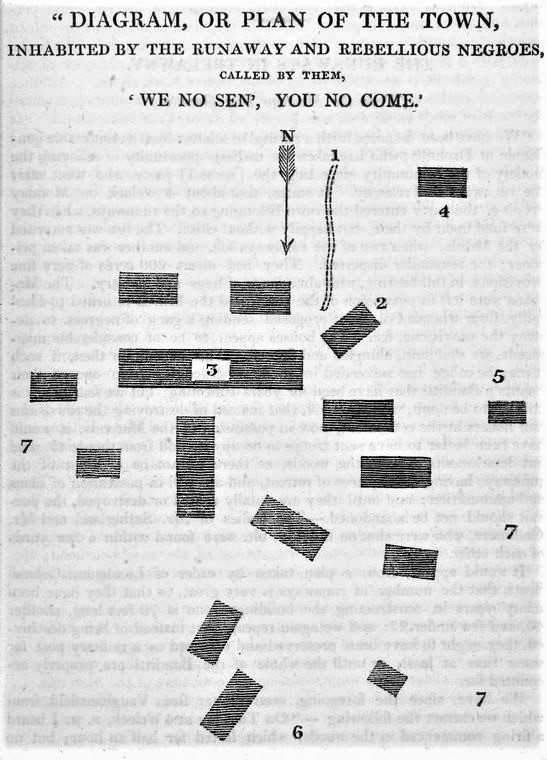
    Nypl.digitalcollections.510d47da-7455-a3d9-e040-e00a18064a99.001.wIn the history of maps of blank, empty, and missing places this map1, published in 1825, is one of the hollowest, and saddest of 19th c US-centric image: it is a heartbreaking map of an empty, abandoned village of peacefully-living runaway slaves in Jamaica, in about 1825.

    The name of the town, extraordinarily, was “We No Sen, You No Come”.  It meant, basically, that the slaves living there would not leave their town, wouldn’t seek anything from the outside, would not interact, would not interfere; in return, they didn’t want anyone visiting, coming to them. interfering in any way; just wanted to be left alone, to live.  And from the account of this supportive, understanding and sympathetic publication, that is exactly what these people had done for eleven years.

    [Image source–please see Notes below]

    But then something happened.  The owners of the enormous estate wanted the “banditi runaways” gone.  The slaves evidently had 200 acres under domestication, hidden in the far reaches of an enormous 100,000 acre estate.  The “hunting party” left heavily armed, accompanied by 250 troops, as well as “confidential and baggage negroes”.  (The term “baggage negroes”, as impossible as it might seem today, was a well-worn, heavily used term through the 18th and mid-19th centuries.)  They approached the small town and encountered a very slight resistance, something like a guard, and killed them.  Retreating somewhat after the initial attack, the scouting party returned, and then found the village completely empty.  (Some reports say that there was more limited fighting, with casualties on both sides; some say that there were more slaves killed.) After whatever happened happened, though, the return to the little village found it abandoned, with everything still in place.  The members of the village had “disappeared”.  Or at least I hope that they did, and didn’t get “disappeared”, men, women and children all, as in the famous Floridian “Negro Fort” case and Andy Jackson.  Perhaps these people were fortunate to actually escape. 

  • Found Poetry for a Disintegrating Machine from 1877

    JF Ptak Science Books  Quick Post

    I’ve made a number of posts here about the Found-poetry in indexes, title pages, instruction booklets, maps, and some other places. The moment may escape the poetry, but the poetry doesn’t escape the moment.

    IMG_2064What?

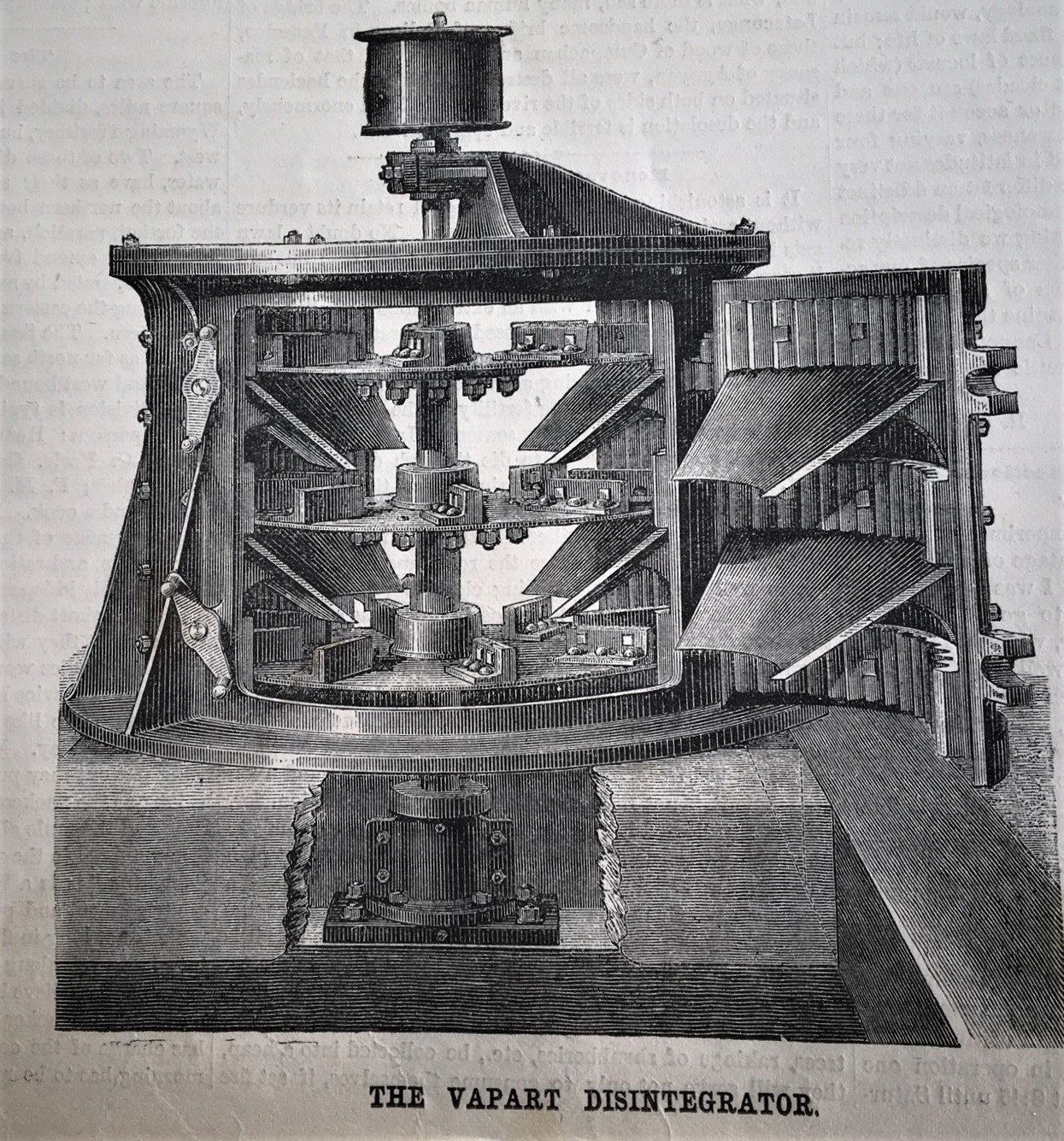
    That’s correct. Anyway, here’s another example from Scientific American for July 31, 1877, discussing and explaining the operating practices of the Vapart Disintegrator. We’re not discussing Star Trek here, just a crunching tearing shredding pulverizing way of grinding and/or destroying things.  The machine was big, and heavy, and torquey, and had a lot of big metallic teeth.  Here’s part of the description of how the device works. poemetized (all text original, spacing and punctuation not):

    Disintegration Can Be Carried To Any Desired Extent 

    I.

    The material to be disintegrated

    is fed 

    in from the top and

    falls 

    upon the upper disk,

     and the quick rotation of the latter drives the material 

    forcibly against the corresponding 

    toothed 

    segments.

    II.

    From here it falls down 

    the inclined plates, 

    and is delivered 

    on the middle portion 

    of the second disk,

    where the same operation is repeated on it, 

    as well as on the bottom disk,

    whence it is delivered 

    into a hopper

    below. 

    III.

    The disintegration can be carried to any desired extent.

  • The Varied Endings of Human Life on Earth AND the Coming of the Bug People (1877)

    JF Ptak Science Books  Post 2894

    IMG_2077“The Fate of the Last Man”is an interesting and unsigned romp into the deep future of the ending of the human species from the 31 May 1877 issue of Scientific American. It is very exceptionally long-term, looking into the future of up to a billion years hence–which is a captivating thing all on its own, using that kind of a number in the late 19th century. (Also it is interesting to note that even after all that time the author doesn’t have humans flung to one place or another in the galaxy–after all, deep space flight had already been established in fiction for hundreds of years by this point…not commonly so in literature, but definitely there.)  In any event the author works their way into the first of ten examples of Last Man scenarios describing that after epochs the mountains will get worn down with the solid matter flowing into the oceans, which fill the oceans, causing the continents to become islands, the islands to shrink, and so on until there is nothing there but water and a bit of the world’s tallest peak with some guy sitting there on it, until even that is consumed, and our Last Man drowns.  

    As it turns out, the ten scenarios include the last man [sic] dying and the species becoming extinct by drowning, being gassed, gassed and/or blown up, “sunstruck”, suffocated, “burned up”, frozen, crushed, “killed by the crash of orbs”, and then, finally, at #10, we are surprised that “there will be no last man”.  Its a nice piece of thinking, and pretty creative; recognizing that I’ve quoted some of the descriptives for how the end will come.  

    The surprise ending part is this: almost everyone dies, though there is a self-replicating survivor that will be a BugMan of some sort and start the whole “human” thing all over again.

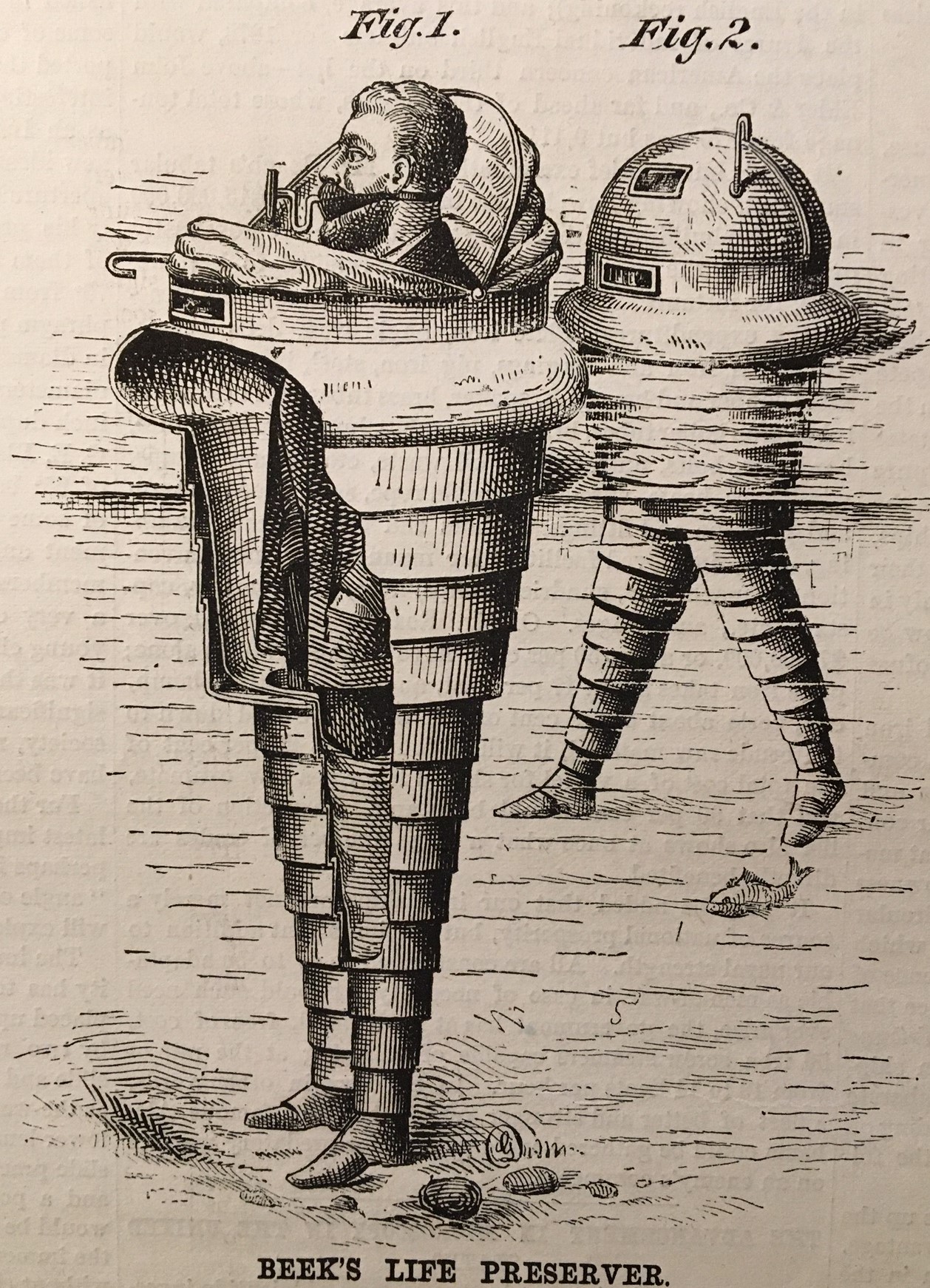
    [The image above and left has nothing to do with the article, but I had to include it because it is so fabulous and it appears in the same year of the SciAm as this article…and it comes close to being some sort of BugMan, or Lobster-something.]

  • A Killer Green…Literally. (1877)

    JF Ptak Science Books  Quick Post

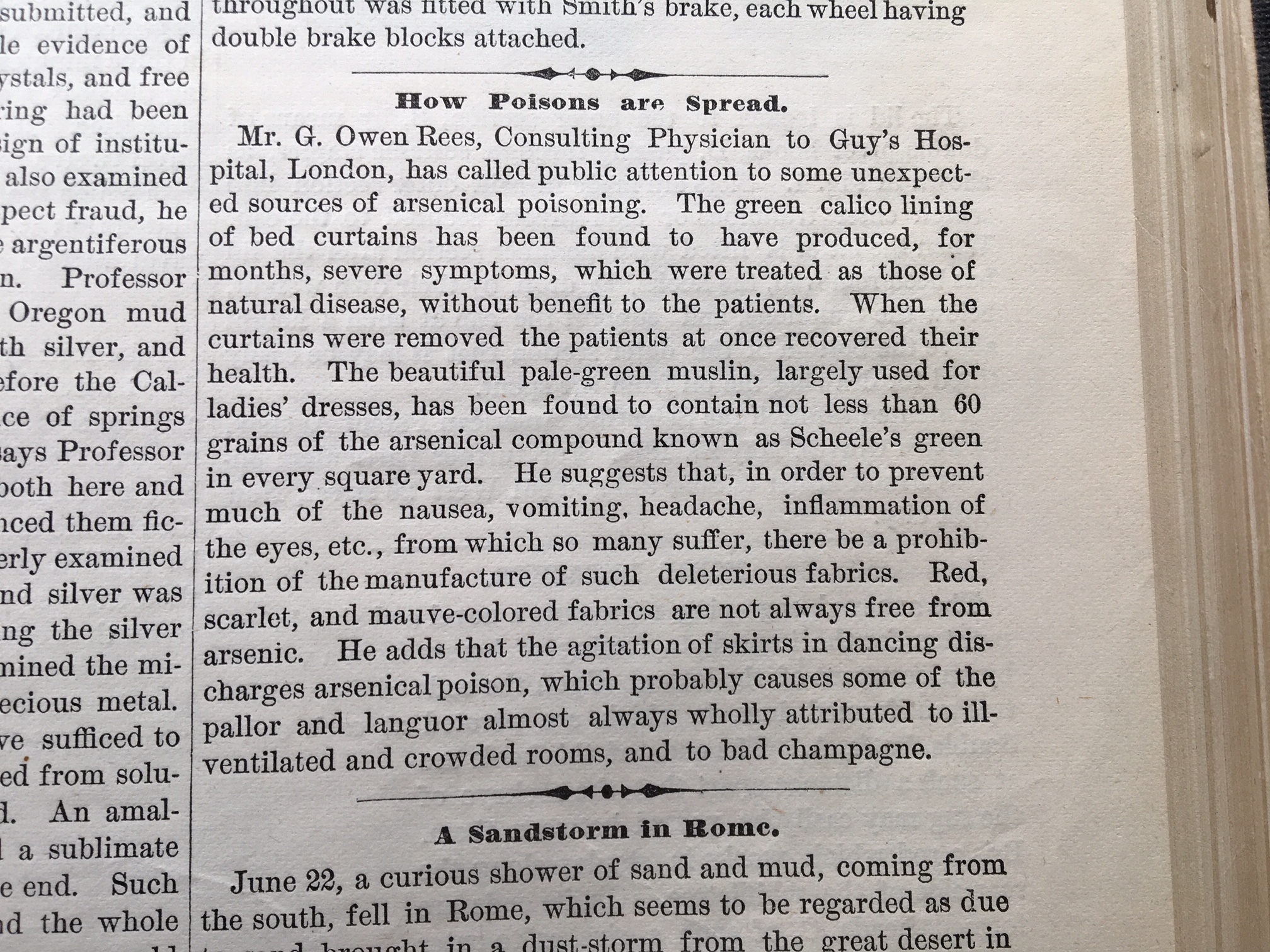
    IMG_2083This is a short Sherlockian episode found in the pages of the 1877 volume of Scientific American. It seems that people were becoming ill for unknown reasons (and not further specified in the short note) that soon was found to be: the color green. Green pigment. Green pigment in the fabric of the patients’ bedroom curtains.

    It was found that once the curtains were removed, the patients recovered.

    The green in this case was called Scheele’s Green, named for its inventor, the German/Swedish chemist Carl Wilhelm Scheele, who brought it into the world in 1775. Unfortunately it was found that this green was particularly toxic, as it employed a large quantity of arsenic, which proved to be unstable and became a noxious chemical pollutant.

    It was replaced in the late 19th century by other greens (such as cobalt green), though it did have a short rebirth in the 1930’s when it was used as an insecticide. This was in marked contrast to its earlier use as a food dye for candies.

  • Planning for a Job Post-Nuclear Attack (1956)

    JF Ptak Science Books  Post 2895

    I’ve written many times on the technical and political end of the creation and deployment of the atomic bomb, along with some posts on the use and manipulation of language in controlling the sense impressions of nuclear war and survivability.  What I have found so extraordinary about this second part is the creation of ordinariness, or mechanization, or acceptance, of the aftermath of nuclear warfare–and what we’re talking about here is the
    “exchange” of not just a few 20 kiloton Hiroshima-type weapons, but thousands of megatons of explosives and massive amounts of radiation. But this is the function of familiarity, I guess–given the situation it was essential to plan for eventualities A-Z, and for that you need structure, and vocabulary. 

    All things being equal, such things as an Terrestrial Afterlife in the United States needed to be contemplated because that is what we do–we make the situation possible for end-of-the-world stuff to happen, and so we have to plan for building things up again with radioactive detritus once all of the keys get turned and buttons pushed, as  it is just a natural course of that historical river. That the bomb would be built was a given; that the Soviets would develop the a bomb and delivery capacities was just a matter of time, and that they would be our sworn death-enemies was also a fait accompli. To develop a way to somehow survive a nuclear war may have been a major deterrent to not launching an attack, especially when linked with a Mutually Assured Destruction (MAD) arms build up (where everyone and everything would be obliterated if there was a nuclear war, or at least so by 1965 (and probably earlier than that). All this insane stuff may have worked, and somehow we managed not to ignite the world, because (to paraphrase Frank Zappa) there would be no real estate left.

    On the other hand, building all of these weapon systems and planning for attack and the post attack world could have pushed us into a final confrontation, making all of this sound “winnable”, “doable” somehow, that once the bombs had all exploded and nothing worked anymore, that there would be enough to pull together of our civilization to declare that we had indeed “won’”. 

    And the only way to declare a winner was to have something to stand on besides pieces of green glass and Earth, and so  plans for communications and a military, police force, fire brigades, medical care, food distribution, banking, and all the rest–the pieces of a recognizable backbone of American society–would have to be undertaken.  All of this could very well accomplish the creation of an illusion in the mind of the adversary that you are capable of surviving a nuclear war, and so there would be no great gain in attacking; or it could send the message that by doing this preparation that you were preparing a first strike scenario, and so the adversary would attack while the odds were still not horribly out of balance.  And on and–it all looks like a lose-lose endgame to me, which is hardly a “game” at all when all players are losers.

    But still there was a need to staff the thousands of positions that went into the theoretical end of figuring out the non-weapon-end world after nuclear war, and the above “position description” is an example of that, a necessarily pro forma form, just another job in a ea of jobs.  This one’s job descriptions read like any other, except of course that the content was much different.  Form the same, sentence structure the same, vocabulary basically invariable. 

    One aspect of this planning for the Afterlife was the planning part itself, planning to plan, how to make sense of the answers and the questions, a form into which the parts of a process are poured before they become the process itself.

    This all came up this morning because of a document that surfaced here—it is a working proposal to establish one such agency/group studying post-nuclear war scenarios. Its title is Proposed Organization and Staffing, National Damage Assessment Center, 1 June 1956 , and comes from the estate of Dr. Joseph Coker, who helped form this center and who did become an assistant director when it became engaged.

    This position description was for “Chief, Damage Assessment Division”, was was the part of the Office of Emergency Preparedness (which operated under the auspices of the Executive Office of the President, and then under the Office of Defense Mobilization (ODM), and then under the Production Area, and then, finally, the Damage Assessment Division DMA).  The job of the DMA was to identify what would happen to the essential production facilities that would keep the country going–industrial, technical, medical, biological, and so on–how they would be targeted, and how they might survive an attack.  This also applied to the people who would be required to be in charge of all of this.  Damage assessment.

    It was also the job of this person to coordinate the estimation of damage and assessment business post-attack.
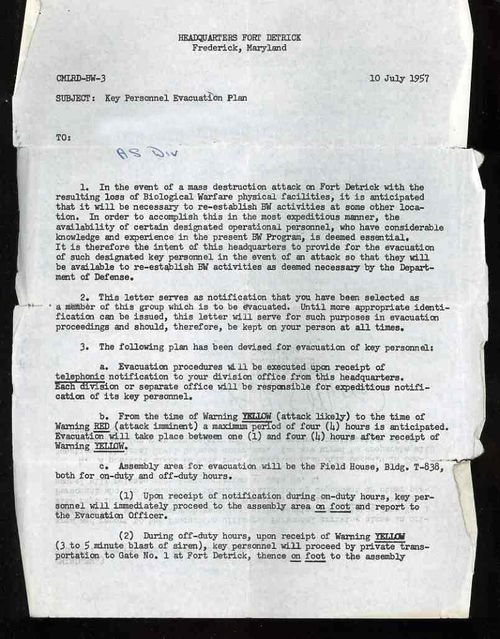
    0--blog---dec 1 hell162So, one “perk” of this job was that they would be expected to survive a nuclear attack, which means that the added benefits to this employment would be a special trip to a safe place to wait out the destruction of the world.  I assume that this person would have a leverage like the one I wrote about  in my Get-Out-of-Hell-Free Card post (pictured just here, and clickable to 250%).

    The position description clearly makes distinctions between pre- and post-attack responsibilities of the Chief of the Damage Assessment Division:  under “Nature of Purpose of Work”,  part 1, section A (1) it reads “a pre-attack capability for translating likely patterns of attacks into losses of manpower, industrial capacity, and weapon systems output’.  In Section A (2) we see”a post-attack capability for assessing actual losses, for alternating alternate levels of output consistent with surviving resources and for testing feasibility of proposed new mobilization programs”.  Or in other words, sifting the rubble to see who and what was left and to see where they could be actually plugged into whatever scenarios had already been planned, and alter as necessary.  And also on page two, part (3) “development and maintenance of capabilities for both rapid and deliberate damage assessments in event of actual attack…”

    Continuing on page two, the Damage Assessment Division would create damage estimates, “disseminate …estimates of indirect effects including effects…on government, financial and credit systems, and production…” which of course is, well, everything.  Except overall assessments of total numbers of people killed, which isn’t a necessary statistic for most of the stuff we’re talking about here.

    There was much else in this job description, which is five pages long.  It is quite fascinating, seeing all of this spelled out so clearly, written on the end pages of our national book of life.

    On the other hand, I’m not exactly sure what else everybody else could’ve done, all other things being equal.

    The rest of the document:

    ·Posted by :

    ·in:

  • Delightful Maps of the IRT, NYC, 1923.

    JF Ptak Science Books   Quick Post

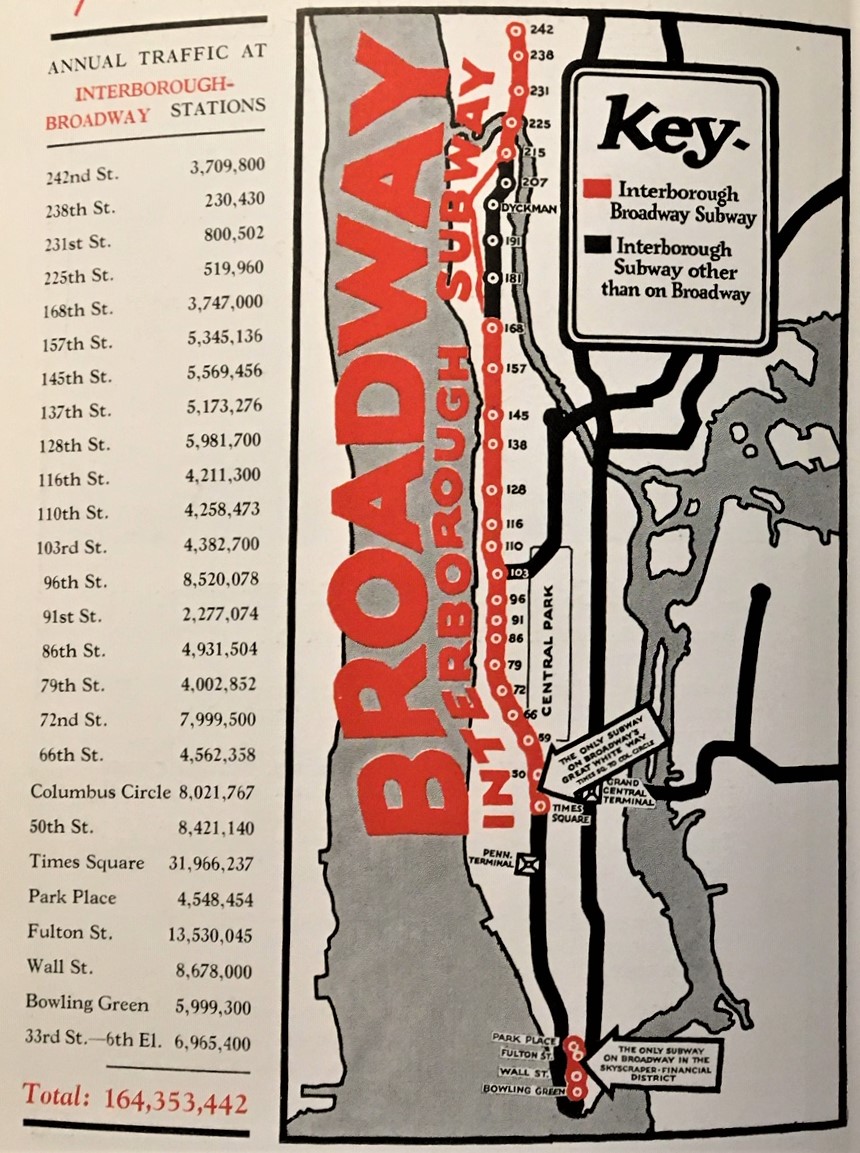
    I’ve just found this delightful little publication beautifully extolling the possible advertising advantages of the Interborough Subway and Elevated Lines of New York City, Artemas Ward’s New York’s Rapid Transit Traffic in the Graphic, from 1923. It really does present the numbers and highlights them with some unusual and bright maps of the subway system. This was the IRT (the Interborough Rapid Transit system), which was a private concern that operated from 1903 until 1940, when it was purchased by NYC.  This subway system in general was, well, entirely different from the one that I traveled 1968-1974 or so, back when you could barely see through the car windows because they were so heavily coated with graffiti…Anyway, I’ve  reproduced  most  of  it  below as there are no copies of the pamphlet in any library according to WorldCat.    The design of the first one–with the giant “Broadway”–is terrific.                                                              IMG_2100 (1)

  • On the Vocabulary of the Holocaust in 1939

    JF Ptak Science Books  Post 2896

    IMG_2107

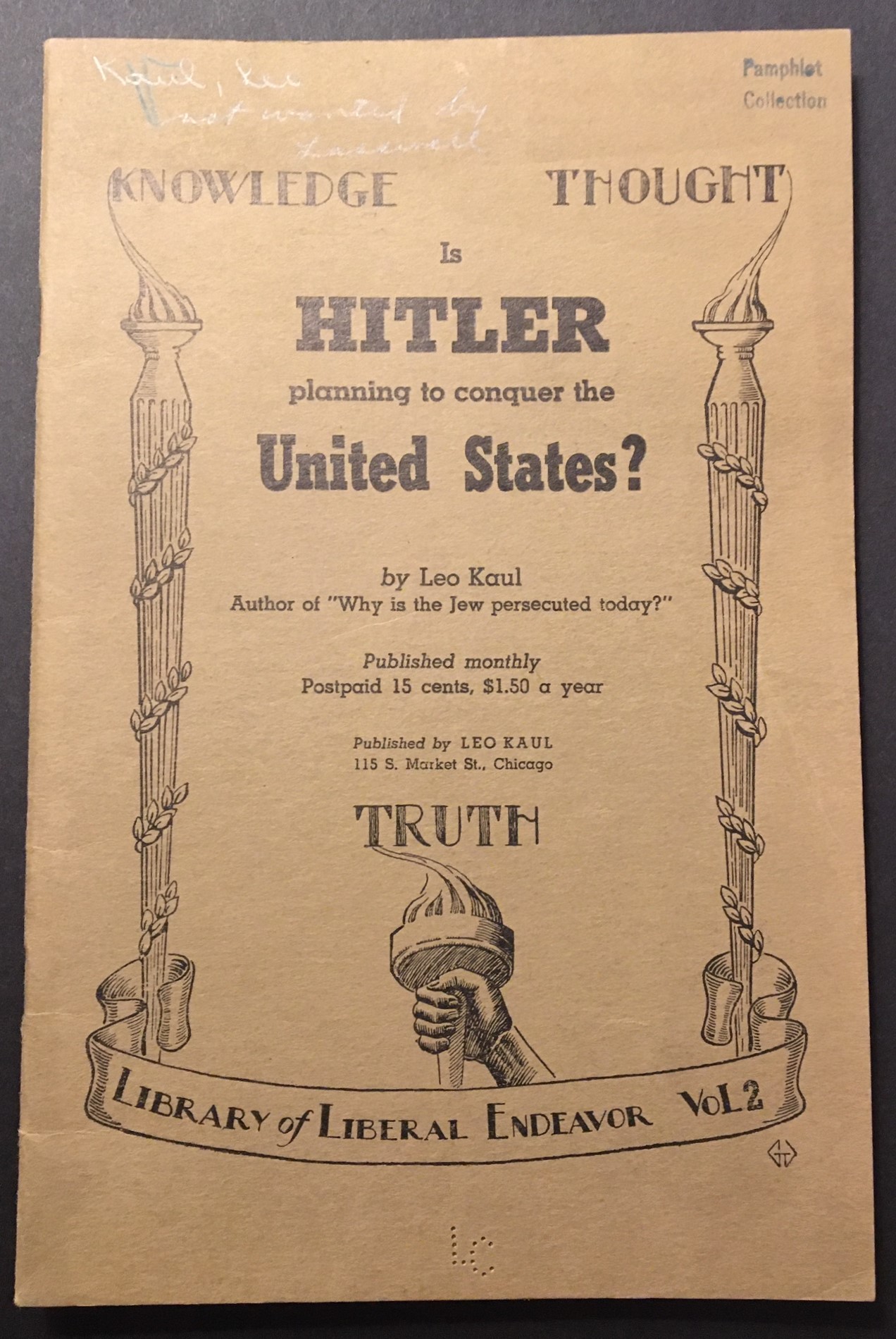
    I recently uncovered a scarce and unusual pamphlet printed in 1939 in Chicago that addressed Hitler’s threat to Europe, his designs on action in the United States, and his general threat to the world. The pamphlet under discussion here is Leo Kaul’s Is Hitler Planning to Conquer the United States?, which was published by the author in Chicago in 1939 as part of a planned monthly series of pamphlets called the “Library of Liberal Endeavor”.  This was volume two, following Why is the Jew Persecuted Today as volume one; there was a third volume planned called Hitler and Father Coughlin though it seems never to have been published. I think that Mr. Kaul–who was writing as early as 1912 and as late as 1950 and who had a business in Chicago manufacturing small bottles and porcelains–self-published these tracts hoping to establish a journal or monthly, though it appears that the existing works didn’t reach a wide audience and barely survive in libraries. 

    One part of this pamphlet that I’d like to mention here is a three-page discussion on “concentration camps” which I think is remarkable not for “exposing” them but for recording the remarks that (in 1938/9) “there have been many books written about life in concentration camps, about the liquidation of the Jewish people, and about the persecution of everyone not in sympathy with Hitler.” The German concentration camp system began with Dachau in 1933 and expanded to over 1000 (including the main and sub-camps) before the end in 1945 (this is exclusive of ghettos and other controlled environments), and there was certainly a good-sized literature on the camps–I am less certain though about the phrase “liquidation of the Jewish people” which does seem jarring to me for 1939.

    Most of the discussion of the concentration camps in this pamphlet are quotes from a work by Martha Dodd and William Dodd jr., Through Embassy Eyes, which was published in 1938.  I don’t have a copy of this though from what I could find this work is based on the collected experiences of the Dodd family, with William Dodd (sr.) being the U.S. ambassador to Germany from 1933-1937, and Martha and William being the children, each named for their parents. The daughter Marsha was later accused of being a Soviet spy, while the son William was destroyed by the Dies Commission and in spite of his accomplished past and connections was a sales clerk at a department store in San Francisco when he died in 1952. 

    I’ve reproduced the pages on the KL below:

    ·Posted by :

    ·in:

    —
  • Silhouettes of Soon-to-be-Ghosts: Representation of the Vichy Fleet, November 1942

    JF Ptak Science Books  Quick Post

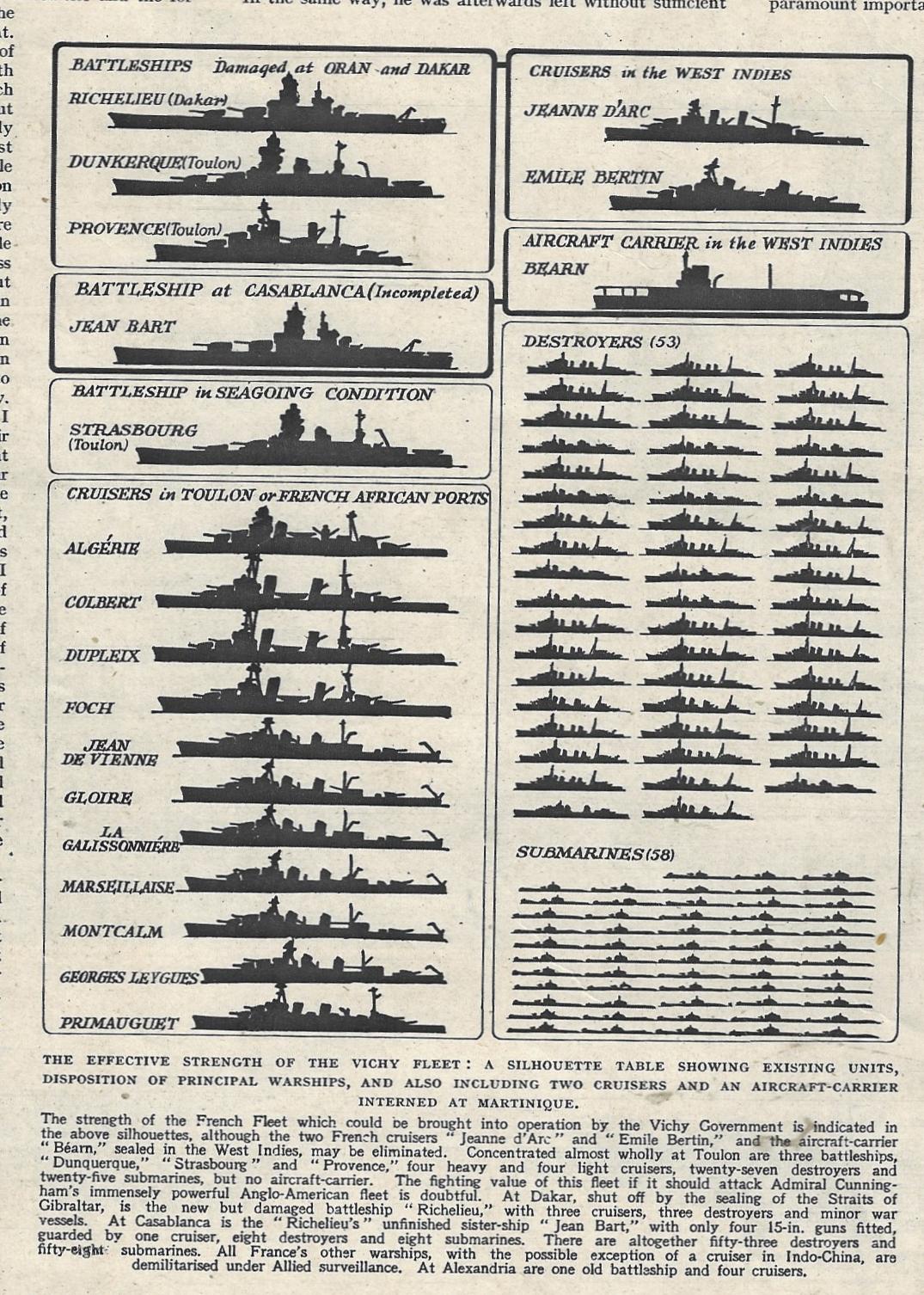
    The resistance of France to Nazi domination and rule and to the French collaborationists in Vichy began with the fall of France. Following the 10 May-21 June 1940 Battle of France, and the 22 June 1940 Armistice which effectively gave Marshal Petain control of the southern regions of France (the Nazis keeping all of northern and western France that bordered the Channel and the Atlantic) the battle for retaking France began. One of the large moments in this struggle came on 27 November 1942 when much of the remaining French/Vichy fleet was scuttled at  Toulon (east of Marseilles).  Rather than have the navy be taken by the Germans, 77 vessels were destroyed at anchor. 

    This graphic is found in the Illustrated London News for 14 November 1942 and depicts the Vichy fleet just two weeks before the scuttling action. The great majority of what is depicted here in silhouette (excepting those shown to not be at Toulon) were destroyed–silhouettes against their immediate future, the shadows of a ghost fleet. 

    ILN 1942 Vichy fleeet

  • Complicating and Simplifying the Threat of Communism: Nazi Propaganda, 1936

    JF Ptak Science Books  Quick Post

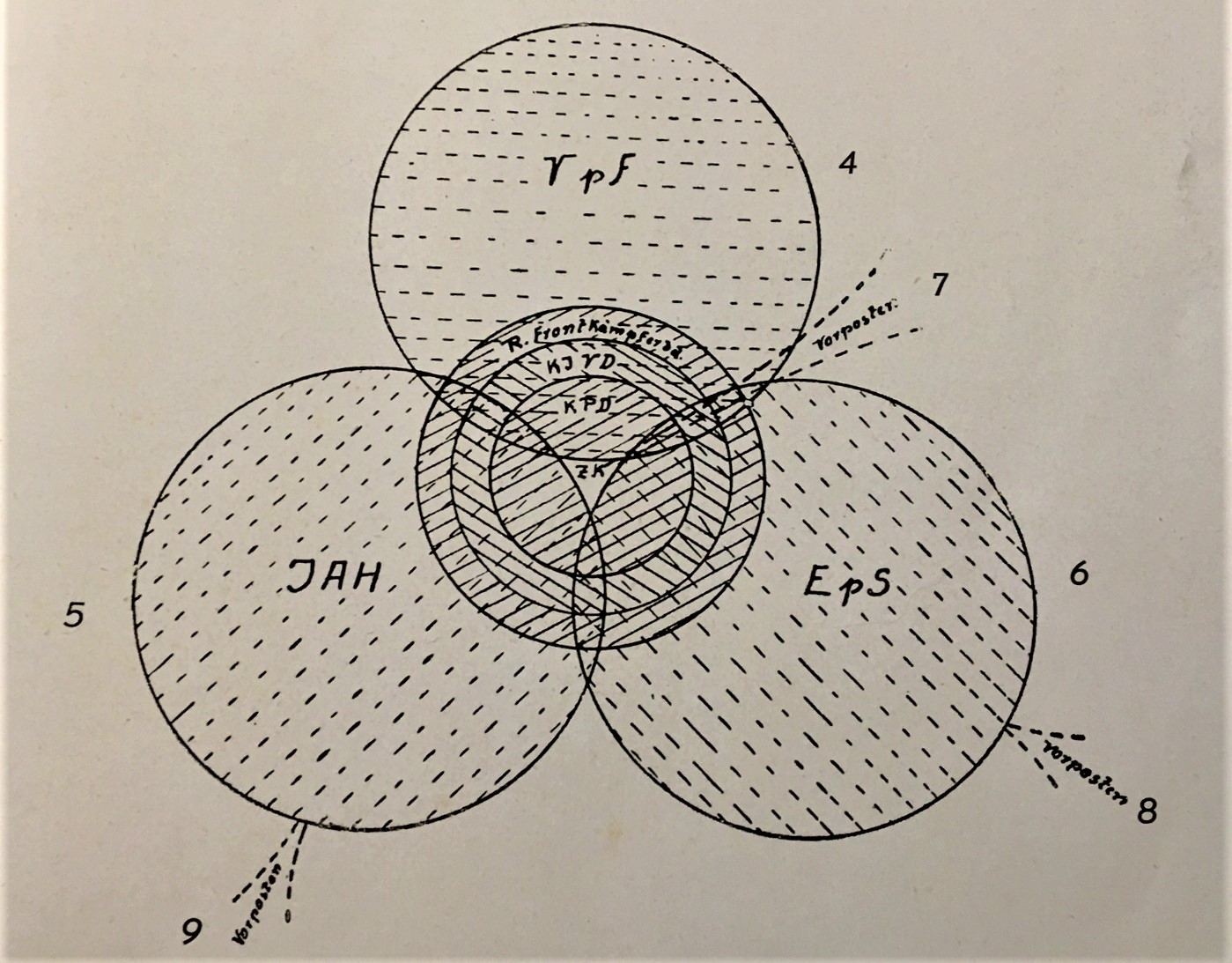
    Here are two renderings of what Nazis envisioned to be the structure of the Communist Party,  the first being for Germany, and the second for found orchestrated Communism worldwide. They are located in a half-grubby if not heavy book by the propagandist Adolf Ehrt’s  called Die Weltbolshewismus, which was published in 1936. 

    Key for the first diagram: IAH=Internationzle Arbeiter Hilfe; Vpf=Verband Prolestarischer Freidenker Deutschlands; KPO= Kommunist Partei Deutschlands; ZK= Zentral Kommintern; KJVD=Kommunistischen Jugendverband Deutschlands. I don’t know what the EpS is yet.  

    IMG_2128

  • An Educated Fly–Scientific American, 1898

    JF Ptak Science Books  Quick Post

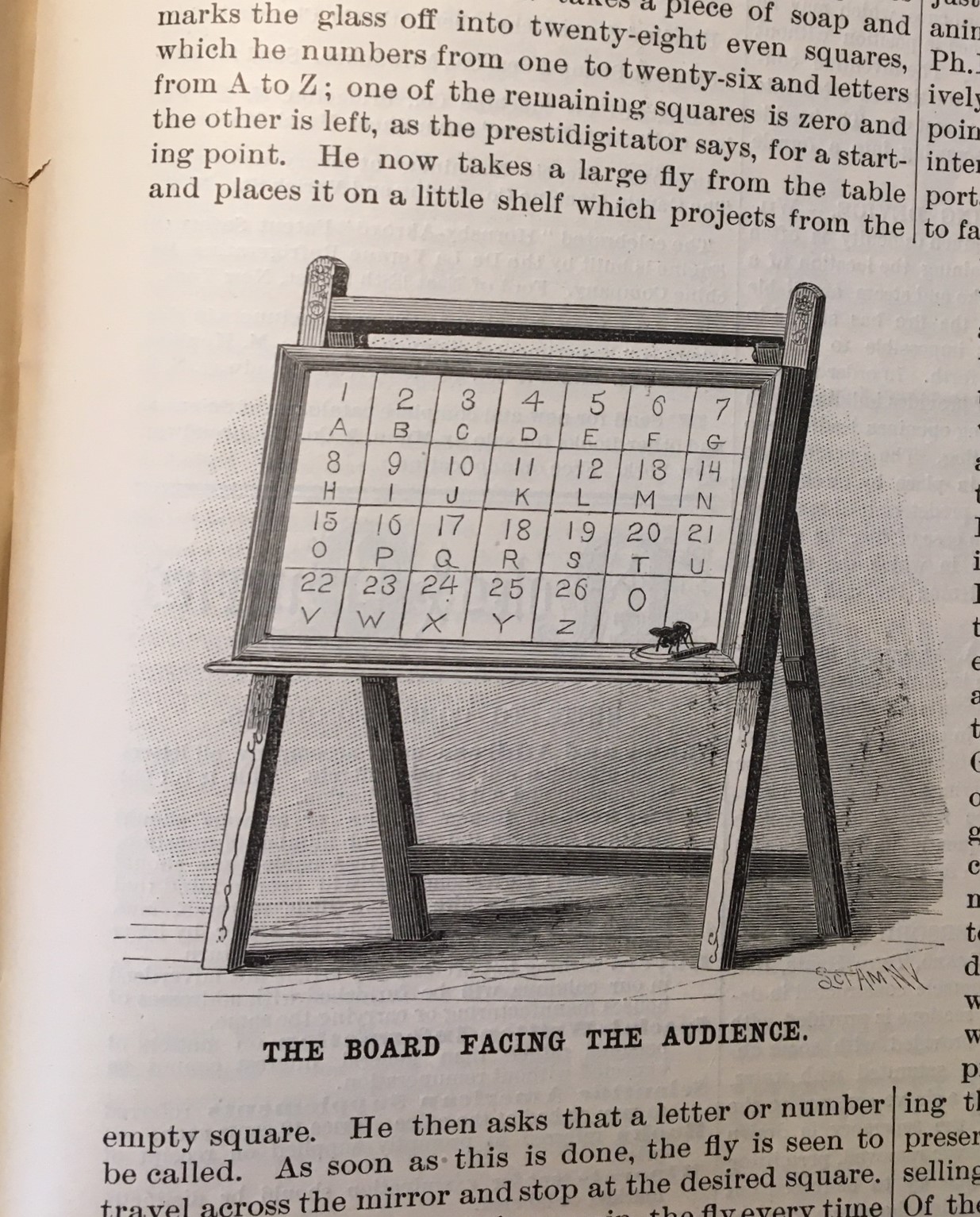
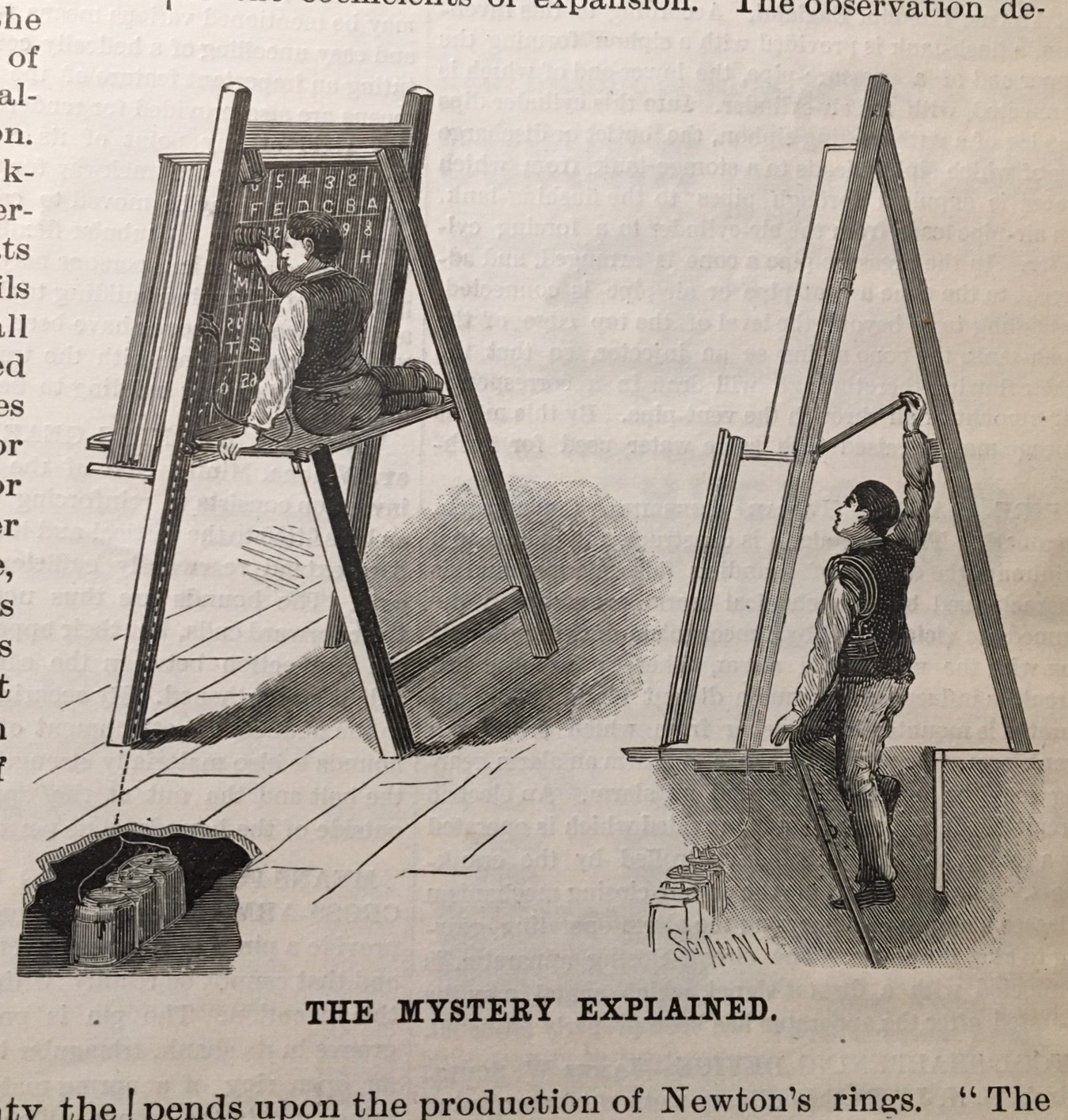
    Sci Am 1898 fly _2_How could you see an article heading of “An Educated Fly” and not share the secret?  I don’t know, and so I am performing a bit of due diligence, sharing the story from Scientific American from 3 September 1898. There really isn’t that much to tell, and the title is probably better than the story: the large tablet is placed on a stage in front of an audience, with a pitchman telling some sort of warm-up story to create interest among the crowd; a fly of some sort (whether a model or a real fly pinned or tied to something, I don’t know) and placed on a little shelf beneath the board. The ringmaster would ask a question, and the fly move around and alight or somehow make it known as to its selection of the numbers/letters on the grid. The trick is revealed in the image below–after the blackboard on its pedestal is shown to the audience front-and-back, it is positioned over a trap door on the stage, where a confederate would rise up and position themselves inside the pedestal and operate the device holding the live/inanimate fly. That’s it. After the tricks were performed, the inside man would escape through the trap door, the pedestal would be wheeled out to display that it was empty, and that was that. Old trick, new fly. 

    Sci Am 1898 fly _1_

Recent Posts

Archives

Categories