JF Ptak Science Books Post 2276
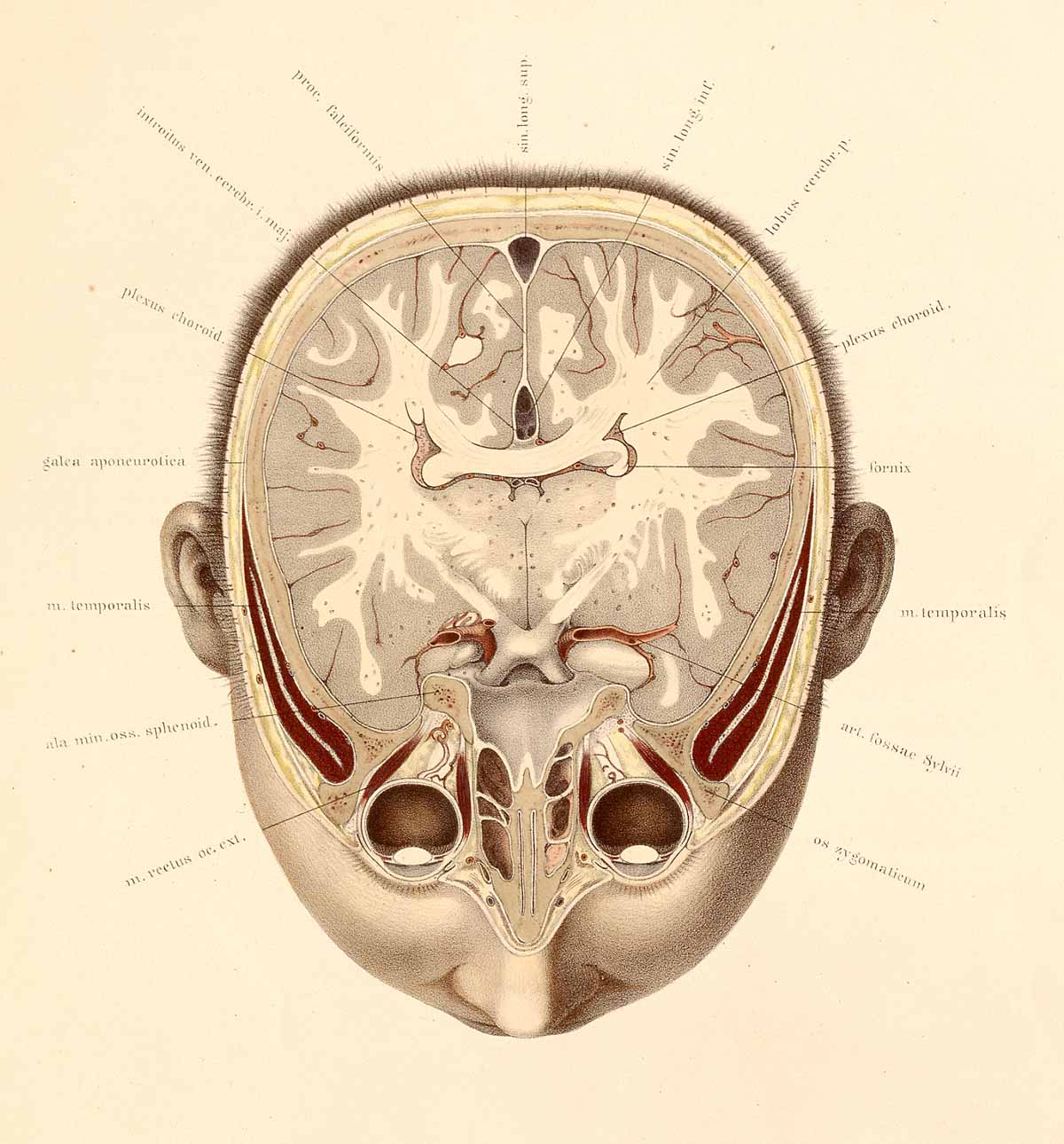
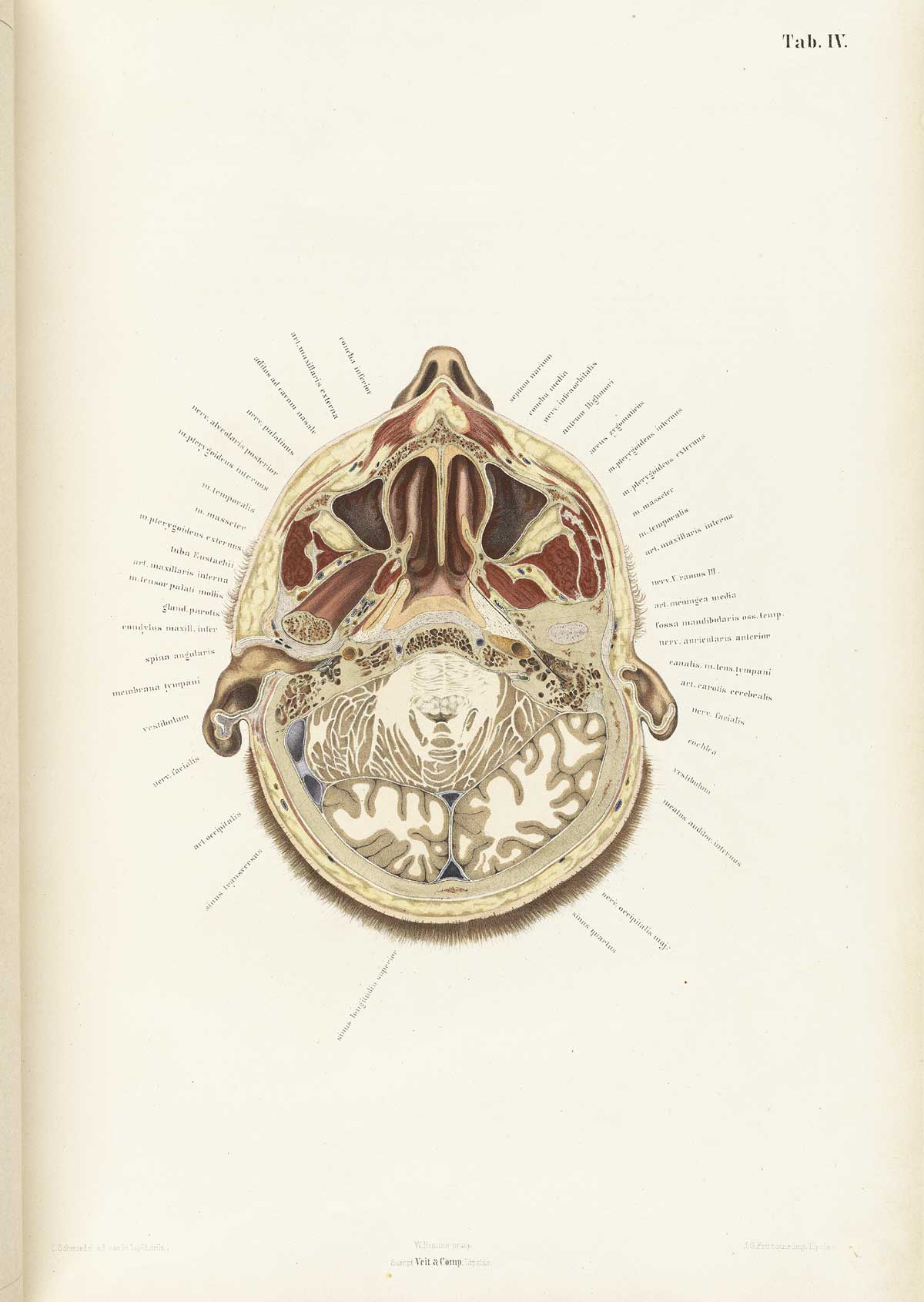
The collaborative work of anatomist Wilhelm Braune (1831-1892) and artist C. Schmiedel (fl. mid-1800s) produced a singular work, Topographisch-anatomischer atlas nach durchschnitten an gefrorenen cadavern…(published in Leipzig in 1872), which was an oustanding example of high-realism in the art of anatomy. This book is pretty much right-to-business, with no extraneous bits as had appeared in anatomies fo rcenturies. And even though these practices had pretty much expired by the first quarter of the 19th century, Braune/Schmiedel was ever more so detailed and simple–their design was fabulous, and their detail light and exceptional.
 [Source: National Library of Medicine.]
They also made use of sliced frozen sections of cadavers, which seems to give their work that crystalline touch. The first image looks at the brain from top-to-bottom, while the second reverses the view, which is in itself somewhat unusual, even in 1872.
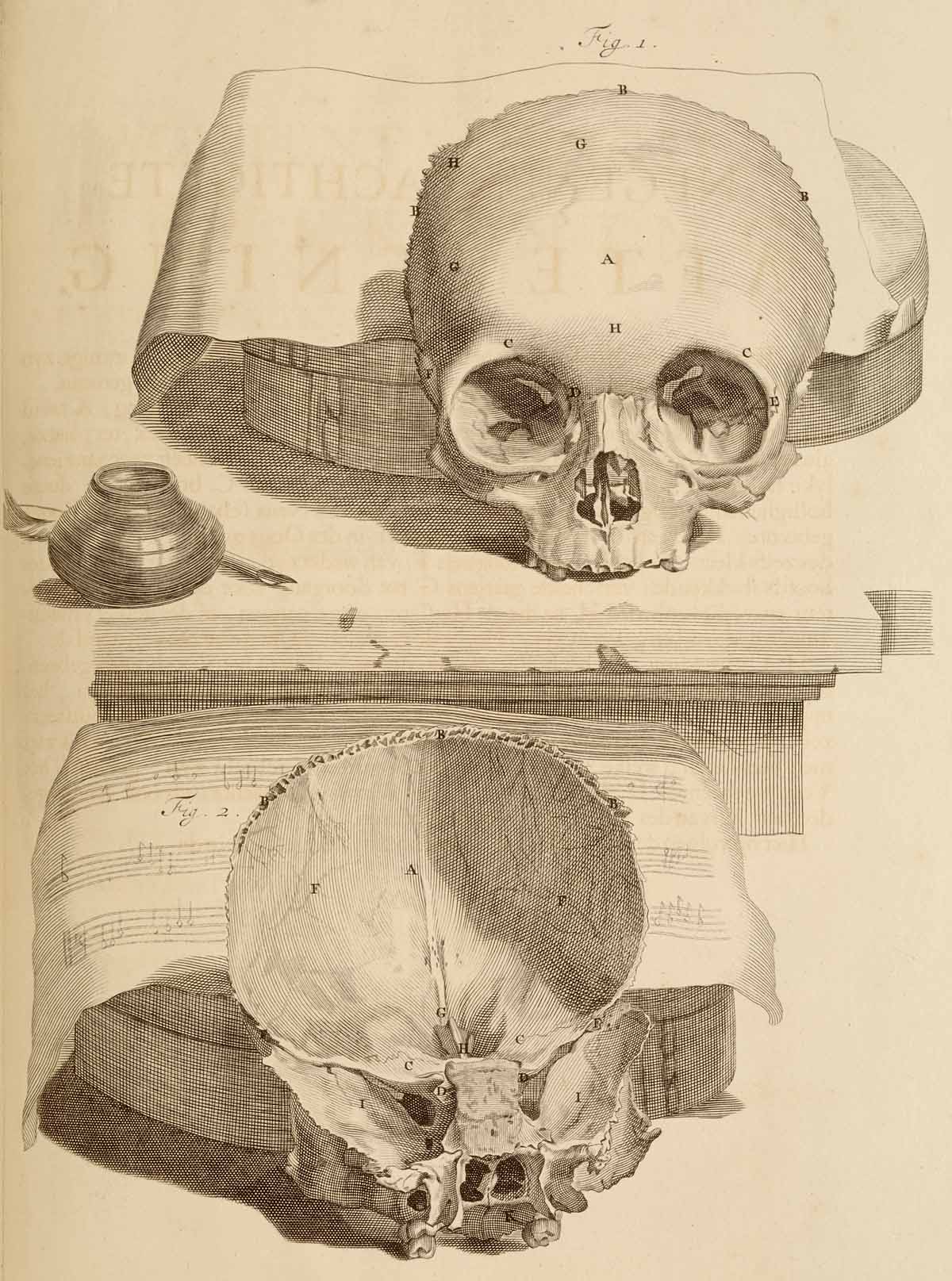
Looking into a very finely-produced skull from an earlier period in the work of the anatomist Govard Bidloo (1649-1713) and the artist Gérard de Lairesse (1640-1711) in their Ontleding des menschelyken lichaams, (which was printed in Amsterdam in 1690) we find a bit of a different story.
 [Source: National Library of Medicine.]
One interesting aspect of Bidloo is that he can be extraordinarily detailed and still lend a rather baroque still life to engage his subject–like the skull with musical score, above. There’s no reason for the added bit of scenery, its just a luxurious background for the anatomy. And then there are examples like this incredible facial/neck dissection below, which is very hard-core realistic, just as what you might find on any dissecting table, which most assuredly did not come equipped with pen/ink/music score. Bidloo here is ultra-real, more so than the greater majority of anatomist/illustrators. [Ontleding des menschelyken lichaams...printed in Amsterdam, 1690, as a copperplate engraving with etching. Source: National Library of Medicine.]