JF Ptak Science Books Quick Post
Doing work underground has long fascinated me: tunnels, mining, sapper military ops, though almost entirely human-made, not so much for natural formations like caverns and such. Particularly interesting are the big machine brought down/assembled to do some big cutting or drilling or pounding job. Case in point: this sharp-toothed whale:
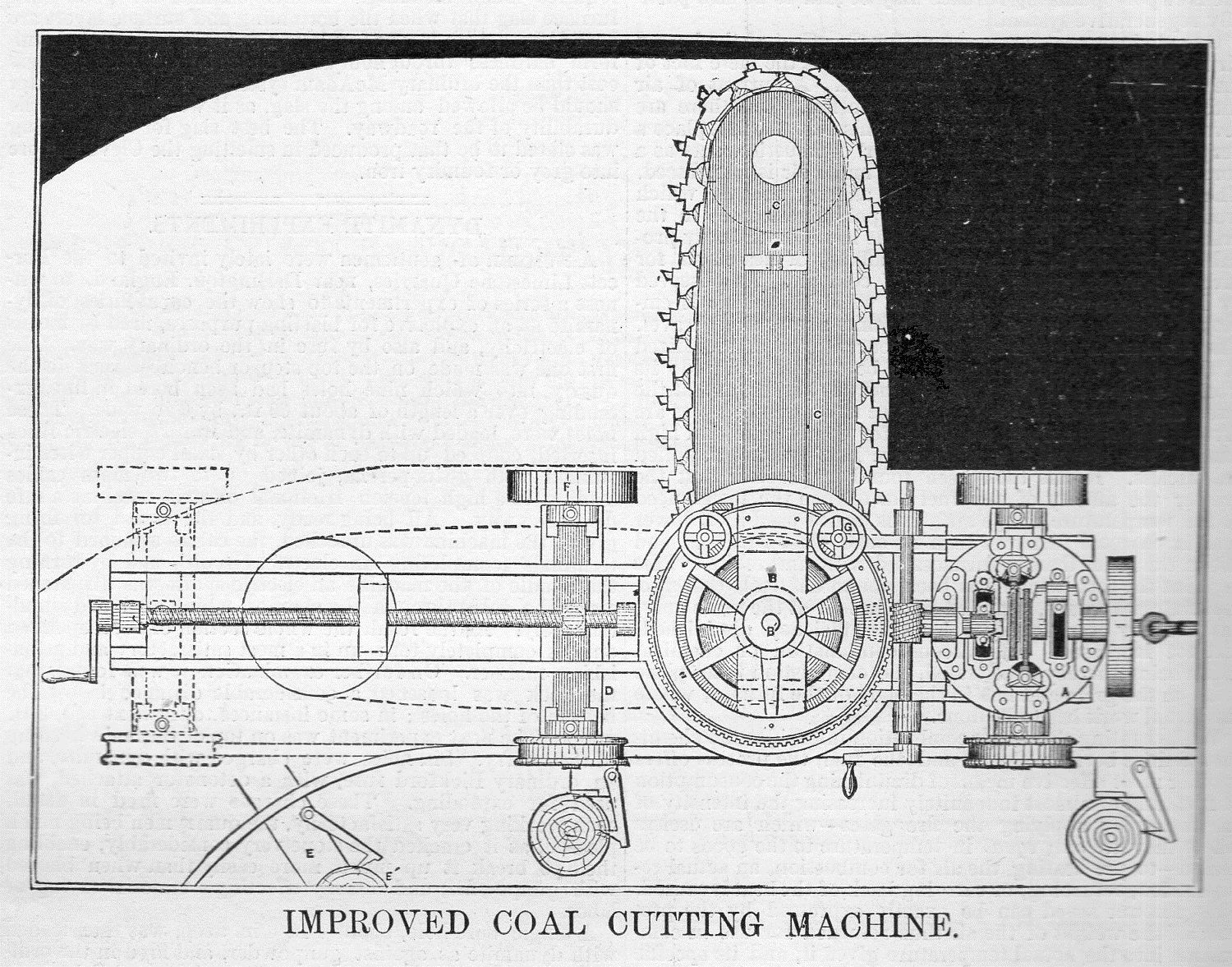
The beautiful diagram for this beast appeared in Scientific American Supplement No 107, January 19, 1878, and is a cut of the machine looking straight down. This was a monster for its time, weighing in at 3,800 pounds, and could make a clear cut into a vein of coal that was 4′ long and 2.5′ deep, and could move along a face of coal 60′ long in one hour. It no doubt was a tremendous boon for the men who would have been in there working the coal by hand. This was the invention of Horace Brown, and was called the Monitor Coal Cutter, no doubt because it was long and low, looking as though it wasn’t 4′ high, giving it a silhouette similar to the Civil War ironclad warship (designed by the very busy John Ericsson).
And for all of its weight and force and potential the machine moved along a railtrack that was only 29″ wide.