JF Ptak Science Books Post 618–expanded 26 Nov 2011
See also States of Perfection, the Archaeology of Refrigerated Meat, 1954.
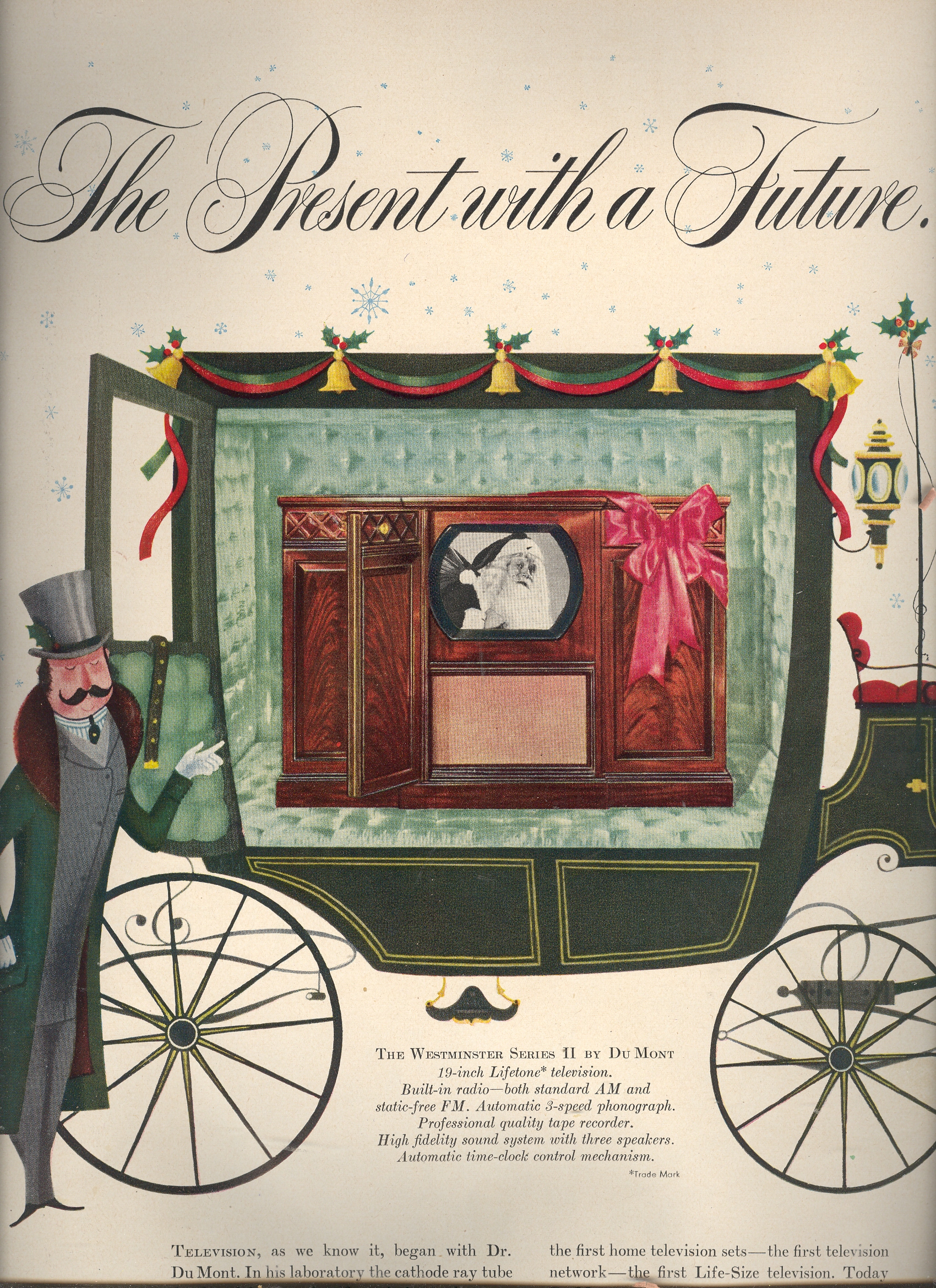
The concept of the television started pushing its way obliquely into the literature as far back as the 1880’s (with Paul Nipkow’s 18-line resolution “electric telephone”), bumping up again with Arthur Korn in Germany around the turn of the century, and making its way through the ‘teens and early ‘twenties until hit it big in 1927 with Phil Farnsworth’s “image dissector”. (Baird promised a hope with a mechanical version of the television, complete with a 30-line vi ewer, but it would very soon be replaced with electronic boxes with ten times the resolution.) There were little or no stations available for viewing even though sets were manufactured and sold. It wasn’t until the end of WWII that the television industry took off—the increase in home-ownership of tvs exploded, beginning in 1950.*(A decent timeline of the development of tv is here.)
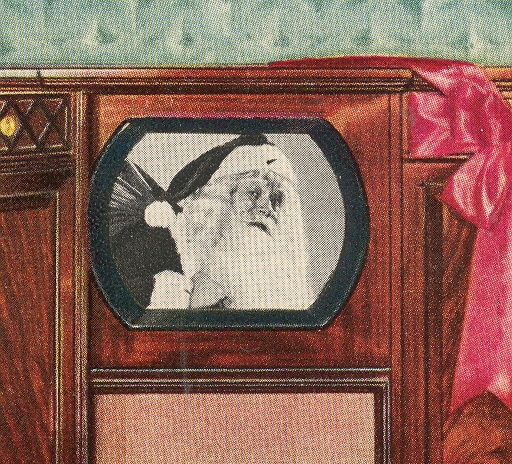
While looking through a year’s worth of LIFE magazine for 1950 I was struck by the number of ads and the number of different companies selling televisions in the major print market. But the creeping surprise for me were the images that were used in the tv sets that were pictured in the ads—images within images. The pictures in the tubes were meant to be enticing, imaginative, imagery of the possible, displaying the possibility of entertainment–the possibility of losing yourself in the new medium. It was an idea of fabulousness, of great expectations, of the promise of being swept away by the new convenience—and all of that rolled up in the pictures used in the ads.

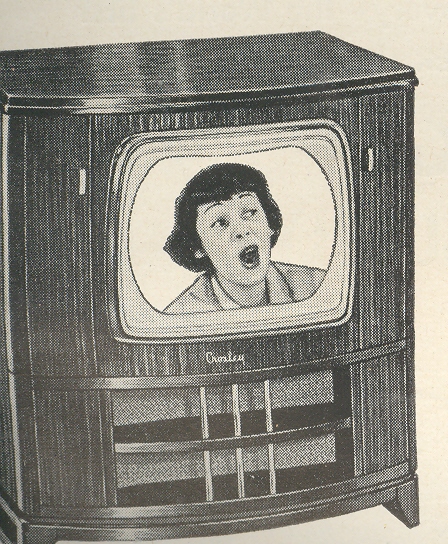
To me, sitting here 59 years in the future, it is hard to imagine getting excited by any of these images—except Santa. Even with the benefit of having looked at millions of images and having an historian’s occasional perspective on stuff, I just can’t appreciate these pictures in the ways that the advertiser meant them to be savored—and they were meant to be savored, as they were the libidinous bait to make the reader jump into the Hudson and buy the advertised set.
There are vocabularies for defining the breadth of fabulousness across difficult genres, like describing the fineness of a wine or the scent of a good desert rain. Difficult perceptions to quantify and describe, but it is done and successfully so. I can’t find the words fort these pictures.
Their fabulousness to the viewer in 1950 must not have been very long lasting—the images seem so contrary to being interesting, as they seem to project almost nothing at all. I do get the overall effect of polite culture and a race at the occasional arts, but by and large the pictures were vanilla headshots of women.