JF Ptak Science Books Post 1612
Part of this blog’s History of Holes series. (See, for example: An Episode in the History of Holes: Electricity, Punched Cards and the Computer, 1878, here; History of Holes–Filing Holes Up, here. And fifteen others.
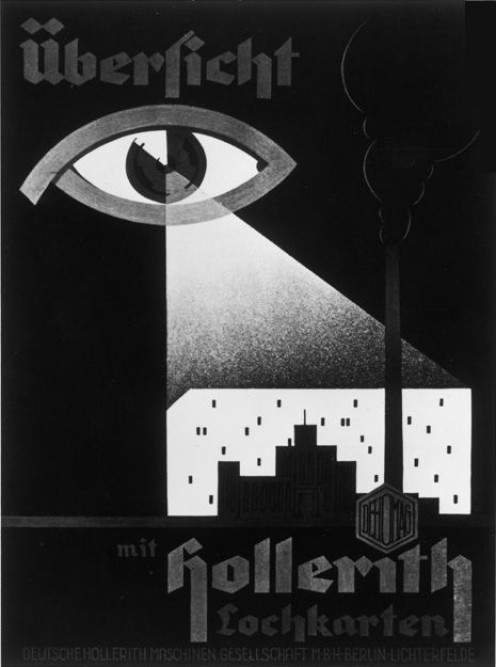
I was thinking about holes and hole-making in the history of the art form of compiling statistics, and in the process of accumulating a few images of the machines that actually made the holes in tabulating cards, I found an interesting/unfortunate/depressing illustration. It belonged to the Deutsche Hollerith Maschinen Gesellschaft (“Dehomag”), which was the German arm of IBM. (Herman Hollerith created his Tabulating Machine Company in 1896; it was consolidated with the International Recording Company and Computing Scale Company of America into Computing Tabulating Recording Corporation (CTR) in 1911, and then, in 1924, changed once again into something with the name that we all recognize , International Business Machine (IBM).)
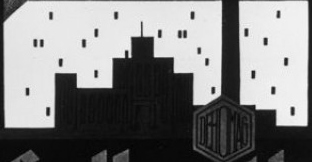
The poster has a very provocative cache, and taken somewhat out of context it might be viewed as dustjacket artwork for Black’s book. The all-seeing eye absorbing the information of teh punched card, with the unfortunate, looming, belching smokestack there in the foregoround, reminiscent of the chimneys in the concentration and extermination camps. But this poster was executed around 1925, well ahead of any of those events–the design by serendipity happens to visually support the author Black’s assertions. Its just a nasty-looking object.