JF Ptak Science Books Post 1549
I hardly expected the story that I found in this little square pamphlet, particularly since I had selected it because of its cover art.
Jack of the Bean Fields–written by Nina Millen and published by the Friendship Press of New York–turns out to be a photo-essay on one seasonal adventure of a boy named Jack Marco and his migrant vegetable-picking family. The story starts with the family in a bad way, heading out on the road in a broken car filled with Jack’s mother, father, grandmother and three siblings, out to find a camp where they could find jobs picking early beans.
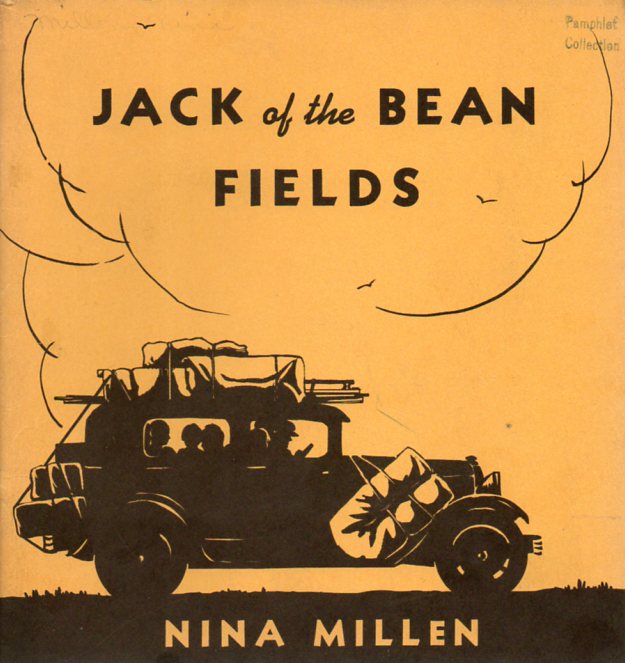 As the family fixes the car, Jack heads out to play in the fields, where he finds a book. We find that–at age 8 or thereabouts–Jack hasn’t been taught to read and hasn’t been to school in years, and the family doesn’t own a single book. The family gets underway, finds a camp, and moves into an empty unit in a series of shanties. They clean the place up, and Jack lays his book on a shelf. “Now we are settled again” announces Ma. Wincing.
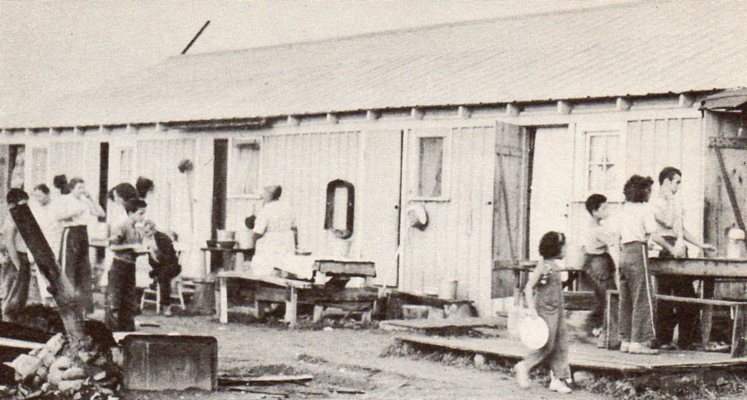
In a story that could have been a very maudlin or saccharin affair, it was surprisingly matter-of-fact, eventually telling how community and church groups appeared through the intercession of a camp nurse to help the migrant families, clothe the children, and send them to school.
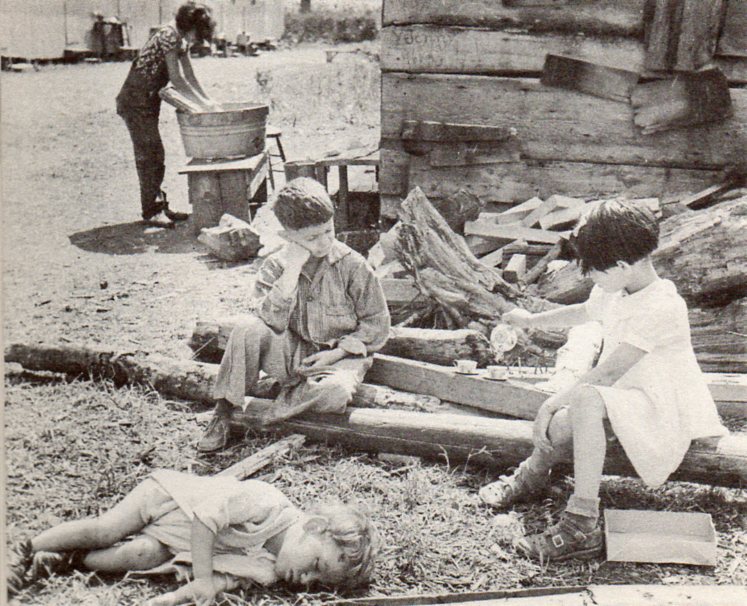
The war was underway, the Depression was on its way out, the economy was beginning to bounce–but then, as today, there were migrant farmers–they just weren’t being displaced by Dust Bowl factors anymore. But, basically, it was a good story for kids, focused mainly on appreciating what we have and our small gifts, such as family–and the ability to read.