JF Ptak Science Books Post 1500
I found this by accident, and needed to share it immediately, because in the splendid and chilly vastness of the infinite Encyclopedia of Bad Ideas, this entry would seem quite the poster child for such a stupendous effort–the mud to which all dust aspires.
The centrifugal machine for human birth…its hard to even finish that sentence, let alone finish it without wincing. What could possibly go wrong, or right, with spinning a pregnant woman strapped like Hannibal Lechter on a spinning turntable?
I think what we have here is the Vitruvian Woman of Bad Ideas relating to human birth, the patent described more fully in this great piece by Marc Abrahams (of the Annals of Improbable Research) in The Guardian, 2006). And how could the symbology of the thing get any weirder? It looks like this poor woman has her head resting on a stretched piece of animal skin, all of which is located on a cross–but since there is a person on it the medical device become a crucifix. And let’s not forget the counterweights on either side of the governor, which in detail below are suspend to either side of the woman’s head; and also the baby sack, for, well, catching the baby…
Image source: Google Patents
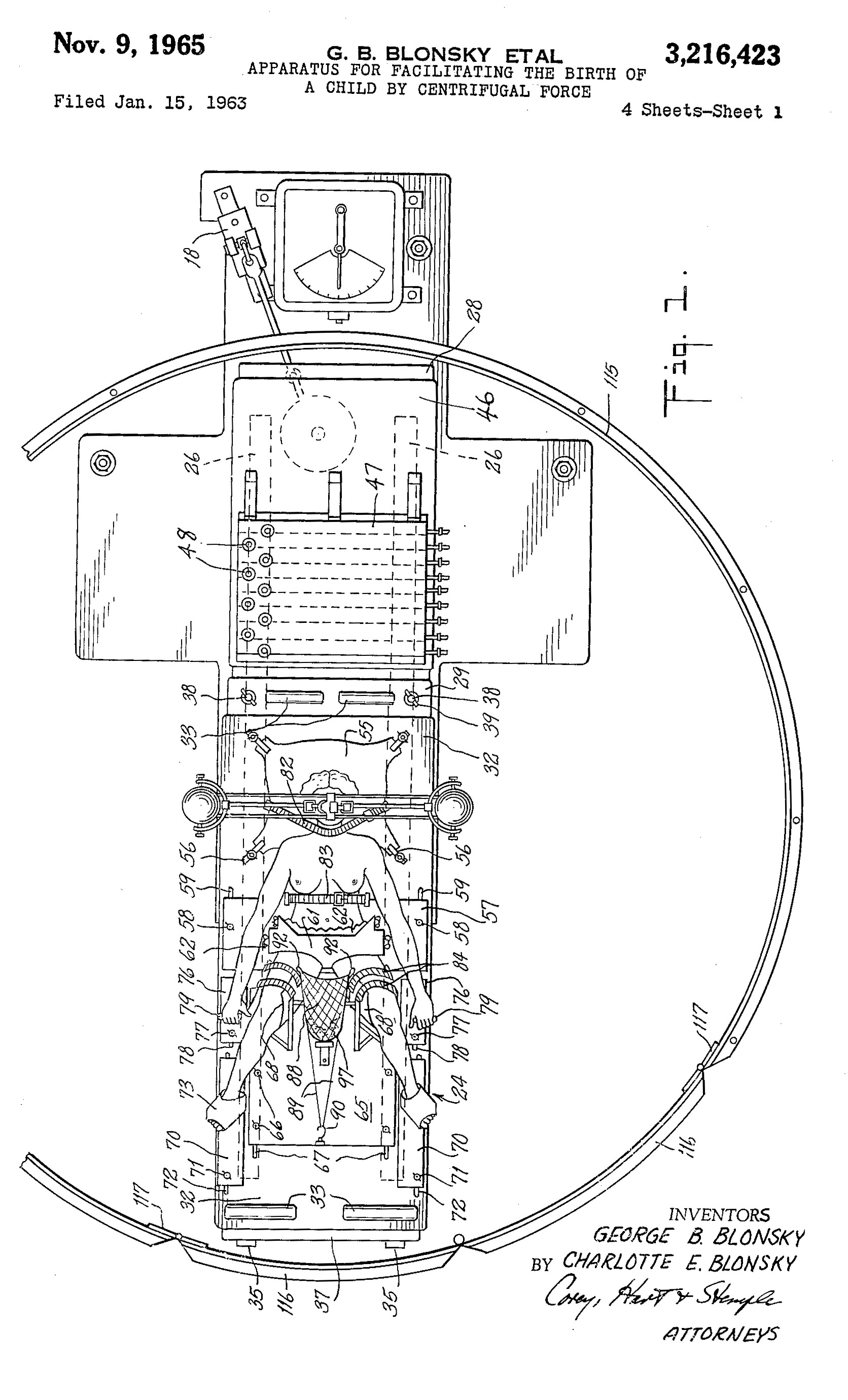
And the excruciating, inexorable detail:
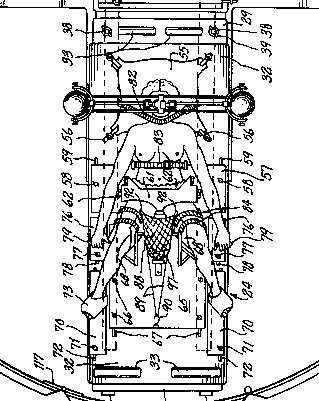
In their patent application, Blonsky and Blonsky explained the grievous and imaginary need:
“In the case of a woman who has a fully developed muscular system and has had ample physical exertion all through the pregnancy, as is common with all more primitive peoples, nature provides all the necessary equipment and power to have a normal and quick delivery. This is not the case, however, with more civilised women, who often do not have the opportunity to develop the muscles needed in confinement.”–from the Blonsky patent.
“Therefore, wrote Blonsky and Blonsky, they would provide “an apparatus which will assist the under-equipped woman by creating a gentle, evenly distributed, properly directed, precision-controlled force, that acts in unison with and supplements her own efforts”.–Marc Abrahams, quoting the Blonsky patent in The Guardian (referenced above).
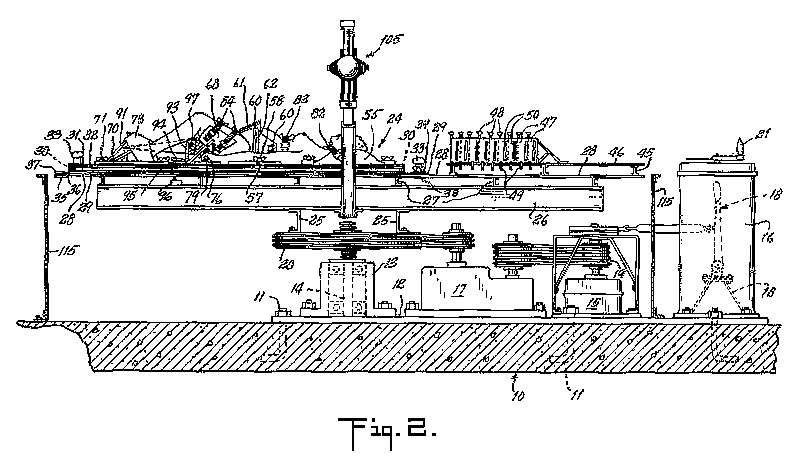
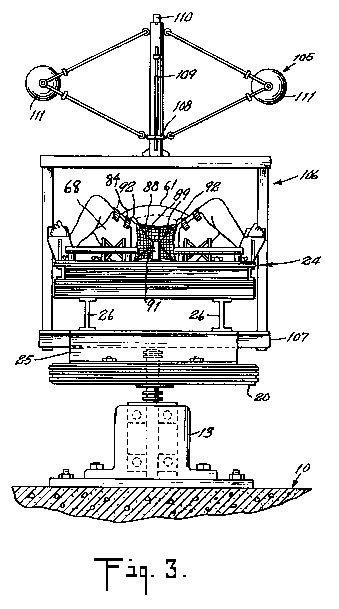
The text of the patent report, below, in full: