JF Ptak Science Books Quick Post // Update
Fortune, good night, smile once more; turn thy wheel!. King Lear, Act II Scene I
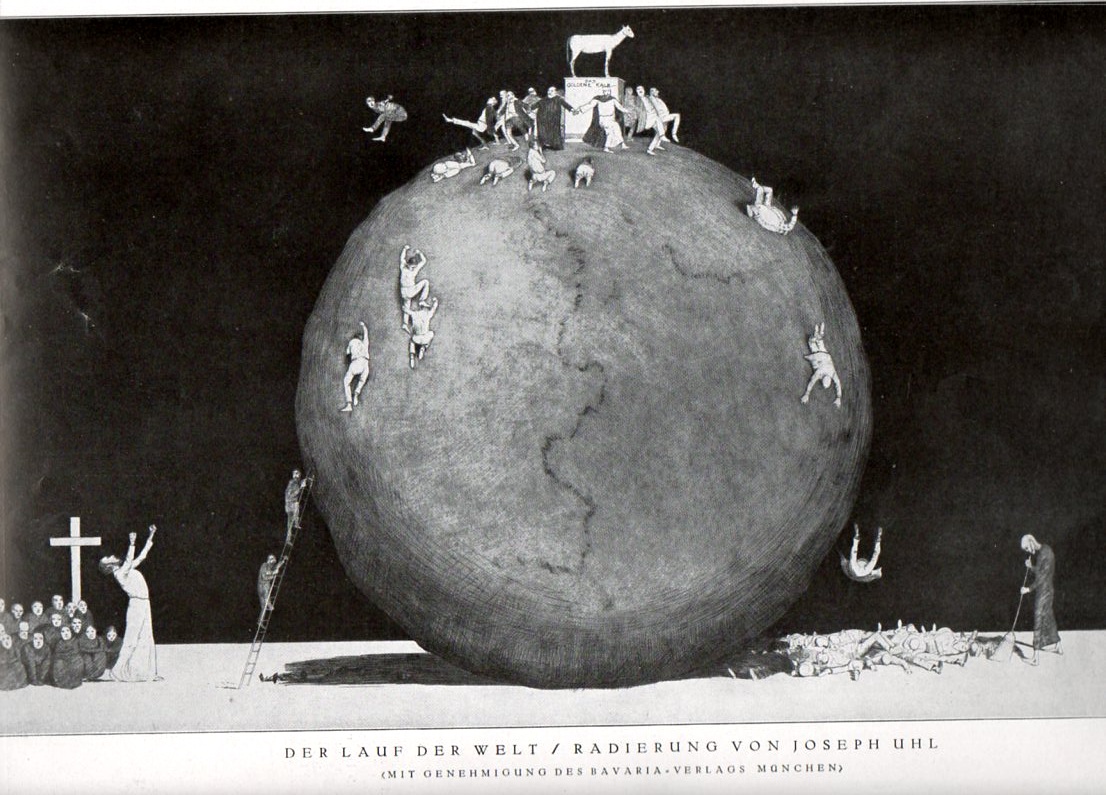
Not to be confused with another, earlier, engraving by Abraham Bach (the Elder, “d.A”) of the same title (published in Nuremberg in the late 17th century), this work by Joseph Uhl (published in the Illustrirte Zeitung, Leipzig, 24 October 1926) seems far more pessimistic, a scene of symmetrical futility. The title translates roughly into the Triumph of the World, or the World Conquers All, or something along those lines, I think, and we definitely see the old orb impassively withstanding whatever it was that was happening on it–and whatever it was, it didn’t matter.
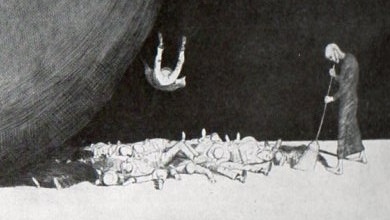
The cleric at bottom left seems to be extolling the heavens in support of those who ascend the world to his favor (?), and as they reach the apex they either protect or try to repeal those who are supporting the golden calf. At bottom right we see the ultimate disposition of the players, swept into a pile by an unconcerned sweeper.
My thanks to the commenter Redtarts for communicating “rota fortuna”–wheel of fortune–which I hadn’t connected to this image but which does of course make sense. It does bear some striking similarity to the more classical wheels, which generally depict four (or more) figures of people in various stages of rising or declining in the course of life, the person on the top of course reigning supreme. The allusion may have begun in early Roman times with the goddess Fortuna, famously depicted here in 1502 by Albrecht Durer:

The image of the wheel though is much earlier,, most people recognizing it so:
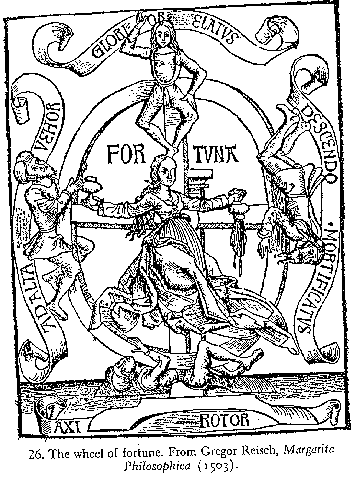
This is the basic desin that is seen so often through the Medieval and Renaissance periods.
Carmina Burana:
- Fate – monstrous
- and empty,
- you whirling wheel,
- status is bad,
- well-being is vain
- always may melt away,
- shadowy
- and veiled
- you plague me too;
- now through the game
- bare backed
- I bear your villainy.
- . . . . . . . . .
- The wheel is turned by Fortuna;
- I go down, demeaned;
- another is carried to the height;
- far too high up
- sits the king at the summit –
- let him beware ruin!
- for under the axis is
Dante’s Divine Comedy/the Inferno:
No mortal power may stay her spinning wheel.
The nations rise and fall by her decree.
None may foresee where she will set her heel:
She passes, and things pass.
Man’s mortal reason cannot encompass her
She rules her sphere as the other gods rule theirs.
Season by season her changes change her changes endlessly,
and those whose turn has come press on her so,
she must be swift by hard necessity.
Dante, Inferno VII 82-90