JF Ptak Science Books LLC Post 986
the British naval losses at Jutland to three other great sea battles (Camperdown, the
The battle near Jutland (
was the largest naval engagement of WWI, involving the German Navy’s High Seas
Fleet and the Royal Navy Grand Fleet, and took place May 31-June 1, 1915 (“The
Day”). It was an absolutely enormous
engagement, with 250 vessels involved (151 for the Royal Navy, 99 for the
German).1
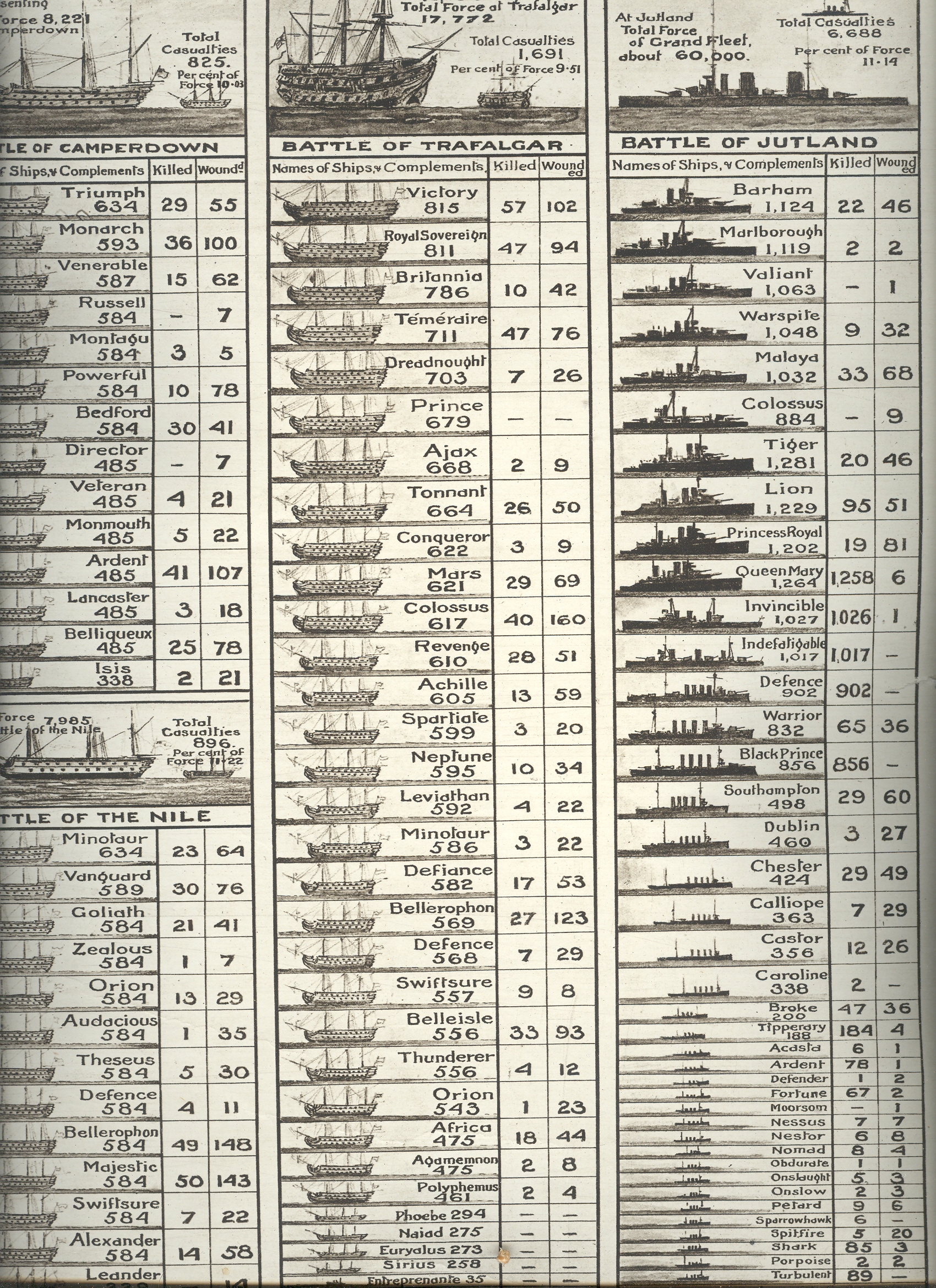
The end result of the battle was mixed and still debated
today; neither side could convincingly claim a conclusive victory from the
affair.
The Royal Navy losses at
were staggering: 6,094 killed and 570 wounded, with German losses at 2,551
killed and 507 wounded.
context with these other battles, and as pleasing as the thing is visually, the
larger mark, the great lurking statistical and human beast lurking there in the
mix of silhouettes and data, occurs about halfway down the far right column.
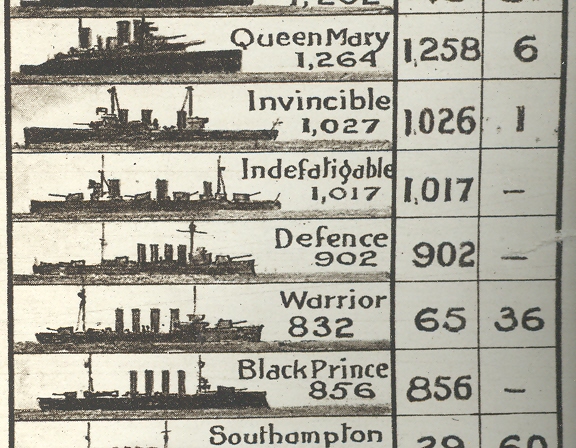
Indefatigable, the Defence, and
the Black Prince. Together, some 5066 men served aboard these
vessels; at the end June 1, 1915, 5,059 of them would be dead. Everyone aboard the Indefatigable, Defence
and Black Prince would be killed; 1
would survive on the Invincible, and
6 would survive the killing of the Queen
Mary. Astonishing, really. And there
are no other numbers like this on this chart.
straightforward and seemingly elementary as it looks, I was shocked to see the
numbers for those five Royal Navy ships, a “hidden” history within a broad
comparative analysis.
1. England: 28 battleships,
9 battlecruisers,
8 armoured cruisers, 26 light cruisers,
78 destroyers,
1 minelayer,1
seaplane carrier.
16 battleships,
5 battlecruisers,
6 pre-dreadnoughts,
11 light cruisers,
61 torpedo
boats.
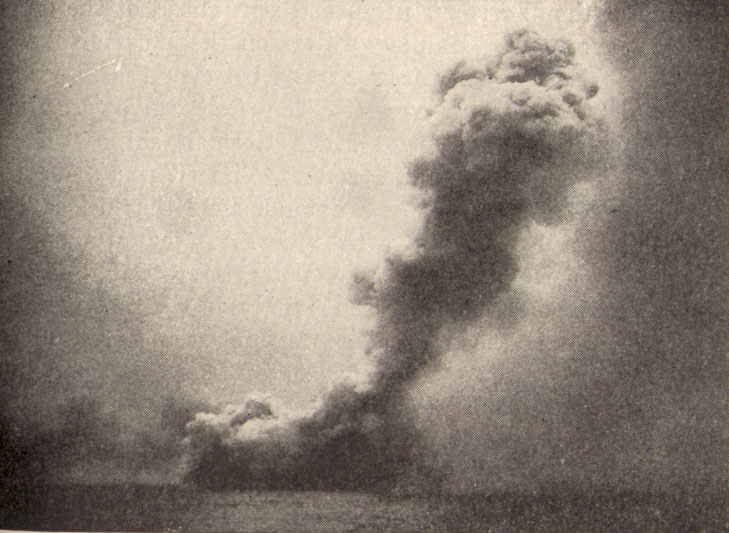
[The Queen Mary going down.]