JF Ptak Science Books LLC Post 987
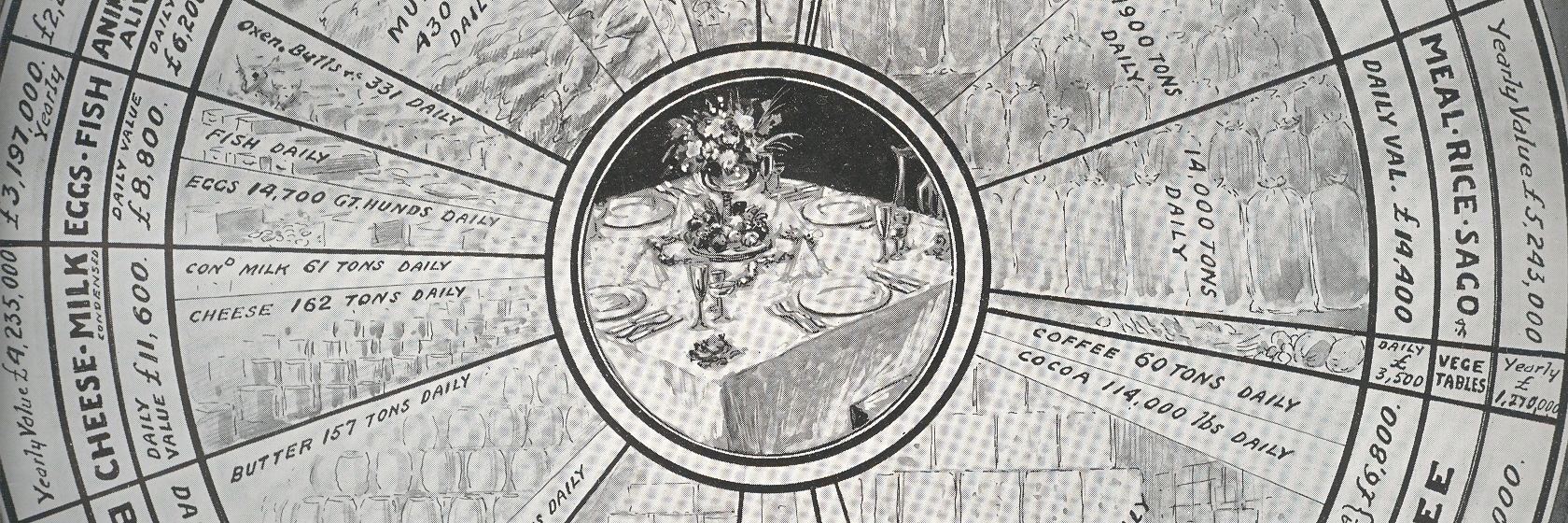
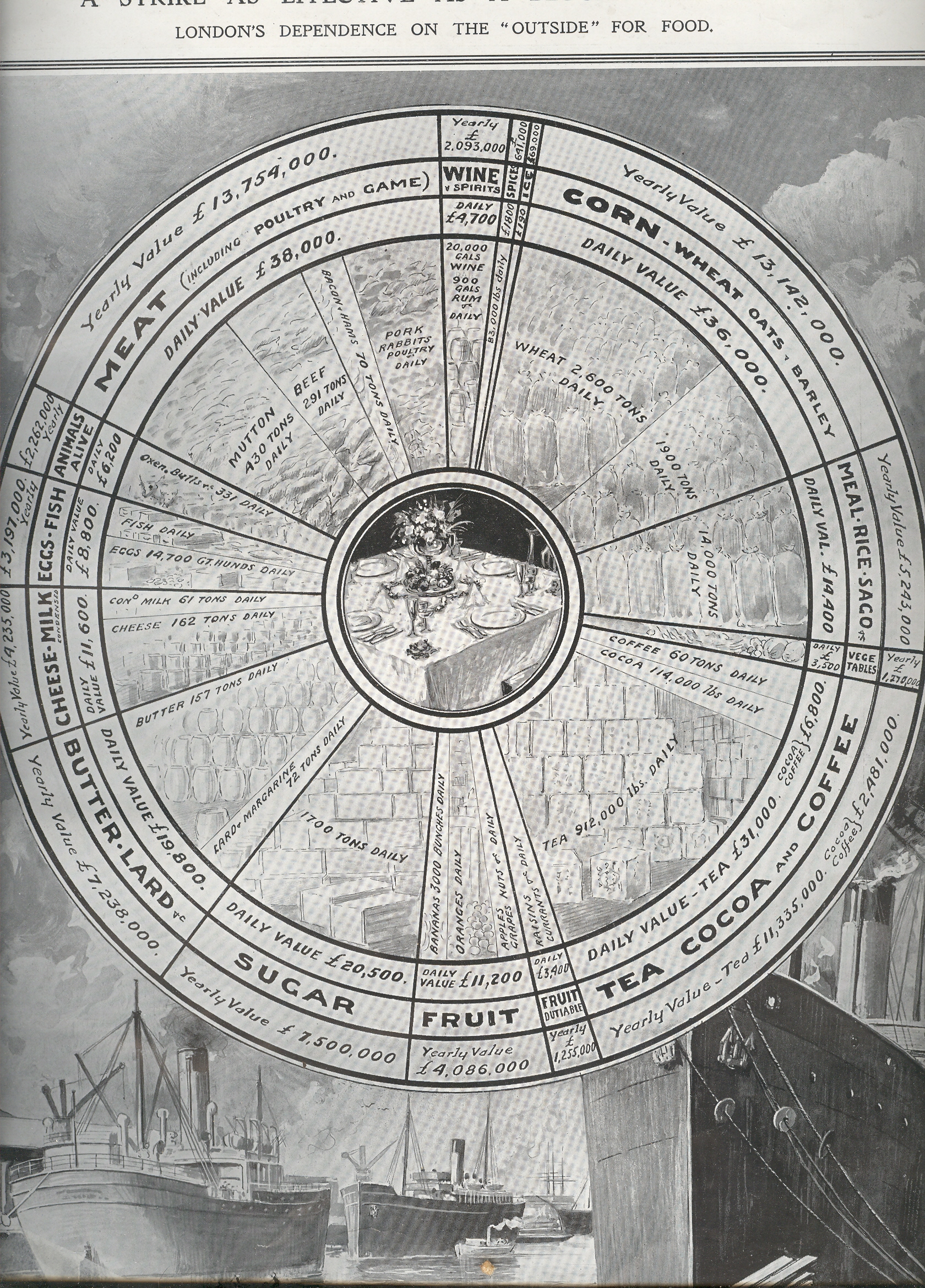
well-designed piece of propaganda designed to draw in the general, middle-class
(such as it was) and working population into league against the strikers. At least that’s what it looks like to me: the
strangulating effects of food not coming into the
and its attack on the family dining table. Literally, and figuratively: a
table, by the way, that appears at the direct center of attention, the bull’s-eye
of what is a target, made to look like the transport workers were taking direct
aim at the symbol of the family.
All of what was going on of course was that some hard working people were
trying to get a little more money to put food on their own tables—the facilitators of food distribution
for the nation’s people wanting nothing more than a little more food for
themselves and their families. And these
were the people, by the way, who did not set a five-utensil place settings with
linen table covers and a large fresh bouquet as is oddly the case in the illustration.
By the time this illustration appeared in the Illustrated London News in August 1911 the movement had already
been active for a year—there had also been a call to action the month before
involving over 100,000 workers. The National
Sailors and Firemen’s Union, and the National Union of Ships’ Stewards, Cooks,
Butchers and Bakers, dockhands, lorry rivers, general laborers, and on and on, were involved
in the strike, which was a bitter and confrontational battle between them,
scabs, police, the army, and of course the owners of the means of production
and shipping means.
After the battle of greed and need, need won.