JF Ptak Science Books LLC Post 968
Part
of the History of Dots series that I find so attractive is the dot’s great
equalizing effect. The dot has the
potential of making everyone, everywhere, feel the wonder of mighty
insignificance—the Earth, for example, depicted from far away, a dot in the
cosmos, the solar system a dot in the galaxy, the galaxy a dot in the realm of
galaxies. And then back again, powering perspective
back inside us, finding the common thread of humanity again at the cellular level,
a dot of sameness.
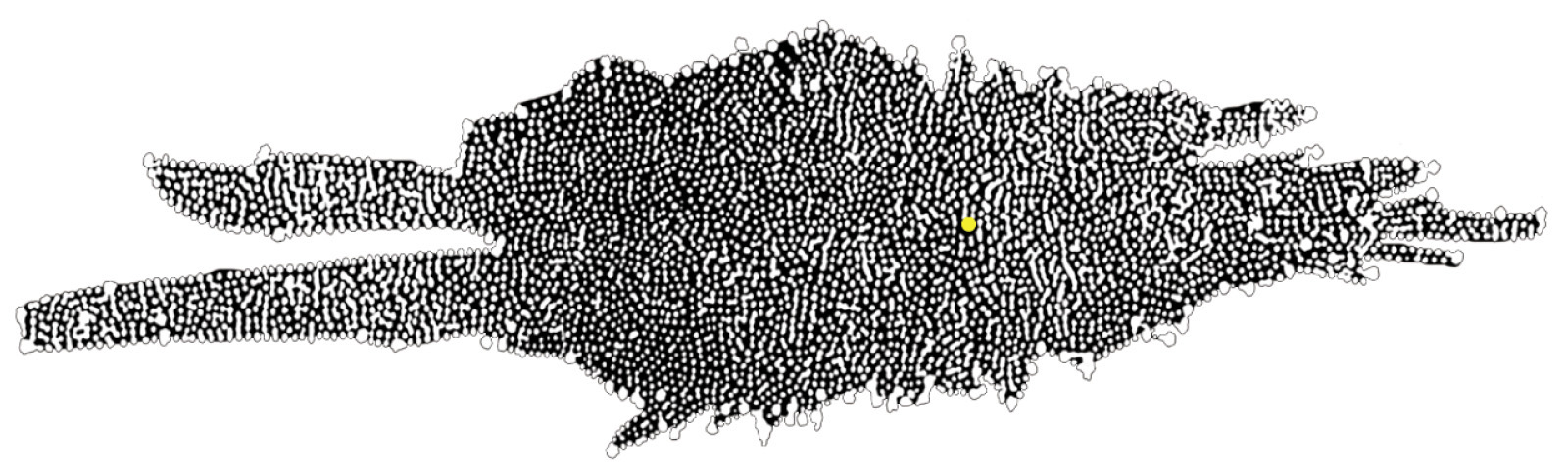
For
example, the map drawn by Sir William Herschel must have been a staggering
thing to see when it was first published in the Philosophical Transactions of the Royal Society in 1785–at least
by the popular viewer. The enormity and
expanse of galaxies was not yet understood, and to see (at this time) our own
sun relegated to a point of sameness in what he deduced to be a spiral-shaped Milky
Way Galaxy among many others could well have been an astonishing experience to
a first-time viewer.
So
to for at the other end of the spectrum with the embryological work of Karl
Ernst von Baer (an Estonian educated in
who worked in
as it was published in his De ovi
mammalium et hominis genesi (1827).
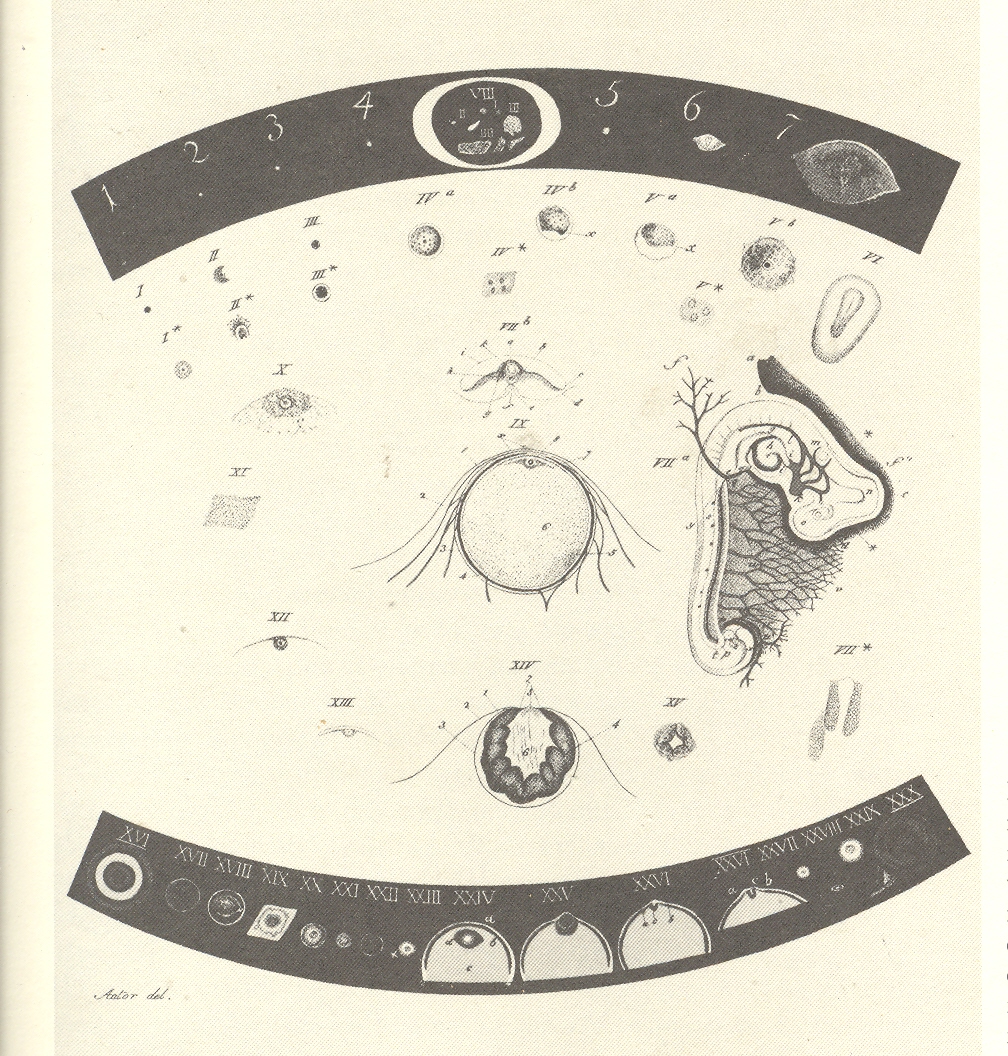
His work established beyond all doubt that the reproductive processes
for all mammals were generally the same—or without fundamental difference—from other
animals. And since “mammals” included “man”,
it came as quite a shock to the popular audience that the basic facets of
reproduction were little changed between dominant predator and all the other
stuff. At the professional level Baer’s work was of enormous importance in the development
of cell theory which would lead to natural selection…and he also established embryology
as a discipline.
And so the substance of dots at opposing ends of measurement, bringing about a similarity of recognition. Dots.