JF Ptak Science Books LLC Post 877
This is a continuation of an earlier post on mapping the
invasion of
in 1942.
[It starts: LIFE
Magazine issued a wake-up call of sorts to its readership in their 2 March 1942
issue. I say “of sorts” because even though this hard article (entitled
“Now the U.S. Must Fight for Its Life”) must have sorely sobered some of its
readers, it started on page 15, following big ads for Listerine, Matrix
(women’s shoes, Bell Telephone, Modess, Clapp’s Baby Food, Dot Snap Fasteners,
Goodrich Tires, White Horse Scotch, Pompeian Massage (for shaving), Jack
Benny/Carole Lombard’s “To Be or Not To Be”, Colgate, Yardley powder and
Mimeograph, and a few interspersed puff pieces—and a Ginger Rogers cover
photo. But once LIFE paid its bills, the article got right to business,
responding to a February article by sci-fi/novelist Philip Wylie on the possibilities
of the
losing the war…]
routes from the east and west. It was
also illustrated with four unusual graphic images depicting various parts of
the
attacked and pulverized by Japanese and German forces. [Images like these—outside the science fiction
world–were very uncommon.]
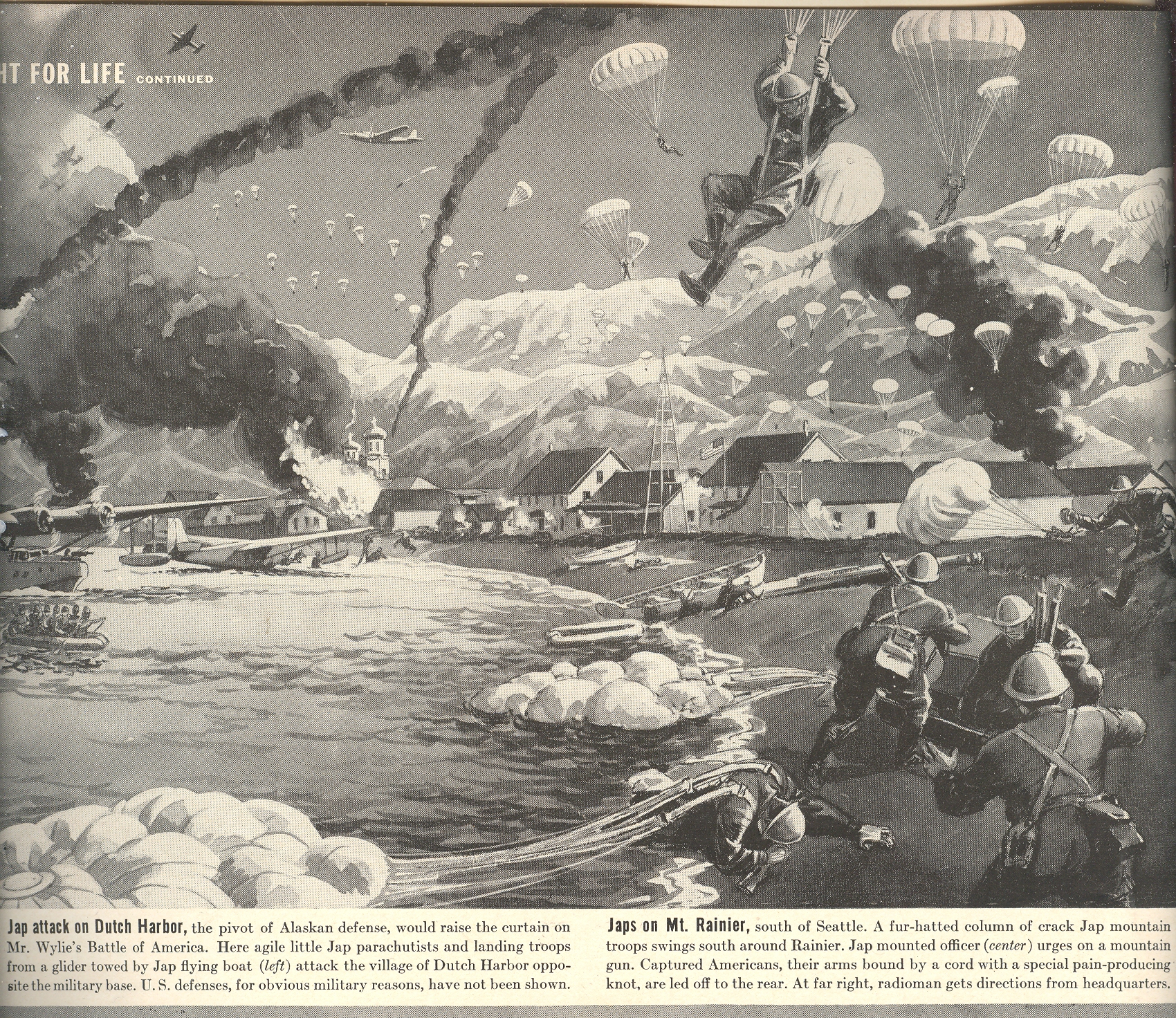
“the pivot of Alaskan defense” by Japanese forces. I guess we’re to assume that the American
military base on opposite the town has been overtaken already, with the assault
on the town being a mop-up operation. Odd thing here is that
and
1942 by a Japanese aircraft carrier (and entourage) which inflicted moderate
damage on the harbor and fort, and killed 78 Americans. This was a diversionary movement, meant to
draw away American attention from Midway.
It didn’t work.
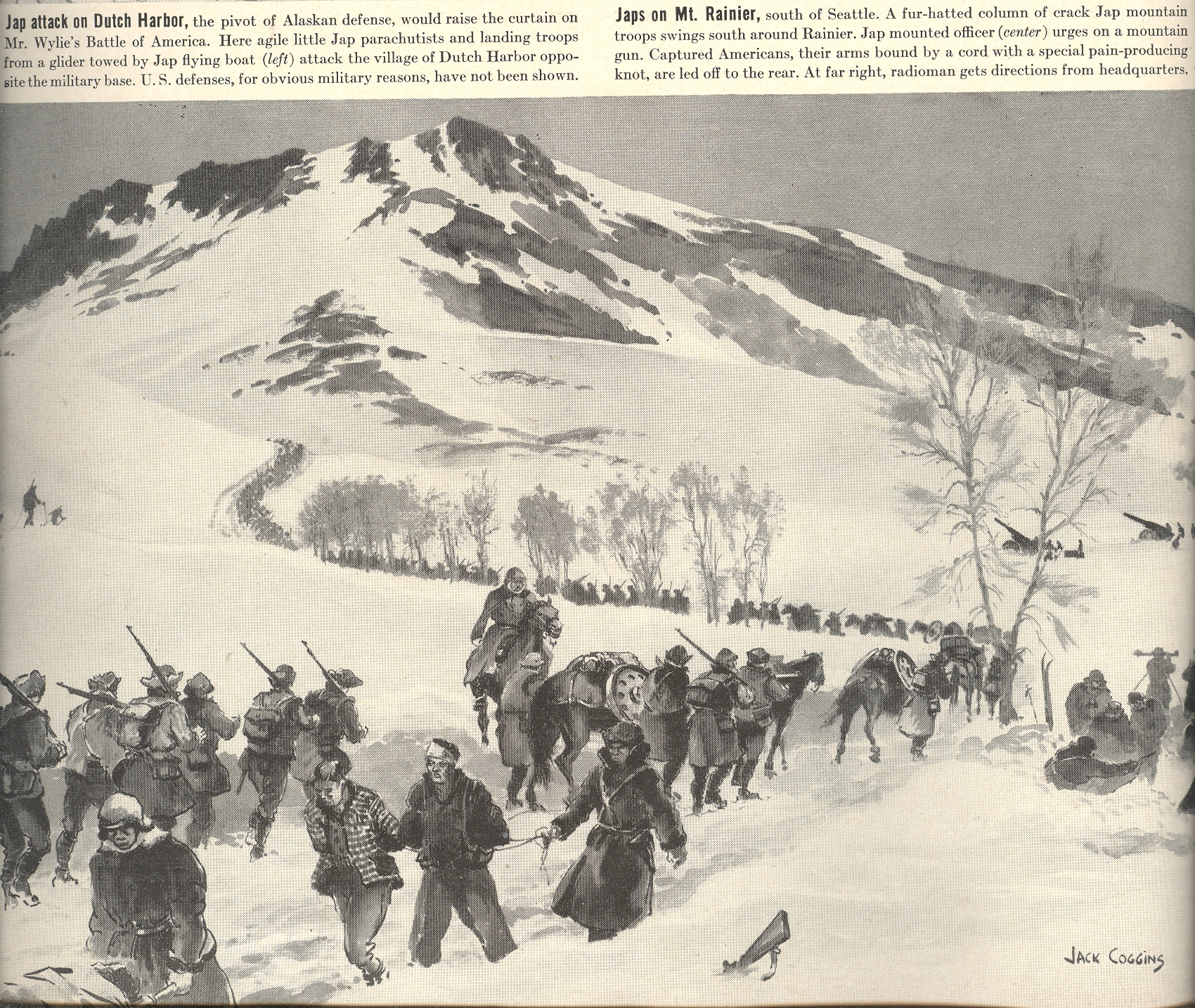
This image shows Japanese mountain troops rounding up the
locals after their successful attack on
not in Seattle, as (a) there is no port here, and (b) there wasn’t anything
going on so far as war production goers, which was definitely happening north
of here. That’s a very long column of
Japanese soldiers headed towards
not sure where they were going. Also
there are two large cannons (88s or thereabouts) taking aim at the mountain. Again, I think here that the mountain would
win in the long run.
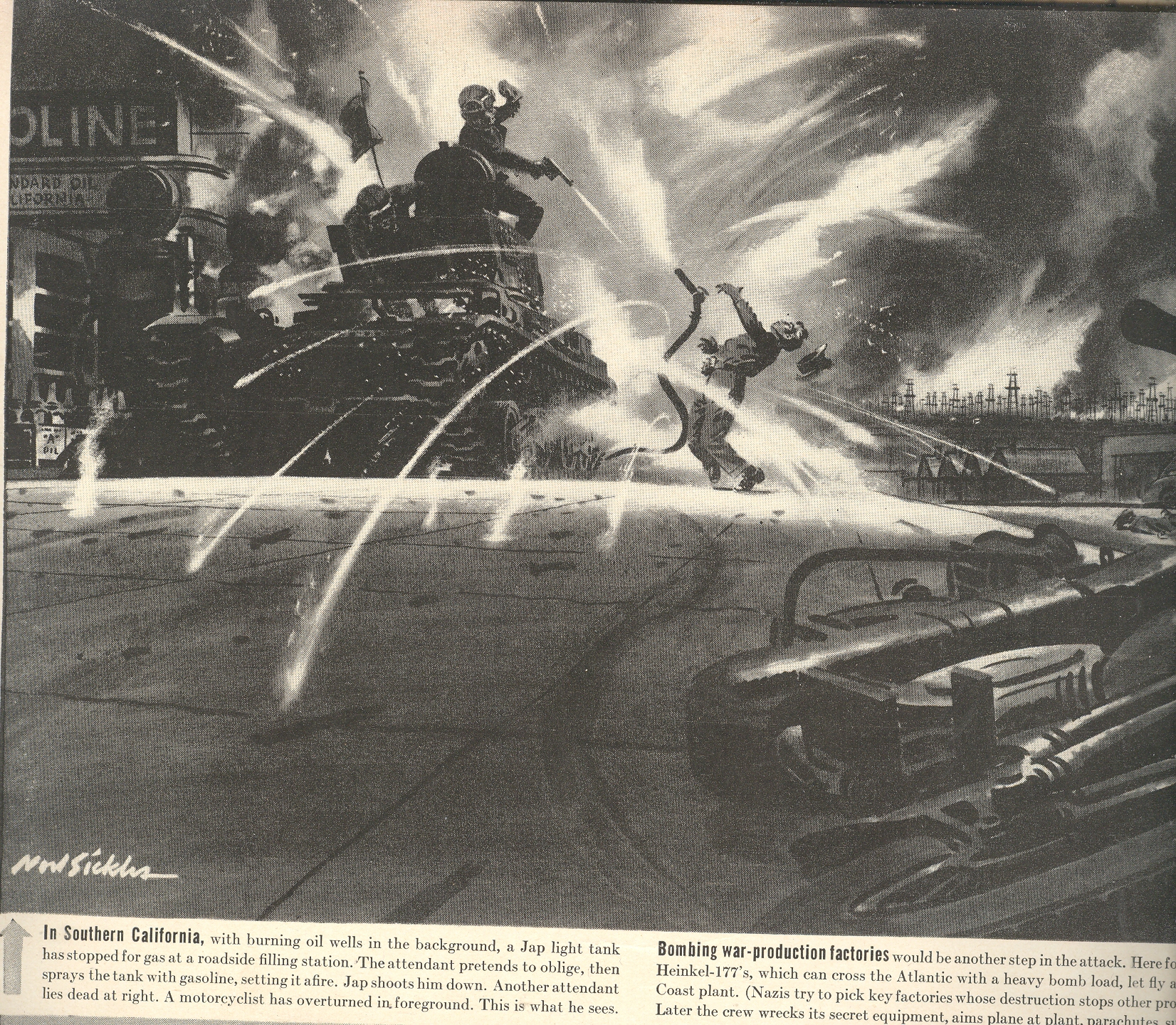
 The petroleum culture is under attack here in southern
station attendant who has just sprayed the tank with gas and set it on
fire. I’m not sure why the oil
facilities are on fire, unless we did it.
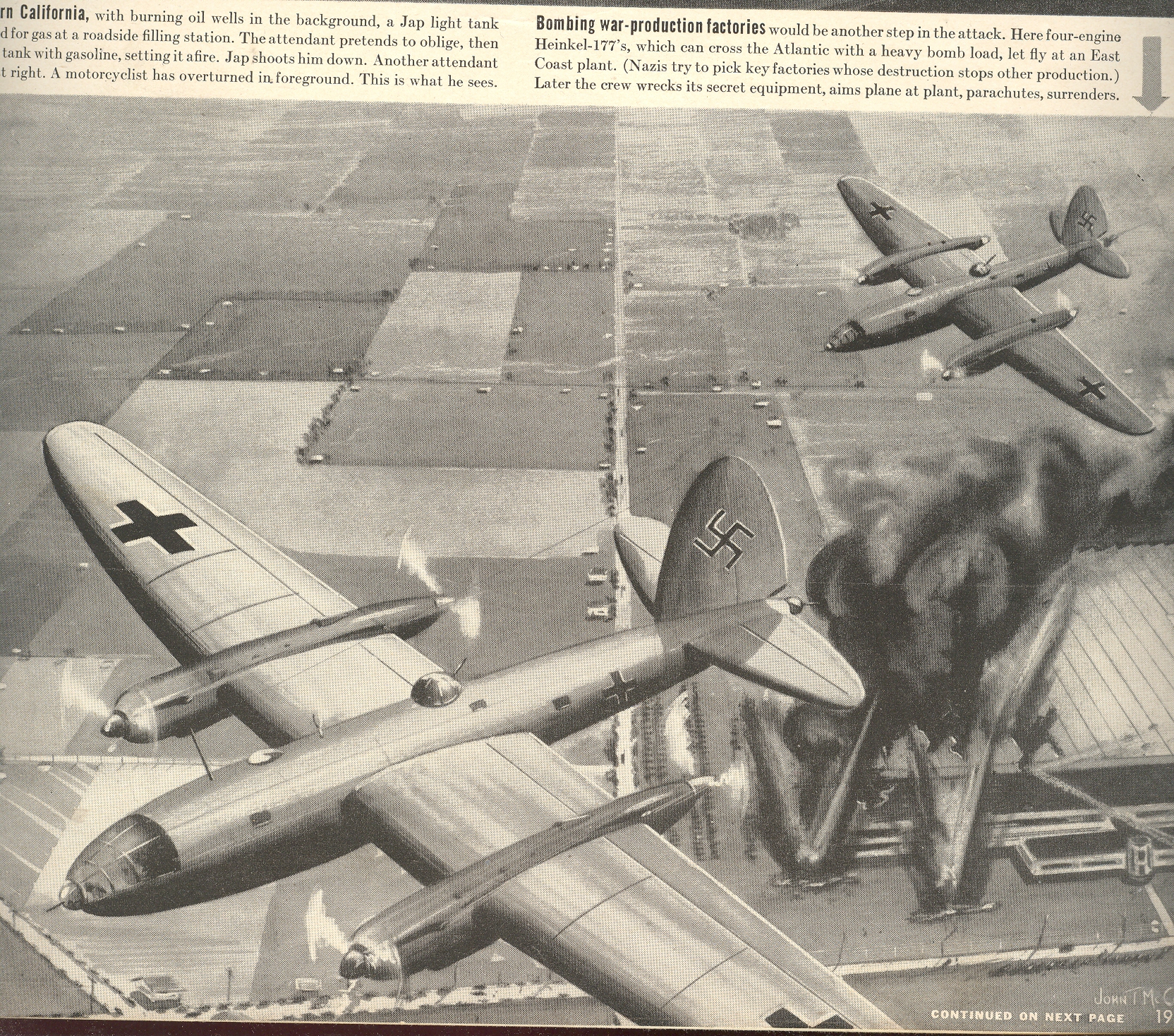
These Heinkel-177’s are bombing an unnamed East Coast war production
plant, crossing the ocean straight from
bomb—the crew was supposed to drop their load, destroy their secret equipment, then
parachute and surrender after auguring in their aircraft. This push-pull
engine configuration on this LIFE magazine
version of a bad aircraft—and the only heavy bomber the Luftwaffe ever produced
in numbers—never was able to drag this aircraft across the
Its maximum bombing range was about 925 miles,
which means even if the crew expected not to return it would still only get about
two-thirds of the way across the ocean.
I’d say that this article might well have established a new
fear-line in the minds of many of LIFE’s
millions of readers, introducing them to the possibility of mainline attack
just a few short months following