JF Ptak Science Books LLC Post 827 Blog Bookstore
Images of
sacred interventions stopping the spread of disease is puzzling, as in this
powerful and disturbing vision of Our Lady of Guadalupe appearing above the
city of
in 17371.
devastating cholera epidemic where 40,000 had perished in that city alone.
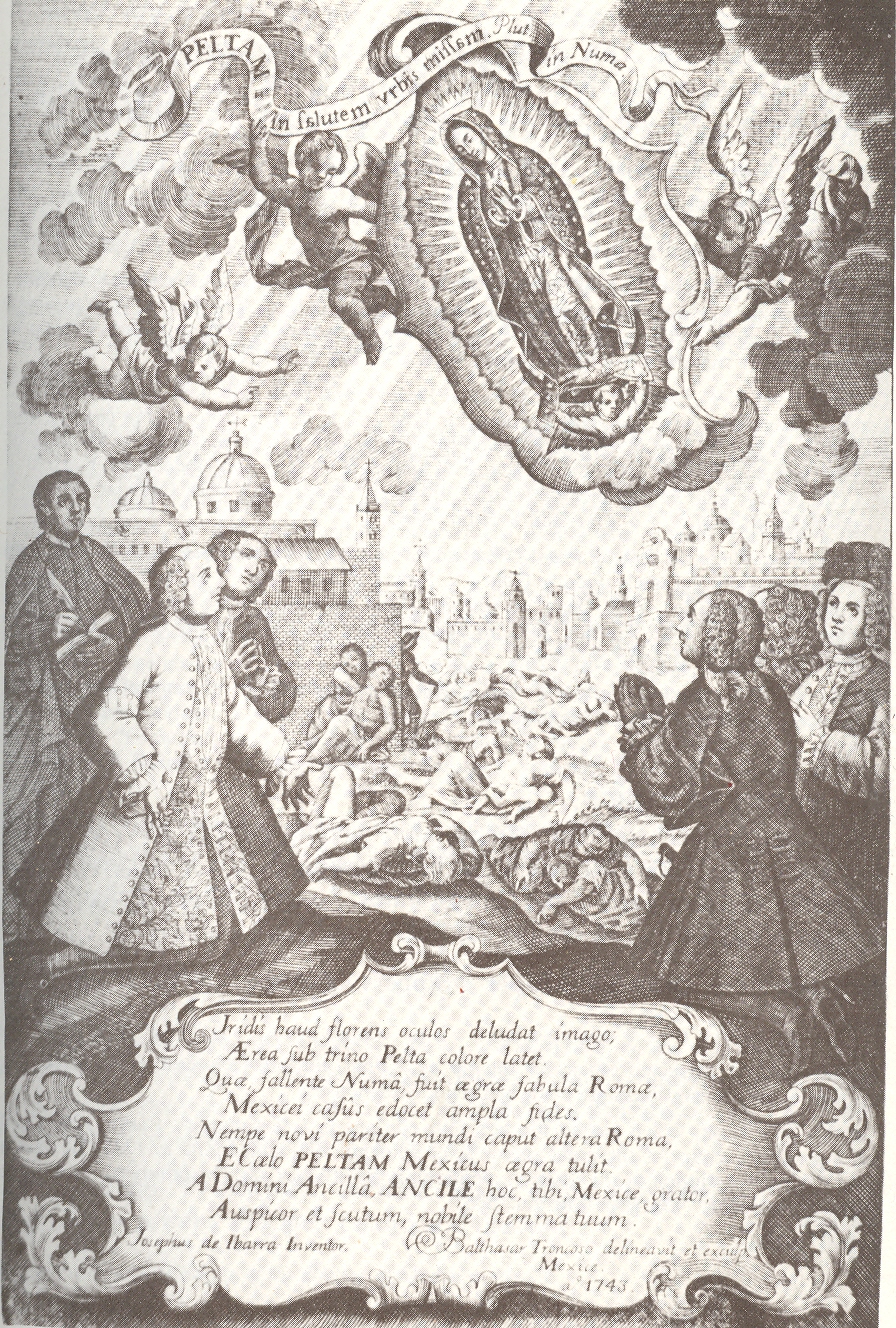 I wonder why Heavenly intercession didn’t
come earlier? Of course the people of
the
heaven-sent strong-armed virtuosity many times over the centuries. In
City
population of the non-Spanish (Native) population fell 50% in just a few
years. Over the period of 1545-1548 70%
of the population of the city nearly died of hemorrhagic fever. This epidemic was followed by many other
(major) epidemics (1576-78, 1629-1631, 1736-1741, 1761, and so on) involving
whooping cough, measles, typhus, smallpox , influenza, cholera, and of course
famine. Cholera—like this epidemic in
to Rodolfo Acuna-Soto’s study2 seems to have been the least of the epidemic
worries in the
of
500 years. According to Robert McCaa’s
study of population studies3, 11 authoritative studies on the decline in
population in Mexico from 1519-1598 show an average and disasterous decrease of
about 50%4.
So with the
dozens of epidemics, the invasion of Europeans, and natural and unnatural
famines, I would have expected to see more demonstrations of charity from above
rather than this one skimpy display in the second year of a lower-echelon
epidemic.
1. From Caberra y Quintero Escudo de Armas de Mexico…, printed in Mexico in 1746. There is much else of interest in this book–which is probably the best and most famous of the local histories of the city–besides the image that I fixated on.
2.
[Rodolfo
Âcuna-Soto.] Forum on Microbial Threats//Global Climate Change and Extreme Weather
Events December 5, 2007
“The use of Historical data sets in
Understanding Ecosystems Responses
to Climate Change and the Importance
of Long-term Monitoring
Programs…”
3. McCaa’s study HERE
4. Table of colonial disaster