JF Ptak Science Books LLC Post 786 Blog Bookstore
 KDKA in
was one of the first radio stations to broadcast in the
years later found another 500 licensed stations. By the time this pamphlet was
published nearly 95% of all homes in
the near high end of the Golden Era of the medium. (Perhaps there is no
greater, faster change in any sort of revolutionary change than there was from
radio to television. TV was basically an
insignificant spot on the radio horizon in 1945, and then in ten short years it
became radio’s great black sun, obliterating it as a competitor for
entertainment.) It is no wonder that radio was seen as a
potential colossus for an information delivery system, with schools making use
of whatever it was that they could squeeze from it.
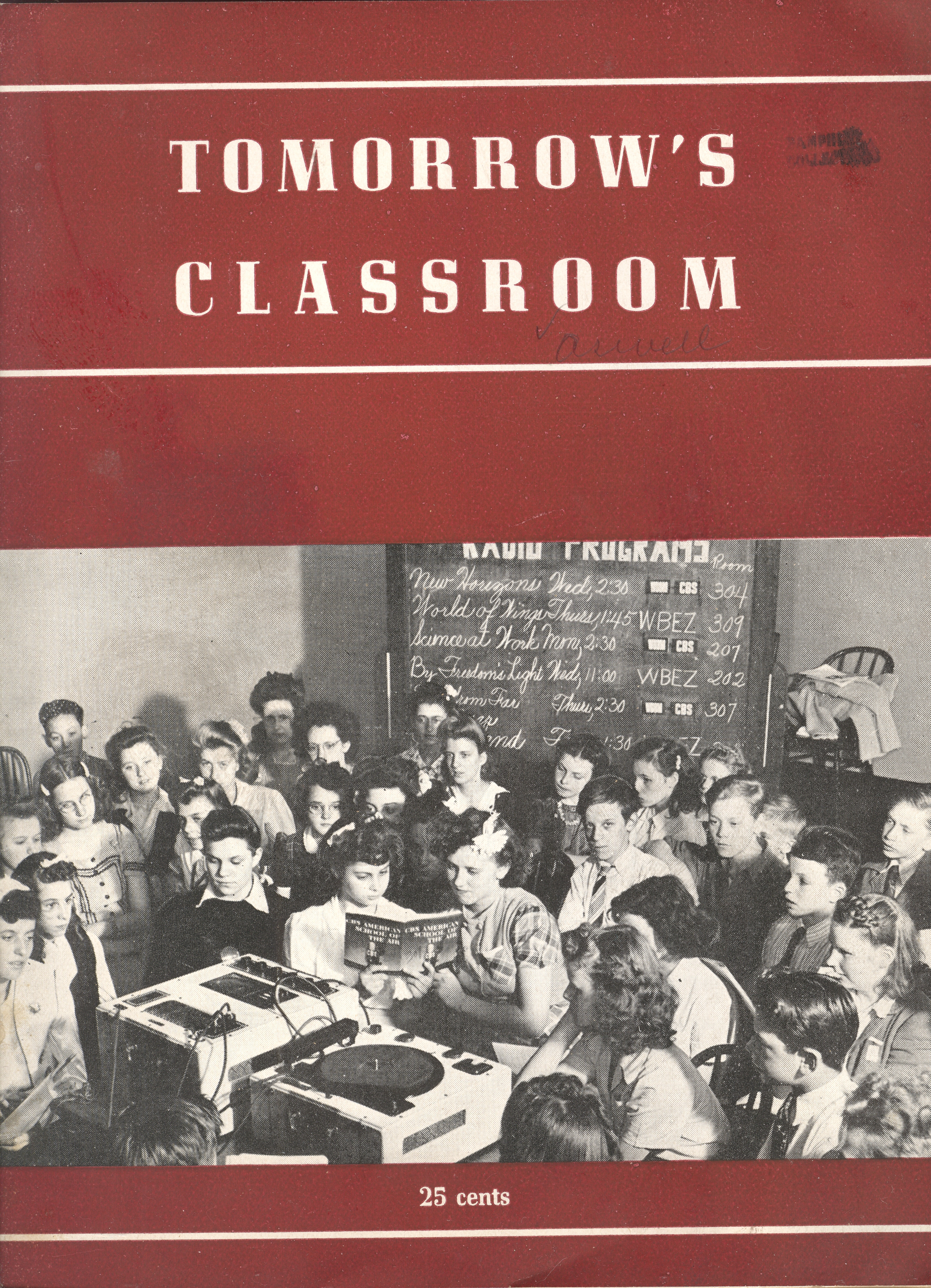
This history of the future picture on the front
cover of this (1945) publication reminds me of the anxious moments in the opening
moments of 8th grade when one of the teachers brought a television
to school (being in NYC) for us to watch the Mets in the 1969 World Series,
nearly 40 years ago next week. (There were series games played in sunlight
then.) Radio had great potential and
promise, and the kids crowded around this receiver/turntable tech center would’ve
been like kids 10 years ago crowding around a monitor to see their first
glimpses of the internet.
Radio didn’t make it.
There’s some interesting detail in this
photo. The programming on the blackboard
in the rear directed the children to classrooms for the different radio
lessons: “New Horizons”, “World of Wings”,
“Science at Work”. “By Freedom’s Light”, and a few others that I can’t make
out. All were CBS productions, which
evidently had nothing to do with the publisher of this pamphlet, Newsweek. The shows were being broadcast by WBEZ,
Chicago, which was actually a Chicago Public Schools station and intended for just
this purpose—real public broadcasting.
The girls in the front are looking at a user’s
guide for “
of the Air”, which seems to have had some legs as an idea, or at least its
legacy looks really interesting. In the 1939/40 season of this “program” the
great music and sound geologist and proto-multiculturalist Alan Lomax1 (1915-2002)
Burl Ives, Aunt Molly Jackson, and field recordings of square dancing,
French-Canadian, and lumberjack songs”.
Which means I guess that school kids were being exposed to impressively different
sorts of American music that they probably would not have hears anywhere else
as incidental sound.
But as I said, radio was swept away by the great leavener of
television. It looks like Alan Lomax
never did do anything for the TV, and its educational aspect (so far as
school-use goes) never really did get off the ground. Overall, it seems to me that TV never did get as smart as radio.
Notes
1. It is interesting to note that because of Lomax’s one-world Lefty approach to the
appreciation of music–world music today, multiculturalism in another form—he came
to the squinty-eyed attention of the challenged J.Edgar Hoover, the FBI
managing to produce an 800-page file on the ethnomusicologist, all without a
single anti-American blot. Lomax’s total
body of work is astonishing, and we all owe the man a strong salute.