JF Ptak Science Books LLC Post 710
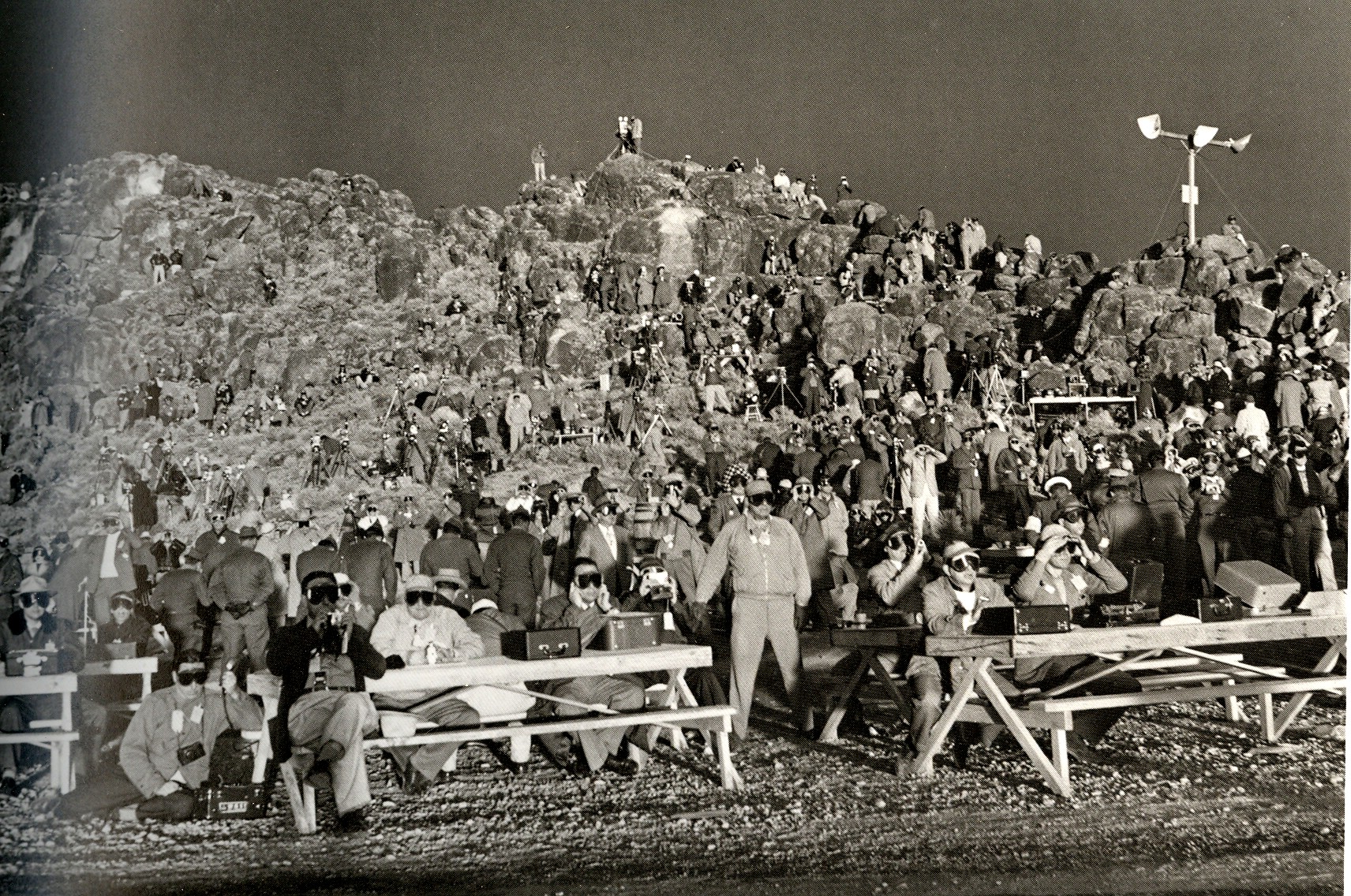
This indelible image has two big residences
for this blog, as follows:
Perspective 1: Waiting to Say Goodbye Department, part
2.
Yucca Flat
is a big, wide place in the
about 65 wide-landscape miles northwest of Las Vegas, Nevada
As part of the Rhode-Island-sized Nevada Test Site (NTS) it is also the
most irradiated and radiation-polluted place in the country. It was the site of some 749 nuclear tests–about
80% of all the nuclear tests carried out at NTS. And it shows, and will show,
pretty much forever.
This remarkable photo of a test shot
was made at Yucca in the mid-1950’s—in the dark. Actually it was dark, pre-dawn before the
viewing station of observers was completely, Georgia-O’Keefe-like illuminated
by the brilliant explosion. The people
here were gathered at “News Knob”, about seven miles away from the detonation
point, and all wearing dark, welder-strength goggles to prevent the blindness
that would’ve occurred if they looked at the explosion without protection—best
yet was to wear the goggles and have your back turned to the flash (as some in
this picture did).
This is perhaps the greatest single photo demonstrating the power of nuclear
explosions. You can see the devastating effects, and the giant rising mushroom
clouds and all, but they’re like photos of the Grand
Canyon
graspable, in a weird, visceral way, placing the power of the event in an
imaginable context.
Perspective 2: Where to be and Where to Look Department; Turning Around.
This is another monumental photographic image in the turning-completely-away-from-what-everyone-else-is-looking-at
department, following such massive images as Ed Clark’s iconic FDR
photo. Just as Mr. Clark pointed (see my
post from last year), the picture to be made was not the newsreel shot of the
President’s casket being borne to the train, but it was in the face of the
accordionist, who Mr. Clark found by turning away from the scene being recorded
by a hundred other photographers. It was
his picture that told the emotional story of that evident. Just as is the case with this anonymous,
undated photo from the test shot at Yucca, bringing the unimaginable back to some degree of human understanding.
Notes:
Photo from Frances Fralin, The Indelible Image, Photographs of War, 1846 to
the Present, based on a show at the Corcoran Art Museum, Washington DC, 1985,
and published by Harry Abrams.