JF Ptak Science Books LLC Post 625 Blog Bookstore
My wife, Patti Digh, and I have long talked about the
history of normalcy—a history of what looks to be “normal”, or standard, or
acceptable at one time that became not so over the course of time. Buying and selling human beings, women and
their children being property of her spouse, Chinese immigrants not have (any)
legal rights, are three good candidates (among thousands) for this history. It is an interesting proposition to think
about—what things around you, or better yet, what thing you think or say or do,
that look good and acceptable today might look 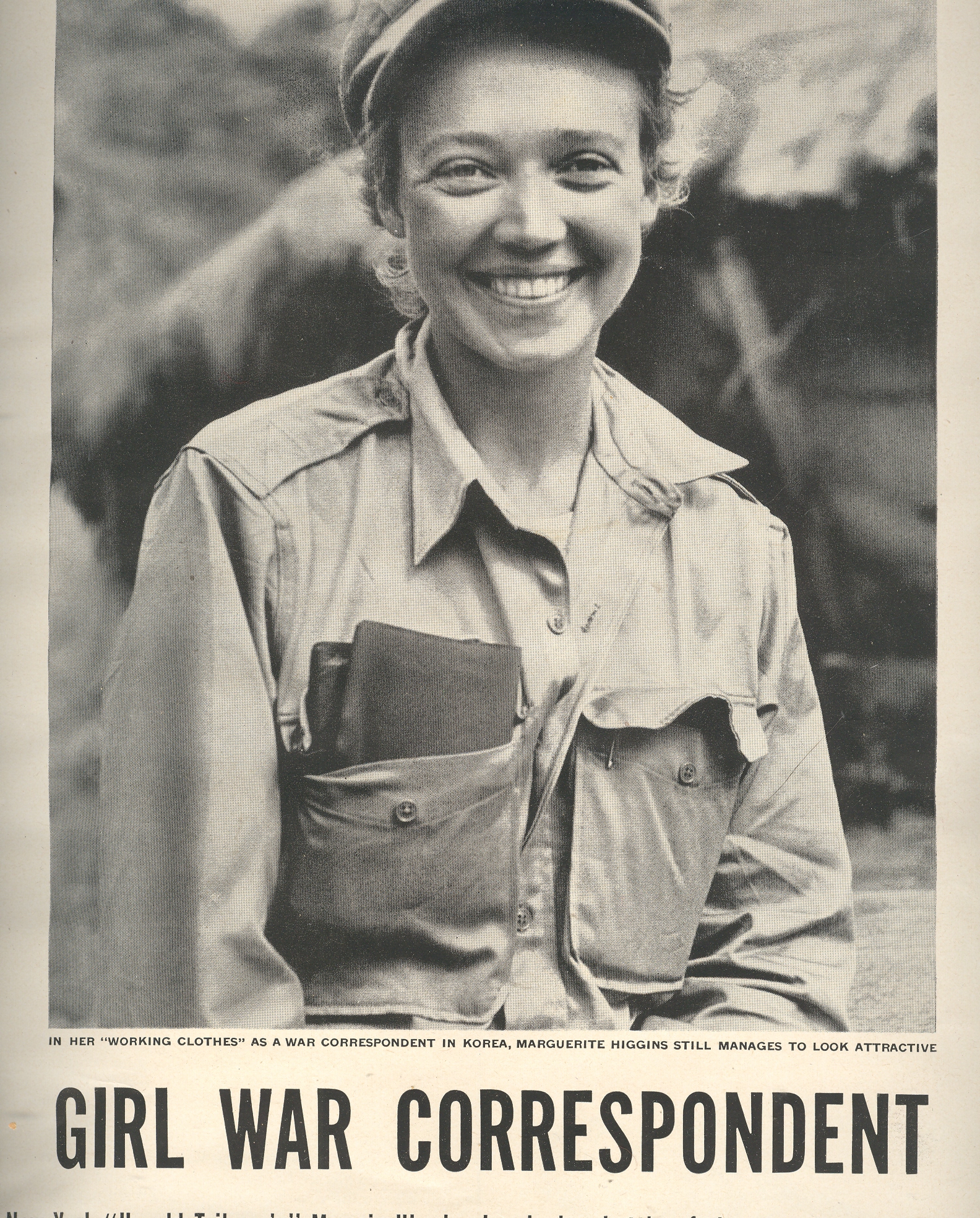 embarrassing and unacceptable thirty
years hence. In 1935 one issue might’ve
been accepting the codified behavior of treating women as less than equal of
men, deserving less in the workplace (if they were in the workplace), less
rights in the courts, less deserving of equality in general; by 1965, this
viewpoint may have well been in the minority; by 1995 it begins to look
fossilized; by 2025 it might well be unbelievable. What are the issues of 2009 that could be the
equivalent of the 1935 issue?
by Carl Mydans (the great and esteemed war and documentary photographer), “Girl
War Correspondent”. It is a sympathetic
look at a sharp minority in the American newspaper business: the female war correspondent. Or, in this case, the “girl” correspondent.
One would hardly refer to Edward Murrow as “the male correspondent Edward R.
Murrow”, or “Edward R. Murrow, Boy Correspondent”. The “girl” in this case was Miss Marguerite
Higgins (1920-1966), aged 30. She was a
correspondent for the New York
boots on the ground, covering the war in Korea. Mydans gives a creditable review of Higgins very active and
dangerous participation in the war effort.
It was not the intention of the article though to look at where Higgins
had been before Korea;
particularly, what she had been doing in 1944 and 1945. AS a matter of fact Higgins was a
correspondent for the Herald Tribune in Paris and London in 1944/5, and later sent to Germany
March 1945. She received a combat ribbon
for helping in securing the surrender of SS guards when she witnessed the
liberation of Dachau.
trials and the Soviet blockade of Berlin.
In spite of all that she was banned from covering the war in Korea
Douglas MacArthur (who telegraphed Higgins’superiors at the Herald Tribune “BAN ON WOMEN
CORRESPONDENTS IN KOREA HAS BEEN LIFTED. MARGUERITE HIGGINS IS HELD IN HIGHEST
PROFESSIONAL ESTEEM BY EVERYONE”) she and all other female correspondents would’ve
been kept out of the war. She was the first woman to win the Pulitzer Prize for
international reporting (in 1951, for Korea),
and would go on to cover international affairs, winding up in Vietnam
Newsday in 1963. As a result of her
years of experience she wrote, in 1965 (!), Vietnam U.S. Our Nightmare: The story of involvement in the Vietnamese tragedy, with
thoughts on a future policy New York (
In spite of it all,
given her experience in WWII and her developing coverage in Korea
in October 1951, still a girl.