JF Ptak Science Books LLC Post 536
The Nine Foot Woman and the Nine Inch Man
perspective world infrequently happened on purpose (except to accentuate
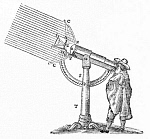
another aspect of perspective), and was usually the result of artist or artisan failure or naivety. A famous example is in Rene Descartes La Dioptrique (1673), in which this image of his compound
microscope was somehow confused with a telescope—probably the result of the
illustrator’s misunderstanding of the concept and a mistake in the proofing
period. This does sort of look like a
telescope, if viewed with your squinty-eye specs, at least in the hands of the illustrator—if the
microscope-and-man was pictured in this scale was really this large and
collecting THAT much light it would’ve fried the retina of the viewer and
whatever specimen was being looked at. If
the scope was that big then the man using it would’ve been about 9 inches tall. In any event, it was an accident (and one of
fairly high order)—the nine-foot-tall woman in Edouard Manet’s Le Dejeuner sur
l’Erbe (1863) was an entirely conscious decision, and one that helped initiate
the birth of Impressionism. Of course
there was a lot of other stuff going on in Manet’s mind beyond the giant woman—he
abandoned entirely the very accomplished and polite work that he had been doing
(trained by Thomas Coutre) celebrating his independence on his 27th
birthday by burning all of his old work.
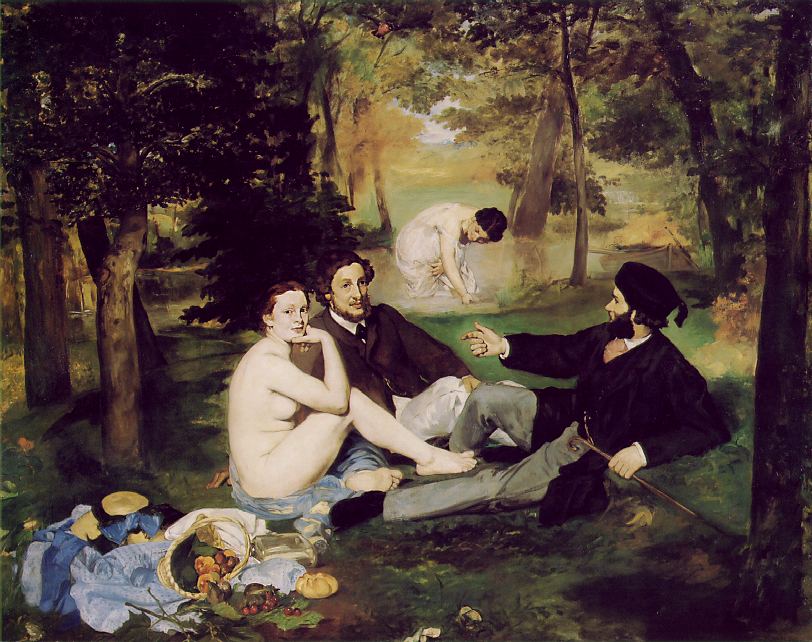
Le Dejeuner was a scandal when it was exhibited in 1863—Manet
painted what he wanted to, unbound by perspective, by color, by composition,
and on and on. The folks in the painting were not connected to anything,
really, and were unconnected to each other, no one paying any of the others any
mind, even when the women were naked.
Nothing seems to be going on—the people are just simply there. This is in itself was a disconnect from
previous practices, the vision in painting was about something, and was directed. Light seems to be coming from a number of
different places, and the shadows from the trees reflect this, simultaneously stretched
towards and away from the light sources.
The bathing woman in the background, or what used to be background, had
she been drawn using proper perspective, would’ve been about nine feet
tall. But what happens here is that
there is no foreground or background in this painting, just middle. It was this collection of abandonments, starting here in the Le Dejeuner in 1863, that ushered in the modern in art.