A Daily History of Holes, Dots, Lines, Science, History, Math, Physics, Art, the Unintentional Absurd, Architecture, Maps, Data Visualization, Blank and Missing Things, and so on. |1.6 million words, 7500 images, 4.9 million hits| Press & appearances in The Times, Le Figaro, Mensa, The Economist, The Guardian, Discovery News, Slate, Le Monde, Sci American Blogs, Le Pont, and many other places… 5000+ total posts since 2008.

  • World War I: Prisoners at the End of December, 1914

    JF Ptak Science Books    Quick Post

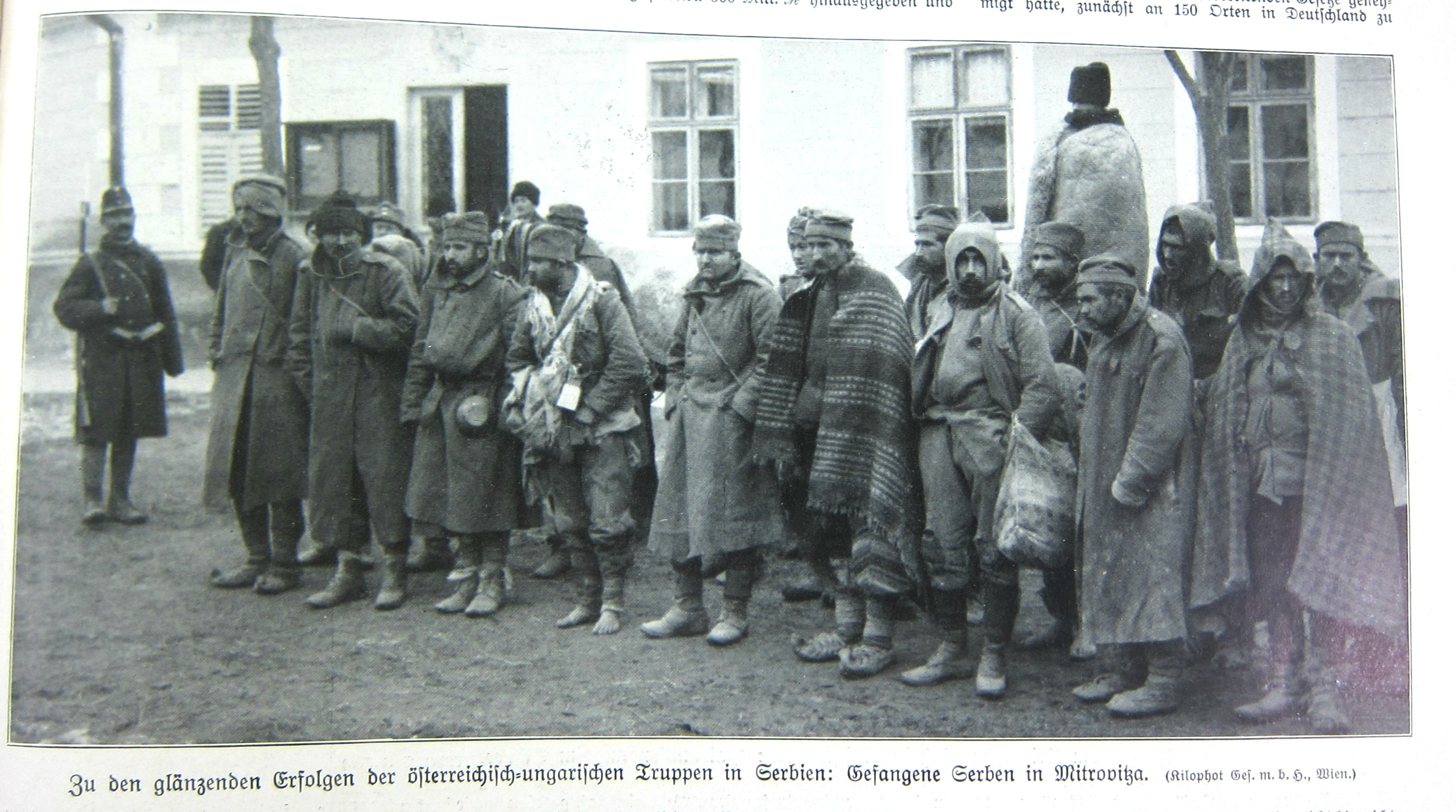
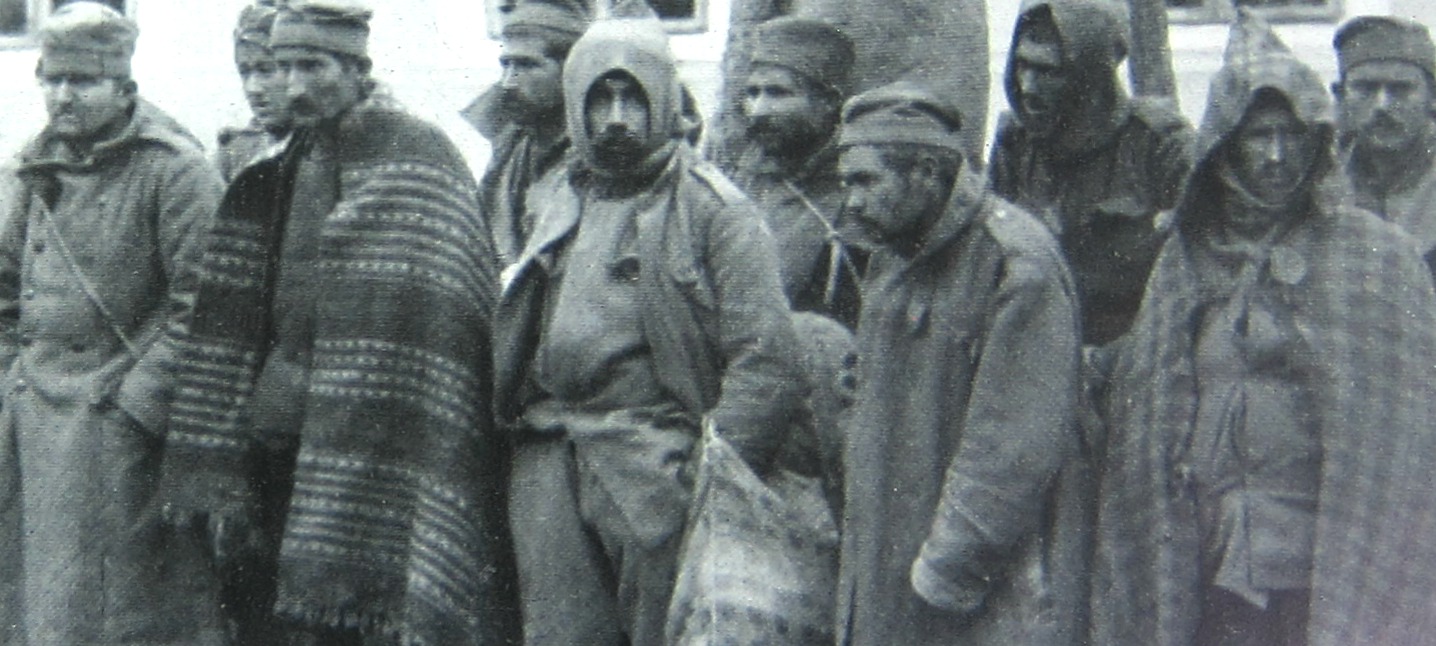
    I don’t know what the fates were of Serbian taken prisoner in WWI.  I do know that Serbian military and civilian losses were extraordinarily high as percentages. It has been shown that more than a quarter of the Serbian population (civilian and military) were lost during the war, with about the same percentage of soldiers being lost (relative to France at 17%, Germany at 15%, and Russia at 11%).  So for these ‘glassy-eyed” Serb prisoners appearing in this photo in Illustrirte Zeitung for December 4, 1914 the war was over–what happened to them over the next four years of captivity, I don’t know.  

    WWI Project 1914 Serbian prisoners


    WWI Project 1914 Serbian prisoners detail

    ·Posted by :

    ·in:

  • On Kindness to Prostitutes (1878)

    JF Ptak Science Books   Quick Post

    Prostitution512


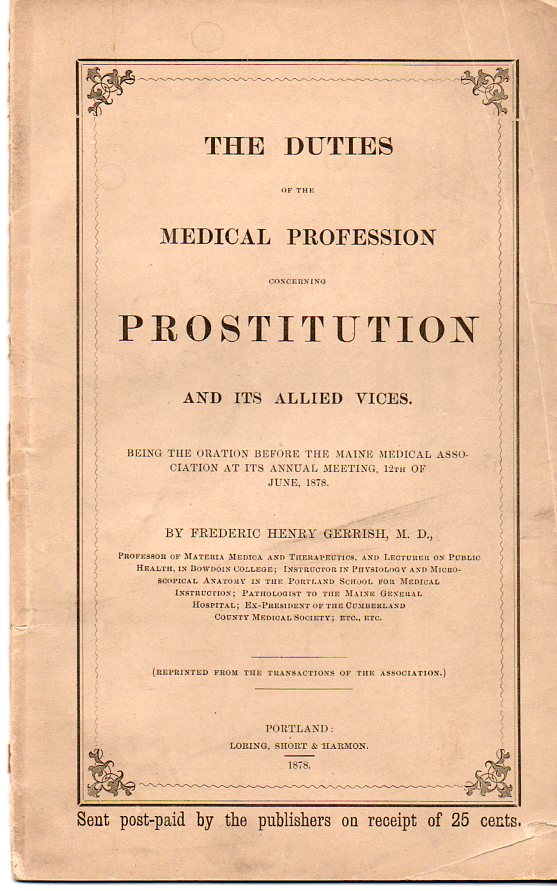
    In this pamphlet1 Dr. Gerrish writes with kindness and compassion, and conviction, on the perils of the moral/ethical/medical life of a prostitute. He believed that prostitutes should be given as great a care as any and even more so to prevent the spread of communicable disease; and that understanding and empathy be extended to them from the medical profession as a way of building their self-esteem and perhaps on this strength be able to leave the profession. He was pissed that brothel owners, Johns, and prostitutes were arraigned differently and (usually) separately, and that they should all be arraigned together, as it wasn’t just the fault of the prostitute that the law was broken. He made the case that prostitution was a fixable societal problem, and it must be addressed, in spite of what he saw was its massiveness.  He claimed that slavery wasn’t abolished –it simply went by the name of “prostitution” (“… that slavery has disappeared from European civilization. This is an error. It exists always ; but it weighs only on woman, and is called prostitution”).

    Read it in full at Hathi Trust: https://babel.hathitrust.org/cgi/pt?id=mdp.39015011655837;view=thumb;seq=6

    Notes:

    1. Frederic Henry Gerrish, The duties of the medical profession concerning prostitution and its allied vices : being the oration before the Maine Medical Association of its annual meeting, 12th of June 1878. Portland (Maine), Loring, Short & Harmon, 1878.  First edition (a second edition appeared in 1879 with the same pagination, and a third of 39pp appeared in 1886). 23×15 cm  WorldCat/OCLC–surprisingly, only three print copies of the first edition are found. 


    ·Posted by :

    ·in:

  • The History of Obviousness, Part 455(b): Guard Post in a Tree

    JF Ptak Science Books  Quick Post 

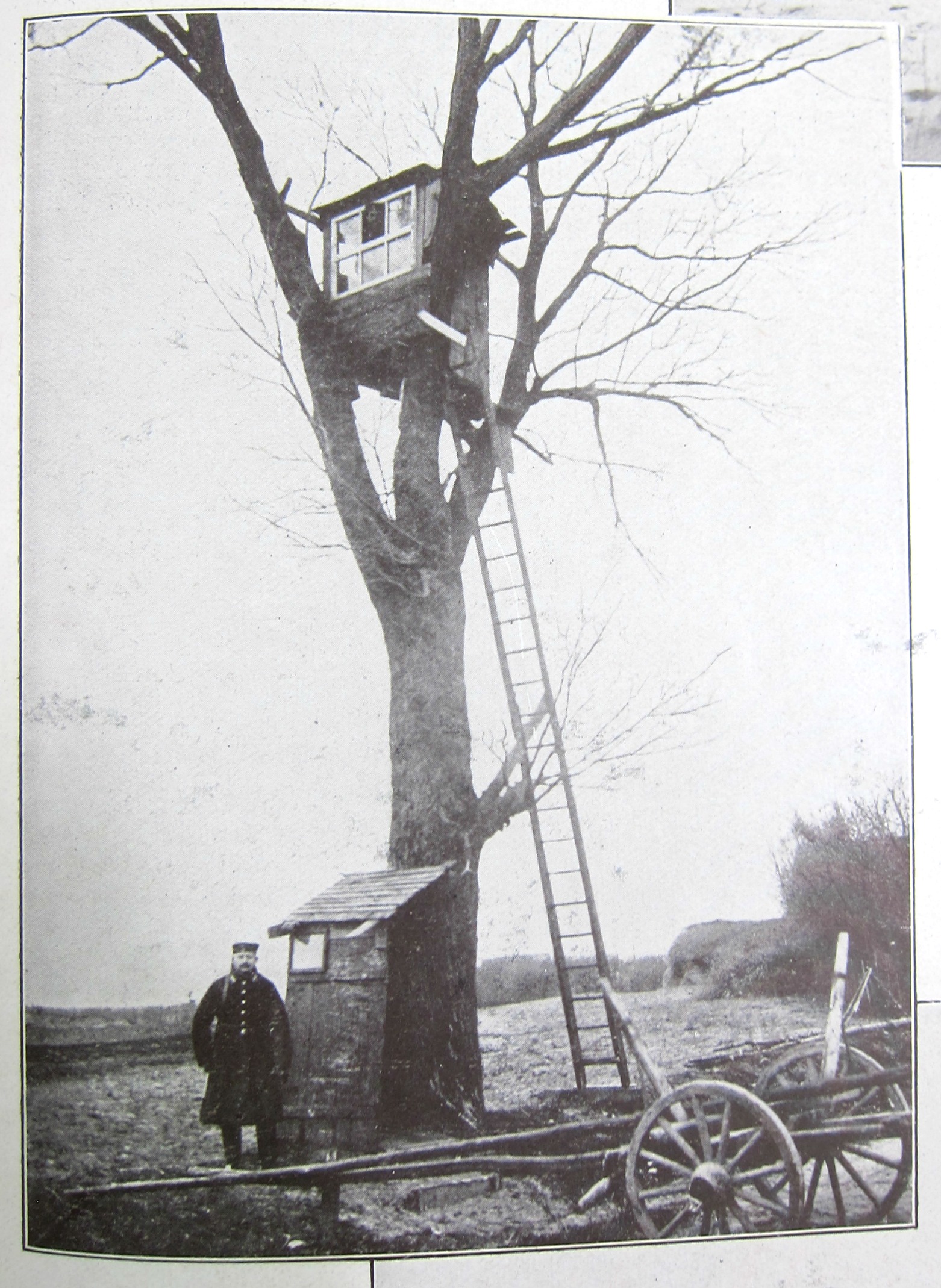
    The part about The History of Obviousness that is so wonderful is that sometimes the obviousnesses aren’t evident, or apparent, until they are established–and then of course there is no ghostly memory of their formative semi-hidden natures. Sometimes things are best hidden in plain sight, and sometimes one doesn’t realize that is is raining men-in-bowler-hats until Rene Magritte points it out.  This may be one of those cases where something is so obvious that its extreme nature just blends into the surroundings, even when there aren’t any.

    WWI Project tree house 1914

    [Source: Illustrirte Zeitung, December 31, 1914.]

    So, in the picture above, we have not only a guard/observation station built in a lonely tree, but there’s also a small lean-to at the bottom, with of course a soldier standing next to (but not inside)  it. 

    ·Posted by :

    ·in:

    —
  • The Salvation Army as an Emigration Agent (1920)

    JF Ptak Science Books  Quick Post   History of Goodbye series

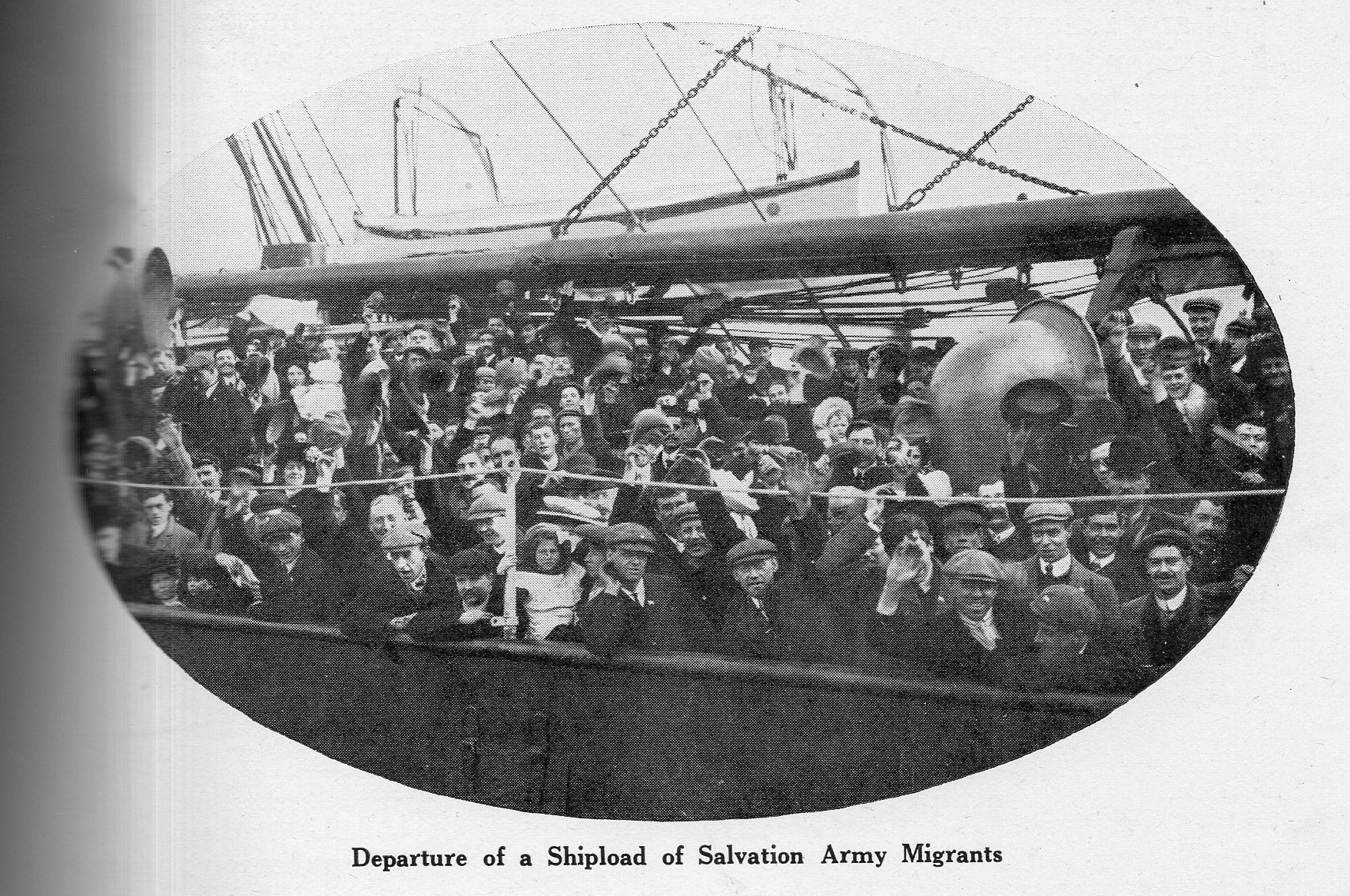
     I had no idea that the Salvation Army was responsible for sending out a quarter million immigrants into the world in just a couple of dozen years. This is a substantial travel program, and a dissemination of potential proselytizers into the far reaches of the Empire’s domain.  And as it turns out, the Salvation Army HQ in London was destroyed during the Blitz, along with the records of this great migration–very little remains of any official records regarding this long effort.

    “The Salvation Army was the United Kingdom’s largest voluntary migration society in the first half of the twentieth century, helping around 250,000 people to emigrate from the British Isles to the British Empire Dominions. Given the wide-reaching impact of this work and the considerable resources The Salvation Army dedicated to it, it is surprising how little evidence and knowledge of it there is now.”–http://www.salvationarmy.org.uk/history/blog12

    Salvation army500


    Salvation army502

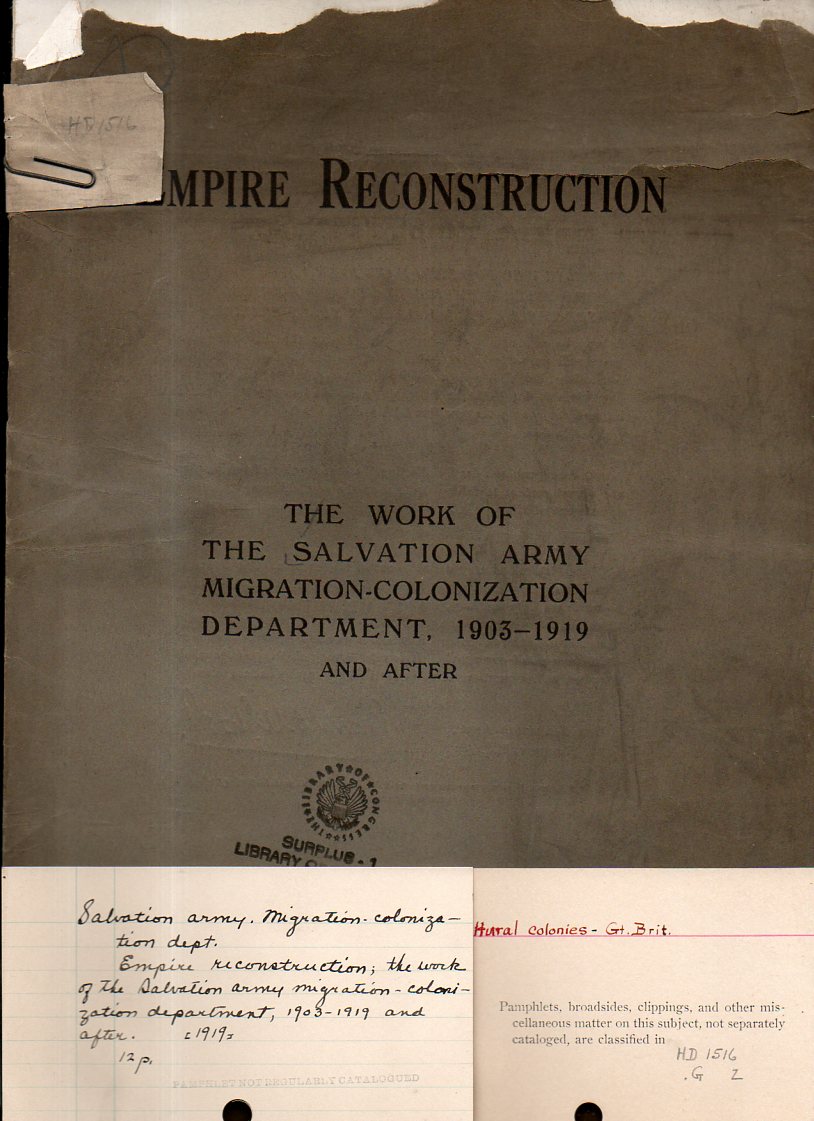
     Empire reconstruction. The work of the salvation army, migration – colonization department, 1903-1919 and after. (35x22cm, 12pp, with 12 photographs. Provenance: (Leland) Stanford (Junior) University, from prof. E(phraim).D(ouglas) Adams, then to the Library of Congress, then to me, Only one copy is located in the WorldCat/OCLC, at the Bibliotheque de documentation internationale contemporaine Nanterre).


    ·Posted by :

    ·in:

  • A City on a Mis-named Martian Moon, 1927.

    JF Ptak Science Books  Quick Post

    Ganymeade detail

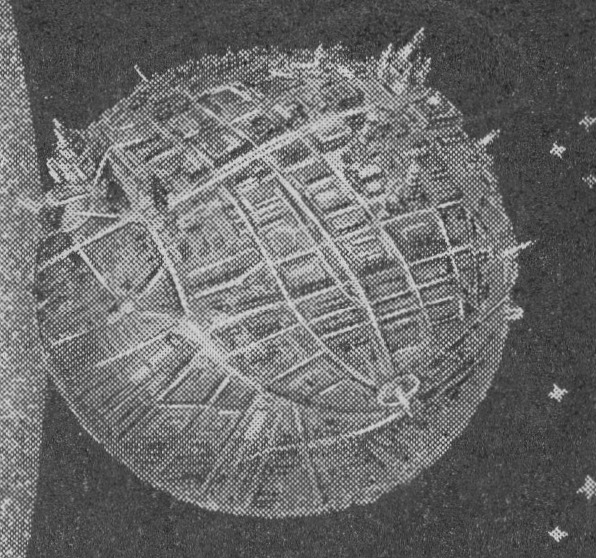
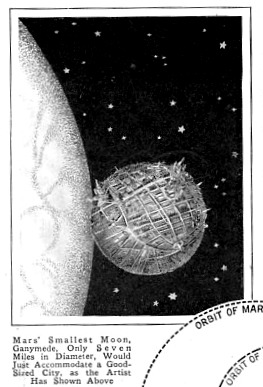
    This fine image from Popular Mechanics (January 1927) imagines the Martian moon “Ganymeade”, mentioning that it is only 7 miles around, and could hardly host a large city, which the artist imagined in this free-for-all concept piece.  I like the idea of putting the size of the moon in perspective like this–I must say that I’ve never seen one quite like this. But first, the magazine identifies the Martian moon as “Ganymede”, which is actually a Jovian moon. The moons of Mars are Phobos and Deimos (the names meaning panic/terror and terror/dread), and they are 13.8 miles and 7.8 miles, respectively. They were discovered in 1877 by Asaph Hall at the National Observatory, and there wasn’t a “Ganymede” between them–weirdly and wonderfully, though, their existence was imagined by non other than Jonathan Swift, who had his Laputan astronomers discover two moons in Gulliver’s Travels in 1726. But no  Ganymede.   As it turns out, Ganymede is the largest moon in the solar system, and is nearly the size of Mars, so maybe that is where the confusion started.  

    Anyway, this is a great image: 

    Mars city516

  • Pistol- and Rifle-Cameras, 1884

    JF Ptak 

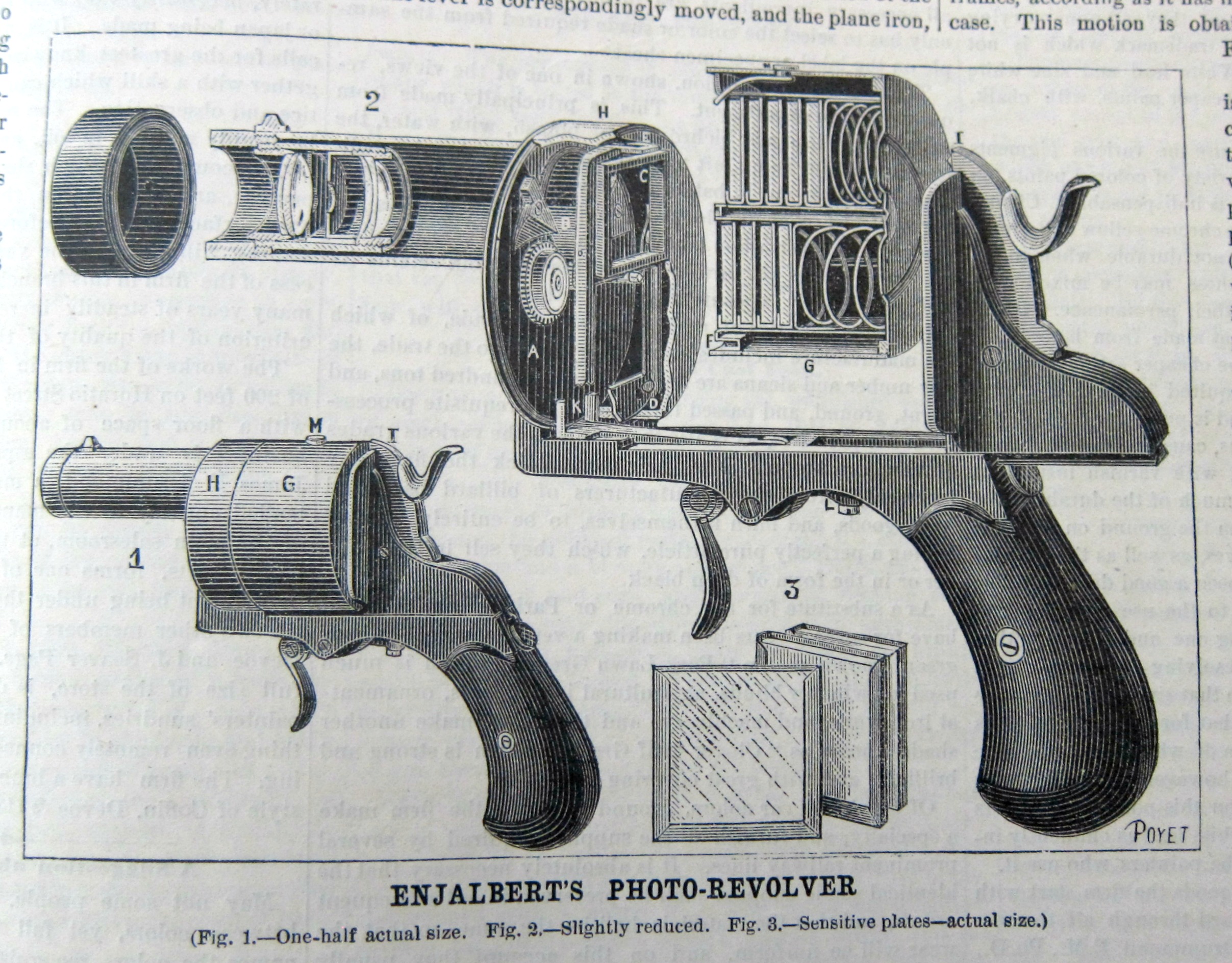
    There is an origin certainly for the reference to “shooting” fil or “shooting” a movie and such, and I think that it is fair to say that the following two illustrations of photographic innovations will explain that origin.  The first is E. Enjalbert’s “photo-revolver”, a woodcut and explanation of which appeared in Scientific American (“”A Photographic Revolver for Amateurs” ) May 17, 1884.  It really is an ingenious thing:  the lens of the camera was located in the barrel (#2) with the camera apparatus in section “H”; the photo-sensitive plates (life sized at #3), are both pushed forward and down with the action of the trigger/hammer.  It is a snappy design. On the other hand I don’t think I’d want to actually use the thing in an urban environment, as there might not be time for an explanation that “this is a ….”. 


    Inventions revolver camera

    (From the signature at bottom right of teh wood engraver this was no doubt published earlier in La Nature.)


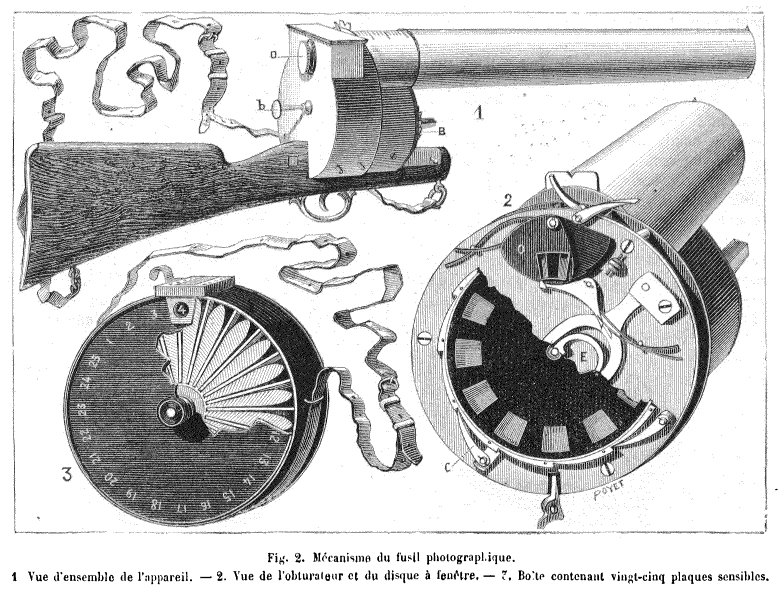
    And then there’s the great Etienne Marey’s “Fusil Photographique”, as it appeared in La Nature in 1882, which was an early and significant step in the development of cinematography, though again a highly problematic and time-invasive explanation out in public might escape the user:

    Invnetions camera rifle

    If there was any debate on the origin of the above-mentioned phrase, this might sway it.  

  • Infographic on the Invasions of Great Britain and Ireland (1914)

    JF Ptak Science Books  Quick Post

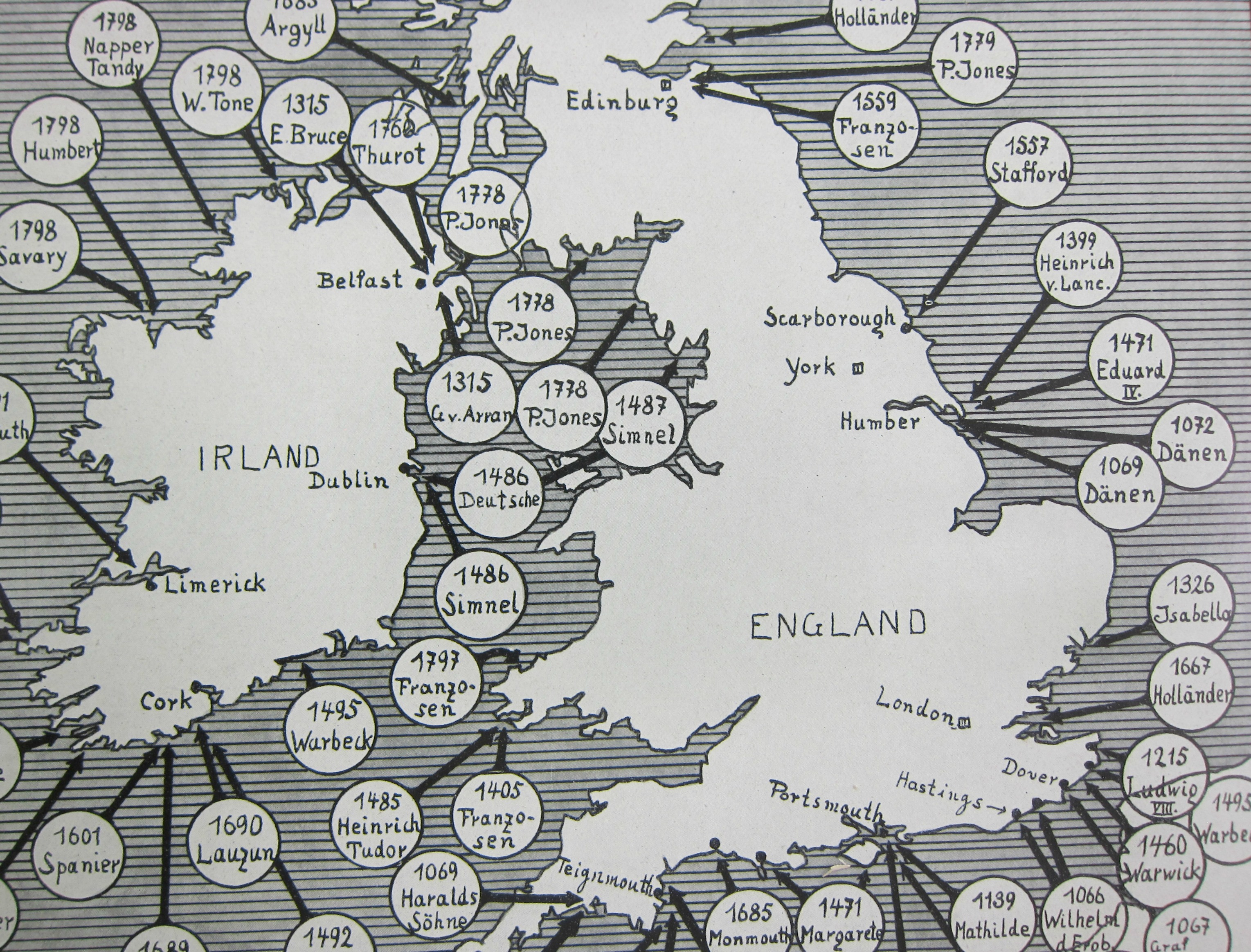
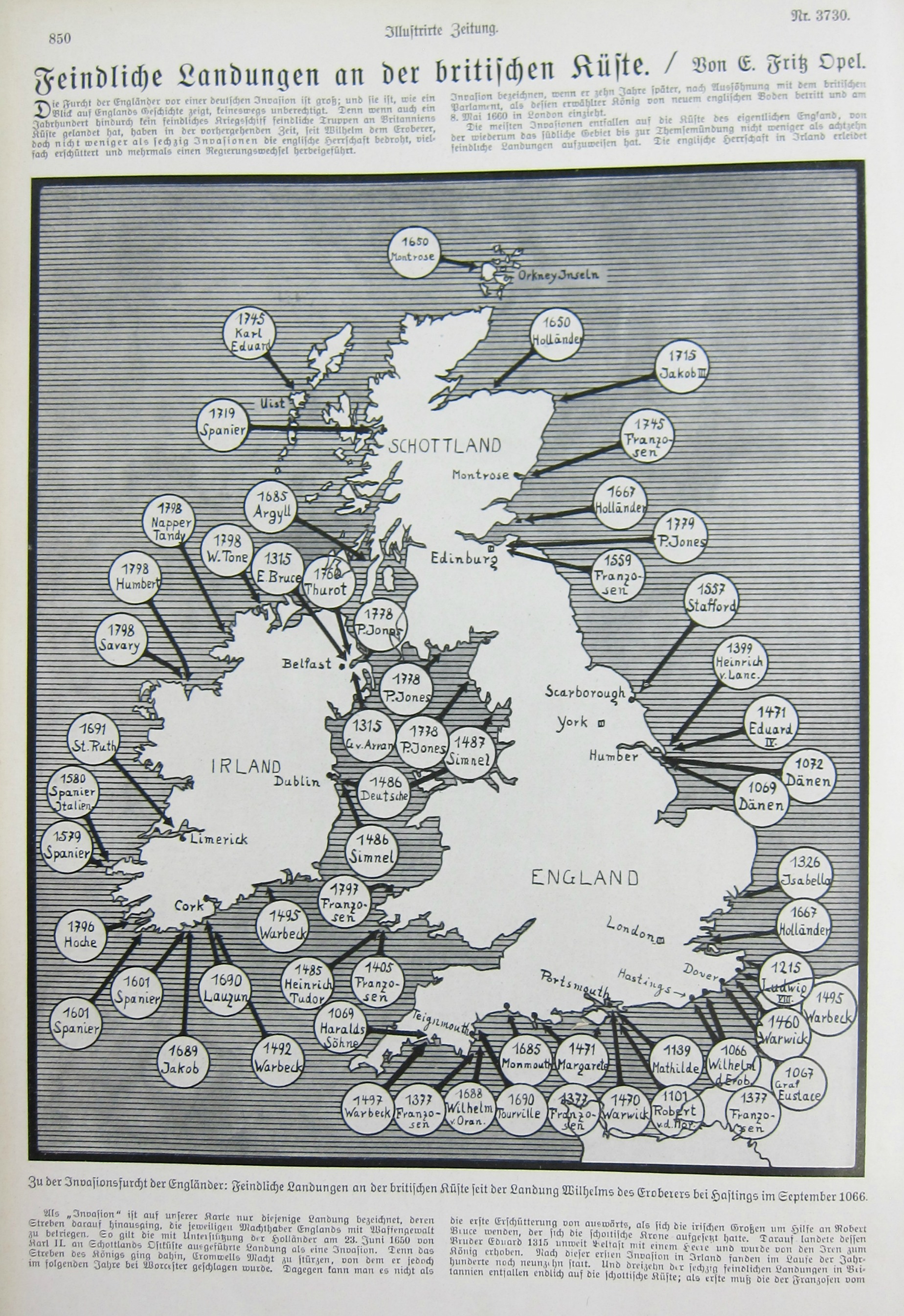
    This piece of cartographic propaganda appeared in the fifth month of the war in the Illustrirte Zeitung (Leipzig) on Christmas Eve, 1914–it was in its way a vision of hope for the popular audience that this German equivalent of Life magazine reached. Perhaps it was a comfort to read that Great Britain and Ireland had been invaded before–many times–and that it might happen yet again; perhaps it was a comfort at a time when  the realization dawning on tens of millions of people that This War would be over by Christmas, but it had really just only begun.  Not much comfort though can be had in a piece of paper. 

    A detail:

    Map Invasions England detail

     And the full image:

    Map Invasions England

  • Sandbags, Helmets, and the End of WWI

    JF Ptak Science Books  Quick Post

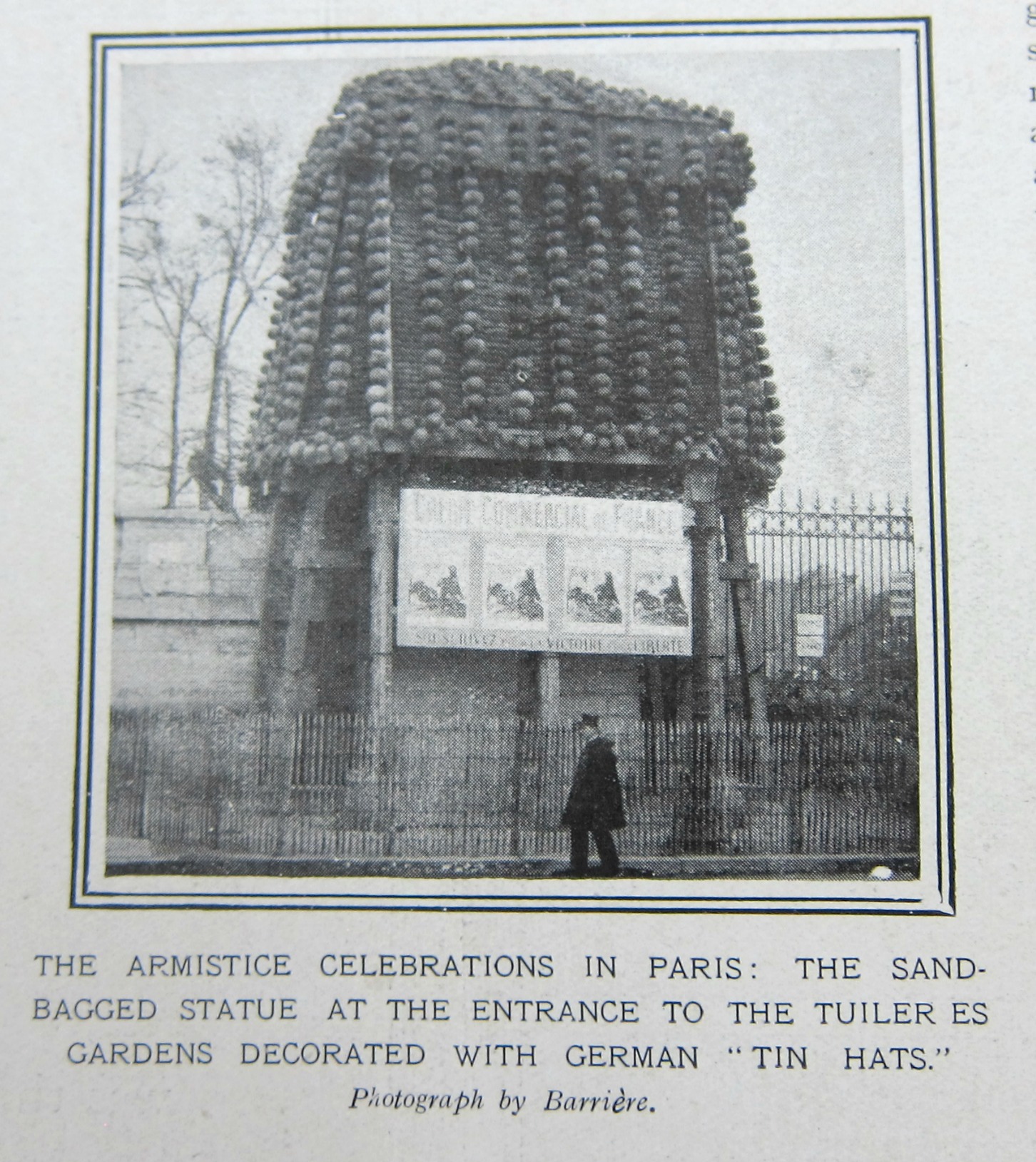
    This extraordinary image was found in the November 21, 1918 issue of Illustrated London News–a strong vision celebrating the newly-signed armistice ten days earlier ending WWI.  It shows one of the statues at Tulieres–this at the entrance to the garden. Like many statues and buildings and churches, this structure was protected by sandbags–and in this case, the sandbags were decorated with war trophies of German helmets.  

    WWI Project Armistice Paris Helmets Statue


    ·Posted by :

    ·in:

    —
  • H.L. Mencken and Beer

    JF Ptak Science Books  Quick Post

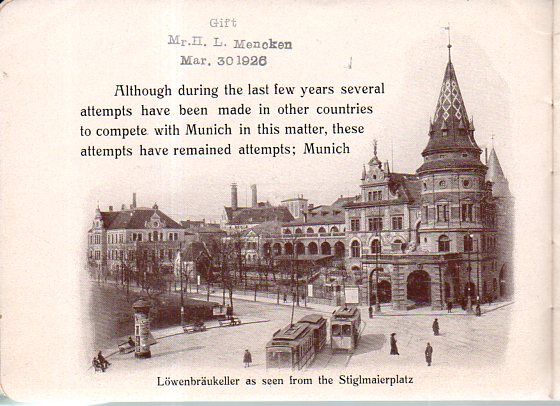
    Lowenbrau _1_523

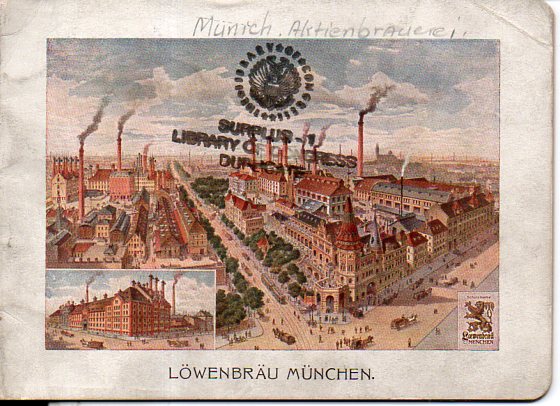
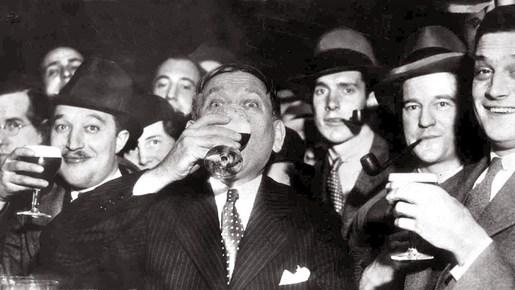
    I found this nice association copy of an unusual pamphlet1–the work is on the Lowenbrau brewery in Munchen (with a nice bird’s-eye view of the massive works), and it was given once upon a time to the Library of Congress by none other than the Bard of Baltimore, H.L. Mencken (1880-1956), who was known to enjoy his suds.  As a matter of fact, here’s a sort of quietly iconic picture of the man from the Baltimore Sun, legally enjoying his drink in Baltimore in 1933, right after the repeal of prohibition (1920-1933).

    Mencken drinking beer

    And this, gifting the pamphlet seven years earlier:

    Lowenbrau _2_524

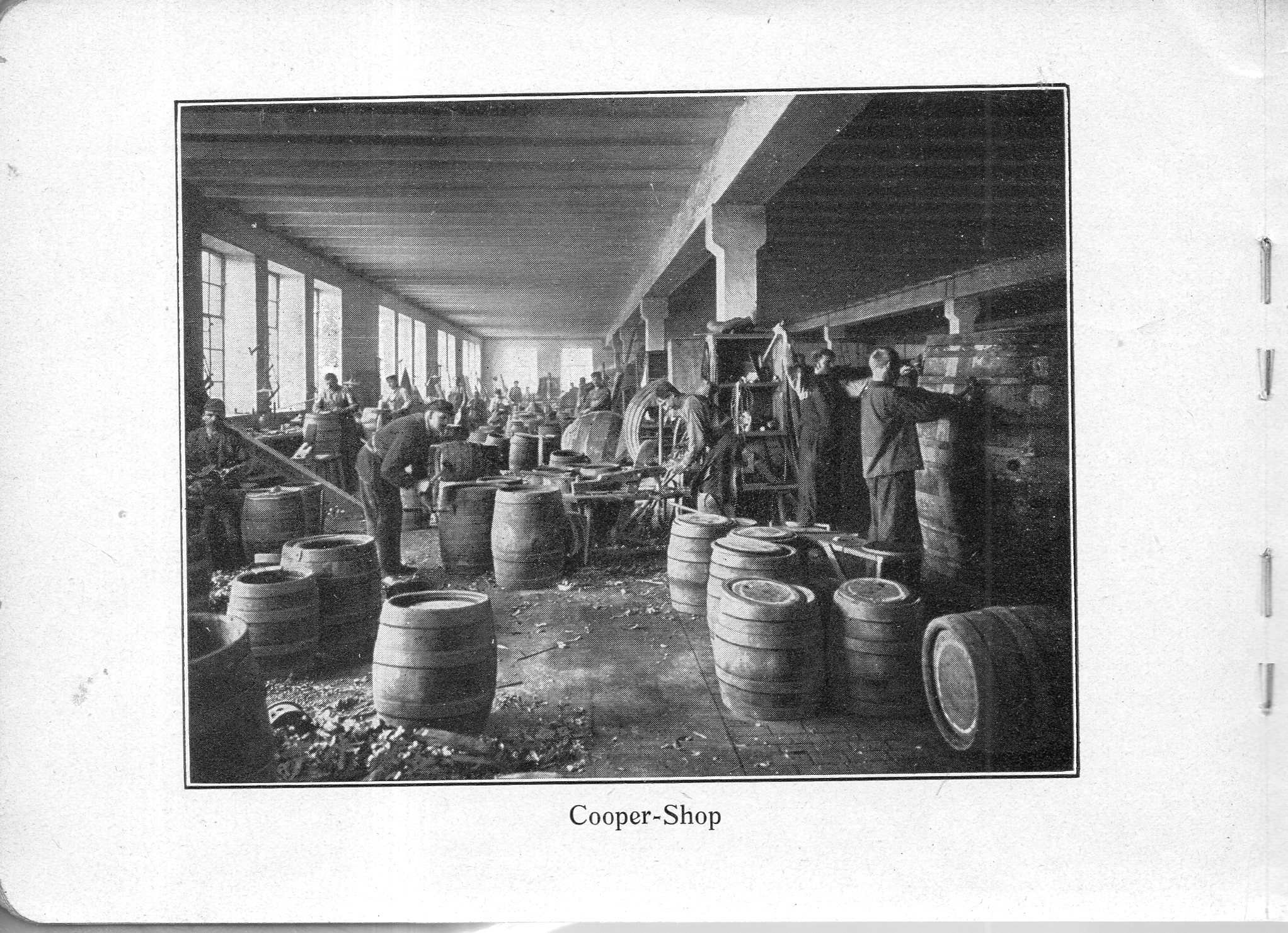
    But what I really liked was this photo of the cooper works, dozens of folks working on the barrels to be filled with beer, an entire industry dedicated to packaging liquid and grain, all gone now:

    Lowenbrau _2_525


    Notes:

    1. Aktienbrauerei zum Lowenbrau in Munchen,  which was probably published by the brewery, and printed pre-WWI, ca. 1910 or so.  

    ·Posted by :

    ·in:

  • Beef Fat, Bones, and the Flu (1918)

    JF Ptak Science Books

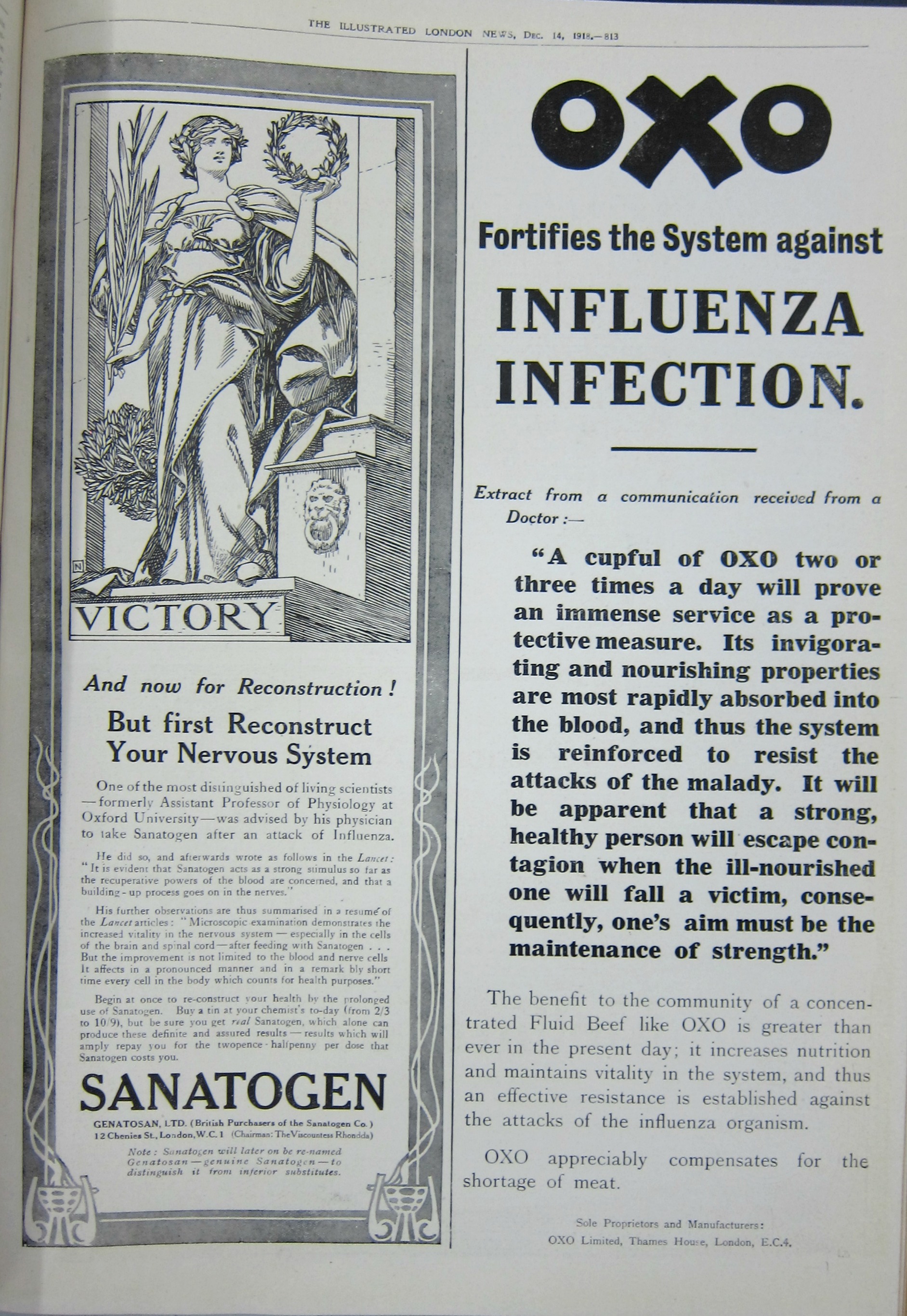
    Riding the last waves of wear into the public conscience and pocketbook come these two ads, published in a very large full-page format in the Illustrated London News in August 1918, just a few months before the end of WWI.  Yes, no doubt there was a public “nervousness” about the affairs of the self/state/world in general, and yes there was a problem at this point with the beginning of flu season (which would soon develop into a world-wide pandemic that killed millions), and I guess the makers of Sanatogen and Oxo thought that they could make a positive impact on these things.  Considering that Sanatogen was a tonic and both a relaxing and a vitalizing agent, and made of 95% milk protein, probably would not make much of an impact in anyone’s nervous system. Same deal too to Oxo–apart from water the major ingredients were flour, beef fat, and dried beef bone, and probably whatever beefy thin might have fallen to the floor at the slaughterhouse.  Certainly there was no good to come of treating a deadly influenza with beef fat–except of course that the manufacturer would do well distributing dietary supplement made of the stuff that has almost no value of any sort. 

    So, I guess I’ll need to check out Oxo for the winter of 1918/19 and see how often this ad appears–it wouldn’t be until the fall of 1918 that the pandemic would begin, killing about as many people who were killed in the just-ended war. Combating infectious disease with left-over stuff from a beef killing floor was probably not a hope-filled thing.  

    WWI Project Influenza Cured with Meat

  • Moving Product by Embracing the War–Making Memory Dents in 1914

    JF Ptak Science Books  Quick Post

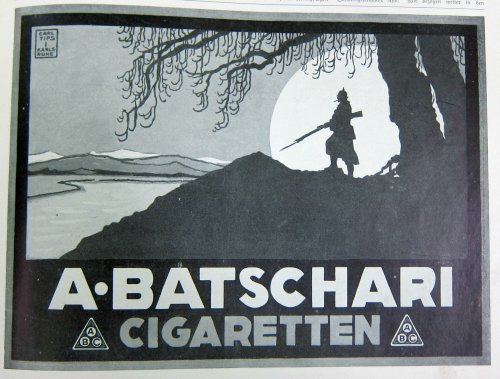
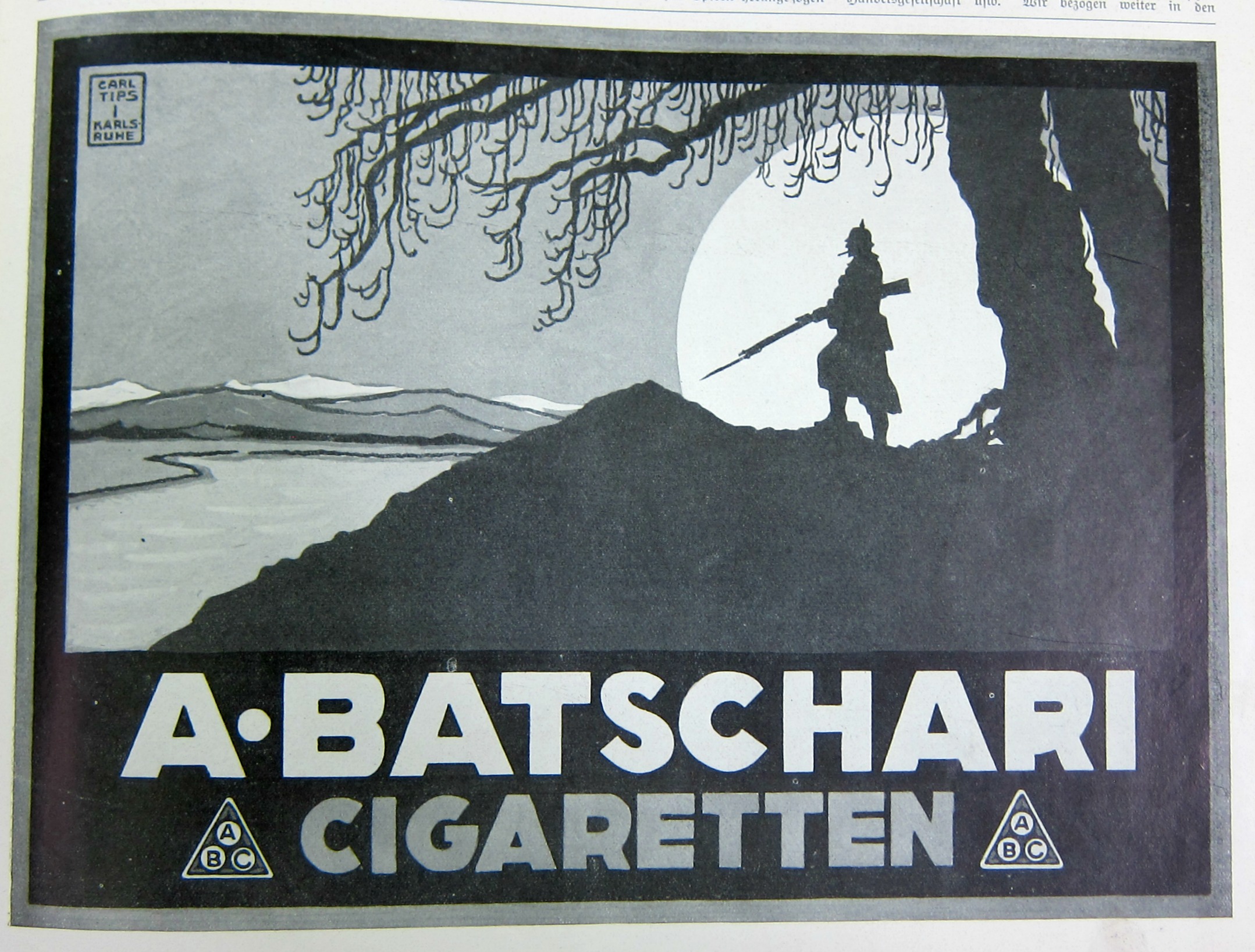
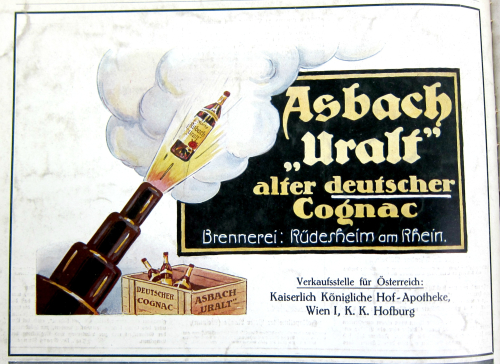
    There is some inexplicable something about advertising in popular magazines and newspapers during war time, and how inappropriate it seems to used the circumstance of conflict to sell a product.  Of course, everything doesn’t come to a standstill in war time, not even in World War, as economies still run and society still functions (at least to the very end).  So, even though there could be millions of soldiers in uniform, and millions dead, and tens of millions (hundreds of millions peripherally) involved in the conflict, the daily life of living and the stuff of society keep on.  This is what strikes me about these ads, all seen in two consecutive weekly issues of the Leipzig-based Illustrirte Zeitung in November 1914: chocolate, cigarettes, cognac, and of course a Benz automobile, though it was the cognac that seems to me to have the most noise about it–I don’t know how you relate cognac to a war effort (let alone having it being fired from a howitzer) but they did manage to wrap themselves up in a patriotic-something and associative themselves with the national war effort. Over time manufacturers and ad folks would manage to see connections between the war effort and whatever it was they were producing–scissors, laxatives, buttons, razors, toys, pool tables, and so on.  Then again, in a presidential cycle such as what we are witnessing in the U.S., people can relate anything to anything else in spite of the nonsensical and mythological nature of it, like the impossible Donald Trump stating he can relate to racism because “the system” has been “stacked against” him. You can say anything you want in these circumstance, evidently–the point is not making sense, it is about making a vague memory dent, and how that dent got there is immaterial to the lingering notion of the association.  
    WWI Project Ads _7_

    WWI Ads _7_

Recent Posts

Archives

Categories