A Daily History of Holes, Dots, Lines, Science, History, Math, Physics, Art, the Unintentional Absurd, Architecture, Maps, Data Visualization, Blank and Missing Things, and so on. |1.6 million words, 7500 images, 4.9 million hits| Press & appearances in The Times, Le Figaro, Mensa, The Economist, The Guardian, Discovery News, Slate, Le Monde, Sci American Blogs, Le Pont, and many other places… 5000+ total posts since 2008.

  • An Empty Notebook for Hitler Youth, with Map (1941)

    JF Ptak Science Books  Quick Post   A History of Blank, Empty, and Missing Things series 

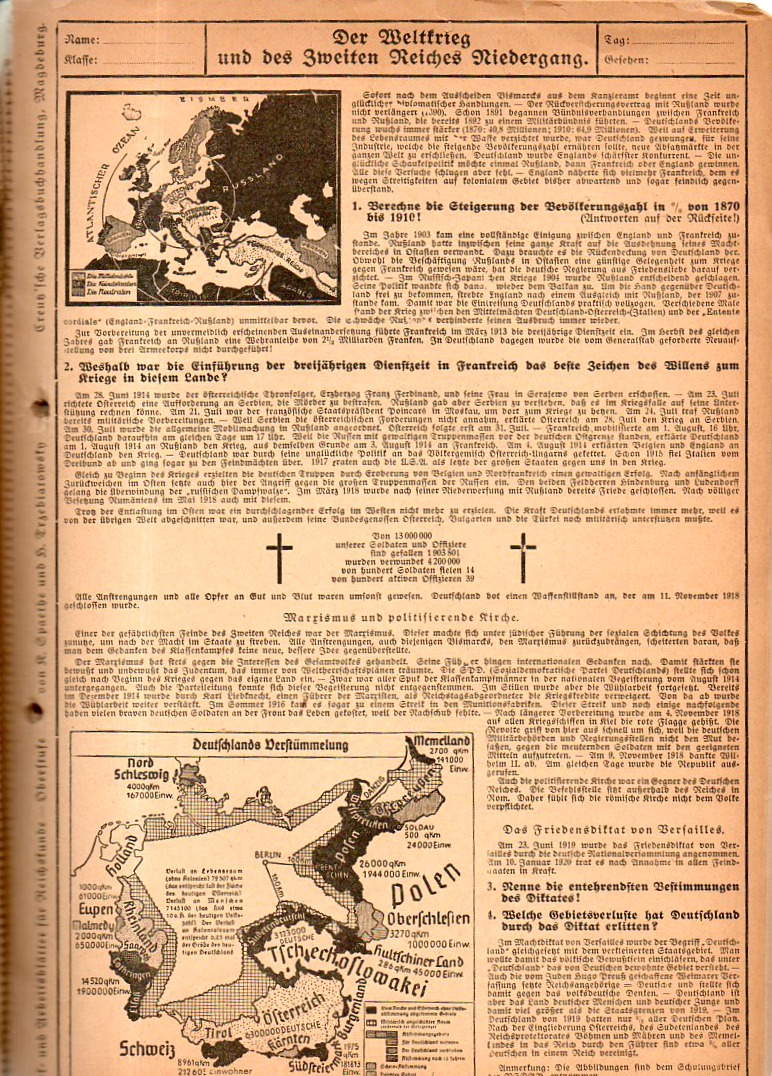
    Hans Trzebiatowsky & Karl Spaethe–two engineers turned propagandists–wrote the study/notebook for “students” working through modern German history, Merk- und Arbeitsblatter fuer Reichskunde, which was published in Magdeburg in 1941. It was very successful, as the title page states that this edition (“18…23 Auflage”) was the “1058 ,,, 1035, Thausend” which seems to put the print run over one million. Given that there were 66 million people in Germany in 1940, and that 6.6 million were soldiers, this may mean that just about every child between the ages of 12-17 had one of these–in any event, if those publication numbers were accurate, then the publication must have been ubiquitous. 

    The paperback publication is tall (about 12″) and densely written, and for all of that is only 24 pages long.  It is designed with perforation along the left-hand edge of the sheets so that the page could be removed and gathered in a two-ring binder. After dealing with the first and second Reichs in pages 1 and 2, the rest of the issue is a history and philosophy lesson on the Third Reich, presented for the Hitler Jugend in the best interests of the Nationalsozialistche Deutsche Arbeiter-Partei. 

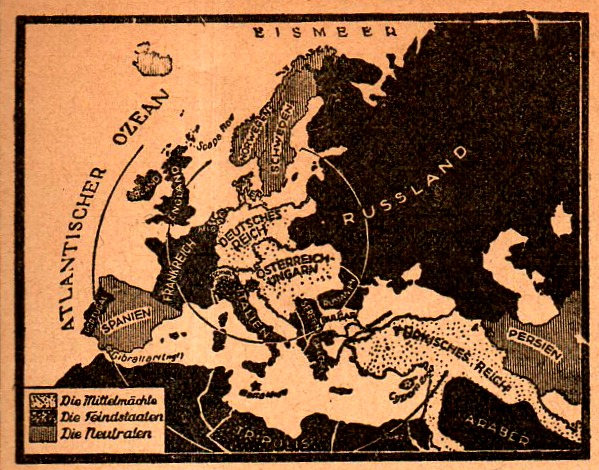
    The images in the publication were striking, and even for a bored general student or Hitler Youth could have lazily flipped through these pages without noticing them and having soem sort of message delivered. For example, this map that shows the state of the alliances in WWI and how the rest of the world outside of these allies stood against Germany:

    Spaethe652

    (Map is about 100% larger than the original)

    It should be understood though that the booklet was most definitely not a picture book for kids, as it was detail-heavy and brimming with Nazi needs:

    Spaethe651

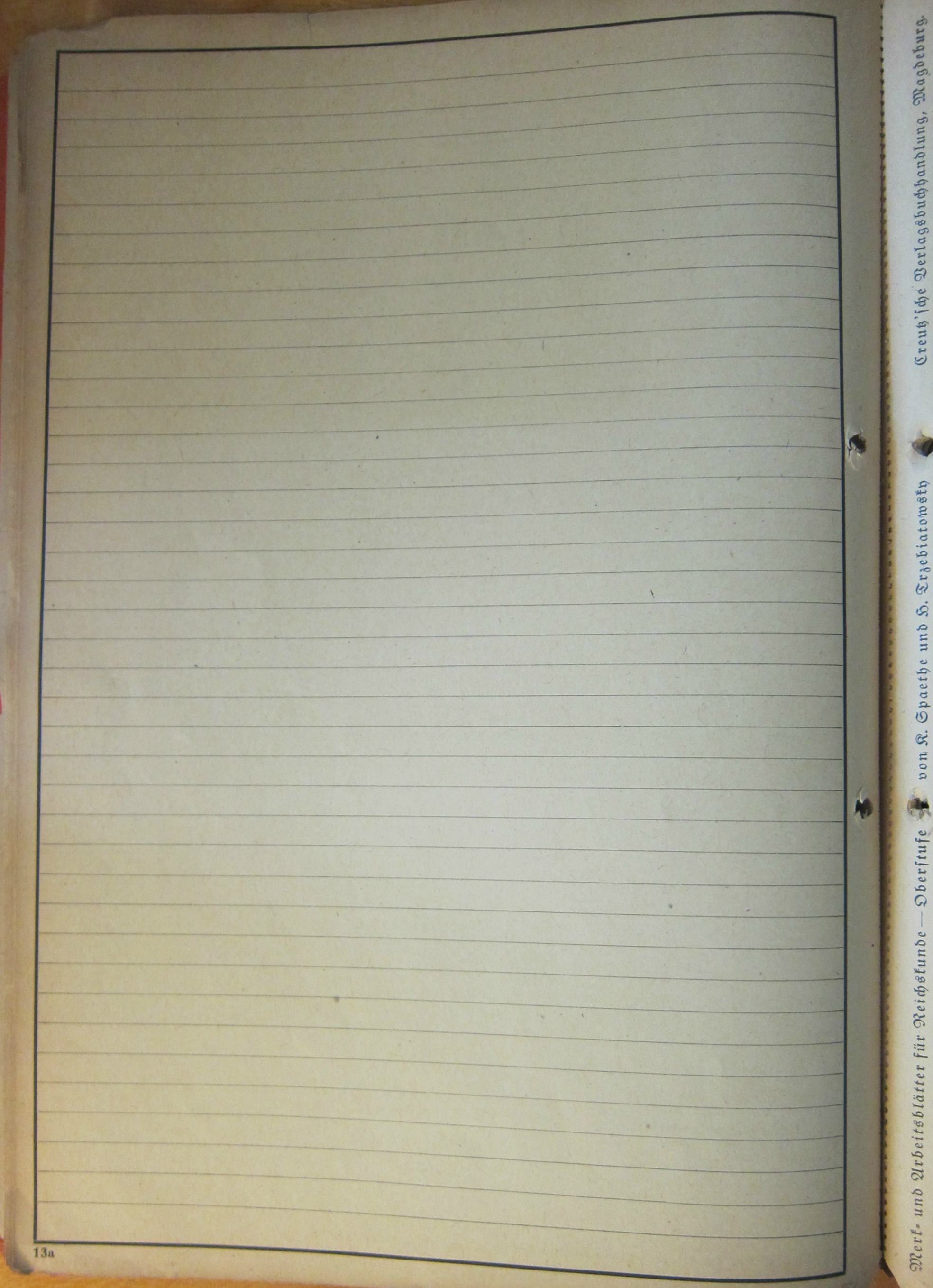
    The book was definitely intended for instruction, as the back of every sheet of text is a 40-line ruled notebook page, ready for note–my copy hasn’t a word in it.  

    Blank empty


  • Brutalist Anthropomorphic War of the Worlds Hoisting House, 1927

    JF Ptak Science Books  Quick Post

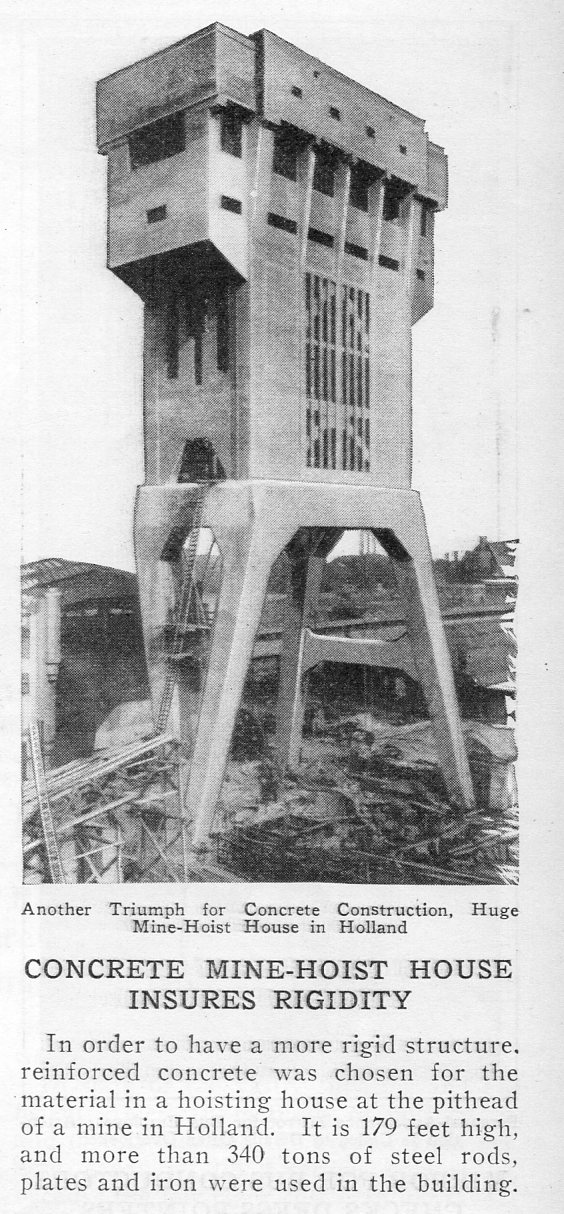
    All you really need on this structure to complete its Brutalist International Style is a little swastika on the top.  Seriously, though, the 170′-tall building is located at the pithead of a mine somewhere in Holland. It is found in the June 1927 issue of  Popular Mechanics and celebrates its concrete construction, and was an achievement for the time. Still, it has a very distinct flavor of Wells’ (earlier) aliens in his War of the Worlds. 

    …and if this structure does spell anything at all, it is “rigidity”.

    Brutalist654

    ·Posted by :

    ·in:

  • The Symmetry of Oil (1927)

    JF Ptak Science Books   Quick Post   Quantitative Display of Information series

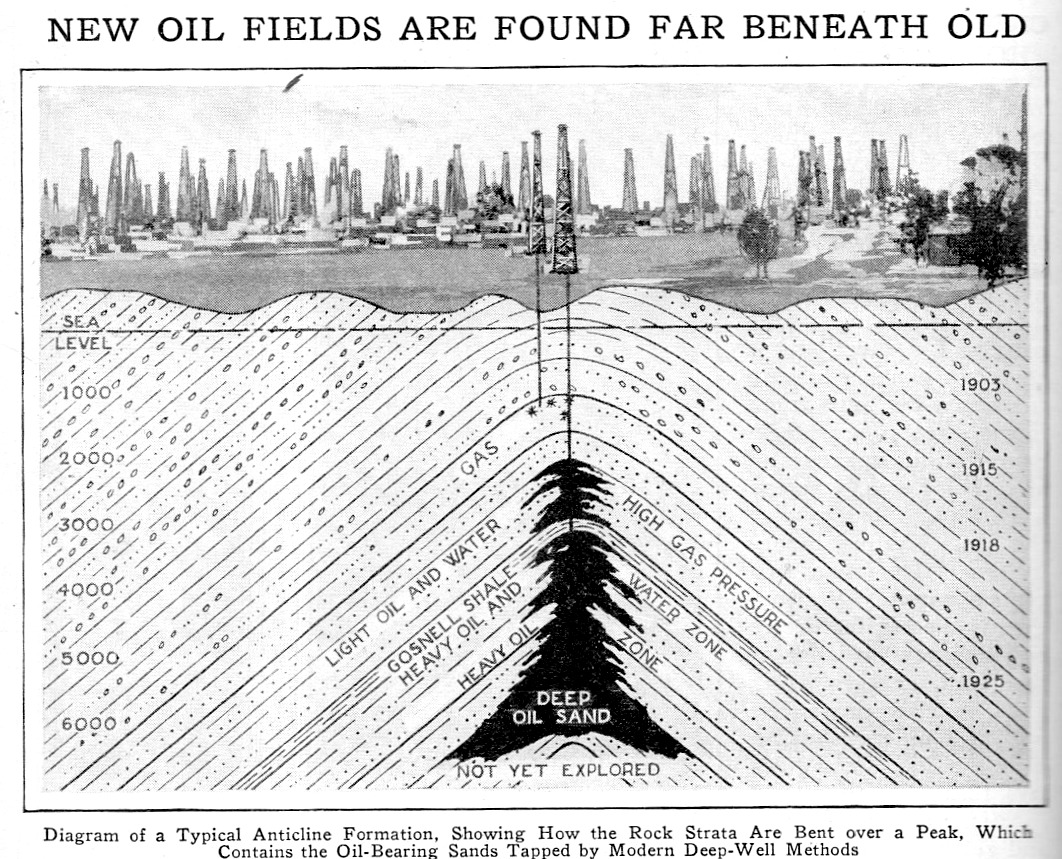
    Continuing a read of the January-June 1927 volume of Popular Mechanics I found this lovely little data visualization–it has a certain irresistible quality to it, perhaps owing to its symmetry. In any event, I just wanted to post it here, before I closed the book and lost the image to memory:

    Oil fiekd cross section657


  • Mysteries of Science: Atomic Power and Scotch Tape (1946)

    JF Ptak Science Books  Quick Post   Outsider Logic series

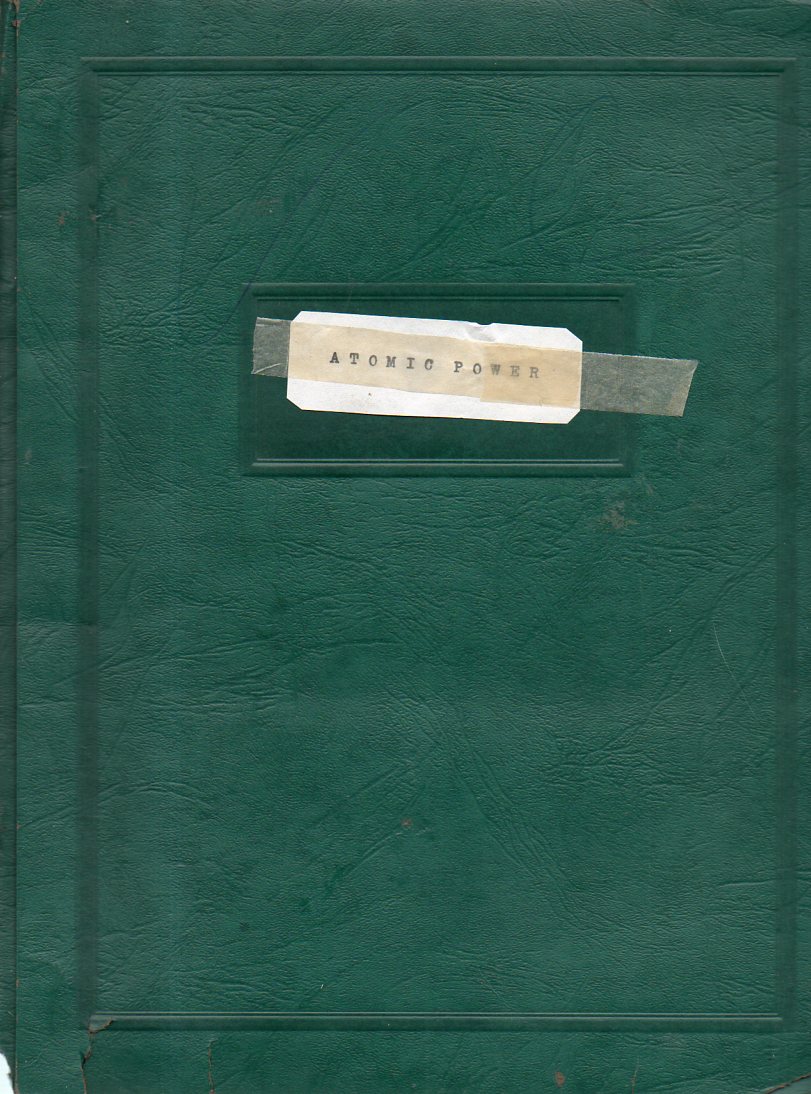
    Tomic power adhesive tape _1_485

    About two miles from my house stands a sign for a housing development called “Solar-Vista”, and right next to it is the street sign, which is “Shadow Valley Drive”–somewhat ironic, I’d say. That’s what came to mind when I saw the cover of this self-published screed atomic power called Atomic Power–it just struck me as as little M. Hulot-ish to have the typed piece of paper attached with band adhesive tape to the cover of the missive. That, and the title strip has fallen off.  It seems perfect, in its own, odd, way.


    Tomic power adhesive tape _1_484


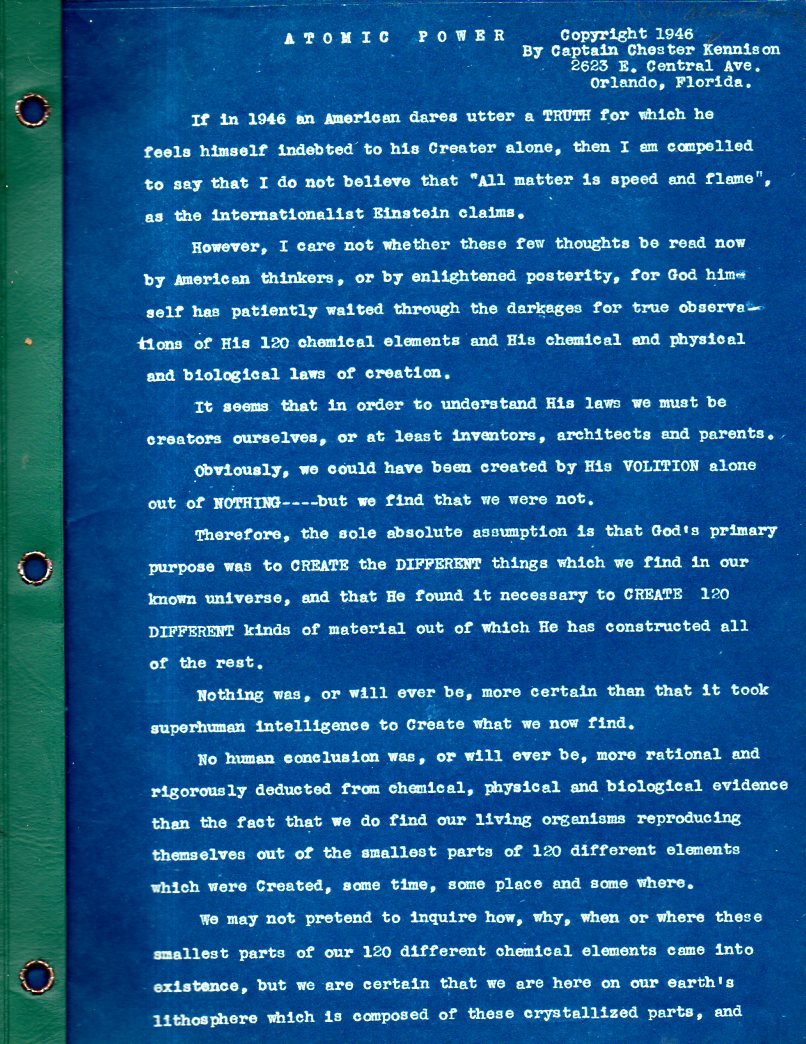
    Here’s the first page of the work–I have one of the copies that were submitted to the Copyright Office and then sent over to the Library of Congress, and after decades was deaccessioned, and then came to me.  The author tried tro make some sort of point, but it is lost on me, though I didn’t make it but only two pages into the 24-page blueprinted work.  (And yes, “Scotch Tape” is a couple of decades older than atomic power.)


    Tomic power adhesive tape _1_487

  • Details in Electricity, 1814

    JF Ptak Science Books   Quick Post

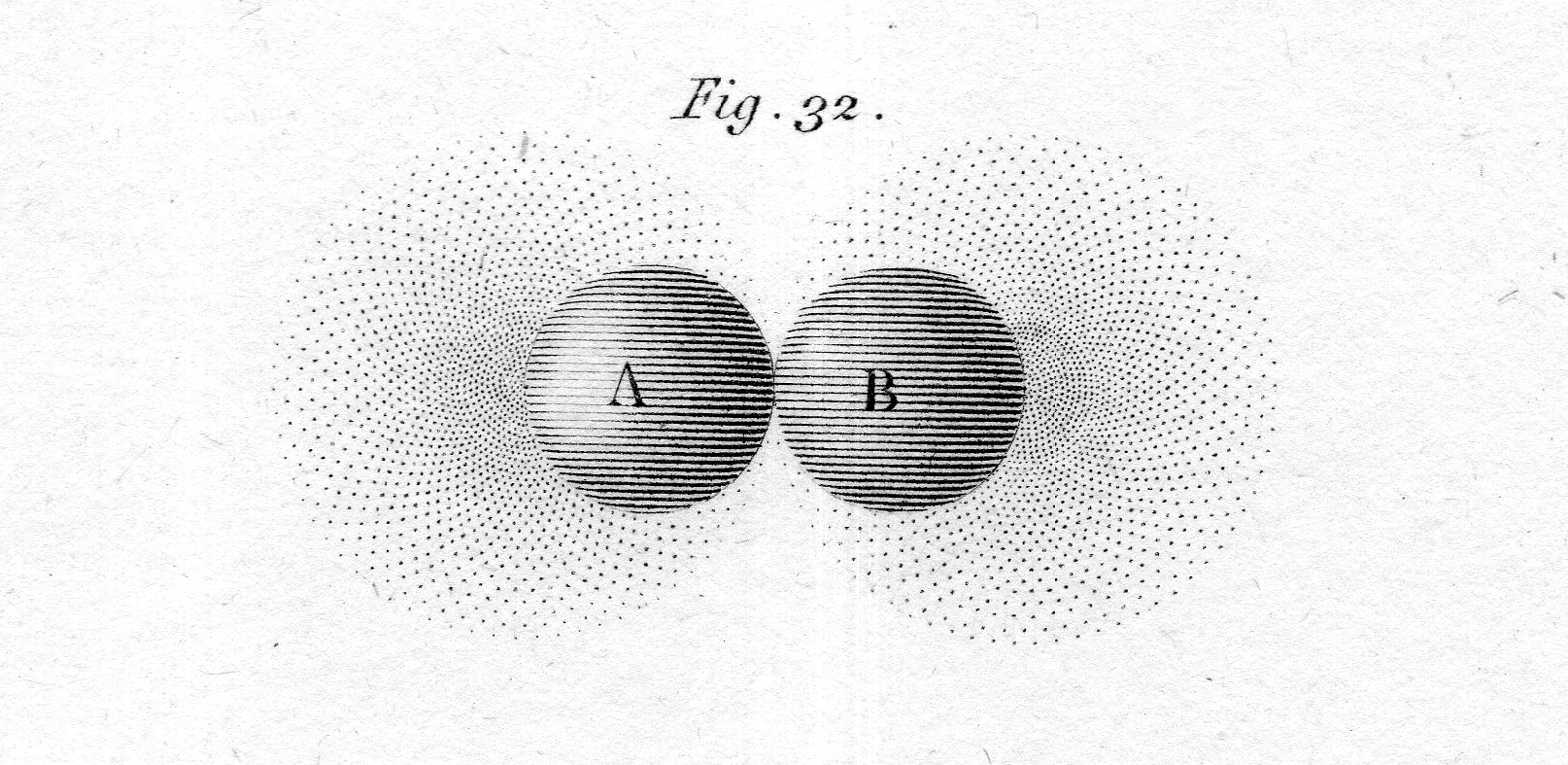
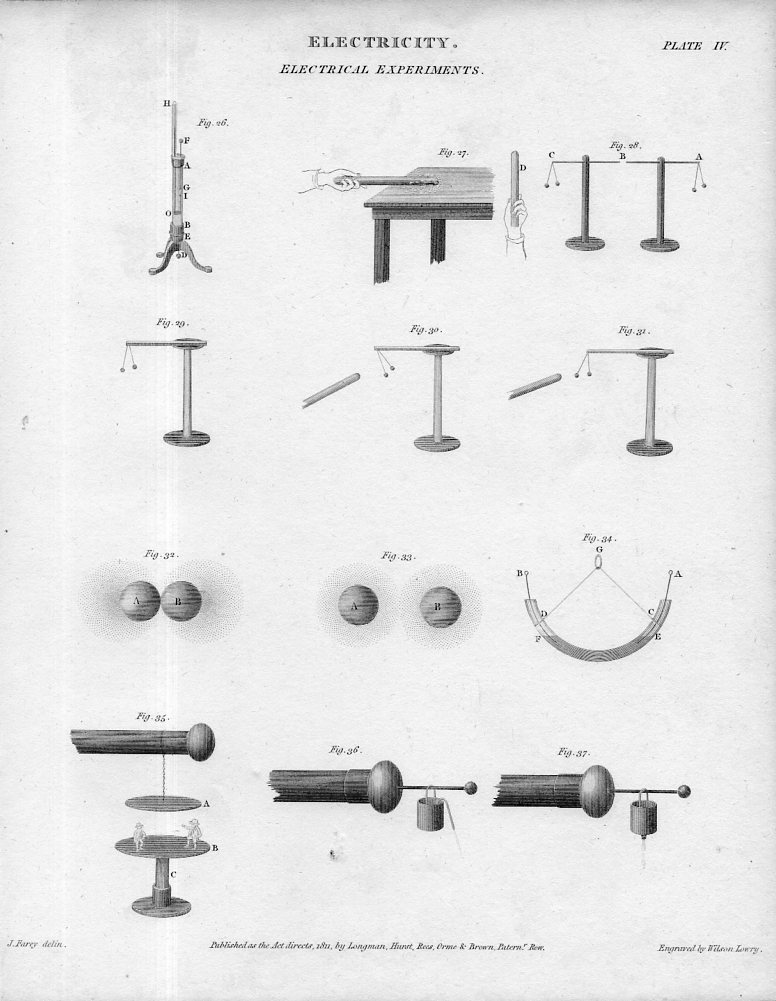
    The following images relating to chemistry were found in the illustration volumes of Abraham Rees’ (1743-1825) great work, Cyclopædia; or, Universal Dictionary of Arts, Sciences, and Literature. This was a massive undertaking for Rees, but his leadership and editorial skills were up to the task–in the end, 39 volumes were published containing nearly 40 million words, plus another six thick volumes contained the engraved illustrations to the monograph-length articles.  They are marvelous images, full of detail, and beautifully designed. This fine example on electricity contains several gorgeous tiny details, including the following:

    Electricity attraction489

    Which is a detail from:

    Electricity attraction488

  • Punctuation and its Elimination: Spongebobian Sentence-Enhancers and a Pickle for the Knowing Ones (1847)

    JF Ptak Science Books 

    (This is an expanded version of an earlier post from 2008, more than 4000 posts ago. I’m reposting it here on the top of the heap today because no doubt the only person who would see the revised version left under the burden of a million other words would be me, so here it is, new-ish and fresh.)

    I’ve made several posts about Blank and Missing People which seem to me—having had long exposure to images over the last 30 years—to be quite unusual in the history of popular-published prints.  This may actually be a simple corollary to a wider category of Blank Things, or Missing Things.  Like Dark Matter.  Or white, open, blank spaces on early, honest, maps. (And this may be part of another larger story on The  Spaces in Between, (a concept in German known as Zwischenraum), but that’s another story, identifying where the missing stuff might actually “be”. 

    Right now though I’d like to address blank spaces in literature.  It is surprising to me that in Google searches that “blank books” and “blank literature” and “books without words” (once you remove all of the hits for new diaries and new artists’ notepads and such) direct you to graphic novels.  This category hardly strikes me as being “blank” as the art and action more than accommodate the absence of written words.  (And by the way the graphic novel seems to be a fairly new invention—perhaps the work of Frans Masereel and Rockwell Kent in producing sequential, worldess books were among the first of their genre when they were published in the mid-1920’s?)

    Blank literature doesn’t mean hollow literature.  In one skinny example James Fenimore Cooper’s writings may be a little translucent and a little empty, but they aren’t blank. (Twain ripped Cooper on this point, cursing Cooper for using a bagful of woodsy woodsmen tricks to drive his story when he should’ve been writing, and not waiting for them to fill up the spaces of his missing narrative: “in his little box of stage properties he kept six or eight cunning devices, tricks, artifices for his savages and woodsmen to deceive and circumvent each other with, and he was never so happy as when he was working these innocent things and seeing them go…(another) favorite stage property that he pulled out of his box pretty frequently was his broken twig.  He prized his broken twig above all the rest of hi effects, and worked it hardest…”

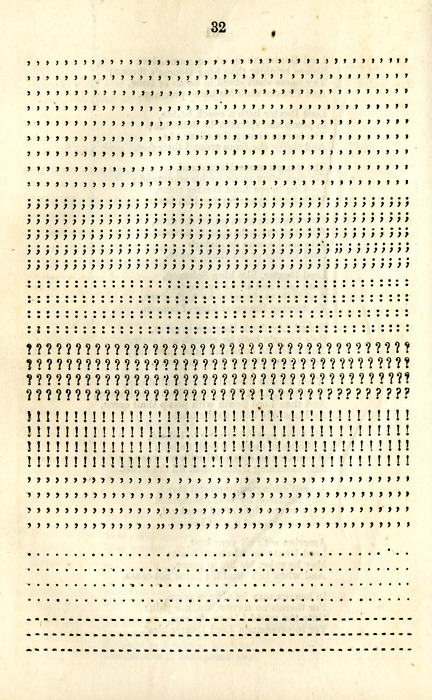
    An excruciatingly direct example of the worldess book  is a remarkable, hoaxing or perhaps just simply demented set (!) of books by Timothy Dexter (Newburyport, Massachusetts).   Dexter wrote a semi-incompressible work called A Pickle for the Knowing Ones, which followed his own logic, sentence structure, vocabulary and spelling. It was also printed and published without punctuation.  In one sentence. (A sample is found below in the continued reading section.)  I think that it is interesting in that someone did it and that it exists and that it was printed in 1802, but aside from that I find little comfort or twisty inspiration from it.  His second edition of that work though is much more interesting, not so much in that it continued ((?), I use that word loosely) the shredded intellectual threads laid out in the first edition; it also contains one page of what I think of as a blank book:  the missing punctuation marks from the first edition.   

    Well, not ALL of the missing punctuation, but enough, in the mind of Dexter, to silence some of the complaints of the more faint-hearted readers of his one-sentence, non-punctuated, made-up vocabulary of the first edition.  He at least provides the punctuation–separately–in case a weak reader needed some: 
    Pickle for knowing ones

    [Image from a good treatment of Dexter at http://northofboston.org/north-of-boston-historical-figures-a-pickle-for-your-thoughts/]

    He writes “Fourder mister printer the Nowing ones complane of my book the fust edition had no stops I put A nuf here and that may peper and solt as they please.”

    That’s much in the spirit of Spongebob Squarepants and Patrick Star when they “discovered” the use of swear words and curses, which they figured had no meaning except as a sort of comfrot food to be sprinkled in conversation for flavoring–“sentence enhancers” they called them, without knowing (of course!) that their sounds were more than simple garnishes and intellectual punctuation.  

    As follows (please consult http://www.lordtimothydexter.com/the_holl_pickle.htm for a full transcription of the Dexter work–the author of the site also transcribes the Dexterian-speak into plain English, which was no doubt a labor of love): 


    ,,,,,,,,,,,,,,,, ,,,,,,,,,,,,,,,,, ,,,,,,,,,,,,,,,,, ,,,,,,,,,,,,,,,,,,, ,,,,,,,,,,,,,,,,,

    ,,,,,,,,,,,,,,,, ,,,,,,,,,,,,,,,,, ,,,,,,,,,,,,,,,,, ,,,,,,,,,,,,,,,,,,, ,,,,,,,,,,,,,,,,,

    ……………. ……………. …………….. ………………. ……………..

    ,,,,,,,,,,,,,,,, ,,,,,,,,,,,,,,,,, ,,,,,,,,,,,,,,,,, ,,,,,,,,,,,,,,,,,,, ,,,,,,,,,,,,,,,,,

    . . . . . . . . . . . . . . . . . . . . . . . . . . . . . . . . . . . . . . . . . . . . . . . . . . . . . . . . . . . .

    . . . . . . . . . . . . . . . . . . . . . . . . . . . . . . . . . . . . . . . . . . . . . . . . . . . . . . . . . . . .

    …………………………! ! ! ! ! ! ! ! ! ! ! ! ! ! ! !………………………..

    …………………………….. ! ! ! ! ! ! ! ! ! ! ! …………………………..

    …………………………………. ! ! ! ! ! ! ……………………………….

    ………………………………………!……………………………………..

    . . . . . . . . . . . . . . . . . . . . . . . . . . . . . . . . . . . . . . . . . . . . . . . . . . . . . . . . . . . .

    , , , , , , , , , , , , , , , , , , , , , , , , , , , , , , , , , , , , , , , , , , , , , , , , , , , , , , , , , , , ,

    ……………????????????????????????……………

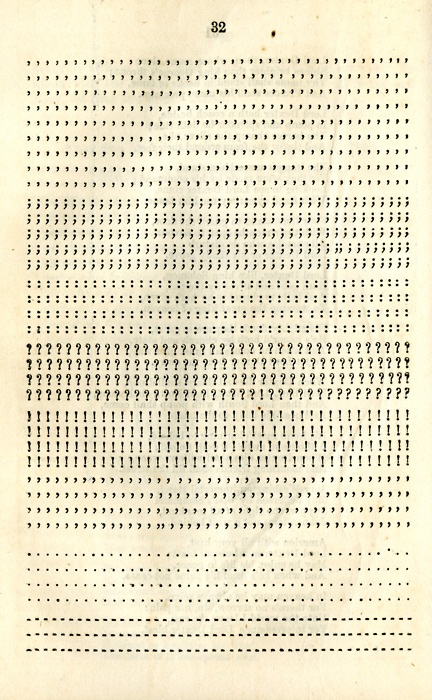
    And on page 32 more of the “missing” punctuation is provided:

    ,,,,,,,,,,,,,,,,,,,,,,,,,,,,,,,,,,,,,, ,,,,,,,,,,,,,,,,,,,,,,,,,,,,,,,,,,,,,, ,,,,,,,,,,,,,,,,,,,,,,,,,,,,,,,,,,,,,, ,,,,,,,,,,,,,,,,,,,,,,,,,,,,,,,,,,,,,, ,,,,,,,,,,,,,,,,,,,,,,,,,,,,,,,,,,,,,, ,,,,,,,,,,,,,,,,,,,,,,,,,,,,,,,,,,,,,, ,,,,,,,,,,,,,,,,,,,,,,,,,,,,,,,,,,,,,, ,,,,,,,,,,,,,,,,,,,,,,,,,,,,,,,,,,,,,, ,,,,,,,,,,,,,,,,,,,,,,,,,,,,,,,,,,,,,, ;;;;;;;;;;;;;;;;;;;;;;;;;;;;;;;;;;;;;; ;;;;;;;;;;;;;;;;;;;;;;;;;;;;;;;;;;;;;; ;;;;;;;;;;;;;;;;;;;;;;;;;;;;;;;;;;;;;; ;;;;;;;;;;;;;;;;;;;;;;;;;;;;;;;;;;;;;; ;;;;;;;;;;;;;;;;;;;;;;;;;;;;;;;;;;;;;; :::::::::::::::::::::::::::::::::::::: :::::::::::::::::::::::::::::::::::::: :::::::::::::::::::::::::::::::::::::: :::::::::::::::::::::::::::::::::::::: ?????????????????????????????????????? ?????????????????????????????????????? ?????????????????????????????????????? ??????????????????????!??????????????? !!!!!!!!!!!!!!!!!!!!!!!!!!!!!!!!!!!!!! !!!!!!!!!!!!!!!!!!!!!!!!!!!!!!!!!!!!!! !!!!!!!!!!!!!!!!!!!!!!!!!!!!!!!!!!!!!! !!!!!!!!!!!!!!!!!!!!!!!!!!!!!!!!!!!!!! ””””””””””””””””””” ””””””””””””””””””” ””””””””””””””””””” ””””””””””””””””””” ……………………………….. ……………………………….. ……………………………….. ……………………………….. ————————————– ————————————– ————————————–


    It is a brilliantly empty book, all of the characterization present and waiting for the last bit that would make this a book:  the words.

    The depths or shallownesses of Dexter’s private insight is a mystery to me, if that mystery extended beyond an elaborate and peculiar (and deep) sense of humor.  The man was a successful if not very odd businessman, after all, so he did have some sort of regulating principle in his life–its just that this sort of dark, removed humor is so incredibly pre-modern that I’ve gotten stuck thinking about Dexter being a little deranged rather than be prescient. 
  • The Dome of Creation, San Marco, Venice

    JF Ptak Science Books   Post 2625

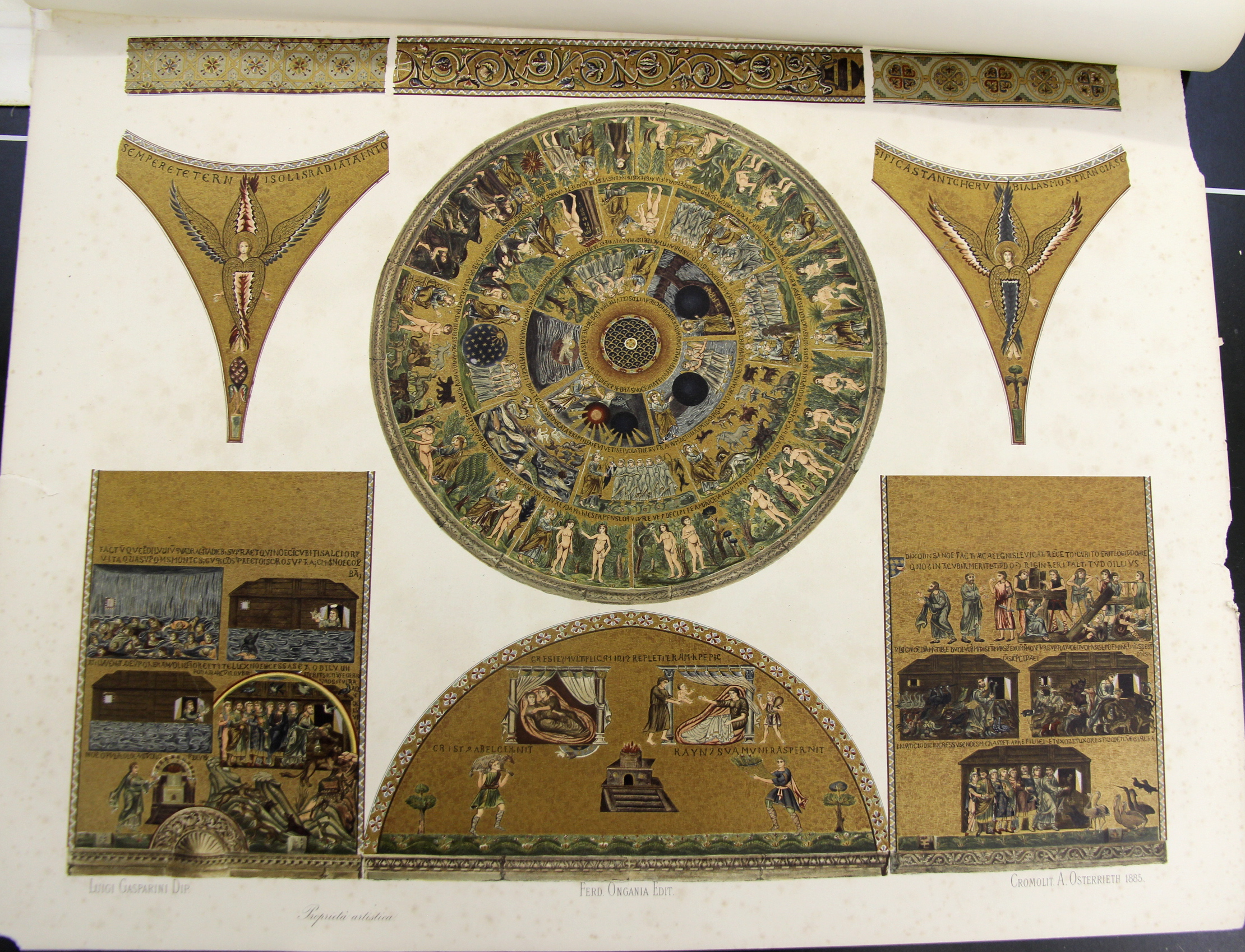
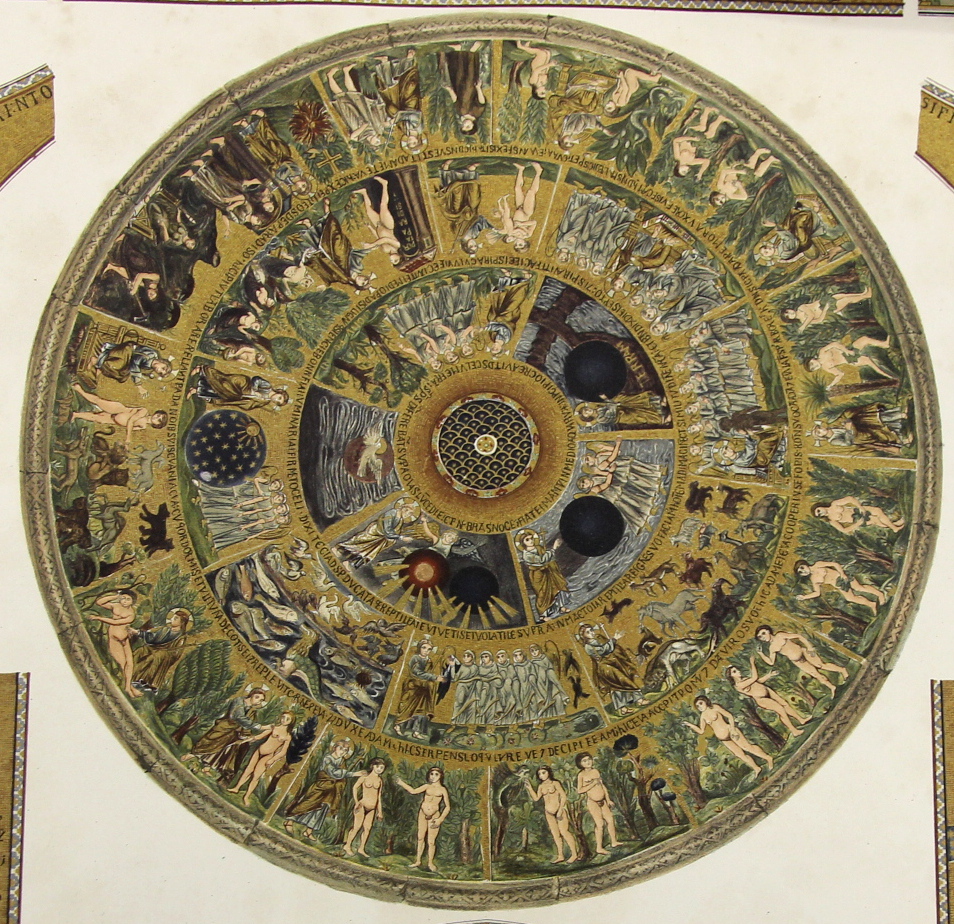
    I’m in the midst of making several posts relating to a group of large (27×21″) chromolithographs of the mosaics in San Marco (sumptuously published by Ferdinand Ongania in Venice in 1886.  The main part of this image is the story of creation, starting in the innermost circle of images, where we find the creation of light (and darkness),  and the rest, followed by the larger concentric circle showing the starry realms, the creation of the birds and fishes, then the land-based animals, and then (around “12 o’clock” on the second circle) comes the creation of life in Adam, where it all seems to go downhill.  In the outer ring we see the creation and presentation of Eve, the various temptations, the nakedness realizations and then the banishment–not all together a happy ending.  But the artwork is lovely, highlighted in gold. 

    Ongania 16 creation

    • [Creation Myth] Chromolithographic image from  Basilica di San Marino du Venezia, published by the prolific Ferdinand Ongania in 1886, 27×21″, 68x53cm. Very good condition. Ongania’s work is an exhaustive study of the iconic building, the publication being known chiefly I think for its very large and sumptuous chromolithographs of the building’s architecture, art, and endless detail. It forms two volumes of an overall monumental 12-volume epic, though these were complete in themselves.


    Ongania 16 creation detail

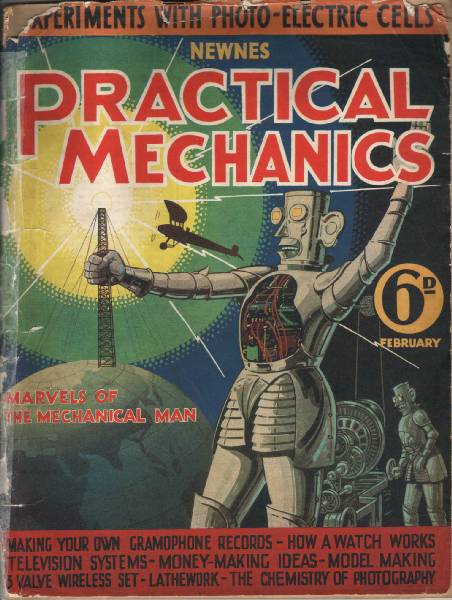
  • “A Most Delicate Monster”–the “Alpha” Robot of 1932

    JF Ptak Science Books  Quick Post

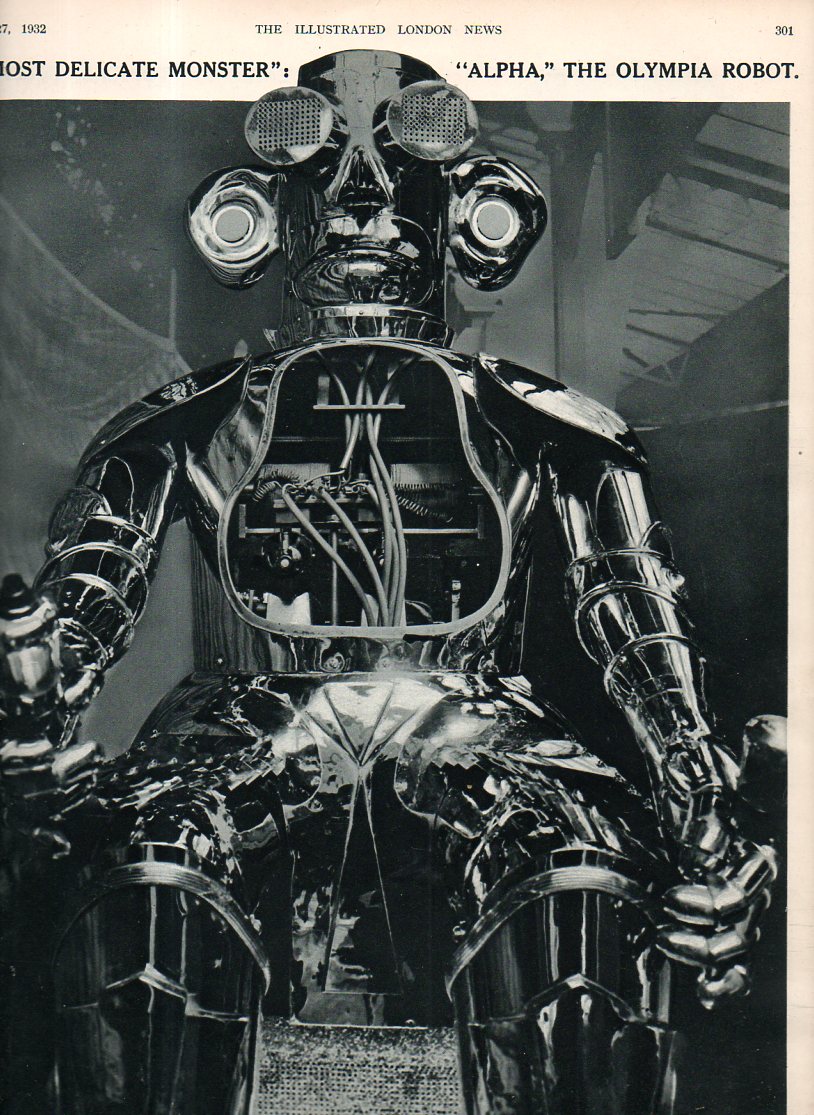
    I bumped into this robot in the pages of Illustrated London News for August 27, 1932. The idea of mechanical people had been around at least since the early 19th century, and by the time this one appeared i its gleaming glory in 1932, the word “robot” was around for a dozen years, invented in 1920 by Karel Capek for his book on the future called R.U.R.  Actually the human-like forms created by Capek in this early scifi work were biotech, and not fully mechanized.) The form of the robot stretches back hundreds of years, in a way–if not the exactly the idea of a robot, but at least with the appearance of one. “Alpha” was anthropomorphic, but hardly what you’d call bio-mechanical, or even pretending to be so. It was created by Harry May of London, and was evidently 6’4″ tall and weighed a ton (or two, perhaps), and was supposed to entertain and answer questions from the crowd when unveiled at the London Radio Exhibition of 1932.  Mr. May kept the details of his creation secret, though no doubt the robot was operated offstage by confederates, the voice supplied by wireless. Still, Alpha was a major attraction, and kept people entertained, if not confused.  In any event, it looked frightening as a vision of a possible 1930’s future-vision.  


    Alpha robot494


    Alpha robot practical mechanics

    [Source: http://davidbuckley.net/DB/HistoryMakers/Alpha1932.htm  This is a very interesting blog by David Buckley, including a long chronological section on the developments of robots–Alpha appears on this list, which includes six or so good links for contemporary stories about the robot’s appearance.]

  • The Distance-to-Hospital Usage Law (1866)

    JF Ptak Science Books  Quick Post


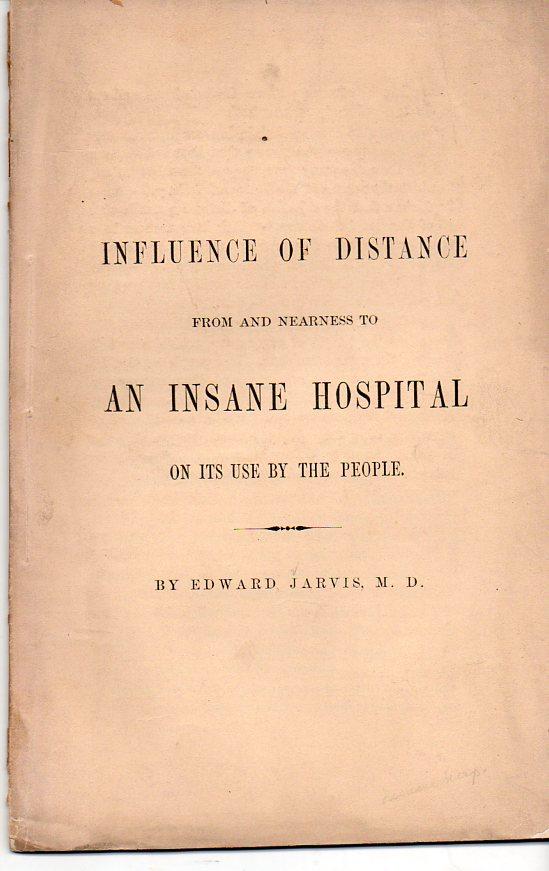
     Dr. Edward Jarvis (1803-1884) conducted a study1 in 1866 to determine how much a factor distance from an “insane hospital” was in regards to people using the facility. It sounds like an obvious-enough question with a probably-obvious answer, but these things are really never so until someone actually looks at the data and extracts an answer. And so Dr. Jarvis performed this function, answering the question once and for all that yes, indeed, the further away you are from a facility the less likely you are going to be to use it, and thus we have Jarvis’ Law.

    “Mental health researchers have long considered the importance of distance on psychiatric service use. Systemic analyses regarding the relationship between distance and the use of mental health care can be traced back to the mid nineteenth century, when Edward Jarvis identified inverse associations between home-to-hospital distance and the rates of admission to Oneida County Hospital of New York and the Kentucky Lunatic Asylum in Fayette County. He claimed that people living near psychiatric hospitals send more patients there for admission than do those living far away (Jarvis’s law).The study also revealed urban–rural differences in the prevalence of insanity, and high admission rates to psychiatric hospitals among people residing near the city center. Jarvis’s law has been identified in numerous studies since the mid-twentieth century.”–Kuon-Chiao Tseng, et al, “Travel Distance and the Use of Inpatient Care among Patients with Schizophrenia”, Adm Policy Ment Health. 2008 Sep; 35(5): 346–356, published online 2008 May 30

    Notes:

    1. Edward Jarvis, M.D.  “Influence of Distance from and Nearness to an Insane Hospital on its Use by the People.”  Published by Separately printed from the American Journal of Insanity, XXII, January 1866, pp 361-406. This publication paginated 1-46. (1866).  

  • A Single-Page DSM? (1886)

    JF Ptak Science Books  Quick Post

    Statistics of the insane _1_503


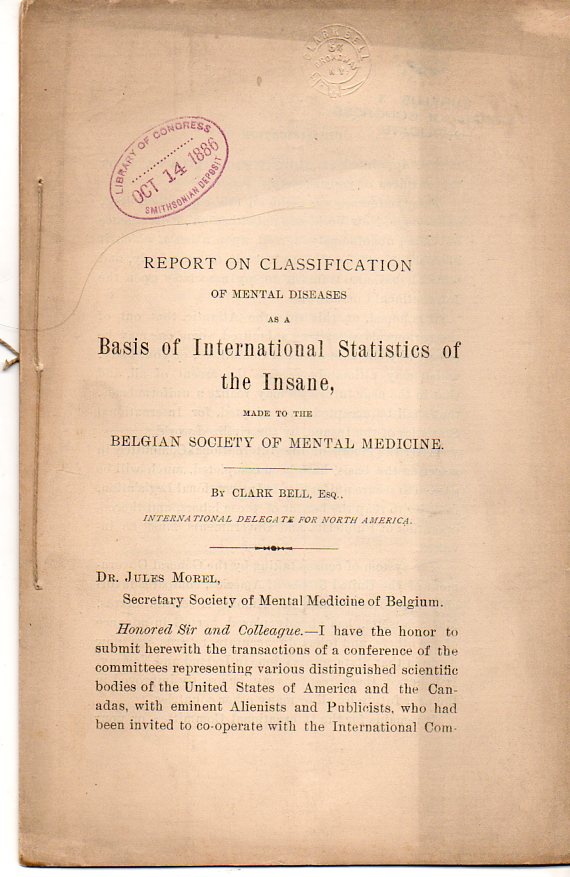
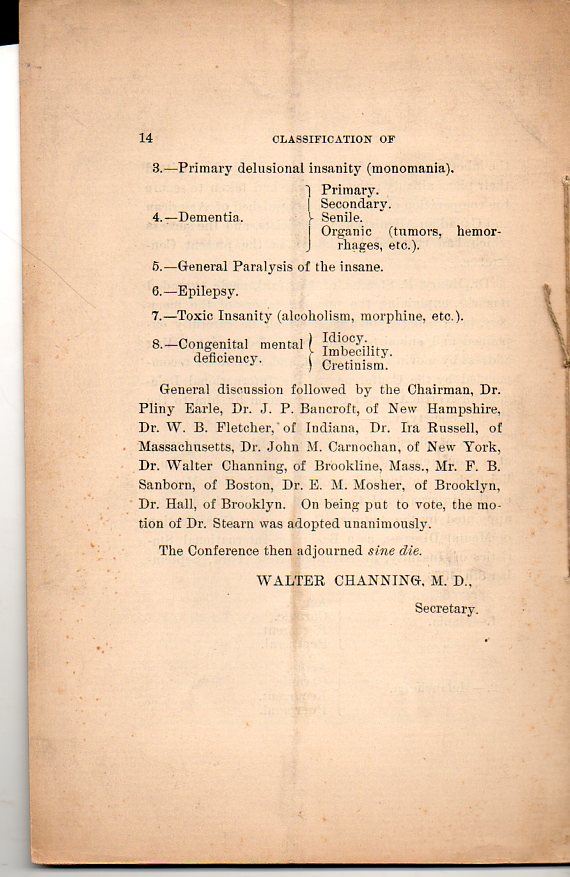
    At the end of the 19th century it was recognized that international data collected on mental illness would be highly useful. Unfortunately there was no real possibility of applying a series of great common denominators to the vast majority of  mental illnesses–the classification of mental diseases lacked general consensus and clarity for not understanding the pathology of the disease, therefore having to fall back on classification according to symptology, which is open to interpretation, and individual experience, and occasional faith, with the apparent mental conditions judged by exterior behavior and appearance. This pamphlet below is the sum of the efforts of international institutions to come up with a plan for this classification that might make disparate data more refined and so more useful to communities around the world.  It seems as though this was done with a simplicity that was also useful, as there was a common language to describe those conditions that are marked for classification.  

    Full text can be viewed of Yale’s copy, here:https://archive.org/details/39002086346195.med.yale.edu   

    Clark Bell. Report on Classification of Mental Diseases as a basis of international statistics of the insane, made to the Belgian Society of Mental Medicine. 23x15cm,  14pp. Wrappers. Provenance: Library of Congress Smithsonian Deposit (received in 1886) from Dr. Bell (with a tiny 1.5cm embossed stamp bearing his name and address at top-center front page).  I suspect that this is a separate printing of this article that appeared the Medico-Legal Journal, volume 4, 1886, as it has the same exact appearance–Bell was also the editor of that journal.  

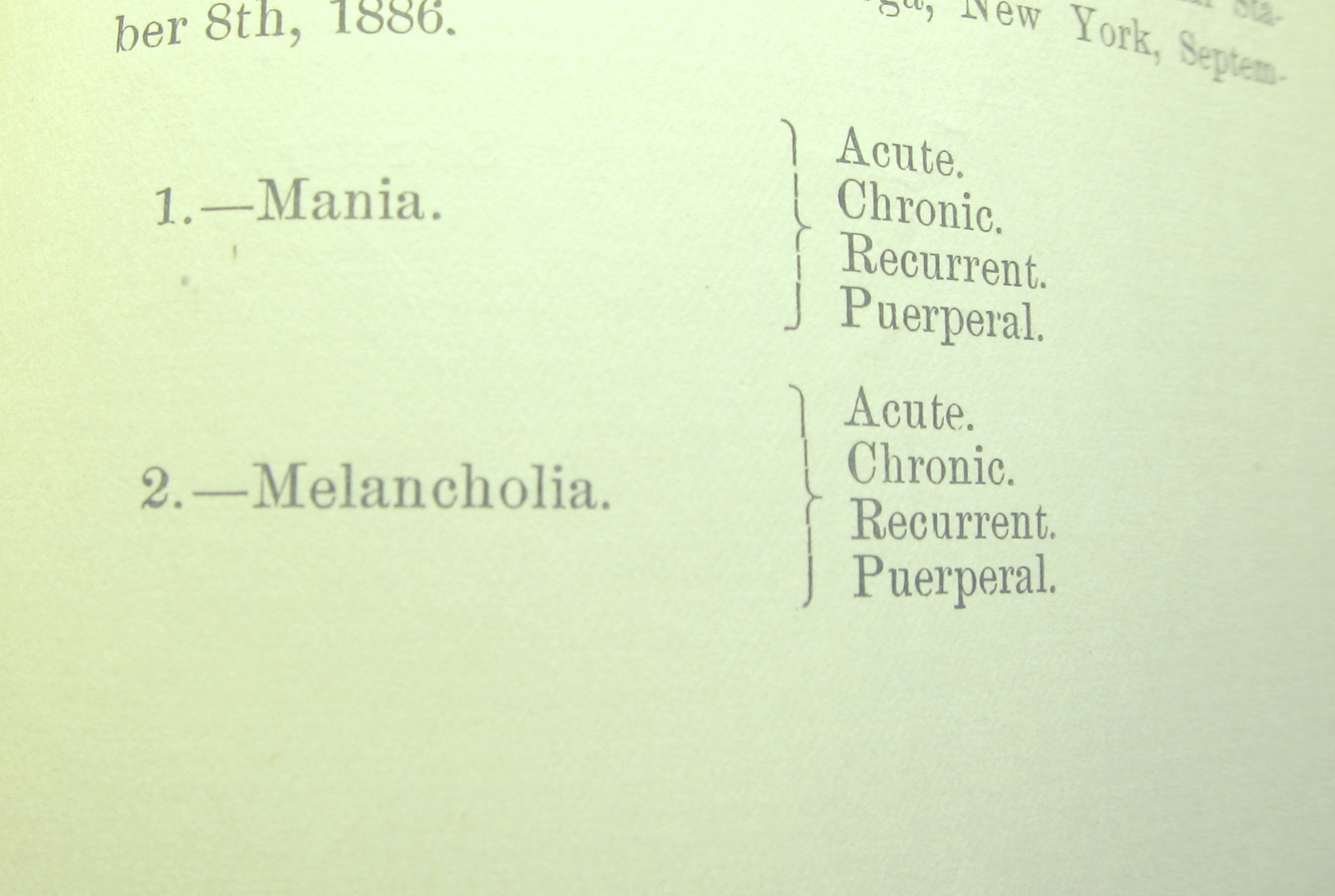
    And the classifications, which appeared on the last two pages of the document:


    Insanity DSM


    Statistics of the insane _1_504


  • When There is More Text on the Cover Than in the Text–and the End Result is Nothing (1877)

    JF Ptak Science Books   Quick Post

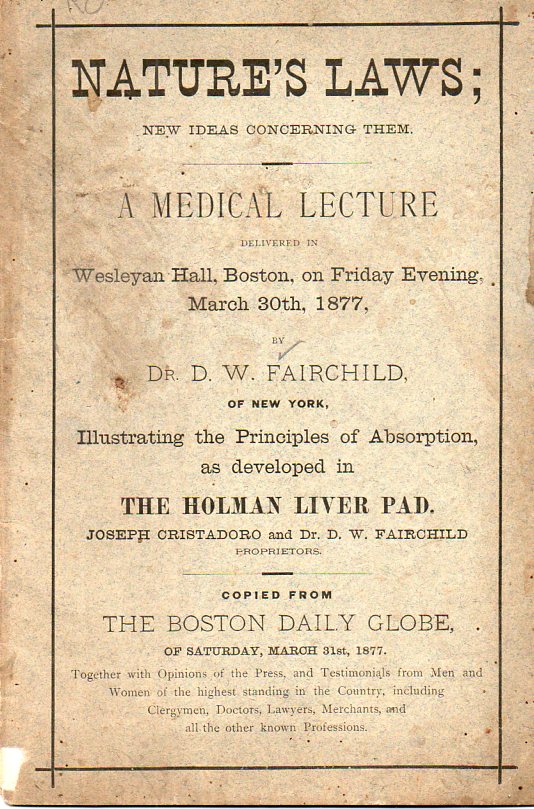
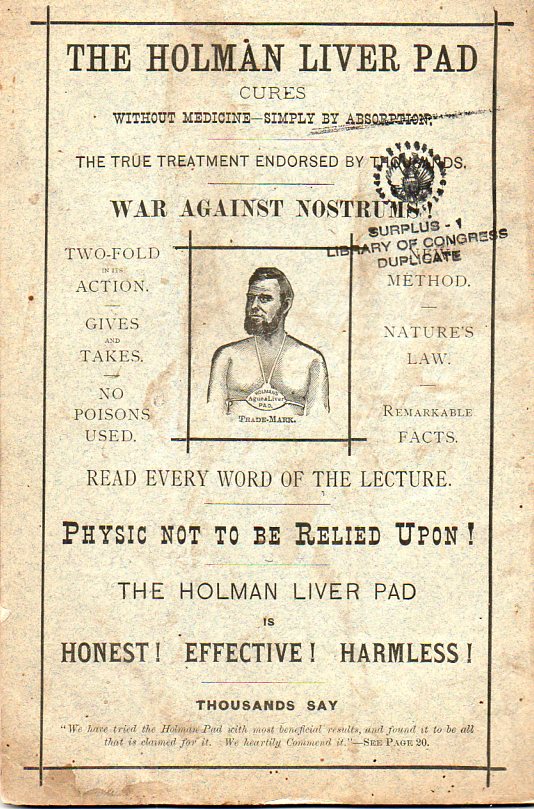
    It happens now and then that I unearth interesting bits from the pamphlet collection here that instantly create their own categorization–this in spite of already having a hundred sculpted categories. Works like this demand a deeper inspection to sustain their uncommon non-bond with other similar but not-so works. On the face of it, Fairchild’s Nature’s Laws… looks like just another quack medical remedy/cure/belief system (or suspension thereof), except that on closer inspection there is more text regarding the product on the pamphlet’s covers than in the work itself.  The thing does wind up being 36pp long, but it is most testimonial and promise–after all, you can’t say all that much abut secret ingredients for the “liver patch” that you were supposed to wear, and you couldn’t say much about the medical inventiveness and foundation behind it because there wasn’t any. So I guess you fill space with words that aren’t necessarily connected to anything and that collectively had no value, much like a year’s worth of Trumpian nothingness. Anyway, there’s a lot going on on teh covers of this pamphlet, and much like what is going on inside of it, it all adds up to chicken scratches. 

    Liver Pad508

    Liver Pad509

    D.W. Fairchild. Nature’s Laws; New Ideas Concerning Them. A Medical Lecture Delivered in Wesleyan Hall, Boston, on Friday Evening, March 30, 1877…Illustrating the Principles of Absorption, as Developed in the Holman Liver Pad…copied from the Boston Daily Globe of Saturday, March 31st, 1877. 22×14.5cm, 36pp. Printed by the Holman Liver Pad Company, 1877.  WorldCat/OCLC locates only two print copies and many others in microform.  

Recent Posts

Archives

Categories