A Daily History of Holes, Dots, Lines, Science, History, Math, Physics, Art, the Unintentional Absurd, Architecture, Maps, Data Visualization, Blank and Missing Things, and so on. |1.6 million words, 7500 images, 4.9 million hits| Press & appearances in The Times, Le Figaro, Mensa, The Economist, The Guardian, Discovery News, Slate, Le Monde, Sci American Blogs, Le Pont, and many other places… 5000+ total posts since 2008.

  • A Superior Musical Review Hidden inside a Superior and Obscure Journal, 1923

    JF Ptak  Science Books  Post 2630

    Manuscripts (MSS), edited by Paul Rosenfeld in New  York, 1922-23, was a Small Magazine, a wonderful Dadaist publication with contributions from the leading artisitc/intellectual community including Georgia O’Keefe, Alfred Stieglitz, Paul Strand, John Marin, Charles Demuth, and many others. What I’m writing about right now is issue #5–appearing in March 1923–of the six (total) issues that were printed of this short-lived and very highly spirited magazine–the issue shockingly emerged from a box in the studio last night. The striking cover was designed by Georgia O’Keefe, and underneath the cover for issue #5 “one of the most remarkable issues” (according to the Dada Once and For All catalog by Ex Libris in 1983), was the work of the critic and Stieglitz-supporter Herbert Seligmann. 

    All this aside, what really struck me was the broadside “review” tucked into the twelve-page publication–a very segmented, highly typefaced and fonted (sorry!), very creative look at the composer Edgard Varese’s Hyperprism, a very adventurous work for wind, brass, and percussion instruments was completed in 1922 and revised in 1923, and then obviously reviewed by Seligmann in this issue of MSS in 1923.  Varese (1887-1965) was a very-modern modernist whose reference to his music as “sound-mass” (among many other things of course) that was in a way similar to the process of crystallization/chemical crystallography gives an insight into the name of the piece to be performed. The review admonished “This is a Serious Work, Those Who Don’t Like It PLEASE GO” among other such tidy phraselets.  I reproduce this fantastic little gem below:
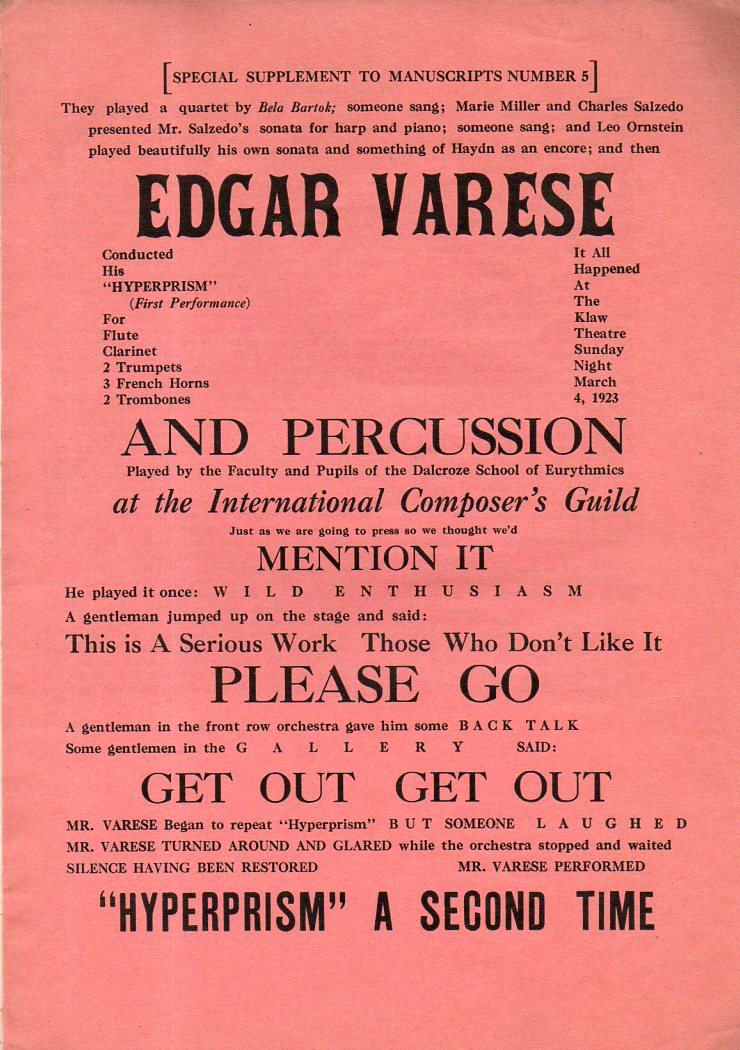
    Varese615

    Also if you’d like to listen to it:


    By the way Music and Modern Art by James Leggio  reproduces (on page 141) the Varese review as a full-page illustration. 

    See also Herbert  Seligmann, Alfred Stieglitz Talking: Notes on Some of his Conversation, 1925- 1931, New Haven: Yale University Library 1966, for more on MSS. 

    For more on MSS:


    • All six issues reproduced at Monoskop, here: https://monoskop.org/MSS
    • Full text of the MSS Number 5 https://monoskop.org/images/3/3d/MSS_5_Mar_1923.pdf

    And this from issue #5 on the previous issue of the magazine:  “MSS. Number One contained writings by Sherwood Anderson, Kenneth Burke, Waldo Frank, Paul Rosenfeld, Herbert J. Seligmann, William Carlos Williams. MSS. Number 2 contained writings by John Marin, Alfred Stieglitz, Paul Strand, Charles Duncan. MSS. Number 3 was entitled “What Is True Art?” by J. B. Kerfoot and W. Rhea Moreau. MSS. Number 4 was entitled “Can A Photograph Have The Significance Of Art?” by Sherwood Anderson, Thomas H. Benton, Ernest Bloch, Oscar Bluemner, Stephan Bourgeois, Gilbert Cannan, Charles Chaplin, Thomas J. Craven, Elizabeth Davidson, Charles Demuth, Marius De Zayas, Arthur G. Dove, Marcel Duchamp, Alfeo Faggi, Waldo Frank, Hutchins Hapgood, J. B. Kerfoot, Gaston Lachaise, Walter Lippmann, John Marin, Kenneth Hayes Miller, George F. Of, Georgia O’Keeffe, Leo Ornstein, Joseph Pennell, Carl Sandburg, Evelyn Scott, Charles Sheeler, Leo Stein, S. Macdonald Wright, Carl Zigrosser, Bibliography. The price of MSS. Number 5 is 15 cents. Subscription to 10 numbers one dollar. The entire cost of this MSS. Number 5 is the printing bill of $130.00 for the present edition of 1,000 copies, presented by Clarence S. Nathan, Inc., and paid by the Tin Whistle Fund. Each author is solely responsible for what appears over his signature. Complaints should be sent to individual authors. Subscriptions will be received by Herbert J. Seligmann, 129 East 10th Street, New York City. Donations of money will be received with thanks by the same. For the cover design: apologies to “Dada” (American), Marcel Duchamp, Man Ray, and acknowledgment to “Anonymous.” Copyright, 1923, by Herbert J. Seligmann.”–from page 2 of MSS Number 5. 
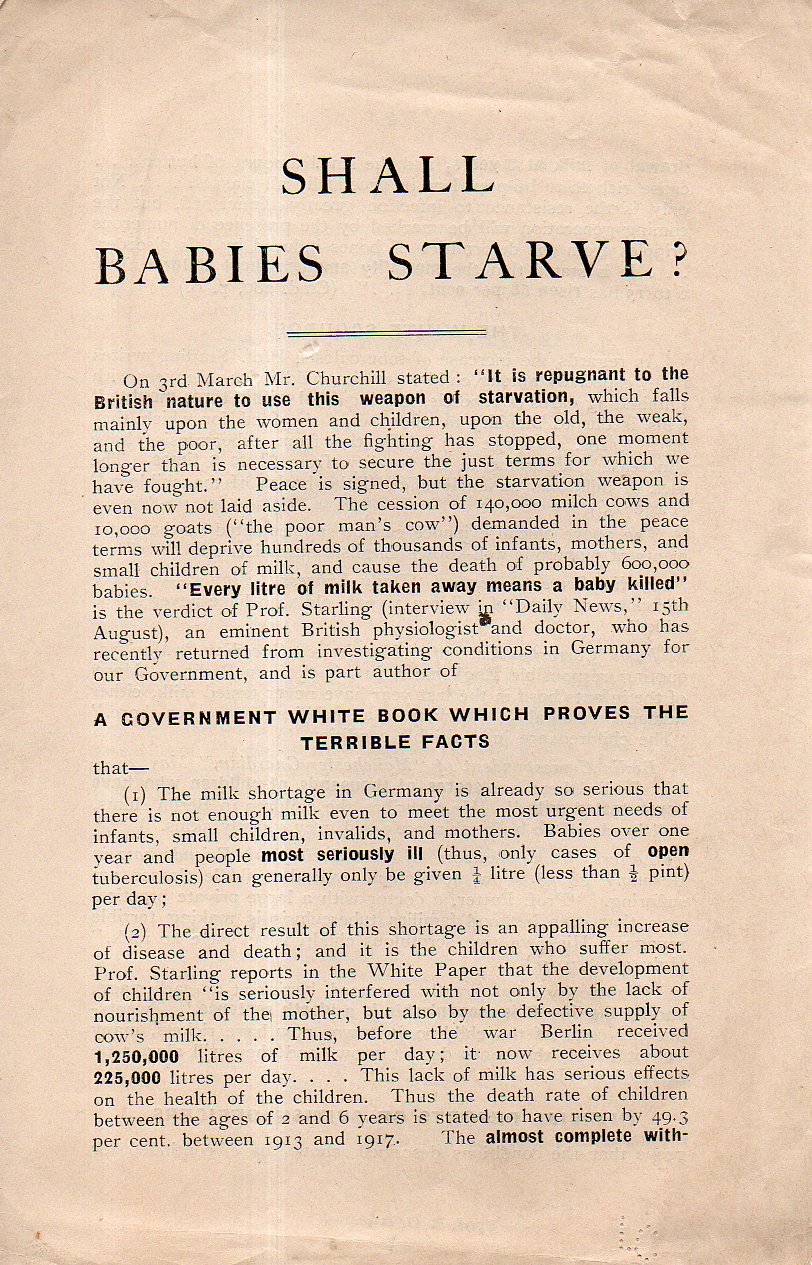
  • “There is No Necessity to Kill the Babies”–Fight the Famine Council, 1919/1920

    JF Ptak Science Books  Quick Post

    This is one of the pamphlets published by the Fight the Famine Council, published in London in 1919/1920/ Fight the Famine was founded in January 1919 to fight for the lifting of the embargo still in place for Germany and its Allies by alerting government figures and agencies about the conditions brought on by the continuing years-long embargo.  Leading the Shall Babies Starve pamphlet is (as you can see below) a strong quote by Winston Churchill (who at the time was Secretary of State for War, 1919-1921), who insisted that using food as a weapon was “repugnant to the British nature”. Of course this one of the results of the embargo, which no doubt lead to the deaths of hundreds of thousands of bystanders, including women and children.  Shall Babies Starves outlines the effects of the continued embargo on on infants and children, including short sections on “what a milk famine will mean”, tuberculosis, and “there is no necessity to kill the babies”.  This was a four-page leaflet, reprinted in full:

    British handouts Babies Starve _1_630

    ·Posted by :

    ·in:

  • Benjamin Franklin, in Love with the Sea, 1786/7

    JF Ptak Science Books   Post 2632

    Franlin b631

    Franklin, Benjamin. Suite de la Lettre de M. Benjamin Franklin, a M. David le Roy, Membre de pluisseurs Academies, Contenant Differenres Observations sur la Marine, a three-part series printed in Observations sur la Physique sur l’Histoire Naturelle et sur les Arts, avec des Planches en Taille-Douce.…dedicated to M. Le Comte d’Artois, and edited by l’Abbe Rozier, J.A. Mongez, and M. de la Metherie, in the issue for July-December 1787, volume 31, and Printed in Paris at the Bureau of the Journal de Phyique, 1787. (he title of the Franklin, translated: (A) Letter(s) from Dr. Benjamin Franklin, to Mr. Alphonsus le Roy, member of several academies, at Paris. Containing sundry Maritime Observations.) The papers appeared in  September  pp 224-231; October, pp 254-264;December pp 456-468.

    Franklin

    By the time Benjamin Franklin published these three pieces—letters he had written at sea— he already had a lot of experience with the voyage, having made numerous trips oversea since 1754. At this point he was the American envoy to France, and had been (very successfully!) busy at securing arms and agreements from France, and put his time during the crossing to some concentrated use.

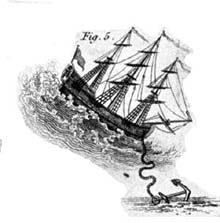
    These three letters by Franklin to le Roy are remarkable for their insight and invention, describing new types of ship sails and anchors, propulsion systems, hull and planking designs—and of course the first description in a scientific publication of the Gulf Stream. And in all of this Franklin as shipboard, biding his time at sea, thinking and experimenting, coming up with ideas that were of high interest though not necessarily workable, and some just frankly beyond his big grasp.

    Franlin c632

    I was really shocked when I started piecing my way through this volume, and finding the Franklin. Honestly, I didn’t know the significance of the Franklin starting into it, the thing only dawning on me as I got half-way through the second letter, and with a squint recognizing that what he was talking about in the waters off of the coast of “Floride” was in fact the Gulf Stream. “Oh” is what I said to myself. This is that paper. At least it wasn’t a terribly obvious overmiss—this version of the famous description of the Gulf Stream didn’t come with a map, and the illustrations were little bits showing flouncy sails (of dubious application, sorry) and sea brakes. Even when I realized that this was the Gulf Stream Paper, its significance still wasn’t significant, as the great report occupies just a small portion of one of three letters. So it goes.

    The first publication of these letters appeared in the Transactions of the American Philosophical Society of Philadelphia (the society founded by Franlin in 1743) about a year earlier, and which contained the famous map (15×8” or so,  A Chart of the Gulf Stream with Remarks Upon the Navigation from Newfoundland to New-York In order to avoid the Gulf Stream . . . and nor included here) which he completed with the help of his first cousin Thomas Folger. Actually the two had printed an earlier version, in 1769/70, though the map received basically no circulation and was famously disappeared for 200 years before being unearthed.

    There were earlier references to the Gulf Stream—as with the ignored Walter Haxton chart of 1735—though nothing nearly so complete and accurate as the Franklin map.

    This is the first French version of the letters, and so the first French translation of the description of the Gulf Stream; it was also the first appearance of the article in Europe.

    It has been said that the work by Franklin was ignored and associated with inferiority by the Brits because of the adolescent nature of the American Republic and the inexperience of its navy, especially in regard to the Royal Navy. The Gulf Stream simply couldn’t be a discovery of a “river in the ocean” as described by a bunch of fisherman in a colony far from the birthright of a proper navy and scientific inheritance. But of course the Brits were wrong.

    Here’s a bit from the letters on the Gulf Stream, appearing in my journal on page 460-1, translated:

    “This stream is probably generated by the great accumulation of water on the eastern coast of America between the tropics, by the trade winds which constantly blow there. It is known that a large piece of water ten miles broad and generally only three feet deep, has by a strong wind had its waters driven to one side and sustained so as to become six feet deep, while the windward side was laid dry. This may give some idea of the quantity heaped up on the American coast, and the reason of its running down in a strong current through the islands into the Bay of Mexico, and from thence issuing through the gulph [gulf] of Florida, and proceeding along the coast to the banks of Newfoundland, where it turns off towards and runs down through the western islands. “

    Well, sheesh. There was a lot of thinking going on in this letters—not bad for a guy with other things going on in his head regarding the founding of a new nation.


  • Found Book Art: Franklin at Sea, 1787

    JF Ptak Science Books  Quick Post

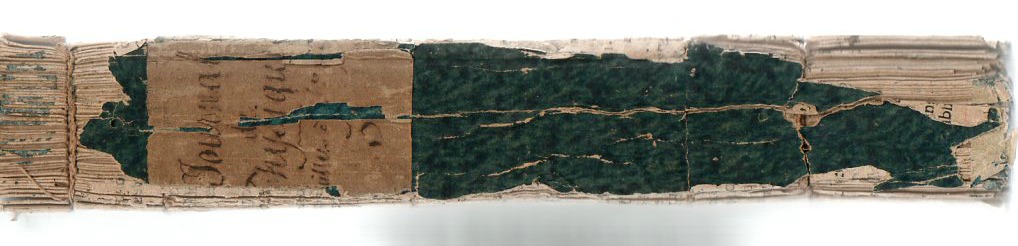
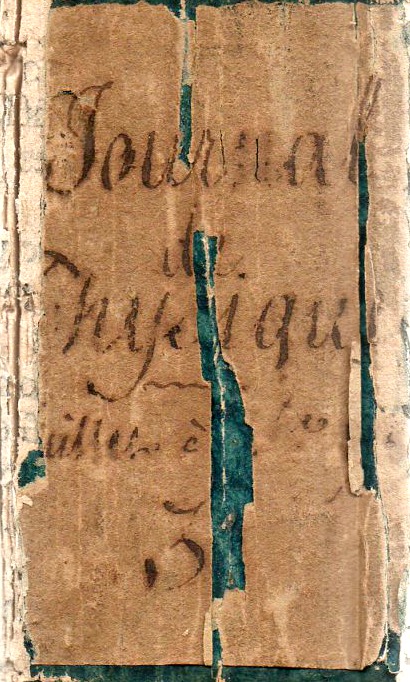
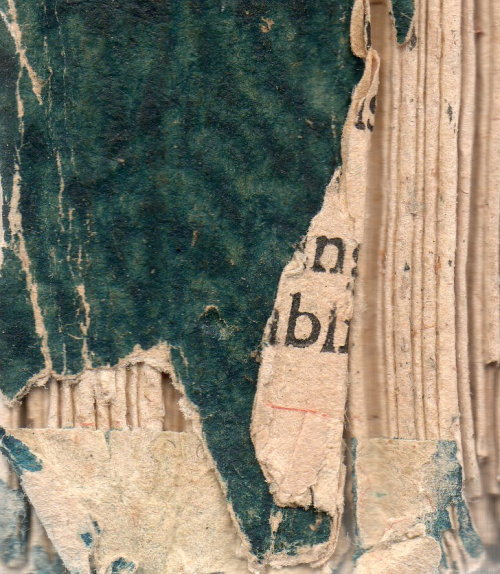
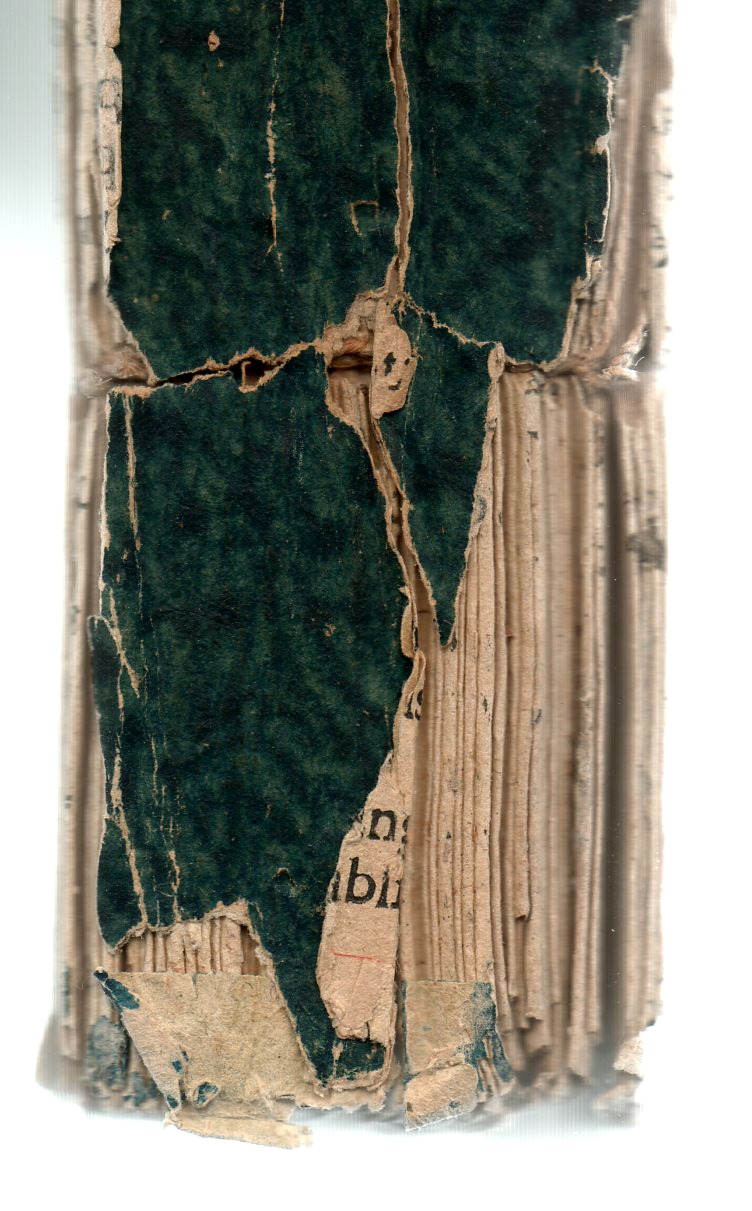
    One of my favorite bits to compose for this blog is the Found Book Art series–which is odd because there isn’t even a category for it. Maybe there are a dozen of these in the 4500 posts here, so there aren’t many, though there could be,..I guess I could do one a day, but that might take the special flavor away for me. In any event, I like them; I’d probably like them even more if I hauled out one of the microscopes and did some close work on them.  For today, though, I’m just looking at this pretty spine of the journal Observations sur la Physique sur l’Histoire Naturelle et sur les Arts of 1787 which contains a seminal contribution1 by Ben Franklin on the Gulf Stream.  

    Franlin bookart634


    Franlin bookart633

    These are details of:

    Notes:

    1. Suite de la Lettre de M. Benjamin Franklin, a M. David le Roy, Membre de pluisseurs Academies, Contenant Differenres Observations sur la Marine, a three-part series printed in Observations sur la Physique sur l’Histoire Naturelle et sur les Arts, avec des Planches en Taille-Douce.…dedicated to M. Le Comte d’Artois, and edited by l’Abbe Rozier, J.A. Mongez, and M. de la Metherie, in the issue for July-December 1787, volume 31, and Printed in Paris at the Bureau of the Journal de Phyique, 1787.

  • Tinian, the Manhattan Project, and Manhattan (1944/5)

    JF Ptak Science Books   Quick Post 

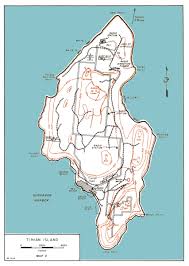
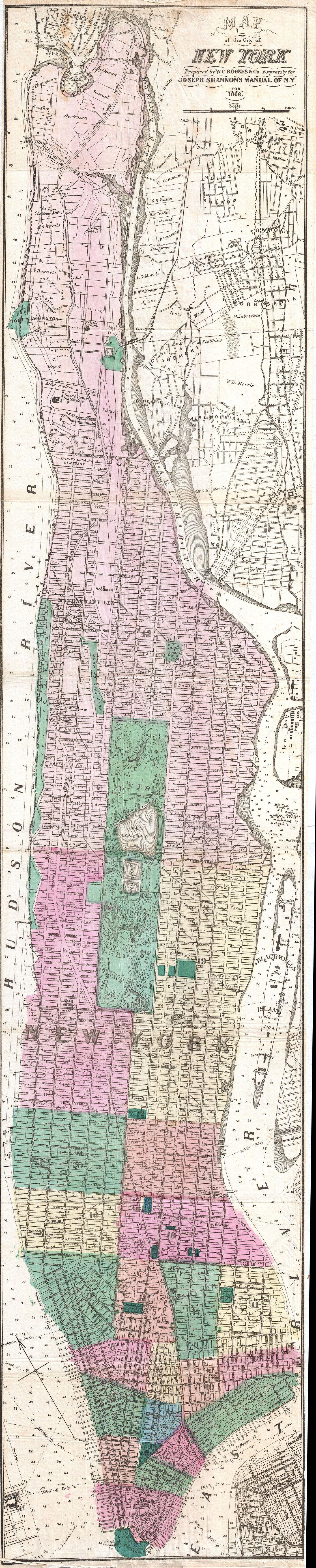
    As we all know Tinian Island was of a vast strategic importance to Allied War effort against Japan.  It sits just a few miles away from Saipan, and is situated close enough to Japan (1500 miles) to make the place an integral part of the advance on Japan as an airstrip.  The battle fought to control the island–in August 1944–resulted in it being taken by U.S. forces, the Japanese losing all but 300 or so of a garrisoned force there of 8500. Tinian became home to (among others) the 509th Composite Group, which was the home base for the bombing of Hiroshima and Nagasaki. It was the penultimate step of the fulfillment of the Manhattan Project–the last being the dropping of the bombs–and it struck me only very recently that after all of this time, it seems to me that Tinian bears a resemblance to Manhattan Island, which  makes for a peculiar irony. 

    Now that I have for the first time looked at a map of Tinian with street names, I see that this irony was deeply incised into the very earth of the place by Seabees, because when the plan of the city was laid out in the fall of 1944, the place received a gridwork of streets similar to Manhattan–and as a matter of fact, a number of the streets were named with Manhattan in mind: Broadway, Riverside Drive, Canal Street, 42nd Street, Wall Street, Canal were there and named, and even for the north end of the island, the major road leading out was named Saw Mill River Parkway, which is what I would drive leaving the city for Great Barrington, Ma. I don’t know why I am so very late to this party, but I am.  If you’ve not noticed this before, join the club, and enjoy.  (See here for a clearer map of the Tinian street names: http://www.pacificwrecks.com/provinces/marianas/maps/tinian.html#axzz4HjqvMu1w )

    Tinian Tnian manhattan

  • Found Book Art: Page in a Book or Stellar Field?

    JF Ptak Science Books   Quick Post

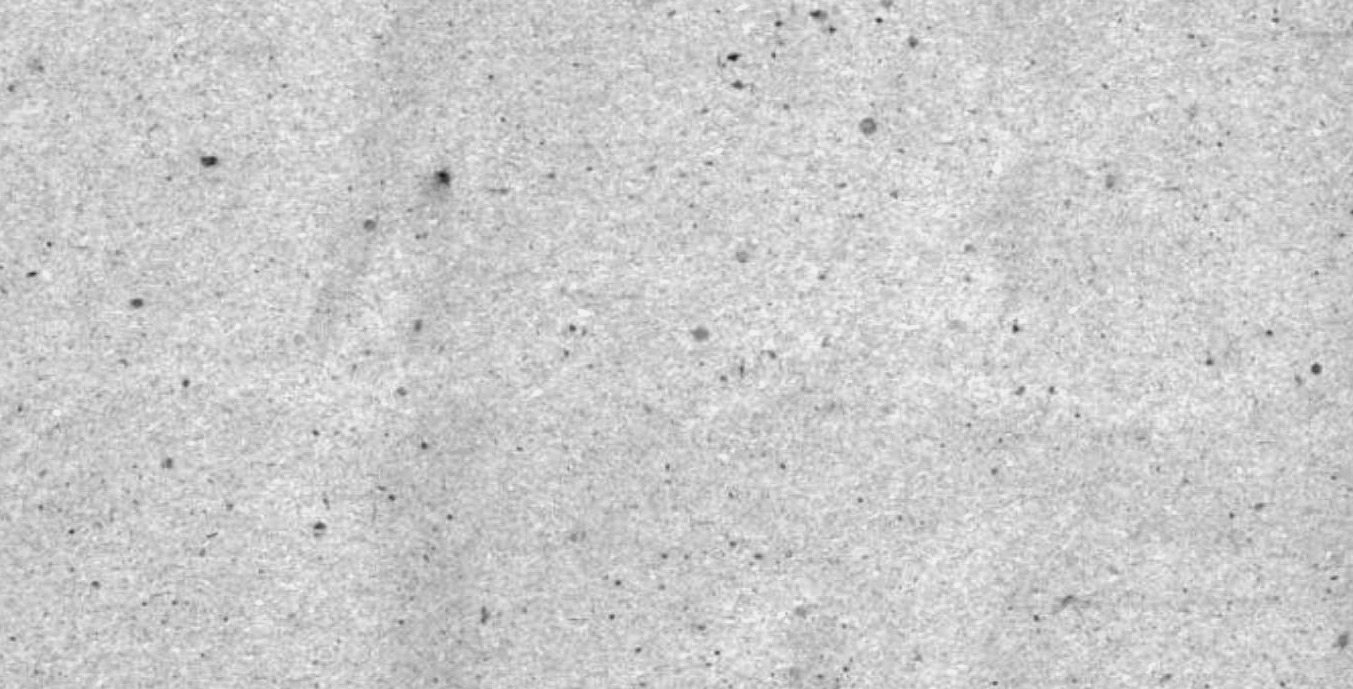
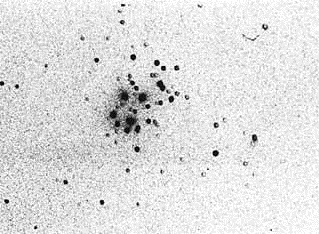
    Book universe montage

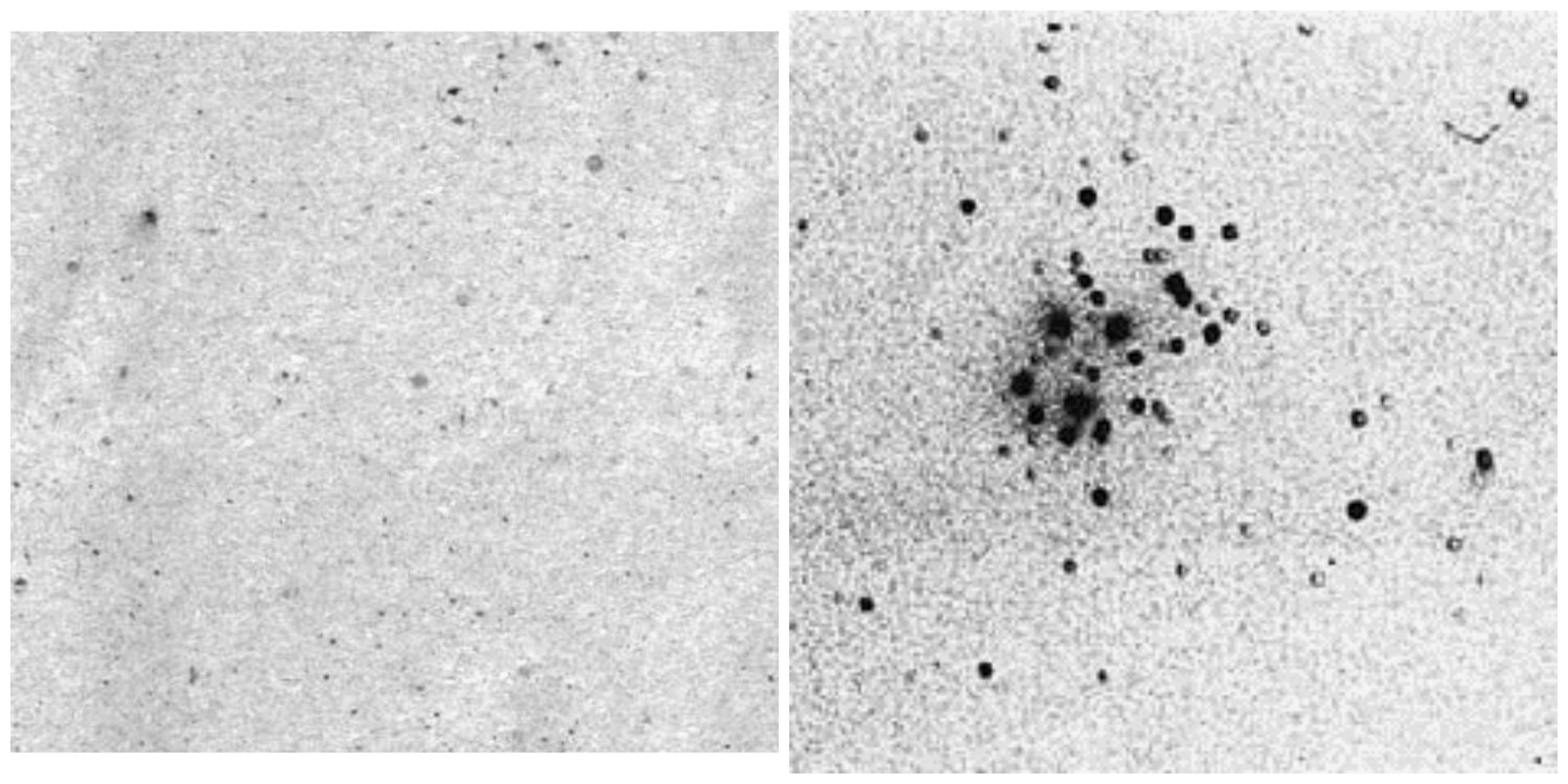
    Cellulose vs. stars: one of these images is an image of stars, the other is an image of slowly deteriorating paper in a book.  I think that this could be more convincing if I looked harder for a more convincing book, but I decided to go with the semi-random choice, below. As it is it is enough to give pause to some sort of thought, no doubt a quote of a stars-in-the-sky-as-in-a-book variety could probably be found, I think we’ll let this one go simply recognizing a certain similarity. 


    Book universe _1_

     Image 1; front free endpaper in Chemical News, London, 1878.


    Book universe _2_


    Image #2: Skylab astronomy, from http://history.nasa.gov/SP-404/ch2.htm  Figure 2-20. “Ultraviolet photograph of the Pleiades taken with the Schmidt-Cassegrain camera system (21-min exposure). The Schmidt-Cassegrain camera system obtained ultraviolet pictures of 36 star fields. A typical observation target, the Pleiades (fig. 2-20), was photographed in a 21-min exposure. It is an example of a group of some 300 young, hot stars (not all seen here) formed about 60 million years ago. The stars are embedded in nebulous matter, which produces the haze seen around the bright stars. This haze is seen in the ground-based,…..”

    ·Posted by :

    ·in:

  • Babbage on Chess (1817) and “Miracles”, Among Other Things

    JF Ptak Science Books  Quick Post

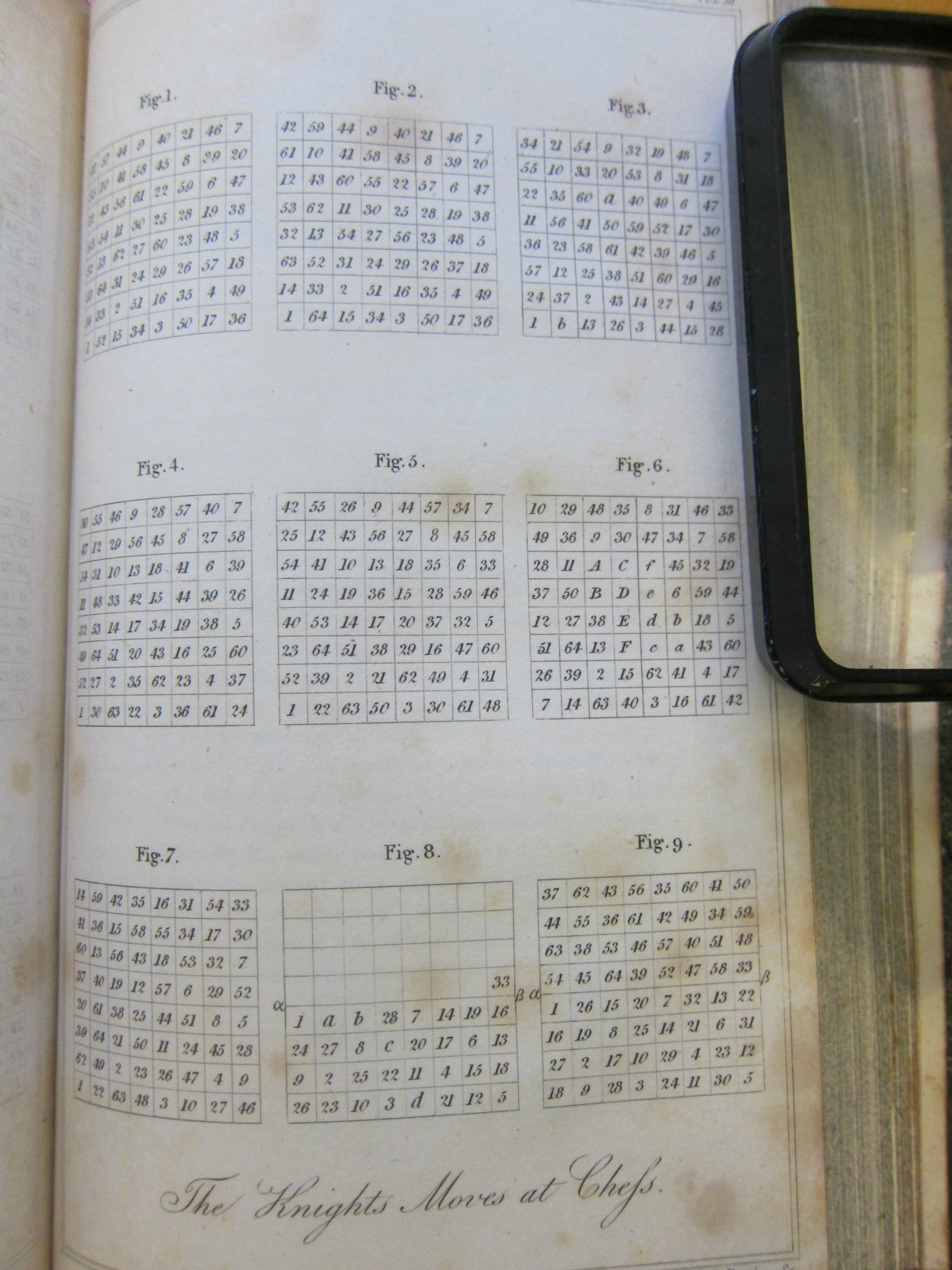
    When reading through a volume of the Royal Society’s quarterly publication on the stuff of science (for the year 1817) I came across an article on the Knight’s Tour puzzle: “An Account of Euler’s Method of Solving a Problem, relative to the Move of the Knight at the Game of Chess, from a  Correspondent”, published in  The Quarterly Journal of Science, Literature, and the Arts, edited at the Royal Institution of Great Britain, published by John Murray for the Royal Institution, London, 1817-1818. After a little digging to find the authorship, I found that the “Correspondent” here is Mr. Charles Babbage himself, with the authorship established at least by the time of his Passages from the Life of a Philosopher if not before. The Knight’s Tour puzzle–in which a  knight is moved around a chessboard (8×8 grid, though smaller and much larger have been used) so that every square is touched only once–is ancient, with the host of the famous 18th century mathematical revelers3 positioning the problem in the dim past, with Lucas in 1882 and then Kraitchik in 19272 fixing it more resolutely in India over 2000 years ago.Passages from the life of a philosopher

    Babbage Chess


    Babbage identifies the paper as his own in the section of his own “contributions to human knowledge” in his retrospective, Passages in the Life of a Philosopher, published in 1864. I’ve never read this book though I’ve used bits and pieces for research, though last night and today I’ve read in it quite a bit. And apart from the sheer enjoyment of the power of this guy’s mind, I’m finding the book to be unexpectedly amusing. The man is actually funny, plus witty, and an entertaining write–why this is so surprising, I don’t knw; perhaps it is because he is associated in a personal sense in my mind with General Winfield Scott, as they resemble one another, both looking Very Highly Contentious and gassy. In any event, I can safely say that this is a Good Read. 

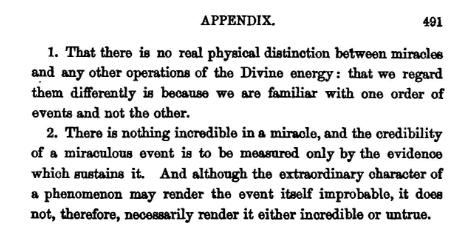
    For example, here’s a bit in the appendix, Babbage writing on “miracles”:

    Bsbbsgr miracles

    There’s a few pages of reasoning before we get to his enumerated “prepositions”, but this should do nicely.  The guy was a very very good thinker. 

    Full text here: https://archive.org/stream/passagesfromlif01babbgoog#page/n510/mode/2up

    Notes

    ·Posted by :

    ·in:

  • Charles Babbage, Humorist

    JF Ptak Science Books   Quick Post

    Babbage eyes

    There are certain sections of Charles Babbage’s surveys of his life–Passages in the Life of a Philosopher, 1864–that are very unexpectedly, well, funny. I mean, there are stories told with a bald/dry sense of humor, a stony-faced delight, that I think are actually intentional. Perhaps I’m reading this all wrong–and if so someone will just have to correct me.  But rounding out long sections on the Difference Engines (1&2) and calculation and the future of  railroading and so on are long complaints regarding  the quirkiness of his day, as with the “destruction” of his time via a chapter named “street nuisances”, into which Babbage dives fairly deeply with some occasionally comic recountings of what pisses him off, which was frankly a lot. 

    What most intrigues me in this interpretation is the possible found-comedic or intentionally-comedic running page titles.  These are the several word descriptions of what is on the page that floats centered and above the text at the head of each page, which was a common practice in the 19th century.  It is here where Babbage really soars with the eagles, and I prefer to believe that he and not an editor put together these mot juste–they seem cranky and irritating enough to have been somewhat carefully selected.  In any event, I recorded a number of them below, for your amusement:

    • 52 Eggs
    • Artificial Swedes
    • Weight of Nepotism
    • Game of Tit-Tat-Toe
    • Occulating Sun Signals
    • The Story of the Two Pumps
    • The author in Want of Cash
    • The Learned Ponder Dunder
    • Disturbed Vision
    • The True Use of Figures
    • Various Shakes and Smashes
    • Conversion of Attics into Cellars
    • Space Too Large for Itself (!!)
    • A Decent Waist Coat
    • Awful Crash
    • The Value of a Button
    • Winking Statues
    • Primitive Purity–It Won’t Do
    • Biscuits and Whisky
    • A Finite Machine May Make Unlimited Calculations
    • and so on

    Many of these are pure clickbait–who could see “Conversion of Attics to Cellars” and not read on?  Science would demand you do so.  

    In any event, the book is well worth a read, of course–I mean it is Charles Babbage, and he does discus some very interesting things with razor-sharpness. And I’m sorry somewhat for concentrating on the funny bits, but they were just so unexpected I thought I needed to haul them out and get them some sun. 

    The full text via Internet archive: https://archive.org/stream/passagesfromlif01babbgoog#page/n2/mode/2up

    ·Posted by :

    ·in:

  • Suggesting a Landscape–the Beauty of Contour Lines on Maps

    JF Ptak Science Books   Quick Post

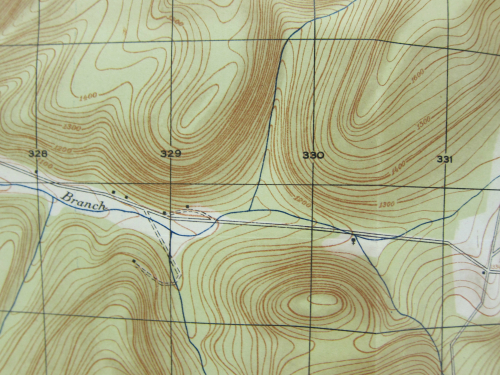
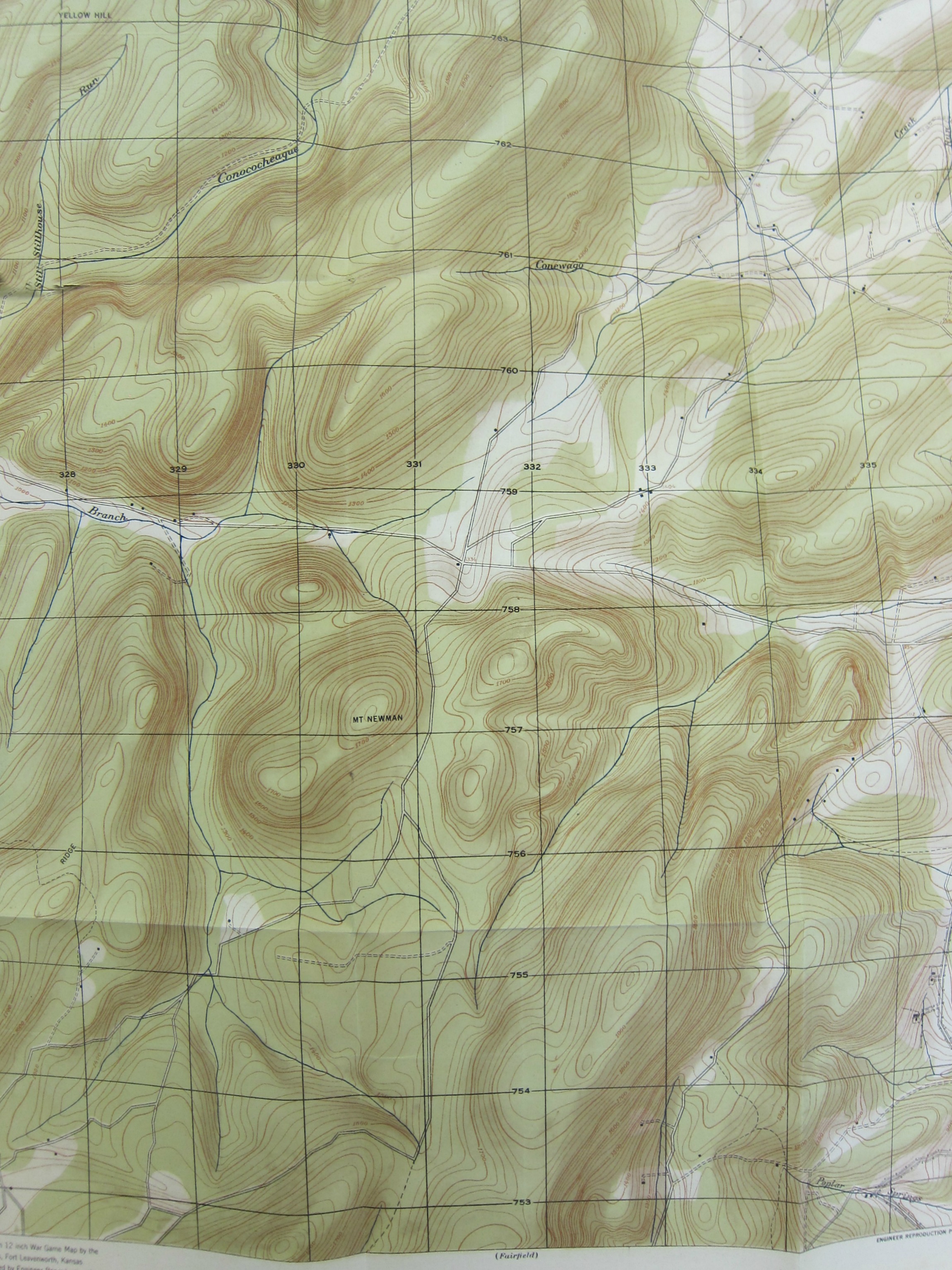
    There is a deep beauty in the imagery of maps with contour lines. This is found over and over again here, and tonight it rose from piecing together an enormous map of Gettysburg and its approaches.  Here is an example:

    Gettysburg map _detail 3_

    Source: A Map of Gettysburg and Antietam.  From: The Military Engineer, the journal of the Society of Military Engineers, published at the Mills Building, Washington, D.C., 1925-1927. 


    Gettysburg Map _detail 2_

  • What This Country Needs is a…Strong Communist Party (1946)

    JF Ptak Science Books  Quick Post

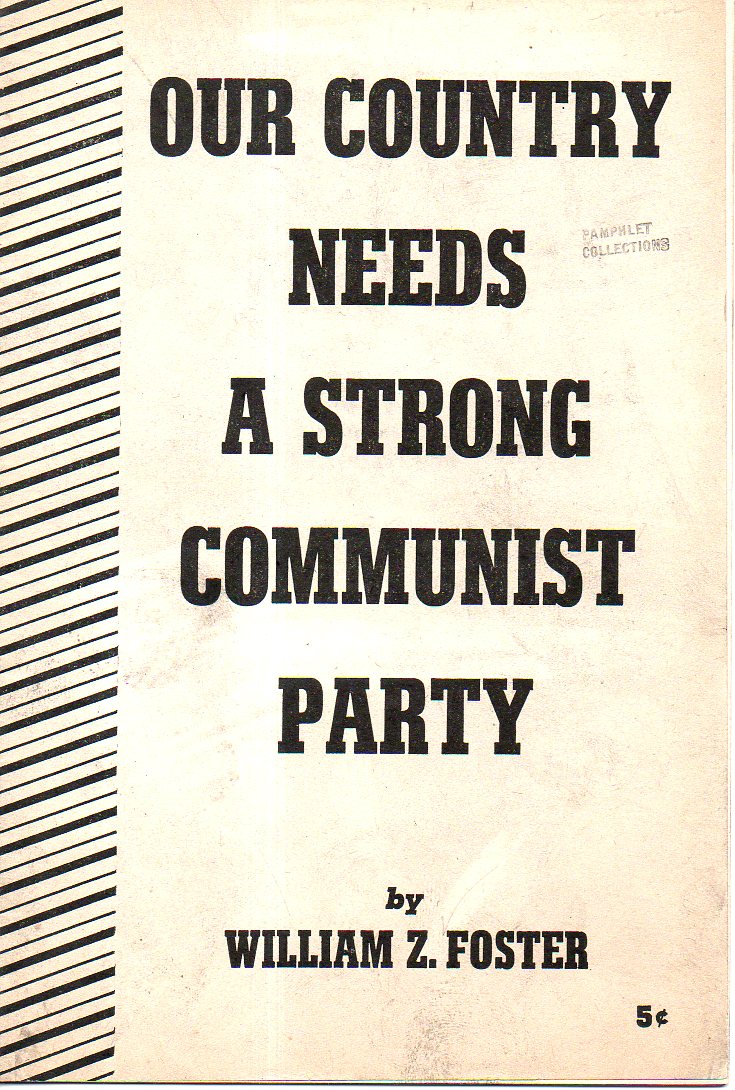
    This is a very quick post on an arresting cover graphic for a pamphlet by the ubiquitous William Z. Foster.  At the time he was the chair of the Communist Party U.S.A. (1945-1957) which was a desperately weird time to be in charge of anything Commie in the U.S. Foster was a more “centrist” radical labor organizer (if there is such a thing) before joining the Communist Party in 1919, jumping ship from the Wobblies and the Socialist  Party. He stayed with The Party until the end, when h died in Moscow in 1961, 60 years into his career. In any event, this is an interesting cover of a very hard sale to make in the U.S. in 1946.

    Communist party, what this country needs646

    ·Posted by :

    ·in:

  • Timelines in the History of Science from Thomas Young, 1807

    JF Ptak Science Books  Quick Post

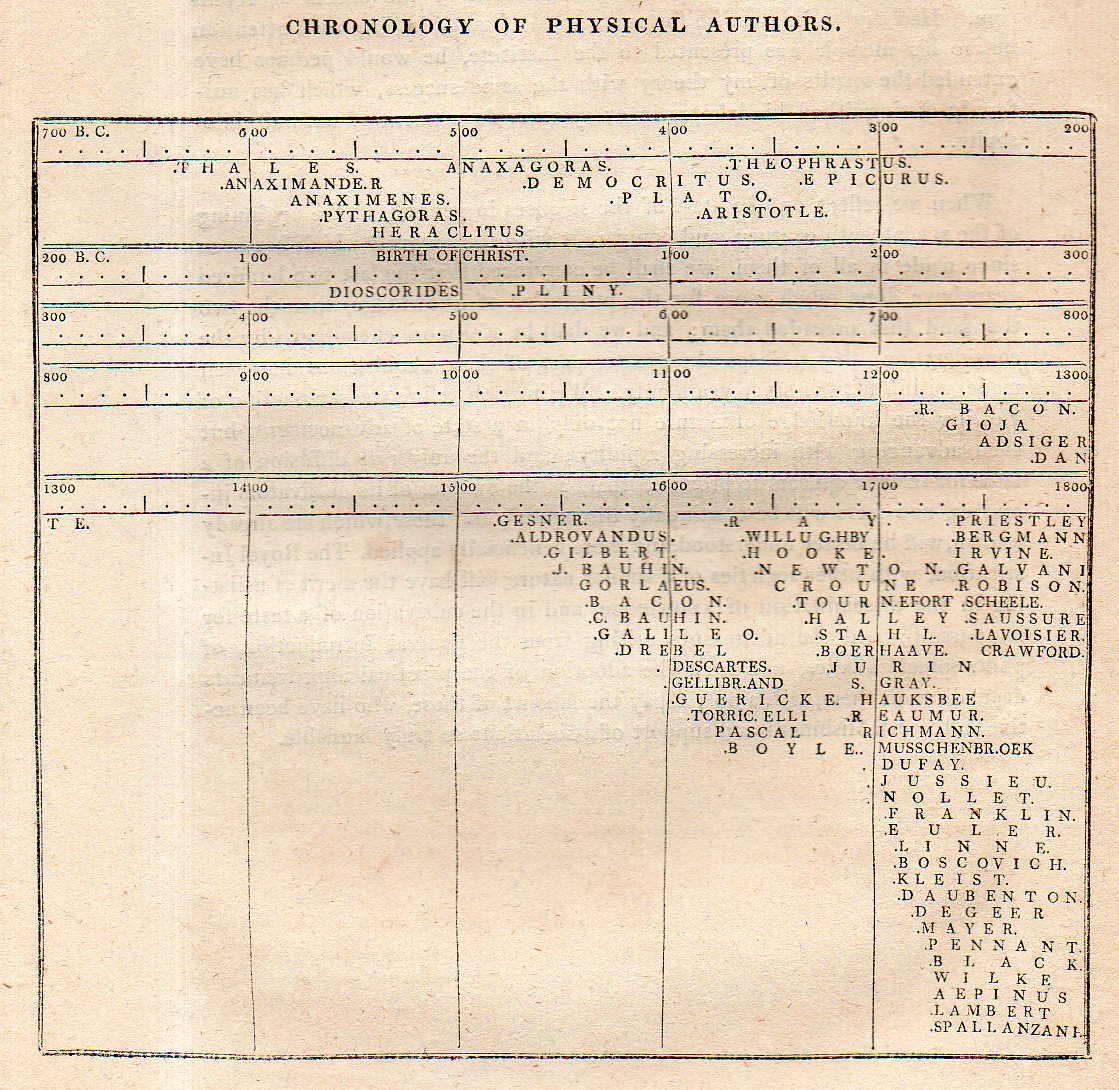
    I’ve always liked these timelines as they graphically display the lifespans of scientists/mathematicians/etc against one another, making it a little easier to see a selected period and who was active within it.  

    The work is by Thomas Young (1773-1829), a polymath remembered mostly for his work in optics and his very early translations of Egyptian hieroglyphics, and is found in his classic book A course of lectures on natural philosophy and the mechanical arts, published 1807.

    Full text: https://archive.org/details/lecturescourseof02younrich

    Young chronology physics644


Recent Posts

Archives

Categories