A Daily History of Holes, Dots, Lines, Science, History, Math, Physics, Art, the Unintentional Absurd, Architecture, Maps, Data Visualization, Blank and Missing Things, and so on. |1.6 million words, 7500 images, 4.9 million hits| Press & appearances in The Times, Le Figaro, Mensa, The Economist, The Guardian, Discovery News, Slate, Le Monde, Sci American Blogs, Le Pont, and many other places… 5000+ total posts since 2008.

  • An Ingenious Field Shower at the Front, 1915

    JF Ptak Science Books   Post 2466

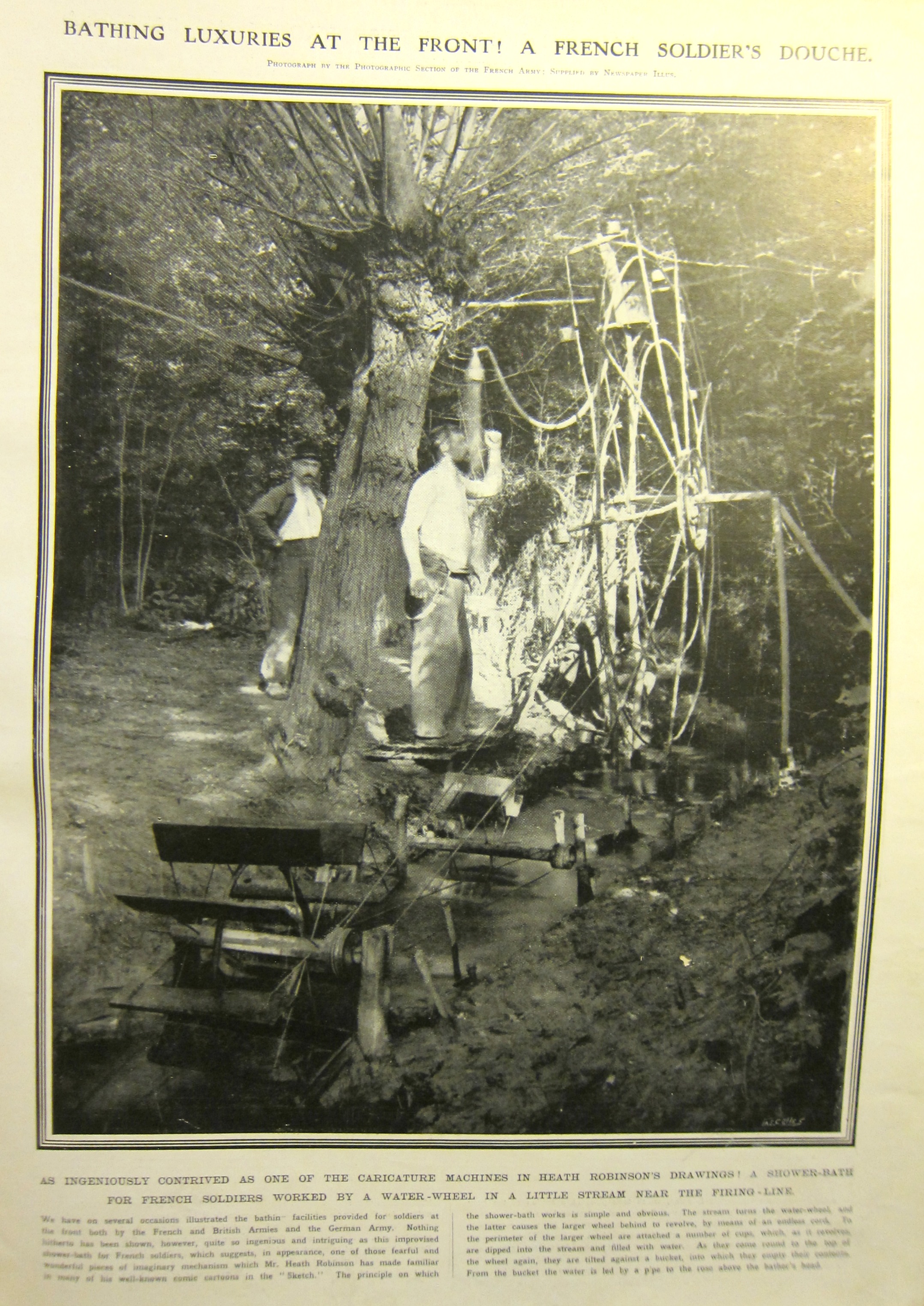
    There is almost nothing so spirited and heartbreaking and proud than people who find themselves in very difficult situations and who try to provide for themselves some comfort of a peaceful time, something far away from what they are experiencing, something that calls to some sort of peace and normalcy. An this is what we have here, for me, in this picture of a French soldier and his unit’s jury-rigged automatic shower. From the looks of the engineering, I’m assuming that the ting worked just fine, and I am certain that it provided no end of relief for those able to use the machine.  You’ll notice that teh soldier is also standing on a very small piece of wood elevated above the ground, so that the bather’s feet don’t become muddy. 
    WWI Project FrenchSHower 1915

    [Source: Illustrated London News, November 13, 1915–there would be nearly three more years of war to go. This image is very expandable.]

    The caption makes note of the drawings of Mr. Heath Robinson (1872-1944) who was a lovely, quirky, charming, skewed, dark, stiff-bouncing and creative illustrator capable of considerable whimsy (light and complex) and deep skepticism. It really does a small disservice to the battlefield engineers who built the shower–the thing is really pretty elegant, and seems to be quite light in spite of its size. Those guys did a good job.

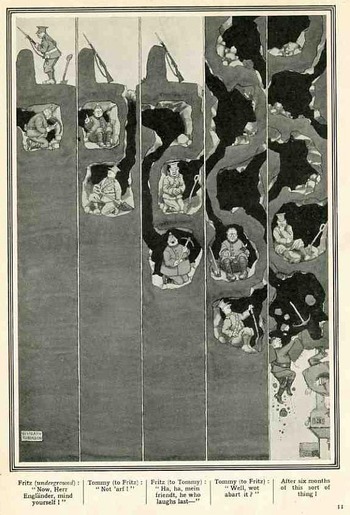
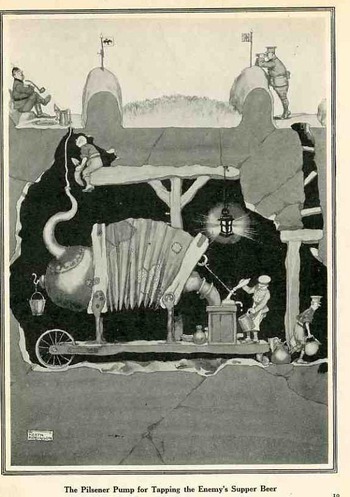
    The two following images  are from one of his three WWI books, Hunlikely, published in 1916 (Some “Frightful” War Pictures (1915), and Flypapers (1919), were the other two) and depict scenes from the intra-trench tunnel wars, which were battles fought in the midst (or, actually, beneath) other battles.  This was a savage, grueling, post-adjectival affair—exceedingly dangerous, difficult, awful.  And it happened a lot during the war, given the experience of stalemates between vast armies sunk into mole city trenches, with no one going anywhere for long periods because there was nothing in between the two impervious lines but a death vacuum. 
    Blogjuly_18_mining_robinson338

    So one of the solutions was to try and tunnel underneath the opposing army’s defenses, fill the far end with high explosives, and blow them up.  The other side was doing it too, and in the middle of it all was the incorporation of newer/better listening devices to detect forces rummaging around underneath your position dozens of feet into the ground.  It was a bad business. (One of the other means of breaching the trench lines was aerial combat, but bombers carrying tons of HE were still yet to be invented; poison gas was another.  Most of the time the armies would just meet in the middle  in wide plains of nothingness in a sea of hot, expanding metal,  where to this day in many of those places nothing can live).

    Robinson’s illustrations are odd, and oddly funny, the dark humor coming at the expense of both sides of the conflict, piercing each.   This one is more in line with the French battlefield shower, and shows Robinson’s over-the-top (so to speak) apparatus for stealing German beer:
    Blogjuly_18_tunnel_2_robinson340


    ·Posted by :

    ·in:

    —
  • Gas Masks and Coraline-Like Fear (1915)

    JF Ptak Science Books   Quick Post 

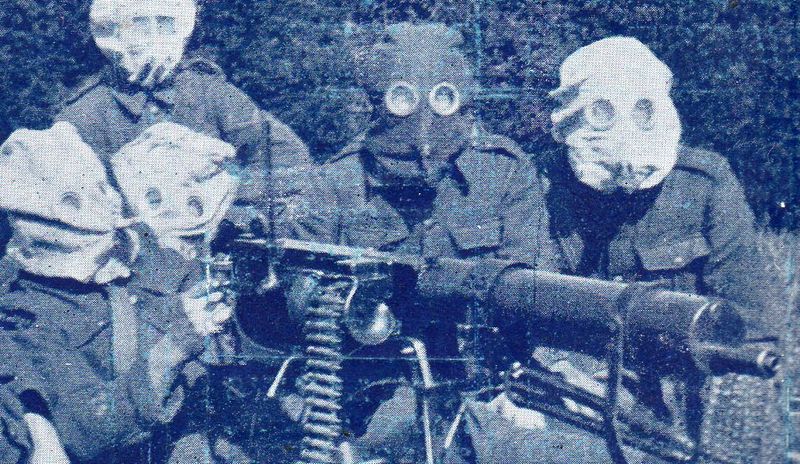
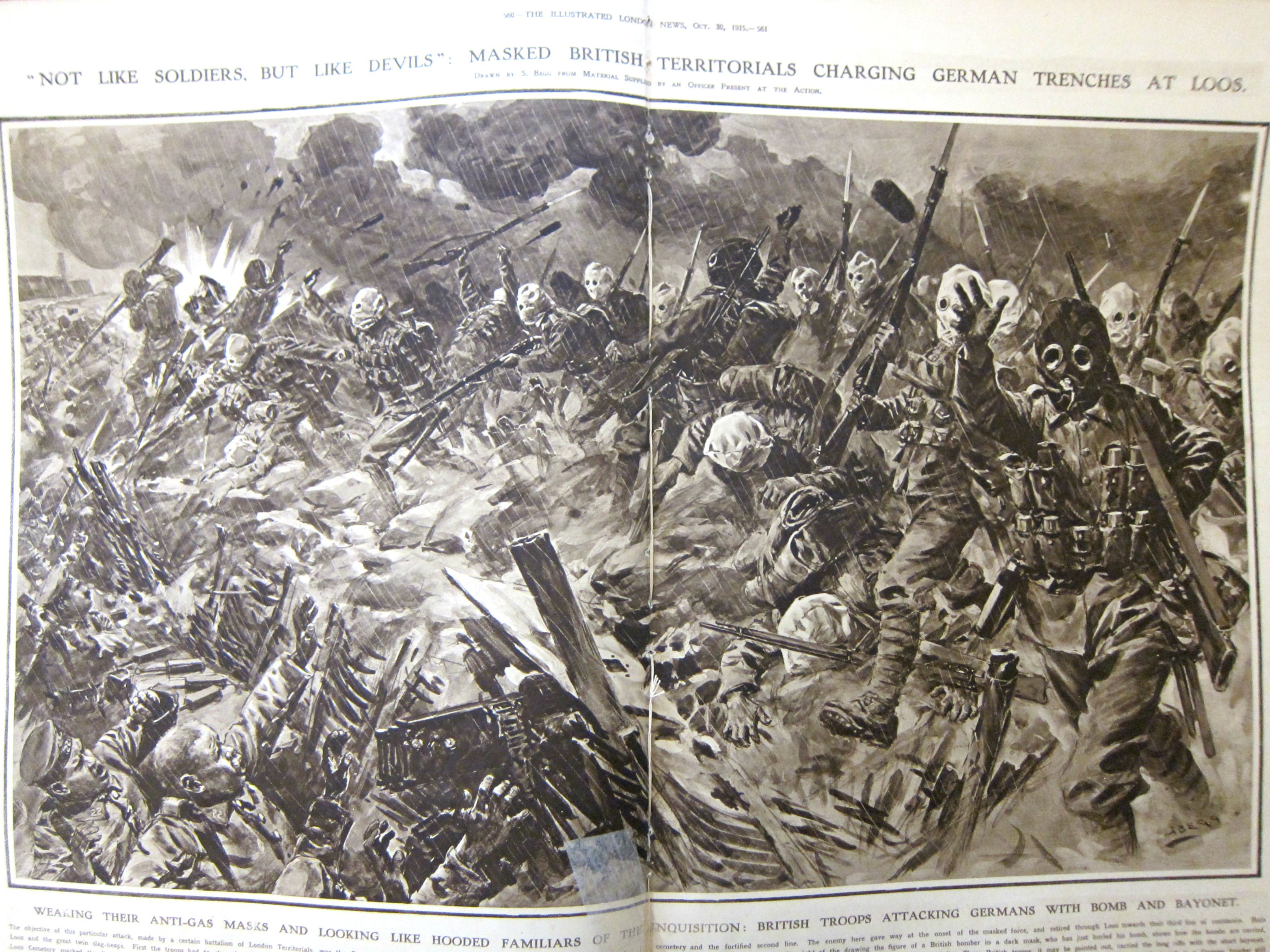
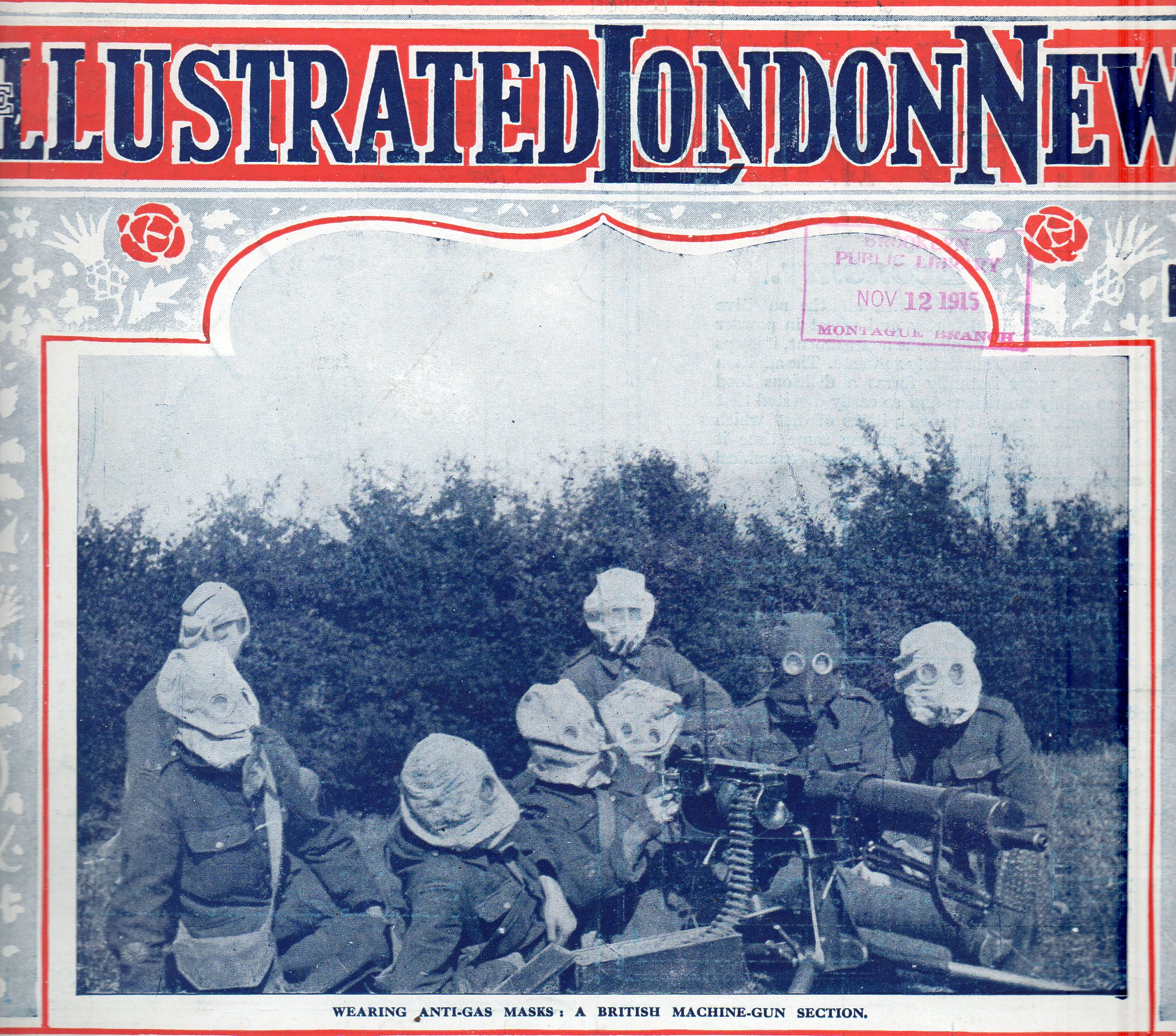
    The masks devised to deal with the gas attack of WWI were sometimes effective, sometimes not–and sometimes they were occasionally lethal enhancers.  The earliest masks were creepy, unworldly, Coraline-like burlap-and-button-faced affairs–I’d hardly want to imagine seeing thousands of these guys come running up to me with rifles and grenades in their hands attacking my position (as we can see in the image below of an attacking British force at Loos in 1915).

    And yes, of course, they started out as “anti-gas masks” because that is what they are–the “anti-” prefix is dropped not  long afterwards.  

    WWI--gas machine gun711


    WWI--gas machine gunb712

    And the attack on German lines at Loos, from the Illustrated London News, October 30, 1915:

    WWI Project Attacking gas masks


    ·Posted by :

    ·in:

  • Maps with a Message–WWI Advertisement with Map Propaganda

    JF Ptak Science Books   Quick Post

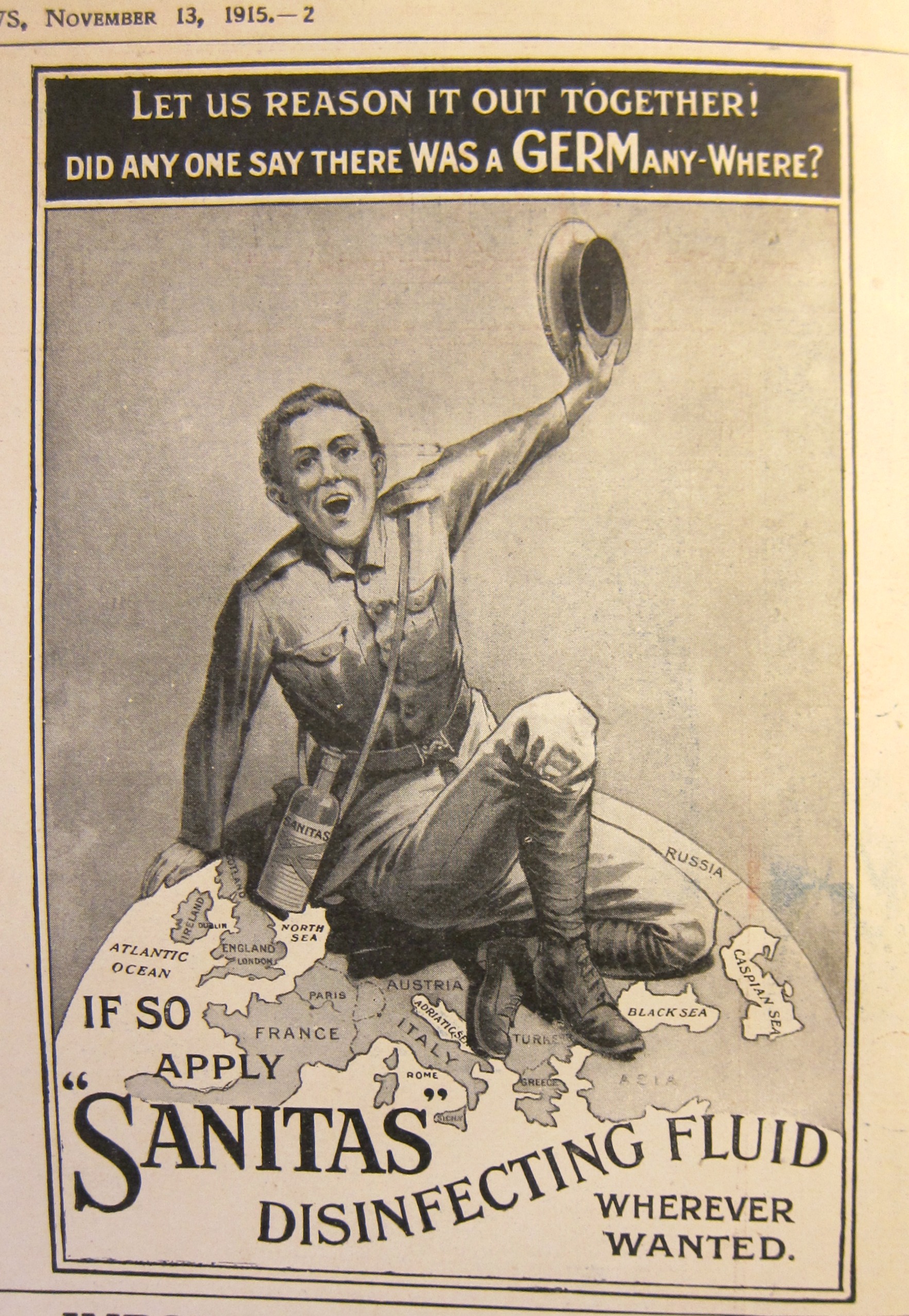
    This small ad for Sanitas (a non-poisonous”the disinfecting fluid”, composed of hydrogen peroxide and camphor as main ingredients) appeared in the quarter panel of the Illustrated London News on November 13, 1915, and told a definite story. Here we see a British soldier, sitting squarely on Germany, asking the reader “Did any one say that there was a GERM anywhere?” in a not-subtle connection between the German enemy and disease.  I hadn’t noticed this before, and so thought I would share…

    Maps WWI propaganda  Sanitas

  • Beautiful Data Circles (1898)

    JF Ptak Science Books  Post 2646

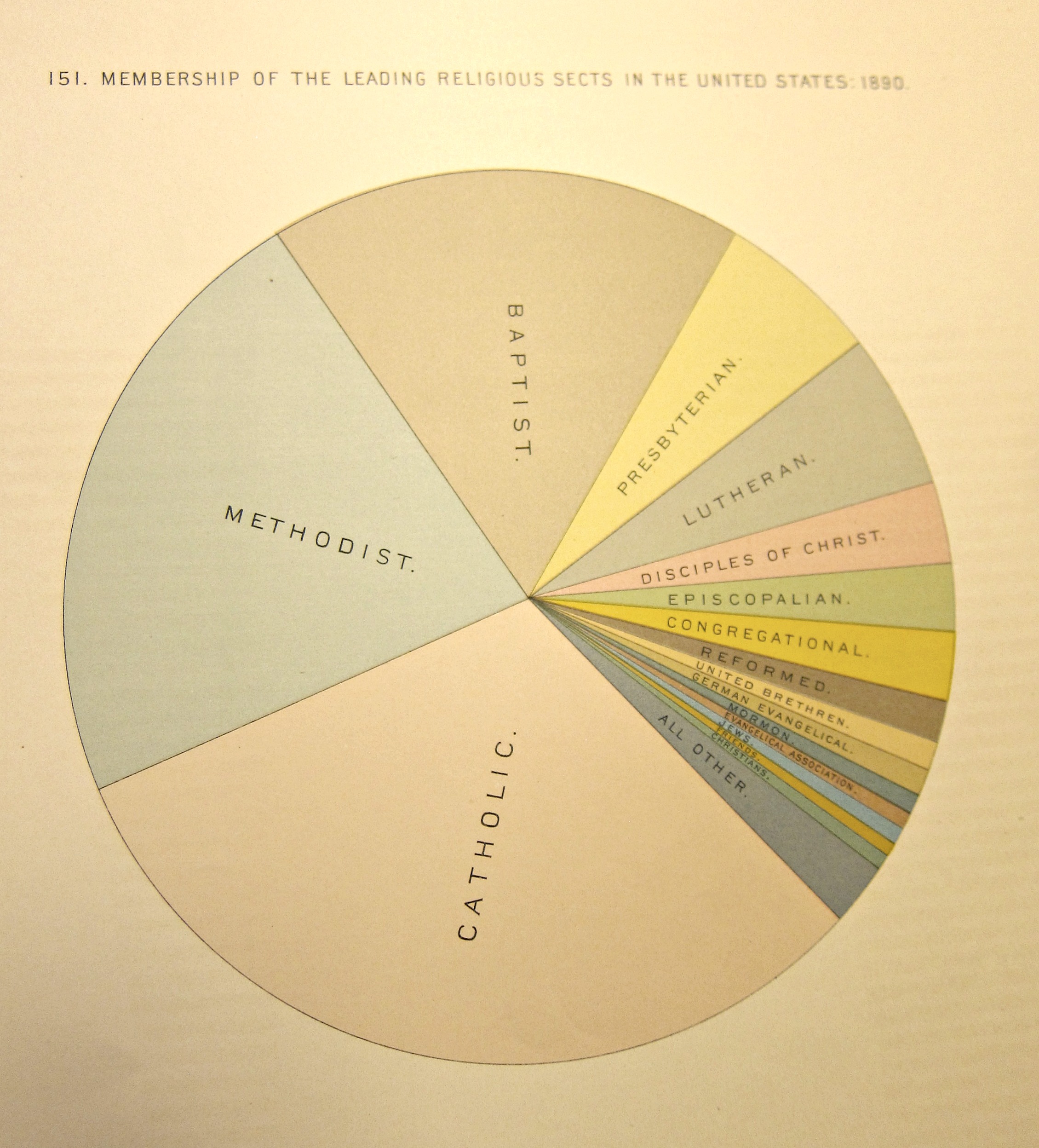
    Displayed below is one of the many dozens of graphs/charts/maps created with the data collected for the 1890 and tabulated by William Hollerith’s glorious machines. It was the first use of the machines for the U.S. census and they offered a far-reaching and increased ability to tabulate and organize the data.  The 1880 census had cost about $6 million and took 9 years to tabulate; the 1890 census using the Hollerith machines cost $10 million and took seven years.  The main focus of many in government was the cost differential—not the incredible amounts of new controllable information.  The rent of the Hollerith machines was only $750,000 for the conduct of the entire census, so the differential must’ve been in the extra utility costs (for electricity, for example, which was used for the first time to run the tabulators) and for the small army of statisticians and data entry people.  Be that as it may, the government was not amused, particularly when Hollerith figured that he had actually saved the government $5 million.    The two parties left each other grumbling, though the roar of the trickle down from the Hollerith success drowned it out.  The tabulating system was quickly exported, and large private concerns in the U.S. saw a savior in the system that would soon rescue them from the sea of paper in which they were beginning to drown.   The Hollerith company did very, very well for itself, and soon merged with three other companies (in 1911) to ease the burden of success.  The resulting company was called the Computing-Tabulating-Research Company (CTR), which after a short while became the International Business Machine Corporation (IBM).  

    The beautiful circle appears on page one and occupies the full 20-inch tall sheet.  This could have been more complex, but as it stands it is a very fine piece of the artfully-enhanced representation of data.  (As a pie chart the image isn’t very old, though the genre is a little uncommon in the 19th century.  Pie charts appear at least as early as  William Playfair’s Statistical Breviary in 1801 and then probably more famously in the work of Charles Minard and Florence Nightengale in the 1850’s–this work to me seems cleaner and brighter, and definitely “modern”.)

    DATAviz 1890 census leading religious sects

  • Hitler and U.S. Racism (ca. 1944)

    JF Ptak Science Books   Quick Post

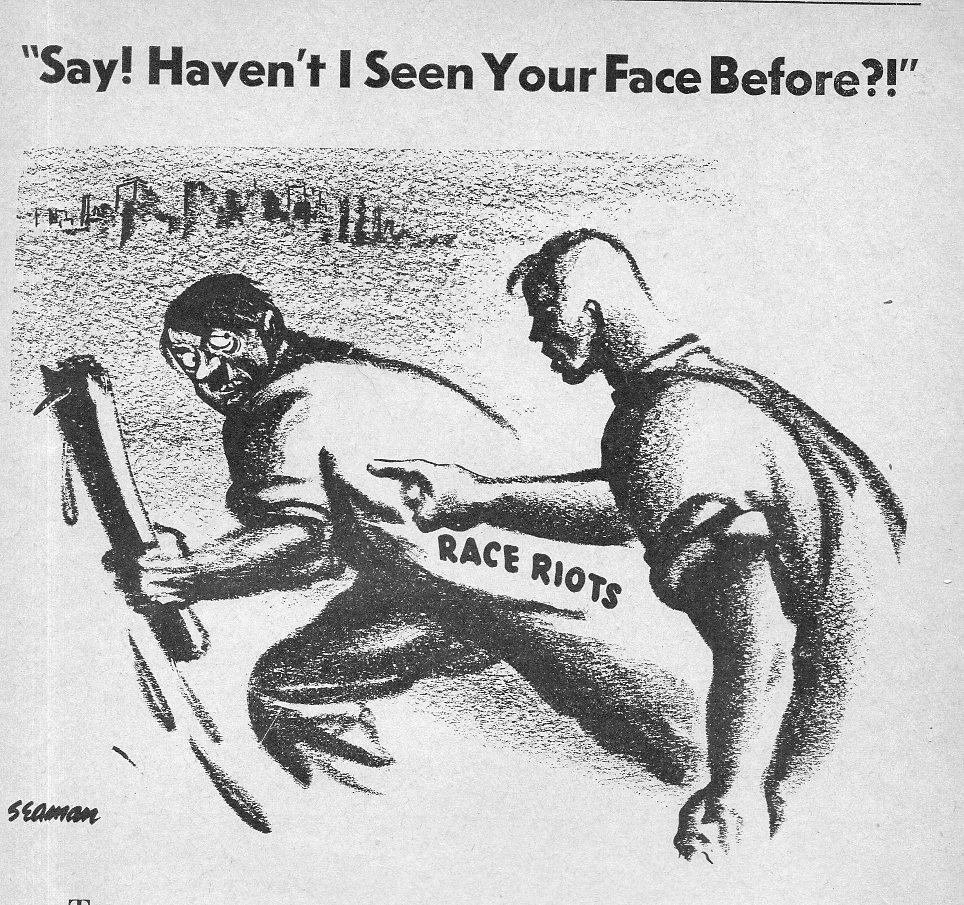
    I can’t recall seeing Adolf Hitler portrayed in an editorial/political cartoon as being part of a race riot in the U.S., though it does make sense, and also makes for a very strong message.  The artist here–Bernard Seaman–was a busy guy working for labor and social organizations like the ILGWU (International Ladies’ Garment Workers Union) and newspapers like the superb leftie PM, and he chose Hitler to exemplify  the great divisive wrong in U.S. society, “the foul blot upon our best American traditions…” and quote President Roosevelt to underline it all: “Remember the Nazi technique: pit race against race; religion against religion; prejudice against prejudice; divide and conquer”.  

    Hitler racism793

    This image appears in a pamphlet without a clear, recognizable title, and was published ca. 1943/4.  

    ·Posted by :

    ·in:

  • From the Just-a-Few-Months-Shy-and-Everything-Changes Department (1941)

    JF Ptak Science Books  Quick Post    

    War and the People791This pamphlet enumerates the benefits of Communism and the pact of the Soviet Union with Hitler. It was printed in February 1941, and after describing the Imperialist world war, the war and the Middle Classes, “how the war hobbled the working classes”, it goes on to (obtusely) describe how the understanding between the Soviet Union and Germany has saved 150 million lives.  All of this goes away four months later when the Soviet Union is viciously and brutally attacked by Germany in Operation Barbarossa, and then, most of those “saved lives” turn out not to be so.

    ·Posted by :

    ·in:

    —
  • Highlander Folk School Publications, 1940-1942

    JF Ptak Science Books  

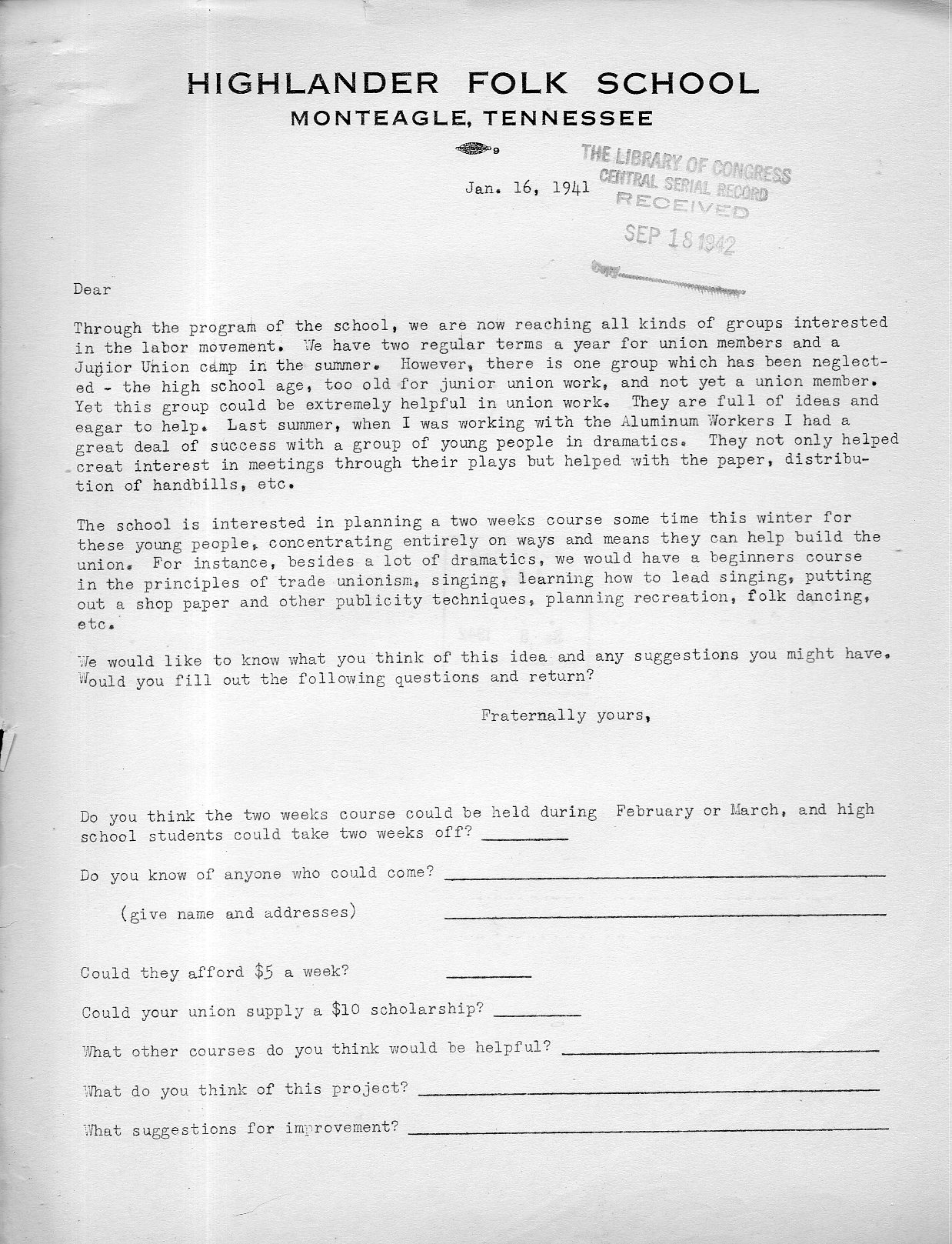
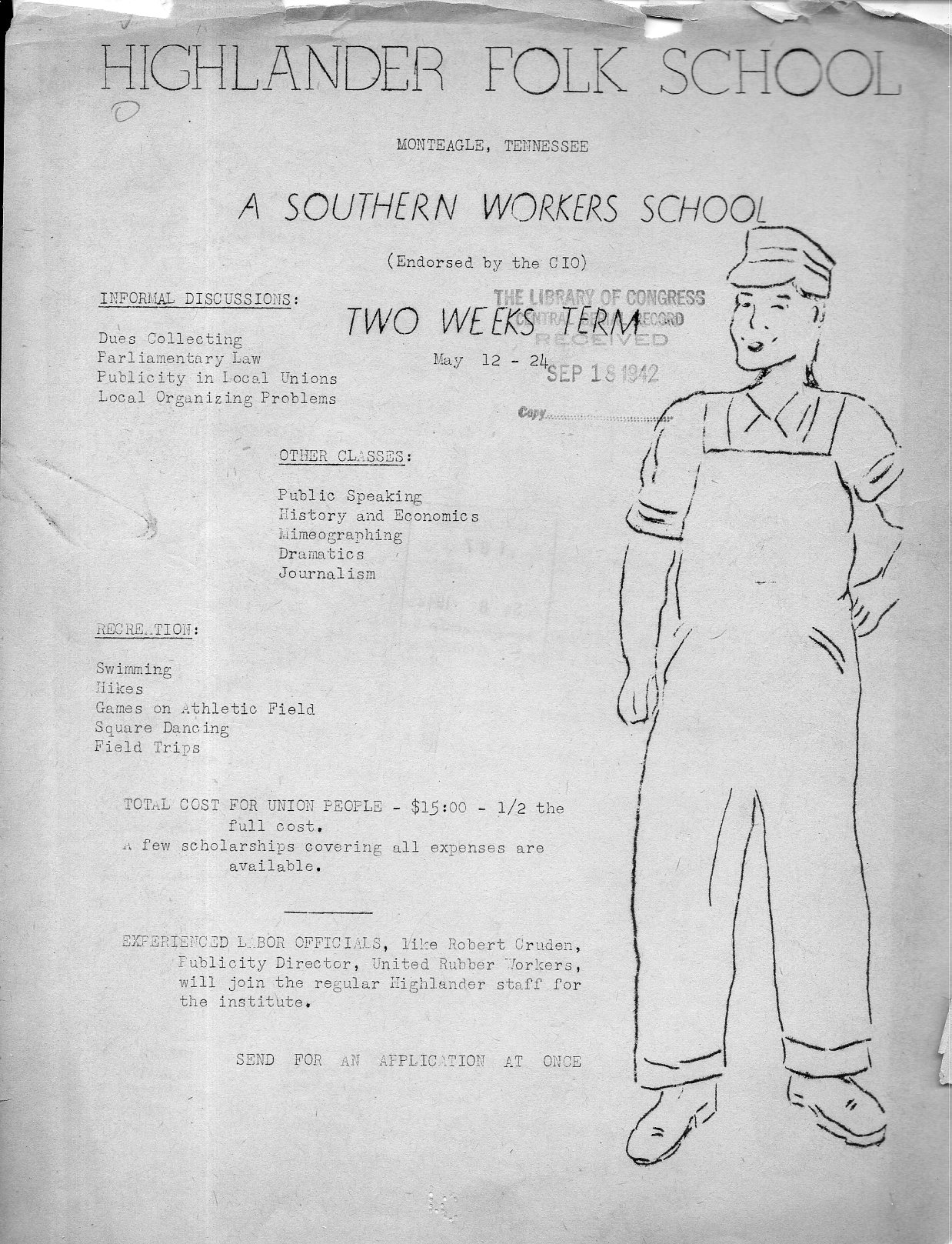
    I’ve uncovered today a small packet of mimneographed publications from a famous labor/civil rights school in the mountains of Tennessee. The Highlander School in Monteagle, Tennessee, was a training/leadership/educational center founded in 1932 for Southern labor activists and, later in the 1950’s, a training center for civil rights activists. One of the categories that this post has been filed in is “A History of Blank, Empty, and Missing Things” but really only for the document displayed below, which is an unfilled-in form for attending one of the sessions at the school–there’s a curious collection of such things here, from naval sea logs to Nazi diaries for Warsaw and other such things. It is an interesting experience to look at such a blank-filled document, a document that doesn’t bear someone else’s marks and expectations, and imagine your own answers to it, unencumbered. 

    Highlander794

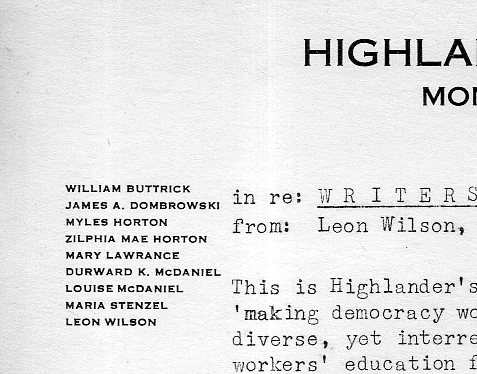
    The letterhead on one of the publications including the governing body of Highlander, including the well-known names of Dombrowski, Myles Horton, and Zilphia Mae Horton–that last name is probably familiar because of her work in folk/civil rights music like her reworked  versions of “Keep Your Eyes on the Prize,” “We Shall Not Be Moved,” and “This Little Light of Mine”, and then most famously (with Pete Seeger, Frank Hamilton, and Guy Carawan) on “We Shall Overcome”.

    Highlander797


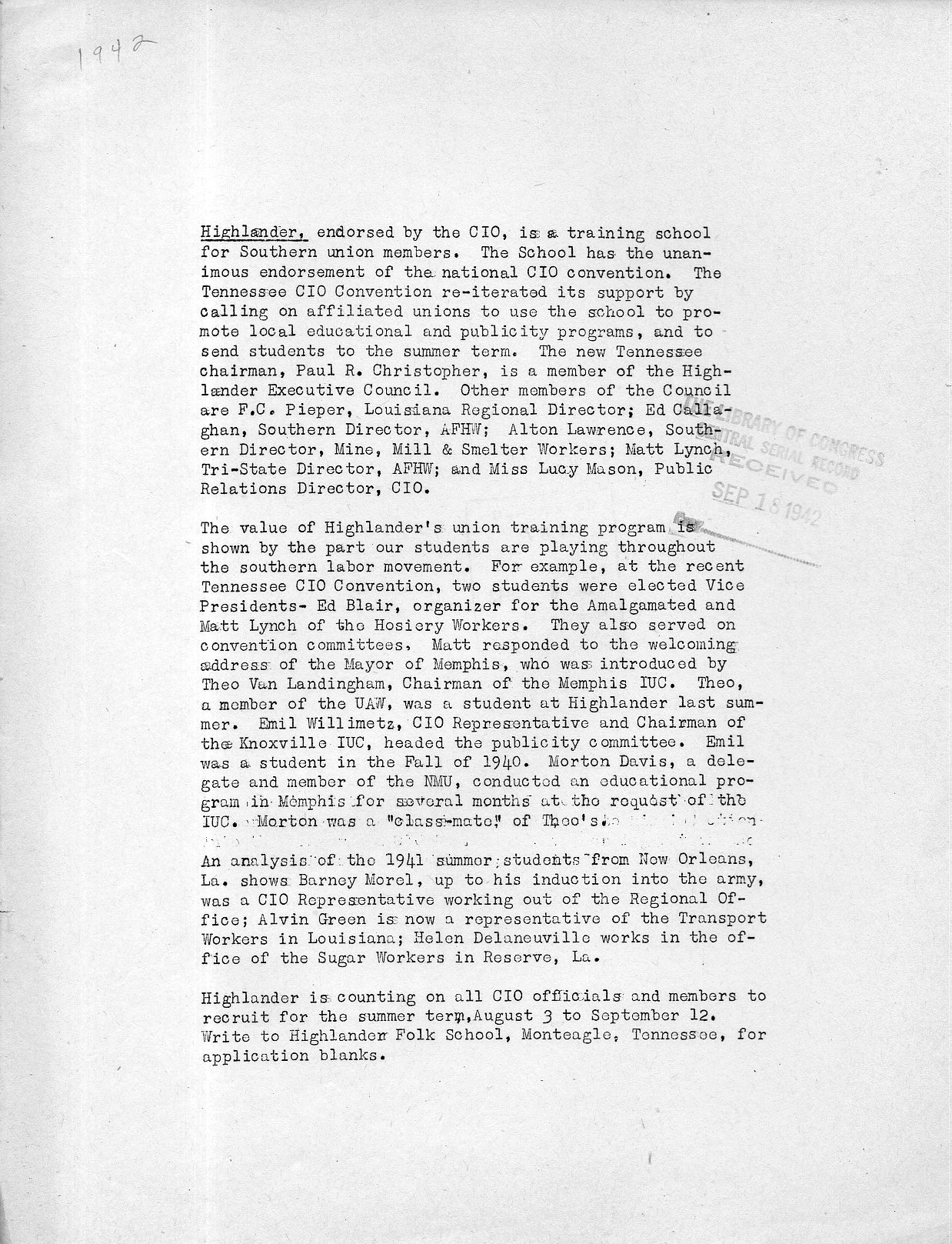
    Also from the group I’ve included scans (on the left, below) of a summary of what the Highlander School was (in 1942), and then (at right) the covering title and art for the May 1942 “Southern Workers School).  

    Highlander795

    Highlander796


    ·Posted by :

    ·in:

  • Technology and the Dust Bowl, 1930’s

    JF Ptak Science Books   Quick Post

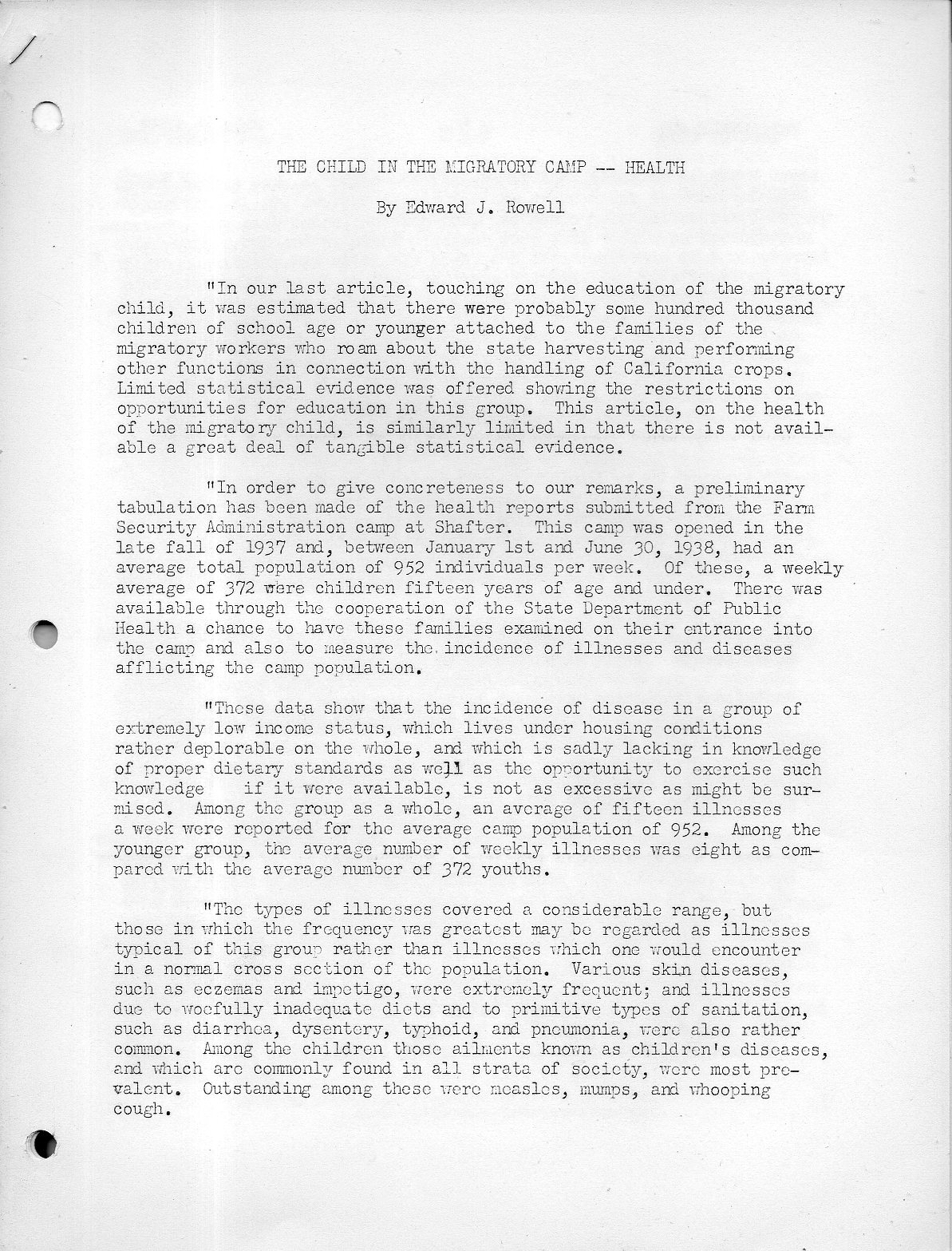
    Surfacing today in the warehouse was a collection of papers, all bound together punch-bound in a makeshift manila binding, all on the subject of mechanization and its impact on the migrant worker, and all from 1936-1938 or so.It was the mechanization of farming chores following the recession after WWI which contributed to over-farming and over-production of farming land, and that, combined with with this soil erosion with drought, contributed to the Dust Bowl and the vast migration of the Great Depression.

    Steinbeck langeAmong the papers on new farm implements and the millions of people on the move was “The Child in the Migratory Camp—Health”, by Edward J. Rowell, a slim but telling four pages on the plight of kids in migrant camps. This paper was published in California Children, Sept 1938, pp 1-4, and is referenced in James Noble Gregory, American Exodus: The Dust Bowl Migration and Okie Culture in California, p 289. It is a very sobering read, and I reproduce it below in full as there are but a few references to it. 

    • [As one migrant child told John Steinbeck, “When they need us they call us migrants, and when we’ve picked their crop, we’re bums and we got to get out” (Steinbeck, “Harvest Gypsies” 1. after his In Dubious Battle, a work that deals with the migrant worker and which was published in 1936, Steinbeck was given an assignment and space to further document the situation of the mobile workers in the San Francisco News, the stories appearing October 5-12, 1936. These seven articles were later published together—along with 22 photographs by Dorothea Lange—in a work called Their Blood is Strong, appearing in 1938.)]

    Migratory camp798


    ·Posted by :

    ·in:

  • Picturing What a Nightmare Looks Like Outside Itself (1878)

    JF Ptak Science Books   Post 2650

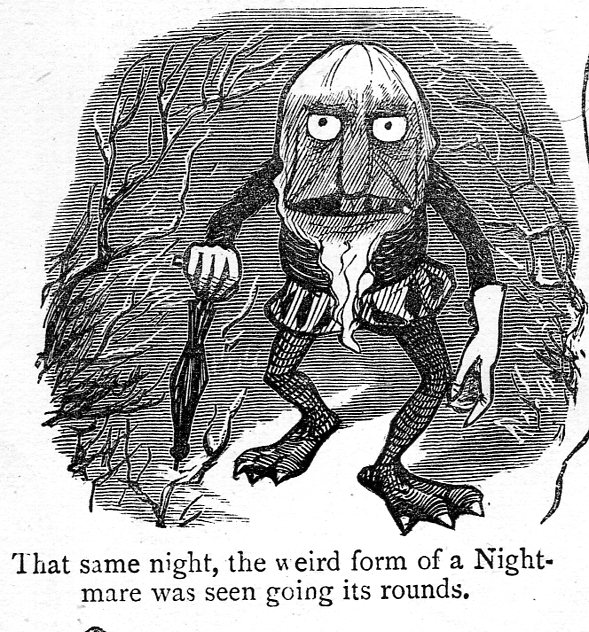
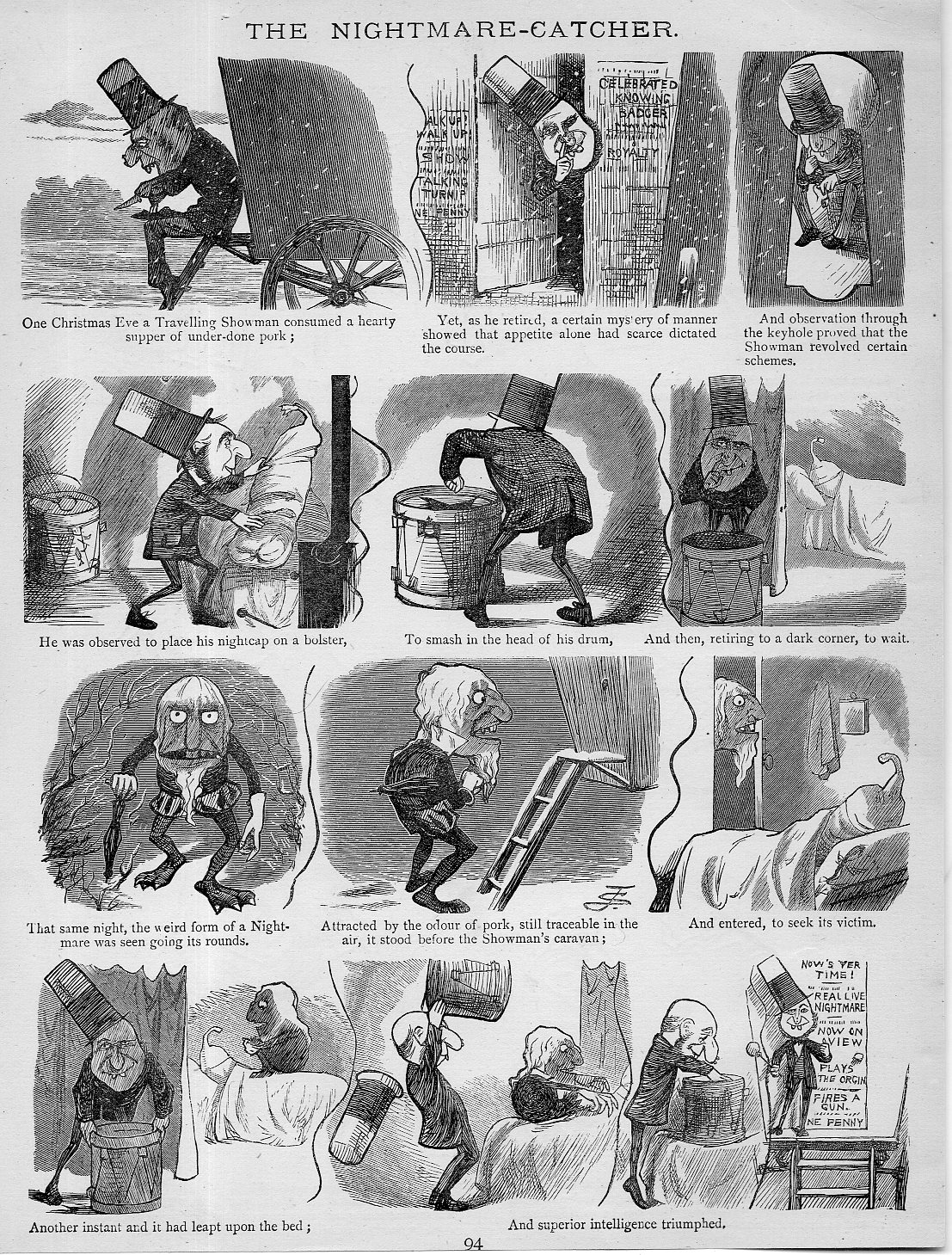
    In my career of looking-at-things it is becoming an easier job to recognize something that is out of place, or uncommon, or wrong–far more so I think than the opposite, because the “expected” happens to be expected, and so fits right into place, somewhere.  So it came to be that this cartoon featuring the depiction of an anthropomorphic nightmare stood out so clearly and oddly. It is the work of James Francis Sullivan (and published in 1878 in a volume of his darkly humorous single-page six-ten panel cartoons ungainly titled The British Working Man by one who does Not Believe in Him, and other Sketches) and in my experience is a very early depiction of the nightmare itself as a corporeal thing. There have been untold numbers of depictions of the contents of nightmares in literature and art and such, but I’m having a hard time of picturing another source that would stand as a dictionary illustration of what a nightmare looks like devoid of its content. 

    Nightmare803

    I checked in with the Oxford English Dictionary and found to my surprise that the nightmare started out at some point in English to be a “female spirit or monster”–it was not surprising to see the definitions stretching back to Chaucer and earlier1. Next stop was the cataloging and reference tool WorldCat, where I searched for the appearance of “nightmare” in the title of a book and found nothing (seemingly) published so until John Bond’s  An essay on the incubus, or nightmare, in 1753. This is just a casual search, and nothing very scientific, but at least at this level there isn’t much to see, perhaps six titles only until 1800, after which the use of the word grows. In contrast, titles appearing using the word “dream” are a solid+ order of magnitude beyond “nightmare’. 

    Nightmares and dreams abound everywhere but in the titles of books, and sometimes actually lead to a chain of events in the waking world.  Ramanujan famously dreamed mathematical dreams (in addition to hearing solutions to massively complex problems from “angels” in a waking state); R.L. Stevenson dreamed the premise for Mr. Hyde; Socrates used the medium (dreampt or not); Mary Wollstoncraft nightmare lead to her big nightmare book, and so on, on and on, into the dream/nightmare-filled night.  In my memory of such stories, though, the nightmare or dream never seems to have its own face, and that nothing exists beyond the contents of the thing beyond itself–this is what makes the nightmare-catcher story by Sullivan so unusual to me.  

    I don’t have anywhere to go with this, presently, beyond simply reporting it.

    In any event, the cartoon goes as follows: a travelling showman (already evidently entertaining people with a “talking turnip” and a “celebrated knowing badger”) resolved to capture a nightmare for his show. In that he mocks up a sleeping version of himself in his bed, and waits upon the nightmare, and when the nightmare makes his appearance the showman captures him with a broken drum. The nightmare is then put on display in the travelling show (also playing the “orgin” and firing a gun) for all to see for the cost of one penny. 

    This all happens on Christmas Eve–I can think of better stories than this to share on that or any night.  

    Nightmare802

    Notes:

    1. “Nightmare” from the OED:

     a. A female spirit or monster supposed to settle on and produce a feeling of suffocation in a sleeping person or animal. Also fig. Now rare.

    c1410  (▸c1390)    Chaucer Miller’s Tale (Cambr. Dd.4.24) (1902) 3485   Blisse this hous fri euery euyl wyght ffor the nyghtesmare [c1390 Hengwrt nyghtesuerye] the whȝt Pater noster.

    1440   Promptorium Parvulorum (Harl. 221) 356   Nyghte mare [v.r. Nyhtmare], Epialtes.

    1530   J. Palsgrave Lesclarcissement 248/1   Nightmare, goublin.

    1608   E. Topsell Hist. Serpents 173   The spirits of the night, called Incubi and Succubi, or else Night-mares.

    1696   J. Aubrey Misc. (1721) 147   It is to prevent the Night-Mare (viz.) the Hag, from riding their Horses.

    1770   T. Chatterton Compl. Wks. (1971) I. 211   The dethe-owle loude dothe synge, To the nyghte-mares as heie goe.

    1804   J. Collins Previous Apostrophe in Scripscrapologia p. x,   Let thy Pegasus then, spurn the Nightmare of Sloth, Nor by Day let her hag-ride thy Pen.

    1822   Shelley Prince Athanase in Posthumous Poems (1824) 110   Like an eyeless night-mare grief did sit Upon his being.

    1851   N. Hawthorne House of Seven Gables xvi. 270   So heavy and lumpish that we can liken him to nothing better than a defunct nightmare, which had perished..and left its flabby corpse on the breast of the tormented one.

    1886   R. L. Stevenson Kidnapped x. 92   There was that tightness on my chest that I could hardly breathe; the thought of the two men I had shot sat upon me like a nightmare.


  • Mosaic Micrographia (1840)

    JF Ptak Science Books   Quick Post  in the History of Lines series

    Mosaic Cornish805

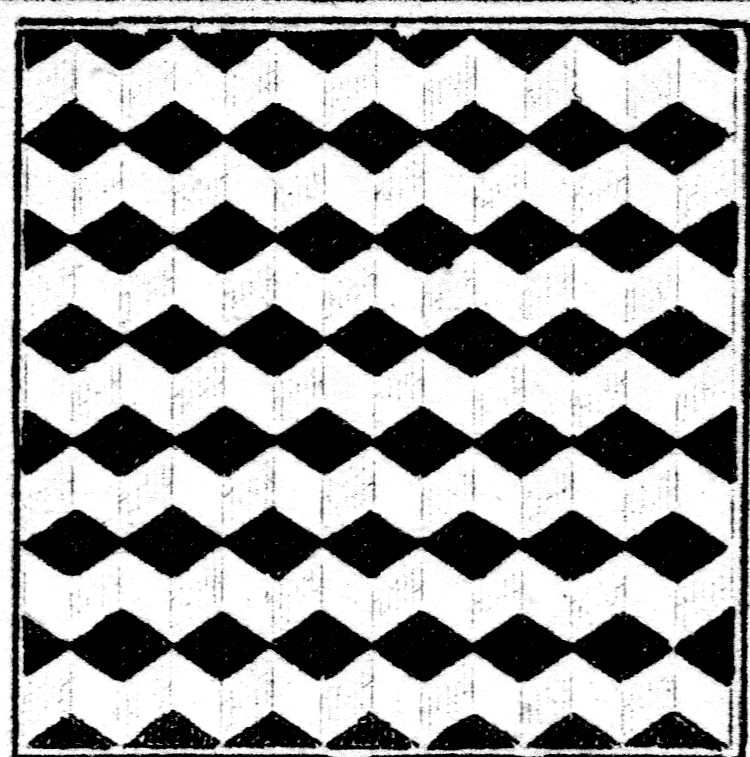
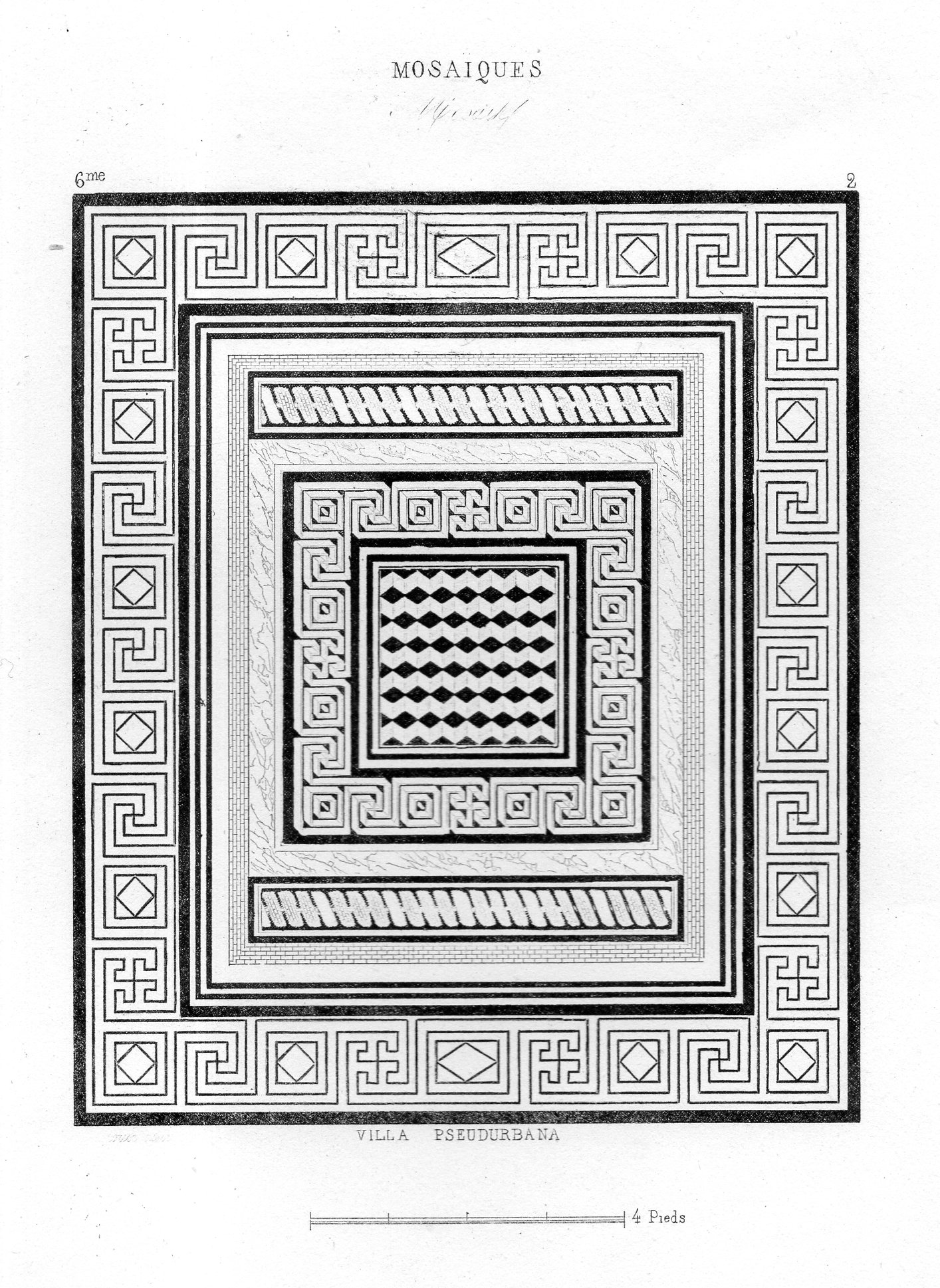
    This is a one square inch detail of an engraving of a mosaic (published ca. 1840) from the “Pseudurbana” at Herculaneum.  Evidently it was excavated in the very early 19th c (ca. 1807) and was known as “villa pseudurbana of M. Arrius Diomedes, or the villa of Aufidies” according to Eugene Dwyer in Pompeii’s Living Statues…(2010, pg 14). This wasn’t intended to be inspected so closely, but it mostly withstands the high magnification. 

    Here’s the full image:

    Mosaic Cornish804

    ·Posted by :

    ·in:

  • Dreams of Chalkboards Past: French Schoolroom Tools, 1860

    JF Ptak Science Books   Quick Post


    Schoolroom France _2_


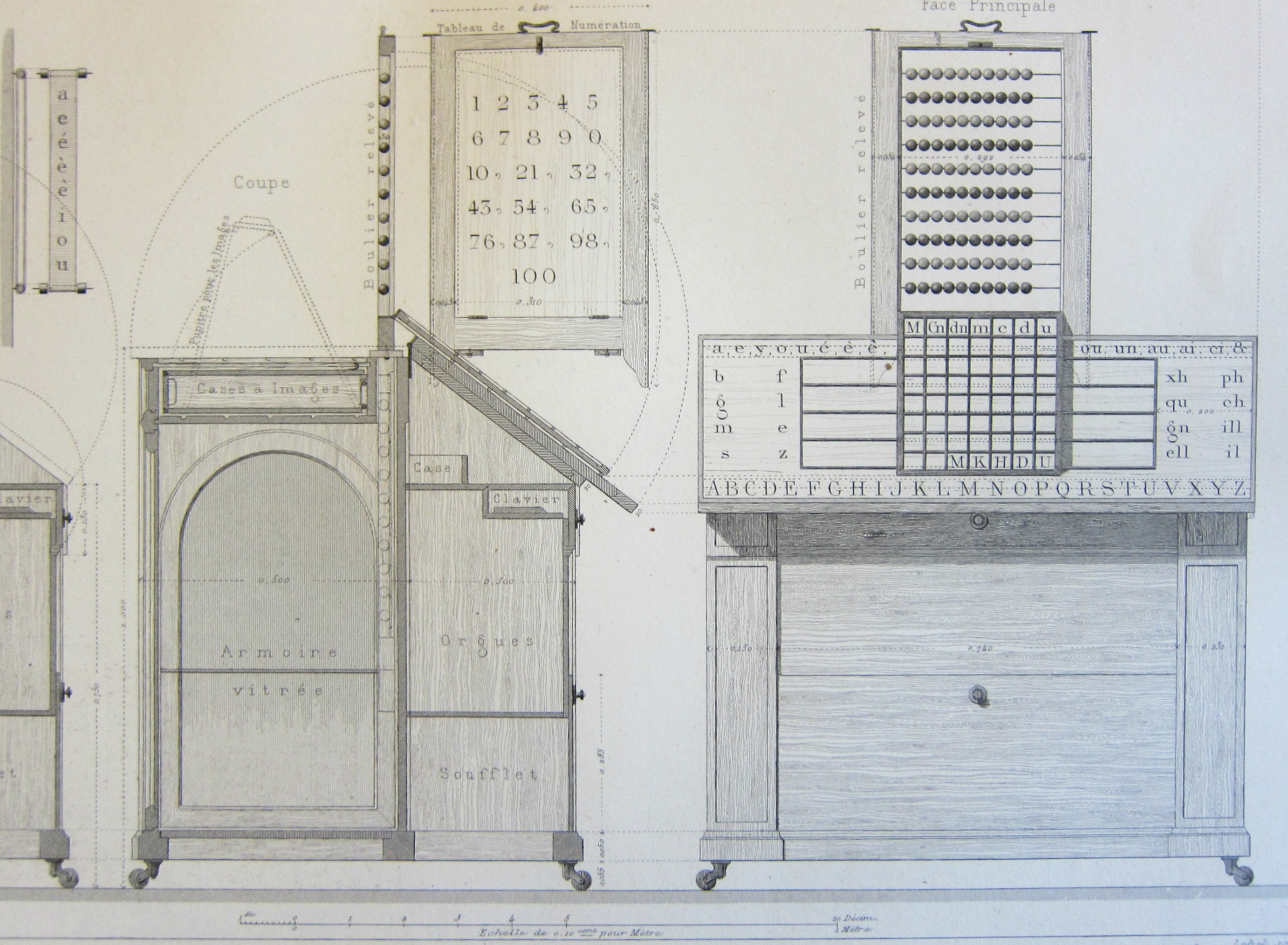
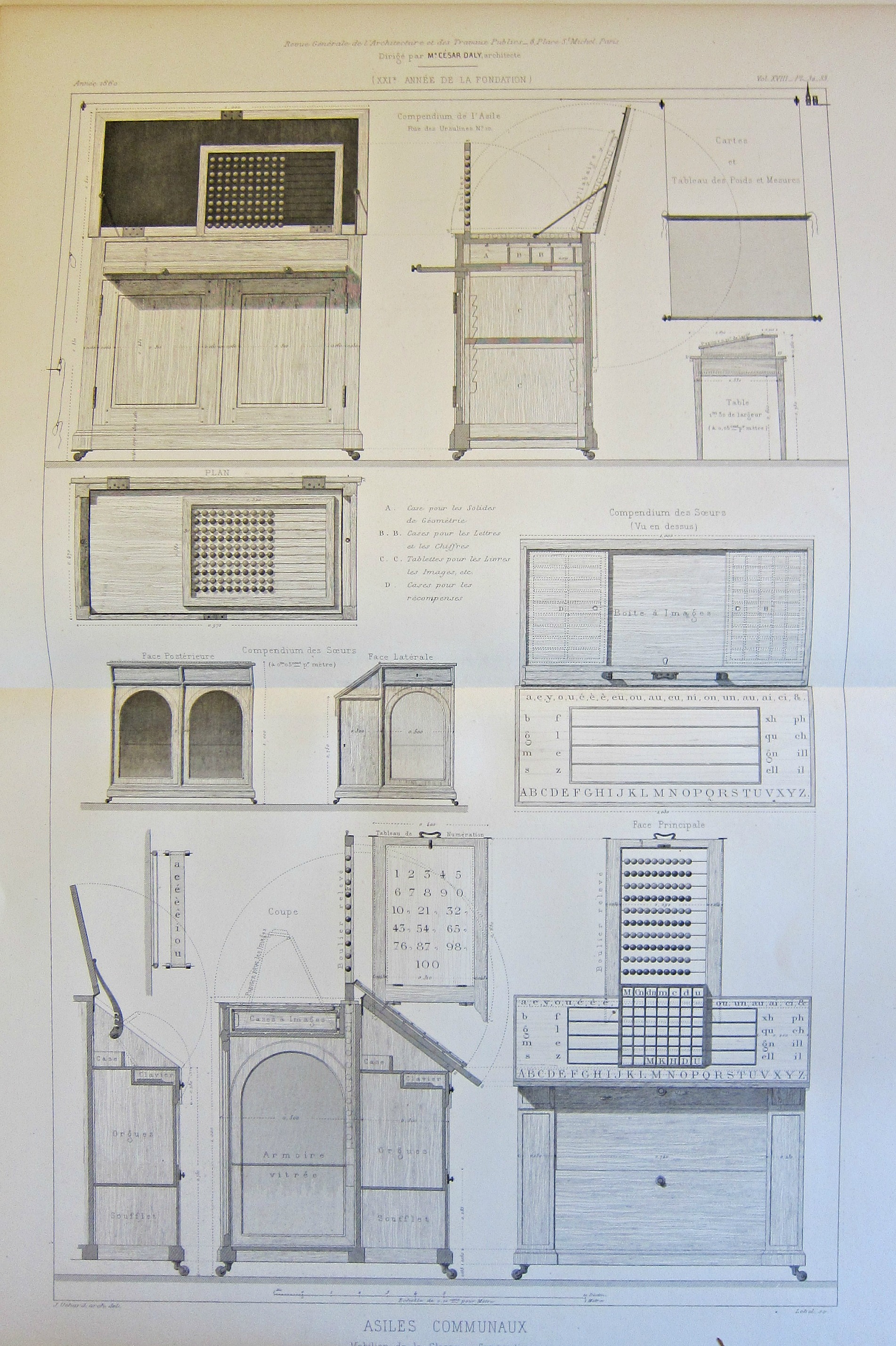
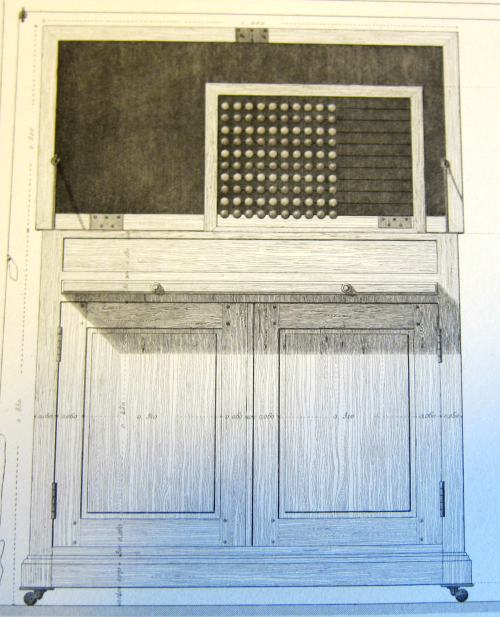
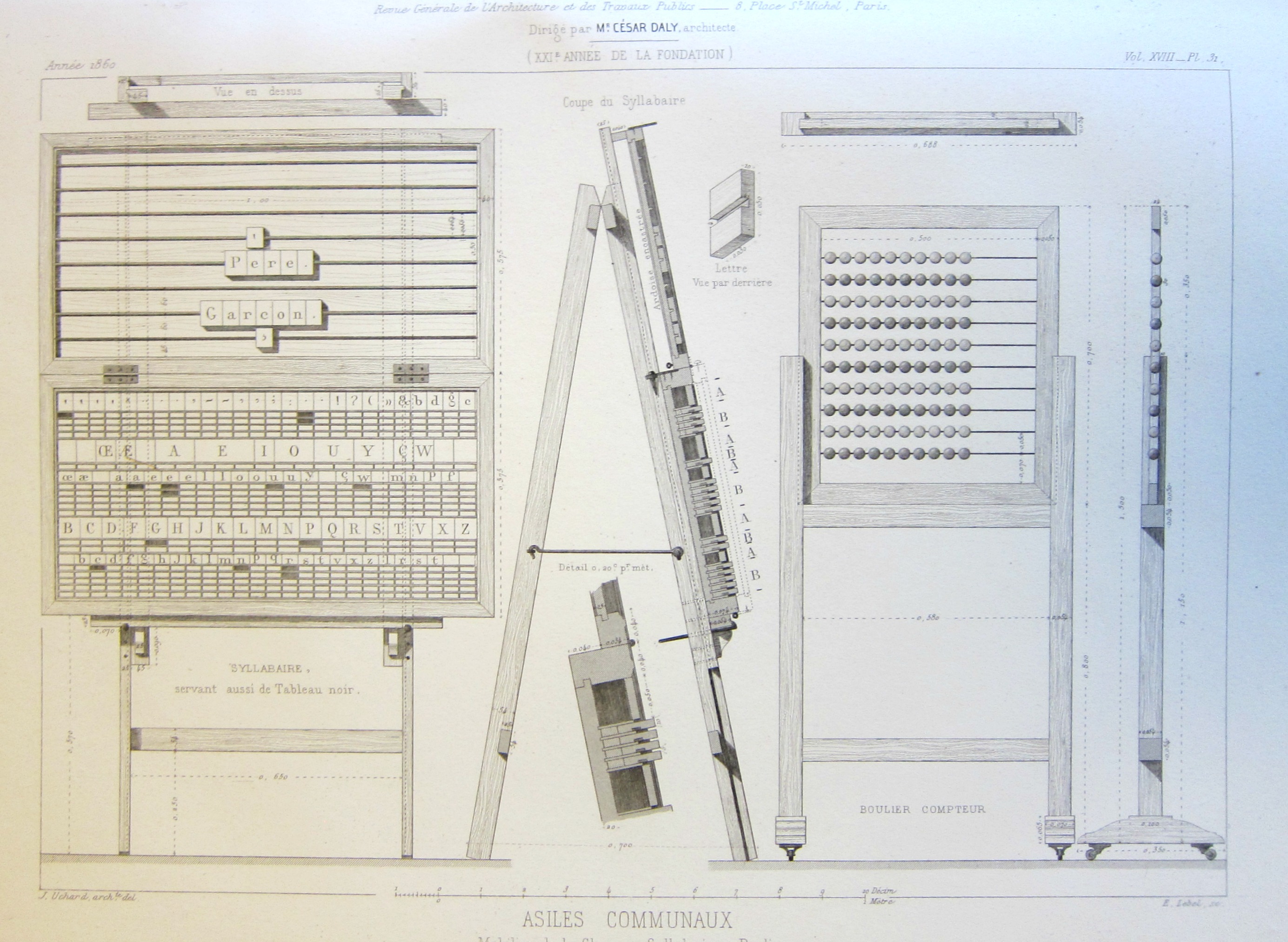
    I think it would be lovely if–in addition to tablets and laptops–kids in school would be doing work generating chalk dust, and physically moving wooden disks with letters/words on them, and producing that wood-over-metal sound manipulating counting beads on metallic rods. There’s just something that goes on in the brain, I think, when you are able to touch something while learning—chalk on a board, fingers on a wooden peg or on pencil to paper, and so on. The pre-nostaligia for that memory is found for me in images like those that follow–beautiful engravings of teaching instruments and tools for elementary schools in France in 1860.

    The engravings are the work of the prodigiously talented and very busy Caesar Daly, who in addition to writing and editing books also edited the journal Revue Generale de l’Architecture et des Travaux Publics, des architects des ingenieurs des archeologues des Industriels et de Proprietaure, these images coming from volume XVIII, printed in 1860, in the section “etablissements d’instruction primaire”.


    Here’s a big double-page plate, about 13×20″ in real life: 

    Schoolroom france _3_

     And a detail of the counting beads in the upper left:

    School room France

     And a spelling board, with another larger counting board (the letters are stored horizontally in the bottom half of the large wooden board):


    Schoolroom France _5_


Recent Posts

Archives

Categories