A Daily History of Holes, Dots, Lines, Science, History, Math, Physics, Art, the Unintentional Absurd, Architecture, Maps, Data Visualization, Blank and Missing Things, and so on. |1.6 million words, 7500 images, 4.9 million hits| Press & appearances in The Times, Le Figaro, Mensa, The Economist, The Guardian, Discovery News, Slate, Le Monde, Sci American Blogs, Le Pont, and many other places… 5000+ total posts since 2008.

  • A Circular Debtors’ Prison and other Interesting Bits, 1818

    JF Ptak Science Books   Post 2645

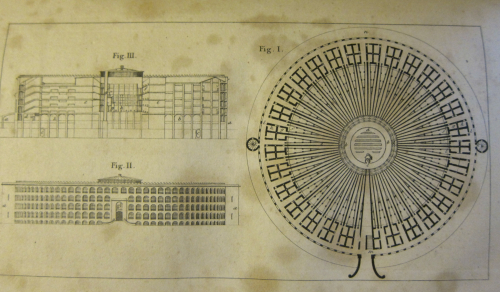
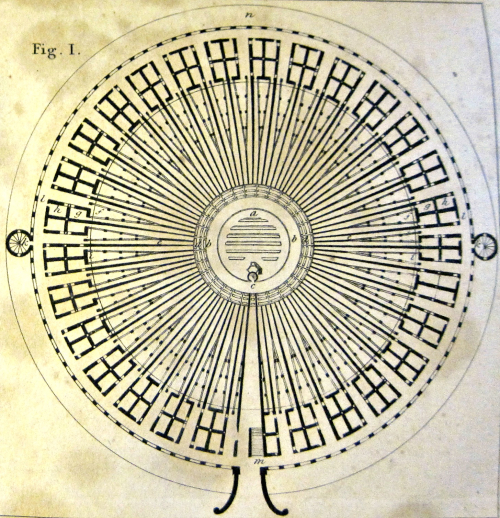
     In cataloging the following volume of The Quarterly Journal of Science and the Arts (volume IV, 1818) amidst a spray of very interesting papers I found J.C. Loudon’s effort, “On the Construction of Prisons”.  Loudon was interested in a different sort of prison for debtors, something a little more removed from the punishing existence for criminals and such. It was also illustrated with two engraved plates, the detail in one in particular is striking and calls for sharing:

    Prison 1818 detail

    The image is a plan for a debtor’s prison, a circular affair with the cells along the circumference. This being a prison distinct from the criminal elements the debtors were given two cells, one for sleeping and the other for work and cooking…

    This is the detail from the full image:

    Prison 1818


    The volume I was working my way through was Quarterly Journal of Science and the Arts (of the Royal Society of Great Britain); London, printed by John Murray,  volume IV, 1818; 8.5×5”, vi, 416 pp, 9 plates 5 of which are folding. (Also–three of the folding plates are lithographs, which is an extremely early appearance of this process which was invented by Alois Senefelder in Bavaria in 1796, though the process really was comparatively very little used in book production until the first quarter of the 19th century. These images were made at the lithographic press of Moser and Harris and frankly show a number of the early problems–at least at this press–with the process, as the images here are not very strong.)  

    The volume contains a few dozen contributions (plus many more in shorter abstracts), though some of the most interesting include the following:

    de Candolle, “On the Effect of Elevation above the level of the Sea upon the Geography of Plants in France”;

    Michael Faraday, “On the Sulphuret of Phosphorus”, p. 361-2; 

    William Scorsby, “On the Greenland or Polar Ice”, pp 247-268;

    M.C.F. Brisseau Mirbel, “On the Dissemination of Plants”, 1-7;

    M.C.F. Brisseau Mirbel, “Of the Death of Plants”, pp 7-13 (these two papers being the first appearance in English from the French);

    And also the following two interesting pieces by John R. Park:

    J.R. Park, “An Inquiry into the Influence of Corporeal Impressions in producing Change of Function in the Living Body”, pp 13-30; AND

    J.R. Park, “On the Influence of Mental Impressions in producing Change of Functions in the Living Body”,  pp 307-327; 


    And one detail of the emotional aspect and its physiological impact on the rest of the body:

     Catalogue of Scientific Papers (1800-1863) lists the following supporting and continuing paper on this subject by Park:

  • Found-Art and Light Irony in Selenium, 1891

    JF Ptak Science Books  Quick Post

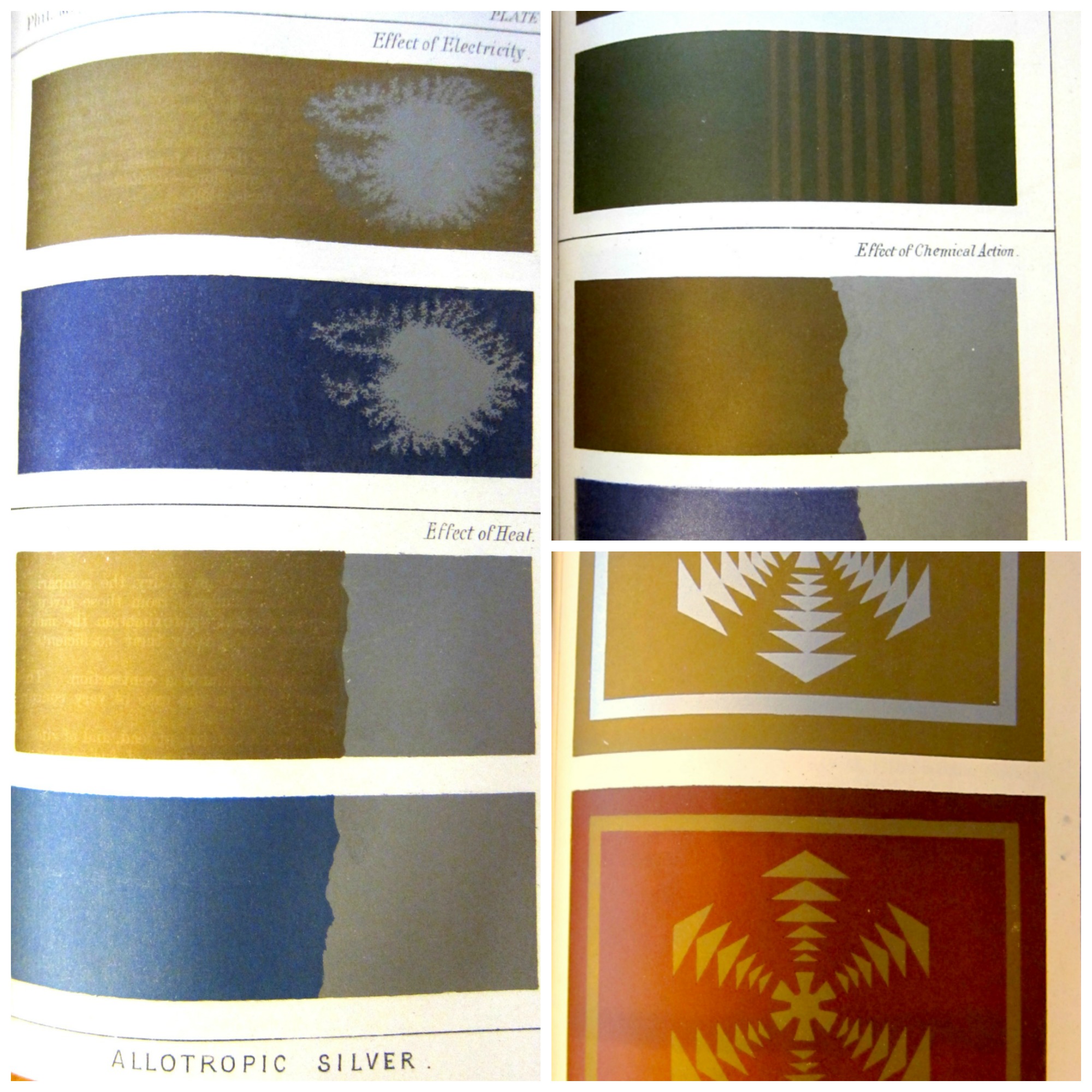
    Roughing my way through a volume of the Philosophical Magazine for 1891 I came upon an article1 illustrated with these beautiful and slightly ironic images of experiments conducted on selenium. The slightly odd thing about this is that in the first image on the left in the montage of the three images (below) of selenium we see that the basic colors at play here are yellow/gold and blue, which happens to be the colors of the national flag of Sweden–the chemical symbol for the element selenium is “Se”, and the detailed country code for Sweden happens also to be “.Se”.  Further, the man who first identified the element selenium back in 1817 was  J.J. Berzelius (1779-1848), who of course is Swedish, and widely recognized as being the Father of Chemistry in Sweden (contributing the coining of the words “catalysis, “Polymer”, “isomer”, and “allotrope”, among much else). So, well, that’s that–there was just a lot of Se/Sweden stuff going on here. (The last bit here is a stretch: Berzelius does among other thigns have a lunar crater named for him, appropriately, as the Greek word for “moon” is “selene”, the root of the name of the element.)

    And of course the images are beautiful, and wouldn’t stand a chance at being recognized as a found-art form for another two decades with the first appearances of non-representational art (as art).  

    Selenium montage


    Notes:

    1. Shelford Bidwell, “Some Experiments with Selenium Cells”, pp 250-256, found in The London, Edinburgh, and Dublin Philosophical Magazine and Journal of Science, (edited by William Thomson, George Fitzgerald, and William Francis. Printed in London by Taylor and Francis), volume XXXI, fifth series, January-June 1891. viii, 523pp, 6 engraved plates.

    And the full images:


    ·Posted by :

    ·in:

  • On Found-Poetry in a Work on Clouds by the Great Chemist, Michael Faraday (1827)

    JF Ptak Science Books   Quick Post

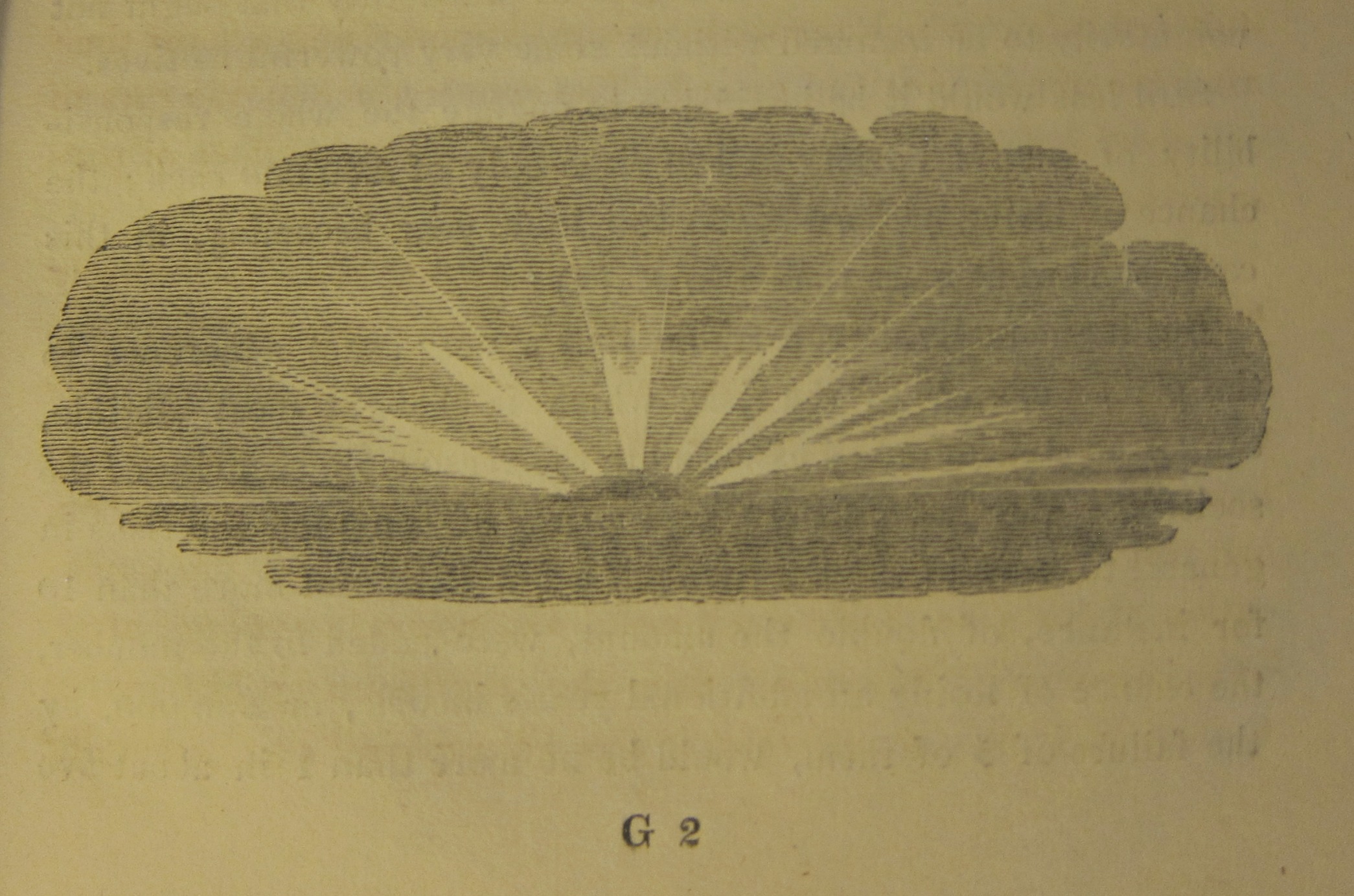
    Tucked away inside a volume of  The Quarterly Journal of Science, Literature,  and the Arts1  is this short contribution by Michael Faraday. Faraday is not particularly well-known for a writerly style although in his huge output of papers and books he was a very effective communicator. I found in this article, “On a Peculiar Perspective Appearance of Aerial Light and Shade” , that he was really very elegant and perhaps even poetic in describing what I think are cloud shadows– explaining the illusions created by cloud shadows, with the “aerial perspective” part perhaps not having to do with what is normally assumed to be the optical/painterly version of the term, although frankly I’m not sure.

    This is the small woodcut that accompanies the three-page article, depicting the “rays” of light coming from a setting sun, which I think is charming in itself:

    Faraday clouds

    He writes:

    “Although the appearance on this evening was exceedingly beautiful and rare, and the more striking from the absence to the observer of the sun or clouds, and the complete insulation of the phenomenon, yet by close observation upon other evenings, it was found that partial effects of the same kind were very common, and from the manner in which these could be observed the explanation above given fully confirmed.”

    And the wonderful closing sentence:

    “All these phenomena with their variations were easily referrible to their causes and may be observed at almost any sun set in fine weather, but the effect of the first evening so similar in kind though so different in appearance was not again remarked. It is with a view of guarding persons who may observe the same effect against any mistake as to its origin that the appearance with its nature has been thus particularly described.” 

    I haven’t read that much in Faraday, but this does seem to be a bit of a departure–in form and content–and so I thought I’d share it a bit.  

    Notes:

    1. The Quarterly Journal of Science, Literature,  and the Arts (of the Royal Society of Great Britain). London, printed by John Murray,  volume XXII, 1827; 8.5×5”, viii, 418 pp,, 3 engraved plates.  Other interesting contributions in the volume include:  (Thomas Young), “Practical Application of the Doctrine of Chances, as it regards the Subdivision of Risks (by a Correspondent)”; (Michael Faraday, signed “M.F.” in the article), “On the Confinement of Dry Gases over Mercury”, in the Miscellaneous Intelligence section, pp 220-221; John MacCulloch, “Observations on the Geological History of the Formation of Coal”; and these shorter notices from the “Miscellaneous Intelligence” section including  Wollaston “On Electro-Magnetic Rotation” and  Becquerel “On the Conducting Power of Metals for Electricity” pp 374-378.

  • The Mother of All Mothers of Massive Airlanes (1934)

    JF Ptak Science Books  Quick Post

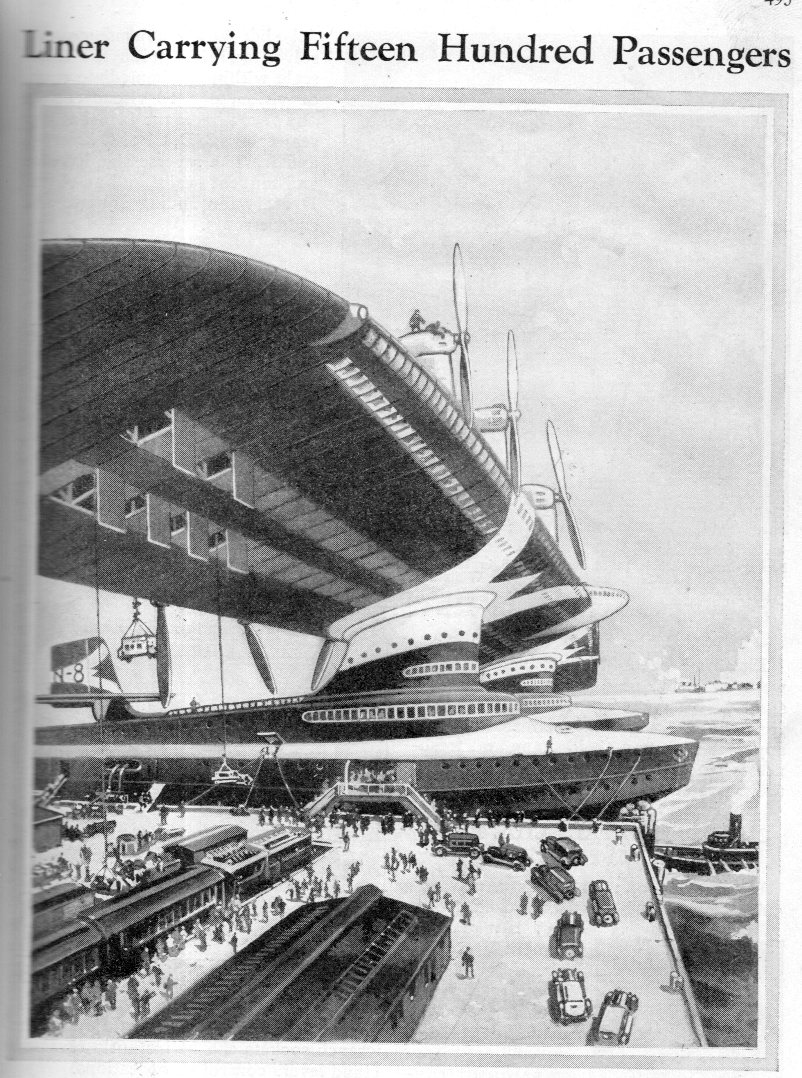
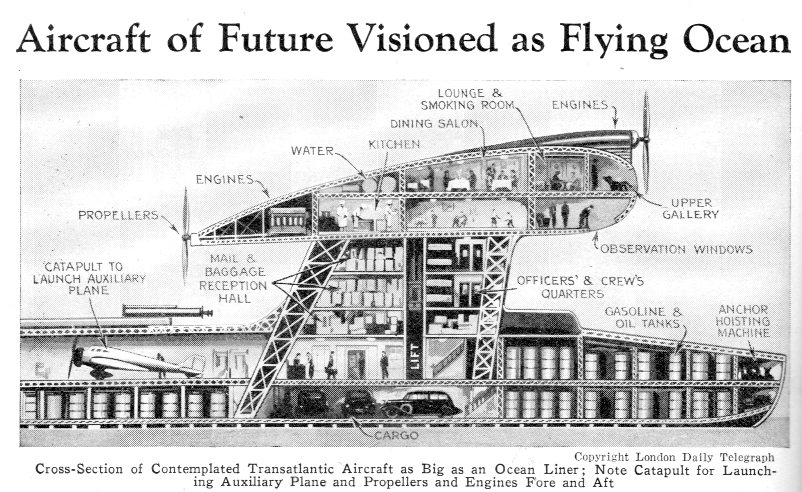
    It is a little difficult to get a realistic idea of how big this plane is–beyond it being really big–but by using the height of people and the stairs used to gain access to the aircraft it seems as though the height from the street/wharf to the bottom of the massive wing is at least 80′.  Since this is a seaplane and there is still plane-enough below the wharf level, level, so it may well be that from the top of the wing to the water may be closer to 100′.  That’s a tall plane.  The wingspan is more difficult to guess, but it seems as though there’s room enough for a loose line of 75 people  to fit under it comfortably with ample personal space, meaning that this section of the wing–probably 40% of the entire wingspan–may be on the order of 200′, meaning the overall width would be in the neighborhood of 500′.  

    Aircraft giant 1934_826

    According to the technically-light description of the aircraft (found in Popular Mechanics, April 1934) this beast was meant to carry 1500 people and several hundred tons of cargo on a Transatlantic flight that would go from Southampton to New York “at a speed of 200 miles an Hour” in “less than fifteen hours”.

    The odd thing about this is that the imaginateers (“visioned by British Aeronautical Engineers”) didn’t see more powerful engines for their gigantic aircraft that could push the envelope at 350 mph.  Why not?  If you could give an aircraft an acre or two of thick wings, why not press the imagination a little further and assume that there would be unseen developments in powering the thing?  

    In any event, the artwork has a certain “Wow!” factor to it, and that someone, somewhere, was coming up with a mostly-big idea. 

    Aircraft giant 1934_827

  • Charles Dickens (Private Investigator) and his Telegraphic Aiding Identifier (1856)

    JF Ptak Science Books  

    Few of the cottage-industry biographies of Charles Dickens recognize his work as a developing private investigator (then known as “private enquirer”), which is an extraordinary thing, as Dickens was perhaps among the most keen and astute observers of human traits and activity in the 19th century.  The source for most of this information are the letters and diary entries of Dickens’ long-time friend and supreme confident, John Forster1 (who papers are now in the British Library), and take the form of an outline for a novel and so confusing fact with fiction, perhaps explaining the relative lack of attention to this fascinating part of Dickens’ life. 

    Dickens’ interest in pursuing the pursuable, of criminals and crime and prisons and workhouses and so on, has been long established, a pursuit of his throughout the whole of his life.  In addition to establishing a protocol for the investigation of crime, Dickens seems to be the first to recognize the great value of a standardized method of communicating the description of criminals from one jurisdiction to the next. Describing someone as short, bulging, ambiguous, with a harlot’s son’s nose and a twisted smile doesn’t go very far in identifying someone unless you knew that there was one way of defining each one of those characteristics.  Dickens created such an instrument in his Telegraphic Aiding Identifier, a device he would finally patent in 1854 with the aid of his attorneys Foyle & Mole (applied for at Coven Garden). 
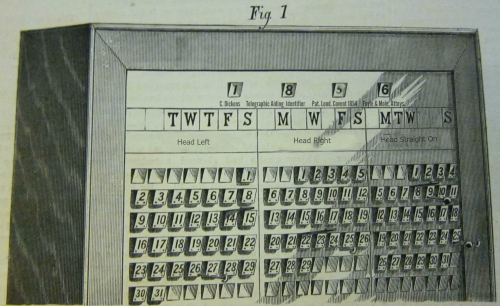
    Dickens Machine Mainframe

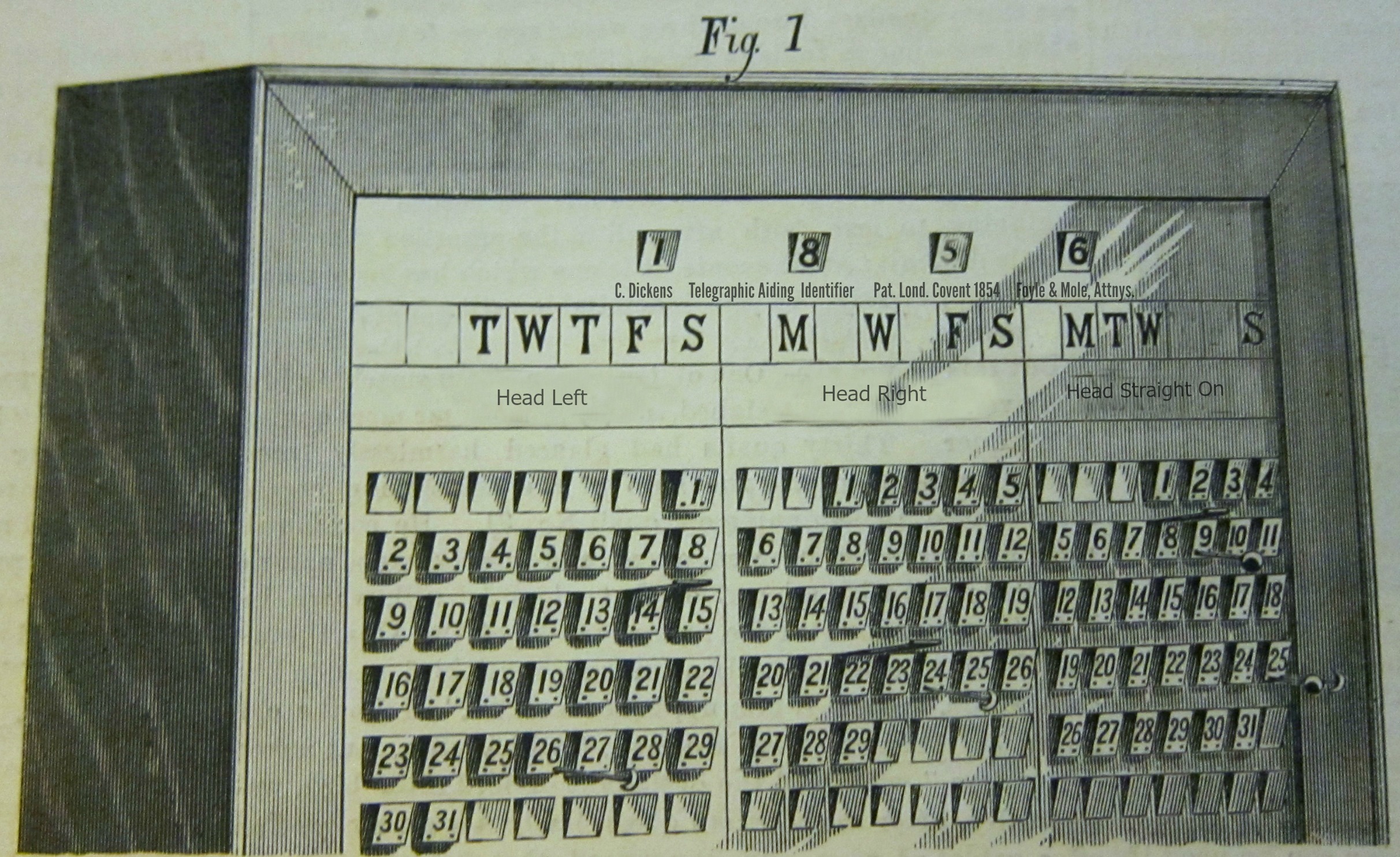
    [Wood engraving of a section of the Dickens’ Telegraphic Aiding Identifier–the name of which is somewhat visible under the date at the top of the cabinet–as it appeared in a short notice, “A Curious Picture-Maker”,  in  The Athanaeum, December 12, 1857.]

    The telegraph was the internet of the mid-19th century, and Dickens sought to employ it in a network of 72 policing stations throughout Great Britain.  The concept and implementation was simple if not somewhat complex.  The outline of a head of a generic person was divided into three segments–front, left, and right–on top of which was place a grid of 7×20 rectangular sections.  Each one of these sections would have on average an associated dozen cards of pictorial and textual description of that section of the head or face. Each card would be a description of that part of a head, though there would be some sections–for example, for the eyes and nose and mouth and teeth–that would have more options.  The person creating a likeness of a suspect then would work their way through each section and within that through the cards describing the attribution of that section of the head until all (or as many) of the 420 areas (140×3) of the head were uncovered.  

    The ingenious part of this idea was that each one of the cards with the descriptive characteristic were numbered.  In this way then if one police station needed to communication the description of a suspect to another jurisdiction 100 miles away they would simply use a series of numbers. Each police station would own identical sets of these cards, so that all the receiving station would need to do would be to select the descriptive cards at their end and start placing them in order on their three head outlines and after a short interval a picture of the suspect would appear. The most important aspect of this was that there was a common denominator, so “pudgy split lip” would appear the same to the sending and receiving stations.   Absent any other means of communicating images and their descriptions instantly in the pre-facsimile days this was–or would have been–a significant development.  

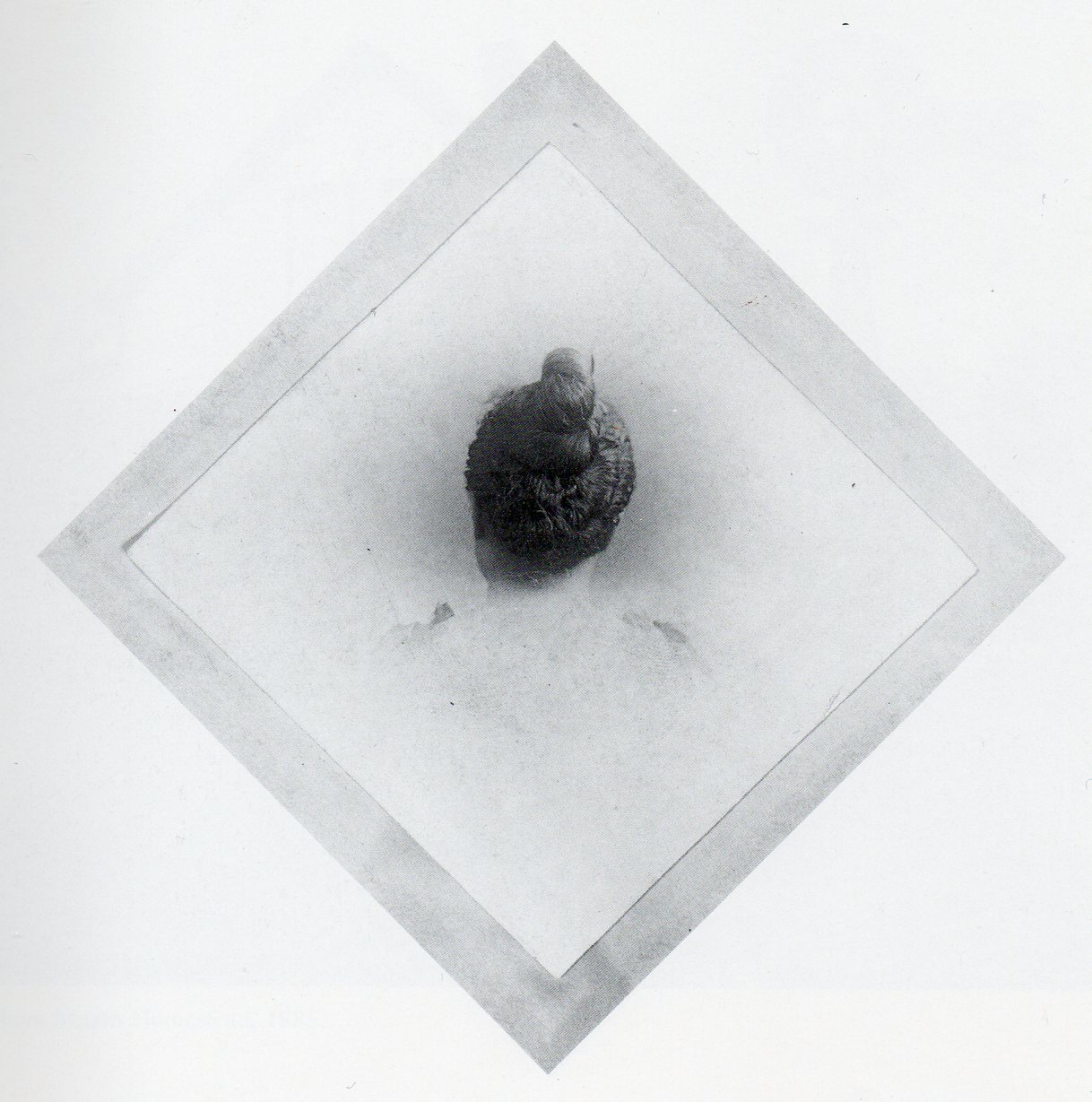
    Dickens was also at work in developing a method for the back of the head, something he felt was severely overlooked (sorry!). In 1853, following at least a dozen years2 of thought on the topic,  he undertook a study on witnesses to crimes in London and found that nearly 45% of all those who witnessed the alleged perpetrator of a crime saw the suspect fleeing–i.e., seeing the back of their head, and backs, and so on.  Dickens felt that this was valuable information gone wanting.  Before he moved on to other interests–and after all was said and done finding no investors for his telegraphic identifying machines–Dickens assembled a collection of photos of the backs of the heads of some 600 convicts to work on prototypes of his classification system.

    There does seem to be substantial merit to parts of Dickens’ ideas, especially that of an instantly  communicable and standardization discussion of traits of appearances over distances.  Much like the idea of fingerprints3 that would developed by Francis Galton (in his Finger-Prints, published in 1892)  Dickens’ overall theme of sifting information into translatable batches was a good one; though unlike Galton, neither his ideas nor his methodology were recognized and seem to have been utterly forgotten.  

    Here is one of the many images of the backs of heads, this of Elizabeth Purtelworth, a confidence women and occasional grabber of truck meat in the East End:
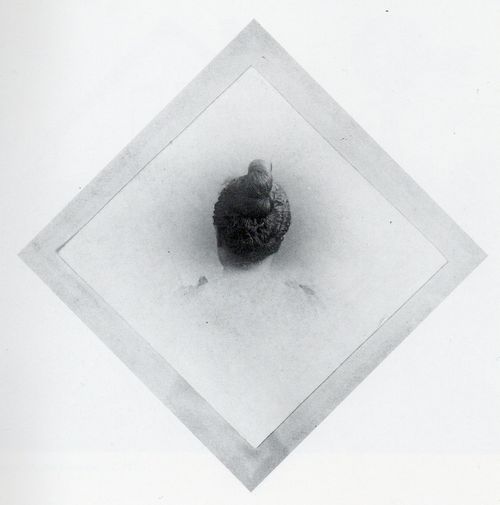
    Dickens back of head

    This was also perhaps the largest collection of photographic images of the backs of heads in Great Britain at this time–evidently the back of the head was not a particularly time-worthy pursuit for the vast number of working photographers. 

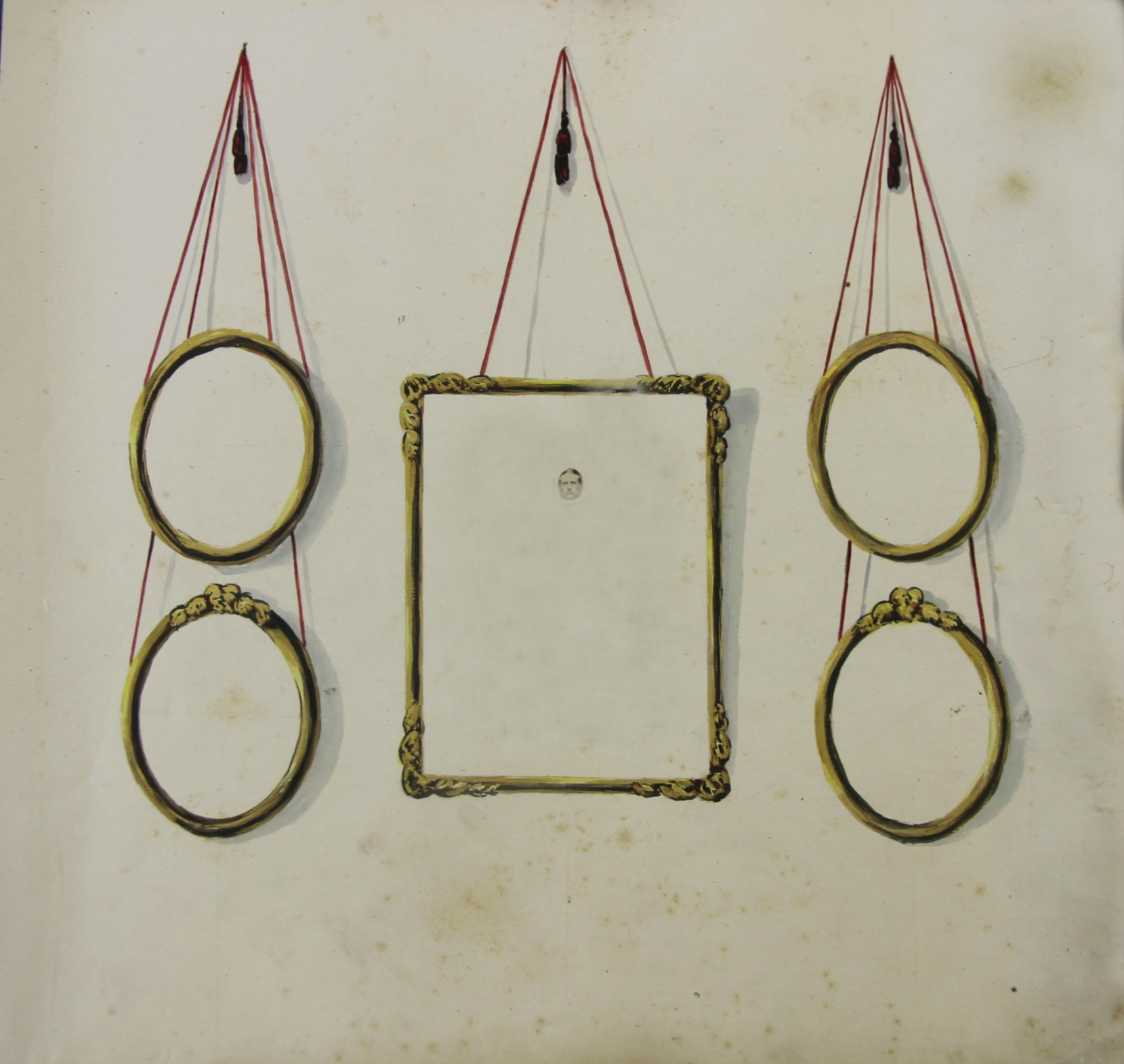
    An interesting series of frames and the empty and  non-images in them was drawn by Forster in notes for his biography some time in 1859. This was Dickens’ “memory palace” card; it was meant to be shown to the person constructing the image of the suspect as an aid exciting memory in placing imagined portraits in an empty frame, “a cup to hold the tea” as Dickens once remarked. 
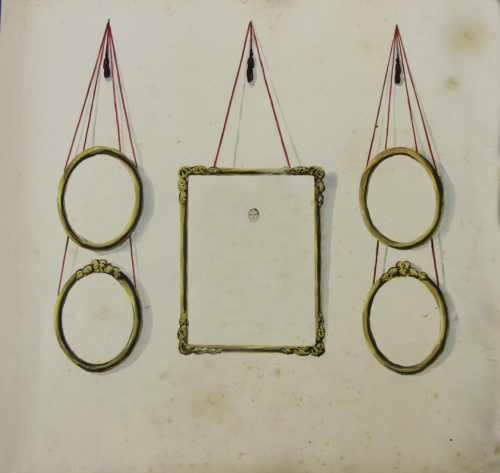
     

    Dickens fames

    It should be noted that Dickens had no interest in the application of the contemporary interest of phrenology4 in his detective/police work, describing it as “waffle and wattle, pride and piffle”, an entire waste of time, and a detraction from the scientific aspects of police and public service work.  

    As with the vast amount of correspondence that Dickens burned–seemingly on a whim and without consulting his friend and biographer Forster–in 1860, all of his work on the Telegraphic Aiding Identifier, including the prototypes of the analyzer, were burned by Dickens in the summer of 1869.  One wonders why Dickens abandoned this project, except that there was just no time for him to dedicate to it. At the time he was writing furiously, sometimes two books at the same time and creating them in installments of a weekly or monthly intervals, editing a newspaper/journal, corresponding, traveling, acting, staging theater productions, doing good works, and running a large family…it is astonishing that one person did even half of what he accomplished.  

    Notes:

    1. John Forster, historian and writer, 1812-1876, was friends with Dickens since their first meeting in 1836, and survived Dickens by six years or so, and may have been his most intimate friend, male or female. His biography of Dickens, in three volumes, was published from 1872-1874.  

    2. This was well before Dickens’ first trip to the United States–traveling there for the first time in 1842, full of hope and potential understanding, but leaving it semi-pissed off about the social organization, spitting, and the amount of money U.S. publishers were stealing from him by pirating his work–and before he became aware of (or met) the creator of the detective in fiction, Edgar Allen Poe.  There’s also Wilkie Collins (1824-1889)–another good friend of Dickens’–to consider, though his detective work in literature comes after Dickens’ creations.  

    3. Work on fingerprints used in the identification of criminals was undertaken earlier in the 1860’s by William James Herschel, though Galton’s work was of a far more scientific nature.

    4. This popular Victorian interest and pastime was created out of mostly dust, sticks, and thin air by Franz Joseph Gall (1758-1828) and Johann Gaspar Spurzheim (1776-1832).

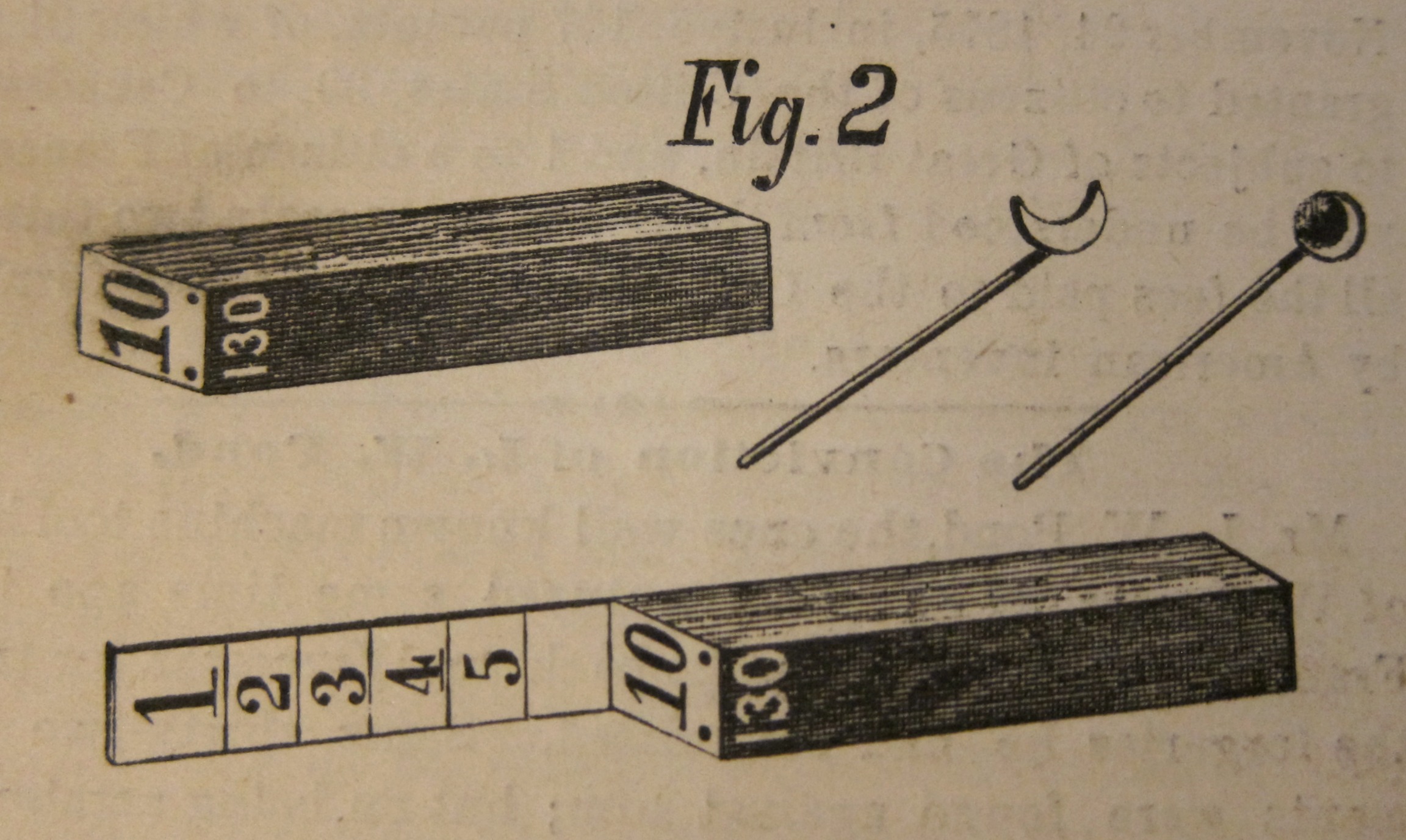
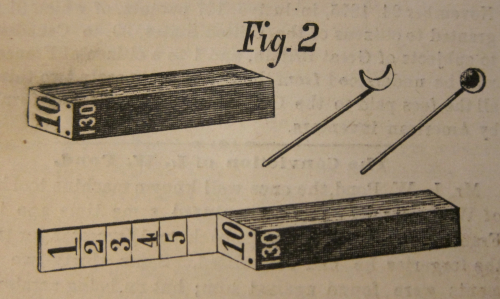
    ALSO:  the following two illustrations display some of the inner mechanics of Dickens analyzer. In “Fig 2” we see a subset of cards intended for the eye, which contained a further 130 cards of eye images and descriptions. The two “wands” at right were meant to be used for covering one eye (to distort the depth of field) while the other was used to obscure the field of vision.
    Dickens machine _2_

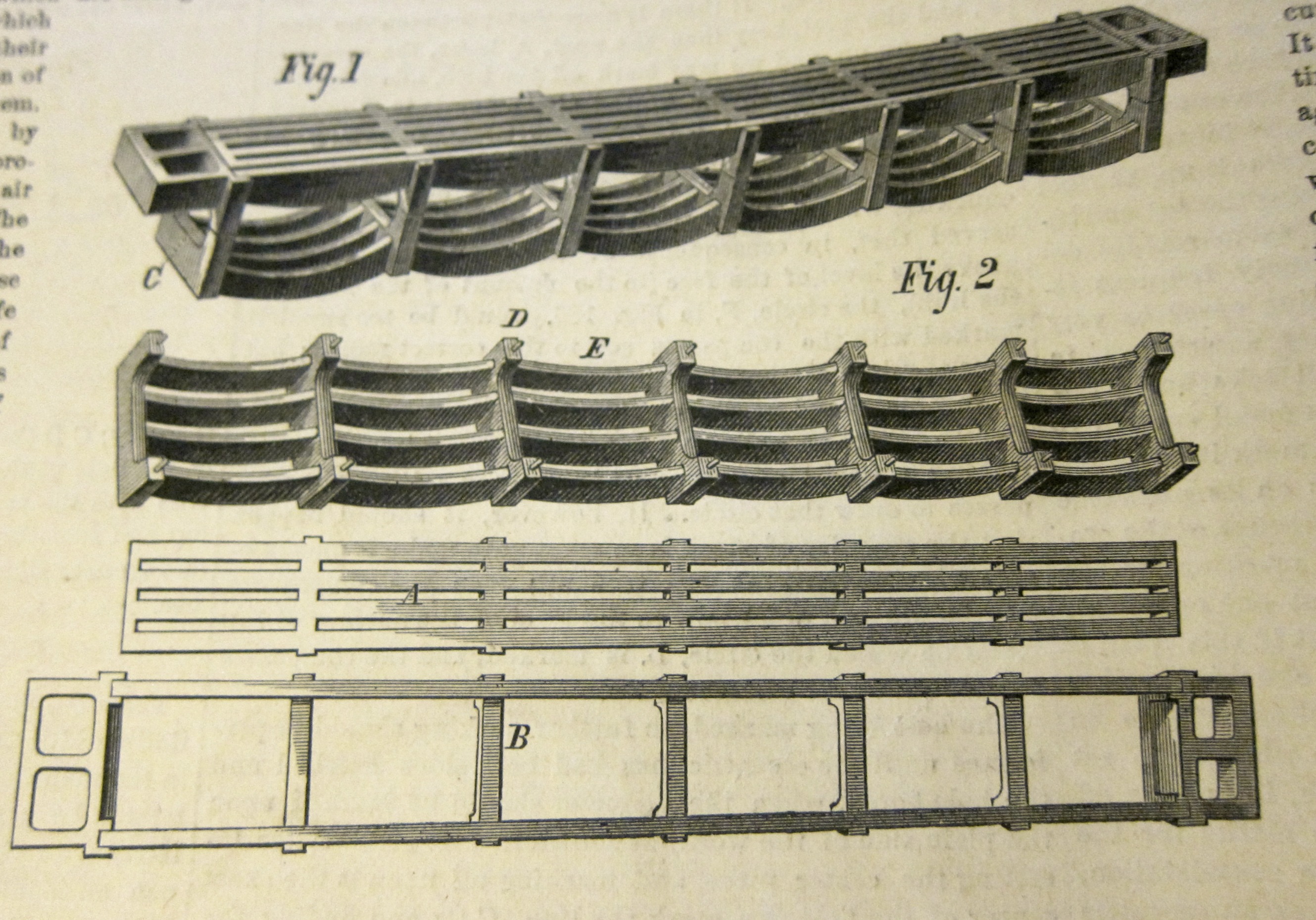
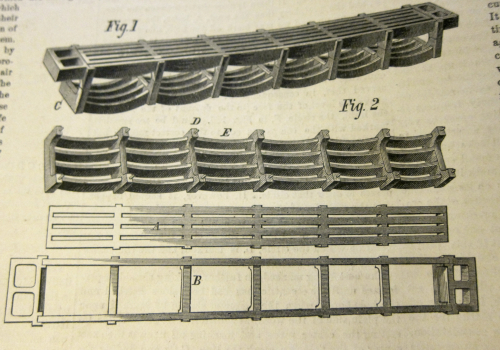
    Below we see the “trolleys” on which the cards are stored in the cabinet’s interior–each one of the enumerated sections of the cabinet would contain one (or more) of these trays which held the image/descriptive cards for that section of the face.   
    Dickens Machine


    Entry in the series Museum of the Imaginary and the Impossible
  • Mechanization Taking Command in a Robotic Carpark (1921)

    JF Ptak Science Books   Post 2656

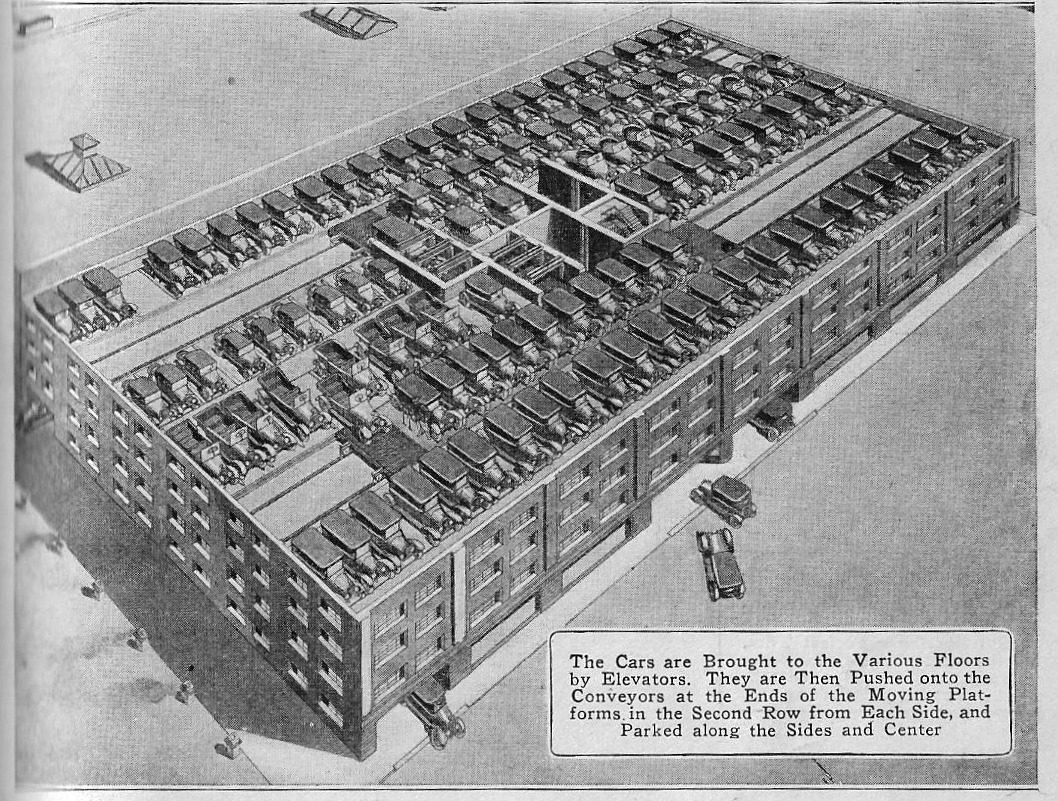
    There are many instances of assembly-line manufacturing before Henry Ford, but none were nearly as complete and extensive and done on such a large scale as the principle and practice he established in 1913.  The idea became generalized and (to a degree) fashionable, and the practice started being implemented in many other business wide and narrow.  To a certain extent that applies to this parking garage proposal that appeared in Popular Mechanics in December 1921. the effect of this idea here is the introduction of the building-as-robot, though the idea in this form didn’t yet exist, nor did the term “robot”. In any event the building took care of the customer’s car once the car had been driven in–attendants would drive the car to an access point for a conveyor and perhaps an elevator, and deliver the car to its designated slot, much in the same ways some libraries operate in storing some of their more obscure books.  

    I guess that “Taylorism” works its way in there, too. Frederick Winslow Taylor (born in 1856 but dead already at this point by six years) introduced a study of business in his Principles of Scientific Management, and that was a synthesis of humans with their environment and tasks to produce a more business-harmonious utilization by increasing the workers’ productivity  via time/use studies, making the worker more a part of the business machine, and in a sense a Borg-like part of a techno-human robotic industry.  Among other things Taylor discovered to the hatred of hundreds of thousands of laborers that the short-handled shovel (villainized in the Song “Big Rock Candy Mountain”) was the better tool to use in many shoveling tasks even though the thing itself is a back-breaker that no worker would choose to use.  Anyway, int eh history of robots, both of these bits deserve some attention. 

    Pop mech carpark 1921

    [Source, Popular Mechanics, December 1921, vol 36, p 751.]

  • A Flying, Floating, Submersible Dirigible…and Monster Flying WIng, 1921

    JF Ptak Science Books   Quick Post

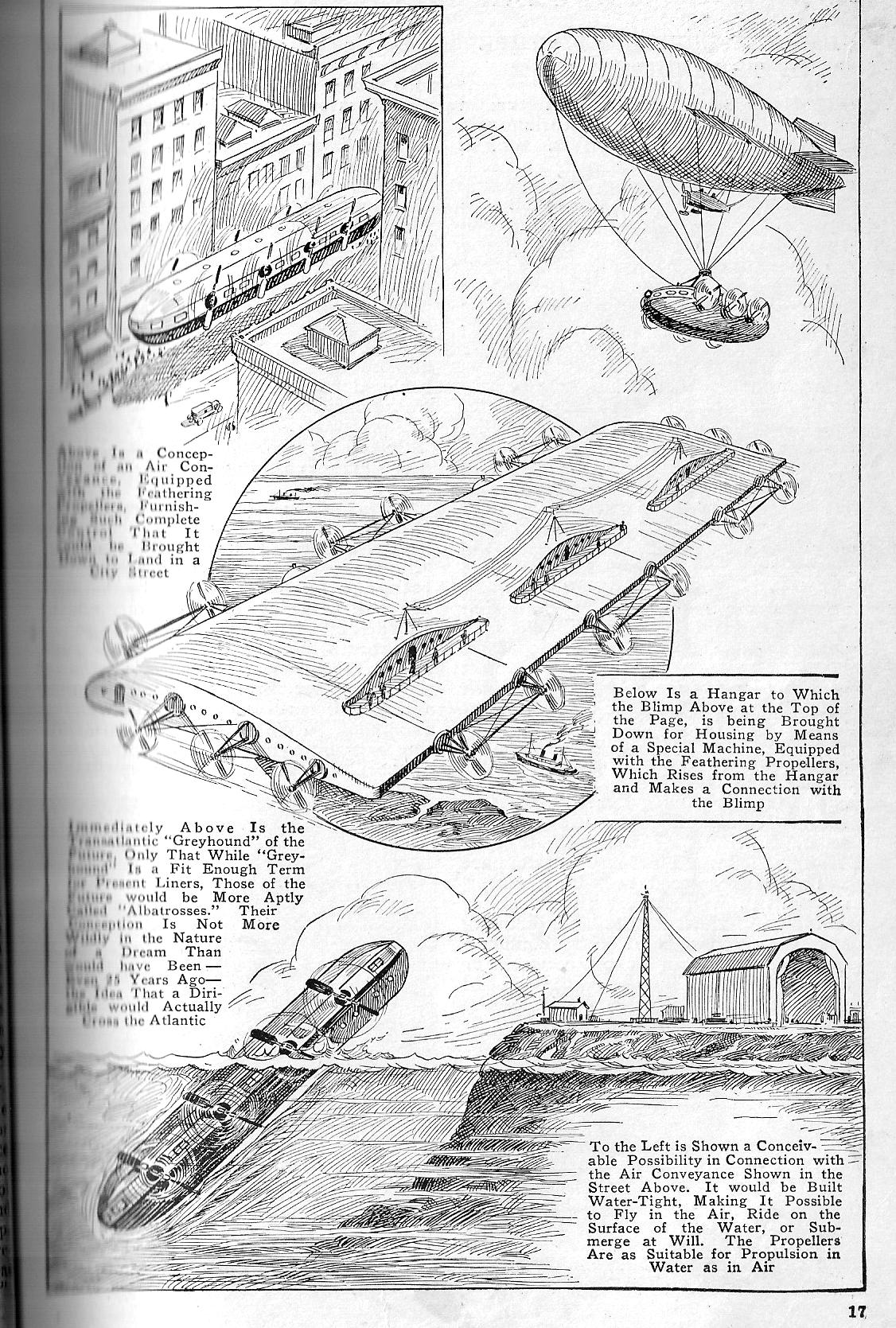
    Normally I wouldn’t qualify a dirigible as “flying”, except here it works because this imagined dirigible can also function as a submarine, which is something I am pretty sure I’ve not seen before.  It is a wonderful and wild idea, especially when coupled wit the other imagery, showing the same dirigible landing softly in a city street using its eight “feathery” propellers.   As high-in-flight as this may seem, and as lovely as the idea of having that same aircraft be submersible, there is also the fabulous and monstrous flying wing (center), which may may grab top billing in this image of the future of air travel.

    Pop mech giant dirigible 1921

    [Source: Popular Mechanics, volume 36, July, 1921.]

  • The Sorceriies of Modern Science (1878)

    JF Ptak Science Books   Quick Post

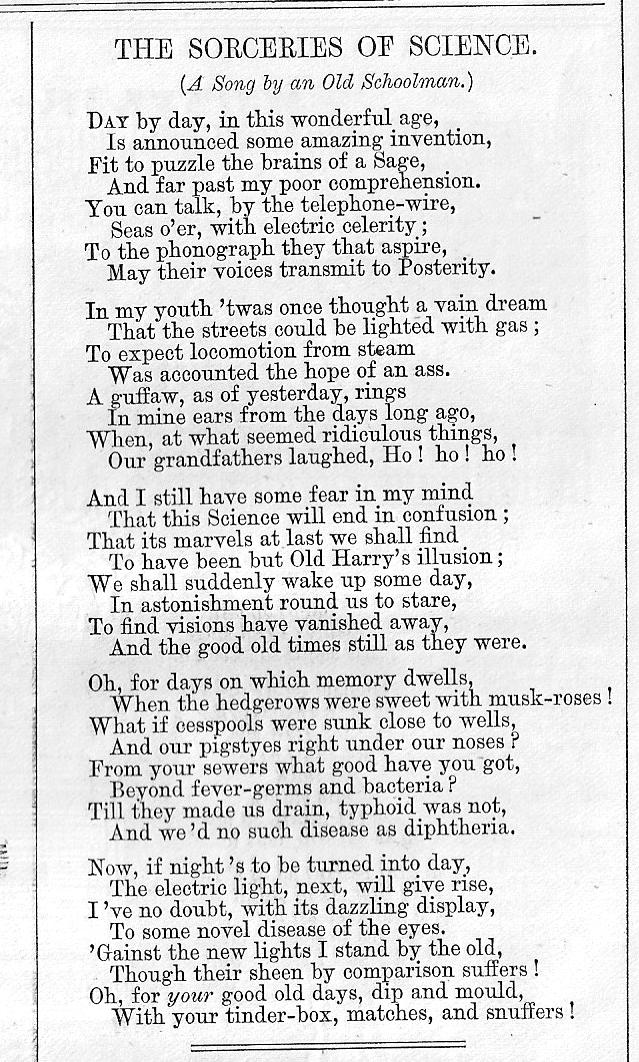
    The writer of this poem to the inconveniences to the status of old technology didn’t much care for modern additions in the history of applied science. The age of electricity had really just begun, and the telephone (by Bell in 1876) and phonograph (by Edison in 1877) mentioned in the complaint were just each a few years old, as was the electric light, which according to the Old Schoolman may very well give rise to some disease yet unknown of the eyes.  At the end of the  day the writer prefers to “…stand by the old/though their sheen by comparison suffers” which I guess is fine, so long as they didn’t need anything that the new-tech could provide.  

    Punch Science poem 1879

    [Source: Punch, or the London Chiarivari, December 8, 1878.]

    ·Posted by :

    ·in:

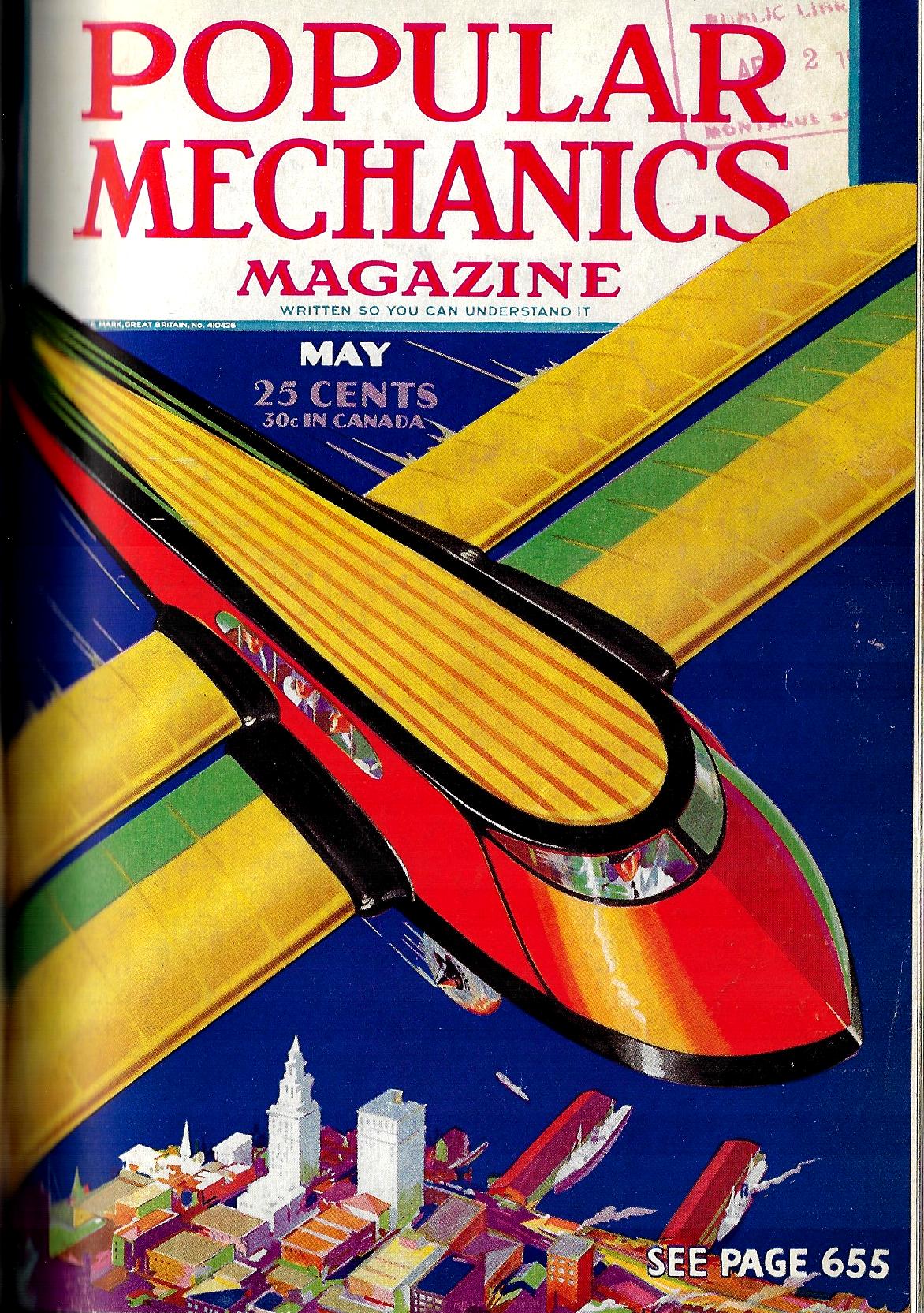
  • A Pulsating Bee-Wing Aircraft, 1934

    JF Ptak Science Books  Quick Post

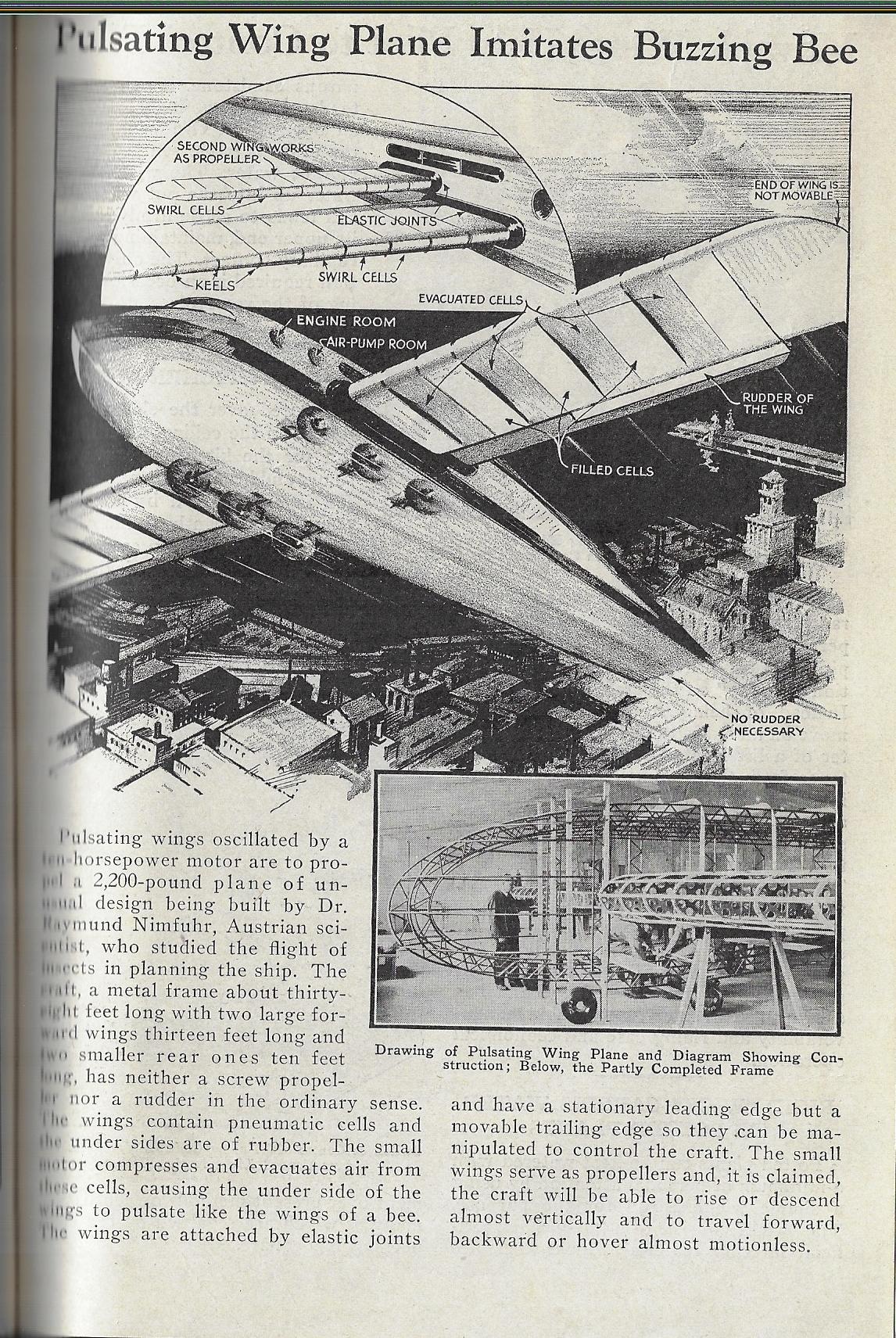
    Another interesting bit as a result of scurrying around a 1934 volume of Popular Mechanics looking for something else:  a propeller-less aircraft moving through the air on bee-wing-like pulsating wings. The image of the aircraft certainly makes it appear fairly large for 1934, but it turns out to be 38′ long–we are told in the first sentence that it weighs only 2200 pounds and is powered by a ten-horsepower motor–I have no idea how this would work. This is the idea developed by Raymund Nimfuhr, “an Austrian scientist” about whom I can find nothing except for references to this article. The aircraft was supposed to have the capacity of forward and backward flight, in addition to being able to remain almost motionless while hovering.  

    Pop mech pulsating wings 1934

    Pop mech pulsating wings 1934 _2_

  • A Singular Cloud of 1817

    JF Ptak Science Books  Quick Post

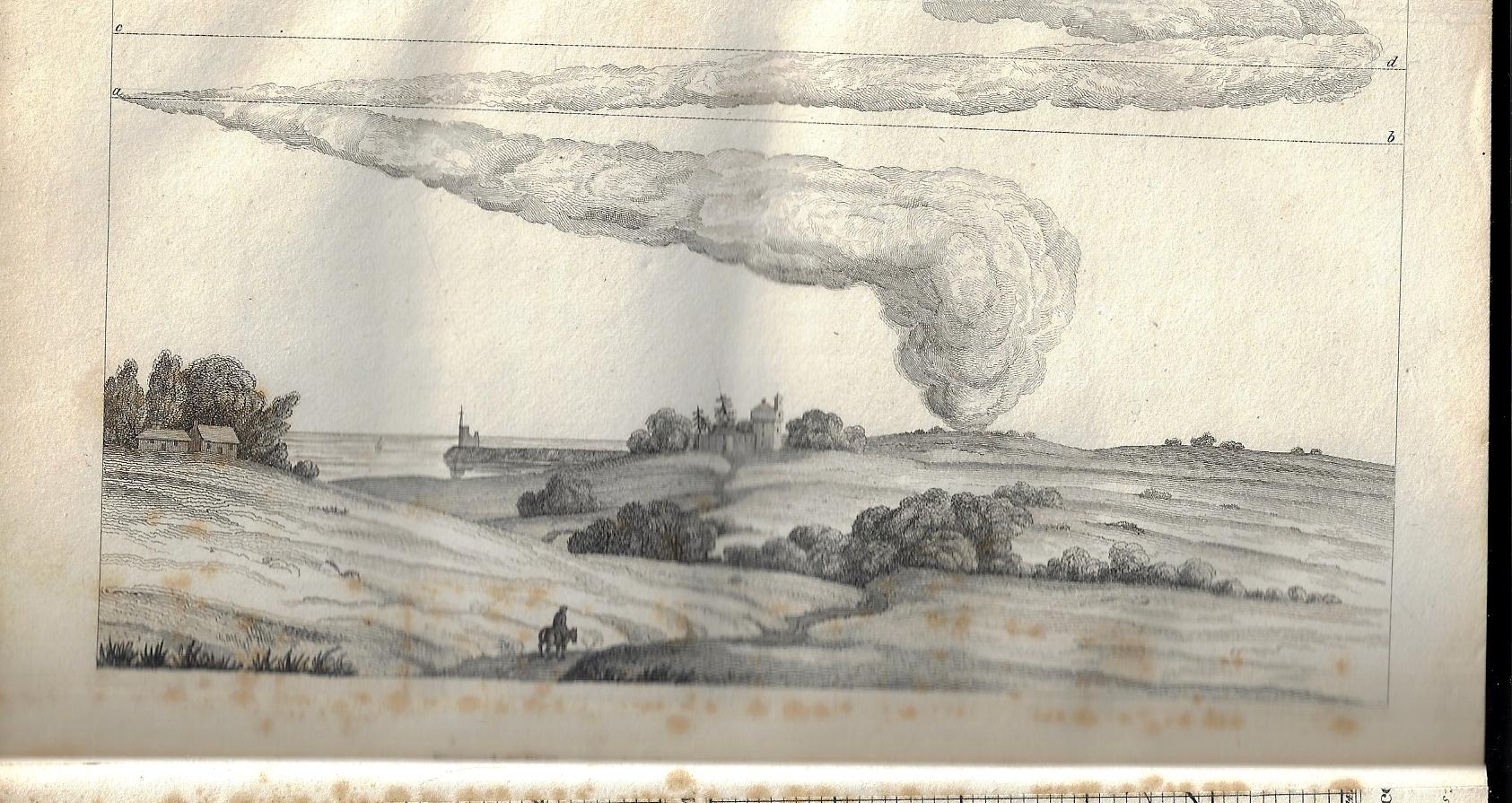
    Grazing a volume of the Annals of Philosophy1 for 1817, looking for a significant bit of this and/or that, I found this wonderful reference to a singular cloud. (This by the way comes on the heels of a post from a  few days ago about another sort of singular cloud phenomena–this one by the great chemist Michael Faraday, and his very early description of cloud shadows, in 1827.)  This article is by Thomas L. Dick and is called “Account of different Currents of Wind observed at the Same Time”, (with an engraved plate), on pp 16-17 of the volume, a short but very present effort. Dick offers an interesting and somewhat poetical, somewhat awe-inspired, description of different air currents  working their influence on a single column of smoke. He observed, “I was very much struck with a beautiful, and very singular manifestation, of the existence of opposite currents of wind at different altitudes…”  The smoke source came from burning a common bush found throughout the plains of England: “Some furze  on an eminence, at several miles distance, had been set on fire” he continued, describing how the plume rose to a height and then was blown in one direction; then, on rising, it encountered another current, and was blown the opposite way, suggesting an experiment to determine what was going on at various stages of the atmosphere. This was pretty early stuff on the technical treatment of clouds as well as the depth of the ocean of air of our atmosphere.

    Cloud going in two directions  1817

    There are many other interesting contributions to this volume, including, for example J. Dewar, “Method of preserving Volitile and Deliquescent Substances”, pp 29-31 (not of course the more-famous James Dewar of the late 19th c); John Dalton, “Appendix to the Essay on Chemical Compounds of Azote and Oxygen”, pp 38-47 and concluded on pp 83-93;”On sailing to the North Pole”, (page 63); M.P.. Moyle, “Description of a Machine for raising heavy weights, called a Jack”, pp 65-6 (including a small vignette on plate four); J. Campbell, “On Vision”, pp 17-29;  Luke Howard, “A Descending Spout on Land”, pp 146-7 (the great cloud classifier has this short entry on a peculiar cloud formation);  H. Edmonton, ” Mode of exploring the interior of Africa”, pp 103-112; and a short book review of the great Cuvier’s “Le Regne Animal Distribute d’apres son Organisation & c.” (4 volumes), published in 1817, pp 127-129, plus many other articles.

    Notes:

    1. Annals of philosophy, natural history, chemistry, literature, agriculture, and the mechanical and fine arts, edited by Thomas Thomson, printed in London for Baldwin, Craddock, and Joy, 1817; volume X, July to December, 1817. Vii, (ii), 479pp, 8 engraved plates (half folding). Provenance: R. Crum Brown for the University Library of Edinburgh, with their bookplate. 

    ·Posted by :

    ·in:

  • On Finding Mr. Babbage and a Very Early Mention of the Future of Computing (1822)

    JF Ptak Science Books   Post 2657

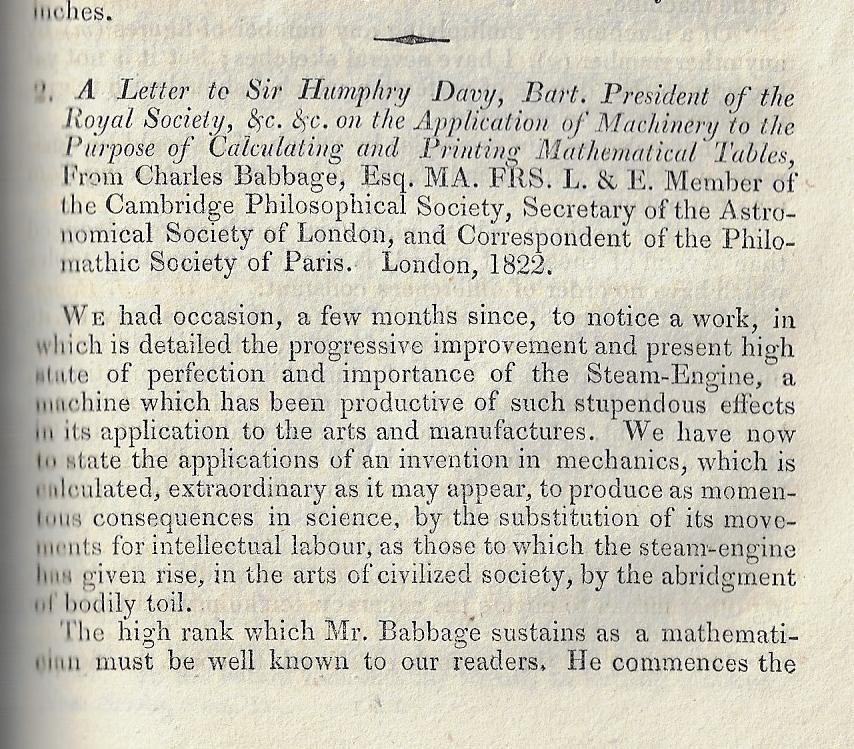
    I was browsing though a volume of Annals of Philosophy1 (1822) for my business, looking for interesting and significant contributions.  Making my way nearly to the end I was not able to come away with anything of particular importance, though there were enough bits in it to make it an interesting purchase for someone, and to probably get a nice blog post out of it. (My main “hook” in the volume’s story for the blog was a happenstance opening of the volume to a page exhibiting two short articles “Definition of a Straight Line” followed a paragraph late by “Black Urine”.) Nearly at the end of the book, though, I came upon a very unexpected “find”: “A Letter to Sir Humphrey Davy, Bart., President of the Royal Society, &c &C, on the Application of Machinery to the Purpose of Calculating and Printing Mathematical Tables…London, 1822” by Charles Babbage (appearing on pp 383-388).  This appeared as a book review in the “Analysis of Books” section of the Annals with the running header of “Mr. Babbage’s Letter to Sir H. Davy”, and published in November 18222.

    Babbage 1822 _1_

    [The beginning of the article in the Annals…; the full text appears below]

    This is a review of a 12-page paper–an open letter–written by Babbage to Davy on July 3, 1822, which was the first public discussion and detailed description of Babbage’s Difference Engine. (I should note that the printers of this privately-printed paper and that of the Annals are the same.) This paper would make its way to the Royal Society which in turn, on May 1 1823, advocated the support (and funding) of Babbage’s machine. 

    The original publication of the Babbage letter is a great rarity, and I would say that for me finding that would be impossible if I wasn’t willing (and of course not able) to afford the very high entry price for the item.  So, finding this in the Annals, finding a review of this very important and rare publication issued just months following the original paper was fascinating.  

    And I nearly missed it.

    Most of the contents of this review are quotes taken from Babbage’s work. A review of the paper also appeared in the British Critic, 1822 (full text found here: http://babbagedifferenceengine.blogspot.com/2014/09/article-in-british-critic-october-1822.html)

    The full text of the rriginal Babbage paper is here:  https://sites.google.com/site/babbagedifferenceengine/babbagelettertosirhumphrydavy

    Other papers of interest in the volume include: M. Prechtel, “On the Foundational State of the Magnetic Phenomena of the Electrical Connecting Wire”, pp 1-6;Charles Sylvester, “On the Specific Gravity of Gases”, pp 29-31; [Anonymous] “Definition of a Straight Line”, p 71; [Anonymous], “Black Urine”, pp 71-2;  T. Weaver, ” Geological Remarks”, pp 81-93; William Buckland, “Account of Fossil Teeth and Bones discovered in a Cave in Kirkdale”, pp 133-146 and concluded pp 173-195;  [Note on] “Frauenhofer’s Experiments on the Illuminating Power of the Prismatic Rays”, p 157; William Hyde Wollaston, “On the Finite Extent of the Atmosphere”, pp 251-256; James Smithson, “Some Improvements of Lamps”, pp 363-364;

    Notes:

    1. Annals of philosophy, natural history, chemistry, literature, agriculture, and the mechanical and fine arts, edited by Thomas Thomson, printed in London for Baldwin, Craddock, and Joy, 1822; volume IV, July to December, 1822. Vii, (ii), 480pp, 6 engraved plates (half folding). Provenance: R. Crum Brown for the University Library of Edinburgh, with their bookplate.

    2. The full title of Babbage’s work as it appeared in 1822:  Letter to Sir Humphry Davy, Bart, President of the Royal Society, &c.&c. On the Application of Machinery to the Purpose of Calculating and Printing Mathematical Tables, from Charles Babbage, Esq. M.A. F.R.S. Lond. and Edin., Member of the Cambridge Philosophical Society, Secretary of the Astronomical Society of London, and Correspondent of the Philomathic Society of Paris. 4to 12pp Baldwin & Co. 1822.  July 3, 1822

    ·Posted by :

    ·in:

Recent Posts

Archives

Categories