A Daily History of Holes, Dots, Lines, Science, History, Math, Physics, Art, the Unintentional Absurd, Architecture, Maps, Data Visualization, Blank and Missing Things, and so on. |1.6 million words, 7500 images, 4.9 million hits| Press & appearances in The Times, Le Figaro, Mensa, The Economist, The Guardian, Discovery News, Slate, Le Monde, Sci American Blogs, Le Pont, and many other places… 5000+ total posts since 2008.

  • A Longitudinal View of Natural History, ca. 1876

    JF Ptak Science Books   Quick Post

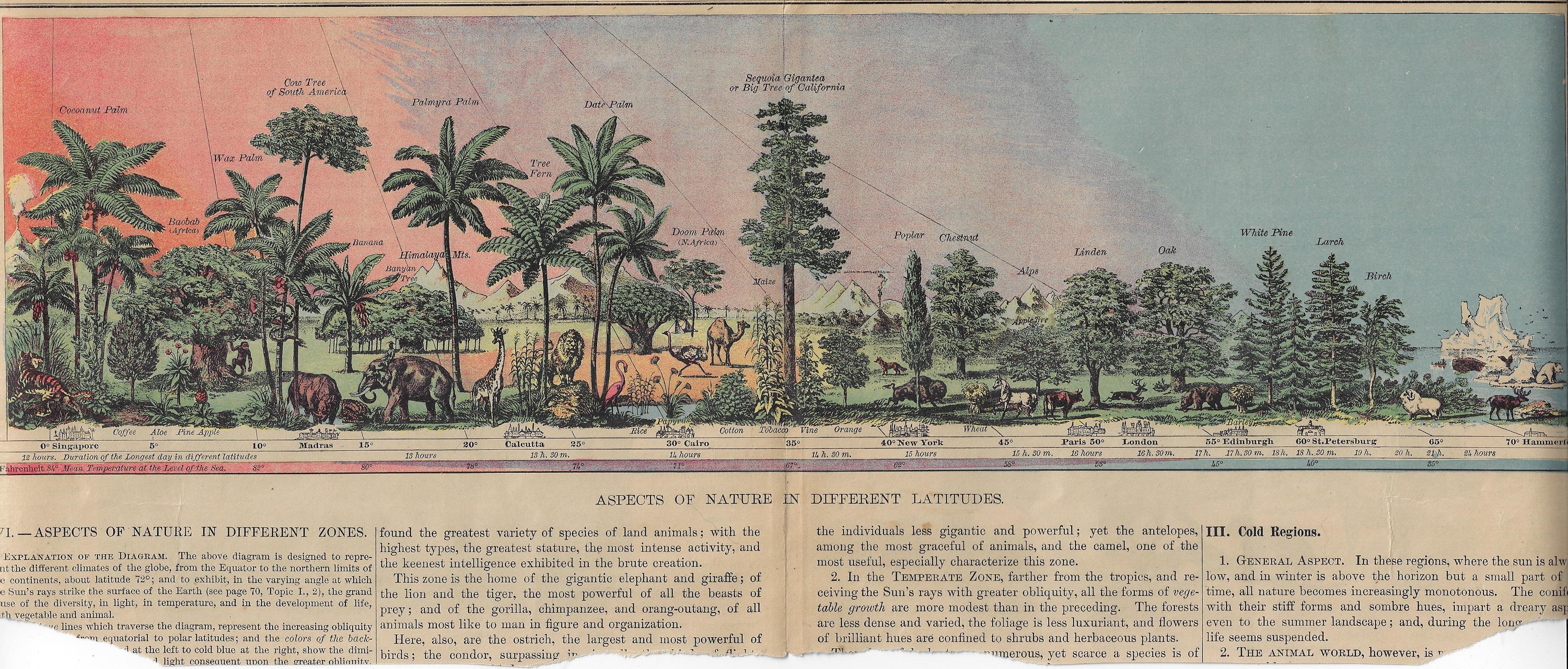
    This lovely image displays the natural history of limited flora and fauna at different latitudes, centering on the “Big Trees of California”. The original is about 17″ long and almost fits exactly on the big scanner, though some of the edges are left off–no matter, I think, as most of the image is available. Its source is a grade school textbook (probably seen as fairly advanced by modern standards) by Arnold Guyot, Physical Geography, and published ca. 1876–the image (or something very much like it) may have appeared in other contemporary texts, like Cornell’s Geography, though I’m not sure.  At any rate it is very nicely designed, and I enjoy the gradient of the sky. 

    [Click on the image for a good expanded view.]

    Map view of prehistoric times

  • Recovering from Drowning via Steadfast Bleeding (1827)

    JF Ptak Science Books   Quick Post

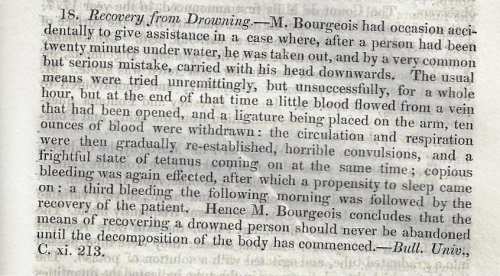
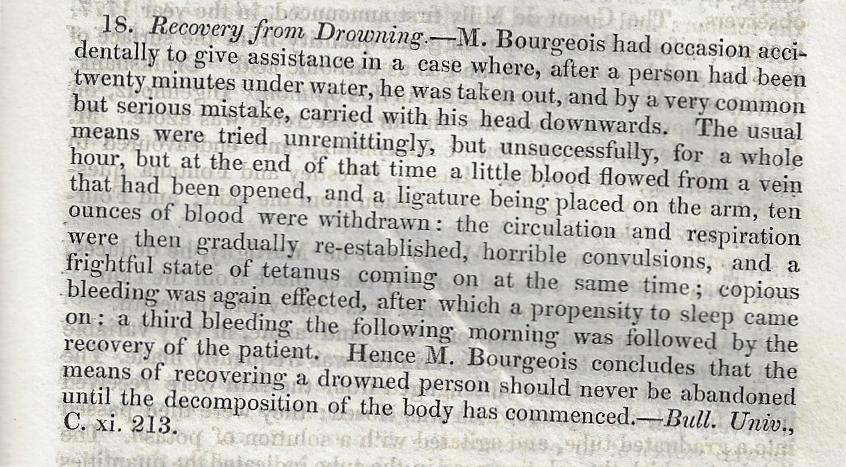
    It turns out that the great scientific periodical Quarterly Journal of Science, Literature, and Art1 (a journal that would soon become the Philosophical Magazine of the Royal Society) besides being an important medium for communicating scientific (and occasionally mathematical) work was also filled with other sorts of bits of information, an example of which follows. In this case a report on a drowning is made, the drowned man recovered, seemingly lifeless, and after the normal procedures had been performed remained null and void, at which point a little “bleeding” was performed.  “Bleeding” was “bloodletting”, an ancient practice, several thousand years old,. where a certain amount of blood is taken from the patient, the belief being that it would remove the bad elements in the body/blood. In this case, in the first application, ten ounces was removed. Ten ounces is not that much, less than a pint, which is what people donate at a blood clinic–the human body can spare that much, easily, as it contains some 180 ounces or thereabouts on average. Two further bloodlettings were administered, pulling out “copious” amounts of blood, whatever that means. (Perhaps they let 30 ounces, perhaps double that, I don’t know–that would make 3-4 or more pints, which if lost at once would be a challenge for an EMT. 

    The extraordinary thing here is that after being drowned, and three bloodlettings, and being unconscious overnight, the man woke in the morning, revived.  

    I wasn’t prepared for the author’s revelation of the big lesson learned here, which I thought was going to be about bloodletting. Rather we are told that the significant thing is to never give up on your patient–especially in the unconscious victim–until the body putrefies (“until decomposition of the body commenced”). 
    Drowning

    Notes

    1.  The Quarterly Journal of Science, Literature, and Art, July-December, 1827; London, printed by Henry Colburn, p 231.
    ·Posted by :

    ·in:

  • Color as a Secret Weapon–Air Recon, Camouflage, and Color Film (1939)

    JF Ptak Science Books   Quick Post

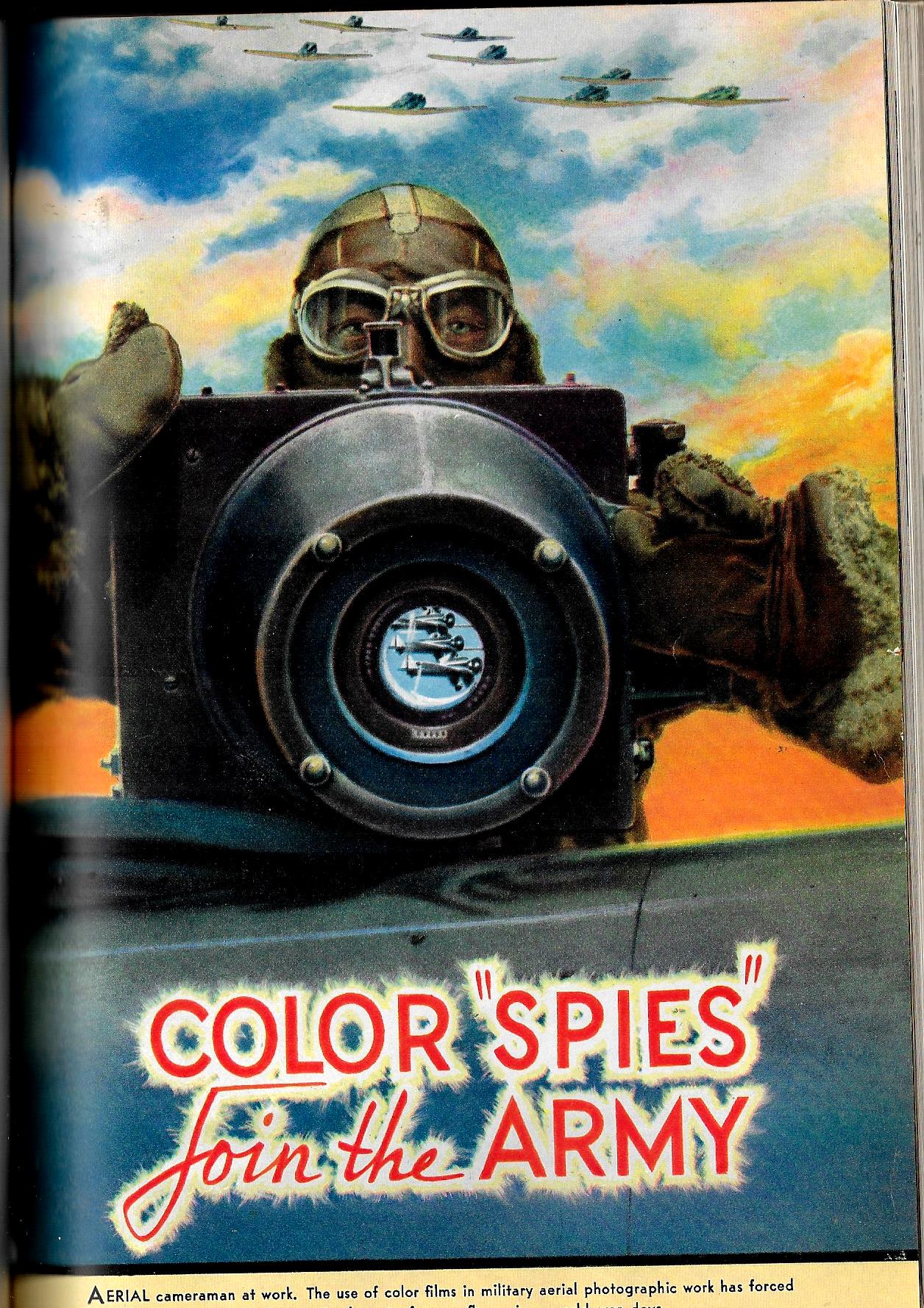
    Here’s something I never thought of before–how color air recon photography changed the application of camouflage.  Aerial photography used to reveal the hidden segments of an enemy’s position was almost exclusively limited to black and white film in the two decades or so following WWI. Color films were far slower and evidently not suited to the task until the late 1930’s–therefore, it seems, camouflage was prudently directed to disguise objects from aerial surveillance with those limitations in mind.  As this cover for an article in Popular Mechanics suggests, all that changes with the invention of faster color film that made the b+w film obsolete, and changed the way camo was used to confront mile(s) high observation.  (I also suspect that this was available to the U.S. armed forces well before this article was published…)

    Camouflage aerial recon

    [Popular Mechanics, April, 1929, page 497.]

    ·Posted by :

    ·in:

    — —
  • Not Seeing the Soldier for the Gas, 1918

    JF Ptak Science Books   Quick Post

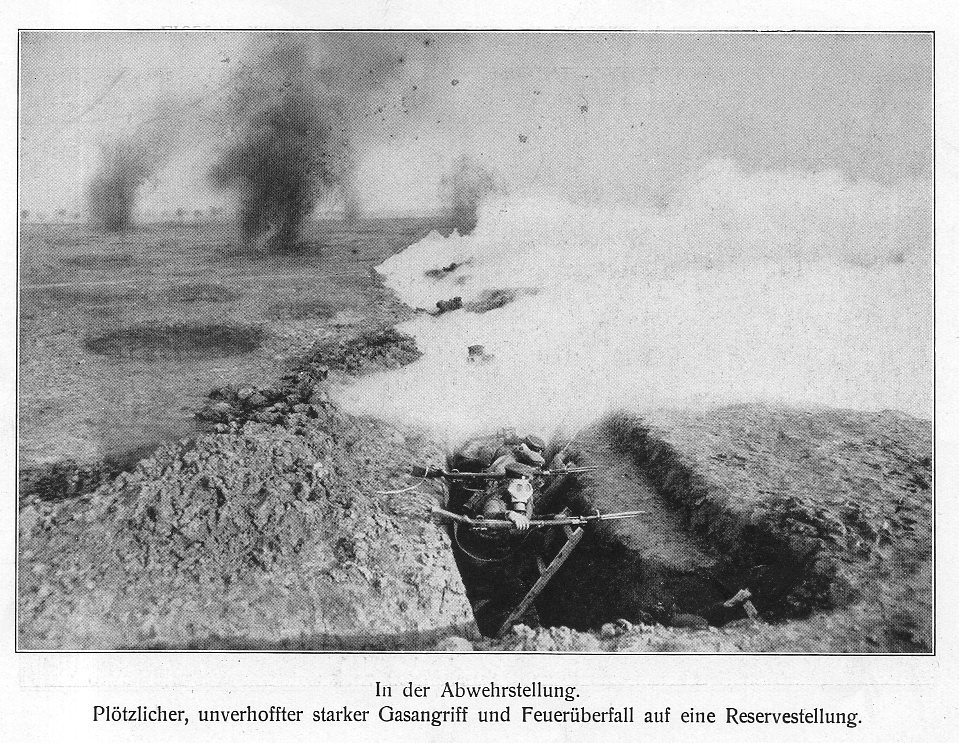
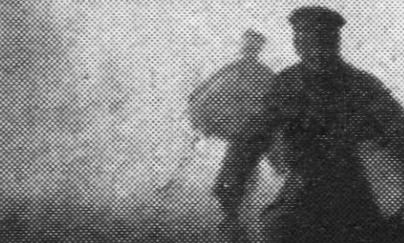
    I was struck by what I hoped at first was a smudge in the center of this photograph, though I knew better. The smudge was a man, a soldier in a gas mask, nearly completely enveloped in gas.  This is a pixellated view of that lone man in the smoke, derived from a half-tone image, giving the soldier a crystalline-like half-gone vision:


    WWI Project German photo gas trench detail

    This is a detail from the full image, which shows a bombardment and gas attack on a “defensive” position.  This was published in the unblinking photographic history of the war by Hermann Rex, Der Weltkrieg in Seiner Rauhen Wirklichtkeit, printed by Herman Rutz in Oberammergau in 1926.  

    WWI Project German photo gas trench806

    I’ve conducted a number of other such images elsewhere on this blog (mostly in the WWI Photography category), such as the “Runnung Man, 1918” post, below: 

    WWI Project spectre running

    https://historyofideasblog.com/thesciencebookstore/2015/10/running-man-1914-1918-.html

    ·Posted by :

    ·in:

  • A Case of Pedestrian Confusion: Adam & Eve, Monkeys, and Darwin (1878)

    JF Ptak Science Books  Quick Post

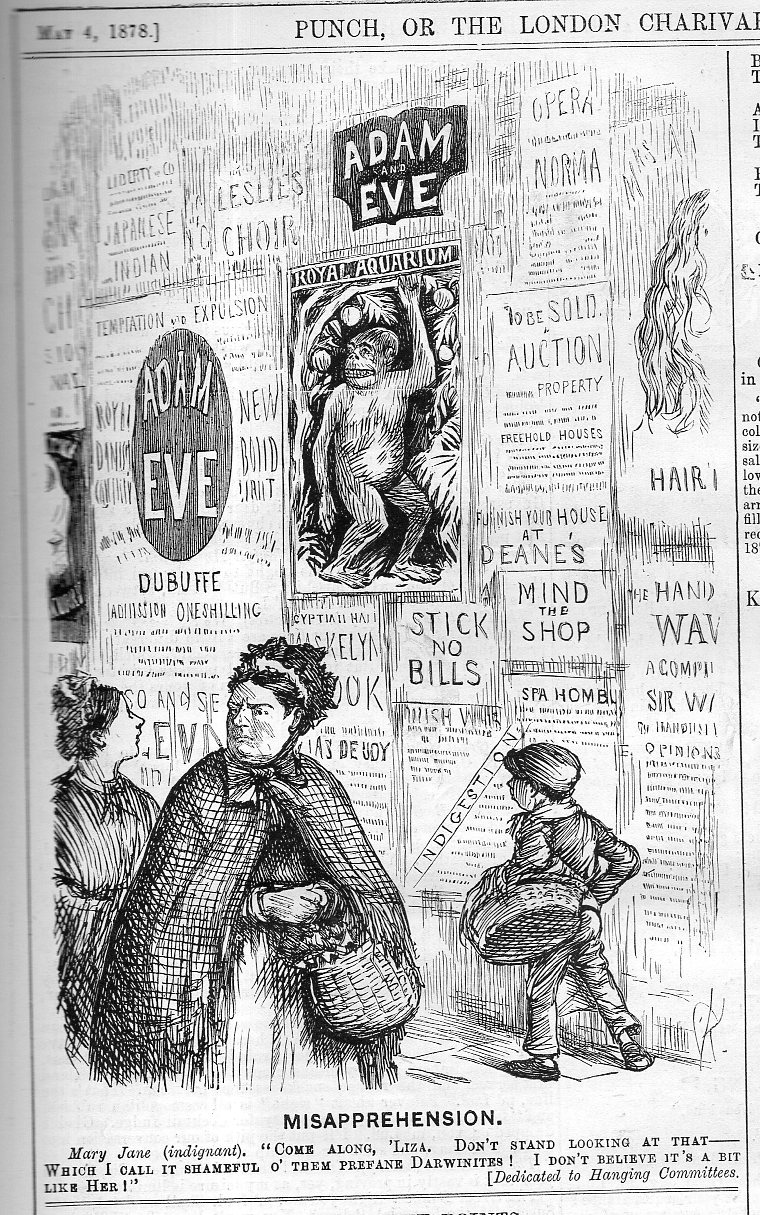
    This busy and crowded side-of-a-building display of advertising added to the confusion of these two passers-by, the older woman no doubt thinking that the younger woman was connecting the monkey and the “Adam and Eve” play, as though making a connection between Adam/monkey, when in fact they just happened to be closely-placed adverts that had nothing to do with one another. I guess the magazine that published this bit, Punch (in London on May 4, 1878, just a few years before Darwin’s death and 19 years after the Origin first edition) wanted to have a go at how easily Darwin could be misunderstood, especially those who were willing to make big leaps of faith with no foundation of understanding, equating in their creationist ways that with Darwin Adam & Eve were monkeys, or some such.. Or maybe it was something else… 

    Punch darwin adam and eve 1878813

    ·Posted by :

    ·in:

  • Dickens and the Ragged School (1852)

    JF Ptak Science Books  Quick Post

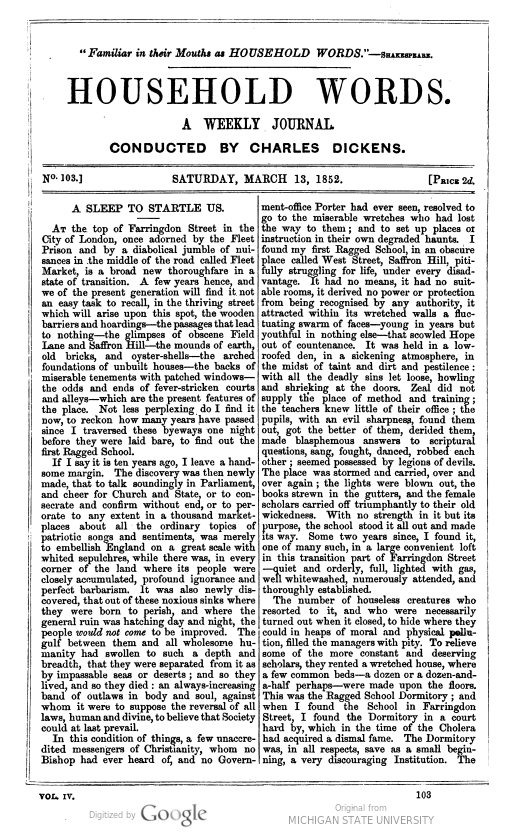
    As impossibly busy as Charles Dickens was–and this mostly throughout the course of his writing life–there was always something else going on for him beyond that tirelessly-busy stage.  He always seemed to have time, too, even beyond all of this, to help people in need, physically and through his words. Dickens’ interest and care for the poor, the working class, the sick, the abandoned, the beggars, the children, exposing them to the reading public, expressing care and understanding and sympathy, is perhaps unmatched in the 19th century.  

    I found this piece–new to me–in Dickens’ edited (“conducted”) Household Words, in the March 13, 1852 issue.  It discusses the concept of the “Ragged School” in Dickens’ visit to the Field Lane Ragged School, an institution for educating all-comers, including the homeless, the indigent, the sick, abandoned children, all done for free by volunteer teachers.  

    I wanted to reproduce the Household Words article, below. 

    There’s a fine article explaining the ragged school available at the British Library site, here: https://www.bl.uk/romantics-and-victorians/articles/ragged-schools

    Another–cleaner–version of the Household Words article appears on the site Infed, here: http://www.infed.org/archives/e-texts/dickens_a_sleep_to_startle_us.htm

    Image sources: Hathi Trust https://babel.hathitrust.org/cgi/pt?id=msu.31293028986887;view=1up;seq=589;size=75

    Dickens ragged


    ·Posted by :

    ·in:

  • An Early Mechanical-Biological “Interface”–the Perfect Voice, 1878

    JF Ptak Science Books   Quick Post 

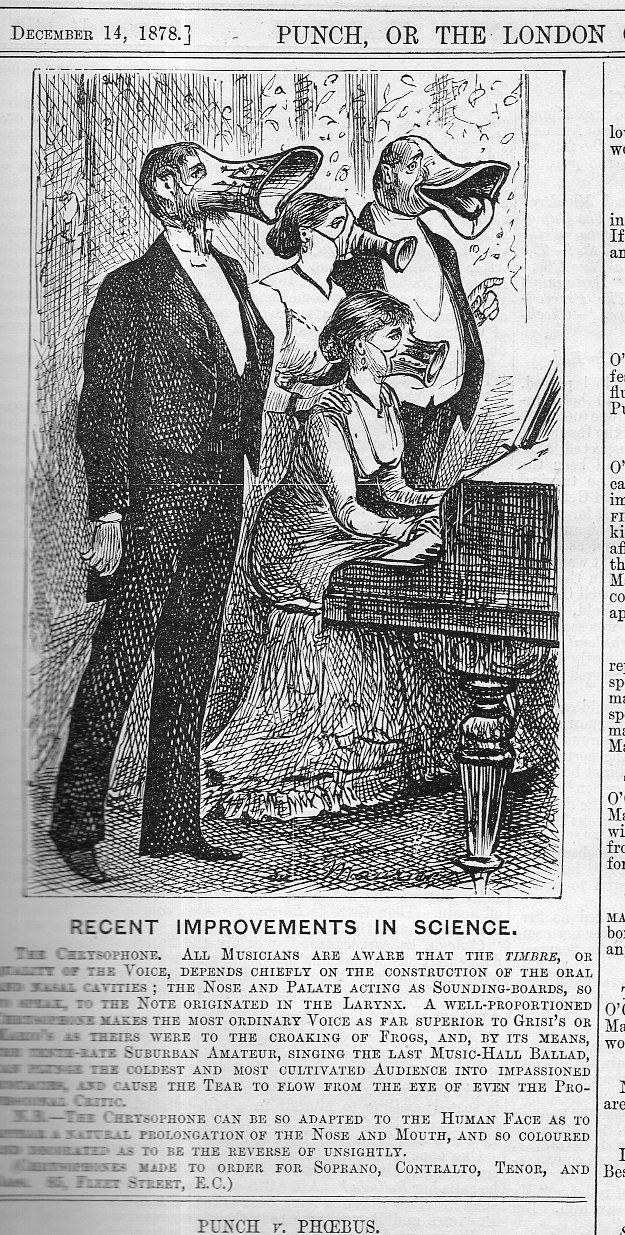
    I think that this may have been one of Punch’s responses to Mr. Edison’s newly-invented talking phonograph. Given that the machine was now capable of reproducing not only voices but musical sounds as well, perhaps the cartoonist decided to push the idea a step further and introduce the “chrysophone”, a device that fit over the face and allowed the user to sing perfectly. So, no need now for recorded music (at least for vocals) when you can produce the music perfectly on your own, regardless of personal ability.  It seems a bit “robotic” to me, and I think that in Our Future Robot Overlords’ (OFRO) history of robotics that this image could find a place in the archives, mainly because it suggests (even in parody) the adaptability of a human-mechanical biological interface, which in 1878 was pretty early stuff.  

    Punch perfect voice815

  • What Things Cost in the U.S. in 1836–How Much WAS a One Pound Bladder of Snuff?

    JF Ptak Science Books     Quick Post

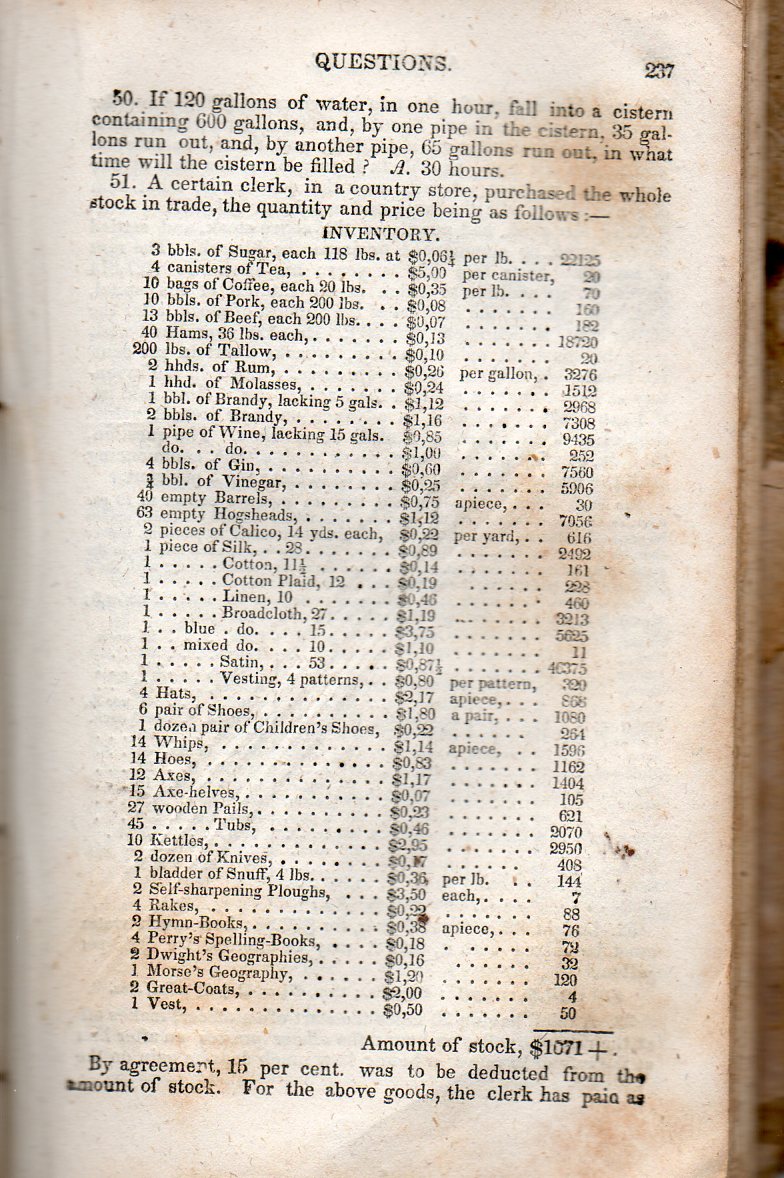
    In case you’ve wondered how much four barrels of gin cost in the U.S. in 1836 I have provided the following list of What Stuff Cost, found tucked away in a book-keeping section of a very well used pocket-sized copy of Roswell C. Smith’s Practical and Mental Arithmetic on a New Plan..., which was published in Hartford in 1836.  The answer to the gin question is $75, and if a barrel meant 42 gallons back then as it does now then the gin would cost about 60 cents a gallon. That of course sounds like a tiny price, but compared to what? That 60 cents would be about two-thirds of a day’s wages for the average non-farm white male worker (actually between 50 cents and $1.00), while girl/women textile workers in Lowell Mass worked for about $3-4 per six day week. So if you considered working for most of the day in exchange for a bottle of (average, nothing special) gin, then it would seem a little on the expensive side.  Or consider the prices of stuff as expensive or not based on a yearly salary of $300 or so and getting by on about a dollar a day. Naturally many standard cost of living bits are not present in 1836, but still there’s not a lot of wiggle room on a salary like that.  

    What is also a very attractive insight was that these items were considered to be at least more-or-less obvious object to have in a store or in trade, which might say a lot about what sorts of things were available for purchase in general at that time.  

    In any event, the list (which is tiny in real life, about 3.5×3″ total) which for some reason did not make use of the decimal point: 

    Math inventory 1836817


  • Inside the Sausage Factory–Images of the Socialist Press at Work, NYC, 1904

    JF Ptak Science Books   Post 2655 (Honestly I’ve lost track of the full posts and the 2000 or so unnumbered “Quick Posts”, though this is close to being correct.)

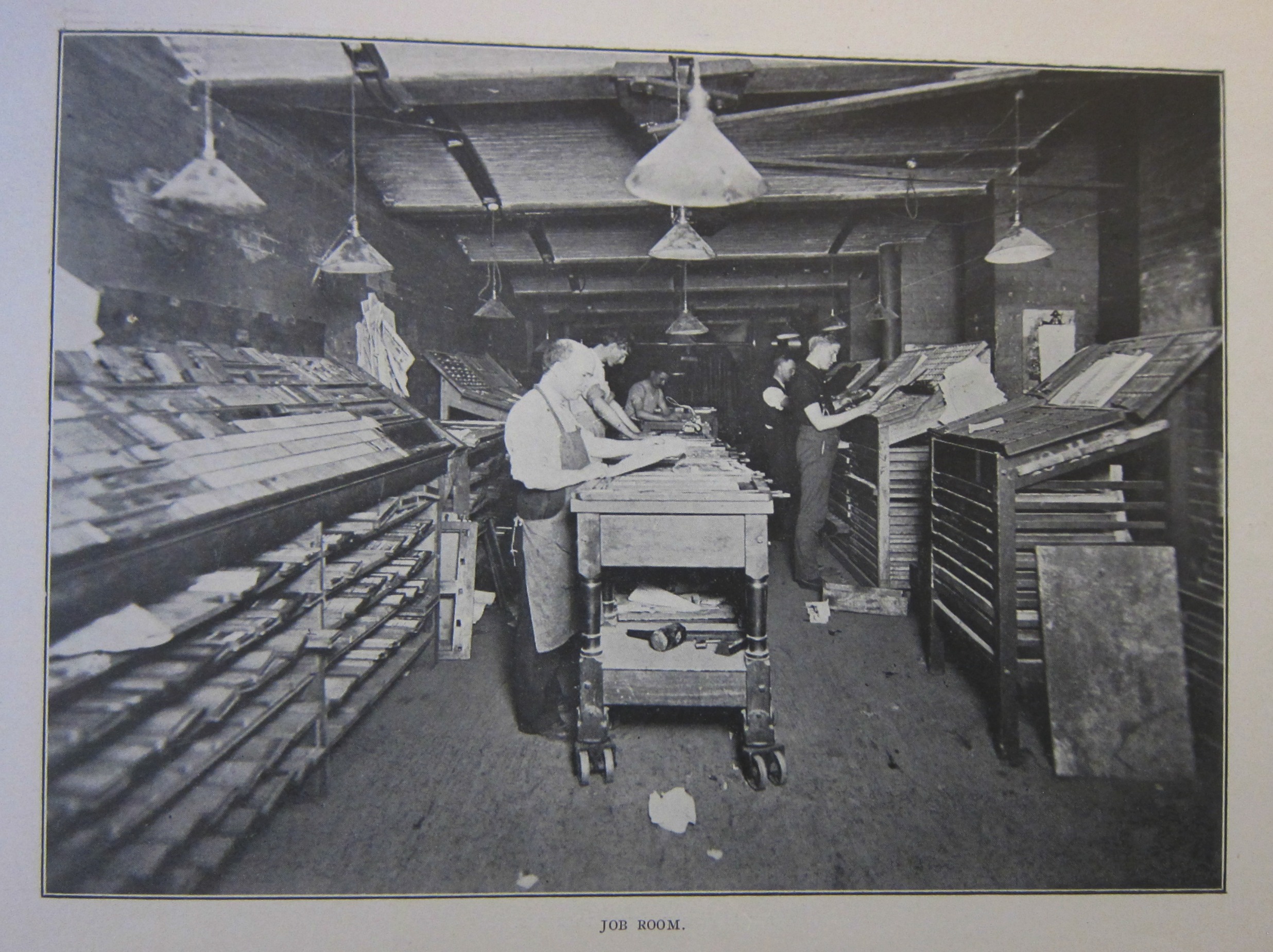
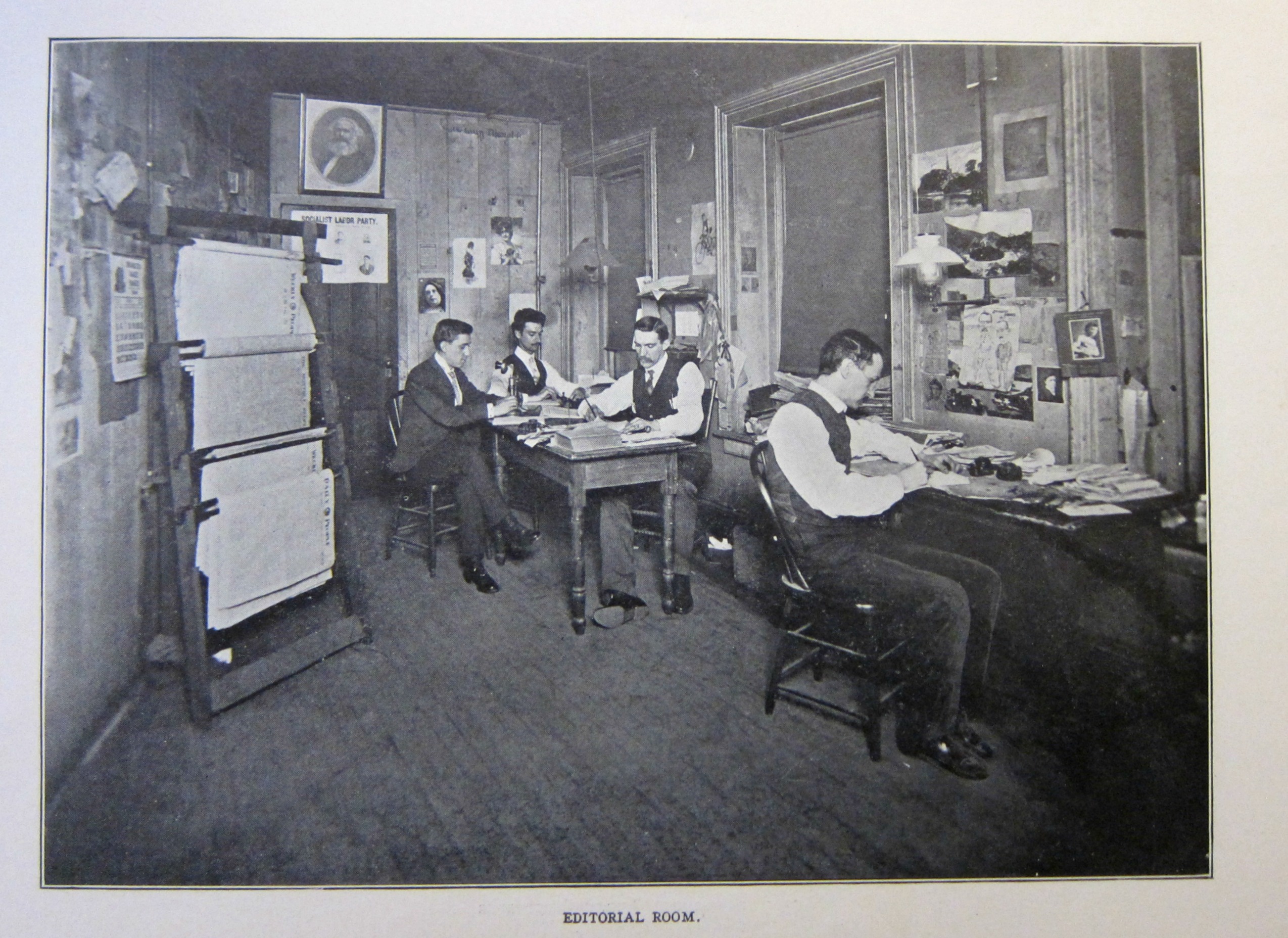
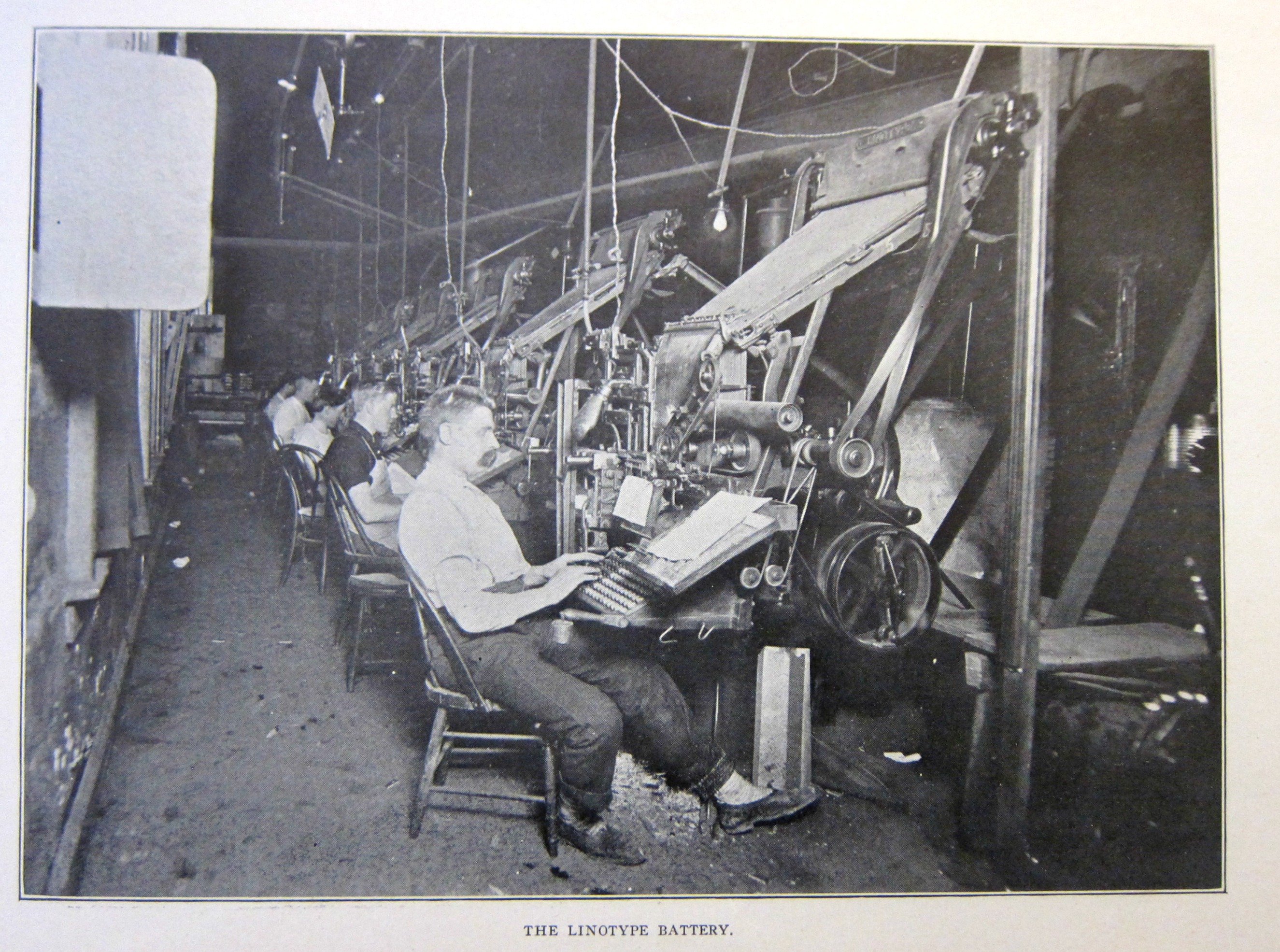
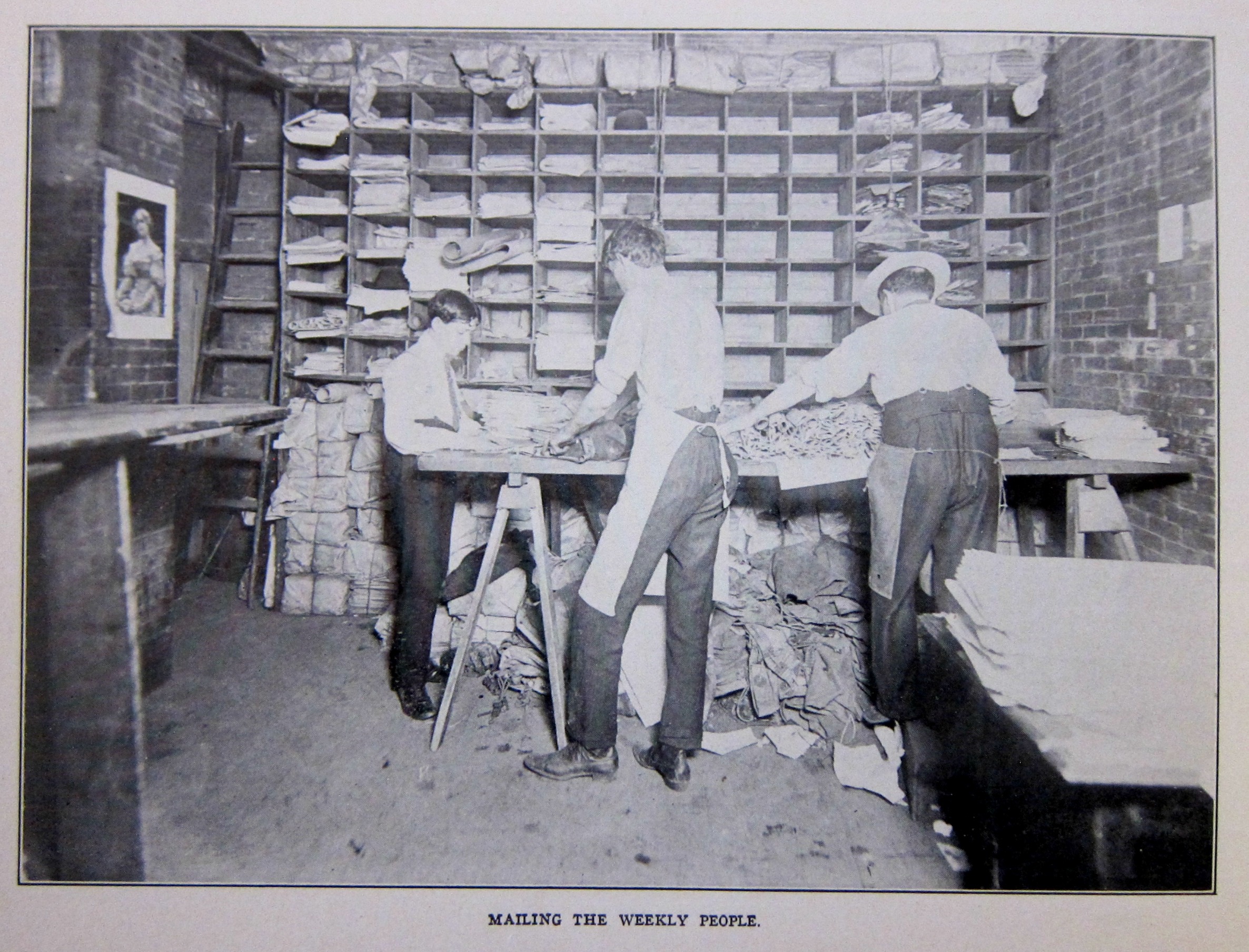
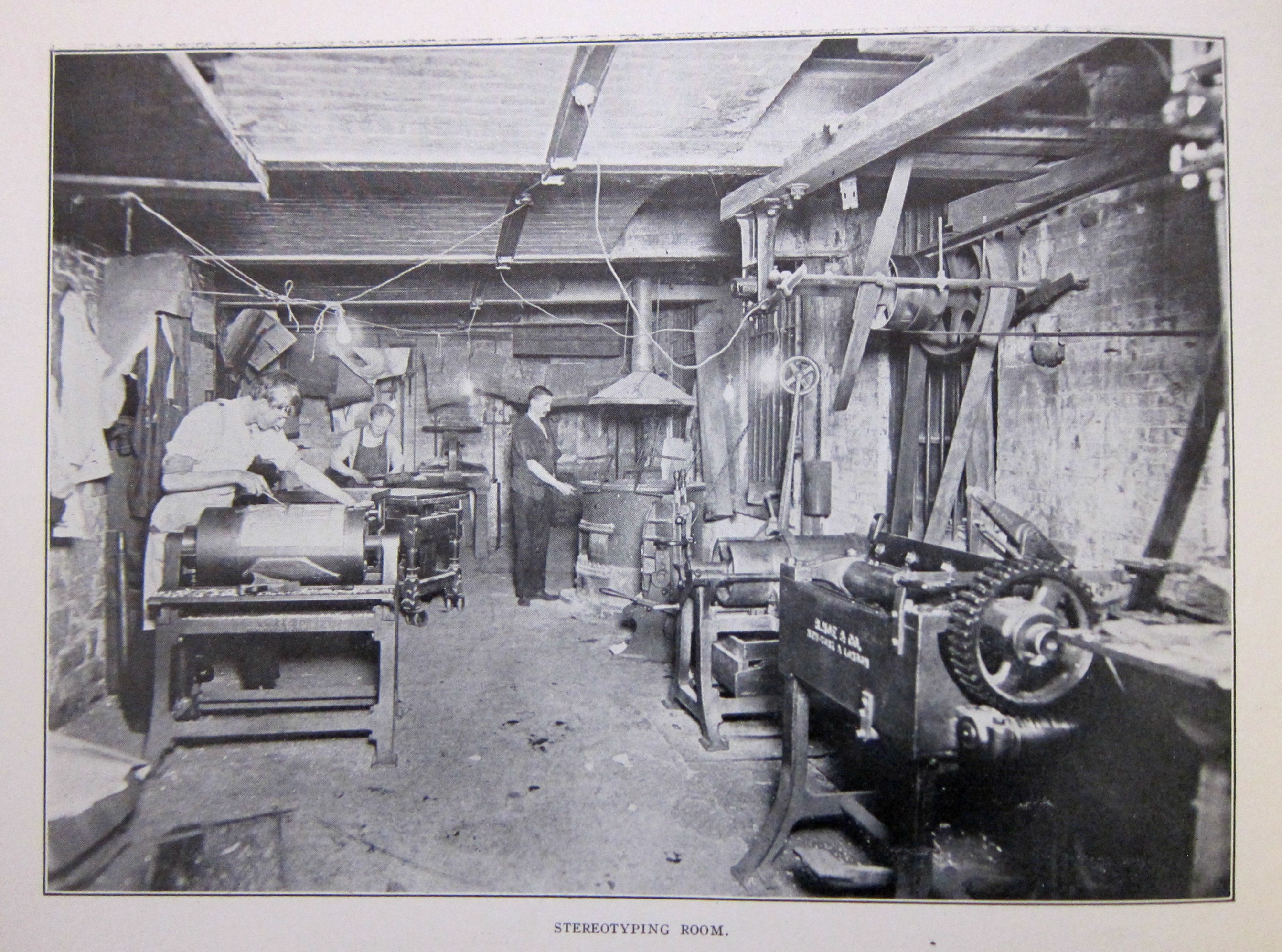
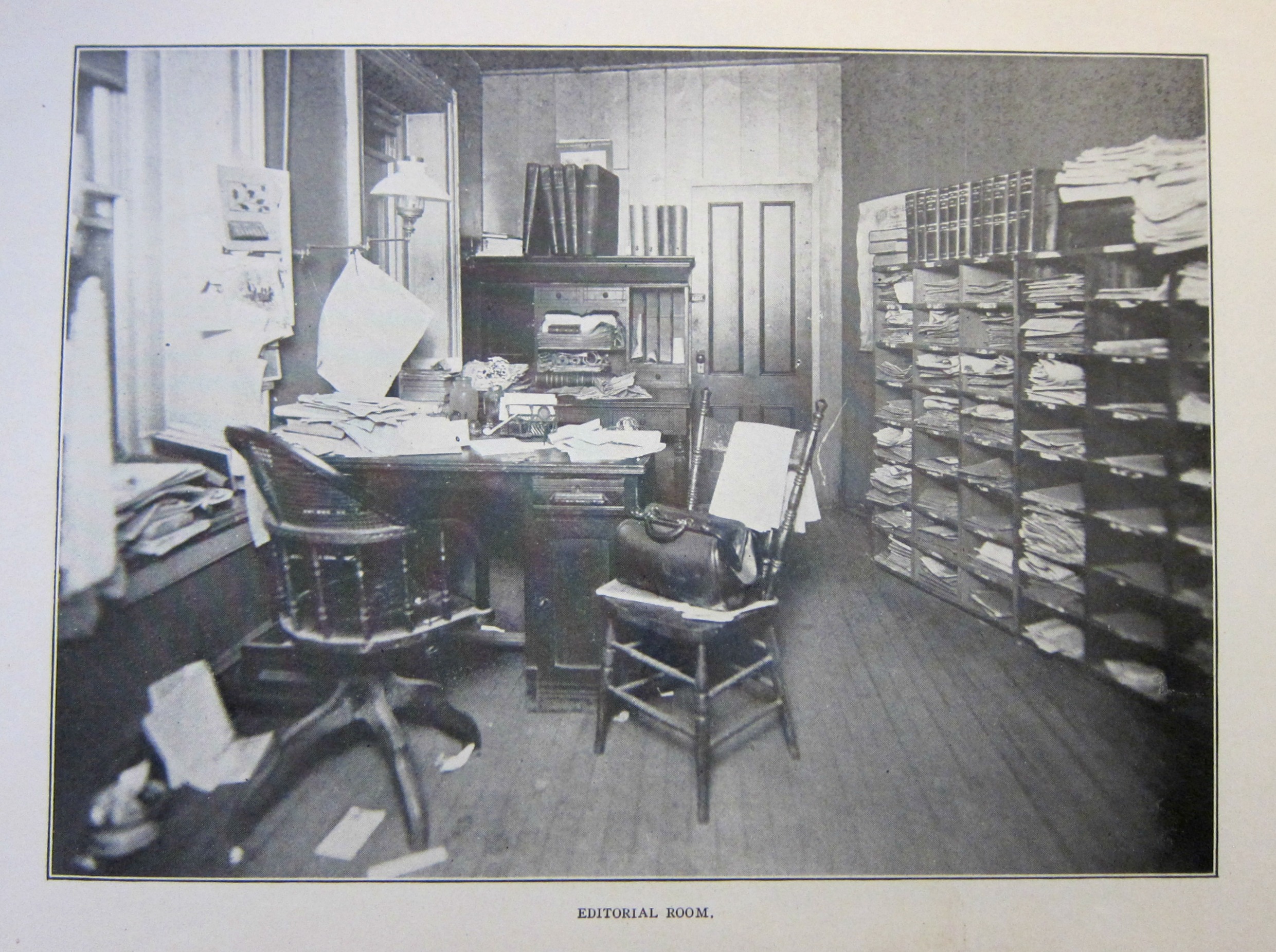
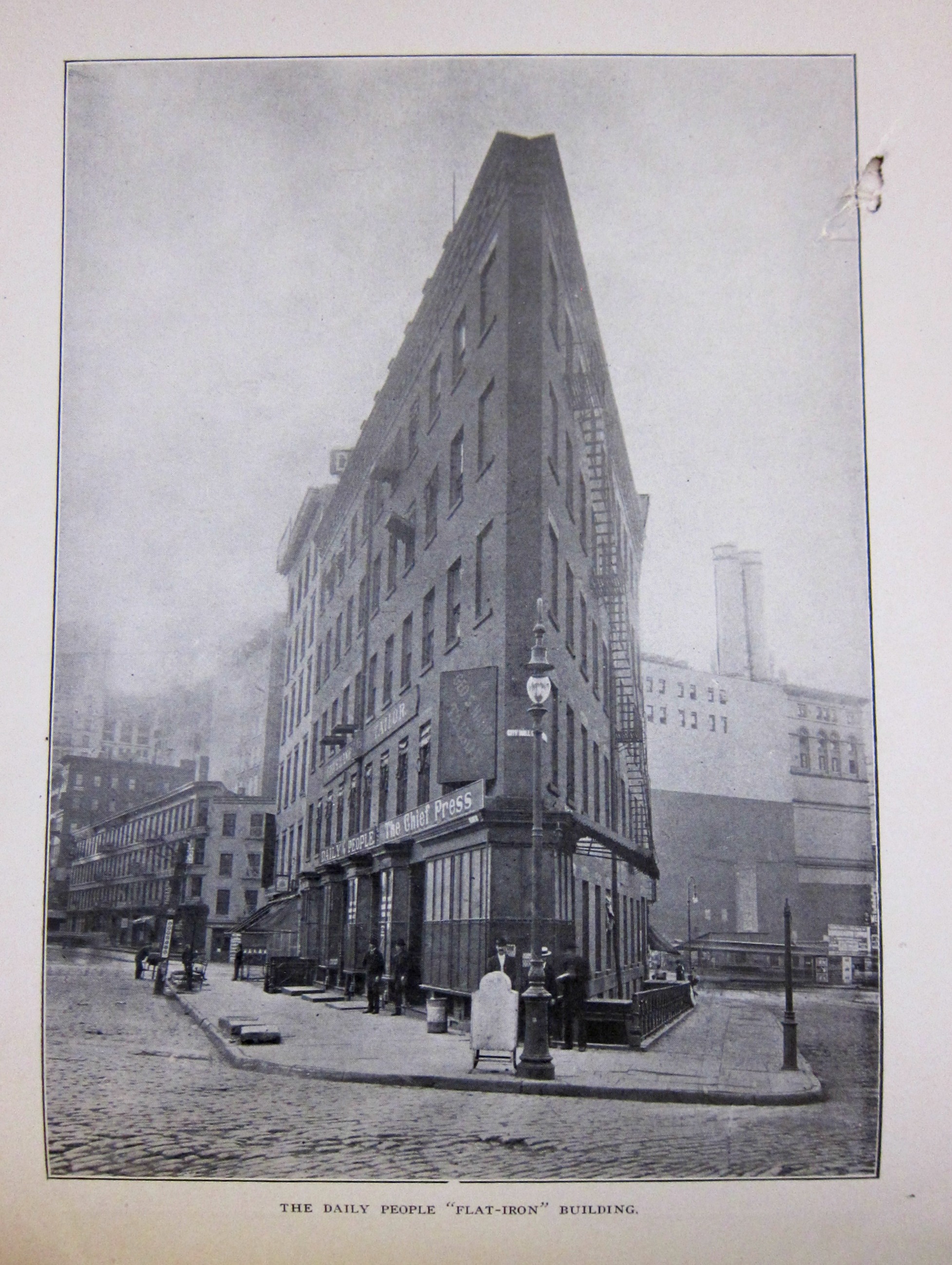
    No doubt that when these photos were made the working conditions, equipment, and so on were at least “standard” issue–nothing too fancy, nothing too crowded, nothing too dirty, nothing too rough, nothing too grubby. The overall sense of the series of images though is definitely Grub Street. The photos were made for the  pamphlet The Party Press, 1900-1904 which celebrated the first and at the time only Socialist daily newspaper the “Daily People”1, and showed the guts and glory of the Beast. It all seems rather tatty, and soiled, and threadbare, and cramped, and probably very oily–all of this was either offset or enhanced by the fact that the newspaper was located in several floors of “a” but not “the” Flat Iron Building. 

    For example: 

    Daily People Job Room

    Daily PEople Editorial Room crowded

    Daily People Linotype

    Daily People Mailing

    Daily People Stereotyping

    Daily PEople Editorial Room

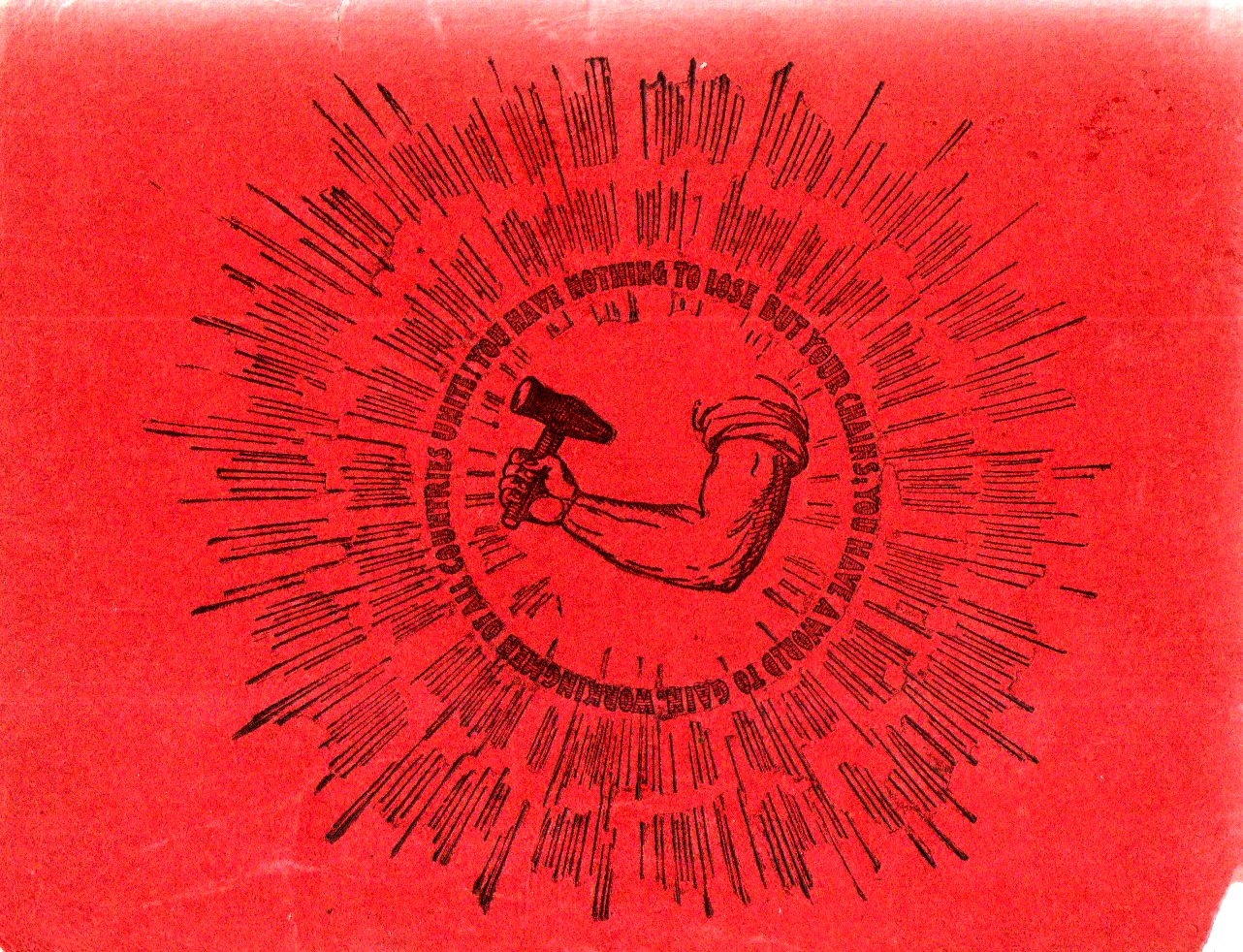
    This is the back cover for a little pamphlet celebrating the Social Labor Party’s daily newspaper, The Daily People, the front being not nearly as well designed:

    Daily People Back Cover822

    It is a little difficult to read, but there is an idiom ringing the arm and hammer: “You have nothing to lose but your chains, you have a world to gain; workingmen of all countries unite!” This is derived from a similar quote in the Marx and Engels Communist Manifesto where it is better said.  In any event, it is a pretty good and striking design. 

    And of course the non- Flat Iron Building, here photographed without elan as just some other building: 

    Daily People Flat Iron

    Notes: 

    1.  “The devotion the sacrifices the work in behalf of the maintenance of the Daily People will forever remain the brightest day in the life of the party. On the day of its birth after a march through the streets several hundred comrades waited until four o clock in the morning to receive the first copy of the paper the first and in fact the only Socialist daily ever published in the English language. The building situated at 2 6 New Reade street the birthplace of the Daily People was torn down several years ago. The party members named it the Daily People Flatiron Building and it saw many of the struggles that followed the ones of 1899. All party institutions were housed in this building. The basement was used by the mechanical department the ground floor by the Labor News Company the party’s literature agency while the third floor was occupied by the editorial rooms. On the top floor were the offices of the national secretary also of Section New York and the national office of the Socialist Trade and Labor Alliance.”–from Daniel DeLeon, a Symposium, published by the Socialist Labor Party, New York, 1919

    ·Posted by :

    ·in:

  • A Submarine Research Platform, 1873

    JF Ptak Science Books  Quick Post

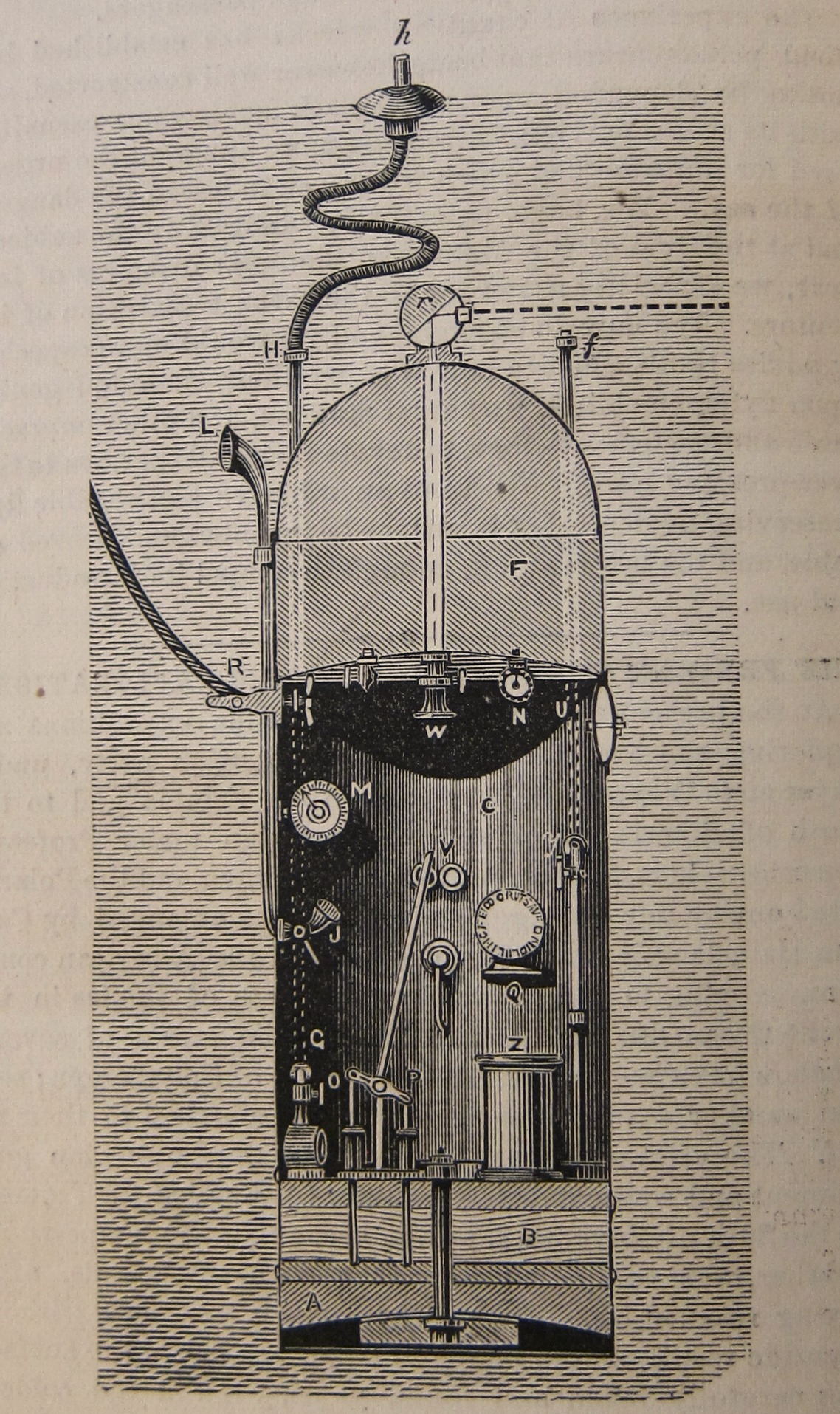
    In the same year as the British and American first appearances of Jules Verne’s Twenty Thousand Leagues Under the Sea there appeared in the pages of Scientific American this short article on a not-very-Victorian submarine exploring platform. Published in the April 19, 1873 issue was an illustrated (by cross-section) note on a  type of diving bell created by M. de Toselli:

    Sci Am 1873 diving bell. 

    It is explained to us that the living compartment (C) holds a number of instruments and machines: there is a pump (P) for drawing and evacuating water (in compartment B) for the raising and lowering of the craft (there is also a layer of lead in compartment A for weighing down the vehicle); there are also two manometers (M and N), a telegraph (Q), and of course, a seat (Z); the top section (F) is for storing breathable air; (U) is a hatch for entering and exiting; and (R) is a rope/cable that connects the thing to a ship, and which also contains the telegraph cable. The text said that there are “small windows” but I can’t find them.  In any event this was intended as a scientific platform for research, including photography.  

  • A Very Early Geological Map of the Mountains of Europe

    JF Ptak Science Books  Quick Post

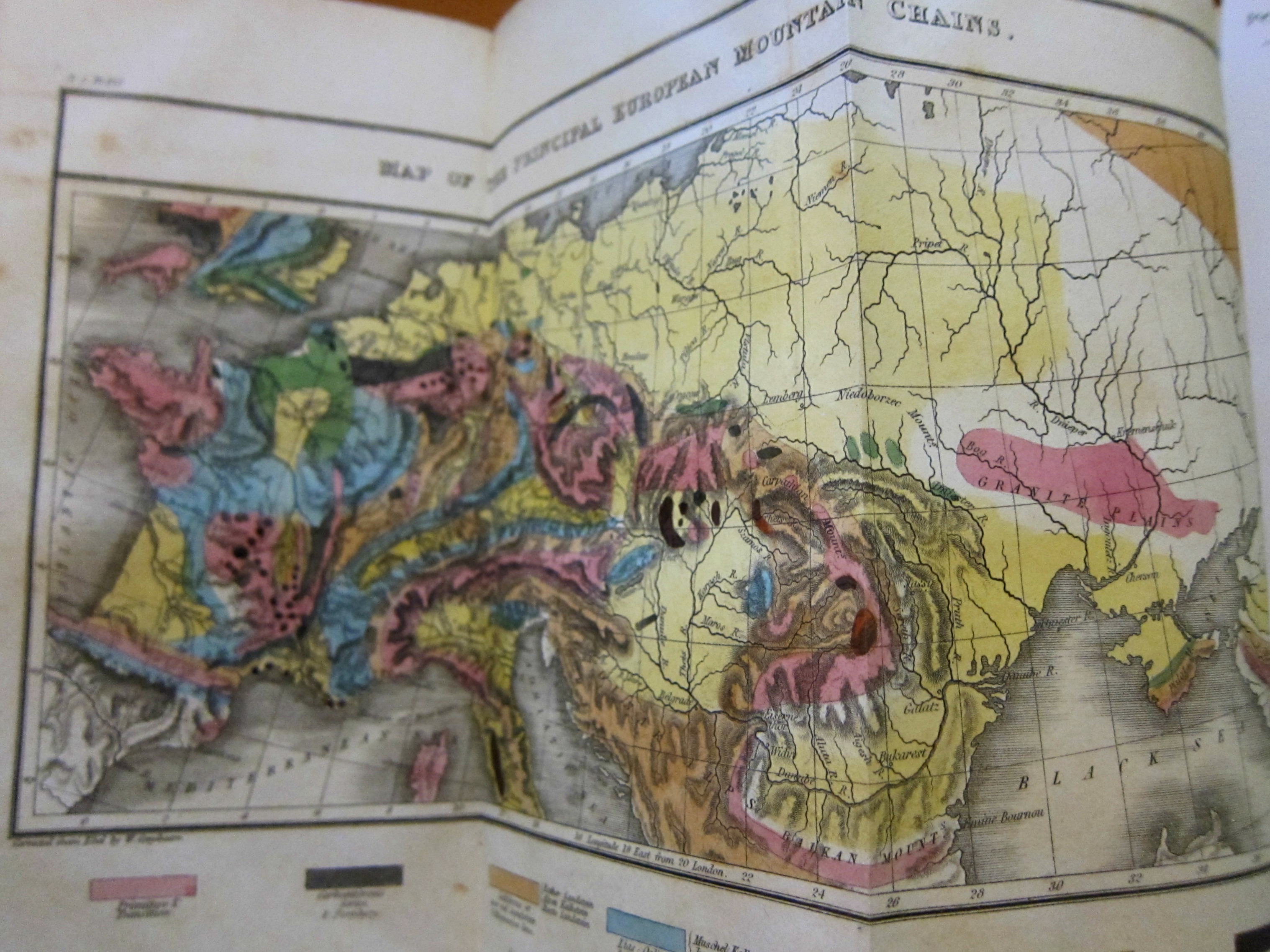
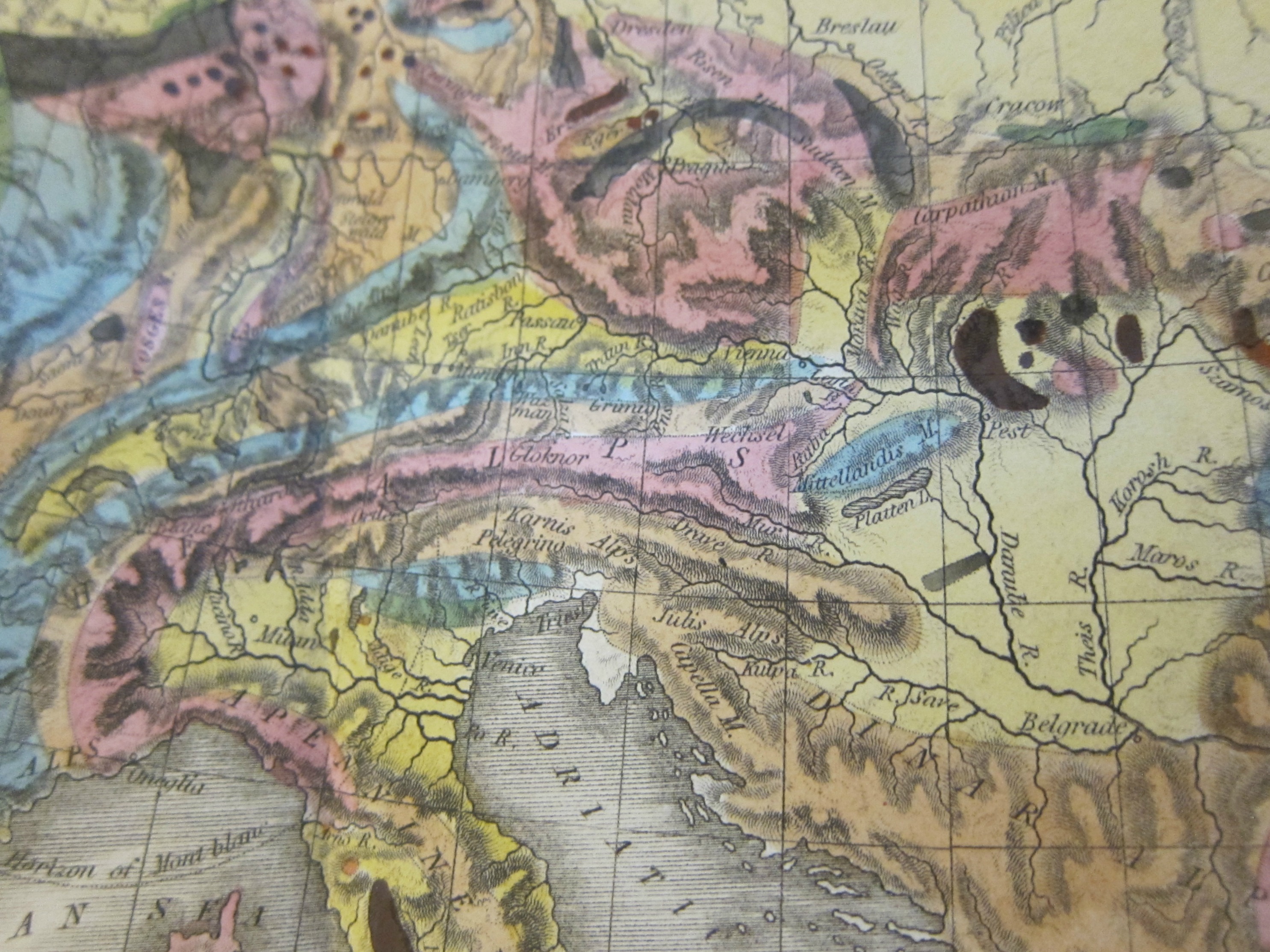
     This fine geological map, illustrating the long paper Memoir illustrative of a general Geological Map of the principal Mountain Chains of Europe, by the Rev. W.D. Conybeare (1787-1857), appeared in Annals of Philosophy, volume 22, 1823, (in multiple numbers for January, February, March, April, May, pp 1-16, 135-149, 210-218, 278-290, 356-359, and extending briefly into Annals of Philosophy, volume 23, September 1823, pp 214-219).  The article is extended and fairly comprehensive, being a review of the geology of the mountain ranges of Europe by region, and the map–engraved by Sidney Hall and colored by hand–although somewhat small is very concise and detailed, and appears only eight years after the landmark geological map of Great Britain by William Smith, considered to be the first detailed national-scale geological map (though there is an earlier though not as detailed work on the U.S. by William McClure in 1809). As Conybeare notes on pp 2-3 in this work the foundation of his map was based on the earlier work by Ebel on the geology of the Alps, as well as a smaller general and not much detailed map of the geology of the mountains of Europe in general, the beginning of which reaches back to 1808. He no doubt also relied on Buckland’s work on the Alps in 1821.  Conybeare added dramatically to the understanding of this aspect of European geology.  [See Bursting the Limits of Time: The Reconstruction of Geohistory in the Age of Revolution, by M. J. S. Rudwick, for an interesting look at geological mapping in the early 19th century.]

    Annals of Philosophy 1823 Mountain Map

    Annals of Philosophy 1823 Mouta9n map detail

Recent Posts

Archives

Categories