A Daily History of Holes, Dots, Lines, Science, History, Math, Physics, Art, the Unintentional Absurd, Architecture, Maps, Data Visualization, Blank and Missing Things, and so on. |1.6 million words, 7500 images, 4.9 million hits| Press & appearances in The Times, Le Figaro, Mensa, The Economist, The Guardian, Discovery News, Slate, Le Monde, Sci American Blogs, Le Pont, and many other places… 5000+ total posts since 2008.

  • The Almost-First Photo of Plutonium (October 1946)

    JF Ptak Science Books   Quick Post

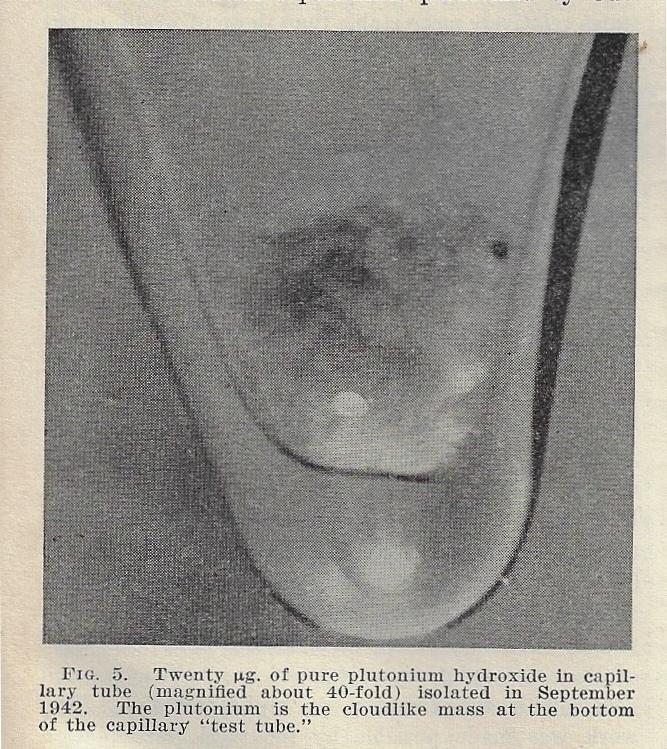
    Plutonium 1946 _2__0001While writing a post for the bookstore section of this blog on Seaborg’s “Transuranium Elements” article that appeared in Science in October 1946 I was struck by the home-made quality of one of the illustrations for the periodic table. Mainly I was curious to see the representation of the actinides (which at this point included up to Curium (synthesized in 1944) and was still three years away from Berkelium (synthesized in 1949). And since I have been on a small mission to define terms I looked up the discovery of actinium, which turns out to be a little complicated, but was perhaps first discovered by André-Louis Debierne  in 18991.  This distraction led immediately to another–a photo of a speck of plutonium (hydroxide) in a capillary tube (even at 40x it appears as a tiny white cloudy splotch).  Since plutonium after a certain date was not discussed for obvious security reasons in the Physical Review and  other journals (a date that I keep forgetting but I believe was in late 1940 when the nuclear/explosive aspect of Pu-239 was discovered), I wondered about when the first photo of plutonium appeared, anywhere..and if this was it.  But no, it turned out not to be, though it was close.  The “first” award seems to go to Fritz Goro (1901-1986), the great science photographer for LIFE magazine, who made an image for July 27, 1946, some three months before the Seaborg article appeared and just over a year after the Nagasaki bomb. In any event, I reprint the Science photo (left).


    Notes: 
    1. André Louis Debierne  (1899). “Sur un nouvelle matière radio-active”. Comptes rendus  129: 593–595.

    ·Posted by :

    ·in:

  • A Beautiful Calendar Calculator (1562)

    JF Ptak Science Books  Quick Post

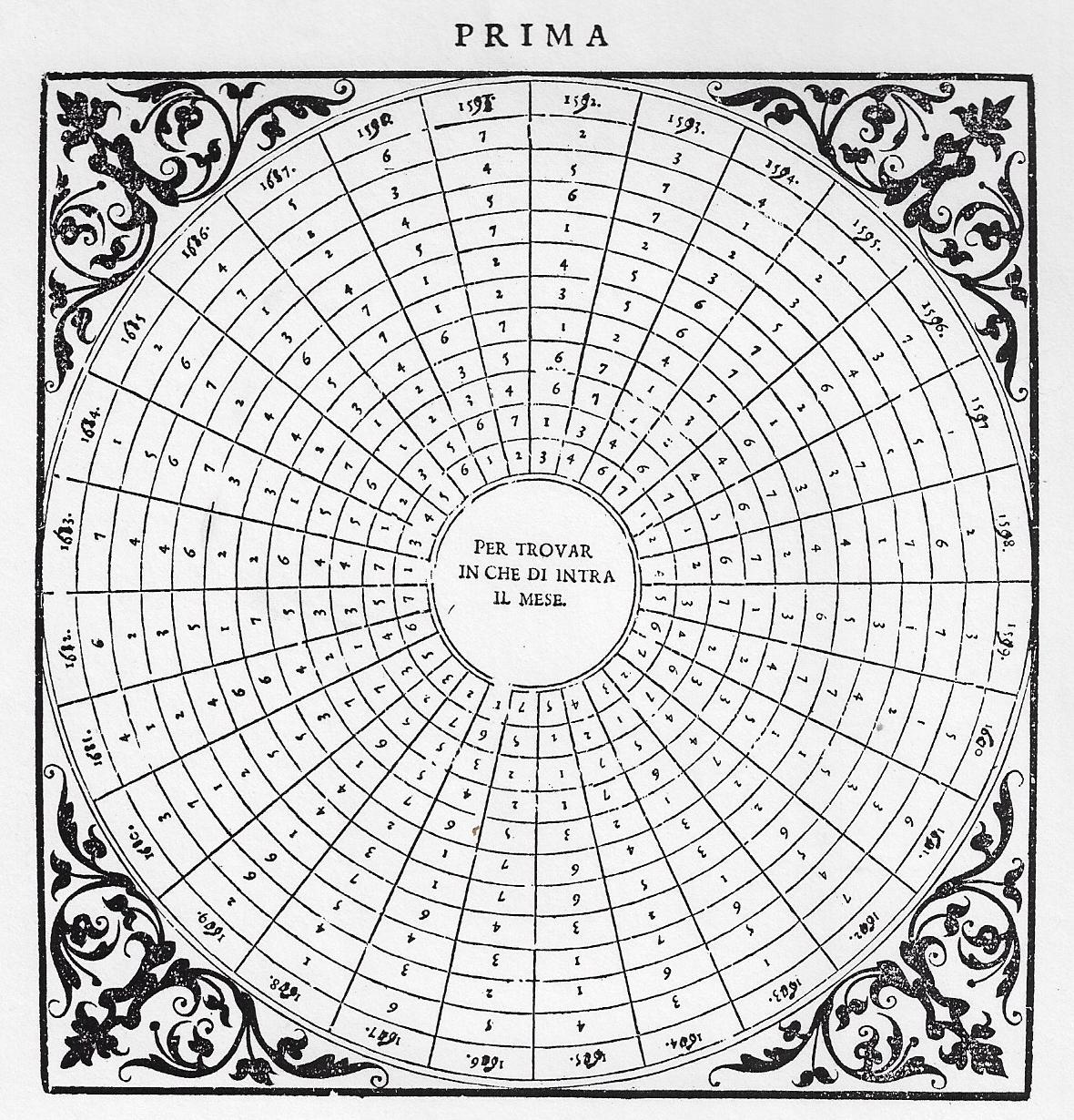
    Giorlamo Cataneo provided us with this gorgeous circular calendar calculator in his Rote Perpetue…, published by Francesco Marchetti in Brescia in 1562. This is the third-from-last of 58 such tables that illustrate this elusive work.  Cataneo (1540-1586) was an Italian engineer and architect who published at least eight works, many of them quite beautiful, including the fortifications book Dell’arte del misurare libri due, nel primo de’quali s’insegna à misurare, & partir’ i campi, which is a particularly lovely thing.

    Calendar calculator

    Illustration from:  

    Rote perpetue, per le quali si puo con qual numero di due dadi si voglia : overo con due dadi secondo l’horologio d’Italia : ritrouar quando si fà la Luna : le Feste mobili : la Patta : l’Aureo numero : l’Indittione, la Lettera domenicale col bisesto et in che giorno entra il principio d’ogni mese  di. m. Girolamo Cataneo.

    Another source for the full book, Internet Archive: https://archive.org/details/bub_gb_1ky_MGsNW3AC

  • A Smart Piece of Thinking that also Touches on Extraterrestrial Origins of Life on Earth (1875)

    JF Ptak Science Books   Post 2683

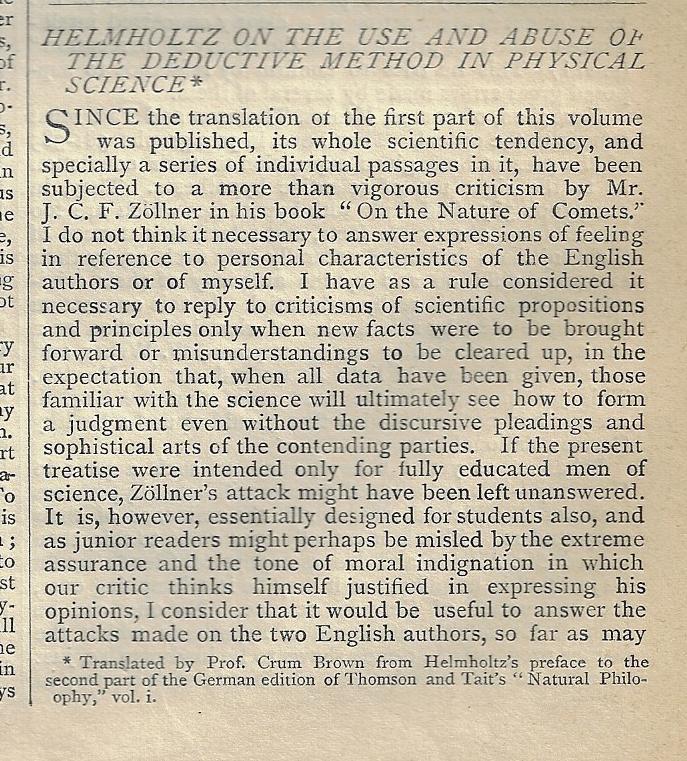
     A note on a short work by Hermann von Helmholtz. “On the Use and Abuse of the Deductive Method in Physical Science”, in a two-part article over two months in Nature:

    • December 24, 1874, pp 149-151 in the issue of pp 141-160 and
    • January 14, 1875,  pp 211-212 in the January 14, 1875 of 201-220pp.  
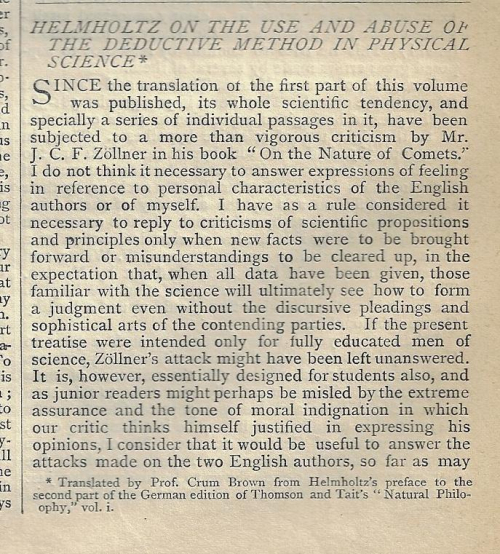
     

    Helmholtz pansperma one _1_

    These two pieces by von Helmholtz are just very nice pieces of thinking, delivering several wonderful insights into the nature of reasoning which spread out into other areas, one of which, interestingly, is on the origins of life. For example, in the first paper, in addition to defending his version of deductive reasoning he drops this bon mot into the equation in mentioning the infection of metaphysics in science:

    “Among the scientific investigators who have especially directed their efforts towards the purification of physical science from all metaphysical infection and from all arbitrary hypotheses, and, on the contrary, have striven to make it more and more a simple and faithful expression of the laws of the facts, Sir W. Thomson occupies one of the first places…”–pg 150

    In continuing in the second paper, von Helmholtz goes on to make a statement on the probable great longevity of life in the universe in general, and of the possibility that life could be as old as the universe (“whether it  [life] is as old as matter”), and that some germs could have been brought to Earth (for example) on meteorites, meaning that the origins of life could be extraterrestrial.  Helmholtz points out that William Thompson had addressed this issue in 1871, though Helmholtz himself ad spoken on the issue months before that. In any event, here is von Helmholtz again talking about the origin of life and cosmic pansperma, in 1875.

    “I will mention one other objection of similar scientific value, because it refers to Sir W. Thomson, though not to a passage of this book. The point in question is whether
    it is possible for organic germs to be present in meteoric stones, and so to be conveyed to worlds which have become cool. In his introductory address to the British Association at Edinburgh, in the autumn of 1871, Sir W. Thomson characterised this view as “not unscientific.” Here, too, if an error has been committed, I must profess myself a sharer in it. I had, in fact, indicated the same view as a possible explanation of the transmission of organisms through interstellar spaces at a somewhat earlier date than Sir W. Thomson—in a lecture which was delivered at Heidelberg and at Cologne in the spring of the same year, but is still unpublished. If anyone chooses to regard this hypothesis as highly or even as extremely improbable, I have nothing to object. But if failure attends all our efforts to obtain a generation of organisms from lifeless matter, it seems to me a thoroughly correct scientific procedure to inquire whether there has ever been an origination of life, or whether it is not as old as matter, and whether its germs, borne from one world to another, have not been developed wherever they have found a favourable soil. The physical reasons alleged by Mr. Zollner against the view in question are of very little weight. He points to the heating of the meteoric stones, and adds (p. 26) : ” Thus, even if we suppose that when the parent body was shattered, the meteoric stone covered with organisms escaped with a whole skin, and did not share the general rise of temperature, it was still necessary for it to pass through the terrestrial atmosphere before it could discharge its organisms to people the earth.”–pg 212

    There is a tremendous amount going on in just these few pages of created by one of the most able and expansive scientific minds of the 19th century.  
    ·Posted by :

    ·in:

    —
  • An Interesting Comment on Life in the Universe, 1933


    JF Ptak Science Books   Quick Post

    In the year that the human race started its very real plunge into the Wasteland, Frederick L. Leonard (Chair of the astronomy department at UCLA) had his eyes on another prize. In a short article in Popular Astronomy1, Prof. Leonard spent a few pages discussing the possibility of extraterrestrial life. He kept the discussion in one and two syllable words and was very straightforward, winding up talking about the possibilities of “life” in our own solar system. He quickly dismisses all of the planets as contenders save for Venus and mars, and then wasn’t really happy with that, at all, and opened the discussion more as to “life” might be. 

    There were several surprises in the article, including one about the authors of Astronomy ( Henry Norris Russell; Raymond Smith Dugan; John Quincy Stewart,  Astronomy: A Revision of Young’s Manual of Astronomy …) being “surprised” that there was no oxygen found on Venus. The bigger moment though was saved for Percival Lowell, who had long labored in support of advanced lifeforms on Mars, though the quote from him regarding extraterrestrial life was really very good. Leonard quotes him so:

    “If astronomy has taught us anything it is that man is but a detail in the universe, and the resemblants though diverse detail are inevitably to be expected…[humans] are destined to discover any number of cousins scattered through space.”

    The odds favor a statement like this, that human life is a “detail” of the universe and that there are not doubt other ‘details” to be found, resembling earth life or not. Odd as weren’t so much with Lowell in keeping with his intelligent lifeforms being on Mars, which is just a step or two away. In any event, I found the Lowell statement to be a pretty sober appraisal of the possibility of Life Elsewhere, in general.

    Notes:

    1. Frederick Leonard. “Life on Other Worlds”, in Popular Astronomy, May 1933, vol 41 no. 5., pp 260-3 in the issue of pp 239-294.

    ·Posted by :

    ·in:

  • Earbuds, 1891

    JF Ptak Science Books,  Post 2688

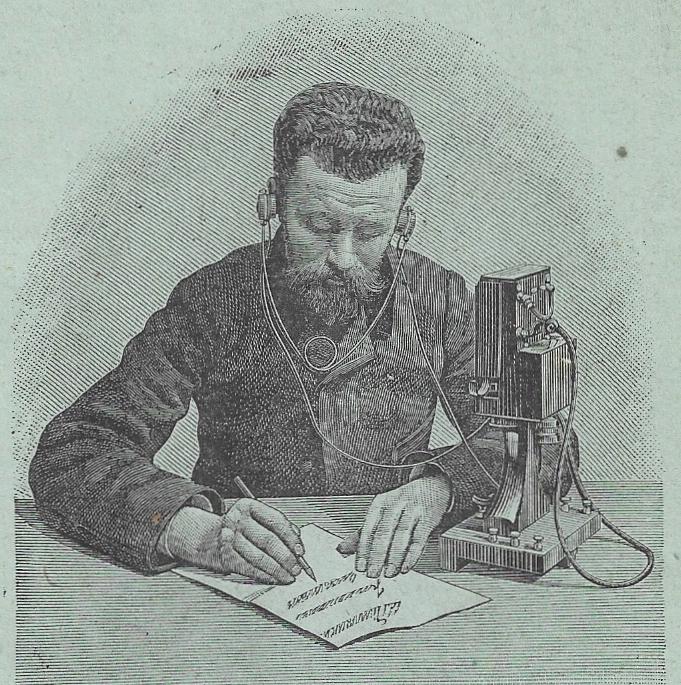
    Ernest Mercadier (1836-1911, electrical engineer and director at Ecole Polytechnique) may well have introduced the first “ear buds1” into the technical world.

    Bitelephone _2_


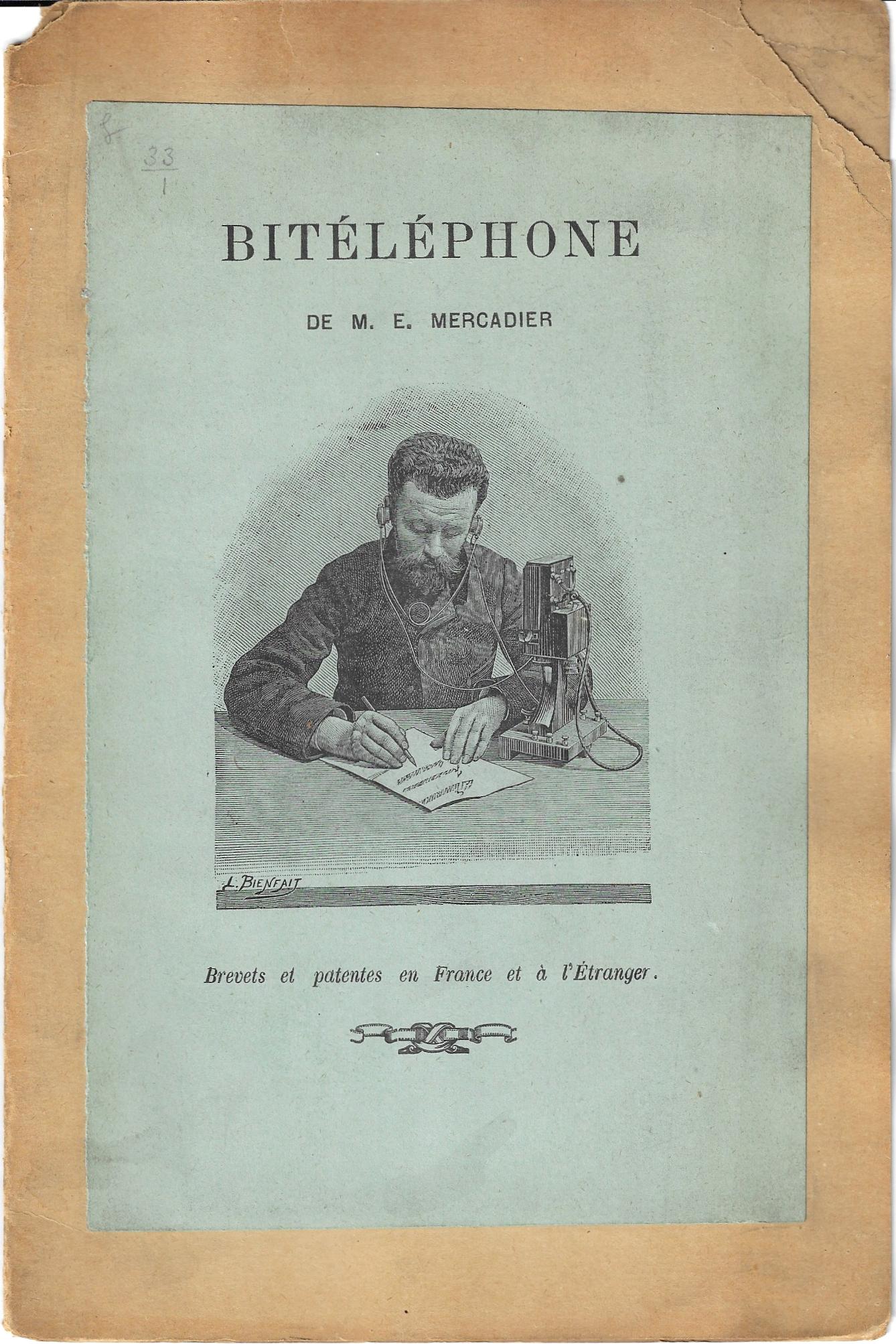
    Bitelephone His apparatus–small listening devices of 1.752 ounces that were padded and fit into the ear–was made for the operator of a telephone so that they could listen and speak and have free use of their hands for notes and such, as pictured on the front cover of this pamphlet. This would have been a shocking thing to see, I think, back there in 1891, only 15 years into the age of the telephone and about half of that for the time in which the still-a-luxury telephone could be accessed by relatively upper-middle-class folks. (In 1881 there were approximately 50,000 Bell telephone stations; in 1885, the year ATT was formed, there were about 150,000; in 1890, 200k and then 600k in 1900. It was in the first decade of the new century where telephone rental/ownership/accessibility really began to spread, with 2.2 million in 1905 and 5.8 million in 1910. Remember that the telephone was only one aspect of communication–all of the massive amount of infrastructure to connect thousands of telephones wasn’t yet created.) 

    Mercadier was well acquainted with the new device (having written Etudes Sur La Theorie Du Telephone five years earlier in 1886, plus other works on the telegraph and associated beginning in 1881), though what made his instrument so softly revolutionary was that it was one of the first entries into the world of communications microminiaturization–a concept we normally associate with computer development in the middle/late 1950’s. As a “headphone” this device is also extremely early though not the first3, though to my eye it is certainly the most elegant, at least that suited to its purpose. The earbud, even though it appears here in 1891, really takes another ten decades to come into its own.

    Notes:

    Ernest Jules Pierre Mercadier, Bitelephone.  Printed by Jamin in Laval, ca. 1891-3 (though no later than 1893). 21×13.5cm, 15pp, 6 text illustrations showing the device. The author announces that there are patents for his invention at home and abroad: “Brevets et patents en France et a l’Etranger”. This is the original pamphlet in wrappers, though at some very early point the pamphlet was bound into a larger manila-folder-like paper cover measuring 25x17cm; the front wrapper of the pamphlet was removed and pasted on the front cover of the new binding. The rear cover is intact. SO, that said, this is a not-perfect copy of the pamphlet, though the much-reproduced and striking cover is present. PROVENANCE: Library of Congress Smithsonian Deposit, accessed in October 1893. 

    1.  “Who Made that Earbud?”, NYT, May 16, 2014 https://www.nytimes.com/2014/05/18/magazine/who-made-that-earbud.html
    2.   From the Smithsonian Magazine on Mercadier’s invnetion:  “…improvements in telephone-receivers…which shall be light enough to be carried while in use on the head of the operator.” After extensive testing and optimization of telephone receivers, Mercadier was able to produce miniature receivers that weighed less than 1 3/4 ounces and were “adapted for insertion into the ear.” His design is an incredible feat of miniaturization and is remarkably similar to contemporary earbud headphones, down to the use of a rubber cover “to lessen the friction against the orifice of the ear… effectually close the ear to external sounds.”  : http://www.smithsonianmag.com/arts-culture/a-partial-history-of-headphones-4693742/#4c4flaaUUVCDrfVX.99  Also a nice notice in an article by The Guardian, “10 Most Influential Headphones”.  
       
    3. An interesting article in the SVG blog by Mark Schubin (http://www.sportsvideo.org/blogs/?blog=schubin-cafe&news=headphones-history-hysteria) points to the Mercadier device for being perhaps the third earliest headphone, following some others (issuing beginning in 1881) that were earlier but a lot more cumbersome. The Mercadier really were much smaller, more elegant, and a lot lighter than its 19th century companions. That said, the Mercadier device was more a candidate for the earliest earbuds more so than a straightforward headphone.  

    For a good timeline on the development of the telephone/telephone system, see: http://www.telephonetribute.com/timeline.html

    ·Posted by :

    ·in:

  • “The Fatal Deadfall of Abolition”–Threatening the Newly-Freed Southern Slaves, 1867


    JF Ptak Science Books 

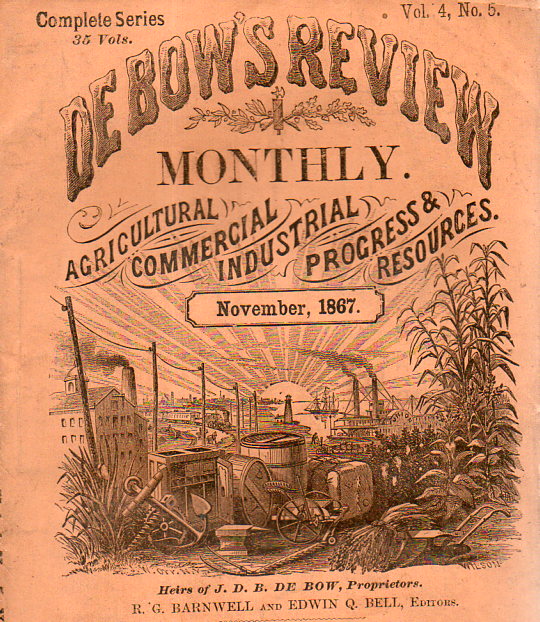
    De Bow’s Review in 1867–in the dire straights of Southern doom and despair of the just-finished war, lashed out like a wicked conspiratorial rant against the Northern states and anyone who comforted them.  Published in Nashville, all I have of the magazine presently is this loose issue for November 1867, and in spite of the energetically positive view depicted on the cover of the magazine had little to do with what you found in the writing inside.  

    De Bow175

    The leading article is an odd one, yelling about Great Britain manufacturing the cause of anti-slavery in the United States, which pretty much is made abundantly clear in the title,  “Black Republicanism, the Dupe and Agent of British Policy in Respect to American Interests”. The “scheme of so-called Negro Emancipation…is a British Invention” crushing the U.S. which “suffered immeasurably” under the Abolition Program, “the fatal deadfall of the abolition trap“, all of which in the end will “crush the innards out of the “Black Republican Yankee”.  It was the Brits according to the writer of this article who FORCED THE UNITED STATES TO ABOLISH SLAVERY” [caps in the original]. 

    The second article is called “No Treason” and makes the case for the Confederacy for not having committed treasonous acts.  

    The article ends with the following enormously assumptive and categorical statements:

     This might be the bones of this issue, but the next article, comes the marrow: “The Future of the Blacks”. It is here where “the Blacks” are threatened with death as a race should they become politically and economically mobile, and threatened in such a way that they were being given advice for their own good should the “blacks” (with a little “b”) “forget their true position”:

    The short article was long on advice for the newly-freed slaves of the United States to abide. For example, in citing a letter to the freedmen of Lowndes county, Mississippi (by the same author as this article, still unnamed), the writer admonishes “Mingling in politics never did any man any good, and may prove your ruin”. And more:


    Add on it goes, this bitter article, into its long, fearful, vengeful, and sweaty night.  

    Notes:

    1. The variations in the title of the magazine gives you a pretty good idea of what they’re about: 1846-June 1850, The Commercial review of the South and West (caption title, 1846-Jan. 1847, July 1848-June 1850,  The Commercial Review; from  Feb. 1847-June 1850: De Bow’s commercial review of the South and West)–July 1850-Dec. 1852, De Bow’s review of the Southern and Western States (caption title: De Bow’s southern and western review); 1853-July/Aug. 1864, De Bow’s Review and Industrial Resources, Statistics, etc.’ 1866-Dec. 1867, De Bow’s review, devoted to the restoration of the Southern States, and the development of the wealth and resources of the country…

    ·Posted by :

    ·in:

  • One of the Earliest Popularly-Published Eyewitness Accounts of the Armenian Genocide (1916)

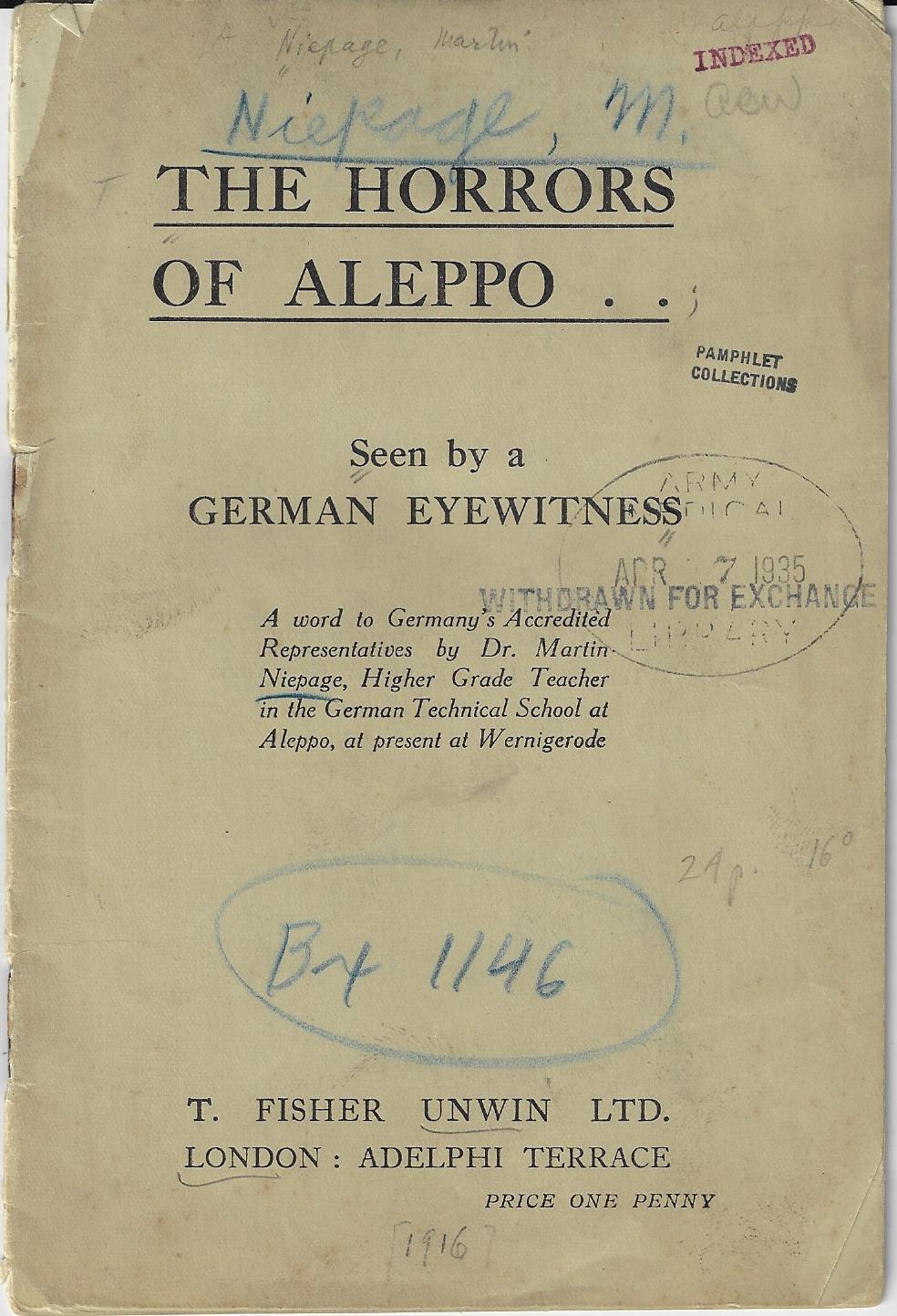
    Horrors of AleppoThis is a well-traveled pamphlet1, its face showing its miles.

    The author, the “German Eyewitness”, was Dr. Martin Niepage2, a school instructor at Aleppo, who wrote what was to become (apparently) the first popularly-published account in the West of the Armenian Genocide.  The pamphlet was published in 1916 and begins the story in 1915, getting quickly to the terror stories of chopped-off children’s hands. 

    “In April 1915 the Ottoman government embarked upon the systematic decimation of its civilian Armenian population. The persecutions continued with varying intensity until 1923 when the Ottoman Empire ceased to exist and was replaced by the Republic of Turkey. The Armenian population of the Ottoman state was reported at about two million in 1915. An estimated one million had perished by 1918, while hundreds of thousands had become homeless and stateless refugees. By 1923 virtually the entire Armenian population of Anatolian Turkey had disappeared.”–Armenian Genocide Organization

    The full text is located at archive.org  https://archive.org/stream/horrorsofaleppos00niep/horrorsofaleppos00niep_djvu.txt

    From the Niepage text:


    ·Posted by :

    ·in:

  • Homes for Workers, 1943

    JF Ptak Science Books  Quick Post

    Homes for Workers _3_


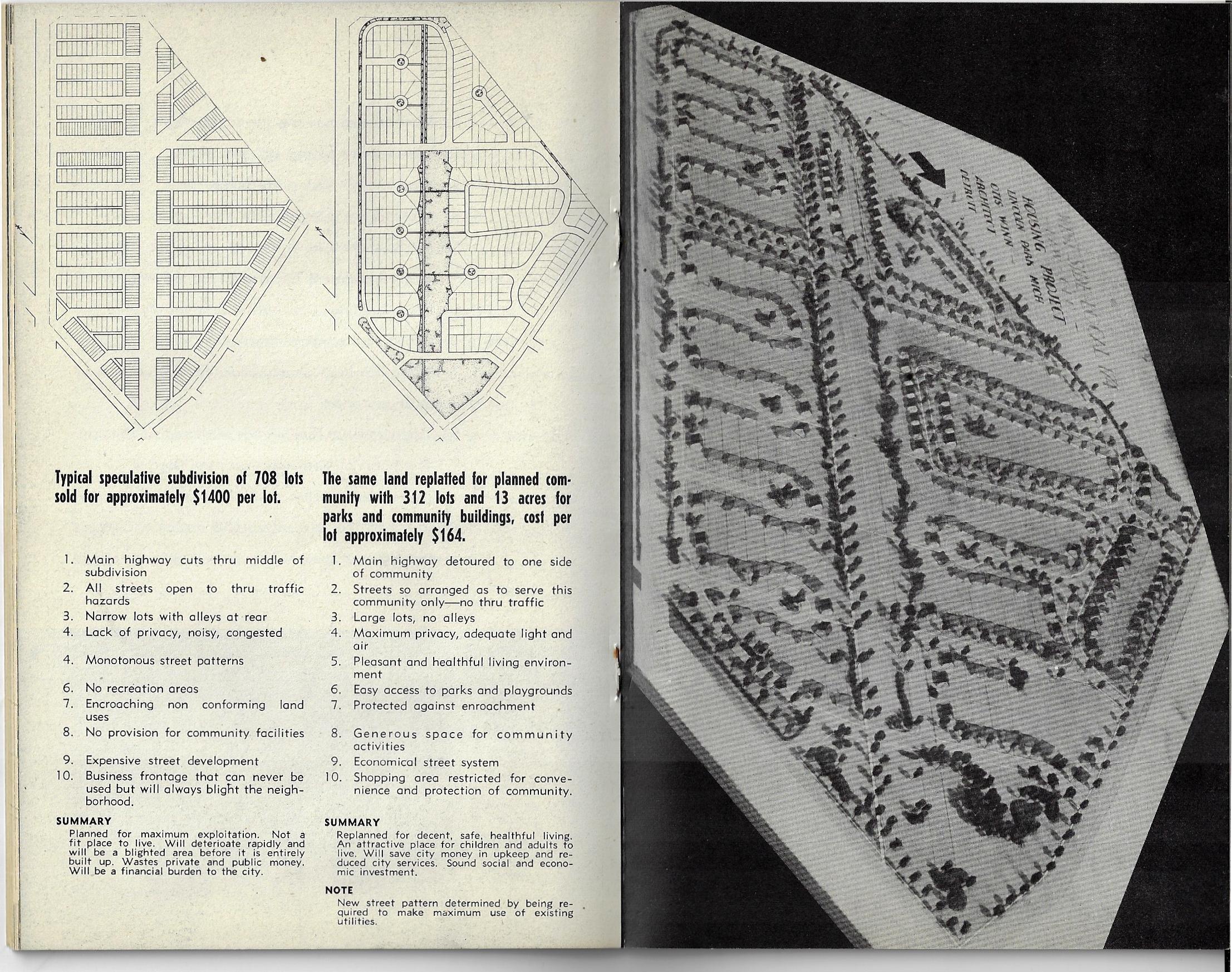
    Homes for Workers _1_This doesn’t ring quite true, nowadays, but this pamphlet, Homes for Workers in Planned Communities Thru Collective Action, published in 1943, was a work published by the massive unions UAW-CIO (United Auto Works and the Congress of Industrial Organization) in a very highly socially supportive way. The work outlines a way to organize more-or-less ideal communities for workers via collective action and pooled money, with large groups purchasing major lots of land and then contracting for construction.  No doubt there was also some thinking going on about the returning soldiers and the expansion of the general industrial base of the U.S. in a more international role. No doubt this sort of thinking would be thought of as Socialist in just a few years, once the Soviet Union had been recognized as a competitor and then an aggressive enemy.  In any event, this is an interesting pamphlet, with a certain allegiance to the general comfort of the working class. 


    Homes for Workers _2__0002

    Homes for Workers _3_

    ·Posted by :

    ·in:

  • Grand Central Terminal, NYC,1939

    JF Ptak Science Books  Quick Post

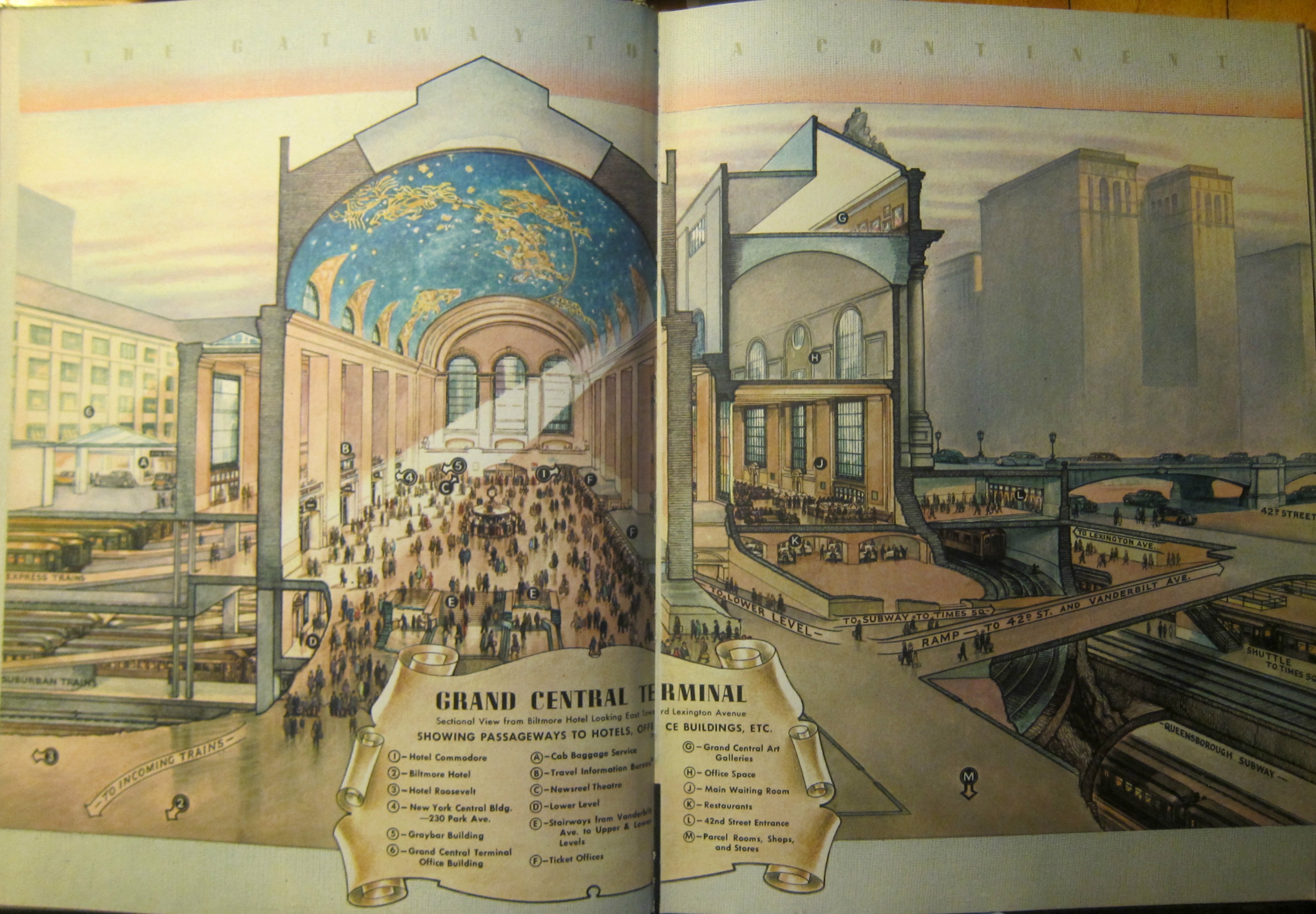
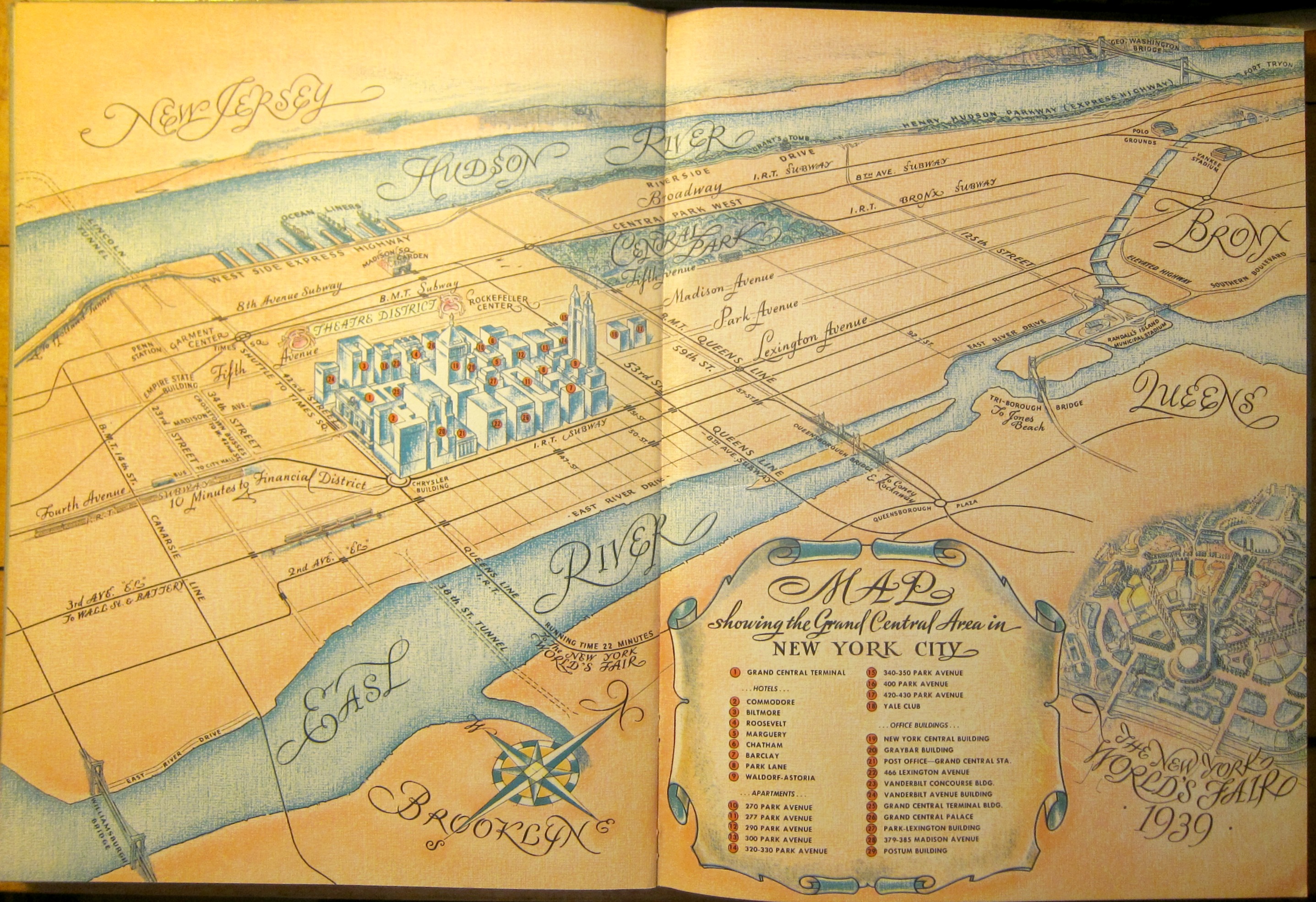
    This is a very Grand-Central_terminal-centric image of NYC–and rightfully so, being one of the great buildings of Manhattan. These images come from a promotional The Gateway to a Continent, published in 1939, which is a fairly luxurious publication which I think was intended for the appreciation of possible luxury accommodations for visitors to the 1939 New York World’s Fair. The result is an overview of the venues on Lexington/Park/Madison from 42nd-51st streets. There’s a great two-page map that shows this section in detail and which leaves out virtually everything else save the text mentions of some like “the Chrysler Building”, “the Empire State”, and “Penn Station” without images of them.

    NYC Grand Central Cutaway _1_


    NYC Grand Central Map of Manhattan _1_

  • Music as an Oil of the Industrial Machine (Muzak, 1941)

    JF Ptak Science Books   Quick Post 

    Reading cubaEntertaining works for a happier labor force has certainly been a “thing” for quite some time–I don’t know the history very much1 but I know it extends back into the 19th c to some probably very small degree, and I do recall a Lewis Hine photo of a Lectore in Havana reading to cigar rollers (in 1909).  It makes sense to make your workers comfortable and to work to end intellectual monotony, though few employers proceeded that way. 

    And thus to Muzak, the improbable source of injecting music into the cooperation equation of industrial control of workers.  [Source: via the Library of Congress]

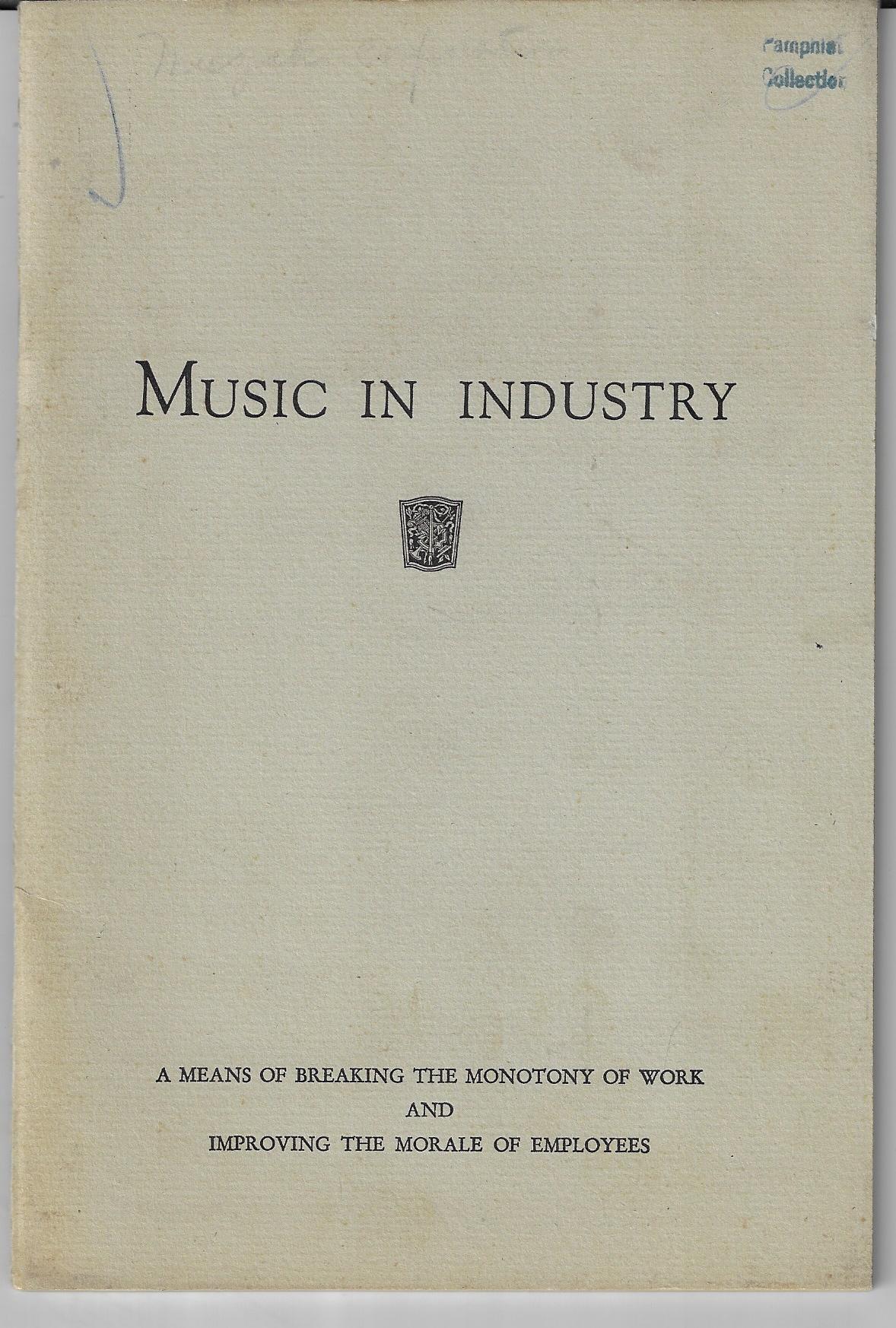
    MuzakI came to this quick realization–late to me–after finding a pamphlet in the warehouse, Music in Industry as a Means of Breaking the Monotony of Work and Improving the Morale of Workers. It was published in 1941–which is earlier than I expected for the Muzak Corporation–which adds to the surprise of the scope of the company’s long-lived impact, its history stretching back to the early 1930’s. It seems as though Muzak, which has a somewhat complex ownership and control history over its first 15 years or so, was a significant contributor to the sound landscape in the United States. It provided four  different broadcasting “networks” of selected musical patterns from the early days of wireless broadcast (at about a dollar a day per month) that provided a certain sort of architecture/design of a sound wall, though the music at this point was coming over telephone lines. In any event, Muzak started providing massive amounts of music into public and private spaces for some time, and their position was accelerated after the company’s war effort during WWII, and then becoming involved in U.S. post-war propaganda programs, and then into the Muzak that we think of today…all of which was happening a few decades before I thought it did. The fact is though that Muzak was filling silence in a controlling way in work and public places for a very long time. I imagine that one could think of this as a sort of early robotization of the human workforce–that is extreme, of course, but the thought worked its way through my head and came out here. 

    Notes:

    1. I don’t think I’ve ever mentioned this in the 4500-odd posts I’ve made to this blog in the last nine years, but the one rule I try to abide in writing one of these posts is that they take no more than an hour, start-to-finish. 
    • For an interesting read, see  Elevator Music: A Surreal History of Muzak, Easy-Listening, and Other, by Joseph Lanza.
    • There are no copies of this work found in WorldCat/OCLC, in spite of this being the second printing of the pamphlet. There are several other works by this title–generally being journal articles) and even a music in industry bibliography published in 1943, but no listings for the Muzak title. 

    ·Posted by :

    ·in:

    —
  • The Invasion of Musical Robots, 1929

    JF Ptak Science Books    Quick Post

    Robot music _2__0001

    There is little doubt that scribes and woodblock cutters and such absorbed the stab of the movable type printing press, and that stationers felt the stab of modernity when the telegraph came into play threatening sales of paper generally used for letter-writing, an art form that they felt would be diminished by the new technology. At about the same time though came the second revolution in mail delivery, which made it cheaper and more regulated in using a more-competent mailing system, which meant an increase in letter writing. Ditto that for the telephone, which again would threaten written communication. Movies too threatened the theater, and on and on.  

    And so too for music, the musician, and recorded music. I suspect that in the 53 years since Mr. Edison’s invention of the phonograph that not many musicians made very much in the way of royalties for their recorded music, at least not at this early date. (On the other hand my guess is that there was a different economic experience in the sheet music department.)  On the other hand, there was a popularization of music far beyond what had been possible in the period before recorded music, so there was at least that direct and enormous benefit.

    Then came recorded music in theaters, which was a different thing entirely, as there was no real direct benefit to musicians–in this instance, live accompaniment would disappear in favor of recorded music, and so to the jobs of thousands of players.  

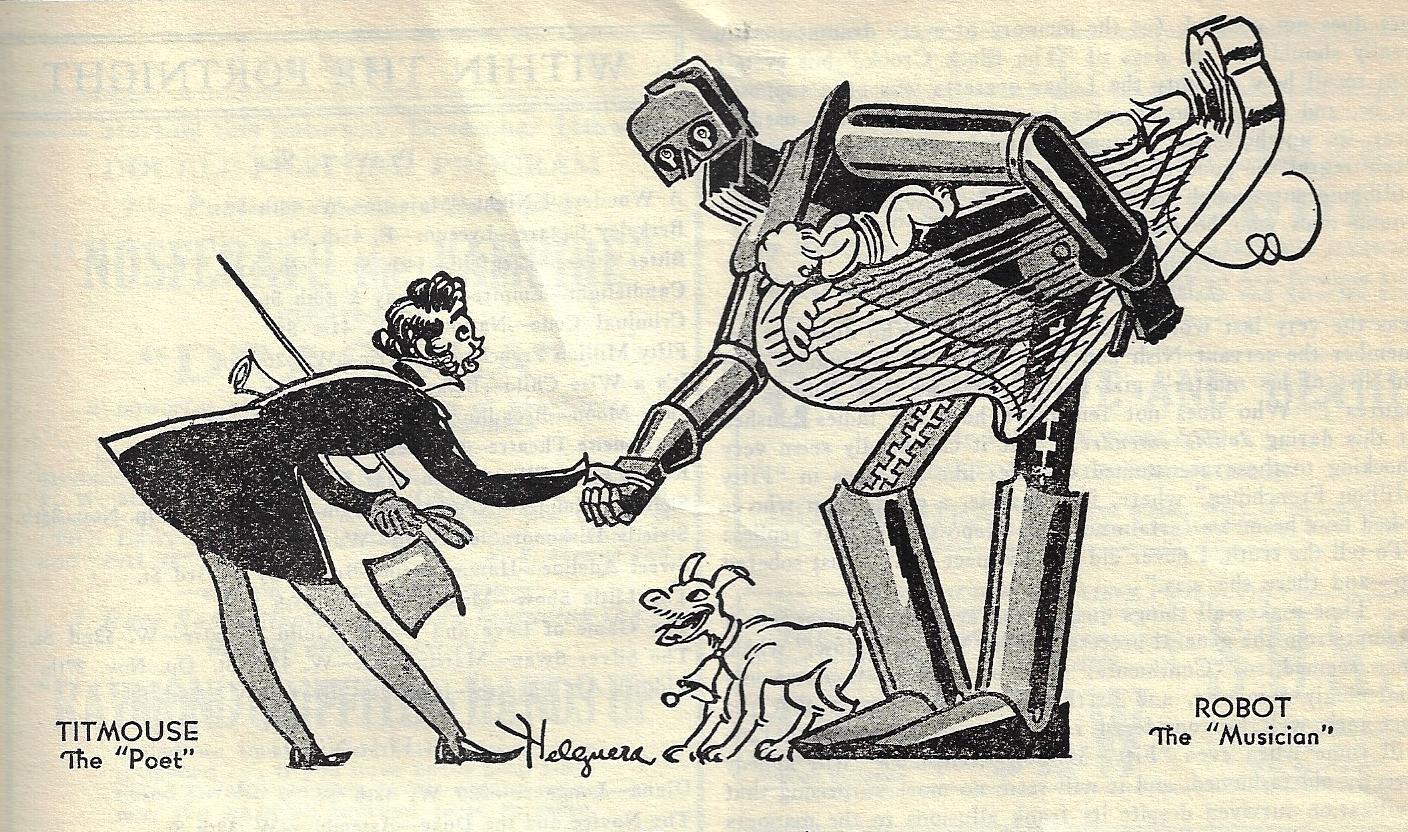
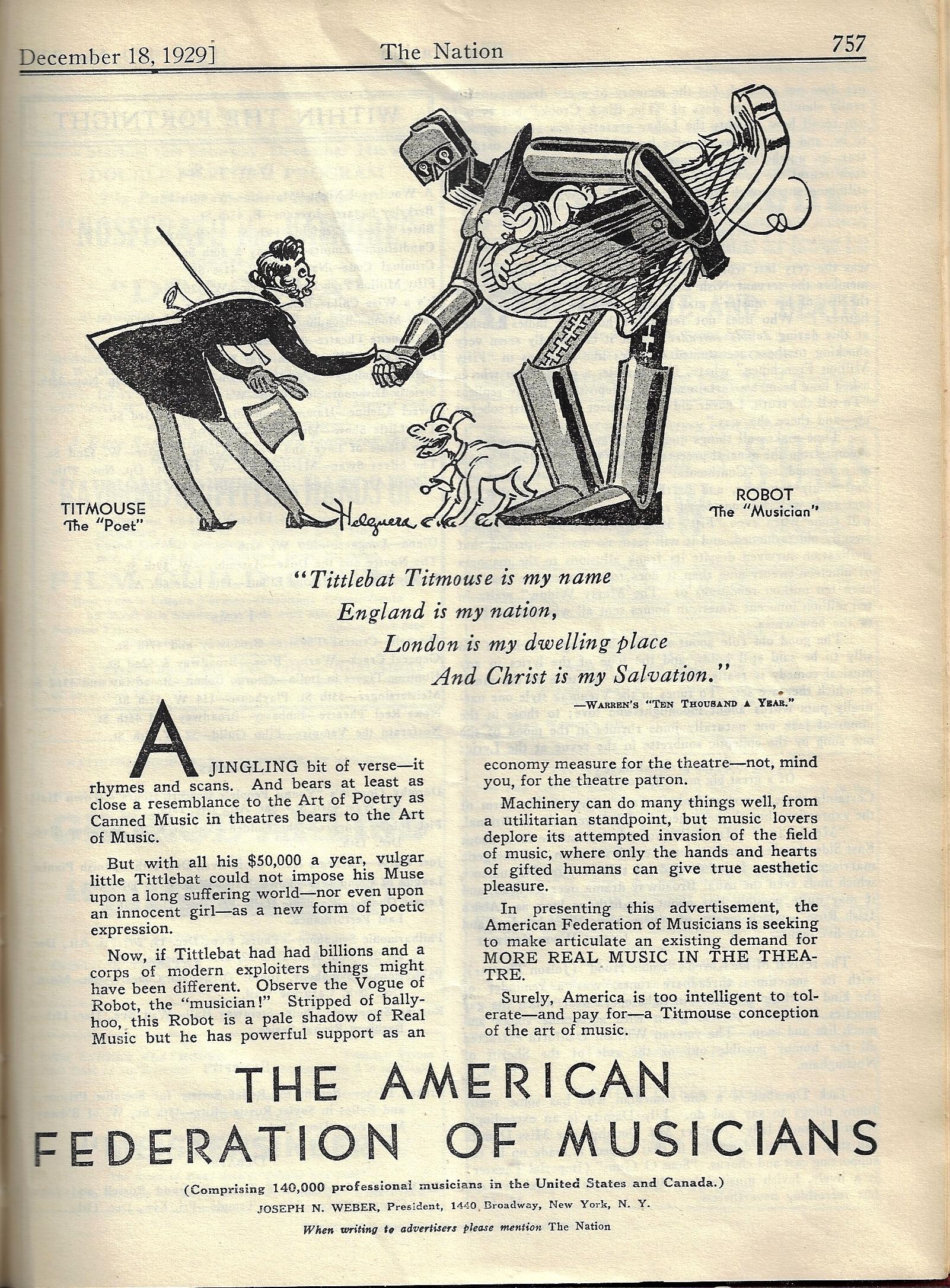
    And so the reason for this advertisement in The Nation, placed by the American Federation of Musicians, which found the idea of “canned music” to have nothing to do with “the Art of Music”, and representing it as a robot, “a pale shadow of real Music”. “Machinery can do many things well, from a  utilitarian viewpoint, but music lovers deplore its attempted invasion of music, where only the hands and hearts of gifted humans can give true aesthetic pleasure.”

    “Surely, America is too intelligent to tolerate–and pay for–a Titmouse conception of the art of music.”

    Robot musical _1__0001


Recent Posts

Archives

Categories