A Daily History of Holes, Dots, Lines, Science, History, Math, Physics, Art, the Unintentional Absurd, Architecture, Maps, Data Visualization, Blank and Missing Things, and so on. |1.6 million words, 7500 images, 4.9 million hits| Press & appearances in The Times, Le Figaro, Mensa, The Economist, The Guardian, Discovery News, Slate, Le Monde, Sci American Blogs, Le Pont, and many other places… 5000+ total posts since 2008.

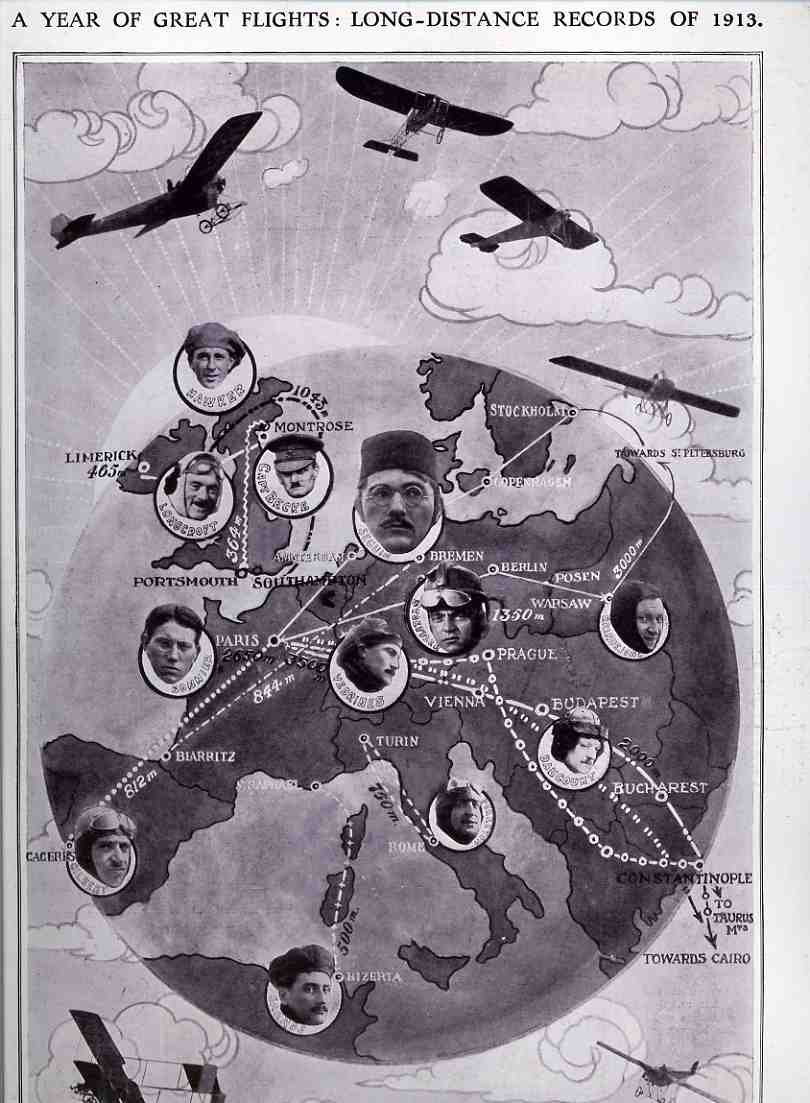
  • Achievements in European Flight: Excellent Visual Display, 1913

    JF Ptak Science Books LLC  Post 340     

    This excellent (and slightly bizarre-looking) display of quantitative data comes to us from The Illustrated London News for 17 January 1914.  IT shows the great range and capacity of endurance and long-range flight taking place in Europe in 1913.  This portrayal is extraordinary if you keep in mind that (as I wrote about in a post last week) the Wright Brothers had only arrived in Europe in the middle of 1908 to begin their revolutionary re-introduction of the concept of heavier than air flight to the Europeans. Just prior to the Wright’s arrival the combined forces in Europe had barely been able to muster a sustained flight of two minutes, even as late as 1907.  The exhibition of the Wright flyers made an instant and profound impression on all concerned, and the lessons of the Wrights imemdiately put into practice.  Which brings us to this graphic, showing that flight in Europe had advanced enormously, with flights now routinely lasting many hours and taking place over a course of hundreds of miles–all of these changes taking place in five short years.  World War I would be the next gigantic influence on the development of flight theory, airplane construction and the use of the skies, and that would all start taking place in less than a year from now. 
    00-blog-Oct 27aviation flight records 1913931

  • Wicked Polly Reveals the Sameness of Names, 1827

    JF Ptak Science Books LLC Post 341
    00-blog-Oct 22-polly908
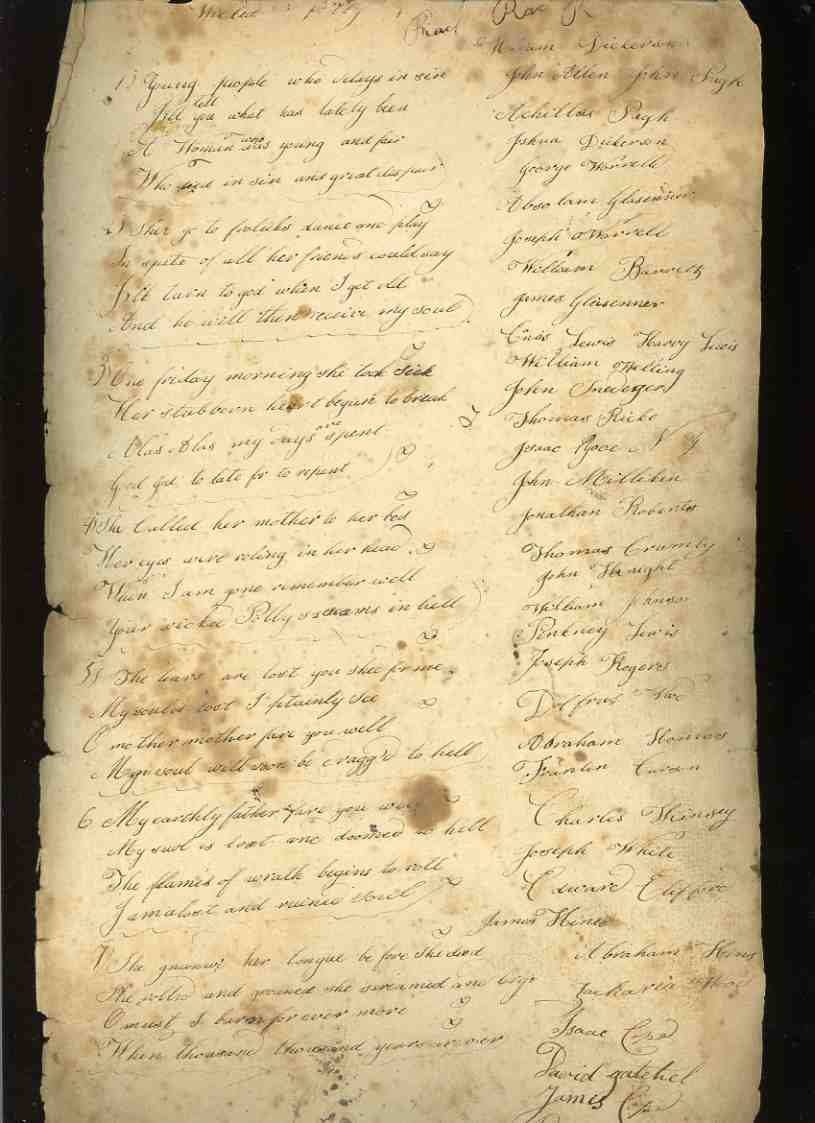
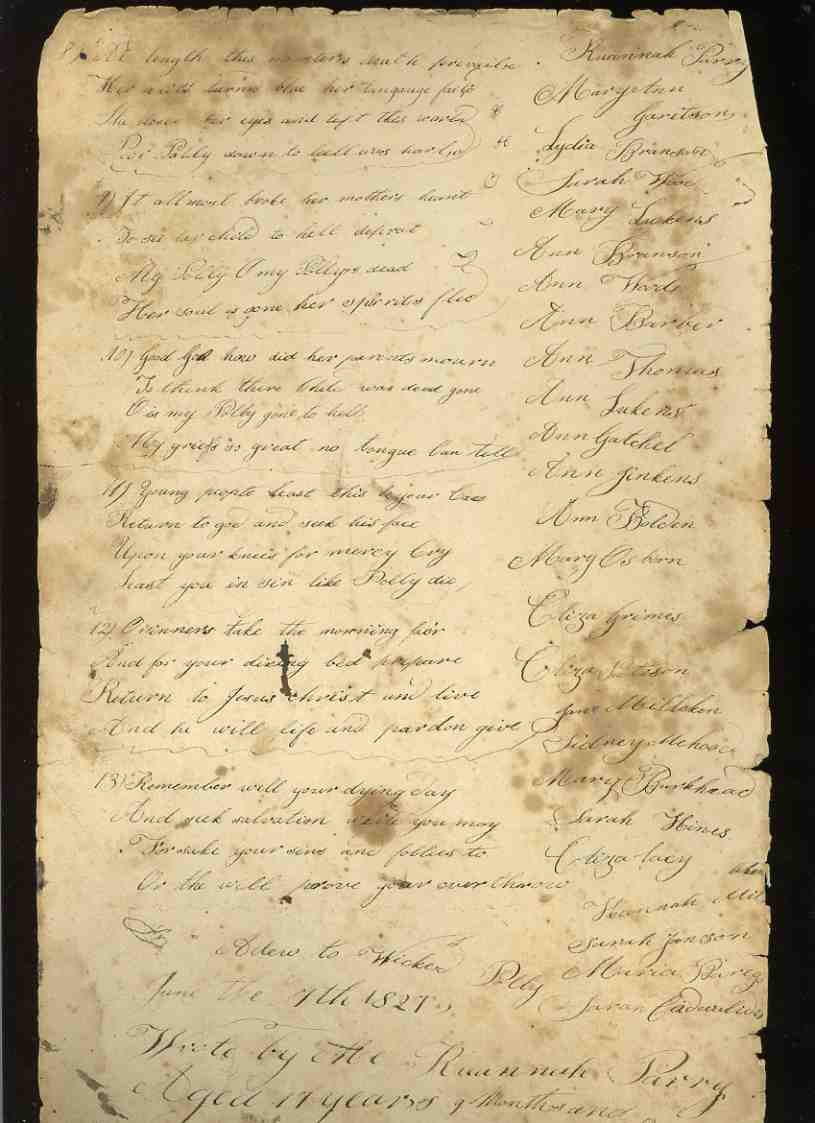
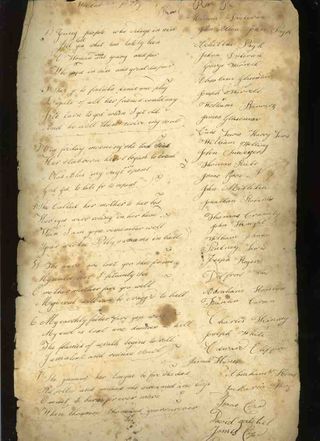
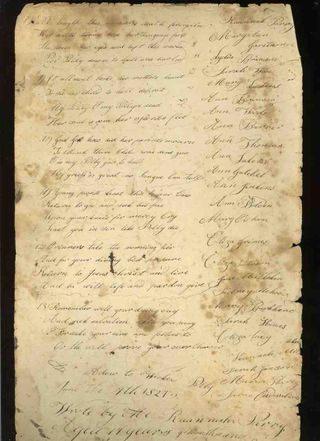
    In my collecting of antique children’s art (that is, art produced by children from 1880 and earlier) I’ve stumbled across a number of interesting other associated, relateable,  things.  One such item is this manuscript copy–from 1827–of a much older children’s warning/lesson poem, called “The Lamentable Story of Wicked Polly”, a scare-the-kids-to-death kind of poem, instilling (and installing) a very healthy dosage of the wrath of god, a falling away from the just Jesus, and the regretably-late realization on the everlasting pain of sin.  A rosey children’s lullaby it is not.

    [The lyrics are below; click on the images for a more legible resolution.]

    But the side interest here is literally at the side, a perhaps revealing bit of marginalia in which the copyist has recorded the names of 54 children (I imagine).  Are these names the names of classmates, other children in school, kids in town?   There are 26 girls and 28 boys; the girls, as it urns out, have 9 different names; the 28 boys have 18 different names. I wonder why?  The girls have the following names (and with the number of holders):  Ann (7), Ekiza (4), Mary (4), Hannah (3), Sarah (3), Mary (3), Jane (2) and then one each for Lydia, Sidney and Maria. 

    The boys have more imaginative names:  most popular are William (4) and John (4); this is followed by Joseph (3), James (2), and Abraham (2).  The rest of the names are single-uses, and include: Achilles, Joshua, George, Absolom, Enos, Thomas, Pinkney, Charles, Edward, Zachoria, Isaac, Dening and Reason.  This is a small and unexpected sample, but it is interesting nonetheless–I don’t even have an explanation, just this observation. 
                                                                                                                                                                                                                             

    00-blog-Oct 22-polly909

    The Lamentable Death of Wicked Polly


    Young people who delight in sin.
    I’ll tell you what has lately been:
    A woman who was young and fair,
    Who died in sin and sad despair.

    She’d go to frolics, dance and play,
    In spite of all her friends could say;
    I’ll turn to God when I get old,
    And He will then receive my soul.

    One Friday morning she took sick,
    Her stubborn heart began to break;
    Alas! alas! my days are spent,
    Too late! too late for to repent.

    She called her mother to her bed-
    Her eyes were rolling in her head-
    When I am dead remember well,
    Your wicked Polly screams in Hell.

    The tears are lost you shed for me,
    My soul is lost, I plainly see;
    Oh! Mother, Mother, fare you well-
    My soul will soon be dragged to Hell.

    My earthly father, fare you well,
    My soul is lost and doomed to Hell;
    The flaming wrath begins to roll,
    I am a lost and ruined soul.

    She gnawed her tongue before she died,
    She rolled and groaned and screamed and cried,
    Oh, must I burn forever more,
    When thousand, thousand years are o’er?

    At last the monster Death prevailed,
    Her nails turned blue, her language failed;
    She closed her eyes and left the world,
    Poor Polly down in Hell was hurled.

    It almost broke her mother’s heart
    To see her child to Hell depart;
    My Polly, O my Polly’s dead,
    Her soul is gone, her spirit’s fled.

    Alas – how did her parents mourn
    To think their child was dead and gone.
    Oh! is my Polly gone to Hell,
    My grief’s so great no tongue can tell.

    Young people, lest this be your case,
    Return to God and seek His face.
    Upon your knees for mercy cry,
    Lest you in sin like Polly die.

    Oh! sinners, take the warning fair
    And for your dying bed prepare,
    Return to Jesus Christ and live,
    And He will life and pardon give.

    Remember well your dying day,
    And seek salvation while you may;
    Forsake your sin and follies, too,
    Or they will prove your overthrow.
     

  • Vegetius and the 4th Century Underwater Attack

    JF Ptak Science Books LLC  Post 342

    Blog--vegetius
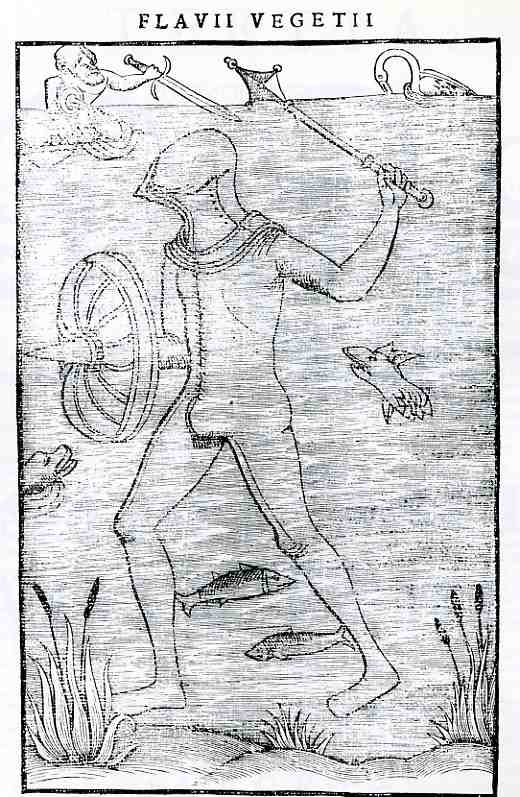
    The name of Flavius Vegetius is not so much popularly known today, though his influence is felt through the hands of other, more famous, writers and thinkers.  He was seen as the most adept writer on the Roman mind in warfare, and his De re militari libri quator… was his masterpiece.  It was reprinted in 1532 by Christian Wechel from sources reaching back to the original, which was written around 390 ACE, and found a wide readership not only for its authority on all things military/Roman but also for his iconic insights and aphorisms on warfare in general.  It was Machiavelli who came under his spell and who adopted some of Vegetius, who became further disseminated through the military followers of Machiavelli, and so on.

    I came to this work much more simply than all of this – I liked this image of the underwater warrior, who was somehow able to breathe while submerged.  I get the importance of this sort of undercover, guerilla maneuver, but what I really like was the rarity of seeing a Renaissance illustration of human submarine life, which is pretty uncommon.  Also, the use of the lines to represent the underwater quality of the image—giving the woodcut an overall grey tone—is also very scarce in the history of illustration, at least before 1600.  And very neat!  One of the hallmarks of this printing of Vegetius was the liberal use of white space in many of the (119) woodcut illustrations, though it is clearly not on display in the woodcut that I’m sharing here.
    00-blog-Oct 28 vegetius939

    Of further interest are the following excerpts of Vegetius from the 1767 English translation found at the Digital Attic website. I’ve selected four interesting bits on the selection of recruits, their initial training, the size of recruits and the need of the new soldiers to learn how to swim.  I find them a fascinating insight into the appreciation of the raw military recruit from 1600 years ago. 

    The Military Institutions of the Romans (De Re Militari)

    By Flavius Vegetius Renatus

    INITIAL TRAINING

    The first thing the soldiers are to be taught is the military step, which can only be acquired by constant practice of marching quick and together. Nor is anything of more consequence either on the march or in the line than that they should keep their ranks with the greatest exactness. For troops who march in an irregular and disorderly manner are always in great danger of being defeated. They should march with the common military step twenty miles in five summer-hours, and with the full step, which is quicker, twenty-four miles in the same number of hours. If they exceed this pace, they no longer march but run, and no certain rate can be assigned.
    But the young recruits in particular must be exercised in running, in order to charge the enemy with great vigor; occupy, on occasion, an advantageous post with greater expedition, and prevent the enemy in their designs upon the same; that they may, when sent to reconnoiter, advance with speed, return with greater celerity and more easily come up with the enemy in a pursuit.

  • Trans-Atlantic Crossing by Air, 1910 (?) The Voyage of the “America”

    JF Ptak Science Books LLC  Post 343

    00-blog--Oct 28 airship atlantic946
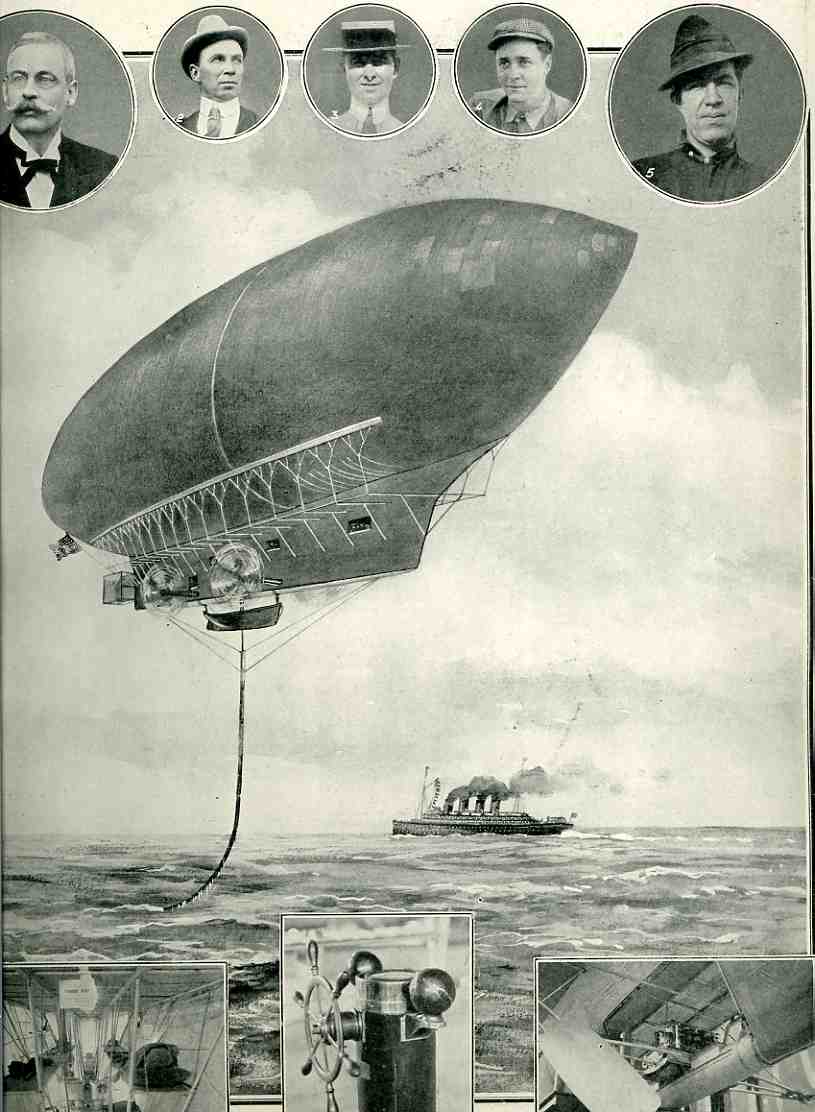
    The airship “America”, under the command of Captain Murray Simon and Walter Wellman (the arctic explorer, set out to cross the Atlantic Ocean on 15 October 1910. The dirigible was 228 feet long with a diameter of 58 feet, had a crew of eight, and was filled with hydrogen gas.  The airship’s four-tons worth of petroleum (to run the four engines on either side of the ship) was carried in the base of the car compartment of the dirigible, with another ton or so of fuel carried in the “equilibraor”, which served to keep the height of the dirigible “equalized” at about 200′.  They set off from New Jersey and flew in a very wide arc for about 1300 miles until engine trouble forced them down near Bermuda.  Although never coming close to crossing the ocean the “America” did set a record for the longest flight of any sort of flying machine.

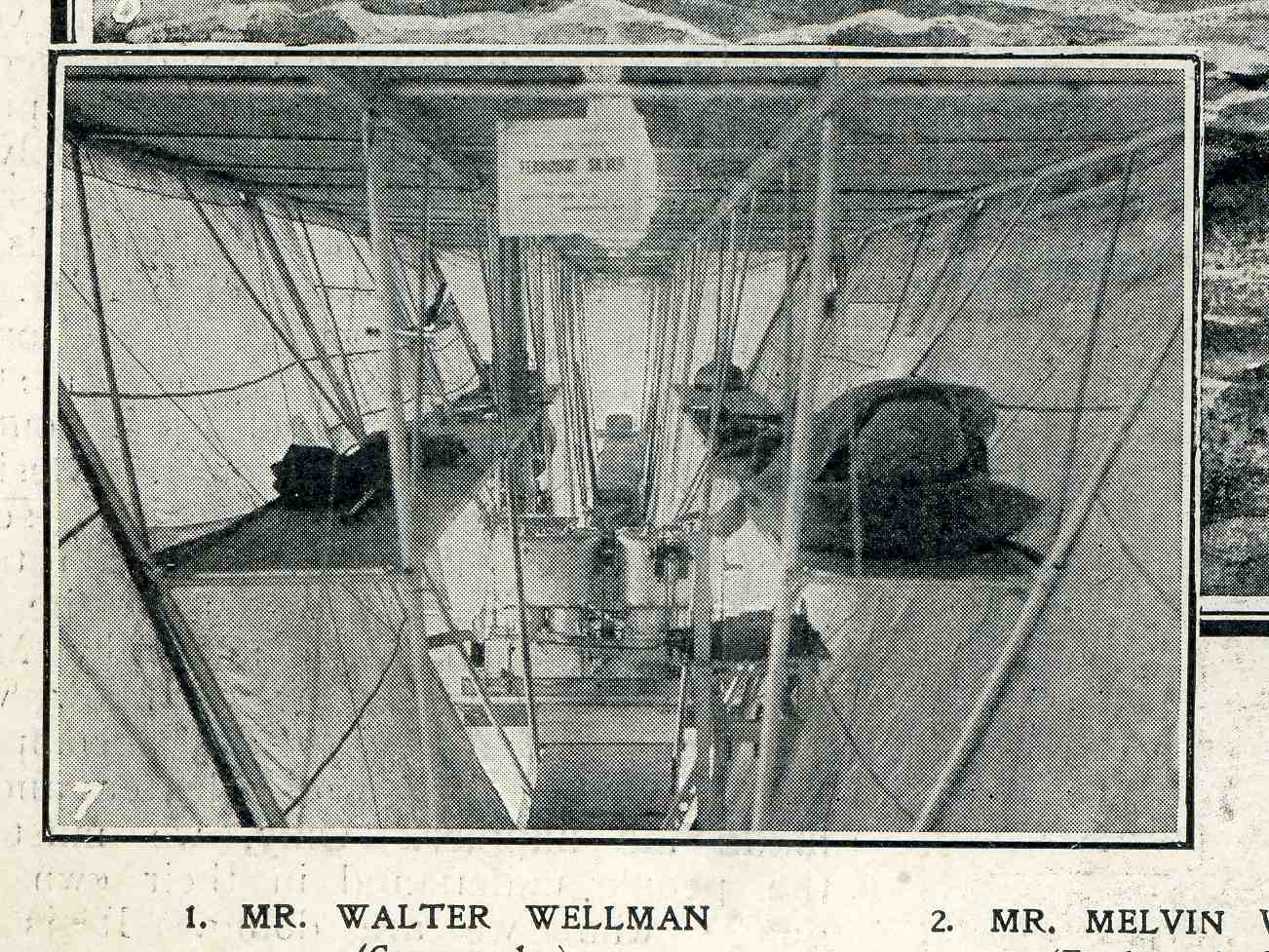
    What drew me to this image though was something far less important: the small inset picture at bottom left, which shows the “sleeping shelves” for the crew. The accommodations, shall we say, are barely so; they looked very narrow, very metal-y, very cold and pretty dangerous, with basically no room for a roll-over.  Then again, no one was there for comfort, but these racks look defiantly un-comfortable.  

    This was the last flight for Wellman, and the crossing of the Atlantic by air would have to wait for the ethically-challenged Lindbergh sixteen years later.

    00-blog--Oct 28 airship atlantic947

  • 100,000 People at the Dempsey-Carpentier Fight, 1921: a Remarkable Photograph

    JF Ptak Science Books LLC  Post 344

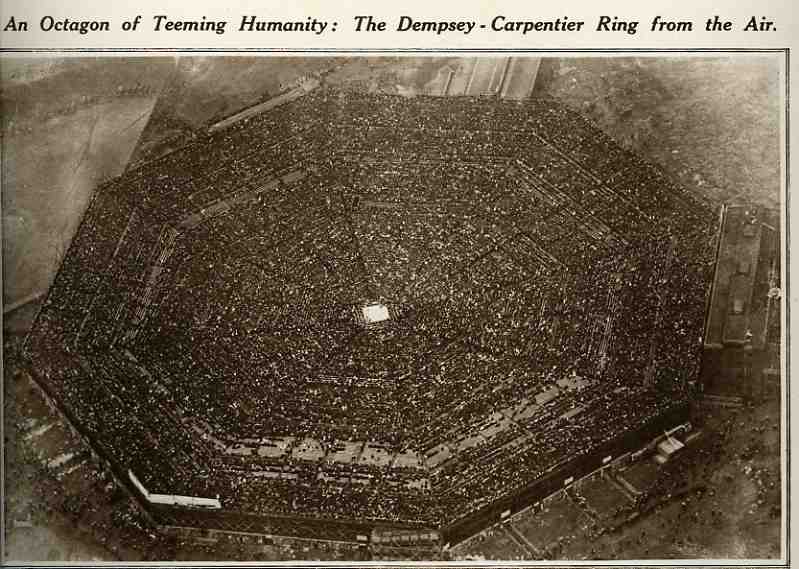
    This was a remarkable photograph for the information it presented when it was published in The Illustrated London News on 30 July 1921. That’s a real sea of humanity surrounding the canvas ring, and probably the largest crowd ever assembled in Jersey City.

    00-blog--Oct 28 dempsey fight949

    The image was made by a photographer for The New York Times from an airplane about 2,000 feet over the arena.

    00-blog--Oct 28 dempsey fight948 The fight between the two men was billed as “The Fight of the Century”, and it was, up until that time.  It was probably the event that was most-listened to than any other event in history, the early radio broadcast of the fight reaching at least 300,000.  But since there were so many mass venues listening to the fight–or watching its progress via displayed messages transcribed from the radio broadcast–it is really pretty impossible to say how many followed the event on that day. 

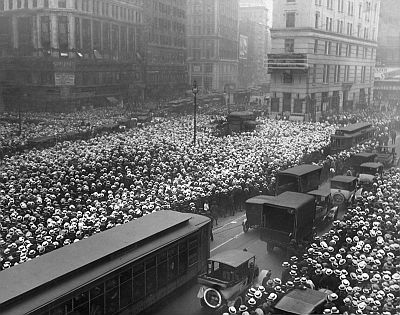
    (The image below shows a very large crowd of approximately 10,000 in Times Square waiting for the returns f the fight.)  

    1921-dempsey-carp-5-50

  • The Famous Painting of the Tulip Who Stopped Rembrandt’s Bones from Turning Into Jelly

    JF Ptak Science Books LLC  Post 345

    Blog--tulp rembrandt
    This ungainly title is actually a true statement–even the Tulip “who” rather than “which” part. Rembrandt did suffer from some sort of mental suggestion/annoyance which convinced him that his bones were turning into jelly. (Weird happens: Kurt Goedel thought that he was being poisoned through his food and finally through water.) His symptoms were addressed, and treated (I guess), by the Amsterdam physician Nicolaas Tulp (1593-1674), who saved Rembrandt from himself.

    Tulp, which means “tulip” in Dutch, was born Claes Pieterzoon, and was a Leyden-education physician who established a very respected and large practice in Amsterdam.
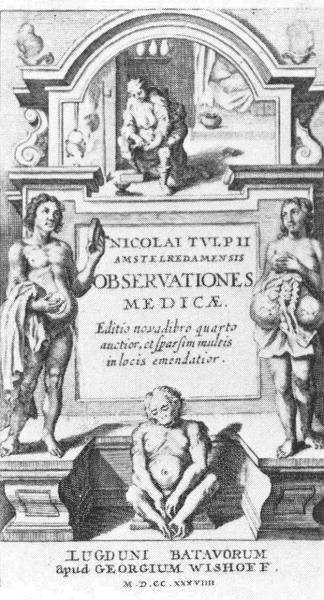
    He was additionally very interested in pathological anatomy, and in an early-CSI vein he frequently corresponded his diagnoses through postmortem dissection. In addition to his several published works is his magnum opus, Nicolai Tulpii Amstelredamensis Observationum medicarum libri tres.Cum aeneis figuris (Amsterdam, apud Ludovicum Elzevirium Elzevier, 1641), which contains much of medical interest (including what seems to be a description of diphtheria, a description of a bronchial cast, the description and illustration of the ileocecal valve and kidney stones, and a tapeworm, and the earliest European description of berberi  (see Major’s  Classic Description of Disease)). Additionally he takes on the ideas of monsters, describes a narwhal, and makes the first illustration of a chimpanzee (called an “ouirang atong”) in Europe.

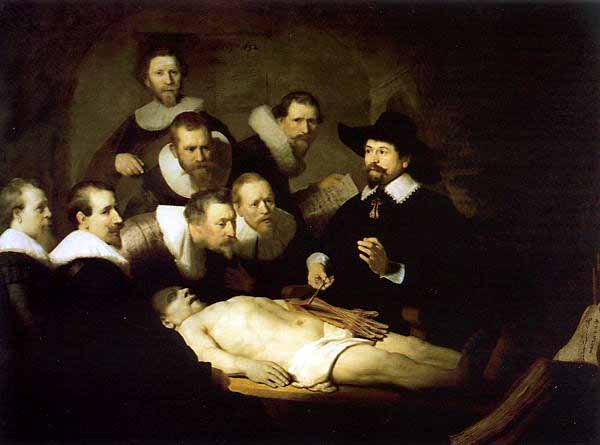
    But he most famously survives all this by being the focus, the central figure, the catcher of light, in Rembrandt’s painting “The Anatomy Lesson”, which is really called “The Anatomy Lesson of Dr. Tulp”, which was painted in 1632. (I wonder how Dr. Tulp lived with this painting in his life for 42 years? ) In any event, it was he who evidently rescued Rembrandt from his dark place, or migraine, or depression—or at least he suggested how he could live his life with whatever he had in his head. 
    Tulp’s portrait appears in the frontis to each of his works, but certainly there would be almost no shock of recognition in them; on the other hand, with the Rembrandt, almost everyone recognizes the scene,  though very few would now who Dr. Tulp was and what service he performed to the art world.Rembrandt_anatomy_lesson_dr_tulp

    NOTE:
    In one of his very many remarkable letters, Vincent Van Gogh writes to his brother Theo in October 1885 about this painting, offering an insight on color: “Rembrandt’s “Lesson in Anatomy,” yes, I was absolutely staggered by that too. Do you remember those flesh colors – it is – de la terre – especially the feet….You know, Frans Hals’s flesh colours are also earthy, used here in the sense that you know…”

    Check out the website that annotates and includes illustrations of all of the works that Vincent references in his letters—his breadth was really astonishing, as is his memory, and of course his immense appreciation of color—and light– in general.

  • UPDATE: Dropping Boxes Filled With Soldiers: a Bad Technical Idea but a Great Strategic One, 1950

    JF Ptak Science Books LLC  (added content to Post for 15 September)

    00-blog--Oct 29 dropping soldiers954
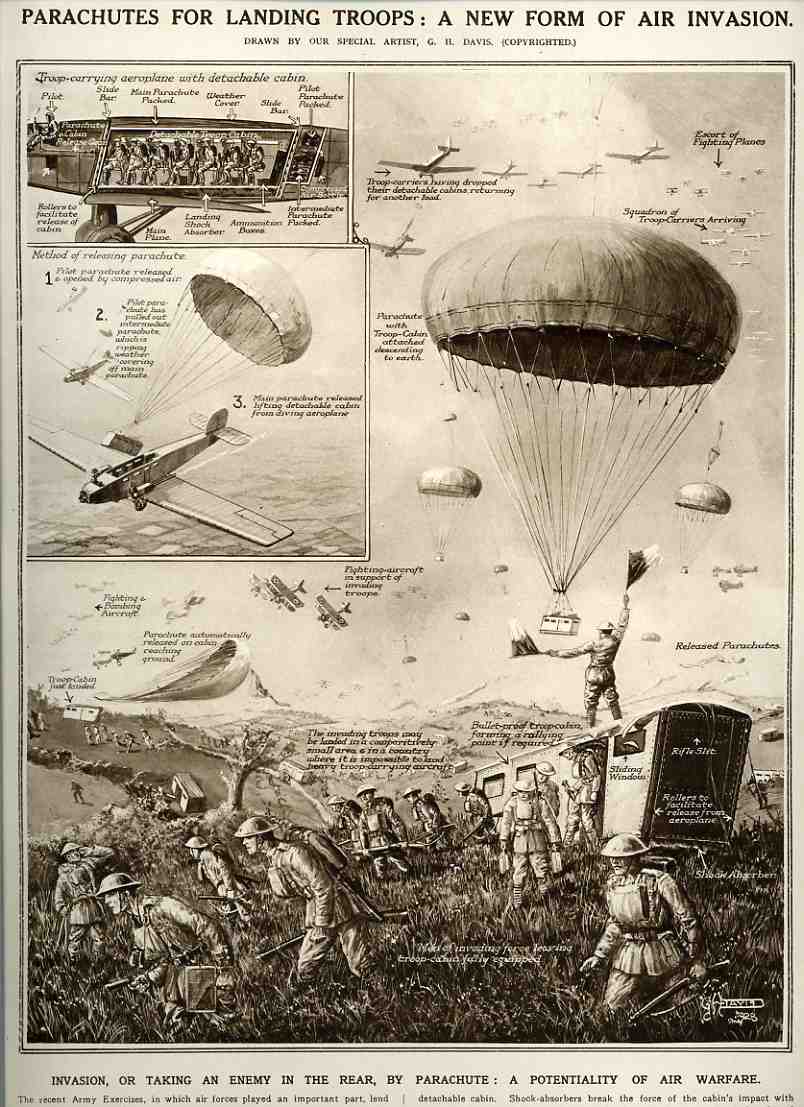
    I happened on this image from the front cover of Popular Science for November 1950 and recognized the idea instantly.  I posted on an earlier version of this idea from 1928 and placed it firmly in the BAD IDEAS Department of this blog.  The update from 1950 is a little improved, but, well, not by that much.  At least this canister leaves the clutches of the plane safely, though from the look of things it seems as though it might not want to land very nicely. 

    Blog-1-sept 15paratrooper553

    ·Posted by :

    ·in:

    — —
  • There was a Rubber Lady in a Rubber Kitchen in a Rubber House….

    JF Ptak Science Books LLC Post 347
                                                                                                               
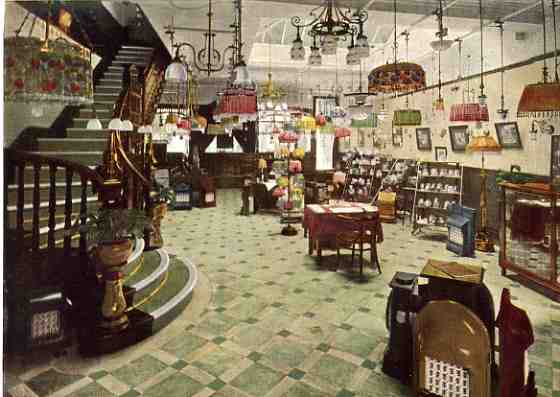
    000-ebay--Oct 30 rubber floor965

    After 15 or 20 centuries of development of rubber, including merciless horrors and peonage and slavery and brothel farms and whore cities in the depths of the Amazon, and it’s the spread of its development worldwide, who among the hundreds of thousands, millions, of people would’ve foreseen the development of their precious commodity into a rubber kitchen?  Perhaps it is sort of like imagining Johnny von Neumann or Chuck Babbage reacting to the use of their precious inventions into a platform for entertaining children with judged performances of stealing cars and killing aliens? 

    000-ebay--Oct 30 rubber floor966

    Those feelings, I guess, are unknowable, though the gentle people in
    those folks might’ve given it all a “of course”, world-weary nod of
    relinquishing approval.  Or not.

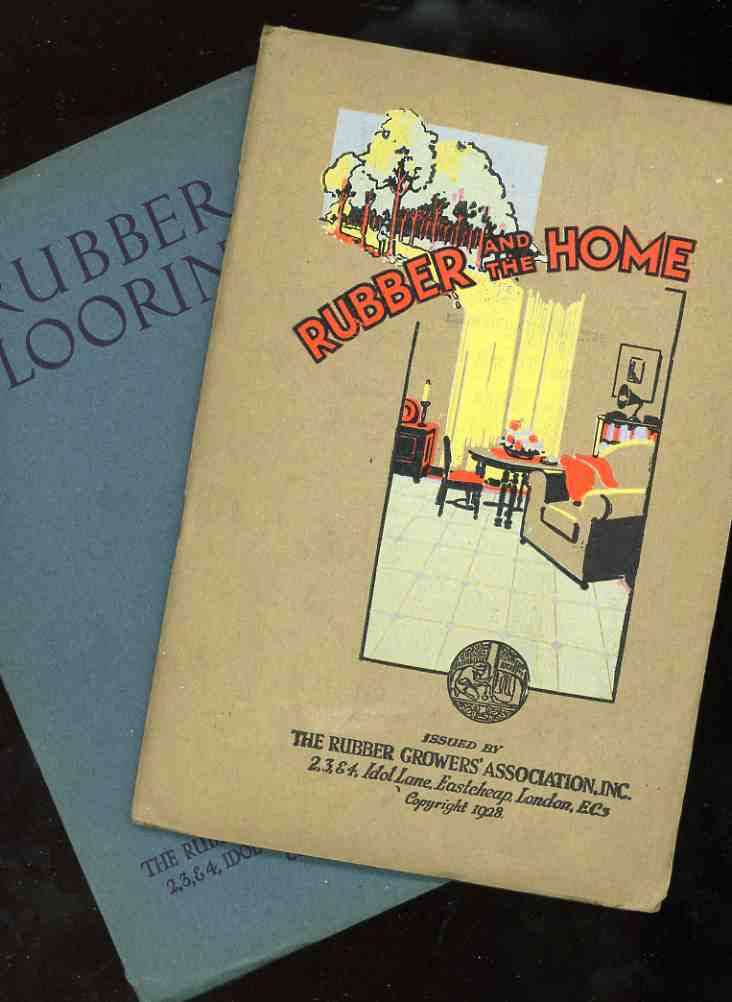
    But right before the mass of rubber was produced synthetically, and
    just as the naturally-produced rubber farms had spread far across the
    globe 9and diminishing the former leader Brazil’s share of total output
    to about 15%, the London-based Rubber Growers association produced
    these two (below) pamphlets extolling the endless uses of their
    product.  And I really mean ‘endless”, as they propose in these pages
    oh-my-rubbery-brothers the rubber house.  Not that the exterior of the
    house is made of rubber, but just about everything inside was.
                                                                                                               

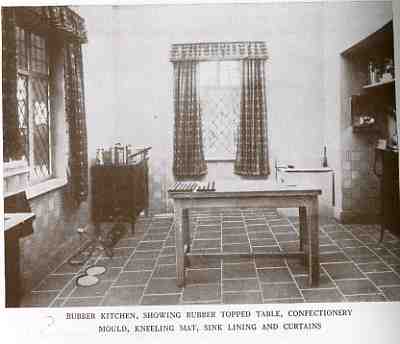
    000-ebay--Oct 30 rubber kitchen968

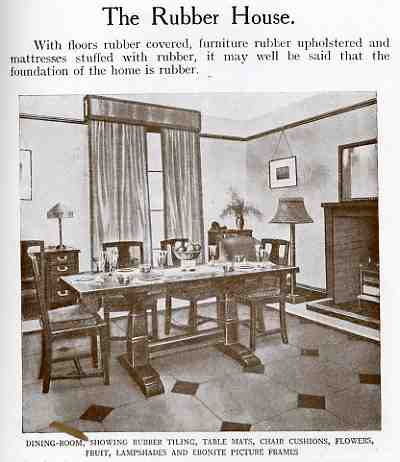
    The rubber house had rubber floors, and rubber floors cushioned rubber
    tables and chairs, and the rubber chairs cushioned rubber seat pads,
    and the rubber seat pads cushioned (yes) rubberized derriere’s encased
    in rubber pants. And then things spin a little out of control, like in
    the kitchen, where the floor, table top, confectionary mould, kneeling
    mat, sink lining, hardware cushions and curtains (!) were made or
    rubber.  (This is only the big-item list, which doesn’t bother with the
    rubber hoses, anti-splash nozzles, wringer rollers, ice cube trays,
    sink cozies, rubber sponges (!), brushes, mitts, teapot stands, and the
    myriad of small, loseable kitchen aids—those are on another list. The
    kitchen apron, by the way, is just one of many rubber clothing items,
    “made so pretty and delicious that it is a delight to wear”.)  Rubber
    moves into the dining room in a big way, covering the floor, table top,
    seat covers (with cushions stuffed with rubber), lampshades, flowers,
    fruit “ebonite picture frames”, drawer pulls, fireplace implement rests
    (?), bulb bowls, egg cups and so on.  The nursery has the same sorts of
    items, with the addition of wall paneling, extra cushioning around the
    rubber crib, mattress and mattress stuffing, and, of course the toys.                                                                                              

    000-ebay--Oct 30 rubber dining room969

    And so the wish of the Rubber Growers’ rubber house is stated and soon
    passes into history, along with the stainless steel house, the elevator
    house, the wind-driven house, the house-on-wheels, and the rest.  I
    think I reached my limit pretty early on with this, but definitely
    passed the point of no return with the “chic variety” of rubber hats
    for ladies to match their “dainty rubber parasols”.

    000-ebay--Oct 30 rubber964
     

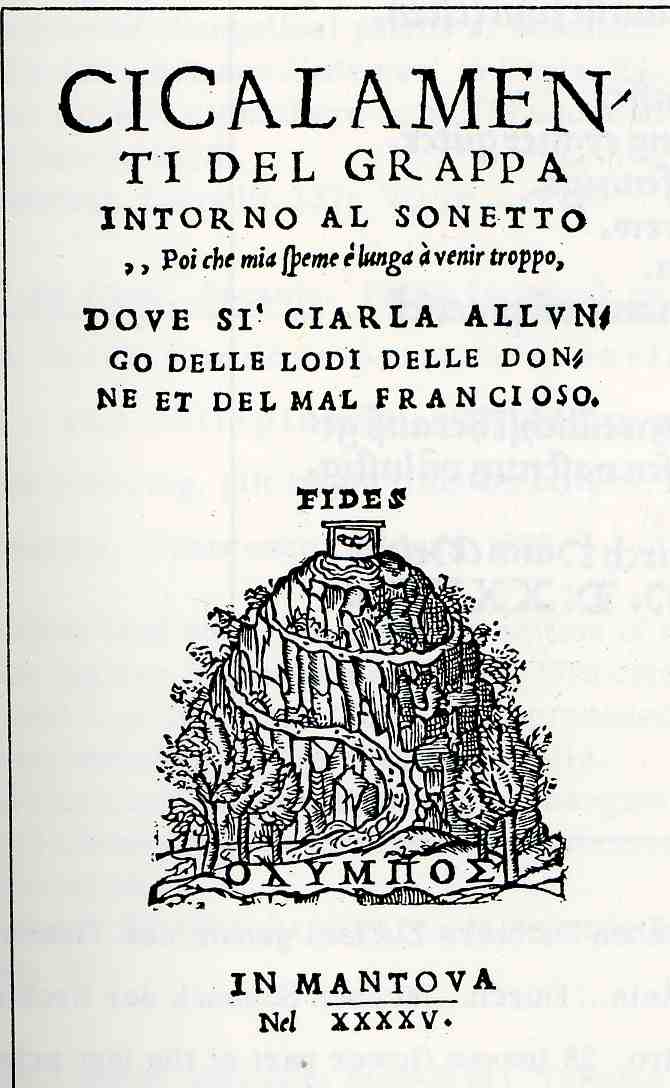
  • The Poetics of STDs and the Mountain of Truth; a Rollicking Good Time in 1545

    JF Ptak Science Books  Post 348

    Mountain of truth

    The progress of man/humankind has, in our dim antiquarian past, been represented in art in stages of ascending a mountain.  The fine arts and sciences have been shown, in their various intellectual pedigrees, at various points on the mountain of the mind, usually with Philosophia sitting supremely at the top (with Astronomia and Mathematica generally not far underneath). This is mind, I came across another sort of progression to the Olympian heights, though it has no people in it, just the mountain, and a curious idea, ascending to faith, or truth. 

    The image is on the title page of a curious, little, early work by the pseudonymous  “Grappa” (well-named for the drink), Cicalamenti de Grapps intorno  al Sonetto…though its real nature is revealed in the subtitle,“dove si’ Cliarala allungo delle lodi delle donne et del mal francioso”, or “where one chats at length about women with The French [venereal] Disease”.  It is also dedicated to a non-existent courtesan who was heralded as being lovely, generous, and deep in the seat of this same disease.  Indeedy! This ribald, blustery, frank, coarse innuendo-laced tract (28 leaves long) was not terribly unusual when it was printed in 1545, celebrating as it does the low- and high-cultural private life of Renaissance Italy.  Doctors, poets, gluttons, cheats and of course lots of beautiful women romp around ostensibly in an attempt to prove the usefulness of their sinful vices, relating it all somehow to the disease-improved poetic capacities of the STD-bestowed Petrarch, master of forlorn and unrequited love poetry and the father of Humanism  (It relates in a way that I can’t explain to Petrarch’s Canzoniere, sonnet #88, mostly written, I think, about a  girl/woman that he fell in love with in church, which is why we can see he needed to invent Humanism. He seems to say that the needs of love are strong, stronger than he could stand, evidently, and that one should flee, renounce it; he seems to for himself, the girl across the pew or across the great open space in the cathedral never weakening to him a bit.  He pines over her, and announces his own amoroso intoppo, or “amorous fumblings”, and would take flight from himself as well. Evidently the people in this work by Grappa do not take his warnings to heart, though they do seem to renounce the “love” part but not the “sex” part. I could be really wrong on this god knows; all I wanted to do was look at the pretty picture on the cover!)

    Stumbling into things like this  makes you remember that the Renaissance wasn’t all stuffy and main-springy; perspective-this and techno-that; they had their fun, too, even in 1545, and put it into print.

    Back to the woodcut on the title page: it features a small, winding route up a mountain, the top of which is sanctified “fide”.  Now considering what these folks were doing in this work I wouldn’t necessarily christen the end of the adventure with this word, particularly if it meant (as it does) the name of the World Chess Federation (FIDE).  Seriously though fide means “faith”, as in bona fide (on good faith, by good authority), as opposed to mal fide (bad faith).  I cannot determine what in the world the structure is on the top of the mountain, or what is in it. 

  • Visual Display of Quantitative Data: German Losses in the Battle of Britain

    JF Ptak Science Books Post 346  (This continues a thread on The Battle of Britain and also a post on “What 185,000 Planes Looks Like”). 

    This tremendous display is half of a double-page spread that appeared in The Illustrated London News for 7 September 1940.  It was meant to bolster the civilian population of Britain during the time of the German attacks, stating that “Over one thousand Nazi aircraft (were) brought down over Great Britain in …20 Days…” The artwork, drawn by Bryan de Grineau, actually depicts 1000 planes, and accurately-depicted ones at that.   What the graphic doesn’t tally though are the airmen losses, which would be considerably more than the 1000 aircraft:  for example, of the aircraft involved in the sustain air-invasion of England, the  Dornier 215’s had a crew of four, Dornier 17’s three, Heinkel 111’s four, Messerschmitt 110’s two, and Junkers 88’s three.  Thus  there were thousands more airmen lost, a commodity that the Nazis could little afford, more so as time went on.  
    00-blog--Oct 29 battle britain Nazi planes952 The results of the battle (and if you take a look at this earlier post for the full narrative), in terms of aircraft and humans,
    were,  for England: 1,023 fighters, 376 bombers, 148 coastal command aircraft  for a total of 1,547 aircraft and  544 pilots and aircrew killed.  During this time there were 27,450
    civilians killed and 32,138 wounded.  The Nazis lost 873 fighters and 1,014
    bombers for a total of 1,887 aircraft, with  2,500 aircrew killed.

    I find this visual display of quantitative data beautiful and compelling–and overwhelming in its way.

    The Battle of Britain was fought primarily from 10 July to 31 October 1940, so by the time this image was published the Brits had been able to withstand the tide of Hitler’s plans.  (The air strikes wouldn’t really end until the Nazis turned their attention to the Soviet Union in Operation Barbarossa in May 1941.)  One of those plans, named Luftschlacht um England, was to overtake and destroy the British capacity in the air, for as long as the English had command of the airspace there would be no way that the Nazis could force an invasion by sea/land (at least in the minds of the Oberkommando der Wehrmacht and Hitler.  With no air cover Britannia’s rule of the waves could be much more effectively challenged; and should that occur, what was seen as a not very probable invasion of Great Britain by a not very substantial Nazi naval force/transports might actually come to being. 

    This was a victory for HMG, though the rising tide for the Nazis would continue to do so through about November 1942, when after integral victories had been had that Churchill could declare at the Mayor’s Luncheon (10 November 1942): “Now this is not the end. It is not even the beginning of the end. but it is, perhaps, the end of the beginning”. 

  • The Polish “Threat” to Germany, 1939: Nazi Propaganda on the Perceived Polish “Invasion”

    JF Ptak Science Books  Post 230

    Blogsept_1_poland476

    In memory of the German attack upon Poland on 1 September 1939 I’d like to share this stupendously-titled pamphlet. This is one of those times when a pamphlet has posed an idea that had never before occurred to me. This anonymous work produced by the German propaganda machine in May 1939 presents the incredible assertion that Poland did indeed have plans to continue to break the back of Germany over the pretty-much-forgotten Treaty of Versailles, and to also physically attack south-eastern Germany sometime in 1940.

    Again, the idea that Germany was defending itself against an imminent attack by Poland was completely novel to me.  There’s always a reason for these sorts of beginnings of wars (Gulf of Tonkin, WMD), but this one really is exceptionally removed.  Poland had just decided to defend its borders against the Germans following their conquest of Czechoslovakia the previous year–until then the Polish military’s biggest threat was the Soviet Union.  The German attack, the blitzkrieg (Fall Weiss) which would begin on 1 September 1939 involved 1.5 million German soldiers attacking two principal points in Poland. It was ostensibly launched in response to a suppoed “Polish” attack on the German border town of Gliwce–an attack orchestrated and simulated by Germany.   In the attack, the Germans unleashed 11 tank divisions versus Poland’s 1; sent in 1250 bombers and fighters to Poland’s (mainly obsolete) 360; rolled 4 motorized divisions against Poland’s, um, hat’s right, they didn’t have any.  And of course the Germans had a modern and vastly superior navy, compared with Poland’s 4 destroyers, five subs, and assorted smaller numbers of smaller and less-significant vessels. 

    The British and the French issued an ultimatum to Germany to cease and desist; Hitler had no intentions in stopping, throwing the five armies of von Rundstedt and von Block deeper into the country in a fast and (according to many German generals) breakneck manner.  The British and French declared war on the 3rd, by which time the war in eastern Poland was already almost over.  The Germans did respond to the ultimatum (see this in continued reading, below) in which it outlines some of their needs and Polish-inspired dears. 

    By 24 September the Germans had reached the formerly important geographic boundary of the Vistula and swarmed past.  Warsaw was bombed by some 1150 aircraft, and by the 27th, the fighting was almost entirely over. (Some divisions held out to 6 October, the invasion completed in 36 days). 

    It is sometimes forgotten in the quickness of this defeat that Poland inflicted some heavy losses on the German military machine:  8000 soldiers killed with 27,000 wounded and 5,000 MIA; 217 tanks were destroyed.  The Luftwaffe lost over 500 planes, either entirely destroyed or damaged to the point of uselessness.  Polish losses were greater.

    It was at this time that the first of my grandmother’s brothers, Raymond Dymek of Pittsfield, Massachusetts, would cross the border into Canada and volunteer, becoming a pilot in the Royal Canadian Air Force.  He would fly against the Nazis with the CRAF, then joined the RAF, until finally, when the U.S. joined the  European war 27 months later, would fly for the U.S. Army Air Force.  He had a very long career and made it through.  His five brothers would also enlist in the U.S. armed forces; all six brothers would return home. Fatherland and all that.   I know the vocabuarly for their response to the idea that Germany was responding to a Polish threat of invasion didn’t exist to them–it barely does for me. 

    ·Posted by :

    ·in:

Recent Posts

Archives

Categories