A Daily History of Holes, Dots, Lines, Science, History, Math, Physics, Art, the Unintentional Absurd, Architecture, Maps, Data Visualization, Blank and Missing Things, and so on. |1.6 million words, 7500 images, 4.9 million hits| Press & appearances in The Times, Le Figaro, Mensa, The Economist, The Guardian, Discovery News, Slate, Le Monde, Sci American Blogs, Le Pont, and many other places… 5000+ total posts since 2008.

  • Bags, and Lots of Them: U.S. Navy Inspection, San Diego, 1935

    JF Ptak Science Books   Post 414

    0--ebay---dec 4 bag inspewction178

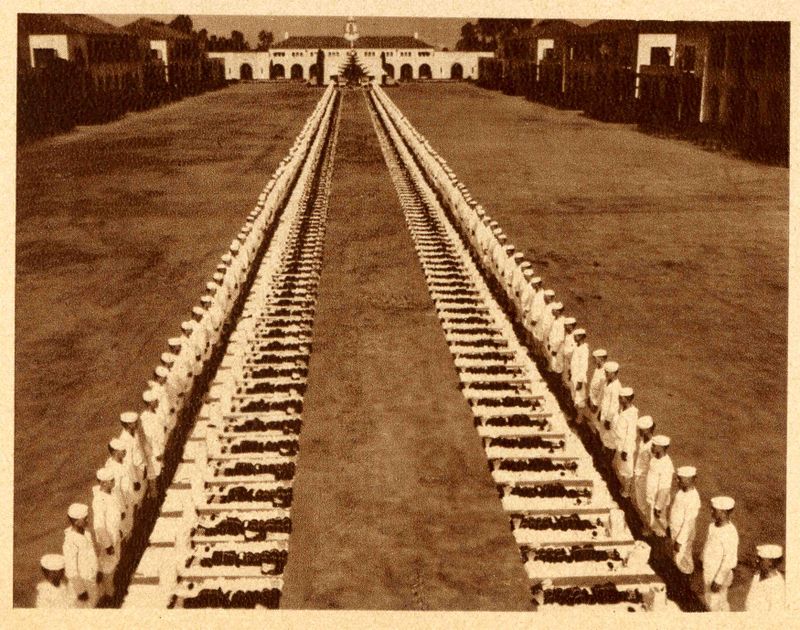
    This wonderful image is found in California and the Navy, a souvenir of America’s Exposition in San Diego for 1935.  I liked the long lines of white and the displayed sea bags.  As it turns out there are only about 200 sailors in this picture, the near horizon then being about, say, 1800 feet in the distance.  The bags, I must say, are lined up remarkably straight.

    The U.S. Naval Base in San Diego–the largest in the country nowadays–would be exceptionally busy in just eight short years from the time of this picture.  By the end of the war, in addition to all of the servicing of the American naval needs, this naval base serviced something on the order of 5,000 ships.  The story of the San Diego Naval Base during WWII was nothing short of remarkable


    ·Posted by :

    ·in:

    —
  • Unusual and Proto-Useless Statistics Dept: Travel Deaths, 1880 vs. 2006. An Orders of Magnitude(s) Story

    JF Ptak Science Books LLC  Post 415

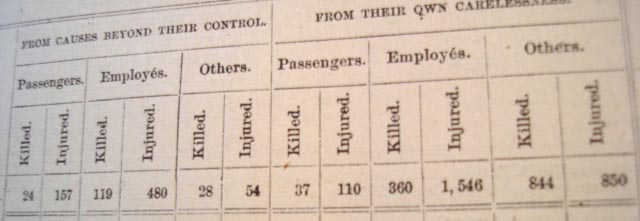
    Searching for something entirely unrelated to what I found (trying to answer how straight railway tracks were  in Texas in 1880*) but happy with the stumbling is this header for a long list of railway deaths on American railroads in the year 1880.  It appears in on page 280, part VIII, volume 13, part 4 of the U.S. House Miscellaneous Documents No. 42, part 4, volume 2132 of the publications of the U.S. House of Representatives.  Lots of numbers, yes?  Actually it is just vol 13 of the U.S. census report for 1880, the Statistical Report of the Railroads in the United States, by Armin E. Shuman (“Expert”).  It si a big books in a series of big books, running 862 pages and is mostly just (beautiful) numbers.  It is remarkable, really, that these folks had such extraordinary control over this amount of data–not only were they collecting it, but analyzing it as well, and doing it before the big breakthroughs that would come in the next census with the Hollerith machines. 

    Ballistics 348 The table is a summary of accidents reported by all railroads in the United States for the year 1880.  For *one* year, not the decade of the 1870’s.  The short story is that 2,541 people were killed in/on/by trains, with 5,674 injured.  Of the “killed” number, 61 were passengers who were killed “from causes beyond their control”, and 62 were killed “from their own carelessness”.  The numbers get much bigger because of the number of employees killed on  the job, more than 900 in the one year alone.  The total number of passengers carried for the year was 269,000,000.  I cannot find the number o total miles traveled.

    I made a quick check on the Bureau of transportation Statistics website just to see what kind of similarities there might be in these numbers. It turns out that the gross numbers were sort of similar–there were 658,000,.000 passengers carried domestically by American carriers in 2006.  There was a tremendous difference in deaths, though: 47 people were killed as a result of air travel that year, compared with the 2,541 by trains in 1880.  Two orders of magnitude, about, with each person traveling a great distance in the air (averaging about 1000 miles) than by rail (whose numbers I could not find quickly).  It is kind of interesting, though, that when you consider passengers as a lone stat in 1880 that the numbers get very close to 2006. 

    Working on the railroads in 1880 was tough and dangerous–more dangerous than I had known.  And I can pretty well  guess that there were no Thanksgiving turkeys being delivered to anyone’s family if Father happened to get cut in half by the South Manchester Railroad Company.  Certainly no turkey would come the year after.

  • Queen of the Nudists and Nude Oddness in Chicago, 1933

    JF Ptak Science Books LLC  Post 416

    0--ebay---dec NUDIST 1214

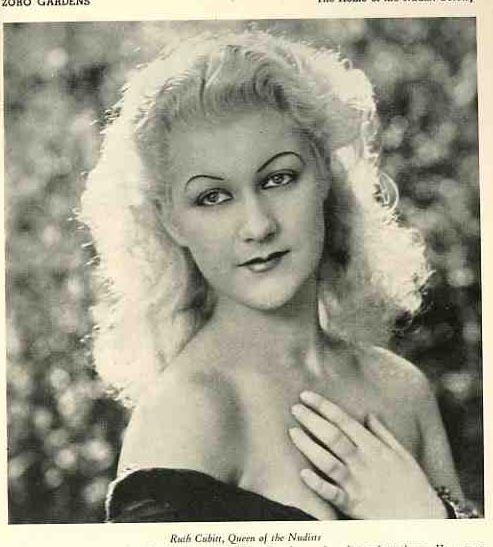
    It isn’t often that you run across the sobriquet of “Queen of the Nudists”, as was the case with Ruth Cubitt, but here it is, in the handbook of the Official Souvenir of the San Diego International Exposition for 1936.  The mention of Ms. Cubitt (“an artist at heart”) is tucked away towards the end of the handbook, right after the entry for the new Globe Theatre, in the description of Zoro Gardens.  We are told that “the famous Nudist Colony” is “near the east gate if the Exposition” and (oddly put) “in a rarely beautiful setting [sic]” and,  I’m guessing, that it was actually outside the fairgrounds.  I’m unsure of the connection between the nudists and the exposition, but at th every least the description was added for titilation purposes. 

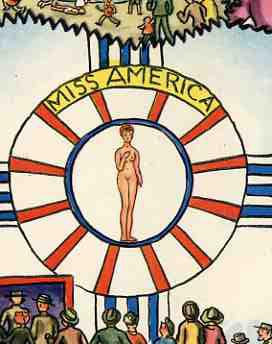
    A few years earlier and half-way across the country in Chicago was the famous Century of Progress Exposition (1933-1934). (I have written about a pamphlet pointing out the not-so-progressive aspect of the celebration HERE.).  In

    0--ebay---dec NUDIST 1212

    this official program are listed all of the groups of exhibitions,
    including The Midway (pictured here), showing different sorts of rides
    and thrills.  For some reason at the center of it all is a pavilion
    called “Miss America”, featuring a weird/creepy, Barbie-like,
    completely nude and depilated “Miss America”.  Why this figure was on
    display is unknown, the reasons puzzling and, with my eyes,
    incomprehensible–she expresses a little bit of modesty with one hand 
    while the other hangs limply at her side.  Why the fundamental
    full-frontal nudity was necessary, I don’t know.

  • Telephone Pole Art

    JF Ptak Science Books LLC  Post 417
    0--ebay---dec telephone pole201

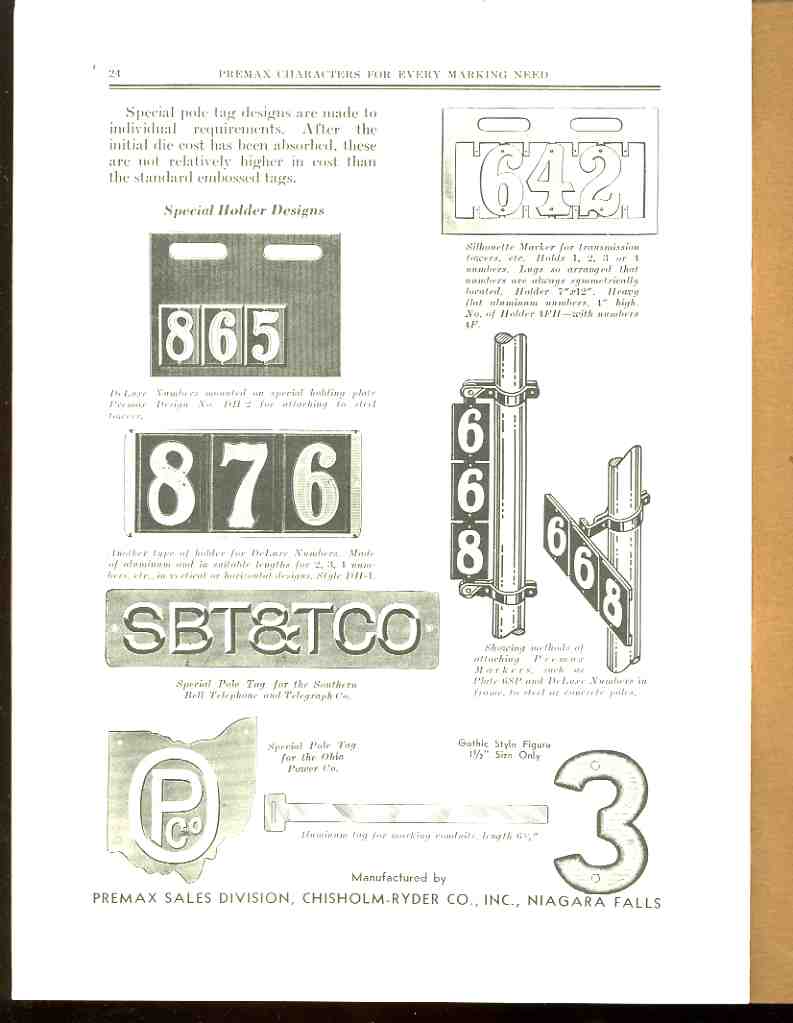
    One of my interests over the years has been the found art in electrical lines on telephone poles.  But there’s really much more to appreciate in these simple utility structures than the stuff they support.  My friend and fellow Ashevillean Marty Weil, who among other things runs the wonderful and never-lacking-a-surprise Ephemera blogsite, says that “telephone poles are dripping with ephemera”, the extra, disposable stuff seemingly unrelated to their stated purpose. He’s right: climbing spikes, the beautiful antiquarian glass insulators, alpha-numeric identifying devices, unintended art leftovers from where things have been stapled/nailed/taped to them,  and of course the geometries of the electrical lines that connect them to us, and on and on.

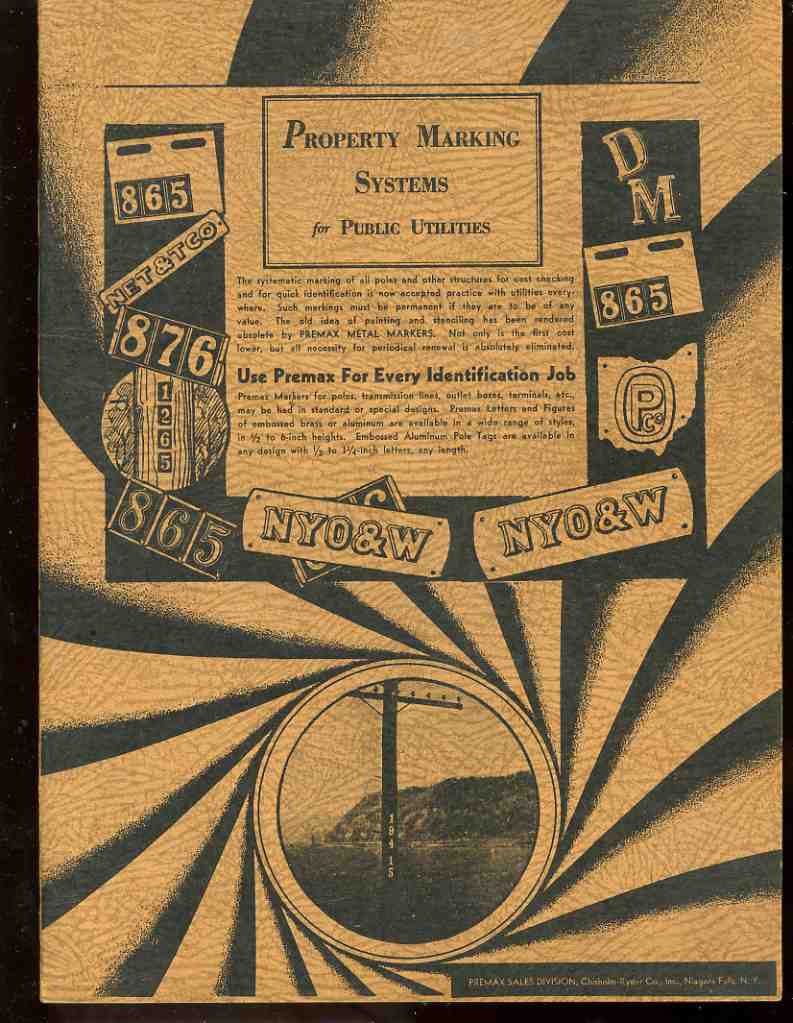
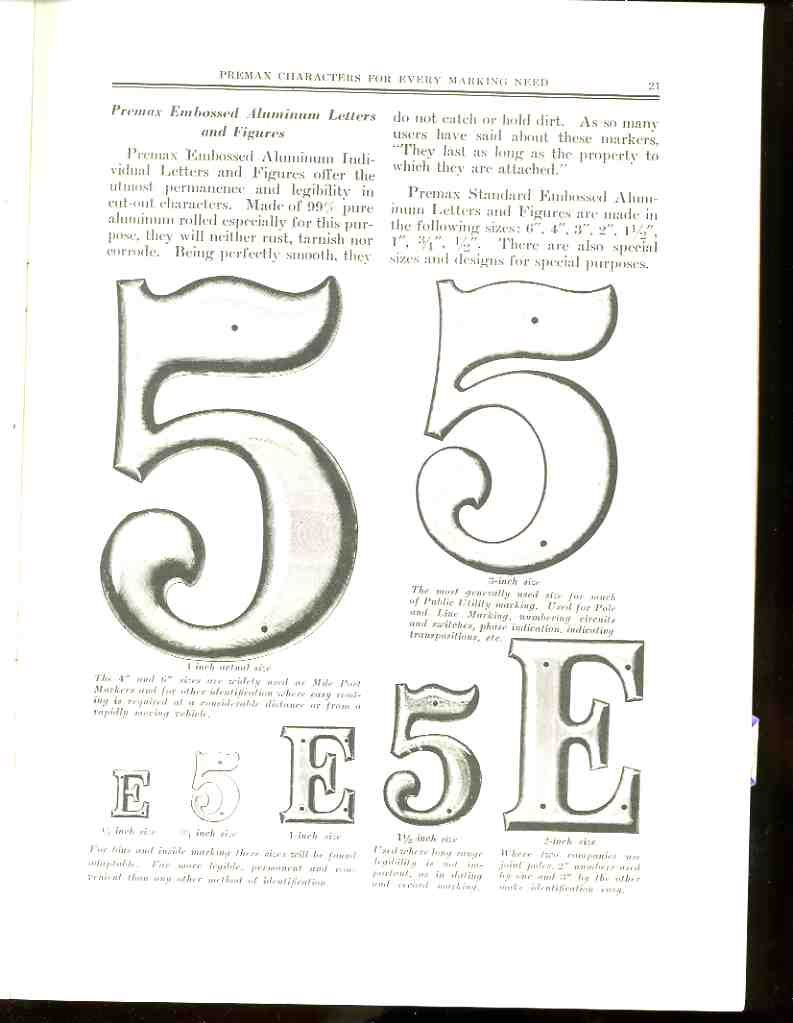
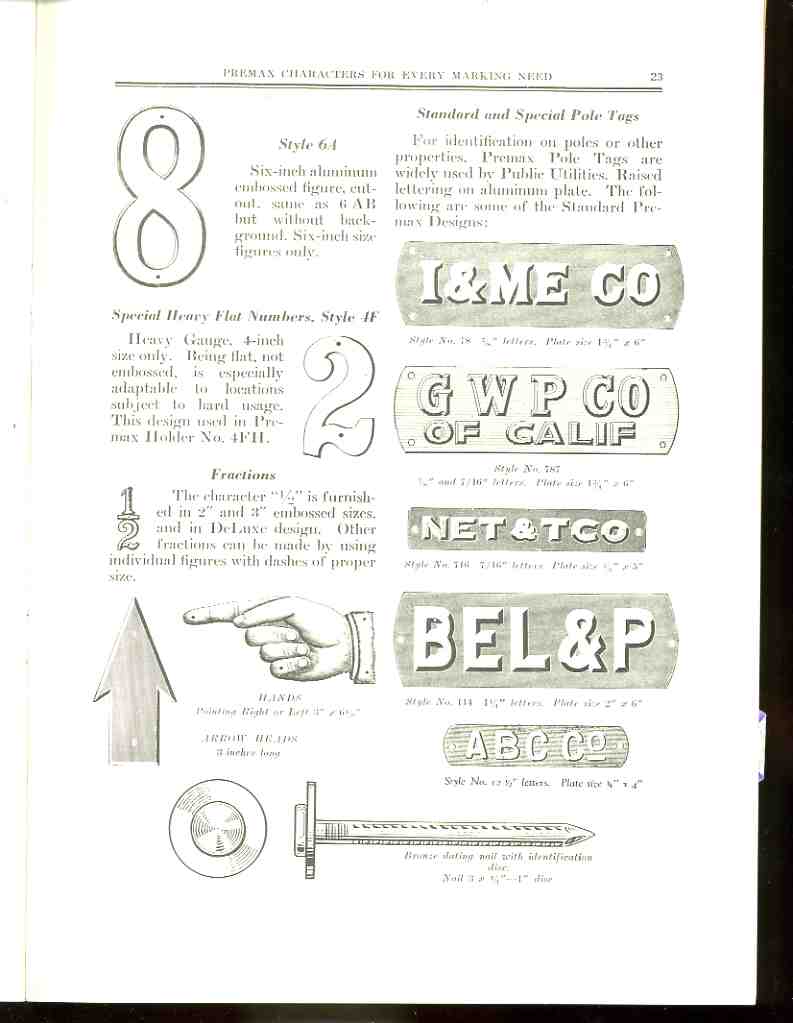
    This pamphlet, left, unimaginatively titled Property Marking Systems for Public Utilities (1938), is a near-goldmine for the stuff that hasn’t quite dripped off the poles.  As a matter of fact, it is a source for all of the material that is likely never to come off the poles until the poles come down. These are the basic elements from which all of that  numerical and alphabetical found art is made.

    0--ebay---dec telephone pole202

    00-spaceball

    0--ebay---dec telephone pole203

    0--ebay---dec telephone pole204

    ·Posted by :

    ·in:

  • An Artistic “First”–Recognizing the Book Illustrator for the First Time, 1597

    JF Ptak Science Books LLC   Post 418

    0--blog-dec 9 artist 225
    In many disciplines generating a list of “firsts” in its fields and subfields is a relatively easy if not complex matter. Quickly established is the first time that a liquid propelled rocket is successfully launched, as is the first time that a left-handed blond  New Yorker threw a night-time three hitter in the rain, and the first time a twin walking beam engine blew up, and the first attack of B troop of the 2nd Division of the 2nd U.S. Army (Patton’s Ghosts, by the way) attacked the Germans in Belgium in World War II.  Not so, really, in the history of art.  The first time a fork appears in a painting is sort of known, the first time a “part” appears in a man’s hair, the first time we see an untied shoe, and so on, are sort of findable.  Or perhaps we know it–all of this is prefaced by whether or not some observer at some point in the misty past made an observation of it, or that the painting or artwork survived, so it is all a little contingent on something else being so.  The first time an artist signed their name to their artwork?  Sometime in the third or fourth decade of the 16th century–before that, the painting really was a group effort of craftsmen and artisans and guilds, producing the paints the canvas the stretchers and the like, the painter painting with all of their stuff.   Different periods of art development start and end in gauzy periods (some less than others).

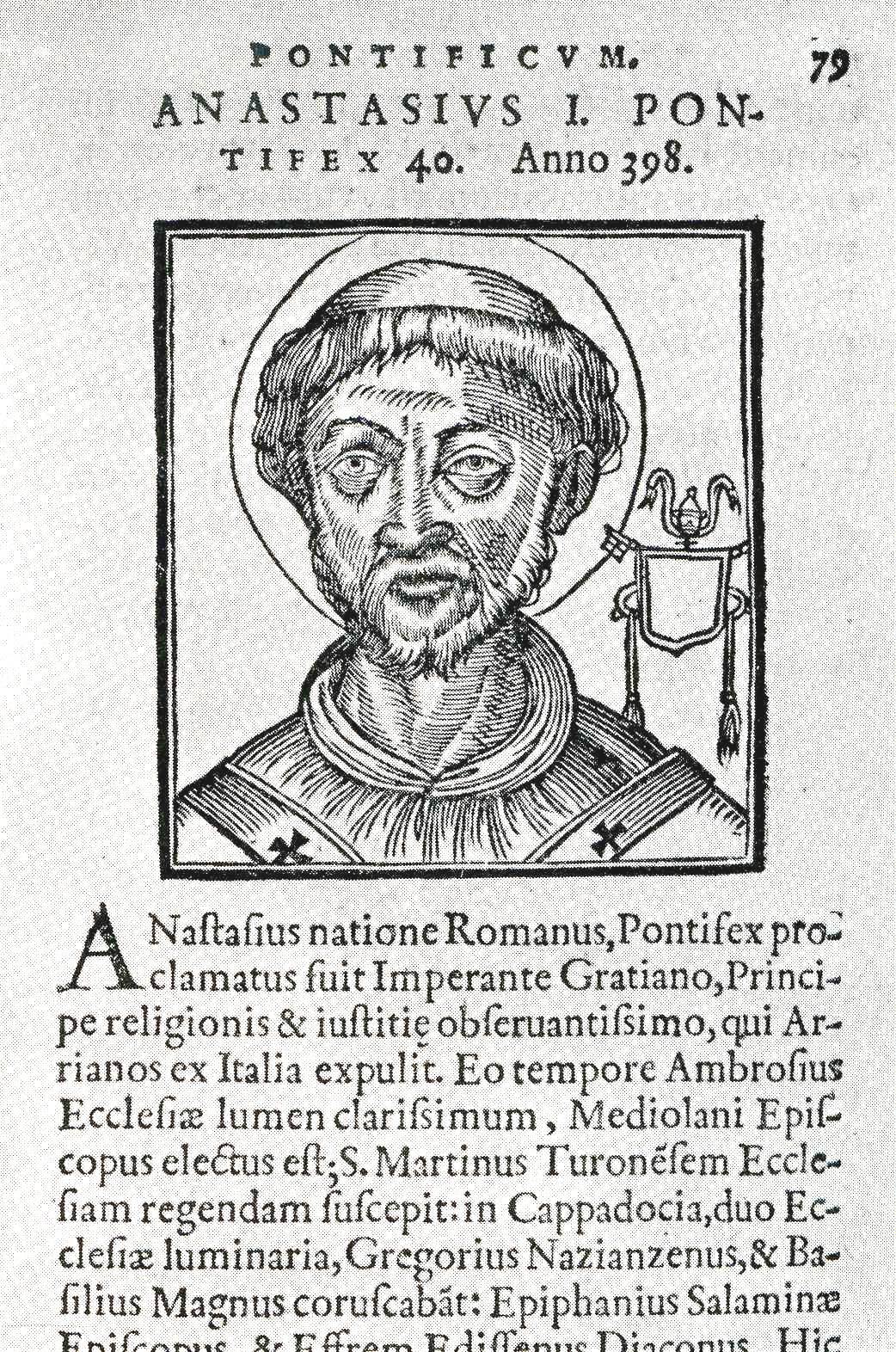
    And in that long line of firsts and pseudo-firsts  there are other sub-genres, a class to which this illustration belongs.  Bartolommeo Platina’s Vitae

    0--blog-dec 9 artist 225 detail

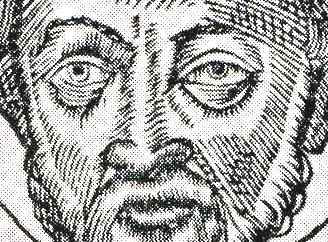
    Romanoeum pontifcum…in epitomen redactae, printed in Liege by Henricus Hovius in 1597, is probably the first time that an artist’s name and illustrator of the same book is listed ion the title page, front and center.  Before that?  If the artist was referenced it was in the text (rarely) and more than likely, simply, in the bottom right or left corner of the engraved/woodcut image made from his work.  The artist is J.B. de Glen, who contributed 239 woodcut portraits of popes and pope-iana to this work, and whose brother, Jan de glen, actually cut the blocks.  And I must say, this illustration of Pope Anastasius I (as he “was” in 398) is remarkable in its own way, de Glen having a particular style, quite humanist, and not terribly bending to interpretive needs of beauty. 

    ·Posted by :

    ·in:

  • Ultimate Legal Hoax: Pilate’s Death Sentence of Christ and the Salamander Letter

    JF Ptak Science Books LLC  Post 419

    0--blog-dec 9 pilate224
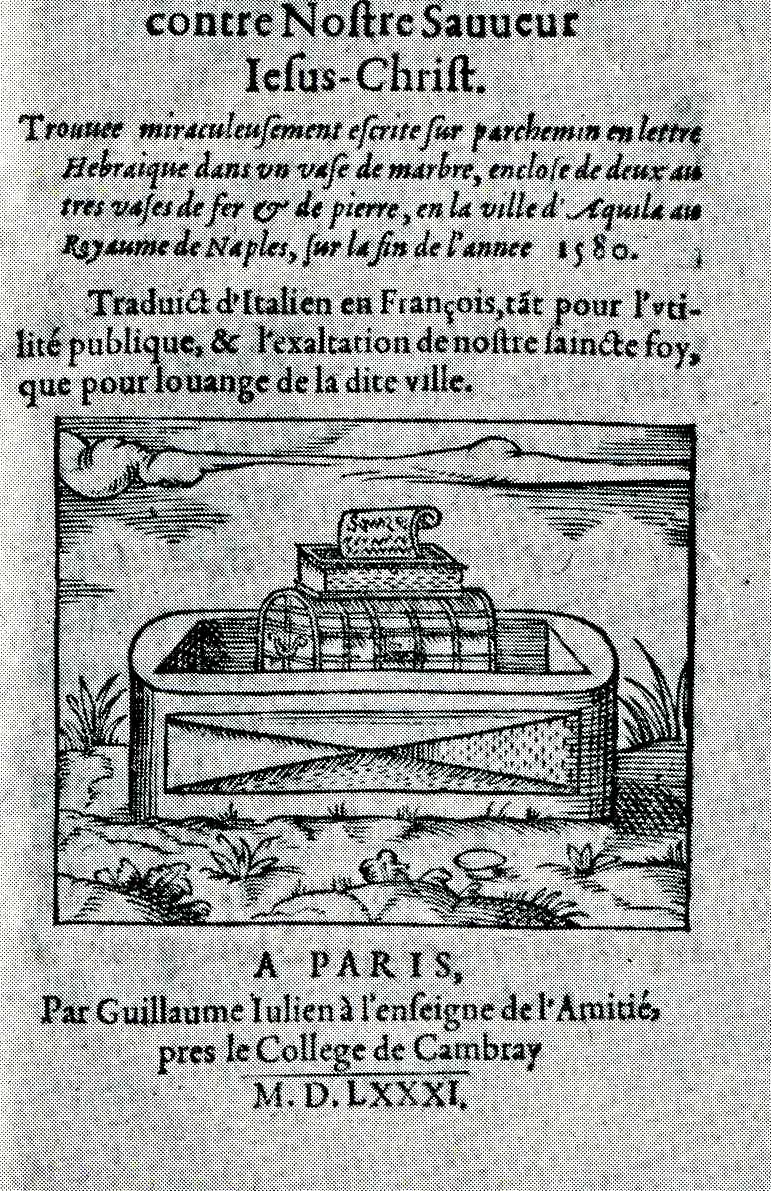
    One of the most remarkable literary frauds testing the published boundaries of religious merit was this remarkable publication, the death sentence for Jesus Christ by Pontius Pilate. Printed in Paris by Guillaume Juliene for Jean Stratius at Lyon, the Thresor admmorable, de la senstence prononceepar Ponce Pilate, contre notre Sauveur Jesus-Christ, (translated from Italian into French), was a work of great audacity if for nothing else than in its reach. (I’d like to restrict these comments on religious-mythological writings to the more-obvious and modern forgeries and hoaxes, and leave the question on the “authenticity” of other religious works like “divinely-inspired word-of-god transcriptions” for another time.) The book is about a parchment that was supposed to contain a rather touching, and naive   account (in Hebrew) of Pilate’s death sentence of Christ, a document found in a successive, nesting marble containers which protected it from time’s enemies.  As a matter of fact, the vignette illustration on the title page shows the parchment and the open containers as “proof” of the hoax’s merit.  Another very nice, light touch was the remark that this work was translated from the Italian (and that from the Hebrew) edition; it is most likely that this is the original edition, beginning its fictional life as a third-generation translation, a claim adding to the document’s possible authenticity. 

    It is not possible to leave remarks on religious forgeries/hoaxes without mentioning the talented and odious murdering forger Mark William Hofmann, the man who lead the most productive life of any American forger, and who late in his career was said to be attempting to fabricate the missing first 118 pages of the Book of Mormon. In addition to his very accomplished literary and political forgeries, Hofmann came upon an evil and brilliant idea–the devout Mormon would forge unseemly documents from the earliest periods of Mormon history and sell them to the Mormon Church, which was evidently very interested in obtaining such documents for its not-public archive.  Hofmann’s plan was remarkable–at first blush the offending documents that he “tracked down” were donated to the Church.  As the troublesome finds became more interesting (read “damaging”) he needed money (and lots of it) from Church officials to secure the documents from their “enemies”.  Having established goodwill and a sort of loyalty, and being terribly gifted and of course deeply knowledgeable about early Mormon history, Hofmann (a sixth-generation Mormon) created his own market, his own clientele, and his own product. (The “product” being very well researched and radiocarbon dating-proof documents for which he also forged their own provenance (!); even though fairly elementary stuff it was very well constructed, and Hofmann’s forging ability was exceptionally high.)  Outside the messing around with people’s belief system and committing major frauds all over the place and stealing millions of dollars, the biggest problem with Hofmann (perhaps some of you will remember his from the “Salamander Letter” of the mid 1984) was that in the course of doing business and protecting himself he bombed and killed two people in cold blood.  He didn’t answer his own religion’s hushed call for “blood atonement” and was sentenced in his cowardly way to life imprisonment in the state of Utah, where he lives to this day.

  • Skinny IV: the American Empire 1940

    JF Ptak Science Books LLC  Post 420

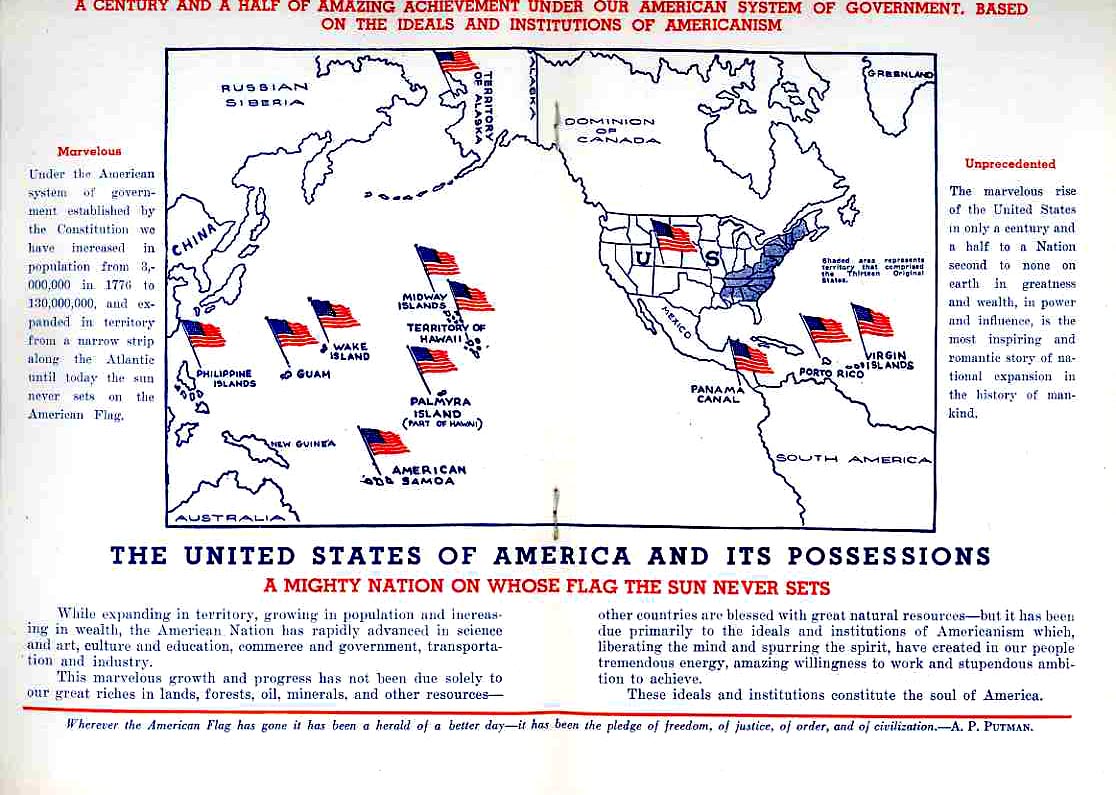
    0--ebay---dec empire205 This map of the American Empire, “a might nation on whose flag the sun never sets”, appeared in an odd little publication called US, a Presentation of Americanism, published in 1940 by the United States Flag Association.  The author, Col. James A. Moss, was adjectively gifted, or affected, never having met one he didn’t like or couldn’t use.  The pamphlet drips red, white and bluey drippings–on this map spread alone we see unimaginative and repetitious uses of the words  “amazing”, “marvelous”, “unprecedented” and so on. 

    Yet for all of this multi-colored ink and trying adjectives, the Empire, or empire, as described by Moss really wasn’t so much, once you added up all the square miles.  Actually, if you take away Alaska from this mix, all of this external property doesn’t add up to more than Texas; if you subtracted the very problematic size of the Philippines, these properties wouldn’t cover North Carolina*.  Now so far as “empires” go, this isn’t much–they’re lovely places to land planes, though, or refuel ships (in earlier days)–but when the foreign conquests don’t add up to 5% of the general land mass, an “Empire” it isn’t.  Perhaps if one of those flags was on Australia (sorry!), well, then, that would make a stiffer claim for the E-word (or I-word, actually, as in Imperium).  Roman, Persian, Ottoman, British, Assyrian, Spanish, Byzantine, Median/Mongol, Athenian, Akkadian, Russian, Celestial--these are empires (whole alphabets of them), in power, land, influence.  America could’ve really have been an empire in 1945 had it the stomach and hadn’t been exhausted of the whole idea of war–thank goodness it didn’t happen. Running amok and all. I’m happy to think of this Skinny Empire of the United States in 1940–Fat Empires generally are killers.

    Some of the other Skinny Posts:

    Skinny III:  Skinny Water. An Extremely Thin Shower Apparatus, 1888.

    Skinny II: Morals, Class Warfare & Letting Someone Else Pick up your Dropped Fork

    Skinny (I) Tech–Swimming, Sitting and Smoking Thin (Really Thin)

    *There are simple ways of determining this exactly–adding up columns of figures in the Statesman’s Yearbook will satisfy this need, but I think that my guess gets us to the point to within a comfortable margin. 

    0--ebay---dec empire206

  • Shakespeare in America: Mother Goose, Jumbo and P.T. Barnum

    JF Ptak Science Books LLC  Post 421

    ShakepeareDedicated to David Robinson

    There are some squinty-eyed connections between one of America’s greatest printer/publishers (Isaiah Thomas), William Shakespeare, Mother Goose,  P.T. Barnum and Jumbo the elephant.  There are clear connections at the two ends of these relationships, but what is the thin corpus callosum that completes this house in which the Mother Goose-Jumbo lineage happily live?  (There’s a hint in there:  “house”)

    Isaiah Thomas was the first person to put Shakespeare into print in America.  For some reason, the Bard had escaped publication on our lovely shores until 1786, when Thomas, an innovative and savvy businessman and reader, published (not for the first time) some of the Mother Goose stories (Mother Goose’s Melody, or, Sonnets for the Cradle: In Two Parts…*) and included, as a toss-in, hanging out in the back of the book, some of Shakespeare’s sonnets–the first time Shakespeare was printed in America.  At the end of Mother Goose.  It would take only a decade for all of Shakespeare’s work to be put out in a collected edition (in Philadelphia, by Samuel Johnson in 1796), but for some reason American appetite for this impossible talent was fed by British publishers, the keepers and controllers of The Memory.

    The “house” in question here is Shakespeare’s own, and in folds nicely into the Jumbo part.  The deal was that, somehow, the Bard’s Stratford residence was up for sale.  It was Barnum’s (1810-1891)  idea to purchase the place, cut in into little pieces and ship it across the ocean for display in his New York location, and then, perhaps, to cart it around the country.  The British heart turned inside out and was instantly covered with marble crumpets at the breadth of the idea–the house was instantly removed from sale and declared a National Treasure, to be saved forever in England.  Which seemed like a good idea when faced with the alternative–how it could’ve come to pass that Barnum could’ve gotten so far in the purchase plans and negotiations is a little beyond me.  (I can see it now–Barnum moving the Bard’s house out in little bits, at night, to waiting wagons, just like the way the Colts were stolen from Baltimore, Johnny Unitas’ soul twisting slowly in the swirling, blizzardy wind of that night.) 
    Jumbobw

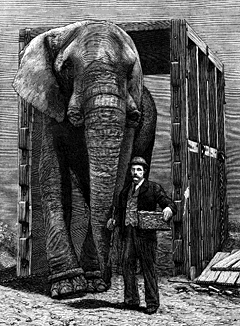
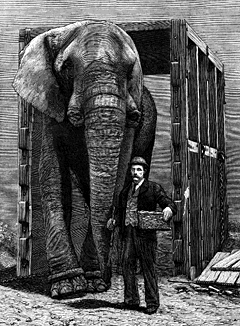
    Barnum’s brain** turned into an itchy scab, and the way he scratched it would be to buy Jumbo (1861-1885), the world’s largest elephant, from the London Zoo.  The Brits were furious over this, too, but since we’re talking elephant and not Shakespeare, the annoyance passed, probably as soon as the fartacious Barnum lifted his foot from British soil.  Poor Jumbo toured the country and wound up being squashed by a locomotive in Ontario, his skin going to the Natural History Museum in D.C. and his heart to Cornell.  Barnum’s body simply went into a box and into the ground.  Mother Goose’s body too wound up in the earth for a comfortable dirt nap.  Shakespeare’s body isn’t in his tomb.

    *Thomas, Isaiah, William Shakespeare, and Oliver Goldsmith. Mother Goose’s Melody, or, Sonnets for the Cradle: In Two Parts : Part I Contains the Most Celebrated Songs and Lullabies of the Good Old Nurses, Calculated to Amuse Children and to Excite Them to Sleep : Part II: Those of That Sweet Songster and Nurse of Wit and Humour, Master William Shakespeare : Embellished with Cuts, and Illustrated with Notes and Maxims, Historical, Philosophical, and Critical. Worcester (Massachusetts): Printed by Isaiah Thomas, and sold at his bookstore, 1786.

    **Barnum’s first name was Phineas, as is the first name of Mr. Gage, a railroad worker who survived a spectacular accident in which a large metal tamper was exploded through his skull and brain, removing a frontal lobe.  Maybe there is a connection, maybe not. (Sorry.)

    An Estimate of the Number of Shakespeare’s Atoms in a Living Human Being 
    “It straightforward to determine the number of Shakespeare’s atoms that enter a person each day through breathing, drinking and eating. The result is almost 20 billion. That means that, even if one’s body were cleansed of the playwright’s atoms, it would only take about 10 days to return to “normal.” If you live to 75 years, some 500 trillion of his atoms enter you during your life. After we’ve lived a while, our direct knowledge of Shakespeare is rather substantial, which proves the statement that education is a lifelong endeavvor. The only reason why you have just 200 billion of his atoms in you is that you are also losing his atoms at virtually the same rate as you are gaining them, as the analysis on equilibrium in Part I above makes clear.”
    ·Posted by :

    ·in:

  • A Woman Doctor Finds Her Name in Spite of it All, 1695

    JF Ptak Science Books LLC   Post 422

    0--ebay-dec 10 midwife234
    “Good wives and good plantations are the products of a good husband.”
    –Benjamin Franklin 1736

    “The best furniture in a house is an obedient wife”  Thomas 1808

    “A little house well filled, a little land well tilled, and a little wife well willed, are great riches ” John Ray 1683  [Most tidy this up by leaving off the last third of this famous little saying.]

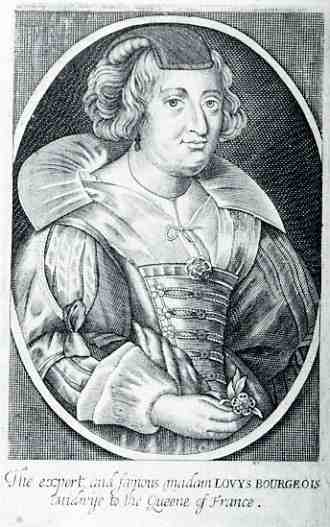
    The four anonymous/initialed authors on the title page of the first edition of The Complete Midwwife’s Practice (1659)…..claimed this book to be the first and best of its kind “since the birth of mankind” (!, chapter 4). That said, much of it was cribbed from the work of Louyse Bourgois (1564-1636), who had published  (though not under her own name) her obstetric secrets earlier in the century.   Bourgois was yet another in a long line of women who contributed to this science but whose identities were largely and obediently left to pervious memory among male authors—except in this case, where, in the fourth edition of this book, Bourgois was included in the longish-titled title page and actually has her engraved portrait included in the book.  And thus some small level of payback it realized.

    Recognizing the female’s importance in the writing of this book or not, the text of The Complete Midwife is still strongly constructiviist in maintaining the woman’s lesser role in most aspects of reproduction, as well as many aspects outside the biological realm.

    For example, we find this state-of-the-art nugget:

    Blog--midwife

     This of course was nothing to raise an eyebrow over in the late 17th century–it was the state of medical knowledge seasoned with strong doses of female subjugation and slavery.

    The authors of this book were revealed by the fourth edition, and one of them comes from the long line of highly questionable obstetricians and medical monsters, the Chamberlain family.
    (I touched on them briefly here.) The family invented the forceps and kept the invention–which although simple was a huge aid in childbirth–secret, a utility controlled by them alone, completely in the dark, for more than 100 years.  Their secretivenesses protected the family fortune and future at a cost of untold numbers of difficult deliveries and, I’m sure, 100,000+ women and children lost in childbirth difficulties who could’ve been saved otherwise had the forceps been publicized and shared.  But this was not their lot, and nt their responsibility, nor their evident moral obligation…

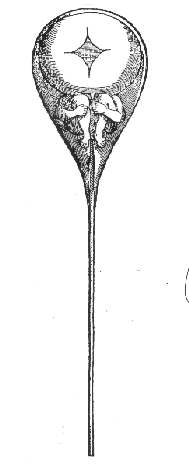
    PreformationBut this jealous protection of their intellectual rights seeped out
    in other ways too, as in this very book, where this Chamerlain
    complained against one of his very own co-authors (the famous Nicholas
    Culpepper), who adopted a more popular approach to medicine, arguing
    for printing medical texts int he vernacular.  Perhaps this failing was
    genetic.

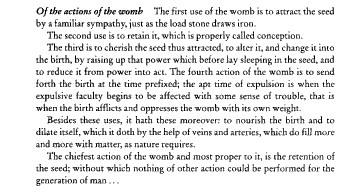
    Perhaps the worst of the panoply of wide ideas biologically inferiorizing (?) women belongs to  Nicolas Hartsoeker  (1626-1683) who discovered “animaclues” in sperm:  whole, completely formed, “little men”, who would be implanted into the furnace of woman to cook and nature them until they could be born.  This basically reduced woman to a piece of furniture–an oven–with all the great necessaries of reproduction performed by the man, a creation called the Homonculus completely generated by them,  with woman needed only as the fertile soil to plant the whole thing in.  

    ·Posted by :

    ·in:

  • The Bombing of Britain, 1942: Visual Display of Quantitative Data

    JF Ptak Science Books  Post 424

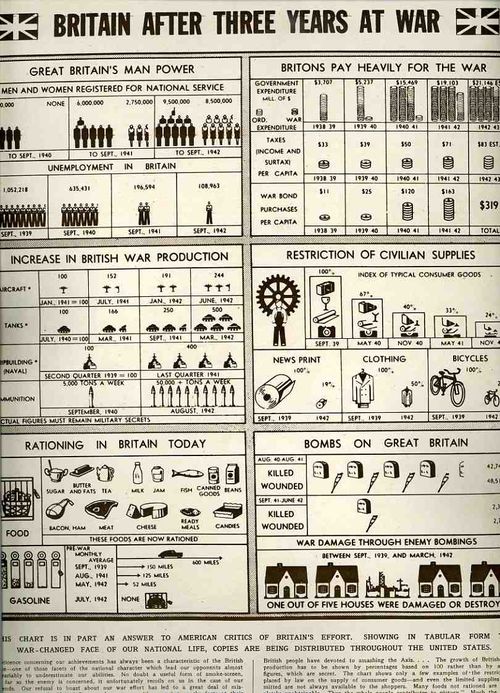
    This chart, appearing in The Illustrated London News for 19 December 1942 is in part a righteous propaganda effort, a response to a criticism evidently boiling in the United States about a “failing” in the British effort to prosecute the war.  Honestly, I was not aware of this sentiment being hosted in the U.S. in the winter of ’42.  The text accompanying this chart explains that the misunderstanding of perception is partly due to British “reticence” concerning their achievements and “an [American] opinion based on ignorance of the true situation”. 
    00-blog-Oct 27Britain 1942 graphic934

    This chart was actually a publication that was distributed “throughout the United States” to alter the public opinion there and to show “in tabular form something of the achievements–and sufferings–of Britain during three years of war.  “Those cold figures barely hint at the three years of fighting sacrifice which the British people have devoted to smashing the Axis.”

    There are some truly extraordinary figures here:  for example, in September 1940 there were 4.2 million men (and no women)  registered for national service; by September 1942 the number of men more than doubled, and there were 8.5 million women now registered. Unemployment sunk to 108k  in Sept ’42 from 1 million in Sept ’39. War damage (which I’m guessing was in the London area) is listed at 20% of all houses (!?); war deaths from the Battle of Britain and the V-1 raids fell from 42k killed and 48k wounded in the year ending Aug ’41 to 2k killed and wounded in the year  ending June ’42 (showing extreme hardship, sacrifice and progress). 

    Overall the rest of the stats speak for themselves, and I was a little surprised that the British government found it necessary to launch a propaganda effort in the U.S. a year after Pearl Harbor.  Eleanor Roosevelt said just before this brochure was issued, Britain has given ten times what we have given, because people there know what it means to be without.  There is much more equality of sacrifice in Britain than in this country”.  The article finishes: “A more forceful propaganda directed from Britain to the United States and a few more Americans speaking their minds as Mrs. Roosevelt spoke hers, would go a long way–perhaps the whole way–towards removing a possible cause of misunderstanding between the two great nations”. 

  • Where to Be and Where to Look Part 1: de Gaulle and FDR

    JF Ptak Science Books LLC  Post 425

    0 ebay clark
    Many years ago I went to the house of a man with books to sell.  The
    house was terrific, with a view of the Potomac and just outside the
    district line–a hard thing to accomplish in housing in Washington. 
    The elderly gent’s house was open, airy and basically wallpapered with
    large format, very big photographs.  Many of the photographs I
    recognized–and of those, many were iconic images.  I said something
    simpy like, “so I see that yo collect historic photographs.”  “No, I
    don’t” he said.  In that moment I thought he was just being a wiseacre
    with me, He quickly said, “I took them”. 

    Ho-ly Crap, I thought.

    I honestly didn’t know what to say–I had seen so many of them in my life, and so often, that like a lot of things, these images were just there, part of the cultural landscape.  And here was the man who took them.  After I got over my shock and came to a sense or two, I interview hi a little.  The man behind the camera’s name was Ed Clark.

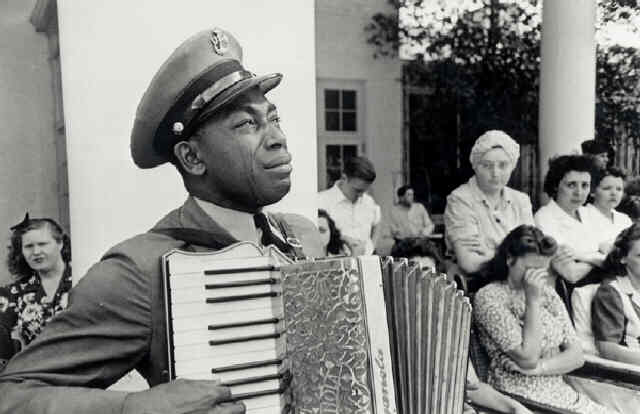
    Ed (1912-2000) was about 80 when I met him, and he was selling some books because he was getting ready to leave DC and head back home to Nashville.  He was very quick with strong recall.  I asked him about his ultra-famous photo of CPO Graham Jackson, preserved forever, who on 23 April 1945 in Warm Springs, Georgia, was playing Dvorak’s Going Home as Franklin Roosevelt’s casket was being taken to the train for a last ride to D.C.  Jackson was at Warm Springs to perform for Roosevelt when the President died on the 23rd.  I wondered about where the rest of the crowd was, and particularly, where the rest of the photographers were, at that moment  After all, FDR was about the most famous man in the world, and perhaps the most important, when he died in the last stretch of WWII.  Surely there must’ve been tons more photojournalist there to record the scene of FDR’s body being removed.  “There were” Ed said.  I asked him where they were.  He explained that they behind him, which would’ve been in front of him, actually–he was at the rear of the crowd, with every other photographer pointing their cameras forwards, recording the movement of FDR’s body.   Ed said that he turned around (“because that picture was already being made”)and found the rest of the crowd, the people who were already there at Warm Springs, watching from a respectful distance.  And it was at that point that CPO Jackson started to play his accordion, the music being one of FDR’s favorite pieces.  “They weren’t looking the wrong way”, Ed Clark said, “just not the right way”.  And Ed made the photo that everyone else missed, because they’re faced the obvious.

    0 ebay 12 where not to belia260

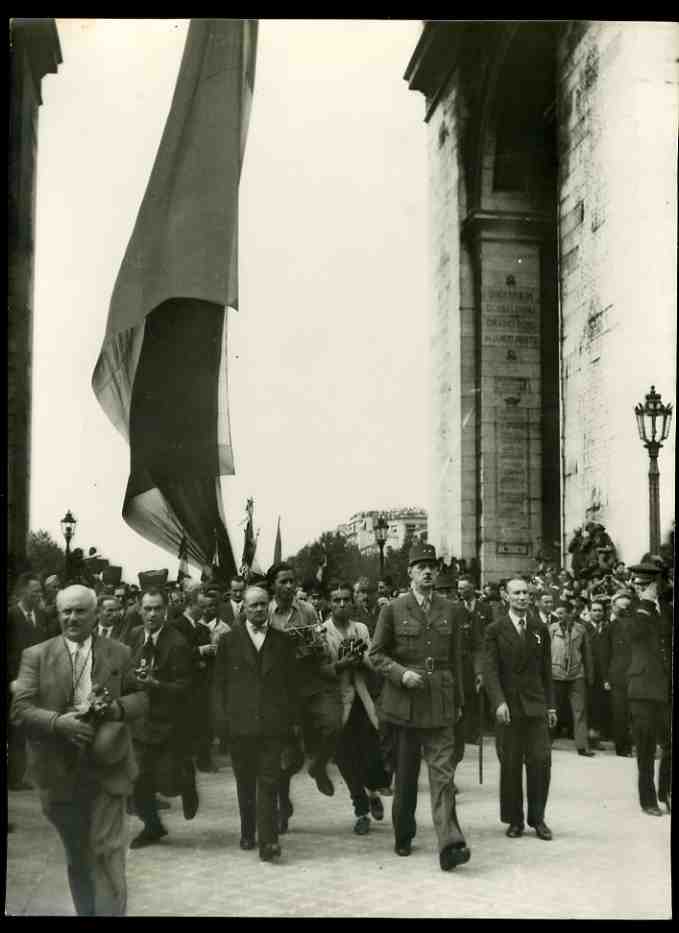
    This second picture captures both the moment and the photographers whop were missing it.  The scene is of course General De Gaulle making his triumphant return to the liberated city of Paris, walking back into the city through the Arc de Triomphe on 25 August 1944.  I am also completely certain that the picture was taken by another LIFE photographer (Ed Clark having worked their for years contributing many photo-stories and covers), Ralph Morse (my original doesn’t have any identification on the back, though it certainly looks like the others Morse made at that moment).  Morse caught De Gaulle in mid stride at the half-way point through the Arc.  And you can see the look of pain in the faces of the other scrambling photographers who must’ve been just coming to the realization that they were in the shot they had been desperately wanting to make since 1940. Their sinking feeling is pretty visceral.

    Perhaps being in the “wrong” place is just someone else’s perception until you prove them wrong.  After all, there must be some right place right time, wrong place right time, right place wrong time, wrong place wrong time hierarchy, no?–that is, until you’re smart enough to realize that there’s no such thing as “wrong”. 

    0 ebay 12 where not to belia261

Recent Posts

Archives

Categories