A Daily History of Holes, Dots, Lines, Science, History, Math, Physics, Art, the Unintentional Absurd, Architecture, Maps, Data Visualization, Blank and Missing Things, and so on. |1.6 million words, 7500 images, 4.9 million hits| Press & appearances in The Times, Le Figaro, Mensa, The Economist, The Guardian, Discovery News, Slate, Le Monde, Sci American Blogs, Le Pont, and many other places… 5000+ total posts since 2008.

  • Titles of The Sublime Mundane, 2: Salt and Wire

    JF Ptak Science Books LLC  Post 543

    Read last year’  March 11, 2008 entry “The X-Ray of the Imagination 2: Phrenology, Chinese Hell Scrolls, and the Beauty of the Thought Balloon”.

    The covers of this book are too far apart. (A book review, in toto, by Ambrose Bierce)

    There are books of which the backs and covers are by far the best parts. Charles Dickens

    0 a bay march 11 001
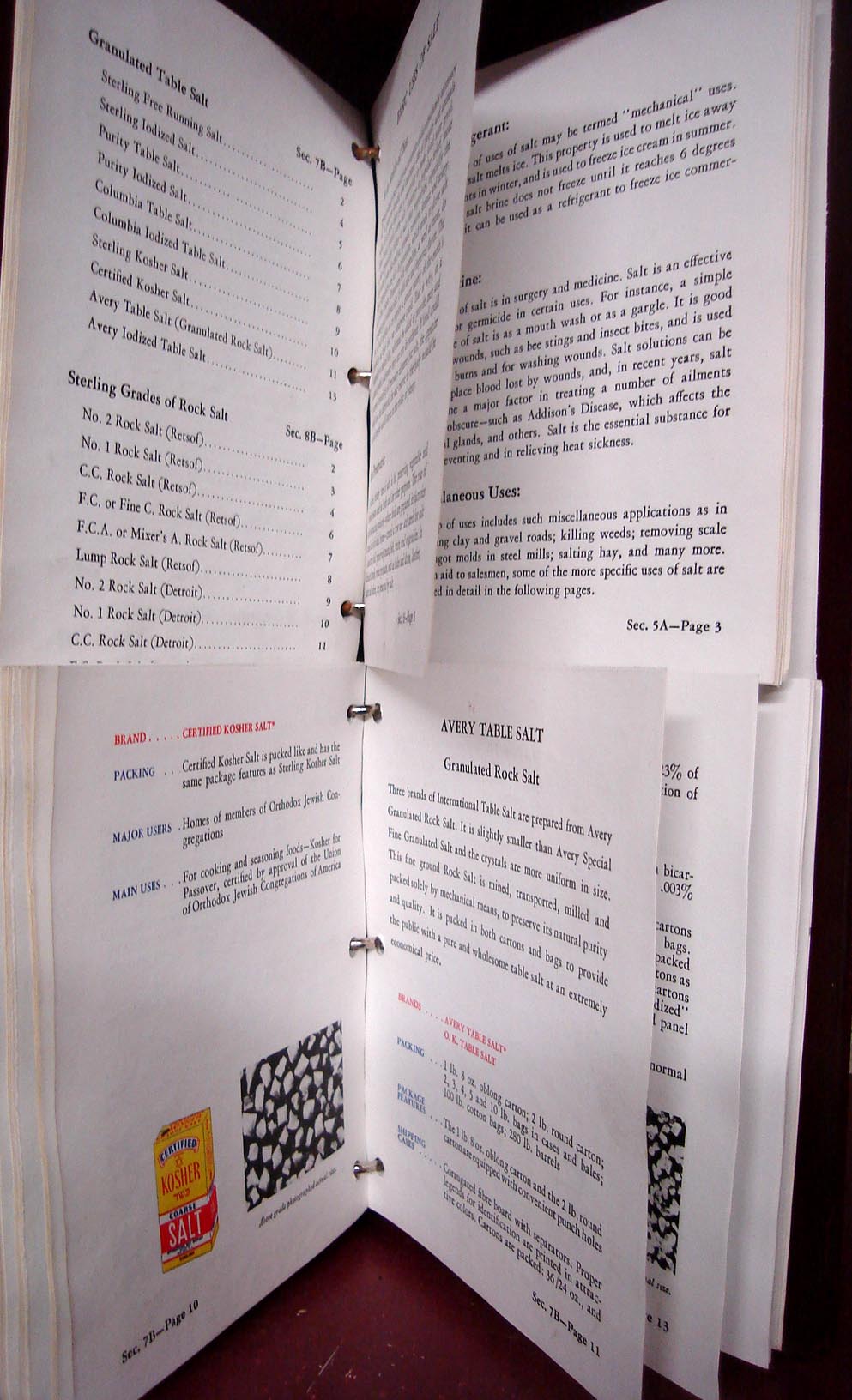
    Following yesterday’s post on the Sublime Mundane are these pamphlets, which are as perfectly and invisibly mundane as can be, if we were judging them solely by their covers.  What turns out to be the case, though, is that they are beautifully composed,  very well written, and extremely informative.  They are  drop-dead serious.
    0 a bay march 11 002

    The first is the International Salt Company’s Salesmans’ Manual for, yes, the selling of salt*.  The 12-inch tall , 6-ring binder instructional has 13 sections and is 75 pages long and strong; not only that, but most of the text is cut in two, so that there are some intricate associations that can be built between the bottom part of sec 2 page 8 and the top half of sec 4 page 2 and so on.  It is just brilliantly done,a work to be proud of!  And of course it looks like absolutely nothing and less than that, or that you’re whacking a quarter-inch brad with a 12-pound hammer.  Which may be the case, because the salesman who was familiar with all of these aspects of salt could put down just about anyone who got in between them and their salt sale.
    0 a bay march 11 003
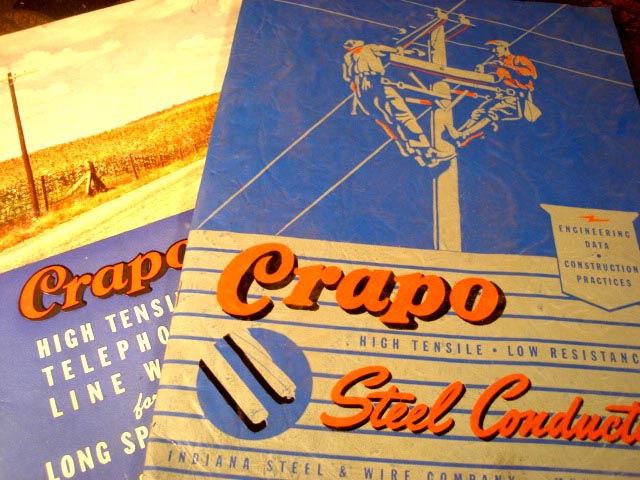
    Next are two 1945 versions of the unfortunately-named CRAPO Company’s product brochures,  makers of steel conduits, and who were evidently part of the Indiana Steel and Wire Company (of Muncie).  It turns out here, too, that these were packed with engineering data and construction practices for electrifying and improving electrical conditions in the great midwest.  The catalogs were also deftly  illustrated with elegant engineering drawings of their products.  So:  on  the outside, seeming nothingness for one book and badly-named for the other; inside, they are state-of-the-art, well written and bountiful.  They just look weird. 

    0 a bay march 11 004

    *I am in no way demeaning the importance of salt here–I just don’t want to deal with the whole overwhelming issue of its important history.  Suffice to say that stuff hasn’t been much more important than salt over the last few thousand years.

    ·Posted by :

    ·in:

    —
  • Naively Surreal Bad Ideas: Marriage, Women, Satan and Fleshy Ribs

    JF Ptak Science Books LLC  Post 544

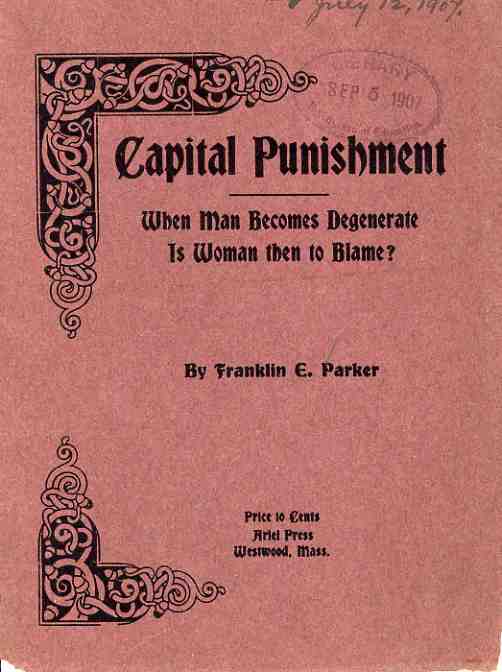
    Well.  In this tortuously ripped 1907 poetic headbanger on blame and retribution and innocence–and somehow ultimately about capital punishment–are neural squeezings that I have never se   blog 12 marriage696en or heard before, which are so loftily bad, and so logically weak, as to make a grown man puddle-up in amazement.  I don’t want to get too far into this thing, as the entire entertainment part of the work can stop right at the sub-title, because this little pamphlet is just tremendously bad, it transcends being about bad; it climbs out of badness into the so-bad-it-is-good department, and then slips instantly into the bad-good-bad-bad genre.  

    Listen:
    Since woman has been made of a rib of man, and is the “pupil of man’s schooling”,

    How then can woman obviate

    the crimson flesh of shame;
    when man becomes degenerate,
    is woman then to blame
    ?

    For woman being part of man,
    and should she cause an aching,
    how can her sins be other than
    the image of his making

    It goes on from there, of course, but we really don’t need to follow.  The answer, by the way, is “yes”.

       blog 12 marriage695 When I first saw Rev. Posey  Sr’s.1947  pamphlet I thought that it read “How to be Happy Through Marriage”.  Oops.  My mistake, though the title as it stands is infinitely more entertaining, what with the story being told in ten thrilling chapters (seeded over 28 sparse pages).  In the final installment of these prescriptions for happiness in spite of it all, we are reminded that “Satan is God’s arch enemy”, and that “IF YOU WOULD BE HAPPY KEEP SATAN OFF YOUR SHIP” and “do all to the glory of god” and MARRY IN SEASON”.  DO NOT marry a man for a “meal ticket”, or “to keep him from marrying someone else”, and DO NOT marry too soon or too late. And so on.  [Caps in original.]

    There’s much more sage advice sprinkled liberally around biblical verses, but I think you’ve already gotten enough of the  flavor to appreciate the rest of the meal (food itself sometimes getting in the way of its promise).

    ·Posted by :

    ·in:

    — —
  • Bizarre & Naive Surreal Maps and Views: the North Pole

    JF Ptak Science Books LLC   Post 545

     blog 12 maps north pole692[Read last year’s post, 12 March 2008: Dr. Seuss and the 236 Words...]

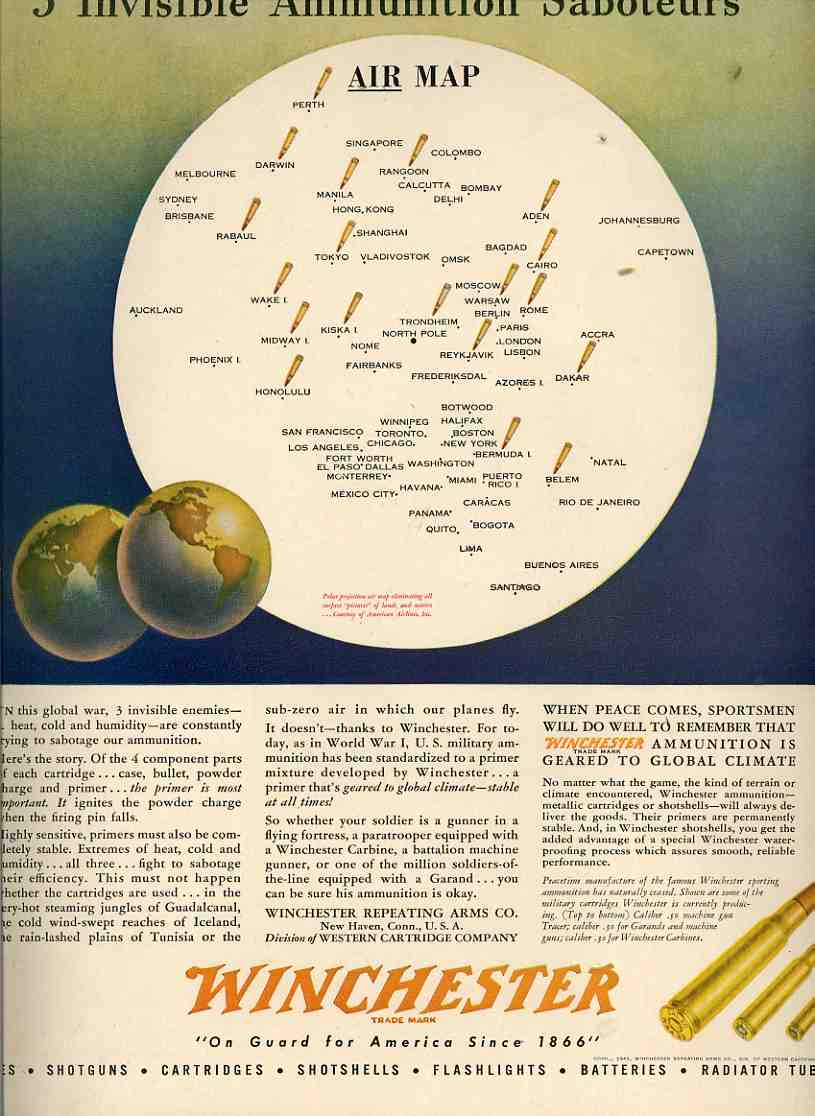
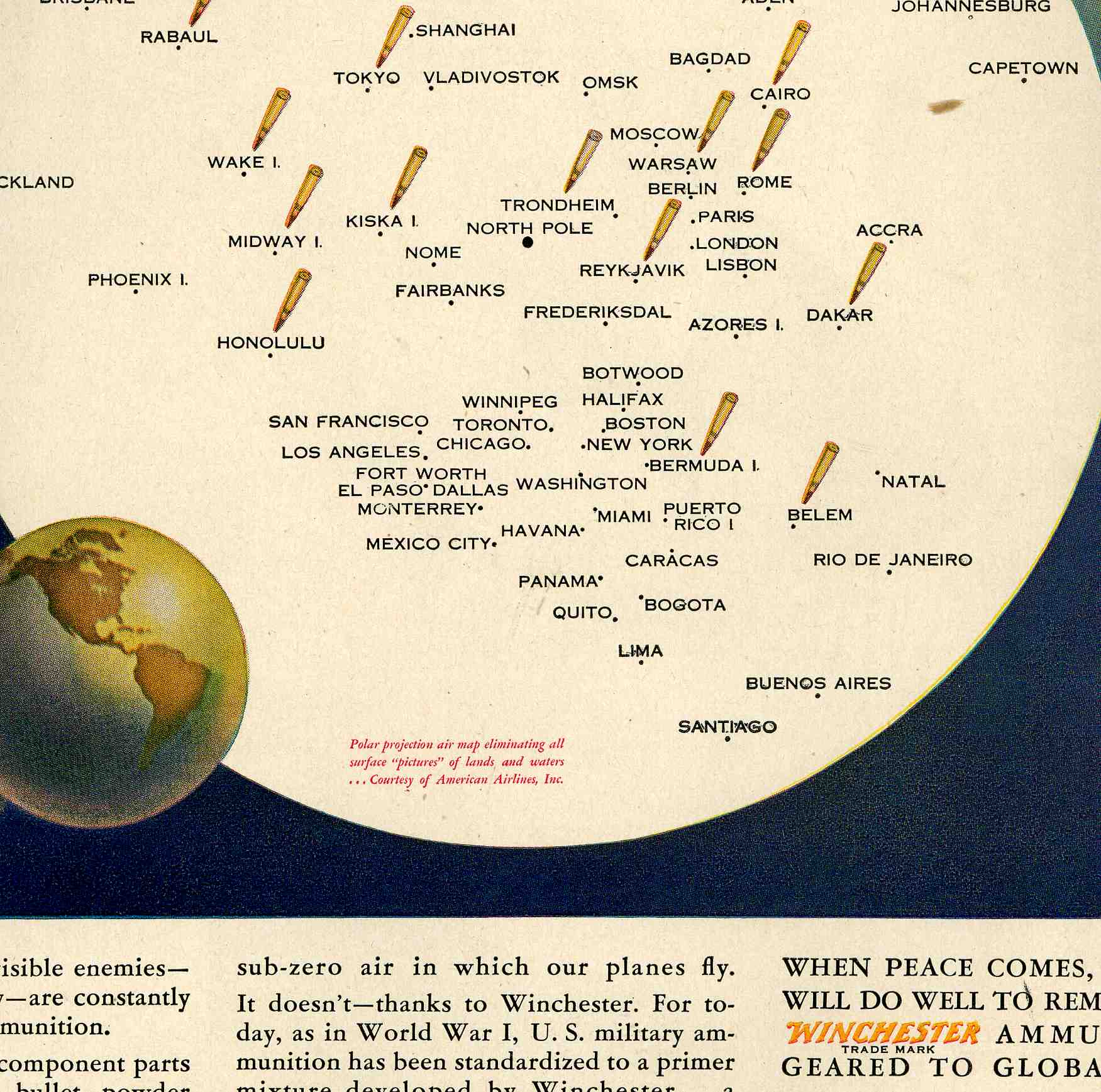
    These two maps were printed within a few weeks of one another in LIFE magazine in October/November 1943, which is unusual to my experience, as I haven’t seen too much in the way of unusual 20th century North Pole maps (especially as advertisements).  The first is a placement for Winchester  Arms, concentrating on the dependability of its ammunition, and assuring the readers of the magazine that if “your soldier” was carrying a Winchester carbine, or a Garand, or whatever Winchester product it was, “that you can be sure his ammunition is okay”.   The map is pretty odd and completed in a projection unknown to me:  it centers itself at the North Pole and includes cities in both the northern and southern hemispheres, which is an unusual thing to do on a single-hemispheric projection.
     blog 12 maps north pole693

    I know that Winchester was just trying to graphically present the notion that the ammo was suited to “global climates”, and did so using an impossible image; but, since it was wartime…

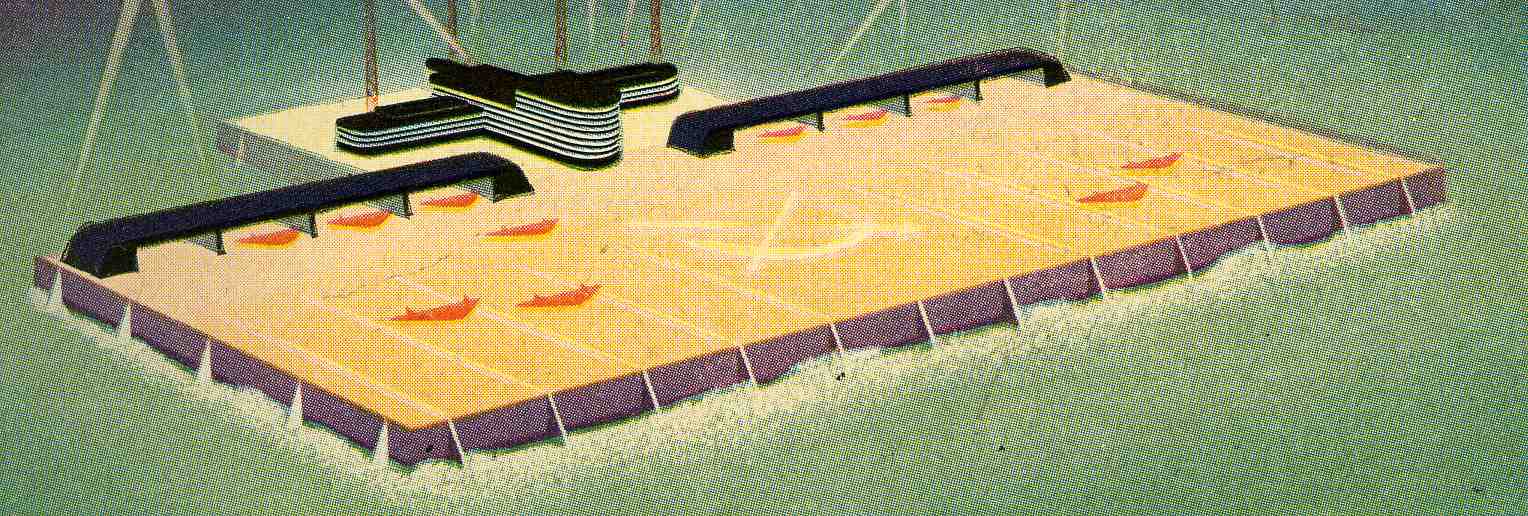
    The second image could also slide into the History of the Future category, Seagram’s Whisky somehow aligning itself with trans-polar future flight.  The airport in the ad’s image was at the North Pole, and was the layover/refueling point for the Chicago-Moscow run at some point in tomorrow.  Those little horizontal yellow rectangles are actually windows, and in my original you can see dozens of heads in there, making this one big stinking plane.  By my calculations, the plane was something like 1500′ wide, giving it a surface area of something like two square acres. In comparison, the Boeing 777 has a wingspan of about 200′ and a 4,600 square-foot wing surface, which means that five 777’s could be placed wing-tip-to-wing-tip along the visible part of this Seagram’s monster.  (And I’m being generous.) 
     blog 12 maps north pole690

    Then there’s the problem of the runway, which looks about 15,000 feet long–way more than enough for a 777, but nowhere near enough for this beast, unless of course there was some hidden sumpin’ sumpin’ that I don’t know about.  Lastly, there are eleven aircraft on the ground at this North Pole airport, which more than filled it up.  The terminal looks possibly more (relatively speaking) mammoth than the planes, and could undoubtedly provide rooms if not houses for everyone traveling  around in these Big Berthas.  Judging the building against the aircraft, it looks like it is 800 feet tall by 4500 feet by 6500 feet.  I’m not sure how many Malls of America you could fold into this thing, but it would be a lot. 

    Now I’m not saying that something like this structure wouldn’t ever be built, because “ever” and “never” are big words; as a matter of fact, I would say that it was probable that something like this would come into existence so long as we here on Earth lasted long enough. 

     blog 12 maps north pole691

  • Baroque X-Ray of the Soul: Jacob Boehme’s “Psychologia”, 1632

    JF Ptak Science Books LLC  Post 546

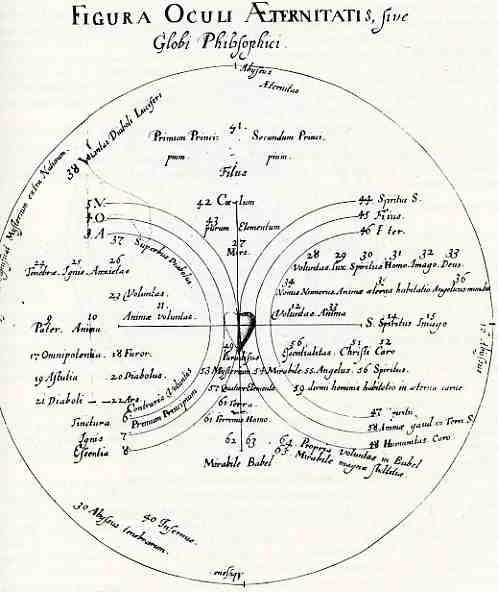
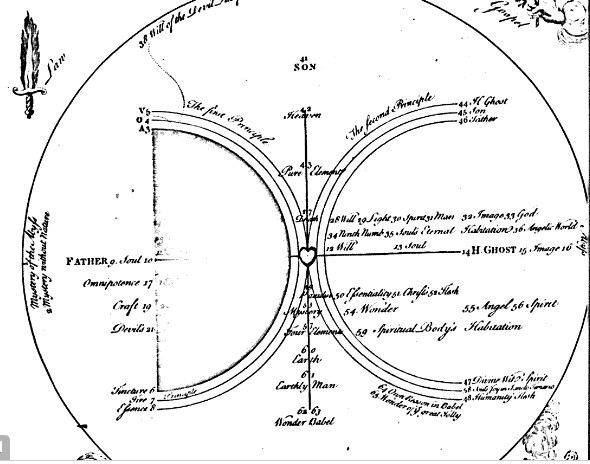
    0 abay feb 23 boehme622This solar-systemesque plan of the human soul appeared in Johannes Werdenhagen’s translation of  the expansive Jakob Boehme’s Psychologia [graece] vera I[oanni] B[oemi] T[eutonici] XL quaestionibus explicata, printed in Amsterdam in 1632.  Boehme’s (1575-1624)  original work waited for 8 years following his death to appear in print in any form, fearing during his lifetime that perhaps some retribution for his barrier bending work might find him–and it turns out to have been true, as this book (and the only one of Boehme’s subsequently published works) made its way onto the Roman Index in 1633.  Boehme was a mystical panthesist and psychic who blended the Kabbbalah,  Valentin Weigel, Paracelsus and the Bible in doses wide and narrow, finding his own advanced-Lutheran voice in works concerned with sin, evil and redemption, populated with angels and grace and on and on, in a world view far-reaching and way to complex to go into here. 

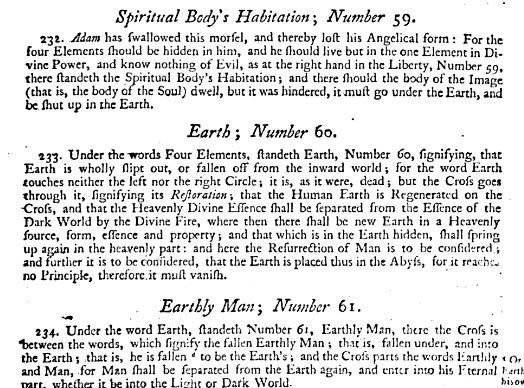
    Part of that philosophy is displayed in this map of the soul, found in Psychologia–it would’ve been fairly impenetrable to me had I not found an English translation (below) of the image, published in Forty Questions Concerning the Soule in 1655. 

    I thought that I was going to try to make a summary of the map, but, honestly, it is too just involved and intertwined and complex to do this quickly, so I’ll just let whoever cares to have a go at it under their own steam.  I will point out that the major geographical feature here is the cross at center, which is actually Christ’s crucifix and the great delineator of the system of the soul. But this is a gross simplification of the work of an unschooled man who rose to be a cobbler before compiling his remarkable set of ideas.  I’ve included a few explanations of the 63 items incorporated in the map–it is a difficult go, particularly since this was part of only the first of the forty questions addressed in the book. 

    Zzz--boehme

    Zzz--boehme xray
     

    *Another example of Boehme’s style of writing:
    “For he that will say, I have a Will, and would willingly do Good,
    but the earthly Flesh which I carry about me, keepeth me back, so that
    I cannot; yet I shall be saved by Grace, for the Merits of Christ. I
    comfort myself with his Merit and Sufferings; who will receive me of
    mere Grace, without any Merits of my own, and forgive me my Sins
    .
    Such a one, I say, is like a Man that knoweth what Food is good for his
    Health, yet will not eat of it, but eateth Poison instead thereof, from
    whence Sickness and Death, will certainly follow

  • A History of Missing Dots: Donne’s (Missing) Discovery of Platelets, 1842

    JF Ptak Science Books LLC  Post 547Blog 13 donne detail

     blog 13 donne703 

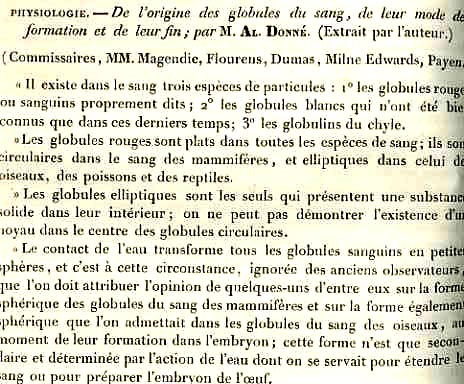
    Alfred Donne (1801-1878), physician, experimenter, microscopist and photographer, is best known for things other than what he should probably be best known for:  his discovery of the third element of the blood, platelets.  Donne had a wonderful vision, and was among the very first on the scene to write about and employ the spectacular invention of the daguerreotype in chemistry and microscopy.  As a matter of fact Donne, along with his collaborator Leon Foucault,  produced the very first engraved images of photomicrographs for his cytology paper of 1840. (He was also the first to use electricity in producing a medical illustration, and was among the first modern physicians to write on the great efficacy of mothers using their own milk in breast feeding their children.)  The discovery of platelets paper of 1842*–preceding two other works published in the same year–does indeed identify the new object, but actually fails to make a methodological examination of the new body, calling the new units “globulins du chyle” (or small globules
    derived from plasma).  He also fails to make a drawing of what he saw; so, the combination of these two important elements asked the reader to accept his findings on faith, the tools of reproduction of his observations not being present.  And so we remember Donne for some other significant things, na dless so for his lightly-interpreted and un-illustrated “dots”.

    *Donne, Alfred. De l’origine des globules du sang, de leur mode de formation et de leur fin. Comptes rendus de l’Académie des Sciences, Paris, 1842, 14: 366-168. 

    (Overall the history of the
    discovery of platelets is convoluted: 
    Leewenhoek (1675) and Henson (1782)  were the first to fully describe the “undefined”
    particles of the blood; Donne’s work was then more fully described by Beale in
    1850, and then again (identified as “small corpuscles” by Zimmerman in 1860 and
    then again by Schultze in 1874 and Laptschinski (also in 1874). William Osler
    then enters the scene in 1880, followed by Giulio Bizzozzero who was the
    first, in the years 1881 -1882, to establish central role of platelets
    not only in physiological haemostasis, but also in thrombosis.  Anyway it is a longish and not-clear
    history.)

    .

  • The History of Missing and Blank Things #35: The Disappeared Solids of Johannes Kepler

    JF Ptak Science Books LLC    Post 548

    (Continuing the thread on a History of Blank and Empty Things…)

    Spheres_Euclids5solidsKepler
    The great Joahnnes Kepler, conceived at 4:27 on the morning
    of his parents’ holy joining, was raised a disagreeable boy by disagreeable parents,
    and that in spite of being supremely gifted, mutually dependent on his
    hypochondria, intellect, and astrology. 
    He was perhaps one of the dozen most influential scientists of the last
    500 years, and had an over-assuming and awful disposition.  

    The man who brought about the final loosening of religion’s grasp
    on astronomy and the development of cosmology had a difficult time in his childhood,
    sounding lonely and exiled.  His father was
    irritable and irritating, but his mother, described by some as garrulous and quarrelsome
    and of a “vile disposition”, seems to have been in a class by herself, and left
    an indelible mark in her son.  The full
    truth of Kepler’s mother was that if you described her as being like  a ”witch”, you may have been correct:  the old woman, at 74, after years of being
    suspected of being a witch, was arrested, finally, and hauled away under this
    suspicion.  In a posthumously-published
    work called Somnulum, Kepler himself writes of his mother as being in contact
    with devils from the Moon (among many other things).  His childhood left a long shadow on his
    social life.

    It is remarkable to note his nearly alphabetical diatribe on
    his schoolday associates; I’m not o sure how you leave behind ideas and feeling
    like this later in life, and I suppose that you don’t.   It has nothing to do with his development as
    a scientific icon, but I

    He rattles off his chums as follows:

    “Holp openly detested me and on two occasions we got into
    fist fights….

    Molitor dislike me because I betrayed him…

    Kollin didn’t hate me, but I hated him…

    Braunbaum turned from friend to foe because of my
    boisterousness…

    Huldenbach became hostile because of my rash accusations…

    Seifer disliked because everyone disliked him…

    Kleber detested me because he thought I was a rival…

    Redstock was ticked off whenever someone praised my
    abilities…

    Husel tried to block my progress…

    Between Dauber and myself there was quite a jealousy…

    Lorhard would have nothing to do with me….

    After Jaeger had lied to me I was insulted for two years…

    The rector became my enemy because I did not accord him
    sufficient honor…

    Murr became my enemy because I reprimanded him…”

    And on and on.  Kind
    of incredible if you ask me, but from this did greatness come. 

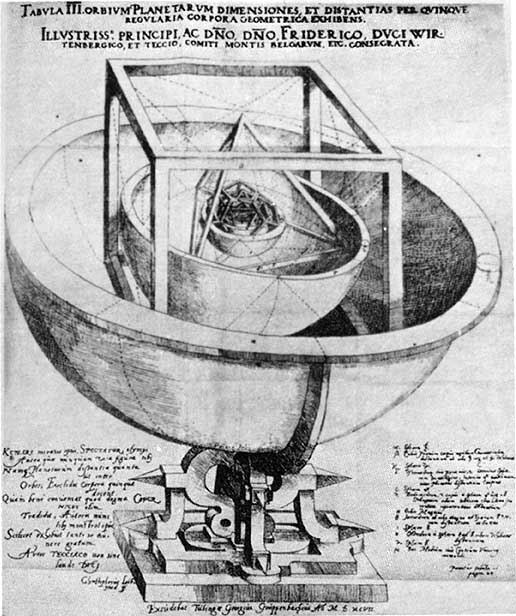
    On the way to restructuring the universe with his Harmonicae mundi and Epitome astronomiae, Kepler made a first
    abbreviated stop in his Mysterium Cosmographicum—it was an interesting work, but
    as substantial as it was it had as many flaws. 
    Galileo received a copy, and wrote politely back, but was very guarded
    in his opinion of the work.  Part of the
    problem was Kepler’s sustained interest in his astrological callings; another
    part came with his great reverence.  He
    thought that god was perfect, and that the universe he created as perfect, and
    so it all could be explained perfectly with a perfect method, which in this
    case was geometrical.  Explaining the proportions
    between the sun and its planets, Kepler devised a system in which spheres and
    squares and other objects were described within one another, separating the planets
    via distances determined by their points of contact.  It wasn’t a winning system, but it did abide
    the Copernican system, even as his forms disappeared into nothingness..  Kepler went on to
    bigger and greater things.

     Einstein, who much admired Kepler, said of the man: “[He]
    was one of the few who are simply incapable of doing anything but stand up
    openly for their convictions in every field.” 


  • History of the Future: Electric Balloons, Tethered Eagles and an 18th century Space Station

    JF  Ptak Science Books LLC  Post 549

    The prehistory of heavier than air flight is loaded with some fantastic ideas, some just generally fantastical and some prescient, or recognizably prescient from some advanced point in the idea’s future.  There was an immediate and relatively massive published reaction to the Montgolfier brothers’ first balloon ascension in June 1783, much of which was useful and applicable, some of which was interesting if not practicable, and a little of which was just deeply problematic, not very considered, and all-around wrong–overall, it was interesting thinking, thinking about this brand-new issue, people trying to get their heads around new concepts and answering them with new- and not-so-new-thinking. 

     blog 16 electric balloon704
     blog 16 eagles705

    One lovely pre-Montgolfier  example of fantastical thinking was Louis Guillaume de la Folie’s  (1733-1780) La Philosophe sans Pretension, ou l’homme rare…, published in Paris in 1775.  La Folie’s fictionall adventure is an example of early science-y sci-fi, coming as it did in the midst of the fabulous electric age of the mid-18th century.  He tells the story of a Mercurian, Ormisias, who by his own trivial care winds up flying a chariot fitted with electric balloons from Mercury to Earth.  This was more believable than previous works on space flight, which saw the vehicles powered by whirlwinds, fireworks, horses, beasts, catapults and (hello Johannes Kepler!) demons. 

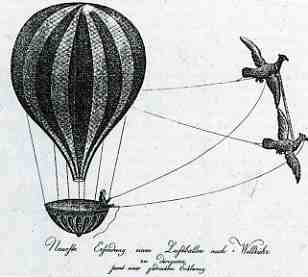
    An example of the very charming and not effectual peep-into-the-future approach to modifying the Montgolfier effort  was by Jakob Kaiserer, who in 1801 published his Ueber Meine Erfindung, einen Luftballoon durch Adler zu regieren. Kaiserer, a bookseller, confronted the issue of steering, featuring s aero-craft by using a pair of tethered eagles.  His was a picturesque

    Montgolfier

    answer to the steering and propulsion issue, meant in a way to be taken seriously, and was not really too far from the ordinary offering.  (Kaiserer really was thinking, because he also had a spare pair of eagles in the gondola, waiting to replace those in flight when exhausted.)  Leashed birds wind up in a number of designs over the years to come, not to mention bird-inspired flying machines designed to function as a bird, the most famous example of which was piloted by Otto Lilienthal to his death.)

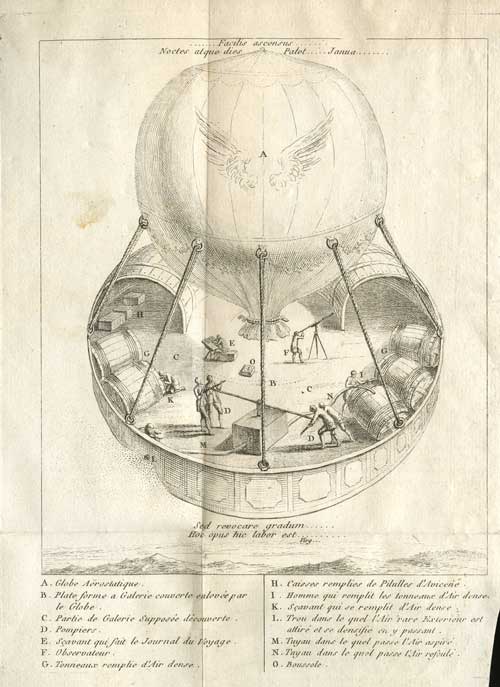
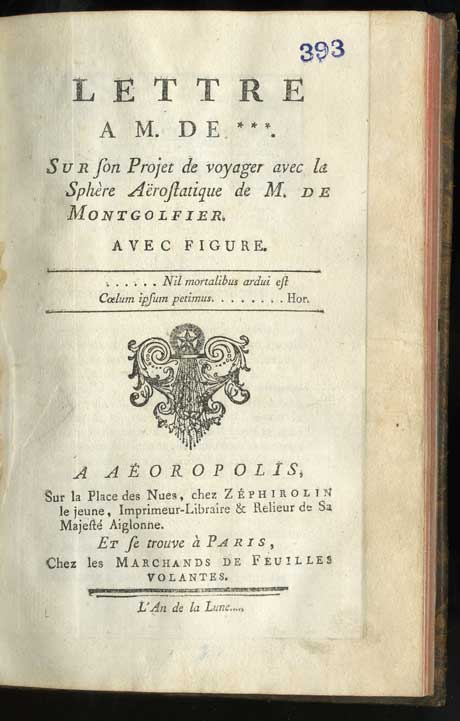
    A more prescient image  was the wonderful flying observation platform shown in Sur son projet de voyager avec la sphere aerostatique de M. de Montgolfier, published in Paris (“Aeropolis, chez Zephirolin”) in 1783.  (The images I’m using at left and below are  from the Lilly Library.) It is perhaps the first such suggestion in print of such a device–the balloon is powered by “dense air” which is evidently being pumped by the four men at the air pump in the foreground, and is host to a myriad of scientific activities, not the least of which is the astronomer and his large telescope.  It really is a remarkable effort, looking into the future of possibilities for the spanking-new invention of flight.  A space station it is not, but it was certainly within the realm of the possible, and for its time must’ve seemed like an impossible bit of fancy brought very close to reality.Aeropolis

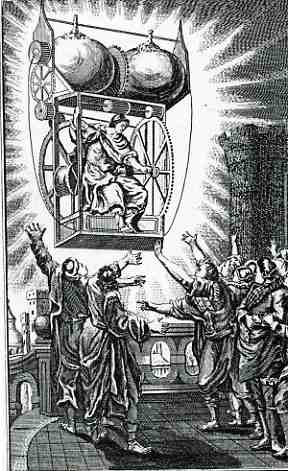
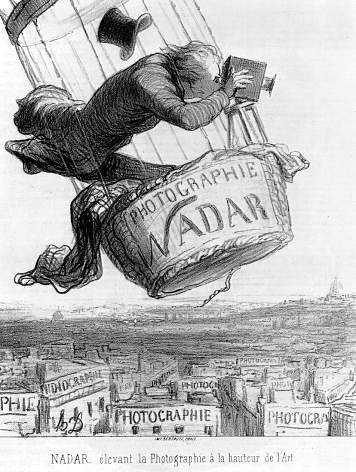
    (This image reminds me of Honore Daumier’s 1862 caricature of Nadar “elevating photography to the condition of art”.) Nadar’s issue here is not only using photography from an elevated platform, but is also using the camera as a tool, and not an artistic element.)

    Nadar

  • Legislating a Change in Pi Day (3.14): When 3.2 was “Almost” Pi, Indiana, 1897

    JF Ptak Science Books  Post 550

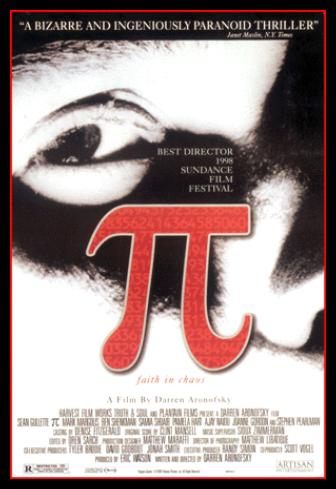
    Pi movie poster


    The issue of establishing scientific validity and fact through political and religious machinations, rumination, fascinations and condemnations has a grindingly used, odd history, and little of it comes to much of a good end.  Usually it is just a bad idea, or a wronger-than-bad stinkingly non-idea; that, or something with a sickening wiff of eau de maison funeral perfumery.  I’m not so sure about whether anyone has legislated that a point in space exists, or that non-Euclidean stuff is twisted, or that the world (as in “Earth”) began precisely at 11:11 am (?!) on the first day of the first week of the first month of the first year 4004 BCE.  Biological matters have been taken more seriously in the legislature and courts, at least in my country, than stuff in physics and math—the meaning of death has more or less been legislated, while the whole issue of sustainable “human” life has been battered around for decades (with the last administration’s elephantine approach to things like stem cell research now just being lifted following eight years of abuse).  Many examples begin to emerge when looking deeper into the history of science, especially with the influence of the churches, hammering evidently tender belief systems on top of scientific endeavors.

    The issue with mathematics and the law seems mostly limited to weights and measures and time, which is logical; I’m not so sure about the more ethereal stuff, except for the very famous example of the Indiana pi debacle of 1897.  It was in this that the solemn state legislature was nearly hoodwinked by an amateur semi-mathematician, crank and number cruncher named Edwin Goodwin, who persuaded the people who need to persuaded and had a bill* introduced in the Indiana General Assembly—it basically established that the value of pi be set at 3.2   t his makes not too much sense until you realize that the only good that could come of this tripe is to use it in one of a never ending series of attempts at squaring the circle. 

    The bill of course almost made it all the way through—it started life in the place where it should’ve ended, in the Committee on Swamp Lands, and then blazed its way through Education and eventually passed unanimously by the Indiana house.  Had it not been for the serendipitous acuity of Purdue professor C.A. Waldo—who alerted the state senators about its humbug nature, where the bill was finally shuttled into its everlasting postponement….in the Committee on Temperance. 


    *A Bill for an act introducing a new mathematical truth and offered as a contribution to education to be used only by the State of Indiana free of cost by paying any royalties whatever on the same, provided it is accepted and adopted by the official action of the Legislature of 1897.

    ·Posted by :

    ·in:

    —
  • Bizarre & Naive Surreal Book Titles: Sex, God, Food, and Clean (and Colorful) Blood

    JF Ptak Science Books LLC  Post 552

     blog 12 titles bizarre diet688
    Continuing a minor thread on bizarre and spectacularly mundane book titles comes today’s entries on the various uses of “sex” in finding high-ideal  religion and a proper waistline. Harry Haas had a very simple answer to sex (a concept that I was frankly surprised to see described in three words):”low cultural sex instincts” lead to “low cultural levels”, the reverse evidently never entering the writer’s mind.  Sex “was not a moral issue”, but an instinct “which like other instincts must be satisfied in one way or another”. It is also “Nature’s unscientific way of propagating the human races–the pre-logical and instinctive, the animal way”.  He asks the reader “why do some of us read these risque publications if they are so degrading? Tobacco Road and various other pornographic diversions, I mean “[sic]. Mr. Haas doesn’t know, but he does believe that the sex problem was vast, “a modifying agent in our personality growth” which “is responsible for an enormous amount of neurosis (and) seen to be at the bottom of the world’s greatest achievements”.  This leads of course to babies “blind, crippled and diseased and mentally hopeless–all of which find their common origin in sex troubles, feelings processes or chemical changes.  Probably nine-tenths of our anxieties, if not the major cause of world unrest, can be traced back to sex”. Mr. Haas then gets to his major and remarkably scarce question:  “could it be that the writers and interpolators o blog 12 titles bizarre diet689f the Bible were themselves unconsciously afflicted with sex troubles?”  He then takes this issue far and wide, and frankly by this point everything got so muddied and biblical that I just lost interest.  But the title is still good enough to stand firm and true, even if the the author didn’t get to an answer, except to suggest that you purchase his pamphlet on the  psychoanalysis of  the bible–it was available for one dollar, postpaid, and had something to do with Albert Einstein.  He published this booklet on his own  in Orangeburg, S.C., in 1941, while the world was hell bent on some religico-sex-fueled instinct war.

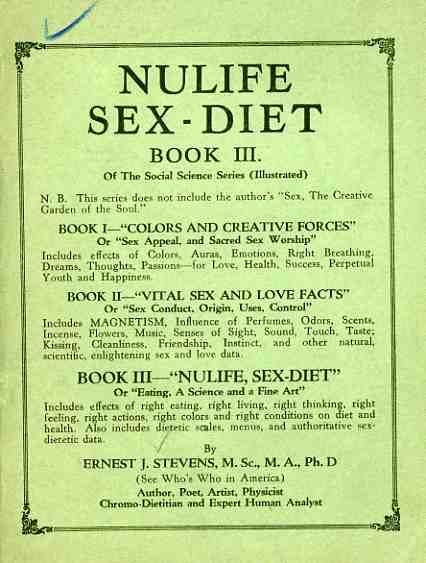
    Ernst J. Stevens (“Chromo-dietician and Expert Human Analyst”) let loose his spongy  Nulife Sex-Diet Book III of the Social Science Series (Illustrated) in 1934–it is one of that class of books that doesn’t look right, doesn’t feel right, and smells a little like it spent too long lost under the cushion of a chair in a bad place.  His book is a hopeless melange of shrinko-babble, blood coloring and therapeutic color use wrapped around dietary “laws” of dubious value.  Having dispensed with 10 chapters in 15 pages, Dr. Stevens takes on “Color, Music, Taste and Skin Odors” after having established a priority in “colors in our flesh, colors in our thoughts and colors in our foods” and their connects to color balance and blood cleansing skin beautifiers.  That sounds like a lot to deal with in 15 five-inch-tall pages, but that’s the least of it–the true metier of the book was also woven through everywhere, the messages of vim and vigor and health sense and mixing of the sexes colliding at every level with everything else.  It is a powerhouse display of some sort of need that I cannot identify.  The title, of course, is super. 


    ·Posted by :

    ·in:

    —
  • What Pictures Tell Us: Medieval Treatment of Women in a Renaissance World

    JF Ptak Science Books LLC  Post 553

     blog 19 obst chair711
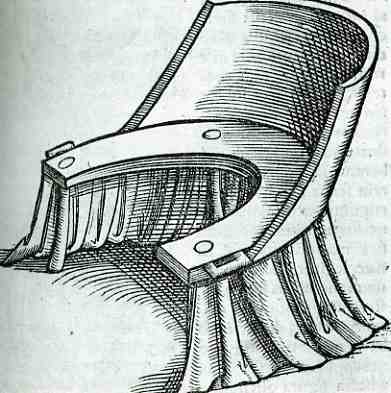
    There are all sorts of famous seats:  seats of wisdom, of power, of lameness, of government, of discontent, of honor, of learning, of war; there’s the hot seat, the best and worst seats, a seat on the board, a seat on the bench, a seat at the bar; there are captain’s chairs, endowed chairs, and famous chairs (like architectural gems/mules of Mackintosh, Wright, Saarinen, van der Rohe, Eames, Gehry, LeCorbu) and famous seats (at the original Yankee stadium or a Roman coliseum).  The seat pictured at left, though, is anonymous and lonely, but it is full of a story. 

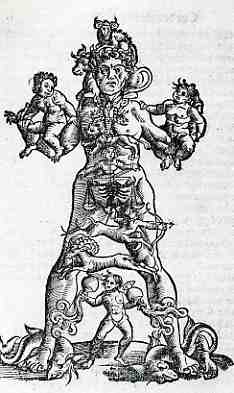
    Sometimes one discrete, odd image can tell you a lot of history or the story of its time:  It might seem simple and benign, but once you stop to think about it just  little, an entirely different story can emerge.  Take for example this woodcut from Jacob Rueff’s De conceptu et generatione hominis, et iis quae circa haeac potyissimum consuderantur (in six books), published in Zurich by Christoph Froschauer in 1554.  It looks like it might be a seat straight out of an old WC, but it is actually a birthing  blog 19 obst astrolog712chair.  And it doesn’t look particularly inviting (or not threatening) for the tasks to come; and such was the state-
    of-the-art of birthing children in 1554.  Well, earlier than that, really, because Rueff’s work was an improved version of a still earlier work by Rosslin (Der swangern frauen). I look at this chair/seat, and I think,  “oh dear god”, even with an historian’s sensibilities, knowing full well that it hadn’t been changed much for hundreds of years prior to this publication.  There’s quite a bit in this book’s 66 illustration to excite the historian of medicine, some of which are rather beautiful and demanding, like this astrological representation of anatomy (at right).  But it is still the chair in all of these pictures that is the most powerful to me. When all of the medical advancements and distractions were boiled away, and the discussion of the two types of foreceps was eliminated, it all came down to a woman in an uncomfortable, stiff-backed straight-up chair.   A chair with no cushion or throw or anything of any sort for the comfort of the woman, though there was an extensive dust ruffle flanking it.  And as great as the advancements were in medicine in the first part of the  16th century, dealing with women in labor was still a Medieval practice.

    I should also point out that the Rueff book, as old as it was, was reprinted, translated, into English with many of its ideas riding out time intact, published in London eight decades later.  The chair was still there. 

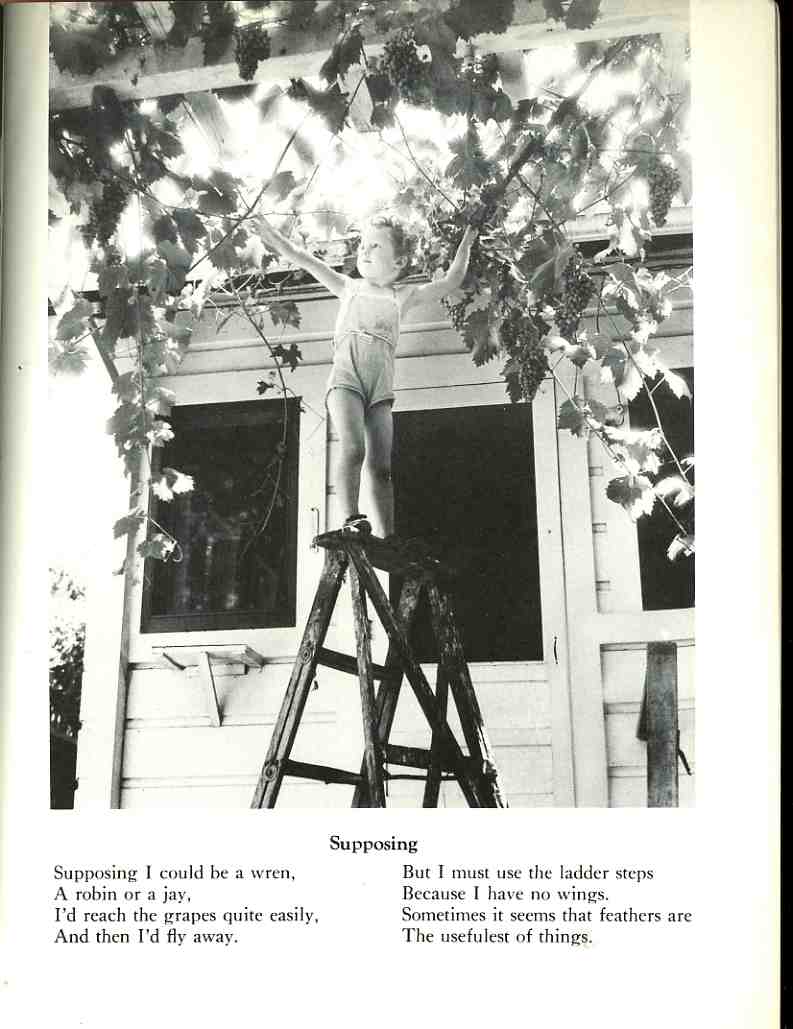
  • Bad Ideas Department: Children, Tall Ladders and Bees

    JF Ptak Science Books LLC  Post 554

     blog 19 children714
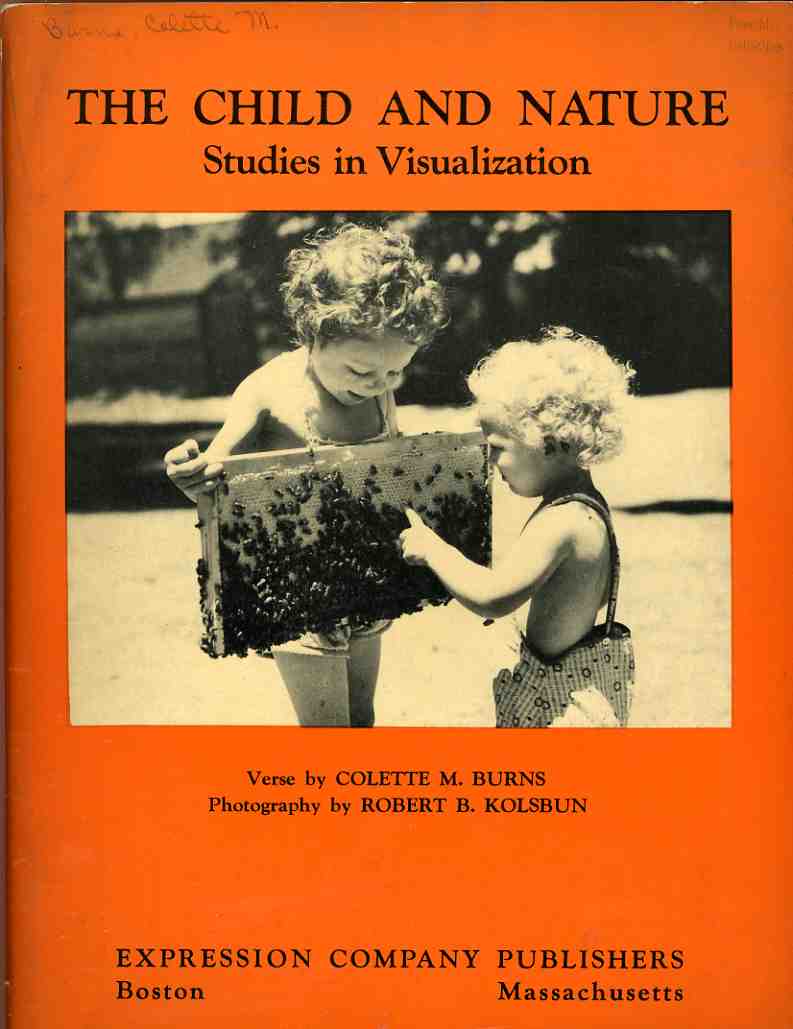
    From the Bad Ideas Department, and from the deeper/further “what the hell!?: sub-department, comes this bizarre offering.  I don’t know what the photographer or writer or publisher or whomever was thinking–or, for that matter, what the graphics department was doing, when they put this photo on the cover of this skimpy children’s rag, inducing an automatic cringe respond from any thinking person. The Child in Nature, Studies in Visualization is a mystery–what were these people thinking, or trying to think, or visualize? (And let me just point out that this was a “happy” book, not an Aesopian tale of possible woe and lessons-to-be-learned-the-hard-way book.) There is a picture on the inside of the result of this activity, but the swollen-up eye of the finger-poking child was just too much to bear, and so I just couldn’t possibly publish it.  Released by the Expression Company (?) of Boston in 1939, I would hope that those responsible have gone on to receive their appropriate rewards. 

    Its just shockingly, stupidly,  stupid.

     blog 19 children715

    ·Posted by :

    ·in:

Recent Posts

Archives

Categories