A Daily History of Holes, Dots, Lines, Science, History, Math, Physics, Art, the Unintentional Absurd, Architecture, Maps, Data Visualization, Blank and Missing Things, and so on. |1.6 million words, 7500 images, 4.9 million hits| Press & appearances in The Times, Le Figaro, Mensa, The Economist, The Guardian, Discovery News, Slate, Le Monde, Sci American Blogs, Le Pont, and many other places… 5000+ total posts since 2008.

  • Bizarre Titles with Real Content: the Fine Art of Squeezing

    JF Ptak Science Books LLC  Post 612   Blog Bookstore

    The Heart is a Lonely Hunter, This Side of Paradise, Revolutions of the Heavenly Spheres, In Praise of Folly, the Divine Comedy,  Pride and Prejudice.

    Sometimes magnificent titles of books deliver magnificent things.

    Blog--may 11--odd 001

    Then there are the uneven, unruly titles hiding great works like Aristtotle’s On Youth and Old Age, On Life and Death, On Breathing; Das Kaptial, On the Origin of Species, Paradise Lost, Brothers Karamazov,  Tractatus Logico-Philosohicus.

    There are badly-titled books that are just bad–we don’t need to get into that right now, wounding the wounded.

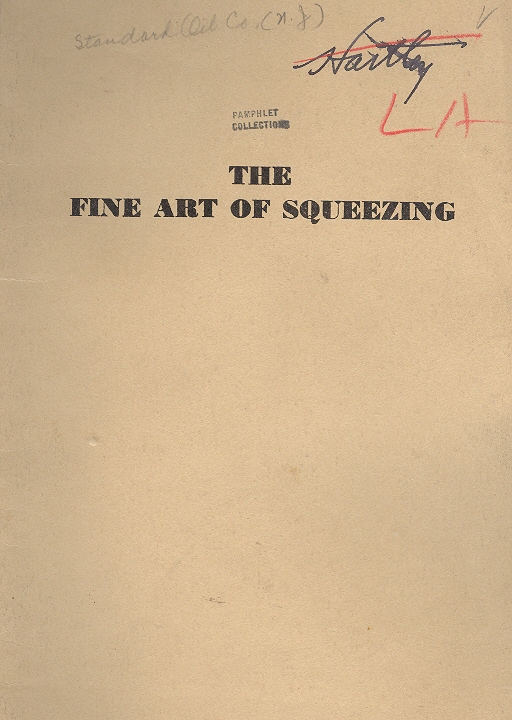
    And then sometimes a book title promises a lot and delivers it–but not the “a lot” that you expected.  The Fine Art of Squeezing, god knows, is a title that demands attention.  I thought, well, I’m not sure what I was expecting–possibly it would actually be on squeezing things. (I’ve seen many examples of this sort of bizarre title/content continuity, so I thought it a possibility.)  But  the story here is delivered by the Standard Oil Company of New Jersey and details their properties being nationalized–squeezed–by the government of Mexico in 1938.  It is one of a series of pamphlets, and it evidently sucked up every bit of creativity at Standard Oil:  The Question of Subsoil Rights in Mexico and The Accustomed Practices in Cases of Expropriation and Confiscation are two titles that deliver the contents’ good accurately and dryly.  This singluarly-titled work also has chapter headings that equally lovely and bizarre:  “The Revolutionary Squeeze”, “The Constitutional Squeeze:, “The Concession Squeeze”, “Strangling the Goose “and other fortifies the reader with the possibility of a surreal experience.  It is not, of course–it is a competent and direct summation of Standard’s deal with Mexico. 

    Blog--may 11--odd 003


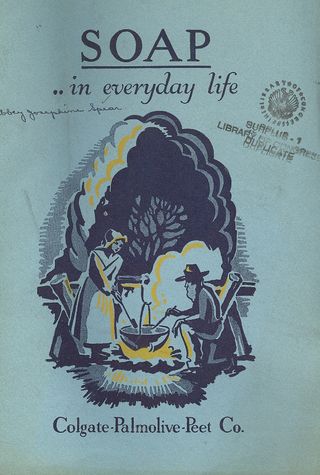
    Soap…in Everyday Life is another one of those lovely naive titles, though it only hides a very accurate and authoritative display of Soap Knowledge, published by the Colgate-Palmolive-Peet Co. The draw to this pamphlet for me stops as soon as you open it.  (It is a happy little soap-making theme on the cover, though.)

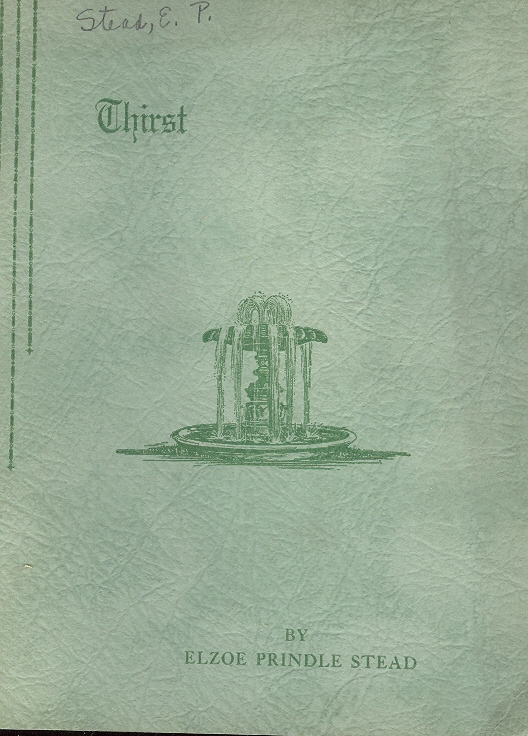
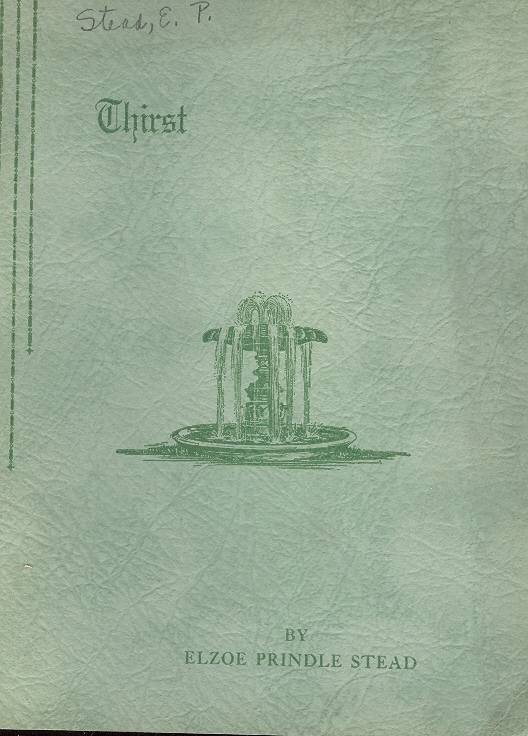
    Thirst is another disappointment–weird title and design, and was written in 1937 (and self-published) by Elzoe Prindle Stead.  The joy of the title is quickly dissolved by the content, with chapter headings such as “Born Once”, “Once to Die”, “Going to Hell”, “For Him of the Second Death”, “Forgotten or rejected Savior”, and “Jesus goes to the Cross.  Its a major proselytizing vehicle which defines itself with the last chapter title, “Why Not”. 
    Blog--may 11--odd 

  • Oppressed Peoples and Social Movements Catalog Now Offered

    JF Ptak Science Books   Blog Bookstore

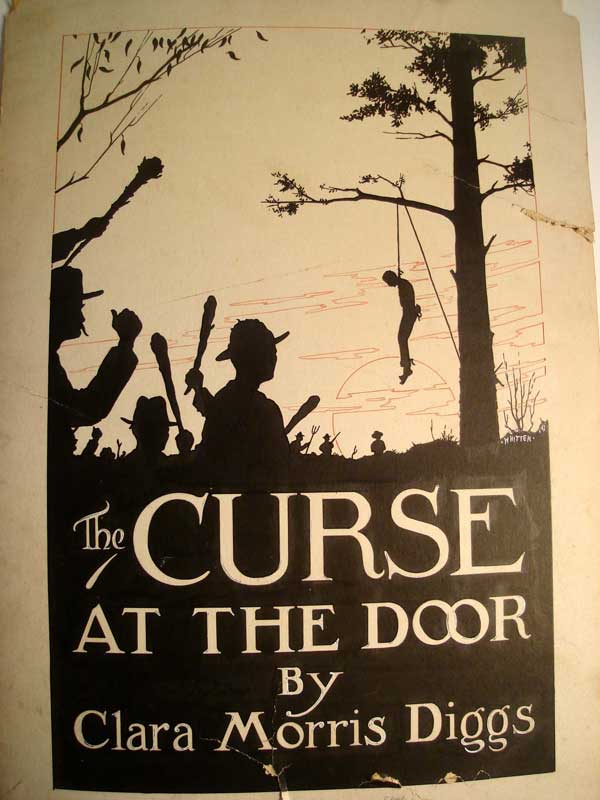
                   Lynching                                                                                                                                                                                             I’ve just started List 10  (located in the Blog Bookstore/Non-science section of this blog)  which will be an ongoing effort to catalog some of the 1,000 or so pamphlet in the store having to do with oppressed and disadvantaged people, as well as the social movements that were started to address those tragedies.  Material covers the American Black experience (1850-1940), the Holocaust and other aspects of antisemitism, Japanese-American internment camps, Labor Unions, anti-immigration policies, war propaganda, and other related areas.

    (An example of what I’ll be offering is above–this is the original artwork for the dust jacket for an anti-lynching book by Clara Morris Diggs, published in 1934.)

    ·Posted by :

    ·in:

  • Where Was Disgust and Horror in Italian Renaissance Painting?

    JF Ptak Science Books  Post 613  Blog Bookstore

    St. john


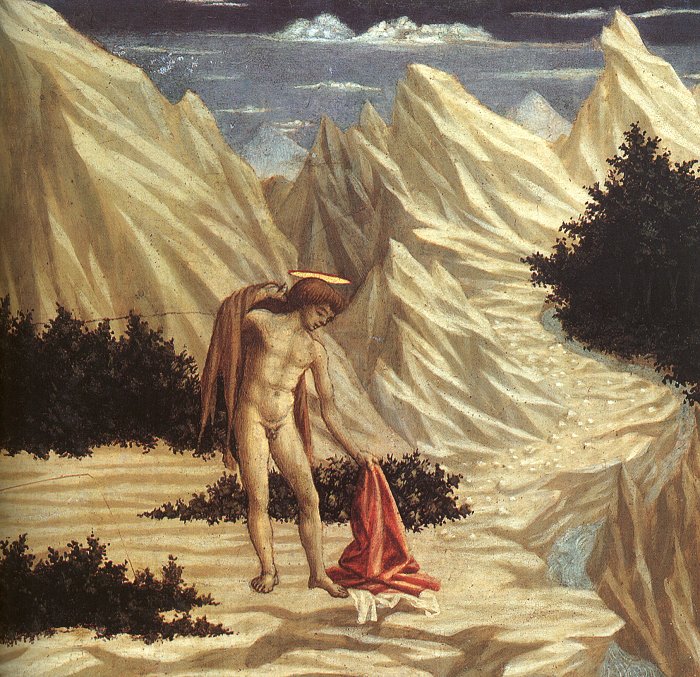
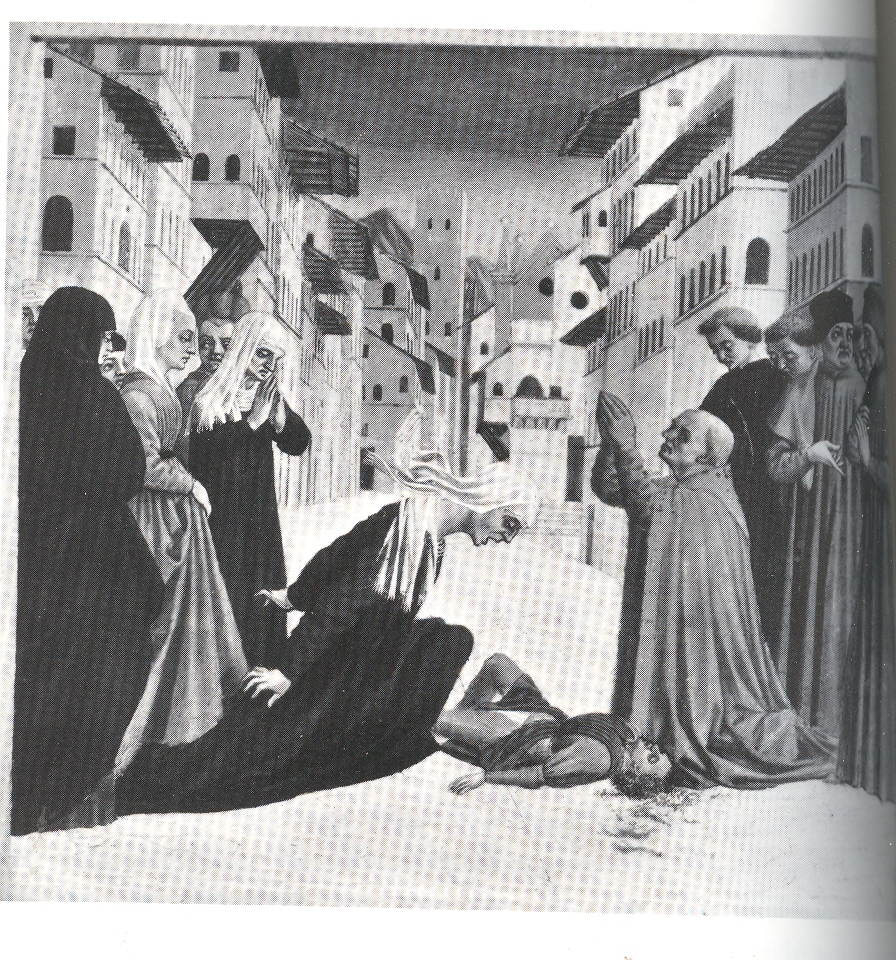
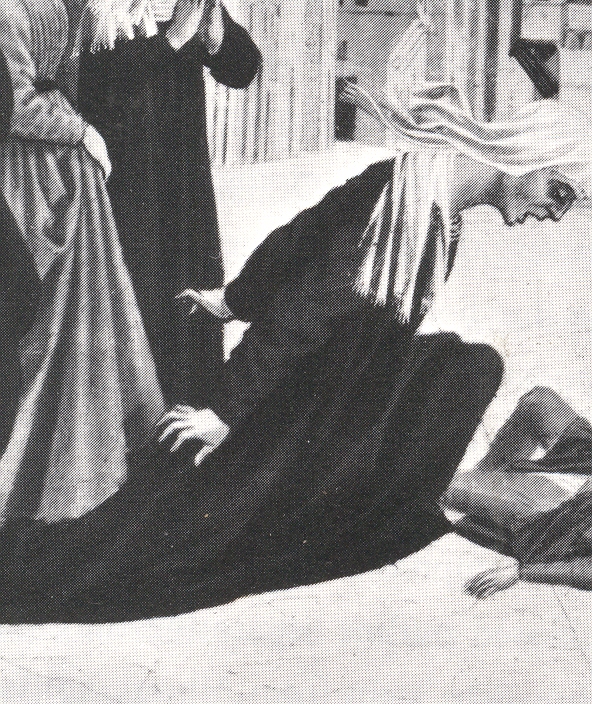
    When considering the alphabet of emotions displayed in Italian Renaissance art, it seems to me that Horror and Despondency seem not to appear very often. (Again, this is for the Italians–not the northern Renaissance.)  This flimsy conclusion may be of my very own not-very-well exposed weakness and may be fantastically wrong—well, I think the odds are more in the favor of this being modestly wrong rather than fantastically so.   This inspiration took hold when looking at an uncommonly-reproduced work by Domenico Veneziano (b. Venice, ca. 1400 and dying in Florence in 1461) displaying a posture and an emotion that I have seldom seen.  I am a little familiar with Veneziano–having lived in Washington DC for 29 years I visited the National Gallery many many times, and themiddle point of the visit was almost always at Veneziano’s fantastic and weird St John in the Desert (ca. 1445) or with his St. Francis Receiving His Stigmata.  (There are more examples of his work in the Continued Reading section below.)  But this image was new to me and astonishing–it is the Resurrection of the Child , and the painting’s main character,  the mother of the injured child, displays a character of grief and body language that is singular to my experience.  (The image appears in James Ackerman’s superb Distance Points, Essays in Theory and Renaissance Art and Architecture (MIT, 1991, p. 86)

    Veneziano

    Veneziano 001

    When I think of all of the Pietas (by Botticelli, Raffaellino de Gardo, Berruguete) I cannot recall seeing this level of  grief, or horror, or terror; or curling fingers in the deepest base of despondency in the features of Mary or just about anyone else.  Actually, Carol Crivell approaches this sort of emotion, but it seems fairly scarce in the history of Renaissance Pietas.  Rending scenes of the dead and bleeding Christ, and rape scenes, lamentations, still do not approach this sort of expression as we can see in  Perugino’s Lamentations and Cruxifiction, Antonello Messina’s Rape of Helen,andCarpaccio’s Meditation on the Dead Christ.

    There are occasions when St. George shows some real fear and horror (Cosimo Tura’s  St. George), and mothers are spectacularly despondent over the killing of their babies (Matteo di Giovanni Massacre of the Innocents), but to me the myriad of images showing the Temptations of St. Anthony and the ravages of time and the seven deadly sins and on and on, just, really, never come quite to this level of terror in Veneziano.  I’m probably off base with this, but honestly, the contrasting pull of the mother’s body both lunging forward and pulling backwards, the enormous passion of her face, the curling fingers, are almost too much to bear.  You can hear her scream as her body works against itself, pulling her apart. And when comparing Veneziano’s Resuscitation with others in this genre–Ghiberti’s child being brought back to life by St. Francis, Lippi’s Drusiana by St. John the Evangelist, for example–this deepest of all expressions of horror isn’t there.  I imagine that the other images of terror and horror are wrapped in Holy cloth and Infinite Wisdoms, these people being saints and all, but when it comes right down to mortals and losing their children, there’s no room for holiness, and Veneziano allows the truth of the emotion to come pouring out. 

    ·Posted by :

    ·in:

  • The History of Dots Part 9: the Cell and Robert Hooke

    JF Ptak Science Books Post 614   Blog Bookstore

    This is another in a continuing series of posts on the History of Dots.  Let’s face it:  dots are the alpha and the omega of our existence, from the imaginary point in space; to the great dots in the sky seen by the ancients for thousands of years before their vastness and complexities were revealed with the invention of the telescope (and etc.); to the fantastic smallness of “dots” whose organization was revealed through the invention of the microscope; to the atomic and sub-atomic world, right to the very point of singularity. The dot is a big deal. 


    May 15 hooke cork

    Had there been no Newton every school child would know the name of Robert Hooke (1635-1703) in its place—he was polymathic, totally energized, big-thinking non-sleeping experimentalist and theoretician who worked across numerous disciplines (physics and astronomy, to chemistry, biology, and geology, to naval technology), not the least of which was architecture (having helped Christopher Wren in the design of the new St. Paul’s).  He was an enormous figure who was also never below a fight or argument, and whose grasp of his own very considerable accomplishments never seemed to be limited by what he had actually done. Some people lay the blame for Hooke’s obscurity upon Newton’s great and tireless vindictiveness against Hooke, but that’s by far from the whole story of Hooke’s troublesome personal legacy.  Not only is his portrait not on the coin of the realm nor hanging everywhere in the halls of academia, but there is no known surviving portrait of the man.  He didn’t come close to Newton’s enormity, not really, but in the absence of  Jupiter and Saturn even the Earth starts to look a little bit big.among the rest of the planets.

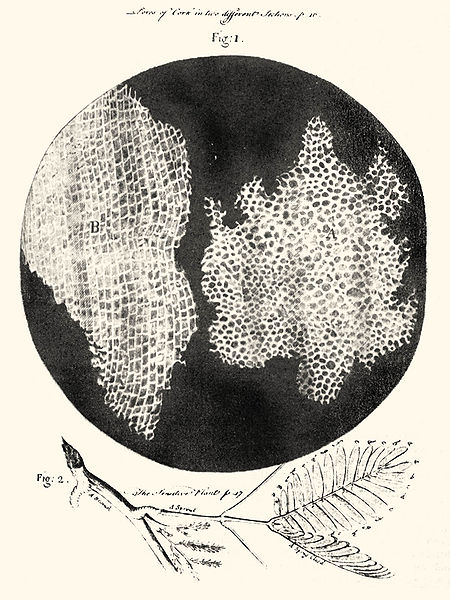
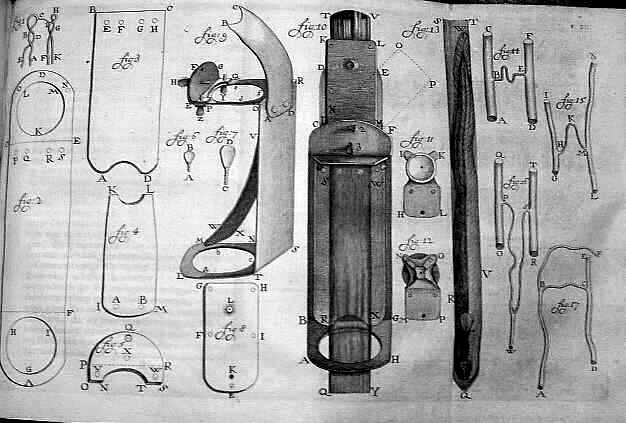
    One of the very big things that he did was to become the first person to observe “cells”—the “dots” of concern in this post.  After reading Antonie van Leeuwenhoek’s* (1632 – 1723) work  Hooke had made (by Mr. Cock) a version of the L’s microscope, reproduced some of the observations, and then set out on his own.  The slice of cork pictured here was the first time anyone had seen such things as cells, Hooke believing them to transmit the essentials of the plant.

    In “Observation XVIII” of the Micrographia, he wrote: “. . . I could exceedingly plainly perceive it to be all perforated and porous, much like a Honey-comb, but that the pores of it were not regular. . . . these pores, or cells, . . . were indeed the first microscopical pores I ever saw, and perhaps, that were ever seen, for I had not met with any Writer or Person, that had made any mention of them before this. . . “

    Flea

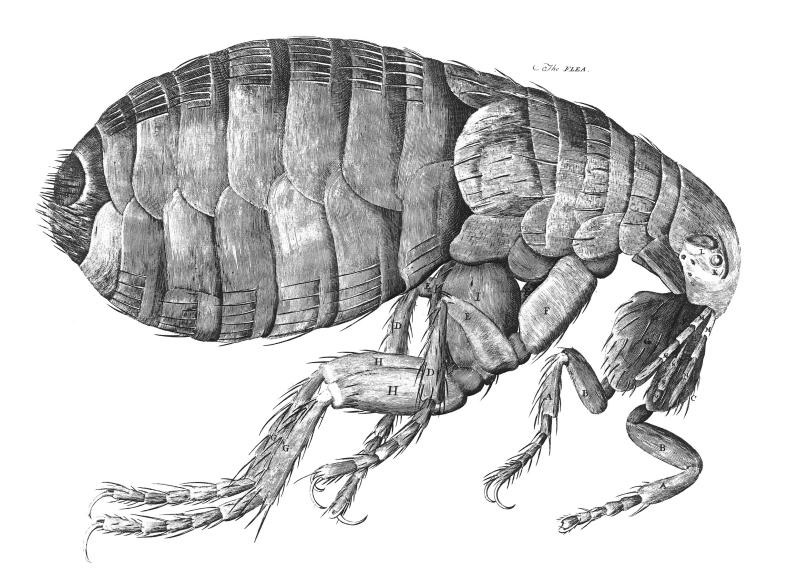
    The 28-year old Hooke published the results in a gorgeous and revolutionary book, Micrographia, in 1665, which became an instant best seller and highly praised and valued. (Samuel Pepys, perhaps among the shiniest stars whose imprimatur was like a royal blessing, said the book (was)“the most ingenious book that I ever read in my life.”) There is no telling what the people of the mid-17th century thought of seeing such incredible discoveries in the little semi-invisible stuff that made up their normal, daily lives.  The only thing that somewhat equates to this would be if the first images of the Hubble were those of Earth-bound objects whose detail had previously been unknown.  Hooke’s observations and drawings of things like the common flea were just an astonishment—that such a creature of “low order” could have such intricate detail and design was a complete revelation.  The drawings of the fly’s eye, too, was an inescapable wonder, an incredible object to consider as having any detail pre-microscope, and then revealed to have unimaginable design and elegance. 

    May 15 van Ls microscope


    *Leeuwenhoek’s major contributions came in the form of letters to the Royal Society.  He operated in his own cellular world, if you will, not having been schooled in languages outside of his own native Dutch or receive any real formal education in the sciences at the university level.  He labored mostly alone save for his great correspondence. For example, in a letter of September 7, 1674, Leeuwenhoek described observations on lake water, including an excellent description of the green charophyte alga Spirogyra: “Passing just lately over this lake, . . . and examining this water next day, I found floating therein divers earthy particles, and some green streaks, spirally wound serpent-wise, and orderly arranged, after the manner of the copper or tin worms, which distillers use to cool their liquors as they distil over. The whole circumference of each of these streaks was about the thickness of a hair of one’s head. . . all consisted of very small green globules joined together: and there were very many small green globules as well.” 

    The image above is  an engraving of one of Leeuwnhoek’s later microscopes–in  the history of his work, Leeuwenhoeck made something like 500 scopes, with powers varying from 50-500x. 

  • The Invention of Small Things and the Coming of the Internet–Back to the Flea

    JF Ptak Science Books LLC  Post 615  Blog Bookstore

    “A network of such [computers],
    connected to one another by wide-band communication lines [which provided] the
    functions of present-day libraries together with anticipated advances in
    informationstorage and retrieval and [other] symbiotic functions.” —J.C.R. Licklider, 
    his epochal “Man-Computer Symbiosis”, 1960

    There is a famous
    and most likely apocryphal story made famous in Stephen Hawking’s A Brief History of Time where a famous
    “scientist” (I‘ve heard him described as James Jeans, for one and the nicest
    fit, others say Bertrand Russell though it matters not) is confronted by a
    member of his audience during a lecture on astronomy/cosmology.  A woman rises and confronts the speaker,
    determining that what has come to pass as fact regarding the universe is all
    rubbish, and that the Earth was in fact a flat object resting on the back of a
    turtle.  The speaker then asks her what
    the turtle is standing on; she replies immediately of course that it is another
    turtle, and that it is “turtles all the way down”.  It’s a nice story, and bears some resemblance
    to Native American stories of the Earth born on the back of a turtle, of the
    Hindu legend of the Earth being borne by an elephant standing on the back of a
    tortoise, and so on, all the way down. 
    Even Dr. Seuss’ Yertle the Turtle
    can make an appearance in this one.

    1875large

    This came to mind
    thinking about the contribution of (the not-entirely forgotten) John Benjamin
    Dancer (1812-1887) to photography and its relation to the history of the
    Internet.  Dancer was in the immediate
    second wave of the greats of photography following the short first wave of
    Niepce and Talbot and Daguerre, and did come up with a number of very good
    ideas at the birth of photography—one of them in theory is an early foundation
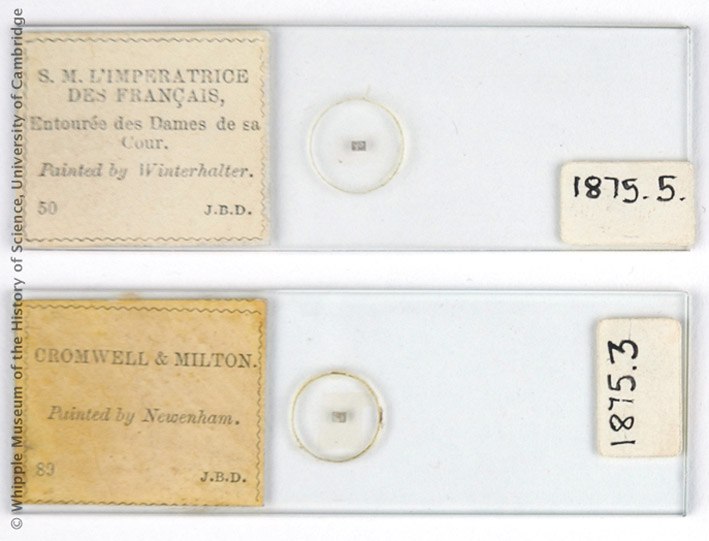
    stone for the technical distribution of data and information.(These two slides are  examples of Dancer’s work and are reproduced from the Whipple Museum of the History of Science, Cambridge.)

    Dancer evidently
    went to work immediately after reading of Daguerre’s 1839 process.  The technical aspects of the Daguerre effort
    were les daunting than they were messy—he found the descriptions “crude and obscure”,
    and proceeded with his own series of experiments, producing a camera some six
    weeks later.  It is interesting too that
    he seemed to have based the camera on a camera obscura:  “being a practical optician the camera was
    one of my own construction, such as I had frequently supplied to artists for
    tracing the outline of views in the camera….”

    He lectured later
    in that same year (1839), showing lantern slides of his accomplishments to
    crowds of up to 1500 people.  His great
    accomplishment was in the field of microphotography—I should say rather that he
    invented the field.  And it is of great
    interest that the first images that he made using the brand new invention of
    the camera coupled with a microscope was that of a flea.  In yesterday’s post I wrote about Robert
    Hooke’s Micrographia and his spectacular discovery of the fineness and detail
    of biological specks like the flea, showing audiences—the world—for the first
    time that these insignificant creatures represented an entirely new,
    just-discovered world, and that they were as tremendously well-developed as any
    other large living thing.  Back to the
    flea, as it were, went Dancer—I have no idea whether he knew he was calling on
    Hooke’s iconic image or not.  But it is
    at least a lovely coincidence.

    Dancer also
    displayed images of documents that he reduced by a scale of 1/160, printing a
    fully-legible copy of a printed document that was only 3mm tall.  The significance of this invention seems to
    have been lost until it was picked up again in 1853 by the great John Herschel,
    who recognized the process as a way to archive significant documents.

     I like it more for its possible impact,
    perhaps, on some of the thinking on the construction of a world-wide
    distribution of knowledge, as a necessary step to get to the stage where
    Vannevar Bush—who was widely acknowledged as being the grandfather of the
    internet at a MIT Conference about a 20 years ago—could theorize about his own
    precursor to the internet–the Memex,
    describing it for the popular audience in the Atlantic Monthly in June*, 1945. 
      Among many other things,
    Bush—who was also, probably, one of the great figures of WWII for his heroic
    role in leading the U.S. scientific and technical war effort and seeming to
    make the correct decisions all of the time—foresaw a means of distributing
    data, more or less instantly, calling on the delivery of microfilmed
    information. Bush, who was also a great engineer and father of one of the
    countries best analog computers (in 1931/33), had the notion for a world wide
    technical distribution of knowledge, but, as he wrote this in 1945 (!), could
    not see far enough into the future development of the digital computer (the
    ENIAC just being born at that time, though it must be pointed out that Bush was
    open to the idea of magnetic storage). 
    His ideas were very far reaching, touching on microminiaturization and
    artificial intelligence, and his ideas even now aren’t so much coyly science
    fiction as they are, well, implemented. 
    There’s a lot of Bush’s memex that are in place today

    So, the turtles and
    wondering about Dancer’s influence in the string of inventions and discoveries
    that gave birth to the www: how far down do these influences go?  The touchstone for the creation of the internet
    is usually seen as being with JCR Licklider (see quote above) in 1960, or with
    Paul Baran or Leonard Kleinrock a year later; but perhaps it is earlier still with
    the implementation of ARPA (set into place immediately after the launch of Sputnik).  Of course none of this is possible without
    computers, so you could work your way back through time to the transistor, to
    Bush, to the Stibitz (Bell)Relay Computer, to Johnny von Neumann, to the thermionic tube (Bush), and then
    all of the support discoveries and inventions that rolled into these, and so
    on.  Back to photography, back to Babbage’s
    plans for his analytical engine, back to the invention of moveable type, to the
    invention of paper, to the creation of libraries, to the general idea of the
    popular distribution of knowledge.  All the
    way down.  But I do think it worthwhile
    to think of Dancer’s contribution in so far as it allowed people to think of
    easier, quicker ways of moving around vast amounts of data and
    information.  And that I think is worth
    remembering. 

    *I’ve also got to
    say that at the same time Bush was writing about the future of intelligence he
    was also at work developing the U.S.  response to the upcoming race in atomic weapons.  He and his team were busy crafting responses
    and policies and the reaction of the Soviets and the sharing of the atomic bomb
    data and all of that, and all before the test at
    Alamogordo. Really, the guy was spectacular.


  • A Question of Appearance: Picasso, Jung, Miss California and Hungry Joe

    JF Ptak Science Books Post 617  Blog Bookstore

    Blog--criminal 004


    I heard an interesting bit this week by Scott Simon of NPR.  He asked his audience to identify a British politician, asking us to listen to a news snippet—what he was after was for the audience’s reaction to the message.  It was an actor reading a widely circulated statement by Carrie Prejean (Miss California) in which she expresses her opinion on gay marriage and other topics.  Evidently people reacted more thoughtfully to the “educated” accent than to the same statement issued by a contestant in a beauty contest–the British pol vs. the dizzy right-wing blond.  The same message, different packages and appearances, different reactions.  

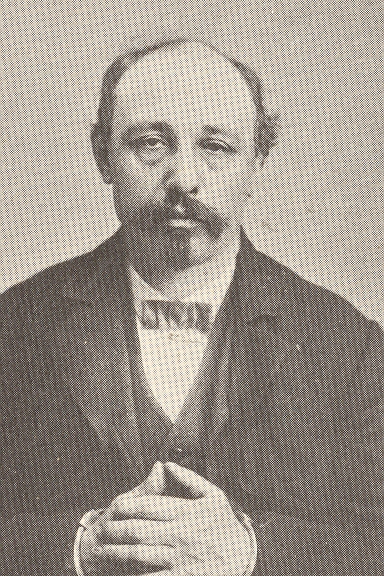
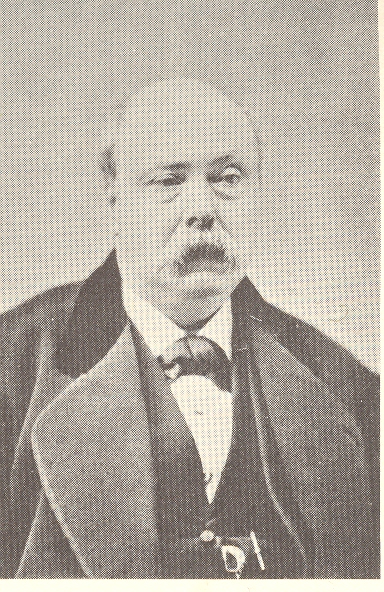
    The three 19th century photographic portraits illustrating this post could well be images of the faculty at a modest New England institution of higher learning; professors with decent taste and posture, reasonably interesting-looking, confident.  But their names really didn’t have much pull in the history of academic names:  the list of PopWhite, Hungry Joe, Grand Central Pete, Boston Charley, Pugsey Frank, Paper Collar Joe, Curly Chuck, and Deafy were criminals, and all of these pictures are from Inspector Thomas Byrnes’ 1886 Professional Criminals of America, an early “mug book”.  Their specialties weren’t in the maths and physics; rather they were listed as “sneaks”, “butcher cart sneak”, “saw dust worker”, “till tapper”, “highwayman”. “banco”, “wagon thief”, “house sneak”, “hotel sneak”, “general sneak”, “general common thief”, and so on.  The portraits don’t betray the person, by any means. Blog--criminal 001

     How this all comes to me was from reading a publication of the Analytical Psychology Club of New York City for 1940—I’ll keep the author and subject quiet for the moment.  It was an odd experience, reading this, because, well, I wanted to believe the author/analyst because he was in deep attack on his subject (an artist) whose personal life I’ve never cared for; on the other hand the attack was so myopic that I took offense with that, too.  I wanted to believe the analyst’s overall appreciation of the artist, but the means of getting their, the intellectual foundations, was just awful.  I wanted to believe the analysis, built as it was ruinous and a waste; and I wanted to believe that it was true for the subject—but if I removed the weight of their names, I’d have to come to an instant defense of the attacked party.  Pablo Picasso.

    The analyst is none other than Carl Jung—who as a collector and interpreter of images I’ve long admired.  I don’t know what to say, really, about the psychology part of it all.  Jung begins by saying that he had “nothing to say on the expression of his (Picasso’s) ‘Art’ “, and needed to “put aside the question of aesthetics”.  To me , this is sweeping Picasso’s trade under the rug, which is something that needn’t and shouldn’t be done, of course.Blog--criminal 003  

    Jung continues:  “the psychic structure of Picasso’s problem, in so far as it expresses itself in his art, is thoroughly analogous to that of my (psychiatric) patients”.  He then starts a quaky, impenetrable paragraph that stretches out over two pages:  “non-objective art comes by its contents essentially from the ”inner” side.  This “inner” side cannot correspond to the conscious, because the conscious contains images of objects as they are generally seen, and they must of necessity appear in the way that conforms to general expectations…”   Then, to my reading, Jung seems to classify Picasso in one of two categories:  schizophrenic or psychotic.

    Now as much as I’ve disliked the destructive personal path of Picasso, this is just altogether too much.  But it was the retained memory and associations of the names of these two men that so challenged (and at first conquered) my own analysis.

    _______________________________


    ·Posted by :

    ·in:

  • On Learned Ignorance: George Hartgill’s Astronomical Tables

    JF Ptak Science Books  Post 620    Blog Bookstore

    According to negative theology, ‘there is not found in God anything other
    than infinity.’  (Cusa, De Docta Ignorantia, vol. I, § 26)

    “With respect to the intellectus, reason (ratio) is at the horizon…but with respect to the
    sense, reason is at the zenith, things that are within time and things that are beyond time
    coincide in reason.”(Cusa, De DoctaIgnorantia, vol. III, ch. 6, § 216


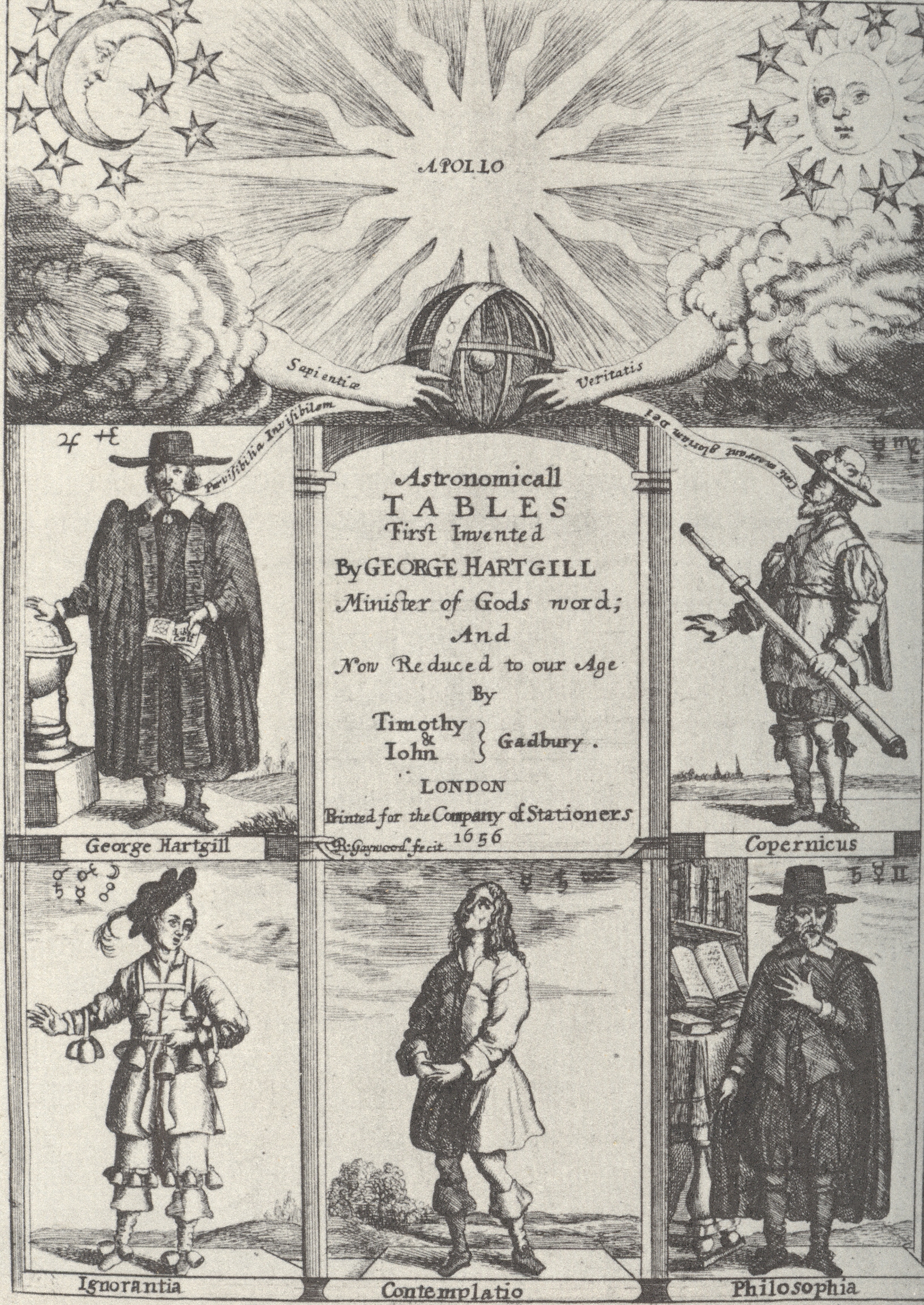
    Blog--May 20-hartgill In my imaginary Encyclopedia of Interesting Title Pages, the Astronomical Tables shewing the Declinations….* by  George Hartgill** is very much middle fare,  very interesting but not overly so (I say sniffily), but very much worthy of attention.  The initial bit that caught my attention was small and sort of trifling: it seemed that the writer possessed  the temerity to place his own portrait on the title page across from that of Copernicus.  As it turns out, the selection was obvious and logical, though I wouldn’t know that until I pieced together the symbolisms of the page.  Aside from that, there was a fair amount of action on the title page, and for all of that it retained a certain spareness, a lightness in spite of itself.

    The title page is an elegant call to synthesis of science, philosophy and religion in the understanding of astronomy. To start: at the top-center is the burning sun, “Apollo”, the great and perhaps most important of all the Olympians, the god of sun and light (among other things).  The arms of the heavens (signified by the arms reaching out from the Moon and Sun) embracing a globe of the earth within an armillary sphere. The arms carry the legends of “spientiae” (“wisdom”) and “veritatis  (“truth’).  Surrounding the title proper are five figures, the upper two being Hartgill and Copernicus.  The word balloon coming from Hartgill’s mouth says “per vidibilia invisibilem” or “ the visible and the  inivisible”, and touches the hand of wisdom; Copernicus’ balloon I can only partially read, but it seems to end “gloria dei” (to the glory of god), and ends under the arm of truth.  In turn these two figures rest on three others:  Ignorantia, Contemplatio and Philosophia. 

    Ignorantia here is depicted by an entertainer decked out in bells.  He isn’t necessarily “ignorant” per se: the “ignorance” comes in multiple forms: one is of the intelligent and educated person knowing the things that weren’t yet known; another in terms of a belligerent ignorance, insisting on the known and the comfortable in the face of compelling new evidence stating otherwise; and also of simple ignorance of not knowing and not caring.  Contemplatio and Philosophia pretty much speak for themselves.  The three of them seems to support the advanced “ignorance” of Hartgill and the mathematical/philosophical Copernicus, all of which are illuminated by the wisdom and truth of the source of all light.  Its simply a wonderful, well-designed title page.

    *Astronomical tables shewing the declinations, right ascentions, and aspects of three hundred sixty five of the most principall fixed stars and the number of them in their constellations after Aratus : as also the true oblique ascentions and descentions of all the said stars upon the cusps of every of the twelve houses of heaven according to their latitude….1656.

    **Granger’s Biographical History of England (1824), says of Hartgill: (he was)…”chaplain to the Marquis of Winchester, was a painful preacher, a reverend divine, and a most excellent mathematician, as appears by his ” Astronomical Tables;” which, according to the judgment of the best astronomers, could not have cost him Jess than seven years’ labour, considering the perfection of the work.”

  • Zeppelin Paper Model, 1924

    JF Ptak Science Books Post 621  Blog Bookstore

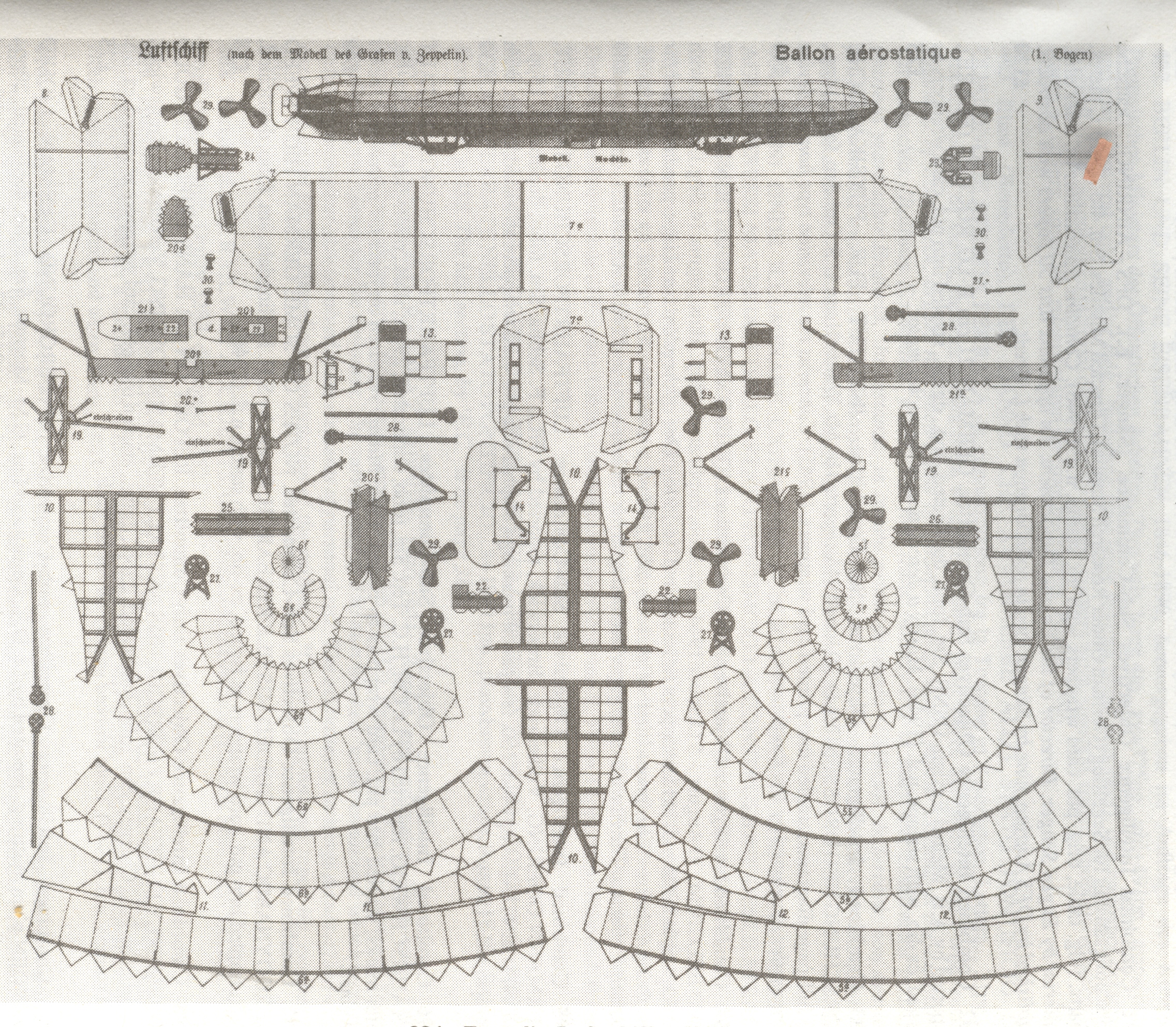
    This is a downloadable, clickable image of the makings for a zeppelin paper model–it is a lovely thing, and I just needed to share with anyone with a sharp exacto or a real pair of scissors. Pieces of the image should be printed so that the zep could be 18 inches long; or, of course, if you had a good steady hand, you could make a mini version, at this size.  The model itself is entitled Technisches Modell, Das Zeppelin Luftschiff (Modellierbogen Nr. 531, 532) and was printed and glued to cardboard by Esselingen at Munich ca. 1924.  The size of the original is 36 x 86 cm.

    Blog--May 20-zep

    Zeppelin2

    ·Posted by :

    ·in:

  • Fossils of Almost No Value? Statistics, Prisons, and Meaninglessness

    JF Ptak Science Books    Post 622   Blog Bookstore
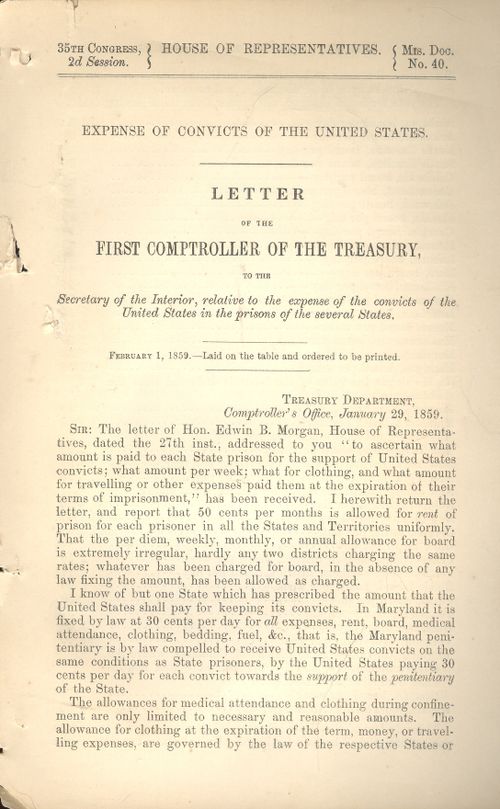
    Blog--May 23--convict The fossil record is generally one of the richest and most
    compelling histories of the development of life on earth, a far-reaching,
    cumulative record of extraordinary importance. 
    There are the other, occasional, fossils that stand only by themselves,
    and seem to have almost no use in the current time, living almost entirely
    within themselves. The following statics seem to fall into that category—they
    seem to be only a tombstone for an era, providing nothing except to tell the story
    of what happened, existing only for that purpose, with no compelling
    utilization for anything outside understand a small piece of life for the year
    the stats were gathered. 

    The cause for this sentiment was found in a government
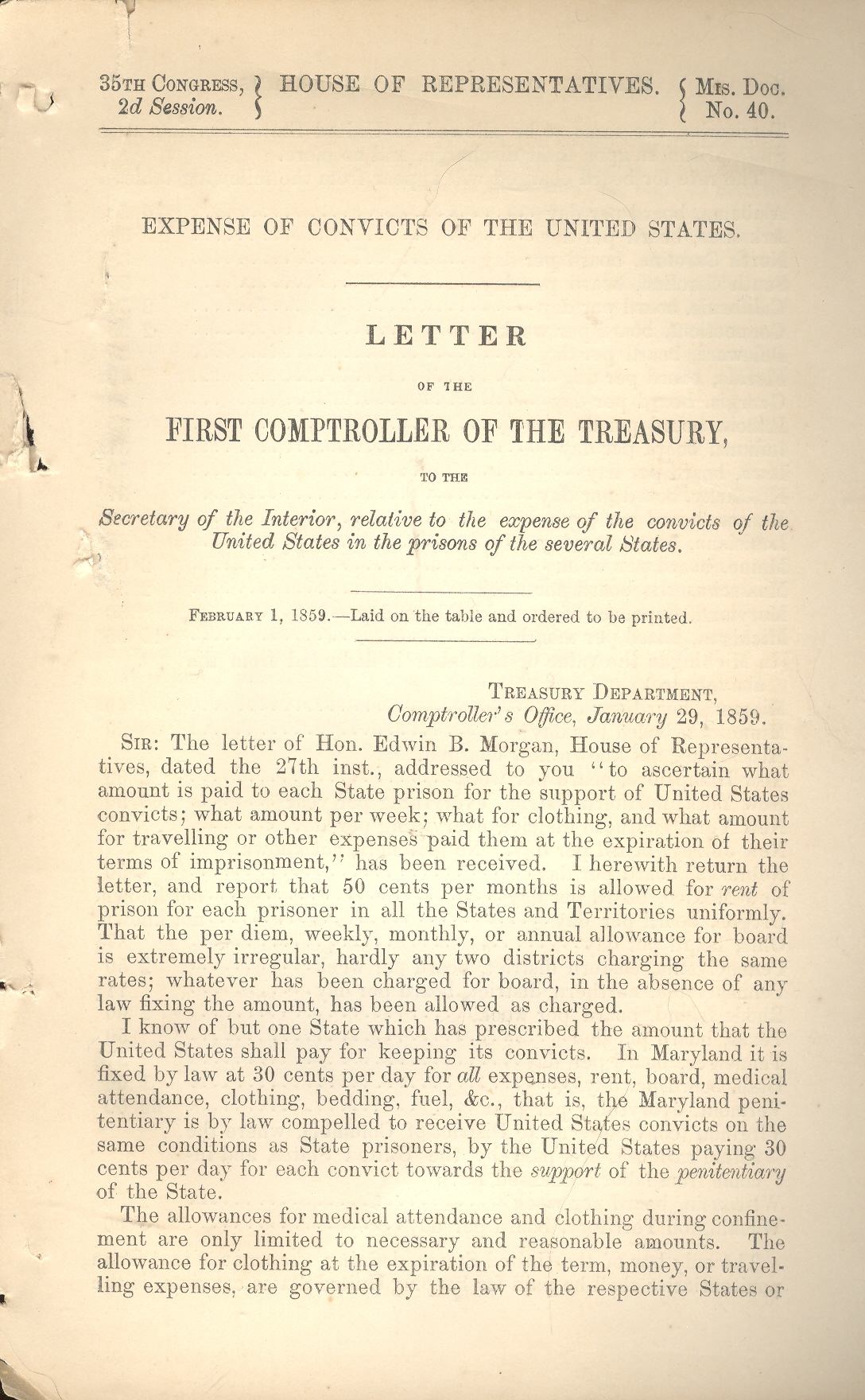
    publication called Expense of Convicts of the United States  (Letter from the
    Comptroller of the Treasury…)
    , 1 February 1859).  The following comes in the first paragraph:

    “I….report that 50 cents per months is allowed for rent of
    prison for each prisoner in all the States and Territories uniformly.”

    What this means is that the U.S. Treasury would pay 50 cents
    to the state for keeping a federal prisoner. 
    That is 50 cents per month, or about 1.7 cents per day. And that was
    also for rent of the cell, exclusive of all else, each state furnishing the
    government with the added cost, separately.

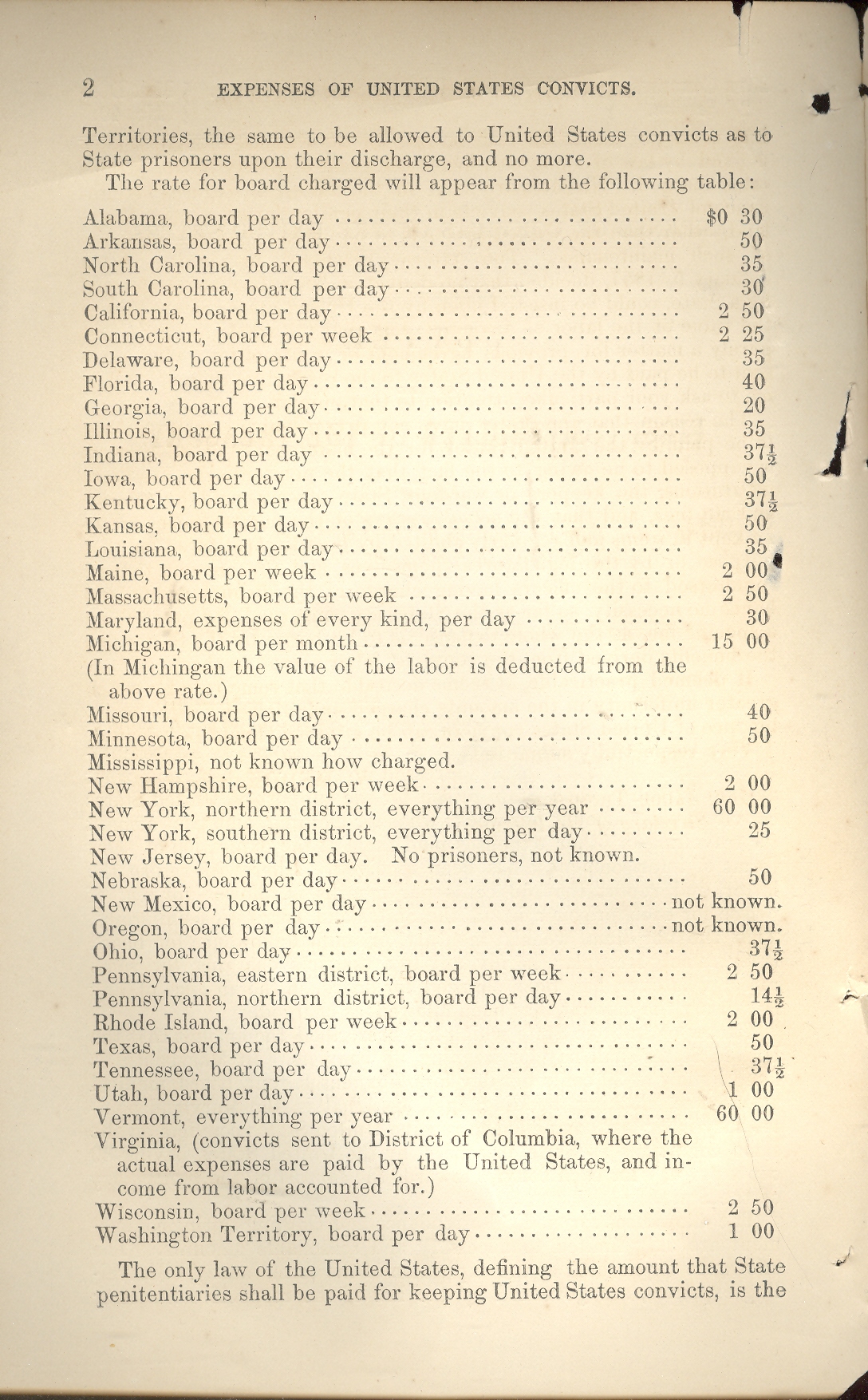
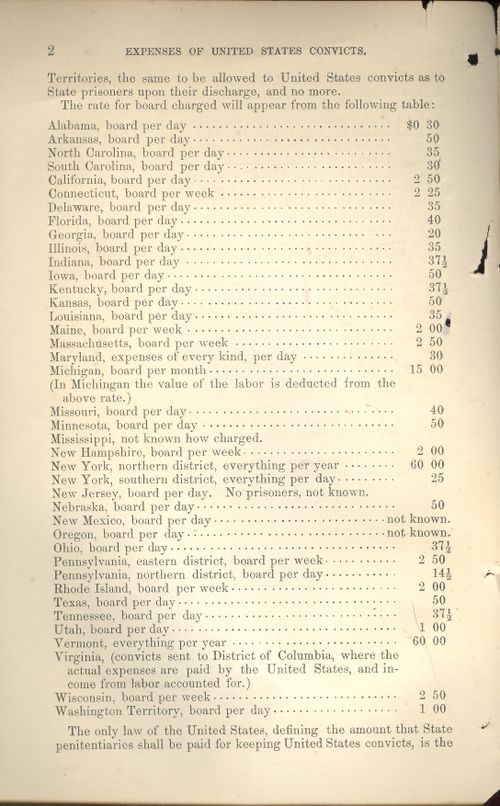
    Evidently the only state in the country that prescribed an
    exact amount for keeping a federal prisoner in a state institution was
    Maryland, “which received 30 cents per day for all expenses, rent, board, medical attendance, clothing, bedding,
    fuel, and etc” (italics in the original). 
    The rest of the states and territories had diverging and different
    expenses, from the southern district of New York at 25 cents a day for board,
    and ranging up to about 50 cents per day in  Michigan. Vermont charged an extra 60 dollars a year, in addition to the 6 bucks that they would
    get for the rent of a Vermont
    cell, to keep a prisoner—all expenses included—for one year, or about 18 cents
    per day, total. 

    Unfortunately I don’t have the stats of how many federal
    prisoner there were in 1859, so I don’t know how much of a percentage of the
    budget was occupied by prison expenses. 
    But what I do know is that even with tossing around the CPI with
    multiplier effects and so on the figures translate in no way to keeping a
    person in prison today.   The cost of
    housing someone in prison per year is around $35,000 a year, or $100 or so a
    day.  Adjusting the 1860 dollar via CPI
    for 2009 makes that dollar worth about 25 dollars today, which would be a
    doubling and a doubling again of keeping someone in prison. 

    I’m not so sure that those figures tell us much about what
    we pay, today. 

    Next, I was having a breeze through The Prison System of the United States by S.J. Barrows
    (Commissioner of Prisons for the U.S.) which was published in Washington  in 1900.  One particularly interesting
    section was the publication’s solitary statistical table, “Appendix A”, which
    detailed the crimes of the 625 men incarcerated in the state of Michigan  in 1900.  Well over half of all those in prison were
    there for larceny and burglary, while about 12% were in the big house for
    violent crimes.  (Evidently 95% of this
    number were literate and 70% could “cipher” (that is, produce basic arithmetical
    skills)).  The total crime list (such as
    it was) includes the following:

    Capital crimes (murder in the first and second degree) and
    manslaughter, along with murderous assault comprised about 1% of the total
    prison population.  Other violent crimes
    included assault with intent to do great bodily harm, rape, attempted rape,
    rape and assault composed another 3%. Further assaults were classified under
    (a) with intent to do great harm;  and
    then as assault on a female under 14 years; and on a female under 16 years  There were also the sexual assaults:  taking indecent liberties with female; with
    male child;  unlawful and carnal
    knowledge of a young child;   inducing female to enter house of ill fame.  These last two categories included about 5%
    of the prisoners.  Set aside form these
    were the crimes of adultery, abduction, incest and sodomy, which included
    another 3%.  So it seems that the violent
    offenders in prison in  Michigan 
    in 1900 totaled out at 12% or so. 

    Burglary and larceny were the  largest categories, being subdivided into (a)
    burglary accompanied by actual assault; (b) larceny; (c) larceny from a
    dwelling;  (d) larceny from a shop in daytime; (e) attempting larceny from
    the person; (f) entering a church in daytime to steal; (g) breaking and
    entering a store in daytime;   (h) breaking and entering a store in
    nighttime;(I)  breaking and entering a
    dwelling in daytime; (j)  breaking and
    entering a dwelling;  (k) breaking and
    entering a railroad car.

    Then there were a few largely vacant offenses:  Resisting an officer; Uttering and publishing
    a forged note, breaking out of prison, perjury, arson, false pretense, and
    malicious destruction of personal property, all combing for less than 2% of the
    jailed population.
    Blog--May 23--convict 001

    The vast majority of prisoners in Michigan were imprisoned for non-violent
    crimes.  The federal fathers, in the
    meantime, recognized that people in prison shouldn’t be idle while paying their
    debts to society, and should fill their time with work that would occupy the
    prisoner and bring some income into the prison system:

    “The moment we apply to the convict a
    different system of economics because he is in prison we go astray. When we
    subject to analysis the plans proposed for abolishing the competition of
    convict labor we find them based on false principles or expecting results not
    to be realized. The wiser way for the peace of society and the interest of the
    State is to place prison industries on the same ground as free industries, and
    defend that.
    It is also said in opposition to the contract system that
    contractors do not pay as much for the labor of convicts as free laborers
    command.”

    In 2005 the federal offenses for which people are incarcerated include: Drug
    Offenses 59.6%; Robbery 9.8%;  Property
    Offenses 5.5%;  Extortion, Fraud, Bribery
    6.8% ; Violent Offenses 2.7% ; Firearms, Explosives, Arson 8.6% ; White Collar
    1.0%; Immigration 2.8%;  Courts or
    Corrections 0.8%;  National Security
    0.1%;  Continuing Criminal Enterprise
    0.8%;  Miscellaneous 1.5% .  54% of prisoner in state custody for the same
    time were incarcerated for violent crimes, with drug offenses coming in at 20%
    and property crimes at 19%.  The racial
    breakdown of prisoners in the U.S. is another tragedy: of the prison population
    in toto of 2.3 million in 2008 there
    were 4,777 black male inmates per 100,000 black males held in state and federal
    prisons and local jails, compared to 1,760 Hispanic male inmates per 100,000
    Hispanic males and 727 white male inmates per 100,000 white males—that means
    that the black incarceration rate was double and then double and then
    half-doubled again that of whites.  What
    this also means is that there were more blacks in jail cells than in college
    dorm rooms in 2008.

    I’m not sure that any amount of creative statistical mathemartistry could bring these figures to life for some sort of practical application in 2009, the present situation in the prisons being so immense and pervasive.  Numbers and assorted data from the past usually have the capacity to help us see where we are today; as I said earlier, I think that these fossils are simply that:  dead.


  • San Francisco, 1906: Pictures within Pictures. The Great Earthquake and Fire.

    JF Ptak Science Books Post 623  Blog Bookstore

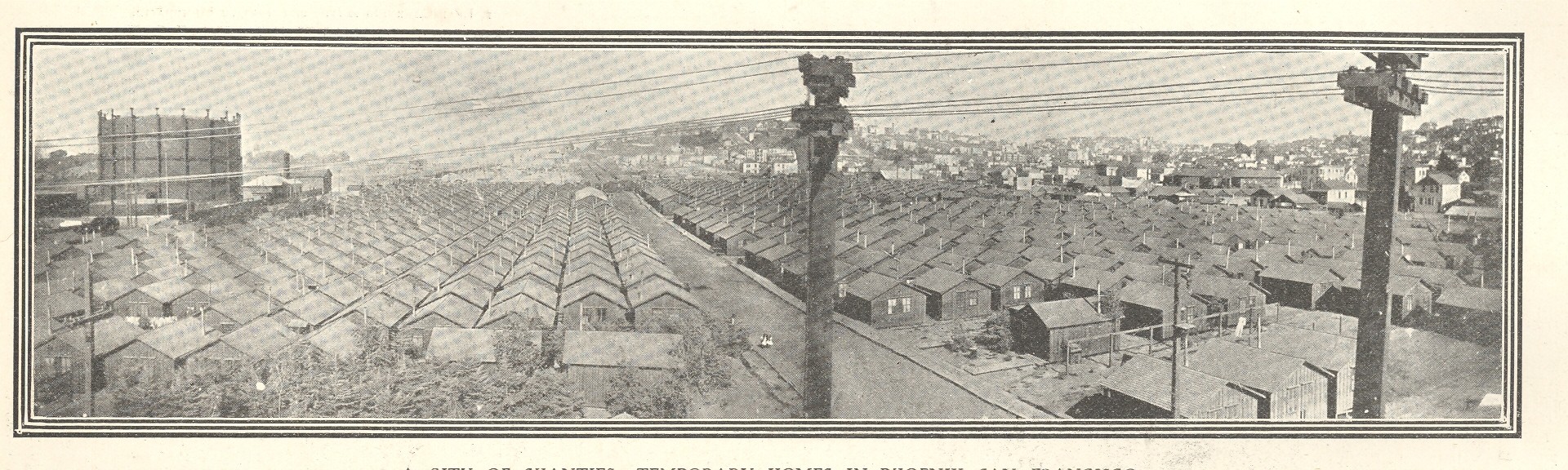
    The following two images were found in the Illustrated London News for 30 April 1906, and shows the “shanty town” built near the site of the major destruction in San Francisco following the earthquake of 18 April 1906.  Actually the tragedy is more appropriately called the “San Francisco Fire” of 1906, as the major destruction was caused by the raging fires set off by the earthquake.  The end result was 485 or so blocks of the city were destroyed leaving a quarter-million people homeless.  That this orderly development was referred to as a “shanty town” by a sniffy Brit reporter is appalling–unless of course the offending word meant something different 103 years ago.  It looks orderly and well-developed to me.  I also happened to notice two small girls in the detail–just about the only people in the picture.  They could still be alive….

    Blog--May 22--san fran

    Blog--May 22--san fran2

    Blog--May 22--san fran3


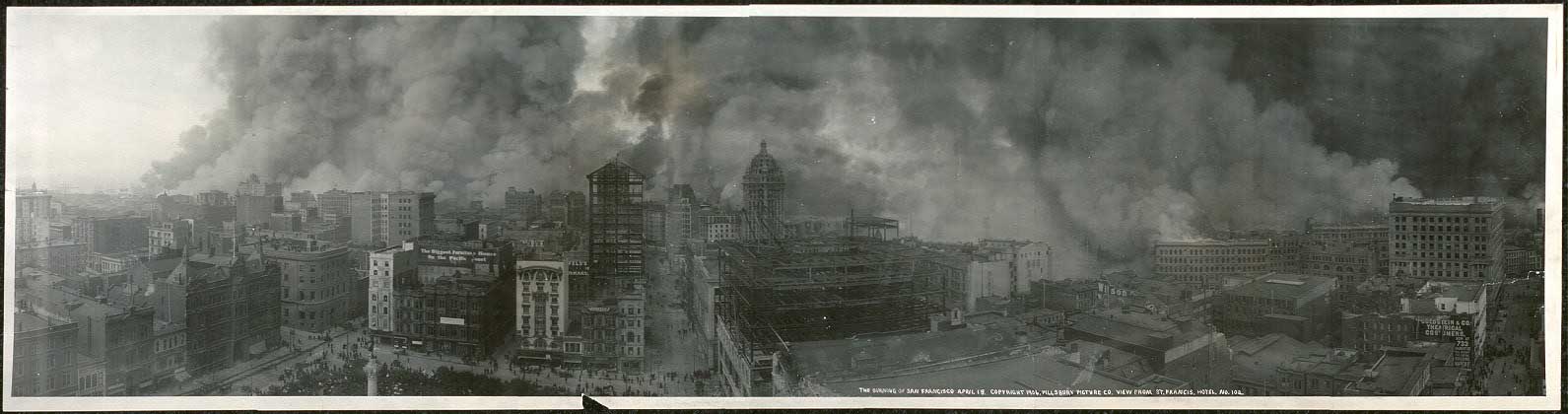
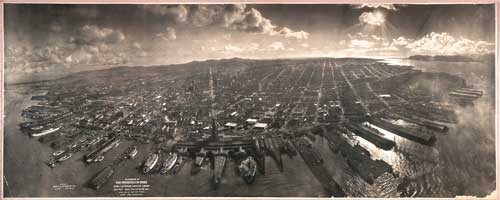
    The bottom two pictures were taken during the conflagration:  the first was the fire still raged, and the second was made days after the fire  from a  tethered balloon observation point. 

    I made myself 6-foot-long prints of these images; nearly every 2×2 inch area of the enlargement is a picture in itself.  These images are clickable and will expand if you click in the expanded version.  


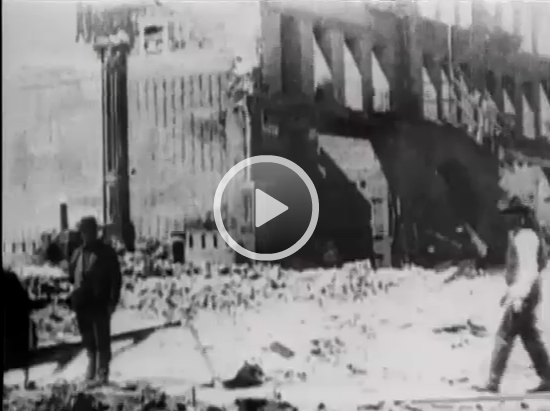
    For a contemporary film of the event via the Library of Congress, see here: http://loc.gov/item/00694425

    San Francisco film 1906 still

    SanfranciscoiburningT1

    SanFRansmallT2


    Panoramic images via the Library of Congress Prints and Photographs Division, see the following link for these and a number of others:  http://loc.gov/search/?in=&q=panorama+san+francisco+fire&new=true&st=

    A few eyewitness reports, from the Eyewitnesstohistory.com website: 

    “Of a sudden we had found ourselves staggering and reeling. It was as if the earth was slipping gently from under our feet. Then came the sickening swaying of the earth that threw us flat upon our faces. We struggled in the street. We could not get on our feet. Then it seemed as though my head were split with the roar that crashed into my ears. Big buildings were crumbling as one might crush a biscuit in one’s hand. Ahead of me a great cornice crushed a man as if he were a maggot – a laborer in overalls on his way to the Union Iron Works with a dinner pail on his arm.” (P. Barrett).

    “When the fire caught the Windsor Hotel at Fifth and Market Streets there were three men on the roof, and it was impossible to get them down. Rather than see the crazed men fall in with the roof and be roasted alive the military officer directed his men to shoot them, which they did in the presence of 5,000 people.” (Max Fast).

    “The most terrible thing I saw was the futile struggle of a policeman and others to rescue a man who was pinned down in burning wreckage. The helpless man watched it in silence till the fire began burning his feet. Then he screamed and begged to be killed. The policeman took his name and address and shot him through the head.” (Adolphus Busch).

  • Nazi Propaganda and the Battle for Europe, 1941: the War at Sea

    JF Ptak Science Books  Post 624   Blog Bookstore 

    Propaganda Series #  14  (See listing below)
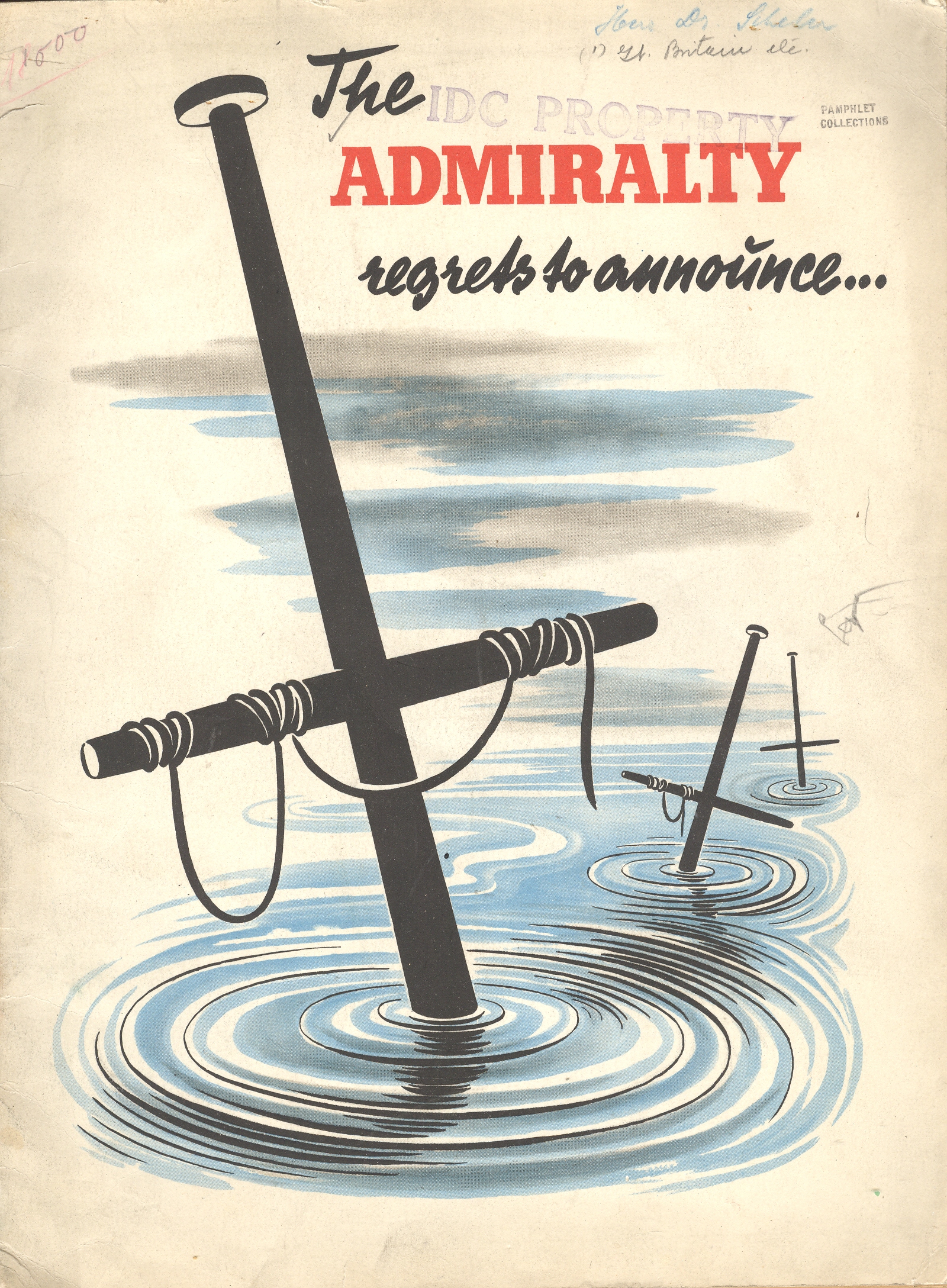
    Blog--May 24--regrets The Admiralty Regrets to Announce… was for years the standard beginning to an official British announcement concerning the loss of ships and sailors.  The phrase is used as the title to this work (by an unattributed writer known only as “an expert”) to immediately introduce the reader to the failings of the British navy.  It is of course a piece of Nazi propaganda, issued some time in 1941. (My copy is he U.S. copyright deposit copy and is stamped with a transfer date of September 1942; the pamphlets reads to me as though the U.S. had not yet entered the war.)  The great strengths of the German air force and navy are extolled and the failings of the British mercantile elaborated at great—and sometimes greatly imagined—lengths.  The booklet was published in French (except for the title) and answers its own repetitive question: “quelle est donc la situation relle de la marine commerciale anglais?”

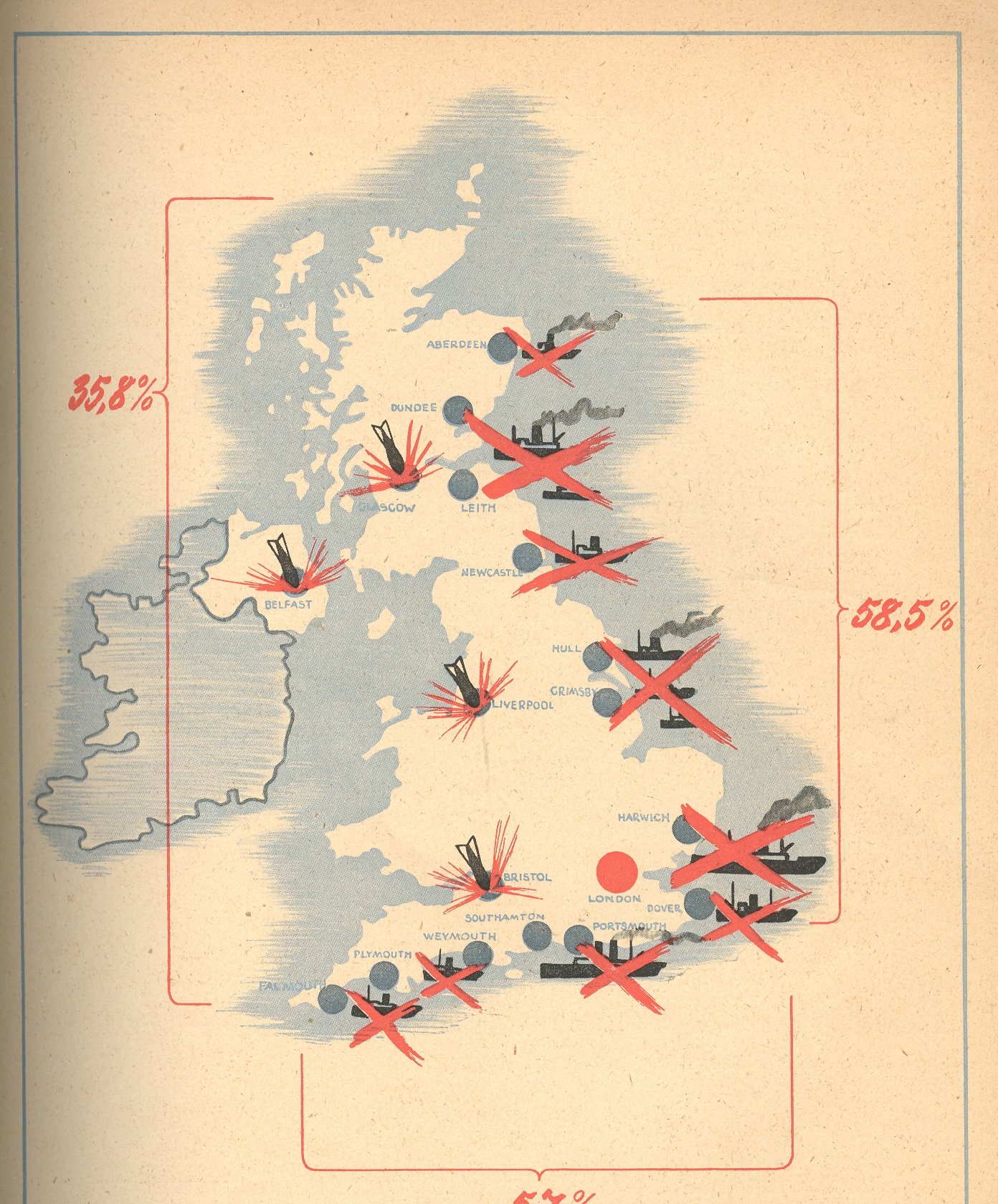
     The pamphlet’s 32 pages (illustrated with 2Blog--May 24--map14 photographs of various blow-ups and bombings, plus one graph and three maps) are dedicated to winning the French hearts and minds, trying to convince the conquered population that there really wasn’t any help coming, and that the British could not even supply themselves with the necessaries to run a country, let alone a war.

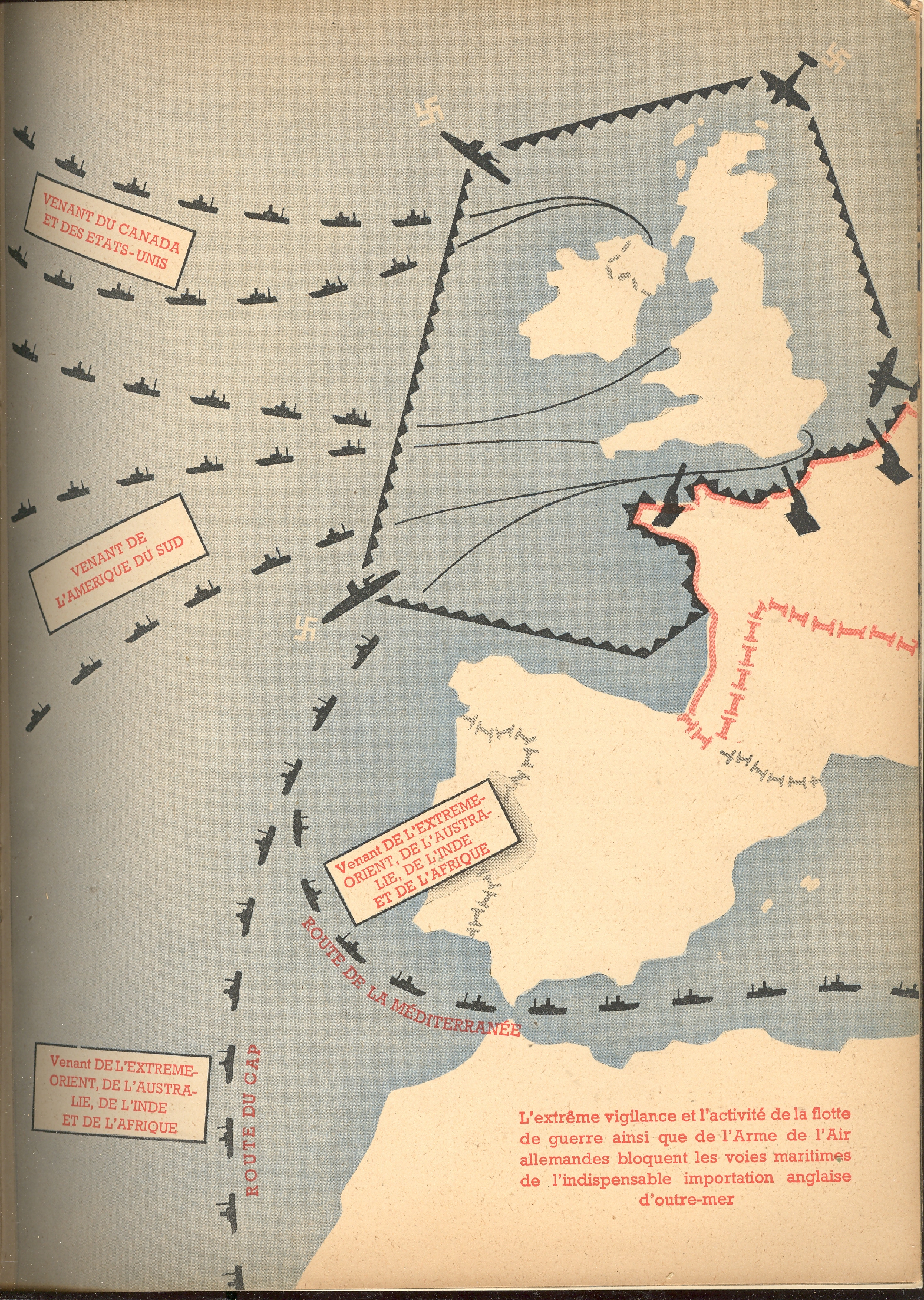
    In the map at right we see the  ports and shipping centers that were bombed by the Luftwaffe (with London located by a big red dot).  Another map shows the stockade-like presence of the Nazi navy securing its impregnable wall against the arrival of foreign trade and supplies to Britain.  

    Blog--May 24--map2

    This post is one of a series on propaganda maps which occasionally appear in this blog.   Like Thomas Nast political cartoons and war photography, a map can instantly and overwhelmingly display not only data but sentiment as well. The maps published in this pamphlet by the Nazis are were certainly immediately understandable to just about anyone, French-reading or not, literate or not–the images needed no words, especially when surrounded in the text by vicious images of German military might.  OvBlog--May 24--map2 001errun or not, Petain-ized as it was, France was still offering aid to its allies and resistance to the Germans–the more minds that could be won over with propaganda of this sort meant one less to have to worry about as an active enemy.

    A Listing of Some our the Propaganda-related posts in this Blog

    Nazi Propaganda: Scaring the Will-to-War, 1935

    Maps as Propaganda: the Nazi’s Use of Maps in the Hearts and Minds Campaign in Occupied and Holland and France, 1943


    The Propaganda of Restricting Infomration: Dorothea Lange’s Photos at the Japanese “Relocation” Camp, Manzanar, 1942

    Psychological Warfare--Aerial Propaganda Leaflets and Surrender Tickets, WWII.

    Maps as Propaganda: the Turning of the Tide, January 1943


    Humanitarian Propaganda–Hope for those at Home, September 1944.

    Nazi Propaganda: Scare Tactics in a Hearts and Minds Campaign, 1940

    A Propaganda Effort Equating the New Deal and Nazism, 1935: the Power of Willful Forgetting

    The Atomic Bomb: 6 August 1945. Propaganda Leaflet Dropped on Japanese Cities

    The Polish “Threat” to Germany, 1939:   Nazi Propaganda on the Perceived Polish “Invasion”


    Propaganda Maps #2: the Nazis. the Big Lie, and Cartography


    Graphical Display of Data: the R.A.F. and Luftwaffe Present Their Cases, 1938-1940


Recent Posts

Archives

Categories