A Daily History of Holes, Dots, Lines, Science, History, Math, Physics, Art, the Unintentional Absurd, Architecture, Maps, Data Visualization, Blank and Missing Things, and so on. |1.6 million words, 7500 images, 4.9 million hits| Press & appearances in The Times, Le Figaro, Mensa, The Economist, The Guardian, Discovery News, Slate, Le Monde, Sci American Blogs, Le Pont, and many other places… 5000+ total posts since 2008.

  • What if Marx had Dedicated Das Kapital to Darwin?

    JF Ptak Science Books LLC  Post 741  Blog Bookstore
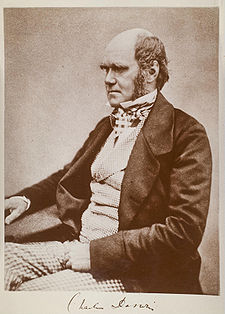
    Darwin

    It’s a kind of intriguing question in the world of “what ifs”–even though the thought had been taken seriously for years, the
    issue has been (for decades) safely put to sleep in misty mythtime, except in the minds of some
    creationists and conservatives.

    The issue came up again for me while reading I.B. Cohen’s Revolution in
    Science
    (Harvard 1985) in the “Influence of Marx and Engels” chapter, where the idea of the dedication gets resurfaced. Leaving aside the whole aspect of Das Kaptial
    and the thought of Karl Marx (1818-1883), I’d just like to concentrate on the
    Darwin-Marx “connection”.  One thing is
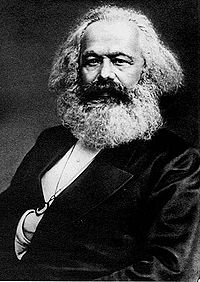
    for sure:  Marx thought a lot of Darwin
    (1809-1882), particularly in the way that he could use aspects of Darwin’s
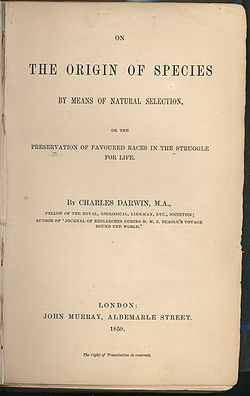
    theory (On the Origin of Species by
    Means of Natural Selection, or the Preservation of Favoured Races in the
    Struggle for Life
    , the title changing in the sixth edition in 1872
    to simply The Origin of Species.)
    to bolster his own thought.  Marx thought
    Darwin’s theory
    to be “very important” dealing a death blow” to “teleology in the natural
    sciences”.  He was particularly
    interested in Darwin
    as it was, in his mind, “the natural history foundation for our viewpoint [of
    historical materialism], “serv[ing] as a …basis for the class struggle in
    history”. 
     

    Darwin origin

    The business of the dedication is slightly knotty, as there
    is supporting correspondence that seems to support it all.  Darwin did
    receive a letter and he did respond, but it related to Marx’s son-in-law Edward
    Aveling’s (1849-1898) book The People’s Darwin
    (1881).  The issue is dealt with often
    and elsewhere on the web, so I won’t go into it here, except to say that the
    issue of Darwin
    being the dedicatee of Das Kaptial has been put completely to rest as
    untrue. 


    It is interesting to read Darwin’s very thoughtful, old-school  thanks-but-no-thanks response to Marx (found at
    Friends of Darwin)

    Dear Sir:
       I am much obliged for your kind letter & the Enclosure.—
    The publication in any form of your remarks on my writing really requires no
    consent on my part, & it would be ridiculous in me to give consent to what
    requires none. I shd prefer the Part or Volume not to be dedicated to me
    (though I thank you for the intended honour) as this implies to a certain
    extent my approval of the general publication, about which I know nothing.—
    Moreover though I am a strong advocate for free thought on all subjects, yet it
    appears to me (whether rightly or wrongly) that direct arguments against
    christianity and theism produce hardly any effect on the public; & freedom
    of thought is best promoted by the gradual illumination of men’s minds, which
    follow from the advance of science. It has, therefore, always been my object to
    avoid writing on religion, & I have confined myself to science. I may,
    however, have been unduly biased by the pain which it would give some members
    of my family , if I aided in any way direct attacks on religion.— I am sorry to
    refuse you any request, but I am old & have very little strength, and
    looking over proof-sheets (as I know by present experience) fatigues me much.
       I remain Dear Sir,
          Yours faithfully,
             Ch. Darwin
    Marx

    By 1865 Marx moves on a bit, finding a new champion in the
    natural history world, Pierre Tremaux, whose Origine et transformations de
    l’homme et des autres êtres
    (1865) which he found to be “a very important
    advance over Darwin”.  I have no idea
    what Marx was thinking with Tremaux, except that history has forgotten the1865
    work and its author.  M. Tremaux has
    disappeared; Darwin
    continues to prove out as fantastically correct. 


    All quotes from Cohen’s revolution, pp 344-347
    ·Posted by :

    ·in:

  • Political Majesty at the Interior and Exterior of Creation (1588 & 1680)

    JF Ptak Science Books LLC  Post 742  Blog Bookstore

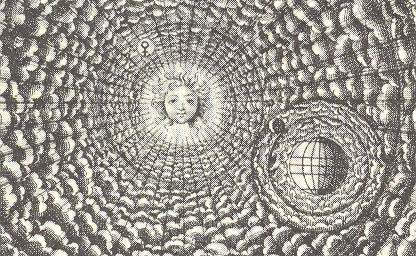
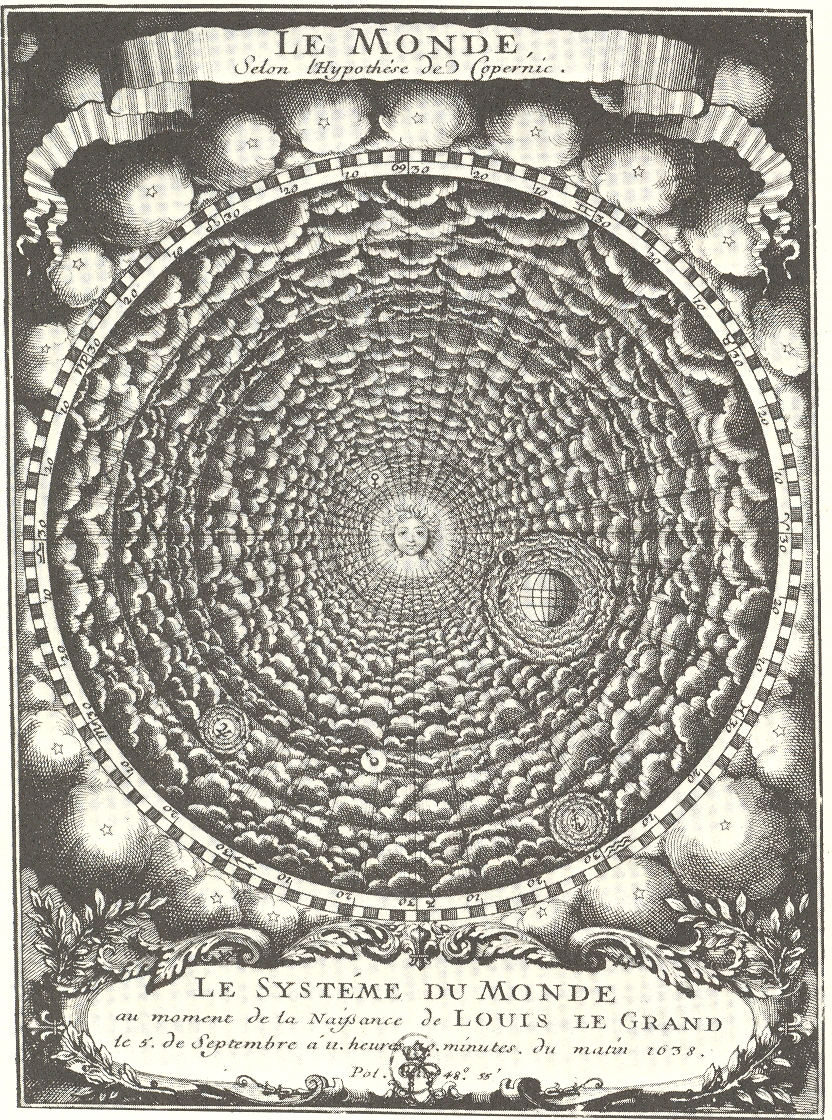
    This engraving Le
    Monde Selon l’Hypthese de Copernic. Le Systeme du Mondeau movement de la
    Naissance de Louis le Grand le 5 de Septembre 11. heures 20 minutes du matin
    1638
    , is a

    +++Louis Grand Universe singular representation of the universe at a singular moment in
    time.  And that moment in time was the
    birth of Louis le Grand, or Louis XIV, the Sun King, pictured at the moment of
    his birth at the center of the Copernican universe. The future (72-year-long
    reign) king smiles benignly at us from the center of the universe.

    +++Louis Grand Universe 2

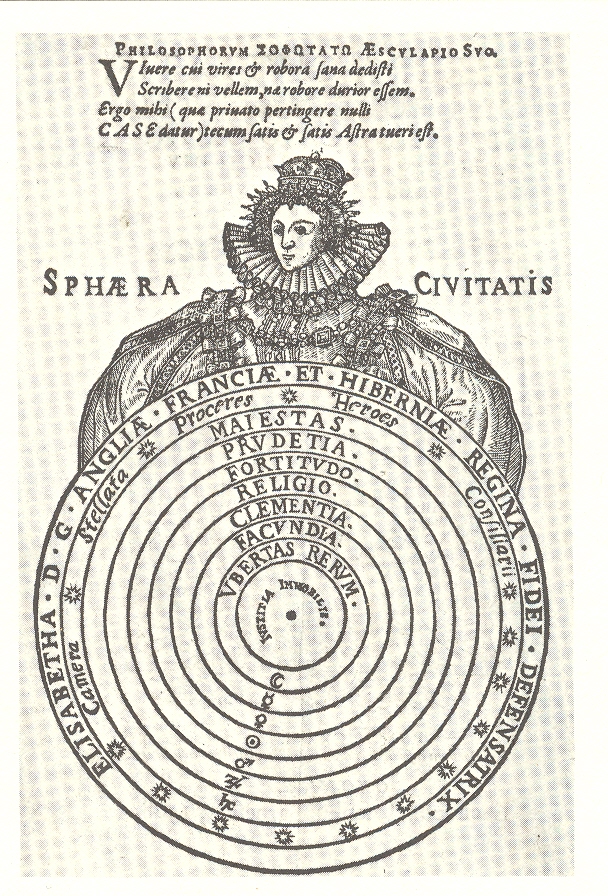
    On the other side of the coin is the all-reaching embrace of
    the deity-like Queen Elizabeth, who cradles the nine successive spheres of the
    universe.  The innermost sphere is
    occupied by the Earth, the center of all things, around which are labeled the
    seven spheres of the planets:  “urbetas
    rerum” (immovable justice) of the Earth, “facundia” (eloquence) of Mercury, “Clementia”
    (clemency) of Venus, “Religio” as the Sun, “Fortitudo” (fortitude) of Mars, “Pridetia”
    (prudence) of Jupiter, and “Majestas” (majesty) of Saturn.  Beyond the sphere of Saturn is that of the
    fixed stars (consisting of the Star Chamber, the nobles, Lords, Counsellors);
    and beyond that, in the last sphere, is Elizabeth.   


    +++Louis Grand Universe 3

    The image appears in John Case’s Sphaera Civitatis  (1588,
    The Sphere of the Commonwealth) who
    writes in his preface “How well civic machinery accords with heaven’s form, and
    how it is distinguished by like figures, our republic, unique, will declare on
    behalf of many. Do you see the stars, wheeling around in their alternating
    course, and Justice, who weighs causes in her balanced pans, the unchangeable
    center of our universe?” [Full text here.]

  • Spam, Smeat, Spic, Prem, Mor & Arf: Food by Any Other Name

    JF Ptak Science Books LLC  Post 743  Blog Bookstore

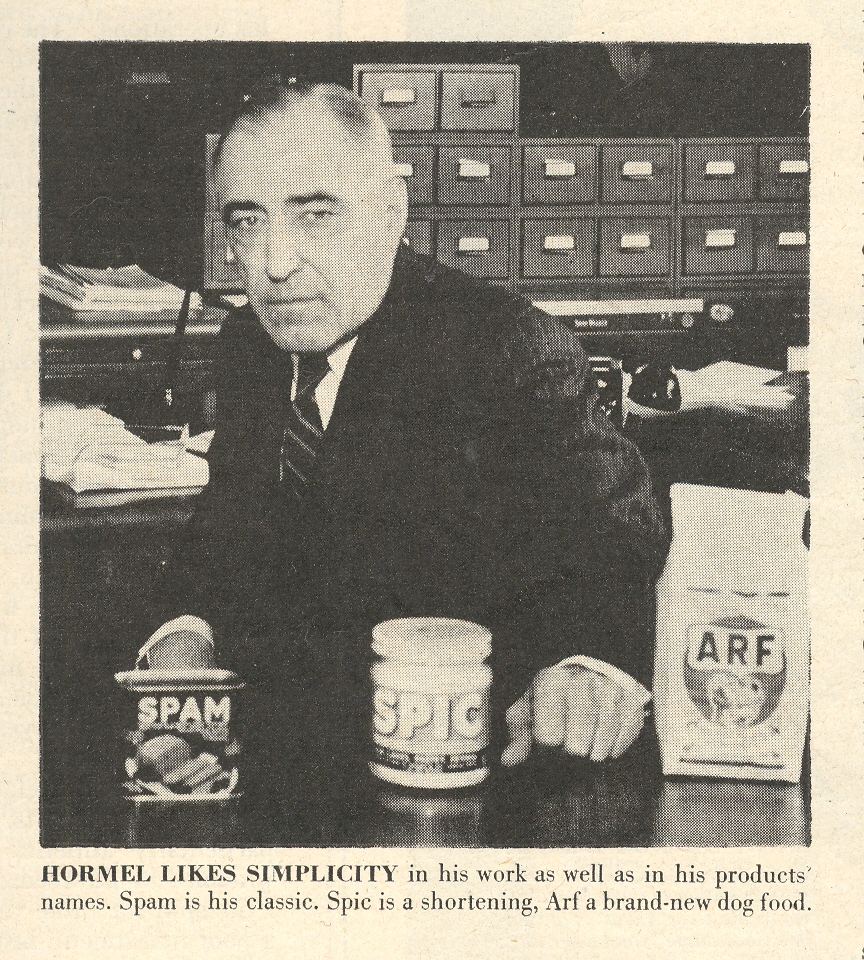
    This photo launched itself up to me while looking through
    the 11 March 1946 issue of LIFE magazine for a depiction
    of an atomic attack on NYC.  It was Joe
    Hormel who found me first, fistily challenging me to look at his food products,
    a proud manager with his best stuff, presiding over his world of tinned meat
    with steely Elmer Ganty-like broke-bone determination.

    +++hormell

    Joe ran his father’s “butcher business” and brought Spam to
    the world in 1937, trying to find an end run around the shrunken Depression
    food allowances, and pretty much succeeded.(Spam may also have been the first “singing
    commercial” in what the LIFE article called “the earthiest, corniest and most
    successful campaigns in U.S. advertising history.”)  When the meat shortages spiked during WWII,
    Spam found its way overseas via Lend-lease arrangements, feeding millions of British
    and European people..  The consensus was
    that Spam was mysterious and unpretty,  but did deliver something like 15-grams of
    protein per tin, which made it some sort of factor in waging the successful
    war.  US soldiers also received smeats
    called “spam” though they weren’t necessarily Hormel’s product—just another in
    a long line of monosyllabic imitators whose quality and zestyness didn’t come
    close to the real thing, though this time prepared in the millions of pounds by
    Army cooks who banked on the Spam name more so than the actual preparation.   Or so I read. 
    In any event it was a real issue for Hormel who “insisted that Spam was
    a high-grade compound of ham and pork shoulder” and that the [real] “dainty,
    tasty Spam retained liquids in the meat, whereas the bulky Army preparations
    was guilty of the worst sin the in the tinned meat world…” floating away in “loose
    juice”.  As a vegetarian, neither sounds
    very appetizing.  And the anti-Spam
    stories and songs and newspaper articles and art and editorials of complaint
    and disgust coming from US soldiers during the war are endless and legion and
    iconic. 

    +++spam ad

    Spam seems impervious to the barbs and arrows and boulders
    hurled its way over the last 72 years, still chugging along in its tinned meat
    way, 6 billion sold units and growing. 

    [Note:  “Spic” was
    actually a shortening, and “Arf” was a dog food.  I just couldn’t resist putting their names in
    the title.]


    Also, I include some of the recipes from the Monty Python
    (170) skit on spam:

    • Egg, bacon, and spam
    • Egg, bacon, sausage, and spam
    • Spam, bacon, sausage, and spam
    • Spam, egg, spam, spam, bacon, and spam
    • Lobster thermidor aux crevettes with a mornay sauce
      garnished with truffle pate, brandy, and a fried egg on top and spam.

    ·Posted by :

    ·in:

  • The Forensic Microscope and Hidden Images in Art

    JF Ptak Science Books LLC  Post 744  Blog Bookstore

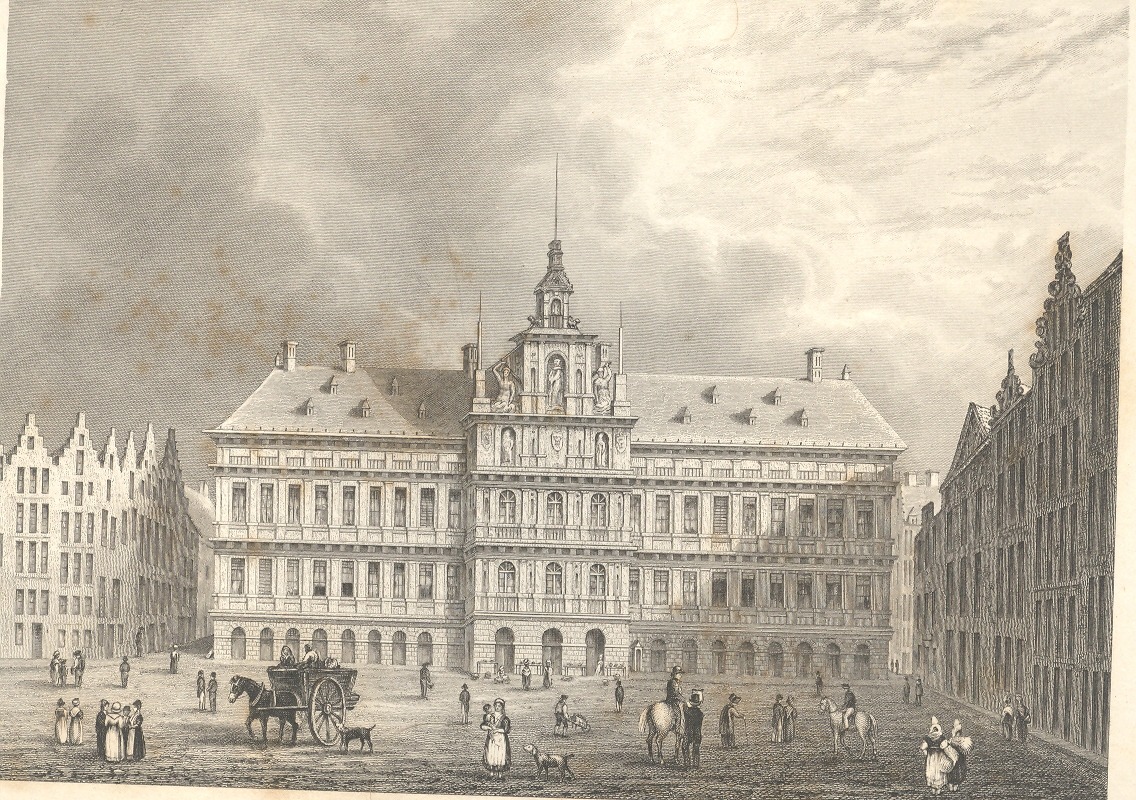
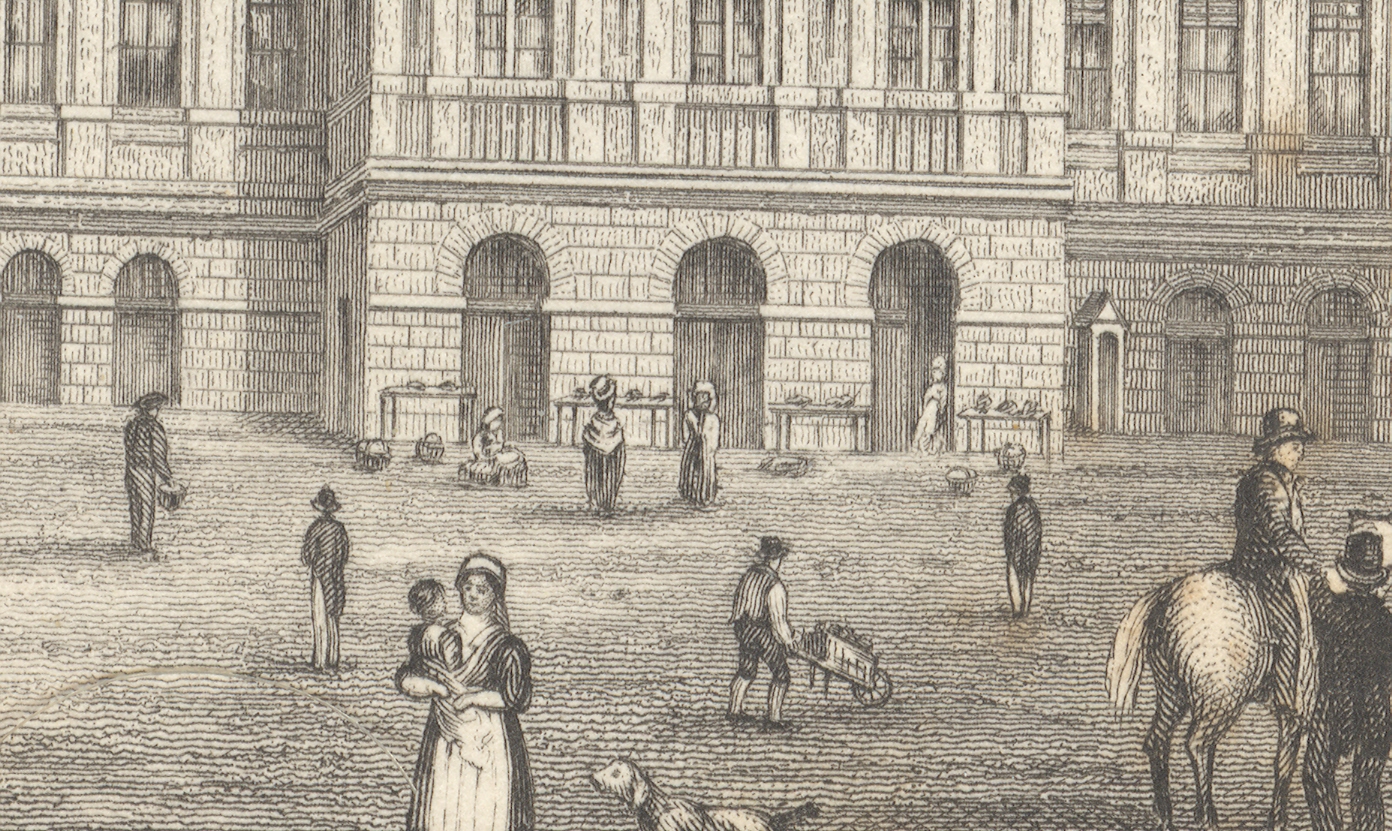
    I’ve written before about the found, incidental figures of “filler” art found in larger works,generally inconsequential  images used to supplement the empty foreground or provide handy perspective or scale for the subject at hand.  In this example, a steel engraving of Town Hall at Antwerp, the principal focus of the artist is the architectural structure, the public square and the surrounding buildings.

    +++looking closely
    To give the whole engraving some buoyancy and scale, the artist provided a fairly active scene of town life going on in the square.  Now of course he could’ve made the figures more generic, but the artist went far beyond that, recording some of the lost city life of the 1830’s. 

    +++looking closely detail

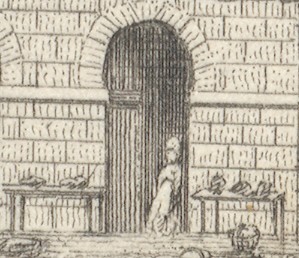
    The truly interesting bit here is barely observable in the original; but, under magnification, we see a very rich and minuscule “engraved photograph” of a slice of daily commerce and street life in Antwerp.  If you look at the central entrance to the town hall you can see three main (and large) doorways, and if you look clos+++looking closely detail2er still, you’ll see something leaning against the portal at right.

    Extraordinarily, what the artist snuck into the original is a tiny (2mm) figure watching over several tables of her (fruits?/vegetables?) ware, waiting for a customer. There doesn’t seem to be much interest in her stuff, currently, and she has allowed herself a little relaxation, leaning against the doorway.  I’ve found this sort of extremely minor subject matter and its ephemeral connection to the larger work at hand to be just fascinating.  I wonder why such detail would be added–why would the artist, or engraver, take such care and interest in such minor visions.  Perhaps this is just what was at hand on the days the artist fleshed out his work; perhaps it was the work of the engraver, alone, incising yet another semi-boring architectural image; desperate for a little artistic activity, adding some interesting, almost-invisible touches, here and there.  Perhaps no one would ever really notice them, but whoever was responsible for adding such incredible, extra-dimensional details would certainly enjoy knowing they were there, recognized or not.

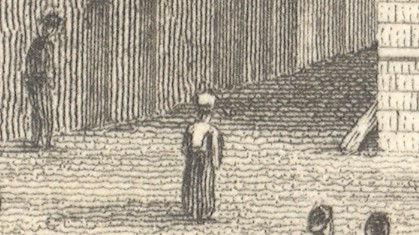
    And while we’re at it–why in the world was that log-like+++looking closely detail4 thing at the base of the extreme left of the Town Hall included in this picture? I just adore that such ephemeral interest was included in this type of work–its reasoning lost forever, except that which we give it.

  • History of the Future: Farming and Vertical Integration, 1940

    JF Ptak Science Books LLC  Post 745  Blog Bookstore

    This 1940 pamphlet, published by the Texas State Research
    Foundation, is a relatively young, paleo-futuristic view of the coming of the
    vertically integrated food production business in the United States .
    Its title (Building an Agricultural and Industrial Empire through Research)
    directly relates the idea of a grand agricultural/industrial alliance, with the
    contents pointing the way to far more than simple “research”, as the cover
    intimates.  There is a giant series of
    silos, and even a barn (in the top right corner), but the image

    ===farming here is pure smokestack-encrusted
    agribusiness.  The simple farmer on his
    tractor makes his slow way through his high-bound and gross techno skyline—of course
    the visual message implies that the family farm would be aided by “research”,
    but it also opens the door wide into the future to what the American farm would
    become.  The family farm would be
    absorbed by the skyline of major business: 
    at the time when this pamphlet was published some 22% of the American population
    was directly involved in farming; by 2002 that figure had genocidally dropped
    to about 1.5%.  The small, independent farms
    had been replaced by global conglomerates who are centralizing food production,
    controlling the distribution of fertilizer and seeds, causing massive soil
    erosion, destroying aquifers, depleting the soil, polluting with toxic
    chemicals, and on and on.

     So the image of this puffy pamphlet’s cover turns out to be
    prescient after all, and pretty much true: 
    except for the farmer-on-the-tractor part, as that guy got pretty much
    absorbed into a corporate Farmer Entity.

  • Paleo-futurology: Solar House, 1946

    JF Ptak Sc++blog++solar houseience Books LLC  Post 746 Blog Bookstore

    This
    interestin
    g 1946 pamphlet combines tow modern interests in one package:  Green’s Ready-Built Homes Present the Solar Home
    presented both a prefabricated, well-designed house that was also passive solar
    friendly.  The architect and engineer was
    George Fred Keck
    (1895-1980) , a true modernist, and designer of one of
    the twelve “Homes of the Future” for the Chicago “Century of Progress” World’s Fair in 1933. 

     The “solar home” that he offered here used seasonal variations and house
    location to regulate heating/cooling, glazing and siding, air movement, and the
    storage of thermal energy in building materials—mostly, there were lots and
    lots of transfer-friend++blog++solar house 001ly double-paned windows, all of which were
    forward-thinking ideas for 1946.  In
    addition the house was prefabricated, making construction easier, simpler, and
    quicker than any of the stick-built houses being constructed at that time.  There was also an impetus for quick, good
    construction given the housing shortage caused by the returning WWII veterans.
    The prefab idea was also a relatively new one in architecture—though there are
    instances of bits and pieces of prefab architecture reaching back hundreds of
    years, the first earnest attempts at providing such housing on a mass scale
    dates only to the 1920’s. In any event, the double-effort here was a fairly early effort at combining these two ideas–and certainly something that seems to have been about 60 years too early.    

  • Medical Quackery: the Invention of Baldness and the Testicular Electrical Suspenders

    JF Ptak Science Books LLC  Post 747  Blog Bookstore

    ++blog++baldness Well. 
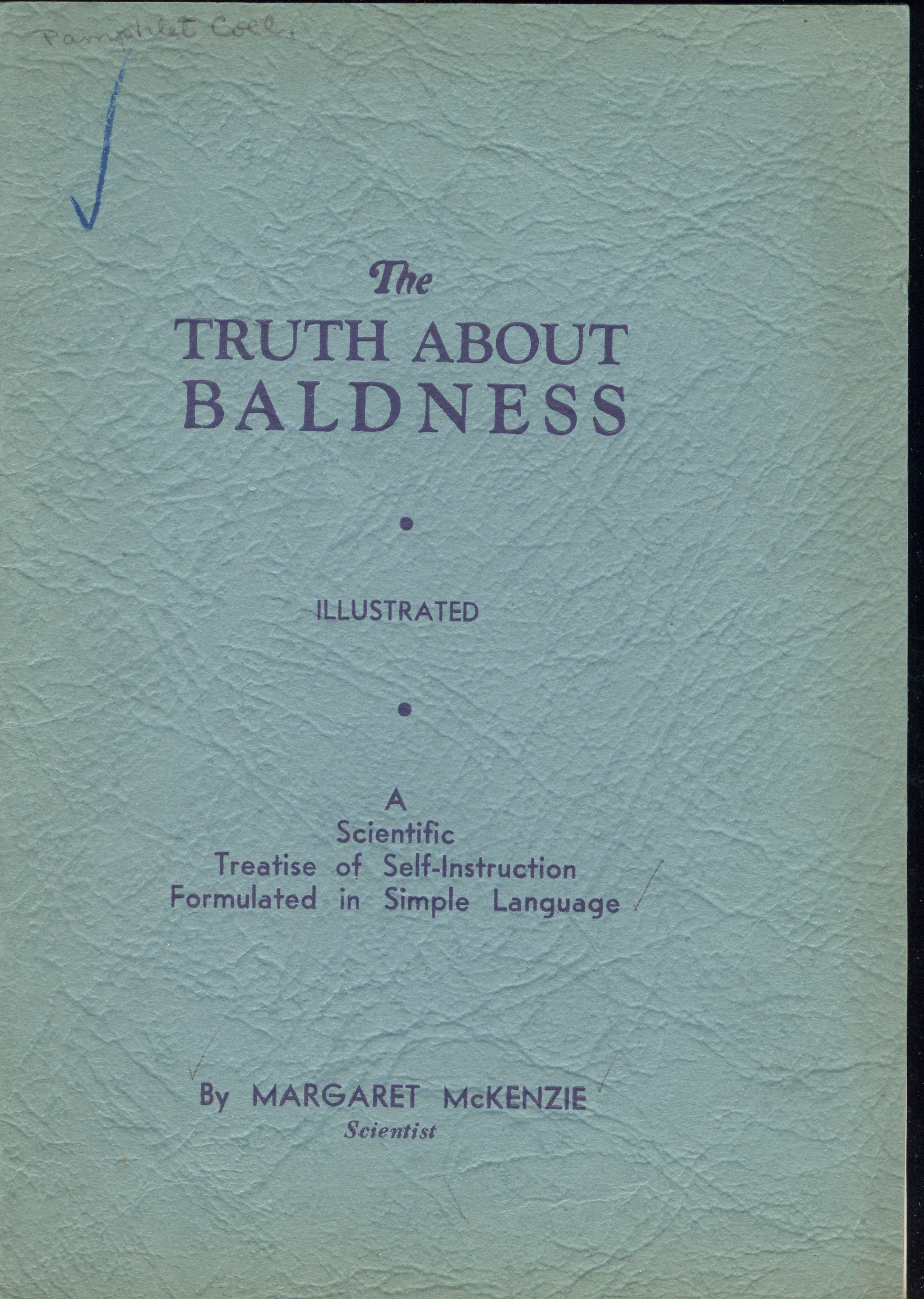
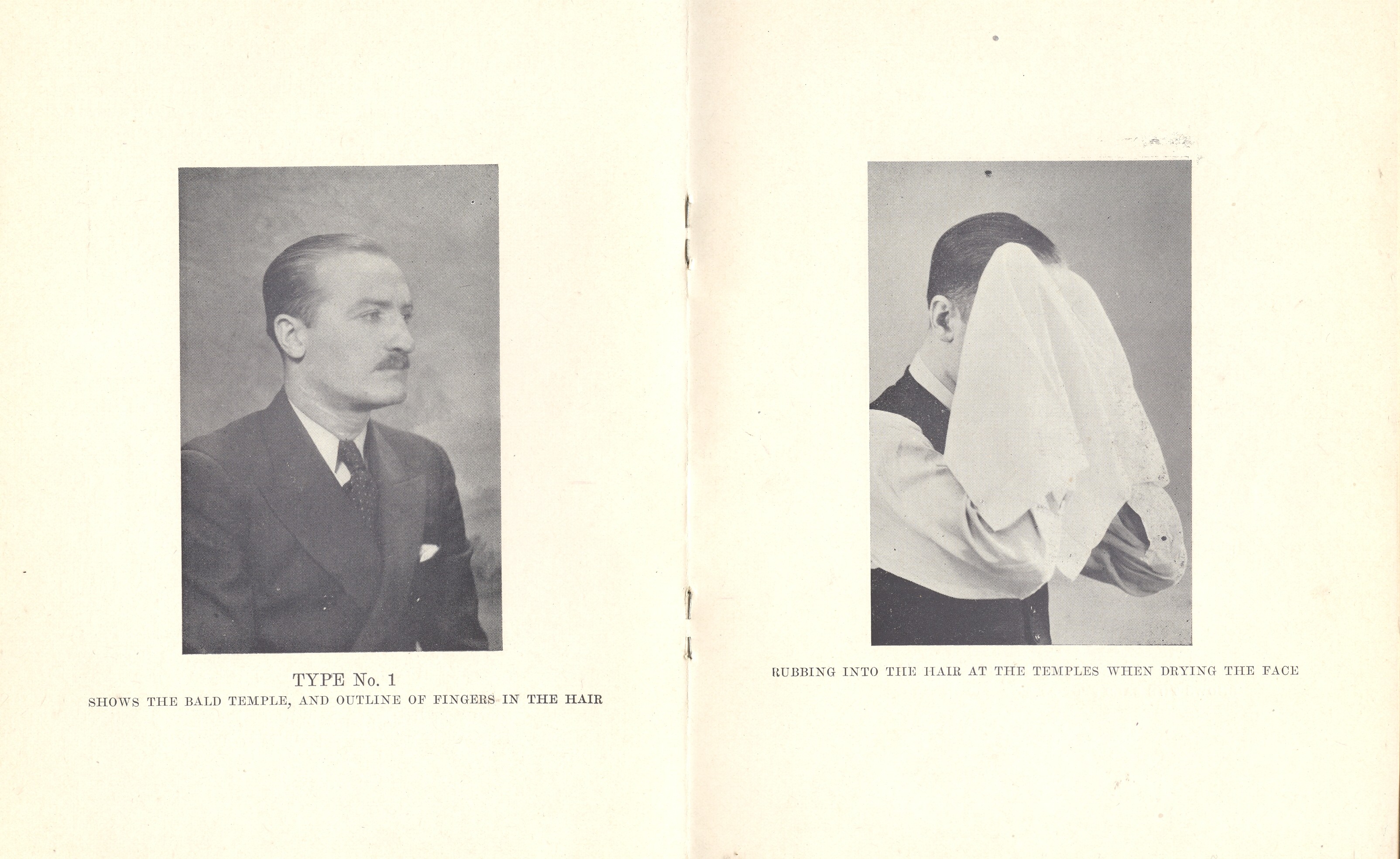
    Margaret McKenzie (“Scientist” with a capital “s”) wrote this simple
    treatise in 1934, claiming that she had discovered what caused baldness and
    knew how to “grow hair with ‘Natural-Science’ ”.  Answering her own call to baldness, and “after
    eighteen years of exhaustive study”, Margaret “emerged triumphant…and uncovered
    this thing baldness [sic]” with her discovery which would “banish baldness
    forever and thus wipe out the bald head which is my aim [sic]”.   Margaret’s
    gift to “Man-Kind”, her discovery, boils down to fifteen  words: 
    don’t rub your hair when washing your face, and do not smooth your hair
    down with your hands.  That’s it.  Or almost it:   we are told later that it is best to shampoo
    your hair in a sink, and then if one must shower or bathe to use “a rubber
    shower cap so as to not expose your hair to water”.  I’m not sure how that holds together. 

    ++blog++baldness pics

    The great art of Margaret McKenzie is that that
    like any great salesperson she was able to spread this tidy discovery over 15
    pages.  She strays off-topic only a few
    times, once when discussing her cure for dandruff, and another when she states
    with sublime magnificence that “the bald head era dates back to the 15th
    century”.  The cause of the great onset
    of baldness, by the way, was the invention of the haircut, which led to
    smoothing down the hair and to rubbing the scalp (at the temples) when drying
    your face after washing.  Evidently haircuts
    didn’t exist before 1400. 

    Sometimes all one can do is say “wow!”.

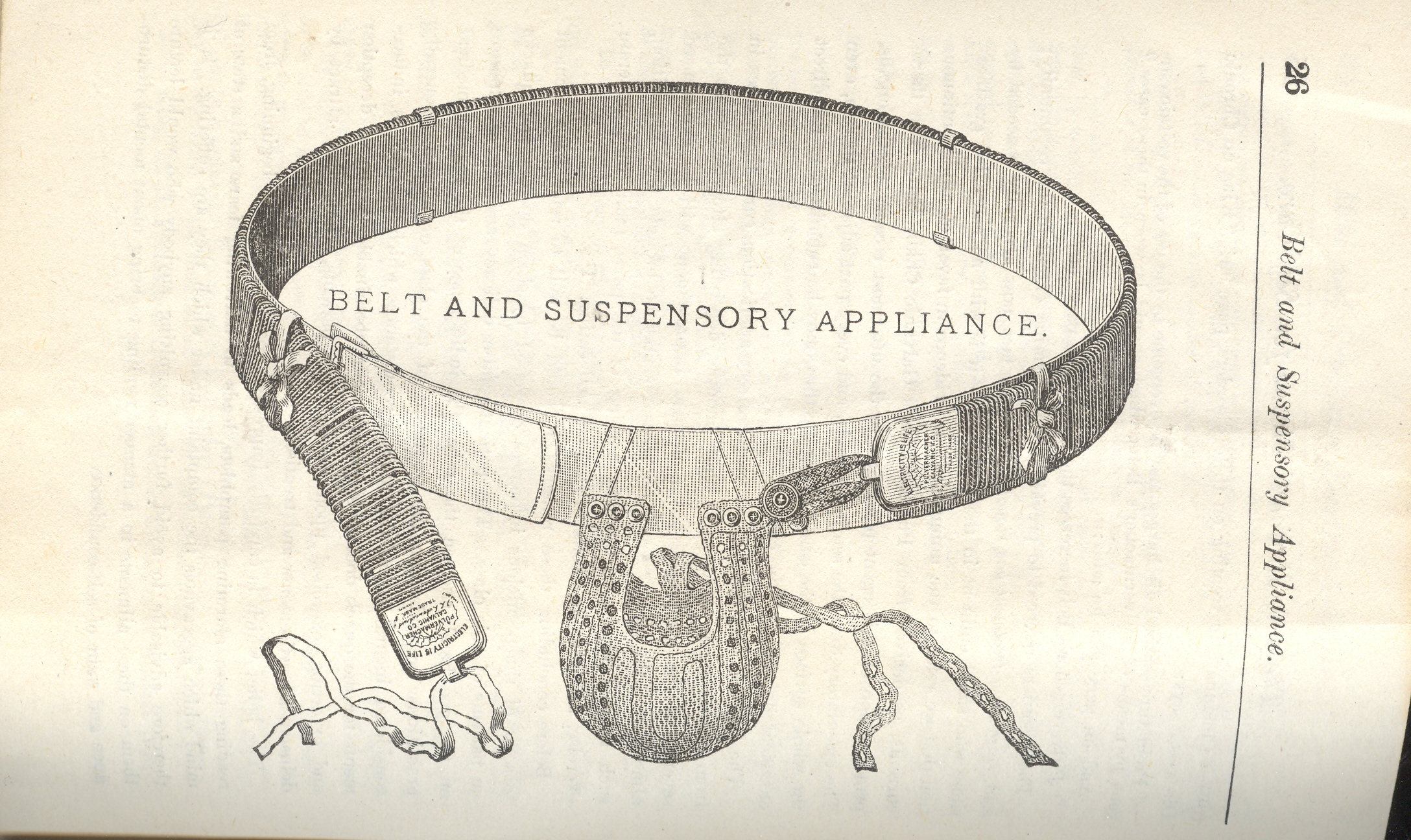
    ++ebay--testi belt 1 And a trailing, eyebrow-arched, questioning  “wow…” is about all you can say about Pulvermacher’s Electric Belts &c/ Electricity Natures Chief Restorer, Self-Applicable for the Cure of Nervous and Chronic Disease without Medicine (printed ca. 1880), which features an electric “chain” in a belt connected to a “suspensory” for a man’s vitals. It is one of many, perhaps hundreds, of electrical geegaws that climbed aboard the principles of Michael Faraday’s monumental invention of the induction coil (1831)–one can hardly imagine what Mr Faraday would’ve thought of this application of his great addition to the history of technology. This electrical stimulus was supposed to cure all manner of unspeakably lingering medical tragedies, including spermatorrhea, exhausted vital energy, female complaint, inflammation of the prostate gland, seminal weakness, kidney disease, cramp, lost manhood, paralysis, indigestion, dyspepsia, spinal complaints, nervous debility, and of course the “debilities of sexual self-pollution” (“the sexual sin (which) is the most destructive of all human vices…the greatest outrage against Nature’s sexual ordinances that man can possibly perpetrate”.  Isaac Pulvermacher’s (which is German for “gunpowder maker”) electrical medico-contraption was popular for several decades in the mid/late 19th century until it faded and trailed away at the turn of the century, though it was not for the lack of trying.  Pulvermacher had all manner of glowing letters of support for his product, though one wonders if they

    ++ebay--testi belt 3

    weren’t mostly cooked up on the back burner of a two-burner stove top, much in the way he invented this bizarre electrical device and pathologized aspects of male sexuality. 

    ·Posted by :

    ·in:

    —
  • A Big Sea of Planes: Quantitative Display of World War II Bombers

    JF Ptak Science Books  Post 748  Blog Bookstore

    (See also the new post on picturing massive numbers here.)

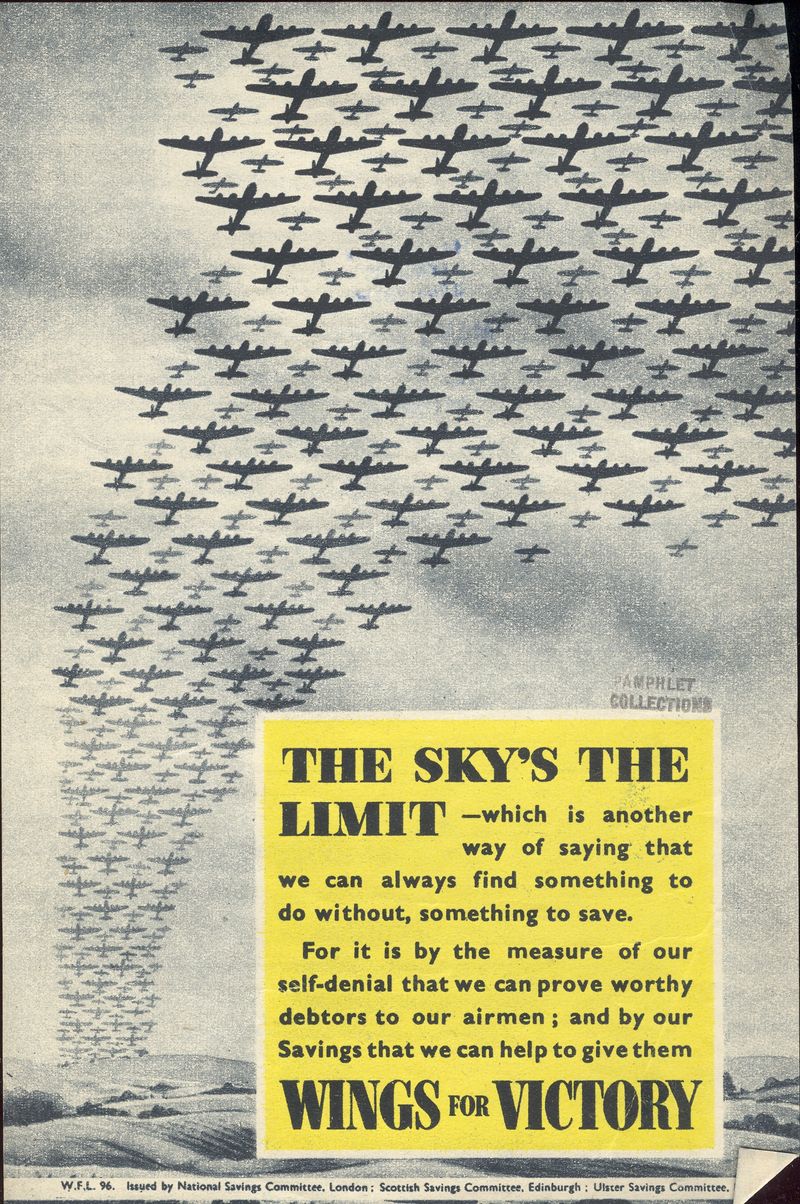
    I’ve written four or five posts on glorious quantitative visual displays of massive amounts of WWII bombers, most of which I’ve gathered together below. This subject came up today when I found another of these images in a small hand-out broadside published by the National Savings Committee of Great Britain, urging people to save money and be thrifty, keeping money in the banks, in an effort to control prices and have money available to the government for war production.  The legend states: “For it is by the measure of our self-denial that we can prove worthy debtors to our airmen; and by our Savings that we can help to give them wings for victory”.  The point is driven home by a now-familiar representation of hundreds of bombers rising from the horizon–a remarkable vision, especially if you tried to visualize the real thing. 

    +_+ planes WWII


    Here are a few other similar images:

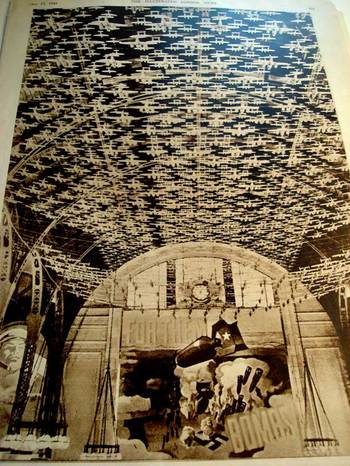
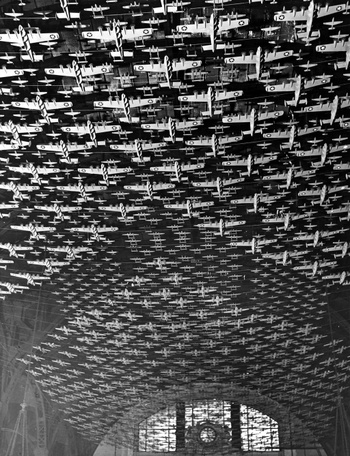
    (A) This widely circulated and published photo appeared in 1942 (particularly in LIFE Magazine in 17 September 1942 and the Illustrated London News in the next month), and showed 4,500 aircraft models suspended from the ceiling of Chicago’s Union Station   It is the result of an inspiration derived from President Franklin Roosevelt’s assertion that America would produce 185,000 war-focused aircraft in 1942 and 1943. 

    Blogwwiiplanes

    The planes in this photo were hanging 60-feet above the floor of the station, with wing spans between one foot and four feet (for the bombers).  It was a fantastic, blustery, iconic effort to show what it meant to look at 4500 planes—and these paled in comparison to a drawing (which I unfortunately do not have) that appeared in the Illustrated London News on 21 February 1941, showing the entire production fleet of 185,000 aircraft—a column of planes one mile wide and 117 miles long.

    1ebay_sept_30185000_planes695

    Blogworld_war_ii_airplanes_delano

    Using this photo then to interpolate that full production figure of 185k, you’d have to piece 48 of these photos together to show full production, or a version of this photo that was 8 inches wide and 32 feet long.  (The second image of Union Station and the planes is by FSA photographer Jack Delano.)

    1ebay_sept_30185000_planes_detail69

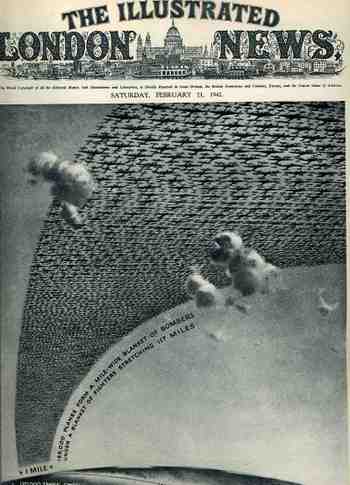
    (B) This arresting cover image for The Illustrated London News of 21 February 1942 illustrates the (new) American production program for planes and tanks for 1942 and 1943 (It reminds me too of an earlier post I did with a similar cover for LIFE magazine here.) The caption reads: “185,000 planes form a mile-wide blanket of bombers under a blanket of fighters stretching 117 miles” which is actually a double blanket of planes–if they were thinned out to form one layer it would stretch one mile wide from Washington D.C. to New York City, which is quite an unimaginable ribbon.


    The reality of the situation was greater than this:  by 1945 over 300,000 planes were produced, 275,000 of them after Pearl Harbor.  And this from a combined aviation industry which before 1939 had produced fewer than 6,000 planes a year.  The war effort increased this by orders of magnitude, and by war’s end there were 81 production facilities with a combined area of 175 million feet, all bumped up within four years.   I’ve never read about it, but I have no doubt that one of the key ingredients to this sort of hyper-successful undertaking was organization–the oversight and control for this process must’ve been fast and decisive, with little room for mid-level anything.  I think that this is the only way the whole thing could’ve worked so well.

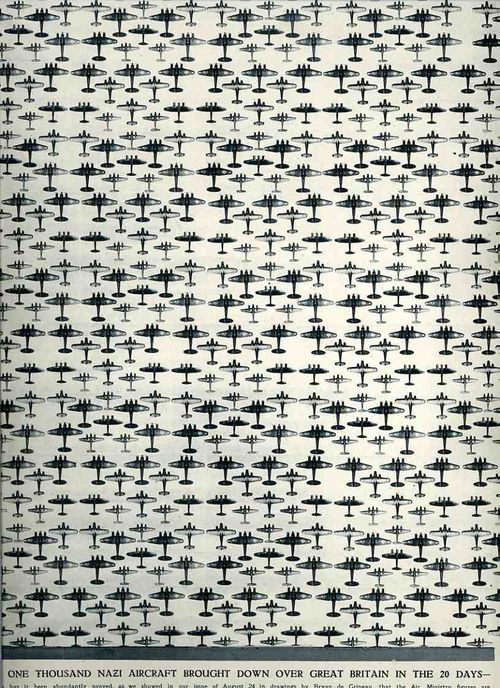
    (C)  This tremendous display is half of a double-page spread that appeared in The Illustrated London News for 7 September 1940.  It was meant to bolster the civilian population of Britain during the time of the German attacks, shoping that “Over one thousand Nazi aircraft (were) brought down over Great Britain in …20 Days…” The artwork, drawn by Bryan de Grineau, actually depicts 1000 planes, and accurately depicted ones at that.   What the graphic doesn’t tally though are the airmen losses, which would be considerably more thanb the 1000 aircraft:  for example, of the aircraft involved in the sustain air-invasion of England, the  Dornier 215’s had a crew of four, Dornier 17’s three, Heinkel 111’s four, Messerschmitt 110’s two, and Junkers 88’s three.  Thus  there were thousands more airmen lost, a commodity that the Nazis could little afford. 

      (This continues a thread on The Battle of Britain and also a post on “What 185,000 Planes Looks Like”).
     The results of the battle (and if you take a look at this earlier post for the full narrative), in terms of aircraft and humans,
    were,  for England: 1,023 fighters: 376 bombers, 148 coastal command aircraft  for a total of 1,547 aircraft and  544 pilots and aircrew killed.  There were also 27,450
    civilians killed and 32,138 wounded.  The Germans lost 873 fighters and 1,014
    bombers for a total of 1,887 aircraft and  2,500 pilots

    I find this visual display of quantitative data beautiful and compelling–and overwhelming in its way.

    The Battle of Britain was fought primarily from 10 July to 31 October 1940, so by the time this image was published the Brits had been able to turn the tide of Hitler’s plan.  (The air strikes wouldn’t really end until the Nazis turned their attention to the Soviet Union in Operation Barbarossa in May 1941.)  And that plan, named Luftschlacht um England, was to overtake and destroy the British capacity in the air, for as long as the English had command of the airspace there would be no way that the Nazis could force an invasion by land/sea (at least in the minds of the Oberkommando der Wehrmacht  and Hitler).  And so the Nazis failed–it was their first major defeat, and, especially, with the turning of attention east, it was a pivotal point of the war. 

    00-blog--Oct 29 battle britain Nazi planes952

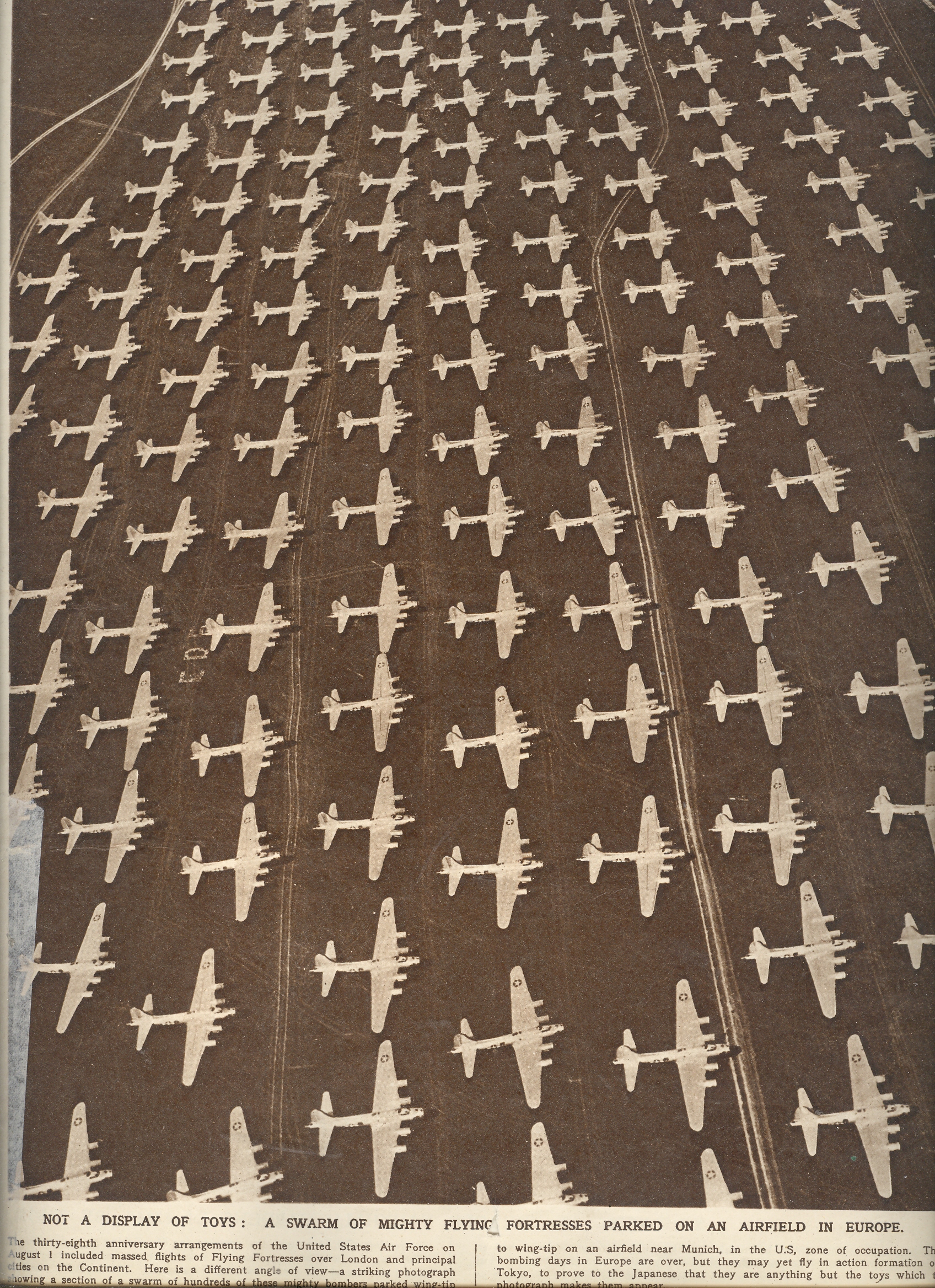
    (D) This last image is a “Not a Display of Toys”, shows only one section of a large airfield “in Europe” (actually in U.S.-administered Munich).  There’s about 300 B-17’s (e?) parked wingtip to wingtip, off duty now from the fight in Europe, but (as the caption says) prepared for a fight in Japan.  I don’t think anyone in high command had any doubt that these planes had seen their last action.  The atom bomb worked, and would work again (and again, and more so if necessary), and the fear that these planes would make their way East was not a real concern. This photo represents about 7% of the highest number of B-17’s in service in Europe at any given time.


    Blog--may 8--vrowds

  • Preserving the Dead in a Formaldehyde Mist, 1899

    JF Ptak Science Books LLC  Post  749  Blog Bookstore


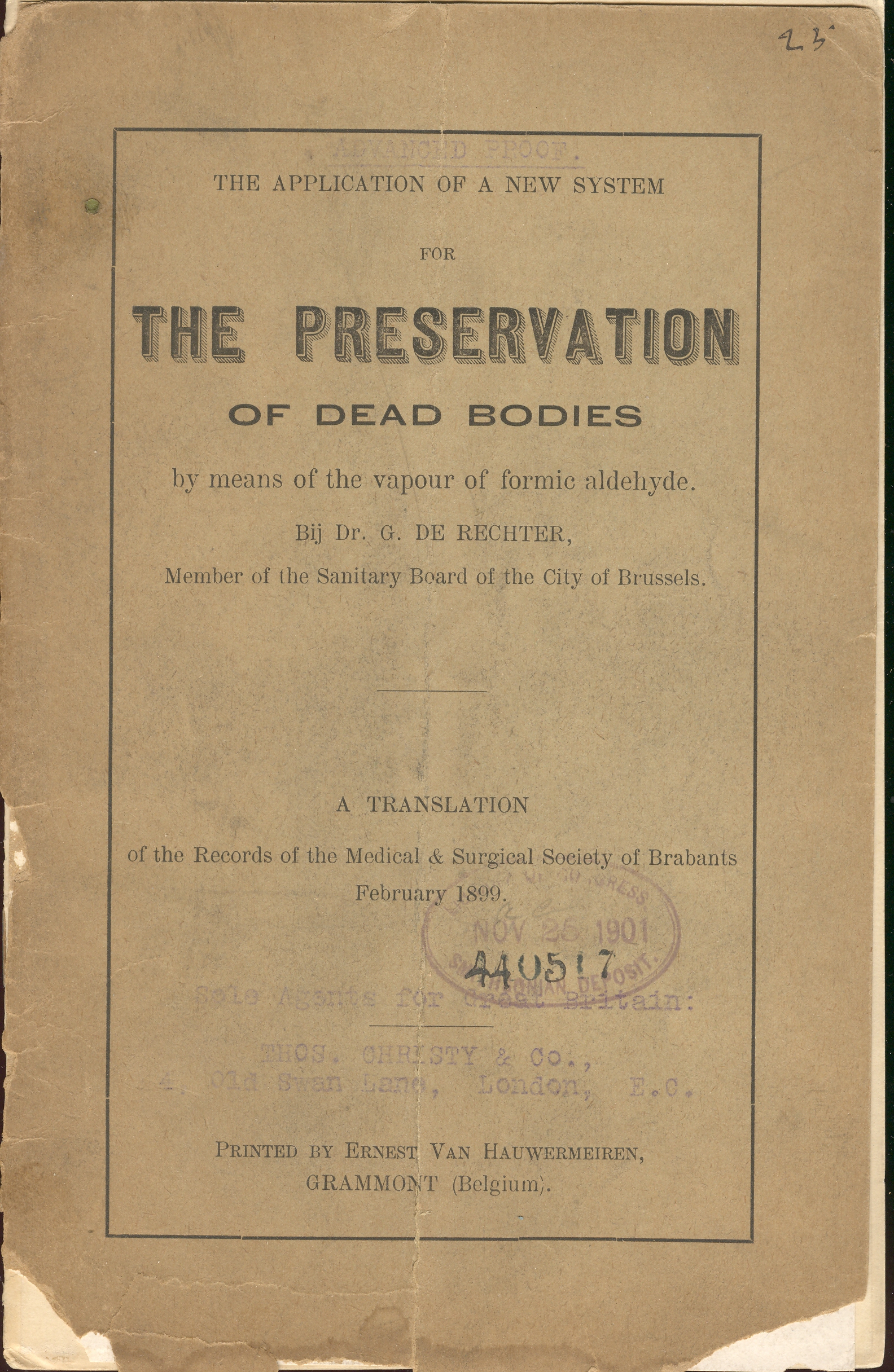
    Gustave de Rechter, the author of this pamphlet (The Application of a New System for the Preservation of Dead Bodies, Grammont, Belgium, 1899) had, as you might guess, a very specific reason for keeping the dead from being entirely, decomposedly, dead.  As the director of the School of Criminology and of Scientific Police of Belgium, Dr. de Rechter tried to find a way of preservation of bodies for forensic and legal purposes.

    +()+ebay dead bodies blog

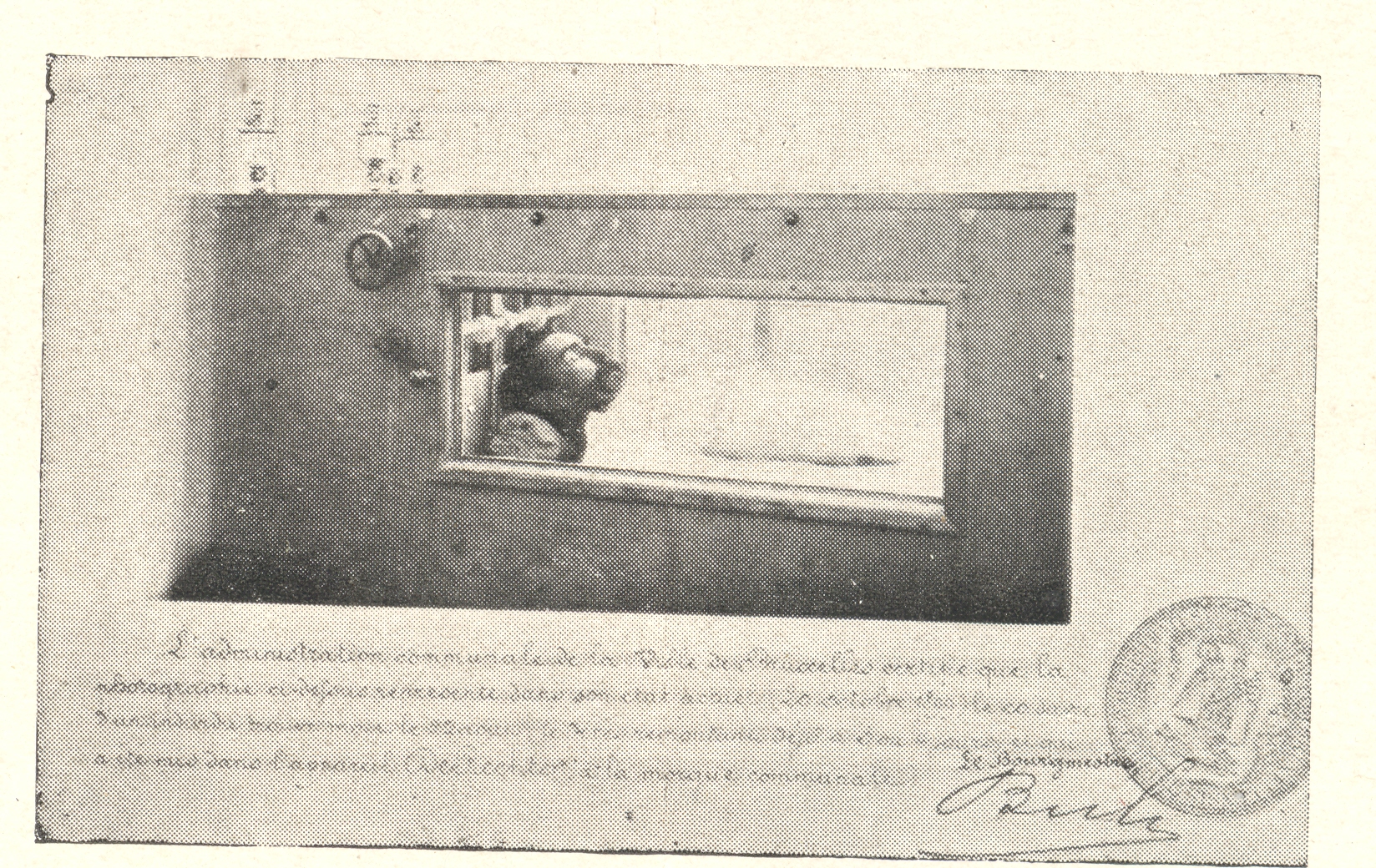
    He  followed  in the footsteps of people like Alphonse Bertillon (France) and Hans Gross (Austria) in helping to establish a scientific basis for criminology in the late 19th century. In his case, the preservation of the dead would allow the bodies (of the murdered or suspiciously departed) to be re-examined at a much later date (at least months down the road) should the defense in a murder case challenge the original findings of the medical examiner. 

    +()+ebay dead bodies photo1

    As de Rechter points out, this was particularly true in the case of poisoning, where in 1899 the evidence would be all but dissipated
    from the body following even a week of death—he maintains that his new method of preservation (via an incubated spray of formic aldehyde, or formaldehyde) would enable further inspection even months after death. De Rechter manages to forestall the inevitable, the great crumbling that awaits everything, everyone, at some point, the “distinguished thing” of Henry James’ (last words), to return everything to the earth, to what Larry McMurtry (in Lonesome Dove) refers to as “nothing but a boneyard”. 

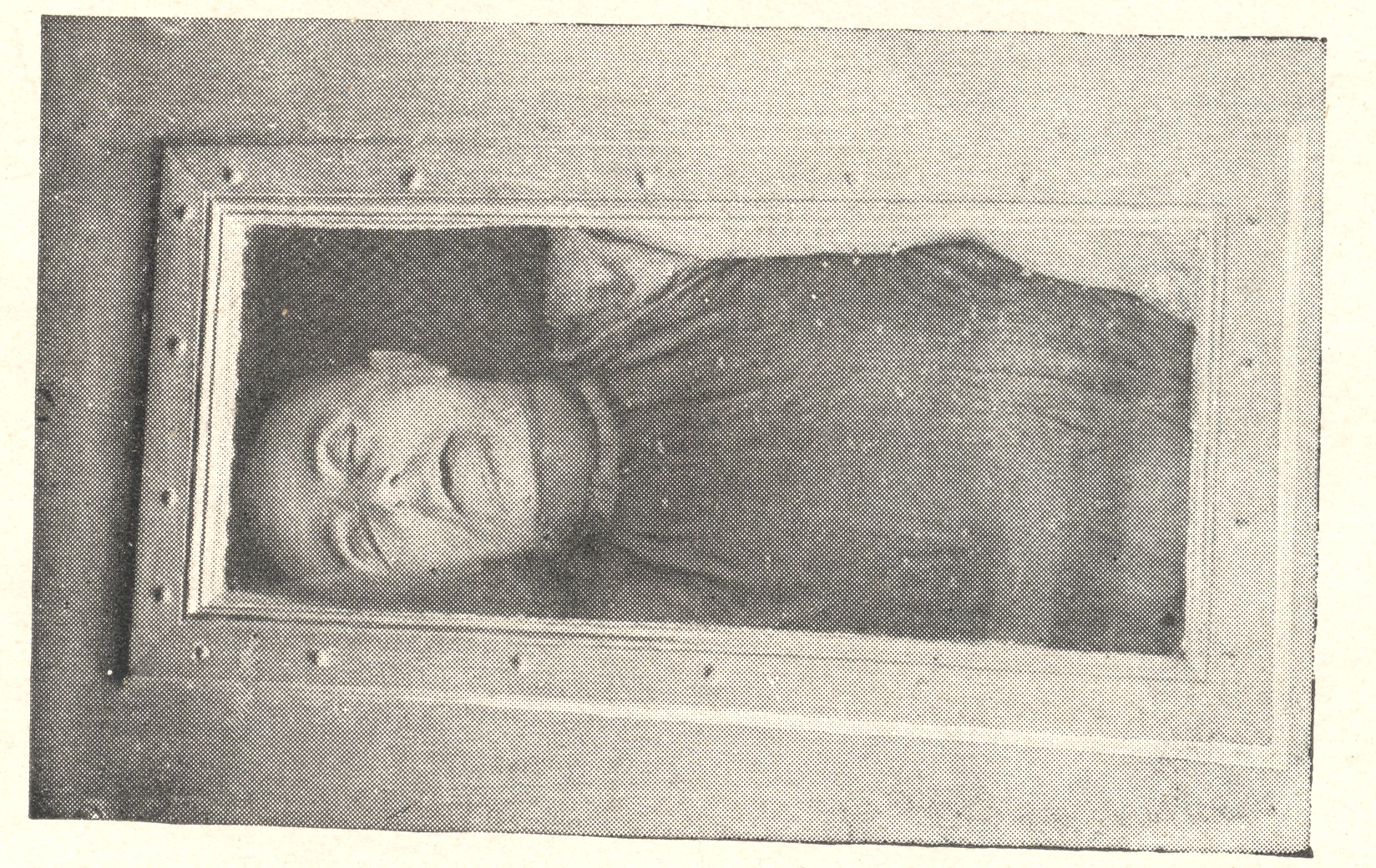
    +()+ebay dead bodies photo2

    (The images here are from the pamphlet, with de Rechter showing the effects of his nasty spray on corpses and what they looked like after some months sleeping in their formaldehyde cocoons.)


    ·Posted by :

    ·in:

  • RAND Report on Post-ICBM Weaponry: the “Non-Violent” War, 1957

    JF Ptak Science Books LLC  Post 750  Blog Bookstore

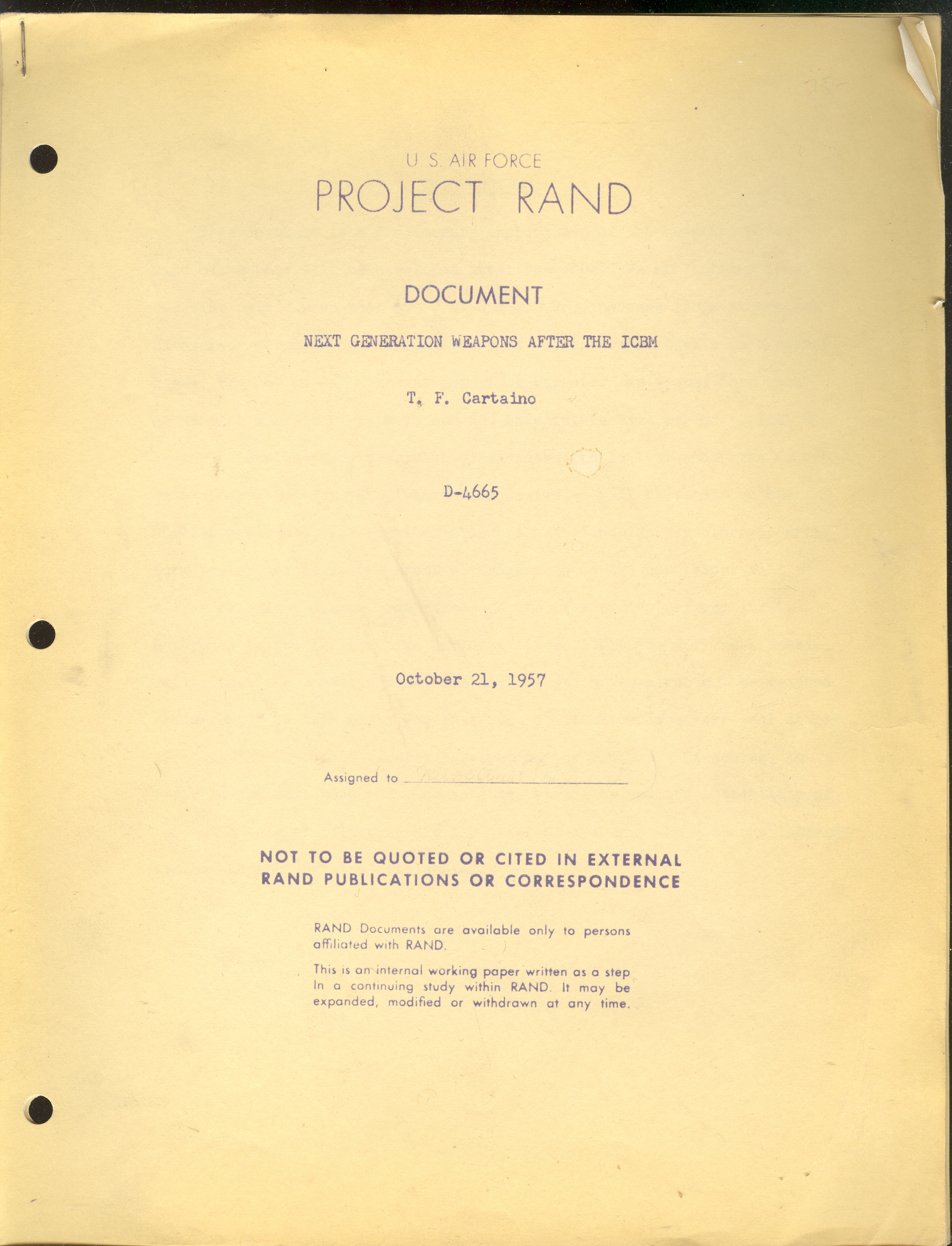
    +()+ebay icbm The
    RAND Corporation (Research And Development) is a think tank
    originally formed in 1946 by the US Army Air Force as part of a contract to the
    Douglas Aircraft Company.  After 1948
    RAND Corp was funded by a number of different sources, private and
    governmental, and left the sphere of being a direct arm of the
    U.S. military. (Maybe.)  It still did enormous
    amounts of work on behalf of the military, and seems to have
    been their chief  theoreticians during
    this period.  It was also the time that
    the policy of Mutually Assured Destruction (MAD) was formulated at , partially under the direction of we’ll-see-him-again-down-the-road
    Robert McNamara.  And of course much
    else. 

    This
    publication is an internal RAND document, not
    meant for the eyes of the outside world, at least in 1957.  I own a number of these reports, and I must
    say that this one is odd—it is rather flippant, sometimes oddly and darkly
    (dare I say it?) funny.  It is also short
    (four pages) and gets to the very meaty part of the issue immediately.  The author(s) assume that the US and the USSR
    will have achieved a point of stasis such that it would make absolutely no
    sense for either actor to actually employ their arsenal (and excluding “the
    possibility of the button pusher ‘flipping his lid’ “.  The paper attempts then (“let’s jump right in
    and assume we find ourselves in this stalemated period”) to envision the next
    kind of war in which the ICBM would not be an active factor. “We therefore
    postulate here that the kind of war we will be engaged in…in the period of
    nuclear stalemate of the non-violent war, the opening phase of which has been
    called the cold war.”


    +()+ebay icbm2

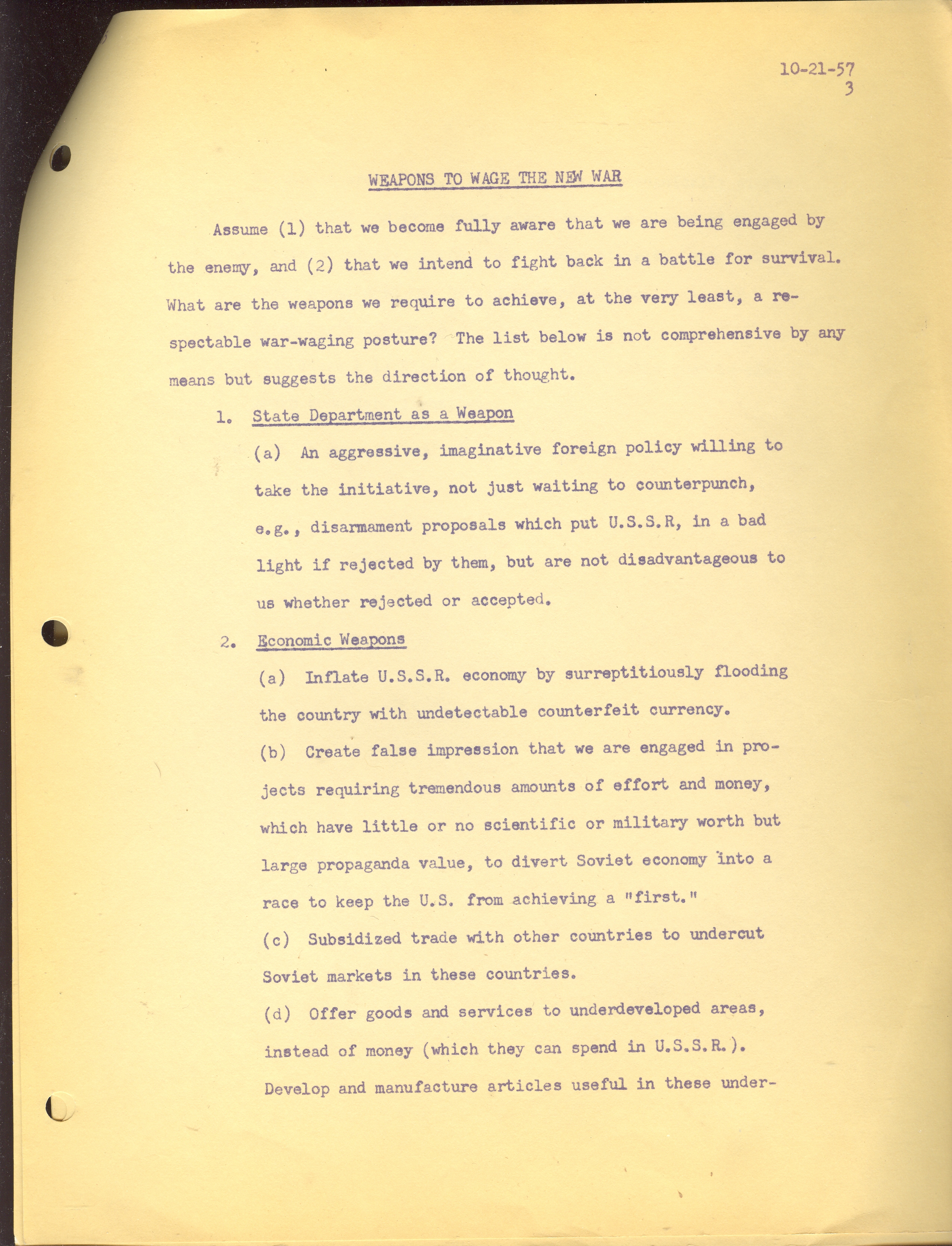
    The tools of war in this non-violent war, the report
    speculates, included: (1) the State Department as a Weapon, issuing “an
    aggressive, imaginative foreign policy”. (2) Economic Weapons, which
    interestingly included “inflate USSR economy by surreptitiously flooding the country with undetectable counterfeit
    currency”.  (I remember that the late
    Sen. John Moynihan suggested in the first Iraq
    war, televise don the floor of the U.S. Senate in the final debate on
    engagement, that we do this exact thing in Iraq…especially
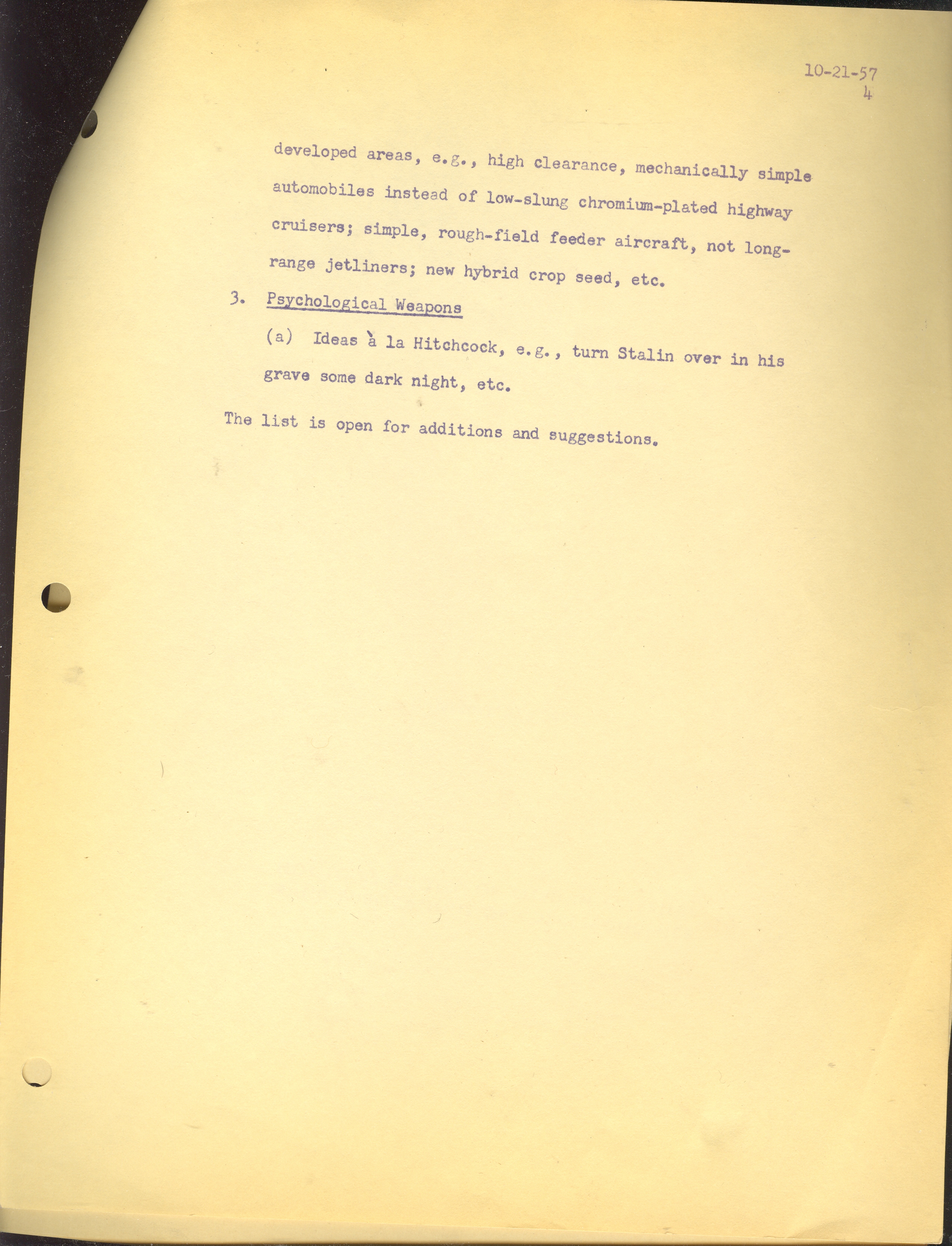
    since the Iraqi dinar was being printed in London.) The third section was “Psychological
    Weapons”, and was very tongue-in-cheek short (?), suggesting “ideas a la
    Hitchcock, e.g., turn Stalin [dead in 1953] over in his grave some dark night,
    etc.” I’m not sure what to make of that, especially as the paper finishes on
    this line: “This list is open for additions and suggestion.”  Indeed.  Out of all of the internal reports that I’ve read from RAND this is the only one that approached its topic with such dark familiarity and removed humor. 

    +()+ebay icbm3

  • Ludwig Wittgenstein’s Adventure in Aeronautics, 1911

    JF Ptak Science Books LLC  Post 751  Blog Bookstore

    +()+wittgenstein prop The Austrian Ludwig Wittgenstein (1889-1951) was one of the
    20th century’s most gifted and influential philosopher-logicians,
    though he started his advanced educational career in an aeronautics program at Manchester, in England.  And by “though” I mean a very soft “though”,
    as the engineering students educated in Germany were commanded to have a
    wide intellectual calling, including heavy backgrounds in mathematics and
    physics.  He came to Manchester
    to pursue a career as aeronaut and engineer, which is  a little odd because following its initial
    great exploits in flight in the mind-19th century, England certainly was not a hotbed
    of activity for flight in the first (“flight”) decade of the 20th century.  Be that as it may, he went to Manchester, pushed by the
    great influences in the work of Ludwig Boltzmann and Heinrich Hertz. He also received nourishment for his interest in mathematics, leading to a deeper pursuit in the foundations of mathematics, all of which fueled his developing study away from aeronautics and engineering.

    And it was here at Manchester
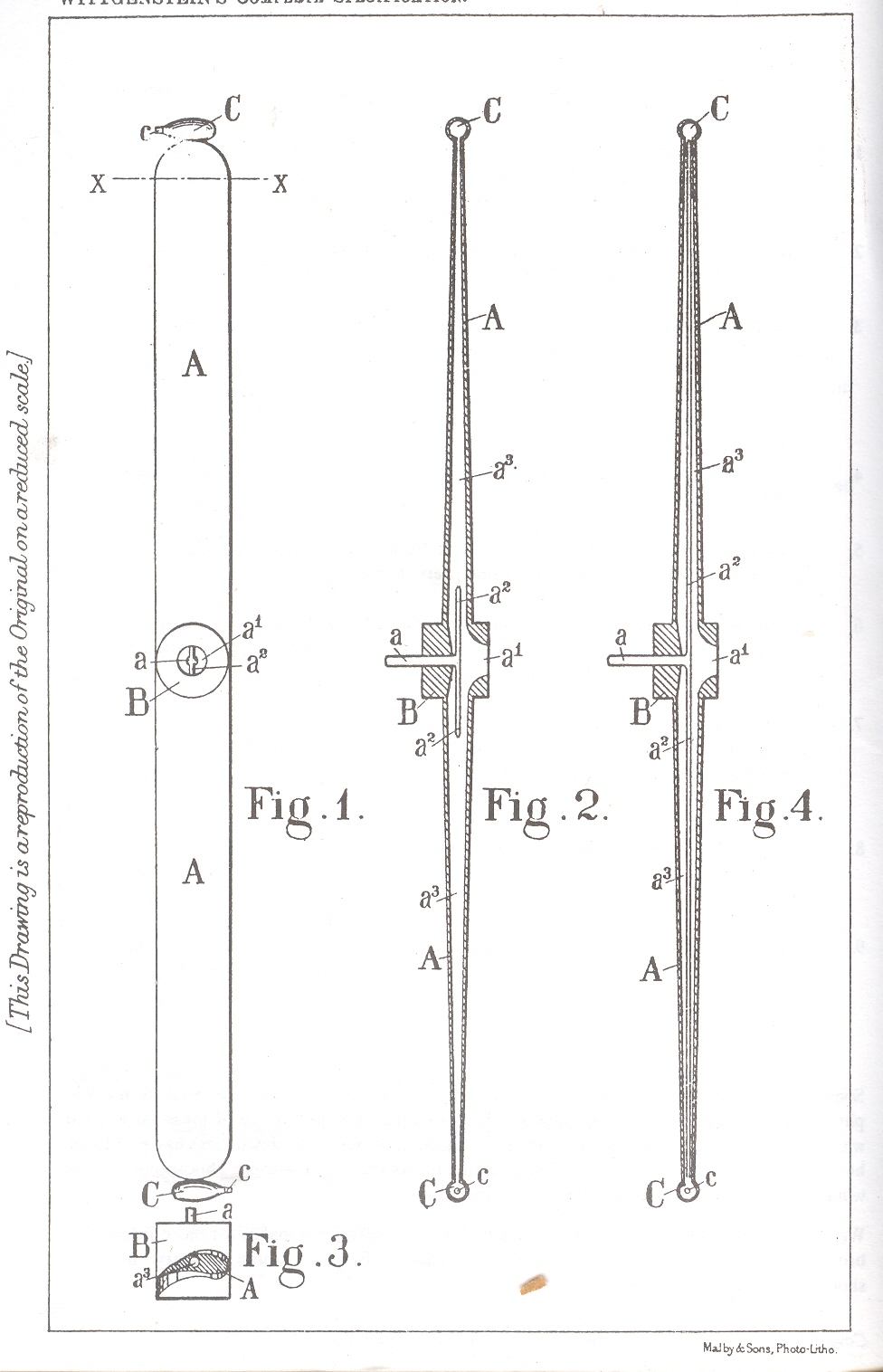
    that Wittgenstein patented his innovative approach to propulsion—a sort of powered series of ejectors that were attached to the ends of the blades
    of a propeller.  The image that accompanies
    the patent application is here, above, and entitled “Improvements in Propellers
    Applicable for Aerial Machines”, dated 9 September 1911.  This was admittedly an early period in the
    development of aviation—especially in England—and although an interesting
    product it was not very practicable, though a design similar did appear on helicopter rotors in the 1950’s.    

    It was not so practicable that Wittgenstein pursue a career
    as an aeronaut—within  a year of the
    publication of his patent, he was on his way to Cambridge to join Bertrand Russell
    (who had just published the20th century’s most difficult-to-read work in logic
    in the Principia Mathematica) and
    begin his work in philosophy. 

    It is fitting in a way that Wittgenstein had this
    background, as he described his philosophy of language in terms of projective geometry...

    Notes:

    1) Legend for the patent image: Fig. 1
    is the gaseous or vaporized fuel inlet; a1 is the air inlet. Fig. 2 and Fig. 4 are alternative methods of fuel flow to the combustion
    chamber C. In Fig. 2 fuel is mixed with the air just after both emerge from
    the hub
    .

    2) I’ve read that Wittgenstein was very deeply influenced by the following passage from Hertz’ Principles of Mechanics:  “When these painful contradictions are removed, the
    question as to the nature of force will not have been answered; but our
    minds, no longer vexed, will cease to ask illegitimate questions” If I squint a little I can see the seeds of the Tractatus in there. 

    3) For a real treatment of this invention of Wittgenstein’s see the article at the Royal Society.

    4) Also see Ian Lemco’s Wittgenstein’s Aeronautical Experiments 

    5) “My propositions are elucidatory in this way: he who understands me
    finally recognizes them as senseless, when he has climbed out through
    them, on them, over them. (He must so to speak throw away the ladder,
    after he has climbed up on it.) He must surmount these propositions;
    then he sees the world rightly.”–Wittgenstein’s Tractatus, 6.54

    6) See Klagge’s online biography and philosophical history of Wittgenstein

    ·Posted by :

    ·in:

Recent Posts

Archives

Categories