JF Ptak Science Books LLC Post 751 Blog Bookstore
 The Austrian Ludwig Wittgenstein (1889-1951) was one of the
20th century’s most gifted and influential philosopher-logicians,
though he started his advanced educational career in an aeronautics program at Manchester
as the engineering students educated in Germany
wide intellectual calling, including heavy backgrounds in mathematics and
physics. He came to Manchester
to pursue a career as aeronaut and engineer, which is a little odd because following its initial
great exploits in flight in the mind-19th century, England
of activity for flight in the first (“flight”) decade of the 20th century. Be that as it may, he went to Manchester
great influences in the work of Ludwig Boltzmann and Heinrich Hertz. He also received nourishment for his interest in mathematics, leading to a deeper pursuit in the foundations of mathematics, all of which fueled his developing study away from aeronautics and engineering.
And it was here at Manchester
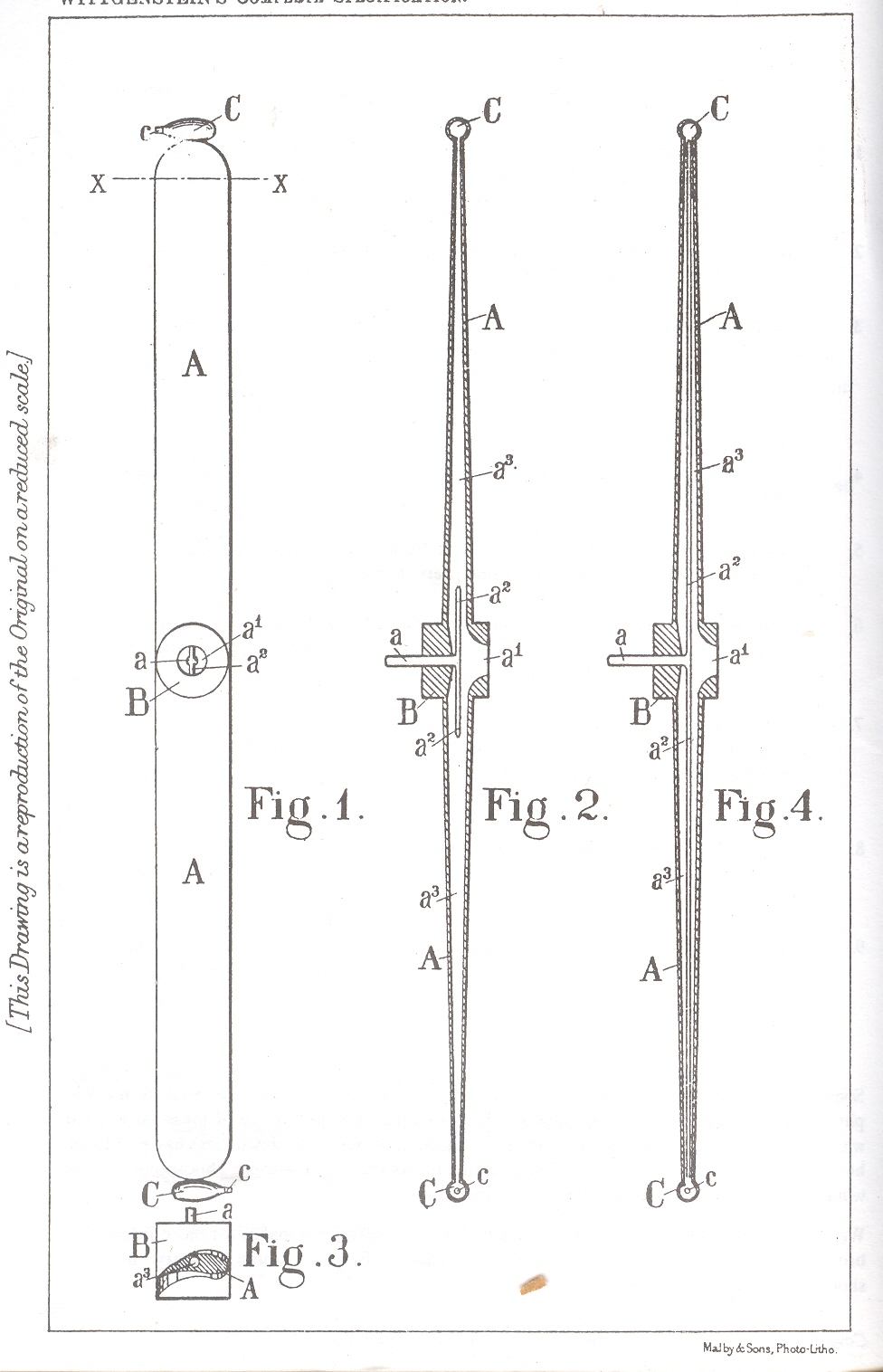
that Wittgenstein patented his innovative approach to propulsion—a sort of powered series of ejectors that were attached to the ends of the blades
of a propeller. The image that accompanies
the patent application is here, above, and entitled “Improvements in Propellers
Applicable for Aerial Machines”, dated 9 September 1911. This was admittedly an early period in the
development of aviation—especially in England
product it was not very practicable, though a design similar did appear on helicopter rotors in the 1950’s.
It was not so practicable that Wittgenstein pursue a career
as an aeronaut—within a year of the
publication of his patent, he was on his way to Cambridge to join Bertrand Russell
(who had just published the20th century’s most difficult-to-read work in logic
in the Principia Mathematica) and
begin his work in philosophy.
background, as he described his philosophy of language in terms of projective geometry...
Notes:
1) Legend for the patent image: Fig. 1
is the gaseous or vaporized fuel inlet; a1 is the air inlet. Fig. 2 and Fig. 4 are alternative methods of fuel flow to the combustion
chamber C. In Fig. 2 fuel is mixed with the air just after both emerge from
the hub.
2) I’ve read that Wittgenstein was very deeply influenced by the following passage from Hertz’ Principles of Mechanics: “When these painful contradictions are removed, the
question as to the nature of force will not have been answered; but our
minds, no longer vexed, will cease to ask illegitimate questions” If I squint a little I can see the seeds of the Tractatus in there.
3) For a real treatment of this invention of Wittgenstein’s see the article at the Royal Society.
4) Also see Ian Lemco’s Wittgenstein’s Aeronautical Experiments
5) “My propositions are elucidatory in this way: he who understands me
finally recognizes them as senseless, when he has climbed out through
them, on them, over them. (He must so to speak throw away the ladder,
after he has climbed up on it.) He must surmount these propositions;
then he sees the world rightly.”–Wittgenstein’s Tractatus, 6.54
6) See Klagge’s online biography and philosophical history of Wittgenstein