JF Ptak Science Books LLC Post 948
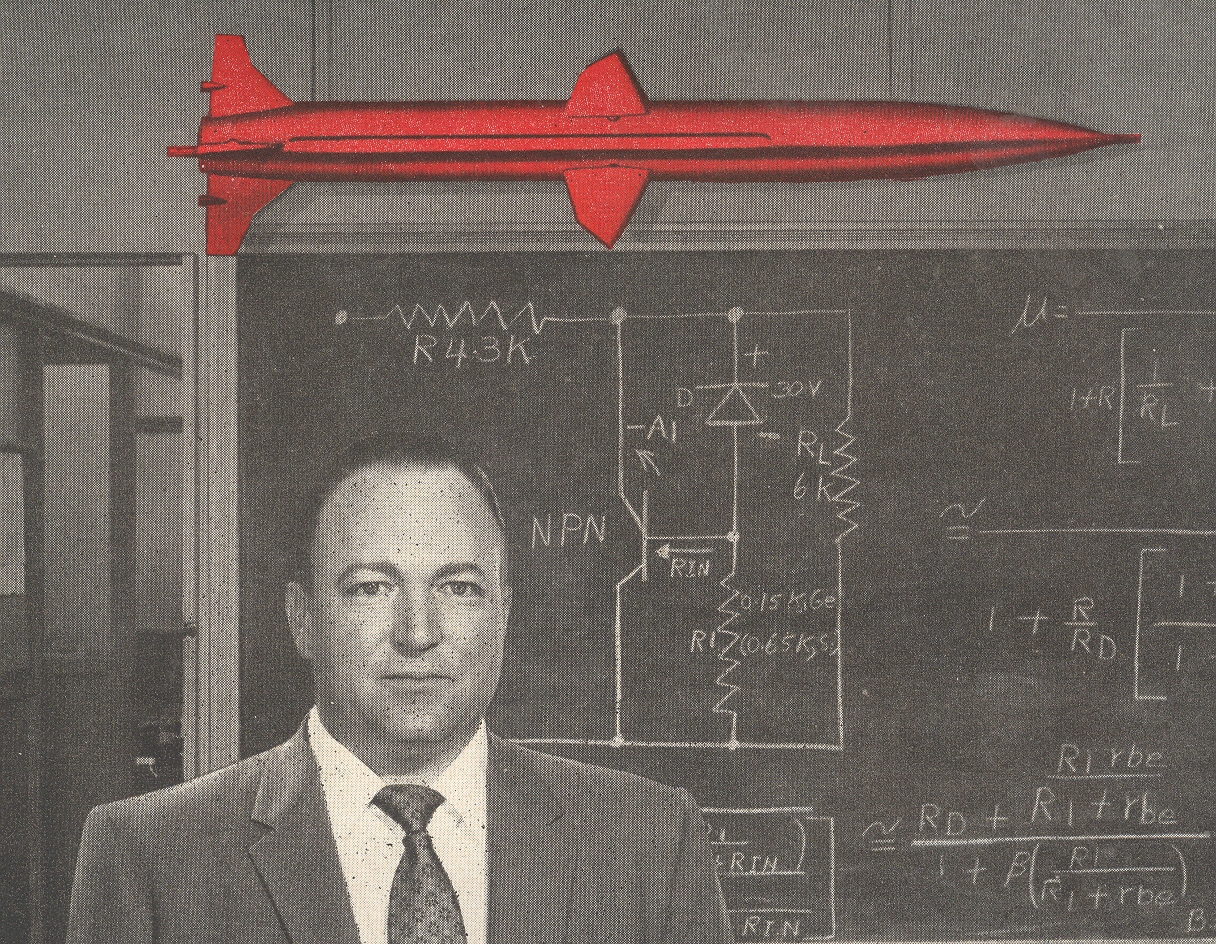
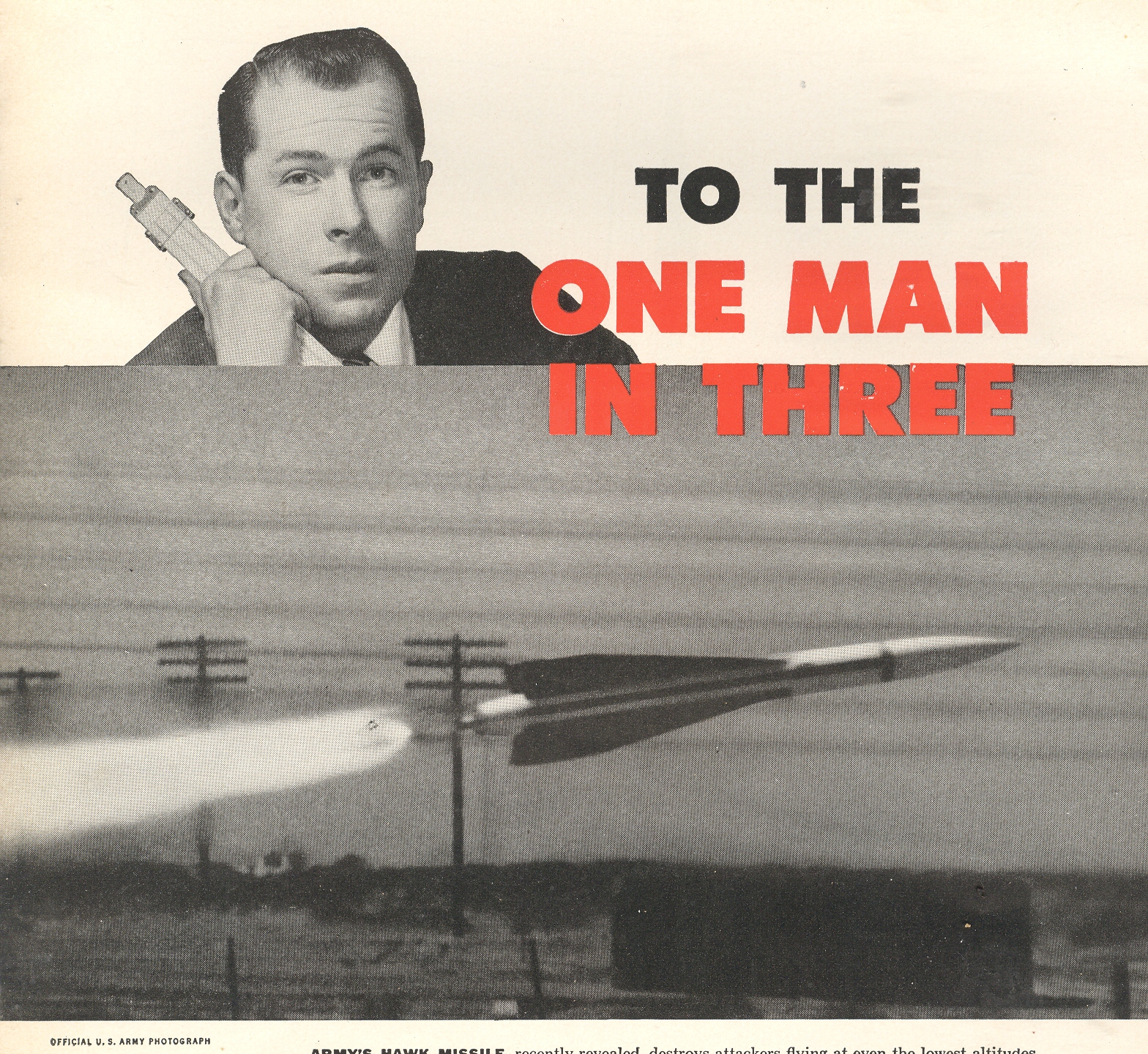
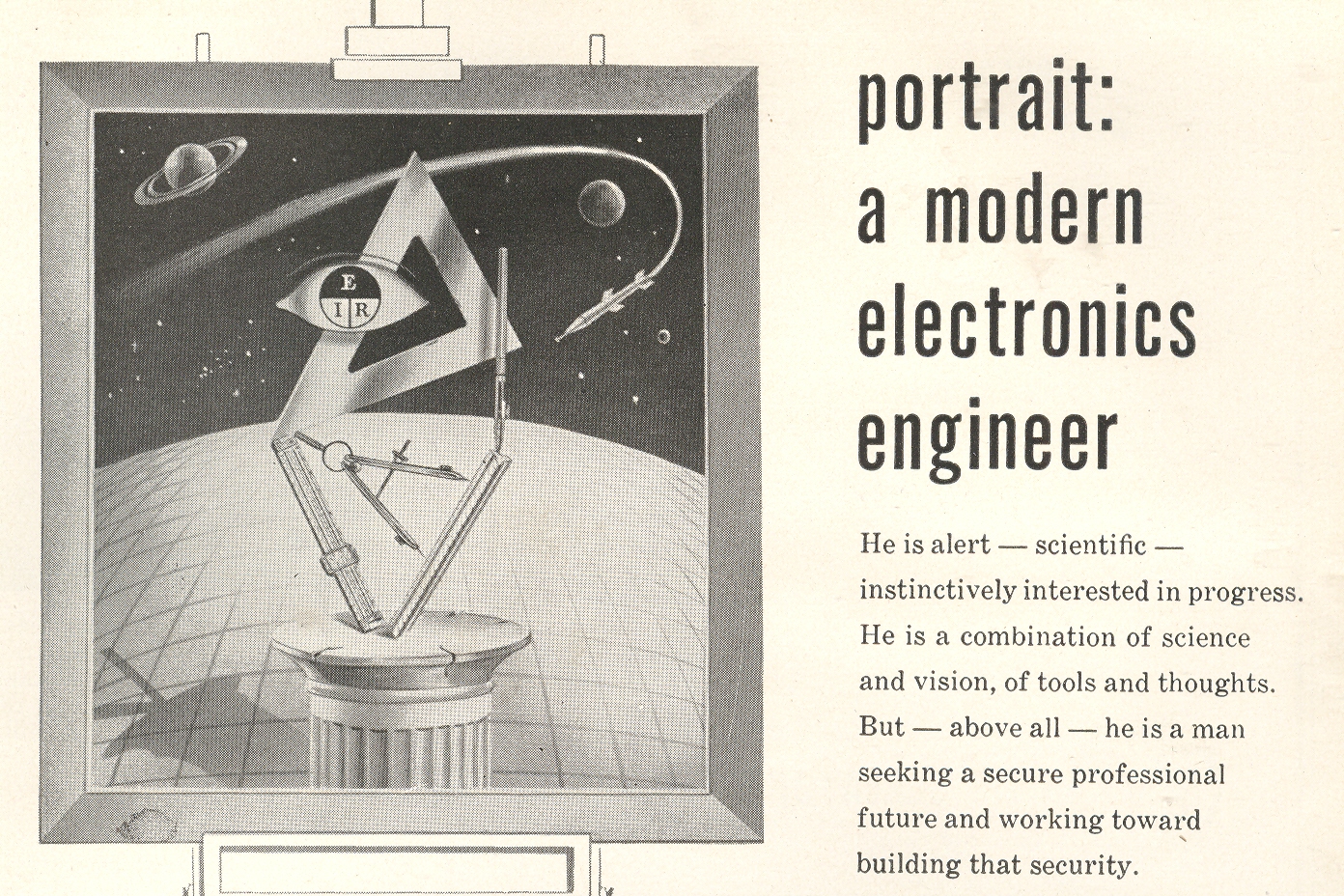
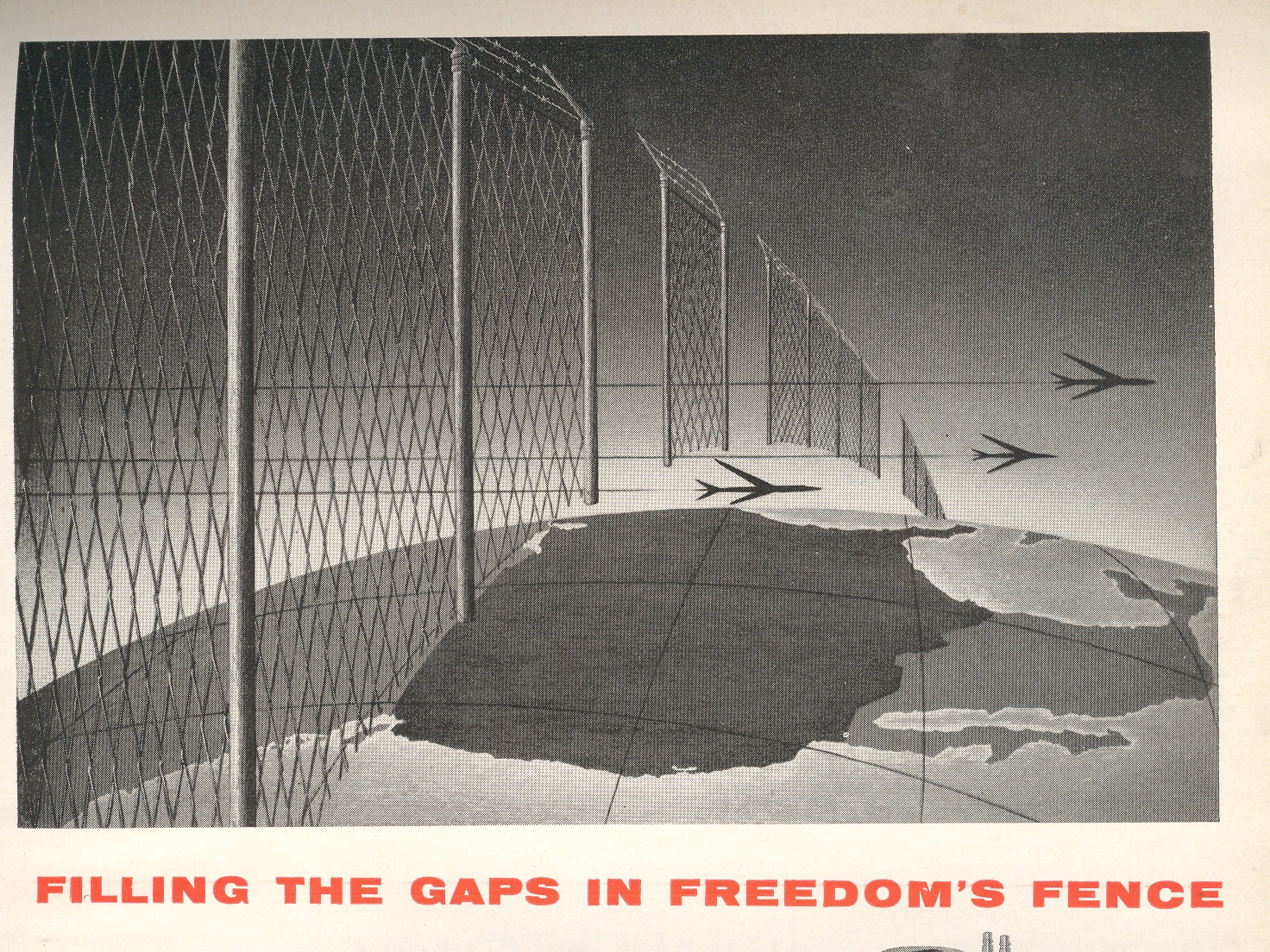
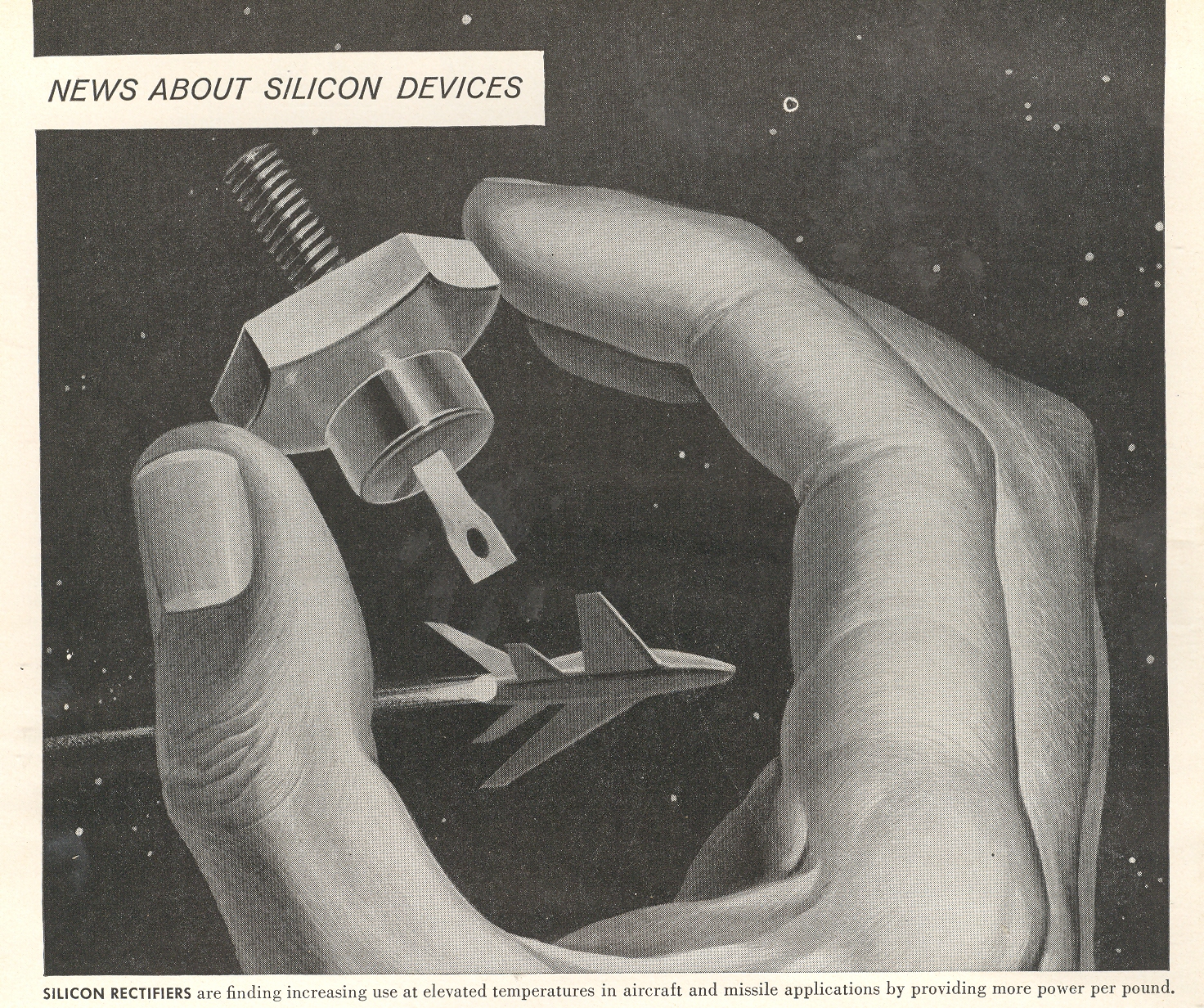
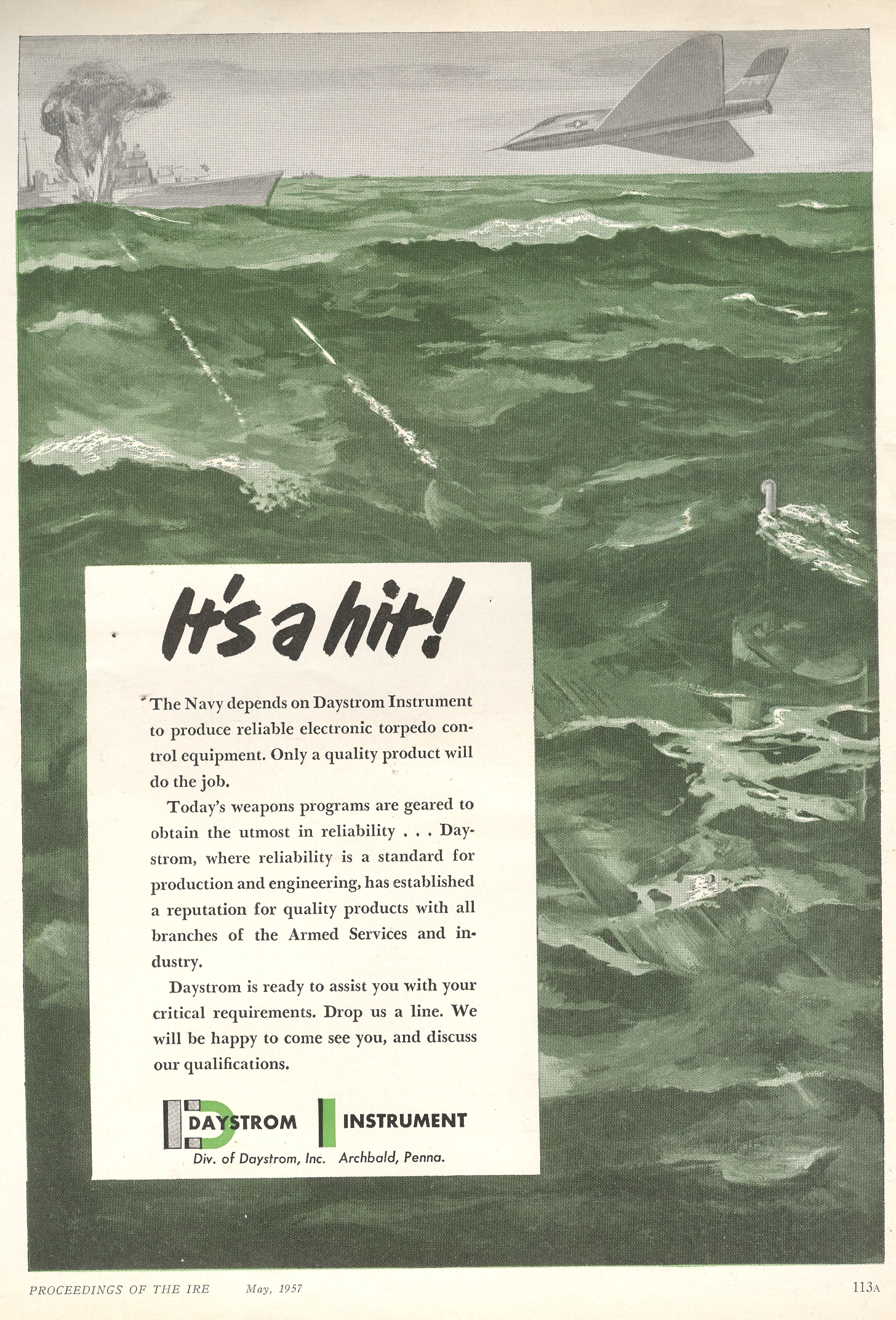
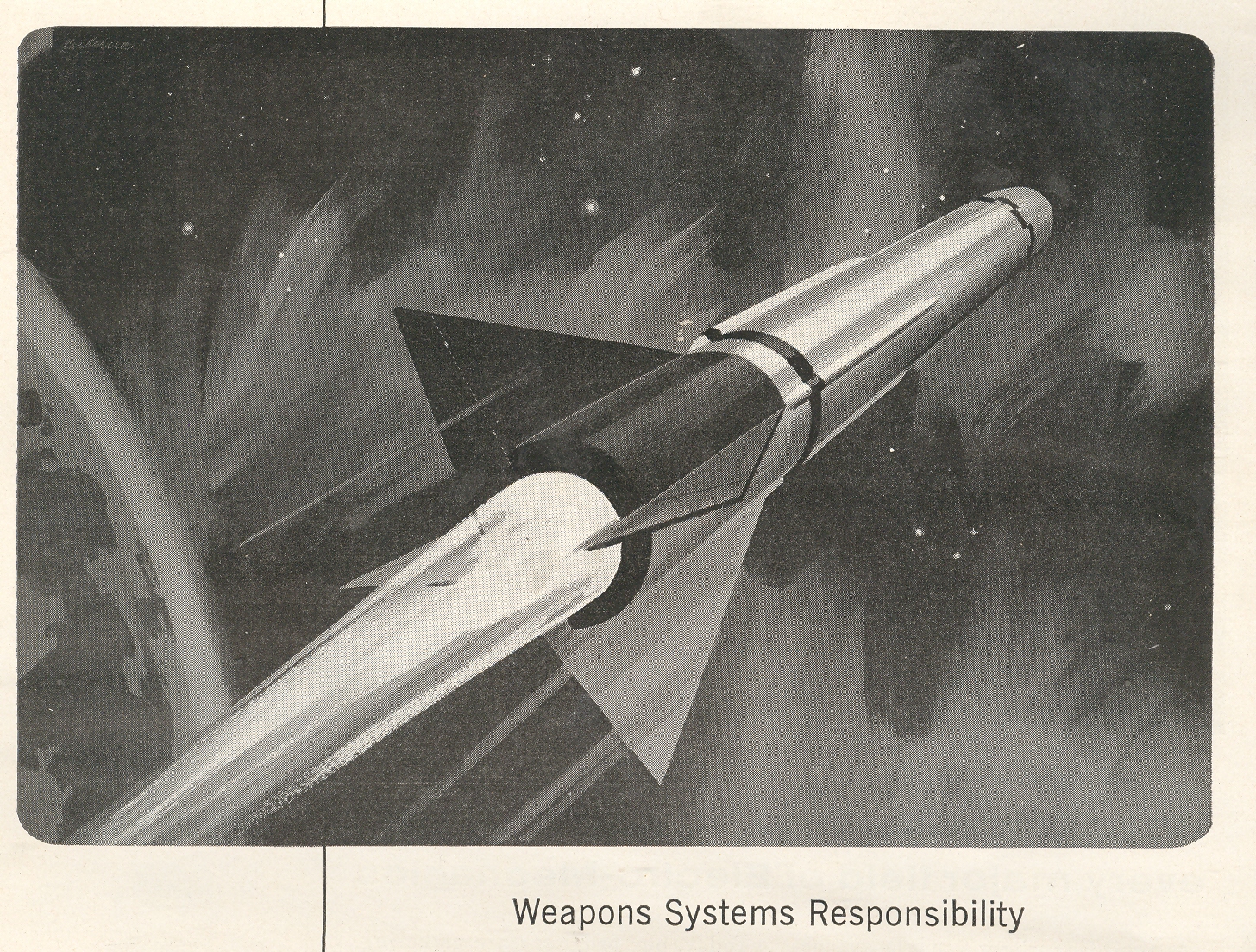
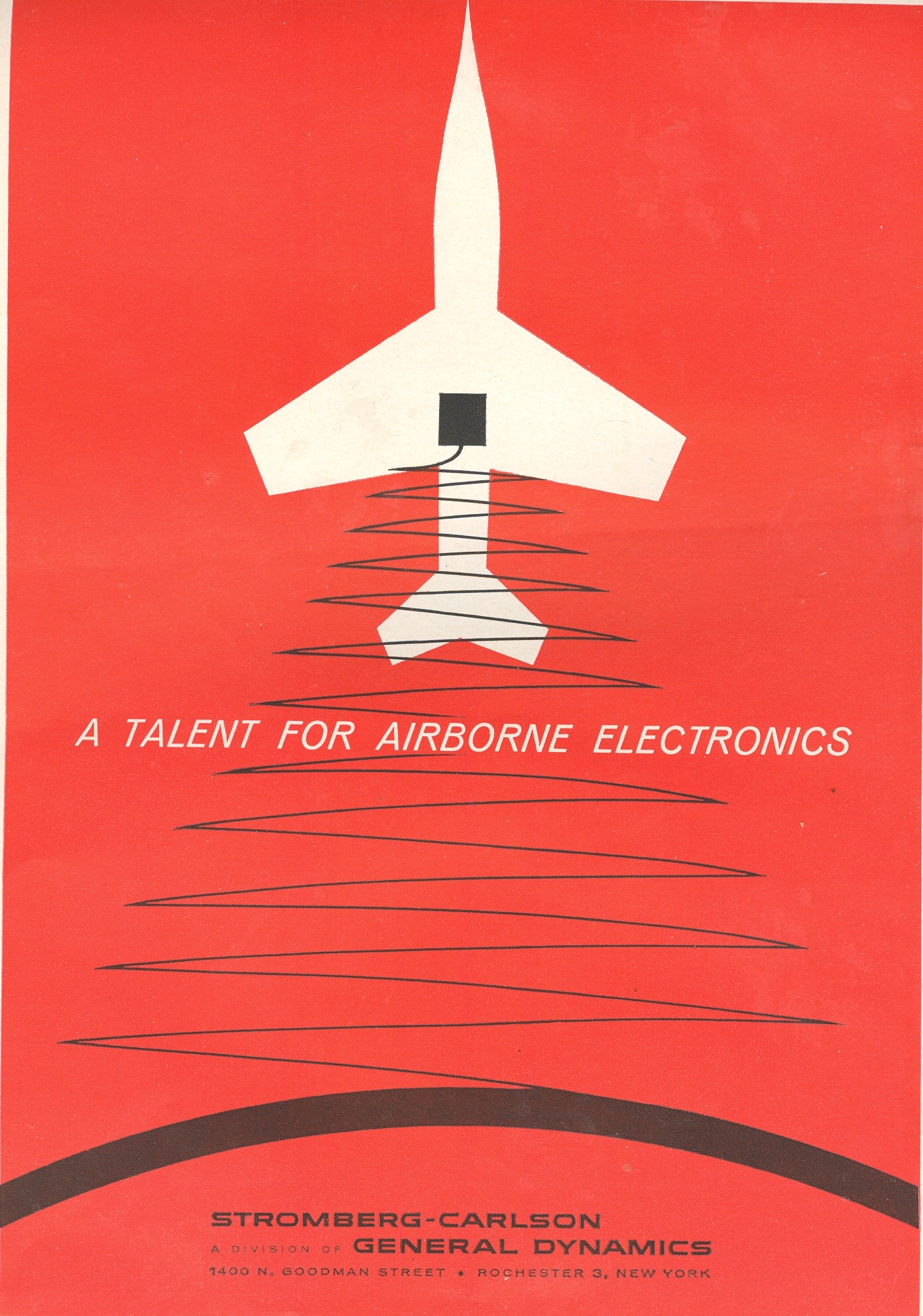
The following illustrations are all taken gloriously out of context from ads appearing in the Proceedings of the Institute of Radio Engineers, published in 1957-1958.
A Daily History of Holes, Dots, Lines, Science, History, Math, Physics, Art, the Unintentional Absurd, Architecture, Maps, Data Visualization, Blank and Missing Things, and so on. |1.6 million words, 7500 images, 4.9 million hits| Press & appearances in The Times, Le Figaro, Mensa, The Economist, The Guardian, Discovery News, Slate, Le Monde, Sci American Blogs, Le Pont, and many other places… 5000+ total posts since 2008.
Contact johnfptak at gmail dot com
JF Ptak Science Books LLC Post 948
The following illustrations are all taken gloriously out of context from ads appearing in the Proceedings of the Institute of Radio Engineers, published in 1957-1958.
JF Ptak Science Books LLC Post 950
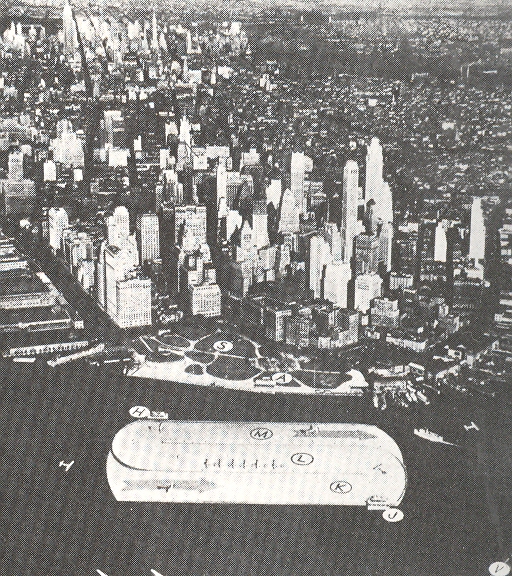
Norman Bel Geddes (1893-1958) made fast, bulbously sleek and varyingly aerodynamic objects and ideas, and was a vastly successful designer of things ranging from sets for the NY Metropolitan Opera House to telephones to cars to locomotives to the housing for the Mark I computer. Ideas were his metier, and there seemed no lack of them–good, mostly; bad, sometimes.
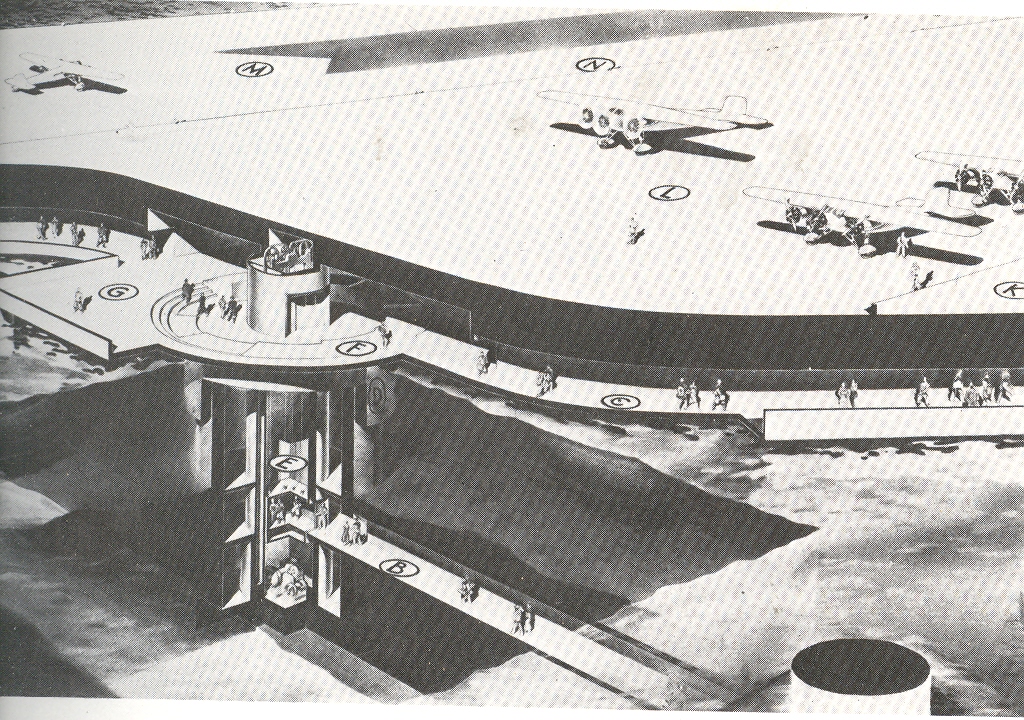
Bud bad ideas can be beautiful, and elegant, if only for a very short period of time in which they might have actually functioned for the good. One of these blisterers was his floating airport for the NYC harbor. Passengers would access the airport via a 800-foot automatic walkway tunnel, and then up to various shuttles and such on the levels below the flight deck. This beast floated on columns floating on mobile caissons just above the harbor bottom, enabling the whole to be turned into or away from the wind, making for easy approaches and departures for the planes. But it is the pilot of the airport that seems most interesting to me, steering the giant propellers that lay under the corners of the structure, pushing the airport into/away from the wind.
This may well be the largest mobile steerable structure moving along the shortest courseway conceived as a possibly-buildable project of the twentieth century.
Associated posts on great and unbuildable architecture:
Fantastic
and Unbuildable Architecture #6: the Pyramids of Gizeh in
(
1908
JF Ptak Science Books Post 951
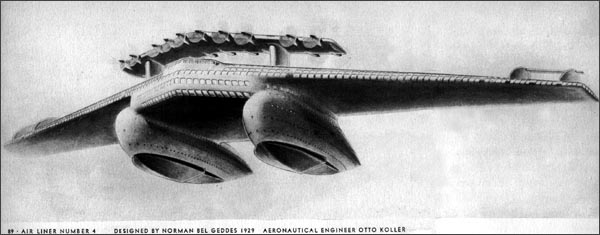
Sometimes things are designed that are so bulbous and so inflated and so terribly hyper-packed that they are just destined never to be built beyond the imagination. Among the largest of these things meant for the air was designed by a particularly streamlined designer, Norman Bel Geddes, who basically owned the concept of aerodynamic function at all levels of design in the 1930’s.
But Bel Geddes’ apoetically-named aircraft, Airliner 4, is an entirely different issue. It may possibly be the largest, slowest, lowest, fattest and most lumbering plane ever designed. (And by this I mean that it stood a chance of some sort of actually being built and flown, as opposed to the monsters with wing-topped tennis courts and such.)
This 530′-long 1.2 million pound beast took an hour to climb to its max ceiling of 10,000 feet where it would cruise along at an astonishing 100 mph. It would wind its way lovingly across the country, slicing off its travel hours like frozen bologna, 30 hours from coast-to-coast, slowly, methodically, so as not to disturb its 600 passengers in their sleeping rooms. But I’m not sure how much sleep would get slept, what with 20 (!) 1900 hp engines screaming overhead.
The passengers who didn’t sleep could do a lot besides sit and be serviced by the aircraft’s crew of 155–they might actually need guides to get them through the oddness of the plane’s 9 decks, 3 kitchens, 2 dining rooms, solarium, 100-couple dance floor, gym, barbershop and medical offices (with waiting room). Plus much, much more. (I like a plane with a doctor’s office waiting room; perhaps the real genius would’ve been to come up with the smaller, more interior, extra waiting room to which one graduates before seeing The Doctor.)
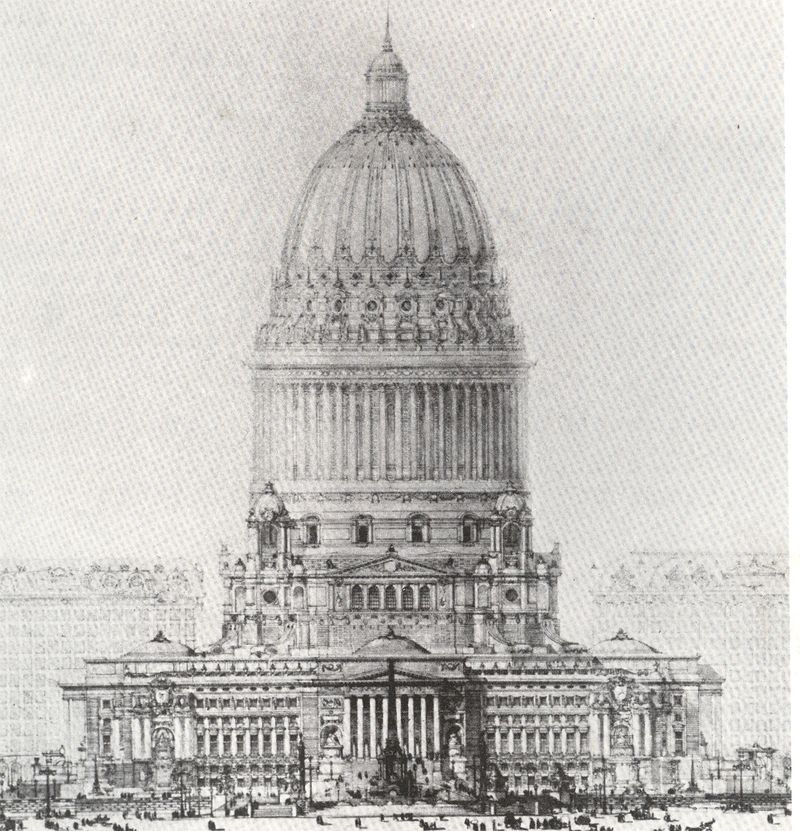
Getting closer to the ground is the plan for the Chicago Civic Center (1909) by the usually accomplished Daniel H. Burnham. This beast looks more like a stubby nuclear- pulse intergalactic Mothership than anything that anyone would have wanted to build on the ground—at least in space it would be out of sight.
In a struggling prose reminiscent of Lewis Sullivan Burnham writes1: “The Civic Center will be dependent for its effectiveness in the character if the architecture displayed in the buildings themselves…” which I think is self-referential, stating that the architecture’s effectiveness is dependent upon the architecture. If this is the case, the enormity of the Civic Center doesn’t save it from itself.
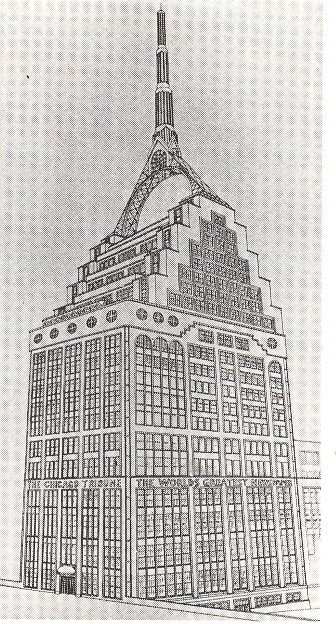
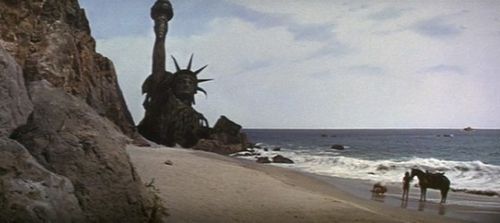
Staying in Chicago we find another proposal, this for the ChicagoTribuneTower competition of 1922—many of the works submitted seem to my eye big and wide and ugly, but perhaps none more so than that offered by Ludwig Koloch. This may well have been a nice design for the top third or so of a building, but not for three thirds–and actually, this may be four-thirds. It reminds me of something rising from the sands at a beach in the future, the remnants of destroyed civilizations. Without the apes.
Notes:
·Posted by :
·in:
JF Ptak Science Books LLC Post 952
 It is a bit odd to compare these three relatively contemporary
works on the human heart and to see their points of correlation and (vast)
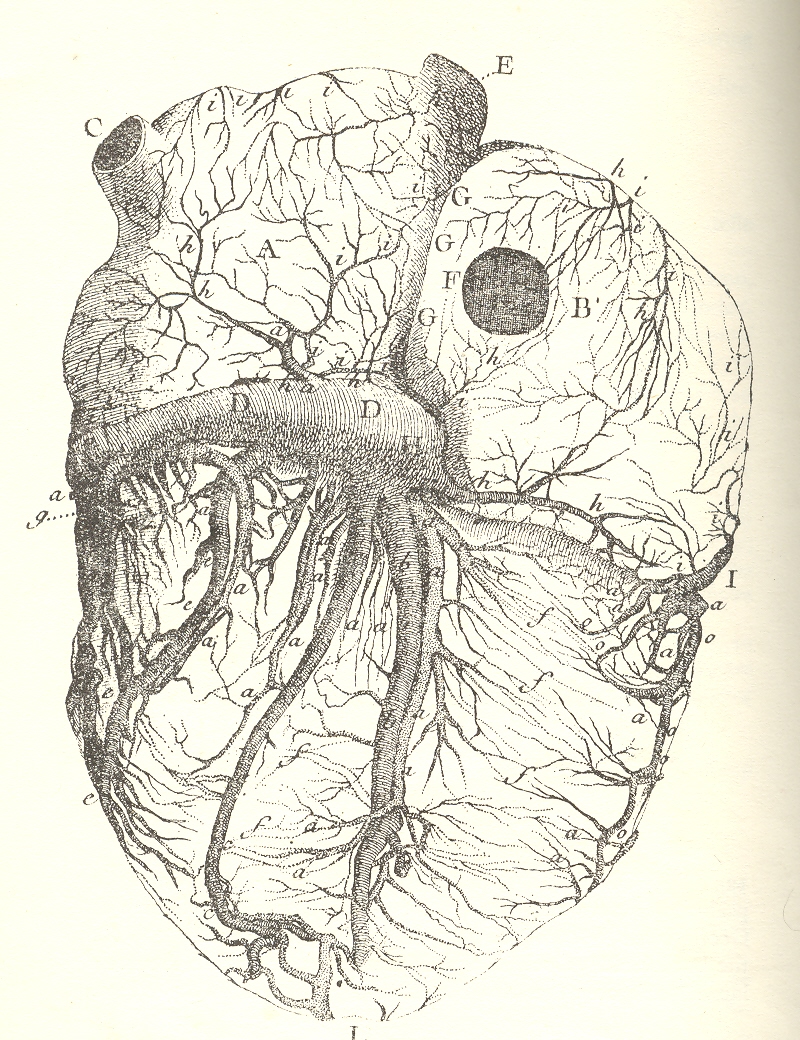
departure. The first belongs to Jean Senac, whose Traite de la Structure de Coeur…(published in 1749) was one of the
most valuable works on the 18th century on the heart, laying a firm
foundation for the study of its pathology.
Senac
(1693-1773, born in
and later physician to Louis XV) was the first visitor to many aspects of the
heart’s physiology, describing delation (as the most common evidence of cardiac
pathology), correlated hydrothorax with cardiac failure, pericarditis, and much
more—he also published exquisite illustrations by Jacques Poitier to accompany
his text.
The next image is the first to properly describe the nerves
of the heart, and was published in the magnificent Antonio Scarpa’s Tabulae neurologicae ad illustrandam
historiam anatomicam cardiacorum… in 1794.
Scarpa was a monumentally
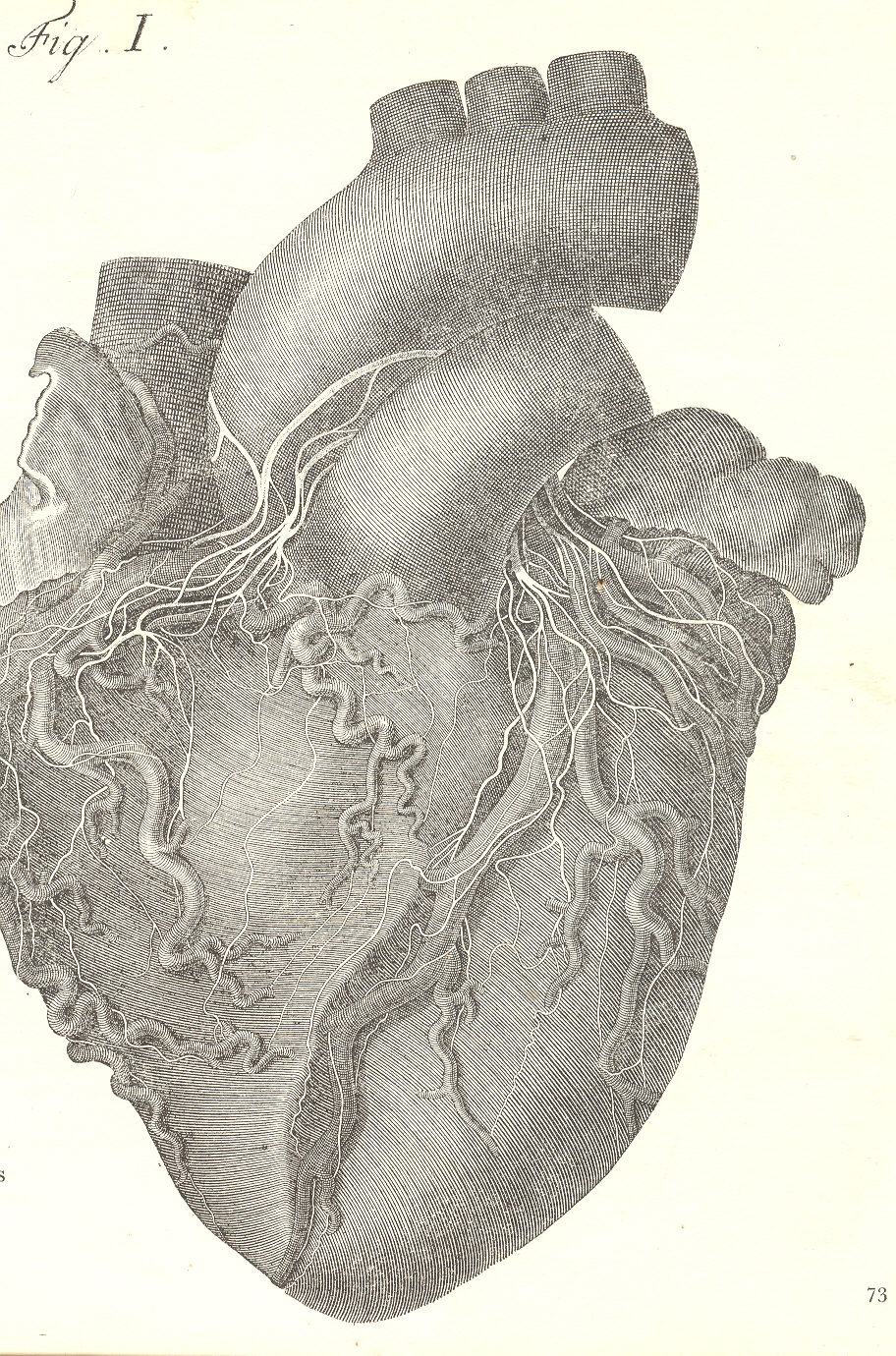
accomplished anatomist who was also a gifted
artist, and it is his own work that illustrates this masterpiece. The original edition of this work is huge,
atlas-sized, and the images of the heart are life-size and float in plenty of
free, very wide and perfect margins.
On the other end of the spectrum we have this liturgical
philosophical anatomy of the stages of the heart in grace and disgrace. Mostly I’m interested in the foul part, which
shows the advanced mortification of the organ in seating the throne of Satan. The
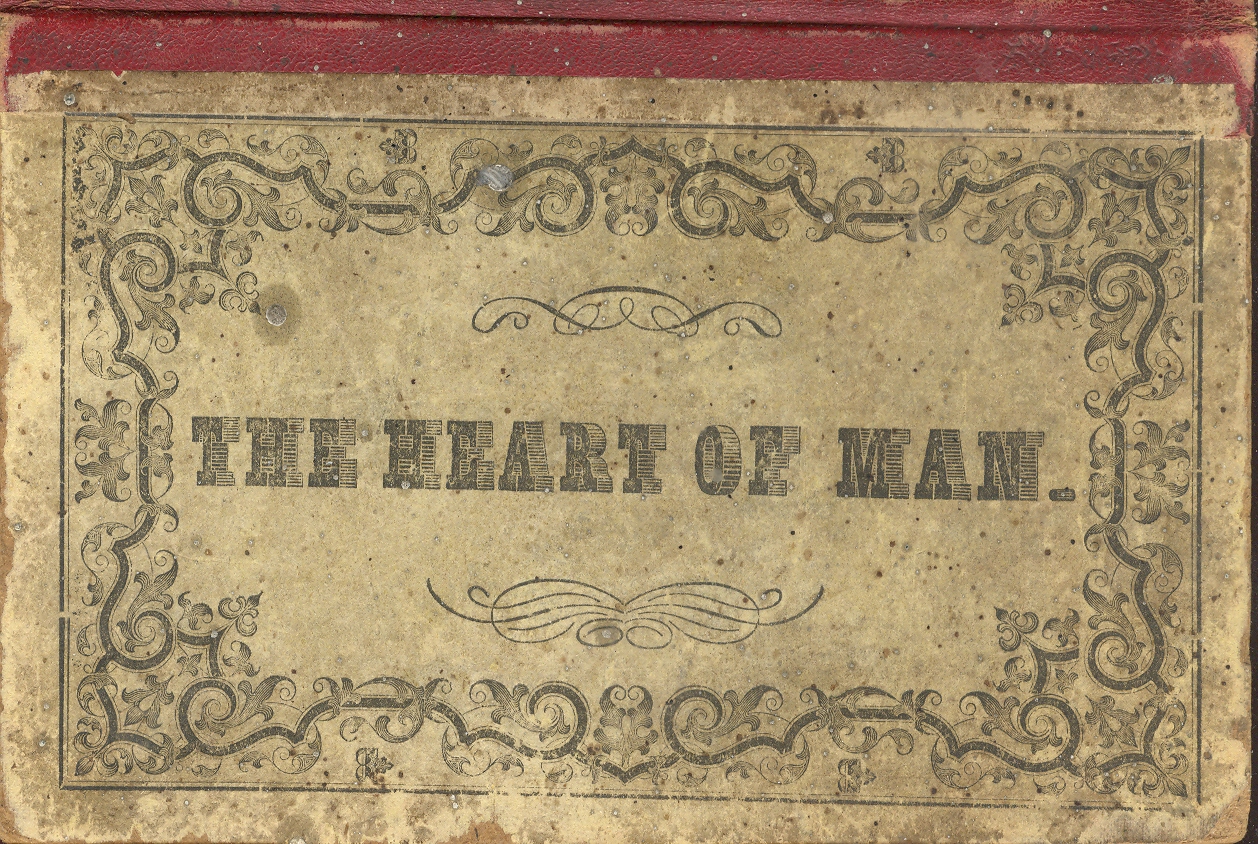
edition here is The Heart of Man, either
a
is a very heavy-handed 1842 illustrated edition from Harrisburg (PA) version of
a French text of 1732. It is illustrated
with ten versions of the state of the heart, ranging from perfect grace to the installation
of the Beast, and several points in between, the degrees of gaining and losing
each station.
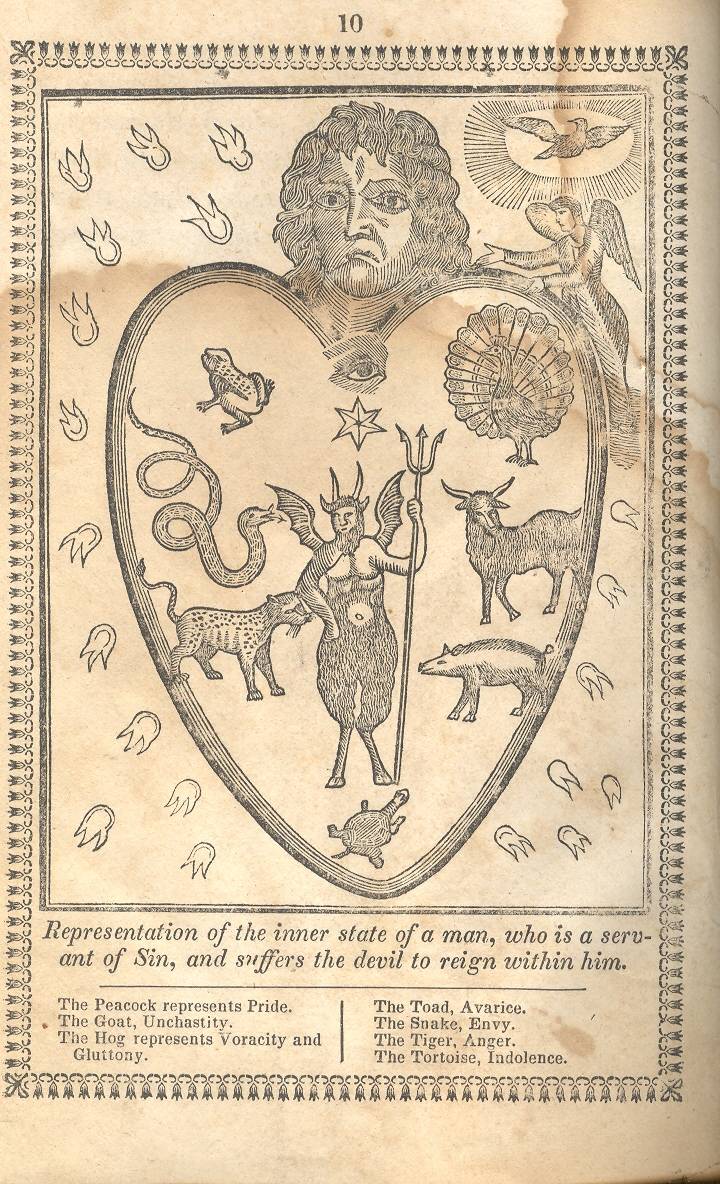
The first image shows the heart of man completely dominated
by Satan, with Man the sinner’s troubled face (along with the mark of Cain (dominating
his wayward organ. The emblematic
animals infesting his heart include the peacock (with its misleading
haughtiness), goat (“a lascivicious, stinking animal” representing “unchastity”
and impurity), hog (gluttony and intemperance), snake (seducer), tiger (cruelty
and ferocity) and tortoise (indolence). They chase from the hear the holy ghost
and an angel, and allow the presence of Satan (front and center).
The second image is interesting in that it shows the
movement of a bad/evil/wicked heart to a more pious one, though it is just in
the transition stages. In my experience
it is uncommon to see an emblematic illustration of a half-way point of, well,
anything; this woodcut seems to capture, to be a snapshot so to speak, of the
human heart undergoing transformation.
Notes: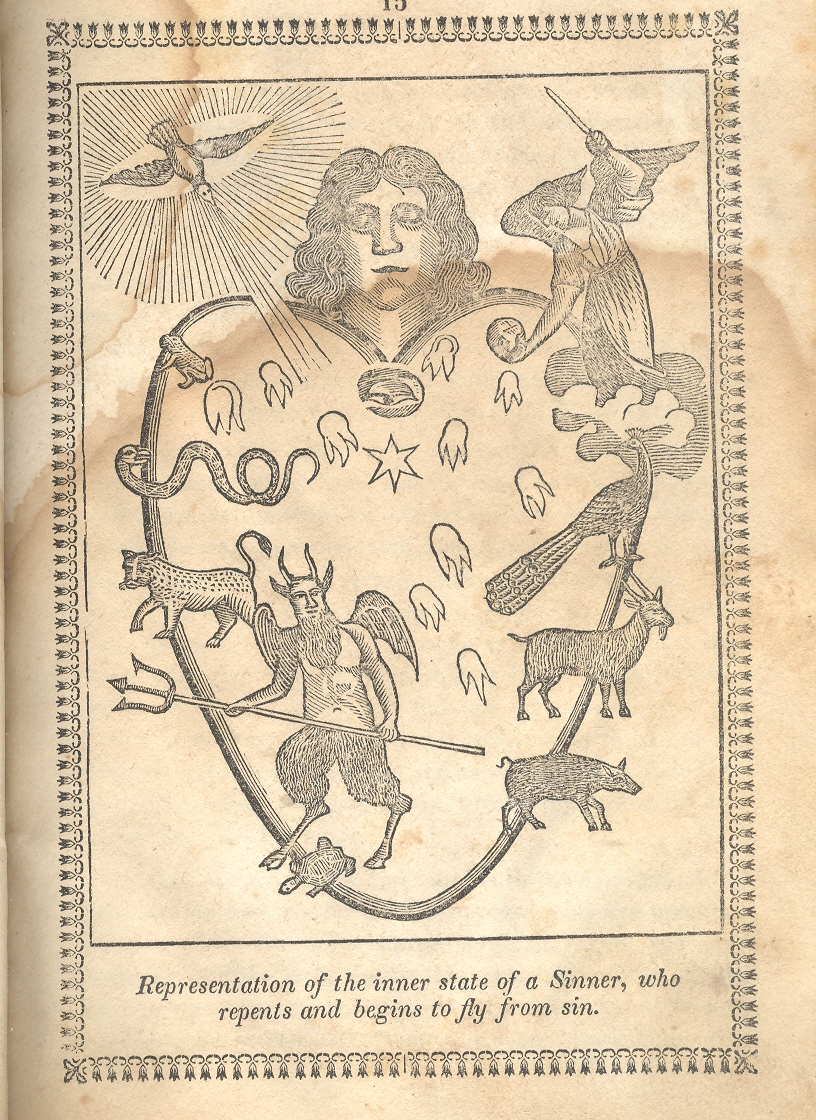
1. The original title was something along the lines of Spiritual Mirror of Morality, in which every
Christian, who desires his salvation, may view himself, know the state of his
soul, and profitably learn to regulate his life according to it. Hardly gender-neutral,
the title makes four specific gender references to men.
JF Ptak Science Books
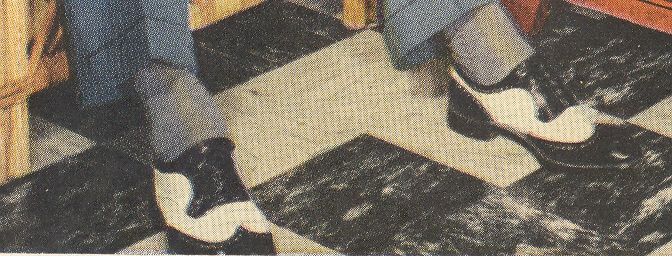
The fabulous Black-Daylite Television, brought to the well-heeled by General Electric, boasted superior reception qualities in a 250-pound wooden cabinet with electronic tube-y warmth. For example, the gentleman in the photo was sitting there in his living room in Wilmington, North Carolina, confident with his fine camouflaged shoes (blending in perfectly with his floor), with the ability to choose between the programs coming from Jacksonville, Charlotte and Norfolk…getting “all 3 stations”.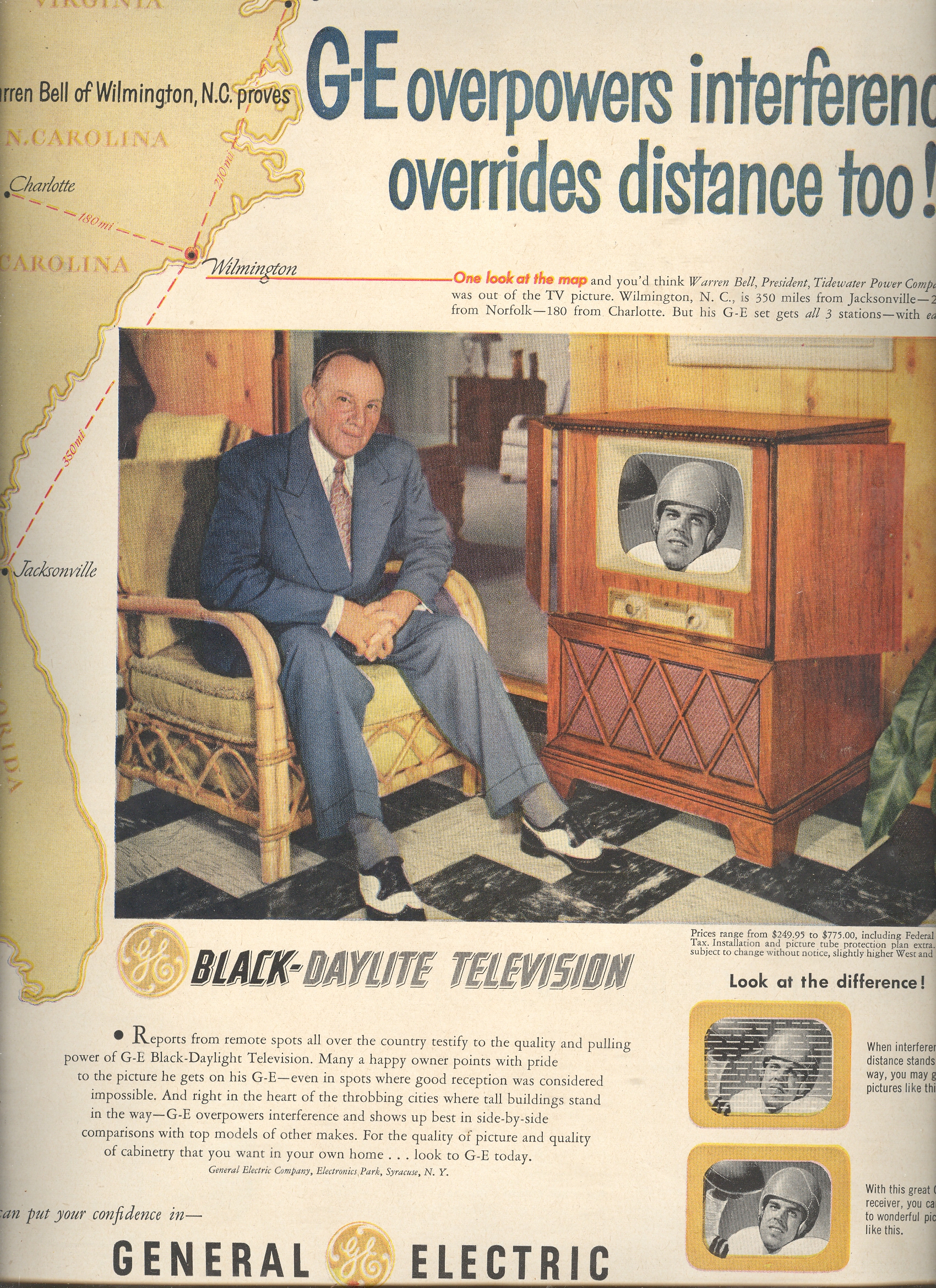
The photo is pretty deceptive: judging by the tiles on the floor, the television set is almost as long as the lounging chair, and if Mr. Bell’s shoes are a foot long, then the picture he’s receiving is just a wee bit bigger. The set retailed for about $700, which in today’s dollars comes out to about $9500–it was expensive, and cost as much as some modest cars.
JF Ptak Science Books, LLC Post 953
“Why,
they must spit two or three gallons a day!
They ain’t died fast enough, these old men!”—Mrs. T.E. Bagley,
1949
This
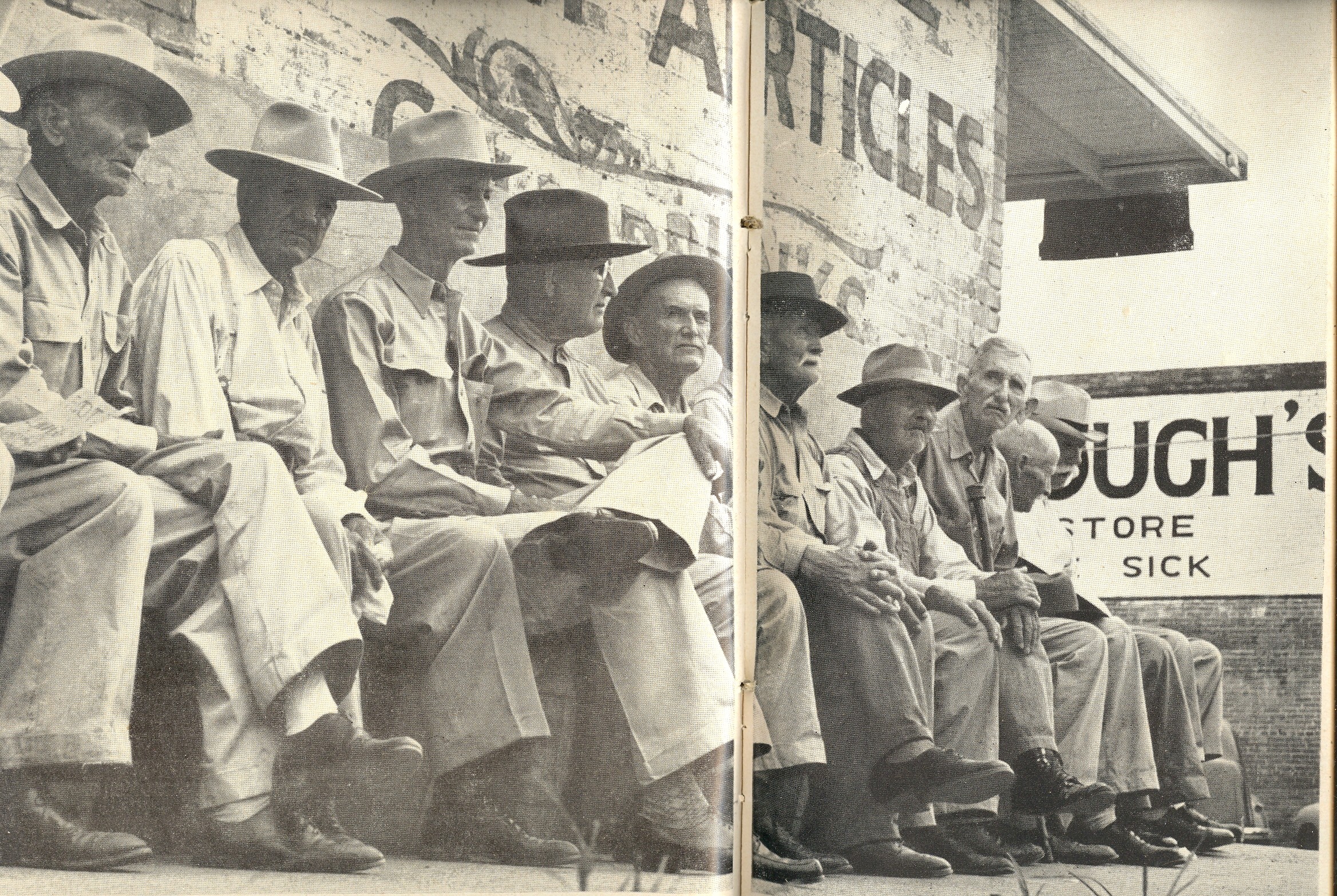
is a great small America story about sitting. Or old men sitting, and spitting. Sitting and spitting on a long piece of thick
timber outside a drug store, bricks and advertisements as back support, in
Whitney, Texas (population ca. 1,500), in 1949.
I can just about hear them on a hot summer evening, right now, only
probably I couldn’t—they’d probably’ve shut up until the stranger walked by,
giving me their silence and keeping their confidences. Or not.
Maybe I would’ve been invisible, and the whittled bits would’ve fallen to the street along with the tobacco juice, cusses and gossip, unabated.
Maybe they surrounded themselves with a stained-moat of spittin’s across
or close to which no one would stray.
It
isn’t, I guess, so much a story about their sitting as it is a story about
their not sitting, about how it came to be that their lumber was removed and
the men forced to find another place to take in the sights and construct their
great edifices of commentary and asides.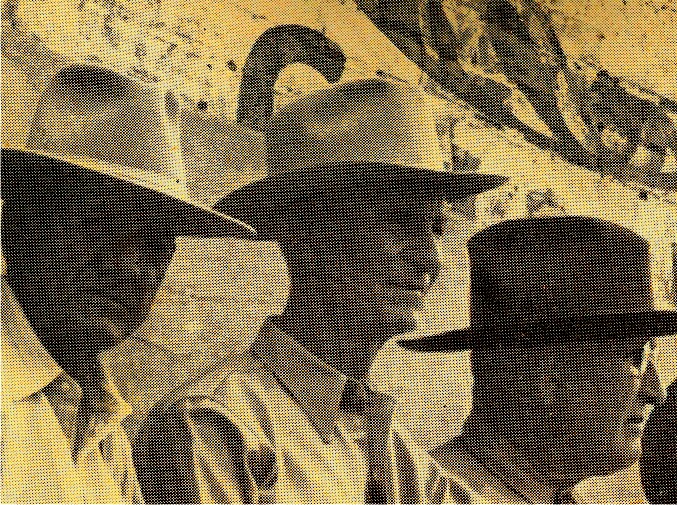
The
story appears in LIFE Magazine of 15 August 1949, and lays the whole drama out
in two splash pages, with bare editorializing and some great photos.
The
story goes like this: “In 1922 D. (Doctor Dee)
the druggist in
up a bench outside his store, and immediately it became a loafing headquarters
for the gaffers of .the
‘Year after year they sat there looking like a jury of irritable terrapins,
whittling, spitting and passing judgment on everything that passed. But finally
reform caught up with them.” It caught up to them, even if everyone was wearing a collared shirt.
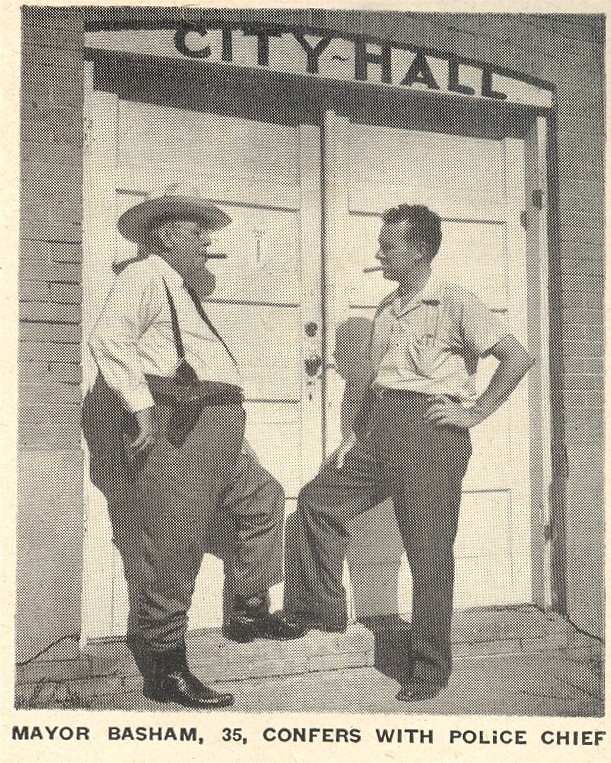
It came to the mayor of Whitney, Frank Basham, to appease “a
delegation of local housewives” who were fed up with the old men, and wanted
the “unsightly bench” gone. It was
probably a lot more than the bench, as the quote above by Mrs. T.E. Bagley contends:
“Why, they must spit two or three gallons a day! They ain’t died fast enough, these old men!”.
Perhaps a dozen old
farmers/ranchers/cowboys sitting on a bench all day long spitting and watching
the world go by wasn’t the most attractive thing for downtown Whitney.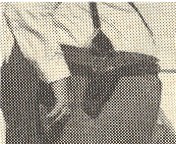
And
so it came to pass that the lumber was removed, but not the men—they returned
with nail barrels and took up residence, unabated, “sitting wrathfully” on the
kegs. The police then threatened to
confiscate the kegs, and then the men: tensions flared, and a special election
was held, a referendum on whether or not to restore the bench.
“I’ve
never heard of such foolishness”, ‘cried 97-year-old Tom Rose, dean of the
bench sitters’. “Come here in ’77 from
Been married 76 years, and my wife ain’t whipped me yet.”
The
vote was held and the forces of bench-removal-evil were “horribly” beaten, the
vote for favoring restoration coming in at a convincing 124 to 67.
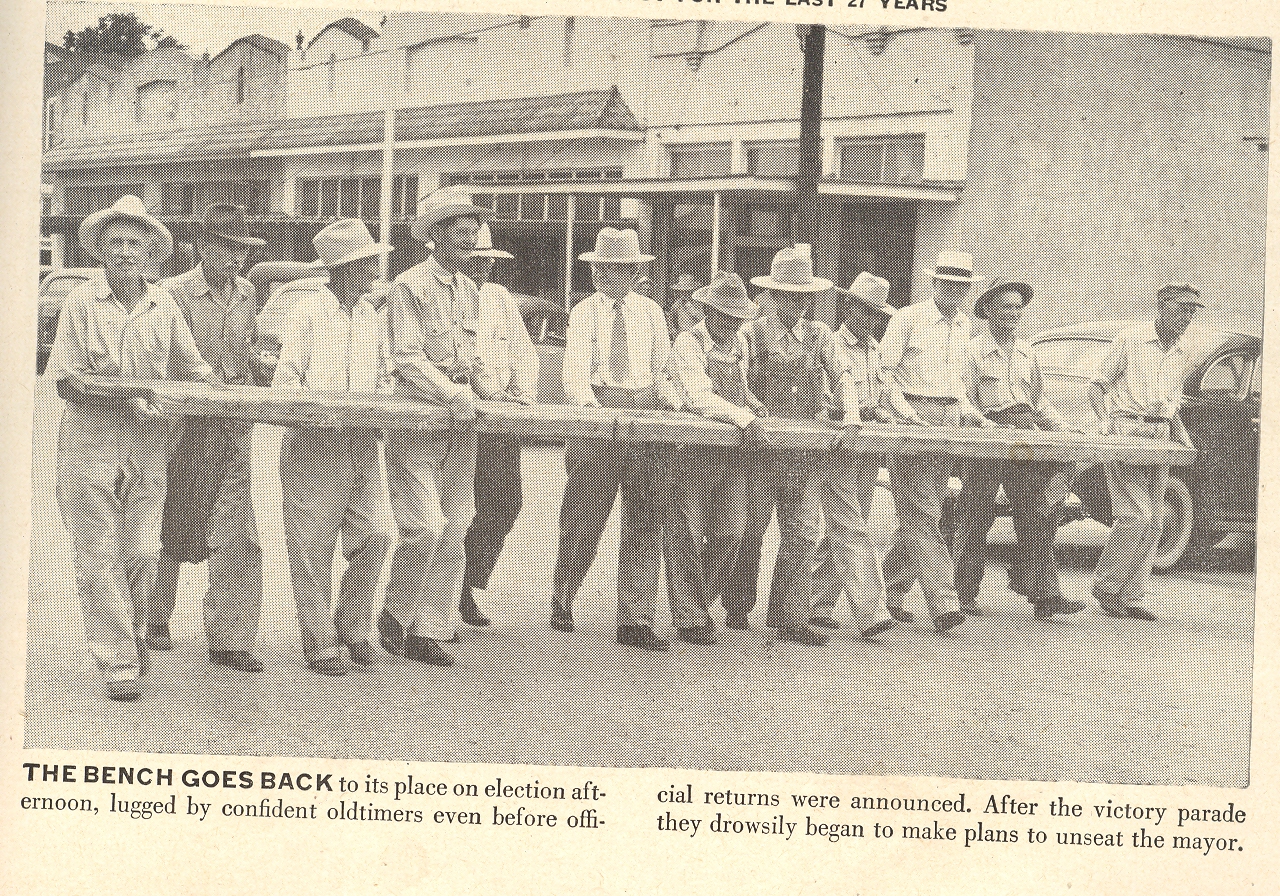
The
picture below shows the men “triumphantly” hauling the bench back into
position, sitting back down once more, “loafing, whittling, spitting and
passing judgment on everything that passed”.
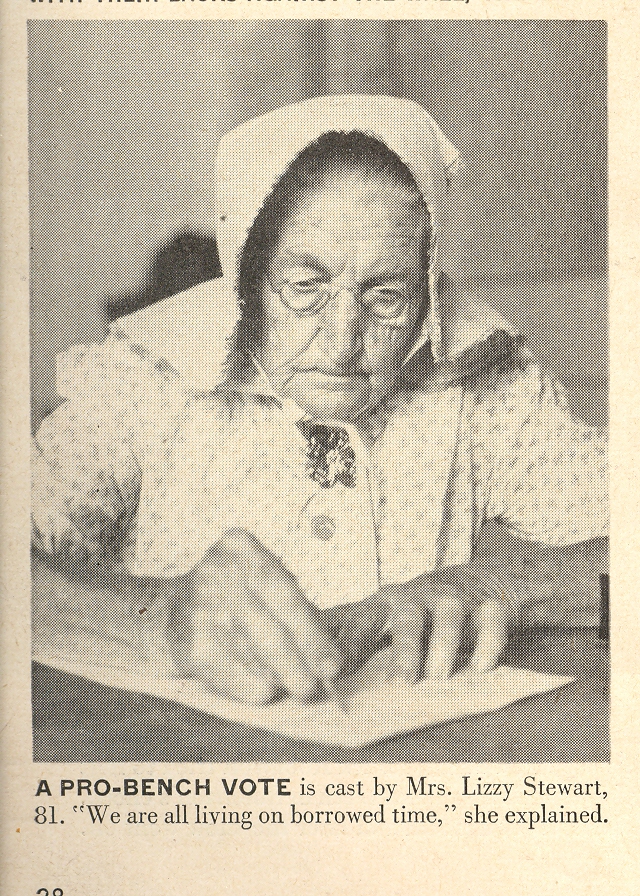
As I said, this is a beautiful drama of high emotion, way-of-life small consequence played big, a heaping slice of American life witnessed in a small East Texas town just after World War II. I would love to hear the voice of Mrs. Lizzy Smith (pictured here) as she was thinking-out-loud, casting her vote in this debate with a pencil no longer than a finger joint. (Where did that hat/shawl come from? Is it her mother’s? Mrs. Stewart’s mother would’ve been born around 1840, which means that the sensibility for that head cover was at the very least of pioneer vintage, and possibly older. It looks like living history to me, a snapshot into something from the deep past, right there in the present. This doesn’t happen very often; but when it does, it is a celebration.)
“We’re all living on borrowed time” she is quoted as saying, and I imagine that she voted for the men to be able to return to their bench to use what time they had left to holding up the walls of that pharmacy. [I made a call to Whitney, this morning, and spoke with a gentleman about the Battle of the Bench. He eloquently relayed the story, and the place that it holds in the town’s history, its small action carried into the future as a very large sensibility– I’m thankful for his insight. I couldn’t resist asking what it was that was directly opposite the bench; what were these men looking at when they weren’t looking down. “Not very much” he said. But the story isn’t in the looking, its in the talking; and as my wife Patti Digh finely points out, stories seem to be best told side-by-side.
And
in here is a great little play. Maybe not so little.
·Posted by :
·in:
JF Ptak Science Books LLC Post 955
This terrific 1933 pictorial display of quantitative data1
showing the comparative military capacities of eleven countries—it will become progressively
and aggressively more wrong in each passing year to the start of WWII. In 1933 the military giant was, basically,
and completely overrun just seven years later by the country at the bottom of
this display with the micro graphs,
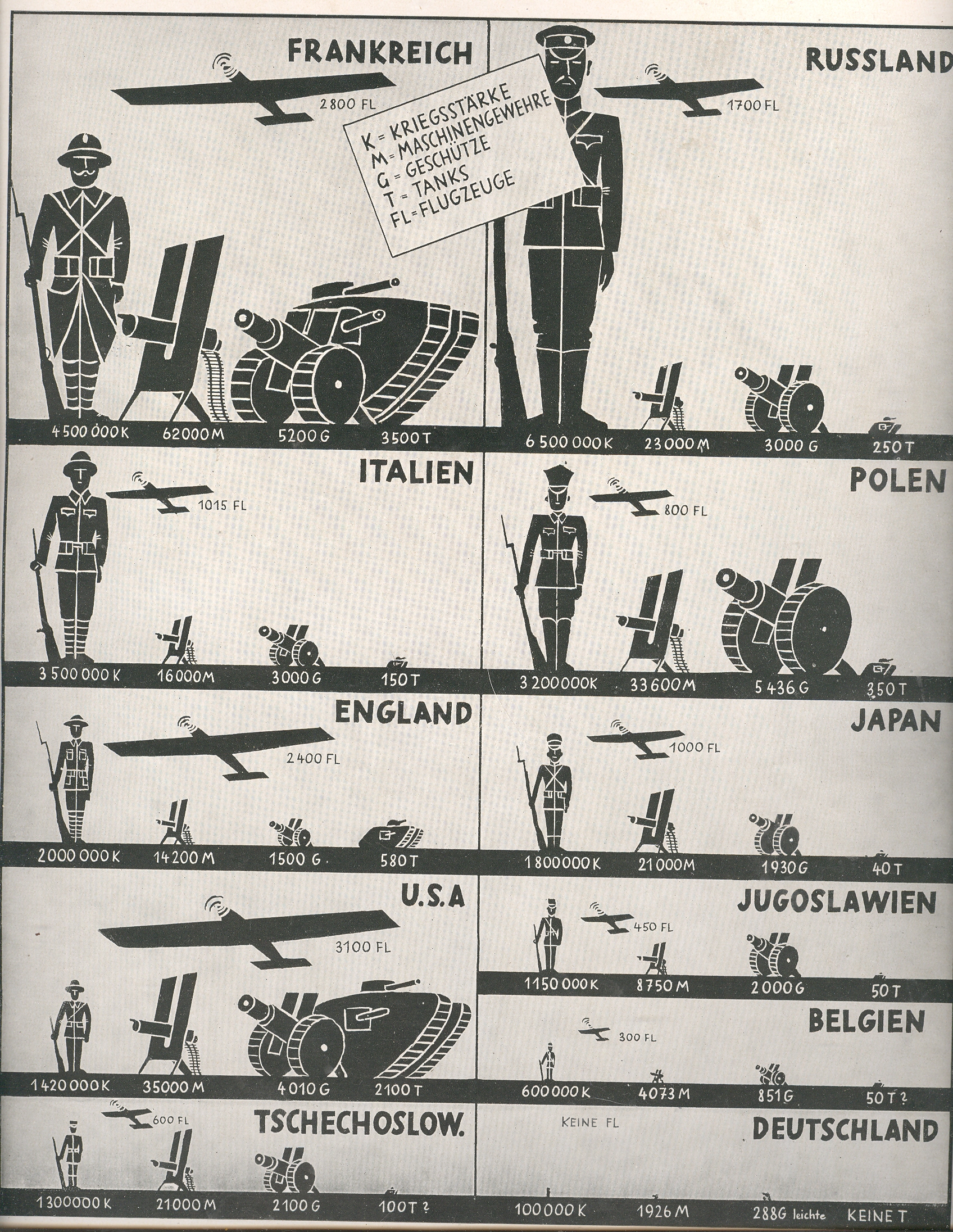
The German military forces underwent staggering change after
the end of WWI. The Imperial Forces were
completely done at the end of the war, limited to 100,000 men, left with no air
force and no tanks. There were wide
changes during the
three iterations (not to mention the hundreds of Freikorps that were
established with some of the disbanded remnant of the standing army) that
ultimate resulted in the formation of the Reichswehr (in 1921) and which in
turn would evolve into the Wehrmacht in 1935.
barely registers, barely forms bumps in the flatlines of measurements in
1934. By 1939, six years after the
election of Hitler, and fanned by xenophobic revenge and greedily speedy full-throttled
hate, Nazi Germany rushed at record
speeds towards the rape of the future. The German Wehrmacht stood at 4.7 men.in 1939
(6.6 million in 1940; 8.1 in 1941; 9.5 in 1942; 11.2 in 1943, 12 in 1944, and 9
in 1945), while the Luftwaffe was at 400,000 (growing to 1.7 million by 1943) and had enormous growths in quantity and quality
of armaments. It was all astonishing, and almost all gone again in another six years.
This is an exclusive graphic of German nothingness, an accurate graphic in 1934 and again in 1945, but in the middle, it was totally incorrect. Twelve years from nothing to nothing, with the disgust of Hell to pay in between.
It is simply extraordinary to see the disparities of the
Nazis displayed so
Notes:
1. Printed in Die Illustriete Zeitung, 1934.
JF Ptak Science Books LLC Post 956
In
an audacious move Adolf Hitler attempted to unite German-heritage people
throughout the world to come to the aid of the Nazi Socialists; it was a
vicious piece of propaganda attempting to inflate the number of possible-Nazis
into the hundreds of millions, showing a sub rosa infiltration of Nazism
throughout the world.
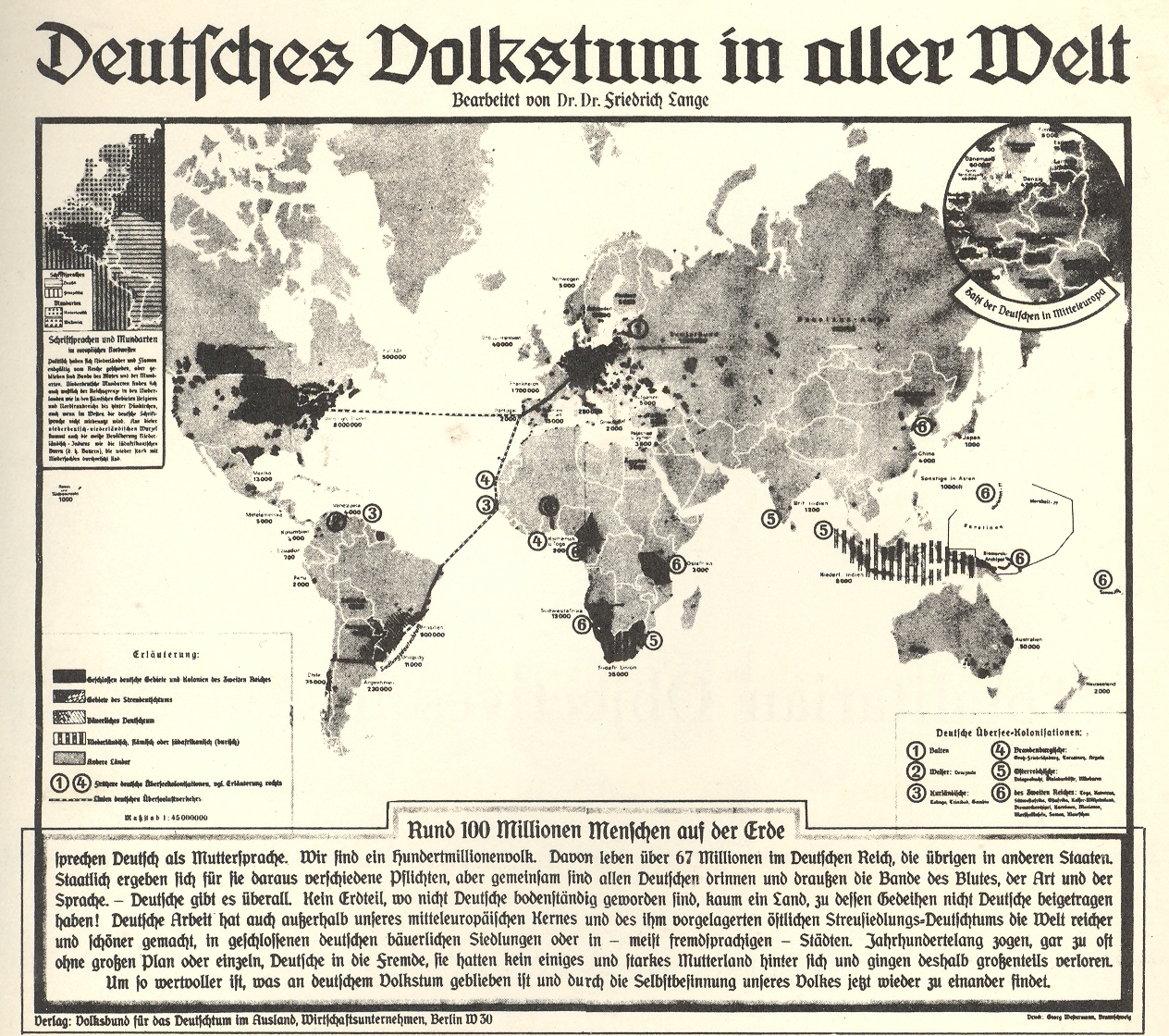
This
map appeared originally in Deutsches
Volkstum in aller Welt (
1938) and purported to document far-flung German descendants—the map alone was
perhaps statement enough to many, striking a deep fear thinking about the
20,000,000 Americans alone whose roots could be traced back to the
Vaterland. As a terror and influence
tactic that cost little money, it must have caused the anti-propaganda folks a
good deal of worry. The German/Vaterland
(German American Bund, or Deutsch-Amerikanischer Volksbund) movement never
really gained much popular ground in the
significant compliance in business and trade going on at higher levels of
industry and banking.
(I’ve
written about the Nazi-American connections in numerous posts on this blog; all
you need to do is do a site google under “Nazi” and you’ll find plenty. For the
moment I’ll just concentrate on the Henry Ford example. The man was a monstrous moral figure without
an ounce of historical understanding who blamed much of the world’s troubles on
the “Jewish Dictatorship”, which 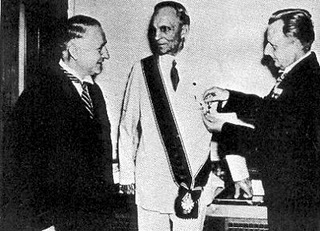 somehow, in his mind, spawned WWI. Long story short, Ford received the Grand
Cross of the Supreme Order of the German Eagle for his friendship and services
to the Nazi state—this friendship extended in form of money and many thousands
of military vehicles, and so on. His was
a treacherous business, his Nazi interests folding very nicely in with his
astounding anti-Semitism. Ford, by the way, received his medal months after the
invasion of
when he really should’ve known better.
I’m not sure if he gave the thing back or not after the war ended.)
But
among the masses, the sentiment never grew into strength, though it wasn’t for
trying. The movement had been present in
the
since the 1920’s in the form of the National Socialist Party and the Teutonia
Society, though the real start of the American Bund seems to have been with
Friends of New Germany (1933). Right-Wing groups such as America First were
strong sympathizers of Hitler, though they abandoned him once the war
began. (Not so true for Chase Bank, Ford
and many others.) The German American
Bund never topped 100,000 members, though it did fill up
1939. (One of the main speakers was Avery Brundage, International Olympic
Committee Chair. Brundage survived in this role until
games to continue, unabated, after the 11 Israeli athletes were murdered by
elements of Yasser Arafat’s organizations.)
Amyway,
this map was more a propaganda tool than one of true expectation, and I’m sure
it did its fair share of damage.
·Posted by :
·in:
JF Ptak Science Books LLC Post 894
being momentarily stopped in his tracks on hearing a friend saying that they
were reading their (news)paper on a kindle. Being a bookman and a librarian, his
mind’s eyebrows were raised at the irony of the digital “paper”, and then
pressed on. Kindle may well be on its
way to transforming our concept of the “paper” part of “newspaper” and paper
–printed books in general, and again may be the biggest leap in the
transformation of the distribution of knowledge since the beginnings of the
mass popularization of the internet. I wonder if kindle-esque innovations will
put and keep the word “paper” in quotation marks (or in a Maris-like asterisk*)
and place paper-based info distribution into the antiquarian’s domain. Seems that this is the natural order, a steady progression,
to make communication among our kind simpler—and if not more simple, then
providing more data with greater ease than previously imagined. And I’m not talking here about discussing some
sort of massive abecedary, working from Ugaritic proto-Canannite pre-Phoenician
pre-Greek- alphabet and so on; just an outline of the major deals: moving from spoken word like Thucydides
oceanic memorization and recitation of the Greek cultural cornerstones of the Iliad and Odyssey) to dramatic traditions to written stories to Medieval
copyists to woodblock printing to movable type1 to, well, what, the
internet? And then to kindle-like
machines?
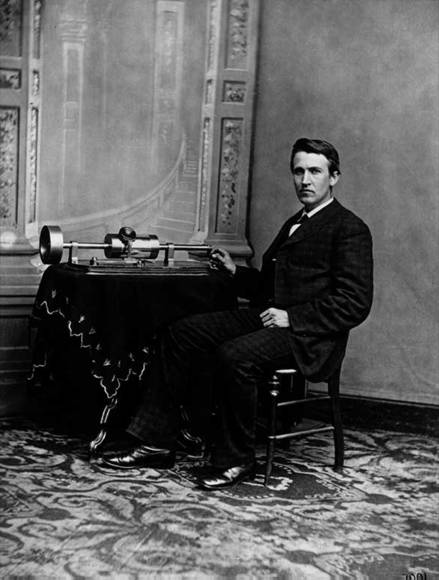 But before the modern kindle there was perhaps a kindle-like
precursor that snakes its way in history to (at least) the very capable hands
of Thomas Edison, who in a furious few years in the mid 1870’s2 invented the
light bulb and the phonograph3 (the later coming as a direct byproduct on work
done on the telephone and telegraph).. He celebrates his phonograph in the North American Review (May 1878)4 and
then lists what he saw as the readymade faits
acomplis of the phonograph, the first of which was weirdly/spectacularly
worded: “1. The captivity of all manner
of sound-waves heretofore designated as fugitive, and their permanent
retention.” Do you hear a soundtrack
with that description? I did. He proceeded with less fanfare: “2. Their
reproduction with all their original characteristics at will, without the
presence or consent of the original source, and after the lapse of any period
of time. 3. The transmission of such captive sounds through the ordinary channels of
commercial intercourse and trade in material form, for purposes of communication
or as merchantable goods. 4. Indefinite multiplication and preservation of
such sounds, without regard to the existence or non-existence of the original source. 5. The
captivation of sounds, with or without the knowledge or consent of the source
of their origin.”
“possibilities” for the use of the phonograph in the not-too-distant future.
There are ten major prospects, the “bookish” aspect and the first major assault
on the way we read is listed fourth (though he wasn’t necessarily weighting his
list in any way). Some of the others in
this list (all of which cam to fruition) include: 1.Dictation and letter writing—using the phonograph to
record letters and correspondence, which was baldly aimed at the business and
corporate trade as the machine was relatively difficult to operate and
expensive. 2 Phonographic
“books”. I noticed that that
change the word “book” in any way, even though the book is no longer there with
the application of the phonograph, just the read and spoken words. “Books may be read by the charitably-inclined
professional reader, or by such readers especially employed for that purpose,
and the record of such book used in the asylums of the blind, hospitals, the
sick-chamber, or even with great profit and amusement by the lady or gentleman
whose eyes and hands may be otherwise employed; or, again, because of the
greater enjoyment to be had from a book when read by an elocutionist than when
read by the average reader.” 3. Family records. “For the purpose of preserving the sayings,
the voices, and the last words of the dying member of the family [emphasis
mine] as of great men the phonograph will unquestionably outrank the
photograph.”
may speak, sing, cry, or laugh, may be safely promised our children for the
Christmas holidays ensuing. Every species of animal or mechanical toy such as
locomotives, etc. may be supplied with their natural and characteristic
sounds.”
Edison
continued, writing on the phonograph’s application for the study of elocution,
speaking clocks, language preservation (as in documentation of the proper way
of speaking a certain language, something that would’ve come in handy in the
spike of disappearing languages at the end of the 19th century),
telephone recorders and pedagogical lessons.
But
this is all a little far afield from the kindle aspect. Is
the development of things like the kindle another step in the metaphorical
development of a technological alphabet?
Like developing an alphabet for a language, where there are a finite
numbers of symbols that elegantly possess the capacity to transmit all of the
words of a spoken language, is there a corollary for something that makes
systemic sense for the technological transmission of knowledge? I guess the
question would be whether the development of the kindle (and so on) provides
another step towards the completeness of what now stands as a chaotic
environment of information and knowledge distribution?=I
don’t think that there is yet a driving, poetic sense to these new
technologies. The new media provide the means to information but not
necessarily the way to it. They also
don’t lend themselves to memorization, which in the old semi-mnemonic days was
a way to not only record info but also to help understand it by enforcing
prolonged exposure and thought. With as
much data that is daily available, perhaps new information is simply filling
memory holes on the vast hole-ridden plane that is the fabric of the new way of
gathering information. I have little
doubt that in the next revolutionary step in this whole process will be more
knowledge-based than suffering under the weight of primitive
search-engine-based data retrieval of today.
I’d say that once the alphabet of technology is more complete, and that
the issues of search, organization, storage and retrieval makes more sense,
that it may well then leave paper behind.
And perhaps after the power and elegance of having a knowledge system
like this that the next giant step would be not having the devices simply with
us, but in us.
Notes
1. It is interesting to note that among the first items
printed on movable type presses were
packs of tarot cards and religious indulgences (get-out-of-hell cards).
2. For an annotated chronology of some of
career see HERE.
3.Edison presented his invention at the offices of the Scientific
American in New York City, the magazine reporting the event in
its 22 December 1877 issue:
“Mr. Thomas A. Edison recently came into this office, placed a little
machine on our desk, turned a crank, and the machine inquired as to our
health, asked how we liked the phonograph, informed us that it was very
well, and bid us a cordial good night.”
applied for his patent for the highly original invention on 24 December,
receiving it on 19 February 1878 (patent # 200,521). He would soon lose
interest in this invention and move onto other big things (inventing, for
example, the biopolar dynamo in the next year); it would be Emile Berliner
(1851-1929, and who invented the microphone in this same year) to improve
the phonograph and make it more affordable and accessible and increase its
utility immeasurably. 1877 also saw the publication of Rayleigh’s superb Theory of Sound and Boltzmann’s
revision of the second law.
4. Source here.
Of further interest:
For general browsing in 19th century journals see
the invaluable Library of Congress contribution
“Clocks Which Will Talk: The Wonderful Possibilities of
Edison’s Invention.”
York
25: 173-174.
“The Phonograph and Its Future.” Scientific
American Supplement 124 (May 18, 1878): 1973. TAEM 25: 269.
“The Phonograph and Its Future.” North
American Review 126 (May-June 1878): 527-536. Reprinted widely. TAEM
25: 198-199.
“To the Editor.”
1878): 5.
“The Phonograph and Its Future.” Telegraphic
Journal 6 (June 15, 1878): 250. TAEM 25: 265.
“To the Editor.”
1878): 5. Reprinted in Engineering [see below]. Not selected.
JF Ptak Science Books LLC Post 895
Earlier
in this blog I’ve written about underground horses
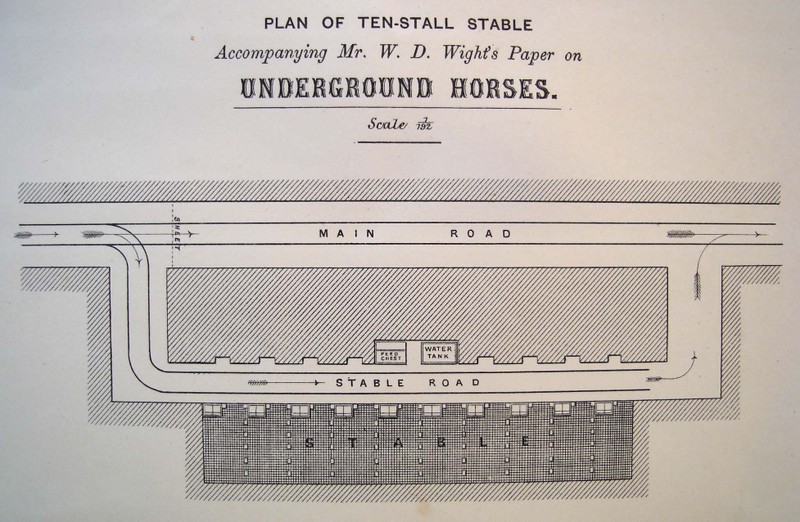
and
horses in the air (Towards a History of Horses in Flight in the 19th
Century),
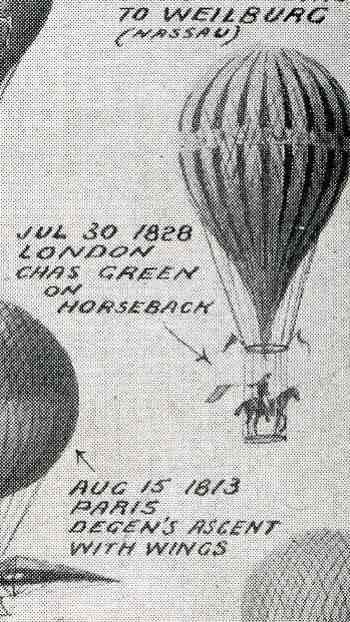 and
and
now to horses underwater. Or sort of.
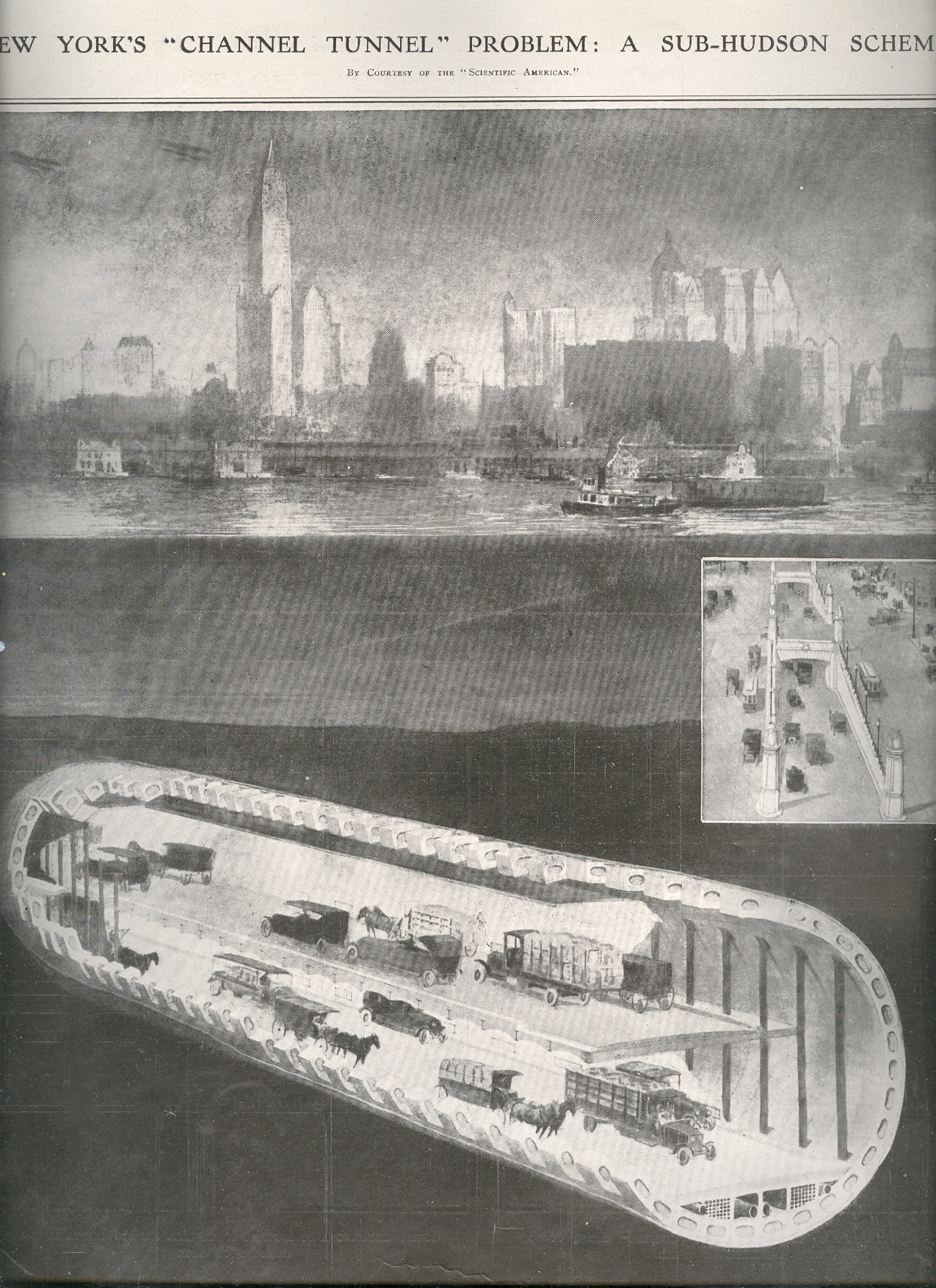
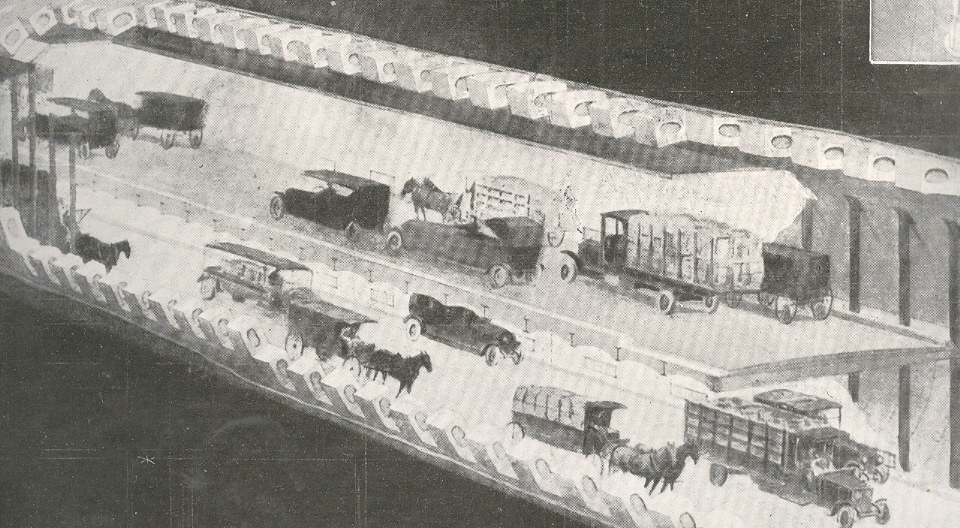
This image from The Illustrated London News (5 April 1919) presents a
cross-section of a proposed Hudson River tunnel connecting the
City
productive, much mire alive than it is today.) Proposals for tunnels have been
bobbing around for quite some time, including this one that appears in the
Scientific America for 1 November 18901.
The first vehicular traffic tunnel under the Hudson River—the Holland
Tunnel, connecting
connecting midtown to
for the Lincoln in 1937 was 50 cents, or equal to $7.80 in 2009 CPI-adjusted
dollars.)
By that time there were no allowances for “slow horse-drawn trucks” that were shown in the 1919 cross section.
Notes:
1.”Progress
of the Great Railway Tunnels under the Hudson River between
York
Scientific American, 1 Nov 1890
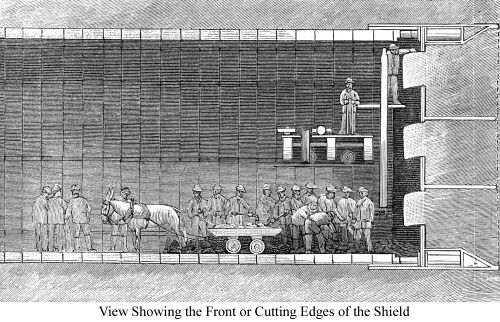
And just for good measure, here’s another bit: this time showing a horse at work in a tunnel under the Hudson:
JF Ptak Science Books LLC Post 896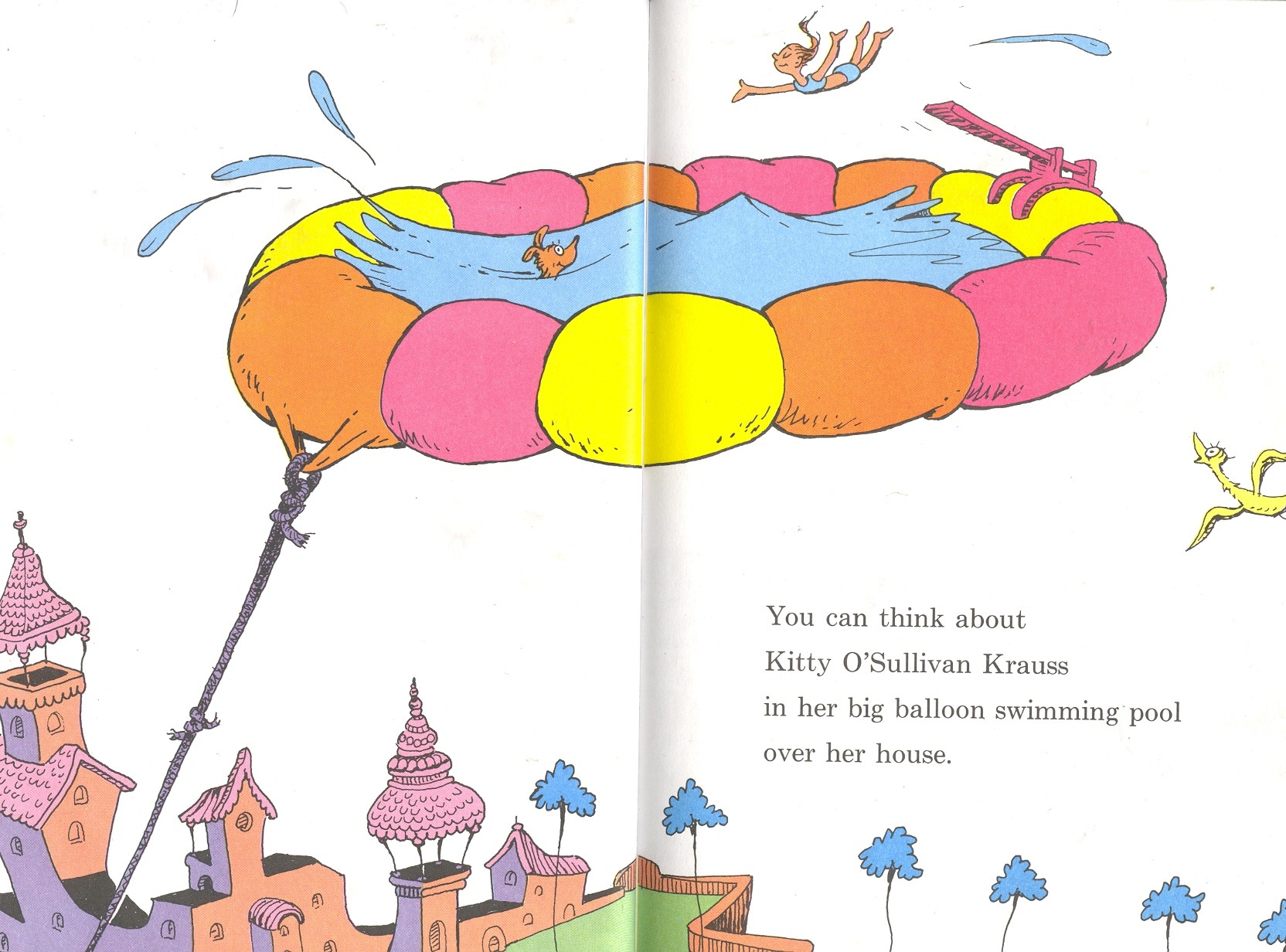
Tonight’s
inspiration comes from one of my daughter Tess’ bedtime stories, Dr. Seuss’ Oh, the Thinks you can Think—particularly
one of the fantastic illustrations, this one showing a swimming pool
balloon. I’ve seen some interesting
images of balloons and dirigibles taken as serious efforts that reminded me of
that double-page spread by the good Doctor.
In
July, 1931 Konstantin Zilkowsky’s sheet metal dirigible appeared in Modern Mechanics (this image from the
fabulous Modern Mechanix.com website, cropped), looking a lot like the mountain
and its imagined whale looked like to Herman Melville at his Arrowhead
home.
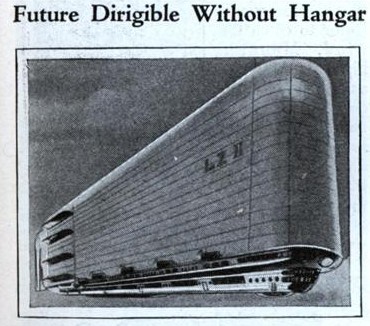
This may have been the Omega end
of bad ideas in the career of Zilkowsky, who is better known by the other
spelling of his name, Konstantin
Eduardovich Tsiolkovsky (1857-1835), a Russian misanthrope and space pioneering
genius who wrote more than 500 works on rocketry and exploration including what
is arguably the first tech word ever done in the field (in 1903, The
Exploration of Cosmic Space by Means of Reaction Devices). Tsiolkovsky somehow lasted through purges
and Stalinist tirades, while few of his colleagues did—many mysteriously
disappeared, while others went to prison and disappeared there. (Stalin’s crude and insatiable blood lust,
perhaps the worst of the century, knew no bounds, not even to the scientists
who could conceivably hand him reigns of rocket/missile-propelled power.) Anyway, Tsiolkovsky’s dirigible was composed
of a collapsible metal so that the aircraft could form its own hangar when “docked”. I don’t know where to begin with this one…
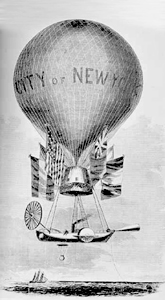
The
second (among many other possibilities) is the ship-balloon of Thaddeus Lowe
(1832-1913) One of Lowe’s great contributions in the
history of ballooning was providing aerial reconnaissance via (panoramic)
photographs to the Union army on Confederate army positions—particularly the
Rebel positions at Richmond (1864) and Fredericksburg (1862). (He had a wide
span of professional interests and wound up living the high life in
home.) This 130-foot diameter monster
with a steam-ship escape pod (named The
City of New York and then renamed The
Great Western after the city couldn’t supply enough gas to get the thing
inflated) was intended to be a transatlantic traveler. Ready to try this fantastic adventure in
1860, ready to take charge, ready to begin a very problematic trip across the
Atlantic in a balloon, Lowe, seemingly ready, had his balloon ripped apart
while waiting for launching by a chance and not-horrible wind. Lucky for Lowe and the Union Army, this didn’t
happen over the ocean somewhere out of reach, and the North’s important info-gatherer
did not sink like a stone in the cold dark sea.
(I’m very cynical that the 100-foot-long, bulbously heavy steam-powered “life
boat” would’ve landed right-side-up and softly enough to have been of any use
save for providing some floaty bits that survivors from the balloon could’ve
clung to for a while before being consumed by King Neptune.
I’d vote for Dr. Seuss’ work as the most logical.